Category: Journalism

  • For a great story, get out and report

    For a great story, get out and report

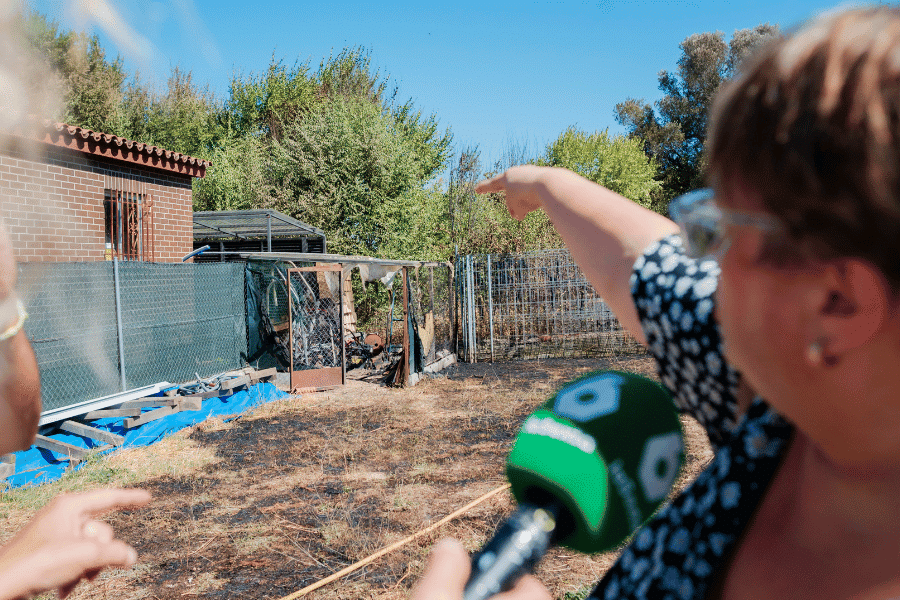
    Sure, you can Zoom someone in on your laptop or chat over WhatsApp. But when you go out to an event or interview you come back with so much more.

    Source link

  • How to amplify youth voice? Bring teens into the pressroom.

    How to amplify youth voice? Bring teens into the pressroom.

    Each year, Global Youth & News Media recognizes news organizations that are innovating in ways that include or help young readers and young journalists. 

    The France-based nonprofit, founded in 2018, seeks to reinforce connections between young people and news media. 

    This year, it held a global competition to find projects that could show how young people are helping news organizations survive in a world where too many of them are shutting down. 

    “I was looking at who was helping local news for a different project and noticed that nearly every journalism-related NGO I knew was doing something to help local news survive,” said Aralynn McMane, executive director at Global Youth & News Media. “And new nonprofits were emerging only for that purpose.”

    The problem, though, was that she didn’t see much sharing of that knowledge. So one of the aims of the competition was to create cross-pollination — highlight projects that could be replicated by other organizations elsewhere and provide a forum for the sharing of lessons learned. 

    “This was a particularly satisfying competition for us because we found so many great win-win cases of meaningful youth-local news collaborations from all over the world with lessons for newsrooms most anywhere,” McMane said.

    Can we fertilize the news deserts?

    News Decoder is deeply concerned about the emergence of “news deserts”: localities that no longer have any news outlets as profit-driven corporate owners pull the plug on local newspapers.

    A study in 2023 found that more news outlets in the UK were closing than were being launched. In Canada, between 2008 and 1 April 2025, more than 500 local news outlets closed in some 370 communities across the country, according to the Local News Map crowd-sourcing data initiative. Meanwhile, a report from the Brookings Institution found that in the United States in 2023, some 2.5 local news outlets folded every week.  

    That’s why I was honored to serve as one of 26 judges from 17 countries in the competition. While the entries taken as a whole gave me reason to hope, the winners left me inspired. 

    The competition found dozens of collaborations across six continents. They served to remind us of the vital public service mission local news organizations perform when they have the resources to do so. 

    Consider The Westsider in Melbourne, Australia. The staff there recognized the need for voters to be informed about the candidates in local elections and how they stand on important local issues. But to chase down dozens of candidates takes staffing that The Westsider doesn’t have. So with a small grant from a local journalism organization, the paper recruited 72 students from RMIT University to chase down every candidate running for a local office and ask them a series of questions. From that funding the paper produced a non-partisan voter’s guide. 

    Youth can tell important local stories.

    Another standout was Phralipen of Croatia, who collaborated with Youth Roma Congress to produce stories about the Roma community through reporting, multilingual content and participatory journalism.

    Then there was the Contra Costa Youth Journalism program in Northern California, a collaboration between the Contra Costa County Office of Education and Bay City News/Local News Matters, a news organization based in Berkeley, California. The program recruits and trains young people from underserved communities to be journalists and has published more than 70 stories from these areas as a result. 

    Katherine Rowlands, the founder and publisher of Bay City News and Local News Matters, said programs that bring young people into journalism are important.

    “It is critical to train and inspire the next generation of journalists so we create a pipeline of future reporters to inform, question and make sense of the world,” Rowlands said. “It is also really important for us to include these younger voices in the journalism we do now so that we more accurately reflect our communities and bring their issues to the forefront.”

    From Pakistan to Botswana, Bolivia to Tanzania, the competition identified news organizations finding ways to bring young people into their newsrooms to ensure that what young people do, and the issues that are important to them, are not left out of local news coverage. In the process, they are finding that for organizations that are short-staffed and short of funds, young people are a key resource that has been long overlooked.

    The entries were graded on the impact on the local community and transferability — whether the project could easily be replicated by other news organizations in other places. 

    One thing we’ve learned at News Decoder — and which the results of this competition clearly showed — is that young people are eager to have their voices heard and see journalism as an effective way to do that. 

    News organizations can benefit from their passion and energy and also from the perspectives they bring. 

    The full list of winners

    GOLD AWARD (most transferable, clearest on impact)

    • The Westsider with RMIT University (Australia)
    • Stamp Media (Belgium)
    • Phralipen and the local Roma community (Croatia)
    • The Greenline (Canada)
    • Časoris and Črni Vrh primary school (Slovenia)
    • Landshuter Zeitung/Mediengruppe Attenkofer podcast mies keck (Germany)
    • Bay City News Foundation with Contra Costa Youth Journalism (United States)
    • The Spotlight News with The University at Albany (United States)

    SILVER AWARD (transferability and clarity of impact)​

    • Casa de Nadie (Bolivia)
    • Nyugat.hu (Hungary)
    • Cable Newspaper Journalism Foundation (Nigeria)
    • Univerzitetski Odjek (Serbia)
    • Orkonerei FM Radio (Tanzania)
    • The Jersey Bee (United States)

    COMMUNITY AWARD (potential for community impact)

    • Daily News (Botswana)
    • Thinking Abyss (Greece)
    • Kashmir Times (Kashmir)
    • Risala Today (Pakistan)
    • SF Channel Bitegeere (Uganda)

    Full list of winners available on the Global Youth & News Media website.


    Source link

  • Do you live in a healthy media ecosystem?

    Do you live in a healthy media ecosystem?

    We are bombarded with information from news sites, friends, entertainment platforms and companies — through articles, messages, images, videos, ads and graphics. It can be difficult to know or even think about where the information is coming from. 

    Whether you realize it or not, this tsunami of information affects you: It shapes what you know about events, how you see the world and how you feel about people, issues and products. 

    In order to further understand big global issues such as climate change, and how it affects communities all over the world, it is helpful to understand how the media functions, what journalists do and how you can communicate about the climate crisis yourself. 

    The media can and, ideally, should perform a variety of critical functions in any society. It should: 

    • Keep the public informed of current events and issues; 

    • Foster informed debate and discussion on matters of public importance;

    • Hold powerful governmental and private actors to account. 

    Where media falls short

    In reality, the media often fails to do that in part because some foundational “building blocks” that keep media strong and independent have eroded. A World Bank How-To Guide on media development identifies five building blocks for a robust and independent media sector: 

    1. Infrastructure: Everything from transmission towers and cables, to news disseminators, to cell phone ownership should be publicly-owned or in a competitive landscape of corporate owners. 

    2. Professional Skills and Editorial Independence: A country must have enough journalism professionals trained to gather, produce and publish information according to ethical standards, and who are protected by law and policies from interference by governmental or business actors. 

    3. Financial Sustainability: Media organizations must have financially-sustainable business models that enable them to employ journalism professionals and fund the gathering, production and dissemination of news content. 

    4. Policy and Regulatory Environment: A country’s legal and policy framework must support and protect the gathering and disclosure of information, uphold editorial independence and protect journalists and their sources. 

    5. Civil Society and the Public: There must be a media-literate public, journalists’ unions and free press watchdogs to both protect the journalists doing their jobs and hold them to account for transgressions of ethical codes. 

    How healthy is your media ecosystem? 

    Many countries around the world lack some or all of the core building blocks of a robust media sector. As a result, the media content available in these countries is often poor, and the media fails to perform its good governance functions. 

    You can evaluate the state of the media sector in different countries by referring to a variety of online resources, including Reporters Without Borders’ World Press Freedom Index and the Media Ownership Monitor. 

    But even in places where the press seems to have a great deal of freedom, the media most people consume might be in the control of a very few corporate owners and some of those corporations are privately held by one person or family. 

    Can you think of some reasons why governments and families might have an interest in controlling the media? 

    The short answer is that owning media enables you to control the message. You can influence: 

    • What information is supplied; 

    • How much information is provided on any particular person, issue or topic; and

    • How the information is presented. 

    A sustainable media ecoystem

    In a sustainable media ecosystem both government and private media owners would fulfill the “good governance” functions discussed above: keeping the public informed, fostering debate and holding the powerful to account. 

    Media owners do this when they put institutional safeguards in place to ensure that the people it employs can report on issues without restraint or fear of repercussion. 

    This is essential because a journalist is the eyes and ears of the public. Few people have the time or energy or attention to keep an eye on all the things their government does or all the decisions corporations make that affect their lives. 

    That’s why historically people subscribed to newspapers and why people now follow news sites and journalists on social media. We rely on journalists to go out into the world to ask questions, observe what is happening and gather factual information to report it all back to us. 

    In practice, many media outlets fall short of this goal. 

    Profits and the press

    One way reputable media organizations protect editorial independence separating the editorial aims of the organization from its profit making function; the organization’s business operations don’t interact with the employees who produce its media content. That leaves journalists free to pursue important news stories, even if doing so could hurt the media outlet’s ability to sell ads or risks losing subscribers. 

    By doing this, the media organization builds and maintains credibility; It becomes a place where people come for information they can rely on. This information helps them make important decisions about their lives. Is it a good time to buy a house? Can they feel safe where they live? Will they be able to keep their jobs or find new ones? 

    Unfortunately, many media owners have found that it might be more profitable in the short term to focus news coverage in a way that pleases core audiences and advertisers. That happens when media consumers decide they will pay only for information that aligns with their beliefs and reject media that contradicts what they wish to believe.

    Ultimately, we have to think of the media ecosystem as a buffet you can go to for your meals. If too many people choose only the foods that satisfy their cravings for the sweet and salty, not only will their own health suffer, but the people who stock the buffet will start eliminating healthy foods altogether. What seems like a lot of choice in what you consume will end up as a lot of the same and none of it healthy. 

    So what can you do to support a healthier and sustainable media ecosystem? 

    Understand who owns the media you consume. Diversify the sources from where you get your information and seek out contrasting perspectives. If you can afford it, pay for subscriptions to outlets that have a record of independence. Support organizations that fight for a free and robust press. 

    As a consumer of media, you have power you can exercise. Media producers rely on you to read or listen to or watch what they produce. If you choose to do so, you support what they are doing. If you don’t, you tell them a different message altogether. 


    Questions to consider:

    1. What is a media ecosystem?

    2. How many information sites have you visited in the last three days? Can you list them? 

    3. Pick one of those sites. Can you figure out who owns it? Is that company based in your country?


    Source link

  • Be the oasis in your “news desert”

    Be the oasis in your “news desert”

    Across the world, local news media are disappearing. In the latest development, the News Media Corporation in the United States, based in the state of Illinois, shut down 23 newspapers across six states. 

    This is a result of a long and gradual global disintegration of the media ecosystem. It began decades ago when corporate owners of newspapers and television and radio stations began to consolidate their outlets. Two-newspaper towns became one-newspaper towns. Then investment banks noticed how much profit these local monopolies generated from ad sales, and bought them up.

    The internet came around and decimated those ad sales and the investors owning the publications stripped them down so newspapers that had teams of journalists now had just a handful. We are in the final stage where the owners are simply pulling the plug and selling off assets. 

    So what to do if you live in a news desert where there is no local source of news? Start your own news site. That doesn’t have to be as daunting a task as you might think. You don’t need to be the New York Times or Guardian. Start small. Here are some steps:

    Get started.

    Create a mission statement. What are you trying to accomplish and why are you doing it? What is your motivation and what are your long-term goals? Who are you serving and how do you plan to do that? You can change your mission over time, but having a mission statement will help guide you when you confront choices and challenges. For an example, check out News Decoder’s mission statement.

    Establish a website. It can be super simple on the easiest and cheapest platform you can find: WordPress, Weebly, Squarespace — there are many. If you haven’t done this before, ask your friends and family to help you. I guarantee you have one friend or cousin or teacher who knows how to do this and can show you how (or do it for you!).

    Give it a name. One of my favorite local news sites is called Redheaded Blackbelt, which Kym Kemp has been publishing near the northern tip of California for almost 20 years. She has red hair and is a black belt. 

    Set up a schedule you think you can handle. If you are serious about this, you should consistently post to the site even if it isn’t every day. You want to build an audience and people need to count on you for information. Also it will help keep you going if you have a set schedule to keep to. You can start with one post a week. 

    Start reporting.

    Find something out that people would find important or interesting. It could be anything from what the local government is planning to do to the opening of a new hardware store. It could be a weird new vegetable showing up at the market. What is totally not interesting to someone in a big city might be just what people will talk about in your town. Think little!

    Learn more about finding and reporting a news story.

    Have fun with it. Snap photos of people’s pets and post them. That’s the first sure-fire way to get people to your site. 

    Learn more about taking engaging photos.

    Develop an ethics policy. This will be important if you become THE source for news in your community. People will want you to write about them, or not write about them, or write about them in a particular way. You need to be able to respond consistently so that it doesn’t look like you favor people or are biased against them. Be honest with yourself: What positions must you take? What positions won’t you take? Will you accept freebies like tickets to attend events and will you promise anything in return?

    Learn more about being an ethical journalist.

    Find out more stuff. How do you do that? Every time you go out, get chatty. Here is the question you ask: What’s happening? Now, when you ask that question, most people automatically say “Nothing.” But that’s because they assume you don’t really care and you are just being polite. So part of being chatty is being nosy and a bit persistent. Observe what is happening around you and notice what seems different. 

    Do this enough and when people see you, you won’t even have to ask. They will suggest all kinds of stories and tell you all kinds of things happening. On the downside, be prepared for people interrupting every conversation with “now, don’t publish this …”

    Note that whenever there is change, no matter how big or small, there is a story behind that change. Someone made a decision to do something. And people tend to like talking about the decisions they made or the actions they took. 

    Now this is important: When you are digging for news, you must tell people that you’ve got this little news site you started and that you want to post about whatever it is you are talking about with them. In a small community, it is super important not to create enemies with your news site (unless you plan to take down corrupt politicians). You want people to be excited you are writing about them. 

    That doesn’t mean that everything you post has to be flattering. It just means that you can’t be sneaky or spiteful or petty with your posts. Treat people with respect and they will respect you. For a local news site to survive you need the support of your local community. 

    Develop a growth strategy.

    Generate word of mouth. Once you begin posting, tell as many people as you can about your site and what you are trying to do. Not only do you want to grow an audience, but the more people who know what you are doing, the more people will tell you stuff that you can report on. When people come to you with news, that’s a lot easier than chasing it down yourself. 

    Recruit help. You can be a one-person shop, but over time that would be exhausting. From day one imagine your publication five years old and then 10 years old. Then imagine yourself doing this for those 10 years. The only way the publication will endure is if you have help all along the way. Look for young people who are looking for experience and old people with too much time on their hands. Find the people you know who are really bored at whatever job they have and want to be part of something interesting and important. Keep an eye out for frustrated writers and amateur photographers, artists and data nerds.

    And find those people who always attend local sporting events who can report on youth games. Just like posting about people’s pets, you will get all kinds of people flocking for news of their kid’s football or basketball games or the games of kids they know. 

    Think of funding sources. You might consider making your site a nonprofit. People would be more likely to offer you unpaid help that way. It would also enable you to ask for money from local funding organizations. If you think you might want to turn this venture into a business, start chatting up local businesses and seeing if they might support you by buying ads on your site. You don’t need to do any of that right away but remember, if you want the site to endure you will likely need to make some money from it to pay yourself and people who help you out on it. 

    Join organizations. With a news site you are both an entrepreneur and journalist, and there are organizations that will help you network and get you mentors and allies. Think about journalism organizations like the Society of Professional Journalists in the United States, the National Union of Journalists in the UK and Ireland and the Confederation of ASEAN Journalists in Southeast Asia. Also consider joining business organizations like the Chamber of Commerce or the Rotary Club. 

    Finally, have an exit strategy. The goal is to build a news site in a news desert so you should want it to last beyond you. There is a good chance you will grow tired of your venture at some point. Who will take it over? Might you be able to sell it at some point? It is never too early to think about these things if you want your news publication to endure. Don’t lose sight of the mission. 


    Questions to consider:

    1. What is a “news desert”?

    2. In what way would people in a small town be interested in different things than people in a big city?

    3. If you were to start your own local news site, what types of stories or events would you cover?


    Source link

  • Top Tips: Take good notes

    Top Tips: Take good notes

    The key to a great news story is a great interview. But all your work getting that interview will be wasted if you don’t have great notes. 

    When I first started out as a journalist, people didn’t always record their interviews. I rarely used a recorder. I found that it did something to my brain. Part of my brain would be worried that the recording wasn’t working. 

    When I became an editor, I found that I could tell when a reporter had used a recorder. The quotes in the story were often too long or too flat — they lacked something, maybe emotion or emphasis. 

    When you interview someone without taping it, you have to listen carefully. There isn’t any backup. And because it is difficult to take down everything someone says word for word, your brain works with your ears and your hand to take down what is most important – the essential facts and details, the emotion, the surprising things someone says. 

    If you have recorded that same interview, you won’t be doing that. You know you have a backup. And when you go back and listen to the recording, something is different. The statements all flatten out and you end up putting in the story what sounds most explanatory or most impressive. In other words, you can’t tell what was most interesting when you were sitting there or on the phone. 

    A recording is not enough.

    These days it is standard practice to record interviews, if for no other reason than we need the audio for podcasts or audio clips. 

    But for a great story and to be a great storyteller you should master the art of notetaking. When doing an interview forget that the recorder is on. Imagine it isn’t working (and it might not be working!) So here are some tips for taking notes: 

    First, don’t try to take down every word. Instead, listen for what is important. 

    “Quotes can be short,” said News Decoder Educational News Director Marcy Burstiner.

    Don’t try to write everything down word for word. It’s OK to paraphrase. Put quote marks only around actual quotes. If you didn’t put quote marks around something in your notes DON’T put the quote marks in your story. 

    Master shorthand.

    Second, create your own system of shorthand.

    Shorthand is a system of writing in a code that allows you to take down words fast and accurately. There are some standard ways of doing that and courses to teach you how. It was developed for stenographers. Before recorders came along, offices employed people to take down dictation. The boss would dictate letters and reports to their secretaries who would then type them up. But you can create your own system of shorthand.

    For example, instead of writing down the person’s name every time they start talking (when you are talking to multiple people at the same time) use their initials. You can also lv out the vwls of common wrds. 

    U can write in text message 4mat b/c that also wrks. I am not a fast writer so I came up with my own system early on in my career. I put ?? when I’m not sure what the person said but I don’t want to interrupt them. I put ** when I want to go back to it to follow up. I circle words or underline them when I sense it is important.

    For something outrageous I write !!

    Take lots and lots of notes.

    Writing down words and ideas cements them in your mind.

    Finally, use a pen and paper. There are a number of reasons to do this. If you are interviewing someone in person and you try to take your notes on a laptop or tablet, your head will be down half the time and you can’t circle stuff easily. 

    Second, there is some science behind the notion that we retain information better when we write things down hand to paper. 

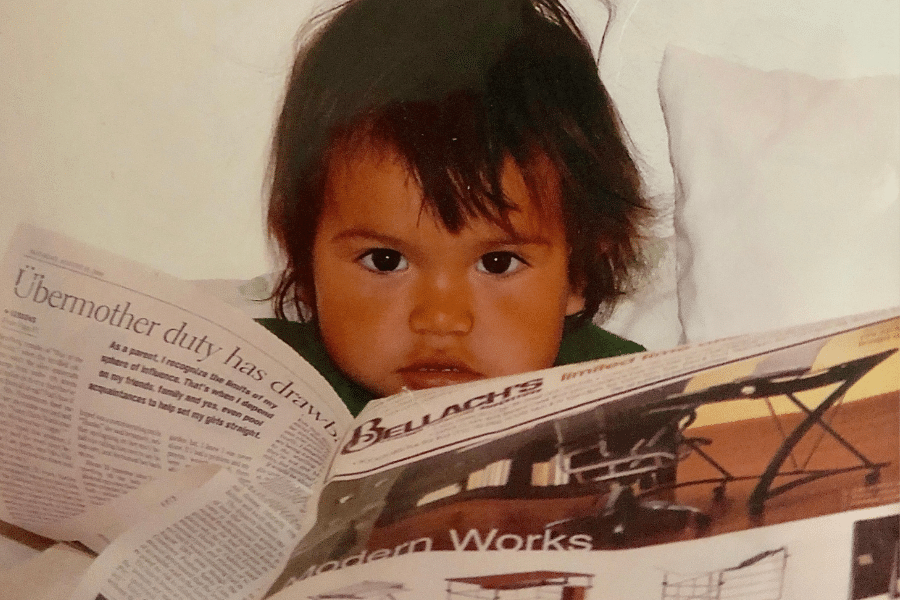
    As a journalist, I was a messy note taker. That piece of paper in the photo image at the top of the story is an actual page of notes I once took. If I had time before I had to submit my article I would take the effort to type my notes onto a Word or Google Doc. Later I fell in love with spreadsheeting and would type my notes into a Google Spreadsheet, which would allow me to match up information with information from other interviews and sort them. This became handy when I was doing a story that involved a lot of interviews and complicated information. 

    When going to interviews I sometimes forgot a notepad and would have to grab paper anyway I could. I’ve taken notes in the margins of flyers and brochures and on the backside of stuff I got in the mail.

    But the best practice is to always keep a notepad on you, just as photographers always keep a camera on them. 

    Finally, when you are ready to start writing, write from your notes first before going to the recording. Use the recording to make sure you got your quotes right and that you paraphrased what the person said correctly. Trust that your brain and your ears and your hand will have taken down the best information and the most engaging quotes. 


    Questions to consider:

    1. Why take notes if you are recording an interview?

    2. What is the difference between quoting someone and paraphrasing something they said?

    3. How good a notetaker are you?


    Source link

  • Top Tips: Are your sources reliable?

    Top Tips: Are your sources reliable?

    As a reporter you’re only as good as your sources. That’s why it is important, when doing a news story, to choose sources who are knowledgeable. That’s the advice from investigative journalist Matt Drange. 

    As a reporter, Drange doesn’t report his own thoughts and feelings. Instead, he reports the news based on what he can verify from multiple sources.

    Drange has written stories for ProPublica, Forbes Magazine, the Center for Investigative Reporting, the Guardian and Business Insider. 

    He said that when researching a story and looking for interviews, you should evaluate whether potential sources are reliable. This is critical in this age where so much disinformation is distributed. Just because someone says something and just because someone has a fancy title doesn’t mean they will give you good information.

    “These days the internet makes finding and accessing information easy,” Drange said. “But just because someone says something, doesn’t make it true or worthwhile for you to report in a journalistic article.”

    Source link

  • A decade waking teens up to the world around them.

    A decade waking teens up to the world around them.

    Back in 2019, students at La Jolla Country Day School in California interviewed a citizen of Beirut who had spent years imprisoned in the Guantanamo Bay Detention Center in Cuba, through a live zoom webinar arranged by News Decoder. 

    In 2022, News Decoder brought war correspondent Bernd Debusmann into a classroom, through a live feed to the Tatnall School in the U.S. state of Delaware where students were able to ask him what it was like getting shot in the back while covering Beirut. 

    My memory of high school is the challenge I had keeping my eyes open and my head vertical. I can describe falling in love with a metallic blue Mercedes in the parking lot below the window in my trigonometry class but I can’t tell you what a cotangent is. 

    The students in math and history and language classes today will inherit not just the world we live in but the power to shape it. And the years they spend in school are supposed to prepare them for that awesome responsibility. 

    But can we keep them awake and aware after they’ve stayed up half the night binging Apple TV or playing PUBG, fueled by orange Fanta and Hot Cheetos?

    Feeding curiosity

    It is News Decoder’s deep belief that most students are curious and want to learn but that they need to connect to the material they are supposed to study.

    For 10 years we’ve helped teachers and schools engage teens through experiential learning and by connecting them with people who have been eyewitnesses to world events. At News Decoder, we bring the world into the classroom and take students out into the world around them. 

    We do this through storytelling. We don’t tell them stories, we have them tell stories to us and the world and interview people who have stories to tell. We show them the power of telling other people’s stories through journalism and in the process exploring other people’s perspectives and learning about their experiences. 

    Two ways we do this is through cross border webinars and through our signature Pitch, Report, Draft and Revise process that we call PRDR. In cross border webinars we put students from different countries and across different time zones together in live video sessions to share problems in their communities and compare the conclusions they reached after researching the same important topic. 

    This past year we did that through our monthly “Decoder Dialogues.” Students from countries including Colombia, India, Belgium, France, Rwanda and the United States shared their research and views about topics as important as the role of the press in journalism, what good and bad leadership looks like, and where responsibility for climate change lies. 

    Through the PRDR process, we encourage students to identify a problem in their community, research it, and find and interview an expert — someone who had directly experienced the problem, or someone working to solve it and then see whether and how that same problem exists in other countries and how people in those countries tackle it. 

    Building human connections across borders

    Ultimately, we guide them through the process of turning their findings into engaging stories — articles or podcasts or videos and publishing those stories to the world. 

    In a world where so many of us spend so much time looking at screens, we want students to realize that knowledge can begin online, but the most powerful information comes from finding and interviewing people who are knowledgeable and that conversation with an interesting person is so much more engaging than words on a screen. 

    Interviews are transformative. In conducting them, students find themselves at the same level as the people they interview no matter how important that person is. An insightful question asked by a 16-year-old to say, famed U.S. constitutional lawyer Floyd Abrahms, which Lucy Jaffee did back in 2020, commands respect.

    “I just loved being able to talk to people and hear their stories,” Jaffee said at the time.

    It is that love for human connection in an increasingly robotic world that News Decoder is committed to fostering. We’ve done it for 10 years and we plan to do it for another decade. 

    Source link

  • Cross platforms to reach a wider audience

    Cross platforms to reach a wider audience

    In telling the story across different platforms, the important thing is to think about who you tell the story to. Imagine talking to them in person. You wouldn’t drone on with facts and data, you would get to what your story is really about.

    The great thing is that in publishing across platforms through different types of media, you don’t need fancy equipment or fancy sound or video editing techniques.

    Instead, the people who know how to do all that often go out of their way to make things look more raw, because raw looks more authentic and authentic is what many media consumers value.

    You can even use an AI program to help you create images, but make sure you tell your audience that you did that. In telling true stories you don’t want to mislead or misinform.

    Source link

  • Do we still value original thought?

    Do we still value original thought?

    I have written the piece that you are now reading. But in the world of AI, what exactly does it mean to say that I’ve written it? 

    As someone who has either written or edited millions of words in my life, this question seems very important. 

    There are plenty of AI aids available to help me in my task. In fact, some are insinuating themselves into our everyday work without our explicit consent. For example, Microsoft inserted a ‘Copilot’ into Word, the programme I’m using. But I have disabled it. 

    I could also insert prompts into a service such as ChatGPT and ask it to write the piece itself. Or I could ask the chatbot direct questions and paste in the answers. Everybody who first encounters these services is amazed by what they can do. The ability to synthesise facts, arguments and ideas and express them in a desired style is truly extraordinary. So it’s possible that using chatbots would make my article more readable, or accurate or interesting.

    But in all these cases, I would be using, or perhaps paraphrasing, text that had been generated by a computer. And in my opinion, this would mean that I could no longer say that I had written it. And if that were the case, what would be the point of ‘writing’ the article and putting my name on it?

    Artificial intelligence is a real asset.

    There is no doubt that we benefit from AI, whether it is in faster access to information and services, safer transport, easier navigation, diagnostics and so on. 

    Rather than a revolution, the ever-increasing automation of human tasks seems a natural extension of the expansion of computing power that has been under way since the Second World War. Computers crunch data, find patterns and generate results that simulate those patterns. In general, this saves time and effort and enhances our lives.

    So at what point does the use of AI become worrying? To me, the answer is in the generation of content that purports to be created by specific humans but is in fact not. 

    The world of education is grappling with this issue. AI gathers information, orders and analyses it, and is able to answer questions about it, whether in papers or other ways. In other words, all the tasks that a student is supposed to perform! 

    At the simplest level, students can ask a computer to do the work and submit it as their own. Schools and universities have means to detect this, but there are also ways to avoid detection. 

    The human touch

    From my limited knowledge, text produced with the help of AI can seem sterile, distanced from both the ‘writer’ and the topic. In a word, dehumanised. And this is not surprising, because it is written by a robot. How is a teacher to grade a paper that seems to have been produced in this way?

    There is no point in moralising about this. The technologies cannot be un-invented. In fact, tech companies are investing hundreds of billions of dollars in vast amounts of additional computing power that will make robots ever more present in our lives. 

    So schools and universities will have to adjust. Some of the university websites that I’ve looked at are struggling to produce straightforward, coherent guidance for students. 

    The aim must be, on the one hand, to enable students to use all the available technologies to do their research, whether the goal is to write a first-year paper or a PhD thesis, and on the other hand to use their own brains to absorb and order their research, and to express their own analysis of it. They need to be able to think for themselves. 

    Methods to prove that they can do this might be to have hand-written exams, or to test them in viva voce interviews. Clearly, these would work for many students and many subjects, but not for all. On the assumption that all students are going to use AI for some of their tasks, the onus is on educational establishments to find new ways to make sure that students can absorb information and express their analysis on their own.

    Can bots break a news story?

    If schools and universities can’t do that, there would be no point in going to university at all. Obtaining a degree would have no meaning and people would be emerging from education without having learned how to use their brains.

    Another controversial area is my own former profession, journalism. Computers have subsumed many of the crafts that used to be involved in creating a newspaper. They can make the layouts, customise outputs, match images to content, and so on. 

    But only a human can spot what might be a hot political story, or describe the situation on the ground in Ukraine.  

    Journalists are right to be using AI for many purposes, for example to discover stories by analysing large sets of data. Meanwhile, more menial jobs involving statistics, such as writing up companies’ financial results and reporting on sports events, could be delegated to computers. But these stories might be boring and could miss newsworthy aspects, as well as the context and the atmosphere. Plus, does anybody actually want to read a story written by a robot? 

    Just like universities, serious media organisations are busy evolving AI policies so as to maintain a competitive edge and inform and entertain their target audiences, while ensuring credibility and transparency. This is all the more important when the dissemination of lies and fake images is so easy and prevalent. 

    Can AI replace an Ai Weiwei? 

    The creative arts are also vulnerable to AI-assisted abuse. It’s so easy to steal someone’s music, films, videos, books, indeed all types of creative content. Artists are right to appeal for legal protection. But effective regulation is going to be difficult.  

    There are good reasons, however, for people to regulate themselves. Yes, AI’s potential uses are amazing, even frightening. But it gets its material from trawling every possible type of content that it can via the internet. 

    That content is, by definition, second hand. The result of AI’s trawling of the internet is like a giant bowl of mush. Dip your spoon into it, and it will still be other people’s mush. 

    If you want to do something original, use your own brain to do it. If you don’t use your own intelligence and your own capabilities, they will wither away.

    And so I have done that. This piece may not be brilliant. But I wrote it.


    Questions to consider:

    1. If artificial intelligence writes a story or creates a piece of art, can that be considered original?

    2. How can journalists use artificial intelligence to better serve the public?

    3. In what ways to you think artificial intelligence is more helpful or harmful to professions like journalism and the arts?


    Source link

  • Can the information you share be trusted?

    Can the information you share be trusted?

    “If you see that a person has lied in the past you should carefully consider whether it is a good idea to trust them,” Jonas said. 

    3. Find other sources that seem to be reporting the same thing.

    “Sometimes you will find that different sources interpret the same event very differently,” Jonas said. “Think about which sources you should trust more.”

    Information in research articles, journalistic publications or academic experts and institutions are generally more reliable than blog contributors or social media posts, Jonas said. 

    Be a bit skeptical, too, she said, when a publication or podcast or post seems to mix information with emotion and see if you can separate out factual reporting with opinion.

    Incorporating this healthy skepticism and adopting a system for verifying information will help you build a reputation for credibility and reliability. This is useful not just in your reporting, Jonas said, but in your daily life, as well. 


    Questions to consider:

    1. What is meant by a system of verification?

    2. Why should you check for information about the author of an article or post you read?

    3. How can a healthy skepticism be useful in your daily life?


    Source link