Category: K-12

  • New research highlights the importance and challenges of K-12 student engagement

    New research highlights the importance and challenges of K-12 student engagement

    This press release originally appeared online.

    Key points:

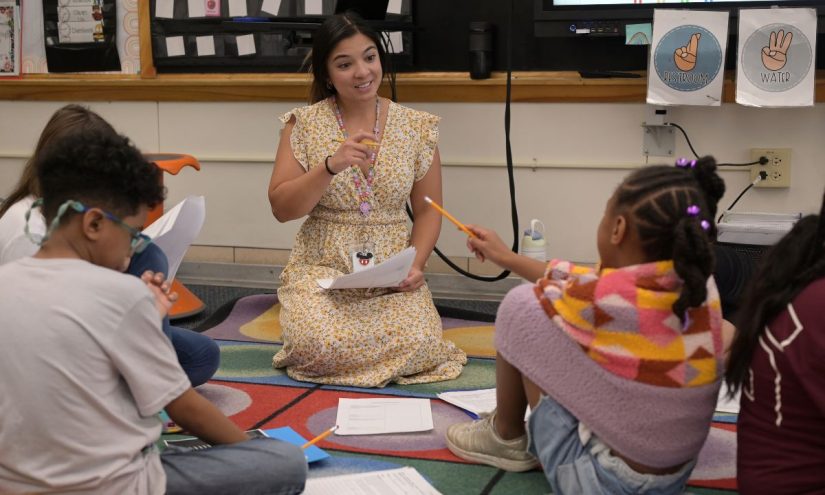
    While there is wide agreement that student engagement plays a vital role in learning, educators continue to face uncertainty about what engagement looks like, how best to measure it, and how to sustain it, according to a new study from Discovery Education

    Education Insights 2025–2026: Fueling Learning Through Engagement captures prevailing attitudes and beliefs on the topic of engagement from 1,398 superintendents, teachers, parents, and students from across the United States. Survey data was collected in May 2025 by Hanover Research on behalf of Discovery Education

    Discovery Education conducted the Education Insights report to gain a deeper understanding of how engagement is defined, observed, and nurtured in K-12 classrooms nationwide, and we are thankful to the participants who shared their perspectives and insights with us,” said Brian Shaw, Discovery Education’s Chief Executive Officer. “One of the most important findings of this report is that engagement is seen as essential to learning, but is inconsistently defined, observed, and supported in K-12 classrooms. I believe this highlights the need for a more standardized approach to measuring student engagement and connecting it to academic achievement. Discovery Education has embarked on an effort to address those challenges, and we look forward to sharing more as our work progresses.” 

    Key findings of the Education Insights 2025–2026: Fueling Learning Through Engagement report include: 

    Engagement is broadly recognized as a key driver of learning and success. Ninety-three percent of educators surveyed agreed that student engagement is a critical metric for understanding overall achievement, and 99 percent of superintendents polled believe student engagement is one of the top predictors of success at school. Finally, 92 percent of students said that engaging lessons make school more enjoyable. 

    But educators disagree on the top indicators of engagement. Seventy-two percent of teachers rated asking thoughtful questions as the strongest indicator of student engagement. However, 54 percent of superintendents identified performing well on assessments as a top engagement indicator. This is nearly twice as high as teachers, who rank assessments among the lowest indicators of engagement. 

    School leaders and teachers disagree on if their schools have systems for measuring engagement. While 99 percent of superintendents and 88 percent of principals said their district has an intentional approach for measuring engagement, only 60 percent of teachers agreed. Further, nearly one-third of teachers said that a lack of clear, shared definitions of student engagement is a top challenge to measuring engagement effectively. 

    Educators and students differ on their perceptions of engagement levels. While 63 percent of students agreed with the statement “Students are highly engaged in school,” only 45 percent of teachers and 51 percent of principals surveyed agreed with the same statement.  

    Students rate their own engagement much higher than their peers. Seventy percent of elementary students perceived themselves as engaged, but only 42 percent perceived their peers as engaged. Fifty-nine percent of middle school students perceived themselves engaged in learning, but only 36 percent perceived their peers as engaged. Finally, 61 percent of high school students perceived themselves as engaged, but only 39 percent described their peers as engaged. 

    Proximity to learning changes impressions of AI. Two-thirds of students believe AI could help them learn faster, yet fewer than half of teachers report using AI themselves to complete tasks. Only 57 percent of teachers agreed with the statement “I frequently learn about positive ways students are using AI,” while 87 percent of principals and 98 percent of superintendents agree. Likewise, only 53 percent of teachers agreed with the statement “I am excited about the potential for AI to support teaching and learning,” while 83 percent of principals and 94 percent of superintendents agreed. 

    Latest posts by eSchool Media Contributors (see all)

    Source link

  • Catapult Learning is Awarded Tutoring Program Design Badge from Stanford University’s National Student Support Accelerator

    Catapult Learning is Awarded Tutoring Program Design Badge from Stanford University’s National Student Support Accelerator

    Organization recognized for excellence in high-impact tutoring design and student achievement gains

    PHILADELPHIA, Aug. 25, 2025 – Catapult Learning, a division of FullBloom that provides academic intervention programs for students and professional development solutions for teachers in K-12 schools, today announced it earned the Tutoring Program Design Badge from the National Student Support Accelerator (NSSA) at Stanford University. The designation, valid for three years, recognizes tutoring providers that demonstrate high-quality, research-aligned program design.

    The recognition comes at a time when the need for high-impact tutoring (HIT) has never been greater. As schools nationwide work to close learning gaps that widened during the COVID-19 pandemic and accelerate recovery, Catapult Learning stands out for its nearly 50-year legacy of delivering effective academic support to students who need it most.

    “Catapult Learning is honored to receive this prestigious national recognition from the NSSA at Stanford University,” said Rob Klapper, president at Catapult Learning. “We are excited to be recognized for our high-impact tutoring program design and will continue to uphold the highest standards of excellence as we support learners across the country.” 

    Each year, Catapult Learning’s programs support more than 150,000+ students with nearly four million in-person tutoring sessions, in partnership with 2,100 schools and districts nationwide. Its tutors, many of whom hold four-year degrees, are highly trained professionals who are supported with ongoing coaching and professional development.

    Recent data from Catapult Learning’s HIT programs show strong academic gains across both math and reading subject areas:

    • 8 out of every 10 math students increased their pre/post score
    • 9 out of every 10 reading students increased their pre/post score

    These results come from programs that have also earned a Tier 2 evidence designation under the Every Student Succeeds Act, affirming their alignment with rigorous research standards. 

    The Badge was awarded following a rigorous, evidence-based review conducted by an independent panel of education experts. The NSSA evaluated multiple components of Catapult Learning’s program – including instructional design, tutor training and support, and the use of data to inform instruction – against its Tutoring Quality Standards.

    “This designation underscores the strength and intentionality behind our high-impact tutoring model,” said Devon Wible, vice president of teaching and learning at Catapult Learning. “This achievement reflects our deep commitment to providing high-quality, research-based tutoring that drives meaningful outcomes for learners.”

    Tutoring is available in person, virtually, or in hybrid formats, and can be scheduled before, during, or after school, including weekends. Sessions are held a minimum of three times per week, with flexible options tailored to the needs of each school or district. Catapult Learning provides all necessary materials for both students and tutors.

    To learn more about Catapult Learning’s high-impact tutoring offerings, visit: https://catapultlearning.com/high-impact-tutoring/.

    About Catapult Learning

    Catapult Learning, a division of FullBloom, provides academic intervention programs for students and professional development solutions for teachers in K-12 schools, executed by a team of experienced coaches. Our professional development services strengthen the capacity of teachers and leaders to raise and sustain student achievement. Our academic intervention programs support struggling learners with instruction tailored to the unique needs of each student. Across the country, Catapult Learning partners with 500+ school districts to produce positive outcomes that promote academic and professional growth. Catapult Learning is accredited by Cognia and has earned its 2022 System of Distinction honor.  

    Latest posts by eSchool News Contributor (see all)

    Source link

  • K-12 Chronic Absenteeism Rates Down From Peak, But Remain Persistently High – The 74

    K-12 Chronic Absenteeism Rates Down From Peak, But Remain Persistently High – The 74


    Get stories like this delivered straight to your inbox. Sign up for The 74 Newsletter

    Since hitting a record high in 2022, national chronic absenteeism rates have dropped modestly — by about five percentage points — according to the most recent available data, but still remain persistently higher than pre-pandemic levels. 

    States that joined a national pledge led by three high-profile education advocacy and research groups to cut chronic absenteeism in half over five years fared better. The 16 states and Washington, D.C. posted results “substantially above the average rate” of decline, though exact numbers are not yet available, said Nat Malkus, deputy director of education policy studies at the American Enterprise Institute, one of the trio.

    The national chronic absenteeism average dropped from 28.5% in 2022 to 25.4% in 2023, and fell an additional two points to 23.5% in 2024. Virginia, which is among the 16 participating states, cut its chronic absenteeism by 4.4 percentage points, year over year, to 15.7%, as of spring 2024.

    Speaking of the states collectively, Malkus told The 74, “That’s good but it’s not as good as we need it to be. I think it points to the need for sustained pressure and a sustained campaign to bring absence rates down and to bring more students back to consistent attendance.”

    Last July, AEI and EdTrust, right-and left-leaning think tanks, respectively, and the national nonprofit Attendance Works joined forces to launch The 50% Challenge. This week, the organizations hosted an event in Washington, D.C., to report on their progress, re-up the call to action and hear insights from state, district and community partners on how they are improving student attendance and engagement.

    With California and Georgia recently joining, the 16 states and D.C. who signed on to the pledge account for more than a third of all students nationally. While Malkus doesn’t necessarily attribute their better results to the pledge itself, he noted that their participation shows a willingness to commit to the cause and be publicly accountable for their results. 

    “I will hold their feet to the fire on this goal,” he added during his opening remarks in D.C.

    While felt most acutely by students of color and those in poorer districts, the spike in chronic absenteeism — students missing more than 10% of school days a year — cut across districts regardless of size, racial breakdown or income. Chronic absenteeism surged from 13.4% in 2017 to 28.5% in 2022 before beginning to drop in 2023.

    Only about one-third of students nationally are in districts that are on pace to cut 2022 absenteeism in half by 2027, according to an AEI report, and rates improved more slowly in 2024 than they did in 2023, “raising the very real possibility that absenteeism rates might never return to pre-pandemic levels.

    AEI

    Research has shown that students with high rates of absenteeism are more likely to fall behind academically and are at a greater risk of dropping out of school. About 8% of all learning loss from the pandemic is attributed just to chronic absenteeism, according to soon-to-be-released AEI research.

    The continued disproportionate impacts of chronic absenteeism were confirmed by recent RAND research, which found that in roughly half of urban school districts, more than 30% of students were chronically absent — a far higher share of students than in rural or suburban school districts.

    RAND also found that the most commonly reported reason for missing school was sickness and one-quarter of kids did not think that being chronically absent was a problem.

    SchoolStatus, a private company that works with districts to reduce chronic absenteeism, also released new numbers this week for some 1.3 million K-12 students across 172 districts in nine states. Districts using proactive interventions, the company reports, drove down chronic absenteeism rates from 21.9% in 2023–24 to 20.9% in 2024–25.

    At this week’s event, numerous experts across two panels emphasized the importance of a tiered approach to confronting the issue, which has resisted various remedies. Schools must build enough trust and buy-in with kids and their families that they are willing to share why they are absent in the first place. Once those root causes are identified, it is up to school, district and state leaders to work to remove the barriers.

    And while data monitoring must play a significant role, it should be done in a way that is inclusive of families.

    “We need to analyze data with families, not at them,” said Augustus Mays, EdTrust’s vice president of partnerships and engagement.

    Augustus Mays is the vice president of partnerships and engagement at EdTrust. (EdTrust)

    It’s imperative to understand the individual child beyond the number they represent and to design attendance plans and strategies with families so they feel supported rather than chastised.

    “It’s around choosing belonging over punitive punishment,” Mays added.

    One major and common mistake schools make is “accountability without relationships,” said Sonja Brookins Santelises, the superintendent of Baltimore City Public Schools.

    “You can’t ‘pull people up’ if you don’t have enough knowledge of what they’re really going through,” she said.

    Panelists were transparent that all this would require immense funding, staff and community partnerships.

    Virginia achieved its noteworthy drop in chronic absenteeism after launching a $418 million education initiative in the fall of 2023, in part after seeing their attendance data sink, with about 1 in 5 students chronically missing school. At least 10% of those funds are earmarked to prioritize attendance solutions in particular, according to panelist Emily Anne Gullickson, the superintendent of public instruction for the Virginia Department of Education. 

    These strategies are far-reaching, she noted: Because parents had been told throughout the pandemic to keep their kids home at the slightest sign of illness, schools partnered with pediatricians and school nurses to help counter the no-longer-necessary “stay home” narrative.

    Hedy Chang is the founder and executive director of Attendance Works. (Attendance Works)

    Gullickson said she also broke down bureaucratic silos, connecting transportation directors and attendance directors, after realizing the role that transit played in chronic absenteeism. The state now has second chance buses as well as walking and biking “buses,” led by parents or teachers along a fixed route, who pick up students along the way.

    And they are “on a mission to move away from seat time and really deliver more flexibility on where, when and how kids are learning,” she said. 

    “This isn’t one strategy. It’s a set of strategies,” said Attendance Works founder and executive director Hedy Chang, who moderated the panel.

    In Connecticut, state leaders have launched the Learning Engagement and Attendance Program, a research-based model that sends trained support staff to families’ homes to build relationships and better understand why their kids are missing school. 

    Charlene Russell-Tucker is the commissioner of the Connecticut State Department of Education. (Connecticut State Department of Education)

    A recent study confirmed that six months after the program’s first home visits, attendance rates improved by approximately 10 percentage points for K-8 students, and nearly 16 percentage points for high schoolers, said Charlene Russell-Tucker, the commissioner of the Connecticut State Department of Education.

    Schools must also work to motivate kids to want to show up in the first place, panelists said, making it a meaningful place that students believe will support and help them in the long run. The only way to do this is to start with student and family feedback, said Brookins, the Baltimore schools chief.

    During the pandemic many parents saw up-close for the first time what their kids’ classrooms and teacher interactions looked like, “and I don’t think a lot of folks liked what they saw for a variety of different reasons,” Brookins said.

    “I think it opened up boxes of questions that we — as the education establishment — were unprepared to answer,” she added. But chronic absenteeism cannot be successfully fought without engaging in those uncomfortable conversations.

    Disclosure: The Bill & Melinda Gates Foundation provides financial support to EdTrust and The 74.


    Get stories like these delivered straight to your inbox. Sign up for The 74 Newsletter

    Source link

  • The complex dynamics of principal turnover in modern educational institutions

    The complex dynamics of principal turnover in modern educational institutions

    Key points:

    The departure and replacement of school principals represents one of the most significant organizational changes within educational institutions, creating ripple effects that permeate every aspect of school operations. This phenomenon, increasingly prevalent in contemporary education systems, deserves thorough examination for its profound impact on institutional effectiveness, academic achievement, and organizational stability.

    When a principal exits an educational institution, the immediate effects reverberate throughout the entire school system. The administrative vacuum extends far beyond mere personnel changes, as new principals invariably bring distinct leadership philosophies, strategic priorities, and management approaches that can fundamentally reshape the school’s operational framework. Current research in educational leadership suggests that schools typically require between three to five years to fully stabilize following leadership transitions, indicating that frequent turnover can trap institutions in continuous cycles of adjustment and reorganization.

    The principal’s role transcends traditional administrative leadership, functioning as the cultural architect of the school community. During leadership transitions, the delicate fabric of established relationships between administration, faculty, and staff enters a period of uncertainty and realignment. The school’s cultural identity, carefully constructed through years of shared experiences and mutual understanding, often undergoes substantial transformation as new leadership implements alternative approaches to community building and professional collaboration. This cultural shift can significantly impact teacher motivation, student engagement, and overall school climate.

    Academic program integrity and student achievement metrics frequently experience fluctuations during principal transitions. New leaders typically introduce fresh perspectives on curriculum implementation, instructional methodologies, and resource allocation strategies. While innovation and new approaches can catalyze positive change, frequent shifts in academic direction may disrupt educational continuity and student progress. Empirical studies have consistently demonstrated that schools experiencing frequent principal turnover often exhibit temporary declines in student achievement metrics, with particularly pronounced effects in high-poverty areas where stability serves as a crucial factor for student success.

    The impact extends deep into stakeholder relationships and community partnerships. Parents, community organizations, and local partners must adapt to new leadership styles, communication protocols, and institutional priorities. The critical process of building and maintaining trust, essential for effective school-community partnerships, frequently requires renewal with each leadership change. This cyclical process can affect various aspects of school operations, from volunteer program effectiveness to community support for school initiatives and funding proposals.

    Professional development trajectories and staff retention patterns often undergo significant changes during principal transitions. Different leaders may emphasize various areas of professional growth or implement modified evaluation systems, directly affecting teacher satisfaction and career advancement opportunities. Research indicates a strong correlation between principal turnover and increased teacher attrition rates, creating compound effects on institutional stability and educational continuity. This relationship suggests that leadership stability plays a crucial role in maintaining a consistent and experienced teaching staff.

    The challenges of strategic planning become particularly acute in environments characterized by frequent leadership changes. Multi-year improvement initiatives risk interruption or abandonment as new principals implement different priorities and approaches. This instability can affect various aspects of school development, from technology integration plans to curriculum development initiatives, potentially compromising the institution’s ability to achieve long-term educational objectives and maintain consistent progress toward established goals.

    Educational institutions can implement various strategies to minimize the negative impacts of principal turnover, including developing comprehensive transition protocols, maintaining detailed documentation of ongoing initiatives, creating strong distributed leadership teams, establishing clear communication channels during transitions, and building robust institutional memory through systematic record-keeping. These mitigation strategies prove essential for maintaining organizational stability and educational effectiveness during periods of leadership change.

    The implications of principal turnover extend throughout the educational ecosystem, influencing everything from daily operations to long-term strategic initiatives. Understanding these complex dynamics becomes increasingly crucial for educational stakeholders, policymakers, and administrators in developing effective strategies to maintain institutional stability and educational quality during leadership transitions. As educational institutions continue to evolve in response to changing societal needs and expectations, the ability to manage leadership transitions effectively becomes paramount for ensuring consistent, high-quality education for all students.

    This comprehensive analysis of principal turnover effects provides valuable insights for educational professionals, administrators, and policymakers working to create more stable and effective learning environments. The ongoing challenge lies in balancing the potential benefits of new leadership perspectives with the fundamental need for institutional stability and continuous educational improvement, all while maintaining focus on the ultimate goal: providing optimal learning opportunities for students in an ever-changing educational landscape.

    Latest posts by eSchool Media Contributors (see all)

    Source link

  • Mental health screeners help ID hidden needs, research finds

    Mental health screeners help ID hidden needs, research finds

    Key points:

    A new DESSA screener to be released for the Fall ‘25 school year–designed to be paired with a strength-based student self-report assessment–accurately predicted well-being levels in 70 percent of students, a study finds.  

    According to findings from Riverside Insights, creator of research-backed assessments, researchers found that even students with strong social-emotional skills often struggle with significant mental health concerns, challenging the assumption that resilience alone indicates student well-being. The study, which examined outcomes in 254 middle school students across the United States, suggests that combining risk and resilience screening can enable identification of students who would otherwise be missed by traditional approaches. 

    “This research validates what school mental health professionals have been telling us for years–that traditional screening approaches miss too many students,” said Dr. Evelyn Johnson, VP of Research & Development at Riverside Insights. “When educators and counselors can utilize a dual approach to identify risk factors, they can pinpoint concerns and engage earlier, in and in a targeted way, before concerns become major crises.”

    The study, which offered evidence of, for example, social skills deficits among students with no identifiable or emotional behavioral concerns, provides the first empirical evidence that consideration of both risk and resilience can enhance the predictive benefits of screening, when compared to  strengths-based screening alone.

    In the years following COVID, many educators noted a feeling that something was “off” with students, despite DESSA assessments indicating that things were fine.

    “We heard this feedback from lots of different customers, and it really got our team thinking–we’re clearly missing something, even though the assessment of social-emotional skills is critically important and there’s evidence to show the links to better academic outcomes and better emotional well-being outcomes,” Johnson said. “And yet, we’re not tapping something that needs to be tapped.”

    For a long time, if a person displayed no outward or obvious mental health struggles, they were thought to be mentally healthy. In investigating the various theories and frameworks guiding mental health issues, Riverside Insight’s team dug into Dr. Shannon Suldo‘s work, which centers around the dual factor model.

    “What the dual factor approach really suggests is that the absence of problems is not necessarily equivalent to good mental health–there really are these two factors, dual factors, we talk about them in terms of risk and resilience–that really give you a much more complete picture of how a student is doing,” Johnson said.

    “The efficacy associated with this dual-factor approach is encouraging, and has big implications for practitioners struggling to identify risk with limited resources,” said Jim Bowler, general manager of the Classroom Division at Riverside Insights. “Schools told us they needed a way to identify students who might be struggling beneath the surface. The DESSA SEIR ensures no student falls through the cracks by providing the complete picture educators need for truly preventive mental health support.”

    The launch comes as mental health concerns among students reach crisis levels. More than 1 in 5 students considered attempting suicide in 2023, while 60 percent of youth with major depression receive no mental health treatment. With school psychologist-to-student ratios at 1:1065 (recommended 1:500) and counselor ratios at 1:376 (recommended 1:250), schools need preventive solutions that work within existing resources.

    The DESSA SEIR will be available for the 2025-2026 school year.

    This press release originally appeared online.

    eSchool News Staff
    Latest posts by eSchool News Staff (see all)

    Source link

  • Weaving digital citizenship into edtech innovation

    Weaving digital citizenship into edtech innovation

    Key points:

    What happens when over 100 passionate educators converge in Chicago to celebrate two decades of educational innovation? A few weeks ago, I had the thrilling opportunity to immerse myself in the 20th anniversary of the Discovery Educator Network (the DEN), a week-long journey that reignited my passion for transforming classrooms.

    From sunrise to past sunset, my days at Loyola University were a whirlwind of learning, laughter, and relentless exploration. Living the dorm life, forging new connections, and rekindling old friendships, we collectively dove deep into the future of learning, creating experiences that went far beyond the typical professional development.

    As an inaugural DEN member, the professional learning community supported by Discovery Education, I was incredibly excited to return 20 years after its founding to guide a small group of educators through the bountiful innovations of the DEN Summer Institute (DENSI). Think scavenger hunts, enlightening workshops, and collaborative creations–every moment was packed with cutting-edge ideas and practical strategies for weaving technology seamlessly into our teaching, ensuring our students are truly future-ready.

    During my time at DENSI, I learned a lot of new tips and tricks that I will pass on to the educators I collaborate with. From AI’s potential to the various new ways to work together online, participants in this unique event learned a number of ways to weave digital citizenship into edtech innovation. I’ve narrowed them down to five core concepts; each a powerful step toward building future-ready classrooms and fostering truly responsible digital citizens.

    Use of artificial intelligence

    Technology integration: When modeling responsible AI use, key technology tools could include generative platforms like Gemini, NotebookLM, Magic School AI, and Brisk, acting as ‘thought partners’ for brainstorming, summarizing, and drafting. Integration also covers AI grammar/spell-checkers, data visualization tools, and feedback tools for refining writing, presenting information, and self-assessment, enhancing digital content interaction and production.

    Learning & application: Teaching students to ethically use AI is key. This involves modeling critical evaluation of AI content for bias and inaccuracies. For instance, providing students with an AI summary of a historical event to fact-check with credible sources. Students learn to apply AI as a thought partner, boosting creativity and collaboration, not replacing their own thinking. Fact-checking and integrating their unique voices are essential. An English class could use AI to brainstorm plot ideas, but students develop characters and write the narrative. Application includes using AI for writing refinement and data exploration, fostering understanding of AI’s academic capabilities and limitations.

    Connection to digital citizenship: This example predominantly connects to digital citizenship. Teaching responsible AI use promotes intellectual honesty and information literacy. Students can grasp ethical considerations like plagiarism and proper attribution. The “red, yellow, green” stoplight method provides a framework for AI use, teaching students when to use AI as a collaborator, editor, or thought partner–or not at all.This approach cultivates critical thinking and empowers students to navigate the digital landscape with integrity, preparing them as responsible digital citizens understanding AI’s implications.

    Digital communication

    Technology integration: Creating digital communication norms should focus on clarity with visuals like infographics, screenshots, and video clips. Canva is a key tool for a visual “Digital Communication Agreement” defining online interaction expectations. Include student voice by the integration and use of pictures and graphics to illustrate behaviors and potentially collaborative presentation / polling tools for student involvement in norm-setting.

    Learning & application: Establishing clear online interaction norms is the focus of digital communication. Applying clear principles teaches the importance of visuals and setting communication goals. Creating a visual “Digital Communication Agreement” with Canva is a practical application where students define respectful online language and netiquette. An elementary class might design a virtual classroom rules poster, showing chat emojis and explaining “think before you post.” Using screenshots and “SMART goals” for online discussions reinforces learning, teaching constructive feedback and respectful debate. In a middle school science discussion board, the teacher could model a respectful response like “I understand your point, but I’m wondering if…” This helps students apply effective digital communication principles.

    Connection to digital citizenship: This example fosters respectful communication, empathy, and understanding of online social norms. By creating and adhering to a “Digital Communication Agreement,” students develop responsibility for online interactions. Emphasizing respectful language and netiquette cultivates empathy and awareness of their words’ impact. This prepares them as considerate digital citizens, contributing positively to inclusive online communities.

    Content curation

    Technology integration: For understanding digital footprints, one primary tool is Google Drive when used as a digital folder to curate students’ content. The “Tech Toolbox” concept implies interaction with various digital platforms where online presence exists. Use of many tools to curate content allows students to leave traces on a range of technologies forming their collective digital footprint.

    Learning & application: This centers on educating students about their online presence’s permanence and nature. Teaching them to curate digital content in a structured way, like using a Google Drive folder, is key. A student could create a “Digital Portfolio” in Google Drive with online projects, proud social media posts, and reflections on their public identity. By collecting and reviewing online artifacts, students visualize their current “digital footprint.” The classroom “listening tour” encourages critical self-reflection, prompting students to think about why they share online and how to be intentional about their online identity. This might involve students reviewing anonymized social media profiles, discussing the impression given to future employers.

    Connection to digital citizenship: This example cultivates awareness of online permanence, privacy, responsible self-presentation, and reputation management. Understanding lasting digital traces empowers students to make informed decisions. The reflection process encourages the consideration of their footprint’s impact, fostering ownership and accountability for online behavior. This helps them become mindful, capable digital citizens.

    Promoting media literacy

    Technology integration: One way to promote media literacy is by using “Paperslides” for engaging content creation, leveraging cameras and simple video recording. This concept gained popularity at the beginning of the DEN through Dr. Lodge McCammon. Dr. Lodge’s popular 1-Take Paperslide Video strategy is to “hit record, present your material, then hit stop, and your product is done” style of video creation is something that anyone can start using tomorrow. Integration uses real-life examples (likely digital media) to share a variety of topics for any audience. Additionally, to apply “Pay Full Attention” in a digital context implies online viewing platforms and communication tools for modeling digital eye contact and verbal cues.

    Learning & application: Integrating critical media consumption with engaging content creation is the focus. Students learn to leverage “Paperslides” or another video creation method to explain topics or present research, moving beyond passive consumption. For a history project, students could create “Paperslides” explaining World War II causes, sourcing information and depicting events. Learning involves using real-life examples to discern credible online sources, understanding misinformation and bias. A lesson might show a satirical news article, guiding students to verify sources and claims through their storyboard portion. Applying “Pay Full Attention” teaches active, critical viewing, minimizing distractions. During a class viewing of an educational video, students could pause to discuss presenter credentials or unsupported claims, mimicking active listening. This fosters practical media literacy in creating and consuming digital content.

    Connection to digital citizenship: This example enhances media literacy, critical online information evaluation, and understanding persuasive techniques. Learning to create and critically consume content makes students informed, responsible digital participants. They identify and question sources, essential for navigating a digital information-saturated world. This empowers them as discerning digital citizens, contributing thoughtfully to online content.

    Collaborative problem-solving

    Technology integration: For practicing digital empathy and support, key tools are collaborative online documents like Google Docs and Google Slides. Integration extends to online discussion forums (Google Classroom, Flip) for empathetic dialogue, and project management tools (Trello, Asana) for transparent organization. 

    Learning & application: This focuses on developing effective collaborative skills and empathetic communication in digital spaces. Students learn to work together on shared documents, applying a “Co-Teacher or Model Lessons” approach where they “co-teach” each other new tools or concepts. In a group science experiment, students might use a shared Google Doc to plan methodology, with one “co-teaching” data table insertion from Google Sheets. They practice constructive feedback and model active listening in digital settings, using chat for clarification or emojis for feelings. The “red, yellow, green” policy provides a clear framework for online group work, teaching when to seek help, proceed cautiously, or move forward confidently. For a research project, “red” means needing a group huddle, “yellow” is proceeding with caution, and “green” is ready for review.

    Connection to digital citizenship: This example is central to digital citizenship, developing empathy, respectful collaboration, and responsible problem-solving in digital environments. Structured online group work teaches how to navigate disagreements and offers supportive feedback. Emphasis on active listening and empathetic responses helps internalize civility, preparing students as considerate digital citizens contributing positively to online communities.

    These examples offer a powerful roadmap for cultivating essential digital citizenship skills and preparing all learners to be future-ready. The collective impact of thoughtfully utilizing these or similar approaches , or even grab and go resources from programs such as Discovery Education’s Digital Citizenship Initiative, can provide the foundation for a strong academic and empathetic school year, empowering educators and students alike to navigate the digital world with confidence, integrity, and a deep understanding of their role as responsible digital citizens.

    In addition, this event reminded me of the power of professional learning communities.  Every educator needs and deserves a supportive community that will share ideas, push their thinking, and support their professional development. One of my long-standing communities is the Discovery Educator Network (which is currently accepting applications for membership). 

    Latest posts by eSchool Media Contributors (see all)

    Source link

  • Penny Schwinn Drops Out of the Running for Ed Department’s Deputy Role – The 74

    Penny Schwinn Drops Out of the Running for Ed Department’s Deputy Role – The 74

    Updated

    Penny Schwinn, in line to serve as second in command of the U.S. Department of Education, has withdrawn from the nomination, Education Secretary Linda McMahon announced Thursday.

    Instead, the former Tennessee education commissioner will take on a different role for the department.

    “I am grateful to Dr. Schwinn for her commitment to serving students, families, and educators across the nation,” McMahon said in a statement. “Penny is a brilliant education mind and I look forward to continuing working with her as my chief strategist to make education great again.”

    Schwinn, in a statement, said she gave the decision “thoughtful consideration” and said she will  “remain committed to protecting kids, raising achievement and expanding opportunity  —  my lifelong mission and north star.”

    Considered a champion for improving reading outcomes and high-dosage tutoring, Schwinn was among President Donald Trump’s early picks for department posts. Many perceived her as a more bipartisan choice than others joining the administration, but among Tennessee conservatives, many who felt she was too liberal, opposition to her nomination was strong.

    The timing of Schwinn’s withdrawal couldn’t be worse, according to some conservatives. 

    “Her decision to remove herself from consideration to become deputy secretary hurts students, educators, and the Trump administration,” said Jim Blew, co-founder of the Defense of Freedom Institute, a think tank. “Secretary McMahon has been charged by Congress and the president with huge tasks under the One Big Beautiful Bill and several urgent executive orders.”

    As head of the Education Department, McMahon is striving to turn more authority over education to the states. It’s now unclear who will step into the deputy position and take the lead on the state’s requests for more flexibility over education funding. At least two states, Iowa and Oklahoma, have already submitted requests for block grants, and Indiana is currently gathering comments from the public in preparation for a similar proposal. Kirsten Baesler, North Dakota’s long-time education chief, is currently awaiting confirmation to be assistant secretary for elementary and secondary education at the department. In February, she joined 11 other GOP chiefs in asking McMahon for greater freedom to direct education funds toward state-level needs.

    Controversies and questions over Schwinn’s conservative qualifications have followed her for years. Far-right groups, including Moms for Liberty, said her past support for equity initiatives, like hiring more teachers of color, was evidence that she was not a good fit for an administration determined to eliminate such programs. Others remained angry over Schwinn’s pandemic-era plan to conduct “well-being” home visits. Even though she scrapped the plan, parents and members of the legislature considered it an example of government overreach.

    More recently, Steve Gill, a conservative commentator in Tennessee, reported that while she was deputy superintendent of the Texas Education Agency, Schwinn recommended individuals who advocate for comprehensive sex education, including abortion rights, to advise the state on health curriculum. 

    Gill told The 74 he shared his TriStar Daily article about her stance on these issues with Tennessee Sens. Marsha Blackburn and Bill Hagerty, as well as the state’s congressional delegation. Blackburn, who is expected to run for governor next year, was considered a possible no vote for Schwinn.

    According to Gill, Blackburn’s office “has been working tirelessly behind the scenes with the White House, Secretary Linda McMahon and Majority Leader [John] Thune to block the confirmation.”

    But Madi Biedermann, spokeswoman for the department, said the agency “strongly disagrees with that characterization.”

    Republican Sen. Marsha Blackburn from Tennessee was expected to vote no on Penny Schwinn’s confirmation. (Anna Moneymaker/Getty Images)

    Blew said it’s unfortunate that politics got in the way, noting that Schwinn’s experience in both blue and red states would have brought valuable expertise to the Ed Department role. In addition to her jobs in Tennessee and Texas, Schwinn founded a charter school in Sacramento and also served in the Delaware Department of Education.

    “It’s sad that a handful of demagogues are standing in the way of giving Secretary McMahon the team she needs to succeed,” he said.

    Others praised Schwinn’s record of prioritizing the science of reading in Tennessee schools and directing COVID relief funds toward tutoring.

    “This is a setback for all who want to see Washington slashing red tape, advancing literacy and fighting for common sense values,” said Rick Hess, director of education policy studies at the conservative American Enterprise Institute.

    For some critics, Schwinn’s business ventures since leaving the top spot in Tennessee two years ago raised questions as she waited to appear before the Senate education committee. 

    In June, a day ahead of her joint hearing with three other nominees, The 74 reported that shortly after Trump tapped her for the job, she registered a new education consulting business in Florida, New Horizon BluePrint Group, with a longtime colleague. Before Schwinn filed ethics paperwork with the federal government, her sister replaced her as a manager on the business. 

    When a reporter from The 74 asked questions about the new project, Donald Fennoy, her colleague and a former superintendent of the Palm Beach County School District, dissolved the business.

    Ethics experts say candidates for an administration post often distance themselves from new business entanglements to avoid any appearance of a conflict, but Schwinn has faced accusations of poor judgment before.

    While she was in Texas, the state agency signed a $4.4 million no-bid contract in 2017 with a software company where she had a “professional relationship” with a subcontractor, according to a state audit. And in Tennessee, the education agency made an $8 million deal in 2021 with TNTP, a teacher training organization where her husband Paul Schwinn was employed at the time. Lawmakers considered the deal a “huge conflict.

    “Ethics was a crucial concern,” said J.C. Bowman, executive director and CEO of Professional Educators of Tennessee, a non-union organization. He was among those who sent letters to the Senate, asking them to remove her from consideration. “Her personal business interests and possible conflicts could potentially influence educational decisions in ways that many found difficult to overlook.”

    Clarification: An earlier version of this story mischaracterized the role Penny Schwinn will take on in lieu of serving as the deputy education secretary. Schwinn will be taking on an advisory role at the Education Department.


    Get stories like these delivered straight to your inbox. Sign up for The 74 Newsletter

    Source link

  • Data, privacy, and cybersecurity in schools: A 2025 wake-up call

    Data, privacy, and cybersecurity in schools: A 2025 wake-up call

    Key points:

    In 2025, schools are sitting on more data than ever before. Student records, attendance, health information, behavioral logs, and digital footprints generated by edtech tools have turned K-12 institutions into data-rich environments. As artificial intelligence becomes a central part of the learning experience, these data streams are being processed in increasingly complex ways. But with this complexity comes a critical question: Are schools doing enough to protect that data?

    The answer, in many cases, is no.

    The rise of shadow AI

    According to CoSN’s May 2025 State of EdTech District Leadership report, a significant portion of districts, specifically 43 percent, lack formal policies or guidance for AI use. While 80 percent of districts have generative AI initiatives underway, this policy gap is a major concern. At the same time, Common Sense Media’s Teens, Trust and Technology in the Age of AI highlights that many teens have been misled by fake content and struggle to discern truth from misinformation, underscoring the broad adoption and potential risks of generative AI.

    This lack of visibility and control has led to the rise of what many experts call “shadow AI”: unapproved apps and browser extensions that process student inputs, store them indefinitely, or reuse them to train commercial models. These tools are often free, widely adopted, and nearly invisible to IT teams. Shadow AI expands the district’s digital footprint in ways that often escape policy enforcement, opening the door to data leakage and compliance violations. CoSN’s 2025 report specifically notes that “free tools that are downloaded in an ad hoc manner put district data at risk.”

    Data protection: The first pillar under pressure

    The U.S. Department of Education’s AI Toolkit for Schools urges districts to treat student data with the same care as medical or financial records. However, many AI tools used in classrooms today are not inherently FERPA-compliant and do not always disclose where or how student data is stored. Teachers experimenting with AI-generated lesson plans or feedback may unknowingly input student work into platforms that retain or share that data. In the absence of vendor transparency, there is no way to verify how long data is stored, whether it is shared with third parties, or how it might be reused. FERPA requires that if third-party vendors handle student data on behalf of the institution, they must comply with FERPA. This includes ensuring data is not used for unintended purposes or retained for AI training.

    Some tools, marketed as “free classroom assistants,” require login credentials tied to student emails or learning platforms. This creates additional risks if authentication mechanisms are not protected or monitored. Even widely-used generative tools may include language in their privacy policies allowing them to use uploaded content for system training or performance optimization.


    Data processing and the consent gap

    Generative AI models are trained on large datasets, and many free tools continue learning from user prompts. If a student pastes an essay or a teacher includes student identifiers in a prompt, that information could enter a commercial model’s training loop. This creates a scenario where data is being processed without explicit consent, potentially in violation of COPPA (Children’s Online Privacy Protection Act) and FERPA. While the FTC’s December 2023 update to the COPPA Rule did not codify school consent provisions, existing guidance still allows schools to consent to technology use on behalf of parents in educational contexts. However, the onus remains on schools to understand and manage these consent implications, especially with the rule’s new amendments becoming effective June 21, 2025, which strengthen protections and require separate parental consent for third-party disclosures for targeted advertising.

    Moreover, many educators and students are unaware of what constitutes “personally identifiable information” (PII) in these contexts. A name combined with a school ID number, disability status, or even a writing sample could easily identify a student, especially in small districts. Without proper training, well-intentioned AI use can cross legal lines unknowingly.

    Cybersecurity risks multiply

    AI tools have also increased the attack surface of K-12 networks. According to ThreatDown’s 2024 State of Ransomware in Education report, ransomware attacks on K-12 schools increased by 92 percent between 2022 and 2023, with 98 total attacks in 2023. This trend is projected to continue as cybercriminals use AI to create more targeted phishing campaigns and detect system vulnerabilities faster. AI-assisted attacks can mimic human language and tone, making them harder to detect. Some attackers now use large language models to craft personalized emails that appear to come from school administrators.

    Many schools lack endpoint protection for student devices, and third-party integrations often bypass internal firewalls. Free AI browser extensions may collect keystrokes or enable unauthorized access to browser sessions. The more tools that are introduced without IT oversight, the harder it becomes to isolate and contain incidents when they occur. CoSN’s 2025 report indicates that 60 percent of edtech leaders are “very concerned about AI-enabled cyberattacks,” yet 61 percent still rely on general funds for cybersecurity efforts, not dedicated funding.

    Building a responsible framework

    To mitigate these risks, school leaders need to:

    • Audit tool usage using platforms like Lightspeed Digital Insight to identify AI tools being accessed without approval. Districts should maintain a living inventory of all digital tools. Lightspeed Digital Insight, for example, is vetted by 1EdTech for data privacy.
    • Develop and publish AI use policies that clarify acceptable practices, define data handling expectations, and outline consequences for misuse. Policies should distinguish between tools approved for instructional use and those requiring further evaluation.
    • Train educators and students to understand how AI tools collect and process data, how to interpret AI outputs critically, and how to avoid inputting sensitive information. AI literacy should be embedded in digital citizenship curricula, with resources available from organizations like Common Sense Media and aiEDU.
    • Vet all third-party apps through standards like the 1EdTech TrustEd Apps program. Contracts should specify data deletion timelines and limit secondary data use. The TrustEd Apps program has vetted over 12,000 products, providing a valuable resource for districts.
    • Simulate phishing attacks and test breach response protocols regularly. Cybersecurity training should be required for staff, and recovery plans must be reviewed annually.

    Trust starts with transparency

    In the rush to embrace AI, schools must not lose sight of their responsibility to protect students’ data and privacy. Transparency with parents, clarity for educators, and secure digital infrastructure are not optional. They are the baseline for trust in the age of algorithmic learning.

    AI can support personalized learning, but only if we put safety and privacy first. The time to act is now. Districts that move early to build policies, offer training, and coordinate oversight will be better prepared to lead AI adoption with confidence and care.

    Latest posts by eSchool Media Contributors (see all)

    Source link

  • More Than Half the States Have Issued AI Guidance for Schools – The 74

    More Than Half the States Have Issued AI Guidance for Schools – The 74


    Get stories like this delivered straight to your inbox. Sign up for The 74 Newsletter

    Agencies in at least 28 states and the District of Columbia have issued guidance on the use of artificial intelligence in K-12 schools.

    More than half of the states have created school policies to define artificial intelligence, develop best practices for using AI systems and more, according to a report from AI for Education, an advocacy group that provides AI literacy training for educators.

    Despite efforts by the Trump administration to loosen federal and state AI rules in hopes of boosting innovation, teachers and students need a lot of state-level guidance for navigating the fast-moving technology, said Amanda Bickerstaff, the CEO and co-founder of AI for Education.

    “What most people think about when it comes to AI adoption in the schools is academic integrity,” she said. “One of the biggest concerns that we’ve seen — and one of the reasons why there’s been a push towards AI guidance, both at the district and state level — is to provide some safety guidelines around responsible use and to create opportunities for people to know what is appropriate.”

    North Carolina, which last year became one of the first states to issue AI guidance for schools, set out to study and define generative artificial intelligence for potential uses in the classroom. The policy also includes resources for students and teachers interested in learning how to interact with AI models successfully.

    In addition to classroom guidance, some states emphasize ethical considerations for certain AI models. Following Georgia’s initial framework in January, the state shared additional guidance in June outlining ethical principles educators should consider before adopting the technology.

    This year, Maine, Missouri, Nevada and New Mexico also released guidelines for AI in schools.

    In the absence of regulations at the federal level, states are filling a critical gap, said Maddy Dwyer, a policy analyst for the Equity in Civic Technology team at the Center for Democracy & Technology, a nonprofit working to advance civil rights in the digital age.

    While most state AI guidance for schools focuses on the potential benefits, risks and need for human oversight, Dwyer wrote in a recent blog post that many of the frameworks are missing out on critical AI topics, such as community engagement and deepfakes, or manipulated photos and videos.

    “I think that states being able to fill the gap that is currently there is a critical piece to making sure that the use of AI is serving kids and their needs, and enhancing their educational experiences rather than detracting from them,” she said.

    Stateline is part of States Newsroom, a nonprofit news network supported by grants and a coalition of donors as a 501c(3) public charity. Stateline maintains editorial independence. Contact Editor Scott S. Greenberger for questions: [email protected].


    Get stories like these delivered straight to your inbox. Sign up for The 74 Newsletter

    Source link

  • Education Dept. Lifts Freeze on Remaining Federal Funds – The 74

    Education Dept. Lifts Freeze on Remaining Federal Funds – The 74


    Get stories like this delivered straight to your inbox. Sign up for The 74 Newsletter

    A freeze on federal education funding that prompted two lawsuits has been lifted, and states will be able to access the money next week, the U.S. Department of Education announced Friday.

    The White House Office of Management and Budget (OMB), which argued that districts were spending the money to advance a “radical left-wing agenda,” has completed its review of five different programs totaling $5.5 billion, said Madison Beidermann, spokeswoman for the department. 

    The funds support education for English learners and migrant students and pay for staff training and extra instructional positions. The news came a week after the administration released over $1.3 billion for summer and afterschool programs, which was also held up for review.

    The department alerted states June 30, one day before they expected to receive the money, that the review was in process, forcing programs to cut staff and end summer programs early. Congress appropriated the funds for this coming school year, and President Donald Trump signed the budget in March. 

    The release of the funds, announced just hours before Education Secretary Linda McMahon was scheduled to meet with the nation’s governors in Colorado Springs, Colorado, comes as superintendents nationwide were preparing to eliminate services like literacy and math coaches, according to a survey conducted by AASA, the School Superintendents Association. Half of the 628 chiefs who responded from 43 states said they would have to lay off staff who work with special education students if the funds weren’t released. American Federation of Teachers President Randi Weingarten brought the message to attendees at the union’s annual TEACH conference in Washington, D.C. 

    “The administration backed down and we are getting the money,” she said to a cheering audience. “Those of you who lobbied yesterday, thank you. Those of you who brought the lawsuit, thank you.”

    Attorney generals from 24 blue states and the District of Columbia sued on July 14 over the freeze, arguing that the administration’s actions were harming schools. School districts, parents, unions and nonprofits filed a second challenge on July 21, saying that OMB has never stood in the way of the department’s practice of releasing the funds in two steps, first on July 1 and the rest on Oct. 1. Republican senators joined their Democratic colleagues in pressuring the administration to free up the money.

    Friday’s announcement doesn’t mean the legal fight is over. In a statement, Skye Perryman, president and CEO of Democracy Forward, which is handling the second case, said the legal team would “continue to monitor the situation and work in court to ensure the administration fully complies with the law and that these resources reach the schools and students who need them most.” 

    Districts can now start the school year without the shortfall, but that doesn’t mean advocates’ worries are over about future disruptions to funding. The July 1 distribution date is a longstanding practice, not something written into the law. 

    Tara Thomas, government affairs manager for AASA, said her organization wants to “have additional conversations” with Congress or the administration to “ensure that this type of uncertainty at the last minute doesn’t happen again. Districts need to continue to rely on stable, timely, reliable federal funding.”

    Another fight over education funds could also be ahead. The White House is reportedly preparing another recissions package that would target education funding. Thomas said she didn’t know what might be included, but it could be cuts that the Department of Government Efficiency made to grant programs. 

    On Friday, Trump signed a recissions package, pulling back $9 billion in funds from public television and foreign aid.


    Get stories like these delivered straight to your inbox. Sign up for The 74 Newsletter

    Source link