
Get stories like this delivered straight to your inbox. Sign up for The 74 Newsletter
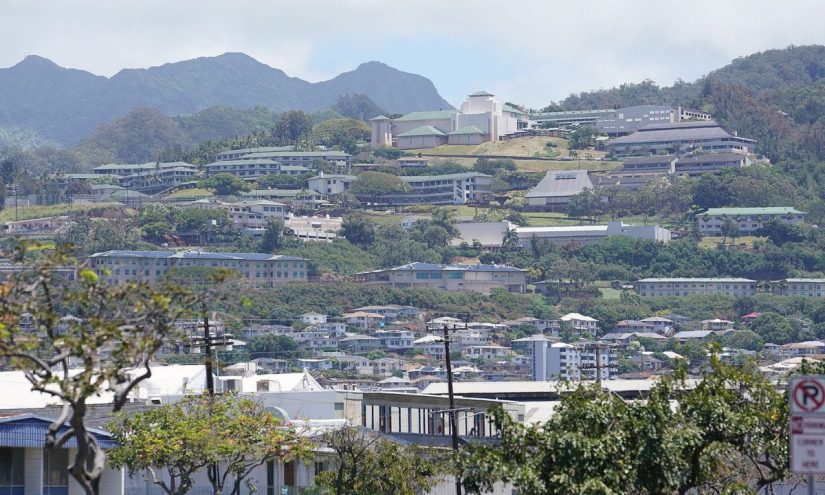
A conservative mainland group whose lawsuit against Harvard University ended affirmative action in college admissions is now building support in Hawaiʻi to take on Kamehameha Schools’ policies that give preference to Native Hawaiian students.
Students for Fair Admissions, based in Virginia, recently launched the website KamehamehaNotFair.org. It says that the admission preference “is so strong that it is essentially impossible for a non-Native Hawaiian student to be admitted to Kamehameha.”
“We believe that focus on ancestry, rather than merit or need, is neither fair nor legal, and we are committed to ending Kamehameha’s unlawful admissions policies in court,” the website says.
Kamehameha’s Board of Trustees and CEO Jack Wong said in a written statement that the school expected the policy would be challenged. The institution — a private school established through the estate of Princess Bernice Pauahi Bishop to educate Hawaiians — successfully defended its admission policy in a series of lawsuits in the early 2000s. The trustees and Wong promised to do so again.
“We are confident that our policy aligns with established law, and we will prevail,” the statement said.
The campaign also drew criticism from the Office of Hawaiian Affairs, established in the late 1970s for the betterment of Native Hawaiians. OHA’s Board of Trustees called it an “attack on the right of Native Hawaiians to care for our own, on our own terms.”
“These attacks are not new — but they are escalating,” the trustees said in a written statement. “They aim to dismantle the hard-won protections that enable our people to heal, rise, and chart our future.”
Several groups have tried and failed in the past to overturn Kamehameha’s admissions policy. Federal courts, siding with Kamehameha, have ruled that giving preference to Native Hawaiians helps alleviate historical injustices they faced after the overthrow of the Hawaiian Kingdom in 1893.
In the 2006 decision upholding Kamehameha Schools’ admissions policy, a 9th Circuit Court of Appeals panel pointed to longstanding challenges Native Hawaiian students have faced in schools.
“It is clear that a manifest imbalance exists in the K-12 educational arena in the state of Hawaiʻi, with Native Hawaiians falling at the bottom of the spectrum in almost all areas of educational progress and success,” Judge Susan Graber wrote in the majority opinion.
These disparities persist. Just over a third of Native Hawaiian students in public schools were proficient in reading in 2024, compared to 52% of students statewide. Less than a quarter of Native Hawaiian students were proficient in math.
The state education department has also fallen short of providing families with adequate access to Hawaiian language immersion programs, according to two lawsuits filed against the department this summer. The Hawaiian immersion programs are open to all students, not just those of Hawaiian ancestry.
Moses Haia III, a lawyer and former director of the Native Hawaiian Legal Corp., said that improving outcomes for Hawaiian students is Kamehameha’s primary reason for existing. He said this new challenge appears to be based on ignorance of Hawaiʻi’s history.
“Ultimately, what I see is these people being uneducated,” Haia said of the mainland group. “Not knowing the history of Hawaiʻi, not knowing the reasons for Kamehameha’s existence, and just once again trying to push Hawaiians into this box… and wanting to be on top.”
Past Challenges
The U.S. Supreme Court ruled in 1976 that private schools can’t discriminate based on race in a case called Runyon v. McCrary, which involved Black school students trying to gain admission to private schools that had yet to integrate non-white students.
An anonymous student sued Kamehameha in 2003, invoking the 1976 ruling and alleging that the school’s policy of giving preference to Hawaiian children was discriminatory. The case eventually landed in the 9th U.S. Circuit Court of Appeals.
A majority of the appeals court judges sided with Kamehameha. They used a part of the Civil Rights Act that prohibits discrimination in the workplace as a legal framework for looking at the admissions policy.
Judge Graber wrote that a preference for Native Hawaiian students “serves a legitimate remedial purpose by addressing the socioeconomic and educational disadvantages facing Native Hawaiians, producing Native Hawaiian leadership for community involvement, and revitalizing Native Hawaiian culture, thereby remedying current manifest imbalances resulting from the influx of western civilization.”
But it was a narrow victory for Kamehameha, an 8-to-7 vote. Dissenting judges wrote that admitting mostly Hawaiian students didn’t create a diverse student body; others said that the policy was clearly discriminatory.
The anonymous student appealed to the U.S. Supreme Court. But Kamehameha entered a $7 million settlement with the student and their mother before the court decided whether to take up the case.
While the settlement safeguarded the admission policy from a ruling by the nation’s highest court it also meant lawyers punted the issue.
Another group of anonymous students challenged the admissions policy a few years later and again took that case to the Supreme Court. But the court declined to take up that case in 2011.
Students for Fair Admissions previously brought two landmark cases against Harvard and the University of North Carolina, arguing that the two schools’ race-conscious admissions policies discriminated against Asian American and white applicants. The Supreme Court ruled in 2023 that colleges cannot use race as a factor in their admissions, although the decision didn’t specify what this could mean for K-12 schools.
Last fall, the number of Black students enrolled at both universities fell, although some researchers cautioned that colleges might not see the full impact of the Supreme Court ruling until a few admissions cycles have passed.
The challenge to Kamehameha Schools’ admissions policies comes amid national pushback on efforts to promote diversity in schools. In February, the U.S. Department of Education said any colleges and K-12 schools using race-based practices in hiring and admissions could lose federal funding, although a court subsequently prevented the department from enforcing those requirements.
Kamehameha receives no funding from the federal government, according to its tax filings. The school, which is the state’s largest private landowner, has assets valued at about $15 billion.
This story was originally published on Honolulu Civil Beat.
Get stories like these delivered straight to your inbox. Sign up for The 74 Newsletter