by Jim Ryan, The Hechinger Report January 19, 2026
The future of work will demand fluency in both science and technology. From addressing climate change to designing ethical AI systems, tomorrow’s challenges will require interdisciplinary thinkers who can navigate complex systems and harness the power of computation.
And that is why we can’t wait until high school or college to integrate computer science into general science.
The time to begin is during middle school, that formative period when students begin to shape their identities, interests and aspirations. If schools want to prepare young people for a future shaped by technology, they must act now to ensure that computer science is not a privilege for a few but a foundation for all.
One innovative way to close this gap is by integrating computer science into the general science curriculum at every middle school. This approach doesn’t require additional class periods or separate electives. Instead — by using computational thinking and digital tools to develop student understanding of real-world scientific phenomena — it reimagines how we teach science.
Science and computer science are already deeply interconnected in the real world. Scientists use computational models to simulate climate systems, analyze genetic data and design experiments. And computer scientists often draw inspiration from biology, physics and chemistry to develop algorithms and solve complex problems, such as by modeling neural networks after the brain’s architecture and simulating quantum systems for cryptography.
Teaching these disciplines together helps students see how both science and computer science are applicable and relevant to their lives and society.
Integrating computer science into middle school science instruction also addresses long-standing equity issues. When computer science is offered only as a separate elective, access often depends on prior exposure, school funding and parental advocacy. This creates barriers for students from underrepresented backgrounds, who may never get the chance to discover their interests or talents in computing.
Embedding computer science into core science classes helps to ensure that every student — regardless of zip code, race or gender — can build foundational skills in computing and see themselves as empowered problem-solvers.
Teachers must be provided the tools and support to make this a reality. Namely, schools should have access to middle school science curriculums that have computer science concepts directly embedded in the instruction. Such units don’t teach coding in isolation — they invite students to customize the sensors that collect data, simulate systems and design coded solutions to real-world problems.
For example, students can use computer science to investigate the question: “Why does contact between objects sometimes but not always cause damage, and how can we protect against damage?”
Students can also use sensors and programming to develop solutions to measure the forces of severe weather. In doing so, they’re not just learning science and computer science — they’re learning how to think like scientists and engineers.
Integrating general science with computer science doesn’t require more instructional time. It simply requires us to consider how we can use computer science to efficiently investigate the science all students already study.
Rather than treating computer science as an add-on, we can weave it into the fabric of how students investigate, analyze and design.
This approach will not only deepen their understanding of scientific concepts but also build transferable skills in logic, creativity and collaboration.
Students need to start learning computer science earlier in their education, and we need to start in the science classroom by teaching these skills in middle school. To ensure that today’s students grow into tomorrow’s innovators and problem-solvers, we must treat computer science as foundational, not optional.
This <a target=”_blank” href=”https://hechingerreport.org/high-school-college-computer-science-lessons/”>article</a> first appeared on <a target=”_blank” href=”https://hechingerreport.org”>The Hechinger Report</a> and is republished here under a <a target=”_blank” href=”https://creativecommons.org/licenses/by-nc-nd/4.0/”>Creative Commons Attribution-NonCommercial-NoDerivatives 4.0 International License</a>.<img src=”https://i0.wp.com/hechingerreport.org/wp-content/uploads/2018/06/cropped-favicon.jpg?fit=150%2C150&ssl=1″ style=”width:1em;height:1em;margin-left:10px;”>
by Kathryn Joyce, The Hechinger Report January 6, 2026
The West Shore school board policy committee meeting came to a halt almost as soon as it began. As a board member started going over the agenda on July 17, local parent Danielle Gross rose to object to a last-minute addition she said hadn’t been on the district’s website the day before.
By posting notice of the proposal so close to the meeting, charged Gross, who is also a partner at a communications and advocacy firm that works on state education policy, the board had violated Pennsylvania’s open meetings law, failing to provide the public at least 24 hours’ notice about a topic “this board knows is of great concern for many community members interested in the rights of our LGBTQ students.”
The committee chair, relentlessly banging her gavel, adjourned the meeting to a nonpublic “executive session.” When the committee reconvened, the policy was not mentioned again until the meeting’s end, when a lone public commenter, Heather Keller, invoked “Hamlet” to warn that something was rotten in the Harrisburg suburbs.
The proposed policy, which would bar trans students from using bathrooms and locker rooms aligned with their gender identity, was a nearly verbatim copy of one crafted by a group called the Independence Law Center — a Harrisburg-based Christian right legal advocacy group whose model policies have led to costly lawsuits in districts around the state.
“Being concerned about that, I remembered that we don’t partner with the Independence Law Center,” Keller said. “We haven’t hired them as consultants. And they’re not our district solicitor.”
To those who’d followed education politics in the state, Keller’s comment would register as wry understatement. Over the past several years, ILC’s growing entanglement with dozens of Pennsylvania school boards has become a high-profile controversy. Through interviews, an extensive review of local reporting and public documents, In These Times and The Hechinger Report found that, of the state’s 500 school districts, at least 20 are known to have consulted with or signed formal contracts accepting ILC’s pro bono legal services — to advise on, draft and defend district policies, free of charge.*
But over the last year, it’s become clear ILC’s influence stretches beyond such formal partnerships, as school districts from Bucks County (outside Philadelphia) to Beaver County (west of Pittsburgh) have proposed or adopted virtually identical anti-LGBTQ and book ban policies that originated with ILC — sometimes without acknowledging any connection to the group or where the policies came from.
In districts without formal partnerships with ILC, such as West Shore, figuring out what, exactly, their board’s relationship is to the group has been a painfully assembled puzzle, thanks to school board obstruction, blocked open records requests and reports of backdoor dealing.
Although ILC has existed for nearly 20 years, its recent prominence began around 2021 with a surge of “parents’ rights” complaints about pandemic-era masking, teaching about racism, LGBTQ representation and how library books and curricula are selected. In many districts where such debates raged, calls to hire ILC soon followed.
In 2024 alone, ILC made inroads of one kind or another with roughly a dozen districts in central Pennsylvania, including West Shore, which proposed contracting ILC that March and invited the group to speak to the board in a closed-door meeting the public couldn’t attend. (ILC did not respond to multiple interview requests or emailed questions.)
On the night of that March meeting, Gross organized a rally outside the school board building, drawing roughly 100 residents to protest, even as it snowed. The board backed down from hiring ILC, but that didn’t stop it from introducing ILC policies. In addition to the proposed bathroom policy, that May the board passed a ban on trans students joining girls’ athletics teams after they’ve started puberty and allowed district officials to request doctors’ notes and birth certificates to enforce it.
To Gross, it’s an example of how West Shore and other school boards without formal relationships with ILC have still found ways to advance the group’s agenda. “They’re waiting for other school boards to do all the controversial stuff with the ILC,” Gross said, then “taking the policies other districts have, running them through their solicitors, and implementing them that way.” (A spokesperson for West Shore stated that the district had not contracted with ILC and declined further comment.)
“It’s like a hydra effect,” said Kait Linton of the grassroots community group Public Education Advocates of Lancaster. “They’ve planted seeds for a vine, and now the vine’s taking off in all the directions it wants to go.”
Related: Become a lifelong learner. Subscribe to our free weekly newsletter featuring the most important stories in education.
ILC was founded in the wake of a Pennsylvania lawsuit that drew nationwide attention and prompted significant local embarrassment.
In October 2004, the Dover Area School District — situated, like West Shore, in York County, south of Harrisburg — changed its biology curriculum to introduce the quasi-creationist theory of “intelligent design” as an alternative to evolution. Eleven families sued, arguing that intelligent design was “fundamentally a religious proposition rather than a scientific one.” In December 2005, a federal court agreed, ruling that public schools teaching the theory violated the U.S. Constitution’s establishment clause.
During the case, an attorney named Randall Wenger unsuccessfully tried to add the creationist Christian think tank he worked for — which published the book Dover sought to teach — to the suit as a defendant, and, failing that, filed an amicus brief instead. When the district lost and was ultimately left with $1 million in legal fees, Wenger found a lesson in it for conservatives moving forward.
Speaking at a 2005 conference hosted by the Pennsylvania Family Institute — part of a national network of state-level “family councils” tied to the heavyweight Christian right organizations Family Research Council and Focus on the Family — Wenger suggested Dover could have avoided or won legal challenges if officials hadn’t mentioned their religious motivations during public school board meetings.
“Give us a call before you do something controversial like that,” Wenger said, according to LancasterOnline. Then, in a line that’s become infamous among ILC’s critics, Wenger invoked a biblical reference to add, “I think we need to do a better job at being clever as serpents.” (Wenger did not respond to multiple requests for comment.)
The following year, in 2006, the Pennsylvania Family Institute launched ILC with Wenger as its chief counsel, a role he remains in today, in addition to serving as chief operating officer. ILC now has three other staff attorneys and has worked directly as plaintiff’s attorneys on two Supreme Court cases: one was part of the larger Hobby Lobby decision, which allows employers to opt out of employee health insurance plans that include contraception coverage; the other expanded religious exemptions for workers.
ILC has financial ties and a history of collaborating with Christian right legal advocacy behemoth Alliance Defending Freedom, including on a 2017 lawsuit against a school district outside Philadelphia that allowed a trans student to use the locker room aligned with their gender. ILC has filed amicus briefs in support of numerous other Christian right causes, including two that led to major Supreme Court victories for the right in 2025: Mahmoud v. Taylor, which limited public schools’ ability to assign books with LGBTQ themes; and United States v. Skrmetti, which affirmed a Tennessee ban on gender-affirming care for minors. In recent months, the group filed two separate amicus briefs on behalf of Pennsylvania school board members in anti-trans cases in other states. In both cases, which were brought by Alliance Defending Freedom and concern school sports and pronoun usage, ILC urged the Supreme Court to “resolve the issue nationwide.”
In lower courts, ILC has worked on or contributed briefs to lawsuits seeking to start public school board meetings with prayer and to allow religious groups to proselytize public school students, among other issues. More quietly, as the local blog Lancaster Examiner reported — and as one ILC attorney recounted at a conference in 2022 — ILC has defended “conversion therapy,” the broadly discredited theory that homosexuality is a disorder that can be cured.
To critics, all of these efforts have helped systematically chip away at civil rights protections for LGBTQ students at the local level, seeding the policies that President Donald Trump’s administration is now trying to make ubiquitous through executive orders. And while local backlash is building in some areas, activists are hindered by the threat that the ILC’s efforts are ultimately aimed at laying the groundwork for a Supreme Court case that could formalize discrimination against transgender students into law nationwide.
But ILC’s greatest influence is arguably much closer to its Harrisburg home, in neighboring Lancaster and York counties, where nine districts have contracted ILC and at least three more have adopted its model policies.
The rural hillside and farmland in Lancaster County, Pennsylvania, are seen on Aug. 15, 2025. The local school district, Penn Manor, adopted anti-trans and anti-LGBTQ policies presented by the Independence Law Center, a Harrisburg-based Christian-right legal advocacy group.
A sign is seen in a residential neighborhood in Holtwood, Pennsylvania.
In Lancaster’s Hempfield district, it started with a 2021 controversy over a trans student joining the girls’ track team. School board meetings that had already grown tense over pandemic masking requirements erupted in new fights about LGBTQ rights and visibility. In the middle of one meeting, recalled Hempfield parent and substitute teacher Erin Small, a board member abruptly suggested hiring ILC to write a new district policy. The suddenness of the proposal caused such public outcry, said Small, that the vote to hire ILC had to be postponed.
But within a few months, the district signed a contract with ILC to write what became Pennsylvania’s first school district ban on trans students participating in sports teams aligned with their gender identity. Other ILC policy proposals followed, including a successful 2023 effort to bar the district from using books or materials that include sexual content, which immediately prompted an intensive review of books written by LGBTQ and non-white authors. (The Hempfield district did not respond to requests for comment.)
In nearby Elizabethtown, the path to hiring ILC began with a fraudulent 2021 complaint, when a man claimed, during a school board meeting, that his middle schooler had checked out an inappropriate book from the school library. Although it later emerged that the man had reportedly used a fake name and officials found no evidence he had children attending the school, his claim nonetheless sparked a long debate over book policies, which eventually led to the district contracting ILC as special legal counsel in 2024. Two anti-trans policies were subsequently passed in January 2025, and a ban on “sexually explicit” books, also based on ILC’s models, was discussed this past spring but has not moved forward to date. (The Elizabethtown district did not respond to requests for comment.)
Across the Susquehanna River in York County — where five districts have contracted ILC and two more have considered or passed its policies — the group’s influence has been broad and sometimes confounding. In one instance, as the York Dispatch discovered, ILC not only authored four policy proposals for the Red Lion Area School District, but ILC senior counsel Jeremy Samek, a registered Pennsylvania lobbyist, also drafted a speech for the board president to deliver in support of three anti-trans policies, all of which passed in 2024. (The Red Lion district did not respond to requests for comment.)
The same year, South Western School District, reportedly acting on ILC advice, ordered a high school to cut large windows into the walls of two bathrooms that had been designated as “gender identity restrooms,” allowing passersby in the hallway to see inside, consequently discouraging students from using them. (The district did not respond to requests for comment, but in a statement to local paper the Evening Sun, school board President Matt Gelazela cited student safety and said the windows helped staff monitor for vaping, bullying and other prohibited activities.)
In many districts, said Lancaster parent Eric Fisher, ILC’s growing relationships with school boards has been eased by the ubiquitous presence around the state of its sister organizations within the Pennsylvania Family Institute, including the institute’s lobbying arm, voucher group, youth leadership conference and Church Ambassador Network, which brings pastors from across Pennsylvania to lobby lawmakers in the state Capitol.
As a result, said Fisher, when ILC shows up in a district, board members often are already familiar with them or other institute affiliates, “having met them at church and having their churches put their stamp of endorsement on them. I think it makes it really easy for [board members] to say yes.”
But in nearly every district that has considered working with ILC, wide-scale pushback has also followed — though often to no avail. In June 2024, in Elizabethtown — where school board fights have been so fractious that they inspired a full-length documentary — members of the public spoke in opposition to hiring ILC at a ratio of roughly 5 to 1 before the board voted unanimously to hire the group anyway.
In the Upper Adams district in Biglerville, southwest of Harrisburg, the school board voted to contract ILC despite a cacophony of public comments and a 500-signature petition in opposition.
In Lancaster’s Warwick district, the school board’s vote to hire ILC prompted the resignation of a superintendent who had served in her role for 15 years and who reported that the district’s insurance carrier had warned the district might not be covered in future lawsuits if it adopted ILC’s anti-trans policies.
Since then, Warwick resident Kayla Cook noted during a public presentation about ILC this past summer, the mood in the district has grown grim. “We do not have any students at the moment trying to participate [in sports] who are trans. However, we have students who simply have a short haircut being profiled as being trans,” Cook said. “It’s tipped far into fear-based behaviors, where we are dipping our toes into checking the student’s body to make sure that they’re identifying as the appropriate gender.” (A district spokesperson directed interview requests to the school board, which did not respond to requests for comment.)
But perhaps nowhere was the fight as fraught as in Lancaster’s Penn Manor School District, which hired ILC to draft new policies about trans students just months after the suicide of a trans youth from Penn Manor — the fifth such suicide in the Lancaster community in less than two years.
Before the Penn Manor school board publicly proposed retaining ILC, in June 2024 — scheduling a presentation by and a vote on hiring ILC for the same meeting — district Superintendent Phil Gale wrote to the board about his misgivings. In an email obtained by LancasterOnline, Gale warned the board against policies “that will distinguish one group of students from another” and passed along a warning from the district’s insurance carrier that adopting potentially discriminatory policies might affect the district’s coverage if it were sued by students or staff.
In a narrow 5-4 vote, the all-Republican board declined to hire ILC that June. But after one board member reconsidered, the matter was placed back on the agenda for two meetings that August.
Members of the community publicly presented an open letter, signed by roughly 80 Penn Manor residents, requesting that, if policies about trans students were truly needed, the district establish a task force of local experts to draft them rather than outsource policymaking to ILC. One of the letter’s organizers, Mark Clatterbuck, a religious studies professor at New Jersey’s Montclair State University, said the district never acknowledged it or responded. (Maddie Long, a spokesperson for Penn Manor, said the district could not comment because of the litigation.)
That February, Clatterbuck’s son, Ash — a college junior and transgender man who’d grown up in Penn Manor — had died by suicide, shortly after the nationally publicized death of Nex Benedict, a nonbinary 16-year-old in Oklahoma who died by suicide the day after being beaten unconscious in a high school girls’ bathroom.
In the first August meeting to reconsider hiring ILC, Clatterbuck told the Penn Manor board, through tears, how “living in a hostile political environment that dehumanizes them at school, at home, at church and in the halls of Congress” was making “life unlivable for far too many of our trans children.”
Two weeks later, at the second meeting, Ash’s mother, Malinda Harnish Clatterbuck, pleaded for board members talking about student safety to consider the children these policies actively harm.
“ILC does not even recognize trans and gender-nonconforming children as existing,” said Harnish Clatterbuck, a pastor whose family has lived in Lancaster for 10 generations. “That fact alone should preclude them from even being considered by the board.”
A painted portrait of Ash Clatterbuck in his parents’ home in Holtwood, Pennsylvania.
Malinda Harnish-Clatterbuck walks a labyrinth made in 2023 by her late son, Ash, on their property in Holtwood.
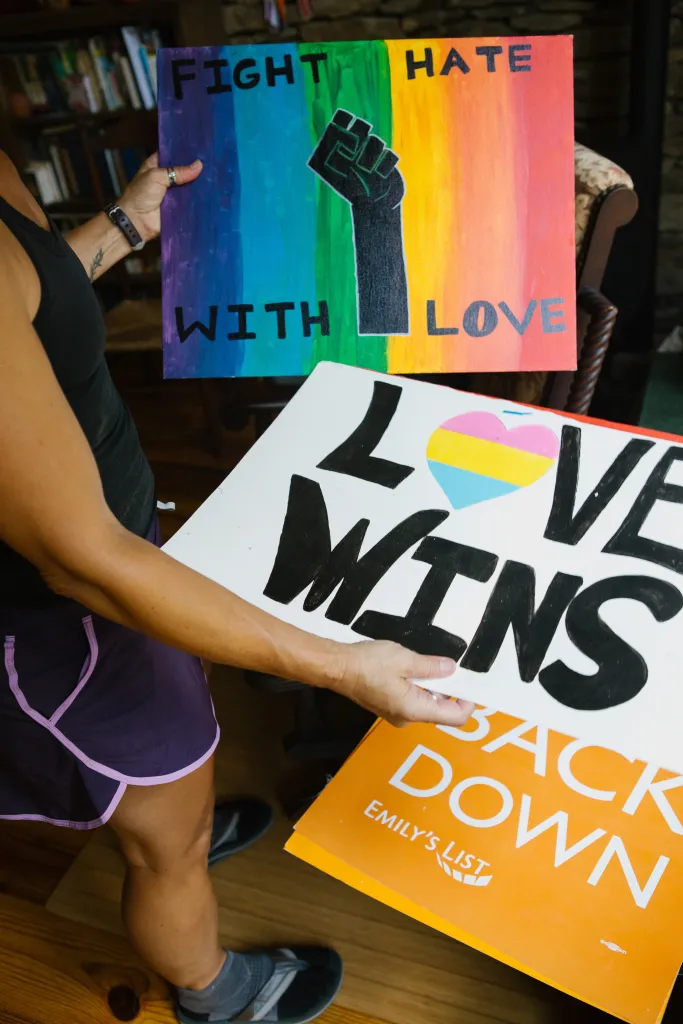
Hand-painted signs that once hung on the walls of Ash’s dorm room
Her husband spoke again as well, telling the board how Ash had frequently warned about the spread of policies that stoke “irrational hysteria around” trans youth — “the kind of policies,” Mark Clatterbuck noted, “that the Pennsylvania-based Independence Law Center loves to draft.”
Reminding the board that five trans youth in the area had died by suicide within just 18 months, he continued, “Do not try to tell me that there is no connection between the kind of dehumanizing policies that the ILC drafts and the deaths of our trans children.”
But the board voted to hire ILC anyway, 5-4, and in the following months adopted two of ILC’s anti-trans policies.
In anticipation of such public outcry, some school boards around Pennsylvania have taken steps to obscure their interest in ILC’s agenda.
Kristina Moon, a senior attorney at the Education Law Center of Pennsylvania, a legal services nonprofit that advocates for public school students’ rights, has watched a progression in how school boards interact with ILC.
When her group first began receiving calls related to ILC, around 2021, alarmed parents told similar stories of boards proposing book bans targeting queer or trans students’ perspectives, or identical packages of policies that included restrictions about bathrooms, sports and pronouns.
“At first, we would see boards openly talking about their interest in contracting with ILC,” said Moon. But as local opposition began to grow, “board members stopped sharing so publicly.”
Instead, Moon said, reports began to emerge of school boards discussing or meeting with ILC in secret.
In Hempfield, in 2022, the board moved some policy discussions into committee sessions less likely to be attended by the public, and held a vote on an anti-trans sports policy without announcing it publicly, possibly in violation of Pennsylvania’s Sunshine Act, as Mother Jones reported.
Across the state, in Bucks County, one Central Bucks school board member recounted in an op-ed for the Bucks County Beacon how her conservative colleagues had stonewalled her when she asked about the origins of a new book ban policy in 2022, only to have the board later admit ILC had performed a legal review of it “pro bono,” as PhillyBurbs reported.
Subsequent reporting by the York Daily Record and Reuters revealed the board’s relationship with ILC was more involved and included discussions about other policies related to trans student athletes and pronoun policy. (Both Central Bucks’ books and anti-LGBTQ policies were later cited in an ACLU federal complaint that cost the district $1.75 million in legal fees, as well as in a related Education Department investigation into whether the district had created a hostile learning environment for LGBTQ students.)
But the sense of backroom dealing reached an almost cartoonish level in York County, where, in March 2024, conservative board members from 12 county school districts were invited to a secret meeting hosted by a right-wing political action committee, along with specific instructions about how to keep their participation off the public radar. According to the York Dispatch, the invitation came from former Central York school board member Veronica Gemma, who (after losing her seat) was hired as education director for PA Economic Growth, a PAC that had helped elect 48 conservatives to York school boards the previous fall. (Gemma did not respond to interview requests.)
Gemma’s invitation was accompanied by an agenda sent by the PAC, which included a discussion about ILC and how board members could “build a network of support” and “advance our shared goals more effectively countywide.” The invitation also included the admonition that “confidentiality is paramount” and that each district should only send four board members or fewer — to avoid the legal threshold for a quorum that would make the meeting a matter of public record.
“Remember, no more than 4 — sunshine laws,” Gemma wrote.
In the wake of stories like these, Wenger’s 2005 suggestion that conservatives “become as clever as serpents” in concealing their intentions became ubiquitous in coverage of and advocacy against ILC — showing up in newspaper articles, in editorials and even on a T-shirt for sale online.
“I think it’s very obvious,” reflected Moon, “but if something has to be taking place in secrecy, I’m not sure it can be good for our students.”
But the lack of transparency shows up in subtler ways too, in the spreading phenomenon of districts adopting ILC policies without admitting where the policies come from. That was the case in Eastern York in 2025, where board members who had previously lobbied for an ILC pronoun policy later directed their in-house attorney to write an original policy instead, following the same principles but avoiding the baggage an ILC connection would bring.
In Elizabethtown (which did contract ILC), one policy was even introduced erroneously referencing clauses from another district’s code, in an indication of how directly districts are copy-pasting from one another.
In 2025, ILC attorney Jeremy Samek even seemed to acknowledge the trend, predicting that fewer districts might contract ILC going forward, since the combination of Trump’s executive orders on trans students and the general spread of policies similar to ILC’s meant “it’s going to be a lot easier for other schools to do that without even talking to us.”
In the face of what appears like a deliberate strategy of concealment, members of the public have increasingly turned to official channels to compel boards to disclose their dealings with ILC. Mark Clatterbuck did so in 2024 and 2025, filing 10 Right-to-Know requests with Penn Manor for all school board and administration communications with or about ILC and policies ILC consulted on and any records related to a set of specific keywords.
Thirty miles north, three Elizabethtown parents sued their school board in the spring of 2025, alleging it deliberately met and conferred with ILC in nonpublic meetings and private communications to “circumvent the requirements of the Sunshine Act.”
In both cases, and more broadly in the region, ILC critics are keenly aware that, by bringing complaints or lawsuits against the group or the school boards it works with, they might be doing exactly what ILC wants: furthering its chances to land another case before the Supreme Court, where a favorable ruling could set a dangerous national precedent, such as ruling that Title IX protections don’t cover trans students.
“They’re itching for a case,” said Clatterbuck. To that end, he added, his pro bono attorneys — at the law firm Gibbel Kraybill & Hess LLC, which also represents the Elizabethtown plaintiffs pro bono — have been careful not to do ILC’s work for it.
Largely, that has meant keeping the cases narrowly focused on Sunshine Act violations.
But in both cases, there are also hints of the larger issue at hand — of whether, in a repeat of the old Dover “intelligent design” case, ILC’s policies represent school boards imposing inherently religious viewpoints on public schools. After all, ILC’s parent group, the Pennsylvania Family Institute, clearly states its mission is to make Pennsylvania “a place where God is honored” and to “strengthen families by restoring to public life the traditional, foundational principles and values essential for the well-being of society.” And in 2024, the institute’s president, Michael Geer, told a Christian TV audience that much of ILC’s work involves working with school boards “on the transgender issue, fighting that ideology that is pervasive in our society.”
In the Elizabethtown complaint, the plaintiffs argue that district residents must “have the opportunity to observe Board deliberations regarding policies that will affect their children in order to understand the Board members’ true motivation and rationale for adopting policies — particularly when policies are prepared by an outside organization seeking to advance a particular religious viewpoint and agenda.”
The public has ample cause to suspect as much. Five current and former members of Elizabethtown’s school board are connected to a far-right church in town, where the pastor joined 150 other locals in traveling to Washington, D.C., on Jan. 6, 2021. Among them were current board members Stephen Lindemuth — who once preached a sermon at the church arguing that “gender identity confusion” doesn’t “line up with what God desires” — and his wife, Danielle Lindemuth, who helped organize the caravan of buses that went to Washington. (Stephen Lindemuth replied by email, “I have no recollection of making any judgmental comments concerning LGBTQ in my most recent preaching the past few years.” Neither he nor his wife were accused of any unlawful acts on Jan. 6.)
Another board member until this past December, James Emery, went through the church’s pastoral training program and in 2022 served as a member of the security detail of far-right Christian nationalist gubernatorial candidate Doug Mastriano.
School board meetings in Elizabethtown have also frequently devolved into religious battles, with one local mother, Amy Karr, board chair of Elizabethtown’s Church of the Brethren, recalling how local right-wing activists accused ILC’s opponents of being possessed by demonic spirits or a “vehicle of Satan.”
In Penn Manor, Clatterbuck similarly hoped to lay bare the “overtly religious nature” of the board’s motivation by including in his Right-to-Know requests a demand for all school board communications about ILC policies containing keywords like “God,” “Christian,” “Jesus,” “faith” and “biblical.”
For nearly a year, the district sought to avoid fulfilling the requests, with questionable invocations of attorney-client privilege (including one board member’s claim that she had “personally” retained ILC as counsel), sending back obviously incomplete records and protestations that Clatterbuck’s keyword request turned up so many results that it was too burdensome to fulfill. Ultimately, Clatterbuck appealed to the Pennsylvania Office of Open Records to compel the board to honor the request.
This fall, Clatterbuck received a 457-page document from the board containing dozens of messages that suggest his suspicions were correct.
In response to local constituents writing in support of ILC — decrying pronoun policies as a violation of religious liberty, claiming “the whole LGBTQ spectrum is rooted in the brokenness of sin” and calling for board members to rebuke teachers unions in “the precious blood of Jesus” — at least three board members wrote back with encouragement and thanks. In one example, board member Anthony Lombardo told a constituent who had written a 12-page message arguing that queer theory is “inherently atheistic” that “I completely agree with your analysis and conclusions.”
When another community member sent the board an article from an evangelical website arguing that using “transgendered pronouns … falsifies the gospel” and “tramples on the blood of Christ,” board member Donna Wert responded, “Please know that I firmly agree with the beliefs held in [this article]. And please know that heightened movement is finally being made concerning this, as you will see.”
To Clatterbuck, such messages demonstrate the school board’s religious sympathies, as well as how Christian nationalism plays out at the local level. While national examples of Christian right dominance, like Defense Secretary Pete Hegseth’s Crusader tattoos or Supreme Court Justice Samuel Alito’s “Appeal to Heaven” flag, get the most attention, Clatterbuck said, “this is what it looks like when you’re controlling local school boards and passing policies that affect people directly in their local community.”
But the local level might also be the place where advocates have the best chance of fighting back, said Kait Linton of Public Education Advocates of Lancaster.
Speaking ahead of a panel discussion on ILC at Elizabethtown’s Church of the Brethren last June — one of several panels PEAL hosted around Lancaster in the run-up to November’s school board elections — Linton emphasized the importance of focusing on the “hyperlocal.”
“With everything that’s happening at the national level,” Linton said, “we find a lot of folks get caught up in that, when really we have far less opportunity to make a difference up there than we do right here.”
PEAL’s efforts have been matched by other groups at the district level, like Elizabethtown’s Etown Common Sense 2.0, which local parent and former president Alisha Runkle said advocates against the sort of policies ILC drafts and also seeks to support teachers “being beaten down and needing support” in an environment of relentless hostility and demands to police their lesson plans, libraries and language.
They’re also reflected in the work of statewide coalitions like Pennsylvanians for Welcoming and Inclusive Schools, which helps districts share information about ILC policies — including a searchable map of ILC’s presence around the state — and resources like the Education Law Center, which has sent detailed demand or advocacy letters to numerous school districts considering adopting ILC-inspired policies.
This past November, that local-level work resulted in some signs for cautious hope. In Lancaster County’s Hempfield School District — one of the first districts in the state to hire ILC — the school board flipped to Democratic control. Among the new board members are Kait Linton and fellow PEAL activist Erin Small.
Across the river, in West Shore, the departure of three right-wing board members — one who resigned and two who lost their elections — left the board with a new 5-4 majority of Democratic and centrist Republican members. After the election, the board promptly moved to table three contentious policy proposals, including the anti-trans bathroom policy the board had copied from ILC and a book ban policy that drew heavily on ILC’s work.
While in other Lancaster districts — including Elizabethtown, Warwick and Penn Manor — school boards remained firmly in conservative control, there are also signs of growing pushback, as in Elizabethtown, where Runkle noted the teachers union has recently begun challenging the board during public meetings and local students have gotten active protesting book bans.
Similar trends have happened statewide, said the Education Law Center’s Kristina Moon, who noted that voters “were so concerned about the extremist action they saw on the boards that it was kind of a wake-up call: that we can’t sleep on school board elections, and we need to have boards that reflect a commitment to all of the students in our schools.”
While reports of ILC’s direct involvement with school boards seem to have waned in recent months, said Moon, that “does not mean the threat to our public schools is over. We see continued use of those discriminatory policies by school boards just copying the policy exactly as it was adopted elsewhere. And it causes the same harm in a district, whether the district is publicly meeting with ILC or not.”
Plus there are now Trump’s anti-trans executive orders, which have spread confusion statewide. And just this December, a legal challenge brought by another Christian right law firm, the Thomas More Society, is challenging the authority of Pennsylvania’s civil rights commission to apply anti-discrimination protections to trans students in public schools.
As a consequence, the Education Law Center has spent much of the past year trying to educate school and community leaders that executive orders are not the law itself, and they cannot supersede case law supporting the rights of LGBTQ students.
“We’re trying to cut through the noise,” Moon said, “to ensure that schools remain clear about their legal obligations to provide safe environments for all students … so they can focus on learning and not worrying about identity-based attacks.”
*Correction: At least 20 of Pennsylvania’s 500 school districts are known to have consulted with or signed formal contracts accepting the ILC’s pro bono legal services. This story previously reported 21.
Contact editor Caroline Preston at 212-870-8965, via Signal at CarolineP.83 or on email at [email protected].
This <a target=”_blank” href=”https://hechingerreport.org/clever-as-serpents-how-a-legal-groups-anti-lgbtq-policies-took-root-in-school-districts-across-a-state/”>article</a> first appeared on <a target=”_blank” href=”https://hechingerreport.org”>The Hechinger Report</a> and is republished here under a <a target=”_blank” href=”https://creativecommons.org/licenses/by-nc-nd/4.0/”>Creative Commons Attribution-NonCommercial-NoDerivatives 4.0 International License</a>.<img src=”https://i0.wp.com/hechingerreport.org/wp-content/uploads/2018/06/cropped-favicon.jpg?fit=150%2C150&ssl=1″ style=”width:1em;height:1em;margin-left:10px;”>
Amid all this, there were some promising steps taken, especially at the state level, to elevate children’s issues and pay for programs that support the earliest years of life. Here are five highlights, including a few you may have missed:
New Mexico introduced universal child care. New Mexico was the first state in the country to roll out universal child care to every family, regardless of income. Experts are cautiously optimistic, and acknowledge the state likely has some kinks to work out. One New Mexico source I spoke to said she’s especially worried that wealthier families will snatch up spots if guardrails aren’t put in place to prioritize certain populations, including children with disabilities. Another advocate told me she is worried that the wages for early childhood educators are still too low. This is a story that will continue to play out over the next few years, and will be watched carefully. Still, in a country that has long underfunded early learning, experts are hopeful that other states will follow suit and invest more in the child care industry in ways that support the child care staff and families.
New Jersey, which leads the nation in excluding young children with disabilities, committed to investigate how to improve inclusive practices: Earlier this year, a Hechinger Report investigation found New Jersey is the worst in the nation at making sure young students with disabilities are learning alongside their peers for at least 80 percent of the day, which is a federal metric for inclusion. After our series was published, a council that advises New Jersey education officials on special education issues announced it will investigate inclusion rates for young children and look at how state educators and administrators are trained.
States and municipalities invested in early childhood: Cincinnati, Montana and California’s Alameda County increased their support for early learning this year, said Emmy Liss, a researcher and policy consultant for the think tank New America’s New Practice Lab. In San Antonio, the city’s pre-K program expanded this year to serve infants and toddlers. In Colorado, voters approved new “taxing districts” that will raise sales tax for early childhood programs. “We see this consistent pattern of mayors, would-be mayors, county officials, saying, ‘Our families can’t withstand this anymore, and we have the power and the mandate from our community to invest in early childhood,’” Liss said. “I feel optimistic because of that.”
Some states expanded family-friendly policies: After reporting by Hechinger contributor Sarah Carr this year found few parents are made aware of their infant’s rights to early intervention services, Illinois passed a law requiring that families with infants who stay in the NICU are connected to those early therapies. In Colorado, state officials added NICU leave to the state’s paid family medical leave program. Minnesota policymakers are on the cusp of launching their state’s paid family leave program.
Pittsburgh embraced a citywide play-based initiative: After decades of research that shows the importance of play for healthy development, a new initiative in Pittsburgh is putting research into action. After funding several years of play-based projects around the city, the Let’s Play, PGH program, funded by the nonprofit Remake Learning and the Grable and Henry L. Hillman foundations, rolled out permanent play-based experiences this year. Those include a “Clayground,” where families can try hands-on clay sculpting, and a “Discovery Tree,” an indoor structure with various play and learning features. “I think society, especially in education, we’re moving away from valuing play in a way that it’s often spoken of more in a pejorative sense, like there’s more serious things we have to do,” said Tyler Samstag, executive director of Remake Learning. “But there’s this rich research around the importance of play,” he added. And, “there’s a kind of reeling back from the pandemic era of always being in front of a screen.”
I also asked a few early childhood experts what they plan to watch for in 2026:
I’m watching the dual trends of state momentum for universal child care proposals against the budgetary headwinds states are facing as a result of economic policies and H.R. 1 [the “big, beautiful bill”].
— Elliot Haspel, senior fellow at Capita
The early care and education community will have the opportunity to stake out bold policy positions, like those we saw in New Mexico, New York, Connecticut, Montana and Vermont this past year, while facing the challenge of protecting children, families and educators from federal policies that will wreak havoc on safety net programs and state budgets.
— Albert Wat, deputy director of advocacy and impact at the Alliance for Early Success
I am paying attention to whether there are signs of even a minor shift away from this dominant narrative — that something close to universal child care is the ‘true goal,’ which we now seem to be accepting without question. My concern is that the needs of young children will once again get blotted out by the needs of grown-ups, the needs of the economy, the needs of business.
— Katharine B. Stevens, founder and president of the Center on Child and Family Policy
Differences between the House and Senate funding bills, which will be settled in January, which could affect funding for various early childhood programs.
— Sarah Gilliland, senior policy manager, New America’s New Practice Lab
With New York City’s cost of living driving families away in droves, the time is ripe for universal child care — and it can happen! We look forward to working with Mayor-elect Mamdani and his team as they develop plans that lift up home-based child care as a vital support.
— Jessica Sager, CEO, All Our Kin
Thank you so much to all of you for your support and readership this year, and please don’t hesitate to reach out with any story ideas, questions or comments. Happy holidays!
This story about early childhood education was produced by The Hechinger Report, a nonprofit, independent news organization focused on inequality and innovation in education. Sign up for the Hechinger newsletter.
This <a target=”_blank” href=”https://hechingerreport.org/5-early-ed-highlights-from-2025/”>article</a> first appeared on <a target=”_blank” href=”https://hechingerreport.org”>The Hechinger Report</a> and is republished here under a <a target=”_blank” href=”https://creativecommons.org/licenses/by-nc-nd/4.0/”>Creative Commons Attribution-NonCommercial-NoDerivatives 4.0 International License</a>.<img src=”https://i0.wp.com/hechingerreport.org/wp-content/uploads/2018/06/cropped-favicon.jpg?fit=150%2C150&ssl=1″ style=”width:1em;height:1em;margin-left:10px;”>
by Felicia Mello, The Hechinger Report December 23, 2025
OAKLAND — In 2020, California led the nation in outlawing transcript-withholding, a debt collection practice that sometimes kept low-income college students from getting jobs or advanced degrees. Five years later, 24 of the state’s 115 community colleges still said on their websites that students with unpaid balances could lose access to their transcripts, according to a recent UC Merced survey.
The communications failure has been misleading, student advocates said, although overall, the state’s students have benefited from the law.
It “raises questions about what actual institutional practices are at colleges and the extent to which colleges know the law and are fully compliant with the law,” said Charlie Eaton, a UC Merced sociology professor who led the research team that conducted the survey in October.
California community colleges say they are following the law, which prohibits them from refusing to release the grades of a student who owes money to the school — anywhere from a $25 library fine to unpaid tuition. The misinformation on some college websites is a clerical problem that campuses have been asked to update, the California Community Colleges chancellor’s office said in an emailed statement.
Without an official transcript, students can’t prove they’ve earned college credits to admissions offices elsewhere or to potential employers. Millions of students nationwide have lost access to their transcripts because of unpaid fees, according to estimates from the higher education consulting firm Ithaka S+R.
Student advocates argued that the practice made little money for colleges, while costing graduates opportunities that could help them pay back their debts.
California lawmakers agreed; in 2019, they passed legislation that took effect on Jan. 1 2020, barring colleges from using transcript holds to collect debts.
At least 12 other states have followed California’s lead, passing laws limiting or banning colleges from withholding transcripts.
A similar but less stringent federal rule approved during the Biden administration took effect last year.
The new rules have raised awareness about colleges’ debt collection practices and inspired some to find ways to help their students avoid falling behind on their payments in the first place or to pay off what they owe — including by forgiving their debts.
Related: Interested in innovations in higher education? Subscribe to our free biweekly higher education newsletter.
Colleges and universities, however, argued that withholding transcripts was one of the few ways they had to prevent students from bouncing among institutions and leaving unpaid bills in their wake. Some use another tactic, blocking them from registering for new courses until bills are paid.
When colleges choose to withhold transcripts, the burden falls more heavily on low-income students and students of color, according to the American Association of Collegiate Registrars and Admissions Officers. Often those students accrue debts when they withdraw partway through a course, leading the college to return part of their financial aid to the federal government and charge the bill to the student.
In states with laws limiting transcript withholding, many colleges have begun communicating earlier and more often with students about their debts and offering flexible payment plans, said Elizabeth Looker, a senior program manager at Ithaka S+R. Some have added financial literacy training or required students with unpaid bills to meet with counselors.
Eight public colleges and universities in Ohio went further, offering a deal to former students with unpaid balances: Reenroll at any of the eight, and get up to $5,000 of the outstanding debt forgiven. Called the Ohio College Comeback Compact, the program, which began in 2002 and concludes this fall, was open to former students who had at least a 2.0 GPA and had been out of school a year or more.
The program was designed to give a second chance to students whose educations stalled because of events outside their control, such as losing a job in the middle of the semester, said Steve McKellips, vice president for enrollment management at the University of Akron.
Since the Ohio College Compact’s inception, 79 students have returned to the university under the program, at a cost to the state of $54,174 in debt forgiven. The university netted five times that, or $271,924, in additional tuition, McKellips said. More than 700 students have used the compact to reenroll, according to Ithaka S+R, which helped coordinate the program and is studying the results.
“I think sometimes people have this image of somebody walking away from a tuition bill because they just don’t care,” McKellips said. “But sometimes there’s just a boulder in the way and somebody needs to move it. Once the boulder was moved and they could move forward, we’re finding them continuing happily along the way they always intended to.”
The University of California cited expected cuts to federal and state funding as one reason it opposed the bill. “UC believes that maintaining the ability to hold registration is essential for its ability to reasonably secure unpaid student debt,” UC legislative director Jessica Duong wrote to lawmakers.
Cal State spokesperson Amy Bentley-Smith said that Cal State wanted a flexible approach to debt collection and that campuses had started eliminating registration holds for minor debts such as parking tickets and lost library books.
“Students are able to move forward with their enrollment even with institutional debts in the low hundreds to the low thousands of dollars, depending upon the university,” she said.
Supporters of the failed bill — which also would have barred colleges from reporting a student’s institutional debt to credit agencies — said curbing aggressive debt collection doesn’t just help low-income students; it speeds up the training of workers in industries crucial to the state’s economy.
“Schools think about these institutional debts in a way that is very penny-wise and pound-foolish, and it’s preventing people from participating in the economy,” said Mike Pierce, executive director of Protect Borrowers.
Annette Ayala of Simi Valley, hoping to become a registered nurse, took her for-profit college to court to force it to comply with California’s debt collection law.
She had earned her vocational nursing license from the school, the Professional Medical Careers Institute, and wanted to continue her studies to become a registered nurse. But the college refused to release her transcript — citing a $7,500 debt that Ayala argued in court records she did not owe — and without the transcript she could not apply to other colleges.
In her case, California’s Bureau for Private Postsecondary Education, which regulates for-profit colleges under the state’s Department of Consumer Affairs, cited her former school for violating the state’s transcript-withholding law.
The college was fined $1,000 and ordered to update its enrollment agreement. The school forgave the debt it said Ayala owed. It’s the only case in which a school has been cited for withholding a transcript since the bureau started monitoring compliance with the law more closely two years ago, said Monica Vargas, a spokesperson for consumer affairs.
School officials had been unaware of the California law at the time Ayala sued, the school’s controller, Joshua Taylor, said, and have since updated their catalog to comply with it.
With her vocational nursing license, Ayala has been working in home health care. Now that she has her transcript, she’s applying for RN programs, and said her salary would roughly double once she has the new degree, allowing her to save for the future and help her son pay for college.
“You’ve got to give people the chance to get through their program and pay their debts as they’re working,” she said. “You can’t hold them back from being able to make top dollar with their abilities to pay back these loans.”
This <a target=”_blank” href=”https://hechingerreport.org/5-years-after-california-banned-holding-college-students-transcripts-hostage-for-unpaid-debt-some-colleges-neglect-the-law/”>article</a> first appeared on <a target=”_blank” href=”https://hechingerreport.org”>The Hechinger Report</a> and is republished here under a <a target=”_blank” href=”https://creativecommons.org/licenses/by-nc-nd/4.0/”>Creative Commons Attribution-NonCommercial-NoDerivatives 4.0 International License</a>.<img src=”https://i0.wp.com/hechingerreport.org/wp-content/uploads/2018/06/cropped-favicon.jpg?fit=150%2C150&ssl=1″ style=”width:1em;height:1em;margin-left:10px;”>
by Jeni Hebert-Beirne, The Hechinger Report December 22, 2025
It started with Harvard University. Then Notre Dame, Cornell, Ohio State University and the University of Michigan.
Colleges are racing to close or rename their diversity, equity and inclusion (DEI) offices, which serve as the institutional infrastructure to ensure fair opportunity and conditions for all. The pace is disorienting and getting worse: since last January, 181 colleges in all.
Often this comes with a formal announcement via mass email, whispering a watered-down name change that implies: “There is nothing to see here. The work will remain the same.” But renaming the offices is something to see, and it changes the work that can be done.
Colleges say the changes are needed to comply with last January’s White House executive orders to end “wasteful government DEI programs” and “illegal discrimination” and restore “merit-based opportunity,” prompting them to replace DEI with words like engagement, culture, community, opportunity and belonging.
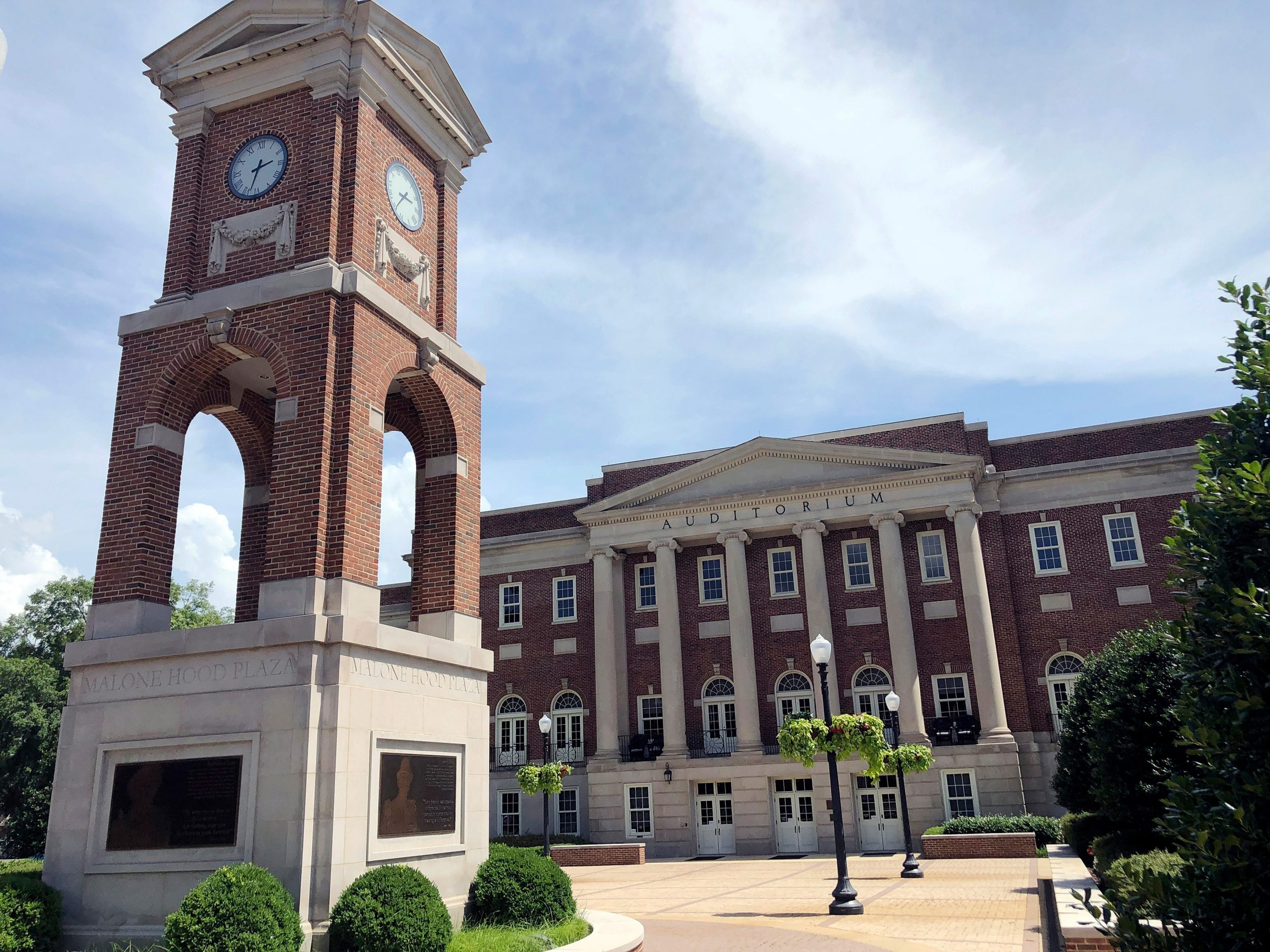
One college went even further this month: The University of Alabama ended two student-run magazines because administrators perceived them to be targeting specific demographics and thus to be out of compliance with Attorney General Pamela Bondi’s anti-discrimination guidance. Students are fighting back while some experts say the move is a blatant violation of the First Amendment.
Related: Interested in innovations in higher education? Subscribe to our free biweekly higher education newsletter.
With the one-year mark of the original disruptive executive orders approaching, the pattern of response is nearly always the same. Announcements of name changes are followed quickly by impassioned pronouncements that schools should “remain committed to our long-standing social justice mission.”
University administrators, faculty, students, supporters and alumni need to stand up and call attention to the risks of this widespread renaming.
True, there are risks to not complying. The U.S. State Department recently proposed to cut research funding to 38 elite universities in a public-private partnership for what the Trump administration perceived as DEI hiring practices. Universities removed from the partnership will be replaced by schools that the administration perceives to be more merit-based, such as Liberty University and Brigham Young University.
In addition to the freezing of critical research dollars, universities are being fined millions of dollars for hiring practices that use an equity lens — even though those practices are merit-based and ensure that all candidates are fairly evaluated.
Northwestern University recently paid $75 million to have research funding that had already been approved restored, while Columbia University paid $200 million. Make no mistake: This is extortion.
Some top university administrators have resigned under this pressure. Others seem to be deciding that changing the name of their equity office is cheaper than being extorted.
Many are clinging to the misguided notion that the name changes do not mean they are any less committed to their equity and justice-oriented missions.
As a long-standing faculty member of a major public university, I find this alarming. In what way does backing away from critical, specific language advance social justice missions?
In ceding ground on critical infrastructure that centers justice, the universities that are caving are violating a number of historian and author Timothy Snyder’s 20 lessons from the 20th century for fighting tyranny.
The first lesson is: “Do not obey in advance.” Many of these changes are not required. Rather, universities are making decisions to comply in advance in order to avoid potential future conflicts.
The second is: “Defend institutions.” The name changes and reorganizations convey that this infrastructure is not foundational to university work.
What Snyder doesn’t warn about is the loss of critical words that frame justice work.
The swift dismantling of the infrastructures that had been advancing social justice goals, especially those secured during the recent responses to racial injustice in the United States and the global pandemic, has been breathtaking.
This is personal to me. Over the 15 years since I was hired as a professor and community health equity researcher at Chicago’s only public research institution, the university deepened its commitment to social justice by investing resources to address systemic inequities.
Directors were named, staff members hired. Missions were carefully curated. Funding mechanisms were announced to encourage work at the intersections of the roots of injustices. Award mechanisms were carefully worded to describe what excellence looks like in social justice work.
Now, one by one, this infrastructure is being deconstructed.
The University of Illinois Chicago leadership recently announced that the Office of the Vice Chancellor for Equity and Diversity will be renamed and reoriented as the Office of the Vice Chancellor for Engagement. The explanation noted that this change reflects a narrowed dual focus: engaging internally within the university community and externally with the City of Chicago.
This concept of university engagement efforts as two sides of one coin oversimplifies the complexity of the authentic, reciprocal relationship development required by the university to achieve equity goals.
As a community engagement scientist, I feel a major loss and unsettling alarm from the renaming of “Equity and Diversity” as “Engagement.” I’ve spent two decades doing justice-centered, community-based participatory research in Chicago neighborhoods with community members. It is doubtful that the work can remain authentic if administrators can’t stand up enough to keep the name.
As a professor of public health, I train graduate students on the importance of language and naming. For example, people in low-income neighborhoods are not inherently “at risk” for poor health but rather are exposed to conditions that impact their risk level and defy health equity. Health is “a state of complete physical, mental and social well-being,” while health equity is “the state in which everyone has the chance to attain full health potential.” Changing the emphasis from health equity to health focuses the system’s lens on the individual and mutes population impact.
Similarly, changing the language around DEI offices is a huge deal. It is the beginning of the end. Pretending it is not is complicity.
Jeni Hebert-Beirne is a professor of Community Health Sciences at the University of Illinois Chicago School of Public Health and a public voices fellow of The OpEd Project.
This <a target=”_blank” href=”https://hechingerreport.org/opinion-colleges-are-not-just-saying-goodbye-to-dei-offices-they-are-dismantling-programs-that-assure-institutional-commitment-to-justice/”>article</a> first appeared on <a target=”_blank” href=”https://hechingerreport.org”>The Hechinger Report</a> and is republished here under a <a target=”_blank” href=”https://creativecommons.org/licenses/by-nc-nd/4.0/”>Creative Commons Attribution-NonCommercial-NoDerivatives 4.0 International License</a>.<img src=”https://i0.wp.com/hechingerreport.org/wp-content/uploads/2018/06/cropped-favicon.jpg?fit=150%2C150&ssl=1″ style=”width:1em;height:1em;margin-left:10px;”>
by Meredith Kolodner, The Hechinger Report December 19, 2025
LUBBOCK, Texas — The meeting of the local NAACP chapter began with a prayer — and then the litany of injustices came pouring out.
A Black high school football player was called a “b—h-ass” n-word during a game by white players in September with no consequence, his mom said. A Black 12-year-old boy, falsely accused last December of touching a white girl’s breast, was threatened and interrogated by a police officer at school without his parents and sentenced to a disciplinary alternative school for a month, his grandfather recounted. A Black honors student was wrongly accused by a white teacher of having a vape (it was a pencil sharpener) and sentenced to the alternative school for a month this fall, her mom said.
“They’re breaking people,” said Phyllis Gant, a longtime leader of the NAACP chapter in this northwest Texas city, referring to local schools’ treatment of Black children. “It’s just open season on our students.”
Just last year, there was hope that the racial climate at Lubbock-area schools might improve. The federal government had launched civil rights investigations after several alleged incidents of racial bullying shocked the community and made nationalheadlines. In fall 2024, a resolution seemed to be in sight: An investigator from the Department of Education’s Office for Civil Rights was planning to visit the area, community members said, for what they hoped would be a final round of interviews before the agency put in place a set of protections negotiated with the Lubbock-Cooper school district.
Then the 2024 presidential election happened — and the visit didn’t. In March, the Trump administration closed seven of the Education Department’s 12 regional civil rights enforcement offices, including the one in Dallas, which had been investigating complaints about Lubbock. Emails from the lawyer representing the families to the federal investigator bounced back — like hundreds of other OCR employees, she had been terminated.
Since then, race relations in school districts in and around Lubbock have taken a turn for the worse, many parents and educators say. Black residents — who make up about 8 percent of Lubbock County — didn’t expect the federal government to bring a halt to racist incidents, but the possibility of an agreement between the government and school districts provided a sense of accountability. Now, parents and students say racial epithets are more common in public, and Black teachers fear drawing attention to themselves. Gant says the NAACP chapter fields frequent calls from parents seeking help in addressing racial incidents they no longer bother to report to the Education Department.
Since President Donald Trump took office, the agency has not publicly announced a single investigation into racial discrimination against Black students, instead prioritizing investigations into allegedanti-whitediscrimination, antisemitism complaints and policies regarding transgender students.
All told this year, the Education Department under Trump has dismissed thousands of civil rights investigations. During the first six months of this year, OCR required schools to make changes and agree to federal monitoring in just 59 cases, compared with 336 during the same period last year, a Washington Post analysis found.
“In many of our communities where people feel isolated and like they didn’t have anyone to turn to, OCR mattered and gave people a sense of hope,” said Paige Duggins-Clay, a lawyer at the Intercultural Development Research Association, an education policy and legal advocacy group that helped file some of the OCR complaints against Lubbock schools. “And it matters that they’ve essentially destroyed it.”
In an email, Julie Hartman, press secretary for legal affairs for the Department of Education, wrote, “These complaints of racial bullying were filed in 2022 and 2023, meaning that the Biden Administration had more time to investigate this than the Trump Administration has even been in office. The Trump Administration’s OCR will continue vigorously enforcing the law to uphold all Americans’ civil rights.” She did not respond to a question about whether the agency had opened any investigations into discrimination against Black students.
Related: Become a lifelong learner. Subscribe to our free weekly newsletter featuring the most important stories in education.
Some white residents have noticed the change too. Lubbock County, located at the bottom of the Panhandle, is home to more than a quarter million people. It is the urban seat for a sprawling county that encompasses several suburban and rural school districts and hosts Texas Tech University at its center.
Tracey Benefield — who has two children in Hutchinson Middle School in the Lubbock Independent School District, which borders the Lubbock-Cooper district — is from a family that has lived in the area for generations. She says her son has witnessed multiple incidents of racial bullying over the past year.
“My son was walking down the hall with his friend who’s Black, and some kid shoulder-checked him and called him the n-word. That’s been one of many,” she said. “Things have absolutely gotten worse. The attitudes have always been there, but people acting on their attitudes is completely different.” Lubbock district officials did not directly respond to questions about Benefield’s assertions.
She thinks OCR’s retreat, among other changes within the federal government, has had an impact. “People are more emboldened,” she said. “People have always had racist ideas, but now there’s no consequences for being racist.”
Prior to Trump’s election, the concerns of parents and civil rights groups were quite different: Many were frustrated that Office for Civil Rights cases could linger for years as overworked investigators tracked down details and testimonies. Some were starting to advocate for more OCR staff and speedier resolutions. The outcry from residents, along with the media attention, prompted the Lubbock-Cooper and nearby Slaton school districts — where Black students make up about 3 percent and 5 percent of the student bodies, respectively — to adopt policies of mandatory in-school suspension for students caught making racial slurs and spurred training for staff.
But for many, the changes weren’t coming quickly enough.
In 2022, Tracy Kemp’s eldest son, Brady, then an eighth grader, was one of nine Black students whose pictures were put on an Instagram page called “LBMS Monkeys,” which stood for “Laura Bush Middle School Monkeys.” (Brady is being referred to by his nickname and his last name is being withheld to protect his privacy.) Kemp was part of a group of parents in the Lubbock-Cooper school district who filed OCR complaints that August over what they said was a toxic racial atmosphere that subjected their children to repeated racial bullying. White students would sometimes play whipping noises on their phones when Black students walked through the halls, according to the complaints. Despite a school district investigation that included reaching out to the FBI, those responsible were never caught.
Lubbock-Cooper officials said via email that they “responded swiftly and appropriately” to the 2022 incident at Laura Bush Middle School. “Efforts of the district to ensure all students feel valued, supported, and a sense of belonging have contributed to the positive, nurturing environment our campuses strive to maintain,” wrote Sadie Alderson, the district’s executive director of public information.
Kemp stayed in the Lubbock-Cooper district for another year, but even though the page was taken down, the taunting and bullying didn’t let up, she says. Her middle son was in sixth grade at LBMS that year and was called racial epithets on the school bus and in the hallways. (His name is being withheld to protect his privacy.) When Brady, who had graduated from the middle school and started at Lubbock-Cooper High School, tried to start a Black Student Union there, she says, a white student ripped the page with signatures from his notebook. Kemp says the principal told her there was nothing he could do. The final straw came one day when the ninth grader didn’t stand for the Pledge of Allegiance. The teacher told him he was a criminal who was breaking the law, Kemp says, and the harassment started up again, this time on Snapchat, with the same language as the “monkeys” Instagram page.
In July 2023, Kemp moved with her family to New Mexico and commuted 75 miles each way until she found a job closer to her new home. Leaving Lubbock-Cooper, she said, was life-changing for her kids’ mental health.
“In eighth grade, you’re going through puberty, you’re learning about yourself, you’re growing and you have all these different feelings. And now you add into the mix, ‘These people don’t like me because of my color’ — that’s a whole different type of aspect to have to deal with,” said Kemp. “And on the flip side of that, I also have to encourage my child that not every white person feels this way, because I don’t want to teach my child hate either.”
Brady, now a 12th grader, also says he’s happy the family moved. “Honestly, it’s a lot easier,” he said. “There’s no arguments, there’s nothing to worry about, really. I just focus on school more than anything.”
Others who have stayed say they’ve paid a price. Last December, Ja’Maury, a then-12-year-old whose last name is being withheld to protect his privacy, learned of rumors that he’d touched a white girl’s breast during school. He went straight to administrators at the school, Commander William C. McCool Academy, to tell them the truth. But the assistant principal believed the girl’s story and radioed a police officer, who interrogated him and threatened him with jail unless he confessed, according to Ja’Maury and his grandfather, Mike Anzley. Alone in a room of adults, Ja’Maury broke down and admitted to something he says never happened.
“He was yelling and threatening to send me to juvie if I didn’t say I did it. I was scared,” Ja’Maury recalled in an interview. “It was a white person’s word against a Black person’s word.”
Ja’Maury was assigned 30 days at Priority Intervention Academy, Lubbock Independent School District’s detention school, where children are sent for offenses determined to be too severe for in-school suspension. Constantly anxious, he reverted to sleeping in his grandfather’s bed like he did as a toddler. At the detention school, he said, he was so afraid of defying adults that he twice wet his pants rather than challenge a teacher who said he couldn’t leave class to use the bathroom.
“He had never been in trouble before,” said Anzley. He’d always taught Ja’Maury to trust adults, and said he was devastated by the adults at McCool betraying that trust. “I had to make him distinguish right from wrong in a whole new way.”
Anzley filed a formal grievance with the district and, according to a copy of the findings shared with The Hechinger Report, administrators agreed to wipe the incident from his discipline file, issue a formal apology and provide training in discipline and due process to both McCool administrators and the officer who interrogated him.
McCool administrators did not respond to requests for comment. Amanda Castro-Crist, executive director of communications and community relations for Lubbock ISD, wrote in an email that the district could not discuss individual students because of federal laws protecting student privacy, but that it “is proud to serve a diverse student body.”
Gant, the 62-year-old NAACP leader, says that growing up in Lubbock she never experienced the kind of racism she sees now. An accountant who runs her own business, she got involved in community activism about 20 years ago after enduring identity theft and a costly, time-consuming effort to clear her name. “I’m a strong, faith-based woman,” said Gant. “Who else will someone call? Who will go to their meetings for free, come with the facts and the research and not make them feel like they owe anything?”
Gant noted changes the districts have made in the wake of the OCR investigation and parent activism, including the new suspension policies. Administrators in Lubbock-Cooper sometimes even proactively contact her about a parent concern, she said. In Lubbock ISD, Gant credits the director of student and parent resolution, Brian Ellyson, with listening to parents and helping them resolve conflicts in a principled manner.
Ellyson was one of two Lubbock school officials at the September NAACP meeting, held in an independent living center on the south side of town equidistant between Laura Bush Middle School and McCool Academy. Parent after parent described their children’s mistreatment.
Leshai Whitfield said her son was sent to a detention school after a teacher complained that he’d pushed her; she said her son was only trying to leave the classroom because of a fight between two other students. Naquelia Edwards said her son has been repeatedly called the n-word and disciplined for fights while white students went unpunished. Jessika Ogden, mother of the 11th grade honors student who was wrongly accused of having a vape, said she believes her daughter was racially profiled. She filed a grievance against Lubbock Independent School District’s Coronado High School to keep her daughter from being sent to the district’s detention school, which she says she eventually won. But her daughter missed school while the case was being resolved, Ogden said, as she refused to send her to the detention school. “Had I not fought for my daughter, she would have suffered that punishment, missing more class, more credits,” Ogden said.
In interviews, more than a dozen Black high school students in Lubbock said they regularly heard other students use the n-word. “Slurs happen all the time – it don’t matter what time of day it is,” said a 10th grader from Coronado High School, whose name is being withheld to protect her privacy.
Gant says the absence of an actual agreement between the federal government and any of the districts means the environment in schools hasn’t fundamentally changed. Those agreements come with teacher training, data collection and penalties for failing to comply. In-school suspension for racist behavior may keep some of it in check, but the changes are cosmetic, she and parents say.
Emails obtained by The Hechinger Report through public records requests show that Kulsoom Naqvi, the OCR investigator based in the Dallas office, conducted staff surveys, data requests and several rounds of interviews throughout much of 2024, but the work came to a halt that fall. Naqvi, who is not technically separated from the Education Department because of ongoing litigation over the mass firings at the Education Department, said she could not comment on the case.
“Given the pace that things were moving, I felt confident that we were going to get a resolution before the end of the year,” said Duggins-Clay, the lawyer who helped file some of the complaints. “Had the election not happened, we would have gotten to a negotiated resolution.”
Alderson, the spokesperson for Lubbock-Cooper, said that the investigation is still open, but the current superintendent, hired in June, was not aware of any communication from an OCR investigator. She said the district had sought mediation with OCR in spring 2024, but Naqvi had denied that request and had not given Lubbock-Cooper a timeline for resolving the complaints.
Just over 20 miles away from downtown Lubbock, in the neighboring town of Slaton, which had its own series of racist incidents and ensuing complaints to OCR, residents say the racial atmosphere has deteriorated even further this year and the school administration has been completely unresponsive. School officials promised to work with local authorities to paint over part of a mural in the center of town that depicts Black men picking cotton under the watch of a white farmer, teachers say. But that never happened. Parents say the n-word is used regularly by white students without consequence in the district, where just 5 percent of students are Black.
“I’ve witnessed kids on my campus calling Black kids ‘monkeys,’” said a Slaton teacher who grew up in the town and spoke on condition of anonymity out of fear for her job. “I’m sorry to say that it’s gotten worse. I feel like more of the extremists have come out.”
Parents say their children continued to be bullied because of their race even after Slaton administrators pledged in 2022 to discipline students for slurs. One mom said her second grader was called an “African monkey” the next year by other kids in his class at Cathelene Thomas Elementary. She says she told the principal, who said, “‘Would you be offended if they called him a cat or something different?’” the mother recalled. “I got up and left. I didn’t even know what to say.”
After that she started homeschooling her kids. She asked to remain anonymous because her children still participate in community events and she is worried they will face retribution.
Cathelene Thomas Principal Margaret Francis did not respond to requests for comment. Superintendent Shelli Conkin said in an email that federal law prevented the district from discussing student-related matters and did not respond to additional questions. “Since I became superintendent in 2023, Slaton ISD has experienced many positive developments that highlight our commitment to students and staff,” she wrote, including facility upgrades, a district fundraising effort and a four-day school week.
Anzley, meanwhile, is still fighting for justice for his grandson. After the district declined to discipline the girl for making the accusation, he said, and with OCR no longer seeming like an option for redress, he’s hoping to find a lawyer to file a civil rights lawsuit on behalf of his grandson.
The district’s apology and commitment to better train administrators did not undo the damage to Ja’Maury, he and his grandfather said. “People kept on messing with me about it, saying I was a pedophile, saying I was a pervert,” said the middle schooler. “After that I almost hated life, I didn’t even want to live no more after that. That was horrible.”
Last spring, four months after Ja’Maury had been back at McCool, he got into a fight with a boy who called him the n-word on the school bus, he said. This fall, Anzley decided to transfer Ja’Maury from the top-rated school he once loved — which is 9 percent Black — to Dunbar College Preparatory Academy, which is 45 percent Black and received an F rating this year from the Texas Education Agency. Ja’Maury says he feels safer there; Anzley says the move was necessary for his grandson’s mental health but that he preferred the learning opportunities at McCool.
“None of this is new, because the very name Lubbock is the name of a Confederate soldier,” said Gant. “It’s heartbreaking, but it doesn’t surprise me. The aggression of it has been heightened under the Trump administration.”
She added, “The districts know that OCR has been dismantled so there’s no urgency to fix these issues. It’s on the community, and it’s on the parents to be factual, vocal and not quit.”
This <a target=”_blank” href=”https://hechingerreport.org/probes-into-racism-in-schools-stall-under-trump/”>article</a> first appeared on <a target=”_blank” href=”https://hechingerreport.org”>The Hechinger Report</a> and is republished here under a <a target=”_blank” href=”https://creativecommons.org/licenses/by-nc-nd/4.0/”>Creative Commons Attribution-NonCommercial-NoDerivatives 4.0 International License</a>.<img src=”https://i0.wp.com/hechingerreport.org/wp-content/uploads/2018/06/cropped-favicon.jpg?fit=150%2C150&ssl=1″ style=”width:1em;height:1em;margin-left:10px;”>
by Nirvi Shah, The Hechinger Report December 18, 2025
Even with a conservative think tank’s blueprint detailing how the second Trump administration should reimagine the federal government’s role in education, few might have predicted what actually materialized this year for America’s schools and colleges.
Or what might be yet to come.
“2025 will go down as a banner year for education: the year we restored merit in higher education, rooted out waste, fraud and abuse, and began in earnest returning education to the states,” Education Secretary Linda McMahon told The Hechinger Report. She listed canceling K-12 grants she called wasteful, investing more in charter schools, ending college admissions that consider race or anything beyond academic achievement and making college more affordable as some of the year’s accomplishments.
“Best of all,” she said, “we’ve begun breaking up the federal education bureaucracy and returning education control to parents and local communities. These are reforms conservatives have championed for decades — and in just 12 months, we’ve made them a reality.”
Related: Become a lifelong learner. Subscribe to our free weekly newsletter featuring the most important stories in education.
McMahon’s characterization of the year is hardly universal. Earlier this month, Senate Democrats, led by independent Sen. Bernie Sanders, called out some of the administration’s actions this year. They labeled federal changes, especially plans to divide the Education Department’s duties across the federal government, dangerous and likely to cause chaos for schools and colleges.
“Already, this administration has cancelled billions of dollars in education programs, illegally withheld nearly $7 billion in formula funds, and proposed to fully eliminate many of the programs included in the latest transfer,” the senators wrote in a letter to Republican Sen. Bill Cassidy, chair of the committee that oversees education. “In our minds, that is unacceptable.”
So, what really happened to education this year? It was almost impossible for the average observer to keep track of the array of changes across colleges and universities, K-12 schools, early education and education research — and what it has all meant. This is a look back at how the education world was transformed.
The administration was especially forceful in the higher education arena. It used measures including antidiscrimination law to quickly freeze billions of dollars in higher education research funding, interrupting years-long medical studies and coercing Columbia, Brown, Northwestern and other institutions into handing over multimillion-dollar payments and agreeing to policy changes demanded by the administration.
A more widespread “compact” promising preference for federal funding to universities that agreed to largely ideological principles had almost no takers. But in the face of government threats, universities and colleges scrapped diversity, equity and inclusion, or DEI, programs that provided support based on race and other characteristics, and banned transgender athletes from competing on teams corresponding to genders other than the ones they were assigned at birth.
As the administration unleashed its set of edicts, Republicans in Congress also expanded taxes on college and university endowments. And the One Big Beautiful Bill Act made other big changes to higher education, such as limiting graduate student borrowing and eliminating certain loan forgiveness programs. That includes public service loan forgiveness for graduates who take jobs with organizations the administration designated as having a “substantial illegal purpose” because they help refugees or transgender youth. In response, states, cities, labor unions and nonprofits immediately filed suit, arguing that the rule violated the First Amendment.
The administration has criticized universities, colleges and liberal students for curbing the speech of conservatives by shouting them down or blocking their appearances on campuses. However, it proceeded to revoke the visas of and begin deportation proceedings against international students who joined protests or wrote opinions criticizing Israeli actions in Gaza and U.S. government policy there.
Meanwhile, emboldened legislatures and governors in red states pushed back on what faculty could say in classrooms. College presidents including James Ryan at the University of Virginia and Mark Welsh III at Texas A&M were forced out in the aftermath of controversies over these issues. — Jon Marcus
Since Donald Trump returned to office earlier this year, K-12 schools have lost millions of dollars in sweeping cuts to federal grants, including money that helped schools serve students who are deaf or blind, grants that bolstered the dwindling rural teacher workforce and funding for Wi-Fi hotspots.
Last summer, the Trump administration briefly froze billions of dollars in federal funding for schools on June 30, one day before districts would typically apply to receive it. Although the money was restored in late July, some school leaders said they no longer felt confident they’ll receive all expected federal funds next year.And they are braced for more cuts to federal budgets as the U.S. Department of Education is dismembered.
That process, as well as the end goal of returning the department’s responsibilities to the states, has raised uncertainty about whether federal money will continue to be earmarked for the same purposes. If the state of Illinois is in charge of federal funding for every school in the state, said Todd Dugan, superintendent of a rural Illinois district, will rural schools still get money to boost student achievement or will the state decide there are more pressing needs?
As part of layoffs at the Education Department during the government shutdown in the fall, the Trump administration cut loose almost everyone who works in the Office of Special Education Programs, alarming many parents and advocates. About 7.5 million children ages 3 to 21 are served under federal law protecting students with disabilities, and the office had already lost staffers after the Trump administration dismissed nearly half the Education Department’s staff in March. Some worry this additional round of layoffs is a big step toward moving oversight of how states treat students with disabilities to the Department of Health and Human Services.
Even as the Trump administration attempts to push more control over education to the states, it has aggressively expanded federal power over school choice and transgender student rights in public schools. The One Big Beautiful Bill Act will create a federal school voucher program, allowing taxpayers to donate up to $1,700 for scholarships that families can use to pay for private school. The program won’t start until 2027, and states can choose whether to participate — setting up potentially divisive fights over new money for education in Democratic-controlled states.
Already, some Democratic-led states have come to the defense of schools in funding and legal fights with the federal government over transgender athletes participating in sports. The U.S. departments of Education and Justice launched a special investigations team to look into complaints of Title IX violations, targeting school districts and states that don’t restrict accommodations or civil rights protections for transgender students. Legal experts expect the U.S. Supreme Court to ultimately decide how Title IX — a federal law that prohibits sex discrimination in education — applies to public schools.
The federal government directly runs just two systems of schools — one for military families and the other for children of tribal nations. In an executive order signed in January, the president directed both systems to offer parents a portion of federal funding allocated to their children to attend private, religious or charter schools.
And as part of the dismantling of the federal Education Department, the Interior Department — which oversees 183 tribal schools across nearly two dozen states — will assume greater control of Indian education programs. In addition to rolling out school choice at its campuses, the department will take over Indian education grants to public schools across the country, Native language programs, Alaska Native and Native Hawaiian programs, tribally controlled colleges and universities, and many other institutions. — Ariel Gilreath and Neal Morton
Early education was not at the top of Trump’s agenda when he returned to office. On the campaign trail, when asked if he would support legislation to make child care affordable, he gave an unfocused answer, suggesting tariff revenue could be tapped to bring down costs. Asked a similar question, Vice President JD Vance suggested that care by family members was one potential solution to child care shortages.
However, many of the administration’s actions, including cuts to the government workforce and grants, have affected children who depend on federal support. In April, the administration abruptly closed five of 10 regional offices supporting Head Start, the free, federally funded early childhood program for children from low-income families. Head Start program managers worried they would be caught up in a freeze on grant funding that affected all agencies. Even though administration officials said funds would keep flowing to Head Start, some centers reported having problems drawing down their money. The prolonged government shutdown, which ended Nov. 12 after 43 days, also forced some Head Start programs to temporarily close.
Though the shutdown is over, Head Start advocates are still worried. Many of the administration’s actions have been guided by the Project 2025 policy document created by the conservative Heritage Foundation. Project 2025 calls for eliminating Head Start, which serves about 715,000 children from birth to age 5, for a savings of about $12 billion a year.
The One Big Beautiful Bill Act contained some perks for parents, including an increase in the child tax credit from $2,000 to $2,200. The bill also created a new program called Trump accounts: Families can contribute up to $5,000 each year until a child turns 18, at which point the Trump account will turn into an individual retirement account. For children born between Jan. 1, 2025, and Dec. 31, 2028, the government will provide a $1,000 bonus. Billionaires Michael and Susan Dell have also promised to contribute $250 to the account of each child ages 10 and under who lives in a ZIP code with a median household income of $150,000 or less.
That program will launch in summer 2026. — Christina A. Samuels
This <a target=”_blank” href=”https://hechingerreport.org/how-education-changed-in-one-year-under-trump/”>article</a> first appeared on <a target=”_blank” href=”https://hechingerreport.org”>The Hechinger Report</a> and is republished here under a <a target=”_blank” href=”https://creativecommons.org/licenses/by-nc-nd/4.0/”>Creative Commons Attribution-NonCommercial-NoDerivatives 4.0 International License</a>.<img src=”https://i0.wp.com/hechingerreport.org/wp-content/uploads/2018/06/cropped-favicon.jpg?fit=150%2C150&ssl=1″ style=”width:1em;height:1em;margin-left:10px;”>
by Christina A. Samuels, The Hechinger Report December 18, 2025
Last year, Project 2025 was a conservative wish list: a grab bag of proposals large and small that would transform the federal government, including in education.
Months later, many of those wishes have become reality. That includes, at least in part, Project 2025’s ultimate goal of doing away with the Education Department.
The department still exists — getting rid of it completely would require congressional action— but it is greatly diminished: Much of the department’s work is being farmed out to other federal agencies. Half of its workforce of about 4,100 people have left or been fired. And Education Secretary Linda McMahon wrote after her confirmation that she was leading the department’s “final mission.”
Eliminating the Education Department was just one of many goals, however. While the administration did not meet all the other tasks in this “to-do” list below, compiled by The Hechinger Report and taken directly from Project 2025, there’s still three more years to go.
Early childhood
Eliminate Head Start: NO. Head Start, which provides free preschool for low-income children, still exists, though some individual centers had problems accessing their money because of temporary freezes from the Department of Government Efficiency and the prolonged government shutdown. The federal government also closed five of 10 Head Start regional offices, which collectively served 22 states.
Pay for in-home child care instead of universal (center-based) daycare: NO. Project 2025 states that “funding should go to parents either to offset the cost of staying home with a child or to pay for familial, in-home childcare.” There have been no moves to fulfill this goal, but the budget reconciliation bill the president signed in July increased the child tax credit and introduced “Trump Accounts” for children under age 18.
Expand child care for military families:YES. The National Defense Authorization Act, passed on Dec. 17 and sent to the president for his signature, authorizes over $491 million to design and build new child care centers for these families, among other provisions. The Department of Defense provides child care to military families on a sliding scale based on income. However, about 20 percent of military families who need child care can’t get it because there is not enough space.
Give businesses an incentive to provide “on-site” child care: NO. Project 2025 states that “across the spectrum of professionalized child care options, on-site care puts the least stress on the parent-child bond.”
K-12 education
Move the National Center for Education Statistics to the Census Bureau; transfer higher education statistics to the Labor Department: NO. Education data collection remains at the Education Department. However, the agency’s capacity has been sharply reduced following mass firings and the termination of key contracts — a development not envisioned in Project 2025. At the same time, Donald Trump directed the center to launch a major new data collection on college admissions to verify that colleges are no longer giving preferences based on race, ethnicity or gender.
Expand choice for families by making federal funding portable to many school options: PARTIAL. In January, the president signed an executive order encouraging “educational freedom.” One of the order’s provisions requires the departments of Defense and Interior — which run K-12 schools for military families and tribal communities, respectively — to allow parents to use some federal funding meant for their children’s education at private, religious and charter schools. However, that initiative for Indian schools ended up being scaled back after tribes protested. The “big, beautiful” spending bill signed in July created a national voucher program, but states have to opt in to participate.
Send money now controlled by the federal government, such as Title I and special education funding, to the states as block grants: NO. In the current fiscal year, about $18.5 billion in Title I money flowed to districts to support low-income students. States received about $14 billion to support educating children with disabilities. Project 2025 envisions giving states that money with no strings attached, which it says would allow more flexibility. While the administration has not lifted requirements for all states, it is considering requests from Indiana, Iowa and Oklahoma that would allow those states to spend their federal money with less government oversight. Also, in his fiscal 2026 budget proposal, Trump floated the idea of consolidating several smaller education programs, such as those supporting rural students, homeless students and after-school activities, into one $2 billion block grant. That would be far less than the combined $6.5 billion set aside for these programs in the current budget.
Reject “radical gender ideology” and “critical race theory,” and eliminate requirements to accept such ideology as a condition of receiving federal funds:YES. Immediately after Trump was sworn into office, he reversed a Biden administration rule that included protection of LGBTQ+ students under Title IX, which bans sex-based discrimination in education programs and activities that receive federal money. Trump also signed an executive order threatening to withhold federal dollars from schools over what the order called “gender ideology extremism” and “critical race theory.” In the months since, the administration launched Title IX investigations in school districts where transgender students are allowed to participate on sports teams and use bathrooms that align with their gender identity. It sent letters to schools across the country threatening to pull funding unless they agree to its interpretation of civil rights laws, to include banning diversity, equity and inclusion (DEI) policies and initiatives. The Education Department also pulled federal research grants and investigated schools and colleges over DEI policies it calls discriminatory.
Pass a federal “parents’ bill of rights,” modeled after similar bills passed at the state level: NO. House Republicans passed a Parents’ Bill of Rights Act two years ago, which would have required districts to post all curricula and reading materials, require schools receiving Title I money to notify parents of any speakers visiting a school, and mandate at least two teacher-parent conferences each year, among other provisions. The Senate did not take it up, and lawmakers have not reintroduced the bill in this session of Congress. About half of the states have their own version of a parentsʼ bill of rights.
Shrink the pool of students eligible for free school meals by ending the “community eligibility provision” and reject universal school meal efforts: NO. Under current rules, schools are allowed to provide free lunch to all students, regardless of their family’s income, if the school or district is in a low-income area. That provision remains in place. The Trump administration has not changed income eligibility requirements for free and reduced-price lunch at schools: Families that earn within 185 percent of the federal poverty line still qualify for reduced lunch and those within 130 percent of the poverty line qualify for free lunch.
Higher education
Roll back student loan forgiveness and income-driven repayment plans: PARTIAL.Three income-driven repayment plans will be phased out next year and a new one — the Repayment Assistance Plan — will be added. RAP requires borrowers to make payments for 30 years before they qualify for loan forgiveness. The administration also reached a proposed agreement to end even earlier the most controversial repayment plan known as SAVE (Saving on a Valuable Education). Trump officials have referred to the SAVE plan as illegal loan forgiveness. Under the plan, some borrowers were eligible to have their loans cleared after only 10 years, while making minimal payments.
End Parent PLUS loans: PARTIAL. These loans, which parents take out to help their children, had no limit. They still exist, but as of July 2026, there will be an annual cap of $20,000 and a lifetime limit of $65,000 per child. Grad PLUS loans, which allow graduate students to borrow directly on behalf of themselves, are being phased out. Under the Repayment Assistance Plan, graduates in certain fields, such as medicine, can borrow no more than $50,000 a year, or $200,000 over four years.
Privatize the federal student loan portfolio: NO. The Trump administration reportedly has been shopping a portion of the federal student loan portfolio to private buyers, but no bids have been made public. Project 2025 also called for eliminating the Federal Student Aid office, which is now housed in the Education Department and oversees student loan programs. Education Secretary Linda McMahon said the Treasury Department would be a better home for the office, but no plans for a move have been announced.
End public service loan forgiveness: NO. PSLF allows borrowers to have part of their debt erased if they work for the government or in nonprofit public service jobs and make at least 120 monthly payments. The structure remains, but a new rule could narrow the definition of the kinds of jobs that qualify for loan forgiveness. The proposed rule raises concerns that borrowers working for groups that assist immigrants, transgender youth or provide humanitarian aid to Palestinians, for example, could be disqualified from loan forgiveness. The new rule would go into effect in July.
Rescind Biden-era rules around sexual assault and discrimination: YES. The Department of Education almost immediately jettisoned changes that the Biden administration had made in 2024 to Title IX, which governs how universities and colleges handle cases of sexual assault and discrimination. Under the Biden rules, blocked by a federal judge days before Trump’s inauguration, accused students were no longer guaranteed the right to in-person hearings or to cross-examine their accusers. The Trump Education Department then returned to a policy from the president’s first term, under which students accused of sexual assault will be entitled to confront their accusers, through a designee, which the administration says restores due process but advocates say will discourage alleged victims from coming forward.
Reform higher education accreditation: YES. In an executive order, Trump made it easier for accreditors to be stripped of their authority and new ones to be approved, saying the existing bodies — which, under federal law, oversee the quality of colleges and universities — have ignored poor student outcomes while pushing diversity, equity and inclusion. Florida and Texas have started setting up their own accreditors and said the administration has agreed to expedite the typically yearslong approval process. The Department of Education has earmarked $7 million to support this work and help colleges and universities switch accreditors.
Dismantle DEI programs and efforts: PARTIAL. Though the administration called for eliminating college DEI programs and efforts, most of the colleges that have shut down their DEI offices have done so in response to state-level legislation. Around 400 books removed from the Naval Academy library because of concerns that they contained messages of diversity or inclusion, but most of the books were ultimately returned. The National Science Foundation canceled more than 400 grants related to several topics, including DEI.
Jill Barshay, Ariel Gilreath, Meredith Kolodner, Jon Marcus, Neal Morton and Olivia Sanchez contributed to this report.
This <a target=”_blank” href=”https://hechingerreport.org/trump-administration-makes-good-on-many-project-2025-education-goals/”>article</a> first appeared on <a target=”_blank” href=”https://hechingerreport.org”>The Hechinger Report</a> and is republished here under a <a target=”_blank” href=”https://creativecommons.org/licenses/by-nc-nd/4.0/”>Creative Commons Attribution-NonCommercial-NoDerivatives 4.0 International License</a>.<img src=”https://i0.wp.com/hechingerreport.org/wp-content/uploads/2018/06/cropped-favicon.jpg?fit=150%2C150&ssl=1″ style=”width:1em;height:1em;margin-left:10px;”>
by Alexander Mayer, The Hechinger Report December 16, 2025
Ohio resident Megan Cutright lost her hospitality job during the pandemic. At her daughter’s urging, she found her way to Lorain County Community College in Ohio and onto a new career path.
Community colleges will soon have a new opportunity to help more students like Megan achieve their career goals. Starting next summer, federal funds will be available through a program known as Workforce Pell, which extends federal aid to career-focused education and training programs that last between eight and 15 weeks.
Members of Congress advocating for Pell Grants to cover shorter programs have consistently highlighted Workforce Pell’s potential, noting that the extension will lead to “good-paying jobs.”
That could happen. But it will only happen if states and colleges thoughtfully consider the supports students need for success.
This is important, because helping students pay for workforce programs is not enough. They also need support and wraparound services, much like the kind Megan was offered at Lorain, where her program followed an evidence-based model known as ASAP that assigns each student a career adviser.
Related: Interested in innovations in higher education? Subscribe to our free biweekly higher education newsletter.
Megan’s adviser “helped me from day one,” she said, in a story posted on the college’s website. “I told her I was interested in the radiologic technology program but that I had no idea where to start. We just did everything together.”
Megan went on to secure a job as an assistant in the radiology department at her local hospital, where she had interned as a student. She knew what steps she needed to take because her community college supported and advised her, using an evidence-backed practice, illustrating something we have learned from the experience of the community colleges that use the ASAP model: Support is invaluable.
Megan also knew that her path to a full-time position in radiologic technology required her to pass a licensure test — scheduled for four days after graduation.
The students who will enroll in Workforce Pell programs deserve the same careful attention. To ensure that Workforce Pell is effective for students, we should follow the same three critical steps that helped drive the expansion of ASAP and brought it to Megan’s college: (1) experiment to see what works, (2) collect and follow the data and (3) ensure that colleges learn from each other to apply what works.
Before ASAP was developed, the higher education community had some ideas about what might work to help students complete their degrees and get good jobs. When colleges and researchers worked together to test these ideas and gathered reliable data, though, they learned that those strategies only helped students at the margins.
There was no solid evidence about what worked to make big, lasting improvements in college completion until the City University of New York (CUNY) worked with researchers at MDRC to test ASAP and its combination of longer-lasting strategies. They kept a close eye on the data and learned that while some strategies didn’t produce big effects on their own, the combined ASAP approach resulted in significant improvements in student outcomes, nearly doubling the three-year college completion rate.
CUNY and MDRC shared what they learned with higher education leaders and policymakers, inspiring other community colleges to try out the model. Those colleges started seeing results too, and the model kept spreading. Today, ASAP is used in more than 50 colleges in seven states. And it’s paying off — in Ohio, for example, students who received ASAP services ended up earning significantly more than those who did not.
That same experimentation and learning mindset will be needed for Workforce Pell, because while short-term training can lead to good careers, it’s far from guaranteed.
For example, phlebotomy technician programs are popular, but without additional training or credentials they often don’t lead to jobs that pay well. Similarly, students who complete short-term programs in information technology, welding and construction-related skills can continue to acquire stackable credentials that substantially increase their earning potential, although that also doesn’t happen automatically. The complexity of the credentialing marketplace can make it impossible for students and families to assess programs and make good decisions without help.
A big question for Workforce Pell will be how to make sure students understand how to get onto a career path and continue advancing their wider career aspirations. Workforce Pell grants are designed to help students with low incomes overcome financial barriers, but these same students often face other barriers.
That’s why colleges should experiment with supports like career advising to help students identify stepping-stones to a good career, along with placement services to help them navigate the job market. In addition, states must expand their data collection efforts to formally include noncredit programs. Some, including Iowa, Louisiana and Virginia, have already made considerable progress linking their education and workforce systems.
Offering student support services and setting up data systems requires resources, but Workforce Pell will bring new funds to states and colleges that are currently financing job training programs. Philanthropy can also help by providing resources to test out what works best to get students through short-term programs and onto solid career paths.
Sharing what works — and what doesn’t — will be critical to the success of Workforce Pell in the long-term. The same spirit of learning that fueled innovation around the ASAP model should be embedded in Workforce Pell from the start.
Alexander Mayer is director of postsecondary education at MDRC, the nonprofit research association.
This story about Workforce Pell was produced byThe Hechinger Report, a nonprofit, independent news organization focused on inequality and innovation in education. Sign up for Hechinger’s weekly newsletter.
This <a target=”_blank” href=”https://hechingerreport.org/opinion-workforce-pell-can-lead-to-good-jobs-for-students-if-they-get-the-support-needed-for-long-term-success/”>article</a> first appeared on <a target=”_blank” href=”https://hechingerreport.org”>The Hechinger Report</a> and is republished here under a <a target=”_blank” href=”https://creativecommons.org/licenses/by-nc-nd/4.0/”>Creative Commons Attribution-NonCommercial-NoDerivatives 4.0 International License</a>.<img src=”https://i0.wp.com/hechingerreport.org/wp-content/uploads/2018/06/cropped-favicon.jpg?fit=150%2C150&ssl=1″ style=”width:1em;height:1em;margin-left:10px;”>
by Sarah Butrymowicz, The Hechinger Report December 14, 2025
The 10-year-old was dragged down a school hallway by two school staffers. A camera captured him being forced into a small, empty room with a single paper-covered window.
The staffers shut the door in his face. Alone, the boy curled into a ball on the floor. When school employees returned more than 10 minutes later, blood from his face smeared the floor.
Maryland state lawmakers were shown this video in 2017 by Leslie Seid Margolis, a lawyer with the advocacy group Disability Rights Maryland. She’d spent 15 years advocating for a ban on the practice known as seclusion, in which children, typically those with disabilities, are involuntarily isolated and confined, often after emotional outbursts.
Even after seeing the video, no legislators were willing to go as far as a ban. Nor were they when Margolis tried again a few years later.
In 2021, however, the federal Justice Department concluded an investigation into a Maryland school district and found more than 7,000 cases of unnecessary restraint and seclusion in a two-and-a-half-year period.
Four months later, Maryland lawmakers passed a bill prohibiting seclusion in the state’s public schools, with nearly unanimous support.
“I can’t really overstate the impact that Justice can have,” said Margolis. “They have this authority that is really helpful to those of us who are on the ground doing this work.”
Related: Become a lifelong learner. Subscribe to our free weekly newsletter featuring the most important stories in education.
Within the Justice Department’s Civil Rights Division is a small office devoted to educational issues, including seclusion, as well as desegregation and racial harassment. The division intentionally chooses cases with potential for high impact and actively monitors places it has investigated to ensure they’re following through with changes. When the Educational Opportunities Section acts, educators and policymakers take notice.
Now, however, the Trump administration is wielding the power of the Justice Department in new and, some say, extreme ways. Hundreds of career staffers, including most of those who worked on education cases, have resigned. The Department of Education’s Office for Civil Rights also has been decimated, largely through layoffs. The two offices traditionally have worked closely together to enforce civil rights protections for students. The result is a potentially lasting shift in how the nation’s top law enforcement agency handles issues that affect public school students, including millions who have disabilities.
“There are those who would say that this is an aberration, and that when it’s over, things will go back to the way they were,” said Frederick Lawrence, a lecturer at Georgetown Law and former assistant U.S. attorney under President Ronald Reagan. “My experience is that the river only flows in one direction, and things never go back to the way they were.”
The Justice Department’s lawyers historically have worked on a few dozen education cases at once, concentrating on combating sexual harassment, racial discrimination against Black and Latino students, restraint and seclusion, and failure to provide adequate services to English learners.
As the Educational Opportunity Section’s mission shifted, it shrunk in size. In January, before President Donald Trump took office, about 40 lawyers tackled education issues. In the spring, the U.S. Senate confirmed Harmeet Dhillon as leader of the Civil Rights Division. Dhillon founded the conservative Center for American Liberty, which describes itself as “defending civil liberties of Americans left behind by civil rights legacy organizations.”
By June, no more than five of the 40 lawyers were left, according to former employees. Some new staff have been hired or reassigned to the section, but the head count remains well below usual. It’s far from enough to sustain the typical workload, said Shaheena Simons, who was chief of the Educational Opportunities Section until she resigned in April. “There’s just no way the division can function with that level of staffing. It’s just impossible,” said Simons, who took over the section in 2016. “The investigations aren’t going to happen. Remedies aren’t going to be sought.”
Department officials responded to a list of questions from The Hechinger Report about changes to their handling of student civil rights protection with “no comment.”
The Department of Justice, including its educational work, has always been somewhat subject to White House interests, said Neal McCluskey, director of the libertarian Cato Institute’s Center for Educational Freedom. During President Joe Biden’s term, for example, the agency pursued allegations of discrimination against transgender students, reflecting administration priorities.
McCluskey added, though, that the Trump administration is more aggressive in how it is pursuing its goals and is bypassing typical protocols, noting that in many cases “it’s like they’ve already decided the outcome.”
An investigation into allegations of antisemitism at the University of California, Los Angeles, for instance, took just 81 days before the department concluded the school had violated federal law. DOJ investigations typically have taken years, not months, to complete.
Lawrence, who also serves as president of the Phi Beta Kappa honor society, said he could not speak to specific investigations, but the UCLA timeline “does suggest a rather accelerated process.”
A federal judge recently ruled that the administration could not use the findings from its UCLA investigation as a reason to fine the university $1.2 billion, which if paid would have unlocked frozen federal research funding. She wrote that the administration was using a playbook “of initiating civil rights investigations of preeminent universities to justify cutting off federal funding.”
As new investigations are opened, older ones remain unresolved, including one of practices in Colorado’s Douglas County Public Schools.
In 2022, Disability Law Colorado submitted a complaint to the Justice Department about the district’s use of seclusion, as well as restraint, where school employees physically restrict a student’s movement.
The following year, three other families sued the school system, alleging racial discrimination against their children. The students were repeatedly called monkeys and the N-word, threatened with lynchings and “made by teachers to argue the benefits of Jim Crow laws,” according to the complaint.
The Department of Justice decided to investigate both issues. Four staffers were assigned to the restraint and seclusion investigation, said Emily Harvey, co-legal director at Disability Law Colorado.
As part of the inquiry, Justice officials visited the district twice. The second time was during the final week of Biden’s presidency.
After that visit, Douglas County didn’t hear anything about the investigation from the Trump administration until a mid-May email. “Good morning,” it read. “We are having some staffing changes.”
The email, which The Hechinger Report obtained through a public records request, said that going forward, the district could contact two staffers on the restraint and seclusion case. The racial harassment case would be reduced to only one employee until another Justice staffer returned from leave in the fall.
One Douglas County parent, who asked her name be withheld because she is afraid of retaliation from the district, said that although she knew the investigation could take a couple of years, the longer it goes without a resolution, the more children could be harmed.
“The justice system is just moving so incredibly slow,” she said.
The parent said she knows of dozens of families who have dealt with restraint and seclusion issues in the district. Her own son, she said, was secluded in kindergarten. “He was scared of the person who put him in there. He kept saying, ‘I can’t go back,’” she said. “I never envisioned, until my son was secluded, a world where the school would not care about my child.”
When Harvey, of Disability Law Colorado, first contacted the Department of Justice, she hoped for statewide reform. She wanted to see a ban on seclusion, like Margolis had helped secure in Maryland, and for the state to commit to more accurate tracking of use of restraints. The way Colorado law is written, restraints must be recorded only if they last more than a minute. Douglas County, the second largest in the state with 62,000 students, reported 582 restraints to the Colorado Department of Education in the 2023-24 school year. The number of shorter-term restraints, however, is unknown.
“We believe this is an arbitrary distinction,” Harvey said. “My hope was that the Department of Justice would potentially weigh in on that as a violation” of the Americans with Disabilities Act.
Douglas County school administrators said in a statement to The Hechinger Report that their “focus is on taking care of each and every one of our students” and that they take all concerns seriously.
They have worked with the federal government to set up school visits and interviews during their visits, according to emails from January.
Subsequent emails between district and federal officials describe a phone call over the summer and requests for additional documents. Another DOJ employee was included in the messages.
There are signs that the Justice Department is not abandoning restraint and seclusion work, said Guy Stephens, founder of the national advocacy group Alliance Against Seclusion and Restraint. A webpage about previous cases that was removed after Trump took office has been restored, and in July, the DOJ announced a settlement with a Michigan district over these issues.
Yet Stephens has concerns. “There are still people very, very dedicated to this work and the mission of this work, but it’s very hard to work in a system that is shifting and reprioritizing,” he said.
Former DOJ employees worry that it might not only be future investigations that are markedly different. The department has historically monitored places where it has reached agreements that demand corrective action, rewriting them if districts or colleges fail to live up to their promises. It also provides support to achieve the new goals. Now, provisions written into past resolutions might be at odds with Trump administration actions, and oversight of some settlements is ending early.
Take, for instance, a DOJ investigation into Vermont’s Elmore-Morristown Unified Union School District over allegations of race-based harassment against Black students. Investigators found that the district didn’t have a way to handle harassment or discrimination not targeted at a specific person, according to David Bickford, the school board chairman.
As part of a settlement agreement signed two weeks before Trump was inaugurated, the district agreed to provide staff training on implicit bias. A Trump executive order, however, calls for eliminating federal funding for anyone that discusses such a concept in schools.
Bickford said that the district has complied with everything the settlement called for, including professional development.
The investigation itself, he said, was extremely thorough, and required handing over nearly a thousand pages of documentation. Since then, the district has sent regular reports to the department but has not received any lengthy response or input, Bickford said. He also noted there had been staffing changes in who the district reports to.
Justice officials decided to end supervision of a 2023 settlement early following a racial harassment investigation in another Vermont district, Twin Valley. The original plan was to monitor the district for three years. In October 2024, investigators visited the district to check in. In a letter two months later, officials noted that while Twin Valley had made significant progress, they still had several areas of concern, including how the district investigated complaints, as well as “persistent biased language and behavior on the basis of multiple protected classifications; a pervasive culture of sexism; and lack of consistent and effective adult response to biased language and behavior.”
Even so, the department was pleased overall with its visit, said Bill Bazyk, superintendent of Windham Southwest Supervisory Union, which includes Twin Valley. “But things certainly sped up after the election,” said Bazyk, who started his job after the case had been settled.
Throughout the spring, Bayzk and his staff checked in with the department, and in May the district was told oversight of the settlement would end a year early, as Twin Valley had fully complied with the terms.
“We were doing all the right things,” Bayzk said, noting that the district’s work on diversity and equity is ongoing. “We took the settlement very seriously.”
The investigation began in 2021 after the American Civil Liberties Union of Vermont filed a complaint. Legal Director Lia Ernst said it is possible that Twin Valley resolved those lingering problems between December and May, stressing that it’s impossible to know from the outside. But still, she said, there is a larger pattern of ambivalence to the Justice Department’s approach to civil rights complaints.
“It is disappointing to see that one ending early,” she said. “It is my hope that it is ending early because Twin Valley has made so much progress, but it is my fear that it is ending early because DOJ just doesn’t care.”
Contact investigations editor Sarah Butrymowicz at [email protected] or on Signal: @sbutry.04.
This <a target=”_blank” href=”https://hechingerreport.org/under-trump-protecting-students-civil-rights-looks-very-different/”>article</a> first appeared on <a target=”_blank” href=”https://hechingerreport.org”>The Hechinger Report</a> and is republished here under a <a target=”_blank” href=”https://creativecommons.org/licenses/by-nc-nd/4.0/”>Creative Commons Attribution-NonCommercial-NoDerivatives 4.0 International License</a>.<img src=”https://i0.wp.com/hechingerreport.org/wp-content/uploads/2018/06/cropped-favicon.jpg?fit=150%2C150&ssl=1″ style=”width:1em;height:1em;margin-left:10px;”>