Category: Leadership and Strategy

  • HR Book Recommendations for Winter Break

    HR Book Recommendations for Winter Break

    by Julie Burrell | December 4, 2024

    The holiday break is a perfect time for leveling up your knowledge, igniting your HR spark, and collecting wisdom to share with your team. These book recommendations have been hand-picked by CUPA-HR colleagues for their insights into topics like change management, inclusion and belonging, and daring leadership. They make great team book club reads, too!

    Grab a warm beverage and cozy up with one of these HR reads.

    For bold leaders…

    Vulnerability might not spring to mind as the most important trait in a leader, but in Dare to Lead, Brené Brown encourages leaders to tune into their hearts as much as their minds.

    For the everyday superstar…

    In Hidden Potential, Adam Grant, a Wharton School of Business professor, says that we all have the ability to improve. You don’t have to be a prodigy or work yourself to the point of burnout, but instead be willing to learn and develop your character.

    For the inventor…   

    If you’ve ever pondered creative ways to do more with less, check out A Beautiful Constraint by Adam Morgan and Mark Barden. Jay Stephens, vice president of people and culture at the University of Montana, says “it’s a great book for higher ed, where we tend to live with a scarcity mindset.”

    For the team leader who’s always learning…

    The Five Dysfunctions of a Team by Patrick Lencioni is a perennially popular book. Written in the form of a fable, it addresses some common team issues, like lack of trust, fear of conflict, and avoidance of accountability.

    For those looking to stress less…

    Jennifer Moss, a keynote speaker at the 2024 CUPA-HR Annual Conference and Expo, is a leading voice in fighting burnout. The Burnout Epidemic argues that organizations must take the lead in developing an anti-burnout strategy that moves beyond apps, wellness programs, and perks.

    For out-of-the-box thinkers…

    Miranda Arjona, assistant director of HR at Rollins College, encourages embracing the qualities that make children special (and that we tend to forget when we’re all grown up). Oh, the Places You’ll Go by Dr. Seuss “encourages readers to embrace new experiences, face obstacles with courage, and keep moving forward,” while Curious George by H.A. Rey and Margret Rey “emphasizes the importance of curiosity, exploration, and learning from one’s mistakes.” Winnie-the-Pooh by A.A. Milne “offers insights into the importance of enjoying the present moment, valuing simple pleasures, and appreciating the quirks of those around us.”

    Bonus tips for the book club leader (no required reading!)…

    As the content specialist in training and development, Corrie Grint hosts two different book clubs at the University of Utah. Here are her tips for success.

    • Vary book choices. Grint chooses a mix of classic leadership books, new and popular books, and untraditional books.
    • Build in flexible participation. Grint bases her questions on the general principles of books like Atomic Habits, “so anyone can participate, even if they haven’t read the book.”
    • Structure clubs inclusively. Participation is virtual and capped at one hour.
    • Offer pre-session and during-session support. A week before, Grant emails out other options to supplement or replace the reading, such as a book summary PDF or YouTube video. She also provides questions similar to the ones they’ll discuss. During the meeting, she provides a summary of the principles taught, along with quotes, and asks questions along the way.


    Here’s the full list of recommendations, chosen by CUPA-HR colleagues:

    An Astronaut’s Guide to Life on Earth: What Going to Space Taught Me About Ingenuity, Determination, and Being Prepared for Anything by Chris Hadfield

    Atomic Habits: An Easy and Proven Way to Build Good Habits and Break Bad Ones by James Clear

    A Beautiful Constraint: How To Transform Your Limitations Into Advantages, and Why It’s Everyone’s Business by Adam Morgan and Mark Barden

    Big Feelings: How to Be Okay When Things Are Not Okay by Liz Fosslien and Molly West Duffy

    The Burnout Epidemic: The Rise of Chronic Stress and How We Can Fix It by Jennifer Moss

    Career Self-Care: Find Your Happiness, Success, and Fulfillment at Work by Minda Zetlin

    Crucial Conversations: Tools for Talking When Stakes are High by Joseph Grenny and others

    Curious George by H.A. and Margaret Rey

    Dare to Lead: Brave Work. Tough Conversations. Whole Hearts. by Brené Brown

    Daring Greatly: How the Courage to Be Vulnerable Transforms the Way We Live, Love, Parent, and Lead by Brené Brown

    Do Better: Spiritual Activism for Fighting and Healing from White Supremacy by Rachel Ricketts

    The Dream Manager: The Secret to Attracting, Engaging, and Retaining Talent by Matthew Kelly

    Emotional Intelligence 2.0 by Travis Bradberry and Jean Greaves

    Endurance: A Year in Space and a Lifetime of Discovery by Scott Kelly

    The Energy Bus: 10 Rules to Fuel Your Life, Work, and Team with Positive Energy by Jon Gordon

    First, Break All the Rules: What the World’s Greatest Managers Do Differently by Marcus Buckingham

    Fish!: A Proven Way to Boost Morale and Improve Results by Lundin, Christensen, and Paul

    The Five Dysfunctions of a Team: A Leadership Fable by Patrick M. Lencioni

    The 5 Languages of Appreciation in the Workplace: Empowering Organizations by Encouraging People by Gary Chapman and Paul White

    Ghost Soldiers: The Epic Account of World War II’s Greatest Rescue Mission by Hampton Sides

    Goodnight Moon by Margaret Wise Brown

    The Guide to Good Leading series by Ari Weinzweig

    Hidden Potential: The Science of Achieving Greater Things by Adam Grant

    HR on Purpose: Developing Deliberate People Passion by Steve Browne

    I’m No Philosopher, But I Got Thoughts: Mini-Meditations for Saints, Sinners, and the Rest of Us by Kristen Chenoweth

    Invisible Women: Data Bias in a World Designed for Men by Caroline Criado-Perez

    Just Mercy: A Story of Justice and Redemption by Bryan Stevenson

    Leadership and Self-Deception, Fourth Edition: The Secret to Transforming Relationships and Unleashing Results by The Arbinger Institute

    The Life-Changing Magic of Tidying Up: The Japanese Art of Decluttering and Organizing by Marie Kondo

    The Long-Distance Teammate: Stay Engaged and Connected While Working Anywhere by Kevin Eikenberry and Wayne Turmel

    Managing Transitions: Making the Most of Change by William Bridges

    No Ego: How Leaders Can Cut the Cost of Workplace Drama, End Entitlement, and Drive Big Results by Cy Wakeman

    Oh, the Places You’ll Go! by Dr. Seuss

    The Outward Mindset: Seeing Beyond Ourselves by The Arbinger Institute

    Own Your Own Work Journey! The Path to Meaningful Work and Happiness in the Age of Smart Technology and Radical Change by Edward D. Hess

    The Power of Habit: Why We Do What We Do in Life and Business by Charles Duhigg

    Radical Candor: Be a Kick-Ass Boss Without Losing Your Humanity by Kim Scott

    Set Boundaries, Find Peace: A Guide to Reclaiming Yourself by Nedra Glover Tawwab

    The 7 Habits of Highly Effective People by Stephen R. Covey

    Smart Brevity: The Power of Saying More with Less by Jim VandeHei and others

    Supercommunicators: How to Unlock the Secret Language of Connection by Charles Duhigg

    Thanks for the Feedback: The Science and Art of Receiving Feedback Well by Douglas Stone and Sheila Heen

    Think Again: The Power of Knowing What You Don’t Know by Adam Grant

    Unreasonable Hospitality: The Remarkable Power of Giving People More Than They Expect by Will Guidara

    When Everyone Leads: How The Toughest Challenges Get Seen and Solved by Ed O’Malley and Julia Fabris McBride

    Who Moved My Cheese? by Spencer Johnson

    Winnie-the-Pooh by A. A. Milne


    Source link

  • A Guide to Engagement and Climate Surveys That Inspire Action

    A Guide to Engagement and Climate Surveys That Inspire Action

    by Julie Burrell | October 30, 2024

    Surveys can be a powerful tool for improving workplace culture and employee satisfaction, but they can have unintended consequences if no action planning follows. In fact, the lack of tangible — and rapid — action planning often lead to a cycle of employee disengagement and eroded trust, which results in fewer employees taking future surveys, and ultimately weakens their effectiveness overall.

    But getting surveys right is possible. By implementing targeted surveys and following up with action planning, higher ed workplaces can earn a reputation for valuing employee insights. CUPA-HR’s recent webinar Turning Insights Into Action: Designing and Implementing Impactful Employee Climate/Engagement Surveys explains how to build, or regain, employee trust and confidence in surveys, increase response rates, and create a campus culture in which employees’ perspectives are prized.

    Ask These Two Questions First

    Before launching a survey, ask these critical questions: Does our institution need a survey? And, if the answer is yes, does our institution have the resources to act on the survey results?

    Without a solid “yes” to both questions, consider pausing survey efforts. It’s better not to conduct a survey at all than to conduct one and not follow it with action planning.

    Surveys should also focus on clear objectives, addressing one to three specific topics in depth. They should be topics the institution is ready to act promptly on once the survey is concluded. It’s also best to avoid questions with predictable answers. For example, you may already know that employees want parking that’s both closer and less expensive. Asking more refined or open-ended questions might lead to actionable results. In the case of employee satisfaction around parking, the right question might reveal that safety is a primary concern, something that can be addressed by installing more lighting in lots or strengthening security for employees using parking garages after dark.

    Increase Response Rates by Building Trust

    Effectively communicating the survey rollout and offering incentives can boost completion rates, but responses are ultimately determined by the trust employees have in your institution and the survey process itself.

    Make it anonymous. Clearly communicate how the survey will be kept anonymous and confidential. This is especially important for open-ended or text-based responses. If you’re not using an outside vendor, consider adding a survey analyst to your committee — you probably already have employees with these skills.

    Know that timing is everything. The survey should be sent out at the right time to avoid clashing with other surveys and to steer clear of any big campus plans or events that might skew results (for example, a recently announced capital project like a new stadium). A timely response from leadership is key, as are timelines in action planning. Any follow-up items should have target completion dates.

    Be clear on when and how employees will see the results. Don’t wait for a grand reveal when action items have been completed. This might take months, long after employees remember how they’ve answered survey questions. Instead, publicize the survey results as soon as possible and begin listening sessions to both refine results and include departments and divisions in planning.

    Build in accessibility and offer time to complete it. Consider if you need to translate the survey into multiple languages or if employees working outside of an office might benefit from a hard copy. Encourage supervisors to offer incentives like an early departure after completing the survey and ask them to send calendar invites to block off time for completion.

    Take Action. This is by far the most important way to build trust. The webinar offers concrete processes for building and planning a survey, impact planning (including templates to send to campus leadership for quarterly tracking), ideas for holding listening sessions, and proven employee engagement strategies.

    Discover More Resources for Data-Informed Decisions

    Read the article Employee Engagement/Satisfaction/Climate Assessment: Producing Actionable Results, which offers a six-step guide to creating and implementing effective surveys.

    Explore other webinars in CUPA-HR’s Data and HR series: Data You Can Count On: Using CUPA-HR’s Data Resources for Strategic Decision-Making and Data Visualization and Storytelling Tips and Tools for HR.


    Source link

  • Finding Shared Purpose at the 2024 Annual Conference

    Finding Shared Purpose at the 2024 Annual Conference

    by Julie Burrell | October 9, 2024

    At the CUPA-HR Annual Conference and Expo 2024, the three keynote sessions offered insights on how higher ed can articulate its value proposition for employees. How can HR, campus leaders and other culture architects ensure their institutions are places where candidates want to work and where employees want to stay? And how can we bridge the cultural, political and intergenerational divides so many of us are experiencing on campus to help our communities thrive?

    There isn’t a one-size-fits-all solution to these challenges, but the keynote speakers reminded higher ed HR pros not to underestimate the value of a shared purpose. Here are a few of their insights into remaking workplace culture through deliberate community-building, connecting through traditions and reinforcing our collective values.

    Fighting Burnout and Finding Community

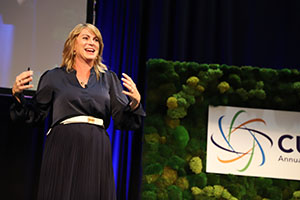
    Workplace culture strategist Jennifer Moss opened the conference in Orlando with a reminder that, while it’s been many years since the COVID-19 pandemic, its lessons still linger. During that time, many of us asked, is what I’m doing important? Does it make a difference?

    For so many in higher ed, the answer is yes. But Moss also shared a hard truth: the passion that leads people to work in higher ed may lead to burnout or passion fatigue. The solutions offered for burnout are often focused on the individual (“take a bath” or “meditate”), when they need to be systemic and even societal. Burnout isn’t about having a bad day — it’s chronic stress, classified as a disease by the World Health Organization. A strange irony is that burnout from overperforming at work often looks like underperformance (exhaustion, disengagement and cynicism).

    One solution that Moss proposed is to encourage employees to deliberately build stronger community and positive social connections, both essential to building bridges and combatting loneliness. According to the data Moss shared, eating just one lunch per week with coworkers, rather than alone at a desk, can aid employee happiness and performance. So can spreading positive gossip (saying nice things about others behind their backs), which subconsciously supports psychological safety.

    Takeaway: It’s key that workplaces tie efforts to reduce employee burnout to specific objectives and key results so that individuals aren’t responsible for solving the crisis on their own.

    Great Storytelling for a Shared Purpose

    Annual conference attendees experienced the magic of Disney firsthand during the closing night EPCOT excursion. But what makes Disney so magical? According to keynote speakers Jeff Williford and Jay Pyka of the Disney Institute, it’s all in the details. Disney excels in the finer points, with each park and resort providing a unique and immersive experience, from what music guests hear, to what smells are piped in, to the thatched roofs in Animal Kingdom made by South African artisans.

    How does Disney engage over 70,000 employees — aka, cast members — to ensure that the details are done right? While cast members’ jobs may be different, from serving food at EPCOT to directing riders on Space Mountain, they all share in one common goal: creating happiness. In their talk, Williford and Pyka emphasized that culture is defined by how people behave, and training is critical to achieving desired behaviors. Caring and communication are also vital elements of culture. The extent to which organizations genuinely care for their people is the extent to which those people will, in turn, care for customers and each other. And high-quality communication can reinforce culture as much as lack of communication will undermine it.

    Disney uses their expertise in storytelling to train and unite cast members in the common goal of creating happiness and embracing Disney culture. In fact, the first class new employees attend as part of their onboarding is one on Disney traditions because it helps them connect with the history and culture.

    Takeaway: Higher ed workplaces can create a powerful connection between employees and the institution’s mission, fostering a sense of belonging and commitment.

    Gen Z and the Future of Work

    In her closing keynote, Heather McGowan, a future-of-work expert, offered a hopeful vision of work — and of a society where more of us are united than divided. But she also admitted that “it’s difficult to be a human right now.” There’s a profound lack of connection among people, an uptick in loneliness and disconnection, and social divisions stemming from the pandemic, politics and social media.

    Why? One reason is that work has replaced what people once found in community, whether through church or bowling leagues or book clubs. McGowan said that’s why current and future generations entering the workforce seek jobs that reflect the totality of their values and personality.

    Gen Z is especially known for seeking greater meaning in work. They desire mentorship, they want to be part of something bigger than themselves (meaning), and they want to live their values through work (mission). They’re rejecting the work contract of previous generations, which promised job security in exchange for employee loyalty. Why, McGowan asked, are workplaces still demanding loyalty without offering the same security they did in previous generations?

    In asking for work to be meaningful, Gen Z is sending a critical lesson for the future of work, McGowan believes, one that workplaces need to take seriously to recruit new employees and retain existing ones. The data show that what employees want most in a job is growth, autonomy, achievement and respect.

    Takeaway: The future of work might just be in listening to what Gen Z is trying to convey: We all need a shared purpose and meaning in work.  

    Looking for More on Work Culture?

    Jennifer Moss’s new book, Why Are We Here?: Creating a Work Culture Everyone Wants, will be published in January. You can also check out these CUPA-HR articles and resources:


    Source link

  • How Three Institutions Built Winning Retention Programs – CUPA-HR

    How Three Institutions Built Winning Retention Programs – CUPA-HR

    by Julie Burrell | May 21, 2024

    New CUPA-HR data show some improvement in turnover in the higher ed workforce, but staffing hasn’t fully bounced back to pre-pandemic levels. Managers still face challenges filling positions and maintaining morale, while employees are seeking jobs where their satisfaction and well-being are prioritized.

    CUPA-HR’s recent webinar offers solutions that may move the needle on employee retention. Retaining Talent: Effective Employee Retention Strategies From Three Institutions brings together HR pros who showcase their high-impact, cost-effective approaches to increasing satisfaction and well-being, including:

    • Professional development programs driven by employees’ interests
    • Effective supervisor-employee communication, including stay interviews
    • Actionable campus climate surveys using liaisons
    • Mentoring programs and leadership pipelines
    • Recognition programs and community-building events
    • Employee Resource Groups to enhance belonging

    Here are some of the highlights from their programs.

    Stay Interviews at Drake University

    A stay interview is a structured, informal conversation between an employee and a trained supervisor — and can be key to retaining top talent. Maureen De Armond, executive director of human resources at Drake, considers stay interviews to be a critical tool that nevertheless go underused in higher ed. Overall, only 8% of employees stated that they participated in a stay interview in the past year, according to The CUPA-HR 2023 Higher Education Employee Retention Survey.

    De Armond stresses that stay interviews can build trust, increase communication, and show that you care about employees as people, not just their job performance. If you’re looking to get started, De Armond recommends checking out the Stay Interviews Toolkit.

    Actionable Climate Surveys at the University of Texas Rio Grande Valley

    What’s worse than not conducting a climate survey? Not doing anything with the answers employees have taken the time to provide, says Nicole Englitsch, organizational development manager at UTRGV. To make surveys actionable, they’ve enlisted campus climate liaisons.

    These liaisons, who are mostly HR professionals, are assigned to specific departments. The liaisons have been trained by their external survey partners to help their departments understand the results and engage in action planning, guided by a three-year timeline. This network of partners helps ensure that UTRGV’s goals of making survey results both transparent and actionable are achieved.

    For more on their employee engagement and retention efforts, see Building Leaders From Within: UT Rio Grande Valley Blends Leadership Development With a Master’s in Higher Ed Administration.

    Recognition and Community-Building at Rollins College

    How can institutions create a culture of belonging and valuing employees? David Zajchowski, director of human resources at Rollins, explains how their high-impact recognition and community-building programs range from informal coffee-and-doughnuts gatherings to special awards ceremonies for employees.

    Probably the most popular way of valuing employees while increasing connection is Rollins’s annual Fox Day. On a random day in spring, the president surprises employees and students with a day off from work and class to participate in community-building college traditions.

    Despite the effectiveness of employee recognition, many employers may be leaving this low-cost retention incentive on the table, as only 59% of higher ed employees said they received regular verbal recognition for their work in the Employee Retention Survey. Wondering how your employee recognition program stacks up? See a comparison of recognition programs and take a self-assessment here.


    Source link

  • Setting Up New Leaders for Success From Day One – Strategies for HR – CUPA-HR

    Setting Up New Leaders for Success From Day One – Strategies for HR – CUPA-HR

    by CUPA-HR | March 29, 2023

    Consider this scenario: An institution hires a new leader who has previously worked in higher ed. Assuming the individual has already acquired the knowledge and skills necessary to get the job done, HR guides them through a brief onboarding and launches them into their new role. Six months later, HR checks in with the leader to see how things are going and discovers a dissatisfied leader and a team in turmoil. What went wrong?

    According to Sara Reed, vice president of people and talent at Western Governors University, HR sometimes falsely assumes that new leaders with higher ed experience know how to get the job done. Consequently, expectations may not be clearly articulated, which can create rough patches for the leader to navigate on their own. In the recent CUPA-HR webinar Building Leader Confidence in Transition: We Can’t Do It Alone, Reed explained that to help create a smooth transition for new leaders and ensure success from day one, HR can consider implementing these strategies in the pre-hire and onboarding phases:

    • Pre-hire: Provide accurate and clear position descriptions. HR should be very clear about what the institution is looking for in the role. Is the institution looking for a different leader than in the past, or a leader who meets the status quo? What context is there surrounding the job description that the candidate should be aware of? For example, will the new leader be leading a team that is in transition or turmoil? If so, what resources and contacts can help the new leader in a situation like this?
    • Pre-hire: Be clear about the mission of the institution. What mission does this new leader need to advance and further? Do job candidates see the values and beliefs of the institution displayed on the website? Who is included in the interview process? Can a broad number of people be included in the hiring process to send the message that the position is of high importance?
    • Pre-hire: Have the individual meet the team they’ll be leading. Create an opportunity during the interview process for the potential new leader to meet the team they’ll be leading. Allowing job candidates and future team members to have conversations beforehand could reveal potential areas of conflict between the two parties.
    • Onboarding: Pair the new leader with a skills mentor and a cultural mentor. While a new leader’s knowledge, abilities and experiences in previous positions can be beneficial in helping them succeed in their new role, they still must learn the cultural and political landscape. In the webinar, Reed shared her personal testament to having a “nuts and bolts” mentor and a cultural mentor when she first began working in higher ed. While a “nuts and bolts” mentor explains institutional policies and how to use systems, a cultural mentor can help clue in a new leader to the cultural and political landscape and serve as a “safe space” to ask questions and get insights. As Reed suggested in the webinar, a cultural mentor is someone you can approach after a meeting and ask, “What just happened?”

    Interested in more pre-hire and onboarding strategies and tactics to help new leaders in transition? Watch the webinar recording: Building Leader Confidence in Transition: We Can’t Do It Alone.


    Source link

  • Kansas State University’s Braggin’ Wagon Offers a Unique Way to Recognize Campus Employees – CUPA-HR

    Kansas State University’s Braggin’ Wagon Offers a Unique Way to Recognize Campus Employees – CUPA-HR

    by CUPA-HR | October 19, 2022

    Think about a time you were recognized by a colleague for a job well done. Whether it was a grand gesture or a small act of recognition, chances are the personal shoutout put some pep in your step. Positive recognition in any form is a sure mood booster and helps move campus well-being in the right direction.

    In a recent CUPA-HR webinar, Refuel, Invest and Inspire Campus Well-Being, presenters from Kansas State University (K-State) shared a unique way of recognizing teams and departments on campus: the Braggin’ Wagon.

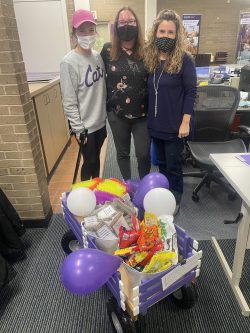
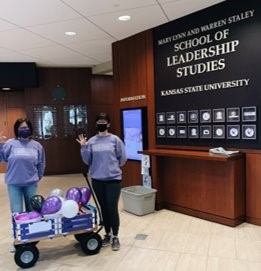
    The Braggin’ Wagon was developed by K-State’s Staley School of Leadership, which has a strong partnership with HR. The decorative travelling wagon is filled with treats, candy, small toys and other fun items for the receiving team to enjoy. Once the wagon is delivered to a department, it is up to that department to restock the wagon and deliver it to another department in order to keep the recognition going.
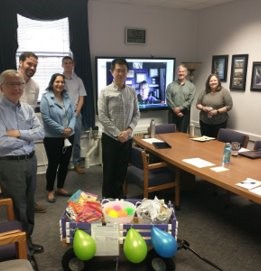
    This simple yet powerful way of recognizing campus employees serves a double purpose — it adds an element of fun to the work day for the team being recognized (who doesn’t love getting a surprise treat in the middle of a work day?), and it also gives the team passing on the wagon an opportunity to get out of the office for some exercise and take a mental break in the work day.

    When K-State resumed in-person work, it was important to put the emphasis on our employees and the solid work they were doing to make a difference. The Braggin’ Wagon was a way for departments to recognize other university partners who contributed to their work in a positive way,” says Shanna Legleiter, associate vice president of human capital services at K-State.

    With the Braggin’ Wagon as inspiration, what are some other creative ways HR can shine a spotlight on employees who work hard to keep campus operations running smoothly? Are there campus partnerships that can be formed to bring ideas for recognition to life? Don’t be afraid to think outside of the box when it comes to recognition opportunities!


    Source link

  • Build Psychological Safety and Fun Into the Workplace to Reduce Overwork and Burnout – CUPA-HR

    Build Psychological Safety and Fun Into the Workplace to Reduce Overwork and Burnout – CUPA-HR

    by CUPA-HR | September 28, 2022

    In the wake of the Great Resignation and talent recruitment challenges, heavy workloads have led to stress and burnout for some employees. One way higher ed HR pros can help identify sources of stress and mitigate burnout is by considering employees’ work environments. Are invisible pressures placed on employees, causing team members to downplay or hide their concerns about heavy workloads, or can employees be honest about their concerns and feel comfortable bringing their whole selves to work each day? How would employees describe the atmosphere where they work? Are levity and humor weaved into the workday, or is the lack of levity contributing to feelings of being overwhelmed?

    In the recent CUPA-HR virtual workshop, How to Manage Unmanageable Workloads, presenter Jennifer Moss explained how building psychological safety and bringing the fun back to work can reduce the impact of overwork and burnout. So what is psychological safety, and how can HR integrate it and the elements of fun and play into the workplace?

    Increase Psychological Safety

    “Psychological safety is the ability to reveal one’s true self and opinions without fear that doing so will lead to negative repercussions in terms of reputation, career, status or relationships with others,” explains Why Psychological Safety Matters Now More Than Ever, an article in the Spring 2021 issue of Higher Ed HR Magazine. Teams with high psychological safety see more open conversations between team members and managers about their work. They feel comfortable sharing honestly because they know they won’t be punished simply for doing so.

    Read the article to learn how HR pros can elevate psychological safety in the workplace by attending to systems and structures, supporting employees to forge connections, and fostering a learning orientation.

    Bring Back the Fun

    Although HR has much serious work to do, leaders can look for opportunities to incorporate fun, where appropriate. The application of fun and play has been shown to reduce stress and feelings of burnout while also improving creativity and productivity in working environments. Having fun at work has shown to have a positive impact on employee morale, engagement and camaraderie, all of which collectively have an influence on an organization’s culture. Here are some ideas to bring back the fun and stimulate play in the workplace.

    Encourage Humor

    Similar to incorporating more fun into the workplace, there are also plenty of benefits to weaving humor into the workplace. This element of work is sometimes considered non-essential but has many emotional and physical benefits that make us happier and healthier at work. Humor builds trust in relationships; a culture where it’s okay to admit failure; and happier, healthier employees. Learn how to conduct a humor audit to analyze where your workplace humor went right and ways to use it more effectively.

    Related resources:

    Health and Well-Being Toolkit (CUPA-HR members-only toolkit)

    How to Bring the Fun at Work (Higher Ed Workplace Blog)


    Source link

  • Three Elements of a Successful Onboarding Program – CUPA-HR

    Three Elements of a Successful Onboarding Program – CUPA-HR

    by CUPA-HR | September 14, 2022

    Onboarding programs consisting of a brief history lesson about the institution and instructions for how to get a parking pass aren’t likely to inspire new hires. Here are three elements of onboarding programs that go beyond the basics to create a deeper understanding of campus culture and a sense of belonging.

    Orient New Hires to Higher Education

    Learning industry-specific skills and knowledge is essential for employees to thrive in their workplaces. Higher education is no different. New hires must quickly get up to speed on how their departments function within the context of their institution and its mission. This can be overwhelming for anyone, especially someone new to higher education.

    To address this learning curve, CUPA-HR created Understanding Higher Ed Course 1 — An Overview of Higher Education for All Employees. The course is designed to help all higher ed employees understand different types of institutions, terminology, cultural hallmarks of the higher ed work environment, the basics of higher ed funding, and key soft skills that support success in the workplace.

    Create a Sense of Belonging

    A crucial aspect of the workplace that can’t be captured in a new-hire orientation video is the sense of belonging employees experience. And if staff members work remotely, opportunities to connect with coworkers and build community may be even more difficult to achieve.

    To overcome these challenges, the University of Florida’s Academic and Professional Assembly (APA), led by several HR employees, reconsidered their approach to onboarding. Through their Warm Welcome experience they helped create a campus culture that fosters a sense of belonging for new staff. The APA helps spark campus connections by hosting welcome events and small groups where new hires can interact with high-level leaders. During these events, leaders share personal stories and insights about leadership, diversity and inclusion and the value that staff bring in the pursuit of the university’s many goals. This storytelling approach draws out leaders’ personalities, camaraderie, sense of humor and transparency, and allows staff to see the “human” aspect of a large institution. Read more about UF’s Warm Welcome experience to learn how to design a warm welcome experience for your staff.

    Partner With Other Departments

    Onboarding shouldn’t fall solely on HR’s shoulders. Support from many areas of the institution is critical for a successful onboarding program. Additionally, shared responsibility for onboarding can positively affect organizational culture, departmental buy-in and employee retention. Presenters from the University of Colorado Boulder shared their strategic partner model in a 2019 CUPA-HR on-demand webinar “Onboarding: A Strategic Partner Model for Bringing About Cultural Change.” Watch the webinar recording to learn more about UC Boulder’s model to increase employee engagement, retention and productivity while keeping the focus on institutional goals.

    There are many reasons employees are drawn to work at an institution, and a successful onboarding program shows them why they should stay.


    Source link

  • Suicide Prevention and Awareness: Four Ways HR Can Lead the Conversation – CUPA-HR

    Suicide Prevention and Awareness: Four Ways HR Can Lead the Conversation – CUPA-HR

    by CUPA-HR | August 31, 2022

    This blog post was contributed by Maureen De Armond, Executive Director, Human Resources at Drake University.

    In higher education, we must plan for many worst-case scenarios, including tornados, fires, active-shooter situations, and, as we now know, pandemics. Among this wide range of difficult scenarios that could present themselves on our campuses at any time, suicide is one that deserves more attention and discussion.

    Like other scenarios, suicide prevention and planning should contain at least these components: awareness and prevention at the front end; crisis-response protocols to deploy in the moment; and post-incident support and debriefing.

    Here are four ways HR can take the lead on awareness and prevention efforts:

    Normalize Mental Health Conversations

    HR can set the example in normalizing conversations about mental health. From new employee orientation to leadership trainings to trainings offered during open enrollment, make mental health as normal a topic to discuss as being sick with the flu or needing rehab due to an injured back. We know that mental health carries a stigma; openly discussing mental health helps chip away at that stigma.

    Coordinate Messaging

    Tailor communications to your institution’s practices and use more than one channel for communication. If your institution sends newsletters, plan articles for each week of September. Consider emails as well. Be sure to provide your leadership teams with prepared messages and information they can share with their teams. Point them to helplines, training opportunities, reminders about EAPs, and tips for what to do and where to go if they or someone they know is having mental health crisis.

    Collaborative messaging sent from campus and community partners can also create a widespread impact. Consider reaching out to student services, the provost’s office, Title IX/Equal Opportunity, campus safety, student senate, faculty senate, student counseling, faculty subject matter experts, and your institution’s employee assistance program (EAP) providers and health plan partners to team up on mental health messaging throughout the month.

    Train, Train, Train

    Offer learning and development opportunities that focus on mental health awareness as well as suicide prevention. This fall semester, Drake University is offering Question, Persuade and Refer suicide prevention training in addition to Mental Health First Aid for Higher Education for faculty and staff. Faculty partners are facilitating these sessions. We’ve found that having faculty-led sessions can help attract faculty attendees, leverage internal expertise and offer faculty additional forms of service to the institution.

    Inventory Resources, Benefits and Policies

    Take a fresh look at your well-being/wellness programming. Does it appropriately address mental health? Explore what resources and trainings may be available through your existing EAP contracts. Does your health plan offer virtual doctor’s visits for mental health care? If so, shine a spotlight on those resources. Making mental health care as accessible as possible may mean more people will consider using it. Review sick, personal and other paid-time-off leave policies to ensure mental health is clearly addressed. This includes handbook and web language, too.

    While suicide awareness and prevention shouldn’t be a once-a-year conversation, September is a great month for HR to demonstrate leadership in normalizing conversations about mental health and suicide prevention and planning.

    Related resources:

    Reassessing Your Institution’s EAP: Steps for HR Pros to Increase Awareness and Accessibility (The Higher Ed Workplace Blog)

    HEERF Funds Can Be Used to Support Mental Health Resources (The Higher Ed Workplace Blog)

    Mental Health Month Focus: Higher Ed Campus Culture (The Higher Ed Workplace Blog)


    Source link

  • The Wildfire Program Welcomes a New Cohort for 2022-23 – CUPA-HR

    The Wildfire Program Welcomes a New Cohort for 2022-23 – CUPA-HR

    by CUPA-HR | August 3, 2022

    For the higher ed HR community to thrive there must be a pipeline of early-career professionals waiting in the wings, and one way CUPA-HR equips early-career pros to grow in their role and take steps toward their career goals is through the Wildfire program.

    The program, sponsored in part by HigherEdJobs, is a 12-month immersive experience that connects a small, select group of early-career higher ed HR professionals with some of the top leaders in the profession, giving them a variety of learning opportunities.

    Rob Keel, a member of the 2019-20 Wildfire cohort and past president of the CUPA-HR Tennessee Chapter, had this to say about the program: “Wildfire helped open my eyes to the possibilities within higher education HR. The network I gained through my involvement with Wildfire has provided so much support as I navigate my career. If you want to develop relationships that have the power to transform, Wildfire has the power to do just that.”

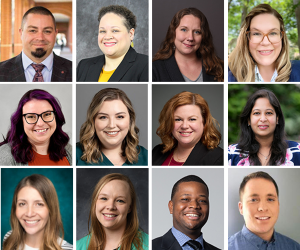
    As a new year gets underway, we want to congratulate and welcome the Wildfire program participants for 2022-23:

    • TJ Bowie, Equal Opportunity and HR Compliance Manager, Elon University
    • Joy Brownridge, Training and Development Specialist, University of Illinois System
    • Amanda Burshtynsky, Employee Payroll and Insurance Clerk, Genesee Community College
    • Kelleebeth Cantu, HR and Employment Coordinator, Trinity University
    • Audrey Ettesvold, Human Resource Specialist, Idaho State Board of Education
    • Alexis Hanscel, Benefits Manager, Denison University
    • Kathleen Hermacinski, Human Resource Coordinator, Eureka College
    • Anshuma Jain, HR Administrator, Hudson County Community College
    • Jessica Ludwick, Human Resources Consultant, University of North Carolina Wilmington
    • Tracey Pritchard, HR Coordinator, University of Iowa
    • Trevon Smith, HR Generalist, Drake University
    • Christopher Williams, HR Partner, University of Maine System Office

    Interested in joining our 2023-24 cohort? Learn more about the Wildfire program.


    Source link