Category: Leadership & Policy

  • Federal Court Blocks Education Department’s Diversity Directive, Marking Victory for Academic Freedom Advocates

    Federal Court Blocks Education Department’s Diversity Directive, Marking Victory for Academic Freedom Advocates


    A federal judge in New Hampshire delivered a significant legal victory Thursday for proponents of diversity, equity, and inclusion (DEI) programs in education by granting a preliminary injunction against the U.S. Department of Education’s controversial February “Dear Colleague” letter that critics had denounced as an unprecedented attempt to restrict DEI initiatives nationwide.

    The ruling temporarily blocks the Education Department from enforcing its February 14, 2025, directive against the plaintiffs, their members, and affiliated organizations while litigation continues. The court determined the directive potentially contradicts established legal protections for academic freedom and may violate constitutional rights by imposing vague restrictions on curriculum and programming.

    The February directive had sent shockwaves through higher education institutions across the country, with many administrators and faculty expressing concern that their diversity programs could trigger federal funding cutoffs. According to court documents, some educators reported feeling targeted by what they characterized as a “witch hunt” that put their jobs and teaching credentials at risk.

    “Today’s ruling allows educators and schools to continue to be guided by what’s best for students, not by the threat of illegal restrictions and punishment,” said National Education Association President Becky Pringle in a statement following the decision. She further criticized the directive as part of broader “politically motivated attacks” designed to “stifle speech and erase critical lessons” in public education.

    The coalition of plaintiffs who filed the lawsuit on March 5 includes the National Education Association (NEA), NEA-New Hampshire, the American Civil Liberties Union (ACLU), ACLU of New Hampshire, ACLU of Massachusetts, and the Center for Black Educator Development.

    Sharif El-Mekki, CEO and founder of the Center for Black Educator Development, emphasized the significance of the ruling beyond its immediate legal implications. “While this interim agreement does not confirm the Department’s motives, we believe it should mark the beginning of a permanent withdrawal from the assault on teaching and learning,” he said. “The Department’s attempt to punish schools for acknowledging diversity, equity and inclusion is not only unconstitutional, but it’s also extremely dangerous — and functions as a direct misalignment with what we know to be just and future forward.”

    Education legal experts note that the case represents a critical battleground in the ongoing national debate about how issues of race, identity, and structural inequality should be addressed in educational settings. The preliminary injunction suggests the court found merit in the plaintiffs’ arguments that the Education Department overstepped its authority and potentially violated First Amendment protections.

    Sarah Hinger, deputy director of the ACLU Racial Justice Program, called the ruling “a victory for students, educators, and the fundamental principles of academic freedom,” adding that “every student deserves an education that reflects the full diversity of our society, free from political interference.”

    The lawsuit challenges the directive on multiple legal grounds, including violations of due process and First Amendment rights, limitations on academic freedom, and exceeding the department’s legal mandate by dictating curriculum content. The plaintiffs argue that the directive created a chilling effect on legitimate educational activities while imposing vague standards that left educators uncertain about compliance requirements.

    Gilles Bissonnette, legal director of the ACLU of New Hampshire, emphasized the importance of the ruling for educational inclusivity. “The court’s ruling today is a victory for academic freedom, the free speech rights of educators, and for New Hampshire students who have a right to an inclusive education free from censorship,” he said. “Every student, both in the Granite State and across the country, deserves to feel seen, heard, and connected in school – and that can’t happen when classroom censorship laws and policies are allowed to stand.”

    The injunction comes at a time when many colleges and universities have been reassessing their diversity initiatives amid increased public scrutiny and policy debates. Higher education institutions have expressed particular concern about maintaining both compliance with federal regulations and their commitments to creating inclusive learning environments.

    The Department of Education has not issued a public response to the court’s decision. The case will now proceed to further litigation as the court considers whether to permanently block the directive.


    Source link

  • No Safe State: Former DEI Employee Says to Look for the Red Flags

    No Safe State: Former DEI Employee Says to Look for the Red Flags

    Dr. Nicole DelMastro-Jeffery, former executive director for the DEI and Belonging office and Title IX coordinator at Richland Community College.On January 21, one day after his inauguration, President Donald J. Trump signed an executive order he called “Ending Illegal Discrimination and Restoring Merit-Based Opportunity,” instructing federal agencies to end diversity, equity, and inclusion (DEI) practices and programs.

    The very next day, Dr. Nicole DelMastro-Jeffery, executive director for the DEI and Belonging office and Title IX coordinator at Richland Community College in Decatur, Illinois, was let go from her non-federal position.

    In a sense, DelMastro-Jeffery’s story is familiar. State legislatures across the country have introduced and passed laws curbing DEI at educational institutions, even before Trump issued his order. Since then, a growing number of DEI offices have either shuttered or reorganized, and DEI-focused employees have been dismissed or had their roles changed.

    But Illinois has no anti-DEI laws established, despite some competing bills introduced on the House and Senate floor. On February 7, State Sen. Andrew S. Chesney introduced SB2288, calling for the abolishment of DEI programs in departments of the state government. Conversely, on January 29, State Rep. Sonya M. Harper filed HR0077, a bill to affirm DEI programs in local, state, federal, educational and other institutions.

    According to DelMastro-Jeffery, in early 2024 when the Biden-Harris administration issued a new Dear Colleague letter which expanded Title IX for the further protection of women and transgender individuals, Richland moved toward implementing those changes. However, by December 2024, she said that Richland “quickly rolled back to the 2020 legislation.”

    “Ultimately,” she said, “Going back to 2020 legislative measures decreased protections, not only for transgender community members but women as well.”

    For DelMastro-Jeffery, the institutional waffling between Title IX regulations was a red flag, one that should be heeded by other DEI professionals and institutions working to preserve their DEI programs.

    “We have rarely considered the legal ramifications of separate laws and how their implementation and adjustments may in fact serve as awareness flags of next moves, like that of chess match players,” she said. “It is my belief that this federal injunction or swift rollback of expanded 2024 Title IX protections should have served as an immediate wakeup call to our DEI community.”

    DelMastro-Jeffery arrived at Richland fresh off an internship with the Biden-Harris administration. She said she was thrilled at the chance to apply all she had learned to a rural college environment. Her dismissal, she said, “felt like a triple backlash to both my former public service work, status as a woman of color in higher education, and DEI executive leader.”

    Paulette Granberry Russell, CEO and president of the National Association of Diversity Officers in Higher Education (NADOHE), said the attacks on DEI, including Trump’s order, have continued to demonize it, stripping all meaning from the acronym. She intentionally uses the words “diversity, equity, and inclusion,” instead of DEI.

    Paulette Granberry Russell, CEO and president of NADOHE.Paulette Granberry Russell, CEO and president of NADOHE.Granberry Russell said she is “disappointed by the failure of institutions that over-complied to the threats to diversity, equity, and inclusion efforts, rather than taking a stand to say these efforts are not divisive.”

    The misinformation disseminated through anti-DEI laws and orders have produced significant misunderstanding in the public sphere, “that somehow efforts associated with advancing diversity, equity, and inclusion is unlawful. That is not the case,” said Granberry Russell.

    “We’re seeing what I often refer to as a ‘chilling effect,’ where institutions are preemptively scaling back diversity, equity, and inclusion efforts due to political pressure or fear of litigation,” said Granberry Russell.

    NADOHE is the lead plaintiff in a federal lawsuit filed by Democracy Forward, a national legal organization of litigators, policy makers, regulators and public educators working to advance democracy. The suit was filed against the Trump Administration in early February calling Trump’s attack on DEI unconstitutional.

    Granberry Russell acknowledged that, since the legislation and executive order, many DEI officers and employees have lost their roles. But she does not know how many, as there is no national database tracking these changes.

    DelMastro-Jeffery said “this experience has illuminated, for me, the intersection between gender, leadership values, and the importance of pressing on.”

    She continued, “Amid the growing dismissal of DEI programming, now diluted to words on a website, we would be negligent to forget the value of diversity and how the world, including systems of education, thrives on it.”

    Richland leadership did not respond to requests for comment. Their website still hosts a page for Diversity, Equity, Inclusion, Belonging and Accessibility, which affirms these as a “core institutional value.”

    Source link

  • llinois Community College Bachelor’s Degree Bill Stalls Amid Equity Concerns

    llinois Community College Bachelor’s Degree Bill Stalls Amid Equity Concerns

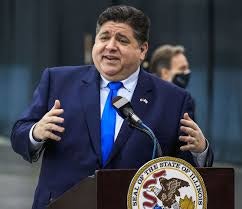
    Illinois Governor JB PritzkerA legislative initiative backed by Illinois Governor JB Pritzker that would allow community colleges to offer four-year bachelor’s degrees in high-demand fields has temporarily stalled in the state’s General Assembly, with lawmakers raising concerns about potential impacts on minority-serving institutions.

    The bill, which was one of Gov. Pritzker’s top legislative priorities announced in his February State of the State address, failed to advance from the House Higher Education Committee before Friday’s deadline for most non-spending bills.

    Rep. Katie Stuart, who chairs the committee, declined to call House Bill 3717 for a vote, though she indicated the legislation may still have a path forward this session.

    “I don’t think around here anything’s really ever dead, and I think there’s a path forward,” Stuart told reporters following last Wednesday’s committee hearing.

    Stuart, whose district includes Southern Illinois University Edwardsville, expressed specific concerns about how the proposed expansion might affect institutions that primarily serve minority students, such as Northeastern Illinois University and Chicago State University.

    “If we’re not careful about what programs are allowed, that it could collapse the existing programs in those institutions, collapse their student base, and just make them not able to be operational,” Stuart explained. “And then we wouldn’t have a four-year institution serving those communities.”

    This sentiment reflects growing concerns in higher education about maintaining equitable access while expanding educational options, particularly when considering the vital role that historically minority-serving institutions play in providing educational pathways for underrepresented populations.

    The governor’s proposal, introduced as House Bill 3717 by Rep. Tracy Katz Muhl, aims to make bachelor’s degrees more affordable and accessible, particularly in rural areas where four-year universities may not have a significant presence.

    “With lower tuition rates and a greater presence across the state — especially in rural areas — community colleges provide the flexibility and affordability students need,” Pritzker said when introducing the initiative. “This is a consumer-driven, student-centered proposal that will help fill the needs of regional employers in high-need sectors and create a pathway to stable, quality jobs for more Illinoisans.”

    The bill would allow community colleges to offer bachelor’s degrees in select fields, provided the college’s board of trustees demonstrates the program would address an “unmet workforce need” in their service area and that the institution possesses adequate resources and expertise to sustain the program.

    Following last week’s committee hearing, a coalition of presidents from several public and private universities in Illinois, including Chicago State and Northeastern Illinois University, released a statement acknowledging their concerns while expressing willingness to find a compromise.

    The university leaders noted they were concerned about “duplicating efforts and increasing costs at a time of limited resources,” but added they are “encouraged by negotiations and remain committed to working collaboratively to build a higher education ecosystem that serves all of our students and employers.”

    Despite missing the committee deadline, both Rep. Stuart and the governor’s office expressed optimism about reaching a compromise that addresses the concerns of all stakeholders.

    .

    Source link

  • Office for Civil Rights Commences Title VI Investigations Against 45 Universities

    Office for Civil Rights Commences Title VI Investigations Against 45 Universities

    On March 14, the U.S. Department of Education’s (ED) Office for Civil Rights (OCR) announced that it had opened Title VI investigations into 45 universities. In a news release, ED noted that these investigations follow a Feb. 14 Dear Colleague Letter (DCL) signed by Craig Trainor, acting assistant secretary for civil rights. According to the ED release, the DCL — sent to all educational institutions that receive federal funding — reiterated that schools were obligated “to end the use of racial preferences and stereotypes in education programs and activities.”

    Among the universities being investigated are both public and private institutions that include Clemson University, Cornell University, Duke University, the Massachusetts Institute of Technology, the University of Arkansas-Fayetteville, the University of California-Berkeley and the University of Kentucky.

    An article from the Courier Journal reported that University of Kentucky spokesperson Lindsey Piercy said, “We have not received any official notification of this review. However, the university complies with both the constitution and Title VI. Our graduate programs are open to all qualified applicants. We will continue to monitor and review this issue, cooperate with any official inquiries and, as always, comply with the law.”

    Montana State University-Bozeman (MSU) is also among the 45 institutions under investigation. MSU vice president for communications Tracy Ellig released a statement which reads in part: “MSU strictly adheres to all federal and state laws in the hiring of its faculty and staff. … Montana State University strictly adheres to all applicable laws with regard to its students. MSU has well-established processes and procedures in place to investigate any claim of discrimination by students, faculty, staff or the public.”

    The ED press release noted that the investigations were prompted by these institutions having partnered with The PhD Project, an organization founded in 1994 with the goal of creating more role models leading business classrooms. It endeavors to improve diversity in the business world by encouraging people from underrepresented backgrounds to attain doctoral degrees in business. ED asserted that The PhD Project “limits eligibility based on the race of participants.”

    The PhD Project issued the following statement: “For the last 30 years, The PhD Project has worked to expand the pool of workplace talent by developing business school faculty who inspire, mentor, and support tomorrow’s leaders. Our vision is to create a broader talent pipeline of current and future business leaders who are committed to excellence and to each other, through networking, mentorship, and unique events. This year, we have opened our membership application to anyone who shares that vision. The PhD Project was founded with the goal of providing more role models in the front of business classrooms, which remains our goal today.”

    OCR is also investigating six universities that have allegedly awarded race-based scholarships, which it asserts is not allowed, and one university that allegedly administers a program that “segregates students on the basis of race.” Among those schools are Grand Valley State University, Ithaca College and the University of Tulsa School of Medicine.

    “The Department is working to reorient civil rights enforcement to ensure all students are protected from illegal discrimination,” noted U.S. Secretary of Education Linda McMahon. “Students must be assessed according to merit and accomplishment, not prejudiced by the color of their skin.”

    Kelly Benjamin, media and communications strategist for the American Association of University Professors (AAUP), noted that AAUP was a plaintiff in a case for which the U.S. District Court for the District of Maryland has granted a preliminary nationwide injunction on parts of two executive orders issued by President Donald J. Trump that sought to end diversity, equity and inclusion policies and programs among federal government grantees and contractors, which includes most colleges and universities.

    “Unfortunately, the Office of Civil Rights within the Education Department has…intensified the clamp down on speech and expression related to race and identity, and they’ve moved beyond censorship into a true weaponization of federal civil rights law,” said Benjamin. “It’s fundamentally at odds with what the mission of higher education should be, which is the search for knowledge that serves the common good.

    “They’re trying to remake higher education into their own agenda, where they can control not only who has access to higher education but what is taught in the classroom, what can be researched, what can be written about,” he added. “It’s an assault on the very core mission of higher education.”

    The defendants, which include President Trump and ED, filed for a stay of the injunction pending appeal, which the United States Court of Appeals for the Fourth Circuit granted. “Having reviewed the record, the district court’s opinion, and the parties’ briefing, we agree with the government that it has satisfied the factors for a stay under Nken v. Holder, 556 U.S. 418, 426 (2009).” Entered at the direction of Chief Judge Albert Diaz, with the concurrence of Judge Pamela Harris and Judge Allison Rushing.

    EdTrust issued a statement from Augustus Mays, vice president of partnerships and engagement,  condemning the investigations. He noted: “By using federal investigations as a weapon to intimidate institutions committed to racial equity, the Trump administration is not only undermining the fundamental mission of higher education but is also jeopardizing student success. These attacks are grounded in a false narrative that DEI initiatives are about exclusion. The reality is the opposite: these programs are designed to expand access, increase opportunity, and strengthen institutions by ensuring that all students, particularly underserved students, can thrive.”

    Source link

  • Higher Ed Leaders Rally to Protect DEI Initiatives

    Higher Ed Leaders Rally to Protect DEI Initiatives

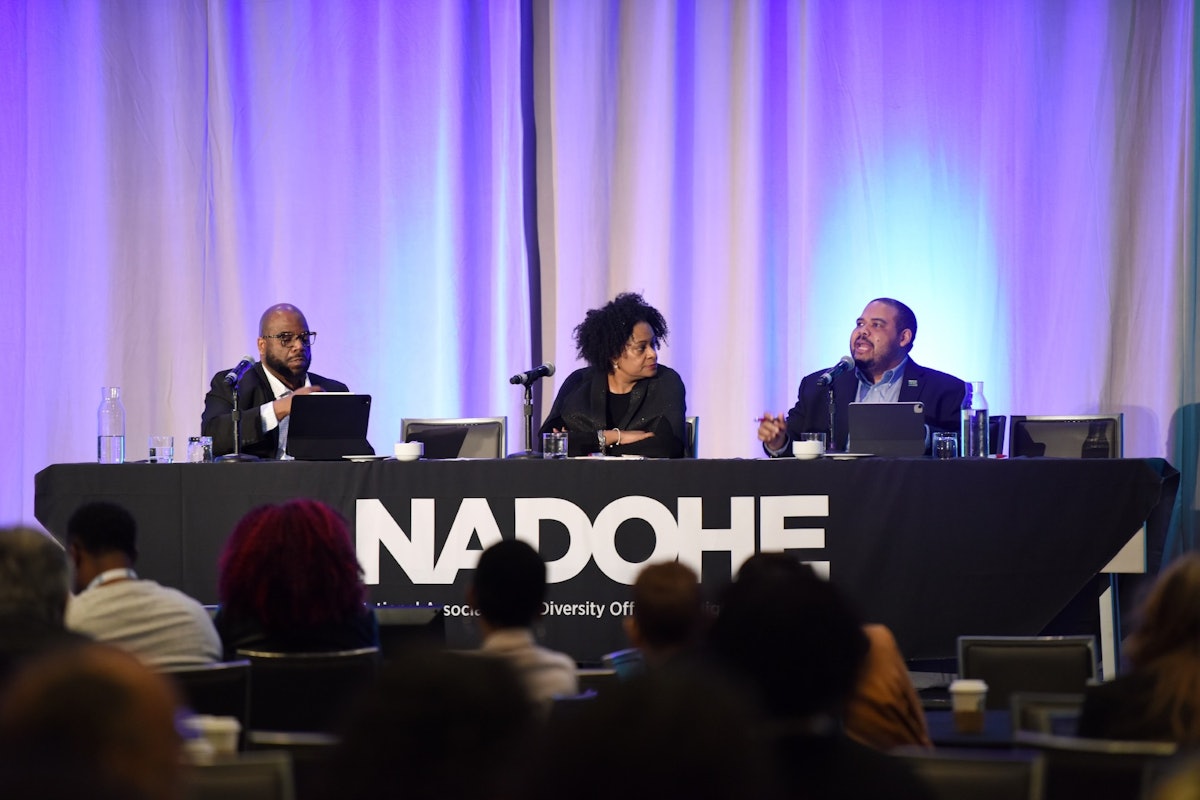
    Drs. Warren Anderson, Lisa Coleman, and Michael Anthony speaking on the President’s panel at NADOHE.Photos by Tim Trumble In a powerful gathering of diversity, equity, and inclusion (DEI) professionals, university leaders from across the nation shared strategies for protecting critical DEI work on college campuses despite mounting opposition nationwide.

    The concluding panel discussion, moderated by Dr. Warren Anderson from Bradley University, featured Dr. Michael D. Anthony, the first African American president of Prairie State College, and Dr. Lisa Coleman, the first female and first Black president of Adler University.

    Coleman, who has over three decades of experience in inclusion work, emphasized the importance of strong communications and media representation in defending DEI efforts.

    “What I see is the evolution of a diversity equity inclusion field from multiculturalism to liberalism to diversity,” she noted, adding that leaders must determine their own risk tolerance and that of their institutions when navigating these challenges.

    Anthony, who leads Prairie State College—both a Predominantly Black Institution and Hispanic-serving Institution about 30 miles from Chicago—highlighted the increasingly polarized context in which DEI work takes place.

    “We’ve been under attack around the federal government… with citizens becoming more cynical, hostile, and divided,” he observed, stressing the importance of critical thinking in an era of fast, subjective media.

    Following the panel discussion, Dr. Clyde Wilson Pickett, vice chancellor for equity, diversity, and inclusion at the University of Pittsburgh and board chairman of NADOHE shared a personal story about his great-grandmother that embodied the spirit of responsibility central to DEI work. He recounted how his great-grandmother, just one generation removed from slavery, would pick up garbage along the streets of her neighborhood every day after working a full day as a domestic worker.

    Thumbnail Img 8378Photos by Tim Trumble “She would take two buses out to be a domestic worker . When she got up in the morning at 5:00 AM to catch her first bus, she would walk down one side of the street picking up garbage,” Pickett explained. When he asked her why she did this, she responded, “We have to understand that we have a responsibility for our own and to take care of our own. So, what I’m doing is investing in our community.”

    Pickett drew a parallel to current DEI challenges that these frontline administrators are facing. “We have to do some things that we didn’t necessarily cause, but something that we had the responsibility to clean up.”

    He reminded attendees of their purpose during these “defining moments” that test values and resilience. “The ultimate measure of a person is not where they stand in moments of comfort and convenience, but where they stand in times of challenge and controversy,” he said, quoting Dr. Martin Luther King Jr.

    Pickett urged DEI professionals to stay grounded in their values and purpose. “We have to understand when we face this adversity, we have to return to our why—why do we do what we do? Why we’re committed to what we’re committed to, and who we do it for.”

    He said that building connections rather than divisions is crucial in the fight ahead. Over the weekend, the University of Virginia’s Board of Visitors voted to dissolve the college’s Office of Diversity, Equity and Inclusion (DEI) and Community Partnerships.

    “We know now more than ever, it’s important for us to do so by building bridges and not walls,” he said. “The same individuals who are leaving trash in our communities, who are causing conflict, want us to put up further walls between each other.”

    Pickett acknowledged the real challenges and potential for burnout in DEI work but urged professionals to practice self-care. “The work of diversity, equity, and inclusion is real. The burnout is real… And our ability to do this work can be compromised if we do not take care of ourselves.”

    The four-day conference, which coincided with International Women’s Day, served as both a celebration of progress and a rallying cry for continued advocacy. Despite growing opposition to DEI initiatives across American campuses, these leaders remain committed to protecting the progress made and supporting the professionals who advance this essential work every day.

    “I am leaving more reenergized and confident for the fight ahead,” said one attendee.

    Source link

  • Florida Dreamer Tuition Policy Reversal Threatens $25 Million Economic Impact

    Florida Dreamer Tuition Policy Reversal Threatens $25 Million Economic Impact

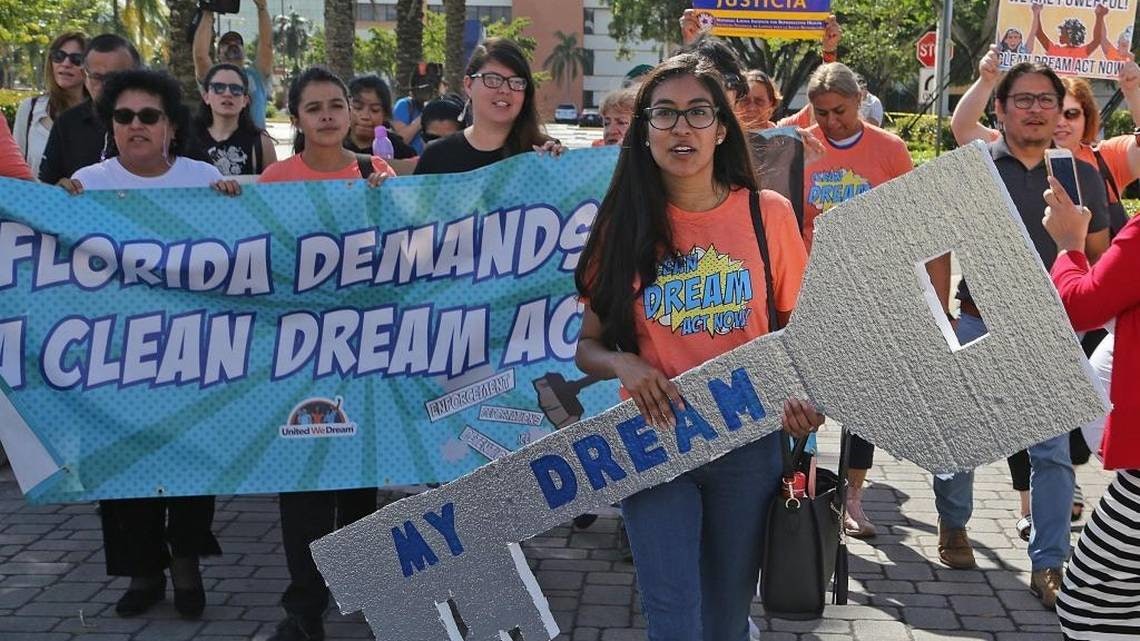
    Education advocates and immigration policy experts are warning of significant economic, and workforce impacts following Florida’s decision to rescind in-state tuition waivers for undocumented students who graduated from Florida high schools. The policy change, signed into law by Governor Ron DeSantis, marks a significant shift in the state’s approach to higher education access for Dreamers.

    The decision is expected to cost Florida institutions approximately $25 million in tuition and fees, according to TheDream.US, a national organization supporting higher education access for Dreamers. The organization’s President and CEO, Gaby Pacheco, a long-time Miami resident, said that the impact extends beyond immediate financial consequences, potentially affecting Florida’s future workforce development and economic growth.

    “Our state is turning its back and hindering the potential of students who have succeeded throughout their K-12 education,” says Pacheco, noting that many affected students arrived in the United States at an average age of six years old. The organization has already helped more than 600 Florida-based Dreamers graduate college, with many now working as nurses, teachers, engineers, and entrepreneurs within the state.

    The Presidents’ Alliance on Higher Education and Immigration, through its Director of Policy and Strategy Diego Sánchez, points to concerning workforce implications. With Florida facing shortages in healthcare, teaching, and STEM fields, the policy change could exacerbate existing gaps in critical sectors. Sánchez, himself a former undocumented student in Florida, argues that the state risks losing bilingual, skilled professionals to other regions with more inclusive education policies.

    The impact of this policy shift could be particularly significant given Florida’s traditional role as a hub for educational and economic opportunity. Critics argue that the change contradicts the state’s historical position as a beacon of dynamism and opportunity, potentially deterring talented students from pursuing higher education in Florida.

    Advocates point out that many affected students are deeply integrated into Florida communities, having completed their entire K-12 education in the state’s public schools. The new policy, they argue, creates barriers for these students to continue their education and contribute to the state’s economy, potentially forcing them to either abandon their educational pursuits or seek opportunities in other states with more favorable policies.

    As this policy takes effect, educational institutions and advocacy groups are working to assess the full scope of its impact on Florida’s educational landscape and future workforce development. The change represents a significant shift in Florida’s approach to higher education access and raises questions about the state’s long-term economic and workforce strategy.

    Source link

  • Community College Leader Dr. Walter Bumphus to Step Down After Transformative Era

    Community College Leader Dr. Walter Bumphus to Step Down After Transformative Era

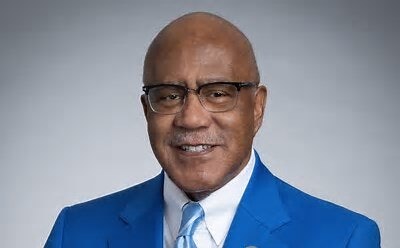
    Dr. Walter G. BumphusAfter steering America’s community colleges through unprecedented challenges and opportunities, Dr. Walter G. Bumphus announced he will retire as president and CEO of the American Association of Community Colleges (AACC) at the end of 2025, capping a remarkable 15-year tenure that helped reshape higher education access nationwide.

    The announcement marks the end of a chapter for community colleges that saw dramatic shifts in workforce development, educational technology, and the role of two-year institutions in American society. Under Bumphus’s leadership, community colleges strengthened their position as essential providers of affordable education and workforce training, working closely with four presidential administrations to advance their mission.

    “When you look at the landscape of higher education today, you can see Dr. Bumphus’s influence everywhere,” said Dr. Sunita Cooke, who chairs AACC’s board of directors and serves as superintendent/president of MiraCosta College. “He understood that community colleges needed to be at the table for every major conversation about America’s future workforce and educational opportunities.”

    Bumphus’s career, spanning more than five decades, coincided with community colleges’ emergence as critical players in addressing skills gaps and workforce needs. His expertise led to appointments on several high-profile national committees, including the American Workforce Policy Advisory Board and the Department of Homeland Security’s Academic Advisory Council.

    Beyond his policy work, colleagues say Bumphus’s greatest legacy may be the network of educational leaders he helped develop. As the A. M. Aikin Regents Endowed Chair at The University of Texas at Austin, he mentored hundreds of administrators who went on to leadership positions at community colleges across the country.

    His achievements have been widely recognized, including receiving the ACCT Marie Y. Martin CEO of the Year Award and the 2021 Baldridge Foundation’s Award for Leadership Excellence in Education. In 2013, Bumphus was awarded the Diverse Champions award by Diverse: Issues In Higher Education. 

    But Bumphus maintains that the real measure of success lies in the millions of students who have benefited from community college education during his tenure.

    “Every time I meet a graduate who tells me how community college changed their life, I’m reminded of why this work matters so much,” Bumphus said in his retirement announcement. “These institutions are the backbone of opportunity in America, and I’m confident they’ll continue to evolve and serve students for generations to come.”

    His 15-year leadership of AACC stands as the second-longest in the organization’s history. As he prepares for retirement, Bumphus remains characteristically focused on the future: “The work of expanding educational opportunity never ends. I’m grateful to have played a part in it.”

    Source link

  • Department of Education Orders End to Race-Based Programs Amid Fierce Pushback

    Department of Education Orders End to Race-Based Programs Amid Fierce Pushback

    The U.S. Department of Education has issued a sweeping directive ordering educational institutions to eliminate race-based considerations from admissions, hiring, and other programs, sparking immediate opposition from civil rights organizations, educational leaders, and advocacy groups.

    In a Dear Colleague Letter to schools receiving federal funding, the Department mandated the cessation of race preferences in areas ranging from admissions and hiring to scholarships and disciplinary actions. Schools that fail to comply within 14 days risk losing federal funding.

    “With this guidance, the Trump Administration is directing schools to end the use of racial preferences and race stereotypes in their programs and activities,” said Acting Assistant Secretary for Civil Rights Craig Trainor, characterizing the move as “a victory for justice, civil rights laws, and the Constitution.”

    The directive, which builds on last year’s Supreme Court decision in Students for Fair Admissions v. Harvard, extends far beyond college admissions to encompass elementary, middle, and high schools. It also targets diversity, equity, and inclusion (DEI) programs, which the Department claims have contributed to “widespread censorship” and a “repressive viewpoint monoculture” on campuses.

    The Department’s action specifically prohibits race-based considerations in admissions processes, hiring and promotion decisions, compensation, scholarship and prize distributions, and disciplinary actions. Schools must now evaluate students “according to merit, accomplishment, and character,” according to the directive.

    The sweeping nature of the order has raised serious concerns among education experts about its implementation timeline and scope. The 14-day compliance window, in particular, has drawn criticism from school administrators who argue that revamping entire systems of administration, hiring, and student life programs requires more time and careful consideration.

    Critics of the directive argue that it represents an overreach of the Department’s authority and misinterprets the Supreme Court’s Harvard decision. While the Court ruled against race-conscious admissions programs at Harvard and the University of North Carolina, many legal experts contend that the ruling’s scope was more limited than the Department’s interpretation suggests.

    The Department’s letter also takes aim at what it describes as a “DEI regime” in educational institutions, claiming these programs have fostered censorship through various mechanisms, including “deplatforming speakers who articulate a competing view” and using “bias response teams” to investigate those who object to a school’s racial ideology.

    Educational institutions now face the complex task of reviewing and potentially overhauling numerous programs and policies to ensure compliance with the new directive. This includes examining everything from recruitment strategies and scholarship criteria to student organization funding and faculty hiring practices.

    The Department has established a complaint system through its Office of Civil Rights for individuals who believe an institution has violated these new guidelines. However, education advocates warn that the rapid implementation timeline could lead to hasty decisions that might inadvertently harm educational equity and access.

    As schools scramble to interpret and implement these changes, the directive’s long-term impact on educational equity and institutional diversity remains uncertain. The Department’s enforcement approach and how it will evaluate compliance are yet to be fully detailed, leaving many institutions in a challenging position as they attempt to navigate these new requirements while maintaining their educational missions and values.

    Source link

  • Ed Secretary Nominee Signals Major Shake-Up for DEI, Civil Rights

    Ed Secretary Nominee Signals Major Shake-Up for DEI, Civil Rights

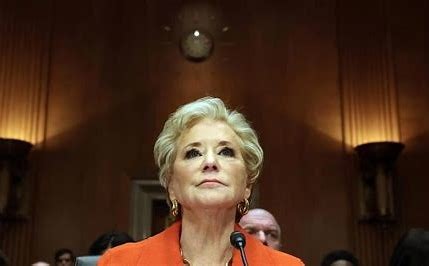
    In a Senate confirmation hearing that has sent ripples through the higher education community, Education Secretary nominee Linda McMahon acknowledgedLinda McMahon President Trump’s directive to potentially dissolve the Department of Education, while facing pointed questions about diversity initiatives and civil rights protections in education.

    During last Thursday’s hearing before the Senate Committee on Health, Education, Labor and Pensions (HELP), McMahon addressed concerns about the administration’s stance on diversity, equity, and inclusion (DEI) programs in educational institutions. When pressed by Sen. Chris Murphy (D-Conn.) about Trump’s executive order banning DEI programs, McMahon stopped short of providing clear guidance on the future of student cultural organizations and ethnicity-based clubs on campuses.

    The hearing revealed mounting concerns about student data privacy and program funding. Sen. Patty Murray (D-Wash.) highlighted that the Department of Government Efficiency (DOGE) has already gained access to “highly sensitive student data” and has begun withholding congressionally approved funding meant to support schools and students.

    Democratic senators expressed particular concern about the potential dismantling of the Education Department and its impact on civil rights enforcement and disability services in higher education. When questioned about relocating the Individuals with Disabilities Education Act (IDEA) to the Department of Health and Human Services, McMahon defended the potential move by citing declining performance scores despite nearly a trillion dollars in spending since the department’s establishment in 1980.

    McMahon did make several commitments during the hearing, including a pledge to maintain the Pell Grant program, which provides crucial financial aid to millions of college students. She also addressed the issue of antisemitism on college campuses, though specific plans for addressing this concern were not detailed.

    The hearing, which was interrupted multiple times by protesters advocating for public schools and trans students’ rights, highlighted the complex challenges facing the department. McMahon acknowledged that any significant changes to the department’s structure would require congressional approval, despite the president’s stated desire to eliminate it through executive action.

    While McMahon is expected to be confirmed by the GOP-controlled Senate, her hearing has raised significant questions about the future of federal oversight of higher education, particularly regarding civil rights enforcement and diversity initiatives. The HELP panel is scheduled to vote on advancing her nomination to the full Senate floor next Thursday.

    “It’s always difficult to downsize, it’s always difficult to restructure and reorganize in any department,” McMahon said during the hearing, addressing concerns about recent administrative leaves and firings at the department. “I think people should always be treated with respect.”

    For the higher education community, the hearing left several crucial questions unanswered, particularly regarding the future of diversity programs and civil rights protections. Sen. Murphy’s exchange about student cultural organizations highlighted the uncertainty facing many campus groups: “That’s pretty chilling. I think schools all around the country are going to hear that,” he noted after McMahon’s noncommittal response about the permissibility of ethnicity-based student clubs under the new DEI restrictions.

    Source link