Category: leadership

  • Why student engagement starts with teacher clarity

    Why student engagement starts with teacher clarity

    Key points:

    In Alpine School District, we serve a wide range of students, from Title I to highly affluent communities. While our population has traditionally been predominantly white and middle income, that’s changing. In response to this growing diversity and shifting needs, one of my missions as professional learning and curriculum director for secondary schools has been to provide needs-based professional learning, just in time for educators, and to give them a real voice in what that looks and feels like.

    I lead a team of full-time educator equivalents across every discipline: math, science, social studies, ELA, the arts, health, and PE. Together, we guide professional learning and instructional support. Over the past several years, we’ve had to take a hard look at how we teach, how we engage students, and how we prepare educators for long-term success.

    Where we started: Tier 1 challenges and high turnover

    When I first became curriculum director, I noticed in our data that our schools were not making much progress, and in some cases had stagnated in growth scores. We were leaning heavily on Tier 2 interventions, which told us that we needed to shore up our Tier 1 instruction.

    At the same time, we were hiring between 400 and 500 teachers each year. We’re located near several universities, so we see a continuous flow of new educators come and go. They get married, they relocate, or a spouse gets into medical school, which translates to a constant onboarding cycle for our district. To meet these challenges, we needed professional learning that was sound, sustainable, and meaningful, especially early in a teacher’s career, so they could lay a strong foundation for everything that would come after.

    Teacher clarity and engagement by design

    Several years ago, we joined the Utah State Cohort, doing a deep dive into the Teacher Clarity Playbook. That experience was a real turning point. We were the only team there from a district office, and we took a train-the-trainer approach, investing in our strongest educators so they could return and lead professional learning in their content areas. Since then, we’ve used Engagement by Design as the framework behind much of our PD, our classroom walkthroughs, and our peer observations. It helped us think differently: How do we support teachers in crafting learning intentions and success criteria that are actually meaningful? How do we align resources to support that clarity? We’ve embedded that mindset into everything.

    Coming out of the pandemic, Alpine, like many districts around the country, saw decreased student engagement. To focus deeply on that challenge, we launched the Student Engagement Academy, or SEA. I co-designed the Academy alongside two of our content specialists, Anna Davis and Korryn Coates. They’re both part-time teacher leaders at the district office and part-time visual arts teachers in schools, so they live in both worlds. That was important because we believe professional learning should always be contextualized. We don’t want teachers burning extra bandwidth trying to translate strategies across subject areas.

    SEA is a yearlong, job-embedded learning experience. Teachers participate in PLCs, conduct peer observations, and complete a personalized learning project that showcases their growth. Our PLC+ coaches work directly with our lead coach, Melissa Gibbons, to gather and analyze data that shapes each new round of learning. We also included classroom observations, not for evaluation, but to help teachers see each other’s practice in action. Before observations, Anna and Korryn meet with teachers in small groups to talk through what to look for. Afterward, they debrief with the teachers: What did we see? What evidence did we see of student engagement? What did we learn? What are we still wondering? As we answer these questions about teaching, we’re also asking students about their experience of learning.

    Learning from student surveys

    Hearing from our students has been one of the most powerful parts of this journey. With the support of our Director of Student and Educator Well-eing, we created a student survey. We asked a random group of students questions such as:

    • What are you learning?
    • How are you learning it?
    • How do you know how you’re doing?
    • Why does it matter?

    The responses were eye-opening. Many students didn’t know why they were learning something. That told us our teachers weren’t being as clear or as intentional as they thought they were. One specific question we asked was based on the fact that attendance in world language classes stayed high during the pandemic, while it dropped in other subjects. We asked students why. The answer? Relationships, expectations, and clarity. They said their world language teachers were clear, and they knew what was expected of them. That led other disciplines to reflect and recalibrate.

    Today, teachers across subjects like ELA, math, and social studies have participated in a SEA cohort or aligned learning. We’re seeing them plan more intentionally, better target skills, and align instruction with assessment in thoughtful ways. They’re starting to see how mirroring instruction with how learning is measured can shift outcomes. It’s been truly exciting to witness that change. Engaging students through improved teacher clarity, positive classroom relationships (with each other, the teacher, and the content), and providing the students with appropriate levels of rigor has been a game changer.

    Building teacher leadership teams

    Next year, we’re focusing on developing teacher leadership skills, knowledge, and dispositions across the full geographic area of our district. We’re building professional capacity through leadership teams using the PLC+ model, with an emphasis on facilitation skills, research-based practice, and advocacy for strong instruction in every discipline.

    If you’re a district leader looking to boost student engagement through professional development, my advice is simple: You can’t do it alone. You need a team that shares your values and your commitment to the work. You also have to be guided by research–there’s too much at stake to invest in strategies that don’t hold water. Finally, this is a marathon, not a sprint. Aim for small, incremental changes. There’s no silver bullet, but if you stay the course, you’ll see real transformation.

    Latest posts by eSchool Media Contributors (see all)

    Source link

  • Higher Education Leadership in Times of Crisis – Edu Alliance Journal

    Higher Education Leadership in Times of Crisis – Edu Alliance Journal

    First in Leadership Series by Barry Ryan, PhD, JD August 11, 2025

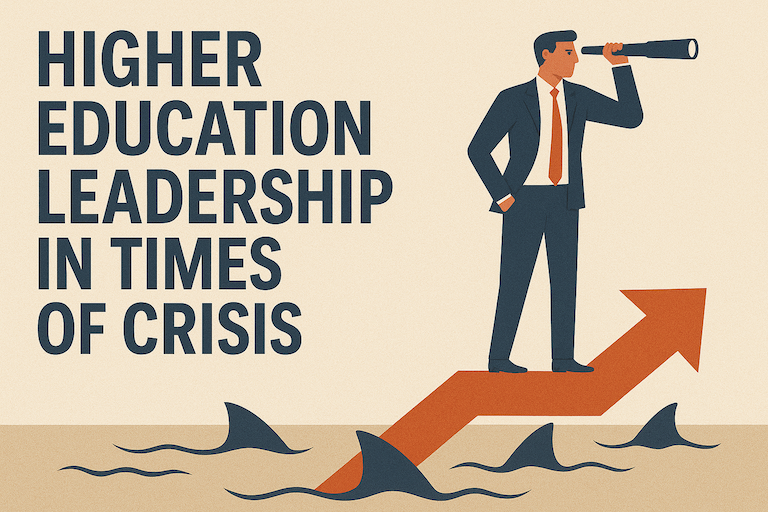
    It is hard to think of a time when higher education was swimming in a pool filled with a greater number of shark-like threats than at present.

    Some of these were predictable (in hindsight), some not so much. Let’s set aside blame, however, on either an institutional level or on a more global basis. The vital thing now is for genuine leaders to help chart courses that will lead higher education, not just to mere survival, but to new and meaningful purposes that will benefit this generation and the next.

    When situations are “normal,” we may be tempted to imagine that we need leadership that can keep the legacy intact, turn the crank, not rock the boat. But normal no longer exists, does it?

    I remember a senior university leader, who admonished me, as I began a new presidency: “everything’s going great—just don’t mess it up” (using slightly more colorful language). One year later, seismic changes in higher ed created an unexpected crisis and necessitated major changes in the institution. Almost everything that had contributed to its prior success turned, overnight, into a liability.

    There is, of course, more than one crisis in which higher ed is being buffeted. The sheer number of colleges and universities that have ceased to exist at all, or have been merged to various extents with others, or are currently teetering on the brink, appears in news stories almost every day. The root causes are legion and often woven together: financial shortfalls, a shrinking number of students, reductions in state and federal support, the disappearance of many international students, families, and prospective students increasingly unable to justify the cost of a degree, the “value” of which is seriously questioned. The list goes on.

    Of the three large “types” of higher education in the United States—public (state) colleges and universities, private not-for-profit colleges and universities, and for-profit entities—the vast majority are struggling in meaningful ways.

    If you find yourself in a leadership role in this age of crisis, what are some key things you can do to keep becoming a better leader and more effectively serve your institution and your colleagues? Here are three suggestions that you may find helpful.

    First, don’t panic.

    And even if you do feel panic welling up inside you, do your best to keep it from becoming obvious. Phil Slott, who was involved in the Dry Idea marketing campaign in the 1980s, seems to have coined a relevant phrase: “Never let them see you sweat.” It just stresses you out more and does little to inspire confidence in those who are looking to you for leadership.

    Once you’ve steadied yourself, the next critical realization is that leadership in crisis cannot be solitary work.

    Second, remember every day, you can’t do this alone.

    A 19th-century lawyer by the name of Abe Lincoln is credited with the adage: “A person who represents himself in court has a fool for a client.” That rings true for any leader who tries to do everything and assumes they have sufficient knowledge (or wisdom or experience or insight) to solve every problem on their own. No one does—no matter how experienced.

    So where do you turn for help? The answer is two-fold: internally and externally. You need to draw on both circles and find confidential, experienced, and reliable counsel.

    Choose very carefully with whom you share the issues internally. Depending on the nature of the problem you’re trying to address, success might well be thwarted if there is a lapse of absolute confidentiality. At the starting point of the process, you need to be able to rely on one other person, or perhaps a very small circle, with which you will be able to expand bit by bit as the timeline moves along.

    There are difficult audiences and stakeholders in the life of an academic institution, and ultimately, all must be included in the process of working through a crisis. The sequencing of sharing information and inviting input, though, must be very carefully structured. If you’re a president, oftentimes the first person you seek is a senior member of the administration—a provost, vice president, or someone in a similar position. At times, it could be the chair of the board or a wise and thoughtful alum. But whoever the person(s) may be, the timing of sharing the situation and seeking input for solutions is everything.

    It’s very important not to neglect external assistance as well. It is all but impossible to generate a sufficient perspective on a crisis from only one (your) vantage point, or even from that of your small, trustworthy group. You’re very likely not the first institution to face these problems, and consulting with trusted external leaders can provide not only perspective but also ideas you may not have thought of on your own.

    Some of these leaders may be in academic institutions, but not necessarily. It is always helpful to have relationships with leaders in other professional fields as well, who may be particularly helpful in providing fresh perspectives and ideas. For example, in my own experience, I’ve found such people in leadership of non-profit organizations or boards, key corporate positions, government at various levels, and experienced friends with whom I served long ago, and could provide input on both my institution’s situation and also my own strengths and weaknesses. In addition, external folks don’t have the same emotional investment as someone internal, so the chances of a more neutral observation point are increased significantly.

    There is a temptation—and often a prudent one—to seek external input from lawyers. There are, of course, a fair number of attorneys and firms with expertise in higher education, which can be a plus. Higher education is a very specialized field, and, frankly, most lawyers have a huge knowledge deficit in terms of the operational realities of a college or university. Their tendency is to think, “Well, I know higher ed—after all, I went to college and law school” (or maybe even taught a course or two). Beware the well-intentioned lawyer who does not have directly relevant practice experience.

    This, of course, does not at all preclude seeking competent legal advice for certain aspects of the problems you may be facing. For example, most institutions have or will need counsel in employment matters. Even if not the center of your challenge, these issues will likely arise as part of the need for a solution to your challenges. If it appears you will have to make difficult financial decisions that might impact faculty or staff, you should seek excellent employment counsel much sooner rather than later. With students, Title IX requirements, for example, may dictate the need for specialized counsel, as might certain types of accreditation issues.

    Third, leadership is not “one size fits all.”

    Every leader has different abilities and personalities. Even though many institutions experience similar types of crises, the circumstances of each call for a bespoke solution.

    However, some very important leadership characteristics can increase the probability of success in these situations. In part two, we’ll examine these and how to cultivate them.


    Dr. Barry Ryan invested the first half of his career in higher education in teaching and the second half in administration. During that same timeframe, he pursued a parallel career in law and legal education. He​ served as the Supreme Court Fellow in the chambers of Chief Justice William H. Rehnquist and is a​ member of numerous federal and state bars. He has been appointed as the president of five universities and provost and chief of staff at three others. Among the institutions he served have been state, private non-profit, and private for-profit universities. Included in his academic experience were two terms as a Commissioner of the regional accreditor WASC​ (WSCUC).

    He has been appointed as the president of five universities and provost and chief of staff at three others. Among the institutions he served have been state, private non-profit, and private for-profit universities. Included in his academic experience were two terms as a Commissioner of the regional accreditor WASC​ (WSCUC). Dr. Ryan has led institutions through mergers, acquisitions, and affiliations that have preserved academic​ quality, expanded access, and strengthened long-term viability. His leadership has been marked by​ transparency, shared governance, and a commitment to stakeholder engagement at every stage of these processes.

    He earned his Ph.D. from the University of California, Santa Barbara, his J.D. from the University of​ California, Berkeley, and his Dipl.GB in international business from the University of Oxford.


    Edu Alliance Journal provides expert commentary and practical insights on U.S. and international higher education, focusing on innovation, policy, and institutional growth. Published by Edu Alliance, a consulting firm with offices in the United States and the United Arab Emirates, the Journal reflects the organization’s mission to help colleges, universities, and educational organizations achieve sustainable success through strategic partnerships, market intelligence, and program development.

    Source link

  • Announcing a Special Small College America Webinar – Edu Alliance Journal

    Announcing a Special Small College America Webinar – Edu Alliance Journal

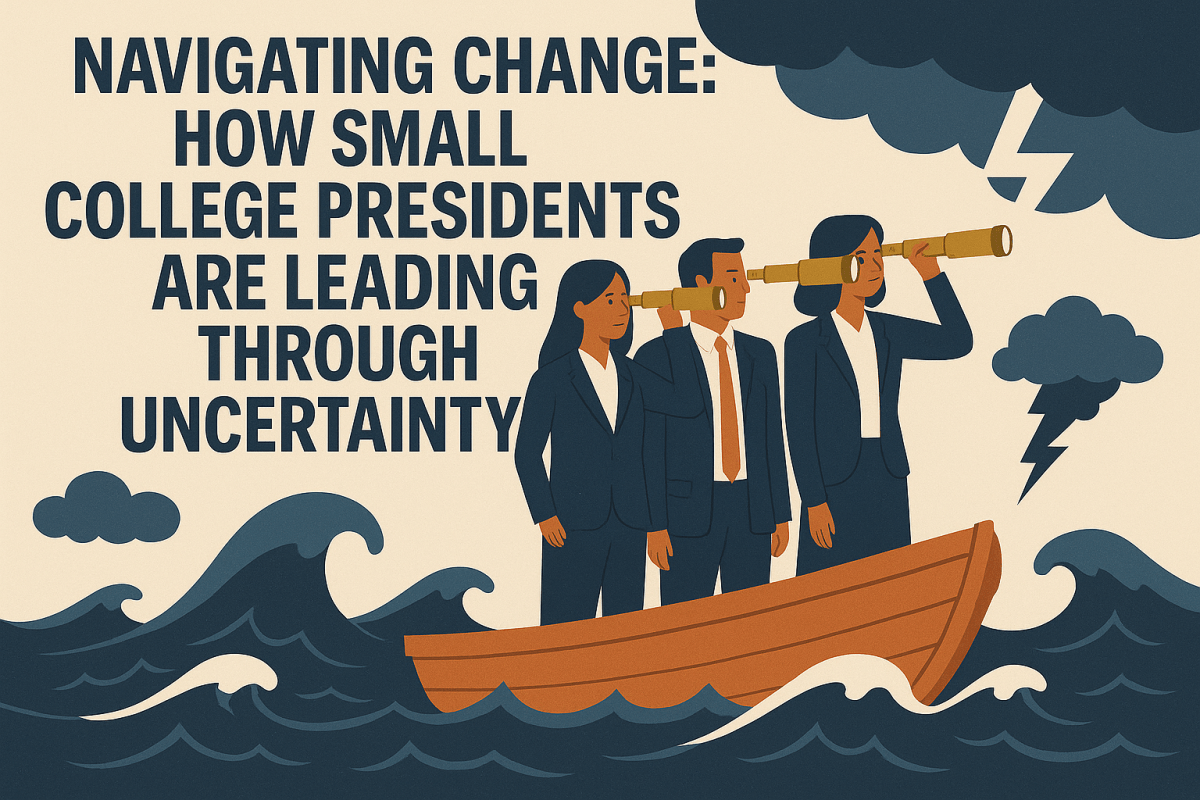
    “Guiding Through Change: How Small Colleges Are Responding to New Realities”: A Live Conversation with Three Small College Presidents

    August 2, 2025, by Dean Hoke: Over the past several months, higher education has experienced an unprecedented wave of transformation. The elimination or curtailment of Diversity, Equity, and Inclusion (DEI) initiatives, shifting federal financial aid policies, declining enrollment in traditional undergraduate programs, and heightened visa scrutiny and geopolitical tensions pose potential risks to international student enrollment, an area of growing importance for many small colleges.

    Dr. Chet Haskell, in a recent piece for the Edu Alliance Journal, captured the mood succinctly: “The headlines are full of uncertainty for American higher education. ‘Crisis’ is a common descriptor. Federal investigations of major institutions are underway. Severe cuts to university research funding have been announced. The elimination of the Department of Education is moving ahead. Revisions to accreditation processes are being floated. Reductions in student support for educational grants and loans are now law. International students are being restricted. These uncertainties and pressures affect all higher education, not just targeted elite institutions. In particular, they are likely to exacerbate the fragility of smaller, independent non-profit institutions already under enormous stress.”

    Small colleges—often mission-driven, community-centered, and tuition-dependent—are feeling these disruptions acutely.

    As we enter the third season of Small College America, a podcast series that spotlights the powerful impact of small colleges across the nation, my co-host Kent Barnds and I wanted to mark the moment with something special. Rather than recording a typical podcast episode, we’re hosting a live webinar to engage in a timely and candid discussion with three dynamic presidents of small colleges.

    Join us for a special Small College America webinar:

    “Guiding Through Change: How Small Colleges Are Responding to New Realities”

    Wednesday, August 27, 1:00 PM – 2:00 PM Eastern

    Our panelists bring deep experience, insight, and a strong commitment to the mission of small colleges:

    • Dr. Andrea Talentino is the president of Augustana College in Rock Island, Illinois. She previously served as provost at Nazareth College in Rochester, N.Y., and Dean of the College of Liberal Arts at Norwich University in Northfield, Vermont. In her administrative work, she has focused on building strong teams and developing a positive organizational culture.
    • Dr. Tarek Sobh is the President of Lawrence Technological University. A distinguished academic leader, he previously served as Provost at LTU and as Executive VP at the University of Bridgeport. An expert in robotics, AI, and STEM education, Dr. Sobh has published extensively and presented internationally. He is passionate about aligning academic programs with workforce needs.
    • Dr. Anita Gustafson, President of Presbyterian College, is a historian and long-time faculty leader who assumed the presidency in 2023. She has been a strong advocate for the value of the liberal arts and the importance of community engagement. Dr. Gustafson returned to PC after seven years as the dean of the College of Liberal Arts and Sciences and a professor of history at Mercer University in Macon, Ga.

    This one-hour webinar will explore how small private colleges are navigating today’s evolving environment and planning strategically for the future.

    Who Should Attend:

    • Institutional Leaders and Academic Faculty
    • Trustees and Advisory Members
    • Donors and Corporate Supporters
    • Alumni of Small Colleges
    • Community Leaders and Advocates

    👉 Click Here to Register

    There is no charge to attend—secure your spot today!

    We hope you’ll join us for this thoughtful and timely conversation.

    Source link

  • A practical guide for sourcing edtech

    A practical guide for sourcing edtech

    Key points:

    Virtual reality field trips now enable students to explore the Great Wall of China, the International Space Station, and ancient Rome without leaving the classroom.  Gamified online learning platforms can turn lessons into interactive challenges that boost engagement and motivation. Generative AI tutors are providing real-time feedback on writing and math assignments, helping students sharpen their skills with personalized support in minutes.

    Education technology is accelerating at a rapid pace–and teachers are eager to bring these digital tools to the classroom. But with pandemic relief funds running out, districts are having to make tougher decisions around what edtech they can afford, which vendors will offer the greatest value, and, crucially, which tools come with robust cybersecurity protections.

    Although educators are excited to innovate, school leaders must weigh every new app or online platform against cybersecurity risks and the responsibility of protecting student data. Unfortunately, those risks remain very real: 6 in 10 K-12 schools were targeted by ransomware in 2024.

    Cybersecurity is harder for some districts than others

    The reality is that school districts widely vary when it comes to their internal resources, cybersecurity expertise, and digital maturity.

    A massive urban system may have a dedicated legal department, CISO, and rigid procurement processes. In a small rural district, the IT lead might also coach soccer or direct the school play.

    These discrepancies leave wide gaps that can be exploited by security threats. Districts are often improvising vetting processes that vary wildly in rigor, and even the best-prepared system struggles to know what “good enough” looks like as technology tools rapidly accelerate and threats evolve just as fast.

    Whether it’s apps for math enrichment, platforms for grading, or new generative AI tools that promise differentiated learning at scale, educators are using more technology than ever. And while these digital tools are bringing immense benefits to the classroom, they also bring more threat exposure. Every new tool is another addition to the attack surface, and most school districts are struggling to keep up.

    Districts are now facing these critical challenges with even fewer resources. With the U.S. Department of Education closing its Office of EdTech, schools have lost a vital guidepost for evaluating technology tools safely. That means less clarity and support, even as the influx of new tech tools is at an all-time high.

    But innovation and protection don’t have to be in conflict. Schools can move forward with digital tools while still making smart, secure choices. Their decision-making can be supported by some simple best practices to help guide the way.

    5 green flags for evaluating technology tools

    New School Safety Resources

    With so many tools entering classrooms, knowing how to assess their safety and reliability is essential. But what does safe and trustworthy edtech actually look like?

    You don’t need legal credentials or a cybersecurity certification to answer that question. You simply need to know what to look for–and what questions to ask. Here are five green flags that can guide your decisions and boost confidence in the tools you bring into your classrooms.

    1. Clear and transparent privacy policies

    A strong privacy policy should be more than a formality; it should serve as a clear window into how a tool handles data. The best ones lay out exactly what information is collected, why it’s needed, how it’s used, and who it’s shared with, in plain, straightforward language.

    You shouldn’t need legal training to make sense of it. Look for policies that avoid vague, catch-all phrases and instead offer specific details, like a list of subprocessors, third-party services involved, or direct contact information for the vendor’s privacy officer. If you can’t quickly understand how student data is being handled, or if the vendor seems evasive when you ask, that’s cause for concern.

    1. Separation between student and adult data

    Student data is highly personal, extremely sensitive, and must be treated with extra care. Strong vendors explicitly separate student data from educator, administrator, and parent data in their systems, policies, and user experiences.

    Ask how student data is accessed internally and what safeguards are in place. Does the vendor have different privacy policies for students versus adults? If they’ve engineered that distinction into their platform, it’s a sign they’ve thought deeply about your responsibilities under FERPA and COPPA.

    1. Third-party audits and certifications

    Trust, but verify. Look for tools that have been independently evaluated through certifications like the Common Sense Privacy Seal, iKeepSafe, or the 1EdTech Trusted App program. These external audits validate that privacy claims and company practices are tested against meaningful standards and backed up by third-party validation.

    Alignment with broader security frameworks like NIST Cybersecurity Framework (CSF), ISO 27001, or SOC 2 can add another layer of assurance, especially in states where district policies lean heavily on these benchmarks. These technical frameworks should complement radical transparency. The most trustworthy vendors combine certification with transparency: They’ll show you exactly what they collect, how they store it, and how they protect it. That openness–and a willingness to be held accountable–is the real marker of a privacy-first partner.

    1. Long-term commitment to security and privacy

    Cybersecurity shouldn’t be a one-and-done checklist. It’s a continual practice. Ask vendors how they approach ongoing risks: Do they conduct regular penetration testing? Is a formal incident response plan in place? How are teams trained on phishing threats and secure coding?

    If they follow a framework like the NIST CSF, that’s great. But also dig into how they apply it: What’s their track record for patching vulnerabilities or communicating breaches? A real commitment shows up in action, not just alignment.

    1. Data minimization and purpose limitations

    Trustworthy technology tools collect only what’s essential–and vendors can explain why they need it. If you ask, “Why do you collect this data point?” they should have a direct answer that ties back to functionality, not future marketing.

    Look for platforms that commit to never repurposing student data for behavioral ad targeting. Also, ask about deletion protocols: Can data be purged quickly and completely if requested? If not, it’s time to ask why.

    Laying the groundwork for a safer school year

    Cybersecurity doesn’t require a 10-person IT team or a massive budget. Every district, no matter the size, can take meaningful, manageable steps to reduce risk, establish guardrails, and build trust.

    Simple, actionable steps go a long way: Choose tools that are transparent about data use, use trusted frameworks and certifications as guideposts, and make cybersecurity training a regular part of staff development. Even small efforts , like a five-minute refresher on phishing during back-to-school sessions, can have an outsized impact on your district’s overall security posture.

    For schools operating without deep resources or internal expertise, this work is especially urgent–and entirely possible. It just requires knowing where to start.

    Latest posts by eSchool Media Contributors (see all)

    Source link

  • Higher education leadership requires multiple versions of yourself

    Higher education leadership requires multiple versions of yourself

    To lead in higher education feels much like inhabiting a shifting identify.

    One moment you are a strategist expected to speak in spreadsheets and scenario plans. The next, you are a listener, empathetic, calm, human, supporting a student in distress. You leave that conversation only to enter a room full of staff in which morale is flatlining and you are now a motivational figure, expected to energise and inspire. Finish all these, and it’s not even 10am! Before the day is over, you are potentially answering questions from university leaders who want metrics, mitigations and certainty.

    If it feels like you’re performing multiple, sometimes conflicting roles across a single day, it is really because you are. And the deeper truth is that it is not a flaw – it is simply the job.

    Increasingly, leadership in universities demands what feels like a professionally sanctioned form of adaptive multiplicity. I use the phrase carefully to name a reality that many senior leaders know intimately but rarely articulate. The constant emotional and intellectual switching, the need to adjust tone, style, even the way you put your values in practice depending on the room you are in, creates a kind of managed fragmentation. Over time, this potentially leaves many leaders with a nagging internal question: who am I really in this job, and how many versions of me are left?

    Flex and strain

    This phenomenon has intensified as the sector has grown more complex, even in the short period of time of the last 15 years since I joined academia.

    Universities are now sites of competing expectations. Students see themselves as clients, citizens and many times co-creators of their learning – most of the time, all at once – and they rightfully expect to be treated accordingly. Staff expect authentic leadership that values their autonomy, but also want decisive action when systems stumble. Senior teams expect accountability, agility and strategic execution, while external bodies, in their usual “supportive approach”, demand ever increasing levels of compliance, assurance and visible grip.

    Each of these communities needs something different from their leaders. They do not all speak the same language, and thus leaders become translators, switchboards and even shape-shifters. It is not performance in the sense of fakery but it is code-switching as a leadership survival strategy.

    But even though this capacity to flex and adapt is a strength and should be firmly encouraged, it is also a source of strain. You learn to adapt so well, so naturally, that you risk forgetting what it feels to be still. You begin to filter your words so frequently that spontaneous speech starts to feel dangerous. You work hard to be authentic in different spaces but wonder whether your authenticity looks different depending on who is watching. And while you may pride yourself on being emotionally intelligent, you notice that your own emotional reserves deplete faster than they can replenish.

    This kind of labour (emotional, relational, cognitive) is almost entirely invisible in institutional language. It doesn’t appear on strategic plans or in KPIs and metrics. It is not listed in job descriptions or annual reviews. How could it even be? It is not something that can be easily defined.

    But, somehow, it is the glue that holds teams, cultures and people together. When a leader gets the tone wrong in a difficult moment, it can take weeks to rebuild trust. When they get it right, there is often no visible outcome because good leadership so often manifests as the evident absence of crisis. This is a key leadership paradox: when you do this work well, very few notice. When you falter, everyone does.

    Shifting registers

    The multiple selves of leadership are, in many ways, shaped by the multiple identities of the university itself. Higher education is a place of intellectual freedom, but also of bureaucratic machinery. It is a workplace, a community, a brand and a battleground for values. In this context, leaders are asked to be both deeply human and relentlessly strategic. You must lead with your heart while justifying decisions with data. You must be decisive without being authoritarian, empathetic without appearing weak and consistent without being rigid. All leaders will tell you it is a delicate calibration and no two days are the same.

    The benefits of this kind of psychological pluralism are real though. Leaders who are able to shift between registers can build bridges between otherwise disconnected parts of the institution. They are more likely to hear what’s not being said and they are better equipped to hold space for complexity, to manage contradictions without defaulting to simplistic solutions. In short, they are able to lead courses, curriculum areas, departments, schools, faculties, campuses or universities that are themselves fractured, plural and dynamic. But none of this is possible without deep self-awareness. Without a strong internal compass, an anchoring sense of purpose and principle, adaptive leadership risks becoming reactive or hollow.

    In my own leadership journey, across multiple roles, I have come to both respect and rely on this kind of multiplicity. It has certainly challenged me; it can be uncomfortable and exhausting to change shape so often. But it has also been one of the most professionally rewarding experiences of my life. I have learned more about people, influence, systems and purpose than I could have ever imagined. The act of switching roles deepened my empathy, sharpened my judgement and forced me to become a more deliberate values-led leader. The very difficulty of the work is in many ways what makes it so meaningful.

    What leadership in higher education increasingly requires is not just charisma, but presence. The ability to think carefully before acting, to sit with ambiguity rather than force resolution, and to adapt without losing coherence are not signs of weakness but more a mark of maturity. These are not qualities that always show up in leadership frameworks but they are often what hold institutions together when pressure mounts. In a sector where trust is easily lost and change rarely pauses, the capacity to lead with both flexibility and integrity has become more essential than ever.

    Don’t panic

    For anyone stepping into, or considering, a formal leadership role in higher education (at whatever level!) I would suggest this: know that the title does not prepare you for the internal work.

    You will be stretched in ways no leadership framework fully captures. You will need to hold contradiction, manage ambiguity and shift gears constantly. And this will be not just between meetings and conversations, but sometimes within the same sentence. It is demanding, to put it lightly, often invisible work and it can be lonely.

    But it is also deeply rewarding, transformative and full of purpose. Especially if you approach your leadership role with humility, clarity of values and a willingness to learn, unlearn, and then adapt some more. And while I believe everyone in HE is already a leader, whether they hold a title or not, those who accept formal leadership positions, regardless of the level, carry a particular responsibility – not to have all answers but to cultivate the space in which people can thrive. It is not about becoming someone else but about learning how to show up differently without ever losing who you are, what values define you.

    There is also a deeper cultural discomfort at play. History, and most frameworks, tend to favour the idea of singular leadership identity. But in a sector where the demands are multiple and shifting, I feel consistency is rarely a strength. True leadership authenticity in our sector lies not in being the same person in every room, but in being consistent in your values even as you adapt your delivery. It means having a clear sense of what matters, educationally, ethically, institutionally, and allowing that to shape the different selves you need to inhabit.

    And this is not about abandoning coherence – it is about redefining it. Leadership in HE is not a single performance, repeated daily; it is a catalogue of performances. Those who do well – again, regardless of the level which they are at – understand that they will be read differently by different audiences, and that this is not only inevitable but highly necessary. The most successful leaders are those who can integrate their different selves into a single, strategic identify, not fixed, but rooted in the same core values that act as a driving force.

    So if you, as a leader in higher education, sometimes feel like you are playing a cast of characters like Eddie Murphy in The Nutty Professor, do not panic. You are not alone, and you are not doing it wrong. You are doing what the job requires. You are developing a professionally disciplined multiplicity.

    Not a flaw, but a capacity. Not a weakness but a way through huge complexity. It is this ability to hold multiple selves in tension, without losing sight of the core values uniting them, that defines successful leadership in HE today. And that, just maybe, is the most authentic thing of all.

    Source link

  • How the FY25 funding freeze impacts students across America

    How the FY25 funding freeze impacts students across America

    This press release originally appeared online.

    Key points:

    Communities across the nation began the budget process for the 2025-2026 school year after Congress passed the FY25 Continuing Resolution on March 14, 2025. Historically, states receive these funds on July 1, enabling them to allocate resources to local districts at the start of the fiscal year. 

    Even though these funds were approved by Congress, the Administration froze the distribution on June 30. Since that time, AASA, The School Superintendents Association, has advocated for their release, including organizing hundreds of superintendents to meet with offices on the Hill to share information about its impact, the week of July 7.  

    On July 16, the Office of Management and Budget (OMB) announced that Title IV-B or 21st Century funds (afterschool funds) would be released. AASA’s Executive Director issued a statement about the billions of dollars that remain frozen

    To gather more information about the real-world effects on students across America, AASA conducted a survey with its members. 

    From July 11th to July 18th, AASA received responses from 628 superintendents in 43 states.

    Eighty-five percent of respondents said they have existing contracts paid with federal funds that are currently being withheld, and now have to cover those costs with local dollars.

    Respondents shared what will be cut to cover this forced cost shift: 

    • Nearly three out of four respondents said they will have to eliminate academic services for students. The programs include targeted literacy and math coaches, before and after school programming, tutoring, credit recovery, CTE and dual enrollment opportunities.
    • Half of respondents reported they will have to lay off teachers and personnel. These personnel include those who work specifically with English-language learners and special education students, as well as staff who provide targeted reading and math interventions to struggling students.
    • Half of respondents said they will have to reduce afterschool and extracurricular offerings for students. These programs provide STEM/STEAM opportunities, performing arts and music programs, and AP coursework. 
    • Four out of five respondents indicated they will be forced to reduce or eliminate professional development offerings for educators. These funds are used to build teachers’ expertise such as training in the science of reading, teaching math, and the use of AI in the classroom. They are also used to ensure new teachers have the mentors and coaching they need to be successful.  

    As federal funding is still being withheld, 23 percent of respondents have been forced to make tough choices about how to reallocate funding, and many districts are rapidly approaching similar inflection points.  

    Notably, 29 percent of districts indicated that they must have access to these funds by August 1 to avoid cutting critical programs and services for students. Twenty-one percent of districts will have to notify parents and educators about the loss of programs and services by August 15.  

    Without timely disbursement of funding, the risk of disruption to essential educational supports for children grows significantly.

    As one superintendent who completed the survey said, “This isn’t a future problem; it’s happening now. Our budget was set with these funds in mind. Their sudden withholding has thrown us into chaos, forcing drastic measures that will negatively impact every student, classroom, and school in our district. We urgently need these funds released to prevent irreparable harm to our educational programs and ensure our students get the quality education they deserve.” 

    Latest posts by staff and wire services reports (see all)

    Source link

  • Navigating back-to-school anxiety: A K-12 success guide

    Navigating back-to-school anxiety: A K-12 success guide

    Key points:

    The anticipation of a new school year brings a complex mix of emotions for both students and teachers in K-12 education. As the 2025-2026 academic year approaches, experiencing anxiety about returning to the classroom is a natural response to change that affects everyone differently.

    From elementary students facing new classroom environments to high school teachers preparing for curriculum changes, these feelings manifest uniquely across age groups. Young children often worry about making new friends or adjusting to new teachers, while older students grapple with academic performance pressures and social dynamics. Teachers face their own challenges, including meeting diverse student needs, implementing new edtech tools and digital resources, and maintaining high academic standards while supporting student well-being.

    Early identification of anxiety symptoms is crucial for both educator and student success. Young children might express anxiety through behavioral changes, such as becoming more clingy or irritable, while older students might demonstrate procrastination or avoidance of school-related topics. Parents and educators should remain vigilant for signs like changes in sleeping patterns and/or eating habits, unusual irritability, or physical complaints. Schools must establish clear protocols for identifying and addressing anxiety-related concerns, including regular check-ins with students and staff and creating established pathways for accessing additional support when needed.

    Building strong support networks within the school community significantly reduces anxiety levels. Schools should foster an environment where students feel comfortable expressing concerns to teachers, counselors, or school psychologists. Regular check-ins, mentor programs, and peer support groups help create a supportive school environment where everyone feels valued and understood. Parent-teacher partnerships are essential for providing consistent support and understanding students’ needs, facilitated through regular communication channels, family engagement events, and resources that help parents support their children’s emotional well-being at home.

    Practical preparation serves as a crucial anxiety-reduction strategy. Teachers can minimize stress by organizing classrooms early, preparing initial lesson plans, and establishing routines before students arrive. Students can ease their transition by visiting the school beforehand, meeting teachers when possible, and organizing supplies. Parents contribute by establishing consistent routines at home, including regular sleep schedules and homework times, several weeks before school starts. Schools support this preparation through orientation events, virtual tours, welcome videos, and sharing detailed information about schedules and procedures well in advance.

    The importance of physical and emotional well-being cannot be overstated in managing school-related anxiety. Schools should prioritize regular physical activity through structured PE classes, recess, or movement breaks during lessons. Teaching age-appropriate stress-management techniques, such as deep breathing exercises for younger students or mindfulness practices for older ones, provides valuable tools for managing anxiety. Schools should implement comprehensive wellness programs addressing nutrition, sleep hygiene, and emotional regulation, while ensuring ready access to counselors and mental health professionals.

    Creating a positive classroom environment proves essential for reducing anxiety levels. Teachers can establish predictable routines, clear expectations, and open communication channels with students and parents. Regular class meetings or discussion times allow students to express concerns and help build community within the classroom. The physical space should consider lighting, noise levels, and seating arrangements that promote comfort and focus. Implementing classroom management strategies that emphasize positive reinforcement and restorative practices rather than punitive measures helps create a safe space where mistakes are viewed as learning opportunities.

    Technology integration requires careful consideration to prevent additional anxiety. Schools should provide adequate training and support for new educational technologies, introducing digital tools gradually while ensuring equitable access and understanding. Regular assessment of technology needs and challenges helps schools address barriers to effective use. Training should encompass basic operational skills, digital citizenship, online safety, and responsible social media use. Clear protocols for technology use and troubleshooting ensure that both students and teachers know where to turn for support when technical issues arise.

    Professional development for teachers should focus on managing both personal and student anxiety through trauma-informed teaching practices and social-emotional learning techniques. Schools must provide regular opportunities for skill enhancement throughout the year, incorporating both formal training sessions and informal peer learning opportunities. Creating professional learning communities allows teachers to share experiences, strategies, and support, while regular supervision and mentoring provide additional support layers.

    Long-term success requires commitment from all stakeholders–including administrators, teachers, support staff, students, and families–working together to create a supportive educational environment where everyone can thrive in the upcoming 2025-2026 school year.

    Latest posts by eSchool Media Contributors (see all)

    Source link

  • Am I the Weakest Link?

    Am I the Weakest Link?

    by Paul Temple

    Call me a sad old geezer, but I’m finding the never-ending positivity that characterises LinkedIn’s sunshine world rather wearing. To take one example, the “comment” options you’re offered after each post might run from “awesome“, through “love this,” to merely “impressive”: where is “misleading”, “time-wasting”, or “plain wrong”? Anyway, turning this negativity (my “inner snark” as a kindly colleague once put it) into a business proposition, in a way that LinkedIn’s owners (Microsoft paid $26 billion for it back in 2016) would surely understand, I’m about to pitch a rival version,  provisionally titled PissedOff – though the investors might want to focus-group that first. (Warning: if this title offends you, please stop reading at this point.) It will instead tap into the deep wells of pessimism that characterise so much of British life (though the French surely are just as good at it). The sociologists refer to this kind of thinking as “narratives of decline”, supported by Britain’s unofficial national motto, “Could be worse”.

    So a typical post on my new site might be: “Dave has just been fired from the University of Hounslow – ‘I always hated the place anyway, and the VC was a complete ****er,’ he said.” “Dave, absolutely with you, mate, the place is beyond awful, surprised you stuck it as long as you did”. “Dave, you speak for all of us who have suffered at Hounslow – I got out as soon as I could. Nobody who values their integrity should think of working there”. I’m confident that the latest from PissedOff will be the first email that everyone working in higher education will open in the morning, to see who/where is getting the flak. An absolute rule of the site will be that references to “seeking new challenges” or similar euphemisms are banned: if you’ve been fired, let’s hear about it, it’s (usually) nothing to be ashamed of – be loud and proud. What you’re now going to do is make them very, very sorry…

    What will then happen is that everyone with a grudge about Hounslow (and which university doesn’t have an army of grudge-bearers?) will pile in, Four Yorkshiremen-style: “You think you had a bad time, let me tell you about what happened to me…”, and pretty soon the place will be a national laughing-stock. After the VC has had a torrid meeting with the governing body, and the HR Director has been fired as a pointless gesture, there might possibly be some improvements. I’d be surprised to learn of any institutional changes as a result of another glowing LinkedIn endorsement.

    LinkedIn’s Californian roots are its problem. Up to a point, and having seen it working first-hand, I am actually in favour of American-style positivity in organisations: there is a sense that if the people around you are saying “Yes, we can do this!”, then maybe the difficulties can, actually, be overcome – what the Navy calls the “Nelson Touch”. But equally, some of those difficulties may be intractable, and pretending they don’t exist won’t make them go away. If you want some actual American examples of difficulties being overcome, or not, look at George Keller’s still-excellent Academic Strategy (1983), or my own more recent reflections on it (Temple, 2018). Or my review of some honest American case studies of university leadership and – the book’s best bits – of its failures (Temple, 2020).

    What these studies show is how real problems are identified and how they then might be overcome. One of the weaknesses found in too many university strategy documents is the inability to face up to problems and creating instead a make-believe world (call it LinkedIn World) where everything always goes well and everyone is enjoying themselves. The danger, of course, is that strategy documents like that will make everyone pissed off even if they hadn’t been before. I once got into trouble with the VC of a post-92 university by asking, quite innocently (no, really), about the basis of a claim in a staff recruitment ad that they were a top-ten research university (something like that, anyway: as my then-colleague David Watson drily remarked, “Another fine mess you’ve got us into”.). This was a perfectly good university, doing a fine job in supporting regional development goals, doing next-to-no research (as measured by research income), but feeling it necessary to buy into the apex research university model. They were assuming that they had to live in LinkedIn World, rather than the world they were actually in. (I’m glad to say that the VC and I eventually parted on good terms – he even bought me a beer.)

    Anyway, once the IPO for PissedOff goes through, do join me for a cocktail on the deck of my yacht in Monte Carlo. But leave any whingeing about your job back in the office – I don’t want the real world intruding on my Riviera idyll, thank you very much.

    Dr Paul Temple is Honorary Associate Professor in the Centre for Higher Education Studies, UCL Institute of Education.

    Author: SRHE News Blog

    An international learned society, concerned with supporting research and researchers into Higher Education

    Source link

  • The case for playful leadership

    The case for playful leadership

    Of course: UK higher education is in a perilous state, with ever-tightening institutional budgets, thousands of staff at risk of redundancy, institutions on the verge of closure, and the threat of AI causing a rush back to closed-book exams.

    In this context, a call to play might seem mis-timed and perhaps a little tone-deaf.

    Please bear with us. Play is about more than games and goofiness and is far from frivolous. It endorses a philosophy that supports openness, creativity, and bravery: qualities that the sector really needs from its leaders right now.

    Risk aversion

    In times of difficulty there is a temptation for institutions to revert to traditional values and avoid risks. This might manifest in removing small, specialist, or contentious courses in favour of large popular subjects, in stifling academic freedom and discussion, or in a reluctance to explore new ideas or research. As pressures grow from government and popular media, leaders may become increasingly leery of making decisions that make their institution stand out.

    This culture of inertia, pressure, and performativity sucks the joy and creativity from academia, hampers change and makes it difficult for institutions to make the efficiencies necessary to be financially sustainable without shedding staff and closing courses on an endless repeat cycle.

    And this environment is exhausting and unsustainable. In a world where change is the only constant, we need to embrace new possibilities and prepare staff and students to manage and embrace uncertainty. We must all be resilient, creative, and engaged, and play can facilitate this at all levels.

    Playful learning

    The use of playful learning approaches across the sector has increased in the last decade. Play pedagogies are finally being taken seriously: membership of the Playful Learning Association has grown to over 600 over the last fifteen years and the annual conference regularly sells out.

    In research too, play is often the key that unlocks the greatest discoveries (Nobel prize physicists attest to it): having space to experiment, be creative and mess around with ideas, data or materials is essential for ground-breaking contributions to knowledge. The ESRC has recently funded a significant three-year multi-institution research project led by Northumbria university that will evidence what forms of playful learning work and why.

    But it is past time for play to be taken seriously by leadership. Higher education leaders could benefit from a philosophy of play: being willing to change and try new ideas, embracing open leadership, and being brave enough to endorse new approaches that set them apart for the sector. The ability to fail well is crucial and having the vulnerability to publicly accept that leaders do not always know the answers allows institutions to learn from mistakes openly and collegiately.

    Vulnerability and humanity

    There are examples of sector leaders who demonstrate these values. It has been refreshing to see vice chancellors show their humanity and honest vulnerability on social media and platforms like Wonkhe. For example, recently vice chancellors at Middlesex University, Buckinghamshire New University, and Plymouth Marjon University have offered honest reflections on what it means to be the leader of a modern university, giving very different, more personal and playful lenses on senior leadership than the usual corporate statements and press releases.

    At Northumbria University, leadership has driven a strategic push for experiential learning across all programmes, embracing active and authentic learning to provide students with the real-life skills and experiences they will need to thrive beyond university. This has been achieved through open discussion with staff communities of practice and led from the bottom up as well as the top down; staff are encouraged to be creative and experiment. It is not a cheap or easy option, but it differentiates the university and comes from a belief that this approach is best for our students.

    At Anglia Ruskin University, open and empathetic leadership has been key to navigating the institution through challenging times, with senior leaders holding honest community events and talking openly about vulnerability. When trying to understand institutional belonging, leaders facilitated playful thinking through Lego workshops to develop shared principles. Play also influenced a strategic development for student experience, using techniques from video games to create an engaging introduction to the university for all incoming students.

    Open to possibilities

    There are already examples of successful playful leadership in the sector, and we believe that it is those leaders who are not afraid to be open – both to new ideas and to making mistakes – that will have the best chance for success in our increasingly hostile and uncertain climate. Institutions face difficult choices on how to differentiate and survive; higher education cannot continue as it is.

    The next few years will be challenging, and leaders will need to be more open to possibilities, creative in their approaches, and willing to embrace and learn from their mistakes as the sector reshapes into something sustainable – built with and for our current and future staff and students. Now more than ever, play really matters.

    Source link

  • Ryan Lufkin, Vice President of Global Academic Strategy, Brings the Skinny

    Ryan Lufkin, Vice President of Global Academic Strategy, Brings the Skinny

    When the developers of Canvas, the world’s leading web-based learning management system (LMS) software, invite you to a party—July 22-24 this year in Spokane, WA—you might consider the offer. Expected to draw 3,000 attendees across various roles from individual educators to IT leadership, the event promises product reveals, professional development, and collaborative opportunities like Hack Night, designed to help educators and administrators demonstrate tangible value when they return to their institutions. I was able to grab Ryan Lufkin, Vice President of Global Academic Strategy at Instructure, for some pre-show scuttle butt. Have a listen and scroll down for some highlights:

    ➜InstructureCon 2025 is evolving its AI strategy beyond basic features to an “agentic approach,” leveraging partnerships with Anthropic, Microsoft, and Google to create integrated AI experiences across campus environments. Says Ryan: “That’s because our open architecture is the most well-positioned learning platform in the world to really pull in, not just those AI-powered features that we’ve developed, but we also leverage those from our partners.”

    ➜Instructure is responding to educational institutions’ budget constraints by focusing on helping customers maximize their technology investments through better data usage, adoption metrics, and optimization strategies. Says Ryan: “We really want educators and administrators to walk away with just a toolkit of how to use these products better, how to use them more deeply and tangibly show that value because we know the budgets are tight.”

    A few session highlights:  

    Transforming Student Success with Mastery Connect: A Proven Approach to Data-Driven Instruction in Richland One School District

    Get ready to discover how Richland One (R1) School District in South Carolina has been transforming student success with Mastery Connect since 2015! This digital assessment platform has empowered R1 teachers to seamlessly administer standards-based formative and summative assessments, dive into score reports, and collaborate with colleagues. MC has unlocked deeper insights into student mastery, giving teachers and teams the tools they need to drive data-driven instruction. Join us for an exciting session where R1 will share its curriculum map structure and district approach to formative assessments. Discover how to save time on data collection and analysis—whether you’re a teacher or an admin. Learn how newer features like Quick Reassess and Assessment Compare can help you work smarter, not harder! You’ll also explore how to harness real-time data to fuel impactful discussions in your Professional Learning Communities (PLCs), driving focused, results-oriented collaboration.

    Cracking the Code: Turning Data into Action with Mastery Connect

    Drowning in data but struggling to make it meaningful? Join us on a journey to transform numbers into actionable insights using Mastery Connect! In this session, we’ll share how we built educator buy-in, shifted mindsets, and empowered teachers to use data in meaningful ways. Discover practical strategies for making data analysis approachable, actionable, and impactful—without overwhelming teachers. We’ll explore real-world examples, time-saving tips, and effective ways to connect assessment data to instructional decisions. Whether you’re just getting started or looking to refine your approach, this session will equip you with insights and strategies to turn data into a catalyst for student success.

    Beyond the Classroom: Maximizing Canvas for Non-Academic Programs in Resource-Limited Environments.

    As institutions face financial and regulatory challenges, maximizing existing technology investments is essential. While Canvas is primarily used for academic courses, its capabilities extend beyond the classroom. This session explores how a small liberal arts institution has successfully repurposed Canvas for faculty onboarding, professional development, syllabus archiving, student organizations, and institutional assessment—all without additional costs. A key focus will be the development of a syllabus submission portal designed to streamline syllabus collection, ensure compliance with learning outcomes, and create a structured faculty repository. Attendees will gain practical insights into overcoming adoption challenges, achieving measurable ROI, and applying these strategies to institutions of varying sizes.

    Kevin Hogan
    Latest posts by Kevin Hogan (see all)

    Source link