Category: libraries

  • Kentucky Libraries Step Up to Keep Kids Out of Foster Care System – The 74

    Kentucky Libraries Step Up to Keep Kids Out of Foster Care System – The 74


    Get stories like this delivered straight to your inbox. Sign up for The 74 Newsletter

    When children are unnecessarily removed from their homes, experts say the separation puts them at risk of chronic mental and physical ailments. 

    With that in mind, four Kentucky libraries are launching programs to keep families together, well resourced and educated, aided with $200,000 in grant money from the national nonprofit Youth Villages

    Libraries in Jackson, Johnson, Marshall and Spencer counties received around $45,000 each for a variety of programs to help parents meet their children’s needs. 

    Britany Binkowski, the executive director of the Youth Village initiative New Allies, said libraries are a “low stigma, high access point of contact for all communities” and make sense for grassroots outreach. 

    “They pretty consistently exist in most counties where they can be reached by lots of families, especially those in rural areas, and they’re (places) people trust to get information, to get access to resources,” she said. “They don’t carry the stigma, for example, of going to a child welfare department and asking for resources in a way that might feel very vulnerable.”  

    Among other things, the libraries are using the grant month to host trainings on growing food in an apartment setting, teaching parents how to deal with challenging behaviors and how to cook basic recipes, and connecting families to other community resources where they can get car seats and other necessities. 

    Libraries are also a more “natural” place to host visitations for parents who are working toward reunification, Binkowski said. 

    It’s “often not the case” that a child is removed from a home because the parents are outright bad, she said. Most of the time, parents lack the resources to properly feed, clothe or otherwise care for their children, she said. In fact, about 70% of all Child Protective Services allegations are related to neglect and poverty, the Lantern previously reported

    “We see substance use disorder and parents who are struggling with that as a significant driver of entries into foster care — not only in Kentucky, but across the country,” Binkowski said. 

    Other preventable issues contribute to removal, she said, like a parent not being able to buy a car seat or access safe child care. 

    “Things like that can cause safety issues that have to be resolved for a child to remain safe and stable,” Binkowski said. 

    ‘Before there’s a problem, let’s fix it.’ 

    Tammy Blackwell, an author and the director of the Marshall County Public Library, said libraries working in this space is just “logical.”

    “Libraries are already reaching families and just doing a lot of good work giving families a place to be and form bonds,” she said. 

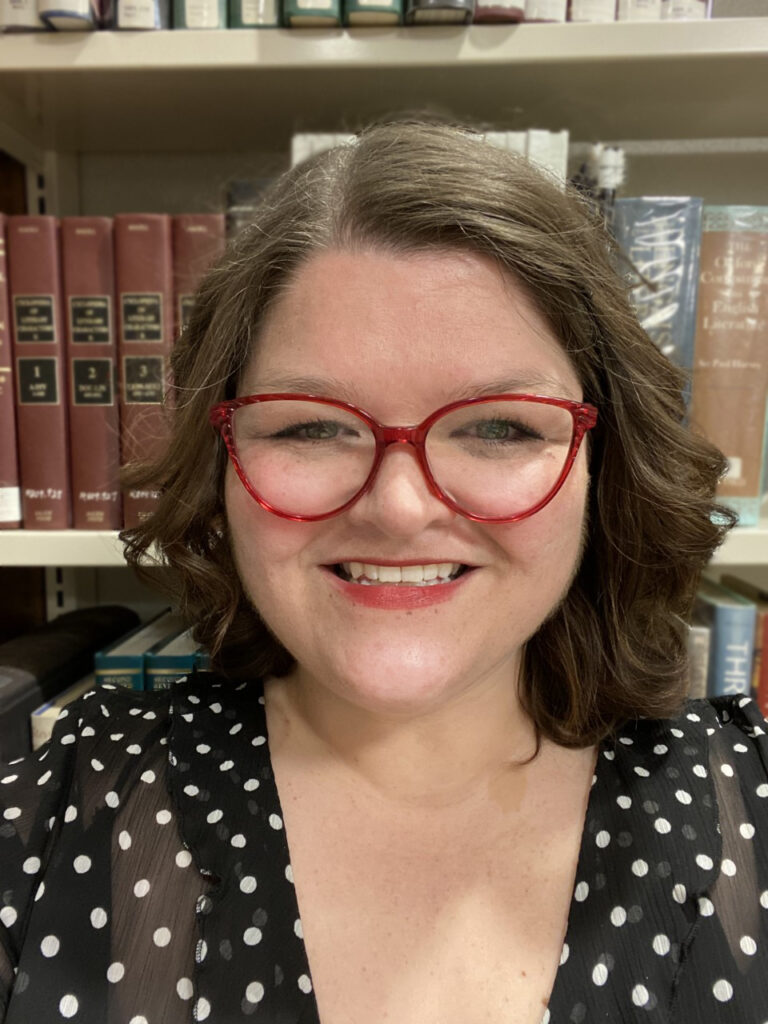
    Tammy Blackwell is an author and the director of the Marshall County Public Library. (Photo provided)

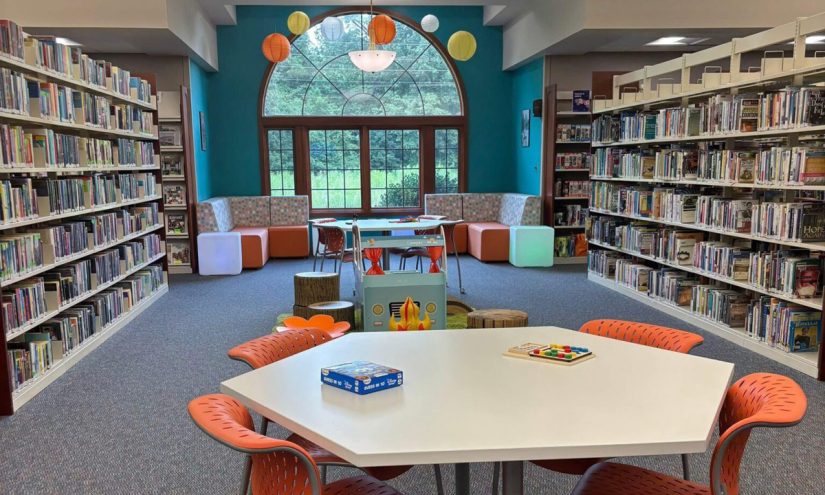
    Marshall County’s grant supported a renovation of the Hardin branch to create a more child-friendly space and funded an eight-week program for mothers of young children called Mom’s Night Out. 

    During the Mom’s Night Out program, which will start the first week in September, mothers who are referred by Court Appointed Special Advocates will gather weekly and have a meal together. During the meal, representatives from the Marshall County Extension Office and the health department will lead discussions about stress management, home upkeep and how to cook recipes with staples handed out at food distribution centers like rice and beans. 

    Because this is grant-funded, it’s not affected by recent changes to the Supplemental Nutrition Assistance Program (SNAP) program, Blackwell said. Congress recently passed the Big Beautiful Bill Act, which cut funding for the SNAP Education program, among other things. 

    The Mom’s Night Out discussions will be in a “very non-judgmental way, and not in a lecturing kind of way, but as a conversation and getting those families very comfortable in that space, very comfortable with library staff, comfortable with community partners who they may need to call on at some point,” Blackwell explained. 

    “We’re hoping that they build a bond with each other; other people with similar lived experiences, and to really give them a sense of community and resources in order to help the mothers thrive, so that the children may thrive,” she added. “I love that it’s ‘before there’s a problem, let’s fix it.’” 

    The first round of the program will only include mothers — Blackwell hopes between 12 to 15 — who have children of preschool to early elementary school age. Should it be successful and receive funding for a repeat, she’d like to expand it to fathers as well. 

    “There’s been some coverage of how many kids in Kentucky are in either foster or kinship care situations,” Blackwell said. “It’s a lot of kids, and that really impacts their ability to be successful in life. And anything that we can do to strengthen those families and give those kids, then we need to at least try. And I think libraries are in a perfect position to really make a difference.” 

    The 2024 Kids Count report, from Kentucky Youth Advocates and the Annie E. Casey Foundation, showed there were nearly 46,000 youth in foster care in the state from 2021-2023. In that same time period, the number of children leaving foster care and reunited with their families dropped to 32%. Pre-pandemic, from 2016-2018, it was 36%. 

    Additionally, in 2024 there were around 55,000 Kentucky children being raised with a relative in a kinship care arrangement. 

    The Department for Community Based Services came up with the idea to partner with libraries, Binkowski said. Lesa Dennis, the DCBS commissioner, wasn’t available for an interview but said in a statement that “by meeting families where they are, we’re building pathways to stability, resilience and well-being so no family has to face challenges alone.” 

    Removal is ‘traumatizing’ 

    Binkowski, who previously worked as Assistant General Counsel for the Tennessee Department of Children’s Services, said that “a foster care intervention, even if necessary, is traumatizing to everyone involved.” It can damage bonds between parents and their children and upend daily routine and connections, she said. 
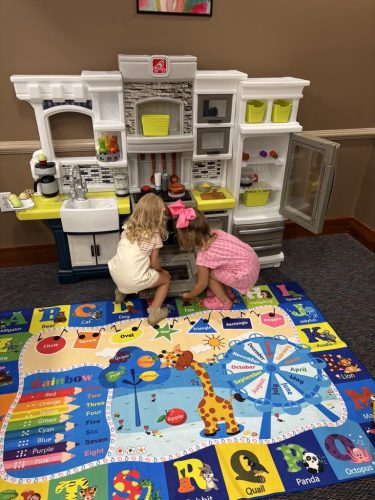
    Children play in the Marshall County library’s Hardin branch. (Photo provided)

    “We have a substantial body of evidence that tells us that children do best when they are with their families of origin — when it can be safe,” she said. “We know that connections to biological family, knowing where you came from, feeling like you belong — those are really critical emotional stabilization and safety factors that support children’s growth and development.” 

    Experiencing brokenness in the home, abuse or neglect are Adverse Childhood Experiences, which refers to traumas or stressors in a person’s life before their 18th birthday. They include, but are not limited to, parental divorce, abuse, parental incarceration, substance use issues in the home and more. The more such experiences a person has, the more likely they are to have poor health, lower education and economic hardships. Childhood trauma also cost Kentucky around $300 million a year

    “Enough stressors on a child at early ages without protective capacities to keep them from having negative outcomes can literally take years off of their lives,” Binkowski said. “So, while we don’t want children to experience abuse and neglect … we also don’t want them unnecessarily being removed from their home if the issues are not creating those kinds of negative impacts and we can stabilize a family without requiring removal.”

    Kentucky Lantern is part of States Newsroom, a nonprofit news network supported by grants and a coalition of donors as a 501c(3) public charity. Kentucky Lantern maintains editorial independence. Contact Editor Jamie Lucke for questions: [email protected].


    Get stories like these delivered straight to your inbox. Sign up for The 74 Newsletter
    Source link

  • At the library you can take out a book … or dissect a body?

    At the library you can take out a book … or dissect a body?

    When Janet Calderon first visited the X̱wi7x̱wa Library in Vancouver, Canada it was different than anything she had ever seen before. It is the only Indigenous branch of an academic library in all of Canada. Pronounced “whei-wha,” its name is from the language of the Squamish people who have inhabited the region for thousands of years. 

    Calderon is a humanities librarian at Reed College near Portland in the U.S. state of Oregon and earned a master’s degree in Library & Information Studies from the University of British Columbia in Canada, which oversees the X̱wi7x̱wa Library. Experiencing this library was transformational in many ways for Calderon.

    “Everything about how this knowledge is put together reflects a unique perspective,” Calderon said. 

    The X̱wi7x̱wa Library is one of many examples from around the world of the transformation of libraries from collections of books to comprehensive learning centers and hubs for diverse communities. 

    British Columbia, where this library is located, has an Indigenous population of nearly 300,000 people, which is approximately 5.9% of the province’s overall population. The library embeds Indigenous knowledge in everything, from the use of Indigenous terms in its classification system to a building design that represents a pit house of the Interior Salish people.

    Hubs of enlightenment

    Libraries have a rich history of serving as gathering spaces. Early libraries, such as the Library of Alexandria in Egypt and Bayt al-Hikmah (House of Wisdom) in Iraq, were hubs for knowledge and enlightenment that attracted scholars from near and far. 

    Libraries today continue to serve as gathering places for communities by fostering the exchange of information and ideas. Many libraries are modifying their spaces so that they can be meeting places, information centers or culture centers, or serve other purposes for members of a given community. Depending on where you live, how a library chooses to configure its spaces and for what purposes can vary widely.

    Libraries across Kenya, for example, promote environmental sustainability through efforts such as adopting green building standards and by housing atriums within the library, as well as installing green roofs on top of the building itself.

    In Shanghai, China, a city known for strong ties to business and the global economy, public libraries serve different demographics such as the elderly, homeless and students by providing them space and access to information and resources that help them meet specific needs, such as applying for jobs.   

    In Santa Clara, Cuba, the central patio and surrounding spaces of the Marti Provincial Library were renovated. As a result, the Library is now able to host motivational and cultural activities, as well as events that meet specific needs such as workshops on job skills.

    The public library in Umeå, Sweden is housed within the Väven Cultural Center, which enables library visitors to check out books, tour the Women’s History Museum, watch a film in a theater and more, all under the same roof.

    Reassessing how space is used

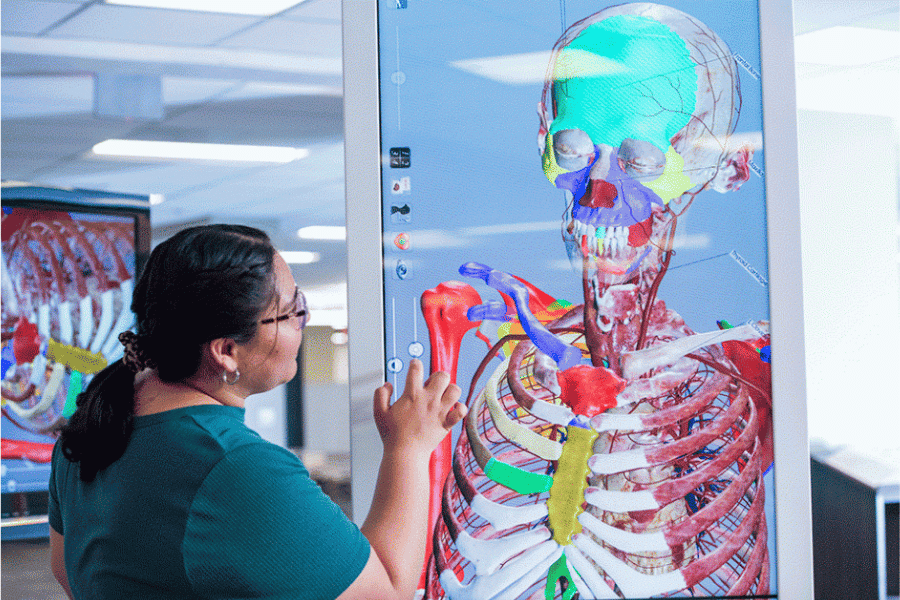
    At my library at the California State Polytechnic University, Humboldt in California, visitors to the Hall of Simulation can use a flight simulator, digitally dissect an animal or cadaver and simulate wildfires, an annual problem in the state. The library’s spaces also host student-centered workshops, research symposiums and events, including an annual celebration of campus and community authors.

    Transformations at the Cal Poly Humboldt Library have been aided through the development of SpaceUse, software that enables the library to track and analyze how its spaces are utilized by patrons. For many library workers, changing and adapting existing library spaces allows them to reimagine how a library can serve its community.  

    Michell Hackwelder, the interpretation unit head at the Education & Outreach Department for the Abu Dhabi Department of Culture and Tourism in the United Arab Emirates, helped renovate libraries used by international peacekeeping forces in Egypt to create community hubs for the many people who came there for recreational activities and to find a quiet space. 

    Hackwelder has spent over 40 years in the library field and has helped guide many library transformations across the Middle East and North Africa. This includes creating maker spaces and programming areas for afterschool and computer and sciences programs at elementary schools in Saudi Arabia and upgrading the early childhood and technology areas at the Abu Dhabi Children’s Library. 

    Hackwelder said that people in the community get excited about the space transformations and more people from different demographics end up using the library.

    Some people miss the stacks.

    It should be noted that changes to library spaces are not without some controversy. Libraries have limited space to work with, so decisions about what to change can be difficult to navigate. Younger people who grow up in a digital world might not connect to books the way older generations did. However, the removal of books and shelves to make room for new spaces can anger the many book lovers who rely on libraries.

    As communities and societies change, libraries will be expected to do the same. 

    Samantha Mendiola is an architect at HGA that focuses on library design. Mendiola has worked on several library redesigns across the United States, from a high school library in Massachusetts to college libraries in Minnesota.  

    Mendiola said that many of the libraries she has worked with are focusing on renovations with existing spaces to better serve changing community demographics and technology needs while also fostering community engagement and accommodating diverse learning styles. 

    “Libraries have always been adaptable and they’re evolving even faster now, post-pandemic, to meet new expectations,” Mendiola said.


    Questions to consider:

    1. In what ways are libraries adapting to meet the needs of the people they serve?

    2, What is the primary role of a library?

    3. If you were to create a new library in your town, what would you want it to have?


    Source link

  • Efforts to Restrict or Protect Libraries Both Grew This Year – The 74

    Efforts to Restrict or Protect Libraries Both Grew This Year – The 74


    Get stories like this delivered straight to your inbox. Sign up for The 74 Newsletter

    State lawmakers across the country filed more bills to restrict or protect libraries and readers in the first half of this year than last year, a new report found.

    The split fell largely along geographic lines, according to the report from EveryLibrary, a group that advocates against book bans and censorship.

    Between January and July 2025, lawmakers introduced 133 bills that the organization deemed harmful to libraries, librarians or readers’ rights in 33 states — an increase from 121 bills in all of 2024. Fourteen of those measures had passed as of mid-July.

    At the same time, legislators introduced 76 bills in 32 states to protect library services or affirm the right to read, the report found.

    The geographic split among these policies is stark.

    In Southern and Plains states, new laws increasingly criminalize certain actions of librarians, restrict access to materials about gender and race, and transfer decision-making power to politically appointed boards or parent-led councils.

    Texas alone passed a trio of sweeping laws stripping educators of certain legal protections when providing potentially obscene materials; banning public funding for instructional materials containing obscene content; and giving parents more authority over student reading choices and new library additions.

    Tennessee lowered the bar to prosecute educators for sharing books that might be considered “harmful to minors.”

    A New Hampshire bill likewise would’ve made it easier for parents or the state attorney general to bring civil actions against school employees for distributing material deemed harmful to minors, but it was vetoed by Republican Gov. Kelly Ayotte.

    In Nebraska, a new law allows for real-time alerts for parents every time a student checks out a book. South Dakota requires libraries and schools to install filtering software. New laws in Idaho heighten the requirements to form library districts and mandate stricter internet filtering policies that are tied to state funding.

    In contrast, several Northeastern states have passed legislation protections for libraries and librarians and anti-censorship laws.

    New Jersey, Delaware, Rhode Island and Connecticut have each enacted “freedom to read” or other laws that codify protections against ideological censorship in libraries.

    Connecticut also took a major step in modernizing libraries in the digital age, the report said, becoming the first state in the nation to pass a law regulating how libraries license and manage e-books and digital audiobooks.

    Stateline reporter Robbie Sequeira can be reached at [email protected].

    Stateline is part of States Newsroom, a nonprofit news network supported by grants and a coalition of donors as a 501c(3) public charity. Stateline maintains editorial independence. Contact Editor Scott S. Greenberger for questions: [email protected].


    Get stories like these delivered straight to your inbox. Sign up for The 74 Newsletter
    Source link

  • Trump Dismantles US Institute of Museum and Library Services (YT Daily News)

    Trump Dismantles US Institute of Museum and Library Services (YT Daily News)

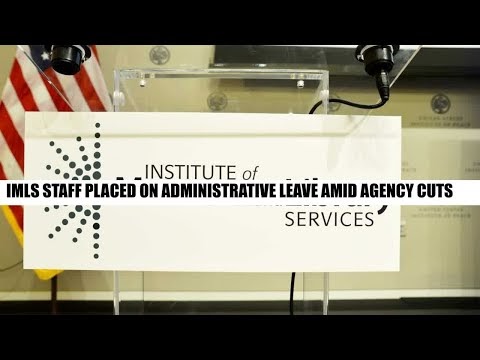
    The Institute of Museum and Library Services (IMLS) has put its entire staff on administrative leave following President Trump’s executive order to eliminate seven federal agencies, including IMLS. 
     
    Keith E. Sonderling has been appointed as the acting director during this transition. Staff were notified via email about their 90-day paid leave, which included instructions to return government property and had their email accounts disabled. 
     
    IMLS is a small federal agency, with about 70 employees,
    that awards grant funding to museums and libraries across the United
    States. Last year it granted $266 million to support essential cultural institutions.


    Source link

  • MackinVIA Earns Prestigious Platinum Modern Library AwardFrom LibraryWorks For Its 10th Consecutive Yea

    MackinVIA Earns Prestigious Platinum Modern Library AwardFrom LibraryWorks For Its 10th Consecutive Yea

    Burnsville, MN – January 16, 2025 – Mackin, a leader in providing print and digital
    educational resources for PK-12, is proud to announce that its free digital content management platform, MackinVIA, has earned the Platinum Award in LibraryWorks’ 10th annual Modern Library Awards (MLAs). This prestigious accolade marks MackinVIA’s 10th consecutive win, solidifying its position as a top choice for digital content management in schools worldwide.

    The MLAs, which celebrate the best products and services in the library industry, are awarded based on an unbiased voting process involving over 80,000 librarians from public, K-12, academic, and special libraries. Judges evaluated submissions on a range of criteria, including functionality, value, and customer service. MackinVIA received an outstanding score of 9.25, a testament to its continued excellence and innovation.

    “We’re honored to receive the Platinum Award for the 10th year in a row,” said Troy Mikell, Director of Marketing and Communications at Mackin. “Since launching MackinVIA over a decade ago, we’ve continually focused on creating a powerful, user-friendly platform for educators and students. Our relentless drive for improvement and exceptional customer service has fueled MackinVIA’s success, and it’s thrilling to see that effort recognized once again.”

    MackinVIA is accessible by more than 9 million students worldwide, providing access to over 4 million eBooks, audiobooks, read-alongs, databases, and video resources. Its digital platform offers a dynamic and comprehensive solution for PK-12 schools looking to streamline content management and improve student engagement.

    Jenny Newman, Publisher and MLA Program Manager, noted, “MackinVIA’s consistent excellence in functionality and service is what has kept them at the forefront of the industry for over 40 years. Their innovative approach continues to break barriers and set new standards.”

    About Mackin
    For over 40 years, Mackin has provided PK-12 grade libraries and classrooms with access to nearly 4 million printed and digital titles. The 24-time, multi-award-winning, digital content management system, MackinVIA, along with divisions Mackin Classroom, MackinMaker, Mackin Learning, and the brand-new, whole school resource management system, MackinVision, help to create a truly unique and robust educational resource company that schools and educators have relied on, year after year. For more information, visit www.mackin.com or call 800-245-9540.

    About LibraryWorks
    LibraryWorks helps library administrators make informed decisions regarding technology, automation, collection management, staffing, and other key areas that support efficient library operations. Their resources empower libraries to implement best practices, monitor trends, evaluate products and services, and more.

    About the Modern Library Awards (MLAs)
    The MLAs recognize outstanding products and services that enhance library operations and improve the user experience. Entries are judged by library professionals based on their relevance, functionality, and impact on the library sector.

    eSchool News Staff
    Latest posts by eSchool News Staff (see all)

    Source link