PCOS is a metabolic and reproductive condition. Although it’s the most common hormonal disorder in women of reproductive age, up to 70% of women affected by it never get diagnosed. Dr. Jamie Benham, an endocrinologist and principal investigatorat the EMBRACE Women’s Health Research Lab at the University of Calgary, said that because patients with PCOS can have a variety of experiences and symptoms, it can be challenging for doctors to diagnose.
For Joslin, it wasn’t until she began to struggle with infertility that she finally received a proper diagnosis. “When I saw the infertility doctor … he looks at me [and the] first thing he said to me was, ‘You are textbook PCOS’,” she said.
Joslin said that if it weren’t for the online community, PCOS wouldn’t have been on her radar at all. Through treatments from her fertility doctor and naturopath, she was able to start a family.
Taking symptoms seriously
Jade Broughton, a member of the PCOS Patient Advisory Council at the University of Calgary, said she initially downplayed her own symptoms for years. She assumed they were stress-related from her shift work as a nurse and she was told her symptoms were normal.
“I started noticing, quite a few years ago, my hair started falling [out] in clumps,” Broughton said. “I was just gaining weight so rapidly, I started having facial hair, all that stuff. I went to my doctor, and she was like, ‘You just turned 30, that’s just normal’ … So, I felt like I was just being gaslit for years and years.”
Through internet searches and the PCOS Reddit page, she was finally able to understand what her symptoms might mean. After about seven years of advocating for herself, she finally received a diagnosis from her family doctor.
“I feel like women’s health is still not taken seriously when it should be,” Broughton said. “Just stand up for yourself and trust your gut if you know something’s wrong.”
Lisa Minaker, a legal assistant student in Winnipeg, Canada said that her irregular periods were concerning to her family physician, who referred her to an endocrinologist. Through blood work, her endocrinologist diagnosed PCOS. Although she received a diagnosis relatively quickly, Minaker said she felt that her doctors were not always “overly helpful” when it came to managing her symptoms. She thinks that doctors lack sufficient training in women’s health.
“Not that it’s their fault,” she said. “Finding out how women don’t metabolize things like men, and how it’s dependant on where you are in your cycle … we’re still treated as basically a smaller version of men.”
Why expertise matters
Due to the complexity of PCOS and its diverse range of symptoms, a team of healthcare practitioners can be helpful. Joslin and Minaker both say that including other healthcare professionals, such as a naturopathic doctor and acupuncturist, helped with symptom management.
“The [naturopathic doctor] was that complement to the medical world,” Joslin said. “My fertility doctor would prescribe me medication, and the naturopath would talk to me about my blood work [and supplements] … It was the hand holding and just someone talking you through [your results] to make sure you know what’s going on.”
“I 100% credit the fact that I’m a mom to my naturopath,” Joslin said. “I would not be a mom without her.”
Minaker said that in her own health journey she learned more from social media than from any doctor. “The girls in the [Facebook] group are pretty helpful,” she said. “I had to do my own research because I wasn’t really given a choice.”
Although social media has played a big role in educating women about PCOS and other health problems, it can sometimes provide misinformation. A common misconception Broughton hears from patients is that they’re afraid to exercise, believing it’s bad for their health because of internet claims that it will raise cortisol levels — a hormone released in response to physical or emotional stress.
“This is not consistent with what we know about the condition and exercise is recommended for all people with PCOS,” said Benham. “Unfortunately, we’re limited in that PCOS is not well studied. It’s not well understood. It hasn’t been funded from a women’s health research perspective. So there’s a lot of people that are profiting off nutrition plans or exercise plans or giving different advice around supplements.”
Combatting misinformation
Minaker said she found it difficult in the beginning to distinguish which resources were helpful and which were targeted marketing scams.
“I wasn’t always that intuitive to be able to tell who was truthful,” Minaker said. “[I was] trying to find as many answers as possible.”
In some Facebook groups, women share their symptoms, medications and diagnostic test results. Chats in these groups often involve consultations, advice and, sometimes, bullying.
Joslin said that instead of lifting others up, some members of fertility groups for women with PCOS create guilt, embarrassment and shame around a vital aspect of life that PCOS can affect — being able to start a family.
“In some groups, like the PCOS groups that focus specifically on trying to get pregnant, I had to leave right away,” Joslin said. “It was very toxic … where, truthfully, in this journey you need support. I’ve found much more success with smaller localized groups.”
Information from medical organizations
To combat misinformation, some medical organizations have created their online forums and portals. Broughton pointed to Monash University in Australia, which released new PCOS guidelines and launched a phone application called Ask PCOS.
“They actually have an app that has tons of resources on weight management, food, insulin resistance, all of that stuff,” Broughton said. “And they’re actually one of the big players that’s trying to have it renamed as well.”
Since PCOS affects more than ovaries, a new name would reflect that and might make it less confusing for women with symptoms to get the help they need.
Other institutions are bringing women together in person to share experiences face-to-face.
The EMBRACE Lab at the University of Calgary, for example, formed a PCOS Patient Advisory Council to conduct patient-oriented research earlier this year. The council, which meets monthly, is a space for community.
“It’s such an amazing experience to sit in the room with all these women,” Joslin said. “Knowing all the struggles I’ve had … and sitting with people who are newly diagnosed or on their fertility journey … I’m able to share my advice and say, ‘You’re not alone.’”
Community, whether found online or through research, has been an important part of the journey for these patients.
Benham said that PCOS is a lifelong condition, whose symptoms can be managed although it cannot be cured. Joslin adds that it’s important to bring awareness to the condition. “Because there’s so many of us that have it, let’s make this more known.”
Questions to consider:
1. Why might someone trust a random person on an online forum over a doctor for medical advice?
2. How can medical information you find online leave you more confused?
3. If you felt unwell where would you turn for information about your condition?
From 24 to 31 October, the world marks Global Media and Information Literacy Week, an annual event first launched by UNESCO in 2011 as a way for organizations around the world to share ideas and explore innovative ways to promote media and information literacy for all. This year’s theme is Minds Over AI — MIL in Digital Spaces.
To join in the global conversation, over the next week News Decoder will present a series of articles that look at media literacy in different ways.
Today, we give you links to articles we’ve published over the past year on topics that range from fact-checking and information verification to the power of social media and the good and bad of artificial intelligence.
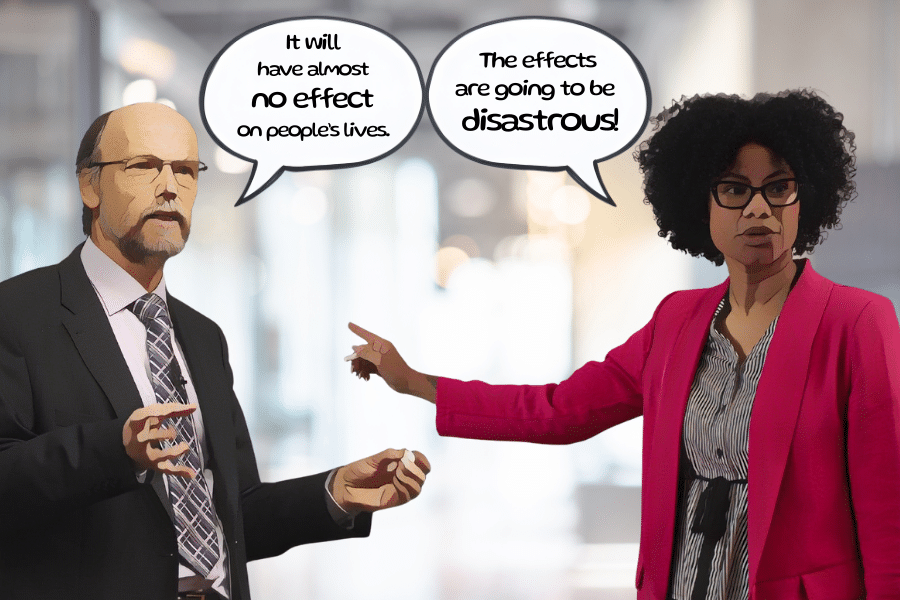
Journalists are often told to be objective and to tell both sides of a story. They are taught to seek multiple perspectives. This means that when reporters interview an expert about any given topic, they are encouraged to find another source with a different opinion to make it “fair” and “balanced”.
Journalists also know that conflict makes a story more interesting and that gets more eyeballs or ears which allows their news organizations to sell more ads and subscriptions.
But research any topic and you will find disagreements among scientists, ecologists, business leaders, politicians and everyday people. In other words you can just about always find conflict.
Be careful of this. In homing in on conflict you could create a false balance. That’s when you make two sides seem more equal than they are.
The classic example is climate change. One of the reasons why it took so long for governments to recognize the danger of climate change is that for years journalists would balance the many, many scientists warning about carbon levels with the very few scientists who said the problem was overblown.
So how can you report multiple perspectives without creating a false sense of balance?
A few suggestions
Focus on facts, not opinions. And know the difference.
A fact can be verified through data and anecdotes of things that happened and that can also be verified.
When sources give you information, ask them: “How do you know that?” and “Do you have evidence to back that up?”
Even when they have evidence to back up what they say, question why they take the stand they take, or why they came to the conclusions that they did. It is almost as easy to find evidence to support a position as it is to find conflict in a story. I found myself almost believing that the earth is indeed flat when an advocate of that theory seemed to offer up a pile of convincing evidence.
To get the public to not worry about the dangers of tobacco, people from the tobacco industry offered up all kinds of evidence for years. People from the fossil fuels industry can offer up all kinds of evidence that human behavior (like driving petrol-powered cars) doesn’t cause climate change.
So it is important when you publish information someone has given you, to explain to your audience how that person benefits or is hurt by the issue.
Not all experts are equal.
When seeking opinions or assessments, do so from people with actual expertise. That’s not the same as a level of education or a fancy title. Don’t be afraid to ask people: “How do you know this?” Someone without a university degree might have lived experience with a problem, while someone with a doctorate might never have experienced what you are reporting on. Politicians are fond of talking about the problems of poor people even though many of them came from privileged backgrounds.
Don’t be afraid to challenge people’s statements. Let them know when you find contradictory information. When you challenge people it is not a sign of disrespect. It is a sign that you have carefully listened to what they said, have thought about it and are now questioning it. Disrespect is to take something someone says without really listening or thinking about it.
Question data people cite or that you find. A census conducted in 2010 in Nabon, a rural area in Ecuador, found that almost 90% of the population was “poor”. That’s an astounding figure, and if used as data in the media, paints a very particular picture. However, a different study in 2013, conducted by the University of Quenca with the Nabon municipal government at the time, found a significantly different figure — that about 75% of the population reported to be highly satisfied with their lives when assessing “subjective wellbeing”.
The difference in figures is due to the indicators used to measure satisfaction. The “subjective wellbeing” survey by the University of Quenca measured people’s control over their lives, satisfaction with their occupation, financial situation, their environmental surroundings, family life, leisure time, spiritual life and food security. The census from 2010, however, looked at housing, access to health and education and monetary income.
So the language used for measuring life satisfaction was important and that the context of the data — how and why it was collected — can change the meaning of the information. To make sure you don’t misreport data, try to avoid overly relying on just one source of numbers or statistics. Instead, check what other data is out there.
Report the reality.
Your job as a journalist is to present the information in such a way that your audience can recognise what is actually happening and why it’s important.
Does what the experts say or what people say about their personal experience go against what you have seen out there yourself? People often exaggerate without even realizing that they are doing so. Our memories are often faulty; we might think we know things that we really don’t.
Taking all this into account, it is ultimately up to you, as a journalist, to decide how much balance to give to the multiple perspectives you have gathered. If the experiences and evidence and your observations and common sense all point to a reality, then you will mislead your audience if you balance that out equally with people who offer up what seems to be a different reality.
That doesn’t mean that you should silence them or keep them out of the story altogether. Understanding and exploring opposing viewpoints is important so that ultimately people can reach an understanding.
Without that understanding, consensus isn’t possible. And it is difficult to make progress in a society without consensus.
Scammers are everywhere on the internet, masquerading to obtain your personal information. Many social media users or website creators pose as government entities or other authorities to offer you things that seem too good to be true or use scare tactics, like fake warnings about things like late fines or missed court dates, to prompt online users into sharing personal information.
In an era of misinformation, how do we know when a website is real?
One way is to research a website’s domain. A domain name is the part of a website address preceded by .com, .net or other popular suffixes. It’s essentially just the base website name without the “https://” and “www.”
“Measuring a website’s credibility might take time,” said Jordan Lyle, a senior reporter for Snopes.com. “Young journalists should know their stuff when it comes to domains and redirects.”
Snopes.com is one of the internet’s oldest fact-checking websites. He has more than 25 years of experience in managing websites and knows how to determine whether a site is legit.
Investigating internet sites
Alex Kasprak, a former investigative journalist at Snopes.com, has conducted numerous investigations using information gleaned from Domain Name Server (DNS) registers. DNS registers contain information about a particular website, its URL and IP address — a unique number on every tech device you might use.
With the information he found, Kasprak has been able to uncover unreported connections between news websites and their funders and between scammers and their beneficiaries.
“DNS tools are a great first step into any investigation that involves the identity of people behind websites or possible undisclosed connections between them,” Kasprak said.
Taking the expertise from these two investigative reporters, News Decoder has compiled the toolkit below to help perform a credible and comprehensive examination for publishing.
Are there red flags?
Scam websites have certain red flags. They might lack legal documentation, for example, including terms of service and privacy policies.
Another sign is sloppiness and mistakes. Try skimming through various pages on the site to look for typos, glaringly incorrect information, vague contact information, skewed formatting and other things that seem unprofessional.
Lyle said that a website that promotes a specific giveaway might lack any biographical or contact information about the people promoting the product or offer.
“Sometimes, scammers will include a mailing address that, upon searching for it, turns out to be a fulfillment center or a business that allows LLCs to anonymously register with that business’ physical office as a virtual address, shielding the scam’s operators from being identified,” Lyle said.
Conduct a website domain search.
Kasprak said that the Internet Corporation for Assigned Names and Numbers (ICANN) operates as a phonebook for the internet.
“In this analogy, the phone numbers are Internet Protocol (IP) addresses — a string of numbers formatted like 0.0.0.0 — and the ‘names’ are the actual domain names [e.g. news-decoder.com] to which those IP addresses are associated,” Kasprak said. “Like a human with a phone, domain names can change IP addresses several times.”
The first step for tracing the origins of a website involves what’s known as a “WHOIS” search — a specific type of domain search listing information about the creation of a domain.
WHOIS is a public database that lists several contact numbers, names or organisations associated with a given IP address or domain name. Many people these days use services that allow one to register a website anonymously, making the results have limited value. Older records, or those from some non-Western nations, often include actual names or corporate contacts, explained Kasprak.
A WHOIS search, which can be conducted at godaddy.com/whois, queries the public WHOIS database.
Lyle said he often looks at the date a person officially purchased and registered a domain name.. “For example, in the case of researching potential scams, if a domain name was recently registered, that’s a red flag indicating the website might be untrustworthy and could confirm the potential scam as legitimate,” he said.
Look at the site history.
Another great tool to pair with “WHOIS” searches is the Internet Archive’s Wayback Machine. When performing a “WHOIS” search on godaddy.com/whois, check to see when the domain was created. That year should match the Wayback Machine’s records of creation date, as well as show if the website had other owners with completely different websites.
“Also, know that the domain information listed in a WHOIS search might be the most recent data, but not the original data,” Lyle said. “Check the Wayback Machine to see if the website existed long ago in another form.”
Scammers might also create fake domains to pretend to be a legitimate business, adjusting the URL link slightly to trick users. A fake Home Depot ad on Facebook, for example, didn’t lead to homedepot.com when clicked through, but instead to “h0medepott.com”; an “o” was changed to a zero and a second “t” was added to the end of the URL.
“Scammers have created fake domains almost matching the genuine business domain for banks, as well as for USPS, for example,” Lyle said. “Sometimes, scammers won’t even bother to create similar domain names and instead simply rely on people not looking at the URL.”
Some scammers go so far as to copy the web design of a company — logo and all — to trick consumers. These types of scam websites often offer giveaways that seem too good to be true, such as free money, super inexpensive offers for goods or services or non-existent programs for student loan forgiveness.
“Of course, the biggest red flag would be an offer that seems too good to be true,” Lyle said. “If an offer seems too good to be true, it probably is. And I will go a step further: In 2025, if an offer seems too good to be true, it is. Avoid it.”
For journalists all this should becoming standard practice when using information off the internet in news stories.
“Basically, you want to make sure you did everything you could with your research before publishing your article,” Lyle said. “And that you attempted to go above and beyond expectations other publishers might have for their articles’ comprehensive credibility.”
Questions to consider:
1. What are some common red flags that a website might be fake or trying to scam you?
2. What is a DNS register and how is it useful to identify a potential scam?
3. If a friend sent you an unknown link, what steps would you take before clicking? How would you explain your choice to click or not?
A journalist is the eyes and ears of the public. Given the time, skills and tools needed, journalists go out into the world to ask questions, observe what is happening and gather factual information to report it all to the public.
They tell this information through stories in written publications or in other ways like podcasts or videos. The public can access these stories on news sites, or on podcast and video platforms. Sometimes they are free and sometimes they are behind “pay walls” — they require payment fees or subscriptions before you can read or download them.
Journalists tell stories in different ways:
● News stories inform the public about current events or issues. They report important facts and provide readers with the context to make sense of them. A reporter gathers information for a news story by doing research and conducting interviews.
● Investigative reports and feature stories go deeper and are based on interviews and research. What distinguishes them from news stories is their purpose, and often their length. Rather than simply informing the public about current events, investigative stories expose an issue — like corruption, corporate wrongdoing, or systemic problems — that affects the public in some way, while feature stories go deeper into a topic and explore a new angle.
● Opinion stories are written from one person or group’s perspective, so while they can be interesting and spark debate in a community, they do not include the “objectivity” that is central to regular journalism. We often call this advocacy journalism.
● Native advertising is advertising that resembles journalism in style, tone and format so to sell readers on an idea, product or service without readers realizing that there is a commercial agenda behind the message. By making an ad seem like the news organization’s editorial content, readers are more likely to accept the ad’s claims as true.
Helping people make sense of the world
Good quality news and investigative stories are accurate, authoritative and balanced and they help readers make sense of events. To tell these stories, journalists must first make sense of events themselves and they do that by asking questions that people have and getting answers to those questions. Sometimes that means asking questions that seem basic or seem to come from ignorance. In other words, journalists often ask the questions many people might be embarrassed to ask themselves.
But that’s the way they end up with an informative story that is well reported. Here are some ways to tell if a journalist has succeeded in doing that:
● They use authoritative and clearly identified sources that enable readers to have confidence in a story’s accuracy.
● They use quotes to bring a story to life and give it balance.
● They provide readers with enough context to help them make sense of the event in question.
● If a story portrays a some person or organization in a negative way, it should be clear they were given an opportunity to comment.
Using sources and quotes and providing context and opportunity for comment allows a journalist to tell the truth, be fair and serve the public.
Take climate stories. When journalists cover the environment, the first truth is that climate change is happening.
Facts versus truth
Telling the truth of what and whom climate change is impacting and why it is important means that a journalist must use facts, provide a source’s quotes in context and explain what the data says.
But what are facts? Facts are information that can be verified through data that is collected scientifically rather than based purely on opinion. When stating facts, a journalist should be able to back up those facts with data from a verifiable source and let you know when they can’t do that. They should also tell you the source of all the information in the story and what makes the source credible — their record of expertise or experience on the matter.
How do you know if a journalist has been fair?
In any story produced by a journalist, there are stakeholders — these are the people affected by a problem or involved in a story. To be fair, the journalist gives all the major stakeholders — the perpetrators and victims — a voice in the story.
At the same time, the journalist should hold stakeholders accountable for their actions.
The victims should be given the chance to tell their stories but the journalist should explain the context — why someone might believe what they do or have acted in the way they did so that the audience can form an understanding of the stakeholders and their actions.
Journalists and the public they serve
Ultimately journalism should serve the public. The journalist should provide news consumers with enough information to form an educated opinion, without being swayed by a journalist’s bias. To do that, the information should be easily understood and accessible — not bogged down with jargon or made overly complicated.
A story also needs to be newsworthy. It must be worth a person’s time to read or listen to or view it. That doesn’t mean that it has to be about an event that happened today or yesterday, but it should be relevant or interesting to the news consumer in some way. In journalism we call this “compelling.” Maybe what makes a story compelling is that it is about an event that has just happened or is about to happen.Maybe it is about something happening near your audience.
Or maybe what is happening or happened is significant — it will affect people in important ways.
But even if the story is about something happening now, is important and affects people in significant ways, the audience for it won’t find it compelling if it is told in a boring way.
Telling stories worth hearing
Journalists often look for three things to make an important story compelling:
Human interest: The story focuses on the emotional or personal aspects, evoking empathy, compassion, or curiosity.
Conflict: There are people who are for and against something happening or have competing claims on something. We often see this in stories about politics.
Novelty: Something makes the story new or different.
How can all this help you find and tell compelling stories? Let’s take a look at possible environmental stories.
Ask yourself: What types of things are happening around you regarding the weather, the air you breathe, the water around you, the land you live on and the food your region or country grows and eats? Are any of these things threatened? Do you know of any communities suffering?
Do you know of any individuals or organizations who are standing up against these impacts? What are they doing and why? And have there been any big successes in terms of climate change that you can think of? Have you heard of any good news about the environment in your area?
You can think about your neighbors, your school, your friends, your family, or anyone you know! It doesn’t have to be something that seems big and someone can be an expert without a fancy title.
Why tell true stories?
Storytelling is the way that journalists can convey complex information in a manner that is relatable and accessible to an audience.
Ultimately, good journalism is not only about gathering information that is verifiable, it is also about telling stories about what is happening in a way that is relatable and accessible to its audience.
If a journalist shines light on a problem or reports on an event, they can show through storytelling why it is important, who is affected, what solutions are out there and who the solutions benefit and what is delaying the solutions.
It is the quilt of these stories, sewn by the audience’s understanding, that forms the blanket of our reality. Like any good quilt, it includes the light and the dark, the details and the bigger picture, patterns and contrast.
Storytelling is the context that gives a journalistic product meaning and purpose.
Questions to consider:
1. Why might an important story put someone to sleep?
2. What does it mean to make a story “compelling”?
These days, we see a hyper-focus on news literacy (or news media literacy), which is the aspect of media literacy that centers on analyzing journalism. While muckraking in politics and other such biased and editorial takes on the news are not new, the 24/7 firehose of content to be consumed across all media platforms is. And the good and the bad of it all is that anyone can be a content creator these days, but content or “news” is not necessarily unbiased, objective, or based on research.
What is news literacy?
News literacy is an aspect of media literacy that aims to teach news consumers to be thoughtful about the content they are seeking out, digesting, internalizing, and sharing, whether from online or more traditional media. Examples of news literacy can be woven across the curriculum, as news literacy consists of the critical thinking skills that help us determine fact from fiction, bias from fairness, and opinion from news.
“Media literacy is critical to the survival and perpetuation of a healthy democracy.”
Why is news literacy important for students to learn?
The evaluation skills core of news literacy helps readers determine the credibility, validity, and reliability of news sources and newer sources of information. Google research scientist Daniel Russell hypothesizes that students today can access a million times more content via the internet than earlier generations could at a university library. Thus, today’s readers need a much more dynamic and sophisticated set of reading skills when they are consuming and analyzing traditional and online media. In our 21st century digital landscape, students must learn to navigate raw information from countless sources. Examples of news literacy should be reinforced daily. These digital citizenship skills are foundational to maintaining a positive school culture. News media literacy skills are a crucial part of learning to read and write for today’s and tomorrow’s society.
There are many ways to weave examples of news literacy into daily instruction in the classroom, especially when you take a cross-curricular approach. Seek out high quality resources that build foundational literacy skills, yet do so in a current and engaging way. Flocabulary leverages storytelling and emotional connections via hip-hop to make learning memorable. Flocabulary’s interdisciplinary lessons and activities challenge students to think creatively and critically when it comes to comprehension and vocabulary acquisition across K-12 subjects.
New to Flocabulary? Teachers can sign up for a trial to access our lesson videos and assessment activities. Administrators can get in touch with us to learn more about unlocking the full power of Flocabulary through Flocabulary Plus.
Teaching news literacy: 10 media literacy examples in action
1. Understand the key terms
It’s best to begin news literacy instruction by having students understand that news content and sources should be valid, credible, and reliable. But what do those key terms mean?
Valid: having a sound base in fact or logic
Credible: trustworthy and believable
Reliable: reputable and verifiable
Author Michael A. Caulfield of Web Literacy for Student Fact-Checkers advises that when it comes to determining if a news source represents fair and accurate coverage, you need to consider the following: (1) machinery of care, (2) transparency, (3) expertise, and (4) agenda.
2. Seek out age-appropriate content
While the copy in The New York Times ranks at a 10th-grade reading level, that doesn’t mean the content is appropriate or written for a 10th-grader. Making sure that kids and teens have access to developmentally appropriate content will quite simply help them understand what they are reading.
Find recommended news sources for students of all ages from familiar sources like Time, The New York Times, Huffington Post, and Scholastic on Common Sense’sBest News Sources for Kids.
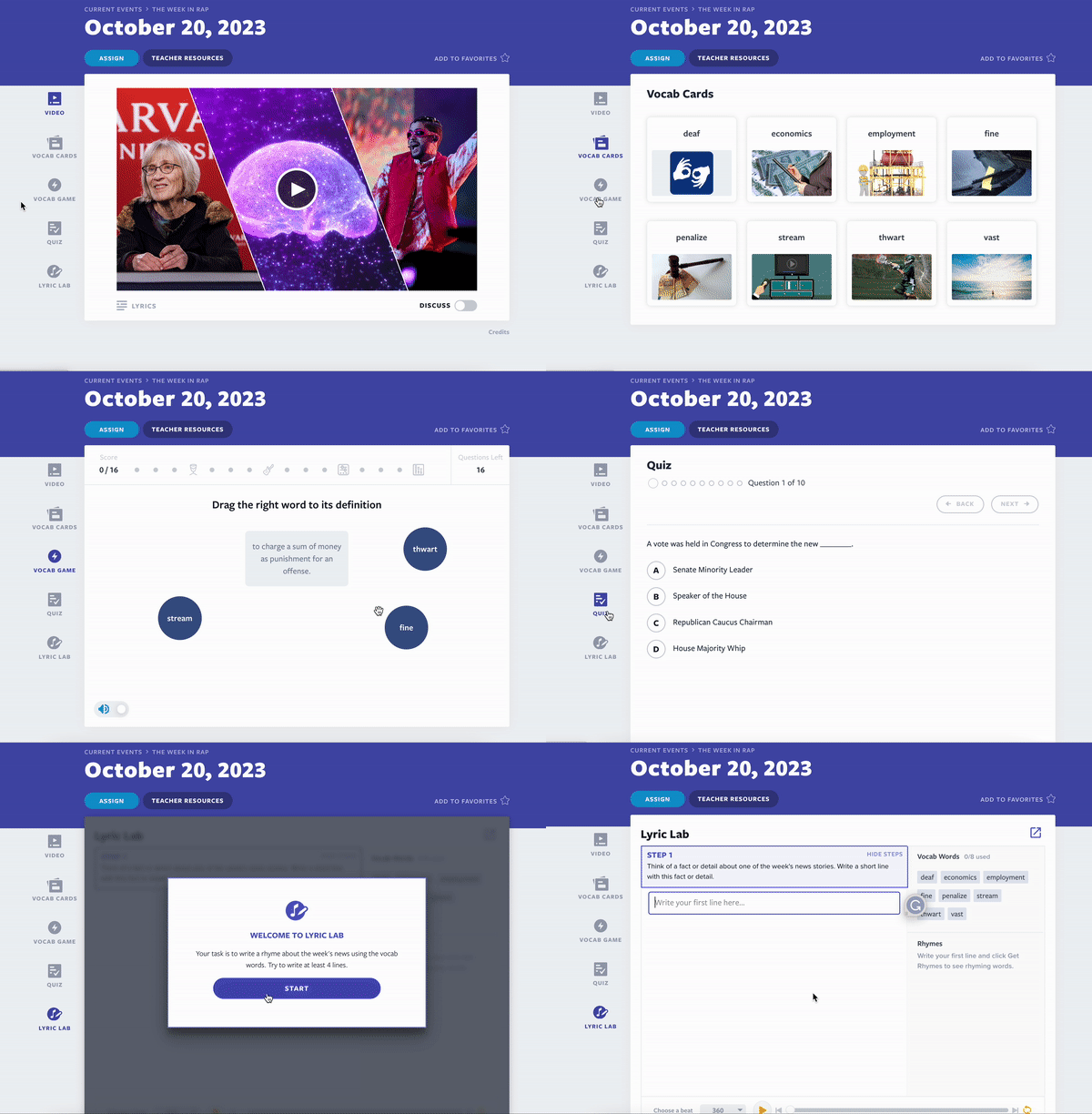
Flocabulary’s Week in Rap is a robust and age-appropriate educational tool for instructing students about current events. This weekly video-based lesson provides a rapped summary of significant and relevant news stories of the week. Released every Friday, it keeps students informed about the latest happenings and offers teachers a platform to initiate discussions on crucial current events. The Week in Rap is for grades 6-12, and the Week in Rap Junior is for grades 3-5. These weekly videos are a student (and teacher) favorite!
The Flocabulary team starts crafting these videos from scratch on Monday and completes them – including songs, videos, and associated lesson materials – by Friday morning for educators to access on Flocabulary.com. Learn more about how the Week in Rap is made.
3. Cross-examine the news content
Current events – whether political, regional, or pop – need to be vetted with a critical lens to equip students with the ability to participate in civic society in meaningful ways. Students need to be detectives of sorts, and they need to be equipped with news-literate strategies to decode what they are reading, from news to advertisements to propaganda. Misinformation or fake news can be insidious and lead to misunderstandings and unyielding perspectives. Media literate students understand that every source has a point of view, and media literacy examples need to be inquiry-based and should lead to constructive discourse.
According to Project Look Sharp, all readers should ask themselves the following six questions. Use these questions to have your students cross-examine news content:
Who made this?
Who is the target audience?
Who paid for this? Or who gets paid if you click on this?
Who might benefit or be harmed by this message?
What is left out of this media message that might be important?
Is this credible information (and what makes you think that)?
4. Address clickbait headlines and misinformation
The six questions above will help students better uncover the intention of said content. Too often, the content is designed to be a fabrication that is sticky and sensationalized to grab eyeballs and pique interest. Such clickbait helps content go viral, and we inadvertently become super-spreaders of misinformation, especially on social media, which can help earn advertiser dollars. However, this content can lead to confirmation bias, bolstered by details that are deceptive or even downright inaccurate.
We all need to keep asking questions to push past our own preconceived notions and broaden our understanding and perspectives around the topic at hand. Make it a habit for students to consider those six questions when reading and analyzing traditional or online media, whether they are digesting morning news or diving deeper into researching a current or historical event.
5. Teach how to evaluate website credibility and bias
There are certain signs or signals that all consumers of information should look for when evaluating online news sources. There are hallmark indicators that a site may not be as valid, credible, or reliable as we’d assume. We all should check if the site comes from reputable and accessible creators, the site itself is professional and polished, and the content is framed objectively and unbiased.
Teach students how to take a quick inventory of a site’s homepage in order to evaluate the quality of content, from the top to the bottom:
Begin with the URL – is it secure (HTTPS)? Is it a .org, .edu, or .gov URL?
Who owns the domain?
Scroll down to the About Us page and judge how robust it is or isn’t.
Can you find the source’s contact information easily enough?
Analyze the layout and design.
Are there source links and citations?
Are there typos or grammatical errors?
Analyze the language used: How inflammatory is the language?
What is the tone of the headline? How is information framed?
All these signs can help determine if the content shared has a bias, whether implicit or overt. As an educator, you can use sites like FactCheck.org and Snopes.com to fact-check the details of any questionable content. Then, teach students to similarly cross-reference information to make sure that they are getting the full picture.
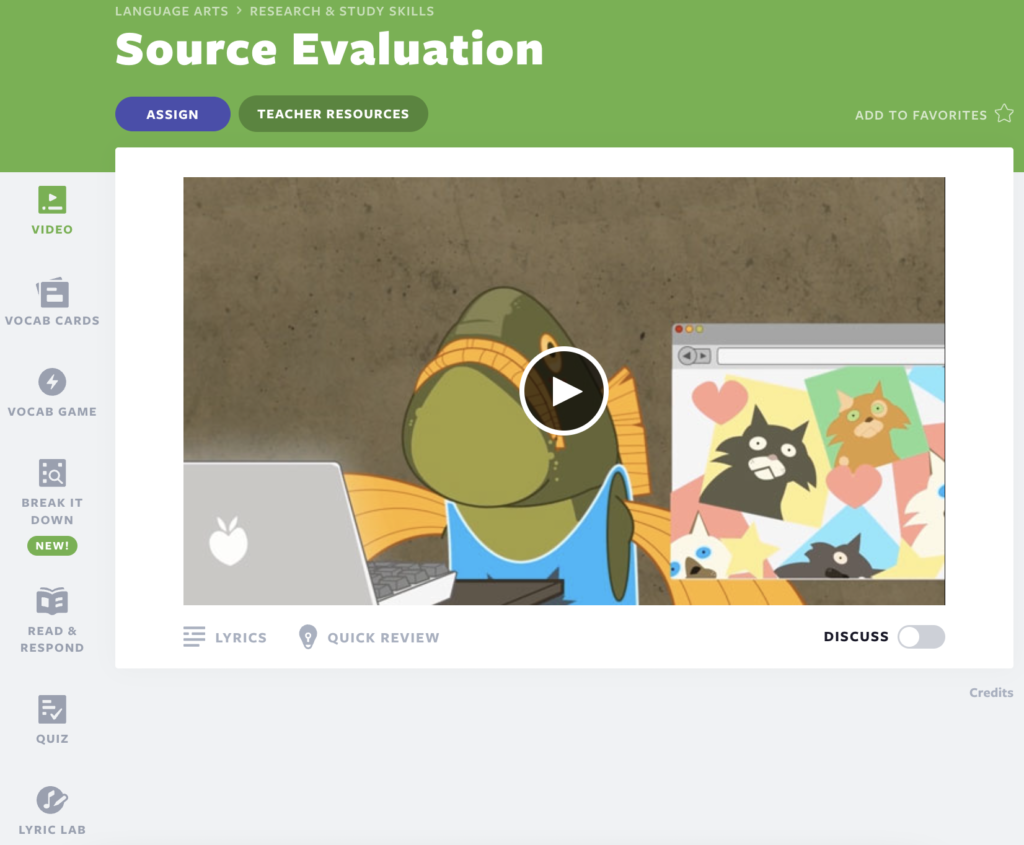
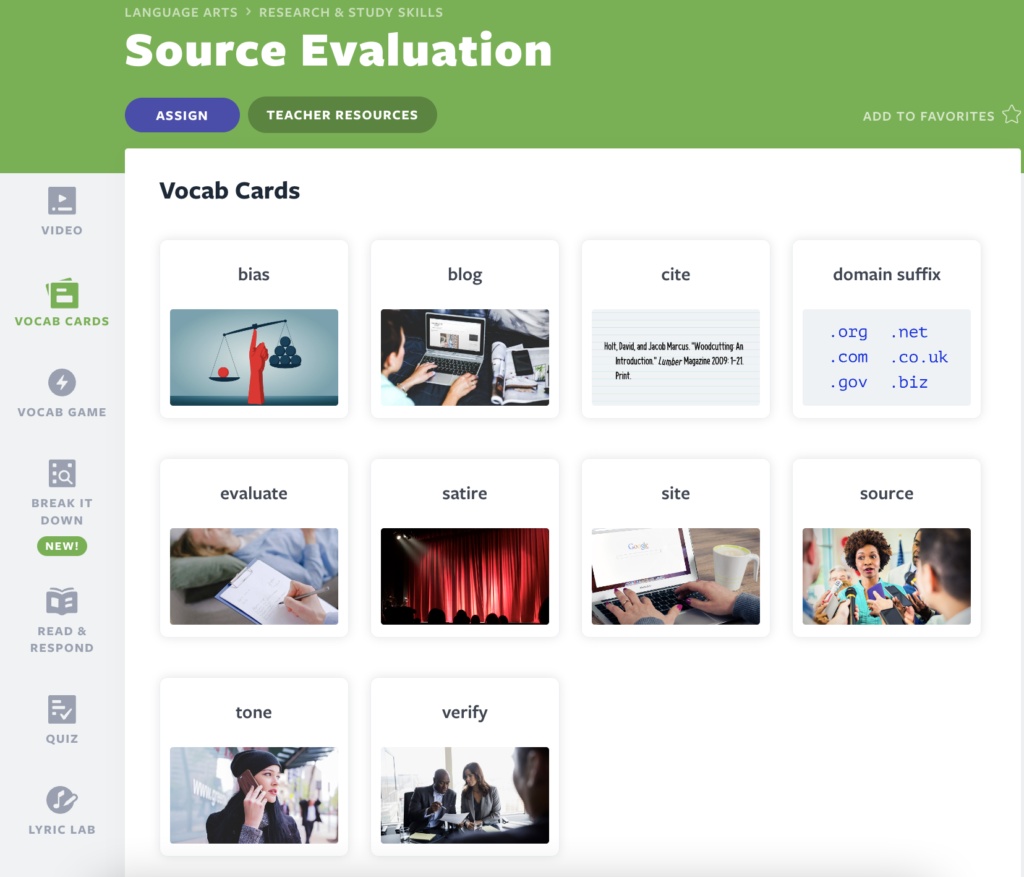
Flocabulary’s Source Evaluation video-based lesson provides students with tips on how to assess website credibility and bias, incorporating important vocabulary words that enhance their understanding. It aligns with today’s digital age and empowers students to make informed decisions in a technology-driven society, making it a valuable resource when teaching students about media literacy evaluation skills and information literacy.
6. Teach smart searching strategies
A core digital literacy skill to teach students that is fundamental to news literacy is smart searching. There are tried-and-true search strategies to help serve up content beyond what is targeted toward you, the reader, or tracked from your past searches. Emphasize to students that when searching for what you need, you often have to filter out what you don’t need. Teach them how to use quotation marks to search for exact phrases, use Boolean operators (“and”/”or”) to combine terms, and narrow the time frame as well as the type of sources. Highlight that when you get the page of search results, you should look for the results that are not sponsored, those that come from sources you recognize, or those that are well-vetted and reviewed. Challenge your students to work backward to find the original source.
7. Try lateral reading
Lateral reading – championed by Sam Wineburg and the Stanford History Education Group (SHEG) – is when you approach fact-checking by reading more broadly about a subject versus more deeply on a subject. By searching for other articles on the same topic, you can help confirm or negate an author’s credibility as well as his/her intent and biases. Those who engage in lateral reading often have multiple tabs open, creating a network of fact-checking across various websites before going back to the original article or page to read more thoroughly.
By teaching your students the concept of lateral reading, they will become more adept at cross-checking information from a variety of sources versus relying on just one. They will become more robust researchers and informed critical thinkers as they continue to dive into newsworthy events.
“Lateral reading helps the reader understand both the perspective from which the site’s analyses come and if the site has an editorial process or expert reputation that would allow one to accept the truth of a site’s facts.”
As with any muscle, it is important for students (and readers of all ages) to exercise how they read the news stories around current events and practice their detective decoding skills. Weave current events into your teaching to help students develop a real-world perspective on issues and better understand how their studies apply to life outside the school’s walls. Illustrate how news can report differently on the same topic. Use All Sides’ Media Bias Chart to show how a narrative can be skewed by who is reporting and why.
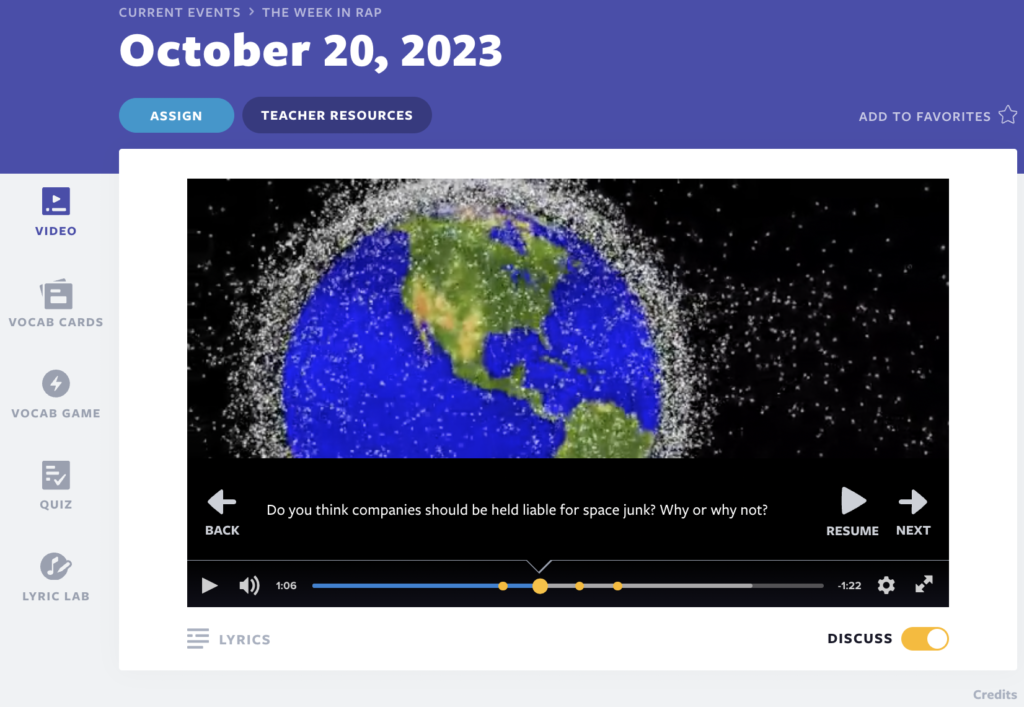
Use the Week in Rap lesson videos every Friday to have students stay on top of current events. Assign students the lesson so they can go through each activity and assessment accompanied by the video. While watching the video, turn on the Discuss Mode to prompt discussion questions for the class.
9. Talk about fake news often
Realizing how prevalent fake news is is half the battle. As with most literacy skills, repetition is key! Share key messages over and over in the classroom so that these healthy habits of mind become a given when students seek out reliable news. Frame lessons around spotting fake news or misinformation in articles. Send home resources that engage the whole family, from information videos to quizzes, so they all can help one another not become super-spreaders of misinformation or fake news online.
Flocabulary’s Fake News video-based lesson helps teach students about the pressing issue of fake news. This lesson explores what fake news is, how it spreads, and how to discern its accuracy. It equips students with practical skills for identifying fake news, encourages critical thinking about personal biases, and fosters media literacy.
Here are some additional resources teachers can use or share:
10. Continue to teach these skills year-round with reliable educational resources
Celebrate U.S. Media Literacy Week (October 23-27, 2023) and News Literacy Week (end of January each year) not as a one-and-done annual event but as a way to emphasize just how critical these skills are. Underscore the growing need around the importance of media literacy education, especially during times of political races, global strife, and national emergencies. Play devil’s advocate in your questioning to encourage readers to consider all sides and all perspectives as they gather facts. When students become skilled in this, they can critically evaluate information, which is essential for keeping society as well-informed as possible
Lean on trustworthy organizations that produce educational resources around news media literacy examples for students, families, and educators. With an ever-changing tech landscape, it is crucial that we all be diligent students to learn how to dissect and digest the latest and greatest information shared in our dynamic, always-on multimedia world.
Here are some more resources:
Start teaching about news literacy with Flocabulary
As readers and as good digital citizens, the burden falls on each of us 24/7 to use our critical thinking skills when digesting media information. Whether you teach elementary, middle, or high school, educators can help teach students these mindsets to employ on their own when browsing social media, paging through newspapers, or watching nightly reports. Similarly, they can use the same critical lens when receiving articles or news sites from others or when planning to send out information to others. By honing these skills, students develop the confidence and ability to participate in important conversations and decisions that impact their communities.
New to Flocabulary? Teachers can sign up for a trial to access our lesson videos and assessment activities. Administrators can get in touch with us to learn more about unlocking the full power of Flocabulary through Flocabulary Plus.
TikTok reels, attention grabbing headlines and AI that spits out instant answers. The way teens engage with the world today often lacks depth.
But at this age, where the teen brain is rapidly developing, deeper thinking — dubbed by psychologists as transcendent thinking — is vital not just for self-reflection and problem solving, but also self-esteem and better relationships in adulthood.
Many of us spend a lot of time in what researchers call “surface-level” thinking — reacting to what’s in front of us. Transcendent thinking, though, is when we go beyond concept descriptions, to wrestle with questions like, What does this say about justice? How do systems work? Where do I fit in all this?
“Young people get so much information fed to them through social media, influencers and podcasts and AI, and this is such a passive way of learning,” said Marcy Burstiner, News Decoder’s educational news director. “Dangerous, really, if they aren’t critically thinking about the information they are getting.”
That’s why for 10 years News Decoder has used the lens of journalism to engage students in the process of learning. Through our educational programs, students are encouraged to ask big questions, identify problems they see around them and talk to people to get their questions answered — classmates, neighbours, family and experts. In doing this, they find out information themselves.
Spoon-fed learning
This is more important than ever as the internet transforms from a place where people would lose themselves as they “surfed,” stumbling upon all kinds of new and interesting information along the way, into a place where an AI bot does that for them and spits out summarized results.
For 10 years, we’ve been asking teens to find real people to interview, to compare their different perspectives and from that to come up with their own original thoughts about complex topics where there isn’t a clear right and wrong, where there are layers of inequity.
Student Jack McConnel at The Tatnall School in the United States did this when he interviewed his state’s congressional representative, Sarah McBride, the nation’s first transgender representative in Congress.
Through the research he did, and after interviewing McBride, McConnel came to the conclusion that voters in his district didn’t elect her because of gender identity, but because McBride pledged to help solve the more mundane issues they cared most about — protecting consumers from getting scammed, for example, or helping farmers to lower food prices. Gender identity wasn’t their most important concern.
Students, like McConnel, who work with News Decoder often start with a “pitch” — a proposal for a news story. In the pitch, we have them ask a big question that their story will answer. McConnel’s asked three: “What role does identity play in our elected officials? Has this fixation from both sides made congressional and senatorial positions simply for show? Does it matter more who the person is or what the person does, and have we lost sight of what matters about our politicians?”
Through his research and his one-to-one interview with McBride, he was able to answer all those questions.
Beyond facts
Hannah Choo is a student at an international school in South Korea, and is working with News Decoder as a summer intern. As part of her work, she creates video content for social media based on articles published on News Decoder.
Choo has found that through engaging with these stories, she’s forming a deeper connection with the issues the stories explore. She said the challenge is to go beyond merely summarizing the information. The goal is to connect with an audience.
“And that puts me in a position where I need to really focus on why this issue matters and why I should care,” Choo said. “And that gives a lot more of a sense of purpose.”
Choo remembers talking to a biology graduate student, who told her about apoptosis, a process whereby cells die off — a way our bodies get rid of unneeded cells. Alone, this concept feels meaningless, even dry.
But the grad student told Choo that when we’re initially formed in the womb, we have paddle-shaped hands with a webbing of skin connecting the fingers and toes. This webbing disappears as we form, due to this apoptosis. Choo remembers looking at her own hands in fascination.
“And so later, when I actually got to learn biology and learn about the cell cycle, it was a lot easier for me to engage with the topic,” Choo said. “I wasn’t just studying science but I was studying my own body.”
From deep thinking to deeper relationships
A five-year study, published in 2024 in the journal Scientific Reports, followed 65 teenagers aged 14-18 to see how transcendent thinking shapes their brains, and how this further shapes their lives.
The teens were shown emotionally rich mini-documentaries featuring real stories of adolescents around the globe — a method that triggers transcendent thinking. They then talked through what the stories meant: how they felt, why they mattered, and what bigger ideas they raised.
They found that teens who engaged in this deeper style of thinking showed stronger connections over time between two key brain networks — those involved in self-reflection and big-picture thought, and focus and problem solving.
Crucially, they also found that these teens went on to have a clearer sense of identity in late adolescence, which later linked to greater self-esteem and better relationships in young adulthood.
One way News Decoder helps young people understand deeper meanings and broader implications is by having them look at societal problems and possible solutions.
Searching out solutions
At News Decoder we ask students to identify a problem in their community and then see if they can find people working to solve that problem.
“In the process they see at first that a lot of problems seem to have no solution or the solutions are so far off,” Burstiner said. “But all the complications that prevent solutions are like protective layers around the problem. They are like the levels you need to surmount in a video game.”
If a teen has the patience and persistence to work through those complications they can not only see the solutions but they can see what is preventing those solutions, Burstiner said.
“In exploring the topic she hit on the idea of lost languages — that a language is what often ties a community together and connects generations. But if a community is forced to disperse and the people end up integrating into other lands, the language that connected them could die out,” Burstiner said.
Connecting dots
Another student at The Tatnall School played soccer, and began thinking about how much it cost his family for him to play at a competitive level. “In exploring this he realized how much of competitive sports is elitist and how much more difficult it is for someone to go into professional sports if they are poor,” Burstiner said.
When students conduct interviews with people who understand these topics in-depth or who are affected by these issues, they can further connect their sense of self with these stories.
Choo, during her internship, pitched a story about cancer, because a close family member was undergoing cancer treatment. She asked this question: “How does climate change affect the quality of healthcare for cancer patients?”
In doing the research, uncovering connections and conducting interviews, she connected the often-abstract issue of climate change to her own life.
“This was the first time I could really connect climate change to my own life and my own loved ones,” Choo said.
We are bombarded with information from news sites, friends, entertainment platforms and companies — through articles, messages, images, videos, ads and graphics. It can be difficult to know or even think about where the information is coming from.
Whether you realize it or not, this tsunami of information affects you: It shapes what you know about events, how you see the world and how you feel about people, issues and products.
In order to further understand big global issues such as climate change, and how it affects communities all over the world, it is helpful to understand how the media functions, what journalists do and how you can communicate about the climate crisis yourself.
The media can and, ideally, should perform a variety of critical functions in any society. It should:
• Keep the public informed of current events and issues;
• Foster informed debate and discussion on matters of public importance;
• Hold powerful governmental and private actors to account.
Where media falls short
In reality, the media often fails to do that in part because some foundational “building blocks” that keep media strong and independent have eroded. A World Bank How-To Guide on media development identifies five building blocks for a robust and independent media sector:
1. Infrastructure: Everything from transmission towers and cables, to news disseminators, to cell phone ownership should be publicly-owned or in a competitive landscape of corporate owners.
2. Professional Skills and Editorial Independence: A country must have enough journalism professionals trained to gather, produce and publish information according to ethical standards, and who are protected by law and policies from interference by governmental or business actors.
3. Financial Sustainability: Media organizations must have financially-sustainable business models that enable them to employ journalism professionals and fund the gathering, production and dissemination of news content.
4. Policy and Regulatory Environment: A country’s legal and policy framework must support and protect the gathering and disclosure of information, uphold editorial independence and protect journalists and their sources.
5. Civil Society and the Public: There must be a media-literate public, journalists’ unions and free press watchdogs to both protect the journalists doing their jobs and hold them to account for transgressions of ethical codes.
How healthy is your media ecosystem?
Many countries around the world lack some or all of the core building blocks of a robust media sector. As a result, the media content available in these countries is often poor, and the media fails to perform its good governance functions.
You can evaluate the state of the media sector in different countries by referring to a variety of online resources, including Reporters Without Borders’ World Press Freedom Index and the Media Ownership Monitor.
But even in places where the press seems to have a great deal of freedom, the media most people consume might be in the control of a very few corporate owners and some of those corporations are privately held by one person or family.
Can you think of some reasons why governments and families might have an interest in controlling the media?
The short answer is that owning media enables you to control the message. You can influence:
• What information is supplied;
• How much information is provided on any particular person, issue or topic; and
• How the information is presented.
A sustainable media ecoystem
In a sustainable media ecosystem both government and private media owners would fulfill the “good governance” functions discussed above: keeping the public informed, fostering debate and holding the powerful to account.
Media owners do this when they put institutional safeguards in place to ensure that the people it employs can report on issues without restraint or fear of repercussion.
This is essential because a journalist is the eyes and ears of the public. Few people have the time or energy or attention to keep an eye on all the things their government does or all the decisions corporations make that affect their lives.
That’s why historically people subscribed to newspapers and why people now follow news sites and journalists on social media. We rely on journalists to go out into the world to ask questions, observe what is happening and gather factual information to report it all back to us.
In practice, many media outlets fall short of this goal.
Profits and the press
One way reputable media organizations protect editorial independence separating the editorial aims of the organization from its profit making function; the organization’s business operations don’t interact with the employees who produce its media content. That leaves journalists free to pursue important news stories, even if doing so could hurt the media outlet’s ability to sell ads or risks losing subscribers.
By doing this, the media organization builds and maintains credibility; It becomes a place where people come for information they can rely on. This information helps them make important decisions about their lives. Is it a good time to buy a house? Can they feel safe where they live? Will they be able to keep their jobs or find new ones?
Unfortunately, many media owners have found that it might be more profitable in the short term to focus news coverage in a way that pleases core audiences and advertisers. That happens when media consumers decide they will pay only for information that aligns with their beliefs and reject media that contradicts what they wish to believe.
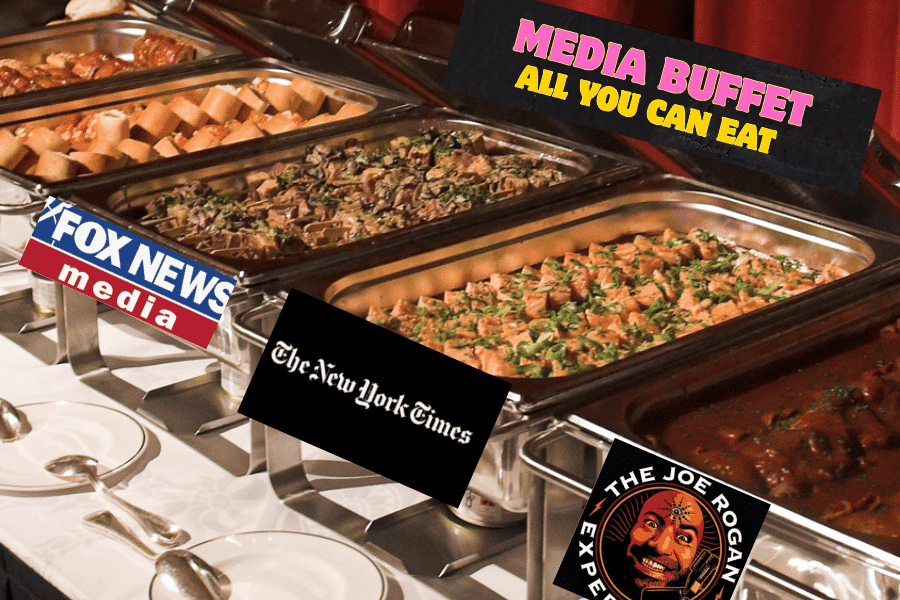
Ultimately, we have to think of the media ecosystem as a buffet you can go to for your meals. If too many people choose only the foods that satisfy their cravings for the sweet and salty, not only will their own health suffer, but the people who stock the buffet will start eliminating healthy foods altogether. What seems like a lot of choice in what you consume will end up as a lot of the same and none of it healthy.
So what can you do to support a healthier and sustainable media ecosystem?
Understand who owns the media you consume. Diversify the sources from where you get your information and seek out contrasting perspectives. If you can afford it, pay for subscriptions to outlets that have a record of independence. Support organizations that fight for a free and robust press.
As a consumer of media, you have power you can exercise. Media producers rely on you to read or listen to or watch what they produce. If you choose to do so, you support what they are doing. If you don’t, you tell them a different message altogether.
Questions to consider:
1. What is a media ecosystem?
2. How many information sites have you visited in the last three days? Can you list them?
3. Pick one of those sites. Can you figure out who owns it? Is that company based in your country?
In telling the story across different platforms, the important thing is to think about who you tell the story to. Imagine talking to them in person. You wouldn’t drone on with facts and data, you would get to what your story is really about.
The great thing is that in publishing across platforms through different types of media, you don’t need fancy equipment or fancy sound or video editing techniques.
Instead, the people who know how to do all that often go out of their way to make things look more raw, because raw looks more authentic and authentic is what many media consumers value.
You can even use an AI program to help you create images, but make sure you tell your audience that you did that. In telling true stories you don’t want to mislead or misinform.
I have written the piece that you are now reading. But in the world of AI, what exactly does it mean to say that I’ve written it?
As someone who has either written or edited millions of words in my life, this question seems very important.
There are plenty of AI aids available to help me in my task. In fact, some are insinuating themselves into our everyday work without our explicit consent. For example, Microsoft inserted a ‘Copilot’ into Word, the programme I’m using. But I have disabled it.
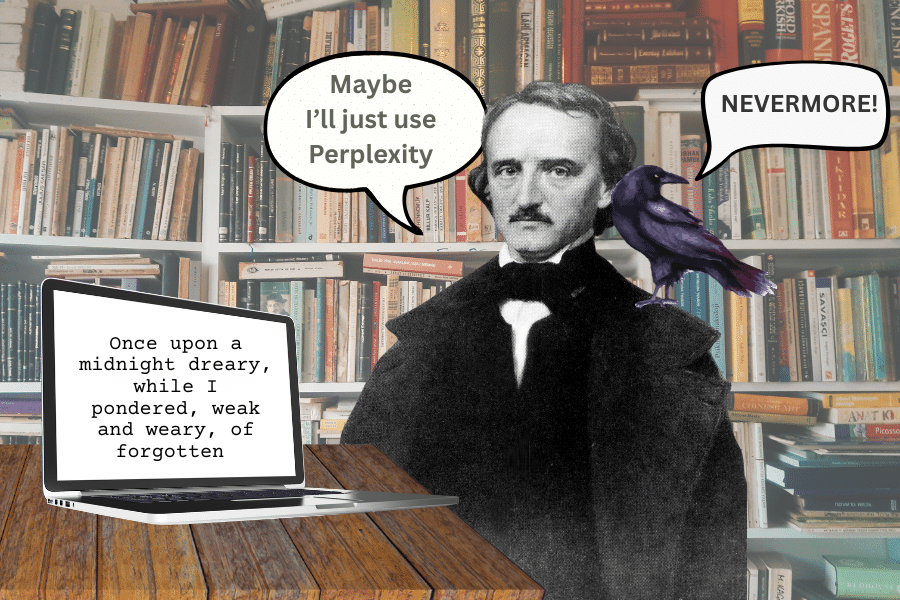
I could also insert prompts into a service such as ChatGPT and ask it to write the piece itself. Or I could ask the chatbot direct questions and paste in the answers. Everybody who first encounters these services is amazed by what they can do. The ability to synthesise facts, arguments and ideas and express them in a desired style is truly extraordinary. So it’s possible that using chatbots would make my article more readable, or accurate or interesting.
But in all these cases, I would be using, or perhaps paraphrasing, text that had been generated by a computer. And in my opinion, this would mean that I could no longer say that I had written it. And if that were the case, what would be the point of ‘writing’ the article and putting my name on it?
Artificial intelligence is a real asset.
There is no doubt that we benefit from AI, whether it is in faster access to information and services, safer transport, easier navigation, diagnostics and so on.
Rather than a revolution, the ever-increasing automation of human tasks seems a natural extension of the expansion of computing power that has been under way since the Second World War. Computers crunch data, find patterns and generate results that simulate those patterns. In general, this saves time and effort and enhances our lives.
So at what point does the use of AI become worrying? To me, the answer is in the generation of content that purports to be created by specific humans but is in fact not.
The world of education is grappling with this issue. AI gathers information, orders and analyses it, and is able to answer questions about it, whether in papers or other ways. In other words, all the tasks that a student is supposed to perform!
At the simplest level, students can ask a computer to do the work and submit it as their own. Schools and universities have means to detect this, but there are also ways to avoid detection.
The human touch
From my limited knowledge, text produced with the help of AI can seem sterile, distanced from both the ‘writer’ and the topic. In a word, dehumanised. And this is not surprising, because it is written by a robot. How is a teacher to grade a paper that seems to have been produced in this way?
There is no point in moralising about this. The technologies cannot be un-invented. In fact, tech companies are investing hundreds of billions of dollars in vast amounts of additional computing power that will make robots ever more present in our lives.
So schools and universities will have to adjust. Some of the university websites that I’ve looked at are struggling to produce straightforward, coherent guidance for students.
The aim must be, on the one hand, to enable students to use all the available technologies to do their research, whether the goal is to write a first-year paper or a PhD thesis, and on the other hand to use their own brains to absorb and order their research, and to express their own analysis of it. They need to be able to think for themselves.
Methods to prove that they can do this might be to have hand-written exams, or to test them in viva voce interviews. Clearly, these would work for many students and many subjects, but not for all. On the assumption that all students are going to use AI for some of their tasks, the onus is on educational establishments to find new ways to make sure that students can absorb information and express their analysis on their own.
Can bots break a news story?
If schools and universities can’t do that, there would be no point in going to university at all. Obtaining a degree would have no meaning and people would be emerging from education without having learned how to use their brains.
Another controversial area is my own former profession, journalism. Computers have subsumed many of the crafts that used to be involved in creating a newspaper. They can make the layouts, customise outputs, match images to content, and so on.
But only a human can spot what might be a hot political story, or describe the situation on the ground in Ukraine.
Journalists are right to be using AI for many purposes, for example to discover stories by analysing large sets of data. Meanwhile, more menial jobs involving statistics, such as writing up companies’ financial results and reporting on sports events, could be delegated to computers. But these stories might be boring and could miss newsworthy aspects, as well as the context and the atmosphere. Plus, does anybody actually want to read a story written by a robot?
Just like universities, serious media organisations are busy evolving AI policies so as to maintain a competitive edge and inform and entertain their target audiences, while ensuring credibility and transparency. This is all the more important when the dissemination of lies and fake images is so easy and prevalent.
Can AI replace an Ai Weiwei?
The creative arts are also vulnerable to AI-assisted abuse. It’s so easy to steal someone’s music, films, videos, books, indeed all types of creative content. Artists are right to appeal for legal protection. But effective regulation is going to be difficult.
There are good reasons, however, for people to regulate themselves. Yes, AI’s potential uses are amazing, even frightening. But it gets its material from trawling every possible type of content that it can via the internet.
That content is, by definition, second hand. The result of AI’s trawling of the internet is like a giant bowl of mush. Dip your spoon into it, and it will still be other people’s mush.
If you want to do something original, use your own brain to do it. If you don’t use your own intelligence and your own capabilities, they will wither away.
And so I have done that. This piece may not be brilliant. But I wrote it.
Questions to consider:
1. If artificial intelligence writes a story or creates a piece of art, can that be considered original?
2. How can journalists use artificial intelligence to better serve the public?
3. In what ways to you think artificial intelligence is more helpful or harmful to professions like journalism and the arts?