Category: Media Literacy

  • At the library you can take out a book … or dissect a body?

    At the library you can take out a book … or dissect a body?

    When Janet Calderon first visited the X̱wi7x̱wa Library in Vancouver, Canada it was different than anything she had ever seen before. It is the only Indigenous branch of an academic library in all of Canada. Pronounced “whei-wha,” its name is from the language of the Squamish people who have inhabited the region for thousands of years. 

    Calderon is a humanities librarian at Reed College near Portland in the U.S. state of Oregon and earned a master’s degree in Library & Information Studies from the University of British Columbia in Canada, which oversees the X̱wi7x̱wa Library. Experiencing this library was transformational in many ways for Calderon.

    “Everything about how this knowledge is put together reflects a unique perspective,” Calderon said. 

    The X̱wi7x̱wa Library is one of many examples from around the world of the transformation of libraries from collections of books to comprehensive learning centers and hubs for diverse communities. 

    British Columbia, where this library is located, has an Indigenous population of nearly 300,000 people, which is approximately 5.9% of the province’s overall population. The library embeds Indigenous knowledge in everything, from the use of Indigenous terms in its classification system to a building design that represents a pit house of the Interior Salish people.

    Hubs of enlightenment

    Libraries have a rich history of serving as gathering spaces. Early libraries, such as the Library of Alexandria in Egypt and Bayt al-Hikmah (House of Wisdom) in Iraq, were hubs for knowledge and enlightenment that attracted scholars from near and far. 

    Libraries today continue to serve as gathering places for communities by fostering the exchange of information and ideas. Many libraries are modifying their spaces so that they can be meeting places, information centers or culture centers, or serve other purposes for members of a given community. Depending on where you live, how a library chooses to configure its spaces and for what purposes can vary widely.

    Libraries across Kenya, for example, promote environmental sustainability through efforts such as adopting green building standards and by housing atriums within the library, as well as installing green roofs on top of the building itself.

    In Shanghai, China, a city known for strong ties to business and the global economy, public libraries serve different demographics such as the elderly, homeless and students by providing them space and access to information and resources that help them meet specific needs, such as applying for jobs.   

    In Santa Clara, Cuba, the central patio and surrounding spaces of the Marti Provincial Library were renovated. As a result, the Library is now able to host motivational and cultural activities, as well as events that meet specific needs such as workshops on job skills.

    The public library in Umeå, Sweden is housed within the Väven Cultural Center, which enables library visitors to check out books, tour the Women’s History Museum, watch a film in a theater and more, all under the same roof.

    Reassessing how space is used

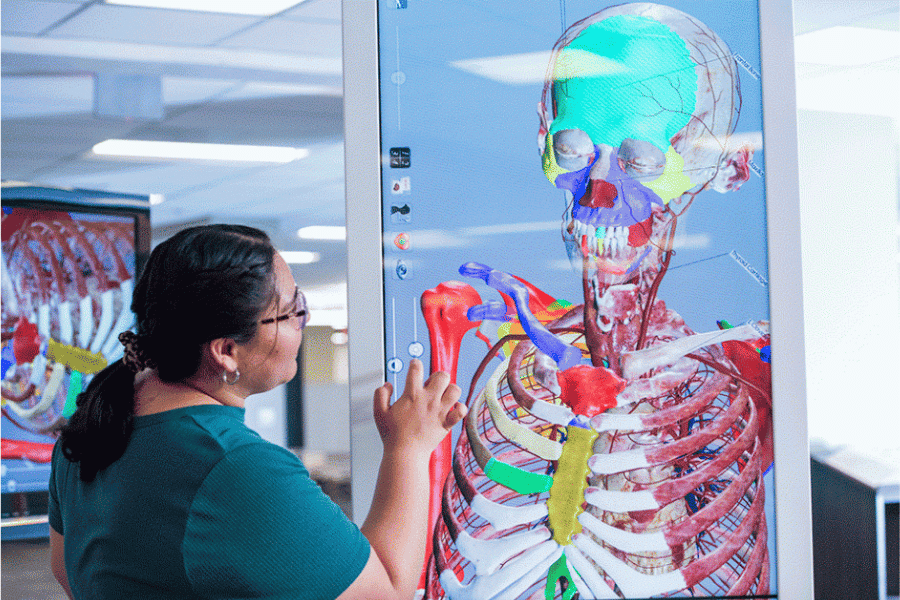
    At my library at the California State Polytechnic University, Humboldt in California, visitors to the Hall of Simulation can use a flight simulator, digitally dissect an animal or cadaver and simulate wildfires, an annual problem in the state. The library’s spaces also host student-centered workshops, research symposiums and events, including an annual celebration of campus and community authors.

    Transformations at the Cal Poly Humboldt Library have been aided through the development of SpaceUse, software that enables the library to track and analyze how its spaces are utilized by patrons. For many library workers, changing and adapting existing library spaces allows them to reimagine how a library can serve its community.  

    Michell Hackwelder, the interpretation unit head at the Education & Outreach Department for the Abu Dhabi Department of Culture and Tourism in the United Arab Emirates, helped renovate libraries used by international peacekeeping forces in Egypt to create community hubs for the many people who came there for recreational activities and to find a quiet space. 

    Hackwelder has spent over 40 years in the library field and has helped guide many library transformations across the Middle East and North Africa. This includes creating maker spaces and programming areas for afterschool and computer and sciences programs at elementary schools in Saudi Arabia and upgrading the early childhood and technology areas at the Abu Dhabi Children’s Library. 

    Hackwelder said that people in the community get excited about the space transformations and more people from different demographics end up using the library.

    Some people miss the stacks.

    It should be noted that changes to library spaces are not without some controversy. Libraries have limited space to work with, so decisions about what to change can be difficult to navigate. Younger people who grow up in a digital world might not connect to books the way older generations did. However, the removal of books and shelves to make room for new spaces can anger the many book lovers who rely on libraries.

    As communities and societies change, libraries will be expected to do the same. 

    Samantha Mendiola is an architect at HGA that focuses on library design. Mendiola has worked on several library redesigns across the United States, from a high school library in Massachusetts to college libraries in Minnesota.  

    Mendiola said that many of the libraries she has worked with are focusing on renovations with existing spaces to better serve changing community demographics and technology needs while also fostering community engagement and accommodating diverse learning styles. 

    “Libraries have always been adaptable and they’re evolving even faster now, post-pandemic, to meet new expectations,” Mendiola said.


    Questions to consider:

    1. In what ways are libraries adapting to meet the needs of the people they serve?

    2, What is the primary role of a library?

    3. If you were to create a new library in your town, what would you want it to have?


    Source link

  • Can the information you share be trusted?

    Can the information you share be trusted?

    “If you see that a person has lied in the past you should carefully consider whether it is a good idea to trust them,” Jonas said. 

    3. Find other sources that seem to be reporting the same thing.

    “Sometimes you will find that different sources interpret the same event very differently,” Jonas said. “Think about which sources you should trust more.”

    Information in research articles, journalistic publications or academic experts and institutions are generally more reliable than blog contributors or social media posts, Jonas said. 

    Be a bit skeptical, too, she said, when a publication or podcast or post seems to mix information with emotion and see if you can separate out factual reporting with opinion.

    Incorporating this healthy skepticism and adopting a system for verifying information will help you build a reputation for credibility and reliability. This is useful not just in your reporting, Jonas said, but in your daily life, as well. 


    Questions to consider:

    1. What is meant by a system of verification?

    2. Why should you check for information about the author of an article or post you read?

    3. How can a healthy skepticism be useful in your daily life?


    Source link

  • Sharing is good, except when it isn’t

    Sharing is good, except when it isn’t

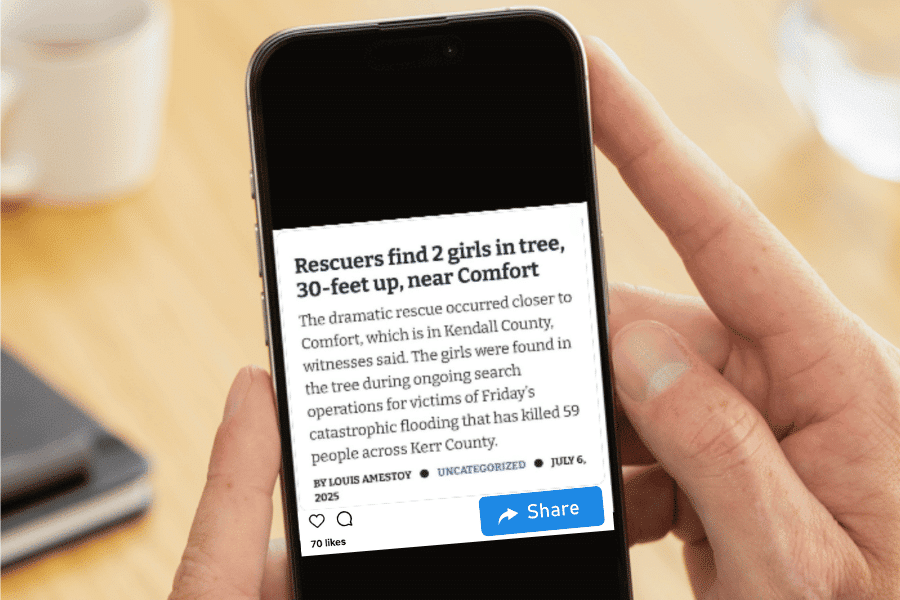
    In the wake of the floods in the U.S. state of Texas earlier this month news circulated on social media of two girls being rescued. One of the first posts sharing the story included a screenshot of a post to social media that read:

    Rescuers find 2 girls in tree, 30-feet up, near Comfort

    The dramatic rescue occurred closer to Comfort, which is in Kendall County, witnesses said. The girls were found in the tree during ongoing search operations for victims of Friday’s catastrophic flooding that has killed 59 people across Kerr County.

    A Facebook search of the post’s keywords returned dozens of identical or similarly-worded posts retelling the harrowing rescue. Other versions of the story were also shared across social media platforms like Instagram Threads, as well as in now-deleted articles across various news outlets

    But the story was fabricated. 

    It was a prime example of a type of misinformation known as “copypasta.” 

    Inciting fear

    Social media posts that utilize copypasta — a portmanteau of “copy” and “paste” — are often used to incite fear or evoke emotions, prompting users to like and share the content. These posts are used for various reasons, whether to polarize different political groups further or to attract a broader audience and spread misinformation. 

    Alex Kasprak is an investigative journalist who reported for the digital fact-checking website Snopes for nearly a decade. In his experience, Kasprak says copypasta plays a central role in online misinformation. (For more on Snopes’ take on copypasta, head to this link.) 

    “The simplest way to put it, is that copypasta is a text that you see that is identical or nearly identical posted either with somebody’s name as an author or without it in an identical form on multiple posts such that it’s clear that whoever is posting it copied it from somewhere else,” said Kasprak. 

    “What you end up getting in that sort of phenomenon is a game of telephone.”  

    Copypasta serves as a new-age version of chainmail, seen in the early days of email, which promised good luck for forwarding a message or foretold misinformation if you let the email sit in an inbox. 

    Lacking credibility

    In the case of copypasta, social media users are encouraged to comment, share or tag their friends in a post to boost engagement. Such emotion-evoking messages can serve as an entry point into more polarizing content, which is often rife with false information. 

    To identify copypasta, look for signs of vague or generic information that lacks a credible source or call to action. The way a post is written can also serve as an indication that it may be a copy-and-paste text. 

    “With copypasta, everything generally kind of travels forward, including errors in grammar or mistranslations,” Kasprak said. “If there are weird sentences that just kind of end or don’t fully make grammatical sense, that is an indicator that the tone of the message doesn’t match.”

    If the post is shared by someone that you know on your feed, but the tone is different than how they usually post or talk, the content likely originated from another source — credible or not, Kasprak said. 

    In addition to spreading false information, copypasta can be used as part of bigger campaigns to push particular sentiments or ideologies. For example, back in 2017, U.S. government officials found evidence that Russian “trolls” took to social media and also deployed social media campaigns to connect certain users to various organizations or movements.

    Danger to the infosphere

    During these online campaigns, nefarious actors meddled in the election by posting emotional content to get users to engage, gradually bringing them down a digital rabbit hole of more polarizing issues.

    Kasprak adds that copypasta content also harms the “infosphere,” or public knowledge otherwise rooted in fact. When copypasta becomes widespread and is presented as a “pseudofact,” people begin to cite it as common knowledge. A commonly held belief that many people cite as fact, for example, is that a mother bird will abandon its offspring if a human touches it. Experts agree that this notion is not true. 

    Another tactic behind those who post copypasta is to poison AI models in a similar way that fake news websites do. When enough content on the internet makes a particular claim, AI technologies may focus on this noise and refer to it as fact. In this way, AI programs are “trained” to focus and “believe” those posts over other sources of information.

    Emotion-evoking posts may also fall into the copypasta category if they are not rooted in unbiased facts. If emotional language used in the post immediately sparks anger, sadness or another strong emotion, it may be a fake post. 

    “In general, the big thing to watch out for is if something fits perfectly into your notion of how the world works,” said Kasprak. Posts that validate a person’s view of the world or evoke strong emotions in a positive or negative way are more likely to be a red flag. 

    Kasprak advises users to check their biases when reading potential copypasta content; if something makes you angry or sad, double-check its source and legitimacy. 

    “Pause if you feel strongly about wanting to share something, because those posts are the ones where the risk of copypasta is higher,” said Kasprak. When he comes across a post he believes to be copypasta, Kasprak says that he tries to “tear apart” the argument, primarily if it supports his beliefs, until it dissolves. 

    “Check your blind spots and be vigilant in checking your work,” said Kasprak. 

    When in doubt, don’t share.


    Questions to consider:

    1. What is meant by “copypasta”?

    2. How can something false become part of commonly believed?

    3. Can you remember the last thing you reposted on social media? What kind of things do you share with your network?


    Source link

  • Decoder Replay: Is truth self-evident?

    Decoder Replay: Is truth self-evident?

    Fake news is dangerous. But it’s hardly new.

    More than 3,000 years ago, the largest chariot battle ever pitted the forces of one of the most powerful pharaohs of ancient Egypt — Ramesses the Great — against the Hittite Empire in Kadesh, near the modern-day border between Lebanon and Syria.

    The battle ended in stalemate.

    But once back in Egypt, Ramesses spread lies portraying the battle as a major victory for the Egyptians. He had scenes of himself killing his enemies put up on the walls of nearly all his temples.

    It was propaganda. “It is all too clear that he was a stupid and culpably inefficient general and that he failed to gain his objectives at Kadesh,” Egyptologist John A. Wilson wrote.

    Disinformation in ancient Rome

    The Roman general Mark Antony killed himself with his sword after his defeat in the Battle of Actium upon hearing false rumors — fake news — propagated by his lover Cleopatra claiming that she had committed suicide.

    American patriots, including the esteemed U.S. statesman and inventor Benjamin Franklin, and their British enemies swapped spurious allegations during the American Revolution that murderous Native Americans were working in league with their adversaries, scalping allies.

    How about the 1938 radio drama, “The War of the Worlds”? Adopted from a novel by H.G. Wells, the radio broadcast fooled some listeners into believing that Martians had landed in America. Newspapers of the day said the broadcast sparked panic.

    But historians today say the panic was exaggerated. So it was fake news about fake news!

    There is no shortage of modern-day instances of fake news. In Myanmar in 2018, the military spearheaded a campaign of fake news, mainly on Facebook, claiming the Rohingya minority had murdered and raped members of the Buddhist majority. The Rohingya were described as dogs, maggots and rapists. The fake news helped trigger violence against the Rohingya that forced 700,000 people to flee their homes.

    The irony is that many in Myanmar had turned to Facebook for information because the military had alienated many citizens with its control of the media. But the same military took advantage of the false reports to crack down on the Muslim minority.

    Election falsehoods

    Similarly, fake news has been used in the Philippines, Indonesia, Malaysia and Sri Lanka to influence the outcome of elections, hide corruption and stir up religious animosity.

    One of the ironies of fake news is it can embolden authoritarian governments to turn the tables and use made-up news as an excuse to crack down on the media. That can enable the regime to control the media message. In other words, fake news to the rescue of autocrats.

    But we should not fool ourselves into thinking that fake news can be cured merely through technological solutions, that it’s a product of our times, that it’s mainly political and that it’s peddled only by our opponents. It’s not the property of any one political party or interest.

    Fake news takes root in the gray area between truth and fiction, an area we can be quite comfortable in. There is something very enticing about fake news, especially if it aligns with our pre-conceived notions. Yet we are apt to think that fake news is the exception, a new aberration.

    We can easily fall victim to fake news in part because we are not always disgusted by lies. We are taught at a very early age that deceit – deception, dishonesty, disinformation – is all around us. And that not all lies are as harmful as others. Our parents read us fairy tales from the earliest of ages, and many tales involve lies.

    The telling of fairy tales

    Take the ancient fable of “The Cock and the Fox,” included in the medieval collection of Middle Eastern folk tales, “One Thousand and One Nights.”

    A hungry fox tries to coax a rooster out of a tree by telling him a tall tale — that there is universal friendship now among hunters and the hunted. The cock has nothing to fear, the wily fox says. It’s a lie, of course.

    So, the equally wily cock resorts to his own lie: he tells the fox that he sees greyhounds running towards them, surely with a message from the King of Beasts. The fox, outwitted, runs away in fear. So here we have two lies in a single story. The moral? “The best liars are often caught in their own lies.”

    Children and their parents are quite comfortable surrounded by lies. Is Santa Claus a malicious or harmless lie?

    Do you know the story of the Wizard of Oz? That classic U.S. movie about a young girl lost in a fantasy world, pursued by witches, struggling to go home? The entire plot relies on a deceit – a supposedly powerful wizard who is nothing more than a bumbling, ordinary conman, who uses magic tricks to make himself seem great and powerful.

    Deceit at the service of entertainment.

    Advertisements are often innocent exaggerations, fiction if you will in the service of business and profit-making. But sometimes ads can veer into falsehoods.

    So fake news is not new. And we’re no strangers to lies. What does that mean for those of us interested in making the world a better place? Should we simply give up because the task is too great?

    Hardly. The lesson is that truth is not black and white, but grey, and it’s a moving target.

    Take, for example, colonialism. From the 15th century on, white Europeans conquered huge swathes of the Americas, Africa, the Middle East, Asia and Oceania. They subjugated millions of people, using brutal violence in many places to subdue indigenous populations. They brought diseases that wiped out millions.

    They exploited natural resources, using native labor and pocketing most of the profit from sales into a global trading network that they established. By 1914, Europeans had gained control of 84% of the globe.

    We know all of that now because colonized peoples have revolted against their colonial rulers and won independence. The wars of independence have been won, yet so many countries around the world are still grappling with the shameful effects of colonialism and racism.

    The ambiguity of truth

    But would everyone have agreed on that depiction of Europeans as rapacious colonialists before the wars of independence?

    Certainly not most of the Europeans, who believed they were exporting a superior civilization to backward natives. Missionaries who led many colonial ventures believed they were doing God’s will by converting native populations to Christianity. And not a few natives turned a blind eye to atrocities and benefited financially.

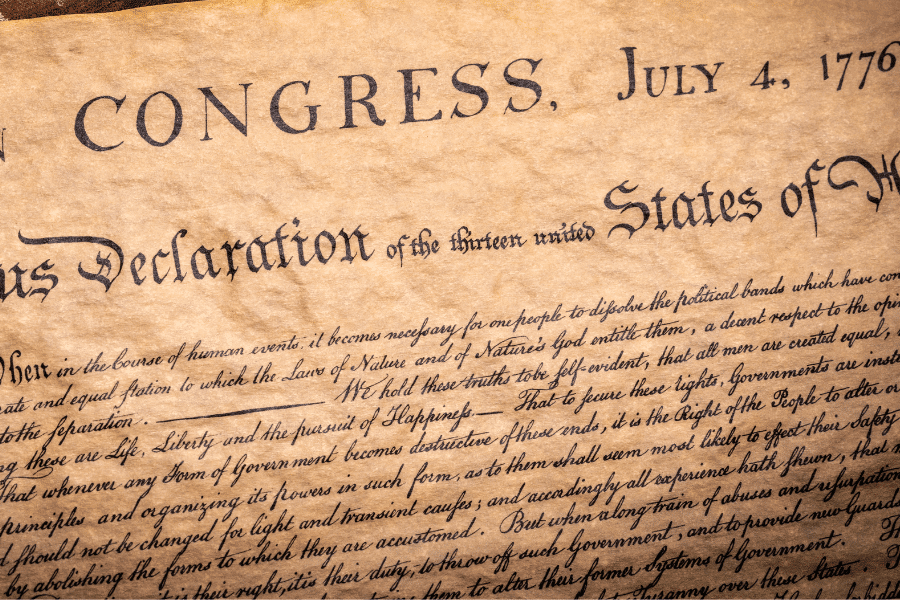
    For a glaring example of the ambiguity of truth, take the United States. Its Declaration of Independence, borrowing from the French enlightenment, states that “all men are created equal,” with “unalienable Rights” to “Life, Liberty, and the pursuit of Happiness.” It put notions of freedom and equality at the heart of the American experiment. Yet it was written by a slave owner, Thomas Jefferson, and represented 13 colonies that all, to one degree or another, allowed slavery.

    Convinced of their superiority and driven by an almost unquenchable appetite for wealth, white settlers drove Native Indians from their homes. The U.S. government authorized more than 1,500 attacks and raids on Indians. By the end of the 19th century, fewer than 238,000 indigenous people remained, down from some 5-15 million living in North America when Columbus arrived in 1492.

    What is more, settlers in the South imported slaves from Africa, forcing them to work on vast plantations and denying them the very rights to life and liberty spelled out in the Declaration of Independence.

    Rights and repercussions

    Both Native Indians and African Americans are struggling to this day to come to terms with the treatment they suffered at the hands of the white colonials.

    Would a white settler have seen himself or herself as a murderer? Hardly. In their minds, they were doing God’s work.

     Mind you, the desire to colonize is not peculiar to Europeans. Imperial Japan and imperialist China both established overseas empires. The Empire of Japan seized most of China and Manchuria. To this day, Chinese nationals and South Koreans harbor ill feelings towards the Japanese. Chinese dynasties won control over parts of Vietnam and Korea.

    There’s an expression in newsrooms around the world: “One man’s terrorist is another man’s freedom fighter.” Put another way, the same individual might seem a terrorist to some, a hero to others.

    Take Yagan, a 19th century indigenous Australian warrior from the Noongar people. He played a key role in early resistance to British colonial rule in an area that is now Perth. His execution by a young settler figures in Australian history as a symbol of the unjust treatment of indigenous peoples by colonial settlers.

    A hero to his people, he was a murderer in the eyes of the British.

    Different perspectives on history

    Or take the Incan emperor, Atahualpa, who resisted the explorer and conquistador Francisco Pizarro, to this day a Spanish hero. Pizarro forced Atahualpa to convert to Christianity before eventually killing him, hastening the end of one of the greatest imperial states in human history.

    How you view Pizarro may depend on where you are sitting and when you lived.

    There are countless modern examples of radically different perspectives on events. Such discrepancies may be inevitable. Dogged journalists can shed light on events and protagonists, and help shape history – for better or for worse.

    Joseph McCarthy was a U.S. senator who in the early years of the Cold War spearheaded a smear campaign against alleged Communist and Soviet spies. Only courageous reporting by a small group of journalists who dared question McCarthy’s tactics and risked being tarred as Communist sympathizers themselves led to McCarthy’s downfall.

    Joseph McCarthy (L) with his attorney Roy Cohn, who later mentored Donald Trump (Wikimedia Commons)

    The New York Times and Washington Post went out on a legal limb when in 1971 they published the Pentagon Papers, a U.S. government history of the Vietnam War that laid bare official lies that drove American policy for more than a decade in Southeast Asia.

    The government called the man who leaked the government documents a criminal and sought to prevent the newspapers from publishing the damning revelations.

    The newspapers won their case before the Supreme Court, and their reporting increased public pressure on the government to withdraw from Vietnam.

    Watergate upended a presidency.

    You’ve perhaps heard of Watergate? Literally speaking, it’s a hotel in Washington, DC. But it has come to stand for the dogged and courageous news reporting by two journalists with the Washington Post who exposed crimes by President Richard Nixon and helped lead to his resignation in 1974.

    Courageous investigative journalism is hardly confined to the United States. A non-profit news outfit called AmaBhungane — in Zulu, “dung beetle,” an animal that digs through shit – has reported on corrupt business deals at the highest levels of South Africa’s government.

    In the Arab world, investigative journalists in Egypt, Yemen, Tunisia, Syria, Lebanon, Jordan, Iraq, Bahrain, Palestine, Mauritania, Algeria, Kuwait and Sudan have uncovered tax evasion, money laundering, drug smuggling, torture and slavery. They have unmasked doctors who have removed the wombs of mentally disabled girls with the consent of parents.

    But it’s not all easy sailing. According to Freedom House, in 2017 there were only 175 investigative journalists in all of China, down 58% since 2011.

    What does this mean for you, a young activist who wants to help change the world?

    Truth is murky.

    The lesson is that the truth may not lie squarely on one side or the other, but rather in a murky, grey area. It can take courage to shine a light in the shadows, teeming with lies. And you may have to hear viewpoints that differ radically from your own. It pays to listen.

    Progress against racism, inequality and injustice depends on an informed public.

    The best journalists recognize their responsibility to uphold the Universal Declaration of Human Rights, which state that: all human beings are born free and equal in dignity and rights; and everyone has the right to freedom of opinion and expression; this right includes freedom to hold opinions without interference and to seek, receive and impart information and ideas through any media and regardless of frontiers.

    As the third U.S. President Thomas Jefferson said: “Were it left to me to decide whether we should have a government without newspapers or newspapers without a government, I should not hesitate a moment to prefer the latter.”

    So stick up for your rights, including the right to free expression. Be fair. And remember that one man’s terrorist may be another man’s freedom fighter. You don’t have a lock on the truth.


    Questions to consider:

    1. Why is it important to understand that fake news is nothing new?

    2. Do you think there is any way to stamp out fake news?

    3. What does it mean to say, “One man’s terrorist is another man’s freedom fighter”?



    Source link

  • Top Tips: To err is human

    Top Tips: To err is human

    Everyone makes mistakes. To be credible you have to fess up when you get things wrong. Doing so doesn’t make you look bad. It shows you care about the truth.

    Source link

  • Here’s to 10 years! And many more.

    Here’s to 10 years! And many more.

    As News Decoder celebrates its 10th birthday, the need for young people to appreciate different perspectives and be globally aware is more pressing than ever.

    Source link

  • Is social media turning our hearts to stone?

    Is social media turning our hearts to stone?

    As global digital participation grows, our ability to connect emotionally may be shifting. Social media has connected people across continents, but it also reshapes how we perceive and respond to others’ emotions, especially among youth. 

    Empathy is the ability to understand and share another’s feelings, helping to build connections and support. It’s about stepping into someone else’s shoes, listening and making them feel understood.

    While platforms like Instagram, TikTok and X offer tools for global connection, they may also be changing the way we experience empathy.

    Social media’s strength lies in its speed and reach. Instant sharing allows users to engage with people from different backgrounds, participate in global conversations and discover social causes. But it also comes with downsides. 

    “People aren’t doing research for themselves,” says Marc Scott, the diversity, equity and community coordinator at the Tatnall School, the private high school that I attend in the U.S. state of Delaware. “They see one thing and take it for fact.”

    Communicating in a two-dimensional world

    That kind of surface-level engagement can harm emotional understanding. The lack of facial expressions, body language and tone — key elements of in-person conversation — makes it harder to gauge emotion online. This often leads to misunderstandings, or worse, emotional detachment.

    In a world where users often post only curated highlights, online personas may appear more polished than real life. “Someone can have a large following,” Scott said. “But that’s just one person. They don’t represent the whole group.” 

    Tijen Pyle teaches advanced placement psychology at the Tatnall School. He pointed out how social media can amplify global polarization. 

    “When you’re in a group with similar ideas, you tend to feel stronger about those opinions,” he said. “Social media algorithms cater your content to your interests and you only see what you agree with.” 

    This selective exposure limits empathy by reducing understanding of differing perspectives. The disconnect can reinforce stereotypes and limit meaningful emotional connection.

    Over exposure to media

    Compounding the problem is “compassion fatigue” — when constant exposure to suffering online dulls our emotional response. Videos of crisis after crisis can overwhelm users, turning tragedy into background noise in an endless scroll.

    A widely cited study published in the journal Psychiatric Science in 2013 examined the effects of exposure to media related to the 9/11 attacks and the Iraq War. The study led by Roxanne Cohen Silver, found that vicariously experienced events, such as watching graphic media images, can lead to collective trauma.

    Yet not all emotional connection is lost. Online spaces have also created powerful support systems — from mental health communities to social justice movements. These spaces offer users a chance to share personal stories, uplift one another and build solidarity across borders. “It depends on how you use it,” Scott said.

    Many experts agree that digital empathy must be cultivated intentionally. According to a 2025 Pew Research Center study, nearly half of U.S. teens believe that social media platforms have a mostly negative effect on people their age, a significant increase from 32% in 2022. This growing concern underscores the complex nature of online interactions, where the potential for connection coexists with the risk of unkindness and emotional detachment. ​

    So how do we preserve empathy in a digital world? It starts with awareness. Engaging critically with content, seeking out diverse viewpoints and taking breaks from the algorithm can help. “Social media can expand your perspectives — but it can also trap you in a single mindset,” Scott said. 

    I initially started thinking about this topic when I was having the same conversations with different people and feeling a sense of ignorance. It wasn’t that they didn’t care — it was like they didn’t know how to care. 

    The way they responded to serious topics felt cold or disconnected, almost like they were watching a video instead of talking to a real person. 

    That made me wonder: has social media changed the way we understand and react to emotions?

    Ultimately, social media isn’t inherently good or bad for empathy. It’s a tool. And like any tool, its impact depends on how we use it. If we use it thoughtfully, we can ensure empathy continues to grow, even in a world dominated by screens.


    Questions to consider:

    1. What is empathy and why is it important?

    2. How can too much time spent on social media dull our emotional response?

    2. How do you know if you have spent too much time on social media? 


    Source link

  • News Decoder helps launch digital student journalism tool

    News Decoder helps launch digital student journalism tool

    Gathering and assessing the quality of information is one of the most effective ways to develop media literacy, critical thinking and effective communication skills. But without guidance, too many young people fail to question the reliability of visual images and overly rely on the first results they find on Google.

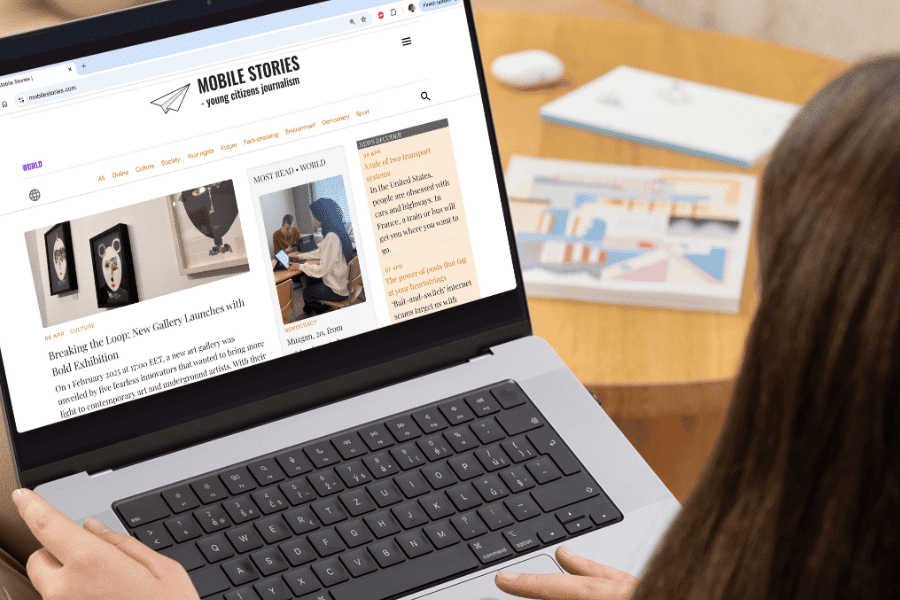
    That’s why News Decoder has been working with the Swedish nonprofit, Voice4You, on a project called ProMS to create a self-guided digital tool that guides students in writing news stories.

    The tool, called Mobile Stories, is now available across Europe. It takes students step-by-step through the journalistic process. Along the way, they gain critical thinking skills and a deeper understanding about the information they find, consume and share.

    It empowers students to develop multimedia stories that incorporate original reporting for school, community or global audiences, with minimal input from educators. It comes with open-access learning resources developed by News Decoder.

    After a decade of success in Sweden, Voice4You partnered with News Decoder to help make the tool available across Europe and the globe. Throughout the ProMS project, new English language content suitable for high schoolers was developed and piloted in 21 schools in Romania, Ireland and Finland. The Mobile Stories platform has demonstrated remarkable potential in building student confidence and media and information literacy by providing a platform and an opportunity to produce quality journalism.

    From story pitch to publication

    Using the new international version of Mobile Stories, students have already published 136 articles on mobilestories.com, with another 700 currently in production. Their topics range from book reviews and reporting from local cultural events to in-depth feature articles on the decline in young people’s mental health and child labor in the fast fashion industry.

    “The tool looks like a blogging platform and on every step along the way of creating an article, students can access learning materials including video tutorials by professional journalists from around the world, articles and worksheets,” said News Decoder’s ProMS Project Manager Sabīne Bērziņa.

    Some of these resources, such as videos and worksheets are open access, available to all.

    Source link

  • Why you need to triple check your facts

    Why you need to triple check your facts

    There it was. A seemingly well-sourced, carefully crafted and copy-edited article about a new brand of young, vibrant, national leader, with astonishing levels of commitment, courage, creativity and compassion. All ready to be self-published online.

    The only trouble was that my draft article was based on wrong information and it needed to be spiked. That’s a journalism term for sending it to the trash.

    Now, I could moan and blame social media and disinformation for this near mistake. Or I could reflect on how close I came to disseminating gross misinformation and share the concrete learnings that I am taking from this quasi-failure.

    Be open to new story ideas.

    I recently read a WhatsApp post from a trusted Southeast Asian colleague of mine in the United States. He shared an opinion piece from his home country about a relatively new leader in another country in the Global South.

    The opinion writer said that this leader recently told public officials: “I don’t want my photographs in your offices because I am not a god or an icon, but a servant of the nation.” He urged them to hang pictures of their children instead.

    The writer added that this leader then delivered a ‘devastating moral punch’. “Whenever the spirit of theft visits you,” he said, “take a good look at your family’s picture and ask yourself if they deserve to be the family of a thief who has destroyed the nation.”

    It seemed like a great story and when I researched this new leader online, I found posts and articles that corroborated this particularly striking example of a new leader’s bold move against corruption.

    And I found other praiseworthy stories about his economic pragmatism and post-colonial idealism.

    Trust your gut and triple-check the facts.

    As a conscientious former reporter for the Reuters international news service, something troubled me. I thought about something my dearly departed father would say: “If something seems too good to be true, it probably is.”

    So right before publication, I decided to verify some of the facts one last time with two in-country sources I knew in Kigali, Rwanda.

    In no uncertain terms, one of them challenged most of the core aspects of my article and firmly declared that the particularly praiseworthy, anti-corruption initiative that was the centerpiece of my article was actually not true at all.

    She was right. On further investigation, the other stories of this leader’s supposed initiative and success all turned out to be skewed or exaggerated.

    And so the article was sadly consigned to the dustbin of fake news.

    Find the original sources and quote them directly.

    But I was not done. On further investigation, I managed to find a slightly different quotation that the opinion piece was probably based on:

    “We will build the country of other opportunities — the one where all are equal before the law and where all the rules are honest and transparent, the same for everyone. And for that, we need people in power who will serve the people. This is why I really do not want my pictures in your offices, for the president is not an icon, an idol or a portrait. Hang your kids’ photos instead and look at them each time you are making a decision.”

    And I discovered that the person who said this was none other than Ukrainian President Volodymyr Zelenskyy during his inaugural address on 20 May 2019.

    His statement does not talk about a “thief who has destroyed the nation” but it is still deeply impactful, particularly in light of his country’s devastating challenges over the last three years.

    Be willing to do things differently in future.

    I have been a journalist for a long time but here are some key reminders for me of what I need to do going forward:

    → Balance enthusiasm and engagement with integrity and plain hard work;

    → Recognize that in these difficult times, we all yearn for an inspirational story but even with the best of intentions, emotions can get in the way of good judgment;

    → Always take the extra time necessary to track down original and reliable sources;

    → Do this extra work whether you are sharing something with thousands of people on News Decoder or with only one other person in private;

    → If in doubt, cut it out or don’t share it and start again;

    → Have the courage to admit when you are wrong, apologize and make amends as appropriate and learn from that humbling experience.

    And just in case you are wondering, my father never claimed that his beloved saying was his.

    The original source is unknown but Dictionary.com points out that the term was part of the title of Thomas Lupton’s Sivquila; Too Good to be True, which dates back to the 1580s.

    The search for the original source continues as I recall the cynical words of a former official with the title “Minister for the Quality of Life” who counseled journalists to always write “lively and interesting” stories that correspond “where possible” with the truth.

    In future, I promise to always try to write truthful stories that are, where possible, lively and interesting.


    Questions to consider:

    1. Have you ever written or said something that you thought that was true but turned out to be false? If so, what did you do?

    2. If not, what would you do if this happens in future?

    3. And what will you do from now on to make sure this doesn’t happen?


    Source link

  • Too much of what’s healthy can be harmful

    Too much of what’s healthy can be harmful

    Some TikTok videos about health and fitness are hard to resist. People describe how they lost weight by eating only raw fruits and vegetables for a month or by substituting protein powder in place of flour or sugar. How many people take these recommendations to heart? What happens if they do?

    Jason Wood was one of them. “I would sprinkle [protein powder] on top of a peanut butter sandwich or a yogurt just to make what I was eating seem healthier,” he said.

    But Wood’s practice of adding protein powder to make his foods healthier wasn’t healthy. Eventually, Wood was diagnosed with orthorexia, an obsession with nutrition. Orthorexia is an eating disorder that differs significantly from better-known eating disorders like bulimia — bingeing and vomiting the food afterwards — and anorexia — not eating at all.

    Wood now works with the National Association of Anorexia Nervosa and Associated Disorders and speaks to audiences about eating disorders. 

    Studies in Australia, Turkey and the United States have found that the viewership of TikTok lifestyle influencers has led to an increase in orthorexia symptoms, which are not well understood by popular culture and are not explicitly defined in psychiatric textbooks. 

    Avoiding what’s bad isn’t always good.

    Rachel Hogg, psychologist and researcher at Charles Sturt University School of Psychology in Australia, defines orthorexia as “the avoidance of foods that are unhealthy or impure.” 

    The term was first coined in 1996 by California doctor Steven Bratman after he decided to eat only clean, nutritious foods. Eventually his research led him to narrow his food options so much that he cut out entire food groups which caused him physical suffering.

    Wood recalls being freezing cold in the middle of summer with his whole body hurting and frequent dizzy spells. Because it’s an outgrowth of healthy eating, the condition is difficult to identify, says Hogg, who calls it “the wolf in sheep’s clothing.”

    Experts feel it is time people paid attention to the risk of developing orthorexia when exposed to high amounts of TikTok content

    Todd Minor Sr. lost his youngest son Matthew in 2019 to the TikTok “Blackout Challenge”; people who took the “challenge” would have themselves choked till they blacked out. In a January 2025 edition of Tech Policy Press, Minor called for social media warning labels as a public health tool. “These labels have a proven track record of raising awareness about the risks of dangerous products, especially among young people,” he wrote. 

    People don’t know what’s bad for them.

    Warning labels inform the consumer of the potential risk of product use and advise limiting dangerous exposure to vulnerable groups of people to avoid premature death or disability. According to orthorexia experts, all of these needs exist when it comes to TikTok. 

    Hadassah Johanna Hazan, a licensed clinical social worker in Jerusalem, knows firsthand how the public is painfully unaware of the dangers of orthorexia from talking to her patients. She describes how over the last 10 years ideal beauty has increasingly been defined as a fit and toned physique for both men and women. 

    This has led people to normalize eating patterns that Hazan describes as “very limiting at best and very harmful and unhealthy at worst.” She said constant and regular avoidance of food groups such as carbs or regularly substituting protein powders for ingredients such as sugar become addictions that her patients do not know how to stop. 

    Even those who teach healthy eating can fall into the orthorexia trap. Research published in the June 2021 supplement of American Society of Nutrition by a group of researchers in the U.S. state of Washington indicated that knowledge of orthorexia was low both in the general public sample group and in the sample group of nutrition students.  

    In fairness to TikTok, the social media giant has established an eating disorder safety page but the term orthorexia is never mentioned and there is no mention of content on TikTok being linked to eating disorders. 

    A balanced diet is best.

    Another group of people who seem ignorant of the risk is the group of TikTok health and fitness influencers who are the ones putting out #WIEIAD (What I Eat In A Day) video diaries and other similar content. 

    Elaina Efird, registered dietician nutritionist and TikTok body positivity influencer, said that influencers don’t realize how much they are entrenched in the problem. What motivates these influencers, she said, is that they either truly believe what they are advertising is healthy or they are so distressed by the alternative of being in a larger body that they overlook the harm in what they promote.

    As a TikTok influencer, Efird creates a space where all body sizes are valued and she wants viewership of her positive message to grow. But as a provider of healthcare to eating disorder patients, she also recognizes her moral responsibility.

    “I tell my clients that if they’re struggling, don’t be on TikTok,” she said. This insight comes from an understanding that certain groups of people are at a higher risk of being triggered by TikTok videos than others. 

    Hogg shares this understanding and even used it when co-designing a research study with fellow researcher Madison R. Blackburn that was published in the peer-reviewed journal PLOS One in August 2024. 

    Each participant was screened to make sure they did not have past or present eating disorders before being asked to watch up to eight minutes of TikTok content, which is the equivalent of just over 50 videos. 

    Algorithms don’t know what’s best for us.

    Hogg said that the sad truth is that an eating disorder patient in remission might search for a body positive video but then suggestions pop up on the TikTok homepage, which is called #ForYou, that might tout orthorexia.  She called the algorithm of TikTok a “blunt instrument.”

    Another vulnerable population with strong connections to TikTok are teens and pre-teens. According to a Statistica 2022 survey, 68% of pre-teens were using social media applications and 47% of respondents ages 11–12 were using TikTok in particular.  As Hogg put it, TikTok is powered by “young people creating content for young people.” 

    The disturbing reality known by psychiatrists is that pre-teens are at the highest risk of developing eating disorders because symptoms manifest typically during adolescence. 

    But what scares the public most about any disease is its lethality. According to an article published in February 2021 by the American Society of Nutrition, some 10,200 people die each year in the United States from eating disorders. 

    Even when death is avoided, an obsession with nutrition can lead to nutritional deficiencies, compromised bone mass, extreme weight loss and malnourishment, including brain starvation, even if that seems counterintuitive. And none of that even touches on the effects on mental or emotional wellbeing. 

    Now that Wood is in remission he wants the label “healthy” to be redefined to indicate support of mental, emotional, social and spiritual health and not just support of physical health. 

    Individuals, he said, should stick to positive reasons for engaging with social media such as community building and avoid using it to make harmful comparisons. 


    Questions to consider:

    1.  How do psychologists define orthorexia?
    2. How does orthorexia differ from anorexia or bulimia?
    3. Has social media influenced what you eat? 


    Source link