Category: media

  • Be the oasis in your “news desert”

    Be the oasis in your “news desert”

    Across the world, local news media are disappearing. In the latest development, the News Media Corporation in the United States, based in the state of Illinois, shut down 23 newspapers across six states. 

    This is a result of a long and gradual global disintegration of the media ecosystem. It began decades ago when corporate owners of newspapers and television and radio stations began to consolidate their outlets. Two-newspaper towns became one-newspaper towns. Then investment banks noticed how much profit these local monopolies generated from ad sales, and bought them up.

    The internet came around and decimated those ad sales and the investors owning the publications stripped them down so newspapers that had teams of journalists now had just a handful. We are in the final stage where the owners are simply pulling the plug and selling off assets. 

    So what to do if you live in a news desert where there is no local source of news? Start your own news site. That doesn’t have to be as daunting a task as you might think. You don’t need to be the New York Times or Guardian. Start small. Here are some steps:

    Get started.

    Create a mission statement. What are you trying to accomplish and why are you doing it? What is your motivation and what are your long-term goals? Who are you serving and how do you plan to do that? You can change your mission over time, but having a mission statement will help guide you when you confront choices and challenges. For an example, check out News Decoder’s mission statement.

    Establish a website. It can be super simple on the easiest and cheapest platform you can find: WordPress, Weebly, Squarespace — there are many. If you haven’t done this before, ask your friends and family to help you. I guarantee you have one friend or cousin or teacher who knows how to do this and can show you how (or do it for you!).

    Give it a name. One of my favorite local news sites is called Redheaded Blackbelt, which Kym Kemp has been publishing near the northern tip of California for almost 20 years. She has red hair and is a black belt. 

    Set up a schedule you think you can handle. If you are serious about this, you should consistently post to the site even if it isn’t every day. You want to build an audience and people need to count on you for information. Also it will help keep you going if you have a set schedule to keep to. You can start with one post a week. 

    Start reporting.

    Find something out that people would find important or interesting. It could be anything from what the local government is planning to do to the opening of a new hardware store. It could be a weird new vegetable showing up at the market. What is totally not interesting to someone in a big city might be just what people will talk about in your town. Think little!

    Learn more about finding and reporting a news story.

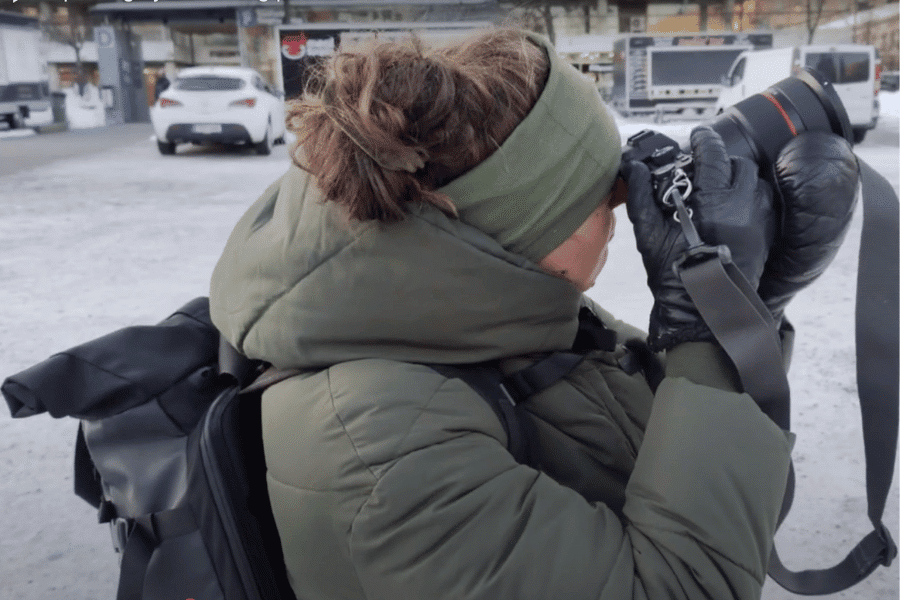
    Have fun with it. Snap photos of people’s pets and post them. That’s the first sure-fire way to get people to your site. 

    Learn more about taking engaging photos.

    Develop an ethics policy. This will be important if you become THE source for news in your community. People will want you to write about them, or not write about them, or write about them in a particular way. You need to be able to respond consistently so that it doesn’t look like you favor people or are biased against them. Be honest with yourself: What positions must you take? What positions won’t you take? Will you accept freebies like tickets to attend events and will you promise anything in return?

    Learn more about being an ethical journalist.

    Find out more stuff. How do you do that? Every time you go out, get chatty. Here is the question you ask: What’s happening? Now, when you ask that question, most people automatically say “Nothing.” But that’s because they assume you don’t really care and you are just being polite. So part of being chatty is being nosy and a bit persistent. Observe what is happening around you and notice what seems different. 

    Do this enough and when people see you, you won’t even have to ask. They will suggest all kinds of stories and tell you all kinds of things happening. On the downside, be prepared for people interrupting every conversation with “now, don’t publish this …”

    Note that whenever there is change, no matter how big or small, there is a story behind that change. Someone made a decision to do something. And people tend to like talking about the decisions they made or the actions they took. 

    Now this is important: When you are digging for news, you must tell people that you’ve got this little news site you started and that you want to post about whatever it is you are talking about with them. In a small community, it is super important not to create enemies with your news site (unless you plan to take down corrupt politicians). You want people to be excited you are writing about them. 

    That doesn’t mean that everything you post has to be flattering. It just means that you can’t be sneaky or spiteful or petty with your posts. Treat people with respect and they will respect you. For a local news site to survive you need the support of your local community. 

    Develop a growth strategy.

    Generate word of mouth. Once you begin posting, tell as many people as you can about your site and what you are trying to do. Not only do you want to grow an audience, but the more people who know what you are doing, the more people will tell you stuff that you can report on. When people come to you with news, that’s a lot easier than chasing it down yourself. 

    Recruit help. You can be a one-person shop, but over time that would be exhausting. From day one imagine your publication five years old and then 10 years old. Then imagine yourself doing this for those 10 years. The only way the publication will endure is if you have help all along the way. Look for young people who are looking for experience and old people with too much time on their hands. Find the people you know who are really bored at whatever job they have and want to be part of something interesting and important. Keep an eye out for frustrated writers and amateur photographers, artists and data nerds.

    And find those people who always attend local sporting events who can report on youth games. Just like posting about people’s pets, you will get all kinds of people flocking for news of their kid’s football or basketball games or the games of kids they know. 

    Think of funding sources. You might consider making your site a nonprofit. People would be more likely to offer you unpaid help that way. It would also enable you to ask for money from local funding organizations. If you think you might want to turn this venture into a business, start chatting up local businesses and seeing if they might support you by buying ads on your site. You don’t need to do any of that right away but remember, if you want the site to endure you will likely need to make some money from it to pay yourself and people who help you out on it. 

    Join organizations. With a news site you are both an entrepreneur and journalist, and there are organizations that will help you network and get you mentors and allies. Think about journalism organizations like the Society of Professional Journalists in the United States, the National Union of Journalists in the UK and Ireland and the Confederation of ASEAN Journalists in Southeast Asia. Also consider joining business organizations like the Chamber of Commerce or the Rotary Club. 

    Finally, have an exit strategy. The goal is to build a news site in a news desert so you should want it to last beyond you. There is a good chance you will grow tired of your venture at some point. Who will take it over? Might you be able to sell it at some point? It is never too early to think about these things if you want your news publication to endure. Don’t lose sight of the mission. 


    Questions to consider:

    1. What is a “news desert”?

    2. In what way would people in a small town be interested in different things than people in a big city?

    3. If you were to start your own local news site, what types of stories or events would you cover?


    Source link

  • Can you make your podcast sound great?

    Can you make your podcast sound great?

    Emotion and identity

    The third layer gives a podcast emotion and the three elements, together, make the sound of a podcast, he said. 

    “So, it’s not just music,” he said. “These three elements move together during the narration.”

    The goal is to combine music and sound effects to create a “rhythm of narration.” After an important word, he might create a pause and in it increase the music. After that, come sound effects.  

    Caminero wanted to know what Micheli considers when creating music to give a podcast emotion and identity. Micheli said that an important part of the process is to re-listen to what you have done to try to create consistent sound.

    “It’s very important because we spend a lot of time on the timeline,” he said. “We work a lot in depth on the details, but at a certain point you have to change your position and change your mind and you have to become not a creator, you have to become a listener.”

    You don’t always need to create original music for your podcast soundtrack. Micheli suggests combining original music with music you can find in a sound library, but note that it isn’t easy. “It is quite a job to find the right music, right sound in this gigantic archive and match together original music and other music,” he said. “I think it’s the best way for creating the sound for a podcast.”

    Creating original music makes the most sense for podcasts that are documentaries or fiction, Micheli said. But most important is that the podcast must have a good story and script first. 


    Questions to consider:

    1. What does Micheli mean by a “rhythm of narration”?

    2. How can you add great sound to a podcast if you can’t compose music yourself?

    3. If you were to create a podcast series what would it be about and what kind of sound would you use?


    Source link

  • Top Tips: Make your voice heard

    Top Tips: Make your voice heard

    Do you feel like the media doesn’t represent you? Are you aware of certain tropes that you disagree with and know from first-hand experience?

    Then use your voice. To show you how, Charis McGowan, a freelance journalist who has worked for the Guardian, the BBC and Al Jazeera and was an editor at gal-dem, a magazine for women and non-binary people of color, shares some tips that will help you effectively get your opinions across in an article. 

    McGowan offered her ideas as part of News Decoder’s partner project Mobile Stories. Mobile Stories is a publishing tool for young people. It provides guidance on how to create trustworthy news content while upholding journalist ethics. You can watch a video of McGowan explaining her ideas at the end of this article.

    McGowan said you first need to distinguish between a news story and an opinion article. “A news story is about your subjects, you don’t have to use the word ‘I’ at all, you’ll actually just keep your voice neutral,” McGowan said. “But an opinion article is totally different, you have to use your voice and your perspective.”

    You might comment on the news, but then you’ll tell readers how you relate to that particular piece of news. “This could be based on your ethnicity, your sexual orientation, where you live and your expertise, opinion,” McGowan said. 

    Articles by journalists differ from opinions you see in comments on social media. People who post comments might be spouting off the bat or using their initial gut reaction. “Opinion writers actually have to research what they’re talking about,” McGowan said. “That means looking at articles that perhaps they’ve not written and drawing on data and looking at really credible and trustworthy sources.”

    Opinions and expertise

    That’s what Alexa Taras did when she wrote an article News Decoder published in May 2025. Taras, a student at The Hewitt School in New York City, was concerned about the increasing number of schools around the country that were agreeing to pull books out of libraries and classrooms after parental complaints about the topics.

    She researched news stories to find actual incidents and interviewed a book publisher and an author. Only then did she include her own perspective:

    “As a current student and aspiring writer, I fear that in the future I will be creating books that cannot exist in the educational system,” Taras wrote. “Students deserve the right to learn about history no matter how violent or scary. How can we inspire students to be the best they can, if their education has been censored to only learn about ‘safe’ topics? Education should not be limited.”

    If you have an idea about something happening in the news that you think is worth exploring, McGowan provides some tips on writing an opinion piece that is both fact-based and persuasive.

    1. Write about what you know and what you are passionate about.

    This could be anything from pop culture to politics. McGowan wrote an opinion piece, for example, on an Ed Sheeran song. “He was using Caribbean slang in his lyrics and it made me feel a bit uneasy, so I delved into to my sense of unease.” McGowan asked: Was it okay for a white English man to be using this type of language? “My dad is from the Caribbean and my grandparents still speak with this type of language so it just made me feel a bit weird.”

    McGowan delved into matters of appropriation and the colonization of language to base the arguments on why Sheeran shouldn’t be doing that. “I had my opinion and I had previous work to draw on so that’s all I needed to start writing.”

    2. Research what’s been said on the topic already.

    After you’ve explored what other people have written about the topic, then think about your unique angle and draw on your voice.

    3. Bring in the news.

    Go back to what you read or saw or heard that got you thinking about this in the first place. “Signal your reaction to it straight away,” McGowan said.

    4. Back up your opinion.

    Use research data, facts and figures and other articles. “Make sure that you always cite trustworthy sources of information,” McGowan said.

    5. Round up your article in a clear and memorable way.

     Sometimes, McGowan said, the last sentence is the most important.

    Watch Charis McGowan’s video here:

    Learn more about the Mobile Stories project here. Co-funded by the European Union.


    Questions to consider:

    1. How does an opinion article differ from comments people make on social media?

    2. What do you need in an article to make it “persuasive”?

    3. What is a topic you are knowledgeable and passionate about?


    Source link

  • Top Tips: Take photos that stand out

    Top Tips: Take photos that stand out

    You want to know what it’s like being a photojournalist? Do you need to take photos to illustrate an article for school publication? We asked Simone Åbacka, a photojournalist for Vasabladet in Finland, to tell us how to get inspired and make sure your photos stand out.

    “Photos nowadays are quick and easy to make, but to get a picture that really captures your audience and the viewer, that will require a bit more from you as a photographer,” Åbacka said.

    She said that photojournalists have to be out where the action is, she said.

    “So if you’re interested in a certain person, you can follow them along for a day or find a street market or a protest or something happening in your area,” Åbacka said. “So look for something that interests you and go and shoot that.”

    When you have already done a story or you are asked to provide photos for a story that has already been done, try taking a photo yourself instead of trying to find one online.

    If the story is about traffic jams, for example, go out and take a photo of the chaos and the moving cars.

    “You want your photos to get attention and be seen,” she said.

    Åbacka’s five tips for stand out photos

             1. Move around and try different kinds of angles.

    2. Look for emotion

    3. Look for good lighting

    4. Use your environment to tell viewers more about the subject

    5. Use a clean background for your subject.

    You don’t need a professional camera to take stunning photos, a phone will do. But know its limits, Åbacka said. “It can’t do everything,” she said.

    This video was produced as part of News Decoder’s partner project Mobile Stories. Mobile Stories is a publishing tool for young people. It provides guidance on how to create trustworthy news content while upholding journalist ethics.

    Watch Simone Åbacka’s video here: 

    At News Decoder, our editors, educators and correspondents guide students through the journalistic writing process to help them get a first-hand understanding of big global issues and connect across borders. From finding a story to interviewing to editing, we work closely with students to develop their skills using our Pitch-Report-Draft-Revise technique. Student stories are published on our website, social media and in our Educators’ Catalog alongside the work of professional journalists and industry experts.

    If you’re an educator looking to engage your students in media literacy programmes, a teacher in need of interesting resources or a writer looking for an outlet, find out more and get in touch at news-decoder.com


    Questions to consider:

    1. Why would a photo you take be better than one you can find online?

    2. What kind of emotion could you capture in a photograph?

    3. How can you use your environment to tell viewers more about the subject?


    Source link

  • Can a podcast cross borders?

    Can a podcast cross borders?

    “To me the essential ingredient is that two persons or two teams from different countries collaborate, right?” Ricci said. “So who’s doing the podcast itself makes it really a cross-border operation.”

    A podcast becomes cross-border, he said, when you bring different perspectives from different countries together in one story. There are two ways to make that story compelling to both the audiences and to Europe as a whole.

    The first way, he said, is to have a strong story that articulates across borders and is relevant for two countries. It can be a very specific story that relates to feelings and notions interesting to anyone. The second way is to start from a general topic and then find a story within that topic. 

    “I’d really love that all podcasts speak to every audience we aim to target,” Ricci said. “I think it’s the biggest challenge to make sure that every podcast finds its audience in every national context.”

    At WePod, the team divided the production process into stages. 

    First there was a pre-editorial stage where they brainstormed ideas. Then came a pre-production phase, where within the topic they reflected more concretely about the characters of each podcast. 

    “How do the different episodes talk to each other?” Ricci said. 

    Provide room for perspectives.

    That was followed by the production phase. That involved going on the ground, setting up interviews and working on scripts and language transcriptions. 

    Finally, in the post-production phase everything textual became a finished podcast, ready to be promoted and distributed. 

    Caminero said that every podcast WePod did was produced in at least two languages, the first in the native language of the podcast producer and in English for a cross-border audience. “Obviously, this creates specific challenges because not all versions can be identical,” Caminero said. “You need to make room for adaptations.”

    Ricci said that it was important in a big production like WePod, with people from different nationalities, to give people room to express themselves. “I think it takes time just to sit around the table, understand each other,” Ricci said. 

    This becomes important when you have deadlines and deliverables. “You’re pretty much kind of freaking out to meet everything, every deliverable you have to meet, every deadline,” Ricci said. If you try to impose a top down approach, it won’t work.

    “So, I think it just takes a lot of talking before action,” Ricci said. 


    Questions to consider:

    1. What does it mean to be cross-border?

    2. How can a story that is interesting in one country have resonance in another?

    3. Can you think of a topic important to your region that would also be important to people elsewhere?


    Source link

  • Decoder Replay: Is truth self-evident?

    Decoder Replay: Is truth self-evident?

    Fake news is dangerous. But it’s hardly new.

    More than 3,000 years ago, the largest chariot battle ever pitted the forces of one of the most powerful pharaohs of ancient Egypt — Ramesses the Great — against the Hittite Empire in Kadesh, near the modern-day border between Lebanon and Syria.

    The battle ended in stalemate.

    But once back in Egypt, Ramesses spread lies portraying the battle as a major victory for the Egyptians. He had scenes of himself killing his enemies put up on the walls of nearly all his temples.

    It was propaganda. “It is all too clear that he was a stupid and culpably inefficient general and that he failed to gain his objectives at Kadesh,” Egyptologist John A. Wilson wrote.

    Disinformation in ancient Rome

    The Roman general Mark Antony killed himself with his sword after his defeat in the Battle of Actium upon hearing false rumors — fake news — propagated by his lover Cleopatra claiming that she had committed suicide.

    American patriots, including the esteemed U.S. statesman and inventor Benjamin Franklin, and their British enemies swapped spurious allegations during the American Revolution that murderous Native Americans were working in league with their adversaries, scalping allies.

    How about the 1938 radio drama, “The War of the Worlds”? Adopted from a novel by H.G. Wells, the radio broadcast fooled some listeners into believing that Martians had landed in America. Newspapers of the day said the broadcast sparked panic.

    But historians today say the panic was exaggerated. So it was fake news about fake news!

    There is no shortage of modern-day instances of fake news. In Myanmar in 2018, the military spearheaded a campaign of fake news, mainly on Facebook, claiming the Rohingya minority had murdered and raped members of the Buddhist majority. The Rohingya were described as dogs, maggots and rapists. The fake news helped trigger violence against the Rohingya that forced 700,000 people to flee their homes.

    The irony is that many in Myanmar had turned to Facebook for information because the military had alienated many citizens with its control of the media. But the same military took advantage of the false reports to crack down on the Muslim minority.

    Election falsehoods

    Similarly, fake news has been used in the Philippines, Indonesia, Malaysia and Sri Lanka to influence the outcome of elections, hide corruption and stir up religious animosity.

    One of the ironies of fake news is it can embolden authoritarian governments to turn the tables and use made-up news as an excuse to crack down on the media. That can enable the regime to control the media message. In other words, fake news to the rescue of autocrats.

    But we should not fool ourselves into thinking that fake news can be cured merely through technological solutions, that it’s a product of our times, that it’s mainly political and that it’s peddled only by our opponents. It’s not the property of any one political party or interest.

    Fake news takes root in the gray area between truth and fiction, an area we can be quite comfortable in. There is something very enticing about fake news, especially if it aligns with our pre-conceived notions. Yet we are apt to think that fake news is the exception, a new aberration.

    We can easily fall victim to fake news in part because we are not always disgusted by lies. We are taught at a very early age that deceit – deception, dishonesty, disinformation – is all around us. And that not all lies are as harmful as others. Our parents read us fairy tales from the earliest of ages, and many tales involve lies.

    The telling of fairy tales

    Take the ancient fable of “The Cock and the Fox,” included in the medieval collection of Middle Eastern folk tales, “One Thousand and One Nights.”

    A hungry fox tries to coax a rooster out of a tree by telling him a tall tale — that there is universal friendship now among hunters and the hunted. The cock has nothing to fear, the wily fox says. It’s a lie, of course.

    So, the equally wily cock resorts to his own lie: he tells the fox that he sees greyhounds running towards them, surely with a message from the King of Beasts. The fox, outwitted, runs away in fear. So here we have two lies in a single story. The moral? “The best liars are often caught in their own lies.”

    Children and their parents are quite comfortable surrounded by lies. Is Santa Claus a malicious or harmless lie?

    Do you know the story of the Wizard of Oz? That classic U.S. movie about a young girl lost in a fantasy world, pursued by witches, struggling to go home? The entire plot relies on a deceit – a supposedly powerful wizard who is nothing more than a bumbling, ordinary conman, who uses magic tricks to make himself seem great and powerful.

    Deceit at the service of entertainment.

    Advertisements are often innocent exaggerations, fiction if you will in the service of business and profit-making. But sometimes ads can veer into falsehoods.

    So fake news is not new. And we’re no strangers to lies. What does that mean for those of us interested in making the world a better place? Should we simply give up because the task is too great?

    Hardly. The lesson is that truth is not black and white, but grey, and it’s a moving target.

    Take, for example, colonialism. From the 15th century on, white Europeans conquered huge swathes of the Americas, Africa, the Middle East, Asia and Oceania. They subjugated millions of people, using brutal violence in many places to subdue indigenous populations. They brought diseases that wiped out millions.

    They exploited natural resources, using native labor and pocketing most of the profit from sales into a global trading network that they established. By 1914, Europeans had gained control of 84% of the globe.

    We know all of that now because colonized peoples have revolted against their colonial rulers and won independence. The wars of independence have been won, yet so many countries around the world are still grappling with the shameful effects of colonialism and racism.

    The ambiguity of truth

    But would everyone have agreed on that depiction of Europeans as rapacious colonialists before the wars of independence?

    Certainly not most of the Europeans, who believed they were exporting a superior civilization to backward natives. Missionaries who led many colonial ventures believed they were doing God’s will by converting native populations to Christianity. And not a few natives turned a blind eye to atrocities and benefited financially.

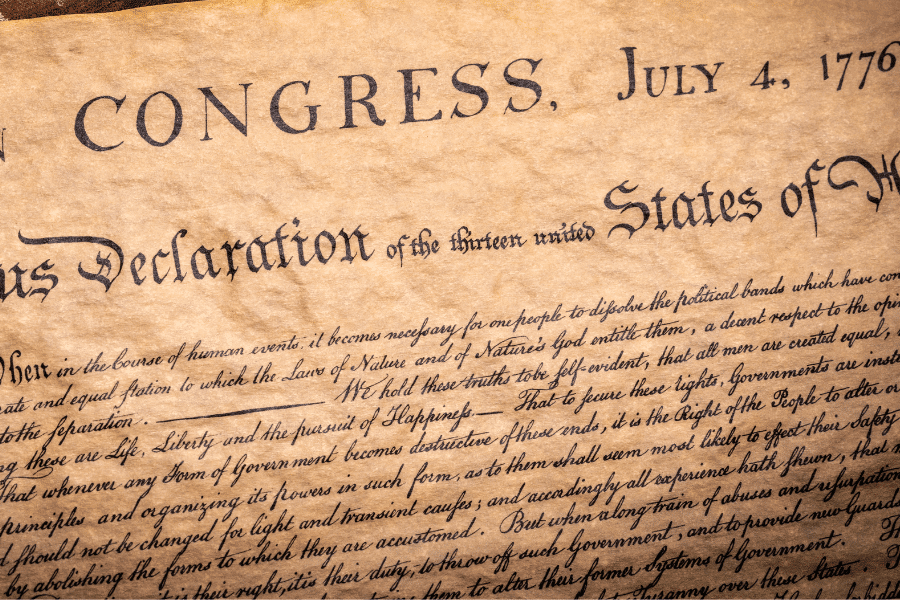
    For a glaring example of the ambiguity of truth, take the United States. Its Declaration of Independence, borrowing from the French enlightenment, states that “all men are created equal,” with “unalienable Rights” to “Life, Liberty, and the pursuit of Happiness.” It put notions of freedom and equality at the heart of the American experiment. Yet it was written by a slave owner, Thomas Jefferson, and represented 13 colonies that all, to one degree or another, allowed slavery.

    Convinced of their superiority and driven by an almost unquenchable appetite for wealth, white settlers drove Native Indians from their homes. The U.S. government authorized more than 1,500 attacks and raids on Indians. By the end of the 19th century, fewer than 238,000 indigenous people remained, down from some 5-15 million living in North America when Columbus arrived in 1492.

    What is more, settlers in the South imported slaves from Africa, forcing them to work on vast plantations and denying them the very rights to life and liberty spelled out in the Declaration of Independence.

    Rights and repercussions

    Both Native Indians and African Americans are struggling to this day to come to terms with the treatment they suffered at the hands of the white colonials.

    Would a white settler have seen himself or herself as a murderer? Hardly. In their minds, they were doing God’s work.

     Mind you, the desire to colonize is not peculiar to Europeans. Imperial Japan and imperialist China both established overseas empires. The Empire of Japan seized most of China and Manchuria. To this day, Chinese nationals and South Koreans harbor ill feelings towards the Japanese. Chinese dynasties won control over parts of Vietnam and Korea.

    There’s an expression in newsrooms around the world: “One man’s terrorist is another man’s freedom fighter.” Put another way, the same individual might seem a terrorist to some, a hero to others.

    Take Yagan, a 19th century indigenous Australian warrior from the Noongar people. He played a key role in early resistance to British colonial rule in an area that is now Perth. His execution by a young settler figures in Australian history as a symbol of the unjust treatment of indigenous peoples by colonial settlers.

    A hero to his people, he was a murderer in the eyes of the British.

    Different perspectives on history

    Or take the Incan emperor, Atahualpa, who resisted the explorer and conquistador Francisco Pizarro, to this day a Spanish hero. Pizarro forced Atahualpa to convert to Christianity before eventually killing him, hastening the end of one of the greatest imperial states in human history.

    How you view Pizarro may depend on where you are sitting and when you lived.

    There are countless modern examples of radically different perspectives on events. Such discrepancies may be inevitable. Dogged journalists can shed light on events and protagonists, and help shape history – for better or for worse.

    Joseph McCarthy was a U.S. senator who in the early years of the Cold War spearheaded a smear campaign against alleged Communist and Soviet spies. Only courageous reporting by a small group of journalists who dared question McCarthy’s tactics and risked being tarred as Communist sympathizers themselves led to McCarthy’s downfall.

    Joseph McCarthy (L) with his attorney Roy Cohn, who later mentored Donald Trump (Wikimedia Commons)

    The New York Times and Washington Post went out on a legal limb when in 1971 they published the Pentagon Papers, a U.S. government history of the Vietnam War that laid bare official lies that drove American policy for more than a decade in Southeast Asia.

    The government called the man who leaked the government documents a criminal and sought to prevent the newspapers from publishing the damning revelations.

    The newspapers won their case before the Supreme Court, and their reporting increased public pressure on the government to withdraw from Vietnam.

    Watergate upended a presidency.

    You’ve perhaps heard of Watergate? Literally speaking, it’s a hotel in Washington, DC. But it has come to stand for the dogged and courageous news reporting by two journalists with the Washington Post who exposed crimes by President Richard Nixon and helped lead to his resignation in 1974.

    Courageous investigative journalism is hardly confined to the United States. A non-profit news outfit called AmaBhungane — in Zulu, “dung beetle,” an animal that digs through shit – has reported on corrupt business deals at the highest levels of South Africa’s government.

    In the Arab world, investigative journalists in Egypt, Yemen, Tunisia, Syria, Lebanon, Jordan, Iraq, Bahrain, Palestine, Mauritania, Algeria, Kuwait and Sudan have uncovered tax evasion, money laundering, drug smuggling, torture and slavery. They have unmasked doctors who have removed the wombs of mentally disabled girls with the consent of parents.

    But it’s not all easy sailing. According to Freedom House, in 2017 there were only 175 investigative journalists in all of China, down 58% since 2011.

    What does this mean for you, a young activist who wants to help change the world?

    Truth is murky.

    The lesson is that the truth may not lie squarely on one side or the other, but rather in a murky, grey area. It can take courage to shine a light in the shadows, teeming with lies. And you may have to hear viewpoints that differ radically from your own. It pays to listen.

    Progress against racism, inequality and injustice depends on an informed public.

    The best journalists recognize their responsibility to uphold the Universal Declaration of Human Rights, which state that: all human beings are born free and equal in dignity and rights; and everyone has the right to freedom of opinion and expression; this right includes freedom to hold opinions without interference and to seek, receive and impart information and ideas through any media and regardless of frontiers.

    As the third U.S. President Thomas Jefferson said: “Were it left to me to decide whether we should have a government without newspapers or newspapers without a government, I should not hesitate a moment to prefer the latter.”

    So stick up for your rights, including the right to free expression. Be fair. And remember that one man’s terrorist may be another man’s freedom fighter. You don’t have a lock on the truth.


    Questions to consider:

    1. Why is it important to understand that fake news is nothing new?

    2. Do you think there is any way to stamp out fake news?

    3. What does it mean to say, “One man’s terrorist is another man’s freedom fighter”?


    Source link

  • Top Tips: To err is human

    Top Tips: To err is human

    Everyone makes mistakes. To be credible you have to fess up when you get things wrong. Doing so doesn’t make you look bad. It shows you care about the truth.

    Source link

  • We need a better quality of conversation about education and the skills agenda for the screen industries

    We need a better quality of conversation about education and the skills agenda for the screen industries

    Every few years, the drumbeat of the skills agenda grows louder in higher education.

    Those of us who teach media courses are reminded (again) that universities are held responsible for the screen sector’s talent pipeline. Policymakers and industry voices call for greater ‘relevance’ in our course content, and stronger ties between academia and the screen industries.

    Yet, genuine collaboration has remained elusive, in part, because of layers of misunderstanding about both HE and the media industries. A better quality of conversation is now needed.

    So, let’s start by clearing the ground and challenging several of the persistent myths that have undermined progress in this area. By myths, we simply mean common assumptions that are not always entirely false but collectively oversimplify and distort what is both possible and desirable for collaboration between these sectors.

    Universities exist primarily to serve the needs of employers

    Wrong. Universities serve a range of stakeholders and beneficiaries, but their priority is their students. Certainly, we put considerable energy and resources into improving our students’ chances of finding suitable work, but the model of employment has changed. Today’s graduate is unlikely to be heading for a stable, consistent, long-term occupation.

    Work in the screen industries is based on contingent work arrangements and ever-evolving skillsets. If employability is to mean anything it is in the notion of career readiness – being prepared to manage an individual career over time. Of course, we want to ensure that industry can draw on a broad skills base for the graduate workforce, but we do so by prioritizing the immediate and long-term interests of our students, rather than the shifting “needs of the employer”.

    The screen industries do not require a graduate workforce

    Wrong. Despite there being no formal qualification requirement for many jobs in the screen industries, a degree matters a great deal. It is true that the graduate nature of media work is often downplayed within the industry, not least by the culture of “paying one’s dues” – the idea that whatever their qualifications, new entrants must prove themselves in the menial aspects of the job before they can progress.

    But over 70 per cent of the workforce are graduates (and a higher proportion of new entrants). In the words of a recent report commissioned by the All-Party Parliamentary Group for Creative Diversity, “a degree will not guarantee an individual a job in the creative industries; but an individual is unlikely to get a creative industries job without a degree.”

    Media work requires media graduates

    Wrong. Media degrees are not a prerequisite for most screen industry roles. While certain degrees may offer added value for specific positions, the primary qualification sought is simply a degree.

    Media employers appear to be more interested in what used to be called “graduateness” – a broader set of skills, attributes, and intellectual capabilities not limited to subject-specific knowledge. Graduates who work within the screen industries, therefore, are drawn from the full gamut of science, social science and humanities degree programmes.

    The value of a media degree is determined by how well it prepares students for entry-level media jobs

    Wrong. Given that graduates working in the screen industries are not drawn in any systematic way from media courses, it must follow that media courses are not necessarily any better placed to provide successful new entrants than are others. Conversely, skills developed on media courses make for graduates employable in a range or roles and sectors.

    This is not to argue that these courses have no distinctive value for media industry employers. On the contrary, as employer-led entry-level training provision has been eroded, subject-specific knowledge, critical insight or practical media skills and experience can provide a valuable grounding for many media roles. Yet to fixate on ‘industry relevance’ is to miss the point that media work is now integral to all economic and cultural development and extends far beyond the screen industries.

    Practice-based and “practical” courses exist primarily to produce “set-ready” graduates for specific industry roles

    Wrong. This may be the pitch that many universities make to potential students and it may be the reason that students give when asked why they chose their degree programme. But both the complexity of student motivations and the critical purpose that practice plays within pedagogy are frequently misunderstood.

    Many students who choose courses that foreground their practical components identify themselves as practical people who learn in a practical way. For many such students, these courses provide a path through HE that others do not. Thus, in opening the door of the university to a wider constituency, courses that contain practical elements ensure a richer diversity of talent for employers to draw from. Put simply, the value of university-based media practice is less as an end, than as a means.

    Universities are a barrier to industry diversity

    Wrong. The greatest challenges for those from minority groups are their lower employment prospects following graduation. The UK screen industries have historically been affected by a conspicuous lack of diversity. This has remained a problematic feature of the sector and is currently getting worse.

    A more diverse industry is clearly an important goal towards which greater HEI-industry partnership and collaboration could profitably be focused, but this is unlikely to happen if the idea prevails that universities are the principal barrier.

    Beyond the mythos

    While collectively incoherent, these myths have tended to dominate initiatives for sector collaboration and partnership. Education and industry alike need to move beyond these unhelpful misconceptions to develop collaborative ventures based on authentic reciprocal relationships and a recognition that while employers bring industry insight and expertise, universities are leaders in education – a field in which industry is both a contributor and a beneficiary.

    But for this to happen, there must be greater honesty and pragmatism about both the nature of work in the screen sector and the responsibility of universities to develop the broader career readiness of their students.

    For a more detailed discussion of this topic, see our recently published open access article: Higher Education and the screen industries in the UK: the need for authentic collaboration for student progression and the talent pipeline

    Source link

  • To write about what’s new, look to the past

    To write about what’s new, look to the past

    To help explain what’s happening out there now, it helps to delve into the past. 

    That’s because, for one thing, something similar probably happened before and how that ended might help you anticipate what will happen next.

    News story after news story about U.S. President Donald Trump, for instance, talks about things being unprecedented. But did you know that in the 1850s in the United States there was a political party called the Know Nothing party. It was xenophobic and a spreader of conspiracy theories. According to the writer Lorraine Boissoneault, it was anti-immigration and called for mandatory Bible readings in schools. 

    “At its height in the 1850s, the Know Nothing party, originally called the American Party, included more than 100 elected congressmen, eight governors, a controlling share of half-a-dozen state legislatures from Massachusetts to California and thousands of local politicians,” Boissoneault wrote. 

    It is important to delve into history when doing a news story because things don’t just happen. Stuff led up to what is happening now. There are causes, and causes of causes. There might be a whole link of events that led up to the calamity that is now, or the explosion that happened or the political turmoil you find yourself in. 

    Put events into context.

    A little history in a story brings depth and context. It makes the whole story more interesting and helps people better understand what is happening now. News Decoder correspondent Gene Gibbons helped us understand the constitutional crisis the United States finds itself under Trump by looking back at a previous crisis in the 1970s under President Richard Nixon. 

    Correspondent Bernd Debusmann knew he couldn’t really explain the significance of the antipathy Trump now has for the European Union without explaining why the EU was formed in the first place. That meant going back to the aftermath of World War Two. 

    Correspondent Barry Moody helped us appreciate the triumphant win in a rugby game in South Africa by delving into the long history of apartheid and showing how rugby fit into that. 

    But how do you add some history? Well, you find yourself a historian. Every town has one, whether that person carries a title or not. A historian is simply someone who keeps track of past events and often documents them by collecting news stories or photographs, or by keeping journals. They might be the caretaker of archives of one kind or another. 

    You can also seek out professional historians. They can be found in university history departments, libraries and historical societies. Some are super specialized. I once saw a great documentary about a portrait of a woman believed to be painted by Leonardo de Vinci, and to prove it, the owner found a hair historian who found that the hairstyle of the woman was specific to a short time in history in a very small geographical area of Italy. 

    If you were doing a story about technology and wanted to include a bit of history you could contact the Society for the History of Technology. There are historians of politics, war, fashion, movies, food and architecture. 

    You can also just ask about the history of a place or event when you interview experts on what is happening now. You can’t really call yourself an expert on any topic if you don’t know its history. 

    So when you ask about what just happened, ask about what happened a decade or two ago, or more. Ask how things came to be the way they are. Maybe if we all understood the history of our times, history wouldn’t have to repeat itself. 


    Questions to consider:

    1. How can history add context to a news story?

    2. Where might you find a historian?

    3. If you were doing a story about your town, where would you find someone knowledgeable about its history?


    Source link

  • Is social media turning our hearts to stone?

    Is social media turning our hearts to stone?

    As global digital participation grows, our ability to connect emotionally may be shifting. Social media has connected people across continents, but it also reshapes how we perceive and respond to others’ emotions, especially among youth. 

    Empathy is the ability to understand and share another’s feelings, helping to build connections and support. It’s about stepping into someone else’s shoes, listening and making them feel understood.

    While platforms like Instagram, TikTok and X offer tools for global connection, they may also be changing the way we experience empathy.

    Social media’s strength lies in its speed and reach. Instant sharing allows users to engage with people from different backgrounds, participate in global conversations and discover social causes. But it also comes with downsides. 

    “People aren’t doing research for themselves,” says Marc Scott, the diversity, equity and community coordinator at the Tatnall School, the private high school that I attend in the U.S. state of Delaware. “They see one thing and take it for fact.”

    Communicating in a two-dimensional world

    That kind of surface-level engagement can harm emotional understanding. The lack of facial expressions, body language and tone — key elements of in-person conversation — makes it harder to gauge emotion online. This often leads to misunderstandings, or worse, emotional detachment.

    In a world where users often post only curated highlights, online personas may appear more polished than real life. “Someone can have a large following,” Scott said. “But that’s just one person. They don’t represent the whole group.” 

    Tijen Pyle teaches advanced placement psychology at the Tatnall School. He pointed out how social media can amplify global polarization. 

    “When you’re in a group with similar ideas, you tend to feel stronger about those opinions,” he said. “Social media algorithms cater your content to your interests and you only see what you agree with.” 

    This selective exposure limits empathy by reducing understanding of differing perspectives. The disconnect can reinforce stereotypes and limit meaningful emotional connection.

    Over exposure to media

    Compounding the problem is “compassion fatigue” — when constant exposure to suffering online dulls our emotional response. Videos of crisis after crisis can overwhelm users, turning tragedy into background noise in an endless scroll.

    A widely cited study published in the journal Psychiatric Science in 2013 examined the effects of exposure to media related to the 9/11 attacks and the Iraq War. The study led by Roxanne Cohen Silver, found that vicariously experienced events, such as watching graphic media images, can lead to collective trauma.

    Yet not all emotional connection is lost. Online spaces have also created powerful support systems — from mental health communities to social justice movements. These spaces offer users a chance to share personal stories, uplift one another and build solidarity across borders. “It depends on how you use it,” Scott said.

    Many experts agree that digital empathy must be cultivated intentionally. According to a 2025 Pew Research Center study, nearly half of U.S. teens believe that social media platforms have a mostly negative effect on people their age, a significant increase from 32% in 2022. This growing concern underscores the complex nature of online interactions, where the potential for connection coexists with the risk of unkindness and emotional detachment. ​

    So how do we preserve empathy in a digital world? It starts with awareness. Engaging critically with content, seeking out diverse viewpoints and taking breaks from the algorithm can help. “Social media can expand your perspectives — but it can also trap you in a single mindset,” Scott said. 

    I initially started thinking about this topic when I was having the same conversations with different people and feeling a sense of ignorance. It wasn’t that they didn’t care — it was like they didn’t know how to care. 

    The way they responded to serious topics felt cold or disconnected, almost like they were watching a video instead of talking to a real person. 

    That made me wonder: has social media changed the way we understand and react to emotions?

    Ultimately, social media isn’t inherently good or bad for empathy. It’s a tool. And like any tool, its impact depends on how we use it. If we use it thoughtfully, we can ensure empathy continues to grow, even in a world dominated by screens.


    Questions to consider:

    1. What is empathy and why is it important?

    2. How can too much time spent on social media dull our emotional response?

    2. How do you know if you have spent too much time on social media? 


    Source link