Category: Middle East

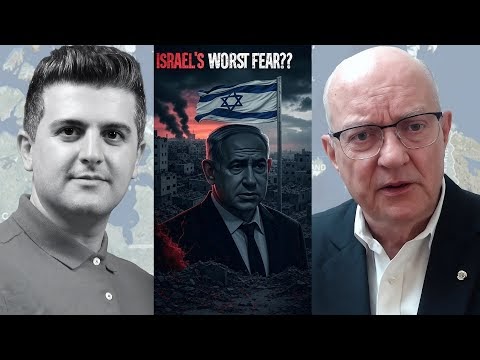
  • Col. Larry Wilkerson: Defeated Once, Israel Faces a Collapse It May Not Survive (Dialogue Works)

    Col. Larry Wilkerson: Defeated Once, Israel Faces a Collapse It May Not Survive (Dialogue Works)

    Dedicated to dialogue and peace, “Dialogue Works” is hosted by Nima Rostami Alkhorshid.

    At Dialogue works, we believe there’s nothing more unstoppable than when people come together. This group’s mission is to create a global community of diverse individuals who will support, challenge, and inspire one another by providing a platform for Dialogue. We encourage you to share your knowledge, ask questions, participate in discussions, and become an integral part of this little community. Together we can become a better community and provide our members with a much better experience.

    Source link

  • Is peace in the Middle East even possible?

    Is peace in the Middle East even possible?

    The State of Israel was created in 1948. The key word is created. While countries come into being in many different ways, such as violence, revolutions and treaties, the creation of the state of Israel was unique and has proven highly controversial.

    To understand the chaos that is now taking place in Israel and the Palestinian territories, one needs to return to that original creation.

    The British government ruled the territory known as Palestine under the League of Nations from 1922 until 1948. Already in 1917, the British government issued what is known as the Balfour Declaration which envisioned a Jewish state in what had been claimed a historic Jewish homeland.

    Jewish organisations had argued that the land called Israel has been the religious and spiritual center for Jews for thousands of years. While many countries recognized the new State of Israel in 1948, its creation did not effectively redress the dislocation of those who had been living on the territory that Israelis would inhabit.

    Following the end of World War II, European Jews who had been displaced during the Holocaust flocked to Israel. The United Nations divided the land into two states, one Jewish, one Arab, which further divided the Arab territory into three sections — the Golan Heights at the Syrian border, the West Bank at the Jordanian border and the Gaza Strip at the Egyptian border.

    The creation of deep divisions

    The division gave more than 50% of the land to Israel, leaving the Arabs with 42% even though they made up two-thirds of the population.

    This resulted in massive Arab displacement and is why the Jewish Independence Day of May 14 is followed by the marking of Nakba Day by Arabs, translated as “The Catastrophe”.

    Since Israel’s founding in 1948, there have been several outbreaks of violence between Israel and its neighbors. Among them were the 1948–49 War of Israeli Independence; 1956 Suez Canal Crisis; 1967 Six-Day War; 1973 Yom Kippur War; 1982 Lebanon War and various large-scale Palestinian uprisings known as Intifadas.

    None of these conflicts resulted in reparations for the hundreds of thousands of Arabs displaced by Israel’s creation, many of whom ended up in crowded refugee camps in Gaza, the West Bank and neighboring countries.

    Further inflaming tensions, Israeli settlers have continued establishing communities in the West Bank, which was conquered by Israel in the 1967 Six-Day War. The international community considers these colonies illegal, and some of the settlers have been found guilty of violence against the Arabs who live there.

    Working towards peace

    There have been several attempts to have peace agreements between Israel and its neighbors.

    The most important are the Camp David Accords of 1978 which was finally reduced to simple diplomatic relations between Egypt and Israel, and the 1993 Oslo accords which established formal relations between Israel and the Palestinian leadership, giving the latter self-governance over the Gaza Strip and the West Bank. Recently, there were talks about a larger regional agreement including Saudi Arabia.

    Then came 7 October 2023, when Hamas, an Islamist militant group, attacked Israeli settlers killing more than a thousand people, many of them women and children, and taking over 200 Israeli hostages.

    Israel’s response to the Hamas attack, which it justified as legitimate self-defense, has seen more than 32,000 Gazans killed with over 70,000 wounded, mostly civilians with many elderly and children. Much of Gaza’s infrastructure has been destroyed, including hospitals and humanitarian aid has been blocked. Fighting has continued for more than six months as Israel seeks to destroy Hamas and at the same time free the hostages.

    The emotions behind the conflict are extreme. The Israelis condemn Hamas as a terrorist organisation whom they argue are out to kill all Jews and destroy the State of Israel. Hamas, which was the official ruling organisation in the Gaza Strip, maintains that Palestinians have been reduced to living in an open-air prison since it took control of Gaza in 2005 when Israel disengaged.

    Israel and the international community

    The fighting in Gaza has raised many questions relevant to international humanitarian law. South Africa brought a case before the International Court of Justice in The Hague accusing Israel of genocide. The Court ruled that there was “plausible” genocide and ordered several provisional measures Israel must follow, among them increasing access to humanitarian aid.

    Beyond Israel, Hamas and the International Court of Justice, various resolutions have been proposed before the United Nations Security Council concerning a ceasefire. Although the latest resolution did pass, with the United States abstaining and not using its veto power, no ceasefire has taken place, although increased humanitarian aid is now entering Gaza.

    But the situation of the Palestinians remaining in Gaza remains precarious at best.

    The Israel/Hamas conflict has spread to other countries in the region, including Iran, which has long been a supporter of Hamas. On 1 April 2024, Israeli warplanes destroyed a building in Damascus, Syria, part of an Iranian Embassy complex, killing several Iranian officers involved in covert actions in the Middle East.

    Shortly after, Iran sent hundreds of drones and cruise missiles towards Israel, which were largely intercepted by Israeli and U.S. air defenses. Subsequently, several drones were downed by Iran’s air defense system near Isfahan, but it is not clear whether they came from Israel or other sources.

    What is clear is that there has been enormous international pressure to de-escalate the current situation in order to stop the Israel/Hamas conflict from growing into a regional conflict involving Iran and other countries, or even a more global escalation of violence.


    Questions to consider:

    1. How did the United Nations divide Palestine to create the state of Israel?

    2. What happened to the people displaced in 1948 when Isreal was created?

    3. What kind of compromises do you think might have to take place for there to be peace between Israelis and Palestinians? 


    Source link

  • The war in Gaza is a test for humanity

    The war in Gaza is a test for humanity

    “There will be no electricity, no food, no water, no fuel,” Gallant said. “Everything is closed. We are fighting human animals and we are acting accordingly.”

    President Isaac Herzog said militants and civilians in Gaza would be treated alike. “It’s an entire nation out there that is responsible,” Herzog said. “This rhetoric about civilians not aware, not involved — it’s absolutely not true … and we will fight until we break their backbone.”

    Netanyahu has been equally explicit, comparing Hamas to “Amalek”, a tribe in the Bible which the Israelites were told to eradicate. He blames Hamas for all civilian casualties.

    Other ministers have urged Gaza’s total destruction — one proposed dropping a nuclear bomb — and expulsion of its people, as in the 1948 “Nakba” when several hundred thousand Palestinians were ethnically cleansed as part of Israel’s independence war.

    International justice

    Whether Israel’s Gaza onslaught amounts to genocide, war crimes or crimes against humanity, or very possibly all three, is for international courts to decide.

    What matters now is stopping the killing in a ruined land that has lost its schools, homes, hospitals, roads, power and water plants, farms, places of worship and historical heritage. That is a moral issue for all of us, and most pertinently for Israel and its Western allies, principally the United States, which supplies most of the weapons used against Gaza.

    U.S. complicity is beyond doubt. Many European and other countries, by their silence in face of the carnage, or their failure to take action, are also to blame.

    Leaders in some of these nations are only now chiding Israel more strongly. Spain’s prime minister has called it a genocidal state. There is talk in European and other capitals of sanctions targeting Israeli leaders, a ban on arms shipments or trade penalties.

    But no measures likely to push Netanyahu to alter course have been adopted. His eyes are fixed on the United States, the only nation that could swiftly halt the Gaza debacle — by halting or suspending the $3.8 billion it gives Israel each year in mostly military aid, along with extra arms shipments worth billions of dollars since the current war began.

    Quantifying the horror

    Cold statistics mask the individual suffering of Gazans, but tell part of the story.

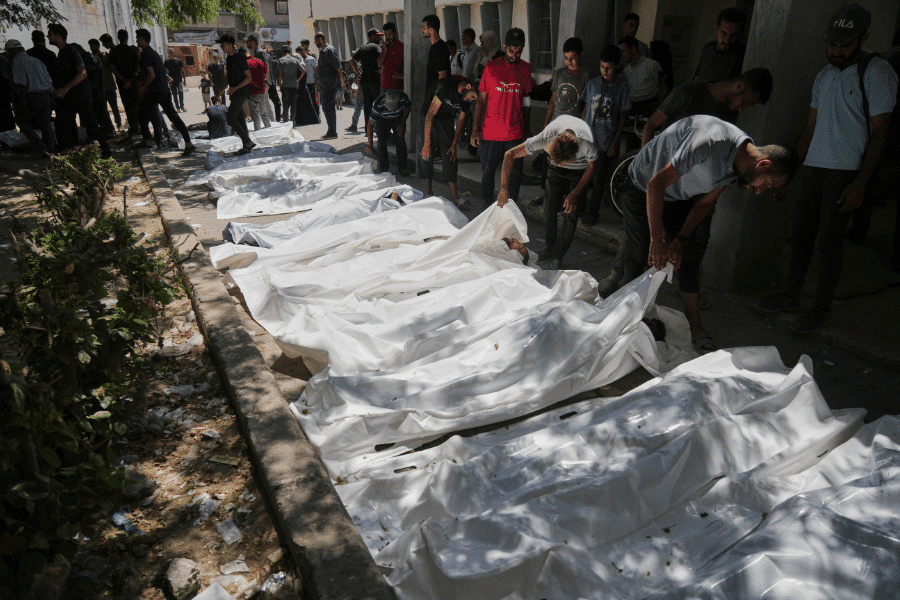
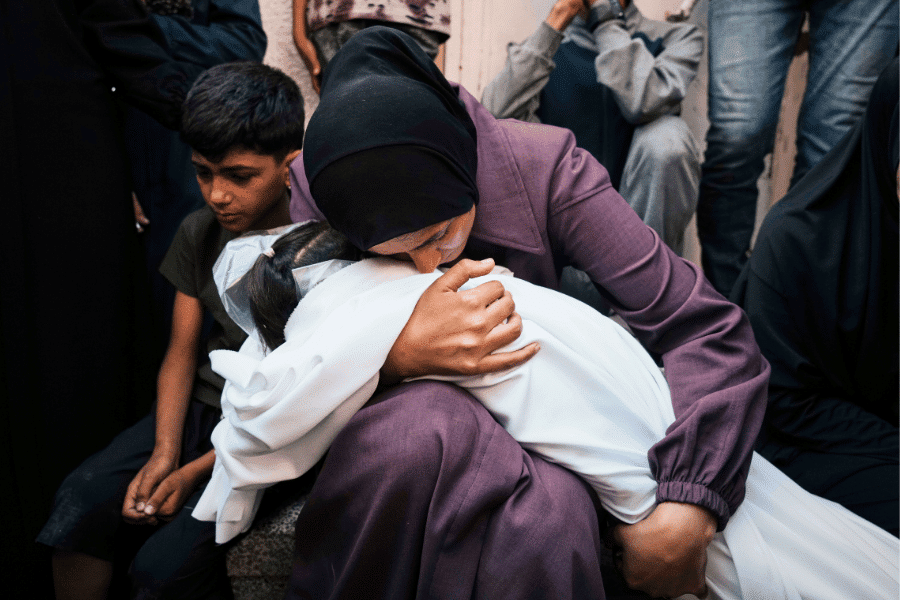
    More than 54,000 people, including more than 16,000 children, have been killed since the war began, according to Gaza Health Ministry figures considered reliable by the United Nations, or 2.5% of the population — equivalent to 8.5 million Americans.

    This number does not count many thousands whose bodies may still lie under the rubble, or who died weakened by hunger, preventable diseases and failing health care. It includes more than 1,400 health workers and more than 200 journalists and media workers.

    United Nations officials say more than 90% of homes have been destroyed or damaged, along with 94% of Gaza’s 36 hospitals, with only some still struggling to function. Gaza has the world’s highest number of child amputees per capita.

    According to Hans Laerke, spokesman for the U.N. Office for the Coordination of Humanitarian Affairs, Gaza is also the only territory in the world where “100% of the population is threatened with famine” despite Israel’s denial of any humanitarian blockade.

    Abetting a genocide

    The horrors endured by Palestinians have been documented by local journalists (Israel has banned all international reporters from Gaza), U.N. officials, Palestinian and foreign doctors and aid workers, as well as locally shot videos and photos.

    Foreign physicians with long experience of many countries ravaged by war say conditions they witnessed in Gaza are worse than anything they have ever encountered.

    “I have worked in conflict zones from Afghanistan to Ukraine,” said U.S. paediatrician Seema Jilani, after an assignment in the southern city of Rafah for the International Rescue Committee. “But nothing could have prepared me for a Gaza emergency room.”

    No one can plausibly claim “we did not know” what was, and is, going on.

    Yet world powers have largely stood by as massacres unfold in Gaza. They have kept equally silent as Israel batters parts of Lebanon at will despite a ceasefire with Hezbollah militants agreed in November. Israel has also grabbed more land in Syria and bombed hundreds of targets there since Bashar al-Assad’s regime fell in December.

    A diplomatic debacle

    U.S. President Donald Trump, like President Joe Biden before him, has backed Israel to the hilt. Not even images of emaciated children in Gaza have prompted a change of heart.

    Trump’s own contempt for international law and his plan for the removal of Gazans to allow for a fantasy reconstruction on the toxic ruins of their land has only emboldened far-right Israeli leaders with ambitions to “purify”, annex and resettle Gaza, and to do likewise in the West Bank, where half a million Israeli settlers already live.

    Israel’s actions, under permissive Western eyes, are shredding a longstanding international consensus on a two-state solution to the Israeli-Palestinian conflict – an idea incompatible with an ever-expanding Israeli grip on the West Bank and Gaza.

    After French President Emmanuel Macron called for recognition of a Palestinian state, Defence Minister Israel Katz responded with brutal clarity.

    “They will recognise a Palestinian state on paper — and we will build the Jewish-Israeli state on the ground,” he said in the West Bank on May 29 at one of 22 new settlements just approved by the Israeli government.

    Can peace be given a chance?

    Western outrage at Russia’s invasion of Ukraine has no echo when it comes to Israel which for decades has defied U.N. resolutions and violated international law.

    The fate of Gaza may prove a final blow to the rules of international conduct and treatment of civilians agreed after the Second World War — a system already frayed by the Cold War and more recently the illegal U.S.-British invasion of Iraq in 2003.

    Crushing the Palestinian people will not make Israel any safer in the long run. Only a true peace settlement on a basis of mutual respect and equality can do that.

    If Western nations ever get around to imposing sanctions on Israel and its leaders, they should do so to promote the Jewish state’s real interests which they claim to have at heart — as a stepping stone to such a peace between human beings.

    The German-born Jewish-American philosopher and political scientist Hannah Arendt foretold the consequences for a society unable to perceive others as human.

    “The death of human empathy is one of the earliest and most telling signs of a culture about to fall into barbarism,” she wrote.


    Questions to consider:

    1. Is it justified, or wise, for a state to take revenge on its enemies?

    2. Do people everywhere have the right to resist occupation?

    3. How should we react when a possible genocide is taking place?



    Source link