When the Independence School District announced it was switching to a four-day week during the 2023-24 school year, it drew questions from local families and statewide officials.
Parents wondered what kind of child care they would have on days without classroom instruction. And lawmakers debated whether the state needed to intervene.
Ultimately, Missouri’s General Assembly passed a law requiring a vote for non–rural school districts to authorize a four-day week.
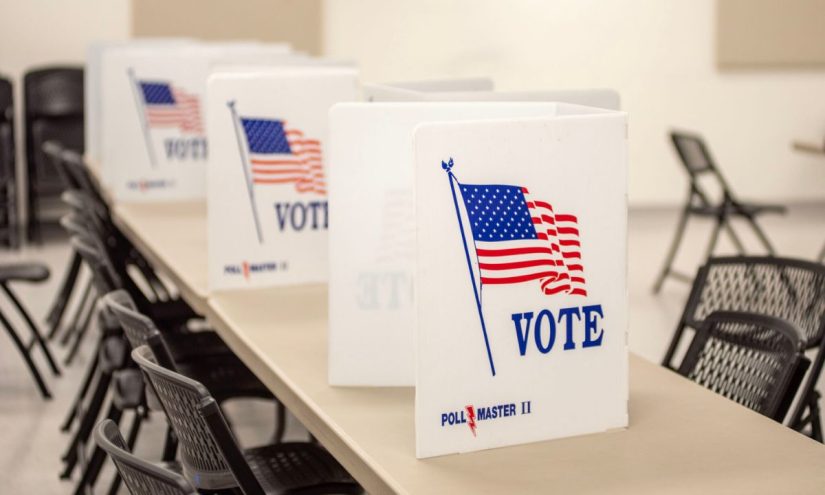
On Tuesday, the Independence and Hallsville school districts became the first large districts to receive the approval of voters to continue with four-day weeks.
“I knew that the majority of our community supported it,” Hallsville Superintendent Tyler Walker told The Independent. “I was a little bit surprised to see how much support it was.”
In Hallsville, residents had two questions on the ballot related to the school district. One asked about the four-day week and the other was a bond measure previously passed in April but not confirmed by the State Auditor.
The election drew 25% of registered voters, according to the Boone County Clerk, and 75% of those voted in favor of the four-day school week. The vote authorizes the schedule for the next 10 years, when then the district will have to hold another special election.
Walker didn’t think the margin would be that wide. Earlier surveys from the district’s 2022 adoption of the schedule put approval at around 60%.
He believes that the district’s growing success on standardized tests and other publicly available metrics have given families confidence that the four-day week isn’t such a bad thing.
“Our community has grown to appreciate the four day week more after experiencing it for a few years,” he said.
Todd Fuller, director of communications for the Missouri State Teachers Association, told The Independent that voters in districts who have already been operating in a four-day week like Independence and Hallsville have an idea of how it works for their students. The state law, passed in 2024, will require a vote prior to the schedule’s adoption for those who do not already adopt the abbreviated week.
“Anyone who’s a constituent of the district has had time to digest this process, and they’ve been able to decide over a two-year period whether it’s been beneficial or not beneficial for their kids,” Fuller said. “So if they are expressing that feeling with their vote, then we’re going to have a pretty good understanding of what they really want.”
The association doesn’t have an official stance on the four-day week. But Fuller said the teachers it represents have been pleased with the schedule.
Jorjana Pohlman, president of Independence’s branch of the Missouri National Education Association, told The Independent that the overall sentiment is positive from the district’s educators.
Mondays out of the classroom have become a good time for teachers to have doctor’s appointments, spend time with their families and plan for the week ahead, she said.
“In the beginning, it was fear of the unknown for families as well as teachers,” she said. “A lot of teachers had the attitude of, ‘Let’s try it.’ They, I think overall, felt it was a positive thing.”
A study by Missouri State University researchers looked at recent applicants to teaching positions in Independence, finding that the four-day week was a key part of the district’s recruitment.
In particular, 63% of applicants rated the four-day schedule as a top-three reason for applying, and 27% said it was their top priority.
The study also looked at the value of the four-day week for applicants, asking how much they would sacrifice in salary to work at a district with the schedule. On average, applicants were willing to sacrifice $2267 annually for the four-day week.
Walker said the schedule has also improved recruitment in Hallsville, with a dramatic uptick in veteran teachers applying to positions.
With teachers coming to Independence schools particularly for their schedule, some worried that returning to a five-day week would have large consequences for staffing. But Pohlman said a survey showed that the loss of educators is less than many would think.
“The educators, they care deeply about their students, and they want what’s best for students and for the community, whether it’s four day week or five day week,” she said. “They are still going to be committed.”
Almost a third of Missouri districts have adopted a four-day week, with around 91% of those districts in rural settings. Only districts in cities with at least 30,000 residents, or those located in Jackson, Clay, St. Louis, Jefferson and St. Charles counties, must call for a vote before moving to a four-day week.
Missouri Independent is part of States Newsroom, a nonprofit news network supported by grants and a coalition of donors as a 501c(3) public charity. Missouri Independent maintains editorial independence. Contact Editor Jason Hancock for questions: [email protected].
Did you use this article in your work?
We’d love to hear how The 74’s reporting is helping educators, researchers, and policymakers. Tell us how
State funding of private-school vouchers is primarily being used for students attending religious institutions, with nearly 98% of funding going toward Catholic, Christian, Jewish and Islamic schools.
This year, state lawmakers passed a budget that included a request from Gov. Mike Kehoe to supply the state-run K-12 scholarship program, MOScholars, with $50 million of general revenue. Previously, the impact to the state’s bottom line was indirect, with 100% tax-deductible donations fueling the program.
Donations are still part of MOScholars’ funding, but the state appropriation has more than doubled the number of scholarships available.
During the 2024-25 school year, MOScholars awarded $15.2 million in scholarships.
In August alone, the State Treasurer’s Office received invoices for scholarships totaling $15.6 million, according to documents obtained by The Independent under Missouri’s open records laws.
The invoice process is unique to the direct state funding of the program. The nonprofits that administer scholarships, called educational assistance organizations, were the sole keepers of scholarship funds. But now, the State Treasurer’s Office holds scholarship money derived from general revenue in an account previously only used for program marketing and administration.
The invoices contained data on which schools MOScholars students are attending and the scholarship amount.
Of the 2,329 scholarships awarded in August, only 59 went to students in nonreligious schools.
This number did not surprise Democratic lawmakers, who for years have warned that state revenue was going to be siphoned into religious schools.
“We are simply subsidizing, with tax dollars, parents who would already choose to send their kids to a private school,” state Sen. Maggie Nurrenbern, a Kansas City Democrat, told The Independent. “And now we are using public dollars to pay for schools that are not transparent whatsoever in choosing who to educate and who not.”
Some schools have been criticized for admission requirements that push a moral standard.
Christian Fellowship School in Columbia, which received scholarships for 63 MOScholars students in August, requires “at least one parent of enrolled students professes faith in Christ and agrees with the admission policies and the philosophy and doctrinal statements of the school,” according to its handbook.
These statements include disapproval of homosexuality.
“The school reserves the right, within its sole discretion, to refuse admission of an applicant or to discontinue enrollment of a student,” the handbook continues.
With around 430 K-12 students enrolled at Christian Fellowship School, according to National Center for Educational Statistics survey data, MOScholars makes up a sizable portion of its funding. But it is not the only school with a large number of scholarship recipients.
Torah Prep School in St. Louis had 229 K-12 students during the 2023-24 school year. And in August, 197 MOScholars students received funding to attend the school. Torah Prep did not respond to a request for comment.
The high number of students attending religious schools with MOScholars funding is somewhat incidental, somewhat by design.
The MOScholars program allows its six educational assistance organizations to choose what scholarships they are willing to support.
Religious organizations stepped into the role to help connect congregants with affiliated schools. Only two of the six educational assistance organizations partner with schools unaffiliated with religion.
The Catholic dioceses of Kansas City-St. Joseph and Springfield-Cape Girardeau run the educational assistance organization Bright Futures Fund, which administered nearly half of the scholarships awarded in August.
The educational assistance organization Agudath Israel of Missouri focuses on Jewish education, partnering with four Jewish day schools.
The organization’s director Hillel Anton told The Independent that students are attracted to the program for more than just religious reasons.
“(Parents’) first and foremost concern is where their child is going to be able to be in the best learning environment,” Anton said. “And you may have a faith-based school that is fantastic and is able to provide that.”
The demand for the program has long exceeded funding availability. Going into August, organizations had waitlists of students eligible for a scholarship but without funding secured.
Agudath Israel of Missouri couldn’t guarantee scholarships for all of the returning students, Anton said, until the state funding was official.
“Because a lot of the funding is done towards the end of the year… we had everyone on a wait list,” he said. “Because we didn’t know necessarily how much funding we were going to have, we weren’t awarding anyone (the funding).”
Because the program was previously powered by 100% tax-deductible donations, the majority of funds poured in around December. But families need the money months sooner, with tuition due at the start of the school year.
Some educational assistance organizations prefunded scholarships, dipping into their savings to front expenses in the fall. Others had schools that would accept students and wait for payment.
The funding from the state, though, has resolved the backlog and allowed organizations to give scholarships to everyone on their wait list.
“Everyone who qualified for a scholarship this year received one,” Ashlie Hand, Bright Futures Fund’s director of communications, told The Independent.
Bright Futures Fund nearly doubled the number of students it serves, from 1,050 to 1,909.
Agudath Israel of Missouri is growing, too. The new funding helped the organization expand from 175 scholarships last year to 277 this year.
Some expect the state funding to continue next year to support this year’s windfall of scholarships. State Treasurer Vivek Malek told The Independent in May that if donations fall short, he will request state funds to support the new students through graduation.
Missouri Independent is part of States Newsroom, a nonprofit news network supported by grants and a coalition of donors as a 501c(3) public charity. Missouri Independent maintains editorial independence. Contact Editor Jason Hancock for questions: [email protected].
Tuesday Willaredt knew her older daughter, Vivienne, struggled to read.
She tentatively accepted teachers’ reassurances and the obvious explanations: Remote learning during the COVID pandemic was disruptive. Returning to school was chaotic. All students were behind.
Annie Watson was concerned about her son Henry’s performance in kindergarten and first grade.
But his teachers weren’t. There was a pandemic, they said. He was a boy. Henry wasn’t really lagging behind his classmates.
So Willaredt and Watson kept asking questions. So did Tricia McGhee, Abbey and Aaron Dunbar, Lisa Salazar Tingey, Kelly Reardon and T.C. — all parents who spoke to The Beacon about getting support for their kids’ reading struggles. (The Beacon is identifying T.C. by her initials because she works for a school district.)
After schools gave reassurances or rationalizations or denied services, the parents kept raising concerns, seeking advice from teachers and fellow parents and pursuing formal evaluations.
Eventually, they all reached the same conclusion. Their children had dyslexia, a disability that makes it more difficult to learn to read and write well.
They also realized something else. Schools — whether private, public, charter or homeschool — aren’t always equipped to immediately catch the problem and provide enough support, even though some estimates suggest up to 20% of students have dyslexia symptoms.
Instead, the parents took matters into their own hands, seeking diagnoses, advocating for extra help and accommodations, moving to another district or paying for tutoring or private school.
“You get a diagnosis from a medical professional,” Salazar Tingey said. “Then you go to the school and you’re like, ‘This is what they say is best practice for this diagnosis.’ And they’re like, ‘That’s not our policy.’”
Recognizing dyslexia
It wasn’t until Vivienne, now 12, was in sixth grade and struggling to keep up at Lincoln College Preparatory Academy Middle School that a teacher said the word “dyslexic” to Willaredt.
After the Kansas City Public Schools teacher mentioned dyslexia, Willaredt made an appointment at Children’s Mercy Hospital, waited months for an opening and ultimately confirmed that Vivienne had dyslexia. Her younger daughter Harlow, age 9, was diagnosed even more recently.
Willaredt now wonders if any of Vivienne’s other teachers suspected the truth. A reading specialist at Vivienne’s former charter school had said her primary problem was focus.
“There’s this whole bureaucracy within the school,” she said. “They don’t want to call it what it is, necessarily, because then the school’s on the hook” to provide services.
Missouri law requires that students in grades K-3 be screened for possible dyslexia, said Shain Bergan, public relations coordinator for Kansas City Public Schools. If they’re flagged, the school notifies their parents and makes a reading success plan.
Schools don’t formally diagnose students, though. That’s something families can pursue — and pay for — on their own by consulting a health professional.
“Missouri teachers, by and large, aren’t specially trained to identify or address dyslexia in particular,” Bergan wrote in an email. “They identify and address specific reading issues students are having, whether it’s because the student has a specific condition or not.”
Bergan later added that KCPS early elementary and reading-specific teachers complete state-mandated dyslexia training through LETRS (Language Essentials for Teachers of Reading and Spelling), an intensive teacher education program that emphasizes scientific research about how students learn to read.
In an emailed statement, the North Kansas City School District said staff members “receive training on dyslexia and classroom strategies,” and the district uses a screening “to help identify students who may need additional reading support.”
Public school students with dyslexia or another disability might be eligible for an individualized education program, or IEP, a formal plan for providing special education services which comes with federal civil rights protections.
But a diagnosis isn’t enough to prove eligibility, and developing an IEP can be a lengthy process that requires strong advocacy from parents. Students who don’t qualify might be eligible for accommodations through a 504 plan.
A spokesperson for Olathe Public Schools said in an email that the district’s teachers participate in state-mandated dyslexia training but don’t diagnose dyslexia.
The district takes outside diagnoses into consideration, but “if a student is making progress in the general education curriculum and able to access it, then the diagnosis alone would not necessarily demonstrate the need for support and services.”
Why dyslexia gets missed
Some families find that teachers dismiss valid concerns, delaying diagnoses that parents see as key to getting proper support.
Salazar Tingey alerted teachers that her son, Cal, was struggling with reading compared to his older siblings. Each year, starting in an Iowa preschool and continuing after the family moved to the North Kansas City School District, she heard his issues were common and unconcerning.
She felt validated when a Sunday school teacher suggested dyslexia and recommended talking to a pediatrician.
After Cal was diagnosed, Salazar Tingey asked his second grade teacher about the methods she used to teach dyslexic kids. She didn’t expect to hear, “That’s not really my specialty.”
“I guess I thought that if you’re a K-3 teacher, that would be pretty standard,” she said. “I don’t think (dyslexia is) that uncommon.”
Louise Spear-Swerling, a professor emerita in the Department of Special Education at Southern Connecticut State University, said estimates of the prevalence of dyslexia range from as high as 20% to as low as 3 to 5%. She thinks 5 to 10% is reasonable.
“That means that the typical general education teacher, if you have a class of, say, 20 students, will see at least one child with dyslexia every year — year after year after year,” she said.
Early intervention is key, Spear-Swerling said, but it doesn’t always happen.
To receive services for dyslexia under federal special education guidelines, students must have difficulty reading that isn’t primarily caused by something like poor instruction, another disability, economic disadvantage or being an English language learner, she said. And schools sometimes misidentify the primary cause.
Tricia McGhee, director of communications at Revolucion Educativa, a nonprofit that offers advocacy and support for Latinx families, has had that experience.
She said her daughter’s charter school flagged her issues with reading but said it was “typical that all bilingual or bicultural children were behind,” McGhee said. That didn’t sound right because her older child was grade levels ahead in reading.
“The first thing they told me is, ‘You just need to make sure to be reading to her every night,’” McGhee said. “I was like, ‘Thanks. I’ve done that every day since she was born.’”
McGhee is now a member of the KCPS school board. But she spoke to The Beacon before being elected, in her capacity as a parent and RevEd staff member.
Dyslexia also may not stand out among classmates who are struggling for various reasons.
Annie Watson, whose professional expertise is in early childhood education planning, strategy and advocacy, said some of Henry’s peers lacked access to high-quality early education and weren’t prepared for kindergarten.
“His handwriting is so poor,” she remembers telling his teacher.
The teacher assured her that Henry’s handwriting was among the best in the class.
“Let’s not compare against his peers,” Watson said. “Let’s compare against grade level standards.”
Receiving services for dyslexia
Watson cried during a Park Hill parent teacher conference when a reading interventionist said she was certified in Orton-Gillingham, an instruction method designed for students with dyslexia.
In an ideal world, Watson said, the mere mention of a teaching approach wouldn’t be so fraught.
Annie Watson with her son Henry, 11, before track practice. Henry went through intensive tutoring to help him learn to read well after his original school didn’t provide the services he needed. (Vaughn Wheat/The Beacon)
“I would love to know less about this,” she said. “My goal is to read books with my kids every night, right? I would love for that to just be my role, and that hasn’t been it.”
By that point, Watson’s family had spent tens of thousands of dollars on Orton-Gillingham tutoring for Henry through Horizon Academy, a private school focused on students with dyslexia and similar disabilities.
They had ultimately moved to the Park Hill district, not convinced that charter schools or KCPS had enough resources to provide support.
“I felt so guilty in his charter school,” Watson said. “There were so many kids who needed so many things, and so it was hard to advocate for my kid who was writing better than a lot of the kids.”
So the idea that Henry’s little sister — who doesn’t have dyslexia — could get a bit of expert attention seamlessly, during the school day and without any special advocacy, made Watson emotional.
“Henry will never get that,” she said.
While Watson wonders if public schools in Park Hill could have been enough for Henry had he started there earlier, some families sought help outside of the public school system entirely.
The Reardon and Dunbar families, who eventually received some services from their respective schools, each enrolled a child full-time in Horizon Academy after deciding the services weren’t enough.
Kelly Reardon said her daughter originally went to a private Catholic school.
“With one teacher and 26 kids, there’s just no way that she would have gotten the individualized intervention that she needed,” she said.
The Dunbars’ son, Henry, had been homeschooled and attended an Olathe public school part-time.
Abbey Dunbar said Henry didn’t qualify for services from the Olathe district in kindergarten, but did when the family asked again in second grade. Henry has a diagnosed severe auditory processing disorder, and his family considers him to have dyslexia based on testing at school.
She said the school accommodated the family’s part-time schedule and the special education services they gave to Henry genuinely helped.
“I never want to undercut what they gave and what they did for him, because we did see progress,” Dunbar said. “But we need eight hours a day (of support), and I don’t think that’s something they could even begin to give in public school. There’s so many kids.”
T.C., whose daughters attended KCPS when they were diagnosed, also decided she couldn’t rely on services provided by the school alone. One daughter didn’t qualify for an IEP because the school said she was already achieving as expected for her IQ level.
In the end, T.C. said, her daughters did get the support they needed “because I paid for it.”
She found a tutor who was relatively inexpensive because she was finishing her degree. But at $55 per child, per session once or twice a week, tutoring still ate into the family’s budget and her children’s free time.
“If they were learning what they needed to learn at school… we wouldn’t have had that financial burden,” she said. Tutoring also meant “our kids couldn’t participate in other activities outside of school.”
Support and accommodations
Tuesday Willaredt is still figuring out exactly what support Vivienne needs.
Options include a KCPS neighborhood school, a charter school that extends through eighth grade or moving to another district. Outside tutoring will likely be part of the picture regardless.
Willaredt is worried that her kids aren’t being set up to love learning.
Vivienne, 12 (left), and Harlow, 9, were both diagnosed with dyslexia earlier this year. (Vaughn Wheat/The Beacon)
“That’s where I get frustrated,” she said. “If interventions were put in earlier — meaning the tutoring that I would have had to seek — these frustrations and sadness that is their experience around learning wouldn’t have happened.”
When Lisa Salazar Tingey brought Cal’s dyslexia diagnosis to his school, he didn’t qualify for an IEP. But his classroom teacher offered extra support that seemed to catch him up.
In following years, though, Salazar Tingey has worried about Cal’s performance stagnating and considered formalizing his accommodations through a 504 plan.
She wants Cal, now 10, to be able to use things like voice to text or audiobooks if his dyslexia is limiting his intellectual exploration.
Before his diagnosis, she and her husband noticed that every school writing assignment Cal brought home was about volcanoes, even though “it wasn’t like he was a kid who was always talking about volcanoes.”
When he was diagnosed, they learned that sticking to familiar topics can be a side effect of dyslexia.
“He knows how to spell magma and lava and volcano, and so that’s all he ever wrote about,” Salazar Tingey said. “That’s sad to me. I want him to feel that the world is wide open, that he can read about anything.”