Category: News Decoder

  • With News Decoder, students explore their role in the world

    With News Decoder, students explore their role in the world

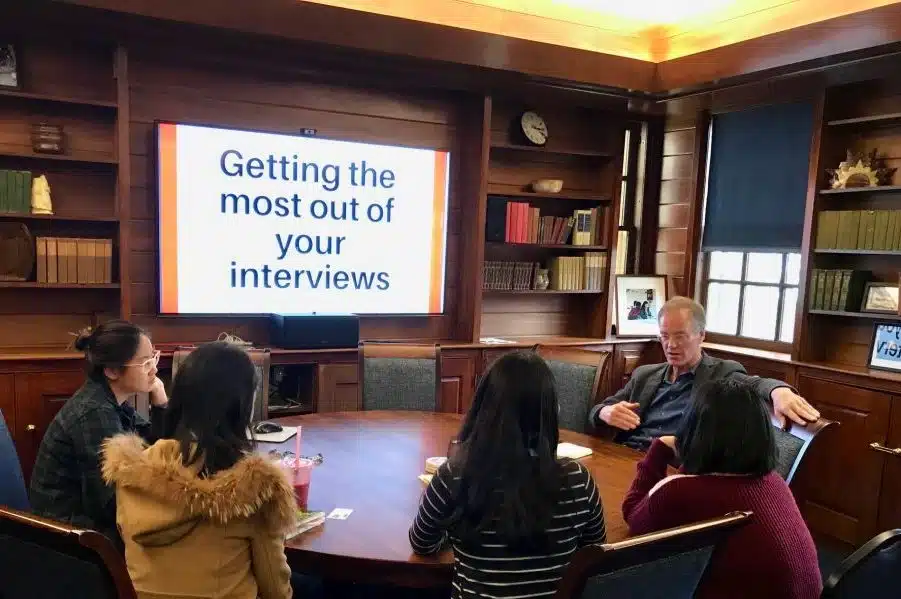
    Back in 2020, during the height of the Covid epidemic, high school students in the U.S. state of Connecticut sat down with News Decoder founder Nelson Graves to explore a number of thorny topics that ranged from the death penalty to whether animals should be kept in zoos.

    The students in “American Voices & Choices: Ethics in Modern Society” at Westover School had been working with News Decoder since the start of that academic year, mastering the process we call Pitch, Report, Draft and Revise — or PRDR — to identify topical issues at the intersection of ethics and public policy.

    They pitched ideas they wanted to report on: teen health; police brutality; abortion; economic privilege in the environmental movement; the risks of experimental vaccines; the impact of alcohol on youth.

    Later, each student received detailed feedback from a News Decoder editor, aimed at helping them narrow their research and produce original reporting.

    Westover was an early News Decoder school partner. Since our founding 10 years ago, News Decoder has worked with high school and university students in 89 schools across 23 countries.

    Decoding news in school

    Teachers have used us as part of their course curricula, as extra credit assignments and as standalone learning opportunities for their students.

    At Realgymnasium Rämibühl Zürich in Switzerland, teacher Martin Bott brings News Decoder in each year. In one weeklong workshop, students produced podcasts. Over five days, they pitched News Decoder stories about a problem they identified in their local communities, identified an expert to interview, found how that problem was relevant to people in other countries and then wrote a podcast script, revised it and recorded it. “[News Decoder] enabled me to do a few projects which really open up perspectives for the students, give them a taste of life beyond the classroom and of the world of journalism,” Bott said. 

    In another workshop for RGZH, News Decoder turned students into “foreign correspondents.” They were tasked with finding stories in Zurich that people in other countries would find interesting. Like the students in the podcasting workshop, they then found an expert to interview, wrote a draft and revised it with the goal of publishing it on News Decoder. 

    One student in the workshop noticed a demonstration of people with dogs and got up the nerve to talk to one of them. They were from an organization that rescued Spanish greyhounds and she decided it would be a good idea for a News Decoder story. The story she wrote ended up as one of News Decoder’s most-read stories of all time.

    Not only have Bott’s students been able to publish stories on News Decoder, many of these stories, including the article about the greyhounds, have won awards in our twice yearly global storytelling competition. 

    “We’ve been delighted to get so many of those stories published on News Decoder,” Bott said. “That’s very, very motivating for the students. And it’s a wonderful learning process for them because they realise it’s not just about school rules and so on out there.”

    Challenging students to do more

    Bott said that working with professionals at News Decoder gets the students to step up. “When you’re a journalist, you’ve got a responsibility,” he said. “That’s something we’ve been able to talk about with journalists who’ve met us from various parts of the world through News Decoder. And you’ve got real pressure as well. And they’re not, I think they’re not quite used to that. So it really opens their eyes.”

    At The Hewitt School in New York, 15 teens at the all-girls school meet once a month as a club. They read and discuss News Decoder stories and pitch their own stories. They also prepare for a cross-border webinar; each year they join with students from a News Decoder partner school in another country, and decide with those students on a topic to explore. 

    They then research the topic, interview experts and come together with the students from the other school to present their findings live in a video conference before an audience of people from the two schools.

    In 2024, students from The Thacher School in California worked with peers at the European School of Brussels II on a webinar on consumerism and the human impacts of climate change. 

    Russell Spinney is faculty adviser for News Decoder at Thacher. “The webinars really were kind of ways just to get to know each other, discover that we actually do have some common interests. But not only that, that we also have problems that are similar,” he said. 

    “News Decoder’s workshops,” he said, “get students to think of ways to communicate their research beyond the classroom and connect with what’s going on in the world.” News Decoder has partnered schools this way in some 50 school-school webinars. 

    Source link

  • When young people ask big questions and seek answers

    When young people ask big questions and seek answers

    Cliffrene Haffner attended the African Leadership Academy (ALA) in South Africa during the Covid-19 pandemic. Her university applications were stalling and she felt stressed and anxious.

    “Life felt unstable, as if I were hanging by a thin thread,” Haffner said. But it was at ALA that she discovered News Decoder.

    “Joining News Decoder helped me rebuild my voice,” she wrote. “It created a place to write honestly and with purpose whilst supporting others in telling their stories. At a time when the world felt numb and disconnected, we used storytelling to bring back hope on campus by sharing our fears, thoughts and expectations.”

    At News Decoder, students work with professional editors and news correspondents to explore complicated, global topics. They have the opportunity to report and write news stories, research and present findings in global webinars with students from other countries, produce podcasts and sit in on live video roundtables with experts and their peers across the globe.

    Many get their articles published on News Decoder’s global news site.

    A different way of seeing the world

    Out of these experiential learning activities, they take away important skills valuable in their later careers, whatever those careers might be: How to communicate clearly, how to recognize multiple perspectives, how to cut through jargon and propaganda and separate facts from opinion and speculation.

    One milestone for many of these is our Pitch, Report, Draft and Revise process, which we call PRDR. In it, students pitch a story topic to News Decoder with a plan on how to research and report it. We ask them to identify different perspectives on problems they want to explore and experts they can reach out to for information and context.

    Then we guide them through a process of introspection, if the story is a personal reflection on their own experience, or a process of reporting and interviewing. News Decoder doesn’t promise students that their stories will get published at the end of the process. They have to work for that — revising their drafts until the finished story is clear and relevant to a global audience.

    One student who went through the process was Joshua Glazer, now a student at Emory University in the United States. Glazer came to News Decoder in high school as an exchange student in Spain with School Year Abroad.

    “I think the skills that I got out of that went on to really change the course of my education and how I view the world,” Glazer said. “Because when you step into the world of journalism you learn a different way of seeing the world.”

    Recognizing our biases

    Glazer learned that for journalism, he had to be less opinionated. “You have to really approach things kind of as they are in the world,” Glazer said. “And that is hard to do. That is not an easy skill that we can do as humans because we inherently have biases.”

    He said it challenged him to look inwards and recognize his biases and counter them with evidence.

    “So I think those skills have really changed the course of how I view having an argument with somebody because all of a sudden, you know, when you have an argument with someone, it’s all opinion,” he said.

    For Haffner, who is now a business administration student at Ritsumeikan Asia Pacific University in Japan, News Decoder reshaped how she and her peers understood storytelling.

    “It taught us to let go of rigid biases and to make authenticity the centre of our work,” Haffner said. “Students from different backgrounds found a space where their voices were heard, respected and valued. Our stories formed a shared map, each one opening a new room to explore, each voice strengthening the collective journey we were on. In that chaotic period, we created something meaningful together. Something bigger than us.”

    Working through the complexity of a topic

    Marouane El Bahraoui, a research intern at The Carter Center in the U.S. state of Georgia, also discovered News Decoder at the African Leadership Academy. At the time, he was interested in writing about the effectiveness of the Arab Maghreb Union — an economic bloc of five North African countries. He grew up in Morocco but didn’t want to approach the topic from a purely Moroccan perspective.

    “It was like a very raw idea,” he said.

    He pitched the story and worked with both News Decoder Founder Nelson Graves and correspondent Tom Heneghan to refine the idea. They guided him in the reporting and writing process.

    “One aspect that I liked a lot from my research was the people that I had the chance to talk to,” he said. “It was during Covid and I was just at home and I’m talking to, you know, professors in U.S. universities, I’m talking to UN officials, experts working in think tanks in D.C. and I was thinking oh those people are just so far, you can’t even reach them. And then you have a conversation with them and they’re just normal people.”

    He also found writing the story daunting. “It was a little bit overwhelming for me at the time,” he said. “You know, you’re not writing like an academic essay.”

    Graves encouraged him to write in a straightforward manner. In school, he had been taught to write in a beautiful way to impress.

    “From News Decoder, something I learned is to always keep the audience in mind who you are speaking to, who are you writing to,” he said.

    He took away the importance of letting readers make their own conclusions. “You’re not writing to tell the reader what to think,” he said. “You are writing to give them ideas and arguments, facts and leave the thinking for them.”

    Source link

  • Empowering youth through environmental storytelling

    Empowering youth through environmental storytelling

    Through storytelling, we can bring climate-related data to life. Through storytelling, young people can use their voice and the voices of those around them to turn something complex, global and overwhelming, into something local, tangible and meaningful. Through storytelling, young people can help shift narratives and bring to the forefront stories of action and of hope.

    This is the idea behind the EYES climate storytelling curriculum.

    Now available on the eyesonclimate.org website, the curriculum is the culmination of the Empowering Youth through Environmental Storytelling project (EYES), an Erasmus+ co-funded project by News Decoder, The Environment and Human Rights Academy (TEHRA) and Young Educators European Association.

    The Climate Change 101 unit begins with the basics: human activities driving climate change and what temperature increase means for our planet. Students are tasked with producing an article that explains the topic to a younger audience.

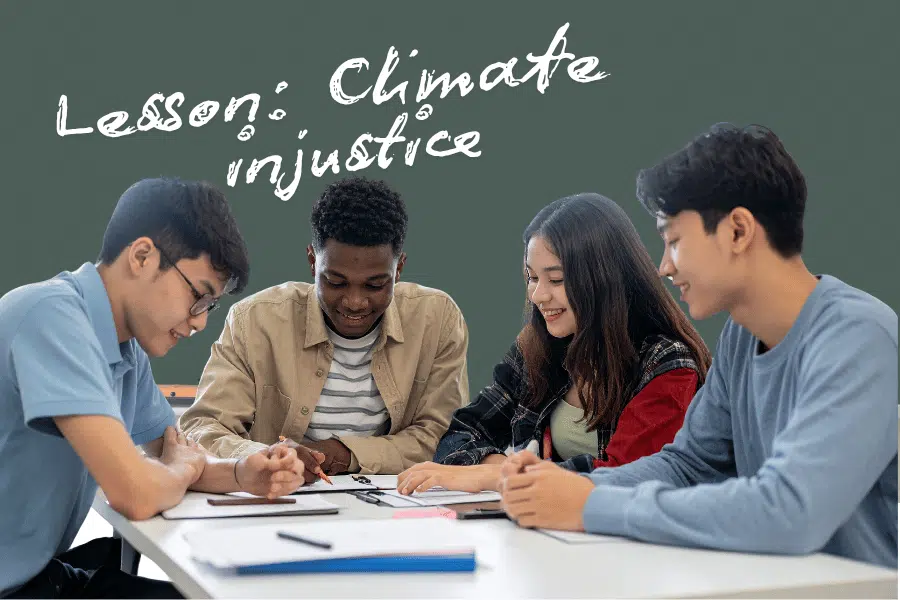
    A unit on Climate Injustice walks students through the uncomfortable reality that those causing climate change are suffering the least from its impacts. Those who have contributed the least? They tend to be in the grip of climate change.

    Human stories from a man-made disaster

    We know that learning about the devastations of the climate crisis can leave young people feeling anxious and angry. We also know from the teachers who piloted the EYES curriculum that it’s important to localise these topics.

    So in the Climate Injustice unit, students are tasked with finding a human story: someone to illustrate climate injustice at play in their local area or region.

    Hearing stories about people lets us understand the reality of an issue. Telling these stories gives young people a device for meaning-making and a platform for agency.

    In our Systemic Change unit, students learn about the interconnected mechanisms that keep our economy rooted in endless economic growth and fossil fuel use. They learn about the ‘deep’ leverage points for making change — the rules, the goals and the mindset of a system. They research case studies on commodity supply chains and form their questions into a story pitch.

    Our curriculum runs across school subjects for students between 15 and 18 years of age. Other units include: Tipping Points, Planetary Boundaries, Human–Nature Connection, The Carbon Budget, Doughnut Economics and a Climate Justice Case Study.

    Solutions are out there.

    In Systemic Solutions to the Climate Crisis, we showcase seven inspiring examples of climate solutions from around the world, from local projects such as community-owned solar panels in Mexico to the transition to renewables in Uruguay, to global movements such as recognising the rights of nature or degrowth in the Global North.

    Meaningful action can happen at any scale. By engaging with these case studies, students can see that stories of just and transformative systems change happen all around them.

    There are so many stories yet to be told, and that in itself is empowering.

    To bolster student projects, the curriculum includes units on journalism and storytelling: The Principles of Journalism, Fact Checking and Misinformation, Interviewing and How to Write a Pitch, Write an Article and Produce a Podcast.

    “Storytelling can turn young people into active users of climate knowledge, and even change makers,” said Andreea Pletea, The Environment and Human Rights Academy programme manager. “Students can even help shift dominant narratives by bringing to the surface systemic solutions to the environmental crises that also address inequalities.”

    Causes and systems

    Aside from storytelling, the main focus of the EYES curriculum is on systems thinking and climate injustice.

    “We invite learners to go upstream to the root causes of the crises we face, and question why, despite increasing awareness, meaningful action often lags behind,” Pletea said. “Seeing the big picture particularly through systems thinking and global justice can also help young people make sense of what’s going on in their own local context.”

    Pletea said that ultimately, the goal is to plant a seed. “That all of us, including young people, are more than consumers,” she said. “We are citizens with a voice and power to act and demand change, and especially when we come together.”

    The EYES project itself began as a seed. TEHRA and News Decoder came together to improve climate change education through storytelling, and created a set of materials that were piloted in multiple education contexts across Europe, Africa and Latin America.

    The seeds to stories

    In Slovenia, Kenya and Colombia, pilot students exchanged letters on their local experiences of climate change. In Kosovo, a Roma community of young people visualised their personal experience of climate change through art.

    At a summer camp in Belgium, students played climate change games, pulled apart the individual carbon footprint and were guided through a nature meditation. In Kenya, students visited the precious Karura national park and wrote stories about tipping points and the value of forests.

    The feedback from students and educators, including at a three-day educators workshop in Brussels in October, helped shape and restructure the curriculum. It evolved into a set of off-the-shelf resources that can be used by multiple teachers in one school or independently by learners.

    If you are an educator, we invite you to dive into climate change with your students and use the EYES curriculum. Students need to learn about the root causes of the climate crisis so that they know in which direction to head — in their future careers as much as in their personal set of values.

    Through storytelling, young people can engage with the reality that is climate change, both as authors and as listeners. Storytelling is the way we understand ourselves: why we act the way we do and how together we can solve the problems that humankind has caused.


    Questions to consider:

    1. How can storytelling can turn someone into an active user of climate knowledge?

    2. What types of climate activities did students in different countries do through the EYES lessons?

    3. What stories about climate change have you found interesting to read or hear about?


    Source link

  • You have a story idea. Now what?

    You have a story idea. Now what?

    If you have already eaten a lot of cake another piece will make you sick. Maybe you are trying to stay healthy and sugary foods aren’t healthy. But maybe you have eaten healthy all week and deserve a treat. Or it is a new cake recipe your friend came up with. Or it’s your birthday. All those are great reasons to have that piece of cake now.

    Identify a “news angle”

    The achievement of your healthy diet, or the new recipe or your birthday are like news angles. They are the reason you will eat cake now. They also answer the question: What’s so special about this piece of cake?

    If you think of a story topic like this cake, the angle will define which direction the topic will take.

    You could tell your editor that your angle is that the carbon tax is new and experts think it might not be as effective in cutting emissions as politicians promise. Or the carbon tax is the latest in a series of taxes imposed by the government and people are so sick of taxes, they might vote in an anti-tax political party in the next election. Or maybe next week is a big anniversary for the environmental group that pushed for the tax in the first place — it’s kind of like their birthday.

    If your pitch was basically, “I think the carbon tax would make a great story,” your editors would likely pass on it. But maybe these pitches would catch their attention: 

    • A carbon tax just passed in Denmark marks a new way of lowering carbon emissions and other governments and political parties are watching to see if it works. If it doesn’t, it could set back the push for clean energy not only in Denmark, but across Europe.
    • The carbon tax in Denmark is a gamble on the part of the country’s environmental advocates. Increasing numbers of voters believe they are already overtaxed. If it isn’t as effective as promised it could push people to vote for conservative, anti-tax politicians.
    • Next month is the twentieth anniversary of Denmark’s Green Party. But amid the celebrations is some real concern. The environmental movement has placed a big bet on the new carbon tax — which has garnered significant opposition. 

    If it’s difficult to find an angle for your topic, start telling people around you about your topic and about what you’ve discovered through your research. What kinds of questions do they ask about it? What do they seem to be interested in? Do they ask you something that makes you think, hmm, that’s a good question! If so, then you’ve found your angle. 

    Narrow your focus

    There might be so many angles you end up all over the place. Editors won’t okay a story that they think will come in as a confusing mess. So it is also important to narrow your focus. In telling stories we are often tempted to tell people everything, but listeners and readers have short attention spans and limited appetites. How much cake can you eat in one sitting? 

    So think about what you want the focus of your story to be. It’s about a carbon tax. But is your focus on the effectiveness of it in lowering emissions? In that case you want to interview climate scientists. Is the focus about the politics of the tax? Then you want to talk to political experts. Maybe the story is about the cost of the tax on the economy. Then you will want to talk to economists and everyday taxpayers. 

    Before pitching the story, consider the one thing the story will be about, how you will focus on it and why that is important or interesting or relevant to the audience of the publication or show.

    Don’t worry that your focus is too narrow. You can use something small happening in a small place to tell a big story.

    What happens in Denmark could be emblematic of what is happening elsewhere or will likely happen elsewhere. The effects of one tax in one place could help explain the challenges of funding climate solutions in general. 

    Identify the problem and who it affects.

    The smaller the story, the easier it is for people to consume it and understand it and that is what your editors will look for in a pitch. 

    It is important to identify what is at stake and who will be affected by the problem at the heart of your story – the “stakeholders”. In a story about a carbon tax, are the people most affect the companies who pollute? Is it the taxpayers? Is it the environmentalists frustrated by the lack of action on climate change? Is it the politicians who risk losing the next election or the opposition candidates who might win office?

    Finally, do some initial research so you can present to the editors some information that shows the importance of the story and come up with a plan for how you will report it. Before an editor okays a story they want to be confident you can actually do it. 

    Here is how to construct a strong pitch:

    1. State what the problem is and why this is an important story now.: Remember to narrow your focus. Editors won’t likely okay pitches that are too vague or broad. 
    2. State how you plan to find a possible solution
    3. State the main data and the important context – What it is that makes this story important or particularly interesting or relevant to the audience.
    4. Who the problem affects.
    5. The news angle: Why is it relevant now
    6. How you plan to go about reporting the story– the data or reports you will seek the people you plan to interview.
    7. The big question your story will answer.

    Be concise

    Here is the real challenge: You have to keep it all short. Your pitch needs to show your editor that you don’t waste words and that you won’t turn in a story that’s a long, tedious, confusing read. Try to keep it to less than 300 words. 

    Be clear. Say only what you need to say. Don’t make your pitch flowery or use exclamation points. Keep to facts and keep out assumptions or biases. Don’t try too hard to convince. If the story idea is a good one it should convince on its own. 

    Finally, let’s give you an example. Imagine you are my editor and I am pitching a story about how to pitch a story. Here is my pitch. It is 194 words. 

    Young people around the world are itching to tell stories about the problems they see around them. But they find the pitching process intimidating. They’ve got big ideas but don’t know how to come up with an idea out of those big ideas that would grab the attention of an editor. Their story pitches end up too broad, vague and with too many angles.

    The result is that important stories don’t get told. I plan to talk to editors about the pitching process and identify the elements that make a strong pitch and the common problems they see in weak pitches. I will also rely on information put together by News Decoder’s Engaging Youth in Environmental Storytelling (EYES) project. 

    The story is timely because 19 October is World Mental Health Day and reporting and telling non-fiction stories is a great way for young people to think through the big problems they face and that they see in the world around them and to talk to experts who can help them put it all into context. 

    Ultimately, my story will answer this question: Why do some stories get published but other, equally important stories don’t?


    Source link

  • A decade of giving teens the last word

    A decade of giving teens the last word

    They are important not only for the students writing these stories but for teens all over the world reading or listening to these stories. They see their own anxieties and concerns reflected.

    As managing director at News Decoder, Maria Krasinski has seen how empowering personal reflection stories are when published. 

    “These stories build students’ self-awareness, confidence and empathy,” Krasinski said. “Seeing their stories published is an empowering act that validates their lived experiences and tells them that their voices are worth being heard.”

    She said that what News Decoder does is ask students to pause, analyze and articulate what they learned from an experience. “That creative process strengthens not only their storytelling skills, but also their ability to make sense of the world and step into public conversation,” she said. 

    A decade of publishing student stories

    News Decoder has been doing this for 10 years. Some of the first stories we published were personal reflections sent in by students.

    Back in May 2016, a high school student studying for a year in France wrote a personal reflection article after having encountered a number of her peers from Turkey at a conference in Luxembourg. During the conference they learned that a suicide bomber had killed three people in Istanbul.

    “I can’t even begin to imagine the heartbreak and panic they felt when they found out,” she wrote. 

    She then explored the concept of senseless violence:

    “I’m afraid that I’m beginning to become desensitized to the tragedies that strike all around the world,” she wrote. “When I got home from the conference and brought up the topic of the Turkish bombings, my host mom asked me how that news was different from any other day’s news, and then asked me to pass the pepper.”

    Students reach profound conclusions.

    In the article, she worked through her complicated thoughts and feelings and came to this conclusion: 

    “If we allow ourselves to be desensitized to all the bad, the good will stop motivating us as well.”

    Back in 2017, News Decoder’s founder Nelson Graves wrote that students make use of the News Decoder platform to make their voices heard. 

    “News-Decoder offers students a chance to put their best foot forward, to push the envelope, to confront different viewpoints and to work with professional correspondents,” he said. 

    For 10 years News Decoder has used storytelling to engage students in the process of learning. Through our educational programs, students are encouraged to ask big questions, identify problems they see around them and talk to people to get their questions answered — classmates, neighbours, family and experts.

    All the while, we ask students to compare their lived experiences and the problems they see around them, with what is happening elsewhere in the world. If they see inequities in their communities, how does that manifest in other countries? In doing this, they find out how connected they are to all the people seeing and experiencing these same problems. 

    Seeing the world through a global lens

    Amina McCauley is program manager for News Decoder’s EYES project — Empowering Youth Through Environmental Storytelling. She said that the global connection is important.

    “I think that young people rarely get the chance to articulate their values in a global context,” McCauley said. “Writing a personal reflection allows them to understand themselves better through this different lens.”

    The empowerment comes when they master the art of communicating what they learn to the wider world. 

    We want News Decoder students, and anyone we work with, to be able to respond when they hear or see something they think is wrong, but to be able to do so not just quickly but thoughtfully. 

    We’d like you to join our network and help us do that. If you are a teacher or school administrator, explore our school programs and consider bringing us into your schools. If you are a journalist consider donating articles and time to engage with students across the world. And if you have the means, consider donating funds to our nonprofit. 

    Why should ignorant people and bullies have the last word? 


    Source link

  • A decade getting teens to do something many avoid: Think

    A decade getting teens to do something many avoid: Think

    TikTok reels, attention grabbing headlines and AI that spits out instant answers. The way teens engage with the world today often lacks depth. 

    But at this age, where the teen brain is rapidly developing, deeper thinking — dubbed by psychologists as transcendent thinking — is vital not just for self-reflection and problem solving, but also self-esteem and better relationships in adulthood. 

    Many of us spend a lot of time in what researchers call “surface-level” thinking — reacting to what’s in front of us. Transcendent thinking, though, is when we go beyond concept descriptions, to wrestle with questions like, What does this say about justice? How do systems work? Where do I fit in all this? 

    “Young people get so much information fed to them through social media, influencers and podcasts and AI, and this is such a passive way of learning,” said Marcy Burstiner, News Decoder’s educational news director. “Dangerous, really, if they aren’t critically thinking about the information they are getting.”

    That’s why for 10 years News Decoder has used the lens of journalism to engage students in the process of learning. Through our educational programs, students are encouraged to ask big questions, identify problems they see around them and talk to people to get their questions answered — classmates, neighbours, family and experts. In doing this, they find out information themselves. 

    Spoon-fed learning

    This is more important than ever as the internet transforms from a place where people would lose themselves as they “surfed,” stumbling upon all kinds of new and interesting information along the way, into a place where an AI bot does that for them and spits out summarized results. 

    For 10 years, we’ve been asking teens to find real people to interview, to compare their different perspectives and from that to come up with their own original thoughts about complex topics where there isn’t a clear right and wrong, where there are layers of inequity. 

    Student Jack McConnel at The Tatnall School in the United States did this when he interviewed his state’s congressional representative, Sarah McBride, the nation’s first transgender representative in Congress.

    Through the research he did, and after interviewing McBride, McConnel came to the conclusion that voters in his district didn’t elect her because of gender identity, but because McBride pledged to help solve the more mundane issues they cared most about — protecting consumers from getting scammed, for example, or helping farmers to lower food prices. Gender identity wasn’t their most important concern.

    Students, like McConnel, who work with News Decoder often start with a “pitch” — a proposal for a news story. In the pitch, we have them ask a big question that their story will answer. McConnel’s asked three: “What role does identity play in our elected officials? Has this fixation from both sides made congressional and senatorial positions simply for show? Does it matter more who the person is or what the person does, and have we lost sight of what matters about our politicians?”

    Through his research and his one-to-one interview with McBride, he was able to answer all those questions. 

    Beyond facts

    Hannah Choo is a student at an international school in South Korea, and is working with News Decoder as a summer intern. As part of her work, she creates video content for social media based on articles published on News Decoder.

    Choo has found that through engaging with these stories, she’s forming a deeper connection with the issues the stories explore. She said the challenge is to go beyond merely summarizing the information. The goal is to connect with an audience. 

    “And that puts me in a position where I need to really focus on why this issue matters and why I should care,” Choo said. “And that gives a lot more of a sense of purpose.” 

    Choo remembers talking to a biology graduate student, who told her about apoptosis, a process whereby cells die off — a way our bodies get rid of unneeded cells. Alone, this concept feels meaningless, even dry. 

    But the grad student told Choo that when we’re initially formed in the womb, we have paddle-shaped hands with a webbing of skin connecting the fingers and toes. This webbing disappears as we form, due to this apoptosis. Choo remembers looking at her own hands in fascination.

    “And so later, when I actually got to learn biology and learn about the cell cycle, it was a lot easier for me to engage with the topic,” Choo said. “I wasn’t just studying science but I was studying my own body.” 

    From deep thinking to deeper relationships

    A five-year study, published in 2024 in the journal Scientific Reports, followed 65 teenagers aged 14-18 to see how transcendent thinking shapes their brains, and how this further shapes their lives.  

    The teens were shown emotionally rich mini-documentaries featuring real stories of adolescents around the globe — a method that triggers transcendent thinking. They then talked through what the stories meant: how they felt, why they mattered, and what bigger ideas they raised. 

    They found that teens who engaged in this deeper style of thinking showed stronger connections over time between two key brain networks — those involved in self-reflection and big-picture thought, and focus and problem solving. 

    Crucially, they also found that these teens went on to have a clearer sense of identity in late adolescence, which later linked to greater self-esteem and better relationships in young adulthood.

    One way News Decoder helps young people understand deeper meanings and broader implications is by having them look at societal problems and possible solutions. 

    Searching out solutions

    At News Decoder we ask students to identify a problem in their community and then see if they can find people working to solve that problem. 

    “In the process they see at first that a lot of problems seem to have no solution or the solutions are so far off,” Burstiner said. “But all the complications that prevent solutions are like protective layers around the problem. They are like the levels you need to surmount in a video game.”

    If a teen has the patience and persistence to work through those complications they can not only see the solutions but they can see what is preventing those solutions, Burstiner said. 

    One News Decoder student in India wondered what might happen when climate change causes massive migration. 

    “In exploring the topic she hit on the idea of lost languages — that a language is what often ties a community together and connects generations. But if a community is forced to disperse and the people end up integrating into other lands, the language that connected them could die out,” Burstiner said.

    Connecting dots 

    Another student at The Tatnall School played soccer, and began thinking about how much it cost his family for him to play at a competitive level. “In exploring this he realized how much of competitive sports is elitist and how much more difficult it is for someone to go into professional sports if they are poor,” Burstiner said. 

    When students conduct interviews with people who understand these topics in-depth or who are affected by these issues, they can further connect their sense of self with these stories. 

    Choo, during her internship, pitched a story about cancer, because a close family member was undergoing cancer treatment. She asked this question: “How does climate change affect the quality of healthcare for cancer patients?”  

    In doing the research, uncovering connections and conducting interviews, she connected the often-abstract issue of climate change to her own life. 

    “This was the first time I could really connect climate change to my own life and my own loved ones,” Choo said.

    Source link

  • A decade waking teens up to the world around them.

    A decade waking teens up to the world around them.

    Back in 2019, students at La Jolla Country Day School in California interviewed a citizen of Beirut who had spent years imprisoned in the Guantanamo Bay Detention Center in Cuba, through a live zoom webinar arranged by News Decoder. 

    In 2022, News Decoder brought war correspondent Bernd Debusmann into a classroom, through a live feed to the Tatnall School in the U.S. state of Delaware where students were able to ask him what it was like getting shot in the back while covering Beirut. 

    My memory of high school is the challenge I had keeping my eyes open and my head vertical. I can describe falling in love with a metallic blue Mercedes in the parking lot below the window in my trigonometry class but I can’t tell you what a cotangent is. 

    The students in math and history and language classes today will inherit not just the world we live in but the power to shape it. And the years they spend in school are supposed to prepare them for that awesome responsibility. 

    But can we keep them awake and aware after they’ve stayed up half the night binging Apple TV or playing PUBG, fueled by orange Fanta and Hot Cheetos?

    Feeding curiosity

    It is News Decoder’s deep belief that most students are curious and want to learn but that they need to connect to the material they are supposed to study.

    For 10 years we’ve helped teachers and schools engage teens through experiential learning and by connecting them with people who have been eyewitnesses to world events. At News Decoder, we bring the world into the classroom and take students out into the world around them. 

    We do this through storytelling. We don’t tell them stories, we have them tell stories to us and the world and interview people who have stories to tell. We show them the power of telling other people’s stories through journalism and in the process exploring other people’s perspectives and learning about their experiences. 

    Two ways we do this is through cross border webinars and through our signature Pitch, Report, Draft and Revise process that we call PRDR. In cross border webinars we put students from different countries and across different time zones together in live video sessions to share problems in their communities and compare the conclusions they reached after researching the same important topic. 

    This past year we did that through our monthly “Decoder Dialogues.” Students from countries including Colombia, India, Belgium, France, Rwanda and the United States shared their research and views about topics as important as the role of the press in journalism, what good and bad leadership looks like, and where responsibility for climate change lies. 

    Through the PRDR process, we encourage students to identify a problem in their community, research it, and find and interview an expert — someone who had directly experienced the problem, or someone working to solve it and then see whether and how that same problem exists in other countries and how people in those countries tackle it. 

    Building human connections across borders

    Ultimately, we guide them through the process of turning their findings into engaging stories — articles or podcasts or videos and publishing those stories to the world. 

    In a world where so many of us spend so much time looking at screens, we want students to realize that knowledge can begin online, but the most powerful information comes from finding and interviewing people who are knowledgeable and that conversation with an interesting person is so much more engaging than words on a screen. 

    Interviews are transformative. In conducting them, students find themselves at the same level as the people they interview no matter how important that person is. An insightful question asked by a 16-year-old to say, famed U.S. constitutional lawyer Floyd Abrahms, which Lucy Jaffee did back in 2020, commands respect.

    “I just loved being able to talk to people and hear their stories,” Jaffee said at the time.

    It is that love for human connection in an increasingly robotic world that News Decoder is committed to fostering. We’ve done it for 10 years and we plan to do it for another decade. 

    Source link

  • Can you make your podcast sound great?

    Can you make your podcast sound great?

    Emotion and identity

    The third layer gives a podcast emotion and the three elements, together, make the sound of a podcast, he said. 

    “So, it’s not just music,” he said. “These three elements move together during the narration.”

    The goal is to combine music and sound effects to create a “rhythm of narration.” After an important word, he might create a pause and in it increase the music. After that, come sound effects.  

    Caminero wanted to know what Micheli considers when creating music to give a podcast emotion and identity. Micheli said that an important part of the process is to re-listen to what you have done to try to create consistent sound.

    “It’s very important because we spend a lot of time on the timeline,” he said. “We work a lot in depth on the details, but at a certain point you have to change your position and change your mind and you have to become not a creator, you have to become a listener.”

    You don’t always need to create original music for your podcast soundtrack. Micheli suggests combining original music with music you can find in a sound library, but note that it isn’t easy. “It is quite a job to find the right music, right sound in this gigantic archive and match together original music and other music,” he said. “I think it’s the best way for creating the sound for a podcast.”

    Creating original music makes the most sense for podcasts that are documentaries or fiction, Micheli said. But most important is that the podcast must have a good story and script first. 


    Questions to consider:

    1. What does Micheli mean by a “rhythm of narration”?

    2. How can you add great sound to a podcast if you can’t compose music yourself?

    3. If you were to create a podcast series what would it be about and what kind of sound would you use?


    Source link

  • An award recognizes the importance of youth journalism

    An award recognizes the importance of youth journalism

    On 18 July, U.S. legislators voted to rescind more than one billion dollars in funding previously allotted to the Public Broadcasting Service (PBS), a nonprofit network of television and radio stations partly funded by the U.S. government.  

    The cuts put at risk educational and training programs geared to young people across the country. 

    That’s why an award from Global Youth & News Media to PBS News Student Reporting Labs is so significant. 

    Student Reporting Labs (SRL) is a U.S.-based journalism training program for young people and their educators. On 23 July, Global Youth & News Media, a France-based nonprofit dedicated to encouraging and honoring news media engagement with the young, awarded SRL its Prize for Outstanding Achievement in Journalism.

    “This award is in recognition of the program’s impactful history and determination to continue its unmatched work to introduce young people throughout the United States to local broadcast journalism,” said Aralynn McMane, executive director of Global Youth & News Media. “In voting to bestow this award, our board was unanimous and adamant about the need to shine a spotlight on Student Reporting Labs to remind the world of what short-sighted politics risks destroying in the wake of defunding public broadcasting.”

    The importance of youth journalism

    This is only the second time the Global Youth & News Media board has bestowed such an honorary award. The first was in 2018 for joint live coverage of the March For Our Lives anti-gun demonstration by The Guardian US with Eagle Eye News student reporters from Marjory Stoneman Douglas High School in Florida, which had seen the killing of 18 people at the school just three weeks prior. 

    Founded in 2009 by Leah Clapman, then the managing editor of education at PBS NewsHour, Student Reporting Labs has helped build broadcast and journalism programs in thousands of secondary schools across all 50 states. 

    The program connects them with over 40 public television stations and local news organizations to bring their story to local audiences. SRL empowers the next generation of storytellers by providing free training fellowships and workshops to students and educators across the country and around the world. In all, more than 125,000 students have participated in the program. 

    SRL also reaches more than 10,000 educators via a free learning platform StoryMaker. StoryMaker provides teachers with instruction materials and lessons to help students think critically, explore their curiosity about the world and engage in their communities. 

    The SRL program was established “on the premise that some stories are best told by young people,” Clapman, now full-time executive director of SRL, wrote in a briefing last week. ”This is especially true in this moment of rapid change and disruption. In this challenging time, we’re leaning in to perseverance and service rather than despair.”

    Mentoring teens to tell important stories

    Clapman wrote that newsrooms can benefit from the important perspectives, experiences and insights that teens have and that these perspectives can help news organizations tell more nuanced and complete stories about issues that affect students.

    One such teenager that the Student Reporting Labs trained was award-winning alumna Mary Williams, who joined the program in 2015 and interned at her local PBS station in Ohio. 

    “Now when I see the news, it’s personal,” she said. “The economy, education system and the Earth’s current state aren’t just my parents’ problems to worry about. They’re mine, too.”

    The Global Youth & News Media Prize for journalism this year focused on youth collaborations that help local news media survive. The rest of the laureates were chosen by an international expert jury and will be announced in the coming weeks. News Decoder, which trains and encourages young people to develop global perspectives in storytelling, is a partner in the award and helped judge the entries. 

    News Decoder Educational News Director Marcy Burstiner said that it is more important than ever to recognize the important work young journalists are doing. 

    “It seems that in the United States and elsewhere there is a war on journalism and truth telling,” Burstiner said. “I used to tell my students that it was a myth that you needed a thick skin to be a journalist. But these days, you do.”

    But every year, News Decoder finds more and more young people stepping up to the challenge, Burstiner said. 

    “They aren’t afraid to tell the important stories that need to be told,” she said. “But people need to support the organizations like PBS News Student Reporting Labs that help and encourage young people to be truth tellers.”

    Source link