Category: News Decoder Tips

  • When the clock ticks

    When the clock ticks

    I always respond the same: Give me a deadline you feel you can comfortably meet and then I can put it on our publishing calendar. What I don’t want is for the person to give me an early date and then not be able to meet it.

    So, how does a reporter writing a story for News Decoder come up with that deadline? It comes down to “doability”. That means what it says: what you can do, what is feasible. In determining doability, it helps to look at the opposite: Something that isn’t doable.

    Some things are difficult.

    What makes something not doable? The idea for the story is great, but realistically you won’t be able to interview anyone for it. Wouldn’t it be great to do a story on Russian hackers? But do you know any Russian hackers or anyone who knows Russian hackers? What about a story on the wealthy people giving money to political campaigns? Again, do you know anyone or can you realistically reach anyone who would give you information about that?

    In assessing the doability of a story, the first question to ask, then, is where your information will come from. You might not need to know key sources personally, but you need a way to be able to reach them and a reason to feel confident that they will talk to you.

    The second criteria is your financial wherewithal. To find the information, will you need to travel to get it? Do you have the money and time to do that?

    Third, if the subject deals with an uncomfortable subject — sexual assault, race, abortion, religion or suicide, for example — do you have the emotional resolve to be able to ask people difficult questions about their experiences? Not everyone can do that. You need to be honest with yourself about your willingness to tackle such topics.

    Last, what other responsibilities do you have that might interfere? How much time do you have to work on the story? If you have classes to attend or a job, will you only have a few hours here and there? That needs to be part of your calculation on how long it will take you to do the story.

    Many editors want to see these criteria explained when you pitch the story. They want to know that you have a solid plan for getting the information you need and the interviews to humanize the story. They want to know that you also have the wherewithal to do it.

    Be conservative. That means never overpromise. If you think it will take 20 hours to do the story, allow for 30. If you think you will need to spend $100 on travel costs, budget twice that. If you think you can turn in a story by Friday, promise it for the following Wednesday.

    No reporter was ever fired for turning in a solid story early. But if you want more story assignments you need to always, always turn them in when you promise them.


    Questions to consider:

    1. Why are deadlines so important in journalism?

    2. What is one piece of advice the author provides for meeting deadlines?

    3. Did you ever have a deadline that was difficult to meet? How did you handle it?


    Source link

  • Can you believe it? | News Decoder

    Can you believe it? | News Decoder

    Can you tell the difference between a rumor and fact?

    Let’s start with gossip. That’s where you talk or chat with people about other people. We do this all the time, right? Something becomes a rumor when you or someone else learn something specific through all the chit chat and then pass it on, through chats with other people or through social media.

    A rumor can be about anyone and anything. The more nasty or naughty the tidbit, the greater the chance people will pass it on. When enough people spread it, it becomes viral. That’s where it seems to take on a life of its own.

    A fact is something that can be proven or disproven. The thing is, both fact and rumor can be accepted as a sort of truth. In the classic song “The Boxer,” the American musician Paul Simon once sang, “a man hears what he wants to hear and disregards the rest.”

    Once a piece of information has gone viral, whether fact or fiction, it is difficult to convince people who have accepted it that it isn’t true.

    Fact and fiction

    That’s why it is important — if you care about truth, that is — to determine whether or not a rumor is based on fact before you pass it on. That’s what ethical journalists do. Reporting is about finding evidence that can show whether something is true. Without evidence, journalists shouldn’t report something, or if they do they must make sure their readers or listeners understand that the information is based on speculation or unproven rumor.

    There are two types of evidence they will look for: direct evidence and indirect evidence. The first is information you get first-hand — you experience or observe something yourself. All else is indirect. Rumor is third-hand: someone heard something from someone who heard it from the person who experienced it.

    Most times you don’t know how many “hands” information has been through before it comes to you. Understand that in general, stories change every time they pass from one person to another.

    If you don’t want to become a source of misinformation, then before you tell a story or pass on some piece of information, ask yourself these questions:

    → How do I know it?

    → Where did I get that information and do I know where that person or source got it?

    → Can I trace the information back to the original source?

    → What don’t I know about this?

    Original and secondary sources

    An original source might be yourself, if you were there when something happened. It might be a story told you by someone who was there when something happened — an eyewitness. It might be a report or study authored by someone or a group of people who gathered the data themselves.

    Keep in mind though, that people see and experience things differently and two people who are eyewitness to the same event might have remarkably different memories of that event. How they tell a story often depends on their perspective and that often depends on how they relate to the people involved.

    If you grow up with dogs, then when you see a big dog barking you might interpret that as the dog wants to play. But if you have been bitten by a dog, then a big dog barking seems threatening. Same dog, same circumstance, but contrasting perspectives based on your previous experience.

    Pretty much everything else is second-hand: A report that gets its information from data collected elsewhere or from a study done by other researchers; a story told to you by someone who spoke to the person who experienced it.

    But how do videos come into play? You see a video taken by someone else. That’s second-hand. But don’t you see what the person who took the video sees? Isn’t that almost the same as being an eyewitness?

    Not really. Consider this. Someone tells you about an event. You say: “How do you know that happened?” They say: “I was there. I saw it.” That’s pretty convincing. Now, if they say: “I saw the video.” That’s isn’t as convincing. Why? Because you know that the video might not have shown all of what happened. It might have left out something significant. It might even have been edited or doctored in some way.

    Is there evidence?

    Alone, any one source of information might not be convincing, even eyewitness testimony. That’s why when ethical reporters are making accusations in a story or on a podcast, they provide multiple, different types of evidence — a story from an eyewitness, bolstered by an email sent to the person, along with a video, and data from a report.

    It’s kind of like those scenes in murder mysteries where someone has to provide a solid alibi. They can say they were with their spouse, but do you believe the spouse?

    If they were caught on CCTV, that’s pretty convincing. Oh, there’s that parking ticket they got when they were at the movies. And in their coat pocket is the receipt for the popcorn and soda they bought with a date and time on it.

    Now, you don’t have to provide all that evidence every time you pass on a story you heard or read. If that were a requirement, conversations would turn really dull. We are all storytellers and we are geared to entertain. That means that when we tell a story we want to make it a good one. We exaggerate a little. We emphasize some parts and not others.

    The goal here isn’t to take that fun away. But we do have a worldwide problem of misinformation and disinformation.

    Do you want to be part of that problem or part of a solution? If the latter, all you have to do is this: Recognize what you actually know and separate it in your head from what you heard or saw second hand (from a video or photo or documentary) and let people know where you got that information so they can know.

    Don’t pass on information as true when it might not be true or if it is only partially true. Don’t pretend to be more authoritative than you are.

    And perhaps most important: What you don’t know might be as important as what you do know.


    Questions to consider:

    1. What is an example of an original source?

    2. Why should you not totally trust information from a video?

    3. Can you think of a a time when your memory of an event differed from that of someone else who was there?


    Source link

  • Cook up a news story

    Cook up a news story

    Writing is the easy part; everything that comes before that is what’s hard. 

    That’s what News Decoder founder Nelson Graves told us back in 2020. Five years later, with the prevalence of artificial intelligence, this seems more true, doesn’t it? After all, you can just tell AI to write you a story and it will comply. 

    But what’s the point of that? It is one thing if your grade depends on the completion of a paper, and your graduation depends on that grade. Or maybe you can make some money churning out AI-written copy for some website. We won’t argue ethics here. 

    The point of this article, which I am thinking up and typing up word by word with no AI involvement, is to explain why the process of writing is the point. Apple founder Steve Jobs is often quoted as saying the journey is the reward. 

    Graves told us that the best stories emerge from a process that involves doing things that many people find difficult: Introspection, questioning your assumptions and interviewing people. All that seems even more of a challenge these days when it is so easy to tune out your feelings and avoid human interactions by listening to loud music, playing video games or bingeing TV shows.

    Again, why do that when AI could spit it out for you?

    Gather your ingredients.

    Graves, who spent his career writing for the news service Reuters, reminded us that writing is easy once you have the raw goods. That made me think about cooking. 

    Why do people take cooking classes and watch cooking videos when you can buy ready-made meals at Aldi? I often spend an entire afternoon in the kitchen making soup or a stew only to have my family gobble it up in 10 minutes. 

    It is hard to put together a fancy meal at the last minute. But if you have gathered your ingredients — the chopped vegetables, marinated chicken, diced onions and minced garlic — it is easy to toss them into a frying pan where the magic happens. 

    The same goes for a news story. If you have done your research — gathered some data, a timeline of events and information and quotes from interviews — then you are all set to toss them onto a page where the magic happens. 

    Follow a recipe.

    Ask yourself: Why do people become journalists when typically they don’t make much money and often get trolled and harassed — or worse — for what they publish? Many believe in the idea of public service, but really, there is nothing that matches the feeling of having published a great story. 

    It is like the satisfaction you get when the forkful of food goes into your mouth and tastes exquisite and you know you made it. You don’t get that feeling if you bought it ready-made from Aldi.

    People who don’t cook think cooking is hard or painful or not worth the effort. The funny thing is that once someone follows a recipe and makes something really tasty, that often changes the way they think about cooking and they try another recipe another day.

    The writing process is like a recipe. There are common steps journalists often follow. They don’t just open a blank page and start writing. So here is a basic recipe you can follow for just about any news story.

    1. Decide what to cook: This is your story idea. You can start broad: I’m going to make pasta. Then narrow it down to: Maybe a lasagna? Narrow it further, maybe based on the ingredients you already have. I’m going to make a spinach lasagna. So with a story you might start with this: I’m going to do a story about climate change. Then you narrow it: Maybe a story about pollution. Then you narrow it further: How about the factories around me that pollute the air?

    2. Find your ingredients. There are statistics you can get. A law has been proposed. A community group is planning a protest. The industry is coming out with new emissions guidelines. Interviews with advocates and proponents and lawmakers. 

    3. Decide in what order the ingredients go into the pan. For a news story there’s the lead that entices the reader (when you sauté garlic in butter people come into the kitchen salivating). Then there is the meat (we actually call it that in journalism), layered with the other ingredients: quotes, data, relevant events.

    With food, the order things go in is the recipe. In journalism it is an outline. It is an important part of the process. Without a good outline you have a mess of information and you don’t know what to do with it. An outline gives you a clear path to follow. The recipe for your story. 

    4. Put the final touch on the dish. It might be parmesan cheese on top, or garlicky bread crumbs or a drizzle of olive oil or soy sauce. For an article you want to end with a “kicker”: a good quote that sums everything up, maybe. 

    Finesse the flavors.

    What if you get to the end and it isn’t as tasty as you hoped? With cooking you tinker. A little more garlic? More salt or pepper? Yikes! I forgot the mushrooms! 

    In journalism, when the story seems flat you might reach out to one more source or call back one you already interviewed to get a better quote. You might look for a better example to use by doing another news search. 

    This is the revision process. And unlike in cooking, when you revise a story you can move your ingredients around and reorganize your story. Often that makes all the difference. 

    In the end you will have created something good, from scratch. It is a great feeling, even if your family takes 10 minutes to eat that lasagna it took you an hour to make. Even if a reader spends 30 seconds reading that story it took you days to craft. 

    The satisfaction you will feel won’t go away. 


    Questions to consider:

    1. If writing is the easy part, what is the hard part of creating a news story?

    2. What does it mean that the journey is the reward?

    3. Can you think of something you have done from scratch that you could have bought ready-made?


    Source link

  • Can you picture your story on a big screen?

    Can you picture your story on a big screen?

    Some people would rather watch movies than read news articles.

    The thing is, an awful lot of movies came out of news articles. Consider the entire Fast & Furious movie franchise, starring Vin Diesel and my personal movie favorite Michelle Rodriguez (shout out!). It revolves around people who race souped up cars on city streets.

    The idea of the first movie started with an article by journalist Ken Li, after he saw someone steal a car in New York and that spurred him to investigate the underground world of street racing. Someone at Universal Studios saw the article and bought the rights to it. 

    Or consider the Tom Cruise movie Top Gun, about a cocky U.S. Navy pilot. The idea for that came from a story in California magazine about Navy pilots.

    How can all this help an aspiring journalist? Well, thinking about your news story as the movie that might be commissioned from it is a way of seeing the story. So how do you go about doing that?

    Visualize your story

    First, think of the characters in your story. Who are the central actors involved? Who is the Vin Diesel or Tom Cruise in your story? 

    Who does the problem you are exploring affect? Who is causing it or standing in the way of solutions? Who are the people trying to solve or mitigate the problem? In journalism, the basic story structure is Who, What, Where, When and Why. The characters are the Who of the story. 

    The most compelling movies (and news stories) revolve around conflict: What are the stakes? In Fast & Furious, one of the main conflicts is the role of Brian O’Connor, who starts out as an FBI agent investigating the car racers and then becomes loyal to them. 

    Movie scripts revolve around turning points: What could change the course? What steps are being taken to solve or mitigate the problem you are exploring? What are people or corporations or governments or organizations doing that could worsen the situation? This is the What of the story. 

    Then think about the setting: Where is the crisis playing out? The original Fast & Furious took place in Los Angeles. Top Gun took place at a naval base in San Diego, California. This is the Where of the story. 

    Finally, what drives your story is the motivation of the characters: Why do they take the actions they do? 

    In Top Gun, Tom Cruise’s character is motivated by the death of his friend Goose to be the best pilot he can be. In Fast & Furious, Vin Diesel is motivated by the death of Michelle Rodriguez’s character to seek justice. 

    Actions and motivations

    Death is a common motivation in movies — the killing of John Wick’s dog triggered one of the most successful movie franchises out there. But for non-fiction news stories, there can be all kinds of motivations: parents wanting to get their kids into good schools, communities wanting to fight crime in their neighborhoods, governments wanting to end homelessness. 

    In news stories this is the Why of the story. Why does some corporation build a plant in your community? Why does some NGO oppose a development proposal? What’s their reason and motivation?

    So now try this: Think of a problem around you that you want to explore. It could be about anything from climate change, to mental health or inequities in sports or education. Start by noting down the Who (actors), What (what’s at stake), When, Where (setting) and Why (the motivations of the characters). Then turn this into a few paragraphs as if you’re writing for a news site. 

    Start with a hook: It should be something interesting or important. Why is this a big story? Why should people care? Then summarize in one paragraph the whole story. What’s the overall problem? Where is it happening and when, how did it start, what is causing it and who is it affecting? 

    Next, slowly work through each of those elements — the who, what, where, when, how and why. There is the meat of your story. Finally, talk about what’s next. What are the solutions or mitigations happening or proposed?

    Who knows? You might get your story published and down the line a Hollywood or Bollywood producer calls you up. Now, isn’t that motivation to write a news story? Just make sure you have a good agent.


    Questions to consider:

    1. How can seeing your story as a movie help you report and write it?

    2. If your life played out as a movie, what would be the central theme?

    3. Think about the most important thing you are doing these days. What motivates you to do it?


    Source link

  • You have a story idea. Now what?

    You have a story idea. Now what?

    If you have already eaten a lot of cake another piece will make you sick. Maybe you are trying to stay healthy and sugary foods aren’t healthy. But maybe you have eaten healthy all week and deserve a treat. Or it is a new cake recipe your friend came up with. Or it’s your birthday. All those are great reasons to have that piece of cake now.

    Identify a “news angle”

    The achievement of your healthy diet, or the new recipe or your birthday are like news angles. They are the reason you will eat cake now. They also answer the question: What’s so special about this piece of cake?

    If you think of a story topic like this cake, the angle will define which direction the topic will take.

    You could tell your editor that your angle is that the carbon tax is new and experts think it might not be as effective in cutting emissions as politicians promise. Or the carbon tax is the latest in a series of taxes imposed by the government and people are so sick of taxes, they might vote in an anti-tax political party in the next election. Or maybe next week is a big anniversary for the environmental group that pushed for the tax in the first place — it’s kind of like their birthday.

    If your pitch was basically, “I think the carbon tax would make a great story,” your editors would likely pass on it. But maybe these pitches would catch their attention: 

    • A carbon tax just passed in Denmark marks a new way of lowering carbon emissions and other governments and political parties are watching to see if it works. If it doesn’t, it could set back the push for clean energy not only in Denmark, but across Europe.
    • The carbon tax in Denmark is a gamble on the part of the country’s environmental advocates. Increasing numbers of voters believe they are already overtaxed. If it isn’t as effective as promised it could push people to vote for conservative, anti-tax politicians.
    • Next month is the twentieth anniversary of Denmark’s Green Party. But amid the celebrations is some real concern. The environmental movement has placed a big bet on the new carbon tax — which has garnered significant opposition. 

    If it’s difficult to find an angle for your topic, start telling people around you about your topic and about what you’ve discovered through your research. What kinds of questions do they ask about it? What do they seem to be interested in? Do they ask you something that makes you think, hmm, that’s a good question! If so, then you’ve found your angle. 

    Narrow your focus

    There might be so many angles you end up all over the place. Editors won’t okay a story that they think will come in as a confusing mess. So it is also important to narrow your focus. In telling stories we are often tempted to tell people everything, but listeners and readers have short attention spans and limited appetites. How much cake can you eat in one sitting? 

    So think about what you want the focus of your story to be. It’s about a carbon tax. But is your focus on the effectiveness of it in lowering emissions? In that case you want to interview climate scientists. Is the focus about the politics of the tax? Then you want to talk to political experts. Maybe the story is about the cost of the tax on the economy. Then you will want to talk to economists and everyday taxpayers. 

    Before pitching the story, consider the one thing the story will be about, how you will focus on it and why that is important or interesting or relevant to the audience of the publication or show.

    Don’t worry that your focus is too narrow. You can use something small happening in a small place to tell a big story.

    What happens in Denmark could be emblematic of what is happening elsewhere or will likely happen elsewhere. The effects of one tax in one place could help explain the challenges of funding climate solutions in general. 

    Identify the problem and who it affects.

    The smaller the story, the easier it is for people to consume it and understand it and that is what your editors will look for in a pitch. 

    It is important to identify what is at stake and who will be affected by the problem at the heart of your story – the “stakeholders”. In a story about a carbon tax, are the people most affect the companies who pollute? Is it the taxpayers? Is it the environmentalists frustrated by the lack of action on climate change? Is it the politicians who risk losing the next election or the opposition candidates who might win office?

    Finally, do some initial research so you can present to the editors some information that shows the importance of the story and come up with a plan for how you will report it. Before an editor okays a story they want to be confident you can actually do it. 

    Here is how to construct a strong pitch:

    1. State what the problem is and why this is an important story now.: Remember to narrow your focus. Editors won’t likely okay pitches that are too vague or broad. 
    2. State how you plan to find a possible solution
    3. State the main data and the important context – What it is that makes this story important or particularly interesting or relevant to the audience.
    4. Who the problem affects.
    5. The news angle: Why is it relevant now
    6. How you plan to go about reporting the story– the data or reports you will seek the people you plan to interview.
    7. The big question your story will answer.

    Be concise

    Here is the real challenge: You have to keep it all short. Your pitch needs to show your editor that you don’t waste words and that you won’t turn in a story that’s a long, tedious, confusing read. Try to keep it to less than 300 words. 

    Be clear. Say only what you need to say. Don’t make your pitch flowery or use exclamation points. Keep to facts and keep out assumptions or biases. Don’t try too hard to convince. If the story idea is a good one it should convince on its own. 

    Finally, let’s give you an example. Imagine you are my editor and I am pitching a story about how to pitch a story. Here is my pitch. It is 194 words. 

    Young people around the world are itching to tell stories about the problems they see around them. But they find the pitching process intimidating. They’ve got big ideas but don’t know how to come up with an idea out of those big ideas that would grab the attention of an editor. Their story pitches end up too broad, vague and with too many angles.

    The result is that important stories don’t get told. I plan to talk to editors about the pitching process and identify the elements that make a strong pitch and the common problems they see in weak pitches. I will also rely on information put together by News Decoder’s Engaging Youth in Environmental Storytelling (EYES) project. 

    The story is timely because 19 October is World Mental Health Day and reporting and telling non-fiction stories is a great way for young people to think through the big problems they face and that they see in the world around them and to talk to experts who can help them put it all into context. 

    Ultimately, my story will answer this question: Why do some stories get published but other, equally important stories don’t?


    Source link

  • Should you give equal voice to all perspectives?

    Should you give equal voice to all perspectives?

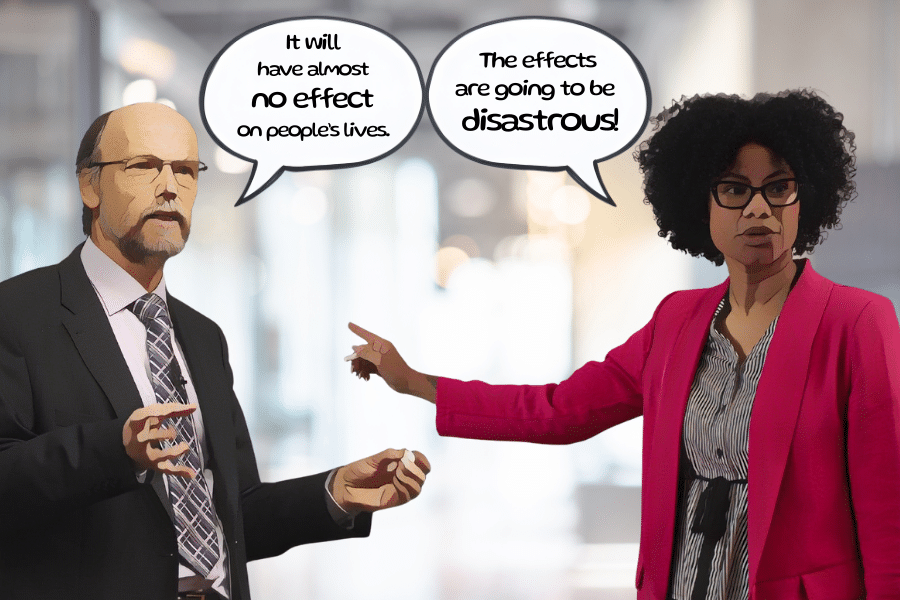
    Journalists are often told to be objective and to tell both sides of a story. They are taught to seek multiple perspectives. This means that when reporters interview an expert about any given topic, they are encouraged to find another source with a different opinion to make it “fair” and “balanced”. 

    Journalists also know that conflict makes a story more interesting and that gets more eyeballs or ears which allows their news organizations to sell more ads and subscriptions. 

    But research any topic and you will find disagreements among scientists, ecologists, business leaders, politicians and everyday people. In other words you can just about always find conflict. 

    Be careful of this. In homing in on conflict you could create a false balance. That’s when you make two sides seem more equal than they are. 

    The classic example is climate change. One of the reasons why it took so long for governments to recognize the danger of climate change is that for years journalists would balance the many, many scientists warning about carbon levels with the very few scientists who said the problem was overblown. 

    So how can you report multiple perspectives without creating a false sense of balance?

    A few suggestions

    Focus on facts, not opinions. And know the difference. 

    A fact can be verified through data and anecdotes of things that happened and that can also be verified. 

    When sources give you information, ask them: “How do you know that?” and “Do you have evidence to back that up?” 

    Even when they have evidence to back up what they say, question why they take the stand they take, or why they came to the conclusions that they did. It is almost as easy to find evidence to support a position as it is to find conflict in a story. I found myself almost believing that the earth is indeed flat when an advocate of that theory seemed to offer up a pile of convincing evidence. 

    To get the public to not worry about the dangers of tobacco, people from the tobacco industry offered up all kinds of evidence for years. People from the fossil fuels industry can offer up all kinds of evidence that human behavior (like driving petrol-powered cars) doesn’t cause climate change. 

    So it is important when you publish information someone has given you, to explain to your audience how that person benefits or is hurt by the issue. 

    Not all experts are equal.

    When seeking opinions or assessments, do so from people with actual expertise. That’s not the same as a level of education or a fancy title. Don’t be afraid to ask people: “How do you know this?” Someone without a university degree might have lived experience with a problem, while someone with a doctorate might never have experienced what you are reporting on. Politicians are fond of talking about the problems of poor people even though many of them came from privileged backgrounds. 

    Don’t be afraid to challenge people’s statements. Let them know when you find contradictory information. When you challenge people it is not a sign of disrespect. It is a sign that you have carefully listened to what they said, have thought about it and are now questioning it. Disrespect is to take something someone says without really listening or thinking about it. 

    Question data people cite or that you find. A census conducted in 2010 in Nabon, a rural area in Ecuador, found that almost 90% of the population was “poor”. That’s an astounding figure, and if used as data in the media, paints a very particular picture. However, a different study in 2013, conducted by the University of Quenca with the Nabon municipal government at the time, found a significantly different figure — that about 75% of the population reported to be highly satisfied with their lives when assessing “subjective wellbeing”. 

    The difference in figures is due to the indicators used to measure satisfaction. The “subjective wellbeing” survey by the University of Quenca measured people’s control over their lives, satisfaction with their occupation, financial situation, their environmental surroundings, family life, leisure time, spiritual life and food security. The census from 2010, however, looked at housing, access to health and education and monetary income.

    So the language used for measuring life satisfaction was important and that the context of the data — how and why it was collected — can change the meaning of the information. To make sure you don’t misreport data, try to avoid overly relying on just one source of numbers or statistics. Instead, check what other data is out there. 

    Report the reality.

    Your job as a journalist is to present the information in such a way that your audience can recognise what is actually happening and why it’s important. 

    Does what the experts say or what people say about their personal experience go against what you have seen out there yourself? People often exaggerate without even realizing that they are doing so. Our memories are often faulty; we might think we know things that we really don’t. 

    Taking all this into account, it is ultimately up to you, as a journalist, to decide how much balance to give to the multiple perspectives you have gathered. If the experiences and evidence and your observations and common sense all point to a reality, then you will mislead your audience if you balance that out equally with people who offer up what seems to be a different reality. 

    That doesn’t mean that you should silence them or keep them out of the story altogether. Understanding and exploring opposing viewpoints is important so that ultimately people can reach an understanding.

    Without that understanding, consensus isn’t possible. And it is difficult to make progress in a society without consensus.

    Source link

  • Can you tell compelling stories about important things?

    Can you tell compelling stories about important things?

    A journalist is the eyes and ears of the public. Given the time, skills and tools needed, journalists go out into the world to ask questions, observe what is happening and gather factual information to report it all to the public. 

    They tell this information through stories in written publications or in other ways like podcasts or videos. The public can access these stories on news sites, or on podcast and video platforms. Sometimes they are free and sometimes they are behind “pay walls” — they require payment fees or subscriptions before you can read or download them.

    Journalists tell stories in different ways:

    News stories inform the public about current events or issues. They report important facts and provide readers with the context to make sense of them. A reporter gathers information for a news story by doing research and conducting interviews. 

    Investigative reports and feature stories go deeper and are based on interviews and research. What distinguishes them from news stories is their purpose, and often their length. Rather than simply informing the public about current events, investigative stories expose an issue — like corruption, corporate wrongdoing, or systemic problems — that affects the public in some way, while feature stories go deeper into a topic and explore a new angle. 

    Opinion stories are written from one person or group’s perspective, so while they can be interesting and spark debate in a community, they do not include the “objectivity” that is central to regular journalism. We often call this advocacy journalism. 

    Native advertising is advertising that resembles journalism in style, tone and format so to sell readers on an idea, product or service without readers realizing that there is a commercial agenda behind the message. By making an ad seem like the news organization’s editorial content, readers are more likely to accept the ad’s claims as true.

    Helping people make sense of the world

    Good quality news and investigative stories are accurate, authoritative and balanced and they help readers make sense of events. To tell these stories, journalists must first make sense of events themselves and they do that by asking questions that people have and getting answers to those questions. Sometimes that means asking questions that seem basic or seem to come from ignorance. In other words, journalists often ask the questions many people might be embarrassed to ask themselves.

    But that’s the way they end up with an informative story that is well reported. Here are some ways to tell if a journalist has succeeded in doing that: 

    ● They use authoritative and clearly identified sources that enable readers to have confidence in a story’s accuracy. 

    ● They use quotes to bring a story to life and give it balance

    ● They provide readers with enough context to help them make sense of the event in question. 

    ● If a story portrays a some person or organization in a negative way, it should be clear they were given an opportunity to comment

    Using sources and quotes and providing context and opportunity for comment allows a journalist to tell the truth, be fair and serve the public.

    Take climate stories. When journalists cover the environment, the first truth is that climate change is happening

    Facts versus truth

    Telling the truth of what and whom climate change is impacting and why it is important means that a journalist must use facts, provide a source’s quotes in context and explain what the data says. 

    But what are facts? Facts are information that can be verified through data that is collected scientifically rather than based purely on opinion. When stating facts, a journalist should be able to back up those facts with data from a verifiable source and let you know when they can’t do that. They should also tell you the source of all the information in the story and what makes the source credible — their record of expertise or experience on the matter. 

    How do you know if a journalist has been fair? 

    In any story produced by a journalist, there are stakeholders — these are the people affected by a problem or involved in a story. To be fair, the journalist gives all the major stakeholders — the perpetrators and victims — a voice in the story.

    At the same time, the journalist should hold stakeholders accountable for their actions.

    The victims should be given the chance to tell their stories but the journalist should explain the context — why someone might believe what they do or have acted in the way they did so that the audience can form an understanding of the stakeholders and their actions.

    Journalists and the public they serve

    Ultimately journalism should serve the public. The journalist should provide news consumers with enough information to form an educated opinion, without being swayed by a journalist’s bias. To do that, the information should be easily understood and accessible — not bogged down with jargon or made overly complicated. 

    A story also needs to be newsworthy. It must be worth a person’s time to read or listen to or view it. That doesn’t mean that it has to be about an event that happened today or yesterday, but it should be relevant or interesting to the news consumer in some way. In journalism we call this “compelling.” Maybe what makes a story compelling is that it is about an event that has just happened or is about to happen. Maybe it is about something happening near your audience. 

    Or maybe what is happening or happened is significant — it will affect people in important ways. 

    But even if the story is about something happening now, is important and affects people in significant ways, the audience for it won’t find it compelling if it is told in a boring way.

    Telling stories worth hearing

    Journalists often look for three things to make an important story compelling:

    Human interest: The story focuses on the emotional or personal aspects, evoking empathy, compassion, or curiosity. 

    Conflict: There are people who are for and against something happening or have competing claims on something. We often see this in stories about politics. 

    Novelty: Something makes the story new or different. 

    How can all this help you find and tell compelling stories? Let’s take a look at possible environmental stories. 

    Ask yourself: What types of things are happening around you regarding the weather, the air you breathe, the water around you, the land you live on and the food your region or country grows and eats? Are any of these things threatened? Do you know of any communities suffering? 

    Do you know of any individuals or organizations who are standing up against these impacts? What are they doing and why? And have there been any big successes in terms of climate change that you can think of? Have you heard of any good news about the environment in your area? 

    You can think about your neighbors, your school, your friends, your family, or anyone you know! It doesn’t have to be something that seems big and someone can be an expert without a fancy title.

    Why tell true stories?

    Storytelling is the way that journalists can convey complex information in a manner that is relatable and accessible to an audience. 

    Ultimately, good journalism is not only about gathering information that is verifiable, it is also about telling stories about what is happening in a way that is relatable and accessible to its audience.

    If a journalist shines light on a problem or reports on an event, they can show through storytelling why it is important, who is affected, what solutions are out there and who the solutions benefit and what is delaying the solutions. 

    It is the quilt of these stories, sewn by the audience’s understanding, that forms the blanket of our reality. Like any good quilt, it includes the light and the dark, the details and the bigger picture, patterns and contrast. 

    Storytelling is the context that gives a journalistic product meaning and purpose. 


    Questions to consider:

    1. Why might an important story put someone to sleep?

    2. What does it mean to make a story “compelling”?

    3. In what ways do journalists serve the public?


    Source link

  • Why have someone edit your story?

    Why have someone edit your story?

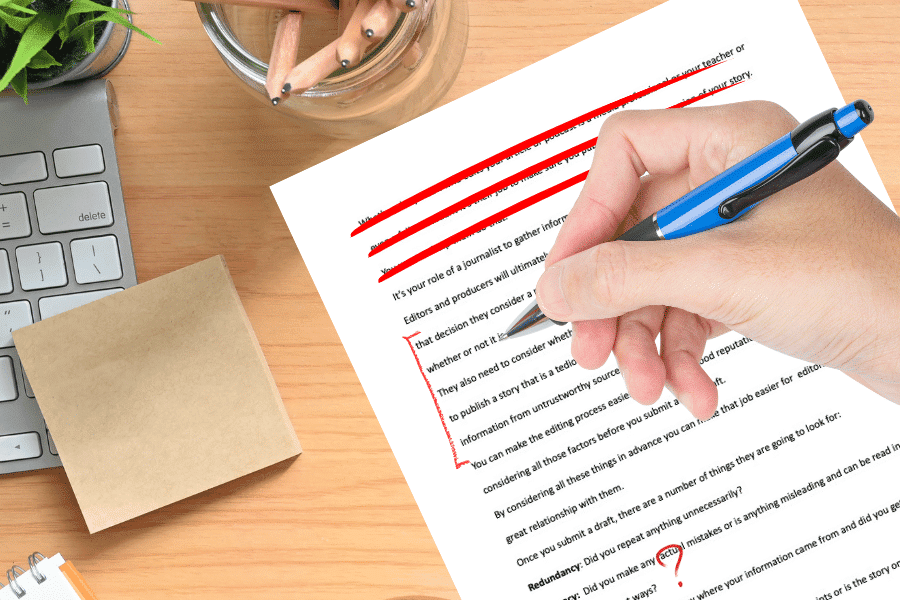
    Redundancy: Did you repeat anything unnecessarily?

    Accuracy: Did you make any factual mistakes or is anything misleading and can be read in a number of different ways?

    Sourcing: Were you able to show where your information came from and did you get the information from credible sources?

    Balance: Did you recognize multiple and opposing viewpoints or is the story one-sided and preachy?

    Organization: Did you bury the most interesting or important thing way down into your story? Did you wait too long to quote someone?

    Paragraphing: Are your paragraphs way too long? Long paragraphs are daunting to read, so try breaking them up. A paragraph can be a single sentence.

    Language: Is the story full of jargon normal people wouldn’t understand or long words only highly-educated people would know?

    Complexity: Is your story bogged down by too much information that isn’t really necessary?

    Clarity: Can a normal person understand the story on a quick read or is it confusing in any way?

    The editor’s role

    Ultimately the editor’s job is to make the story clear and readable. And both those things are hard to spot when you are the writer.

    Sometimes reporter balk at the suggestions editors make or the changes they insist must be done. When you have taken a lot of time and effort to report a story and have carefully worded and reworded your article it hurts to learn that it isn’t finished or that the editor thinks there are problems with it.

    But journalism is a collaborative process. It’s your story but it is also the editors story and the publication’s story. Your name will be on it — we call that the byline — but it will affect the publication’s reputation and that of the editor. Editors can find themselves fired or suspended if they publish a story that should not have been published. That’s the negative side of it.

    On the positive side, most editors genuinely want to make the story better — clearer, more powerful, a better overall read. And isn’t that what you want too? Over the course of my career, editors have saved me time and again by spotting mistakes I had inadvertently made. They have strengthened my writing and made me a better writer.

    Now if an editor suggests or insists on a change you really think isn’t necessary or will harm your story then fight against that. But do so respectfully and professionally.

    Ultimately the process isn’t meant to be fair. The editor has the final say. But if you can make a strong case and if you can show your editors why you care so much, chances are they will yield. Often this becomes a negotiation to find a way to word the material that satisfies both of you. But pick your battles carefully. No editor wants to work with a writer who fights every change or suggestion.

    A good partnership between a journalist and editor will help you write a great story and help ensure it stands up to the scrutiny of your audience.


    QUESTIONS TO CONSIDER:

    1. What is one way an editor can improve your story?

    2. If an editor wants change a story in a way you don’t like, what should you do?

    3. What traits do you have that would make you a good editor?


    Source link

  • How to use quotes in a story

    How to use quotes in a story

    Journalists talk to people. It is an important way to get information, at a time when many people allow artificial intelligence to do that for them. Facts and figures and things you find on the internet or in documents tell only part of a story. 

    How many things have you told a friend or family member that you wouldn’t want to put down in writing? How many times have you been in a discussion with a group of people who had different takes on something that you all experienced? 

    Haven’t you ever had a surprising epiphany in the middle of a conversation?

    By talking to multiple people who have different perspectives and comparing those thoughts or comments or stories with facts and figures and reports, journalists try to get at the truth of something that happened or is happening. They are also able to instill into an article or podcast the passion and emotion missing from government or academic reports. 

    But once you are ready to write your story, how do you use the information you get from interviews and what do you do with those quotes? 

    First, do some interviews.

    Let’s understand why you even include quotes in a story. One, because it humanizes a story that would otherwise be a tedious read. 

    You could give me a whole argument of why pollution in a river is bad. But it hits me if someone says, “The last time I went swimming, I came out with hives all over my body,” or, “The river is right out our door, but I have to drive my son across the city to the public pool to swim because the river is filthy.”

    Second, including quotes from interviews you did yourself shows your readers or listeners that you didn’t just slap together the story. That gives you credibility in a world where people won’t trust much of what they read. 

    Now, you won’t get that if, instead of interviewing people yourself, you just grab quotes from articles in other publications. When you do that, the opposite happens. You give readers a reason not to trust you, because you are simply reprinting what you read elsewhere. That comes across as lazy and careless. 

    The same is true if you take quotes off press releases issued by some corporation, organization or politician. Worse, because if you don’t tell readers that the quote came from a press release you mislead them. You make it seem as if you spoke to someone when you didn’t. And often, public relations people are allowed to just make up quotes in those press releases; the CEOs or politicians never actually said them the things they are quoted as saying. 

    Bottom line: Avoid using quotes you didn’t get yourself. 

    Using quotes in a story

    So let’s say you did an interview or two. How do you use the quotes from that interview?

    First, understand that quotes are sacrosanct. Once you have quote marks around something someone says, don’t change what is inside those quote marks. You are telling your reader: This person said this exactly. 

    If the quote includes a lot of unnecessary words, what we call blah blah blah, you can’t just delete that within the quote marks. Some people use ellipses (…) to connect the important and relevant parts of the quote without bogging it down with the blah blah blah. Others just take part of the quote. We call that a partial quote. 

    Now, that’s a style preference. Personally, I hate to do that because when you do you expect your reader to trust you. They might instead think you are withholding good information because you don’t agree with it. You risk losing that important credibility you gained by doing the interview in the first place. 

    Instead, I paraphrase. That means that you take the quote marks off the quote and instead, you attribute it. That means that you tag the information with so-and-so said. 

    Not everyone has the the gift of gab.

    You might end up paraphrasing a lot in a story if the people you interviewed don’t have the gift of speech and are nervous and stumble on words or are really boring to talk to, but have good information to give you. You can get great information from boring people! 

    Remember your role. You are talking to these people because your readers or listeners don’t have access to them or wouldn’t want to talk to them. I’ve done hours long interviews where two quotes end up in the story. Those two quotes made it worthwhile but my readers would never have wanted to sit through those painful interviews. 

    And unless you can count on a readership of super-educated people who have great attention spans, keep those quotes short. Really, a quote can be three words: “I felt awful!” she said. 

    If a quote is long to the point where it becomes tedious, paraphrase. When you paraphrase, you can cut out the gobbledygook and even change words as long as you don’t change the meaning of what the person said. 

    That’s a never. 

    Never ever change the meaning of what someone says. If you must change any words from statements in an interview, you need to really understand what the person said and even more so, what the person meant to say. 

    To misquote someone word for word

    I’ve known journalists accused of misquoting someone when they had the statement word for word on a recording. The person simply couldn’t believe they would have said what they said, even though they said it. 

    Now you might think, great! The journalist caught the person. Some people call these “gotcha” moments. 

    But think about your role as a journalist. Isn’t it to get at a truth? And should you penalize people who maybe aren’t used to being interviewed and are nervous and might say things because their brains don’t really have time to work out their thoughts properly? People will feel compelled to impress you or say what they think you want them to say.

    The rule of thumb I go by is that I try to treat people the way I would want to be treated. I get nervous talking to people. I say things I wish I hadn’t said and don’t really mean. I’d be mortified if everything I said ended up in print in some widely read publication. In a class I once taught I caught a student texting on his phone and he told me he was posting what I had just said. That shut me up. 

    Meanwhile, just because someone says something, doesn’t make it true. There is no excuse for including inaccurate or misleading information in a story even if it is said by someone with a fancy title or a prestigious reputation. People can make mistakes, exaggerate and mislead. Quote marks aren’t a blank license to publish. 

    Quotes should pop out.

    Quote marks are like little neon borders around a piece of information. They should stand out. So avoid putting quote marks around basic facts like dates or times or an undisputed amount of money. Quotes should transmit emotion or opinions or ideas. Or as my friend and colleague Deidre Pike says, “Quote the memorable. Paraphrase the mundane.”

    But do you actually have to speak to someone to quote them in a story? A while back, I’d have said yes. But now so much communication is done by email or digital chats that it has become a standard form of dialogue. How many people hate talking on the phone now? Limiting yourself to only people you can talk to in person or by telephone or videoconferencing could limit the types of people you get, and the goal is to get the best information from the best people you can. 

    Transparency is important, though. Let your readers know that you interviewed the person over WhatsApp or LinkedIn or whatever form it took. (My disclosure: the quote I grabbed from Deidre Pike was from her response to a Linkedin inquiry I posted).

    But don’t do that as a default. You are less likely to get that great emotion and passion in a post than you would in person or the phone or on a Zoom call. So try for voice or in person interviews whenever you can. 

    Plus interviews are fun. That person-to-person direct communication builds a connection that you don’t get through instant messaging or email. Hearing someone burst out laughing is way better than an “LOL!” in a text. And while waiting for a message to drop you can’t tell if the person just got distracted because their dog jumped on their lap or the question troubles them and they are taking time to think. But if you are watching them, you can tell. 

    It is harder too to get those memorable anecdotes for a story that will bring it to life. And you can’t count on the uncomfortable silences that get people to open up. 

    Regardless of how you get your quotes, getting them is only the first step. Knowing how to use them in your story will make all the difference. 

    And you can quote me on that. 


    Questions to consider:

    1. How can a quote from an interview improve a story?

    2. Why would you paraphrase something someone says instead of quoting it directly?

    3. Why should double check information that an expert told you?


    Source link

  • For a great story, get out and report

    For a great story, get out and report

    Sure, you can Zoom someone in on your laptop or chat over WhatsApp. But when you go out to an event or interview you come back with so much more.

    Source link