Category: News Decoder Updates

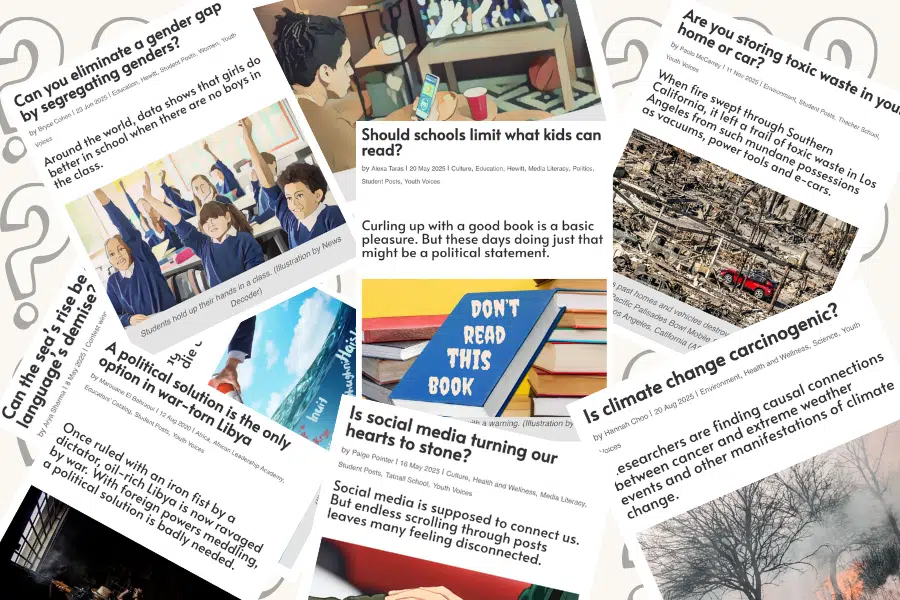
  • When young people ask big questions and seek answers

    When young people ask big questions and seek answers

    Cliffrene Haffner attended the African Leadership Academy (ALA) in South Africa during the Covid-19 pandemic. Her university applications were stalling and she felt stressed and anxious.

    “Life felt unstable, as if I were hanging by a thin thread,” Haffner said. But it was at ALA that she discovered News Decoder.

    “Joining News Decoder helped me rebuild my voice,” she wrote. “It created a place to write honestly and with purpose whilst supporting others in telling their stories. At a time when the world felt numb and disconnected, we used storytelling to bring back hope on campus by sharing our fears, thoughts and expectations.”

    At News Decoder, students work with professional editors and news correspondents to explore complicated, global topics. They have the opportunity to report and write news stories, research and present findings in global webinars with students from other countries, produce podcasts and sit in on live video roundtables with experts and their peers across the globe.

    Many get their articles published on News Decoder’s global news site.

    A different way of seeing the world

    Out of these experiential learning activities, they take away important skills valuable in their later careers, whatever those careers might be: How to communicate clearly, how to recognize multiple perspectives, how to cut through jargon and propaganda and separate facts from opinion and speculation.

    One milestone for many of these is our Pitch, Report, Draft and Revise process, which we call PRDR. In it, students pitch a story topic to News Decoder with a plan on how to research and report it. We ask them to identify different perspectives on problems they want to explore and experts they can reach out to for information and context.

    Then we guide them through a process of introspection, if the story is a personal reflection on their own experience, or a process of reporting and interviewing. News Decoder doesn’t promise students that their stories will get published at the end of the process. They have to work for that — revising their drafts until the finished story is clear and relevant to a global audience.

    One student who went through the process was Joshua Glazer, now a student at Emory University in the United States. Glazer came to News Decoder in high school as an exchange student in Spain with School Year Abroad.

    “I think the skills that I got out of that went on to really change the course of my education and how I view the world,” Glazer said. “Because when you step into the world of journalism you learn a different way of seeing the world.”

    Recognizing our biases

    Glazer learned that for journalism, he had to be less opinionated. “You have to really approach things kind of as they are in the world,” Glazer said. “And that is hard to do. That is not an easy skill that we can do as humans because we inherently have biases.”

    He said it challenged him to look inwards and recognize his biases and counter them with evidence.

    “So I think those skills have really changed the course of how I view having an argument with somebody because all of a sudden, you know, when you have an argument with someone, it’s all opinion,” he said.

    For Haffner, who is now a business administration student at Ritsumeikan Asia Pacific University in Japan, News Decoder reshaped how she and her peers understood storytelling.

    “It taught us to let go of rigid biases and to make authenticity the centre of our work,” Haffner said. “Students from different backgrounds found a space where their voices were heard, respected and valued. Our stories formed a shared map, each one opening a new room to explore, each voice strengthening the collective journey we were on. In that chaotic period, we created something meaningful together. Something bigger than us.”

    Working through the complexity of a topic

    Marouane El Bahraoui, a research intern at The Carter Center in the U.S. state of Georgia, also discovered News Decoder at the African Leadership Academy. At the time, he was interested in writing about the effectiveness of the Arab Maghreb Union — an economic bloc of five North African countries. He grew up in Morocco but didn’t want to approach the topic from a purely Moroccan perspective.

    “It was like a very raw idea,” he said.

    He pitched the story and worked with both News Decoder Founder Nelson Graves and correspondent Tom Heneghan to refine the idea. They guided him in the reporting and writing process.

    “One aspect that I liked a lot from my research was the people that I had the chance to talk to,” he said. “It was during Covid and I was just at home and I’m talking to, you know, professors in U.S. universities, I’m talking to UN officials, experts working in think tanks in D.C. and I was thinking oh those people are just so far, you can’t even reach them. And then you have a conversation with them and they’re just normal people.”

    He also found writing the story daunting. “It was a little bit overwhelming for me at the time,” he said. “You know, you’re not writing like an academic essay.”

    Graves encouraged him to write in a straightforward manner. In school, he had been taught to write in a beautiful way to impress.

    “From News Decoder, something I learned is to always keep the audience in mind who you are speaking to, who are you writing to,” he said.

    He took away the importance of letting readers make their own conclusions. “You’re not writing to tell the reader what to think,” he said. “You are writing to give them ideas and arguments, facts and leave the thinking for them.”

    Source link

  • A competition begs this question: Why be judged?

    A competition begs this question: Why be judged?

    But after learning he had won first prize, he realized that his stories didn’t have to inspire everybody at once. “Every story has some kind of relevance good enough to satisfy the thirsts of inspirations for a set of audience,” he said. “This has even given me the confidence to share everything I have found irrelevant before.”

    By encouraging students to enter their stories we are asking them to first assess their own work. We want them to understand that what they created is worthy of critical assessment.

    The students aren’t the only ones to take lessons away from contest. That’s what Tim Agnew, an expert in commercial finance and economic development and a member of News Decoder’s Advisory Board, discovered when he served on the judging panel that awarded Fofana first prize. “By reading the stories, I not only learned what students are thinking about, I learned about issues and challenges in the world that I wasn’t aware of,” Agnew said back then. “That is the mark of great journalism.”

    If students enter their work early enough, we give them the opportunity to work with us to revise it. Some 600 students have entered their work into our competitions.

    Finding themselves worthy

    The point for News Decoder isn’t to determine which story is “best”. Instead, we want young people to realize that even if ultimately they aren’t chosen as the best, they deserve to be considered among the best. 

    Their work, their creation is worthy of consideration. And the stories they found to tell, whether about themselves or others, are important stories that should be read and heard — that their voice and the voices of the people they interviewed for the article matter. 

    The results of each competition are always a bit of a surprise. All student stories that News Decoder publishes throughout the year automatically get entered into the contest, so you would think that it would be those stories that would win. After all, to get published on News Decoder, a student needs to persevere through our signature Pitch, Report, Draft and Revise process, and that means that they have received significant feedback and professional editing from us. 

    But that isn’t the case. In each contest, the judges invariably pick a mixture of stories: some that have been published on News Decoder ‚ although they don’t know that when they read them — and some that are drafts that haven’t been previously read by us. 

    This reflects our philosophy. When a student sends us their story pitch and story draft, we will never tell them it isn’t worthy of publication. The message we send is that it is a great beginning; that you can bring any idea to fruition and take anything you have done and make it even better. 

    Perseverance not perfection

    This is important in the age of artificial intelligence. We want young people to accept the idea that AI is a beginning, a tool they can use to explore big, complicated ideas and a tool that will help them create something unique and original. But it is just part of a process. 

    This is why we see journalism as a great way of fostering all kinds of things: media literacy and global awareness, critical thinking and empowerment. Ask any journalist about any story they have done and they will tell you that if they had just a little more time and more resources it would have been a better story. 

    Journalism is an exercise in getting just enough to make a story accurate and convincing and that has context and clarity. In journalism there is no perfect. Each source you get makes your story stronger, each draft you write makes it more powerful. 

    Journalists work under a deadline because if they didn’t have that deadline, they would never stop reporting and writing that story. It is a process of steady improvement. And it involves working with an editor so it is a process of collaboration with others to make something better. 

    With our storytelling competitions, we give students a difficult challenge. First they must come up with an original topic to explore and find credible sources for their information. Then, if they are telling other people’s stories, they need to interview someone. If writing about their own experience, they need to show how that experience is relevant to a global audience. 

    Great stories from student journalists

    Twice a year, students deliver. 

    Back in 2024, I noted that the variety of the topics showed how much and about how many things young people care about — problems happening around them and in other parts of the world. And I noted how impressed I was at the breadth of their sourcing.

    “Every time we do this contest I am reminded that great journalism isn’t something only seasoned professionals can produce,” I said at the time. “Young people have the knack for asking really perceptive questions and the persistence to find people who can provide the answers.”

    It is our mission at News Decoder to give students the opportunity to ask those questions and the forum to explore the problems they see happening around them. We want to show them that they can start a conversation about those problems with a worldwide audience. 

    It is our hope that from this they will realize that the world isn’t too confusing to care about and that they don’t have to zone out and tune out to what is happening around them and across the world. 

    We want to empower them to ask questions and get answers and find the people working on solutions. By telling important stories through that exploration, they can help make the world a little more understandable and a little more connected. 

    Graves noted that teens are our next generation of leaders. “Nothing could have made Arch Roberts more proud than to see News Decoder students put themselves forward as they prepare to inherit the earth,” he said. 

    For 10 years it has been our mission to inform, connect and empower youth. We intend to keep doing it for another decade. You can check out the winners of our last competition here and more about our academic programs here. If you aren’t already part of our News Decoder network, we would love for you to join us


    Source link

  • A decade of giving teens the last word

    A decade of giving teens the last word

    They are important not only for the students writing these stories but for teens all over the world reading or listening to these stories. They see their own anxieties and concerns reflected.

    As managing director at News Decoder, Maria Krasinski has seen how empowering personal reflection stories are when published. 

    “These stories build students’ self-awareness, confidence and empathy,” Krasinski said. “Seeing their stories published is an empowering act that validates their lived experiences and tells them that their voices are worth being heard.”

    She said that what News Decoder does is ask students to pause, analyze and articulate what they learned from an experience. “That creative process strengthens not only their storytelling skills, but also their ability to make sense of the world and step into public conversation,” she said. 

    A decade of publishing student stories

    News Decoder has been doing this for 10 years. Some of the first stories we published were personal reflections sent in by students.

    Back in May 2016, a high school student studying for a year in France wrote a personal reflection article after having encountered a number of her peers from Turkey at a conference in Luxembourg. During the conference they learned that a suicide bomber had killed three people in Istanbul.

    “I can’t even begin to imagine the heartbreak and panic they felt when they found out,” she wrote. 

    She then explored the concept of senseless violence:

    “I’m afraid that I’m beginning to become desensitized to the tragedies that strike all around the world,” she wrote. “When I got home from the conference and brought up the topic of the Turkish bombings, my host mom asked me how that news was different from any other day’s news, and then asked me to pass the pepper.”

    Students reach profound conclusions.

    In the article, she worked through her complicated thoughts and feelings and came to this conclusion: 

    “If we allow ourselves to be desensitized to all the bad, the good will stop motivating us as well.”

    Back in 2017, News Decoder’s founder Nelson Graves wrote that students make use of the News Decoder platform to make their voices heard. 

    “News-Decoder offers students a chance to put their best foot forward, to push the envelope, to confront different viewpoints and to work with professional correspondents,” he said. 

    For 10 years News Decoder has used storytelling to engage students in the process of learning. Through our educational programs, students are encouraged to ask big questions, identify problems they see around them and talk to people to get their questions answered — classmates, neighbours, family and experts.

    All the while, we ask students to compare their lived experiences and the problems they see around them, with what is happening elsewhere in the world. If they see inequities in their communities, how does that manifest in other countries? In doing this, they find out how connected they are to all the people seeing and experiencing these same problems. 

    Seeing the world through a global lens

    Amina McCauley is program manager for News Decoder’s EYES project — Empowering Youth Through Environmental Storytelling. She said that the global connection is important.

    “I think that young people rarely get the chance to articulate their values in a global context,” McCauley said. “Writing a personal reflection allows them to understand themselves better through this different lens.”

    The empowerment comes when they master the art of communicating what they learn to the wider world. 

    We want News Decoder students, and anyone we work with, to be able to respond when they hear or see something they think is wrong, but to be able to do so not just quickly but thoughtfully. 

    We’d like you to join our network and help us do that. If you are a teacher or school administrator, explore our school programs and consider bringing us into your schools. If you are a journalist consider donating articles and time to engage with students across the world. And if you have the means, consider donating funds to our nonprofit. 

    Why should ignorant people and bullies have the last word? 


    Source link

  • The art of communicating across borders

    The art of communicating across borders

    As communications manager, I quickly learned that translation is never just about swapping words. It’s about tone, style, even design. A press release that sounded professional in Paris could feel cold in Rome. A social media graphic that looked fresh in Madrid felt too flashy in Berlin.

    The solution was to build a common identity and then let each country adapt it. Slower, yes. But the result felt more authentic, and audiences responded.

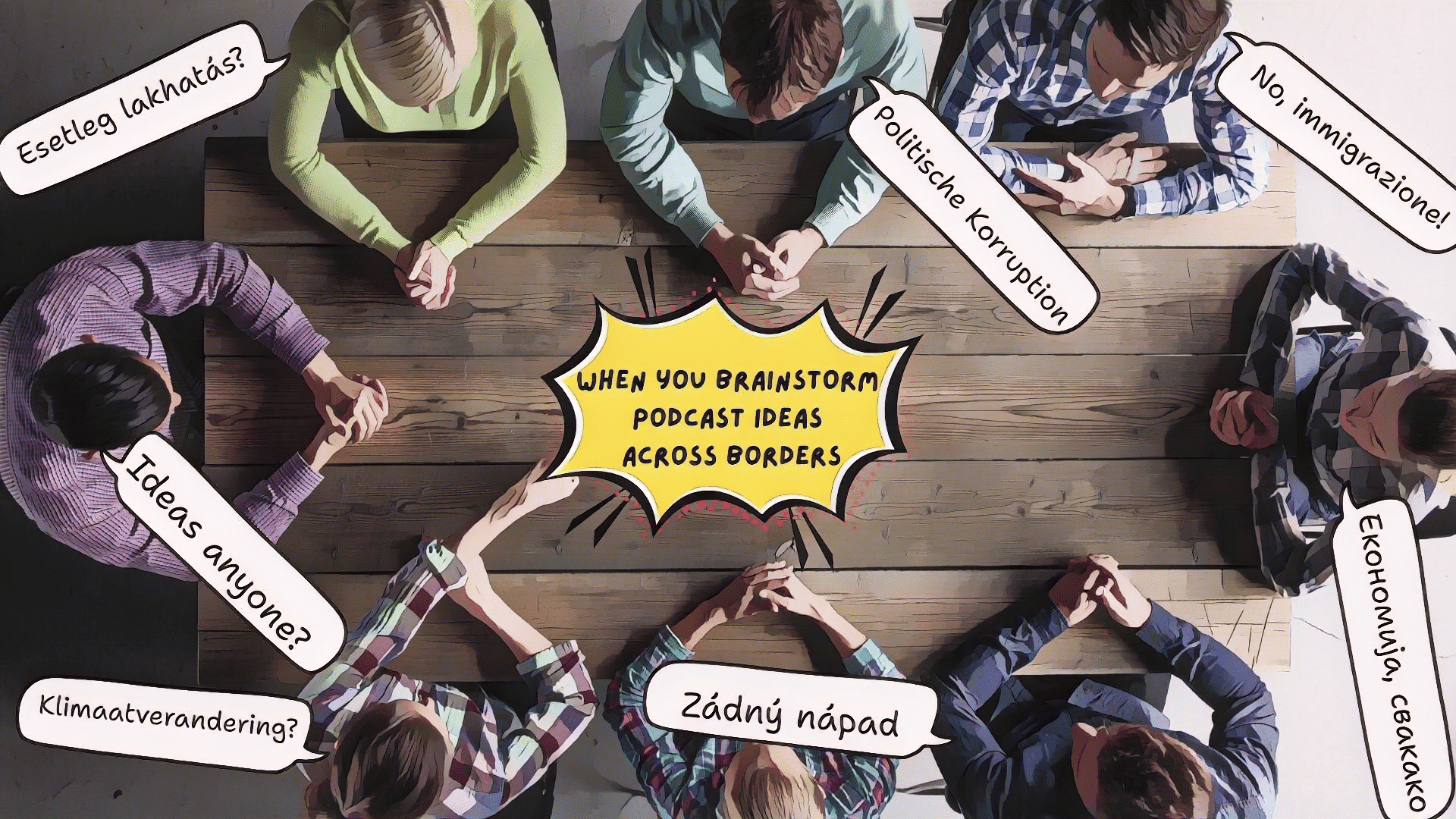
    These challenges are not unique to communication teams; they are central to journalism itself. The biggest stories today — migration, climate change, political unrest — rarely stop at national frontiers. To cover them well, reporters must collaborate across borders.

    Translation beyond words

    That type of collaboration is messy. Sources are harder to coordinate. Legal and cultural differences can complicate investigations. And readers, or listeners, may have very different expectations depending on their nationality or where they live.

    But when it works, it is powerful. Our podcasts carried voices across Europe, letting audiences in one country hear accents, pauses and perspectives from another. It turned abstract debates into human stories.

    Working across cultures also reminded me that projects are not just tasks — they are people. Some partners preferred long memos, others quick calls. Some valued hierarchy, others wanted open debate. I learned to leave space for informal chat, to ask how colleagues were doing before diving into deadlines.

    Those small gestures built trust, and trust kept the project moving.

    For young journalists and students, the lesson is simple: cross-border work can feel messy, but it’s worth it. Don’t be discouraged by misunderstandings; they often lead to clearer understanding. Pay attention not only to language, but to culture. And above all, listen.

    My two years with WePod taught me that communication is less about perfect phrasing and more about building bridges. In the end, that is what journalism itself is meant to do: connect people across borders, cultures and languages.


    Questions to consider:

    1. What does the author mean by translating is more than swapping out words?

    2. How can people from different countries and cultures find a common identity?

    3. How would you communicate with someone who speaks a different language?


    Source link

  • A decade getting teens to do something many avoid: Think

    A decade getting teens to do something many avoid: Think

    TikTok reels, attention grabbing headlines and AI that spits out instant answers. The way teens engage with the world today often lacks depth. 

    But at this age, where the teen brain is rapidly developing, deeper thinking — dubbed by psychologists as transcendent thinking — is vital not just for self-reflection and problem solving, but also self-esteem and better relationships in adulthood. 

    Many of us spend a lot of time in what researchers call “surface-level” thinking — reacting to what’s in front of us. Transcendent thinking, though, is when we go beyond concept descriptions, to wrestle with questions like, What does this say about justice? How do systems work? Where do I fit in all this? 

    “Young people get so much information fed to them through social media, influencers and podcasts and AI, and this is such a passive way of learning,” said Marcy Burstiner, News Decoder’s educational news director. “Dangerous, really, if they aren’t critically thinking about the information they are getting.”

    That’s why for 10 years News Decoder has used the lens of journalism to engage students in the process of learning. Through our educational programs, students are encouraged to ask big questions, identify problems they see around them and talk to people to get their questions answered — classmates, neighbours, family and experts. In doing this, they find out information themselves. 

    Spoon-fed learning

    This is more important than ever as the internet transforms from a place where people would lose themselves as they “surfed,” stumbling upon all kinds of new and interesting information along the way, into a place where an AI bot does that for them and spits out summarized results. 

    For 10 years, we’ve been asking teens to find real people to interview, to compare their different perspectives and from that to come up with their own original thoughts about complex topics where there isn’t a clear right and wrong, where there are layers of inequity. 

    Student Jack McConnel at The Tatnall School in the United States did this when he interviewed his state’s congressional representative, Sarah McBride, the nation’s first transgender representative in Congress.

    Through the research he did, and after interviewing McBride, McConnel came to the conclusion that voters in his district didn’t elect her because of gender identity, but because McBride pledged to help solve the more mundane issues they cared most about — protecting consumers from getting scammed, for example, or helping farmers to lower food prices. Gender identity wasn’t their most important concern.

    Students, like McConnel, who work with News Decoder often start with a “pitch” — a proposal for a news story. In the pitch, we have them ask a big question that their story will answer. McConnel’s asked three: “What role does identity play in our elected officials? Has this fixation from both sides made congressional and senatorial positions simply for show? Does it matter more who the person is or what the person does, and have we lost sight of what matters about our politicians?”

    Through his research and his one-to-one interview with McBride, he was able to answer all those questions. 

    Beyond facts

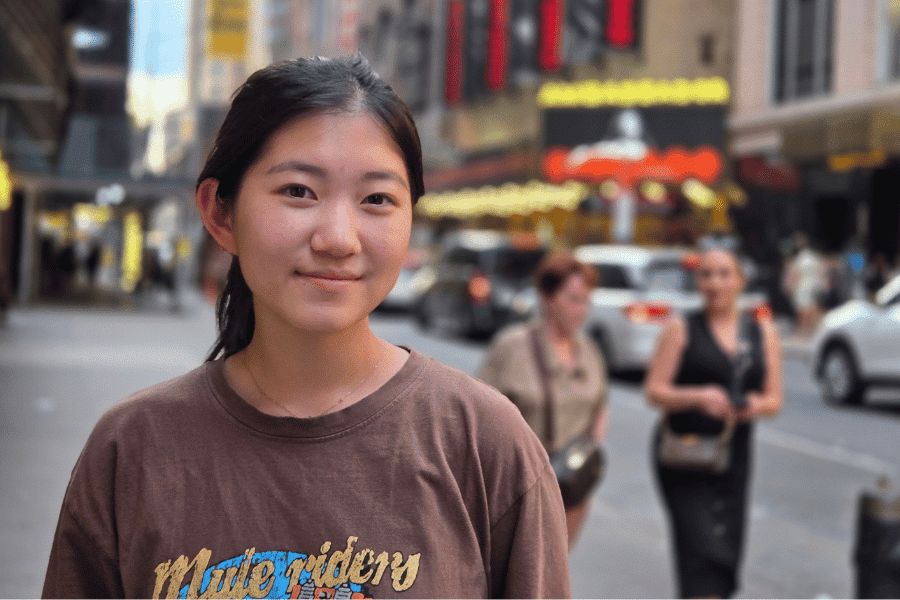
    Hannah Choo is a student at an international school in South Korea, and is working with News Decoder as a summer intern. As part of her work, she creates video content for social media based on articles published on News Decoder.

    Choo has found that through engaging with these stories, she’s forming a deeper connection with the issues the stories explore. She said the challenge is to go beyond merely summarizing the information. The goal is to connect with an audience. 

    “And that puts me in a position where I need to really focus on why this issue matters and why I should care,” Choo said. “And that gives a lot more of a sense of purpose.” 

    Choo remembers talking to a biology graduate student, who told her about apoptosis, a process whereby cells die off — a way our bodies get rid of unneeded cells. Alone, this concept feels meaningless, even dry. 

    But the grad student told Choo that when we’re initially formed in the womb, we have paddle-shaped hands with a webbing of skin connecting the fingers and toes. This webbing disappears as we form, due to this apoptosis. Choo remembers looking at her own hands in fascination.

    “And so later, when I actually got to learn biology and learn about the cell cycle, it was a lot easier for me to engage with the topic,” Choo said. “I wasn’t just studying science but I was studying my own body.” 

    From deep thinking to deeper relationships

    A five-year study, published in 2024 in the journal Scientific Reports, followed 65 teenagers aged 14-18 to see how transcendent thinking shapes their brains, and how this further shapes their lives.  

    The teens were shown emotionally rich mini-documentaries featuring real stories of adolescents around the globe — a method that triggers transcendent thinking. They then talked through what the stories meant: how they felt, why they mattered, and what bigger ideas they raised. 

    They found that teens who engaged in this deeper style of thinking showed stronger connections over time between two key brain networks — those involved in self-reflection and big-picture thought, and focus and problem solving. 

    Crucially, they also found that these teens went on to have a clearer sense of identity in late adolescence, which later linked to greater self-esteem and better relationships in young adulthood.

    One way News Decoder helps young people understand deeper meanings and broader implications is by having them look at societal problems and possible solutions. 

    Searching out solutions

    At News Decoder we ask students to identify a problem in their community and then see if they can find people working to solve that problem. 

    “In the process they see at first that a lot of problems seem to have no solution or the solutions are so far off,” Burstiner said. “But all the complications that prevent solutions are like protective layers around the problem. They are like the levels you need to surmount in a video game.”

    If a teen has the patience and persistence to work through those complications they can not only see the solutions but they can see what is preventing those solutions, Burstiner said. 

    One News Decoder student in India wondered what might happen when climate change causes massive migration. 

    “In exploring the topic she hit on the idea of lost languages — that a language is what often ties a community together and connects generations. But if a community is forced to disperse and the people end up integrating into other lands, the language that connected them could die out,” Burstiner said.

    Connecting dots 

    Another student at The Tatnall School played soccer, and began thinking about how much it cost his family for him to play at a competitive level. “In exploring this he realized how much of competitive sports is elitist and how much more difficult it is for someone to go into professional sports if they are poor,” Burstiner said. 

    When students conduct interviews with people who understand these topics in-depth or who are affected by these issues, they can further connect their sense of self with these stories. 

    Choo, during her internship, pitched a story about cancer, because a close family member was undergoing cancer treatment. She asked this question: “How does climate change affect the quality of healthcare for cancer patients?”  

    In doing the research, uncovering connections and conducting interviews, she connected the often-abstract issue of climate change to her own life. 

    “This was the first time I could really connect climate change to my own life and my own loved ones,” Choo said.

    Source link

  • A decade waking teens up to the world around them.

    A decade waking teens up to the world around them.

    Back in 2019, students at La Jolla Country Day School in California interviewed a citizen of Beirut who had spent years imprisoned in the Guantanamo Bay Detention Center in Cuba, through a live zoom webinar arranged by News Decoder. 

    In 2022, News Decoder brought war correspondent Bernd Debusmann into a classroom, through a live feed to the Tatnall School in the U.S. state of Delaware where students were able to ask him what it was like getting shot in the back while covering Beirut. 

    My memory of high school is the challenge I had keeping my eyes open and my head vertical. I can describe falling in love with a metallic blue Mercedes in the parking lot below the window in my trigonometry class but I can’t tell you what a cotangent is. 

    The students in math and history and language classes today will inherit not just the world we live in but the power to shape it. And the years they spend in school are supposed to prepare them for that awesome responsibility. 

    But can we keep them awake and aware after they’ve stayed up half the night binging Apple TV or playing PUBG, fueled by orange Fanta and Hot Cheetos?

    Feeding curiosity

    It is News Decoder’s deep belief that most students are curious and want to learn but that they need to connect to the material they are supposed to study.

    For 10 years we’ve helped teachers and schools engage teens through experiential learning and by connecting them with people who have been eyewitnesses to world events. At News Decoder, we bring the world into the classroom and take students out into the world around them. 

    We do this through storytelling. We don’t tell them stories, we have them tell stories to us and the world and interview people who have stories to tell. We show them the power of telling other people’s stories through journalism and in the process exploring other people’s perspectives and learning about their experiences. 

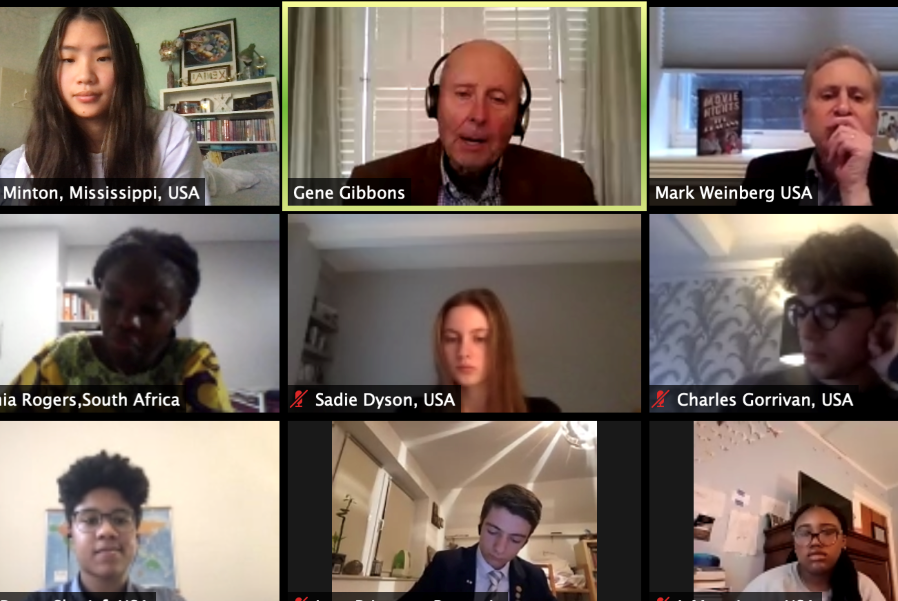
    Two ways we do this is through cross border webinars and through our signature Pitch, Report, Draft and Revise process that we call PRDR. In cross border webinars we put students from different countries and across different time zones together in live video sessions to share problems in their communities and compare the conclusions they reached after researching the same important topic. 

    This past year we did that through our monthly “Decoder Dialogues.” Students from countries including Colombia, India, Belgium, France, Rwanda and the United States shared their research and views about topics as important as the role of the press in journalism, what good and bad leadership looks like, and where responsibility for climate change lies. 

    Through the PRDR process, we encourage students to identify a problem in their community, research it, and find and interview an expert — someone who had directly experienced the problem, or someone working to solve it and then see whether and how that same problem exists in other countries and how people in those countries tackle it. 

    Building human connections across borders

    Ultimately, we guide them through the process of turning their findings into engaging stories — articles or podcasts or videos and publishing those stories to the world. 

    In a world where so many of us spend so much time looking at screens, we want students to realize that knowledge can begin online, but the most powerful information comes from finding and interviewing people who are knowledgeable and that conversation with an interesting person is so much more engaging than words on a screen. 

    Interviews are transformative. In conducting them, students find themselves at the same level as the people they interview no matter how important that person is. An insightful question asked by a 16-year-old to say, famed U.S. constitutional lawyer Floyd Abrahms, which Lucy Jaffee did back in 2020, commands respect.

    “I just loved being able to talk to people and hear their stories,” Jaffee said at the time.

    It is that love for human connection in an increasingly robotic world that News Decoder is committed to fostering. We’ve done it for 10 years and we plan to do it for another decade. 

    Source link

  • Exploring the diversity of people the world over

    Exploring the diversity of people the world over

    At the age of 9, Hannah Choo found herself shuttled across the Pacific Ocean from California to Seongnam, South Korea. She found herself living in a city, about an hour from Seoul, where everything from language to climate was different.

    She’d grown up in sunny, suburban, slow-paced Pasadena in Southern California and wasn’t happy at first about the move.

    “When I first arrived, the honking of cars at night was so loud that I couldn’t fall asleep,” Choo said. 

    But now, seven years later, she realizes that the experience of living in two starkly different cities has given her a better understanding of people. And this is important because Choo wants to be a journalist. 

    She has joined News Decoder as a summer intern, bringing with her an interest in communities and how they collectivize and support themselves. 

    “Korea has made me look deeper into how people differ experientially, not just in terms of surface factors like race or ethnicity or where they’re from,” she said. “I think there’s a lot of diversity in Korea with what people go through in their lives.”

    Appreciating cultural differences

    The homogenous culture of South Korea gives Choo a strong sense of community and has helped her realise that people’s differences are not defined by where they come from.

    For News Decoder, Choo brings the perspective of a young person, which is valuable to an organization devoted to helping youth process global events and the confusing digital world that consumes them.

    Consider her work with Amina McCauley, who leads News Decoder’s EYES program — Empowering Youth Through Environmental Storytelling —  a two-year project to create a climate change curriculum that can be implemented in schools across the globe. 

    “Hannah has been helping me critique News Decoder’s climate journalism educational materials,” McCauley said. “As the EYES project enters its phase of dissemination, Hannah’s curiosity and understanding of depth is helping the curriculum to become stronger and more relevant for the young people of today.”

    McCauley said that Choo is thoughtful and critical, but that it is her way of interacting with others that is her best asset.

    “She brings me trust in future generations,” McCauley said. 

    Working with News Decoder

    Choo said she wanted to work with News Decoder because of the way it spotlights the human side of news, and how lives are impacted by everyday events. 

    “I feel like News Decoder aims to really empower students to not just write a story in general, but also how to incorporate their own voice into that while sticking with the rules of journalism,” Choo said.

    Choo will also help News Decoder bolster its social media. In the coming weeks, she will be working with News Decoder’s Program and Communication Manager Cathal O’Luanaigh on her own series of posts on News Decoder’s social media pages and working with its Educational News Director Marcy Burstiner on articles related to climate change, people and culture.

    Burstiner said that when Choo first came to News Decoder it was as if she knew exactly what was wanted of her. “She has a great instinct for news, for seeing the story that hasn’t been told and that needs to be told,” Burstiner said. “For News Decoder, South Korea is a country that has been underreported. I’m really looking forward to her stories.”

    Ultimately, Choo hopes to tell stories about people in many different places. 

    “I see myself travelling the world and visiting different communities and really hearing their stories, and being able to present it in a way that’s authentic to them,” she said. “And showing that to the rest of the world and allowing other people to also see all of these unique parts of a global culture that you never really get a spotlight on.” 

    Telling global stories

    What she has learned so far in her travels from California to South Korea is that there is great satisfaction in adapting to a new culture. 

    While there was no language barrier for Choo when she moved to Seongnam, having spoken Korean with her parents since she was a child, the noise and way of living there needed some getting used to. But what she at first found so different, she now finds comfort in. 

    Everything she needs outside of her apartment complex, which is wrapped by four different roads, is just a short subway, drive or walk away. And with community comes safety. 

    “I always tell people that you could leave your laptop on top of a coffee shop table and expect to find it there again an hour later,” Choo said. 

    There are still challenges. 

    Korean schools are hyper competitive and getting into a prestigious university is important. This means that in high school, students are so focused on getting good grades that their mental health often suffers.

    Young people prioritise studying for tests over sleep and a social life. They compare themselves to each other and base their self worth on academic performance. 

    “That creates pretty toxic dynamics between people,” she said. “Beating out the competition, I think, is a huge narrative here.”

    This also means that school and learning is centred on grades, so that critical thinking and interest is of much lower importance.

    “Studying in any school in Korea, even if international, means you’re still affected by the culture,” Choo said.

    Source link

  • A decade connecting young people to the world they live in

    A decade connecting young people to the world they live in

    To understand the chaos that is the world today it helps to look back a decade.

    This past year, world representatives met at COP29 to fight climate change in a place led by an authoritarian regime dependent on fossil fuels. The Israeli government under Prime Minister Benjamin Netanyahu has been massacring Palestinians in Gaza. The United States bombed Iran in an attempt to eliminate its nuclear capability. And U.S. President Donald Trump and an increasing number of European leaders have closed their doors to immigrants and refugees.

    In great contrast, when News Decoder launched 10 years ago, 196 nations signed onto the landmark agreement known as the Paris Accords, ushering in the hope that together we could cool down the planet. The administration of then-U.S. President Barack Obama signed a historic agreement with Iran, in which Iran would get rid of 97% of its supply of enriched uranium. A million refugees flooded into Europe from conflicts in Syria and elsewhere.

    In the years in between, the world locked down during the Covid-19 pandemic, Great Britain exited the European Union, the #MeToo movement erupted across the world, nations across the globe began legalizing same sex marriage, Russia invaded Ukraine, Trump got elected, tossed out and re-elected and we began ceding everything to artificial intelligence.

    Can you imagine coming of age in that world?

    Decoding world events

    When Nelson Graves founded News Decoder to help young people “decode” the world through news, it seemed that we lived in an age of optimism. Now young people feel helpless and disconnected. In April 2024, the World Economic Forum reported that young people worldwide are increasingly unhappy and this trend would have real consequences for the future.

    “We live in a world where teenagers grapple with a sense of crisis before adulthood; a time when young people, historically beacons of optimism, report lower happiness than their elders,” the report said.

    But even back in 2015, Nelson knew things would change. He’d spent years as a foreign correspondent covering world events. 

    “Anyone with a sense of history and someone with experience in following current events — especially a foreign correspondent — would have known that the world is most likely to change when you’re least expecting it,” he said. “Nothing is immutable — except the truism that the political pendulum is always swinging.”

    The roots of Brexit, the Make America Great Again movement in the United States and antipathy towards immigrants were already deep in 2015, even if they were largely underground and out of sight, he said. 

    A decade later, News Decoder’s mission of connecting young people to the world around them seems more relevant than ever.

    For 10 years, the high school students News Decoder has worked with have explored — through articles, podcasts, videos and photo essays and in live, cross-border dialogues — how problems in their communities connect to things happening elsewhere in the world. In 2016, for instance, a student studying abroad in China worked with News Decoder to explore how growing consumerism was leading to mountains of trash and created an army of people who mined that trash building up around them.

    That same year in an online roundtable, News Decoder brought together students from the Greens Farms Academy in the United States with students from Kings Academy in Jordan, Aristotle University in Greece and School Year Abroad in France to discuss the ongoing war in Syria and the worldwide crisis of Syrian refugees.

    Kindling curiosity

    One of the Greens Farms Academy students who participated, Samyukt Kumar, further explored the topic in an article News Decoder published that year. Looking back, he now tells, the practical experience it gave him was valuable.

    “Less for the substance but more for the practical experience,” he said. “My views on these topics evolved significantly as I received greater education and real-world exposure. But I still reap the benefits from gaining more confidence in my writing, learning to embrace the editing process and engaging my curiosity about the world.”

    In 2017, a News Decoder student at Haverford College in the United States explored the problem of migrants flooding into her home country of Italy. She came to this conclusion:

    “The roots of the problem lie outside of Italy, which nonetheless bears a heavy burden as the first EU destination for thousands of Africans crossing the Mediterranean,” she wrote. “A solution to the migration crisis depends not only on Italy’s good will — now being stretched to the limits — but also on the willingness of the rest of Europe and the international community to tackle the armed conflicts, poverty and human rights abuses that stir so many Africans to attempt the perilous Mediterranean crossing.”

    Fast forward to 2025. News Decoder worked with high school students in the British Section at the Lycée International Saint-Germain-en-Laye outside of Paris to take what they learned about the United Nations Sustainable Development Goals and find and tell narrative stories through podcasts. They explored such things as the problem of poverty in resource-rich areas of Africa and the connection between actions of multinational corporations and climate change.

    Crossing borders

    In Switzerland, News Decoder worked with students at Realgymnasium Rämibühl Zürich on a series of articles that explored gender inequity in sports, the connection between social media and the decline of democracy, how a local community is affected when it hosts a world conference and the connection between the quality of life in a country and the people’s willingness to pay for that through high prices and high taxes.

    And in monthly “Decoder Dialogues” News Decoder put together students from countries such as the United States, Colombia, France, India, Belgium and Rwanda in online roundtables to discuss such topics as the future of journalism, climate action, censorship, leadership and artificial intelligence.

    Through the exploration of a problem in the world, by seeking out experts who can put it into context and by seeking out different perspectives from other places, students make sense out of chaos. They begin to see that there are people out there thinking about these problems in different ways and seeking solutions to them.

    Ultimately, the message News Decoder wants students to take away is that you don’t need to run from complicated problems. You don’t need to disengage from the news and the events happening around you. By delving more into a topic or issue or controversy, you can begin to understand it and see the path forward.

    At News Decoder, we believe people should be able to listen to each other and exchange viewpoints to work through problems across differences and borders. Back in 2015, Graves posed this challenge: How to tap into the intellectual energy of the generation that will soon assume leadership in business, government, academia and social enterprise? 

    For the past 10 years we have worked to empower young people by giving them the information they need, connecting them to the world around them and providing them a forum for expression. For a decade we have helped them find coherence out of the chaos around them — and we intend to continue doing that for the next 10 years. 

    One thing we know: 10 years from now the world will be a lot different from what it is now. 

    “While no one has a perfect crystal ball, you can be sure that nothing remains unchanged for long,” Graves said. “Yesterday’s mortal enemy can become a fast friend — think of U.S. relations with Vietnam since the 1950s. Lesson: Always expect change, even if you can’t anticipate the precise contours, and don’t project linearly into the future. As ever, keep an open mind and beware confirmation bias.”

    That’s the message News Decoder tries to instill in the young people we work with. After all, a decade from now, they will be the ones making that change happen. 

    Source link

  • Here’s to 10 years! And many more.

    Here’s to 10 years! And many more.

    As News Decoder celebrates its 10th birthday, the need for young people to appreciate different perspectives and be globally aware is more pressing than ever.

    Source link

  • And the winners are…

    And the winners are…

    The judges in the 17th News Decoder Storytelling Competition chose as winners articles by students from The Hewitt School and The Tatnall School in the United States and Realgymnasium Rämibühl Zürich in Switzerland. 

    The entries tackled serious issues such as grade inflation, the local impacts of an international conference, demographic changes at universities, cell phones in classes, nepotism and the loss of languages to climate change.

    First Prize went to Stella Petersen of The Tatnall School in the U.S. state of Delaware for “Eliminating grade inflation isn’t as easy as ABC”, an article that considers whether letter or numerical grades on assignments are the best measure of student achievement. 

    One judge noted that the story was different from the others in the contest and well sourced. Another judge wrote: “This topic of grade inflation is an up-and-coming relevant conversation even across colleges around the country, and so many implications were considered here. The nuance in this article is marvellously impressive.”

    And for second place…

    Tying for Second Prize were Sophie De Lavendeyra of The Hewitt School in New York City and the team of Lennox Huisman and Maximilian Wunderli from Realgymnasium Rämibühl Zürich. 

    De Lavendeyra’s article, “Universities struggle with the speed of demographic change“, tackled the struggle of a university to meet the needs of a rapidly-changing student body. 

    In “When world leaders descend on your town”, Huisman and Wunderli looked at how the town and inhabitants of Davos, Switzerland are affected each year by the hordes of people who arrive for the World Economic Forum. Of the story, one judge wrote: “This was BY FAR my personal favorite in this storytelling contest. It grabbed at what really matters in journalism: How real-world, normal people are affected by big players attending the World Economic Forum.”

    The caliber of the entries as a whole was impressive. That can be seen in the fact that the judges had a particularly difficult time with the Third Prize winner — they ended with a four-way tie: Yi Le Low of Realgymasium Rämibühl won for “As fans flock to women’s football, pay stays out of play”; and from Tatnall, the third-place winners were Charles Norris for “Are smartphones at school all bad?”; Chloe Abel for “Should getting ahead depend on who you know?” and Simone Bessong for “Silencing voices by banning books“.

    The winners were selected by a three-person jury that included John West, a News Decoder correspondent based in Paris; ​Chloé Pété, a project officer for the international nonprofit organization Media & Learning Association; and ​Kaja Andrić, ​a former​ News Decoder intern and a journalism student at New York University.

    Judging student stories by professional standards

    The judges used the following criteria to rank the stories: whether the topic was fresh, different or timely; whether the student interviewed anyone for the story; whether the student reported the story without bias; whether the student considered different perspectives and finally the judge’s own subjective assessment. 

    Besides the winning entries, student Arya Sharma from VIBGYOR High NIBM in Pune, India won honorable mention for a story about how climate change can result in the extinction of human languages because of forced migration. One judge wrote: “This is my favourite story. I loved the topic, the style.”

    News Decoder Educational News Director Marcy Burstiner was particularly impressed by the challenging topics students took on. “There was such a great diversity of story topics,” she said. “It shows how curious students are about all kinds of things. They are questioning what they see around them and what they read.”

    It can’t be overstated how difficult a challenge the students were given, Burstiner said. Not only did they have to come up with an original topic to investigate, they need to find credible sources for their information and, at least for all the prize winners, they found experts to interview, and incorporated quotes from these people into their interviews.

    “Imagine, here you have a high school student asking a professional to set aside time to answer their questions for a story that will be published,” Burstiner said. “That is a difficult thing for professional journalists to do.”

    How the contest works

    The contest is held two times a year in honor of the late Arch Roberts Jr., who served with the International Atomic Energy Agency in Vienna after more than 12 years as a staff member with the U.S. House Foreign Affairs Committee. With the backing of an anonymous donor, News Decoder was able to award a total of $850 in cash prizes to this year’s winners.

    The entries came from students across News Decoder’s network of school partners. 

    To be considered for the contest, an entry must have been written by one or more students enrolled in a News Decoder partner institution. Students from nine schools in seven countries submitted articles to this iteration of the Storytelling Contest. Learn more about News Decoder’s school partnership program.

    Read the contest winners here:

    First Prize

    Eliminating grade inflation isn’t as easy as ABC

    Second Prize

    Universities struggle with the speed of demographic change

    When world leaders descend on your town

    Third Prize

    Are smartphones at schools all bad?

    Silencing voices by banning books

    Should getting ahead depend on who you know?

    As fans flock to women’s football, pay stays out of play

    Source link