Category: News Decoder

  • Top Tips: Make your voice heard

    Top Tips: Make your voice heard

    Do you feel like the media doesn’t represent you? Are you aware of certain tropes that you disagree with and know from first-hand experience?

    Then use your voice. To show you how, Charis McGowan, a freelance journalist who has worked for the Guardian, the BBC and Al Jazeera and was an editor at gal-dem, a magazine for women and non-binary people of color, shares some tips that will help you effectively get your opinions across in an article. 

    McGowan offered her ideas as part of News Decoder’s partner project Mobile Stories. Mobile Stories is a publishing tool for young people. It provides guidance on how to create trustworthy news content while upholding journalist ethics. You can watch a video of McGowan explaining her ideas at the end of this article.

    McGowan said you first need to distinguish between a news story and an opinion article. “A news story is about your subjects, you don’t have to use the word ‘I’ at all, you’ll actually just keep your voice neutral,” McGowan said. “But an opinion article is totally different, you have to use your voice and your perspective.”

    You might comment on the news, but then you’ll tell readers how you relate to that particular piece of news. “This could be based on your ethnicity, your sexual orientation, where you live and your expertise, opinion,” McGowan said. 

    Articles by journalists differ from opinions you see in comments on social media. People who post comments might be spouting off the bat or using their initial gut reaction. “Opinion writers actually have to research what they’re talking about,” McGowan said. “That means looking at articles that perhaps they’ve not written and drawing on data and looking at really credible and trustworthy sources.”

    Opinions and expertise

    That’s what Alexa Taras did when she wrote an article News Decoder published in May 2025. Taras, a student at The Hewitt School in New York City, was concerned about the increasing number of schools around the country that were agreeing to pull books out of libraries and classrooms after parental complaints about the topics.

    She researched news stories to find actual incidents and interviewed a book publisher and an author. Only then did she include her own perspective:

    “As a current student and aspiring writer, I fear that in the future I will be creating books that cannot exist in the educational system,” Taras wrote. “Students deserve the right to learn about history no matter how violent or scary. How can we inspire students to be the best they can, if their education has been censored to only learn about ‘safe’ topics? Education should not be limited.”

    If you have an idea about something happening in the news that you think is worth exploring, McGowan provides some tips on writing an opinion piece that is both fact-based and persuasive.

    1. Write about what you know and what you are passionate about.

    This could be anything from pop culture to politics. McGowan wrote an opinion piece, for example, on an Ed Sheeran song. “He was using Caribbean slang in his lyrics and it made me feel a bit uneasy, so I delved into to my sense of unease.” McGowan asked: Was it okay for a white English man to be using this type of language? “My dad is from the Caribbean and my grandparents still speak with this type of language so it just made me feel a bit weird.”

    McGowan delved into matters of appropriation and the colonization of language to base the arguments on why Sheeran shouldn’t be doing that. “I had my opinion and I had previous work to draw on so that’s all I needed to start writing.”

    2. Research what’s been said on the topic already.

    After you’ve explored what other people have written about the topic, then think about your unique angle and draw on your voice.

    3. Bring in the news.

    Go back to what you read or saw or heard that got you thinking about this in the first place. “Signal your reaction to it straight away,” McGowan said.

    4. Back up your opinion.

    Use research data, facts and figures and other articles. “Make sure that you always cite trustworthy sources of information,” McGowan said.

    5. Round up your article in a clear and memorable way.

     Sometimes, McGowan said, the last sentence is the most important.

    Watch Charis McGowan’s video here:

    Learn more about the Mobile Stories project here. Co-funded by the European Union.


    Questions to consider:

    1. How does an opinion article differ from comments people make on social media?

    2. What do you need in an article to make it “persuasive”?

    3. What is a topic you are knowledgeable and passionate about?


    Source link

  • A decade connecting young people to the world they live in

    A decade connecting young people to the world they live in

    To understand the chaos that is the world today it helps to look back a decade.

    This past year, world representatives met at COP29 to fight climate change in a place led by an authoritarian regime dependent on fossil fuels. The Israeli government under Prime Minister Benjamin Netanyahu has been massacring Palestinians in Gaza. The United States bombed Iran in an attempt to eliminate its nuclear capability. And U.S. President Donald Trump and an increasing number of European leaders have closed their doors to immigrants and refugees.

    In great contrast, when News Decoder launched 10 years ago, 196 nations signed onto the landmark agreement known as the Paris Accords, ushering in the hope that together we could cool down the planet. The administration of then-U.S. President Barack Obama signed a historic agreement with Iran, in which Iran would get rid of 97% of its supply of enriched uranium. A million refugees flooded into Europe from conflicts in Syria and elsewhere.

    In the years in between, the world locked down during the Covid-19 pandemic, Great Britain exited the European Union, the #MeToo movement erupted across the world, nations across the globe began legalizing same sex marriage, Russia invaded Ukraine, Trump got elected, tossed out and re-elected and we began ceding everything to artificial intelligence.

    Can you imagine coming of age in that world?

    Decoding world events

    When Nelson Graves founded News Decoder to help young people “decode” the world through news, it seemed that we lived in an age of optimism. Now young people feel helpless and disconnected. In April 2024, the World Economic Forum reported that young people worldwide are increasingly unhappy and this trend would have real consequences for the future.

    “We live in a world where teenagers grapple with a sense of crisis before adulthood; a time when young people, historically beacons of optimism, report lower happiness than their elders,” the report said.

    But even back in 2015, Nelson knew things would change. He’d spent years as a foreign correspondent covering world events. 

    “Anyone with a sense of history and someone with experience in following current events — especially a foreign correspondent — would have known that the world is most likely to change when you’re least expecting it,” he said. “Nothing is immutable — except the truism that the political pendulum is always swinging.”

    The roots of Brexit, the Make America Great Again movement in the United States and antipathy towards immigrants were already deep in 2015, even if they were largely underground and out of sight, he said. 

    A decade later, News Decoder’s mission of connecting young people to the world around them seems more relevant than ever.

    For 10 years, the high school students News Decoder has worked with have explored — through articles, podcasts, videos and photo essays and in live, cross-border dialogues — how problems in their communities connect to things happening elsewhere in the world. In 2016, for instance, a student studying abroad in China worked with News Decoder to explore how growing consumerism was leading to mountains of trash and created an army of people who mined that trash building up around them.

    That same year in an online roundtable, News Decoder brought together students from the Greens Farms Academy in the United States with students from Kings Academy in Jordan, Aristotle University in Greece and School Year Abroad in France to discuss the ongoing war in Syria and the worldwide crisis of Syrian refugees.

    Kindling curiosity

    One of the Greens Farms Academy students who participated, Samyukt Kumar, further explored the topic in an article News Decoder published that year. Looking back, he now tells, the practical experience it gave him was valuable.

    “Less for the substance but more for the practical experience,” he said. “My views on these topics evolved significantly as I received greater education and real-world exposure. But I still reap the benefits from gaining more confidence in my writing, learning to embrace the editing process and engaging my curiosity about the world.”

    In 2017, a News Decoder student at Haverford College in the United States explored the problem of migrants flooding into her home country of Italy. She came to this conclusion:

    “The roots of the problem lie outside of Italy, which nonetheless bears a heavy burden as the first EU destination for thousands of Africans crossing the Mediterranean,” she wrote. “A solution to the migration crisis depends not only on Italy’s good will — now being stretched to the limits — but also on the willingness of the rest of Europe and the international community to tackle the armed conflicts, poverty and human rights abuses that stir so many Africans to attempt the perilous Mediterranean crossing.”

    Fast forward to 2025. News Decoder worked with high school students in the British Section at the Lycée International Saint-Germain-en-Laye outside of Paris to take what they learned about the United Nations Sustainable Development Goals and find and tell narrative stories through podcasts. They explored such things as the problem of poverty in resource-rich areas of Africa and the connection between actions of multinational corporations and climate change.

    Crossing borders

    In Switzerland, News Decoder worked with students at Realgymnasium Rämibühl Zürich on a series of articles that explored gender inequity in sports, the connection between social media and the decline of democracy, how a local community is affected when it hosts a world conference and the connection between the quality of life in a country and the people’s willingness to pay for that through high prices and high taxes.

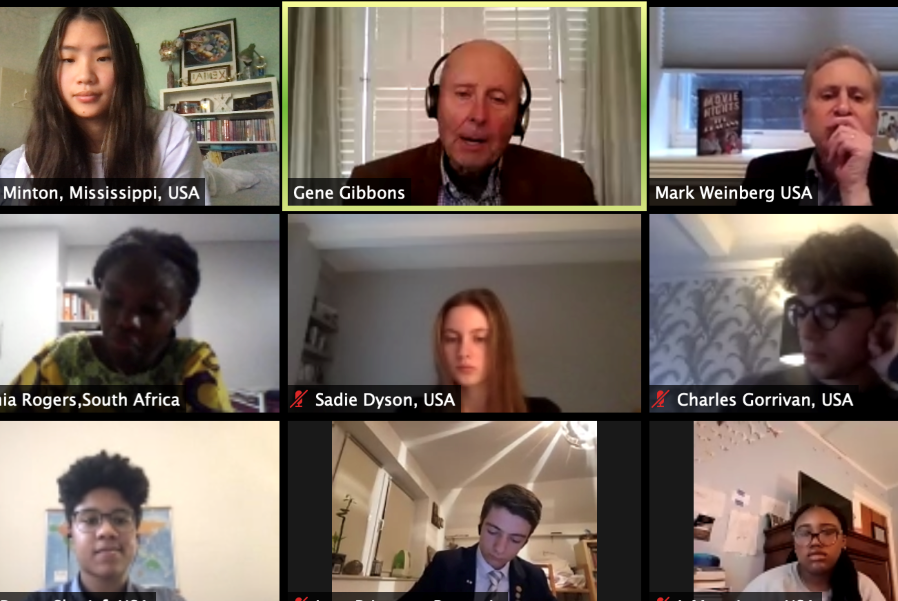
    And in monthly “Decoder Dialogues” News Decoder put together students from countries such as the United States, Colombia, France, India, Belgium and Rwanda in online roundtables to discuss such topics as the future of journalism, climate action, censorship, leadership and artificial intelligence.

    Through the exploration of a problem in the world, by seeking out experts who can put it into context and by seeking out different perspectives from other places, students make sense out of chaos. They begin to see that there are people out there thinking about these problems in different ways and seeking solutions to them.

    Ultimately, the message News Decoder wants students to take away is that you don’t need to run from complicated problems. You don’t need to disengage from the news and the events happening around you. By delving more into a topic or issue or controversy, you can begin to understand it and see the path forward.

    At News Decoder, we believe people should be able to listen to each other and exchange viewpoints to work through problems across differences and borders. Back in 2015, Graves posed this challenge: How to tap into the intellectual energy of the generation that will soon assume leadership in business, government, academia and social enterprise? 

    For the past 10 years we have worked to empower young people by giving them the information they need, connecting them to the world around them and providing them a forum for expression. For a decade we have helped them find coherence out of the chaos around them — and we intend to continue doing that for the next 10 years. 

    One thing we know: 10 years from now the world will be a lot different from what it is now. 

    “While no one has a perfect crystal ball, you can be sure that nothing remains unchanged for long,” Graves said. “Yesterday’s mortal enemy can become a fast friend — think of U.S. relations with Vietnam since the 1950s. Lesson: Always expect change, even if you can’t anticipate the precise contours, and don’t project linearly into the future. As ever, keep an open mind and beware confirmation bias.”

    That’s the message News Decoder tries to instill in the young people we work with. After all, a decade from now, they will be the ones making that change happen. 

    Source link

  • Can a podcast cross borders?

    Can a podcast cross borders?

    “To me the essential ingredient is that two persons or two teams from different countries collaborate, right?” Ricci said. “So who’s doing the podcast itself makes it really a cross-border operation.”

    A podcast becomes cross-border, he said, when you bring different perspectives from different countries together in one story. There are two ways to make that story compelling to both the audiences and to Europe as a whole.

    The first way, he said, is to have a strong story that articulates across borders and is relevant for two countries. It can be a very specific story that relates to feelings and notions interesting to anyone. The second way is to start from a general topic and then find a story within that topic. 

    “I’d really love that all podcasts speak to every audience we aim to target,” Ricci said. “I think it’s the biggest challenge to make sure that every podcast finds its audience in every national context.”

    At WePod, the team divided the production process into stages. 

    First there was a pre-editorial stage where they brainstormed ideas. Then came a pre-production phase, where within the topic they reflected more concretely about the characters of each podcast. 

    “How do the different episodes talk to each other?” Ricci said. 

    Provide room for perspectives.

    That was followed by the production phase. That involved going on the ground, setting up interviews and working on scripts and language transcriptions. 

    Finally, in the post-production phase everything textual became a finished podcast, ready to be promoted and distributed. 

    Caminero said that every podcast WePod did was produced in at least two languages, the first in the native language of the podcast producer and in English for a cross-border audience. “Obviously, this creates specific challenges because not all versions can be identical,” Caminero said. “You need to make room for adaptations.”

    Ricci said that it was important in a big production like WePod, with people from different nationalities, to give people room to express themselves. “I think it takes time just to sit around the table, understand each other,” Ricci said. 

    This becomes important when you have deadlines and deliverables. “You’re pretty much kind of freaking out to meet everything, every deliverable you have to meet, every deadline,” Ricci said. If you try to impose a top down approach, it won’t work.

    “So, I think it just takes a lot of talking before action,” Ricci said. 


    Questions to consider:

    1. What does it mean to be cross-border?

    2. How can a story that is interesting in one country have resonance in another?

    3. Can you think of a topic important to your region that would also be important to people elsewhere?


    Source link

  • Here’s to 10 years! And many more.

    Here’s to 10 years! And many more.

    As News Decoder celebrates its 10th birthday, the need for young people to appreciate different perspectives and be globally aware is more pressing than ever.

    Source link

  • And the winners are…

    And the winners are…

    The judges in the 17th News Decoder Storytelling Competition chose as winners articles by students from The Hewitt School and The Tatnall School in the United States and Realgymnasium Rämibühl Zürich in Switzerland. 

    The entries tackled serious issues such as grade inflation, the local impacts of an international conference, demographic changes at universities, cell phones in classes, nepotism and the loss of languages to climate change.

    First Prize went to Stella Petersen of The Tatnall School in the U.S. state of Delaware for “Eliminating grade inflation isn’t as easy as ABC”, an article that considers whether letter or numerical grades on assignments are the best measure of student achievement. 

    One judge noted that the story was different from the others in the contest and well sourced. Another judge wrote: “This topic of grade inflation is an up-and-coming relevant conversation even across colleges around the country, and so many implications were considered here. The nuance in this article is marvellously impressive.”

    And for second place…

    Tying for Second Prize were Sophie De Lavendeyra of The Hewitt School in New York City and the team of Lennox Huisman and Maximilian Wunderli from Realgymnasium Rämibühl Zürich. 

    De Lavendeyra’s article, “Universities struggle with the speed of demographic change“, tackled the struggle of a university to meet the needs of a rapidly-changing student body. 

    In “When world leaders descend on your town”, Huisman and Wunderli looked at how the town and inhabitants of Davos, Switzerland are affected each year by the hordes of people who arrive for the World Economic Forum. Of the story, one judge wrote: “This was BY FAR my personal favorite in this storytelling contest. It grabbed at what really matters in journalism: How real-world, normal people are affected by big players attending the World Economic Forum.”

    The caliber of the entries as a whole was impressive. That can be seen in the fact that the judges had a particularly difficult time with the Third Prize winner — they ended with a four-way tie: Yi Le Low of Realgymasium Rämibühl won for “As fans flock to women’s football, pay stays out of play”; and from Tatnall, the third-place winners were Charles Norris for “Are smartphones at school all bad?”; Chloe Abel for “Should getting ahead depend on who you know?” and Simone Bessong for “Silencing voices by banning books“.

    The winners were selected by a three-person jury that included John West, a News Decoder correspondent based in Paris; ​Chloé Pété, a project officer for the international nonprofit organization Media & Learning Association; and ​Kaja Andrić, ​a former​ News Decoder intern and a journalism student at New York University.

    Judging student stories by professional standards

    The judges used the following criteria to rank the stories: whether the topic was fresh, different or timely; whether the student interviewed anyone for the story; whether the student reported the story without bias; whether the student considered different perspectives and finally the judge’s own subjective assessment. 

    Besides the winning entries, student Arya Sharma from VIBGYOR High NIBM in Pune, India won honorable mention for a story about how climate change can result in the extinction of human languages because of forced migration. One judge wrote: “This is my favourite story. I loved the topic, the style.”

    News Decoder Educational News Director Marcy Burstiner was particularly impressed by the challenging topics students took on. “There was such a great diversity of story topics,” she said. “It shows how curious students are about all kinds of things. They are questioning what they see around them and what they read.”

    It can’t be overstated how difficult a challenge the students were given, Burstiner said. Not only did they have to come up with an original topic to investigate, they need to find credible sources for their information and, at least for all the prize winners, they found experts to interview, and incorporated quotes from these people into their interviews.

    “Imagine, here you have a high school student asking a professional to set aside time to answer their questions for a story that will be published,” Burstiner said. “That is a difficult thing for professional journalists to do.”

    How the contest works

    The contest is held two times a year in honor of the late Arch Roberts Jr., who served with the International Atomic Energy Agency in Vienna after more than 12 years as a staff member with the U.S. House Foreign Affairs Committee. With the backing of an anonymous donor, News Decoder was able to award a total of $850 in cash prizes to this year’s winners.

    The entries came from students across News Decoder’s network of school partners. 

    To be considered for the contest, an entry must have been written by one or more students enrolled in a News Decoder partner institution. Students from nine schools in seven countries submitted articles to this iteration of the Storytelling Contest. Learn more about News Decoder’s school partnership program.

    Read the contest winners here:

    First Prize

    Eliminating grade inflation isn’t as easy as ABC

    Second Prize

    Universities struggle with the speed of demographic change

    When world leaders descend on your town

    Third Prize

    Are smartphones at schools all bad?

    Silencing voices by banning books

    Should getting ahead depend on who you know?

    As fans flock to women’s football, pay stays out of play

    Source link

  • Can we de-stress from climate change distress?

    Can we de-stress from climate change distress?

    Consider that BP, one of the world’s biggest oil companies, popularised the term “carbon footprint”, which places the blame on individuals and their daily choices. 

    Anger also comes up a lot, Robinson said, particularly for young people. 

    “They’re angry this is happening,” she said. “They’re angry they have to deal with it. They’re angry that this is their world that they’re inheriting and that all totally makes sense. It’s not fair to burden young people with this. It’s really important that they have support and action by adults in all kinds of ways throughout society.”

    Working through our feelings

    Then there’s sadness and grief. 

    “We have of course loss of life in many climate disasters,” Robinson said. “That’s really significant. And loss of habitat, loss of biodiversity, loss even of traditions and ways of life for a lot of people, often in Indigenous cultures and others as well.”

    One of the most simple and effective ways we can deal with climate distress is by talking about it, and by giving young people the opportunity and space to do so. 

    “One of the hardest things is that people often feel really isolated,” Robinson said. “And so talking about it with someone, whether that’s a therapist or whether that’s in groups … just anywhere you can find to talk about climate emotions with people who get it. Just talk about climate change and your feelings about it.”

    Having a space to discuss climate change and their feelings associated with it can help a young person feel understood. Talking about feelings in general, known as “affect labelling”, can help reduce the activity of the amygdala — the part of the brain most associated with fear and emotions — in stressful times.

    Unplug yourself.

    Unlimited access to the internet does allow young people to connect with like-minded people and engage in pro-environmental efforts, but the amount of information being consumed can also be harmful. 

    Climate change is often framed in the media as an impending environmental catastrophe, which studies say may contribute to this sense of despair and helplessness, which can lead to young people feeling apathetic and being inactive. 

    Robinson said that while you don’t need to completely cut out reading the news and using social media, it is important to assess the role of media consumption in your life. She suggested setting a short period of time every day where you connect to the media, then try your best to refrain from scrolling and looking at your phone for the rest of the day. 

    “Instead, look outside at nature, at the world we’re actually a part of instead of what we’re getting filtered through the media,” she said.

    For some people, looking at social media around climate is a way of connecting with a community that cares about climate, so it can still be a useful tool for many people. 

    “Our nervous systems can get really hijacked by anxiety,” Robinson said. “We know that when mindfulness is a trait for people, when it really becomes integrated into who they are, that it does help. It’s associated with less climate anxiety in general.”

    Take in the nature around you.

    Studies show that mindfulness can improve symptoms of anxiety and depression. Robinson says this is partly due to it allowing us to be present with whatever feelings come up, that it helps us to stay centred throughout the distress. 

    It can be as simple as taking a mindful walk in a nearby forest or green space. While of course forests are helpful in absorbing carbon and reducing emissions, they can also help us reduce stress. Some studies have shown that spending more than 20 minutes in a forestnoticing the smells, sights and sounds — can reduce the stress hormone cortisol

    Robinson said that one of the more powerful things you can do is to band together with others. 

    “Joining together with other people who care and who can have these conversations with you and then want to do something along with you is really powerful,” she said. “We’re social animals as humans, and we need other people and we really need each other now during all of this. And it’s so important to be building those relationships if we don’t have them.”

    It is possible that climate anxiety can increase when young people learn about climate change and the information is just thrown out there, Robinson said, and the opportunity to talk about emotions should be incorporated into learning. 

    “It is different than learning math, or learning a language,” she said. “It’s loaded with all kinds of threat. Kids need to know what to do with that because there is going to be an emotional response.”

    Take climate action.

    It has also been shown that action can be an “antidote” for climate anxiety and that education centred around action empowers youth, when providing ways of engaging with the crisis collectively. 

    Teachers can then help students connect their feelings with actions, whether that be in encouraging their participation in green school projects or on a broader level in their communities. 

    “That action, it helps, it really gives people a sense of agency and they know that they are making a difference,” Robinson said.

    We need to come together, she said, not just to help us feel better, but to find solutions. “I really think that our connection, our systemic issues that we have, are so profound and they really push us away from each other in so many ways.”

    Our societies often favour consumption over connection, she said. “As human beings we developed in the context of nature, evolutionarily,” she said. “We were immersed. We were part of nature, and we are still, but we have increasingly grown apart from that relationship.”

    That changed over time. Now people spend little time in nature even though it’s often all around them.

    “From an eco-psychological sort of point of view, we’re embedded in that system, and we’re harming that system because of that separation that’s developed,” she said. 


    Questions to consider:

    1. What is “climate anxiety”?

    2. What is the connection between climate anxiety and education?

    3. How do you handle the stresses that you are under?


    Source link

  • News Decoder helps launch digital student journalism tool

    News Decoder helps launch digital student journalism tool

    Gathering and assessing the quality of information is one of the most effective ways to develop media literacy, critical thinking and effective communication skills. But without guidance, too many young people fail to question the reliability of visual images and overly rely on the first results they find on Google.

    That’s why News Decoder has been working with the Swedish nonprofit, Voice4You, on a project called ProMS to create a self-guided digital tool that guides students in writing news stories.

    The tool, called Mobile Stories, is now available across Europe. It takes students step-by-step through the journalistic process. Along the way, they gain critical thinking skills and a deeper understanding about the information they find, consume and share.

    It empowers students to develop multimedia stories that incorporate original reporting for school, community or global audiences, with minimal input from educators. It comes with open-access learning resources developed by News Decoder.

    After a decade of success in Sweden, Voice4You partnered with News Decoder to help make the tool available across Europe and the globe. Throughout the ProMS project, new English language content suitable for high schoolers was developed and piloted in 21 schools in Romania, Ireland and Finland. The Mobile Stories platform has demonstrated remarkable potential in building student confidence and media and information literacy by providing a platform and an opportunity to produce quality journalism.

    From story pitch to publication

    Using the new international version of Mobile Stories, students have already published 136 articles on mobilestories.com, with another 700 currently in production. Their topics range from book reviews and reporting from local cultural events to in-depth feature articles on the decline in young people’s mental health and child labor in the fast fashion industry.

    “The tool looks like a blogging platform and on every step along the way of creating an article, students can access learning materials including video tutorials by professional journalists from around the world, articles and worksheets,” said News Decoder’s ProMS Project Manager Sabīne Bērziņa.

    Some of these resources, such as videos and worksheets are open access, available to all.

    Source link