He was part of a 126-member UK delegation to India led by UK Prime Minister Starmer, which included entrepreneurs, cultural leaders, and university VCs, to celebrate the landmark trade deal between the two countries.
“The presence of all nine UK universities with a Letter of Intent (LoI) or Letter of Acceptance (LoA) is a major achievement for the UK HE sector, surpassing approvals from all other countries,” said Atherton, in a chat with The PIE News.
“UK universities have embraced the new regulations and India has embraced UK universities. All nine universities met with Prime Minsters Modi and Starmer during their joint press [conference], which celebrated the campuses and highlighted their contribution to the growth and development of higher education in India.”
Though Starmer has insisted that visa routes for Indian workers and students are not part of the broader trade deal, expanding overseas offerings for students to study in India was a key aim of the trip.
Major UK universities, including Coventry, Queen’s University Belfast, Surrey, Bristol, York, Aberdeen, Lancaster, and Liverpool, are set to launch campuses by 2026 across GIFT City, Mumbai, and Bengaluru. Southampton is the only functional campus so far, opening in August with 120 students in its inaugural cohort.
The presence of all nine UK universities with a LoI or LoA is a major achievement for the UK HE sector, surpassing approvals from all other countries Andrew Atherton, University of Southampton
India’s growing demand for higher education, projected at 70 million places by 2035, presents opportunities for UK institutions, particularly as cautious immigration policies shape study abroad choices among Indian students.
Both countries are also set to deepen education ties through the Vision 2035 framework, with an annual ministerial dialogue to review qualification recognition and promote knowledge-sharing via platforms like the UK’s Education World Forum and India’s National Education Policy (NEP).
The University Grants Commission (UGC), India’s higher education regulator, introduced relaxed rules in 2023 for foreign universities to open branch campuses in India. While initial interest was slow, many institutions are now actively exploring opportunities, according to Atherton.
“When the NEP first talked about international campuses in India there was some debate and activism about whether international universities would apply,” said Atherton.
“With nine from the UK and three from Australia and one from the US, the policy has proven its ability to engorge international universities to set up campuses in India.”
What’s driving Indian, international students to Ireland?
In a chat with The PIE News, Wendy Dsouza, senior VP, Enterprise Ireland, and Anam Hamid, South Asia advisor, Education in Ireland, discuss rising undergraduate demand, industry-led learning, emerging disciplines, and Ireland’s appeal as an English-speaking study hub in Europe.
Your job now requires a new level of transparency that you are reluctant to provide. This media crisis will burn for several more days if we sit silent. We are in a true leadership moment and I need you to listen to your communications expert. I can make your job easier and more successful.
Signed,
Your Communications Director
As superintendents come under more political fire and frequent negative news stories about their school districts circulate, it is easy to see where the instinct to not comment and just focus on the work might kick in. However, the path forward requires a new level of transparency and truth-telling in communications. In fact, the work requires you to get out in front so that your teachers and staff can focus on their work.
I recently spoke with a school district facing multiple PR crises. The superintendent was reluctant to address the issues publicly, preferring one-on-one meetings with parents over engaging with the media or holding town hall-style parent meetings. But when serious allegations of employee misconduct and the resulting community concerns arise, it’s crucial for superintendents to step forward and take control of the narrative.
While the details of ongoing human resources or police investigations cannot be discussed, it’s vital to inform the community about actions being taken to prevent future incidents, the safeguards being implemented, and your unwavering commitment to student and staff safety. All of that is far more reassuring than the media reporting, “The district was not available for comment,” “The district cannot comment due to an ongoing investigation,” or even worse, the dreaded, “The school district said it has no comment.”
Building trust with proactive communication
A district statement or email doesn’t carry the same weight as a media interview or an in-house video message sent directly to community members. True leadership means standing up and accepting the difficult interviews, answering the tough questions, and conveying with authentic emotion that these incidents are unacceptable. What a community needs to hear is the “why” behind a decision so that trust is built, even if that decision is to hold back on key information. A lack of public statement can be perceived as indifference or a leadership void, which can quickly threaten a superintendent’s career.
Superintendents should always engage with the media during true leadership moments, such as district-wide safety issues, school board meetings, or when the public needs reassurance. “Who Speaks For Your Brand?” looks at a survey of 1,600 school staff who resoundingly stated that the superintendent is the primary person responsible for promoting and defending a school district’s brand. A majority of the superintendents surveyed agreed as well. Promoting and defending the district’s brand includes the negative–but also the positive–opportunities like the first day of school, graduation, school and district grade releases, and district awards.
However, not every media request requires the superintendent’s direct involvement. If it doesn’t rise to the severity level worthy of the superintendent’s office, an interview with a department head or communications chief is a better option. The superintendent interview is reserved for the stories we decide require it, not just because a reporter asks for it. Reporters ask for you far more than your communications chief ever tells you.
It is essential to communicate directly and regularly with parents through video and email using your district’s mass communication tools. You control the message you want to deliver, and you don’t have to rely on the media getting it right. This is an amazing opportunity to humanize the office. Infuse your video scripts with more personality and emotion to connect on a personal level with your community. It is far harder to attack the person than the office. Proactive communications help build trust for when you need it later.
I have had superintendents tell me that they prefer to make their comments at school board meetings. School board meeting comments are often insufficient, as analytics often indicate low viewership for school board meeting live streams or recordings. In my experience, a message sent to parents through district alert channels far outperforms the YouTube views of school board meetings.
Humanizing the superintendent’s role
Superintendents should maintain a consistent communications presence via social media, newsletters, the website, and so on to demonstrate their engagement within schools. Short videos featuring interactions with staff and students create powerful engagement opportunities. Develop content to create touch points that celebrate the contributions of nurses, teachers, and bus drivers, especially on their national days of recognition. These proactive moments of engagement show the community that positive moments happen hourly, daily, and weekly within your schools.
If you are not comfortable posting your own content, have your communications team ghostwrite posts for you. You never want a community member asking, “What does the superintendent do all day? We never see them.” If you are posting content from all of the school visits and community meetings you attend, that accusation can never be made again. You now have social proof of your engagement efforts and evidence for your annual contract review.
Effective communication is a superintendent’s superpower. Those who can connect authentically and show their personality can truly shine. Many superintendents mistakenly believe that hard work alone will speak for itself, but in today’s politically charged landscape, a certain amount of “campaigning” is necessary while in office. We all know the job of the superintendent has never been harder, tenure has never been shorter, and the chance of being fired is higher than ever.
Embrace the opportunity to engage and showcase the great things happening in your district. It’s worth promoting positive and proactive communications so that you’re a seasoned pro when the challenging moments come. There might just be less of them if you get ahead.
Greg Turchetta, Apptegy
Greg Turchetta is the Strategic Communications Advisor at Apptegy and was the Senior Chief Communications Officer for the Richland School District in Columbia, South Carolina.
Latest posts by eSchool Media Contributors (see all)
When I walked into my first classroom almost a decade ago, I had no idea how many “first days” I would experience–and how each one would teach me something new.
Growing up–first in the Virgin Islands and then later in Florida–I always felt pulled toward teaching. Tutoring was my introduction, and I realized early that I was a helper by nature. Still, my path into the classroom wasn’t straightforward–I changed majors in college, tried different things, and it wasn’t until six months after graduation that a friend pointed me toward Teach For America. That leap took me all the way to Baton Rouge, Louisiana, far from home and family, but I was fortunate to find a strong cohort of fellow teachers and mentors who grounded me.
Those early years weren’t easy. Being away from home, balancing the demands of teaching, and later, raising two kids of my own–it could feel overwhelming. My mentors kept me steady, reminding me that teaching is about community and connection. That lesson has never left me.
As I started this school year–my eighth first day of school at the front of the classroom–I’m reflecting on other lessons learned that help me help my students thrive.
Connection is the key to everything. If students know you believe in them, they’ll start believing in themselves. I think of one student in particular who was failing in my class repeatedly, and finally passed–not because I’m a miracle worker, but because we built trust. I bought into him, and eventually, he bought into himself. Those are the moments that make the long days and sacrifices worth it.
Make your classroom a safe space to learn. I teach 10th-grade biology and 11th-grade dual-enrollment engineering; these are subjects that can seem intimidating to young people. I tell my students that I want to hear each and every one of their ideas. No one’s brains are alike. My brain isn’t like yours, and yours isn’t like your neighbor’s. Listening to everyone’s thoughts, processes, and ideas helps us expand our own thinking and understanding. Especially with a subject matter like science, I want students to know that there is no shame in exploring different ideas together. In fact, that’s what makes this kind of work exciting.
Lean on your network. We preach the importance of continuous learning to our students, and rightfully so. There is always room to grow in every subject. I believe teachers need to model this for our students. I lean heavily on my support system: my mentors, my master teacher, and other educators and coaches. They are always there to bounce ideas off of, helping me continue to strengthen my lessons and outcomes. This also builds community; two of my mentors, Sabreen Thorne and Marie Mullen, are Teach For America Greater Baton Rouge alumnae who still work for the organization and still make the effort to keep in touch, invite me to community events, and offer me words of wisdom.
I’m proud that these approaches have been working. This past year, our school, Plaquemine High School, saw the most improved test scores in the Iberville Parish School District. It wasn’t magic–it was the collective effort of teachers and students who decided we could do better, together. I was also honored to receive the Shell Science Lab Regional Makeover grant, which provides us with resources to upgrade our science lab. We’ll be able to provide the equipment our students deserve. Science classrooms should be safe spaces where every idea matters, where students feel empowered to experiment, question, and create. This grant will help us bring that vision to life.
Eight years in, I’ve learned that teaching isn’t about perfection. It’s about showing up, reflecting, leaning on others, and never losing sight of why we’re here: to open doors for kids. Every year, every day, is another chance to do just that.
Gelisa Patin, Plaquemine High School
Gelisa Patin is a biology and dual-enrollment engineering teacher at Plaquemine High School in Louisiana and a Teach For America 2018 Greater Baton Rouge alum.
Latest posts by eSchool Media Contributors (see all)
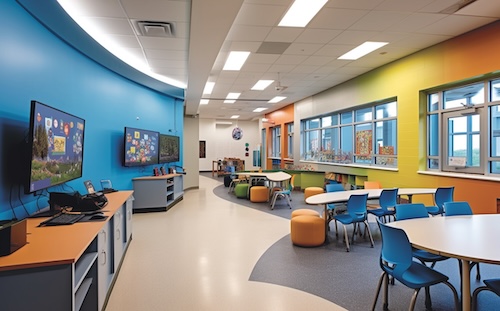
By embracing Universal Design for Learning (UDL) principles in purchasing decisions, school leaders can create learning spaces that not only accommodate students with disabilities but enhance the educational experience for all learners while delivering exceptional returns on investment (ROI).
Strangely enough, the concept of UDL all started with curb cuts. Disability activists in the 1960s were advocating for adding curb cuts at intersections so that users of wheelchairs could cross streets independently. Once curb cuts became commonplace, there was a surprising secondary effect: Curb cuts did not just benefit the lives of those in wheelchairs, they benefited parents with strollers, kids on bikes, older adults using canes, delivery workers with carts, and travelers using rolling suitcases. What had been designed for one specific group ended up accidentally benefiting many others.
UDL is founded on this idea of the “curb-cut effect.” UDL focuses on designing classrooms and schools to provide multiple ways for students to learn. While the original focus was making the curriculum accessible to multiple types of learners, UDL also informs the physical design of classrooms and schools. Procurement professionals are focusing on furniture and technology purchases that provide flexible, accessible, and supportive environments so that all learners can benefit. Today entire conferences, such as EDspaces, focus on classroom and school design to improve learning outcomes.
There is now a solid research base indicating that the design of learning spaces is a critical factor in educational success: Learning space design changes can significantly influence student engagement, well-being, and academic achievement. While we focus on obvious benefits for specific types of learners, we often find unexpected ways that all students benefit. Adjustable desks designed for wheelchair users can improve focus and reduce fatigue in many students, especially those with ADHD. Providing captions on videos, first made available for deaf students, benefit ELL and other students struggling to learn to read.
Applying UDL to school purchasing decisions
UDL represents a paradigm shift from retrofitting solutions for individual students to proactively designing inclusive environments from the ground up. Strategic purchasing focuses on choosing furniture and tech tools that provide multiple means of engagement that can motivate and support all types of learners.
Furniture that works for everyone
Modern classroom furniture has evolved far beyond the traditional one-size-fits-all model. Flexible seating options such as stability balls, wobble cushions, and standing desks can transform classroom dynamics. While these options support students with ADHD or sensory processing needs, they also provide choice and movement opportunities that enhance engagement for neurotypical students. Research consistently shows that physical comfort directly correlates with cognitive performance and attention span.
Modular furniture systems offer exceptional value by adapting to changing needs throughout the school year. Tables and desks that can be easily reconfigured support collaborative learning, individual work, and various teaching methodologies. Storage solutions with clear labeling systems and accessible heights benefit students with visual impairments and executive functioning challenges while helping all students maintain organization and independence.
Technology that opens doors for all learners
Assistive technology has evolved from specialized, expensive solutions to mainstream tools that benefit diverse learners. Screen readers like NVDA and JAWS remain essential for students with visual impairments, but their availability also supports students with dyslexia who benefit from auditory reinforcement of text. When procuring software licenses, prioritize platforms with built-in accessibility features rather than purchasing separate assistive tools.
Voice-to-text technology exemplifies the UDL principle perfectly. While crucial for students with fine motor challenges or dysgraphia, these tools also benefit students who process information verbally, ELL learners practicing pronunciation, and any student working through complex ideas more efficiently through speech than typing.
Adaptive keyboards and alternative input devices address various physical needs while offering all students options for comfortable, efficient interaction with technology. Consider keyboards with larger keys, customizable layouts, or touchscreen interfaces that can serve multiple purposes across your student population.
Interactive displays and tablets with built-in accessibility features provide multiple means of engagement and expression. Touch interfaces support students with motor difficulties while offering kinesthetic learning opportunities for all students. When evaluating these technologies, prioritize devices with robust accessibility settings including font size adjustment, color contrast options, and alternative navigation methods.
Maximizing your procurement impact
Strategic procurement for UDL requires thinking beyond individual products to consider system-wide compatibility and scalability. Prioritize vendors who demonstrate commitment to accessibility standards and provide comprehensive training on using accessibility features. The most advanced assistive technology becomes worthless without proper implementation and support.
Conduct needs assessments that go beyond compliance requirements to understand your learning community’s diverse needs. Engage with special education teams, occupational therapists, and technology specialists during the procurement process. Their insights can prevent costly mistakes and identify opportunities for solutions that serve multiple populations.
Consider total cost of ownership when evaluating options. Adjustable-height desks may cost more initially but can eliminate the need for specialized furniture for individual students. Similarly, mainstream technology with robust accessibility features often costs less than specialized assistive devices while serving broader populations.
Pilot programs prove invaluable for testing solutions before large-scale implementation. Start with small purchases to evaluate effectiveness, durability, and user satisfaction across diverse learners. Document outcomes to build compelling cases for broader adoption.
The business case for UDL
Procurement decisions guided by UDL principles deliver measurable returns on investment. Reduced need for individualized accommodations decreases administrative overhead while improving response times for student needs. Universal solutions eliminate the stigma associated with specialized equipment, promoting inclusive classroom cultures that benefit all learners.
Leslie Stebbins, Research4Ed
Leslie Stebbins is the director of Research4Ed. She has more than twenty-five years of experience in higher education and K-12 learning and design. She has an M.Ed. from the Technology Innovation & Education Program at the Harvard Graduate School of Education and a Master’s in Library and Information Science from Simmons College.
Latest posts by eSchool Media Contributors (see all)
Social emotional learning — lessons in soft skills like listening to people you disagree with or calming yourself down before a test — has become a flashpoint in the culture wars.
The conservative political group Moms for Liberty opposes SEL, as it is often abbreviated, telling parents that its “goal is to psychologically manipulate students to accept the progressive ideology that supports gender fluidity, sexual preference exploration, and systemic oppression.” Critics say that parents should discuss social and emotional matters at home and that schools should stick to academics. Meanwhile, some advocates on the left say standard SEL classes don’t go far enough and should include such topics as social justice and anti-racism training.
While the political battle rages on, academic researchers are marshalling evidence for what high-quality SEL programs actually deliver for students. The latest study, by researchers at Yale University, summarizes 12 years of evidence, from 2008 to 2020, and it finds that 30 different SEL programs, which put themselves through 40 rigorous evaluations involving almost 34,000 students, tended to produce “moderate” academic benefits.
Related: Our free weekly newsletter alerts you to what research says about schools and classrooms.
The meta-analysis, published online Oct. 8 in the peer-reviewed journal Review of Educational Research, calculated that the grades and test scores of students in SEL classes improved by about 4 percentile points, on average, compared with students who didn’t receive soft-skill instruction. That’s the equivalent of moving from the 50th percentile (in the middle) to the 54th percentile (slightly above average). Reading gains were larger (more than 6 percentile points) than math gains (fewer than 4 percentile points). Longer-duration SEL programs, extending more than four months, produced double the academic gains — more than 8 percentile points.
“Social emotional learning interventions are not designed, most of the time, to explicitly improve academic achievement,” said Christina Cipriano, one of the study’s four authors and an associate professor at Yale Medical School’s Child Study Center. “And yet we demonstrated, through our meta-analytic report, that explicit social emotional learning improved academic achievement and it improved both GPA and test scores.”
Cipriano also directs the Education Collaboratory at Yale, whose mission is to “advance the science of learning and social and emotional development.”
The academic boost from SEL in this 2025 paper is much smaller than the 11 percentile points documented in an earlier 2011 meta-analysis that summarized research through 2007, when SEL had not yet gained widespread popularity in schools. That has since changed. More than 80 percent of principals of K-12 schools said their schools used an SEL curriculum during the 2023-24 school year, according to a survey by the Collaborative for Academic, Social, and Emotional Learning (CASEL) and the RAND Corporation.
The Yale researchers only studied a small subset of the SEL market, programs that subjected themselves to a rigorous evaluation and included academic outcomes. Three-quarters of the 40 studies were randomized-controlled trials, similar to pharmaceutical trials, where schools or teachers were randomly assigned to teach an SEL curriculum. The remaining studies, in which schools or teachers volunteered to participate, still had control groups of students so that researchers could compare the academic gains of students who did not receive SEL instruction.
The SEL programs in the Yale study taught a wide range of soft skills, from mindfulness and anger management to resolving conflicts and setting goals. It is unclear which soft skills are driving the academic gains. That’s an area for future research.
“Developmentally, when we think about what we know about how kids learn, emotional regulation is really the driver,” said Cipriano. “No matter how good that curriculum or that math program or reading curriculum is, if a child is feeling unsafe or anxious or stressed out or frustrated or embarrassed, they’re not available to receive the instruction, however great that teacher might be.”
Cipriano said that effective programs give students tools to cope with stressful situations. She offered the example of a pop quiz, from the perspective of a student. “You can recognize, I’m feeling nervous, my blood is rushing to my hands or my face, and I can use my strategies of counting to 10, thinking about what I know, and use positive self talk to be able to regulate, to be able to take my test,” she said.
The strongest evidence for SEL is in elementary school, where the majority of evaluations have been conducted (two-thirds of the 40 studies). For young students, SEL lessons tend to be short but frequent, for example, 10 minutes a day. There’s less evidence for middle and high school SEL programs because they haven’t been studied as much. Typically, preteens and teens have less frequent but longer sessions, a half hour or even 90 minutes, weekly or monthly.
Cipriano said that schools don’t need to spend “hours and hours” on social and emotional instruction in order to see academic benefits. A current trend is to incorporate or embed social and emotional learning within academic instruction, as part of math class, for example. But none of the underlying studies in this paper evaluated whether this was a more effective way to deliver SEL. All of the programs in this study were separate stand-alone SEL lessons.
Advice to schools
Schools are inundated by sales pitches from SEL vendors. Estimates of the market size range wildly, but a half dozen market research firms put it above $2 billion annually. Not all SEL programs are necessarily effective or can be expected to produce the academic gains that the Yale team calculated.
Cipriano advises schools not to be taken in by slick marketing. Many of the effective programs have no marketing at all and some are free. Unfortunately, some of these programs have been discontinued or have transformed through ownership changes. But she says school leaders can ask questions about which specific skills the SEL program claims to foster, whether those skills will help the district achieve its goals, such as improving school climate, and whether the program has been externally evaluated.
“Districts invest in things all the time that are flashy and pretty, across content areas, not just SEL,” said Cipriano. “It may never have had an external evaluation, but has a really great social media presence and really great marketing.”
Cipriano has also built a new website, improvingstudentoutcomes.org, to track the latest research on SEL effectiveness and to help schools identify proven programs.
Cipriano says parents should be asking questions too. “Parents should be partners in learning,” said Cipriano. “I have four kids, and I want to know what they’re learning about in school.”
This meta-analysis probably won’t stop the SEL critics who say that these programs force educators to be therapists. Groups like Moms for Liberty, which holds its national summit this week, say teachers should stick to academics. This paper rejects that dichotomy because it suggests that emotions, social interaction and academics are all interlinked.
Before criticizing all SEL programs, educators and parents need to consider the evidence.
The Hechinger Report provides in-depth, fact-based, unbiased reporting on education that is free to all readers. But that doesn’t mean it’s free to produce. Our work keeps educators and the public informed about pressing issues at schools and on campuses throughout the country. We tell the whole story, even when the details are inconvenient. Help us keep doing that.
North Carolina’s Advanced Teaching Roles program, which allows highly effective teachers to receive salary supplements for teaching additional students or supporting other teachers, is having positive effects on math and science test scores, according to an evaluation presented by NC State University’s Friday Institute for Educational Innovation at the State Board of Education meeting last week.
Since 2016, the ATR initiative has allowed districts to create new career pathways and provide salary supplements for highly effective teachers — or Advanced Teachers — who mentor and support other educators while still teaching part of the day. Their roles include Adult Leadership teachers, who lead small teams and receive at least $10,000 supplements, and Classroom Excellence teachers, who take on larger student loads and receive a minimum of $3,000 supplements.
Those in adult leadership roles teach for at least 30% of the day, lead a team of 3-8 classroom teachers, and share responsibility for the performance of all those teachers’ students. Classroom excellence teachers are responsible for at least 20% more students than before they enter the role.
“Our ATR program was designed to allow highly effective classroom educators to reach more students and to support the professional growth of educators,” said Dr. Callie Edwards, the program’s lead evaluator, at the State Board of Education meeting last Wednesday. “ATR aims to improve the quality of classroom instruction, the recruitment and retention of teachers, as well as ultimately impact student academic achievement.”
In the 2024-25 school year, 26 districts operated ATR programs across 400 schools — 56% of which were elementary schools — employing 1,494 Advanced Teachers who supported nearly 4,000 classroom teachers statewide, according to the evaluation. Edwards said that 88% of Adult Leadership teachers received at least $10,000, and 85% of Classroom Excellence teachers received $3,000 or more.
Statistical analysis of the 2023-24 school year’s data found that students in ATR schools outperformed their peers in non-ATR schools in math and science, showing statistically significant learning gains.
“Across the various programs I’ve evaluated, these are positive results — especially in math and science — where the impact of ATR is equivalent to about a month of extra learning for students,” said Dr. Lam Pham, the leading quantitative evaluator. “The results in ELA are positive but not statistically significant, which has been consistent for the last three years,” Pham said, referring to English Language Arts.
These effects on math and science grow over time, according to the evaluation. Math scores improved throughout schools’ first six years of ATR implementation — though they are no longer significant by the seventh year of implementation, according to the presentation. For science scores, statistically significant gains began in the fifth year after schools began implementing ATR.
Additionally, math teachers in ATR schools reported higher EVAAS growth scores than their peers in comparable schools.
Teachers in ATR schools also reported feeling like they have more time to do their work compared to teachers in non-ATR schools.
This year’s report featured data on teachers supported by ATR teachers for the first time. The evaluation found no positive effects on test scores for students taught by supported teachers compared to students taught by teachers who are not in the program. The researchers also found no effect on turnover levels for teachers supported by Advanced Teachers. However, the report says additional years of data will be necessary to verify if those effects appear over time.
The evaluation recommended that principals in ATR schools should foster collaboration and communicate strategically about the program with staff, beginning during Advanced Teachers’ hiring and onboarding.
“It’s important to integrate ATR into those processes,” Edwards told the Board. “That means introducing Advanced Teachers to new staff and making collaboration, especially mentoring and coaching, a structured part of the day.”
Edwards said these practices have been adopted in some schools, but principals reported needing more time and support to build collaboration opportunities into the school schedule.
The report also urges district administrators to coordinate with Beginning Teacher (BT) programs, advertise ATR in recruitment materials, and improve their data collection practices. It also calls on state leaders to standardize the program to ensure consistency across participating districts.
“Districts need standardized messaging, professional learning opportunities, and technical assistance to support implementation,” Edwards said. “The state can also create more opportunities for districts to share what’s working with one another and expand the evaluation beyond test scores to capture things like classroom engagement, social, emotional development, and feedback from teachers and principals.”
The evaluators also said “there’s more to do” to expand the program in western North Carolina after Board members raised concerns about uneven participation across the state’s regions.
Tomberlin said DPI received 15 proposals representing 22 districts. These proposals have been evaluated by seven independent evaluators, Tomberlin said. The Board had to choose the program’s next participants by Oct. 15 to comply with a legislative requirement.
The state can only allocate $911,349 for new implementation grants in 2026-27 — less than one-sixth of the funding required to fund all applications. That level of funding is “very low” compared to previous years, Tomberlin said. In the 2023-25 state budget, the General Assembly appropriated $10.9 million in recurring funds for these supplements in each year of the biennium.
Tomberlin recommended that the Board approve the three highest-scoring proposals for the 2026-27 fiscal year, and fund these districts at 85% of their request. If the Board approves this recommendation, the state would still have $37,981 in planning funds left over for districts approved during the 2026 proposal cycle.
Tomberlin said districts are already struggling to pay for the program’s salary supplements. The Friday Institute’s report showed that, despite the high median supplements, some districts are offering supplements as little as $1,000.
“Some districts are not able to pay the full $10,000 because they have more ATR teachers than the funding that we can give them in terms of those allotments,” Tomberlin said. “And we had requested the General Assembly, I think, an additional $14 million to cover those supplements, and we didn’t get any.”
In the lead up to her son’s birth, Jacqueline made plans to call 911 for an ambulance to pick her up from her North Florida home and transport her to a hospital about an hour away.
The second-time mom and Guatemalan immigrant, who has lived in the country for a decade, would have relied on her husband to drive her to the hospital. But a few months ago he was deported, leaving Jacqueline and her daughter without the family’s primary source of income, transportation and support.
One morning in March, Jacqueline said, her partner was pulled over on his way to work when law enforcement officials discovered he didn’t have a valid driver’s license. Jacqueline’s pregnancy was in its early stages. Her husband fought his case from detention for three months before U.S. Immigration and Customs Enforcement (ICE) removed him to Guatemala.
“He was deported and I was left behind, thinking, ‘What am I going to do?’” said Jacqueline, who requested that her last name not be published because she lacks permanent legal status. The couple shares an 8-year-old daughter who was born in, and is a citizen of, the United States.
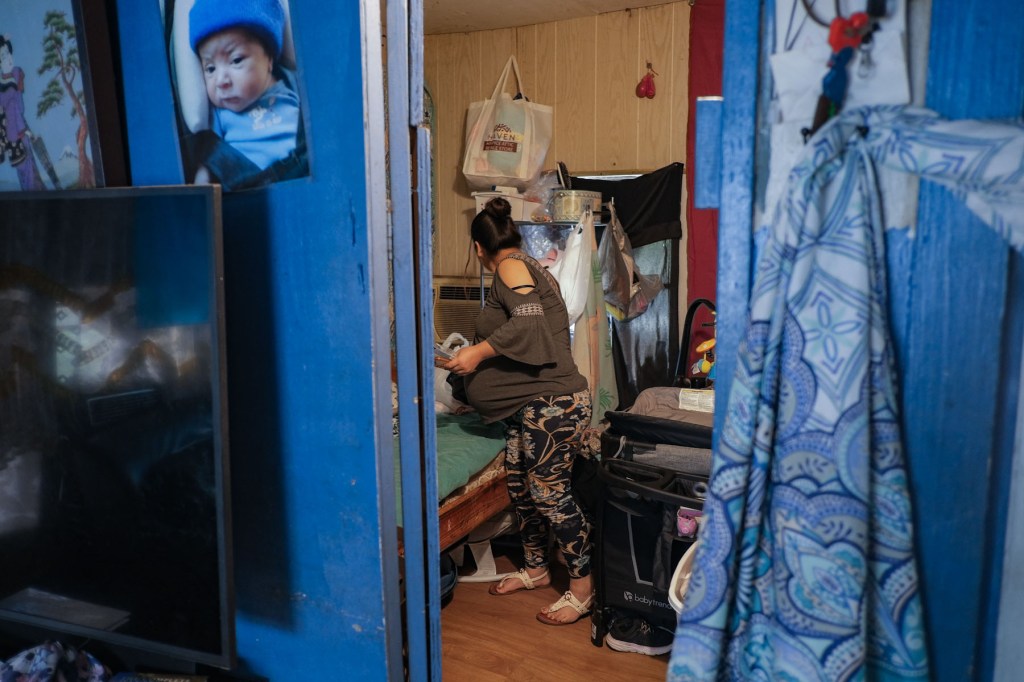
This summer, as she entered the later stages of this pregnancy amid the Trump administration’s turbocharged immigration enforcement, Jacqueline found herself so fearful of being detained that she avoided leaving her home. Her husband’s car sits in the driveway, but there are no signs of him in the small room Jacqueline shares with her daughter. His belongings — tools, clothes, even personal photos — are with him in Guatemala. The only family pictures Jacqueline has are on her phone.
Her partner was the family’s main provider, rotating between picking strawberries or watermelon and packing pine needles for mulch, depending on the season.
Jacqueline struggled to get the most basic items to welcome a baby: Someone gifted her a used carseat and crib, which sit in the packed room along with onesies and other clothing items she’s collected inside a large plastic bag. She’s hoping that a federal assistance program will cover the cost of formula. A baby tub is still on her list.
Medical care in her rural area has been possible only because a small nonprofit organization nearby that provides prenatal care services offered to pay for Ubers so she could continue regular check-ups. Even if she wasn’t behind the wheel, Jacqueline says that just the act of leaving her home feels risky since her husband’s deportation.
“Things got really complicated. He paid our rent — he paid for everything,” she said. “Now, I’m always worried.”
At her home in North Florida, Jacqueline looks at a photo of her husband and daughter on her phone. The only family pictures she has are on her phone; her husband’s belongings — tools, clothes, even personal photos — are with him in Guatemala. (Michelle Bruzzese for The 19th)
Medical care and support essential to a healthy pregnancy have become harder for people like Jacqueline to obtain following President Donald Trump’s inauguration. Many patients — nervous about encountering immigration officials if they leave their homes, drive on public roads or visit a medical clinic — are skipping virtually all of their pregnancy-related health care. Some are opting to give birth at home with the help of midwives because of the possible presence of ICE at hospitals.
Across the country, medical providers who serve immigrant communities said fewer patients are coming in for prenatal or other pregnancy-related care. As a result, patients are experiencing dangerous complications, advocates and health care providers told The 19th.
“Fear of ICE is pushing my patients and their families away from the very systems meant to protect their health and their pregnancies,” said Dr. Josie Urbina, an OB-GYN in San Francisco.
In January, Trump rescinded a federal policy that protected designated areas including hospitals, health clinics and doctors’ offices from immigration raids. ICE has recently targeted patients in hospital maternity wards and on their way home from prenatal visits.
A majority of Americans believe ICE should not be carrying out immigration enforcement at health centers. A new poll from The 19th and SurveyMonkey conducted in mid-September found that most Americans don’t think ICE should be allowed to detain immigrants at hospitals, their workplace, domestic violence shelters, schools or churches.
Women are more likely to oppose enforcement in these spaces than men. More than two-thirds of women said ICE shouldn’t be allowed to detain immigrants in hospital settings.
Enforcement is only expected to grow as the administration works to meet its ambitious deportation goals. The federal government is pouring more than $170 billion over the next four years into expanding immigration enforcement, the result of Trump’s signature tax-and-spending bill. About $45 billion has been directed to expanding detention facilities; $29.9 billion is to increase ICE activity.
That expansion could put even more births at risk. Approximately 250,000 babies are born every year to immigrants without permanent legal status. Already, research has shown these immigrants, who have higher uninsured rates, are less likely to seek prenatal care and are at risk of worse birth outcomes.
Major medical groups, including the American College of Obstetrics and Gynecologists, World Health Organization and the Centers for Disease Control and Prevention (CDC) recommend regular prenatal and postpartum care as a key tool to combat pregnancy-related death and infant mortality.
According to the federal Office of Women’s Health, infants born to parents who received no prenatal care are three times more likely to have a low birth weight and five times more likely to die than those born to parents who received regular care.
A CDC analysis published last year found infant mortality rates went up the later families began prenatal care: 4.54 deaths per 100,000 live births for families whose prenatal care began in the first trimester, compared with 10.75 in families whose prenatal care began in the third trimester or who did not receive any at all.
“A lot of patients aren’t going to get help,” said Yenny James, the founder and CEO of Paradigm Doulas in the Dallas-Fort Worth metro.
After her husband’s deportation, Jacqueline became so fearful of being detained that she avoided leaving her home. “He was deported and I was left behind, thinking, ‘What am I going to do?’” she said. (Michelle Bruzzese for The 19th)
James said she’s seeing an increasing number of emergency cesarean sections because of untreated gestational diabetes, or preeclampsia — a deadly pregnancy complication — that went unnoticed because of lacking prenatal care.
In Denver, OB-GYN Dr. Rebecca Cohen has delivered multiple babies this year for women who have told her that, because they fear endangering themselves or their families, they have received no prenatal care. Several have given birth to babies with fatal fetal anomalies that were never diagnosed because the women did not receive prenatal ultrasounds.
“They were willing to forgo care — their own health care — but to find out that something was devastatingly wrong with their child is when they feel like maybe they should have risked it,” Cohen said. “There’s a sound of a mother’s wail that anybody who has worked labor and delivery has known, and it will haunt you for the rest of your life. To hear that when it could have been prevented, it is just absolutely devastating.”
Early in her pregnancy, Jacqueline received free care at a local clinic. Shortly after her husband’s detention, she called the office to let them know she likely wouldn’t make her next appointment.
“I told them that I probably wouldn’t be able to make my appointments anymore, well, because I’m really afraid given what happened to my husband. And they offered to help,” she said.
Jacqueline and the nonprofit clinic worked out an arrangement: The day of her appointments, someone at the clinic called an Uber to her home, paid for by the clinic, and let her know when it would arrive so she could be ready.
Many people in her small town have come to rely on a single person who does have a valid driver’s license for transportation. That driver recently brought Jacqueline to an appointment with the local office that manages the Special Supplemental Nutrition Program for Women, Infants and Children (WIC), which she is relying on for baby formula and food. There were no guarantees that this driver would be available to take her in whenever she goes into labor.
The Biden administration directed ICE not to detain, arrest or take into custody pregnant, postpartum or breastfeeding people simply for breaking immigration laws, except under “exceptional circumstances.” The Trump administration has not formally reversed that policy. But despite the directive, reports from across the country confirm that ICE has detained numerous pregnant immigrants since Trump took office.
James said that until the Biden guidance is formally rescinded, she will continue to encourage pregnant immigrants to print it out and carry it with them.
“I told my doulas — have them print out this ICE directive, have them keep it with them, so that they know and these agents know that we know our rights, our clients know their rights,” James said.
Jacqueline prepares for the birth of her second child in the room she shares with her daughter. Someone gifted her a used car seat and crib, which sit among the few items she’s collected inside a plastic bag to welcome the baby. (Michelle Bruzzese for The 19th)
It’s unclear exactly how many pregnant immigrants are being detained by ICE, or have been arrested by the agency. A May report from the office of Democratic Sen. Dick Durbin found 14 pregnant women in a single Louisiana detention facility at the time of staff’s visit.
Another report out of the office of Democratic Sen. Jon Ossoff published in late July found 14 credible reports of mistreatment of pregnant women in immigrant detention. The report cited an anonymous agency official who said they saw pregnant women sleeping on floors in overcrowded intake cells. The partner of a pregnant woman in federal custody said that she bled for days before she was taken to a hospital, where she miscarried alone. A pregnant detainee who spoke to Ossoff’s office said she repeatedly asked for medical attention and was told to “just drink water.” The office received several reports of clients waiting weeks to see a doctor, and that sometimes scheduled appointments were canceled. ICE has disputed the report.
“Pregnant women receive regular prenatal visits, mental health services, nutritional support, and accommodations aligned with community standards of care. Detention of pregnant women is rare and has elevated oversight and review. No pregnant woman has been forced to sleep on the floor,” ICE said in a statement posted on their website.
ICE did not respond to a request for comment.
Fear of being detained is a major contributor of stress for pregnant immigrants. Research shows that even when pregnant patients do receive medical care, prenatal stress puts many at greater risk of complicated births and poor outcomes, including premature birth and low infant birth weight. Babies born after an immigration raid are at a 24 percent higher risk of low birth weight, according to one study.
Monica, 38, is expecting her fourth child in November. The Tucson resident, who requested that her last name not be published out of fear of being detained, has lived in the United States for two decades but has no legal immigration status.
This pregnancy has been unlike the others, she said: While Monica has continued with her prenatal care appointments, her anxiety levels about her immigration situation have colored her experience. Her other children, who are in their teens, are U.S. citizens but grappling with the stress of their parents’ situation. Her husband also doesn’t have authorization to live in the country.
“We try to be out and about much less, and to take precautions,” she said. “Whenever we do leave the house, we have it in the back of our minds.”
Monica said she has seen reports of ICE being allowed inside hospitals, and she is worried about facing immigration officers while or following her birth. Her plan is to have her partner and a group of friends at the hospital to make sure she’s never alone.
“My biggest fear is going to the hospital,” she said.
Stress like Monica’s makes pregnancy more dangerous.
Jacqueline holds a bottle of prenatal vitamins at her home in North Florida. A small nonprofit clinic nearby has been paying for Ubers so she can continue her prenatal check-ups. (Michelle Bruzzese for The 19th)
“In our hospital, every doctor I’ve talked to — and these are doctors that have been there 20 years — all are saying these past six months they’ve seen worse obstetrics outcomes than ever in their career,” Dr. Parker Duncan Diaz, a family physician in Santa Rosa, California, whose clinic mostly cares for Latinx patients. That’s included more preterm labor and more pregnant patients with severe hypertension.
“I don’t know what’s causing it, but my bias is that it is the impact of this horribly toxic stress environment,” he added, specifically noting the stress caused by the threat of immigration enforcement.
In recent months, Dr. Caitlin Bernard, an Indiana-based OB-GYN, has seen a number of pregnant patients seeking emergency attention who have not received any prenatal health care. One was 31 weeks, approaching the end of her pregnancy. Another was more than 20 weeks pregnant when she came to Bernard’s office, having developed complications from a molar pregnancy — a rare condition that means a healthy birth is impossible and that without early treatment can result in vaginal bleeding, thyroid problems and even cancer.
“Anytime you’re not able to access that early prenatal care, we do see complications with that,” she said. “And many of these things can absolutely be life-threatening for both the moms and the babies.”
Dr. Daisy Leon-Martinez, a maternal-fetal medicine specialist in San Francisco, said she now regularly cares for patients in her labor and delivery ward who have been transferred to her hospital because of newly developed pregnancy complications. These are often their first doctors’ visits since becoming pregnant. Many of those patients have told her that they did not want to seek prenatal care for fear of encountering immigration officials.
During regular visits, she added, she has advised people with pregnancy complications that they would be best served by a hospital stay — only to be told that her patients no longer feel safe going to the hospital.
The current enforcement environment is challenging immigrant advocates, who are continuing to encourage immigrants to seek appropriate medical care while acknowledging that doing so is increasingly risky.
Lupe Rodríguez, the executive director of the National Latina Institute for Reproductive Justice, said her organization is urging pregnant immigrants to seek the health care that they need, and to be proactive about making plans for themselves and their families in the event that they are detained.
“We can’t know for certain about any given [health care center] whether or not it’s going to be safe. One of the things that we’ve been seeing is leadership at some of these health centers — big hospitals and clinics — have said that they will provide the kind of protection that folks need, that they don’t want folks to be afraid of care,” Rodriguez said.
While those statements signal the intentions of a hospital’s leadership, Rodriguez said, “we still know that there are individuals within some of those care centers that are part of the reporting mechanism or are intimidating people.”
Outside her home in North Florida, Jacqueline sits in a red chair as a chicken wanders nearby. (Michelle Bruzzese for The 19th)
Jacqueline approached the last days of her pregnancy hopeful that the place she had chosen — a large university hospital that workers at her local clinic recommended — would be a safe place for her to give birth.
One night at the end of September, when labor pains grew too intense, she called for an ambulance and made it to the hospital. When she got there, she asked her providers if there were any ICE agents near the building. She had heard of a man at a local hospital being detained after having surgery. They told her there were none they were aware of.
She went on to deliver her baby under general anesthesia after a long, difficult labor. “I didn’t even hear him cry when they pulled him out,” she said. Her only relative left in the area was taking care of her daughter, so she recovered alone at the hospital for five days before heading home in an Uber that a social worker procured for her and her son.
“If my husband was here, he would have been there with me at the hospital,” Jacqueline said while recovering at home. “He would be here taking care of me, of us. I wouldn’t be worried about the things I still want to get for the baby.”
This story was originally reported by Mel Leonor Barclay and Shefali Luthra of The 19th. Meet Mel and Shefali and read more of their reporting on gender, politics and policy.
MIT president Saly Kornbluth said the agreement went against freedom of expression and the university’s independence, and that it was “fundamentally” inconsistent with MIT’s “core belief that scientific funding should be based on scientific merit alone”.
Last week, the Trump administration sent a compact to nine US colleges laying out sweeping demands including capping international enrolments, banning the use of race or sex in hiring and freezing tuition for five years. In return, schools that signed on would receive competitive advantages from the government.
In a letter to US education secretary Linda McMahon, Kornbluth said: “We must hear facts and opinions we don’t like – and engage respectfully with those whom we disagree.”
Under the terms of the compact, signatories must abolish university units that “punish” or “belittle” conservative ideas, and all college employees “must abstain in their official capacity from actions or speech related to politics”.
If adopted by the institutions, it would set a 15% cap on international undergraduate students including a 5% limit for any given country. It also stipulates that universities must hand over international student information, including discipline records, upon the request of the government.
MIT is the first of the nine institutions to officially respond to the administration before the October 20 deadline. Stakeholders said the White House is likely aiming to expand the compact if institutions engage.
The day after it was sent, the University of Texas swiftly announced it was “honoured” to be a part of Trump’s proposal, though the remaining institutions were notably quiet on the agreement, which has received strong pushback from faculty leadership and administrators.
Faculty senates at the University of Virginia and the University of Arizona voted to oppose the compact with overwhelming majorities, while Dartmouth College president said in a statement she was “deeply committed” to the university’s values and would always defend its “fierce independence”.
In Tennessee, academic and workers unions have called on Vanderbilt University to reject what they called “Trump’s Fascist Compact”, with a petition from Graduate Workers United garnering almost 1,000 signatures as of October 8.
Elsewhere, California governor Gavin Newsom quickly responded saying: “California universities that bend to the will of Donald Trump and sign this insane ‘compact’ will lose billions in state funding – IMMEDIATELY.”
“California will not bankroll schools that sign away academic freedom,” he wrote on October 2, sending a clear sign to the University of Southern California (USC), the only Californian college to receive the proposal so far.
Alongside MIT, the compact demands were thrust upon: Vanderbilt University, Dartmouth College, the University of Pennsylvania, the University of Southern California, the University of Texas, the University of Arizona, Brown University and the University of Virginia.
California universities that bend to the will of Donald Trump and sign this insane ‘compact’ will lose billions in state funding – IMMEDIATELY
Gavin Newsom, Governor of California
While it remains unclear how the recipients were chosen, stakeholders have noted that the list includes high prestige universities as well as public flagships, likely to generate maximum sectoral and media impact.
“The compact forces all nine institutions to reveal their positions; it sets the narrative for media reporting and public discussion of the points in the compact; and starts a public sorting of university responses to these policy priorities,” Boston College professor Chris Glass told The PIE News.
Whether MIT’s response emboldens the universities to reject the proposal remains to be seen, but even without the signatures, “the compact creates lasting ripples, as universities, accreditors, and state officials recalibrate for future policy fights,” said Glass.
The compact’s international student cap is yet another clear sign of Trump’s anti-immigration stance, though experts have noted that none of the nine universities have undergraduate international student populations that exceed the 15% limit.
While U Penn and USC are both close to the threshold with international undergraduate populations around the 14% mark, the universities of Virginia, Arizona and Texas at Austin all enrol less than 6% international undergraduates, according to analysis by Soka University of America professor Ryan Allen.
As such, Glass speculated the cap was intended to signal to universities beyond the nine, especially those above the 15% threshold, that they may face future scrutiny.
“Just by introducing the cap, the administration sets the terms of debate and sends a strong message – to its base, to all universities in the US, and to prospective international students,” he said.
As per Allen’s analysis, just 14 of the top 114 US universities have undergraduate international populations that exceed the proposed limit.
If it is implemented, the impact of the cap by itself might not be significant, “but this is part of an overall message that the US does not want international students … It’s tough to grapple with in the classroom because our students are feeling that message,” said Allen.
Typically, international students make up a larger proportion of postgraduate than undergraduate enrolments, though universities rarely disaggregate the two in overall student counts.
And yet: “Undergrad admissions are much more contentious and political than grad school. So, the idea that international students are somehow taking seats from Americans is much more salient in that space,” said Allen.
Aiesha Zafar, assistant deputy minister for migration integrity at IRCC, told the House of Commons Standing Committee on Citizenship and Immigration that 8% of international students reviewed were potentially “non-compliant”, meaning they were not attending classes as required by the terms of their study visa.
“In terms of the total number of students we asked for compliance information from, that results in potentially 47,175. We have not yet determined whether they are fully non-compliant, these are initial results provided to us by institutions,” stated Zafar, who was questioned by Conservative MP Michelle Rempel Garner about where these students are currently, if they are not complying with their visa terms.
Determining full non-compliance of the international students, however, is not straightforward, as institutions report data at varying intervals, and students may change schools, graduate, or take authorized leaves.
Zafar noted that IRCC shares all the data it continually collects with the Canada Border Services Agency (CBSA), which is responsible for locating and removing non-compliant visa holders.
“Any foreign national in Canada would be under the purview of the CBSA, so they have an inland investigation team,” Zafar told the committee when Garner questioned how the IRCC is able to track and remove students who are in violation of their visas.
The 47,000 non-compliance cases are a backlog, evidence that fraud detection is strengthening, not weakening, Canadian standards Maria Mathai, M.M Advisory Services
According to Maria Mathai, founder of M.M Advisory Services, which supports Canadian universities in the South Asian market, the figure of over 47,000 students who could be non-compliant being portrayed as a “crisis” misses the real story — that Canada’s immigration system is actively adapting.
“Front-end Provincial Attestation Letter (PAL) screening now blocks thousands who would have entered before, and ongoing oversight is catching legacy issues. The 47,000 non-compliance cases are a backlog, evidence that fraud detection is strengthening, not weakening, Canadian standards,” Mathai told The PIE News.
Mathai acknowledged that past PAL allocations contributed to compliance challenges, with regions like Ontario, which hosts the largest share of international students, directing most of its PALs to colleges with higher default rates.
However, the situation is expected to change with IRCC now imposing strict provincial caps on the number of study permits each province can issue.
“By surfacing these imbalances now, the new framework is encouraging provinces and institutions to adapt entry practices based on evidence and learning,” stated Mathai.
Canada’s international student compliance regime, in effect since 2014, was established to identify potentially non-genuine students.
It includes twice-yearly compliance reporting conducted in partnership with Designated Learning Institutions (DLIs), Canadian colleges, institutes, and universities authorised to host international students.
While IRCC’s 2024 report noted no recourse against non-reporting DLIs, new rules now allow such institutions to be suspended for up to a year.
Moreover, Canada’s struggle with international students not showing up for classes is not new, with reports earlier this year indicating nearly 50,000 instances of “no-shows”, international students who failed to enrol at their institutions, in the spring of 2024.
While the “no-show” cohort included 4,279 Chinese students, 3,902 Nigerian students, and 2,712 Ghanaian students, Indian students accounted for the largest share at 19,582. It highlights a broader issue of immigration fraud originating from India, which Zafar identified as one of the top countries for such cases during her September 23 committee testimony.
Over a quarter of international students seeking asylum in Canada also came from India and Nigeria.
According to Pranav Rathi, associate director of international recruitment at Fanshawe College, which hosts one of the largest numbers of Indian students in Ontario, a “rigorous approach” has led to about 20% of Indian applications being declined to ensure only qualified candidates proceed.
“Each application is carefully reviewed, and checked for aggregate scores, backlogs, and authenticity of mark sheets. We keep ourselves updated with the recognised institution list published by UGC,” stated Rathi.
“It is mandatory for a student to provide English language tests approved by IRCC and we also verify English proficiency through IELTS or equivalent test reports to confirm readiness for study in Canada.”
Rathi suggested that one reason Indian students often appear among potentially non-compliant or “no-show” cases is a systemic issue that previously allowed them to change institutions after receiving a study permit.
He added that schools now need to take a more active role, particularly when students apply through education agents.
“Institutions should ensure that their representatives are transparent, well-trained, and follow ethical recruitment practices that align with institutional and regulatory standards,” stated Rathi.
“Ongoing collaboration between institutions and government bodies to monitor market trends and share insights can help build a more transparent and sustainable international education system.”
Many Canadian institutions are now facing headwinds, with course offerings and research funding being cut as Canada’s study permit refusal rate has climbed to its highest level in over a decade.
Canadian politicians have also intensified scrutiny of institutions across the country.
Just days after the IRCC testimony on non-compliant students, a federal committee hearing led by MP Garner saw Conestoga College president John Tibbits questioned on issues ranging from his $600,000 salary to allegations of “juicing foreign student permits” amid growing concerns that healthcare, housing, and jobs that “don’t have capacity” in Ontario.
“Colleges, including Conestoga, have been subject to scrutiny about the role international [students] play in housing, affordability and community pressures. I welcome the opportunity to reaffirm that Conestoga’s approach has always been about service. Our mission has always been to ensure the communities we serve have access to the skilled labour force they need to survive,” stated Tibbits, while addressing the committee on Thursday.
“Looking ahead, we believe this is the time to stabilize the system to build an international student program that is sustainable, fair, globally competitive and focused on Canada’s economic priorities,” he added, as reported by CTV News.