As a “pink-collar profession” — a nickname given to women-dominated occupations — teaching has historically paid less than comparable fields requiring a higher education degree, and in Philadelphia, the push to close the wage gap could lead to a strike by the end of the month.
Salaries for Philly teachers — roughly 70 percent of whom are women — begin at $54,146. That’s far below the median earnings of Pennsylvania college graduates. Now, concern over pay has become a sticking point between the Philadelphia Federation of Teachers (PFT) and the School District of Philadelphia as they negotiate a new contract, with the current collective bargaining agreement expiring August 31.
The PFT in June voted to authorize its executive board to initiate a strike if the union and the district don’t agree on a new contract by then. With the deadline imminent and no deal in sight, schools may open on August 25 only for teachers to appear on picket lines within days. A strike could leave working parents in a lurch, scrambling for childcare — a task moms usually have to complete. Many Philly teachers, however, are also parents and demanding higher salaries to better provide for their families.
PFT President Arthur Steinberg pointed out that even suburban teachers with less education often out-earn Philadelphia’s top-performing educators by up to $22,000.
Amid ongoing negotiations, Steinberg appeared with School District of Philadelphia Superintendent Tony Watlington at a welcome event for new teachers on Wednesday.
“We are optimistic about a successful conclusion by the end-of-the-month deadline, and it’s important to us that all of our employees feel seen, valued and heard,” said Watlington, who called Steinberg a “tough negotiator.”
To reach an agreement, Steinberg said, “There’s significant work that has to be done, but it’s doable.”
“Our schools are not safe, they’re not healthy for anybody to work in or go to school in,” chemistry teacher Kate Sundeen told local news station ABC 6. “We have a hard time with teacher retention and a hard time attracting new talent.”
On Friday, the national bus tour of the American Federation of Labor and Congress of Industrial Organizations (AFL-CIO) will arrive in West Philadelphia to support the PFT ahead of a possible strike. The event will be the last of six strike preparation events that have taken place before the teachers head back to work on Monday, a week before the first day of school.
Join our zero2eight Substack community for more discussion about the latest news in early care and education. Sign up now.
The U.S. military faced a new threat to national security toward the end of the 20th century. This threat affected the recruitment and retention of our nation’s armed forces, reducing their capacity to defend the denizens of the United States and our interests overseas.
The threat wasn’t the Cold War; it wasn’t tension in the Middle East; and it wasn’t international or domestic terrorism.
The threat was a lack of affordable, accessible, high-quality child care.
The makeup of the armed forces changed following the shift from a national draft to an all-volunteer military after the war in Vietnam. More service members had families in the late 1970s and 1980s — many of them with young children. And many more of those families included two working parents than in previous decades.
The child care crisis faced by the military 40 to 50 years ago was similar to the one civilians face today. More families with working parents increased the demand for child care. Thousands of children languished on waitlists, forcing families to consider forms of supervision that lacked consistent standards for safety, teacher training, student/teacher ratios, and curricula. Teachers were poorly compensated, and turnover was high.
Back then, as now, parents couldn’t afford the fees necessary to cover the costs of addressing these challenges, and limited public investment wasn’t enough to fill the gap.
Graphic by Lanie Sorrow
Because the child care crisis was seen as a threat to the collective future of Americans, elected officials took action. Congress passed the Military Child Care Act of 1989, which put a priority on affordability, accessibility, and quality in child care for service members.
With the end of child care stabilization efforts that were undertaken during the pandemic, North Carolinians now face a similar threat to our own collective future. The military’s approach offers lessons for where we can go from here, in our communities and across our state.
An experiment in universal child care
The Military Child Care Act wasn’t the first time the military had taken the lead on child care. During World War II, women entered the workforce in massive numbers, filling the roles of men who were drafted to serve in the military. This raised the question of who would care for children when both parents were working outside the home to defend American interests.
Congress responded with the Lanham Act of 1940, creating a nationwide, universal child care system to support working families with children through age 12. Federal grants were issued to communities that demonstrated their need for child care related to parents working in the defense industry.
The program distributed $1.4 billion (in 2025 dollars) between 1943 and 1946 to more than 600 communities in 47 states. The grants could be used to build and maintain child care facilities, train and compensate teachers, and provide meals to students.
In his 2017 analysis of the Lanham Act’s outcomes for mothers and children, Chris M. Herbst, of Arizona State University’s School of Public Affairs, found that “the Lanham Act increased maternal employment several years after the program was dismantled.”
An image of Rosie the Riveter from a 1943 issue of the magazine Hygeia (published by the American Medical Association) demonstrating the need for child care.
Herbst also found that “children exposed to the program were more likely to be employed, to have higher earnings, and to be less likely to receive cash assistance as adults.”
One lesson Herbst took from his research was that the Lanham Act was successful because of the broad support it received from parents, advocates for education and women, and employers. He noted: “Each group was committed to its success because something larger was at stake.”
Today’s military-operated child care model
While the Lanham Act was a short-lived national experiment that hasn’t received much study, the military’s child care program since adoption of the Military Child Care Act of 1989 has become a widely acclaimed model for publicly subsidized early care and learning, serving about 200,000 children each year.
Four categories of child care are available through military-operated child care programs: Child Development Centers (CDCs), Family Child Care (FCC), 24/7 Centers, and School Aged Care (SAC). The official military child care website describes each program type:
Child Development Centers (CDCs) — CDCs provide child care services for infants, pretoddlers, toddlers, and preschoolers. They operate Monday through Friday during standard work hours, and depending on the location offer full-day, part-day, and hourly care.
Family Child Care (FCC) — Family child care is provided by qualified child care professionals in their homes. Designed for infants through school agers, each FCC provider determines what care they offer, which may include full-day, part-day, school year, summer camp, 24/7, and extended care.
24/7 Centers — 24/7 Centers provide child care for infants through school age children in a home-like setting during both traditional and non-traditional hours on a regular basis. The program is designed to support watch standers or shift workers who work rotating or non-traditional schedules (i.e., evenings, overnights, and weekends).
School Aged Care (SAC) — School age care is facility-based care for children from the start of kindergarten through the end of the summer after seventh grade. This program type operates Monday through Friday during standard work hours. SAC programs provide both School Year Care and Summer Camp.
Requirements for military-operated child care programs are typically more stringent than state requirements. For one thing, they must be accredited by one of the following: National Association for the Education of Young Children (NAEYC), National Early Childhood Program Accreditation (NECPA), the Council on Accreditation (COA), or the National Accreditation Commission (NAC).
For context, the requirements for licensed child care in North Carolina are relatively stringent compared with other states, but still fall below the requirements for NAEYC accreditation, which is widely recognized as the national standard. Only 110 programs in our state are NAEYC-accredited — many of which are Head Start or military-operated programs — out of about 5,300 total state-licensed programs.
Military-operated child care programs offer families hourly, part-day, full-day, extended, or overnight care, plus afterschool and summer programs.
The maximum rate is on par with the national average for civilian child care in 2023, meaning that almost every family using military-operated child care programs is paying less than the national average for typically higher-quality early care and learning.
The Department of Defense budgeted about $1.8 billion for child care in 2024 — about 0.2% of its $841.4 billion total budget.
Military child care in North Carolina
In addition to military-operated child care programs, service members may be eligible for Military Child Care in Your Neighborhood (MCCYN), a fee assistance program for families who can’t access military-operated child care. MCCYN pays a portion of the cost of enrolling children in early care and learning programs that meet the military’s high-quality standards in their community.
North Carolina is one of 19 locations where military families may be eligible for MCCYN-PLUS, which expands the MCCYN program to child care programs that participate in state or local Quality Rating and Improvement Systems (QRIS) in places where nationally accredited care is not available.
Both programs rely on the availability of high-quality child care in civilian communities. That’s a challenge in North Carolina, which was already facing a child care shortage before the pandemic. Our state has lost almost 6% of licensed child care programs since February 2020, with more expected to close because stabilization grants have ended.
According to the NC Military Affairs Commission, there are 12 military bases and more than 130,000 active-duty military members in North Carolina, giving us the fourth-largest active-duty military population in the nation.
In January 2025, Fayetteville Technical Community College hosted the state’s first N.C. Military Community Childcare Summit, organized by the North Carolina Department of Military and Veteran Affairs (NCDMVA) to discuss the problem that military communities are having with access to community-based child care.
The first N.C. Military Community Childcare Summit in January 2025.( Katie Dukes/EdNC)
The summit culminated in a screening of Take Care, a documentary about North Carolina’s child care crisis produced by the state Department of Health and Human Services and featuring EdNC’s early childhood reporter, Liz Bell.
The issues of spouse resilience and child care are inextricably linked for Angie Mullennix, who works for The Honor Foundation at Fort Bragg, helping members of the U.S. Special Operations Forces (SOF) transition to careers in the private sector after their military service.
Mullennix served in the U.S. Army for four years after high school and has previously worked for the Department of Public Instruction as the state military liaison. Her husband recently retired from the SOF himself. They have two teenage children.
“If you look at the number of military spouses in North Carolina who have degrees and credentials and could be in the workforce, from nurses to lawyers, lots of them are staying at home,” Mullennix said.
“A big reason why about 40% of (military) spouses do not work is because of child care not being available to them,” Mullennix said, noting that lack of child care is also a barrier to workforce participation among the civilian population.
When Mullennix’s children were under the age of 5, she used hourly child care on base, which was available at no cost when her husband was away on assignment.
“You ask any parent in the world, I don’t care who they are, there’s nothing more important than their child’s safety — then their education,” Mullennix said. “And yet, the two things we think are the most important, we put (their providers) at the lowest pay and ask them to do quality care.”
That’s what sets military child care apart from civilian early care and learning for Mullennix: high quality standards and higher pay for early childhood educators, including benefits. She sees lessons in this for North Carolina.
“You gotta pay them to keep them, there’s no secret behind that,” Mullennix said. “If you pay them high, you can also set the standards really high.”
And because workforce participation — and military readiness — is directly tied to the accessibility and affordability of high-quality child care, not investing in it threatens our collective future.
“North Carolina, or any state that doesn’t offer child care, is shooting itself in the foot,” Mullennix said.
Lessons from military child care
Policymakers at every level who are seeking to end the child care crisis can learn much from the military child care model. One report on the topic offers these lessons:
Do not be daunted by the task. It is possible to take a woefully inadequate child care system and dramatically improve it.
Recognize and acknowledge the seriousness of the child care problem and the consequences of inaction.
Improve quality by establishing and enforcing comprehensive standards, assisting providers in becoming accredited, and enhancing provider compensation and training.
Keep parent fees affordable through subsidies.
Expand the availability of all kinds of care by continually assessing unmet need and taking concrete action steps to address it.
Commit the resources necessary to get the job done.
Both agreed these are the right takeaways for policymakers across North Carolina to consider.
Lesson 1: Do not be daunted by the task
Gale Perry said the top lesson for her is: “Start where you are, know that change is possible, and have a goal post in mind.”
She pointed out that the military’s goal wasn’t a fully publicly funded child care system. It was a system that acknowledged Americans’ values around the role of parents in raising young children — and paying for their care and education. But also that their employers and the government “have a role in offsetting that cost, so that we can ensure that child care is quality, and it is stable, and that the families can actually afford it.”
Smith said there was no “silver bullet” when she and her colleagues were tasked with solving the military’s child care crisis in the 1990s — and there isn’t one for the civilian child care crisis today.
We had to redo the standards, we had to look at the workforce, we had to look at the health and safety issues, we had to look at the fees and how we could bring those fees down. We had to look at the infrastructure of all of it. We’ve got to start thinking about the interconnectedness of all of these things if we’re going to be successful in this country.
Smith said people think that because she worked for the secretary of defense, “I could just tell all the bases what to do, and that would magically happen, which is so not true. It wasn’t just like we could give an order and everybody jumped.”
She said you just have to start where you are, and move up.
Lesson 2: Acknowledge the seriousness of the problem and the consequences of inaction
“The military understood very early the link between people getting to work and child care,” Smith said.
As the military shifted away from relying on conscription and became a more welcoming workplace for women, the need for child care became evident. Smith described working on a base where children were routinely left in cars when their parents were unexpectedly called into work.
“So (military leaders) really got the connection to their guys going to work very quickly, and I think that we still haven’t all understood that in this country,” Smith said, though she notes businesses have started making that connection since the pandemic.
“The other thing the military understood was that a pilot is every bit as important as the mechanic who works on the plane, and so they invest in all of their people,” Smith said.
She and her team had to design a program that worked for everyone, or it wouldn’t work for anyone.
Lesson 3: Improve quality
Smith said quality was of critical importance when she was designing the military’s child care system in the 1990s, especially after child abuse and neglect scandals that came to light in the 1980s.
She and her team studied the child care standards of all 50 states and created a set of military standards that fell squarely in the middle. Then they set about training the 22,000 early childhood educators they already had — most of whom were military spouses — to meet those standards.
That was a six-month training program. Then there was an 18-month training to get them to move beyond those standards toward national accreditation. They hired highly qualified trainers to work with educators at each site.
“And if you didn’t do it, guess what? You’re fired!” Smith said.
There was an incentive to participate in the training, beyond keeping their jobs — higher compensation.
“Maybe some were grumpy about it, but we didn’t have to fire people,” Smith said.
North Carolina already has some tools in place to help educators advance their education and improve their compensation, specifically through the WAGE$ and TEACH programs — both of which were highlighted in the report that identified these lessons.
“(The military) realized they had to get serious about quality and quality standards. And I would say that’s a lesson for us now, particularly in a climate that is deregulatory,” Gale Perry said. “And while I’m for sensible regulatory reform, I think we have to be really thoughtful about not wanting stacks of child deaths in child care sitting on a desk waiting to be investigated.”
Lesson 4: Keep parent fees affordable through subsidies
Smith said that while designing the military’s child care program, she and her team figured out that there was no way parents could afford the actual cost of high-quality child care. So they set up a subsidized system that would provide a 50% match — on average — to parents’ fees, paid directly to child care programs.
“We had to, on average, match parent fees dollar-for-dollar, with the higher-income people paying more and the lower-income paying less,” Smith said. “So a major, for example, would pay two-thirds of the cost, and a private would pay one-third, but the average was 50/50.”
Smith pointed out that we’re already subsidizing child care in ways that are hidden — through the public benefits and social programs that early childhood educators often rely on because of low compensation, and through lack of workforce participation.
Lesson 5: Expand the availability of all kinds of care
Gale Perry said the military’s model really stands out to her for its ability to assess unmet needs and take action to improve.
“In the early 2000s when there were the wars in Iraq and Afghanistan, there were a lot of deployments of National Guard and Reserve who did not live on post and did not have access to on-post child care,” Gale Perry said. “That is really when the military got in the business of thinking about, how do we help build capacity and make child care accessible for military families off post?”
That’s when the MCCYN came about, subsidizing high-quality early care and learning in a broader array of settings in the communities where service members live.
Smith said that the Military Child Care Act was originally targeted toward child care centers, but she recalls briefing the assistant secretary of defense on the potential effects of that strategy when they were designing the system:
I remember saying we need to apply all of this to family child care, to school-aged care, to part-day preschools, because if we don’t, all the parents are going to have a demand on these centers that we can’t meet, right? Because if you lower the cost in the centers and you improve the quality, why would somebody go to another place when they get it cheaper and better over here?
She made the case for educators in every setting getting the same access to training and the same level of compensation, because that’s what would work best for everyone.
“Everything applies to everybody,” Smith said. “And I think that was one of the smartest policy decisions we made.”
Lesson 6: Commit the resources necessary to get the job done
“There was this perception that we just had a lot of money and we threw it at” child care, Smith said. But that wasn’t the case.
“When they passed the Military Child Care Act, it didn’t come with an appropriation,” Gale Perry said. “So they had to fight equally hard for the funding, and a lot of the funding actually ended up coming from local base commanders making the decision to invest in child care.”
Now the military submits a budget request to Congress each year, and depends on those appropriations.
For state and local policymakers seeking to solve the civilian child care crisis without public investment, the woman credited with solving the military’s own child care crisis 35 years ago has a message.
“It’s gonna cost. There’s no way it doesn’t cost,” Smith said.
Since hitting a record high in 2022, national chronic absenteeism rates have dropped modestly — by about five percentage points — according to the most recent available data, but still remain persistently higher than pre-pandemic levels.
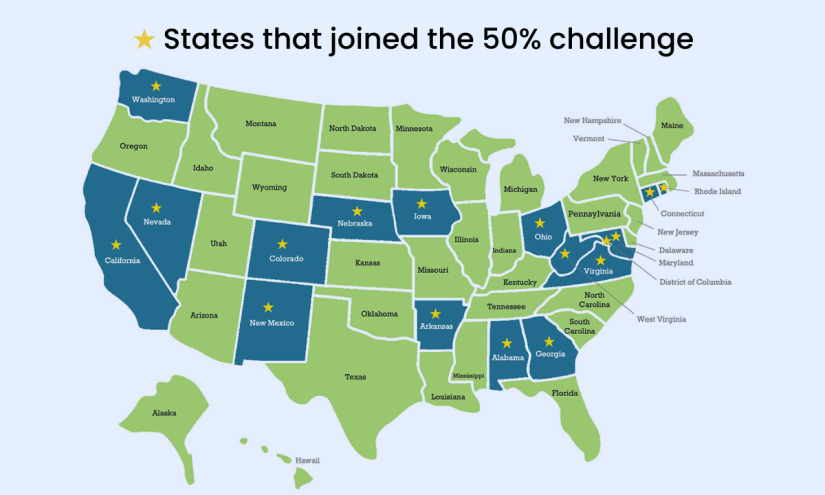
States that joined a national pledge led by three high-profile education advocacy and research groups to cut chronic absenteeism in half over five years fared better. The 16 states and Washington, D.C. posted results “substantially above the average rate” of decline, though exact numbers are not yet available, said Nat Malkus, deputy director of education policy studies at the American Enterprise Institute, one of the trio.
The national chronic absenteeism average dropped from 28.5% in 2022 to 25.4% in 2023, and fell an additional two points to 23.5% in 2024. Virginia, which is among the 16 participating states, cut its chronic absenteeism by 4.4 percentage points, year over year, to 15.7%, as of spring 2024.
Speaking of the states collectively, Malkus told The 74, “That’s good but it’s not as good as we need it to be. I think it points to the need for sustained pressure and a sustained campaign to bring absence rates down and to bring more students back to consistent attendance.”
Last July, AEI and EdTrust, right-and left-leaning think tanks, respectively, and the national nonprofit Attendance Works joined forces to launch The 50% Challenge. This week, the organizations hosted an event in Washington, D.C., to report on their progress, re-up the call to action and hear insights from state, district and community partners on how they are improving student attendance and engagement.
With California and Georgia recently joining, the 16 states and D.C. who signed on to the pledge account for more than a third of all students nationally. While Malkus doesn’t necessarily attribute their better results to the pledge itself, he noted that their participation shows a willingness to commit to the cause and be publicly accountable for their results.
“I will hold their feet to the fire on this goal,” he added during his opening remarks in D.C.
While felt most acutely by students of color and those in poorer districts, the spike in chronic absenteeism — students missing more than 10% of school days a year — cut across districts regardless of size, racial breakdown or income. Chronic absenteeism surged from 13.4% in 2017 to 28.5% in 2022 before beginning to drop in 2023.
Only about one-third of students nationally are in districts that are on pace to cut 2022 absenteeism in half by 2027, according to an AEI report, and rates improved more slowly in 2024 than they did in 2023, “raising the very real possibility that absenteeism rates might never return to pre-pandemic levels.
AEI
Research has shown that students with high rates of absenteeism are more likely to fall behind academically and are at a greater risk of dropping out of school. About 8% of all learning loss from the pandemic is attributed just to chronic absenteeism, according to soon-to-be-released AEI research.
The continued disproportionate impacts of chronic absenteeism were confirmed by recent RAND research, which found that in roughly half of urban school districts, more than 30% of students were chronically absent — a far higher share of students than in rural or suburban school districts.
RAND also found that the most commonly reported reason for missing school was sickness and one-quarter of kids did not think that being chronically absent was a problem.
SchoolStatus, a private company that works with districts to reduce chronic absenteeism, also released new numbers this week for some 1.3 million K-12 students across 172 districts in nine states. Districts using proactive interventions, the company reports, drove down chronic absenteeism rates from 21.9% in 2023–24 to 20.9% in 2024–25.
At this week’s event, numerous experts across two panels emphasized the importance of a tiered approach to confronting the issue, which has resisted various remedies. Schools must build enough trust and buy-in with kids and their families that they are willing to share why they are absent in the first place. Once those root causes are identified, it is up to school, district and state leaders to work to remove the barriers.
And while data monitoring must play a significant role, it should be done in a way that is inclusive of families.
“We need to analyze data with families, not at them,” said Augustus Mays, EdTrust’s vice president of partnerships and engagement.
Augustus Mays is the vice president of partnerships and engagement at EdTrust. (EdTrust)
It’s imperative to understand the individual child beyond the number they represent and to design attendance plans and strategies with families so they feel supported rather than chastised.
“It’s around choosing belonging over punitive punishment,” Mays added.
One major and common mistake schools make is “accountability without relationships,” said Sonja Brookins Santelises, the superintendent of Baltimore City Public Schools.
“You can’t ‘pull people up’ if you don’t have enough knowledge of what they’re really going through,” she said.
Panelists were transparent that all this would require immense funding, staff and community partnerships.
Virginia achieved its noteworthy drop in chronic absenteeism after launching a $418 million education initiative in the fall of 2023, in part after seeing their attendance data sink, with about 1 in 5 students chronically missing school. At least 10% of those funds are earmarked to prioritize attendance solutions in particular, according to panelist Emily Anne Gullickson, the superintendent of public instruction for the Virginia Department of Education.
These strategies are far-reaching, she noted: Because parents had been told throughout the pandemic to keep their kids home at the slightest sign of illness, schools partnered with pediatricians and school nurses to help counter the no-longer-necessary “stay home” narrative.
Hedy Chang is the founder and executive director of Attendance Works. (Attendance Works)
Gullickson said she also broke down bureaucratic silos, connecting transportation directors and attendance directors, after realizing the role that transit played in chronic absenteeism. The state now has second chance buses as well as walking and biking “buses,” led by parents or teachers along a fixed route, who pick up students along the way.
And they are “on a mission to move away from seat time and really deliver more flexibility on where, when and how kids are learning,” she said.
“This isn’t one strategy. It’s a set of strategies,” said Attendance Works founder and executive director Hedy Chang, who moderated the panel.
In Connecticut, state leaders have launched the Learning Engagement and Attendance Program, a research-based model that sends trained support staff to families’ homes to build relationships and better understand why their kids are missing school.
Charlene Russell-Tucker is the commissioner of the Connecticut State Department of Education. (Connecticut State Department of Education)
A recent study confirmed that six months after the program’s first home visits, attendance rates improved by approximately 10 percentage points for K-8 students, and nearly 16 percentage points for high schoolers, said Charlene Russell-Tucker, the commissioner of the Connecticut State Department of Education.
Schools must also work to motivate kids to want to show up in the first place, panelists said, making it a meaningful place that students believe will support and help them in the long run. The only way to do this is to start with student and family feedback, said Brookins, the Baltimore schools chief.
During the pandemic many parents saw up-close for the first time what their kids’ classrooms and teacher interactions looked like, “and I don’t think a lot of folks liked what they saw for a variety of different reasons,” Brookins said.
“I think it opened up boxes of questions that we — as the education establishment — were unprepared to answer,” she added. But chronic absenteeism cannot be successfully fought without engaging in those uncomfortable conversations.
Disclosure: The Bill & Melinda Gates Foundation provides financial support to EdTrust and The 74.
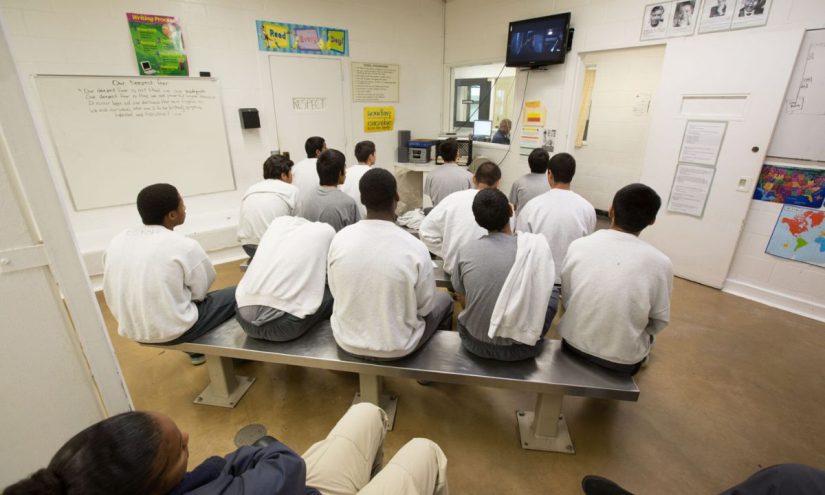
Local government agencies in charge of youth violated the educational and civil rights of students in Los Angeles County’s juvenile justice facilities for decades by punting responsibility and inaction, according to a report released Wednesday.
“Who has the power? Chronicling Los Angeles County’s systemic failures to educate incarcerated youth” blames the disconnected, vast network of local and state agencies — from the board of supervisors to the local probation department to the county office of education and more — that play one role or another in managing the county’s juvenile legal system, for the disruption in the care and education of youth in one of the nation’s largest systems.
“This broken system perpetuates a harmful cycle of ‘finger-pointing,’ often between Probation and Los Angeles County Office of Education, which hinders the resolution of issues that significantly affect the education of incarcerated youth,” wrote the Education Justice Coalition, authors of the report.
The coalition includes representatives from Children’s Defense Fund-California, ACLU of Southern California, Arts for Healing and Justice Network, Disability Rights California, Youth Justice Education Clinic at Loyola Law School, and Public Counsel.
The authors listed three demands for the board of supervisors, including reducing youth incarceration by way of implementing the previously approved Youth Justice Reimagined plan, providing access to high-quality education, and adopting transparency and accountability measures.
Decades of documented rights violations
A timeline outlines repeated student rights violations, some of which have resulted in class-action lawsuits and settlements requiring the county to be monitored by the federal and state departments of justice for years at a time.
Since 2000, the timeline notes that Los Angeles County has faced:
A civil grand jury report calling on the board of supervisors to “improve collaboration” between the probation and education departments in order to address unmet educational needs
An investigation by the federal Department of Justice — and subsequent settlements — found significant teacher shortages, lack of consistency in daily instruction, and issues with support for students with special needs
A class action lawsuit against the county office of education and the probation department
An investigation by the state Department of Justice, followed by settlements, found excessive use of force and inadequate services
Multiple findings by a state agency of L.A. County juvenile facilities being “unsuitable for the confinement of minors”
Most recently, the state attorney general has requested receivership, which would mean full state ownership of the county’s juvenile halls.
The Los Angeles Board of Supervisors, the probation department, and the Office of Education did not immediately respond to a request for comment.
The lasting impact of academic disruptions
Dovontray Farmer experienced the mismanaged system when he entered Los Padrinos Juvenile Hall a second time as a 10th grader. Now 24 and serving as a youth mentor with the Youth Justice Coalition, Farmer said that his time in L.A. County facilities “played a major role in not being able to get properly educated — I felt betrayed, honestly.”
Returning to school after being released was difficult, he said, because he quickly realized he was several grade levels below his classmates at his local high school.
He’d also been part of his school’s football team before his detention at Los Padrinos when he was 17, and said he tried returning to the team once released but wasn’t allowed back.
He said the disruption to his education and participation on the football team, which he saw as a positive influence, affected how he viewed his life.
“There was nothing I really could do, so I was really giving up,” he said. “Like, everything that I really cared for was already gone.”
The environment at the juvenile facilities didn’t help matters.
Los Padrinos recently came under fire after a video published by the Los Angeles Times showed probation officers standing idle as detained youths fought. Thirty officers have been indicted on criminal charges for encouraging or organizing gladiator-style fights among youths.
Farmer said he was put through those same types of fights when he was at Los Padrinos as a teenager.
“A lot of the coverage recently has been about the recent gladiator fights in 2023, but clearly this is a very systemic issue that even when a problem is resolved in the short term, we’re uncovering that it’s really indicative of a larger systemic problem,” said Vivian Wong, an education attorney and director of the Youth Justice Education Clinic at Loyola Law School, whose recent clients have included Los Padrinos students.
Education data across several years backs Farmer’s experiences while detained.
The most recent state data available when Farmer was detained at Los Padrinos is from 2018, when 39% of students were chronically absent, less than 43% graduated, and 12% were suspended at least once.
That same year, the state’s average was 9% for chronic absenteeism, 83.5% for graduation, and 3.5% for suspension.
Ongoing education concerns
The report’s authors note that students across several facilities have lost thousands of instructional minutes, with a “lack of transparency and concrete planning to ensure that the missed services are adequately made up for, leaving students at risk of falling further behind educationally.”
While compensatory education has typically been used to resolve instructional minutes owed, “I am not sure that’s the most realistic way to remedy the injustice that young people face, because they have endured so much abuse in these facilities,” said Wong. “It’s much more than just a loss of instruction.”
A more appropriate response to the loss of instructional time would be a consistent investment in avoiding detention and keeping young people in their communities to maintain school stability, she added.
Past attempts at reform have often been “done without community input or leadership, both in the design and in the implementation of those reforms,” Wong said.
The new report, she added, is meant to be a tool toward implementing Youth Justice Reimagined, or YJR, a model against punitive measures that was largely developed with input from community organizations to restructure the local juvenile legal system.
Three demands
Youth Justice Reimagined, approved by the Los Angeles County Board of Supervisors in November 2020 to reform the local juvenile legal system, would move the county away from punitive approaches, such as detention, and toward rehabilitative support through counseling, family and vocational programming, small residential home placements, and more.
Youth detention results in “severe disconnection from and disruption to their education trajectory,” wrote the report’s authors, as they urged the board to address abysmal educational access and achievement by fully funding and implementing YJR.
The disconnect, they added, is exacerbated by delayed school enrollment when detained and upon release, the constant presence of probation officers, and turnover of educators and classmates.
These common experiences are particularly difficult for students with learning disabilities or a history of trauma, they wrote.
“After more than a decade of incremental reform, it is time for the County to truly reimagine youth justice,” wrote Supervisors Sheila Kuehl and Mark Ridley-Thomas in their November 2020 motion to approve YJR. “In the same way that the Board has embraced a care first, jail last approach to the criminal justice system, it is incumbent upon the Board to embrace a care first youth development approach to youth justice.”
Despite the approval, a report published in August 2024 by the state auditor found that less than half of the YJR recommendations had been implemented by mid-2024.
To address the high rates of chronic absenteeism, poor testing results and instructional minutes owed, the Education Justice Coalition’s second demand is to adapt educational opportunities “to address the unique and significant needs of the court school population.”
They listed 18 actions the county probation and education departments should work together on, including:
Appropriate education support for students with disabilities
Access to A-G approved courses for every student in a juvenile facility
Classrooms led by educators, rather than probation officers
Appropriately credentialed and culturally competent educators
Education access that is not disrupted due to probation staffing issues
The coalition’s third demand centered on transparency and accountability measures by providing families with access to education planning for their children and establishing work groups that include community members.
A district court judge has temporarily blocked a Trump administration ban on collective bargaining by two teachers unions in Department of Defense schools.
Judge Paul Friedman issued a preliminary injunction in a lawsuit filed this spring by the Federal Education Association and Antilles Consolidated Education Association, which represent more than 5,500 teachers, librarians and counselors in the 161 schools under the Department of Defense Education Activity. The agency educates 67,000 children on military bases worldwide.
The union sued the Trump administration over a March executive order that stripped collective bargaining rights from two-thirds of federal service workers. The order impacted the Departments of Justice, Defense, Veteran Affairs, Treasury, and Health and Human Services, as well as the Centers for Disease Control and Prevention and the Environmental Protection Agency.
The Federal Education Association has been negotiating teachers contracts with the Department of Defense since 1970, while the Antilles Consolidated Education Association has bargained on behalf of Puerto Rico educators since 1976, according to the lawsuit. The current collective bargaining agreements for both unions were approved in 2023 and are set to expire in summer 2028.
But since the order was issued, the lawsuit says, the Department of Defense Education Activity has discontinued negotiations, stopped participation in grievance proceedings and prohibited union representation during educator disciplinary meetings. Members are also no longer allowed to conduct union work during the school day. Requests from educators to access a union sick leave bank with 13,000 donated hours have also been ignored, according to the suit.
“These actions, taken together, essentially terminate the respective collective bargaining agreements and thus cause irreparable harm,” Friedman said in his decision.
A 1978 federal statute allows collective bargaining in the civil service sector. The suit argued that while presidents have the authority to exclude an agency if its primary function involves intelligence, investigation or national security work, “Many, if not most, of the agencies and agency subdivisions swept up in the executive order’s dragnet do little to no national security work, much less do they have a primary function [of] intelligence, counterintelligence, investigative [work].”
The agency declined to comment on ongoing legal proceedings. In a reply to the unions’ lawsuit, Trump administration attorneys said the executive order was within the law and that reversing it would be costly.
“Rather than maintaining the status quo, it would force [the Department of Defense] to undo actions it has already taken to implement the executive order, causing significant disruption and resource expenditures,” the lawyers wrote.
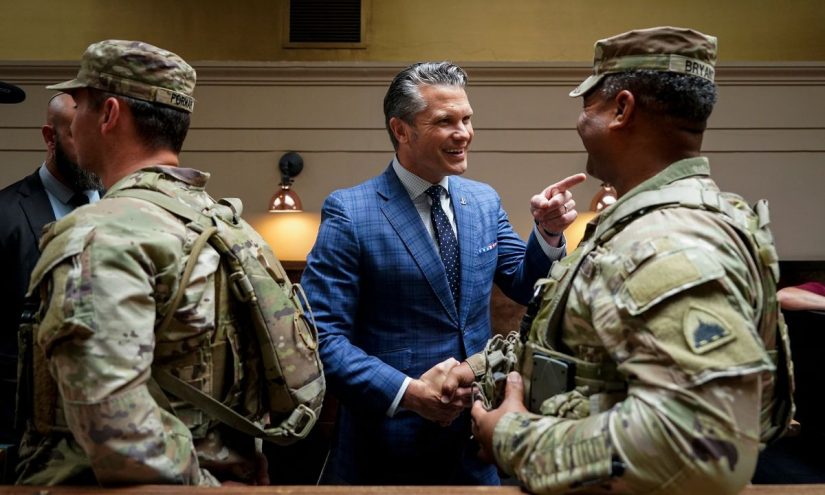
In April, Defense Secretary Pete Hegseth authorized a few exemptions for agencies related to the Air Force and Army, but not the teachers unions — despite a push from 45 lawmakers to exclude the school system.
“Ensuring that DoDEA educators and personnel retain collective bargaining protections will ensure that DoDEA can continue to recruit and retain the best staff in support of its mission,” the congressional members wrote in a letter. “Collective bargaining safeguards the public interest, and its history in DoDEA has demonstrated better outcomes for mission readiness, and stronger connections between military-connected families and those who serve them.”
An appeal from the Trump administration is pending. A similar lawsuit from six unions, including the American Federation of Government Employees, resulted in an injunction, but a federal appeals court reversed it in August.
The departure and replacement of school principals represents one of the most significant organizational changes within educational institutions, creating ripple effects that permeate every aspect of school operations. This phenomenon, increasingly prevalent in contemporary education systems, deserves thorough examination for its profound impact on institutional effectiveness, academic achievement, and organizational stability.
When a principal exits an educational institution, the immediate effects reverberate throughout the entire school system. The administrative vacuum extends far beyond mere personnel changes, as new principals invariably bring distinct leadership philosophies, strategic priorities, and management approaches that can fundamentally reshape the school’s operational framework. Current research in educational leadership suggests that schools typically require between three to five years to fully stabilize following leadership transitions, indicating that frequent turnover can trap institutions in continuous cycles of adjustment and reorganization.
The principal’s role transcends traditional administrative leadership, functioning as the cultural architect of the school community. During leadership transitions, the delicate fabric of established relationships between administration, faculty, and staff enters a period of uncertainty and realignment. The school’s cultural identity, carefully constructed through years of shared experiences and mutual understanding, often undergoes substantial transformation as new leadership implements alternative approaches to community building and professional collaboration. This cultural shift can significantly impact teacher motivation, student engagement, and overall school climate.
Academic program integrity and student achievement metrics frequently experience fluctuations during principal transitions. New leaders typically introduce fresh perspectives on curriculum implementation, instructional methodologies, and resource allocation strategies. While innovation and new approaches can catalyze positive change, frequent shifts in academic direction may disrupt educational continuity and student progress. Empirical studies have consistently demonstrated that schools experiencing frequent principal turnover often exhibit temporary declines in student achievement metrics, with particularly pronounced effects in high-poverty areas where stability serves as a crucial factor for student success.
The impact extends deep into stakeholder relationships and community partnerships. Parents, community organizations, and local partners must adapt to new leadership styles, communication protocols, and institutional priorities. The critical process of building and maintaining trust, essential for effective school-community partnerships, frequently requires renewal with each leadership change. This cyclical process can affect various aspects of school operations, from volunteer program effectiveness to community support for school initiatives and funding proposals.
Professional development trajectories and staff retention patterns often undergo significant changes during principal transitions. Different leaders may emphasize various areas of professional growth or implement modified evaluation systems, directly affecting teacher satisfaction and career advancement opportunities. Research indicates a strong correlation between principal turnover and increased teacher attrition rates, creating compound effects on institutional stability and educational continuity. This relationship suggests that leadership stability plays a crucial role in maintaining a consistent and experienced teaching staff.
The challenges of strategic planning become particularly acute in environments characterized by frequent leadership changes. Multi-year improvement initiatives risk interruption or abandonment as new principals implement different priorities and approaches. This instability can affect various aspects of school development, from technology integration plans to curriculum development initiatives, potentially compromising the institution’s ability to achieve long-term educational objectives and maintain consistent progress toward established goals.
Educational institutions can implement various strategies to minimize the negative impacts of principal turnover, including developing comprehensive transition protocols, maintaining detailed documentation of ongoing initiatives, creating strong distributed leadership teams, establishing clear communication channels during transitions, and building robust institutional memory through systematic record-keeping. These mitigation strategies prove essential for maintaining organizational stability and educational effectiveness during periods of leadership change.
The implications of principal turnover extend throughout the educational ecosystem, influencing everything from daily operations to long-term strategic initiatives. Understanding these complex dynamics becomes increasingly crucial for educational stakeholders, policymakers, and administrators in developing effective strategies to maintain institutional stability and educational quality during leadership transitions. As educational institutions continue to evolve in response to changing societal needs and expectations, the ability to manage leadership transitions effectively becomes paramount for ensuring consistent, high-quality education for all students.
This comprehensive analysis of principal turnover effects provides valuable insights for educational professionals, administrators, and policymakers working to create more stable and effective learning environments. The ongoing challenge lies in balancing the potential benefits of new leadership perspectives with the fundamental need for institutional stability and continuous educational improvement, all while maintaining focus on the ultimate goal: providing optimal learning opportunities for students in an ever-changing educational landscape.
Dr. Jason Richardson, Garden City Elementary School & the International University of the Caribbean
Dr. Jason Richardson is a Teacher Leader at the Garden City Elementary School in Savannah, Georgia and a Professor of Graduate Studies at the International University of the Caribbean (Jamaica). He holds a Diploma in Principalship from the National Leadership College of Jamaica, Bachelor of Education from the International University of the Caribbean, Master of Science in Counseling and Consulting Psychology from the International University of the Caribbean, Educational Specialist Degree and a Doctor of Education Degree in Leadership and Management from the William Howard Taft University.
Latest posts by eSchool Media Contributors (see all)
Each call pulls officers from genuine emergencies, disrupts classrooms, and leaves students and staff shaken. While emergency protocols are essential, when swatting becomes routine, it’s clear that response plans alone won’t solve the problem.
Unpacking the early signals
Swatting rarely emerges out of thin air. It’s often the final act following a series of compounding behaviors, such as:
Online harassment
Peer conflicts
Risky social media challenges
Unaddressed behavioral concerns
These warning signs exist, but are typically scattered across multiple school departments.
Counselors might log escalating incidents. Teachers may notice changes in student behavior, and school resource officers (SROs) might track repeated visits involving the same individuals. Without a unified way to connect these observations, critical warning signs go unnoticed.
Operationalizing early intervention
Districts are reimagining how they capture and coordinate behavioral data. The goal isn’t surveillance or punitive action. It’s about empowering the right people with the right context to align and intervene early.
When schools shift from viewing incidents in isolation to seeing behavior patterns in context, they are better positioned to act before concerns escalate. This can mean initiating mental health referrals, alerting safety teams, or involving families and law enforcement partners at the appropriate moment with comprehensive information.
Technology that enables teams
The process requires tools that support secure, centralized documentation and streamline communication across counselors, administrators, safety staff, and other stakeholders. These systems don’t replace human judgment, but create conditions for clearer decisions and more timely coordination.
Swatting is just one example of how fragmented behavioral data can contribute to high-risk outcomes. Other incidents, such as escalating bullying, persistent mental health concerns, or anonymous threats often follow recognizable patterns that emerge over time. When schools use a centralized system to document and track these behaviors across departments, they can identify those patterns earlier. This kind of structured coordination supports proactive interventions, helping prevent larger issues before they unfold and reinforcing a culture of safety and awareness.
Consider Washington State, whereswatting affected more than 18,000 students last year, costing schools over $270,000 in lost instructional time. These figures illustrate the operational and human costs when coordination breaks down.
Reducing risk, not just reacting to it
Swatting is a symptom of a larger issue. Building safer schools means moving upstream from reactive emergency response to proactive coordination. It requires shared insight across teams, strengthened behavioral threat assessment protocols, and the right supports in place well before crisis calls occur.
Early intervention isn’t about adding complexity. It’s about reducing risk, improving situational clarity, and equipping school communities to act with confidence–not simply responding when harm is imminent.
Amanda Lewis, Versaterm
Amanda Lewis is a product manager at Versaterm.
Latest posts by eSchool Media Contributors (see all)
Last week, news emerged of State Department plans to cut FY25 funding for 22 study abroad programs, rendering the programs cancelled in an unprecedented slashing of funding already approved by Congress.
“We were completely blindsided by the whole thing,” said a federal employee of the Bureau of Educational and Cultural Affairs (ECA), speaking anonymously to The PIE News.
Rather than informing ECA staff, news of the cancelled funds was sent to state department regional bureau officials, they explained, eventually spreading throughout the study abroad community over social media and by word of mouth.
“We put our heart and soul into implementing these programs… for lots of people to find out about the cuts through a list shared on LinkedIn was deeply troubling,” said the employee.
While the decision to cancel the grants came from higher up, the emails were sent by a “non-political” ECA leader. Over a week has passed and ECA staff are yet to receive any official announcement from the administration.
Upon receiving the news, the study abroad community quickly galvanised, with a campaign by the Alliance for International Exchange which has seen at least 13,500 letters sent to Congress as of August 21.
“I do think the campaigns are going to be helpful… from where I sit within the ECA, we need these campaigns, our livelihoods depend on these campaigns,” said the source.
“My fear is that there’s nothing at this point that would stop the current administration from doing this again in FY26… I would say they’re laying the groundwork for that to be possible for that to have happen again,” they added.
Currently, the cancelled funds relate to fiscal year 2025, which ends on September 30, though many of the programs are forward funded, meaning that they were waiting on the FY25 funds to support the 2026 calendar year.
“For FY25, I’m not sure how we come back from this,” said the ECA staff member. “Even if everything came back online today, we would still have a paperwork issue of trying to get everything done before the September 30 deadline.”
As such, the campaigns are fighting for the long-term survival of study abroad, amid “real fears” of programs unable to reopen in the following year.
“If we allow the Office for Management and Budget (OMB) to cut these congressionally appropriated FY25 awards, it will give them license to do it again and again, effectively eliminating exchange programs,” stated the Alliance.
Though ECA staff were not privy to high level conversations between ECA official Darren Beattie and State Department leadership, a notable difference this year was the presence of OMB, “who have never ever been involved in this process previously”, said the employee.
What’s more, experts have questioned the legality of the cuts, with stakeholders highlighting that the cancellation of funding already approved by Congress is “unconstitutional”.
This is one of the primary messages of the campaign, which the ECA source said they hoped would “set the stage” for FY26 to ensure that Congress decides.
We put our heart and soul into implementing these programs… for lots of people to find out about the cuts through a list shared on LinkedIn was deeply troubling
ECA employee
“We are letting the administration and Congress know that these programs have a valuable impact and that they could meet administrative priorities if they decided to use them the way they’re meant to be used,” they added.
After a slate of State Department layoffs last month, ECA staff are thought to be safe from job losses caused by the cuts, though staff furloughs are widely expected among program implementers, with whole organisations at risk of going under.
More broadly, employees are concerned about the “dire” consequences for US diplomacy and soft power.
“All the people that work on exchange programs that I have ever encountered had an international experience that changed our lives,” said the employee. “From a policy perspective, that’s the definition of soft power, and the consequence of not having those connections for even a year are dire.”
“I have every reason to believe that this administration is doing this with other aspects of the federal government, and we just don’t know that it’s going on.”
“ECA has this large alumni network that is passionate, and we can make our voices heard by Congress,” they said. “But my biggest fear is that if ECA doesn’t come out on top then it’s going to have a greater impact on other grants in other industries that don’t have a voice as loud as ours.”
Other than being deemed as a “lower funding priority in the current fiscal environment”, no rationale has been provided for which programs got the axe, with the ECA employee particularly surprised by the cancellation of the Young African Leaders Initiative (YALI).
Established in 2010, YALI had the support of the Trump administration, with the employee deeming it “one of the best US programs for the African continent”.
As for the remaining initiatives, including the state department’s flagship Fulbright Scholarship, nothing is off the table.
“Fulbright carries the weight of more protections than most,” said the ECA employee: “That being said, I think alumni need to pay attention. I don’t think anything is out of the realm.”
The State Department did not immediately reply to The PIE’srequest for comment.
Conversations between Egypt and Czech Republic are focused on expanding opportunities for student and faculty mobility, launching joint research initiatives, and creating frameworks for institutional partnerships between universities in both countries.
Senior officials including Ayman Ashour, Egypt’s minister of higher education and Czech Ambassador to Cairo, Ivan Jukl, gathered at the New Cairo Education Building to discuss deepening educational ties.
Ashour emphasised the importance of deepening academic and research collaboration between Egyptian and Czech institutions, noting that closer ties would help build human capacity and advance the priorities of both countries.
“We agreed on the importance of strengthening academic and research collaboration between Egyptian and Czech institutions, fostering knowledge exchange, and creating new opportunities for joint projects in priority fields that serve both nations’ development goals,” commented Ayman Ashour.
“Together, we will work towards building impactful partnerships that advance innovation, research, scholarships, and sustainable development.”
Together, we will work towards building impactful partnerships that advance innovation, research, scholarships, and sustainable development.
Ayman Ashour, minister of higher education,
In recent years, Egypt has launched new universities, welcomed international branch campuses, and developed dual-degree programs with globally ranked institutions, aiming to attract more students.
Egyptian universities are increasingly offering programs taught in multiple languages, designed to draw a more diverse pool of international students. This part of the expansion strategy and national development agenda, the minister explained, is Egypt’s ambition to establish itself as a regional hub for higher education, attracting students from across the Arab world, Africa, and the Middle East.
Jukl, meanwhile, welcomed the developments, stressing the Czech Republic’s commitment to extending its cooperation with Egypt.
He praised Egypt’s young, dynamic population and its position as a gateway to the African continent, calling these factors a strong foundation for building long-term academic and scientific partnerships.
For students, the enhanced cooperation could mean greater access to scholarships, exchange placements, and dual-degree opportunities in the coming years. Egyptian students may also see more Czech institutions participating in academic fairs and mobility schemes across the region, opening new pathways to Europe for postgraduate study and research.
As part of its diversification drive, the travel platform has formed a strategic alliance with Planet Education to forge its path into international study tourism.
According to an exchange filing by EaseMyTrip last year, the company acquired its stake in the study-abroad organisation by purchasing shares from existing shareholders through the issuance of fully paid-up equity shares of EaseMyTrip worth INR 39.20 crore (approximately £3.5 million).
While EaseMyTrip, a publicly listed company on India’s National Stock Exchange (NSE) and Bombay Stock Exchange (BSE), will provide Planet Education with access to its customer base and technological capabilities, the travel platform is expected to gain from Planet Education’s 25 years of experience in the international education sector, including expertise in counselling, university placements, and visa assistance.
Leveraging Planet Education’s expertise, we aim to simplify the process of visas and documentation for students, making it hassle-free Nishant Pitti, EaseMyTrip
“Every year, lakhs of students pursue higher education in countries like the USA, Canada, the UK, Australia, Singapore, New Zealand, and Ireland. Our acquisition in Planet Education is a strategic step to enter the burgeoning international study tourism, allowing us to offer a seamless, end-to-end experience that integrates both education and travel services for our customers,” said Nishant Pitti, CEO & co-founder, EaseMyTrip.
“Leveraging Planet Education’s expertise, we aim to simplify the process of visas and documentation for students, making it hassle-free. We see immense potential in Planet Education’s model and are excited to combine our tech-driven capabilities with their expertise to create enhanced value for our valued customers.”
“[The] proposed alliance would be a perfect synergy for expansion and growth of businesses of both the entities whereby wide network of Planet Education in form of its presence across the country and EaseMyTrip’s presence through its online platform for travel and tourism will be facilitating each other’s line of business and thereby achieving growth in the businesses,” stated Sanket Shah, founder, Planet Education.
Meanwhile, Planet Education founder Sanket Shah said the partnership marked “a perfect synergy for expansion” and the growth of both businesses.
While this marks the first investment by an Indian travel platform in an international education provider, several travel companies over the years have introduced services aimed at India’s growing outbound student population, which is expected to reach 2.5 million by 2030.
Just last year, BookMyForex, a subsidiary of another leading travel platform MakeMyTrip, launched a promotional campaign offering cashback on forex cards and tuition fee transfers for students planning to study abroad.
Moreover, in 2023, MakeMyTrip rolled out a series of student-focused collaborations, teaming up with airlines to provide additional baggage allowances and special fares, with banks to extend exclusive credit card discounts on bookings, and with travel accessory brands to offer concessions.
“We are delighted that this integrated offering will lead to economy and convenience for the student cohort travelling abroad, especially to destinations such as the USA, Canada, Europe, the United Kingdom, Australia, and New Zealand,” stated Saujanya Shrivastava, COO, Flights, Holidays, and Gulf Cooperation Council, MakeMyTrip.