Category: News

  • How an Indiana Teacher Prepares Students for College Success – The 74

    How an Indiana Teacher Prepares Students for College Success – The 74


    Get stories like this delivered straight to your inbox. Sign up for The 74 Newsletter

    As new graduation requirements go into effect in Indiana, more students will likely take college and career courses to prepare for life after high school. But making sure students can access these classes — and succeed in them — takes some patience and creativity.

    When Sheridan High School teacher Jill Cali noticed her students struggling with the longer deadlines and open-ended questions typical of college assignments, she began to teach them how to break tasks into more manageable steps. Soon, her students were reaping the benefits.

    Other roadblocks to students’ success in college courses, especially in rural communities like Sheridan, a town of 3,000 people in northwest Hamilton County, include accessing these credits and paying for them.

    Cali said being part of the Rural Early College Network, sponsored by the Center of Excellence in Leadership of Learning at the University of Indianapolis, allows her students to earn college credits for free. The network also serves as a source of support, allowing her to exchange ideas with teachers at other schools.

    “The struggles that students typically have in early college courses are some of the same things that prevent many students from being confident that they will find success in college,” Cali told Chalkbeat. “When students believe they don’t have the ability to be successful in completing college-level work, their first instinct is to shy away from it.”

    Read on to learn more about how Cali approaches her early college classes.

    This interview has been lightly edited for length.

    How and when did you decide to become a teacher?

    I decided to become a teacher during my sophomore year of college when I realized that I was not meant to be an accountant! I had always loved working with kids and had a natural talent in Spanish, so becoming a [Spanish] teacher seemed like a good fit. The longer I teach, the more sure I am that this was the right path for me. I was made to be a teacher.

    What was the process like to become a dual-credit instructor?

    Our superintendent suggested I pursue a Master of Science in Curriculum and Instruction so I would be able to teach the dual-credit Education Professions courses. During our conversation, he convinced me that the degree program would be flexible enough to work with my busy single parenting and teaching schedule and that I would see the return on my investment very quickly. He was right.

    The following week, at the age of 42, I enrolled in a program to complete my master’s degree online, working at my own pace. I finished in six months, after working tirelessly to make sure that I only had to pay for one term.

    In order to be approved as a dual-credit instructor, I had to coordinate with my high school’s higher education partner, Ivy Tech Community College. This involved submitting my [college and grad school] transcripts, along with a proposed syllabus for each of the courses I planned to teach. The process was honestly pretty quick and painless.

    What’s your favorite lesson to teach and why?

    In my Principles of Teaching class, the introduction to teaching course, I teach about differentiation and making accommodations for students with special needs. My very favorite lesson to teach is the one in which I give students various tasks, but each has a different limitation. Their reactions, creative thinking, and “aha moments” are the reason it is my favorite lesson. During that lesson, my students realize that some of the most basic tasks can be entirely impossible with just one small limitation. Their internalization of how frustrating learning can be for some of our students really helps us to move forward with the unit of study in a productive manner.

    Tell us about your own experience with school and how it affects your work today.

    Throughout my childhood and into adulthood, I was a student who strived for excellence in every subject. Realizing that I finally understood a concept I had been trying to grasp or persevering through a tough problem to find an answer always gave me immense satisfaction. I loved the “light bulb moments” as a student, but I enjoy them even more now that I am the teacher. A natural lifelong learner myself, it has always been my goal to inspire my students to be inquisitive and curious investigators of anything that interests them.

    How is your early college classroom different from a standard high school classroom?

    At a glance, my classroom looks a bit more like a college classroom than many high school classrooms. I was fortunate enough to be able to use grant money to furnish the room with flexible seating options. What you can’t see is that my early college students work with elementary students, getting experience in the field. The flexible seating allows them to move seamlessly between working independently and cooperating and creating with their peers.

    How do you help students adjust to those expectations?

    Students in early college learn that when something feels overwhelming or difficult, they have the tools to tackle it on their own. This doesn’t mean that they can’t ask for help or guidance. It means that before asking for help, students should make sure they have exhausted all options for figuring it out on their own.

    I send a letter to each student and one home to their caregivers prior to the start of school in the fall, explaining what dual-credit means and what the expectations will look like in my early college class. This ensures that there is no confusion about what will be expected of early college students and also opens the lines of communication with students and families.

    Having taught these courses for a few years, I’ve found that students struggle with a course that has larger assignments and more time between deadlines. The first thing I do to support them in addressing this is to show them how they can break larger assignments and projects into smaller tasks on their own. Many students are used to having teachers do this for them. I show them how they can establish their own, smaller deadlines based on what they know about their personal schedule, how fast they tend to work, and the support they think they might need.

    Students also find it challenging to write nearly everything for their dual-credit courses using a formal tone with proper grammar and spelling. In addition, students tend to have trouble answering multi-part questions … particularly when they are higher-level thinking questions. I spend a full class period — more, if needed — showing them and having them practice how to appropriately respond to the types of writing prompts and questions they will typically see in their early college courses.

    Another area where students tend to struggle is with attendance and deadlines. During the COVID-19 pandemic, many schools insisted that students be shown grace in both of those areas. Unfortunately, this instilled in them the idea that as long as they completed all graded assignments, it didn’t matter whether they participated in class or how late assignments were submitted. Though their learning is always my primary focus, much of what my students learn builds on itself. In addition, much of the learning takes place through class discussions.

    What are some barriers your students face to postsecondary opportunities, and how does the Rural Early College Network help you help them overcome those?

    The greatest barrier to postsecondary opportunities for students in my school is the financial barrier. The dual-credit courses we offer are all free to our students, so when they successfully complete those courses, the number of semesters that will be required for them to complete their degree can be reduced. This translates to money saved for the student and makes their postsecondary options more affordable and attainable.

    Rural Early College Network schools meet throughout the school year to share ideas and support each other in building programs that provide our students with the tools they need to be successful in our classrooms, in college, and beyond.

    What’s the best advice you’ve ever received, and how have you put it into practice?

    The best advice I have ever received with regard to teaching is, “Student behavior and choices are almost never personal attacks against the teacher.” It was the great reminder that my teenage students’ brains are not fully developed. When they make poor choices or when they act out, it nearly never has anything to do with how they feel about me or anything even relating to me. Letting that go and remembering to see their behaviors as something completely separate from me has really made it much easier to create consequences when appropriate, support my students when needed, and establish a welcoming environment in which every student starts fresh every day.

    This story was originally published by Chalkbeat. Chalkbeat is a nonprofit news site covering educational change in public schools. Sign up for their newsletters at ckbe.at/newsletters.


    Get stories like these delivered straight to your inbox. Sign up for The 74 Newsletter

    Source link

  • Kansas City Parents Push for Dyslexia to be Taken Seriously – The 74

    Kansas City Parents Push for Dyslexia to be Taken Seriously – The 74


    Get stories like this delivered straight to your inbox. Sign up for The 74 Newsletter

    Tuesday Willaredt knew her older daughter, Vivienne, struggled to read.

    She tentatively accepted teachers’ reassurances and the obvious explanations: Remote learning during the COVID pandemic was disruptive. Returning to school was chaotic. All students were behind.

    Annie Watson was concerned about her son Henry’s performance in kindergarten and first grade.

    But his teachers weren’t. There was a pandemic, they said. He was a boy. Henry wasn’t really lagging behind his classmates.

    So Willaredt and Watson kept asking questions. So did Tricia McGhee, Abbey and Aaron Dunbar, Lisa Salazar Tingey, Kelly Reardon and T.C. — all parents who spoke to The Beacon about getting support for their kids’ reading struggles. (The Beacon is identifying T.C. by her initials because she works for a school district.)

    After schools gave reassurances or rationalizations or denied services, the parents kept raising concerns, seeking advice from teachers and fellow parents and pursuing formal evaluations.

    Eventually, they all reached the same conclusion. Their children had dyslexia, a disability that makes it more difficult to learn to read and write well.

    They also realized something else. Schools — whether private, public, charter or homeschool — aren’t always equipped to immediately catch the problem and provide enough support, even though some estimates suggest up to 20% of students have dyslexia symptoms.

    Instead, the parents took matters into their own hands, seeking diagnoses, advocating for extra help and accommodations, moving to another district or paying for tutoring or private school.

    “You get a diagnosis from a medical professional,” Salazar Tingey said. “Then you go to the school and you’re like, ‘This is what they say is best practice for this diagnosis.’ And they’re like, ‘That’s not our policy.’”

    Recognizing dyslexia

    It wasn’t until Vivienne, now 12, was in sixth grade and struggling to keep up at Lincoln College Preparatory Academy Middle School that a teacher said the word “dyslexic” to Willaredt.

    After the Kansas City Public Schools teacher mentioned dyslexia, Willaredt made an appointment at Children’s Mercy Hospital, waited months for an opening and ultimately confirmed that Vivienne had dyslexia. Her younger daughter Harlow, age 9, was diagnosed even more recently.

    Willaredt now wonders if any of Vivienne’s other teachers suspected the truth. A reading specialist at Vivienne’s former charter school had said her primary problem was focus.

    “There’s this whole bureaucracy within the school,” she said. “They don’t want to call it what it is, necessarily, because then the school’s on the hook” to provide services.

    Missouri law requires that students in grades K-3 be screened for possible dyslexia, said Shain Bergan, public relations coordinator for Kansas City Public Schools. If they’re flagged, the school notifies their parents and makes a reading success plan.

    Schools don’t formally diagnose students, though. That’s something families can pursue — and pay for — on their own by consulting a health professional.

    “Missouri teachers, by and large, aren’t specially trained to identify or address dyslexia in particular,” Bergan wrote in an email. “They identify and address specific reading issues students are having, whether it’s because the student has a specific condition or not.”

    Bergan later added that KCPS early elementary and reading-specific teachers complete state-mandated dyslexia training through LETRS (Language Essentials for Teachers of Reading and Spelling), an intensive teacher education program that emphasizes scientific research about how students learn to read.

    Missouri is pushing for more teachers to enroll in LETRS.

    In an emailed statement, the North Kansas City School District said staff members “receive training on dyslexia and classroom strategies,” and the district uses a screening “to help identify students who may need additional reading support.”

    Kansas has also worked to update teacher training. But the state recently lost federal funding for LETRS training and pulled back on adding funding to its Blueprint for Literacy.

    Public school students with dyslexia or another disability might be eligible for an individualized education program, or IEP, a formal plan for providing special education services which comes with federal civil rights protections.

    But a diagnosis isn’t enough to prove eligibility, and developing an IEP can be a lengthy process that requires strong advocacy from parents. Students who don’t qualify might be eligible for accommodations through a 504 plan.

    A spokesperson for Olathe Public Schools said in an email that the district’s teachers participate in state-mandated dyslexia training but don’t diagnose dyslexia.

    The district takes outside diagnoses into consideration, but “if a student is making progress in the general education curriculum and able to access it, then the diagnosis alone would not necessarily demonstrate the need for support and services.”

    Why dyslexia gets missed

    Some families find that teachers dismiss valid concerns, delaying diagnoses that parents see as key to getting proper support.

    Salazar Tingey alerted teachers that her son, Cal, was struggling with reading compared to his older siblings. Each year, starting in an Iowa preschool and continuing after the family moved to the North Kansas City School District, she heard his issues were common and unconcerning.

    She felt validated when a Sunday school teacher suggested dyslexia and recommended talking to a pediatrician.

    After Cal was diagnosed, Salazar Tingey asked his second grade teacher about the methods she used to teach dyslexic kids. She didn’t expect to hear, “That’s not really my specialty.”

    “I guess I thought that if you’re a K-3 teacher, that would be pretty standard,” she said. “I don’t think (dyslexia is) that uncommon.”

    Louise Spear-Swerling, a professor emerita in the Department of Special Education at Southern Connecticut State University, said estimates of the prevalence of dyslexia range from as high as 20% to as low as 3 to 5%. She thinks 5 to 10% is reasonable.

    “That means that the typical general education teacher, if you have a class of, say, 20 students, will see at least one child with dyslexia every year — year after year after year,” she said.

    Early intervention is key, Spear-Swerling said, but it doesn’t always happen.

    To receive services for dyslexia under federal special education guidelines, students must have difficulty reading that isn’t primarily caused by something like poor instruction, another disability, economic disadvantage or being an English language learner, she said. And schools sometimes misidentify the primary cause.

    Tricia McGhee, director of communications at Revolucion Educativa, a nonprofit that offers advocacy and support for Latinx families, has had that experience.

    She said her daughter’s charter school flagged her issues with reading but said it was “typical that all bilingual or bicultural children were behind,” McGhee said. That didn’t sound right because her older child was grade levels ahead in reading.

    “The first thing they told me is, ‘You just need to make sure to be reading to her every night,’” McGhee said. “I was like, ‘Thanks. I’ve done that every day since she was born.’”

    McGhee is now a member of the KCPS school board. But she spoke to The Beacon before being elected, in her capacity as a parent and RevEd staff member.

    Dyslexia also may not stand out among classmates who are struggling for various reasons.

    Annie Watson, whose professional expertise is in early childhood education planning, strategy and advocacy, said some of Henry’s peers lacked access to high-quality early education and weren’t prepared for kindergarten.

    “His handwriting is so poor,” she remembers telling his teacher.

    The teacher assured her that Henry’s handwriting was among the best in the class.

    “Let’s not compare against his peers,” Watson said. “Let’s compare against grade level standards.”

    Receiving services for dyslexia 

    Watson cried during a Park Hill parent teacher conference when a reading interventionist said she was certified in Orton-Gillingham, an instruction method designed for students with dyslexia.

    In an ideal world, Watson said, the mere mention of a teaching approach wouldn’t be so fraught.

    Annie Watson with her son Henry, 11, before track practice. Henry went through intensive tutoring to help him learn to read well after his original school didn’t provide the services he needed. (Vaughn Wheat/The Beacon)

    “I would love to know less about this,” she said. “My goal is to read books with my kids every night, right? I would love for that to just be my role, and that hasn’t been it.”

    By that point, Watson’s family had spent tens of thousands of dollars on Orton-Gillingham tutoring for Henry through Horizon Academy, a private school focused on students with dyslexia and similar disabilities.

    They had ultimately moved to the Park Hill district, not convinced that charter schools or KCPS had enough resources to provide support.

    “I felt so guilty in his charter school,” Watson said. “There were so many kids who needed so many things, and so it was hard to advocate for my kid who was writing better than a lot of the kids.”

    So the idea that Henry’s little sister — who doesn’t have dyslexia — could get a bit of expert attention seamlessly, during the school day and without any special advocacy, made Watson emotional.

    “Henry will never get that,” she said.

    While Watson wonders if public schools in Park Hill could have been enough for Henry had he started there earlier, some families sought help outside of the public school system entirely.

    The Reardon and Dunbar families, who eventually received some services from their respective schools, each enrolled a child full-time in Horizon Academy after deciding the services weren’t enough.

    Kelly Reardon said her daughter originally went to a private Catholic school.

    “With one teacher and 26 kids, there’s just no way that she would have gotten the individualized intervention that she needed,” she said.

    The Dunbars’ son, Henry, had been homeschooled and attended an Olathe public school part-time.

    Abbey Dunbar said Henry didn’t qualify for services from the Olathe district in kindergarten, but did when the family asked again in second grade. Henry has a diagnosed severe auditory processing disorder, and his family considers him to have dyslexia based on testing at school.

    She said the school accommodated the family’s part-time schedule and the special education services they gave to Henry genuinely helped.

    “​​I never want to undercut what they gave and what they did for him, because we did see progress,” Dunbar said. “But we need eight hours a day (of support), and I don’t think that’s something they could even begin to give in public school. There’s so many kids.”

    T.C., whose daughters attended KCPS when they were diagnosed, also decided she couldn’t rely on services provided by the school alone. One daughter didn’t qualify for an IEP because the school said she was already achieving as expected for her IQ level.

    In the end, T.C. said, her daughters did get the support they needed “because I paid for it.”

    She found a tutor who was relatively inexpensive because she was finishing her degree. But at $55 per child, per session once or twice a week, tutoring still ate into the family’s budget and her children’s free time.

    “If they were learning what they needed to learn at school… we wouldn’t have had that financial burden,” she said. Tutoring also meant “our kids couldn’t participate in other activities outside of school.”

    Support and accommodations

    Tuesday Willaredt is still figuring out exactly what support Vivienne needs.

    Options include a KCPS neighborhood school, a charter school that extends through eighth grade or moving to another district. Outside tutoring will likely be part of the picture regardless.

    Willaredt is worried that her kids aren’t being set up to love learning.

    Vivienne, 12 (left), and Harlow, 9, were both diagnosed with dyslexia earlier this year. (Vaughn Wheat/The Beacon)

    “That’s where I get frustrated,” she said. “If interventions were put in earlier — meaning the tutoring that I would have had to seek — these frustrations and sadness that is their experience around learning wouldn’t have happened.”

    When Lisa Salazar Tingey brought Cal’s dyslexia diagnosis to his school, he didn’t qualify for an IEP. But his classroom teacher offered extra support that seemed to catch him up.

    In following years, though, Salazar Tingey has worried about Cal’s performance stagnating and considered formalizing his accommodations through a 504 plan.

    She wants Cal, now 10, to be able to use things like voice to text or audiobooks if his dyslexia is limiting his intellectual exploration.

    Before his diagnosis, she and her husband noticed that every school writing assignment Cal brought home was about volcanoes, even though “it wasn’t like he was a kid who was always talking about volcanoes.”

    When he was diagnosed, they learned that sticking to familiar topics can be a side effect of dyslexia.

    “He knows how to spell magma and lava and volcano, and so that’s all he ever wrote about,” Salazar Tingey said. “That’s sad to me. I want him to feel that the world is wide open, that he can read about anything.”

    This article first appeared on Beacon: Kansas City and is republished here under a Creative Commons Attribution-NoDerivatives 4.0 International License.


    Get stories like these delivered straight to your inbox. Sign up for The 74 Newsletter

    Source link

  • Judge halts ban on international enrolments at Harvard

    Judge halts ban on international enrolments at Harvard

    In the latest move in the government’s dramatic feud with the US’s oldest university – and a major victory for international education sector – district judge Allison Burroughs issued a temporary restraining order yesterday, halting the directive stripping Harvard of its eligibility to enrol students from overseas.

    It follows the institution’s swift decision to mount a legal challenge against the administration’s demands that it hand over all disciplinary records for international students from the last five years if it wanted to regain its SEVP status.

    In its lawsuit, Harvard said: “With the stroke of a pen, the government has sought to erase a quarter of Harvard’s student body, international students who contribute significantly to the University and its mission.” The next hearing in the case will be held in Boston on May 29.

    If it comes to pass, the ban on international student enrolments would significantly harm Harvard’s financial situation – with last year’s 6,793 overseas students making up a sizeable 27% of the student body.

    With the stroke of a pen, the government has sought to erase a quarter of Harvard’s student body, international students who contribute significantly to the University and its mission
    Harvard University

    Orders from the Trump administration would not only prevent Harvard from enrolling any F-1 or J-1 students for the 2025/26 academic year, but also force current international students to transfer to another university if they want to stay in the country. 

    The move cause widespread panic among international students – especially given that some are set to graduate in just one week.

    Students told The PIE News that they were worried about what was happening, but trusted Harvard to “have our backs”.

    The institution’s row with Harvard stems from the stand it took – one of the only US institutions to do so – against the administrations raft of demands, including that it reform its admissions and hiring practices to combat antisemitism on campus, end DEI initiatives and hand over reports on international students.

    When the institution refused to do so, the government froze $2.2 billion in the university’s funding, threatened to revoke its tax-exempt status, and demanded international students’ records if it didn’t want to lose its SEVP certification. 

    Although Harvard did send over some student information on April 30, and maintained that it had provided the information it was legally bound to supply, this seems to have been insufficient for the Trump administration.

    In US homeland security secretary Kristi Noem’s letter to Harvard, she said: “This action should not surprise you and is the unfortunate result of Harvard’s failure to comply with simple reporting requirements”.  

    Source link

  • Panic hits Harvard international students after Trump crackdown

    Panic hits Harvard international students after Trump crackdown

    As per a statement released by Kristi Noem, US homeland security secretary, Harvard’s Student and Exchange Visitor Program (SEVP) certification has been revoked because of their “failure to adhere to the law.” 

    “As a result of your refusal to comply with multiple requests to provide the Department of Homeland Security pertinent information while perpetuating an unsafe campus environment that is hostile to Jewish students, promotes pro-Hamas sympathies, and employs racist “diversity, equity, and inclusion” policies, you have lost this privilege,” read the letter by Noem to Harvard University, shared on X, formerly Twitter. 

    “The revocation of your Student and Exchange Visitor Program certification means that Harvard is prohibited from having any aliens on F- or J- nonimmigrant status for the 2025-2026 academic school year.”

    Students set to join Harvard this year are now relying on the institution to take urgent action to keep their dreams of studying at the Ivy League institution alive.

    “I already had to defer my intake from last year to this year due to lack of funds. Deferring again just isn’t an option for me,” stated Pravin Deshmukh, an incoming student at Harvard’s Graduate School of Education. 

    “We’re hoping the university can find some form of solution and keep us updated on what’s happening. Harvard has been very proactive over the past few weeks. They’ve reassured incoming students like me of their commitment through emails, provided details on continuing classes online, and shared ways to stay in touch with the International Office.”

    Currently, over 6,800 international students are enrolled at the university, making up 27% of this year’s student body, with a significant portion hailing from countries such as China, India, Canada, South Korea, and the UK.

    WhatsApp groups are on fire – everyone’s panicking, wondering what’s going to happen next. Some parents were planning to attend graduation ceremonies, but now students are telling them, ‘Don’t say you’re coming to visit us.’

    Harvard GSE student

    The vast international student cohort at the campus will also have to transfer to another US university or risk losing their legal immigration status, according to Noem, which puts the current students in jeopardy. 

    “For graduating students, it feels like our degrees could be rendered useless and we might even be labeled as illegal immigrants,” a student at Harvard’s GSE, who requested anonymity, told The PIE. 

    “Some students are considering staying in the U.S. by transferring their SEVIS to community colleges if Harvard can’t find a solution.”

    “WhatsApp groups are on fire – everyone’s panicking, wondering what’s going to happen next. Some parents were planning to attend graduation ceremonies, but now students are telling them, ‘Don’t say you’re coming to visit us,’” the student added. 

    While Noem has issued a 72-hour ultimatum to Harvard, demanding the university hand over all disciplinary records from the past five years related to international students involved in illegal activities and protests on and off campus, students across Harvard’s schools told The PIE that professors and deans have arranged meetings with them to address any questions or concerns.

    “We received an email from the Harvard University president regarding available support, information about Zoom sessions hosted by Harvard’s international offices, and a text-message service for ICE-related threats. Today, a session is being held in person at our school with professors and the Dean,” the Harvard student stated.

    “This is Harvard — they will take a stand, unlike Columbia University or MIT. They have our backs.”

    Some students have voiced concerns about their parents traveling to the US for their graduation ceremonies, but feel reassured by Harvard’s stand that commencement will proceed as planned on May 29th.

    “The Harvard website is being updated regularly, and we have been asked to keep an eye on it, but there’s still a lot of uncertainty. Since yesterday, many of us have been wondering whether we will graduate and the next steps. The morning email confirmed that commencement will continue as planned,” stated another Harvard student, who didn’t wish to be named. 

    “There’s a shift in the atmosphere, making it very difficult to plan the next steps. We couldn’t have imagined something like this happening six months ago, but you have to be prepared for anything.”

    In the meantime Harvard has a released a statement, doubling down on its commitment towards international students.

    “We are fully committed to maintaining Harvard’s ability to host our international students and scholars, who hail from more than 140 countries and enrich the University – and this nation – immeasurably,” stated the University. 

    “We are working quickly to provide guidance and support to members of our community. This retaliatory action threatens serious harm to the Harvard community and our country, and undermines Harvard’s academic and research mission.”

    Furthermore, the institution’s swift lawsuit against the Trump administration over the international student ban resulted in a major victory, as US District Judge Allison Burroughs issued a temporary restraining order against the government’s plan to strip Harvard of its ability to recruit international students.

    According to Sameer Kamat, founder, MBA Crystal Ball, a leading MBA admissions consultancy in India, the Trump administration could choose to extend the deadline for Harvard to comply with its requirements, similar to its approach on trade tariffs in recent weeks.

    “For all we know, Trump may ease off the pressure and give Harvard more time to comply, like he did with the tariff deadlines on his trade partners. But for now, it puts all international students in a limbo. They’ve become collateral damage in a fight that they never wanted to be part of,” stated Kamat.

    “He had played a similar move on Canada and Mexico by giving them a very tight deadline to bring down their tariffs for American goods. This was to push them into action. And then on the final day, he pushed the deadline by a month. Which is why I am thinking, we can’t rule out the possibility of that happening this time. Considering he put a 72-hour deadline, which runs into the weekend.”

    According to Namita Mehta, president, The Red Pen, consultancies like hers are actively supporting affected students by providing guidance, clarifying policy updates, and connecting them with legal or immigration experts as needed.

    “While the announcement has understandably caused concern, it’s essential to recognise that such decisions are often part of broader political narratives and may be temporary,” stated Mehta.

    “While students and families should stay engaged, informed, and proactive, it is equally important to remain hopeful. The strength of institutions like Harvard lies in their academic excellence and capacity to navigate complex challenges with integrity and vision.”

    Source link

  • USDA Canceled Funding to Help Source Produce for Schools – The 74

    USDA Canceled Funding to Help Source Produce for Schools – The 74


    Get stories like this delivered straight to your inbox. Sign up for The 74 Newsletter
    In 2020 and 2021, the COVID pandemic exposed weaknesses in the United States’ supply chain for key items in American households.

    The Biden administration spent millions of dollars through the U.S. Department of Agriculture on new programs that helped farmers sell their produce to local schools, create produce boxes for households and provide more direct food access to their communities.

    The Local Food Purchase Assistance (LFPA) and Local Food for Schools (LFS) programs provided incentives for schools and community organizations to buy food from local farmers. They allowed states to create contracts with farmers so schools could purchase their foods and gave farmers the promise of a guaranteed sale when harvest time arrived.

    Now, with rocky trade partnerships and tariffs looming, President Donald Trump’s administration has slashed the remaining money for the programs, leaving farmers across the country heading into their growing season unsure who will buy their produce.

    “We really figured out how to get local farm product into community spaces under LFS and LFPA,” said Thomas Smith, the chief business officer at the Kansas City Food Hub, a cooperative of farmers near the Kansas City area. “We were making our whole organization around meeting those new needs, because we believe in the government’s promise that they believe in local food.”

    The Trump administration canceled about $660 million in funding for the programs that was to be paid out over the next few years. Through the programs so far, USDA has paid out more than $900 million to states and other recipients.

    KC Food Hub took on the challenge of helping farmers, school districts and the Missouri Department of Elementary and Secondary Education work together to streamline the processes under the Biden-era programs. It was almost an instant success.

    In 2024, the cooperative brokered more than $500,000 in sales for small farmers in the Kansas City region — more than the group had seen in its first five years of operation.

    KC Food Hub hoped that the new partnerships would continue putting money back into farmers’ pockets and was aiming for over $1 million in sales for the farmers they represent. Now, they’re huddling with school districts across Kansas and Missouri to try and keep some of the contracts alive in the absence of the federal money.

    How purchasing agreements relieve stress for small farmers

    The local food programs were an extra pillar of support for small farmers across the country.

    USDA data show that since 1980, the number of farms across the U.S. has decreased from about 2.5 million to 1.88 million in 2024. Part of that struggle, Smith said, is like many small-business owners, farmers are forced to take on many different roles.

    “What they really want to be doing is farming, knowing their soil, knowing their land,” Smith said. “But because there is no distributor like the Food Hub in most communities, they have to be business people, too. They have to be in the board meetings, meetings with school administrators. And that just puts so much stress onto the food system.”

    Over the years, as small farms have dwindled and larger operations have consolidated agricultural production in the United States, the middle market and distributors like the Food Hub have phased out.

    When it comes to large-scale distributors, there are plenty of places a farmer could turn to sell their products. But the return for that farmer when selling to a large distributor is much lower.

    “You get pennies on the dollar,” Smith said. “No respect to your work, no respect for your worth.”

    There are other USDA programs that dedicate money to states through their nutrition assistance programs and set aside funds for seniors and low-income families to buy produce from local farmers.

    Studies show ripple effects through local economies when higher quantities of local food are purchased. A 2010 study found that for every dollar spent on local food products, there is between 32 cents and 90 cents in additional local economic activity.

    For Mike Pearl, a legacy farmer in Parkville, the programs pushed him to expand faster than he’d planned. Now, without the guarantee of those contracts, he’s scaling back his production plan for the year.

    “If you think about it, it was an early game changer,” Pearl said. “We were able to, for the first

    time … grow on a contracted basis for a fair price for the farmer, in a way that we never would have been able to do before.”

    That encouraged Pearl to increase production and begin making upgrades before he felt completely ready to do so, he told The Beacon. New equipment, growing more produce and hiring more staff were all side effects of the local food purchasing agreements.

    “I’m not sure that a lot of vegetable farmers were actually ready for it,” Pearl said. “I wasn’t prepared for it. But we made some changes to grow a bit more and do as much as we can on a short runway. We were set up for a perfect storm.”

    Anything extra Pearl produces will be donated, as his farm is one of the largest donors of food in the Kansas City area. But other farmers are left with questions about what will happen with their crops — and their revenue.

    It raises a question of trust that Maile Auterson has encountered throughout her life as a fourth-generation farmer in the Ozarks and the founder of Springfield Community Gardens, which facilitates local produce boxes and the LFS programs in the Springfield, Joplin and Rolla areas.

    “We promised the farmers,” Auterson said. “The biggest insult to us is that we cannot follow through on the promises we made to the farmers that we had made with that money.”

    The area her group serves was set to get $3 million in federal funds over the next three years. While Auterson is trying to fulfill some of those contracts, the trust that small farmers were building with the government through the program has been severed, she said.

    “We talked the farmers into participating and scaling up specifically for this program,” Auterson said. “Then when we can’t follow through, the government has done what they were afraid the government would do, which would be to not look out for the small farmer. It’s a terrible moral injury to all of us.”

    What’s next for small farmers and local food purchasers?

    Smith said the Food Hub is in talks with its participating school districts — including Lee’s Summit, Blue Springs and Shawnee Mission — to continue their purchasing agreements even without the federal funds.

    So far, even with the funding cancellation, 95% of 2024’s produce sales are set to be maintained through this year, Smith said.

    “As small farmers, they can’t meet the streamlined industrial agriculture price points, but we can come close,” said Katie Nixon, a farmer and the co-director of New Growth Food Systems, which is affiliated with the West Central Missouri Community Action Agency.

    “Our quality is usually a lot higher,” Nixon said. “Lettuce, for example, will last three weeks in the cooler, whereas lettuce coming from greenhouses in God knows where will last a week before they turn to mush.”

    The Blue Springs School District saw a 40% increase in the use of its cafeteria salad bars after switching to local produce, Smith said. And school districts often find less waste and more savings, despite the slightly higher price when purchasing the produce, Nixon said.

    Research shows that farm-to-school programs, like sourcing local produce and teaching kids about farming, resulted in students choosing healthier options in the cafeteria and eating more fruits and vegetables. Schools also saw an average 9% increase in students eating their meals from the school cafeteria when they participated in farm-to-school programming.

    During Trump’s most recent Cabinet meeting at the White House, Health and Human Services Secretary Robert F. Kenendy Jr. said the administration is planning a massive overhaul of the federal school meals program.

    “It’s going to be simple, it’s going to be user friendly. It is going to stress the simplicity of local foods, of whole foods and of healthy foods,” Kennedy said. “We’re going to make it easy for everyone to read and understand.”

    Auterson and Nixon feel that the cancellation of the program is retribution for those who benefited from policies and funds initiated during the Biden administration.

    “They’re hurting everyone,” Auterson said. “Everyone is suffering from them being retributional.”

    This article first appeared on Beacon: Missouri and is republished here under a Creative Commons Attribution-NoDerivatives 4.0 International License.


    Get stories like these delivered straight to your inbox. Sign up for The 74 Newsletter
    Source link

  • San Jose Middle School Offers College Class to 13-Year-Olds – The 74

    San Jose Middle School Offers College Class to 13-Year-Olds – The 74


    Get stories like this delivered straight to your inbox. Sign up for The 74 Newsletter
    This story was originally published by CalMatters. Sign up for their newsletters.

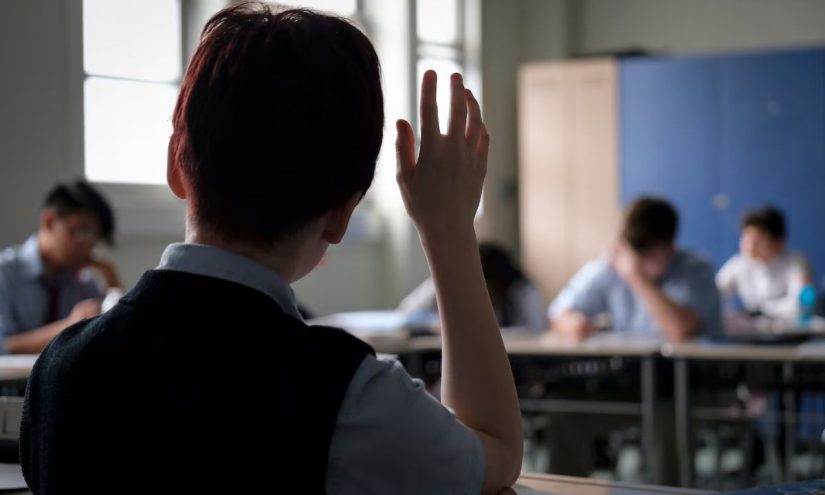
    By 2:45 p.m. the regular school day at August Boeger Middle School had already ended, but one class is about to start. More than 20 eighth graders drop their backpacks and settle into desks — not for extra credit but for college credit.

    These 13- and 14-year-old students in East San Jose are taking their first college course, an entry-level class on career planning. This middle school is one of the first in the state to offer a college-level course. In the coming years, the San Jose Evergreen Community College District wants all middle school students in this school district to be able to complete three college courses before they start high school, and soon, the district plans to offer other courses, such as sociology and ethnic studies, said Beatriz Chaidez, the chancellor for the community college district.

    Middle schoolers have long been eligible to enroll in college classes in California, though only a few, high-achieving students actually do it. By offering a college class at a middle school — especially one in a high-poverty area — the community college district is looking to make that enrollment easier. The class is taught by a middle school staff member, and it’s reserved exclusively for middle school students.

    But with so few programs, there is little research about whether students are benefitting, and the local faculty union is worried middle school students might not be ready.

    Chaidez disagrees. “Navigating (college) as early as middle school is unheard of in their community,” she said. “So when they experience success, it really motivates them to continue.”

    California is increasingly pushing high schools to offer community college classes directly to students during the regular school day, a set-up known as “dual enrollment.” Unlike AP classes, which include expensive exams and are limited to certain subjects and high-performing students, these community college classes cover a range of topics and are open to all students. By 2030, California Community Colleges Chancellor Sonya Chiristian wants all high school students to graduate with at least four college courses completed.

    Chaidez wants to go further. She wants every local high school student to be able to complete about 20 college courses by the time they graduate — enough to earn an associate’s degree.

    CalMatters reached out to the college district’s faculty union, which was surprised to learn the district is offering classes at a middle school.

    “This opens up some problems,” said Jessica Breheny, an English professor and the union’s vice president. “I’m sure there are 12-year-olds that are college-ready, but there are just less of them and it’s less likely. Developmentally, they have other things going on.”

    Research shows that high schoolers who take college classes are more likely to attend college and graduate, but there’s little research on how middle school students fare, said John Fink, a senior researcher at Columbia University’s Community College Research Center. “Nationally, and in most states, this is very, very rare, and in many states this is not allowed.” Instead, he said the focus is typically on enrolling more 10th, 11th and 12th graders in college courses.

    A college-level course, with a few middle school games

    About 10% of California’s high school students took a community college class in the 2021-22 school year, according to an analysis by professors at UC Davis using the most recent data. California’s community college system doesn’t track how many middle school students take college courses.

    So far, the Mount Pleasant Elementary School District, which includes August Boeger Middle School, offers only one college course, called “Career Planning,” and it’s almost indistinguishable from any other class on its campus. The college course is taught in a regular middle school classroom, and the professor, Oscar Lamas, already works at the middle school, where he’s a counselor. Perhaps the only noticeable difference is the timing: The middle school day ends at 2:30 p.m. and Lamas’ course starts at 2:45. He’s paid separately by the community college to teach the course.

    Career Planning helps students learn about career paths, practice resume-writing and learn psychological theories related to professional success. A governing board of college district professors, known as the Academic Senate, sets the objectives for each college course, but Lamas has broad discretion in teaching it. The Academic Senate responsible for setting the parameters of Lamas’ course did not respond to multiple requests for comment.

    The dean of the community college’s counseling department, Victor Garza, refused an interview request from CalMatters but issued a written statement. Garza said the middle school class is akin to other dual enrollment courses, which maintain the college’s “academic rigor.”

    “Some adjustments might be needed to cater to the unique needs and experiences” of students, he added.

    On a Thursday before spring break, Lamas tries to make his class more fun by breaking the students into five teams to play a Jeopardy-style quiz game on the topic of the day, Maslow’s Hierarchy of Needs.

    Natalie Mendoza, 14, becomes the default spokesperson of her team, named the “Tacos R Us Club,” but she answers the first question wrong, putting her team back 300 points and prompting her classmates to burst into chatter and analyze their mistakes.

    As part of the class, she has to study a career, write a short essay about it and present it at a career fair. She picked intellectual property law. “A lot of people say I’m assertive,” she said. “I think that’s a really good trait for a lawyer, and I think it’d be fun to fight for people who have created stuff.”

    Natalie said she’d be the first in her family to attend college but she’s already planning to go and has a few schools in mind, including UC Berkeley and San Jose State. If she does attend one of those schools, her grade in this counseling class would be part of her official college transcript.

    Breheny, with the union, said she’s concerned about the quality of the classes, especially once the college district begins teaching other subjects, such as ethnic studies.

    “Faculty designed their courses for adult learners,” Breheny said. An ethnic studies class may cover topics such as sexual violence and genocide, she added — topics that may be difficult to convey to a middle schooler. “Some of the material assumes a certain knowledge about the world, about politics, which you may not have at 11, 12, 13 years old.”

    High schools offer few dual enrollment classes

    August Boeger Middle School sits at the base of the Diablo Range mountains, tucked between the ranch-style homes and strip malls that color East San Jose. Teachers and staff greet each other with mucho gusto instead of hello. All around the open-air campus, murals tell the story of the region’s multi-cultural heritage, especially its Mexican and Chicano roots.

    That celebration of culture is a direct response to a history of adversity, Lamas said. “East San Jose has always been a marginalized, disadvantaged environment.” As a result, schools in the community contend with education disparities, he said, such as a high dropout rate and a high teen pregnancy rate.

    Offering a college class to these middle school students allows them to “see a possibility for their future that doesn’t exist within these walls here” and can inspire them to reach for a higher goal, said Marisa Peña, a school advisor.

    Male students, Black and Latino students and students from rural areas are underrepresented in the community college courses offered at California’s school districts. California lawmakers have signed numerous bills in the hopes of expanding access but certain regions in the state, such as Los Angeles, enroll a higher percentage of students.

    Natalie said she hopes to continue taking college courses when she starts at Mount Pleasant High School this fall, which is just around the corner from her middle school. But her options are limited.

    Mount Pleasant High School offers just three community college courses, which serve about 10% of the school’s roughly 1,000 students, said Kyle Kleckner, the school district’s director of instructional services. All of the classes are in “multimedia” studies, he said, which teaches students how to create their own podcasts or YouTube channels, along with other digital marketing skills. 

    Although Mount Pleasant High School’s dual enrollment is about on par with the state average, it trails other districts in the region. Less than 20 miles away, at high schools in the Milpitas Unified School District, roughly 25% of students enrolled in a community college class in 2021-22, according to the UC Davis analysis.

    Finding professors to teach middle school

    Part of the dual enrollment challenge is finding qualified college professors who are willing and able to work at a high school or middle school. Existing middle and high school teachers are allowed to teach college courses but they have to meet the qualifications, which usually include a master’s degree in the area of instruction. Most of California’s high school and middle school instructors lack a master’s degree, according to a study by the Public Policy Institute of California.

    “We have graduation requirements that students have to accomplish,” Kleckner said. “The trick is finding that community college course that also fulfills those requirements and also finding a teacher who can teach it.” He said Mount Pleasant High School is committed to expanding the number of college courses but noted that it’s smaller and therefore has fewer teachers who meet the requirements to teach a college course.

    In turn, many college professors lack experience teaching children, said Breheny, who teaches at San Jose City College. “We have had some problems already with dual enrollment where faculty have gone to different (high schools) to teach and have dealt with classroom management issues that they wouldn’t have in a college course.” In one case, she said a college faculty member saw bullying in a high school classroom but didn’t feel equipped to respond.

    Lamas has a master’s degree, which is required for most school counselors. He’s gentle with the middle school students in his class, occasionally awarding points in the Jeopardy game even when the answer isn’t perfect. Lamas had two quiz games planned that day, each one covering a different topic, but the first game took up almost all of the class time.

    He ends class by taking questions about the upcoming final project. Although spring break is minutes away, the students sit still through the final minutes, except for the occasional joke and bursts of laughter. Not a single phone was in sight.

    Once class ends, however, chatter ensues, the students pull out their phones, and staff escort them to the parking lot. While they may be taking a college course, they still must wait for their parents to pick them up.

    This article was originally published on CalMatters and was republished under the Creative Commons Attribution-NonCommercial-NoDerivatives license.


    Get stories like these delivered straight to your inbox. Sign up for The 74 Newsletter

    Source link

  • Empowering school staff with emergency response protocols

    Empowering school staff with emergency response protocols

    Key points:

    Safety response protocols are foundational to creating a culture of safety in schools. District leaders should adopt and implement response protocols that cover all types of emergencies. Schools should have building-level response protocols and protocols for incidents when first responders are needed. These practices are critical to keeping the community safe during emergencies.

    When staff members are empowered to participate in emergency planning and response, their sense of safety is improved. Unfortunately, many staff members do not feel safe at school.

    Thirty percent of K-12 staff think about their physical safety when at work every day, and 74 percent of K-12 staff said they do not feel supported by their employer to handle emergency situations at work.

    Staff disempowerment is a “central problem” when it comes to district emergency planning, said Dr. Gabriella Durán Blakey, superintendent of Albuquerque Public Schools: “What does safety mean for educators to really be able to feel safe in their classroom, to impact student achievement, the well-being of students? And how does that anxiety play with how the students feel in the classroom?”

    School leaders should implement response protocols that empower staff to understand and participate in emergency response using a two-tiered system of emergency response:

    • A building-level emergency planning and response team should develop an Emergency Operations Plan, which includes an emergency response protocol
    • Administrators should adopt protocols to follow when they need first responders to intervene

    For guidance on crafting emergency response protocols and plans, click here.

    Laura Ascione
    Latest posts by Laura Ascione (see all)

    Source link

  • AAERI seeks visa overhaul for Australia’s student system

    AAERI seeks visa overhaul for Australia’s student system

    The Association of Australian Education Representatives in India (AAERI), in a submission to the Minister for Home Affairs and the Minister for Education, has urged the Labor government to link student visas to the institution of initial enrolment.

    The association, established in October 1996 to uphold the credibility of education agents recruiting students for Australian institutions, proposed that any change in course or institution should require a new visa application, with the existing visa automatically cancelled upon such a change.

    “This proposed reform means that a student’s visa would be directly linked to the education provider (institution) listed in their initial Confirmation of Enrolment (CoE) at the time of visa approval. The student would be required to remain enrolled at that institution,” read a statement by AAERI.  

    The association expalined that if a student wishes to change their course or education provider, they must obtain a new CoE from the new institution, apply for a fresh student visa, and once again demonstrate that they meet all Genuine Student requirements.

    “Such a measure will strengthen the integrity of Australia’s student visa program, reduce exploitation in the education sector, improve compliance with Genuine Student (GS) criteria, and safeguard Australia’s reputation as a provider of high-quality international education,” it added. 

    “Additionally, this reform will support ethical education agents and reputable institutions by discouraging course-hopping and misuse of the student visa system, thereby enhancing student retention and sector stability.”

    Such a measure will strengthen the integrity of Australia’s student visa program, reduce exploitation in the education sector, improve compliance with Genuine Student (GS) criteria, and safeguard Australia’s reputation as a provider of high-quality international education.
    AAERI

    Based on AAERI’s submission, such a policy would align with Condition 8516, which requires students to remain enrolled in a registered course at the same level or higher than the one for which their visa was originally granted.

    As per reports, education loan applications from India, one of Australia’s biggest student markets, have quadrupled since the Covid pandemic, with the number of loan-seeking students expected to rise further.

    With many students relying on Indian public and private banks for education loans, changes in their courses in Australia have often led to their original loans being considered void, placing many at significant financial risk.

    “Based on our communication with several Indian banks, if a student changes their course or education provider after arriving in Australia, their loan arrangements may need to be reassessed, taking into account new course fees, institution credibility, and repayment ability,” stated AAERI. 

    “The original loan is void and stands suspended. This poses significant financial risks for students and impacts their compliance with visa conditions.”

    According to AAERI, the problem is also prevalent among Nepali students, with nearly 60,000 currently studying in Australia. 

    The association also highlighted examples from other study destinations that Australia can learn from in implementing the proposed framework. 

    While New Zealand allows course or provider changes but may require a variation of conditions or a new visa, especially for pathway visa holders or when moving to lower-level courses, in the UK, the student visa system is closely tied to licensed sponsors through the Confirmation of Acceptance for Studies, so changing institutions generally requires a new CAS and immigration permission.

    In Canada, stricter rules have been implemented requiring international students to be enrolled at the Designated Learning Institution named on their study permit, and to change institutions, students must apply for and obtain a new study permit, emphasising the importance of linking visas to specific institutions.

    “Australia’s recent reforms, such as closing the concurrent CoE loophole and requiring CoEs for onshore visa applications, are steps in a similar direction but do not go far enough to address the core issue of unethical student poaching, misuse of student visa and provider switching,” stated AAERI. 

    AAERI’s call for action comes at a time when the return of the Labour government is viewed as “offering little comfort to an international education sector already under-siege”, as highlighted in a recent article by Ian Pratt, managing director of Lexis English, for The PIE News.

    In Anthony Albanese’s second term, the Prime Minister established a new role – assistant minister for international education – and appointed Victorian MP Julian Hill.

    “It’s important that students who come here get a quality education… This sector is complex and Julian Hill is someone who’s been involved as a local member as well, and I think he’ll be a very good appointment,” Albanese stated at a press conference this week. 

    Source link

  • As Enrollment Falls, Fewer Schools Close – The 74

    As Enrollment Falls, Fewer Schools Close – The 74

    The headlines are seemingly everywhere:

    Jackson Public Schools board votes to close 13 school buildings.”

    Denver Public Schools to close 7 schools, cut grades at 3 others despite heavy resistance.”

    The list is out: These are the SFUSD schools facing closure.” 

    Such reports can leave the impression that districts are rapidly closing schools in response to declining enrollment and families leaving for charters, private schools and homeschooling. 

    But the data tells a different story. 

    School closures have actually declined over the past decade, a period of financial instability that only increased in the aftermath of the pandemic, according to research from the Brookings Institution. 

    The analysis, shared exclusively with The 74, shows that in 2014-15, the closure rate — the share of schools nationwide that were open one year and closed the next — was 1.3%. In 2023-24, the rate was just .8%, up from .7% the year before.

    “I think it’s important for people to realize how rare school closures are,” said Sofoklis Goulas, a Brookings fellow and the study’s author. 

    Last fall, his research showed how schools that have lost at least 20% of their enrollment since the pandemic are more likely to be low-performing. The Clark County Public Schools, which includes Las Vegas, had the most schools on the list — 19 — but isn’t currently considering closures. In Philadelphia, with 12 schools in that category, district leaders are just beginning to discuss closures.

    When it released Goulas’s initial report, leaders of the conservative Thomas B. Fordham Institute argued that low-performing schools should be the first to close. But efforts to do so are often met with pushback from families, teachers and advocacy groups who argue that shutting down schools unfairly harms poor and minority students and contributes to neighborhood blight. Their pleas often push district leaders to retreat. Working in advocates’ favor, experts say, is the fact that many big district leaders are untested and have never had to navigate the emotionally charged waters of closing schools.

    “Closing a neighborhood school is probably one of the most difficult decisions a district’s board makes,” said Michael Fine, CEO of the Fiscal Crisis and Management Assistance Team, a California state agency that provides financial oversight to districts. “They are going to avoid that decision as long as they can and at all costs.” 

    Such examples aren’t hard to find:

    • Just weeks after announcing closures, the San Francisco district halted plans to shutter any schools this fall.
    • In September, outgoing Chicago Public Schools CEO Pedro Martinez pledged to put off school closures for another two years, even though state law allows the city to take action sooner. The district is in the process of absorbing five charter schools to keep them from closing. 
    • In October, Pittsburgh Public Schools recommended closing 14 schools; several others were set to be relocated and reconfigured. About a month later, Superintendent Wayne Walters hit pause, saying the district needed more “thoughtful planning” and community input.
    • Last May, the Seattle Public Schools announced it would shutter 20 elementary schools next school year in response to a $100 million-plus budget deficit. They later increased the number to 21. By October, the list had dwindled to four schools. Just before Thanksgiving, Superintendent Brent Jones withdrew the plan entirely. 

    “This decision allows us to clarify the process, deepen our understanding of the potential impacts, and thoughtfully determine our next steps,” Jones wrote to families. While the plan would have saved the district $5.5 million, he said, “These savings should not come at the cost of dividing our community.”

    map visualization

    Graham Hill Elementary in Seattle, which fifth grader Wren Alexander has attended since kindergarten, was initially on the list. The Title I school sits on top of a hill in a desirable area overlooking Lake Washington. But it also draws students from the lower-income, highly diverse Brighton Park neighborhood.

    Among Wren’s neighbors are students from Ethiopia, Vietnam and Guatemala. Wren, who moves on to middle school this fall, said she looks forward to visiting her former teachers and cried when she heard Graham Hill might close. She wanted her younger brother and sister to develop the same warm connection she had.

    “I don’t think I would be who I am if I didn’t go to the school,” she said.

    Wren Alexander and her little sister Nico, outside Graham Hill. (Courtesy of Tricia Alexander)

    Tricia Alexander, her mother, was among those who opposed the closures, participating in rallies outside the district’s administration building and before board meetings.

    “We were really loud,” said Alexander, who’s also part of Billion Dollar Bake Sale, an effort to advocate for more state education funding. She said there was “no real evidence” that closing schools would have solved the district’s budget woes. “In no way would kids win.”

    It’s a view shared by many school finance experts, who note that the bulk of school funding is tied up in salaries, not facility costs. Districts may save some money from closing schools, but unless coupled with staff reductions, it’s often not enough to make up for large budget shortfalls.  

    ‘So bad at this’

    If enrollment doesn’t pick up, experts say, leaders who delay closures will have to confront the same issues a year later or — perhaps even more likely — pass the problems on to their successors. 

    “If there continues to be fewer and fewer children …then that doesn’t get better,” said Brian Eschbacher, an enrollment consultant.  

    One Chicago high school, for example, had just 33 students last year. In Los Angeles, the nation’s second-largest district, 34 elementary schools have fewer than 200 students and 29 of those are using less than half of the building, according to a recent report. The share of U.S. students being educated outside of traditional schools also continues to increase, according to a forthcoming analysis Goulas conducted with researchers at Yale University. 

    “We don’t see a trajectory of enrollment recovery,” he said. “Things actually got worse in the most recently released data batch.”

    But such conditions haven’t stopped advocacy groups from campaigning against closures. One of them, the left-leaning Advancement Project, has joined with local groups in Denver and Pittsburgh to make a case against closures nationally. 

    “All children deserve to have a local, neighborhood public school in which they and their families have a say,” said Jessica Alcantara, senior attorney for the group’s Opportunity to Learn program. “It’s not just that school closures are hard on families. They harm the full education ecosystem that makes up a school — students, families, school staff and whole communities.”   

    Last May, Alcantara and other Advancement Project staff urged the U.S. Department of Education to treat school closures as a civil rights issue. Nine of the 10 schools the Denver district planned to close in 2022 had a majority Black or Hispanic student population. 

    The advocates argued that in cases of enrollment loss, run-down facilities and empty classrooms, there are alternatives to closing schools. They encourage communities to push for renovations and urge district leaders to use vacant spaces for STEM, arts or other programs that might attract families. Opponents of closures also say that districts sometimes underestimate how much of a building is used for non-classroom purposes like special education services, early-childhood programs and mental health. 

    Eschbacher’s assessment of why districts often back down from closing schools is more blunt. 

    “Districts are so bad at this,” he said. “If you just do a few things wrong, it could sink the whole effort.”

    For one, leaders often target schools with under 300 students for closure, appealing to parents that they can’t afford to staff them with arts programs, a school nurse or a librarian. 

    But those explanations sometimes fall flat.

    “Parents always say, ‘I wanted a small school. I know my teachers and they know my kid. And it’s right down the street,’” Eschbacher said. If they didn’t like their school, he added, they would have likely would have chosen a charter or some other option. 

    District officials also run into trouble if they try to spin the data. When Seattle officials talked about “right-sizing” the district, they pointed to the loss of 4,900 students since 2019-20. 

    But Albert Wong, a parent in the district and a lifelong Seattle resident, knew there was more to the story. Not only is the current enrollment higher than it was from 2000 to 2011, the pandemic-related decline seems to have leveled off. In a commentary, he argued that officials presented misleading data “to make current enrollment look exceptionally bad.”

    Graham Hill Elementary, fifth-grader Wren’s school, actually saw a slight increase in enrollment this year, including a new class for preschoolers with disabilities. And while Pittsburgh schools are projected to lose another 5,000 students over the next six years, enrollment this year held steady at about 18,400.

    To Eschbacher, the “burden of proof is always on the district” to make an airtight case for why students would be better off in larger schools. He has applauded the Denver-area Jeffco Public Schools, which has closed 21 schools since 2021, for having state demographers, not just district officials, explain population trends to families at community meetings.

    ‘It wasn’t realistic’

    Walters, Pittsburgh’s superintendent, can easily rattle off reasons why the district should rethink how it uses its buildings. Early last year, local news reports showed that almost half of the district’s schools were less than 50% full. 

    “We’ve lost about a fourth of our population, but we have not changed anything to our footprint,” he said. 

    Meanwhile, the average age of the district’s buildings is 90 years old, and many lack air-conditioning, forcing some schools to send students home in sweltering weather.

    But a consulting group’s proposal showed that Black and low-income students and those with disabilities would be disproportionately affected by the changes. Several advocacy groups drew attention to those disparities, calling  the effort “rushed.” 

    412 Justice, an advocacy group, is among the community organizations pushing for alternatives to school closures in Pittsburgh. (412 Justice)

    Walters agreed and put the plan on hold last fall, saying he lacked “robust” responses to parents’ tough questions about how schools would change for their kids.

    “It doesn’t mean that we don’t see a path forward,” he said. “But it wasn’t realistic that we would have those questions answered within the timeline that we’ve been given.”

    In March, parents pushed for another delay, causing the school board to postpone a vote on the next phase in the closure process.

    As the Jeffco district demonstrates, some school systems are following through with closures. The school board in nearby Denver unanimously voted in November to close seven schools and downsize three more. 

    But that’s after community protests pushed the district to put the brakes on a plan to close 19 schools in 2021. Advocates argued that families in low-income areas, who had been heavily impacted by the pandemic, would be most affected. Then the district only closed three in 2023, and now board members are considering a pause on closures for three years.

    School boards closing a dozen or more schools are often catching up with work their predecessors let pile up, said Goulas of Brookings. 

    “Closing a single school allows for easier placement of students and minimizes the political cost and community stress,” he said. “When a district releases a long list of schools to close, it likely indicates that they waited for conditions to improve, but this didn’t happen.”

    Angel Gober, executive director of 412 Justice — one of 16 organizations that called on the Pittsburgh district to drop its plan — acknowledged that their fight isn’t over.

    “I think we got a temporary blessing from God,” she said. But she wants the district to explore a host of alternatives, like community schools and corporate support, before it shutters and sells off buildings. “We do have very old infrastructure, and that is an equity issue. But can we try five things before we make a drastic decision to close schools for forever?”


    Get stories like these delivered straight to your inbox. Sign up for The 74 Newsletter


    Source link

  • Three-fourths of NSF funding cuts hit education

    Three-fourths of NSF funding cuts hit education

    The outlook for federal spending on education research continues to be grim. 

    That became clear last week with more cutbacks to education grants and mass firings at the National Science Foundation (NSF), the independent federal agency that supports both research and education in science, engineering and math.

    A fourth round of cutbacks took place on May 9. NSF observers were still trying to piece together the size and scope of this wave of destruction. A division focused on equity in education was eliminated and all its employees were fired. And the process for reviewing and approving future research grants was thrown into chaos with the elimination of division directors who were stripped of their powers.

    Meanwhile, there was more clarity surrounding a third round of cuts that took place a week earlier on May 2. That round terminated more than 330 grants, raising the total number of terminated grants to at least 1,379, according to Grant Watch, a new project launched to track the Trump administration’s termination of grants at scientific research agencies. All but two of the terminated grants in early May were in the education division, and mostly targeted efforts to promote equity by increasing the participation of women and Black and Hispanic students in STEM fields. The number of active grants by the Division of Equity for Excellence in STEM within the education directorate was slashed almost in half, from 902 research grants to 461.

    Related: Our free weekly newsletter alerts you to what research says about schools and classrooms.

    Combined with two earlier rounds of NSF cuts at in April, education now accounts for more than half of the nearly 1,400 terminated grants and almost three-quarters of their $1 billion value. Those dollars will no longer flow to universities and research organizations. 

    Cuts to STEM education dominate NSF grant terminations

    Source: Grant Watch, May 7, 2025 https://grant-watch.us/nsf-summary-2025-05-07.html

    More than half the terminated grants…

    … and nearly three-quarters of their $1 billion value are in education 

    Data source: Grant Watch, May 7, 2025. Charts by Jill Barshay/The Hechinger Report

    The cuts are being felt across the nation. Grant Watch also created a map of the United States, showing that both red and blue states are losing federal research dollars. 

    Source: Grant Watch, May 7, 2025 

    It remains unclear exactly how NSF is choosing which grants to cancel and exactly who is making the decisions. Weekly waves of cuts began after the Department of Government Efficiency or DOGE entered NSF headquarters in mid April. Only 40 percent of the terminated grants were also in a database of 3,400 research grants compiled last year by Sen. Ted Cruz, a Texas Republican. Cruz characterized them as “questionable projects that promoted Diversity, Equity, and Inclusion (DEI) or advanced neo-Marxist class warfare propaganda.” Sixty percent were not on the Cruz list.

    Source: Grant Watch, May 7, 2025 

    Other NSF cuts also affect education. Earlier this year, NSF cut in half the number of new students that it would support through graduate school from 2,000 to 1,000. Universities are bracing to hear this summer if NSF will continue to support graduate students who are already a part of its graduate research fellowship program. 

    Related: Education research takes another hit in latest DOGE attack

    Developing story

    NSF watchers were still compiling a list of the research grants that were terminated on May 9, the date of the most recent fourth round of research cuts. It was unclear if any research grants to promote equity in STEM education remained active.

    The Division of Equity for Excellence in STEM, a unit of the Education Directorate, was “sunset,” according to a May 9 email sent to NSF employees and obtained by the Hechinger Report, and all of its employees were fired. According to the email, this “reduction in force” is slated to be completed by July 12. However, later on May 9, a federal judge in San Francisco temporarily blocked the Trump administration from implementing its “reduction in force” firings of federal employees at the NSF and 19 other agencies.

    Several congressionally mandated programs are housed within the eliminated equity division, including Louis Stokes Alliances for Minority Participation (LSAMP) and the Eddie Bernice Johnson initiative, which promotes STEM participation for students with disabilities.

    The process for reviewing and approving new grant awards was thrown into chaos with the elimination of all NSF division directors, a group of middle managers who were stripped of their powers on May 8. In addition, NSF slashed its ranks of its most senior executives and its visiting scientists, engineers and educators. That leaves many leadership positions at NSF uncertain, including the head of the entire education directorate.

    Legal update

    An initial hearing for a group of three legal cases by education researchers against the Department of Education is scheduled for May 16.  At the hearing, a federal judge in Washington, D.C., will hear arguments over whether the court should temporarily restore terminated research studies and data collections and bring back fired Education Department employees while it considers whether the Trump administration exceeded its executive authority. 

    A first hearing scheduled for May 9 was postponed. At the May 16 hearing, the court will hear two similar motions from two different cases: one filed by the Association for Education Finance and Policy (AEFP) and the Institute for Higher Education Policy (IHEP), and the other filed by National Academy of Education (NAEd) and the National Council on Measurement in Education (NCME). A third suit by the American Educational Research Association (AERA) and the Society for Research on Educational Effectiveness (SREE) was filed in federal court in Maryland and will not be part of the May 16 hearing.

    Contact staff writer Jill Barshay at 212-678-3595, jillbarshay.35 on Signal, or [email protected].

    This story about NSF education cuts was written by Jill Barshay and produced by The Hechinger Report, a nonprofit, independent news organization focused on inequality and innovation in education. Sign up for Proof Points and other Hechinger newsletters.

    The Hechinger Report provides in-depth, fact-based, unbiased reporting on education that is free to all readers. But that doesn’t mean it’s free to produce. Our work keeps educators and the public informed about pressing issues at schools and on campuses throughout the country. We tell the whole story, even when the details are inconvenient. Help us keep doing that.

    Join us today.

    Source link