Category: News

  • Creative approaches to teaching math can help fill AI talent gap

    Creative approaches to teaching math can help fill AI talent gap

    Key points:

    Not surprisingly, jobs in AI are the fastest growing of any in the country, with a 59 percent increase in job postings between January 2024 and November 2024. Yet we continue to struggle with growing a workforce that is proficient in STEM. 

    To fill the AI talent pipeline, we need to interest kids in STEM early, particularly in math, which is critical to AI. But that’s proven difficult. One reason is that math is a stumbling block. Whether because of math anxiety, attitudes they’ve absorbed from the community, inadequate curricular materials, or traditional teaching methods, U.S. students either avoid or are not proficient in math.  

    A recent Gallup report on Math Matters reveals that the U.S. public greatly values math but also experiences significant gaps in learning and confidence, finding that: 

    • 95 percent of U.S. adults say that math is very or somewhat important in their work life 
    • 43 percent of U.S. adults wish they had learned more math skills in middle or high school. 
    •  24 percent of U.S. adults say that math makes them feel confused  

    Yet this need not be the case. Creative instruction in math can change the equation, and it is available now. The following three examples from respected researchers in STEM education demonstrate this fact. 

    The first is a recently published book by Susan Jo Russell and Deborah Schifter, Interweaving Equitable Participation and Deep Mathematics. The book provides practical tools and a fresh vision to help educators create math classrooms where all students can thrive. It tackles a critical challenge: How do teachers ensure that all students engage deeply with rigorous mathematics? The authors pose and successfully answer key questions: What does a mathematical community look like in an elementary classroom? How do teachers engage young mathematicians in deep and challenging mathematical content? How do we ensure that every student contributes their voice to this community? 

    Through classroom videos, teacher reflections, and clear instructional frameworks, Russell and Schifter bring readers inside real elementary classrooms where all students’ ideas and voices matter. They provide vivid examples, insightful commentary, and ready-to-use resources for teachers, coaches, and school leaders working to make math a subject where every student sees themselves as capable and connected. 

    Next is a set of projects devoted to early algebra. Significantly, research shows that how well students perform in Algebra 2 is a leading indicator of whether they’ll get into college, graduate from college, or become a top income earner. But introducing algebra in middle school, as is the common practice, is too late, according to researchers Maria Blanton and Angela Gardiner of TERC, a STEM education research nonprofit. Instead, learning algebra must begin in K-5, they believe. 

    Students would be introduced to algebraic concepts rather than algebra itself, becoming familiar with ways of thinking using pattern and structure. For example, when students understand that whenever they add two odd numbers together, they get an even number, they’re recognizing important mathematical relationships that are critical to algebra. 

    Blanton and Gardiner, along with colleagues at Tufts University, University of Wisconsin Madison, University of Texas at Austin, Merrimack College, and City College of New York, have already demonstrated the success of an early algebra approach through Project LEAP, the first early algebra curriculum of its kind for grades K–5, funded in part by the National Science Foundation.  

    If students haven’t been introduced to algebra early on, the ramp-up from arithmetic to algebra can be uniquely difficult. TERC researcher Jennifer Knudsen told me that elementary to middle school is an important time for students’ mathematical growth. 

    Knudsen’s project, MPACT, the third example of creative math teaching, engages middle school students in 3D making with everything from quick-dry clay and cardboard to digital tools for 3D modeling and printing. The project gets students involved in designing objects, helping them develop understanding of important mathematical topics in addition to spatial reasoning and computational thinking skills closely related to math. Students learn concepts and solve problems with real objects they can hold in their hands, not just with words and diagrams on paper.  

    So far, the evidence is encouraging: A two-year study shows that 4th–5th graders demonstrated significant learning gains on an assessment of math, computational thinking, and spatial reasoning. These creative design-and-making units are free and ready to download. 

    Math is critical for success in STEM and AI, yet too many kids either avoid or do not succeed in it. Well-researched interventions in grade school and middle school can go a long way toward teaching essential math skills. Curricula for creating a math community for deep learning, as well as projects for Early Algebra and MPACT, have shown success and are readily available for school systems to use.

    We owe it to our students to take creative approaches to math so they can prepare for future AI and STEM professions. We owe it to ourselves to help develop a skilled STEM and AI workforce, which the nation needs to stay competitive. 

    Latest posts by eSchool Media Contributors (see all)

    Source link

  • Why high schools should use teaching assistants

    Why high schools should use teaching assistants

    Key points:

    Exam scores always seem to go up. Whether it’s the SAT when applying for college or an AP score to earn college credit, competitive scores seem to be creeping up. While faculty are invaluable, students who recently completed classes or exams offer insight that bridges the gap between the curriculum and the exam. I believe students who recently excelled in a course should be allowed and encouraged to serve as teaching assistants in high school.

    Often, poor preparation contributes to students’ disappointing exam performance. This could be from not understanding content, being unfamiliar with the layout, or preparing the wrong material. Many times, in courses at all levels, educators emphasize information that will not show up on a standardized test or, in some cases, in their own material. This is a massive issue in many schools, as every professor has their own pet project they like to prioritize. For example, a microbiology professor in a medical school may have an entire lecture on a rare microbe because they research it, but nothing about it will be tested on the national board exams, or even their course final exams. This was a common theme in high school, with history teachers loving to share niche facts, or in college, when physics professors loved to ask trick questions. By including these things in your teaching, is it really benefiting the pupil? Are students even being tested correctly over the material if, say, 10 percent of your exam questions are on information that is superfluous?

    Universities can get around this issue by employing teaching assistants (TAs) to help with some of the confusion. Largely, their responsibilities are grading papers, presenting the occasional lecture, and holding office hours. The lesser-known benefit of having and speaking with TAs is the ability to tell you how to prioritize your studying. These are often older students who have been previously successful in the course, and as a result, they can give a student a much better idea of what will be included on an exam than the professor.

    When I was a TA as an undergrad, we were required to hold exam prep sessions the week of a big test. During these sessions, students answered practice questions about concepts similar to what would show up on the exam. All the students who showed up to my sessions performed extremely well on the tests, and they performed well because they were prepared for the exam and knew the concepts being tested. As a result, they would finish the course with a much higher grade because they knew what they should be studying. It is much more effective to give a student a practice question that uses similar concepts to what will be on their exam than it is for a professor to give a list of topics that are covered on a test. For example, studying for a math test is more impactful when answering 50 practice questions versus a teacher handing you a list of general concepts to study, such as: “Be able to manipulate inequalities and understand the order of operations.”

    Universities seem to know that professors might not provide the best advice, or at the least, they have used TAs as a decent solution to the problem. It is my opinion that having this style of assistance in high school would be beneficial to student outcomes. Having, say, a senior help in a junior-level class may work wonders. Teachers would have a decrease in their responsibilities based on what they trust their TA to do. They could help grade, run review sessions, and make and provide exam prep materials. In essence, all the unseen work in teaching that great teachers do could be done more efficiently with a TA. Every student has had an amazing teacher who provides an excellent study guide that is almost identical to the test, making them confident going into test day. In my experience, those guides are not completed for a grade or a course outcome, and effectively become extra work for the educator, all to help the students who are willing to use them effectively. Having a TA would ease that burden–it would encourage students to consider teaching as a profession in a time when there is a shortage of educators.

    There are many ways to teach and learn, but by far the best way to be prepared for a test is by talking to someone who has recently taken it. Universities understand that courses are easier for students when they can talk to someone who has taken it. It is my opinion that high schools would be able to adopt this practice and reduce teacher workload while increasing the student outcomes. 

    Latest posts by eSchool Media Contributors (see all)

    Source link

  • UAE leads MENA surge as international study interest soars by 90%

    UAE leads MENA surge as international study interest soars by 90%

    Keystone search data reveals the UAE, along with other MENA destinations, is benefiting from shifts in global international study demand during 2025, with an increase of nearly 90% in search interest in June 2025 compared to last year.

    Although the MENA destination is expecting growth, the UAE’s rise is particularly notable, drawing highly diverse audiences from South Asia (especially India and Pakistan), Southeast Asia (Singapore and Indonesia), East Asia (Hong Kong China), and Europe (France, Germany). There has also been a modest uptick in interest from US students.

    Keystone’s data – which measures relative search interest from millions of monthly searches on Keystone websites – points to subject availability and tuition fees as the two leading factors influencing student decisions to study in the MENA region, as India remains the UAE’s largest source of international interest, with the fastest-growing audiences in 2025 being India, Singapore, France, the US, and Germany.

    Ultimately, Dubai is not just offering education but a launchpad for global careers, with an ecosystem that is becoming increasingly difficult to replicate, given the current policy headwinds.
    Suneet Singh Kochar, CEO of Fateh Education

    “The global landscape of international education is shifting, and traditional destinations like the US, UK, Canada, and Australia (the ‘Big Four’) are facing increasing pressure from visa constraints, immigration policy tightening, and affordability concerns. As global mobility patterns evolve, Indian and South Asian students are actively exploring alternative destinations that offer both quality and pragmatism, and Dubai is emerging as a frontrunner,” Suneet Singh Kochar, CEO of education consultancy, Fateh Education, told The PIE.

    “Another trend that I see, when it comes to Dubai’s growing appeal, is the uptick in interest for undergraduate studies in addition to the students going there to pursue their masters. For Indian families, it provides the perfect balance – global education within a four-hour flight radius, cultural familiarity, and significantly greater parental access and peace of mind. Safety, quality healthcare, and multicultural inclusivity further reinforce Dubai’s appeal for families looking for a secure, supportive environment for these younger students.”

    The Ministry of Higher Education and Scientific Research (MoHESR) has announced that students applying to the higher education institutions based in the UAE for the upcoming Fall 2025-2026 intake must accept or reject their offers by August 11, 2025, via its electronic portal. All program acceptances and related steps must be completed by this deadline to ensure smooth processing.

    With encouragement for students to regularly monitor their applications and promptly fulfil any additional requirements set by institutions, the MoHESR has significantly simplified admissions, reducing document requirements by 86%, cutting the application time and enabling registration at 59 higher education institutions across the country.

    “Ultimately, Dubai is not just offering education but a launchpad for global careers, with an ecosystem that is becoming increasingly difficult to replicate, given the current policy headwinds. Today, over 42% of Dubai’s international student population is Indian – clear evidence of the region’s growing credibility and resonance with India,” Singh Kochar added.

    “Dubai’s high graduate employment rate is backed by a system where universities are closely aligned with national priorities, offering programs in areas like AI, sustainability, logistics, and fintech that are directly connected to the country’s economic vision.”

    Elsewhere, Singh Kochar commended Dubai’s institutions for their strong ties to industry – providing students with access to internships, live projects, and employer networks during their studies.

    Source link

  • US scraps $100m in study abroad programs

    US scraps $100m in study abroad programs

    • Stakeholders warn that the funding cuts will probably result in furloughs, redundancies or – in the worst cases – organisations being forced to close.
    • The move comes after months of policy turmoil in the US, as the Trump administration wages war on international education.
    • Experts question the legality of the move as a campaign is launched to save State Department international exchange programs.

    State Department regional bureaus were informed of the cuts on August 13, via internal communications stating that government officials would work with them to “pull down” the affected programs “with the least possible disruption”.  

    The directive explained that the programs “were lower funding priorities in the current fiscal environment, so they are being removed from FY25 Funding”, according to communications from the Bureau of Educational and Cultural Affair (ECA).  

    “It’s an existential crisis for these programs and possibly for ECA,” said Mark Overmann, executive director of the Alliance for International Exchange – whose members make up 13 of the impacted programs, facing cuts of $85m.  

    According to Overmann, the 22 programs were all due to be renewed and were expecting to receive FY25 funds before September. Now, they will no longer be allowed to go through their awards process or renewal, and thus will be terminated.  

    “These organisations will now suddenly lose funding they’ve long anticipated and been promised, and this will likely result in furloughs, layoffs, and even organisational closures,” warned Overmann.  

    “Cancelling $100 million in programs which impact 10,000 students is devastating on many levels,” Bill Gertz, chairman of American Institute for Foreign Study (AIFS) told The PIE News.  

    “It means students’ plans and dreams are impacted… it means layoffs and financial disruption at the many fine cultural exchange organisations,” added Gertz, who sponsors the YES Abroad program which has been cancelled.

    “These folks have worked tirelessly to make the world a better place,” he said.  

    Typically, the State Department’s funding process would be in full swing in the spring and summer, though this year has been plagued by delays and uncertainty for program organisers and students alike.  

    Following the lifting of the State Department’s funding freeze this March, stakeholders have been concerned about the lack of movement on the ECA’s FY25 funding process, which has caused delays in the opening of applications and interfered with students’ plans.  

    According to a former staff member of the Republican Senate Foreign Relations Committee: “The variety of programs impacted are too broad to point to a single issue or justification – everything from community colleges to disability and education exchanges.” 

    They warned that the cuts would isolate the US in the long term, raising particular concerns about the discontinuation of the Kennedy-Lugar Youth Exchange and Study (YES) Program. 

    This initiative “was created after 9/11 specifically to bring young people from predominantly Muslim countries to the US to build long-standing relationships with communities and individuals who might not otherwise every get to see our nation in anything other than filtered news and anti-US social media,” they explained. 

    The value of study abroad for US soft power and public diplomacy was echoed by Gertz, who said the cuts came “at a time in our history when cultural understanding is needed the most”.  

    If OMB is allowed to cut these Congressionally appropriated FY25 awards, it will give them license to do it again and again, opening the door to effectively eliminate international exchange programs

    Mark Overmann, Alliance for International Exchange

    Beyond the programs, their participants, alumni and staff, the move raises alarm bells about the White House’s ability to cut congressionally appropriated grants. 

    Historically, Congress has approved ECA awards, but this year the Office of Management and Budget (OMB) inserted itself “irregularly” into the process to stop congressionally approved funds from being spent, said stakeholders.  

    According to Overmann, the move could be illegal, with Gertz also stating it was unconstitutional for OMB to override Congress in such a way.  

    “OMB found a way to use a small, previously arcane piece of administration process to stop ECA program awards from moving forward,” Overmann explained, leading to the defunding and termination of 22 cultural exchange programs. 

    “If OMB is allowed to cut these Congressionally appropriated FY25 awards, it will give them license to do it again and again, opening the door to effectively eliminate international exchange programs,” Overmann warned.  

    The cancellations have shocked the US study abroad community, which recently received a vote of confidence in Congress, which drastically reduced the planned cuts for study abroad in the FY2026 budget.  

    “We believe we have the support of the majority of Americans who have supported our efforts for decades,” said Gertz. ” We are actively engaged with Congress on the future of ECA programs. 

    Sector leaders have already kicked into action, warning that the elimination of funding would “greatly damage 75+ years of exchange activity and the legacy of Senator Fulbright. It would destroy many of our programs and much of our work,” said Overmann. 

    The Alliance today launched a campaign to save State Department international exchange programs, urging stakeholders to write to members of Congress.  

    The State Department has not issued a formal announcement or replied to The PIE’s requests for comment.  

    It appears that the following programs are impacted, though the list may not be exhaustive:  

    • Community College Administrator Program (CCAP) 
    • Community College Initiative Program (CCI) 
    • Community Engagement Exchange (CEE, Leahy Initiative on Civil Society) 
    • Council of American Overseas Research Centers 
    • English Access Scholarship Program 
    • English Language Fellow Program 
    • Global Undergraduate Exchange Program 
    • IDEAS Program 
    • International Center for Middle Eastern-Western Dialogue (Hollings Center) 
    • Kennedy-Lugar Youth Exchange and Study (YES) and YES Abroad Program 
    • Leaders Lead On-Demand 
    • Mandela Washington Fellowship for Young African Leaders 
    • Mike Mansfield Fellowship Program 
    • National Clearinghouse for Disability and Exchange (NCDE) 
    • Professional Fellows Program 
    • Survey of International Educational Exchange Activity (IEEA) in the United States 
    • TechWomen 
    • The J. Christopher Stevens Virtual Exchange Initiative 
    • U.S. Congress-Korea National Assembly Exchange Program 
    • U.S.-South Pacific Scholarship Program (USSP) 
    • Young Southeast Asian Leaders Initiative (YSEALI) Academic Fellowship 
    • Young Southeast Asian Leaders Initiative (YSEALI) Professional Fellowship Program (PFP) 

    Source link

  • Number of Chinese undergrads accepted to UK unis surges by 13%

    Number of Chinese undergrads accepted to UK unis surges by 13%

    According to UCAS data released today to coincide with A-level results day, the number of international students accepted to UK institutions has risen to 52,640 – up 2.9% on 2024 when this figure stood at 51,170.

    In just a year, the number of students from China accepted into university via the UCAS system went up a whopping 13% – with a total of 12,380 acceptances.

    Meanwhile, 2025 has proven to be a year of success for domestic students in the UK – with 28.3% of all grades being A or A* for students across England, Wales and Northern Ireland, according to the BBC.

    Commenting on the numbers, UCAS chief executive Jo Saxton pointed out the huge achievement of this year’s students, whose education was hit hard by the Covid-19 pandemic.

    “This year’s students were just thirteen when the pandemic hit, and their secondary schooling was turned upside down,” she said. “It’s great to see these applicants securing a university place in record numbers, seeking more education and investing in their futures. I am equally delighted to see how universities across the country have responded to their ambition.”

    Undergraduate international students have also found success this year despite some universities prioritising domestic students due to a focus on financial stability.

    According to a recent BBC article, Saxton explained that some UK universities were focussing on enrolling domestic undergraduates because of “uncertainty” around international students.

    She also pointed out that some institutions could accept a greater number of domestic students this year even if they did not meet the exact conditions of their offer because offering places to UK students, as opposed to international students, was more likely to result in financial stability for the institution.

    It’s great to see these applicants securing a university place in record numbers, seeking more education and investing in their futures
    Jo Saxton, UCAS

    It comes amid a turbulent time for the international education sector in the UK – with upcoming compliance changes forcing some universities to stop recruiting for certain courses or from some countries rather than risk falling foul of tightened BCA metrics.

    Many UK universities are currently facing financial difficulties, with around four in 10 universities currently at a deficit, according to a report by the Office for Students.

    Of the courses chosen by students, the most popular in the UK this year were Engineering and Technology, up 12.5% from last year at 30,020 acceptances, Mathematics with 9,220 acceptances and Law with 27,150.

    Source link

  • Post-pandemic, student academic recovery remains elusive

    Post-pandemic, student academic recovery remains elusive

    Key points:

    Five years after the onset of the COVID-19 pandemic, academic recovery has stalled nationwide, and achievement gaps have widened, according to the State of Student Learning 2025 report from from Curriculum Associates.

    The report offers one of the most comprehensive looks at Grades K–8 student performance in reading and mathematics, based on data from close to 14 million students who took the i-Ready Diagnostic assessment in the 2024–2025 school year.

    The report shows that most students have not yet reached pre-pandemic achievement levels, and some are falling even further behind. The report does find some bright spots: Some historically underserved schools, especially majority-Black schools, are seeing modest, positive gains in both reading and mathematics. However, those gains have not yet translated into closing longstanding disparities.

    “This report shows that disrupted schooling due to the pandemic continues to impact student learning, particularly for students who are in early grades, are lower performing, or are from historically underserved communities,” said Kristen Huff, head of measurement at Curriculum Associates. “Academic recovery has never been one-size-fits-all, and these results reaffirm the importance of nuanced, data-informed approaches. Above all, they underscore the vital work educators are doing every day to meet students where they are and help them move forward.”

    Key findings

    • Academic progress has plateaued. Since spring 2023, national achievement has remained flat. While many students are growing at pre-pandemic rates, that growth isn’t closing the gap caused by pandemic disruptions.
    • The achievement gap has grown in many cases. Students who were already behind, particularly those scoring in the bottom 10th percentile, continue to fall behind, while top-performing students have often recovered or surpassed their pre-pandemic levels.
    • Younger students experienced greater learning losses. Even though they were not yet in school during the pandemic, elementary students, especially in Grades K and 1, saw the largest drops in achievement after the pandemic. 
    • Vulnerable populations are experiencing uneven recovery. The report shows widening gaps between the nation’s highest and lowest performers. Across most grades, the differences between higher and lower percentiles have increased over time.

    A data-driven, nationwide look

    The 2025 report examines data through the critical years pre- and post-pandemic, from spring 2019 to spring 2025. Using a nationally representative sample of more than 11.7 million reading and 13.4 million mathematics assessments, the research examines:

    • Grade-level placement: how many students are performing at or below grade level
    • Scale scores by percentile: how learning differs across performance groups
    • Annual growth: whether students are making enough academic progress during the school year to recover lost ground

    The findings reinforce that targeted support is needed to ensure every student can thrive academically, especially younger students, lower-performing students, and historically underserved communities.

    This press release originally appeared online.

    eSchool News Staff
    Latest posts by eSchool News Staff (see all)

    Source link

  • How schools are tackling absenteeism

    How schools are tackling absenteeism

    (Note: This is the second piece in a two-part series on absenteeism in schools. Read the first part, on seven insights from researchers.)

    Chronic absenteeism, when students miss 10 percent or more of the school year, is 50 percent higher across the nation than before the pandemic. Researchers say it’s difficult for schools to address the problem because it is both so intense, with students missing huge chunks of the school year, and so extensive, affecting both rich and poor students and even high achievers. And the reasons vary widely, from asthma and bullying to transportation problems and the feeling that school is boring.

    “It’s hard to know where and when to target resources,” said Sam Hollon, a data analyst at the American Enterprise Institute, which hosted a symposium on the problem in May. “Who do you help when every student potentially can be a candidate for help?”

    Related: Our free weekly newsletter alerts you to what research says about schools and classrooms.

    The Trump administration’s immigration enforcement is exacerbating the problem. A June draft paper by Stanford University professor Thomas Dee calculated that recent raids coincided with a 22 percent increase in daily student absences with particularly large increases in absenteeism among the youngest students.

    Talking about the problem isn’t enough. Researchers say they want to study more schools that are making headway. It remains unclear if there are broadly applicable fixes or if each school or even each student needs individual solutions. Some underlying root causes for skipping school are more complex than others, requiring psychotherapy or housing assistance, which schools can’t provide alone. Here are a few examples of how very different communities are tackling the problem.

    Providence: Bus stops and weekend food bags

    Principal W. Jackson Reilly of Nathanael Greene Middle School in Providence, Rhode Island, said that when he arrived in April 2023, half of his 900 students in grades six to eight were chronically absent, up from 30 percent of students before the pandemic. Thirty percent of his teachers were also chronically absent. Achievement scores were in the state’s bottom 1 percent.  

    Reilly managed to slash his chronic absenteeism rate in half to 25 percent this past 2024-25 year. That’s still high. One in four students missed more than 18 days of school a year. But, it’s better. 

    He began by identifying 150 kids who were just over the threshold for chronic absenteeism, those who missed between 18 and 35 days, hoping that these kids would be easier to lure back to school than those who were more disengaged. Reilly and a group of administrators and guidance counselors each took 10 to 15 students and showed their families how much school they had missed and how low their grades were. His team asked, “What do you need in order for your kid to be coming to school?’” 

    The two most common replies: transportation and food. 

    Related: The chronic absenteeism puzzle

    Many students lived only a mile away, too close to school to qualify for bus service. Yet the walk deterred many, especially if it was raining or snowing. Yellow buses often passed these children’s homes as they were transporting children who lived farther out, and Reilly convinced the district to add stops for these chronically absent children. 

    Ninety percent of his students come from families who are poor enough to qualify for the federal free or reduced-price lunch program and 80 percent are Hispanic. Although many children were fed breakfast and lunch at school, their families admitted that their kids would get so hungry over the weekend that they didn’t want to wake up and come to school on Mondays. Reilly partnered with a food pantry and sent bags of meat and pasta home with students on Fridays. 

    Individual attention also helped. At the start of each school day, Reilly and his team check in with their assigned students. Kids who show up get five “green bucks” to spend on snacks and prizes. Administrators call the homes of those who didn’t come to school. “If they did not answer the phone, we’d make a home visit,” said Reilly. 

    The most dramatic overhaul was scheduling. Reilly scrapped individual schedules for students and assigned four teachers to every 104 students. The kids now move in pods of 26 that take all their classes together, rotating through the same four teachers throughout the day. The classrooms are right near each other, creating a smaller community within the school. 

    “It’s all about relationship building,” said Reilly. When students look forward to seeing their classmates and teachers, he said, they’re more motivated to come to school. 

    Researchers say fostering relationships is effective. Hedy Chang, executive director of Attendance Works, a nonprofit organization that advises schools on how to boost attendance rates, said it’s still a battle to persuade some school leaders (and school board members) that making school a more welcoming place is more productive than punishing kids and families for skipping school.* 

    Reilly said his school now posts the lowest student and teacher chronic absenteeism rates in Providence. And he said his school is the highest performing middle school in the city and among the highest statewide in reading.  

    New York City: Catching the butterflies

    A cluster of New York City high schools are taking a more data-driven approach, guided by New Visions, a consulting organization that supports 71 city high schools. 

    After some experimentation, New Visions staff saw strong improvement in attendance in one subgroup of students who were on the cusp of missing 10 percent of school days, but had not yet crossed the chronic absenteeism threshold. These are students who might miss a day or two every week or every other week but were relatively engaged at school. Jonathan Green, a New Visions school improvement coach who is spearheading this effort, calls them “butterflies.” “They would flutter in and out every week,” he said. 

    Green suggested that someone at school meet weekly with these butterflies and show them their attendance data, set goals for the coming week and explain how their attendance was leading to better grades. The intervention took two to five minutes. “There were marked changes in attendance,” said Green.

    New Visions built a website where school administrators could print out two-page documents for each student so the data, including monthly attendance and tardiness, appeared in an easy-to-digest format. The quick meetings took place for eight to 10 weeks during the final grading period for the semester. “That’s when there’s the most opportunity to turn those potentially failing grades into passing grades,” said Green. “We were finding these sweet spots within the school calendar to do this very high resource, high-energy intensive weekly check-in. It’s not something that anyone can easily scale across a school.”

    Related: Tracking student data falls short in combating absenteeism at school

    Staff had to figure out the bell schedule for each child and intercept them between classes. One succeeded in holding their entire caseload of students below the chronic absenteeism threshold. Not everyone thought it was a good idea: Some school administrators questioned why so much effort should go into students who weren’t yet chronically absent rather than students in greater trouble.

    The dramatic results help answer that question. Among schools in the Bronx that volunteered to participate in the butterfly intervention, chronic absenteeism rates dropped 15 percentage points from 47 percent in 2021 to 32 percent in 2025, still high. But other Bronx high schools in the New Visions network that didn’t try this butterfly intervention still had a chronic absenteeism rate of 46 percent. 

    Green said this solution wouldn’t work for other high schoolers. Some have trouble organizing their study time, he said, and need more intensive help from teachers. “Two- to five-minute check-ins aren’t going to help them,” said Green. 

    Indianapolis: Biscuits and gravy

    The leader of an Indiana charter school told me he used a system of rewards and punishments that reduced the chronic absenteeism rate among his kindergarten through eighth graders from 64 percent in 2021-22 to 10 percent in 2024-25.

    Jordan Habayeb, the chief operating officer of Adelante Schools, said he used federal funds for the school breakfast and lunch program to create a made-from-scratch restaurant-style cafeteria. “Fun fact: On homemade biscuit and gravy days, we saw the lowest rates of tardies,” he said.

    Researchers recommend avoiding punishment because it doesn’t bring students back to school. But Habayeb said he adheres strictly to state law that requires schools to report 10 absences to the state Department of Child Services and to file a report with the county prosecutor. Habayeb told me his school accounted for a fifth of truancy referrals to the county prosecutor.

    The school created an automated warning system after five absences rather than waiting for the critical 10-day loss. And Habayeb said he dispatched the safety and attendance officer in a van to have “real conversations with families rather than being buried in paperwork.” Meanwhile, students who did show up received a constant stream of rewards, from locker decorations to T-shirts.

    Parent education was also important. During mandatory family orientations, the school illustrated how regular attendance matters for even young children. “We shared what a child might miss during a three-day stretch in a unit on ‘Charlotte’s Web’ — showing how easily a student could leave with a completely different understanding of the book,” said Habayeb. “This helped shift perspectives and brought urgency to the issue.”

    Kansas City: Candy and notes

    School leaders in Kansas City, Kansas, shared some tips that have worked for them during a webinar earlier this month hosted by Attendance Works. One elementary school reduced its chronic absenteeism from 55 percent in 2021 to 38 percent in 2024 by assigning all 300 students to an adult in the building, encouraging them to build an “authentic” relationship. Teachers were given a list of ideas but were free to do what seemed natural. One teacher left candy and notes on their assigned students’ desks. A preschooler proudly pasted his note, which said he was a “genius,” on the front door of his house. “The smiles kids have on their faces are amazing,” said Zaneta Boles, the principal of Silver City Elementary School. 

    When students do miss school, Boles said educators try to take a “non-blaming approach” so that families are more likely to divulge what is going on. That helps the school refer them to other community agencies for assistance. 

    Albuquerque: A shining example regroups 

    Alamosa Elementary School in Albuquerque, New Mexico, was once a shining example of a school that persuaded more families to send their kids to class. Chronic absenteeism fell as low as 1 in 4 students in 2018, when The Hechinger Report wrote about the school

    But Alamosa has not been immune from the surge of absenteeism that has plagued schools around the nation. Chronic absenteeism spiked to 64 percent of students during the 2021-22 school year, when Covid variants were still circulating. And it remained shockingly high with 38 percent of students missing more than 10 percent of the 2024-25 school year — exactly matching the 50 percent increase in chronic absenteeism across the country since 2019.

    “We were on a roll. Then life happened,” said Daphne Strader, Albuquerque Public Schools’ director of coordinated school health, who works to reduce absenteeism.

    Strader said Alamosa and other Albuquerque schools have made some successful changes to how they’re tackling the problem. But the volume of absenteeism remains overwhelming. “There’s so many kids who have needs,” Strader said. “We need more staff on board.” 

    Related: 7 insights about chronic absenteeism, a new normal for American schools

    Strader said attendance interventions had been “too siloed” and they’re focusing more on the “whole child.” She’s encouraging schools to integrate attendance efforts with other initiatives to boost academic achievement and improve student behavior. “Students are hungry, they’re dysregulated, they don’t have grit,” said Strader, and all of these issues are contributing to absenteeism. But she also concedes that some students have more severe needs, and it’s unclear who in the system can address them.

    Her biggest advice for schools is to focus on relationships. “Relationships drive everything,” said Strader. “One of the major consequences of the pandemic was the isolation. If I feel a sense of belonging, I’m more likely to come to school.”

    *Clarification: This sentence was modified to make clear the Attendance Works executive director did not say all school leaders oppose the idea of eliminating punishments for absenteeism. 

    Contact staff writer Jill Barshay at 212-678-3595, jillbarshay.35 on Signal, or [email protected].

    This story about how schools are tackling absenteeism was written by Jill Barshay and produced by The Hechinger Report, a nonprofit, independent news organization focused on inequality and innovation in education. Sign up for Proof Points and other Hechinger newsletters.

    The Hechinger Report provides in-depth, fact-based, unbiased reporting on education that is free to all readers. But that doesn’t mean it’s free to produce. Our work keeps educators and the public informed about pressing issues at schools and on campuses throughout the country. We tell the whole story, even when the details are inconvenient. Help us keep doing that.

    Join us today.

    Source link

  • Kentucky Libraries Step Up to Keep Kids Out of Foster Care System – The 74

    Kentucky Libraries Step Up to Keep Kids Out of Foster Care System – The 74


    Get stories like this delivered straight to your inbox. Sign up for The 74 Newsletter

    When children are unnecessarily removed from their homes, experts say the separation puts them at risk of chronic mental and physical ailments. 

    With that in mind, four Kentucky libraries are launching programs to keep families together, well resourced and educated, aided with $200,000 in grant money from the national nonprofit Youth Villages

    Libraries in Jackson, Johnson, Marshall and Spencer counties received around $45,000 each for a variety of programs to help parents meet their children’s needs. 

    Britany Binkowski, the executive director of the Youth Village initiative New Allies, said libraries are a “low stigma, high access point of contact for all communities” and make sense for grassroots outreach. 

    “They pretty consistently exist in most counties where they can be reached by lots of families, especially those in rural areas, and they’re (places) people trust to get information, to get access to resources,” she said. “They don’t carry the stigma, for example, of going to a child welfare department and asking for resources in a way that might feel very vulnerable.”  

    Among other things, the libraries are using the grant month to host trainings on growing food in an apartment setting, teaching parents how to deal with challenging behaviors and how to cook basic recipes, and connecting families to other community resources where they can get car seats and other necessities. 

    Libraries are also a more “natural” place to host visitations for parents who are working toward reunification, Binkowski said. 

    It’s “often not the case” that a child is removed from a home because the parents are outright bad, she said. Most of the time, parents lack the resources to properly feed, clothe or otherwise care for their children, she said. In fact, about 70% of all Child Protective Services allegations are related to neglect and poverty, the Lantern previously reported

    “We see substance use disorder and parents who are struggling with that as a significant driver of entries into foster care — not only in Kentucky, but across the country,” Binkowski said. 

    Other preventable issues contribute to removal, she said, like a parent not being able to buy a car seat or access safe child care. 

    “Things like that can cause safety issues that have to be resolved for a child to remain safe and stable,” Binkowski said. 

    ‘Before there’s a problem, let’s fix it.’ 

    Tammy Blackwell, an author and the director of the Marshall County Public Library, said libraries working in this space is just “logical.”

    “Libraries are already reaching families and just doing a lot of good work giving families a place to be and form bonds,” she said. 

    Tammy Blackwell is an author and the director of the Marshall County Public Library. (Photo provided)

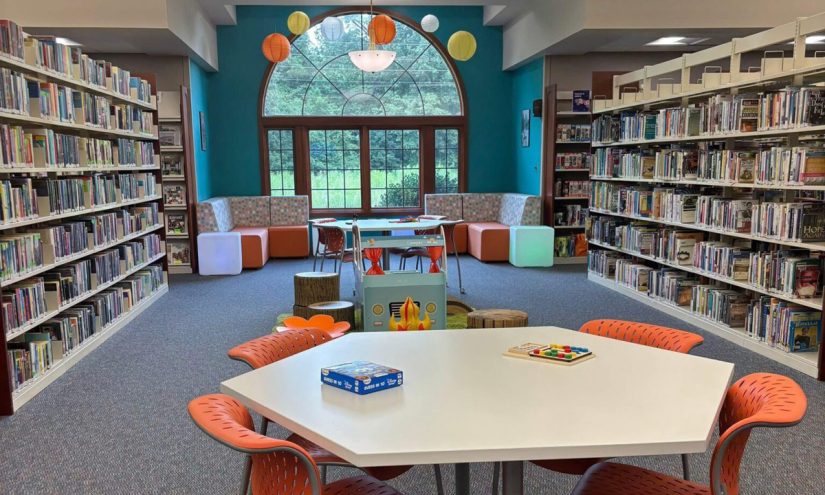
    Marshall County’s grant supported a renovation of the Hardin branch to create a more child-friendly space and funded an eight-week program for mothers of young children called Mom’s Night Out. 

    During the Mom’s Night Out program, which will start the first week in September, mothers who are referred by Court Appointed Special Advocates will gather weekly and have a meal together. During the meal, representatives from the Marshall County Extension Office and the health department will lead discussions about stress management, home upkeep and how to cook recipes with staples handed out at food distribution centers like rice and beans. 

    Because this is grant-funded, it’s not affected by recent changes to the Supplemental Nutrition Assistance Program (SNAP) program, Blackwell said. Congress recently passed the Big Beautiful Bill Act, which cut funding for the SNAP Education program, among other things. 

    The Mom’s Night Out discussions will be in a “very non-judgmental way, and not in a lecturing kind of way, but as a conversation and getting those families very comfortable in that space, very comfortable with library staff, comfortable with community partners who they may need to call on at some point,” Blackwell explained. 

    “We’re hoping that they build a bond with each other; other people with similar lived experiences, and to really give them a sense of community and resources in order to help the mothers thrive, so that the children may thrive,” she added. “I love that it’s ‘before there’s a problem, let’s fix it.’” 

    The first round of the program will only include mothers — Blackwell hopes between 12 to 15 — who have children of preschool to early elementary school age. Should it be successful and receive funding for a repeat, she’d like to expand it to fathers as well. 

    “There’s been some coverage of how many kids in Kentucky are in either foster or kinship care situations,” Blackwell said. “It’s a lot of kids, and that really impacts their ability to be successful in life. And anything that we can do to strengthen those families and give those kids, then we need to at least try. And I think libraries are in a perfect position to really make a difference.” 

    The 2024 Kids Count report, from Kentucky Youth Advocates and the Annie E. Casey Foundation, showed there were nearly 46,000 youth in foster care in the state from 2021-2023. In that same time period, the number of children leaving foster care and reunited with their families dropped to 32%. Pre-pandemic, from 2016-2018, it was 36%. 

    Additionally, in 2024 there were around 55,000 Kentucky children being raised with a relative in a kinship care arrangement. 

    The Department for Community Based Services came up with the idea to partner with libraries, Binkowski said. Lesa Dennis, the DCBS commissioner, wasn’t available for an interview but said in a statement that “by meeting families where they are, we’re building pathways to stability, resilience and well-being so no family has to face challenges alone.” 

    Removal is ‘traumatizing’ 

    Binkowski, who previously worked as Assistant General Counsel for the Tennessee Department of Children’s Services, said that “a foster care intervention, even if necessary, is traumatizing to everyone involved.” It can damage bonds between parents and their children and upend daily routine and connections, she said. 

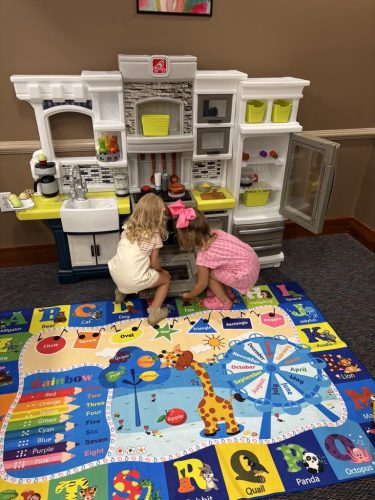
    Children play in the Marshall County library’s Hardin branch. (Photo provided)

    “We have a substantial body of evidence that tells us that children do best when they are with their families of origin — when it can be safe,” she said. “We know that connections to biological family, knowing where you came from, feeling like you belong — those are really critical emotional stabilization and safety factors that support children’s growth and development.” 

    Experiencing brokenness in the home, abuse or neglect are Adverse Childhood Experiences, which refers to traumas or stressors in a person’s life before their 18th birthday. They include, but are not limited to, parental divorce, abuse, parental incarceration, substance use issues in the home and more. The more such experiences a person has, the more likely they are to have poor health, lower education and economic hardships. Childhood trauma also cost Kentucky around $300 million a year

    “Enough stressors on a child at early ages without protective capacities to keep them from having negative outcomes can literally take years off of their lives,” Binkowski said. “So, while we don’t want children to experience abuse and neglect … we also don’t want them unnecessarily being removed from their home if the issues are not creating those kinds of negative impacts and we can stabilize a family without requiring removal.”

    Kentucky Lantern is part of States Newsroom, a nonprofit news network supported by grants and a coalition of donors as a 501c(3) public charity. Kentucky Lantern maintains editorial independence. Contact Editor Jamie Lucke for questions: [email protected].


    Get stories like these delivered straight to your inbox. Sign up for The 74 Newsletter

    Source link