
Category: News

  • Some States Are Seeking to Deregulate Child Care. Advocates Are Fighting Back – The 74

    Some States Are Seeking to Deregulate Child Care. Advocates Are Fighting Back – The 74


    Join our zero2eight Substack community for more discussion about the latest news in early care and education. Sign up now.

    Content warning: This story includes details of an infant’s death.

    After Democrats passed the American Rescue Plan in 2021, states were flush with federal funding to help prop the child care sector up. But that money is now all gone, and as Republicans in Congress threaten to pass spending cuts that could further shrink state budgets, lawmakers are trying to find solutions to the child care crisis that don’t cost money. 

    Many have proposed changing the mandated ratios that require a certain number of early educators to care for young kids. Nearly a dozen states have considered rolling back child care regulations, including those governing staff-to-child ratios.

    But while these deregulatory bills are common, it’s not a foregone conclusion that they will pass. Advocates in three states have been able to beat back these efforts in the legislative sessions that just wrapped up by mobilizing a wide variety of people to speak up against these proposals and deploying research-backed arguments about child safety and child care supply.

    Eliminating Ratios Entirely 

    Idaho advocates faced down the most extreme bill. In its original form, HB243 would have eliminated all requirements that limit the number of young children an early educator can care for, leaving it up to individual providers. It would have been the first state in the country to take such a step. 

    Advocates had very little time to fight back. The bill got fast tracked; there was less than 24 hours’ notice before the first public hearing on it in the House. “You can’t get child care providers and parents there in that amount of time,” said Christine Tiddens, executive director of Idaho Voices for Children, a nonprofit that advocates for child-focused policies, noting that it requires moving work schedules and getting people to cover shifts. The bill sailed through the House.

    Eventually, Tiddens said, they were able to put parents and providers in front of lawmakers to warn of the negative consequences. One of those parents was Idaho resident Kelly Emry. On June 10, 2024, she got a panicked call from the home-based child care provider where she had just started sending her 11-week-old son Logan. She dashed to the provider’s home and was told he was dead. The coroner’s report later confirmed he died from asphyxiation. According to Emry, the coroner said the provider put him down for a nap between a rolled up blanket and a pillow and left him there for hours. The provider was caring for 11 kids by herself that day, putting her out of compliance with state regulations that, at the time, required at least two staff members. 

    “It was completely preventable, and that’s what’s so hard for me to come to terms with,” Emry said in a podcast interview in January.

    Emry wasn’t the only one who spoke up. Once the bill got to the Senate, advocates packed the hearing and overflow rooms with several hundred people. Among the 40 people who signed up to testify, 38 opposed the bill. Baby Logan’s uncle spoke, as did pediatricians, fire marshals, nurses, the state police, child welfare experts, child care providers and parents. Lawmakers were flooded with thousands of calls and emails from the opposition. Tiddens made sure every senator was sent the podcast interview with Emry.

    The bill passed the Senate committee by a single vote. Advocates decided to try to stop the worst elements, knowing that the bill was likely to pass in some form. They asked a senator who opposed it to “throw a Hail Mary,” Tiddens said. When the bill came to the Senate floor, he asked for unanimous support to pull it and move it into the amending process. He got it. The original elimination of staff-to-child ratios was stripped out; instead, the bill preserved ratios, albeit higher ones than before. Under previous law, Idaho ranked at No. 41 among all states for how high its ratios were; now it has dropped even further to No. 45.

    The victory is “bittersweet,” Tiddens said. She attributes it almost solely to one thing: putting parents, not just businesses and child care providers, in front of lawmakers, which led to the moving account of Logan’s family, still in the midst of raw grief. “How could you listen and not have your heart changed?” Tiddens asked.

    Doubling Family Child Care Ratios

    Advocates in Maryland have fought back against legislation to loosen staff-to-child ratios twice now. Last year, lawmakers introduced a bill to raise the ratios in family child care settings, but it died thanks to “a lot of advocacy,” said Beth Morrow, director of public policy at the Maryland Family Network, a nonprofit focused on child care. As in Idaho, the American Academy of Pediatrics and fire marshals warned about what would happen in the case of emergencies. Children under 2 years old are “not capable of self-preservation,” Morrow pointed out; they might hide when a fire alarm goes off and can’t evacuate on their own. “If there is an emergency you have to be able to get these kids out,” she said.

    The idea returned this year in House Bill 477, this time coupled with looser ratios for center-based care. Family providers are currently allowed to care for eight children but no more than two under the age of 2; the legislation would have doubled that, allowing providers to watch as many as four children under the age of 1. That was a “nonstarter,” Morrow said. It would also have been the first time that these rules were dictated by lawmakers rather than by the Maryland State Department of Education, which would have been barred from changing them in the future. 

    So advocates marshalled research, with the help of national groups including the National Association for the Education of Young Children and Center for Law and Social Policy. They highlighted that there has been no evidence that stricter child care regulations lead to reduced supply. Lawmakers seemed moved by the argument that lower ratios support better health and safety for children.

    During the markup session, the chief sponsor amended the bill by striking the language about higher ratios; instead, the version that passed requires the Department of Education to study child care regulations with an eye toward alleviating barriers for providers.

    Ratio Increases by Another Name

    In Minnesota, lawmakers took a different approach to proposing changes to the number of staff required to care for young children this session. Their legislation avoided mentioning the term “ratios” at all. Instead, the issue was presented as an exemption for in-home child care providers caring for their own children as well. The legislation originally would have exempted as many as three of the providers’ own children from the number they are licensed to watch. “That’s a direct ratio increase, no way around that,” said Clare Sanford, vice president of government and community relations at New Horizon Academy, a child care and preschool provider. “You still have the same number of adults but you’re increasing the number of children that adult is responsible for.”

    In later drafts, the number of children who could be exempted kept being reduced. In the end the legislation didn’t get a standalone vote and the language was left out of the final state budget. The argument that Sanford thinks worked the best was that increasing ratios wouldn’t actually increase child care supply. That’s because, as a brief by NAEYC argues, they will lead to more burnout among providers, which will push them to leave and, in the end, reduce available child care spots.

    The fight is far from over. Advocates in all three states expect lawmakers to try to loosen staff-to-child ratios again next session. Tiddens fears that, although Idaho didn’t eliminate ratios, the idea could spread. “Idaho has often been a frontrunner for harmful legislation,” she said. On the whole, more of these laws have been signed than stopped, said Diane Girouard, state policy senior analyst at ChildCare Aware of America. Ratio deregulation bills pop up “in some states every single year,” she said. “This isn’t just unique to red, conservative states. It has happened in blue states, it has happened in purple states.”

    Advocates who oppose raising these ratios are formulating responses to the child care crisis that preserve safety standards without requiring state funding. In Maryland, for example, Morrow’s organization helped pass a bill that removes legal barriers to opening and operating family child care programs. The hope is that with more solutions on the table to increase child care supply, states won’t look to options that erode safety standards, such as increasing ratios. 

    Tiddens has vowed to fight back. “We’re not going away, and we’re going to show up next session with our own proposal,” she said. Her coalition plans to formulate a bill for next year that “prioritizes child safety at the same time as dealing with the child care shortage,” she said.


    Get stories like these delivered straight to your inbox. Sign up for The 74 Newsletter

    Source link

  • Homeless Student Counts in California Are Up. Some Say That’s a Good Thing – The 74

    Homeless Student Counts in California Are Up. Some Say That’s a Good Thing – The 74


    Get stories like this delivered straight to your inbox. Sign up for The 74 Newsletter

    In Kern County, the first rule in counting homeless students is not saying “homeless.”

    Instead, school staff use phrases like “struggling with stable housing” or “families in transition.” The approach seems to have worked: More families are sharing their housing status with their children’s schools, which means more students are getting services.

    “There’s a lot of stigma attached to the word ‘homeless,’” said Curt Williams, director of homeless and foster youth services for the Kern County Office of Education. “When you remove that word, it all changes.”

    Largely as a result of better identification methods, Kern County saw its homeless student population jump 10% last year, to 7,200. Those students received transportation to and from school, free school supplies, tutoring and other services intended to help them stay in school. For the purposes of this data, the definition of homelessness is broader than the state’s point in time count.

    The trend is reflected statewide. In the latest state enrollment data released last month, California had 230,443 homeless students — a 9.3% increase from the previous year. Some of the increase is due to the state’s ongoing housing shortage, but most of the increase is because of better identification, advocates and school officials said.

    Homeless students face numerous obstacles in school. They have higher rates of discipline and absenteeism, and fare worse academically. Last year, only 16% of homeless students met the state’s math standard, some of the lowest scores of any student group.

    “Schools can’t solve homelessness, but they can ensure the students are safe in the classroom and getting the education they need to get out of homelessness,” said Barbara Duffield, executive director of Schoolhouse Connection, a national homeless youth advocacy group. “That starts with identifying the child who’s homeless.”

    Challenges of counting homeless students

    Under the federal McKinney-Vento Act, schools are required to count their homeless students throughout the school year and ensure they receive services. Homeless students also have the right to stay enrolled in their original school even if they move.

    For many years, schools struggled to identify homeless students. Under state law, schools must distribute forms at the beginning of the school year asking families where they live — in their own homes, in motels, doubled-up with other families, in shelters, cars or outdoors.

    Some schools were less-than-diligent about collecting the form, or reassuring families understood the importance. Often, homeless families were reluctant to submit the form because they were afraid the school might contact a child welfare agency. Immigrant families sometimes feared the school might notify immigration authorities. And some families didn’t realize that sharing quarters with another family — by far the most common living situation among homeless families – is technically defined as homeless, at least under McKinney-Vento.

    A 2021 bill by former Assemblymember Luz Rivas, a Democrat from Arleta in the San Fernando Valley, sought to fix that problem. The bill requires schools to train everyone who works with students — from bus drivers to cafeteria workers to teachers — on how to recognize potential signs of homelessness. That could include families who move frequently or don’t reply to school correspondence.

    The bill seems to have helped. Last year, the state identified 21,000 more homeless students than it had the previous year, even as overall enrollment dropped.

    Still, that’s probably an undercount, researchers said. The actual homeless student population is probably between 5% and10% of those students who qualify for free or reduced-price lunch, according to the National Center for Homeless Education. In California, that would be a shortfall of up to 138,713 students.

    Influx of funding

    Another boost for identifying homeless students came from the American Rescue Plan, the federal COVID-19 relief package. The plan included $800 million for schools to hire counselors or train existing staff to help homeless students. Nearly all schools in California received some money.

    About 120 districts in California won grant money through the McKinney-Vento Act, which last year dispersed about $15.9 million in California to pay for things like rides to school, backpacks, staff and other services. Districts are chosen on a competitive basis; not all districts that apply receive funds.

    But those funding sources are drying up. Most of the pandemic relief money has already been spent, and President Donald Trump’s recently approved budget does not include McKinney-Vento funding for 2026-27.

    The cuts come at a time when advocates expect steep increases in the number of homeless families over the next few years, due in part to national policy changes. Republican budget proposals include cuts to Medicaid, food assistance and other programs aimed at helping low-income families, while the immigration crackdown has left thousands of families afraid to seek assistance. For families living on tight budgets, those cuts could lead to a loss of housing.

    And in California, the shortage of affordable housing continues to be a hurdle for low-income families. Even Kern County, which has traditionally been a less pricey option for families, has seen a spike in housing costs as more residents move there from Los Angeles.

    Joseph Bishop, an education professor at UCLA and co-author of a recent report on homeless students nationwide, said the loss of government funding will be devastating for homeless students.

    “California is the epicenter of the homeless student crisis, and we need targeted, dedicated support,” Bishop said. “Folks should be extremely alarmed right now. Will these kids be getting the education they need and deserve?”

    Better food, cleaner bathrooms

    In Kern County, identification has only been one part of the effort to help homeless students thrive in school. Schools also try to pair them with tutors and mentors, give them school supplies and laundry tokens, and invite them to join a program called Student Voice Ambassadors. There, students can tour local colleges, learn leadership skills and explore career options.

    As part of the program, staff ask students what would make school more enticing — and then make sure the suggestions happen. At one school, students said they’d go to class if the bathrooms were cleaner. So staff improved the bathrooms. At another school, students wanted better food. They got it.

    Williams credits the program with reducing absenteeism among homeless students. Two years ago, 45% of Kern County’s homeless students were chronically absent. Last year, the number dropped to 39% – still too high, he said, but a significant improvement.

    “Without McKinney-Vento funds, the Student Voice Ambassador program would go away,” Williams said. “How will we keep it going? I don’t know.”

    This article was originally published on CalMatters and was republished under the Creative Commons Attribution-NonCommercial-NoDerivatives license.


    Get stories like these delivered straight to your inbox. Sign up for The 74 Newsletter
    Source link

  • How a Christian Nationalist Group is Getting the Ten Commandments into Classrooms – The 74

    How a Christian Nationalist Group is Getting the Ten Commandments into Classrooms – The 74

    School (in)Security is our biweekly briefing on the latest school safety news, vetted by Mark KeierleberSubscribe here.

    As far-right political operative David Barton leads a Christian nationalist crusade, he’s traveled to state capitols across the country this year to support dozens of bills requiring Ten Commandments displays in classrooms. 

    My latest story digs into a well-coordinated and deep-pocketed campaign to inject Protestant Christianity into public schools that could carry broader implications for students’ First Amendment rights. Through a data analysis of 28 bills that have cropped up across 18 states this year, I show how Barton’s role runs far deeper than just being their primary pitchman.

    The analysis reveals how the language, structure and requirements of these bills nationwide are inherently identical. Time and again, state legislation took language verbatim from a Barton-led lobbying blitz to reshape the nation’s laws around claims — routinely debunked — about Christianity’s role in the country’s founding and its early public education system. 

    Three new state laws in Louisiana, Arkansas and Texas mandating Ten Commandments posters in public schools are designed to challenge a 1980 Supreme Court ruling against such government-required displays in classrooms. GOP state lawmakers embracing these laws have expressed support for eradicating the separation of church and state — a pursuit critics fear will coerce students and take away their own religious freedom.


    In the news

    Updates to Trump’s immigration crackdown: Immigration and Customs Enforcement has released from custody a 6-year-old boy with leukemia more than a month after he and his family were sent to a rural Texas detention center. | Slate

    • As the Department of Homeland Security conducts what it calls wellness checks on unaccompanied minors, the young people who migrated to the U.S. without their parents “are just terrified.” | Bloomberg
    • ‘It looks barbaric’: Video footage purportedly shows some two dozen children in federal immigration custody handcuffed and shackled in a Los Angeles parking garage. | Santa Cruz Sentinel
    • The Department of Homeland Security is investigating surveillance camera footage purportedly showing federal immigration officers urinating on the grounds of a Pico Rivera, California, high school in broad daylight. | CBS News
    • California sued the Trump administration after it withheld some $121 million in education funds for a program designed to help the children of migrant farmworkers catch up academically. | EdSource
    • Undocumented children will be banned from enrolling in federally funded Head Start preschools, the Trump administration announced. | The Washington Post
      • Legal pushback: Parents, Head Start providers challenge new rule barring undocumented families. | The 74
    Getty Images

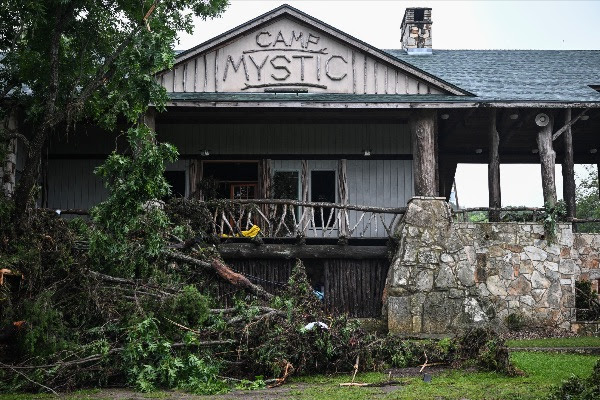
    The executive director of Camp Mystic in Texas didn’t begin evacuations for more than an hour after he received a severe flood warning from the National Weather Service. The ensuing tragedy killed 27 counselors and campers. | The Washington Post

    The day after the Supreme Court allowed the Education Department’s dismantling, Secretary Linda McMahon went ahead with plans to move key programs. | The 74 

    • Now, with fewer staff, the Office for Civil Rights is pursuing a smaller caseload. During a three-month period between March and June, the agency dismissed 3,424 civil rights complaints. | Politico
    Sign-up for the School (in)Security newsletter.

    Get the most critical news and information about students’ rights, safety and well-being delivered straight to your inbox.

    Massachusetts legislation seeks to ban anyone under the age of 18 from working in the state’s seafood processing facilities after an investigation exposed the factories routinely employed migrant youth in unsafe conditions. | The Public’s Radio

    An end to a deadly trend: School shootings decreased 22% during the 2024-25 school year compared to a year earlier after reaching all-time highs for three years in a row. | K-12 Dive

    Florida is the first state to require all high school student athletes to undergo electrocardiograms in a bid to detect heart conditions. | WUSF 

    The Senate dropped rules from Trump’s “big, beautiful” tax-and-spending bill that would have prevented states from regulating artificial intelligence tools, including those used in schools. | The Verge

    • Food stamps are another matter: The federal SNAP program will be cut by about a fifth over the next decade, taking away at least some nutrition benefits from at least 800,000 low-income children. | The 74

    ICYMI @The74

    Getty Images

    Supreme Court to Address Legality of Barring Trans Athletes From School Sports

    Medicaid Cuts in Trump Tax Bill Spark Fears for Child Health, School Services

    Heinous, heartbreaking — and expensive. California schools face avalanche of sex abuse claims


    Emotional Support

    74 editor Nicole Ridgway’s dog Mika is cooler than your dog.


    Get stories like these delivered straight to your inbox. Sign up for The 74 Newsletter

    Source link

  • Alabama Schools to Implement State Approved Anti-Vaping Policies – The 74

    Alabama Schools to Implement State Approved Anti-Vaping Policies – The 74

    Alabama schools are set to implement a new system to prevent vaping by public school students in the coming academic year.

    HB 8, sponsored by Rep. Barbara Drummond D-Mobile, requires the Alabama State Board of Education to create a model policy for local boards of education to adopt by November.

    “[Drummond] wanted an anti-vaping law, so we were able to work with her on something that’s not too overwhelming for the districts, but they are all going to have an anti-vaping policy,” State Board of Education Superintendent Eric Mackey told members of the board in a meeting on Tuesday.

    Under the proposed policy, students who are caught vaping once will have their parents contacted and students who are caught vaping twice will have to take a state approved vaping awareness, education and prevention class which includes a curriculum created in collaboration with the Drug Education Council.

    The topics covered in the proposed curriculum presented to board members include health consequences, peer pressure, nicotine and addiction, resources to quit vaping and common misconceptions about vaping among others.

    According to the Children’s of Alabama newsroom, the media branch for the Children’s of Alabama hospital, nearly 20% of high school students in 2023 said they had vaped.

    Some board members at Tuesday’s meeting questioned the need for the vaping law.

    “As an educator, parent and grandparent, I don’t quite understand the focus on this and bifurcating or separating from the other common concerns in every discipline policy,” said Wayne Reynolds, who represents District 8 on the board. “Why would you separate what you’re doing to a child caught vaping and contacting the parents than any other child in the discipline policy?”

    District 1 Representative Jackie Zeigler raised concerns about children moving onto other drugs like Fentanyl and Xylazine or tranq and pushed for broader language in the law to prevent having to add resolutions to add other specific items such as marajuana into the law.

    “I don’t think by labeling it does any justice,” she said. “We need to make it broader so these things fit into it so we don’t have to come back and say, ‘now we have [THC] gummies, and now we have vaping.’”

    Mackey agreed that the law is more specific than most Alabama Department of Education policies, but because it’s the law they have to follow it and said the board is “being no more restrictive than the law requires.”

    Beginning in the 1995 school year, Alabama schools were required to have a policy prohibiting the usage of tobacco on school property and the Code of Alabama Title 16 Chapter 41 states every county and city school system must have drug abuse and education courses in their curriculum.

    The Alabama State Board of Education will vote on the model policy for the law next month.

    Alabama Reflector is part of States Newsroom, a nonprofit news network supported by grants and a coalition of donors as a 501c(3) public charity. Alabama Reflector maintains editorial independence. Contact Editor Brian Lyman for questions: [email protected].


    Get stories like these delivered straight to your inbox. Sign up for The 74 Newsletter

    Source link

  • London Mayor slams proposed international tuition fee levy

    London Mayor slams proposed international tuition fee levy

    In a keynote address earlier this week at Imperial Global Ghana – Imperial College London’s overseas branch campus in Accra – Sadiq Khan warned that proposals for a new levy on international university fees would hit the UK’s finances hard, describing the policy as “an act of immense economic self-harm”.

    The UK government is currently considering a new levy on income that English universities generate from international students as part of its immigration whitepaper, which could not only put students off coming  from overseas but also create a substantial extra financial burden for already stretched universities.

    International students contribute about £12.5 billion to London, and another £55bn to the national economy every year, Khan pointed out. For this reason, the government should not make it difficult for these students to study in the UK, Khan said at the event – which formed part of his trade mission to Ghana.

    With 5% of students in London’s higher education institutions coming from Africa, Khan stressed the need to ensure that international students are not frustrated. 

    “Closing our economy to global talent would be an act of immense economic self-harm. One that would slow down growth and leave working people in Britain worse off than before. At a time when President Trump is attacking international students, we should be welcoming them,” he added.

    Khan said the international students also bring a longer-term labour market value, as many stay after their studies to work in key economic sectors from tech and AI to finance and creative industries. For this reason, he disagreed with the view that, “we should pull up the drawbridge to international students or punish universities that choose to welcome people from around the world”.

    On Imperial College opening up a hub in Ghana, he said London is ready to contribute to the development effort of Ghana, “not as a patron, but as a partner. In a genuinely reciprocal relationship that brings benefits to us both”.

    President Trump is attacking international students, we should be welcoming them
    Sadiq Khan, Mayor of London

    The vice-chancellor of the University of Ghana, Nana Aba Appiah Amfo, said the university is committed to providing to its  students with a transformative experience that goes beyond the classroom to nurture innovation, leadership and practical problem solving, adding that “this commitment is rooted in our strategic plan, which prioritises student success, impactful research and strategic partners”.

    “One such partnership, rich in promise and results, is with Imperial College London. What began as a collaboration between two researchers has evolved into a university-wide alliance, advancing work in climate change, diagnostics, and entrepreneurship. It is a powerful model of what mutual trust and shared purpose can achieve,” Amfo added.

    She said the Student Venture Support Programme has become the flagship agenda of the partnership which was launched in 2022 with the Imperial College and is  equipping students with skills, mentoring and funding to turn ideas into viable ventures. 

    To date, it has supported over 400 students and more than 115 startups, spanning four universities across Ghana.

    Despite Khan’s strong opposition to the levy, it looks likely to go ahead.

    At last week’s BUILA conference, skills minister Jacqui Smith doubled down on the need for the levy, saying it would reinforce public confidence in the UK’s international education sector.

    Source link

  • CEA CAPA acquires CIS Abroad, CISaustralia and Barcelona SAE

    CEA CAPA acquires CIS Abroad, CISaustralia and Barcelona SAE

    Study abroad and internship provider CEA CAPA recently announced the acquisition of three study abroad players: CIS Abroad, CISaustralia, and Barcelona Study Abroad Experience (Barcelona SAE).

    The development signals a significant step forward in CEA CAPA’s expansion, with the company describing it as part of “ongoing efforts to expand access to global experiences for students, and to offer even more value and support to higher education partners”.

    It described the move as an “integration of three respected organisations” which all fall under the parent company Global Educators.

    “This integration brings together some of the best partnerships, programs, locations, talent, and experience in the field of education abroad. It allows us to reach more students with more variety, quality, and care,” said Beth Stiller, CEO of CEA CAPA.

    CEA CAPA itself is the result of a merger, which in January 2023 brought together CEA and CAPA under a unified banner, consolidating resources and academic standards across both brands.

    The organistion said in a statement that the joining together of CEA CAPA, CIS, and Barcelona SAE will enable streamlined operations and greater efficiencies for colleges and universities, provide a broader range of destinations, while expanding academic offerings, internships, and career-focused experiences around the globe.

    Our desire is to not only bring our strengths and assets together, but to introduce new classes, study centres and personalised pathways to help students achieve their academic and career goal
    Beth Stiller, CEA CAPA

    “It allows us to reach more students with more variety, quality, and care. Our desire is to not only bring our strengths and assets together, but to introduce new classes, study centres and personalised pathways to help students achieve their academic and career goals,” said Stiller.

    Kris Holloway, president and CEO of CIS Abroad, commented on the “core values” and student-centered approach” that the integrated organisations share.

    “Together, I believe we will be a powerful force at this critical time for our beloved international education field,” said Holloway.

    For Brad Dorahy, CISaustralia founder and executive director, he cannot recall a “more exciting time” for the brand or its partner Australian universities and students.

    “We are thrilled to be part of CEA CAPA and the opportunities it will present for our students, staff, Australian universities, and overseas partners,” he said.

    Rich Kurtzman, Barcelona SAE founder and CEO commented: “Since founding Barcelona SAE in 2009, I’ve been incredibly proud of what our team has built. I’m thrilled to bring our values into the broader CEA CAPA global family and expand our impact, enriching even more student lives around the world.” 

    Source link

  • US study abroad takes major step to protect federal funding

    US study abroad takes major step to protect federal funding

    Following a record-breaking advocacy campaign that saw 20,636 letters sent to Congress, the House of Representatives has set out drastically modified cuts to US cultural exchanges, which had been at risk of “decimation” under Trump’s previous proposed budget.  

    The new plans will shrink the funding cuts to the Bureau of Educational and Cultural Affairs (ECA) to 5.5% next year, as compared to the 93% initially announced in the proposed FY2026 budget.  

    Though the proposals still amount to a $41 million cut to current funding, “it’s nowhere close to the doomsday scenario of the [President’s budget request]” executive director of the Alliance for International Exchange Mark Overmann told The PIE News. 

    “This means that the conversation about FY26 is completely new. The President’s budget can be thrown out the window,” he said, welcoming the “significant show of support for exchanges from the House and a big win for us”. 

    The plans – laid out in the House Appropriations Bill on July 14 – propose a 22% cut to overall State Department funding and are the latest step in the FY26 budget process, expected to be finalised late this year.  

    The new legislation earmarks over $700m for ECA, a “surprising” figure and a vote of confidence in the value of educational and cultural exchanges. This includes $287 million for Fulbright.  

    “And this mark from the House means that our community’s advocacy has been heard,” said Overmann.  

    This means that the conversation about FY26 is completely new. The President’s budget can be thrown out the window.

    Mark Overmann

    Though there are still many steps to go, including a review by the Senate, the unexpected move is an encouraging development and a rare piece of good news for stakeholders who expected the worst after Trump’s “draconian” proposals this May. 

    While important, the President’s budget request has no sway over the final allocations, with stakeholders emphasising at the time of its release that it amounted to nothing more than a “wish list” and was not binding.  

    The true figures will be drawn from the House and Senate Appropriations, with the latter expected imminently.  

    Traditionally, the Senate has come in higher than the house for ECA funding, with stakeholders hopeful that the trend will continue this year.  

    The news has provided a glimmer of hope during an uncertain time for US study abroad, with 40 ECA employees caught up in the Trump administration’s mass layoffs of State Department staff last week.  

    Source link

  • NZ’s new study visa rules strike chord with Australian sector

    NZ’s new study visa rules strike chord with Australian sector

    The New Zealand government announced earlier this week that, from November, Immigration New Zealand (INZ) will increase permitted work hours for study visa holders, extend work rights to all tertiary students on exchange or study abroad programs. It may also introduce a short-term work visa of up to six months for graduates not eligible for a post-study work visa.

    While the relaxations are a key part of New Zealand’s push to boost international student numbers by over 40% by 2034, INZ has also clarified that students who change their education provider or lower their study level will need to apply for a new visa, rather than simply requesting a variation of conditions on their existing one.

    The mandate has struck a chord with Australia’s international education sector, where some individuals and associations have been calling for an overhaul of the study visa system, specifically on linking study visas to the institution of initial enrolment.

    Commenting on New Zealand’s recent changes, Ravi Lochan Singh, managing director, Global Reach, wrote in a LinkedIn post that instead of banning agent commissions for onshore student transfers to address attrition, Australia could “just copy” the neighbouring country’s approach. 

    “Australia is currently facing a significant issue where students use higher ranked or low-risk universities (as categorised by Home Affairs) to secure their student visas easily and then after the first semester of studies, the students get moved to private colleges offering higher education degrees,” Singh told The PIE News. 

    According to Singh, while such moves, often made by Indian or Nepali students with the help of onshore immigration agents, may be genuine, they “waste” the efforts of offshore education agents and universities that initially recruited the students.

    “Some policy makers feel that students have a right to choose the correct education provider and if they feel that what they desire as a customer can be met at private colleges, they should be allowed to move,” stated Singh. 

    “However, we also have the situation where students have demonstrated their available funds through an education loan which is issued in the name of a particular university,” he added. If the student does move institutions, the education loan is not valid as a demonstration of funds and thus the argument that the students should be asked to apply for a fresh student visa.”

    According to Singh, many international students, particularly from South Asia, who arrive in Australia on education loans often find themselves without “available” or “accessible” funds when they switch providers and are required to show new financial evidence.

    It would appear that three modern advanced economies who have championed consumer protections and who have established international study destinations believe this measure is not contrary to ‘consumer choice’
    Gareth Lewis, Western Sydney University

    Moreover, a recent report by Allianz Partners Australia revealed that over 61% of international students found daily life in the country “significantly more expensive than expected”, with more than a quarter considering withdrawing from their studies due to financial woes. 

    “While we are discussing attrition and student movements once the student is onshore, we also need to acknowledge that university fees have been increasing and students are beginning to question ROI. Thus there is an argument for more student visa grants for higher education degrees at TAFE and private providers,” said Singh. 

    “The fees of such programs is much lower to what is charged at the universities. If this happens, the students who are more price sensitive will join the TAFE and private providers right in the beginning and universities will have only those students who can afford the degree and likely to complete them at the university itself.”

    While Australia’s Ministerial Direction 111, which replaced MD 107, provides immigration case officers stricter guidance on assessing the Genuine Student requirement, and introduces a two-tier visa processing system that prioritises institutions with strong compliance records and low visa risks, it influences the decision-making process, not the entire visa mechanism unlike New Zealand’s recent move. 

    However, New Zealand is not the only model Australia could look to, according to stakeholders.

    A recent submission by the Association of Australian Education Representatives in India (AAERI) to the ministers for education and home affairs in Australia pointed to examples from the UK and Canada, where students must obtain a new Confirmation of Acceptance for Studies (CAS) and a new study permit, respectively, if they wish to change institutions.

    “Australia’s recent reforms, such as closing the concurrent CoE loophole and requiring CoEs for onshore visa applications, are steps in a similar direction but do not go far enough to address the core issue of unethical student poaching, misuse of student visa and provider switching,” stated AAERI in its submission in May to the Labor government. 

    After New Zealand’s changes were announced, regional director, Western Sydney University, Gareth Lewis also echoed a similar opinion on Australia’s reluctance to do what New Zealand, the UK, and Canada have done. 

    “It would appear that three modern advanced economies who have championed consumer protections and who have established international study destinations believe this measure is not contrary to ‘consumer choice’,” read Lewis’s LinkedIn post

    “Unfortunately Australia believes it is. This needs to change.” 

    Find out more about how Australia can improve its visa system at The PIE Live Asia Pacific 2025 on July 30, during the session “Visa status: MD111 and MD106 mapping – is the current visa system working?”, which will explore the impact of current visa policies on HE, VET, and ELICOS sectors, covering genuine student assessments, onshore switching, and ways to improve the operating environment. Check out more details here – PLAP 2025 agenda.

    Source link

  • Digital learning is different

    Digital learning is different

    Key points:

    In the animated film Up, the character Dug is a talking dog with an interesting mannerism. Each time he sees a movement off to the side, he stops whatever he is doing, stares off in that direction and shouts, “Squirrel!” I feel that this is a perfect representation of how schools often deal with new and emerging technologies. They can be working hard to provide the best instruction for their students but become immediately distracted anytime a new technology is introduced.

    From the internet and computers to cell phones and artificial intelligence, schools continue to invest a lot of time and money into figuring out how best to use these new technologies. Overall, schools have done a good job adapting to the numerous digital tools introduced in classrooms and offices–and often, these tools are introduced as standalone initiatives. Why do school districts feel the need to ‘reinvent the wheel’ every time a new technology is released? Instead of looking at each new technology as a tool that must be integrated in the curriculum, why not determine what is missing from current instruction and identify what prevents integration from occurring naturally?

    Schools need to recognize that it is not just learning how to use these new digital tools that is important. They must learn how to interpret and use the incredible variety of resources that accompany these tools–resources that provide perspectives that students would never have access to when using physical resources.

    Digital is different

    For centuries, learning material has come from a variety of physical resources. These include human-made items (i.e. textbooks, documents, paintings, audio recordings, and movies) as well as one of the most commonly used physical resources: teachers. In traditional instruction, teachers spend a great deal of class time teaching students information from these physical resources. But the physical nature of these resources limits their availability to students. To ensure that students have long-term access to the information provided by these physical resources, most traditional instruction emphasizes memorization, summarizing, and note taking. 

    With digital resources, students can access information at any time from anywhere, which means learning how to retain information is less important than learning how to effectively find credible information. The authenticity of the information is important because the same tools that are used to access digital resources can just as easily be used to create new digital resources. This means there is a lot of misinformation available online, often consisting of nothing more than personal opinions. Students need to not only be able to search for information online, but they also need to be able to verify the authenticity of online information. The ability to identify misleading or false information is a skill that will benefit them in their personal and academic lives.

    Learning

    While it is fairly easy to find information online, especially with the inclusion of AI in search engines, there are some search techniques that will reduce the amount of misinformation found in simple search requests. By teaching students how to refine their searches and discussing the impact of these search skills, students will be more discerning when it comes to reviewing search results. They need to be aware that the most helpful sites do not always appear at the top of the search list. Some sites are sponsored and thus automatically placed at the beginning of the search list. Other sites will tweak their web search parameters to ensure a higher priority in the search list.  A better understanding of how online searching works will result in more effective searches. 

    Once information is found, the authenticity of the resource and the information itself needs to be established. Fortunately, there are standard practices that can be utilized to teach verification. In the early 2000’s, a popular checklist method called CRAAP (Currency [timeliness], Relevance, Authority, Accuracy, Purpose) emerged. While this method was effective in evaluating the authenticity of the website, it did not ensure the accuracy of the information on the website. In 2019, the SIFT (Stop, Investigate, Find confirming resources, and Trace claims) methodology was introduced.  This methodology focuses on determining if online content is credible. These are not the only tools available to teachers. Librarians and media specialists are a good place to start when determining age-appropriate lessons and material to teach verification.

    Students need to have access to some high-quality digital resources starting in elementary school. Teaching website verification at an early age will help students understand, from the beginning, that there is a lot of misinformation available online. At the same time, schools need to ensure that they provide access to digital resources that are age appropriate. Today’s network technology provides many ways for schools to monitor and control what information or sites are available to students at different grade levels. While these network tools are effective, they should be used in conjunction with well-trained teachers who understand how to safely navigate digital resources and students who are expected to practice responsible internet behavior. Introducing a select number of digital resources in elementary classes is the first step toward creating discerning researchers who will gain the ability to effectively judge a website’s appropriateness and usefulness.

    Teaching

    In order to create opportunities for students to experience learning with digital resources, instructional practices need to be less reliant on teacher-directed instruction. The use of physical resources requires the teacher to be the primary distributor of the information. Typically, this is done through lecture or whole-class presentations. With digital resources, students have direct access to the information, so whole-class distribution is not necessary. Instead, instructional practices need to provide lessons that emphasize finding and verifying information, which can be done by shifting to a learner-centered instructional model. In a learner-centered lesson, the onus falls on the student to determine what information is needed, and if the found information is credible for a given task. The class time that previously would have been spent on lecture becomes time for students to practice finding and authenticating online information. Initially, these learning experiences would be designed as guided practice for finding specific information. As students become more proficient with their search skills, the lesson can shift toward project-based lessons.

    Project-based lessons will help students learn how to apply the information they find, as well as determine what unknown information they need to complete the work. Unlike lesson design for practicing information searching and verification, project-based lessons provide opportunities for students to decide what information is needed and how best to use it. Instead of directing the student’s information-gathering, the teacher provides guidance to ensure they are accessing information that will allow the students to complete the project.

    This shift in instruction does not necessarily mean there will be a significant curricular change. The curricular content will remain the same, but the resources could be different. Because students control what resources they use, it is possible that they could find resources different from the ones specified in the curriculum. Teachers will need to be aware of the resources students are using and may have to spend time checking the credibility of the resource. Given the varying formats (text, audio, video, graphic) available with digital resources, students will be able to determine which format(s) best supports their learning style. Because most digital tools utilize the same digital resources and formats, teaching students how to learn with digital resources will prepare them for adapting to the next new digital tool. It is simply a matter of learning how to use the tool–after all, they already know how to use the resource.

    When creating units of study, teachers should consider the type of resources students will be using. To simplify matters, some units should be designed to utilize digital resources only and include lessons that teach students how to find and verify information. Students still need to develop skills to work with physical resources as well. It may be helpful to start off with units that utilize only physical or digital resources. That way teachers can focus on the specific skills needed for each type of resource. As students gain proficiency with these skills, they will learn to use the appropriate skills for the given resources.

    The amount of information available to the public today is staggering. Unfortunately, too much of it is unverified and even purposely misleading. Trying to stop misinformation from being created and distributed is not realistic. But teaching students how to validate online information can make the distribution of and exposure to misinformation much less impactful. The open nature of the internet allows for many divergent opinions and perspectives. We need to ensure that when students graduate, they have the skills necessary to determine the authenticity of online information and to be able to determine its merit.

    Teaching and learning with digital resources is different, and traditional instruction does not meet the learning needs of today’s students. Giving students the opportunity to master learning with digital resources will prepare them for the next technology “squirrel” and will enable them to determine how best to use it on their own.

    Latest posts by eSchool Media Contributors (see all)

    Source link

  • Reflections on the demand for higher education – and what UCAS data reveal ahead of Results Day 2025

    Reflections on the demand for higher education – and what UCAS data reveal ahead of Results Day 2025


    This HEPI blog was kindly authored by Maggie Smart, UCAS Director of Data and Analysis

    As we pass the 30 June deadline for this year’s undergraduate admissions cycle, UCAS’ data offers an early view of applicant and provider behaviour as we head into Confirmation and Clearing. It also marks a personal milestone for me, as it’s my first deadline release since rejoining UCAS. I wanted to take a deeper look at the data to reflect on how much things have changed since I worked here 10 years ago.

    Applicant demand has always been shaped by two key elements: the size of the potential applicant pool, and their propensity to apply. Since I last worked at UCAS in 2016, these two factors have continuously interchanged over the better part of the past decade – sometimes increasing or decreasing independently but often counterbalancing each other. Let’s take a look at how things are shaping up this year.

    Overall, by the 30 June there have been 665,070 applicants (all ages, all domiciles) this year, compared to 656,760 (+1.3%) in 2024. This is an increase in applicants of over 64,000 since UCAS last reported in January, although the profile of these additional applicants is very different. At the January Equal Consideration Deadline (ECD), over half of the total number of applicants were UK 18-year olds, who are the most likely group to have applied by that stage in the cycle. They represent just 8% of the additional applicants since January, among a much larger proportion of UK mature and international students.

    As we saw at January, the differences in demand for places between young people from the most advantaged (POLAR4 Quintile 5) and most disadvantaged (POLAR4 Quintile 1) areas at June remain broadly the same as last year – with the most advantaged 2.15 times more likely to apply to HE than those from the least advantaged backgrounds, compared to 2.17 last year.

    UK 18-year-old demand

    Demand for UK higher education (HE) has long been shaped by the 18-year-old population – the largest pool of applicants. Despite the well-known challenges facing the HE sector at present, at the 30 June deadline we see record numbers of UK 18-year-old applicants, with 328,390 applicants this year – up from 321,410 (+2%) in 2024. This trend was almost entirely locked in by the January deadline, given the vast majority of UK 18-year-old applicants have applied at this stage in the cycle.

    During my previous tenure at UCAS, the size of the UK 18-year-old population had been falling year on year but from 2020, it began to increase. This continued growth drives the increase in UK 18-year-old applicant numbers we have observed in recent cycles. But when we look at their overall application rate to understand the strength of demand among this group, the data shows a marginal decline again this year – down to 41.2% from 41.9% in 2024. The historically strong growth in the propensity of UK 18-year-olds to apply for HE, which we’ve observed across the last decade, has clearly plateaued.

    This could be due to a range of factors, such as young people choosing to take up work or an apprenticeship, or financial barriers. We know that cost of living is increasingly influencing young people’s decisions this year, with pre-applicants telling us that financial support – such as scholarships or bursaries – ranks as the second most important consideration for them (46%), followed closely by universities’ specific cost-of-living support (34%).

    Interesting to note is the number of UK 19-year-old applicants. When separating the data to distinguish 19-year-olds applying for the first time (as opposed to those reapplying), there has been a decent increase – from 46,680 last year to 48,890 this year (+4.7%). For many years, the number of first-time UK 19-year-old applicants had been falling year on year, but since 2023 this trend has started to reverse. This suggests that demand among young people may be holding up as they decide to take a year out before applying to university or college.

    Mature students

    For UK mature students (aged 21+), the picture looks very different. The number of mature students applying to university or college ebbs and flows depending on the strength of the job market, so since I was last at UCAS, we have typically seen applications decrease when employment opportunities are strong and vice versa. Alongside fluctuations linked to the employment market, rising participation at age 18 means there is a smaller pool of potential older applicants who have not already entered HE. The falling demand from mature students continues in 2025, although in recent years there have been small but significant increases in the volume of mature applicants applying after the 30 June deadline and directly into Clearing. 

    As of this year’s 30 June deadline there have been 86,310 UK mature (21+) applicants, compared to 89,690 (-3.8%) in 2024, meaning a fall in demand compared to the previous year at this point in the cycle for the fourth year in a row. However, whereas at the January deadline mature applicants were down 6.4% compared to the same point last year, at June the figure is only 3.8% down showing some recovery in the numbers. This is another indication that mature students are applying later in the cycle. While it remains too early to say whether we will see continued growth in mature direct to Clearing applicants in 2025, last year 9,390 UK mature students who applied direct to Clearing were accepted at university or college, an increase of 7.4% on 2023 and 22.7% higher than 2022.

    International students

    When looking at the UCAS data through the lens of international students, the landscape has changed significantly since 2016. Brexit led to a sharp decline in EU applicants, offset by strong growth elsewhere, the pandemic caused disruption to international student mobility, and we’ve seen intensified global competition, shifting market dynamics and geopolitics which are increasingly influencing where they choose to study. This year we’re seeing growth once more, with 138,460 international applicants compared to 135,460 in 2024 (+2.2%) – although this stood at +2.7% at January. It should be noted that UCAS does only see a partial view of undergraduate international admissions (we tend to get a more complete picture by the end of the cycle) and we don’t capture data on postgraduate taught and research pathways.

    Interest among Chinese students in UK education has held firm since my time at UCAS, and this year we’re seeing a record number of applicants from China – 33,870, up from 30,860 (+10%) in 2024. This year’s data also shows increases in applicants from Ireland (6,060 applicants, +15%), Nigeria (3,170 applicants, +23%) and the USA (7,930 applicants, +14%). 

    Offer-making

    We are releasing a separate report on offer-making this year, alongside the usual data dashboard for applications. This additional data covers offers and offer rates over the past three years, from the perspective of applicants according to their age and where they live, and from the perspective of providers by UK nation and tariff group.

    What we’re seeing as the natural consequence of increased applications this year is an uplift in offers. Universities have made more offers than ever before this year, with 2.0 million main scheme offers to January deadline applicants overall, largely driven by the rise in UK 18-year-olds applicants (who are the most likely to use their full five choices while applying). This record high surpasses the previous peak of 1.9 million offers set last year (+3.8%).

    While the main scheme offer rate has increased across all provider tariff groups, the most notable uplift is for higher tariff providers – up 3.2 percentage points to 64.4% this year.  Despite the increase in offer rates, higher tariffs do still remain the lowest, partly due to being the most selective institutions. Offer rates by medium and lower tariff providers have also increased, by 0.9 percentage points to 77.0% among medium tariff providers, and by 1.5 percentage points to 81.7% among lower tariff providers. This means that, among those who applied by the Equal Consideration Deadline in January, 72.5% of main scheme applications received an offer this year, also a record high, and 1.8 percentage points higher than in 2024.

    It’s worth noting that we’ll be updating our provider tariff groupings in time for the 2026 cycle, to reflect changes in the higher education landscape.

    Looking ahead

    For students who are intent on going to university or college, it makes this a very good year, with more opportunities than ever before. A record 94.5% of students who applied by the January deadline will be approaching the critical summer period having received at least one offer. High levels of offer-making by universities and colleges typically translates into more acceptances, which should give applicants plenty of confidence heading into results day. 

    I’m delighted to be back at UCAS, and my team will continue to dig further into the data as Confirmation and Clearing draws nearer to see how demand translates into accepted places come results day.

    UCAS

    UCAS, the Universities and Colleges Admissions Service, is an independent charity, and the UK’s shared admissions service for higher education.

    UCAS’ services support young people making post-18 choices, as well as mature learners, by providing information, advice, and guidance to inspire and facilitate educational progression to university, college, or an apprenticeship.

    UCAS manages almost three million applications, from around 700,000 people each year, for full-time undergraduate courses at over 380 universities and colleges across the UK.

    UCAS is committed to delivering a first-class service to all our beneficiaries — they’re at the heart of everything we do.

    Source link