New license agreement provides all students and faculty with free access to Top Hat, reinforcing UGA’s strategic focus on affordability, student success, and innovation in teaching.
TORONTO – June 17, 2025 – Top Hat, the leader in student engagement solutions for higher education, today announced that the University of Georgia has entered into a new enterprise agreement that will provide campus-wide access to the Top Hat platform at no cost to students or faculty. This initiative supports UGA’s continued efforts to promote high-impact teaching practices, student affordability, and innovation in the classroom.
Top Hat’s interactive teaching platform as well as content authoring and customization tools will be available to UGA faculty to enhance in-person, online, and hybrid courses across disciplines. With this agreement, UGA joins a growing number of leading institutions investing in Top Hat to empower instructors to improve learning outcomes and student success at scale.
“We are proud to support the University of Georgia in its efforts to deliver proven, student-centered teaching practices,” said Maggie Leen, CEO of Top Hat. “This partnership ensures every student and educator at UGA has access to the tools they need to drive learning and achievement, while reinforcing the university’s focus on affordability, innovation, and evidence-based instruction.”
This initiative reflects UGA’s commitment to both student affordability and instructional excellence. With Top Hat, faculty can adopt and customize low- or no-cost course materials—including OpenStax and OER—helping to reduce costs for students while delivering engaging, evidence-based instruction. The platform enables instructors to easily integrate active learning strategies, such as frequent low-stakes assessments and reflection prompts, which are proven to enhance student engagement and academic outcomes. Top Hat’s AI-powered assistant, Ace, streamlines course prep by generating high-quality questions directly from lecture content, and supports students with on-demand study help and unlimited practice opportunities—reinforcing learning both in and out of the classroom. Real-time data from polls, quizzes, and assignments also empowers educators to continuously monitor progress and improve instructional impact.
The University of Georgia is recognized nationally for excellence in teaching and learning, student completion, and affordability. The enterprise agreement with Top Hat is part of UGA’s broader commitment to building a world-class learning environment and increasing access to affordable, high impact teaching and learning resources.
About Top Hat
As the leader in student engagement solutions for higher education, Top Hat enables educators to employ proven student-centered teaching practices through interactive content and tools enhanced by AI, and activities in in-person, online and hybrid classroom environments. To accelerate student impact and return on investment, the company provides a range of change management services, including faculty training and instructional design support, integration and data management services, and digital content customization. Thousands of faculty at 900 leading North American colleges and universities use Top Hat to create meaningful, engaging and accessible learning experiences for students before, during, and after class.
Education Secretary Linda McMahon has repeatedly said that the February and March cancellations and firings at her department cut not only the “fat” but also into some of the “muscle” of the federal role in education. So, even as she promises to dismantle her department, she is also bringing back some people and restarting some activities. Court filings and her own congressional testimony illuminate what this means for the agency as a whole, and for education research in particular.
McMahon told a U.S. House committee last month she rehired 74 employees out of the roughly 2,000 who were laid off or agreed to separation packages. A court filing earlier this month says the agency will revive about a fifth of research and statistics contracts killed earlier this year, at least for now, though that doesn’t mean the work will look exactly as it did before.
The Trump administration disclosed in a June 5 federal court filing in Maryland that it either has or is planning to reinstate 20 of 101 terminated contracts to comply with congressional statutes. More than half of the reversals will restart 10 regional education laboratories that the Trump administration had said were engaged in “wasteful and ideologically driven spending,” but had been very popular with state education leaders. The reinstatements also include an international assessment, a study of how to help struggling readers, and Datalab, a web-based data analysis tool for the public.
Related: Our free weekly newsletter alerts you to what research says about schools and classrooms.
Even some of the promised reinstatements are uncertain because the Education Department plans to put some of them up for new bids (see table below). That process could take months and potentially result in smaller contracts with fewer studies or hours of technical assistance.
These research activities were terminated by Elon Musk’s Department of Government Efficiency (DOGE) before McMahon was confirmed by the Senate. The Education Department’s disclosure of the reinstatements occurred a week after President Donald Trump bid farewell to Musk in the Oval Office and on the same day that the Trump-Musk feud exploded on social media.
See which IES contracts have been or are slated to be restarted, or under consideration for reinstatement
Description
Status
1
Regional Education Laboratory – Mid Atlantic
Intends to seek new bids and restart contract
2
Regional Education Laboratory – Southwest
Intends to seek new bids and restart contract
3
Regional Education Laboratory – Northwest
Intends to seek new bids and restart contract
4
Regional Education Laboratory – West
Intends to seek new bids and restart contract
5
Regional Education Laboratory – Appalachia
Intends to seek new bids and restart contract
6
Regional Education Laboratory – Pacific
Intends to seek new bids and restart contract
7
Regional Education Laboratory – Central
Intends to seek new bids and restart contract
8
Regional Education Laboratory – Midwest
Intends to seek new bids and restart contract
9
Regional Education Laboratory – Southeast
Intends to seek new bids and restart contract
10
Regional Education Laboratory – Northeast and Islands
Intends to seek new bids and restart contract
11
Regional Education Laboratory – umbrella support contract
Intends to seek new bids and restart contract
12
What Works Clearinghouse (website, training reviewers, but no reviewing of education research)
Approved for reinstatement
13
Statistical standards and data confidentiality technical assistance for the National Center for Education Statistics
Reinstated
14.
Statistical and confidentiality review of electronic data files and technical reports
Approved for reinstatement
15
Datalab, a web-based data analysis tool for the public
Approved for reinstatement
16
U.S. participation in the Program for International Student Assessment (PISA), an international test overseen by the Organization for Economic Cooperation and Development (OECD)
Reinstated
17
Data quality and statistical methodology assistance
Reinstated
18
EDFacts, a collection of administrative data from school districts around the country
Reinstated
19
Demographic and geospatial estimates (e.g. school poverty and school locations) used for academic research and federal program administration
Approved for reinstatement
20
Evaluation of the Multi-tiered System of Supports in reading, an approach to help struggling students
Approved for reinstatement
21
Implementation of the Striving Readers Comprehensive Literacy Program and feasibility of conducting an impact evaluation of it.
Evaluating whether to restart
22
Policy-relevant findings for the National Evaluation of Career and Technical Education
Evaluating whether to restart
23
The National Postsecondary Student Aid Study (how students finance college, college graduation rates and workforce outcomes)
Evaluating whether to restart
24
Additional higher ed studies
Evaluating whether to restart
25
Publication assistance on educational topics and the annual report
Evaluating whether to restart
26
Conducting peer review of applications, manuscripts and grant competitions at the Institute of Education Sciences
Evaluating whether to restart
The Education Department press office said it had no comment beyond what was disclosed in the legal brief.
Education researchers, who are suing the Trump administration to restore all of its previous research and statistical activities, were not satisfied.
Elizabeth Tipton, president of the Society for Research on Educational Effectiveness (SREE) said the limited reinstatement is “upsetting.” “They’re trying to make IES as small as they possibly can,” she said, referring to the Institute of Education Sciences, the department’s research and data arm.
SREE and the American Educational Research Association (AERA) are suing McMahon and the Education Department in the Maryland case. The suit asks for a temporary reinstatement of all the contracts and the rehiring of IES employees while the courts adjudicate the broader constitutional issue of whether the Trump administration violated congressional statutes and exceeded its executive authority.
The 20 reinstatements were not ordered by the court, and in some instances, the Education Department is voluntarily restarting only a small slice of a research activity, making it impossible to produce anything meaningful for the public. For example, the department said it is reinstating a contract for operating the What Works Clearinghouse, a website that informs schools about evidence-based teaching practices. But, in the legal brief, the department disclosed that it is not planning to reinstate any of the contracts to produce new content for the site.
In the brief, the administration admitted that congressional statues mention a range of research and data collection activities. But the lawyers argued that the legislative language often uses the word may instead of must, or notes that evaluations of education programs should be done “as time and resources allow.”
“Read together, the Department has wide discretion in whether and which evaluations to undertake,” the administration lawyers wrote.
The Trump administration argued that as long as it has at least one contract in place, it is technically fulfilling a congressional mandate. For example, Congress requires that the Education Department participate in international assessments. That is why it is now restarting the contract to administer the Program for International Student Assessment (PISA), but not other international assessments that the country has participated in, such as the Trends in International Mathematics and Science Study (TIMSS).
The administration argued that researchers didn’t make a compelling case that they would be irreparably harmed if many contracts were not restarted. “There is no harm alleged from not having access to as-yet uncreated data,” the lawyers wrote.
One of the terminated contracts was supposed to help state education agencies create longitudinal data systems for tracking students from pre-K to the workforce. The department’s brief says that states, not professional associations of researchers, should sue to restore those contracts.
In six instances, the administration said it was evaluating whether to restart a study. For example, the legal brief says that because Congress requires the evaluation of literacy programs, the department is considering a reinstatement of a study of the Striving Readers Comprehensive Literacy Program. But lawyers said there was no urgency to restart it because there is no deadline for evaluations in the legislative language.
In four other instances, the Trump administration said it wasn’t feasible to restart a study, despite congressional requirements. For example, Congress mandates that the Education Department identify and evaluate promising adult education strategies. But after terminating such a study in February, the Education Department admitted that it is now too difficult to restart it. The department also said it could not easily restart two studies of math curricula in low-performing schools. One of the studies called for the math program to be implemented in the first year and studied in the second year, which made it especially difficult to restart. A fourth study the department said it could not restart would have evaluated the effectiveness of extra services to help teens with disabilities transition from high school to college or work. When DOGE pulled the plug on that study, those teens lost those services too.
The Hechinger Report provides in-depth, fact-based, unbiased reporting on education that is free to all readers. But that doesn’t mean it’s free to produce. Our work keeps educators and the public informed about pressing issues at schools and on campuses throughout the country. We tell the whole story, even when the details are inconvenient. Help us keep doing that.
The study, published by the Institue of International Education (IIE), outlines the importance of expanding international study to the US over the next five years as American universities brace for an impending domestic “enrolment cliff”.
“Attracting global talent is crucial to driving the US economy and growth, and maintaining US leadership” IIE’s head of research, evaluation and learning Mirka Martel told The PIE News.
Martel, co-author of the Outlook 2030 Brief,highlighted the unique capacity of the US to host more international students, who currently make up just 6% of the overall student population.
In comparison, international students comprise a much larger proportion of the total student body in the UK (27%), Australia (31%) and Canada (38%).
Notably, 36 US states were identified by IIE with international student populations below the 6% line, with Massachusetts, New York and Washington DC the regions with the highest proportions of international students.
Meanwhile, US universities are facing a much reported on domestic enrolment cliff, with government figures showing undergraduate enrolment declining by more than two million between 2010 and 2022.
What’s more, projections indicate that the number of high school graduates will peak in 2025 and decline by 13% by 2041, with IIE warning that US colleges and universities will be left with “empty seats” if they do not focus on international enrolments.
Despite recent reports of declining student interest in the US driven by the Trump administration’s hostile policies, IIE’s Fall 2024 Snapshotpredicted a 3% growth in international student levels in the 2024/15 academic year.
Martel said she expected this forecast to hold true, pointing to the “exciting” fall increase in undergraduate rates for the first time since Covid and the continuing increase in Optional Practical Training (OPT) stemming from rising graduate rates over the last three years.
Outside the US, the total number of globally mobile students has seen exponential growth in recent years, nearly doubling over the past decade to reach 6.9 mil in 2024.
With last year witnessing the largest growth since the pandemic, some expect global mobility to exceed 9 million by 2030, driven by the growth of youthful populations in South Asia and Sub-Saharan Africa.
This, the report says, will create “a steady pipeline of students seeking future academic study”, highlighting the case of Nigeria where the country’s universities can only admit one-third of the two million annual applicants due to capacity constraints.
Elsewhere in India, domestic institutions have significantly expanded their undergraduate studies, but “there remains a strong interest in pursuing graduate studies abroad,” according to IIE.
Attracting global talent is crucial to driving the US economy and growth
Mirka Martel, IIE
In 2023/24, the number of international students in the US reached a record level of 1.1 million, which was primarily driven by a surge in OPT rather than new enrolments.
IIE’s 2030 Outlook highlights the $50bn contribution of international students to the US in 2024, with California ($6.4bn), New York ($6.3bn) and Massachusetts ($3.9) reaping the highest economic benefits.
What’s more, last year international students created nearly 400,000 jobs in the US, with the report highlighting their role in driving innovation in key industries, as more than half of international students in the US graduate from STEM fields.
It points to Chamber of Commerce predictions of incoming labour market shortages across healthcare, computer and mathematical sciences, and business and financial operations, with international students with US training well-poised to fill the gaps.
Beyond the numbers, “[international students] are a political and economic asset for America,” states the report: broadening perspectives in the classroom and furthering business, cultural, economic and political ties after they return home.
State legislators from both parties want to expand family child care — the home-based sector of licensed child care, which has shrunk by more than a third since 2018. Both the House and Senate budget proposals include pilots to open new programs to meet the needs of families and employers.
For the past two years, a team from the nonprofit Southwestern Child Development Commission (SWCDC) has done just that, creating North Carolina’s first statewide system of support for family child care. In the past year, the organization has helped launch 27 new family child care programs, 20 of which are open, creating at least 160 new slots for children. Two are the first family child care programs in their counties.
Since September 2023, the team has awarded start-up grants to another 26 programs and business sustainability grants to 38 programs. It has created the first statewide family child care mentorship program, regional communities of practice, and a marketing campaign that has garnered interest from more than 200 prospective providers since April.
As state leaders ask how to improve child care access and affordability, the project’s lessons should carry forward, said Daniel Bates, the statewide project’s manager.
“I just really felt like we’ve done something here, and I hope that, no matter what, it still continues, because family child care is so incredibly important,” Bates said. “And they are part of early childhood education.”
‘People that will be around for a while’
Expanding family child care takes one-on-one support for new providers who often bring a passion for children but little knowledge of the complex regulations and business challenges that come with starting and operating a program, the project leaders said. It also requires funding.
In 2024, SWCDC, a nonprofit focused on early care and education based in western North Carolina, was awarded $525,000 from the Division of Child Development and Early Education (DCDEE) from legislative pilot funding to expand access to family child care. The project’s expected output was to help 18 programs get started. Instead, it has helped launch 27 programs by awarding grants to cover start-up costs.
The grants ranged from $5,000 to $20,000 depending on the providers’ needs and the strategic goals of the project. The average grant was about $13,000.
Providers also spent their own money to open their programs outside of the grants. A survey of some of the providers found that most had spent between $1,000 and $5,000 before receiving grants to prepare their homes and buy materials.
The new providers are in 19 counties. In Alleghany and Montgomery counties, grant recipients will be the only family child care providers in their counties. Two providers speak Spanish fluently, according to the project leaders. At least 18 have college degrees. Four of the new providers were under 30 years old. Six were in their 30s; 10 were in their 40s.
“These are people that will be around for a while,” said Vickie Ansley, SWCDC’s Child Care Resource & Referral (CCR&R) regional programs manager and family child care in-home program activity coordinator.
Danielle Dixon wakes up students from nap time at Helen Cole’s Day Care. (Liz Bell/EducationNC)
That grant funding was layered onto a larger statewide family child care project the organization has been leading since February 2023 through a separate $3 million contract with DCDEE from the CCDF, the federal funding stream that helps states raise the quality of child care and helps working families afford it.
The statewide project had many components, including start-up grants of up to $10,000 and business grants of up to $5,000 for access to business training, software, or devices to manage programs. It provided 64 professional development workshops to providers on a range of issues. It also created a framework for family child care substitute pools and a database of zoning contacts and information.
Hands-on support from regional consultants
The crux of the project, however, was all about hands-on support and community building, the project leaders said. The project funded 17 family child care consultants who reached 477 providers in 73 counties with coaching and consultation.
The consultants, trained in the specifics of owning and operating a family child care program, were embedded in the 14 regional CCR&R hubs covering all 100 counties.
“We’re talking about people located in those communities,” Ansley said. “They know the (providers), or they know somebody who knows them.”
Helen Cole, a family child care provider in Taylortown, says the grants she received from Southwestern Child Development Commission helped her buy high-quality materials. (Liz Bell/EducationNC)
The PDG contract is in process but will be awarded to Acelero Charitable Foundation “in collaboration with multiple agencies that support family child care.” It will focus on increasing quality and family engagement, the spokesperson said.
DCDEE employs licensing consultants who meet with all types of potential child care owners to begin the licensure process. The licensing consultants began recommending reaching out to the regional family child care consultants to new providers.
The family child care consultants then could provide knowledge specific to family child care, dedicate time and energy to decipher the complexities of starting and sustaining a business, and offer support that was independent from regulatory oversight and compliance. Some of the consultants were former family child care providers themselves.
“Prior to that, if an agency had capacity, then they provided support,” Bates said. “The services were somewhat limited, whereas this was full 100% dedication for family child care.”
The regional consultants received business training to advise providers on budget planning, financial reports, marketing, and recruiting and retaining staff.
Kathleen Hoffler, a regional consultant at the Partnership for Children of Cumberland County who once owned a family child care home, described the role as her “dream job.”
Hoffler said she has helped providers take better care of their businesses, their children, and themselves. She encouraged providers to take time off and to reach out for help.
“If you’re having issues with enrollment, if you’re having issues with collecting payments from parents, if you’re having behavior issues with kids or you’re worried that one of your kids might need some developmental screening, and you don’t have anybody to talk that out with, it’s real easy to get discouraged and possibly decide it’s not for you and you’re going to close your program,” Hoffler said.
The family child care consultants connected providers to the pilot grant opportunities and helped them budget what they needed and how they should spend the funding.
Since the consultants were embedded in CCR&R agencies, they could connect providers with a variety of professional development opportunities and resources.
And they connected providers to mentors — seasoned family child care providers who provided a listening ear and advice on overcoming obstacles — and to communities of practice, regional teams that met to share ideas and support one another.
Annette Anderson-Samuels, owner of Phenomenal Kids Child Care Services, a family child care home in Kings Mountain, was one of those mentors. She said her advice to two new providers on how to advertise their programs kept them from closing. She recently helped a provider navigate a tough conversation with parents who were not following her policies.
“It’s to help each other become better at what we do as child care providers,” Anderson-Samuels said.
There were 22 mentors and 44 mentees across the state. In his decades working in early childhood, Bates said the group has been a standout.
“They’ve crossed county lines to go help each other in person,” he said. “The interest and the willingness, wanting to improve themselves, is really out there if they have the opportunity to do that.”
‘The lost segment of early childhood education’
The number of family child care programs, child care businesses within a residence, has fallen by about 36% since 2018, compared with an overall 15% decline in all types of licensed child care.
As a generation of providers age out of the work, a lack of awareness, funding, and support — along with increased regulation — has kept new providers from entering the field, project leaders said.
The team was intentional about listening to providers’ experiences and needs before developing a system of support.
Helen Cole said her family child care home has better equipment and provides higher-quality care because of the support she received from the Southwestern Child Development Commission’s family child care projects. (Liz Bell/EducationNC)
Many brought up the low rates that family child care providers receive per child to participate in the state’s subsidy program. These rates, the state has found, do not cover the full cost of providing child care in any setting. Home-based programs receive lower amounts per child than centers. And providers in rural and low-income areas often receive lower rates than those in higher-income counties.
In rural areas where market rates are lower, “even though we need family child care in those communities desperately, market rates are a hindrance,” said Lori Jones-Ruff, SWCDC’s regional programs manager.
Jones-Ruff also sits on Gov. Josh Stein’s Task Force on Child Care and Early Education, where members have discussed the need for higher subsidy rates and a statewide floor rate that would level the playing field among counties. Research has shown the geographic disparities are wider than place-based differences in cost.
“That’s not just a center issue,” she said. “It’s for family child care as well.”
Low funding from public sources and private tuition leads to low compensation for family child care professionals. The median wage for home-based providers in 2023 was $10.20.
The team also heard about obstacles due to HOA rules and zoning regulations. They found that local ordinances were putting up barriers to new programs in some places. Septic tank requirements were among the most common and most expensive problems.
“(Providers) have recognized, ‘I don’t really need to run to Raleigh; some of the challenges I have are really just in my own backyard, and I just need to talk to my town or county,’” Bates said.
The team heard about the isolation many providers feel, being alone in their homes all day without a network to air ideas or lean on when challenges arise. Providers said they did not feel respected or supported by the state.
“Historically, there was a huge emphasis put on center-based care in North Carolina,” Jones-Ruff said. “Homes did not feel that they were as valued and as supported as center-based. And so there was a period of time where they really felt like they were kind of the lost segment of early childhood education in North Carolina.”
So the team built a strategy based on both funding and relationships.
‘Like a prayer answered’
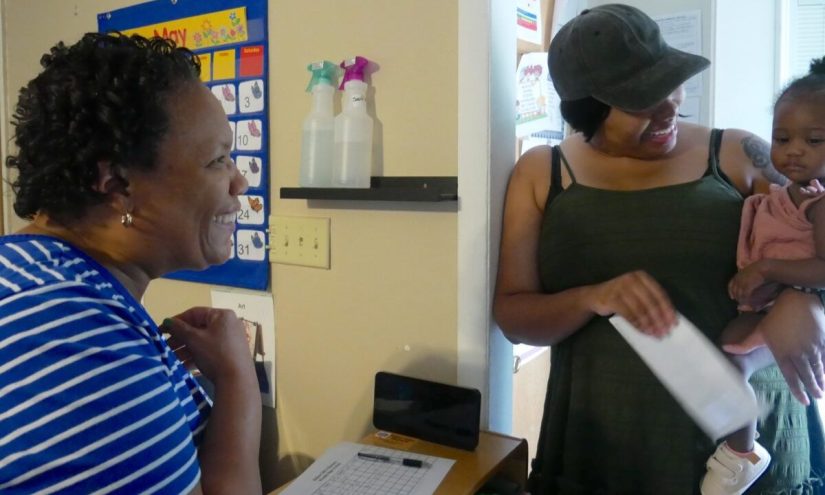
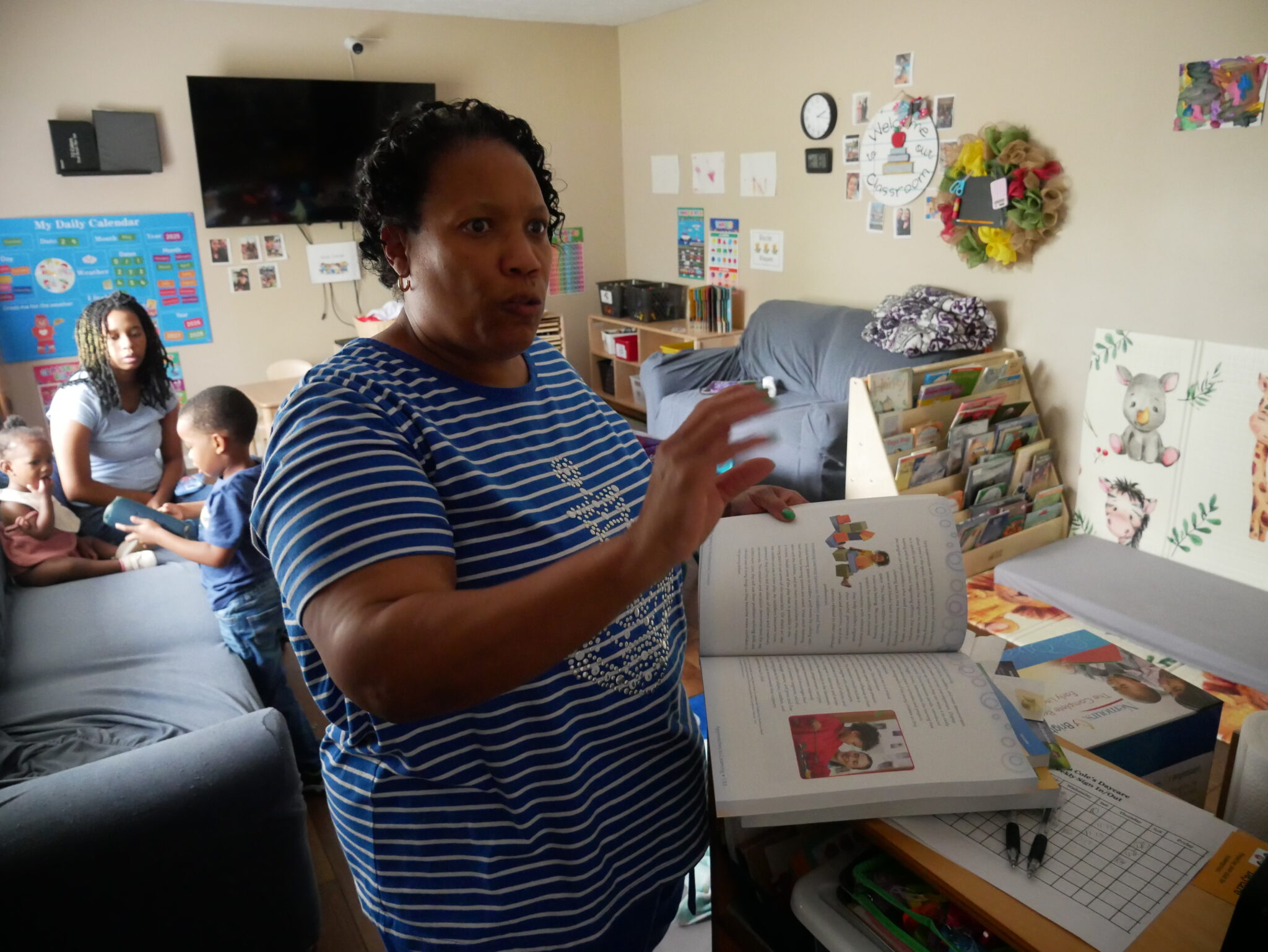
For Helen Cole, that assistance and funding was key to opening her family child care home in Taylortown in Moore County.
“I just feel like this wouldn’t have been possible without the support and the funds,” said Cole, who recently earned her four-star license to care for children from infancy to 12 years old at Helen Cole’s Day Care.
She received more than $17,000 to start her program from the legislative pilot funding. She bought new outside equipment, furniture, dramatic play sets, age-appropriate toys and books, a new kitchen faucet, a state-approved curriculum, and a new laptop.
Cole heard about the potential grant funding for start-up costs from the state licensing consultant. She was also connected with Hoffler.
Students at Helen Cole’s program work on their counting skills. (Liz Bell/EducationNC)
Cole was excited to open after hearing about a local demand for second-shift care. After retiring as a substitute teacher in her local school district, she needed more income and was eager to fill a community need.
But after her initial meeting with a licensing consultant, she received a long checklist of everything she had to do. She said she felt overwhelmed.
“It was just so much information,” she said. “There are things on the website, but how do you adjust it for your day care?”
Plus, Cole had experience helping in her sister’s child care program, but she did not know the ins and outs of operating a small business. Even with a background in accounting, she knew the role would be challenging. So she reached out to Hoffler for an in-person meeting.
“It was like a prayer answered,” Cole said. “She broke it down for me.”
Hoffler helped Cole navigate the tough decisions that come with operating a business from your home, such as how much living space she was willing to sacrifice and what renovations were needed. And she helped Cole create a budget to apply for grant funding through the legislative pilot. She gave her ideas on high-quality and age-appropriate materials.
She also connected Cole with a mentor, helped her with business skills, and connected her with other resources through the Smart Start partnership.
Hoffler has helped her advertise her program and hold on through the ups and downs of enrollment, Cole said. Because she needed to hire another teacher, her niece Danielle Dixon, Cole said she is breaking even but has not started making a profit or been able to pay herself. She said she has been advised that it can take nine months to a year.
She said low subsidy rates and parents’ inability to afford her private rates have also been financially challenging. She serves one student whose parents are both working, making too much to qualify for a subsidy, but cannot afford her private rate of $200 per week. She only charges that family $85 per week.
Danielle Dixon, a teacher at Helen Cole’s Day Care, has worked in child care for 11 years. (Liz Bell/EducationNC)
Dixon, who has been working in child care professionally for 11 years but informally since she was 16 years old, has both of her children enrolled at the program. Dixon said her grandmother and mother, as well as three of her aunts, have worked in child care. She decided to partner with her aunt, Cole, to return to working with young children in a creative, exploratory environment after working in public schools.
Helen Cole’s Day Care opened in December in the home she was raised in, and where her mother used to take care of children whose parents were at risk of losing custody.
“All of our lives, we’ve had other children here,” Cole said.
Both Dixon and Hoffler have helped Cole strengthen her understanding and practice of early childhood care and education. Her program’s philosophy is based on relationships, exploration, and emotional and social development. Then academic foundations are added.
“It’s that give and take between you and this child,” Hoffler said. “They’re going to learn more from you if you are actively engaging with them and talking to them throughout the day, than they’ll ever learn if you give them a coloring sheet and try to teach them how to stay in the lines. There are no lines in early childhood.”
“That was a wow moment,” Cole said. “I understand that we have to have a curriculum, and we do, but the biggest thing is for them to develop on their own.”
It is this one-on-one attention and intimate environment that make family child care appeal to so many parents. Rural children, low-income children, and children of color are more likely to access home-based care than center-based, according to national advocacy and research group Home Grown. It is often more affordable, more convenient and flexible for nontraditional working hours, and more culturally and linguistically relevant to diverse families.
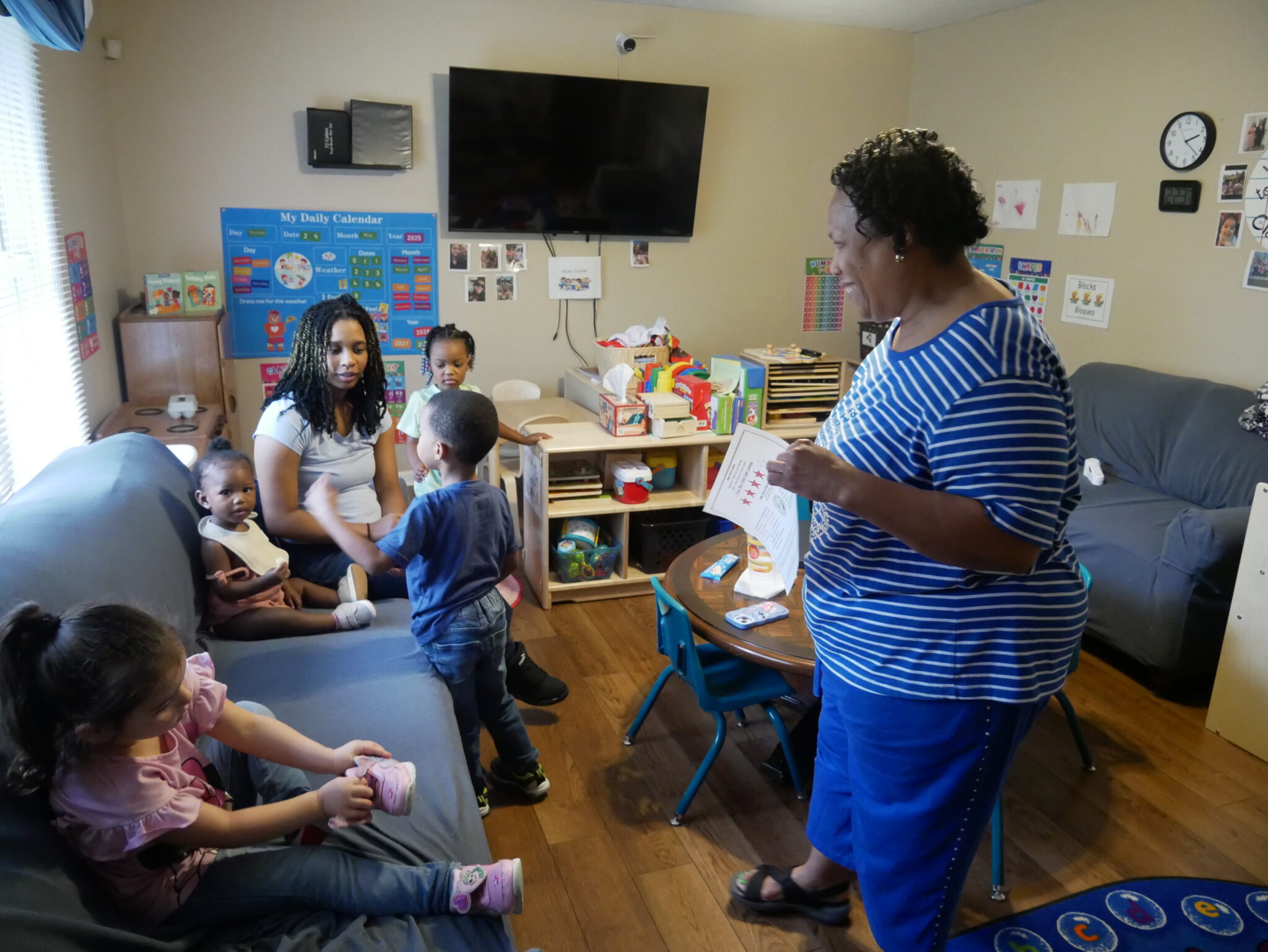
Inside Helen Cole’s child care program. (Liz Bell/EducationNC)
Kailyn Green, whose daughter has been at the program for a month, said she toured other programs with open spots but they “didn’t feel right.” Then she visited Cole’s program and did a walk-through.
“I was like, ‘I’m sold. I’m good,’” Green said.
A licensed clinical social worker, Green said she has been able to return to work without worrying. She receives texts and videos of her daughter’s days and has been impressed by how much she has progressed, especially with eating more consistently.
“I love that she truly gets the attention,” she said. “She’s been able to form a relationship with her. It’s been great.”
Hoffler said she was excited to hear about Cole’s recent accomplishment: earning four out of five stars on the state’s quality rating scale.
“I’m just so proud of her,” she said. “She handled it like a pro.”
What’s next?
There are multiple efforts to build different kinds of supports for family child care. DCDEE said the project with SWCDC taught them that “Family Child Care Homes (FCCHs) would benefit from additional funding, continued community engagement, and professional development to improve quality,” according to a DCDEE spokesperson.
“FCCHs are a vital part of our state’s early care and learning network, and DCDEE is committed to continuing our support for these small businesses,” the spokesperson said in an emailed statement.
Though the contract for the statewide project ends on June 30, the spokesperson said the division will continue using CCDF funds and federal funds from the Preschool Development Grant (PDG) Birth through Five to provide business technical assistance and other services to family child care programs.
The PDG contract is in process but will be awarded to Acelero Charitable Foundation “in collaboration with multiple agencies that support family child care.” It will focus on increasing quality and family engagement, the spokesperson said.
DCDEE is also contracting with Frank Porter Graham Child Development Institute at UNC-Chapel Hill to provide evaluation and coordination of the PDG Elevate FCCH project, which will provide extra subsidy funding to family child care programs to increase wages for providers.
The House and Senate budget proposals direct DCDEE to use CCDF funds to expand family child care capacity. The House would allocate $7 million over two years for a pilot in three localities, and the Senate would allocate $6 million for a pilot in Alamance, Harnett, and Johnston counties. The funding would go to councils of governments in each of those counties to select a third-party vendor. Both proposals have specific requirements for the chosen vendor, including experience in establishing family child care homes in at least three other states and rural areas, experience in operating a substitute pool in another state, and technology that connects families with providers and includes billing and coaching functions.
Meanwhile, Jones-Ruff said SWCDC will continue supporting family child care by retaining a statewide team with organizational funding — and will seek outside funding to continue other aspects of the project. Some of the family child care consultants will continue their work through local CCR&R or Smart Start funding.
“I can see just the monumental amount of work and the progress that has happened in such a short amount of time,” she said. “We’re not going away.”
This story was originally published by CalMatters. Sign up for their newsletters.
California’s schools and colleges receive billions in federal funding each year — money that President Donald Trump is threatening to terminate over the actions of one student. AB Hernandez, a junior from Jurupa Valley High School, is transgender, and on May 31 she won first- and second-place medals at the state track and field championship.
“A Biological Male competed in California Girls State Finals, WINNING BIG, despite the fact that they were warned by me not to do so,” Trump said in a social media post last week. “As Governor Gavin Newscum (sic) fully understands, large scale fines will be imposed!!!”
Despite this post and a similar threat a few days earlier to withhold “large-scale” federal funding from California, Trump lacks the authority to change the state’s policy toward transgender athletes without an act of Congress or a decision by the U.S. Supreme Court. And recent court cases suggest that Trump also may have a hard time withholding money from California.
California state law explicitly allows transgender students in its K-12 school districts to compete on the team that matches their preferred gender, but the Trump administration has issued multiple directives that restrict access to girls’ sports, including a letter last week from the U.S. Department of Justice telling high schools to change their policies.
On Monday, California Attorney General Rob Bonta sued the Justice Department over its letter, saying it had “no right to make such a demand.”
“Let’s be clear: sending a letter does not change the law,” said State Superintendent of Public Instruction Tony Thurmond in a statement to school districts. “The DOJ’s letter to school districts does not announce any new federal law, and state law on this issue has remained unchanged since 2013.” On Monday, Thurmond sent his own letter to the Trump administration, refuting its legal argument.
California receives over $2 billion each year for its low-income Title I schools, as well as over $1 billion for special education. At the college level, students receive billions in federal financial aid and federal loans. Even if Trump lacks the legal authority to change state law, he could still try to withhold funding from California, just like he tried with Maine. In February, Trump asked Maine Gov. Janet Mills if her state was going to comply with a presidential executive order — which is not a law — that directed schools to bar transgender girls from certain sports. Mills said she’d comply with “state and federal laws,” effectively rebuking the president.
The Trump administration has since tried to withhold funding from Maine, but legal challenges have prevented it.
The NCAA vs. California state law
Trump made banning transgender youth athletes a centerpiece of his 2024 presidential campaign, and it’s remained a focal point for his administration this year. Nationally, Americans increasingly support restrictions on transgender athletes, according to surveys from the Pew Research Center. Gov. Gavin Newsom, who last year signed legislation supporting trans students, spoke out against transgender athletes in a podcast this March, saying it was “deeply unfair” to allow transgender girls to compete in girls’ sports.
Female athletes with higher levels of testosterone or with masculine characteristics have long faced scrutiny, biological testing and disqualification. Debates about who gets to participate in girls’ or women’s sports predate the Trump administration — and Newsom — and policies vary depending on the athletic institution.
In 2004, the International Olympic Committee officially allowed transgender athletes to compete in the sport that aligned with their gender identity, as long as the athlete had sex reassignment surgery, only to change that policy in 2015 and require hormone testing. In 2021, the committee changed the policy again, creating more inclusive guidelines but giving local athletic federations the power to create their own eligibility criteria.
Across California, youth leagues, private sports leagues and other independent athletic associations all have their own policies. Some allow transgender women and men to participate; some restrict who can compete. Some require “confirmation” of a participant’s gender, such as a government ID or statements from health care professionals, while other associations take the athletes at their word.
California’s colleges and universities are not allowed to discriminate against transgender students but state law doesn’t provide any guidance beyond that. After the presidential executive order in February, the National Collegiate Athletic Association (NCAA), which independently regulates college sports, changed its rules, prohibiting transgender women from competing and putting colleges in a bind. Roughly 60 California universities are part of the NCAA, including almost all of the UC and many Cal State campuses. Community colleges, which represent the bulk of the state’s undergraduates, are not part of the NCAA.
“There’s a strong argument (the NCAA rules) could violate state law and federal equal protection,” said Elana Redfield, the federal policy director at UCLA’s Williams Institute, which studies LGBTQ+ issues.
Amy Bentley-Smith, a spokesperson for the California State University system, declined to comment about how the NCAA policy conflicts with state and federal regulations. She said the Cal State campuses abide by the NCAA rules — preventing transgender athletes from competing — while still following state and federal non-discrimination laws regarding trans students.
Stett Holbrook, a spokesperson for the University of California system, said the UC does not have a system-wide policy for transgender athletes. He did not respond to questions about whether the campuses abide by NCAA rules.
Unlike the NCAA, the California Community College Athletic Association allows transgender athletes to compete. A spokesperson for the association, Mike Robles, said he’s aware of the NCAA rules and the Trump administration’s priorities but he did not say whether the association will modify its own policy.
The U.S. Constitution is silent on trans students
In February, just days after the president’s inauguration and the executive order regarding transgender athletes, the U.S. Department of Education launched an investigation into San Jose State after a women’s volleyball player outed her teammate as transgender. The education department has yet to provide an update on that investigation.
With the Trump administration’s focus now on CA K-12 school districts, the legal debate has intensified. In its letter to the state’s public schools last week, Assistant U.S. Attorney General Harmeet Dhillon said allowing transgender girls to compete in girls’ sports is “in violation” of the Equal Protection Clause of the U.S. Constitution and asked schools to change their policies.
But the U.S. Constitution doesn’t say anything about transgender athletes, at least not explicitly.
Instead, Dhillon is offering an interpretation of the Constitution, “which doesn’t carry the full force of law,” Redfield said. The laws that do govern transgender athletes, such Title IX, aren’t clear about what schools should do, and the U.S. Supreme Court — the entity with the power to interpret federal law and the Constitution — has yet to decide on the matter.
That said, many lower level judges have already weighed in on whether the Constitution or Title IX law protects transgender students or athletes.“The preponderance of cases are in favor of trans plaintiffs,” Redfield said. “The federal government is contradicting some pretty strong important precedent when they’re making these statements.”
After Trump’s comments about AB Hernandez, the nonprofit entity that regulates high school sports, the California Interscholastic Federation, changed its policy, slightly. For the state’s track and field championship, the federation said it would implement a new process, whereby AB Hernandez would share her award with any “biological female” that she beat. All “biological female” athletes below Hernandez would also move up in ranking.
On May 31, Hernandez shared the first-place podium twice and the second-place podium once, each time with her competitors smiling supportively, the San Francisco Chronicle reported.
A spokesperson for the governor, Izzy Gardon, said that approach is a “reasonable, respectful way to navigate a complex issue without compromising competitive fairness.”
Restrictive immigration policy in Australia has boosted numbers coming to UK.
75% of the market is searching for undergraduate options with affordable fees.
Medium-of-instruction (MOI) English language waivers are common, and often linked to TNE college partnerships.
Nepal has been a key recruitment market for both Australia and the UK for many years – but as the number of students applying to the UK rises, many more universities are starting to explore the market.
In the year ending March 2024, according to ONS data, 9,003 Nepalese students were issued study visas for the UK, with the number undoubtedly larger for the intakes since.
According to Enroly, the number of CASs issued for the January 2025 intake was up 200% while CAS issuance for its entire UK portfolio was only up 23%. Overall, the total market share of CAS issuance for Nepal grew from 3% to 7% in 2024.
This impressive growth has come at a time when some British universities have seen falling demand from other international markets, and the government has announced a student visa clamp-down on Bangladesh, Pakistan, Nigeria and Sri Lanka – linked to asylum claims.
So why are Nepalese students choosing the UK and will it last?
Over 60,000 Nepalese students previously chose to study in Australia each year, making it the third biggest source market for the country.
Recent visa restrictions imposed by the Albanese government, however, are now forcing many students to seek an alternative destination.
While the Australian visa process requires detailed evidence on income, the UK system allows students to show a mature bank account, often supplemented by private student loans.
Enroly estimates that 78% of Nepalese students are now funded through education loans, or a combination of an education loan and university discount.
Affordable fees and scholarships
Despite economic growth, projected to be 4.61% this fiscal year, Nepal is still a price-senstitive market.
As a consequence, there are 15-20 British universities from the ‘Million Plus’ and ‘Alliance’ groups attracting a large market share in the country.
Many of these institutions are the same UK universities that are diversifying income through franchise activity, brand campuses and TNE articulations.
Offering average annual fees of between £11,500 and £13,500 enables them to attract a large number of predominently undergraduate students to supplement their numbers.
According to HESA statistics, some of the biggest recruiters are BPP, University of Sunderland and Coventry University.
The latter have validation partnerships with local providers such as ISMT College and Softwarica College of IT and eCommerce, respectively, creating a pipeline of students that can top-up with a final year in the UK or progress easily on to masters degree.
The UK universities recruiting the most students from Nepal:
University of West Scotland, London
BPP
Coventry University
University of Sunderland
University of Roehampton
York St John University
Ravensbourne University London
University of East London (UEL)
University of West London
University of Wolverhampton
University of Central Birmingham (UCB)
University of Hertfordshire
University of Greenwich
Ulster University
The trend for universities to accept Nepalese students directly has significantly reduced the demand for foundation programmes in the region.
Accpetance of MOI letters as proof of English
Another key factor is the widespread acceptance of MOI letters as a waiver of additional English language tests.
These letters are used as proof that the qualification gained by a prosepctive student was both taught and assessed in English to a level acdepted by a university as having met English language requirements. The UK government is currently consulting with the sector on the way universities make English language self-assessment decisions for admissions purposes.
Agents and immigration consultants use English language waivers as one of the areas to save prospective students money and support partner universities.
According to Enroly, 82% of course deposits paid by Nepalese students for the UK, come from applications supported by an education agent.
The PIE News visited Nepal to better understand the challenges education agents face in a competitive market. Read the full report here.
Jonathan Bii, governor of Uasin Gishu, one of Kenya’s prominent counties, is now facing legal scrutiny over his alleged involvement in the controversial Uasin Gishu Finland/Canada Scholarship Program.
Bii, a member of the United Democratic Alliance, an affiliate of Kenya’s ruling coalition, is accused of supporting the scholarship scheme and requesting additional payments from students.
As per media reports, he later distanced himself from the initiative amid allegations of misappropriation of over KSh 1.1 billion meant for scholarships.
Individual accounts by parents of the students revealed that payments ranged from KSh 650,000 to over KSh 1.2 million (approximately USD$5,000–$9,230), with some families reportedly paying up to KSh 3 million (around USD$23,100).
These amounts covered expenses such as tuition, visa and insurance fees, and accommodation deposits.
Kenyan news outlet Daily Nationreported that a key witness, Mitchelle Jeptanui, testified before senior principal magistrate Peter Ndege that in June 2023, Bii held a meeting with parents to assure them that the overseas trip would receive approval shortly.
The parents, already anxious as their children had received admission letters from universities in Canada and Finland, were allegedly asked to pay an additional KSh 200,000 to KSh 300,000 (approximately USD$1,540 to $2,310) for accommodation fees.
However, despite the payments, none of the students were able to travel abroad.
My son never travelled. I am still hoping either for a refund or support for him to go Benjamin Kibet, parent
When parents once again demanded answers, Bii allegedly shifted the blame to his predecessor, Jackson Mandago, who initiated the program.
However, testimony from seven out of eight witnesses last week confirmed they made their payments after Bii assumed office.
Benjamin Kibet, a parent of one of the affected student, told the court that he took out a loan of KSh 650,000 (around USD$5,000) to fund his son’s education at Stenberg College in Canada, after being introduced to the programme by Mandago and Bii.
“My son never travelled. I am still hoping either for a refund or support for him to go,” Kibet told reporters.
As the case unfolds, Mandago, along with former county officials Meshack Rono and Joshua Lelei, is expected to face criminal charges related to the alleged misappropriation of the scholarship funds.
Over the past two years, the scandal has shaken Kenya’s growing middle class, who have aspirations for overseas education.
A 2020 survey had found that more than half of Kenyan students preferred studying at international universities over local institutions.
Moreover, Kenya has been identified as a “high-growth potential” source market for international education.
It ranked as the leading East African market for US universities, with enrolments rising by 45% in 2022 compared to 2019.
Canadian institutions, a key draw for many of the students who ultimately became entangled in the scholarship scandal, also recorded a 12% rise in Kenyan student enrolments during the same period.
Kenyan parents have taken to the streets across Uasin Gishu County over the past few years, demanding answers, as the scandal has left over 300 students stranded at home.
Many of them have reportedly been expelled from Finnish universities or deported, as previously reported by The PIE News.
Prestigious EdTech Breakthrough award highlights Top Hat’s leadership in delivering flexible, AI-powered courseware to support faculty and students.
TORONTO – June 6, 2025 – Top Hat, the leader in student engagement solutions for higher education, has been named the 2025 Courseware Solution Provider of the Year. The annual EdTech Breakthrough Awards honor organizations that push the boundaries of educational technology—benefiting students, educators, and institutions across North America and around the world. In a global field of over 2,700 nominations, Top Hat stood out for its efforts to empower faculty to create and deliver engaging, connected, and affordable learning experiences for students.
“Receiving this award is an honor and supports our belief that better student outcomes begin with the course itself,” said Maggie Leen, CEO of Top Hat. “We’re proud to support thousands of faculty with tools that make it easier to adopt proven teaching practices, and grateful to our team for the creativity and care they show everyday in making great learning experiences a reality for more students.”
Now in its seventh year, the EdTech Breakthrough Awards have become a benchmark for excellence in educational technology. The program celebrates the industry’s most visionary companies—those dreaming bigger, innovating further, and setting new standards for enhancing the practice of teaching and learning. Top Hat’s selection reflects its track record of building solutions that drive measurable academic outcomes and dramatic improvements in student engagement, inside and outside the classroom.
Top Hat’s courseware platform gives instructors unprecedented flexibility to tailor content to their teaching goals. The platform integrates interactive assessments, multimedia, and AI-powered tools that allow educators to instantly create in-class questions and reflection prompts. This makes it easier than ever for instructors to apply evidence-based practices like active learning and low-stakes assessment. Students also benefit from AI-powered on-demand study support and unlimited practice questions rooted directly in course content.
Top Hat has a long-standing commitment to helping faculty adopt, adapt, or create modern, interactive course materials that improve engagement and comprehension while advancing institutional goals around student affordability and equity. By supporting the use of low- or no-cost learning materials—including customizable OpenStax and OER titles enriched with interactive features—Top Hat empowers educators to design meaningful learning experiences that reflect their unique pedagogical goals while reducing costs for students.
About Top Hat
As the leader in student engagement solutions for higher education, Top Hat enables educators to employ evidence-based teaching practices through interactive content, tools, and activities in in-person, online, and hybrid classroom environments. Thousands of faculty at 900 leading North American colleges and universities use Top Hat to create meaningful, engaging and accessible learning experiences for students before, during, and after class. To learn more, please visit tophat.com.
LARAMIE—The Lab School is a family affair for Corelle Lotzer.
Not only did Lotzer enroll her daughter and son in the school, but she taught math here for over a decade. Her daughter, who thrived years ago as a student in the K-8 atmosphere, returned as an adult to work as a paraprofessional — just down the hall from her mom.
Because Lotzer took a year off to take care of an aging aunt, she lost tenure. So when the closure of the 138-year-old school became official this winter, she did not receive a contract with the district to continue working at one of its other schools.
Lotzer, who was raised in Laramie, instead accepted a position at Cheyenne East High School. In early May, she was still trying to figure out the logistics involved with working in Cheyenne while her other, younger kids continue their education in Laramie.
“It’s been tough,” Lotzer said in a second-story room in the Lab School. The shrieks and laughter of children at recess drifted in from an open window. “I would have rather stayed in Albany County.”
Lotzer is one of 11 Lab School teachers without tenure, Principal Brooke Fergon said. “That’s probably been the most difficult challenge, that our tenured teachers have been placed in other schools throughout the district, and our teachers who do not have tenure … were not initially placed in positions.”
It’s not the only pain point involved in closing a school that predates the state of Wyoming itself. Many people fought to keep the Lab School open, and the past year has been a rollercoaster of emotions for school staff, students and their families as hopes have been raised and dashed, Fergon said. The school, which sits on the University of Wyoming campus, started as an educational learning site for college students studying to be teachers. It’s beloved for its experiential and outdoor-based approach to learning and emphasis on inclusivity.
Kindergarten students in Victoria Wiseman’s Lab School class raise their pencils to signify they have completed an exercise in May 2025. (Katie Klingsporn/WyoFile)
But the school’s future was thrown in doubt last summer as the university and Albany County School District 1 hit a stalemate over a lease agreement. School advocates pleaded to keep it open by some means and floated ideas that didn’t stick. The Lab School no longer served its former functions, university and district officials said, and issues from maintenance costs for the 75-year-old building to district-wide enrollment trends factored into closure talks.
The final Hail Mary came during the Wyoming Legislature. A bipartisan bill sponsored by Laramie Democrat Chris Rothfuss would have required UW and a coordinating district to operate a K-8 public lab school. The bill passed out of the Senate, but House lawmakers killed it in February, and that was pretty much that for the Lab School.
In the last year, Fergon said, “I think we’ve really been sitting in a place of uncertainty, just with all of the different avenues that could have kept the school going, and so that did feel kind of like a final door closing.”
And for her staff, she said, “even though we’re not happy to say goodbye to the school, and we didn’t want to see the school close, I think that having some certainty and a path forward … feels better than just sitting in limbo.”
With the school year ending Thursday, Lab School students will be saying goodbye to their classrooms and dispersing to other schools in the district. Some teachers will too, but others are starting new jobs or moving out of Laramie entirely. The school community spent the last couple of months bidding farewell, some with regret about how it ended.
Students enjoy warm weather during a May 2025 farewell celebration of the Lab School in Laramie. (Zach Agee/WyoFile)
“We love the school,” said Lindsey Rettler, a parent with two elementary students in Lab. Rettler was experiencing a mixture of emotions, she said in May. “Surprise, a little bit of shock, really, really sad, super disappointed and honestly, quite betrayed by those who are supposed to be leading people based on what’s best for the people.”
End of an era
The school was established in 1887 as the Preparatory School to serve secondary education students from counties without access to high school. In 1913, it transitioned to the Training Preparatory School, used as a learning laboratory by UW’s College of Education.
In 1999, the private school partnered with the Albany County School District to become a district public school. The Lab School then operated as a “school of choice,” meaning any district family could enter a lottery to enroll their kids.
College of Education students continued to train in its classrooms, but they also did so in classrooms across the district, state and beyond.
Historically, UW and the school district operated with a memorandum of understanding laying out terms of tenancy. Efforts to renew that MOU, however, failed to produce an updated agreement. Instead, the university announced last summer it was pursuing an extension only for the 2024-’25 school year, meaning the school would have to find a new home if it was to continue beyond that.
Margaret Hudson, a former principal at the Lab School, leads a school tour during a May 2025 farewell celebration of the school. (Zach Agee/WyoFile)
Among the major sticking points: whether the district or UW should pay for things like major maintenance in the aging building. UW also cited the fact that the school “no longer serves a significant role for teacher training in UW’s College of Education,” along with security challenges regarding having a school-district-operated facility located on university grounds; the Lab School’s incongruence with the state’s public funding model and the fact that the school district “has excess capacity in its existing facilities to accommodate current Lab School students.”
Concerned residents bemoaned the decision, and Albany County state lawmakers took notice. Sen. Rothfuss’ bill was the product of that concern. The bill brought together strange bedfellows, with co-sponsors ranging from Freedom Caucus-aligned lawmakers like Ocean Andrew to Laramie Democrat Karlee Provenza. Both serve in the Wyoming House of Representatives.
The issue raised questions about the state’s role in local education and what constitutes a situation so exceptional that lawmakers should meddle. Lab School supporters argued its unique role as a teaching laboratory and its century-plus of education history made it a place worth saving.
“This legislation is not about saving a school,” Rep. Andrew, R-Laramie, said on the House floor on Feb. 28. “It is about protecting a legacy and educating future generations of Wyoming teachers.”
Librarian Cathy Dodgson greets a former student during a Lab School celebration in May 2025. The student remembered spending many hours reading in the library. (Zach Agee/WyoFile)
True local control reflects the wishes of the people in the community, he continued, “and in this case, the overwhelming support for keeping the Lab School open has been ignored. The people of Wyoming, the parents and the students have spoken, and they have been met with indifference by those in power.”
But others said the state should not interfere in a matter of local concern.
“This really feels like we’re being asked to micromanage a local school,” said Rep. Art Washut, R-Casper. “I don’t think this is the proper role of the state legislature.”
The body ultimately killed the measure on a 24-32 vote.
Moving on
With that, school staff began the work of transition, making plans with its 145 students to help them figure out transfer schools and options, Fergon said.. The school counselor even brought in a “transition curriculum” to help students navigate and cope with the stress of such significant change.
There was also a staff of roughly 20 teachers along with employees like janitors and paraprofessionals. Many say they are sad to leave a school community that felt like family.
Some, like Fergon, are continuing to work in the district. She will be an assistant principal at another high school.
June 8, 2025, by Dean Hoke: Intercollegiate athletics occupy a powerful and unique place in American higher education—something unmatched in any other country. From the massive media contracts of Division I football to the community pride surrounding NAIA and NJCAA basketball, college sports are a defining feature of the American academic landscape. Unlike most nations, where elite athletic development happens in clubs or academies, the U.S. integrates competitive sports directly into its college campuses.
This model is more than tradition; it’s an engine of opportunity. For many high school students—especially those from underserved backgrounds—the chance to play college sports shapes where they apply, enroll, and succeed. According to the NCAA, 35% of high school athletes say the ability to participate in athletics is a key factor in their college decision [1]. It’s not just about scholarships; it’s about identity, community, and believing their talents matter.
At smaller colleges and two-year institutions, athletics often serves as a key enrollment driver and differentiator in a crowded marketplace. International students, too, are drawn to the American system for its academic-athletic fusion, contributing tuition revenue and global prestige. Undermining this model through sweeping changes to federal financial aid, without considering the downstream effects, risks more than athletic participation. It threatens a distinctively American approach to education, access, and aspiration.
A New Threshold with Big Impacts
Currently, students taking 12 credit hours per semester are considered full-time and eligible for the maximum Pell Grant, which stands at $7,395 for 2024-25 [2]. The proposed House budget raises this threshold to 15 credit hours per semester. For student-athletes, whose schedules are already packed with training, competition, and travel, this shift could be devastating.
NCAA academic standards require student-athletes to maintain full-time enrollment (typically 12 hours) and make satisfactory academic progress [3]. Adding another three credit hours per term may force many to choose between academic integrity, athletic eligibility, and physical well-being. In sports like basketball, where teams frequently travel for games, or in demanding STEM majors, completing 15 credit hours consistently can be a formidable challenge.
Financial Impact on Student-Athletes
Key Proposed Changes Affecting Student-Athletes:
Pell Grant Reductions: The proposed budget aims to cut the maximum Pell Grant by $1,685, reducing it to $5,710 for the 2026–27 academic year. Additionally, eligibility criteria would become more stringent, requiring students to enroll in at least 15 credit hours per semester to qualify for full-time awards. These changes could result in approximately 700,000 students losing Pell Grant eligibility [4].
Elimination of Subsidized Loans: The budget proposes eliminating subsidized federal student loans, which currently do not accrue interest while a student is in school. This change would force students to rely more on unsubsidized loans or private lending options, potentially increasing their debt burden [5].
Cuts to Work-Study and SEOG Programs: The Federal Work-Study program and Supplemental Educational Opportunity Grants (SEOG) are slated for significant reductions or elimination. These programs provide essential financial support to low-income students, and their removal could affect over 1.6 million students [6].
Institutional Risk-Sharing: A new provision would require colleges to repay a portion of defaulted student loans, introducing a financial penalty for institutions with high default rates. This could strain budgets, especially at smaller colleges with limited resources [7].
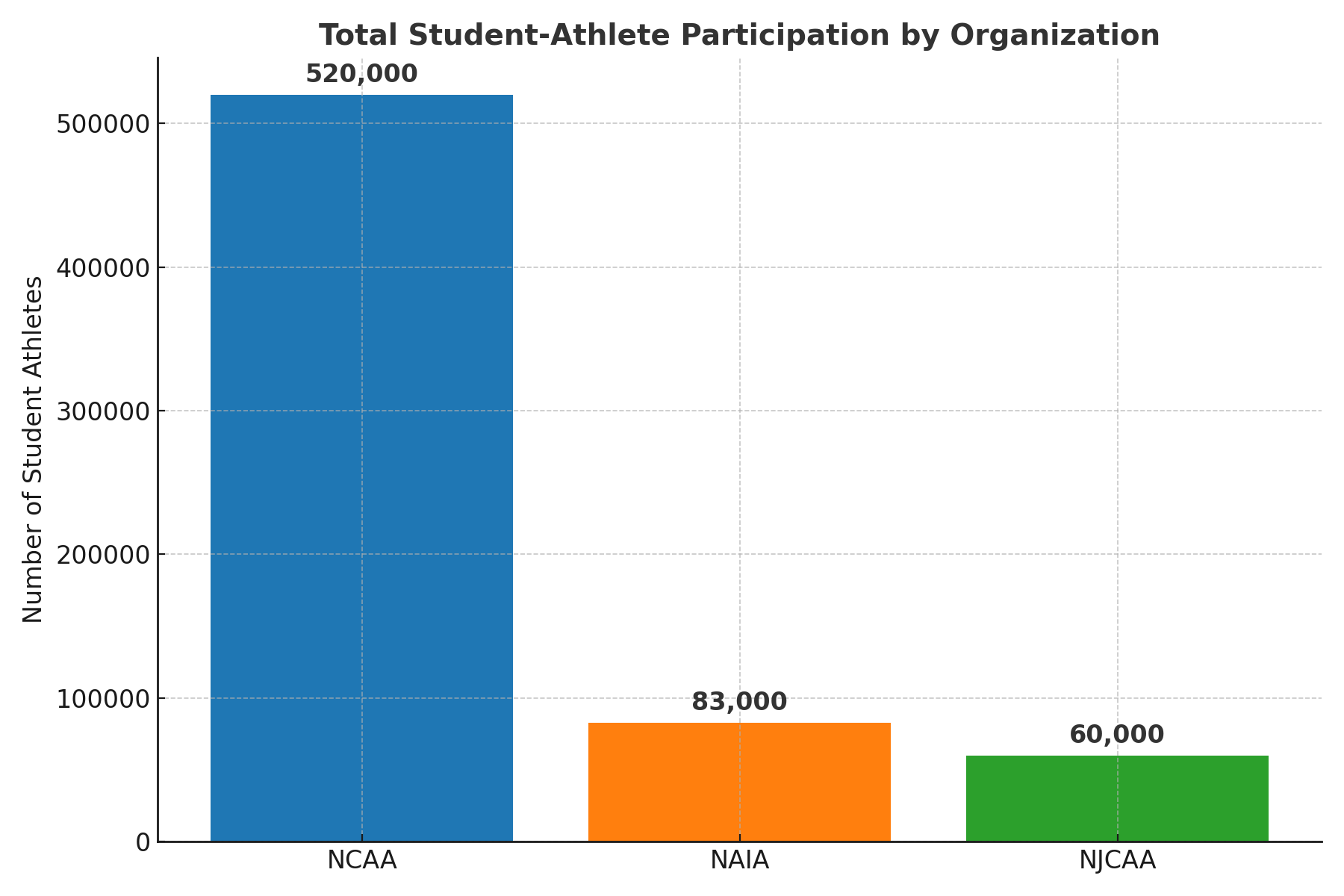
Figure 1: Total student-athletes by national athletic organization (NCAA, NAIA, NJCAA).
While Figure 1 highlights the total number of student-athletes in each organization, Figure 2 illustrates how deeply athletics is embedded in different types of institutions. NAIA colleges have the highest ratio, with student-athletes comprising 39% of undergraduate enrollment. Division III institutions follow at approximately 8.42%, and the NJCAA—serving mostly commuter and low-income students—relies on athletics for 8.58% of its total student base [8].
Even Division I, with its large student populations, includes a meaningful share (2.49%) of student-athletes. These proportions underscore how vital athletics are to institutional identity, especially in small colleges and two-year schools where athletes often make up a significant portion of campus life, retention strategy, and tuition revenue.
Figure 2: Percentage of student-athletes among total undergraduate enrollment by organization (NCAA Divisions I–III, NAIA, NJCAA).
The Pell Grant Profile: Who’s Affected
Pell Grants support students with the greatest financial need. According to a 2018 report, approximately 31.3% of Division I scholarship athletes receive Pell Grants. At individual institutions like Ohio State, the share is even higher: 47% of football players and over 50% of women’s basketball players. In the broader NCAA system, over 48% of athletes received some form of federal need-based aid in recent years [9].
There are approximately 665,000 student-athletes attending college. The NCAA reports that more than 520,000 student-athletes currently participate in championship-level intercollegiate athletics across Divisions I, II, and III [10]. The National Association of Intercollegiate Athletics (NAIA) oversees approximately 83,000 student-athletes [11], while the National Junior College Athletic Association (NJCAA) supports around 60,000 student-athletes at two-year colleges [12].
The NAIA and NJCAA systems, which serve many first-generation, low-income, and minority students, also have a high reliance on Pell Grant support. However, exact figures are less widely published.
The proposed redefinition of “full-time” means many of these students could lose up to $1,479 per year in aid, based on projections from policy experts [13]. For low-income students, this gap often determines whether they can afford to continue their education.
Fewer Credits, Fewer Dollars: Academic and Athletic Risks
Another major concern is how aid calculations based on “completed” credit hours will penalize students who drop a class mid-semester or fail a course. Even if a student-athlete enrolls in 15 credits, failing or withdrawing from a single 3-credit course could drop their award amount [14]. This adds pressure to persist in academically unsuitable courses, potentially hurting long-term academic outcomes.
Athletic departments, already burdened by compliance and recruitment pressures, may face added strain. Advisors will need to help students navigate increasingly complex eligibility and aid requirements, shifting focus from performance and development to credit-hour management.
Disproportionate Effects on Small Colleges and Non-Revenue Sports
The brunt of these changes will fall hardest on small, tuition-dependent institutions in the NCAA Division II, Division III, NAIA, and NJCAA. These colleges often use intercollegiate athletics as a strategic enrollment tool. At some NAIA schools, student-athletes comprise 40% to 60% of the undergraduate population [8].
Unlike large Division I schools that benefit from lucrative media contracts and booster networks, these institutions rely on a patchwork of tuition, modest athletic scholarships, and federal aid to keep programs running. A reduction in Pell eligibility could drive enrollment declines, lead to cuts in athletic offerings, and even force some colleges to close sports programs or entire campuses.
Already, schools like San Francisco State University, Cleveland State, and Mississippi College have recently announced program eliminations, citing budgetary constraints [15]. NJCAA institutions—the two-year colleges serving over 85,000 student-athletes—also face a precarious future under this proposed budget.
Economic Importance by Division
Division I: Athletics departments generated nearly $17.5 billion in total revenue in 2022, with $11.2 billion self-generated and $6.3 billion subsidized by institutional/government support or student fees [16]. Many Power Five schools are financially resilient, with revenue from TV contracts, merchandise, and ticket sales.
Division II: Median revenue for schools with football was around $6.9 million, but generated athletic revenue averaged only $528,000, leading to significant deficits subsidized by institutional funds [17].
Division III: Division III schools operate on leaner budgets, with no athletic scholarships and total athletics budgets often under $3 million per school. These programs are typically funded like other academic departments [18].
NAIA and NJCAA: These schools rely heavily on student-athlete enrollment to sustain their institutions. Athletics are not profit centers but recruitment and retention tools. Without Pell Grants, many of these athletes cannot afford to enroll [11][12].
Figure 3: Estimated number of NAIA, Division III, and NJCAA programs by state.
Unintended Tradeoffs: Equity and Resource Redistribution
Attempting to offset lost federal aid by reallocating institutional grants could result in aid being shifted away from non-athletes. This risks eroding equity goals, as well as provoking internal tension on campuses where athletes are perceived to receive preferential treatment.
Without new revenue sources, institutions may also raise tuition or increase tuition discounting, potentially compromising their financial stability. In essence, colleges may be forced to choose who gets to stay in school.
The High-Stakes Gamble for Student-Athletes
Figure 4: Estimated impact of Pell Grant changes on student-athletes, including projected dropouts and loan default rates.
For many student-athletes, especially those from low-income backgrounds, the Pell Grant is not just helpful—it’s essential. It makes the dream of attending college, competing in athletics, and earning a degree financially feasible. If the proposed changes to Pell eligibility become law, an estimated 50,000 student-athletes could be forced to drop out, unable to meet the new credit-hour requirements or fill the funding gap [19]. Those who remain may have no choice but to take on additional loans, risking long-term debt for a degree they may never complete. The reality is sobering: Pell recipients already face long-term student loan default rates as high as 27%, and for those who drop out, that figure climbs above 40% [20]. Stripping away vital support will almost certainly drive those numbers higher. The consequences won’t stop with individual students. Colleges—particularly smaller, tuition-dependent institutions where athletes make up a significant share of enrollment—stand to lose not just revenue, but the very programs and communities that give purpose to their campuses.
Colleges, athletic associations, policymakers, and communities must work together to safeguard opportunity. Student-athletes should never be forced to choose between academic success and financial survival. Preserving access to both education and athletics isn’t just about individual futures—it’s about upholding a uniquely American pathway to achievement and equity.
Dean Hoke is Managing Partner of Edu Alliance Group, a higher education consultancy. He formerly served as President/CEO of the American Association of University Administrators (AAUA). With decades of experience in higher education leadership, consulting, and institutional strategy, he brings a wealth of knowledge on small colleges’ challenges and opportunities. Dean is the Executive Producer and co-host for the podcast series Small College America.
Congressional Budget Office. (2025). Reconciliation Recommendations of the House Committee on Education and the Workforce. Retrieved from https://www.cbo.gov/publication/61412
NJCAA, NAIA, and NCAA. (2023). Student-Athlete Participation Reports.