Category: News

  • Immigration policies in focus as Mark Carney sworn in as Canadian PM

    Immigration policies in focus as Mark Carney sworn in as Canadian PM

    Succeeding Justin Trudeau as Canada’s 24th Prime Minister, Carney’s swearing-in ceremony was conducted by governor general Mary Simon at Rideau Hall in Ottawa.

    Carney’s appointment as Canada’s leader comes at a time when the country is navigating through an increasingly tumultuous relationship with its closest neighbour and ally, the United States.

    Canada’s ties with the US have worsened after President Donald Trump imposed steep tariffs on Canadian goods and floated the idea of integrating Canada into the US, sparking strong backlash.

    Considered a political newcomer, who played significant roles as the governor of the Bank of Canada and the Bank of England between 2008 to 2020, Carney is known for having a tough stance on immigration. 

    Calling Canada’s immigration policy “failures of executions”, Carney stated that Canada has taken in more people than its economy has been able to handle. 

    “I think what happened in the last few years is we didn’t live up to our values on immigration,” he said at a Cardus event – a Christian non-partisan think tank – in November last year, according to Canadian media reports.

    “We had much higher levels of foreign workers, students and new Canadians coming in than we could absorb, that we have housing for, that we have health care for, that we have social services for, that we have opportunities for. And so we’re letting down the people that we let in, quite frankly.”

    Carney’s statement suggests that he will uphold the Canadian federal government’s plan to reduce immigration targets over the next three years.

    Recently, the federal government announced a shift in its immigration strategy, cutting the number of newcomers by 21% – from approximately 500,000 in 2024 to 395,000 in 2025 and 380,000 in 2026.

    In its race to reduce temporary residency numbers and overall inflow of immigrants, international students in Canada have faced the brunt of policy changes in the country.

    Canada has imposed more caps on study permits, eliminated fast-track study permit processing, increased PGWP eligibility and English proficiency requirements, in an effort to “align its immigration planning with capacity”.  

    Over the past year, policy restrictions have already had a significant impact in Canada, with the total number of study permits processed by the IRCC expected to be 39% lower than in 2023.

    A former international student himself, Carney is expected to continue with restrictive policies on the cohort, as he previously blamed Canadian provinces for “underfunding higher education”, which pushed institutions to rely on international students. 

    “Do we value higher education in this country or not? Well, if we value higher education, maybe we should start funding our universities,” stated Carney. 

    “On the foreign student side, it’s more on provincial policy, on squeezing universities, in a sense.”

    Daljit Nirman, an immigration lawyer based in Ottawa and founder, Nirman’s Law, believes aggressive student recruitment has contributed to housing shortages, an oversaturated job market, and increased strain on health care, making effective newcomer integration in Canada more difficult.

    “Given Carney’s stance and these recent policy changes, it is likely that Canada will continue implementing stricter controls on international student admissions during his tenure,” Nirman told The PIE News.

    “This measured approach aims to preserve the benefits of international education while ensuring that Canada’s infrastructure can effectively support those who choose to study and settle in the country.”

    According to Priyanka Roy, senior recruitment advisor at York University, while Carney’s stance on immigration may appear stricter, it will ultimately result in a more “balanced approach.”

    “While it may seem like a tougher stance on immigration, we believe that Prime Minister Carney’s stance is to create a balanced approach to immigration, ensuring that international student enrolment aligns with Canada’s economic capacity and does not place undue pressure on local infrastructure,” Roy told The PIE News.

    “York is proactively adapting by offering sustainable solutions, such as a four-year housing guarantee, on-campus job opportunities, and co-op programs; provisions that help our international students integrate into Canadian life while maintaining a balanced and healthy relationship with the local community.”

    Prime Minister Carney’s leadership presents a valuable opportunity to rebuild stronger ties between India and Canada, fostering an environment of trust and collaboration
    Priyanka Roy, York University

    The former banker, who won the Liberal Party race by 86% of the votes, also acknowledged immigration’s role in contributing to Canada’s economic future. 

    Emphasising the need for productivity and a growing labour force, Carney has previously highlighted that Canada’s growing labour force is “going to largely come through new young Canadians”.

    With immigration poised to be a key issue, rebuilding ties with India – one of Canada’s largest sources of migrants – will be crucial for the prime minister-designate.

    Having already expressed a willingness to mend relations following a major diplomatic crisis, Carney’s efforts to indulge in discussions with India could spell good news for Indian students eyeing Canada as a study destination.

    “Prime Minister Carney’s leadership presents a valuable opportunity to rebuild stronger ties between India and Canada, fostering an environment of trust and collaboration,” stated Roy.

    “As diplomatic relations improve, we are confident that more Indian students will continue to view Canada as an attractive destination for higher education and realign their preference for higher education in Canada.”

    Source link

  • PGWP eligibility expanded for college degree students

    PGWP eligibility expanded for college degree students

    Canada’s college sector has welcomed a recent policy change from the IRCC stating that graduates of college degree programs will now join university students in being exempted from PGWP field of study requirements announced in October 2024.  

    At the time, the IRCC updated the eligibility criteria for students applying for a post-graduation work permit, allowing only college graduates from certain fields of study to apply for a PGWP, thus putting the college sector at a severe disadvantage.  

    The most recent revision has been hailed as a rare piece of good news for Canadian colleges, which stakeholders warned were at risk of being “decimated” by the IRCC’s eligibility criteria.  

    Conestoga College senior vice-president Gary Hallam said the decision was an “important step forward” for the sector, acknowledging “the excellence of our academic programming and the essential role colleges play in ensuring graduates have the skills and knowledge needed for success in today’s workforce”.

    “We are particularly pleased our international students will now benefit from the breadth of our programming,” added Hallam, highlighting Conestoga’s 25 degree programs offering a blend of theory and hands-on practical learning.

    The change applies to students who applied for a study permit after November 1, 2024, to pursue a college bachelor’s, master’s or doctoral degree program.  

    Coupled with other restrictions, the field of study requirements were already having a dramatic impact on Canadian institutions, with new international college enrolments seeing a 60% decline in 2024, triggering a stream of course closures and layoffs felt hardest in Ontario.  

    The IRCC’s decision… acknowledges the essential role colleges play in ensuring graduates have the skills and knowledge needed for success in today’s workforce

    Gary Hallam, Conestoga College

    The English and French language requirements announced last year remain in place for all PGWP applicants, and non-degree students will still have to meet the field of study requirements intended to foster greater alignment between education and labour-market needs.  

    Earlier this year, the IRCC added education as an eligible field of study reflecting labour market shortages across the regions in areas such as early childhood education, teaching assistance and childcare provision.  

    Despite some confusion regarding the wording of the IRCC’s guidance, the Canadian Bureau for International Education (CBIE) confirmed the change, and that the department was working to update its website.  

    Since January 2024, the IRCC has stepped up scrutiny of international student recruitment at Canadian institutions, capping international student numbers with the aim of reducing temporary residents from 6.5% of Canada’s total population to 5% by the end of 2026.

    Source link

  • DOGE Education Cuts Hit Students with Disabilities, Literacy Research – The 74

    DOGE Education Cuts Hit Students with Disabilities, Literacy Research – The 74


    Get stories like this delivered straight to your inbox. Sign up for The 74 Newsletter

    When teens and young adults with disabilities in California’s Poway Unified School District heard about a new opportunity to get extra help planning for life after high school, nearly every eligible student signed up.

    The program, known as Charting My Path for Future Success, aimed to fill a major gap in education research about what kinds of support give students nearing graduation the best shot at living independently, finding work, or continuing their studies.

    Students with disabilities finish college at much lower rates than their non-disabled peers, and often struggle to tap into state employment programs for adults with disabilities, said Stacey McCrath-Smith, a director of special education at Poway Unified, which had 135 students participating in the program. So the extra help, which included learning how to track goals on a tool designed for high schoolers with disabilities, was much needed.

    Charting My Path launched earlier this school year in Poway Unified and 12 other school districts. The salaries of 61 school staff nationwide, and the training they received to work with nearly 1,100 high schoolers with disabilities for a year and a half, was paid for by the U.S. Department of Education.

    Jessie Damroth’s 17-year-old son Logan, who has autism, attention deficit hyperactivity disorder, and other medical needs, had attended classes and met with his mentor through the program at Newton Public Schools in Massachusetts for a month. For the first time, he was talking excitedly about career options in science and what he might study at college.

    “He was starting to talk about what his path would look like,” Damroth said. “It was exciting to hear him get really excited about these opportunities. … He needed that extra support to really reinforce that he could do this.”

    Then the Trump administration pulled the plug.

    Charting My Path was among more than 200 Education Department contracts and grants terminated over the last two weeks by the Trump administration’s U.S. DOGE Service. DOGE has slashed spending it deemed to be wasteful, fraudulent, or in service of diversity, equity, inclusion, and accessibility goals that President Donald Trump has sought to ban. But in several instances, the decision to cancel contracts affected more than researchers analyzing data in their offices — it affected students.

    Many projects, like Charting My Path, involved training teachers in new methods, testing learning materials in actual classrooms, and helping school systems use data more effectively.

    “Students were going to learn really how to set goals and track progress themselves, rather than having it be done for them,” McCrath-Smith said. “That is the skill that they will need post-high school when there’s not a teacher around.”

    All of that work was abruptly halted — in some cases with nearly finished results that now cannot be distributed.

    Every administration is entitled to set its own priorities, and contracts can be canceled or changed, said Steven Fleischman, an education consultant who for many years ran one of the regional research programs that was terminated. He compared it to a homeowner deciding they no longer want a deck as part of their remodel.

    But the current approach reminds him more of construction projects started and then abandoned during the Great Recession, in some cases leaving giant holes that sat for years.

    “You can walk around and say, ‘Oh, that was a building we never finished because the funds got cut off,’” he said.

    DOGE drives cuts to education research contracts, grants

    The Education Department has been a prime target of DOGE, the chaotic cost-cutting initiative led by billionaire Elon Musk, now a senior adviser to Trump.

    So far, DOGE has halted 89 education projects, many of which were under the purview of the Institute of Education Sciences, the ostensibly independent research arm of the Education Department. The administration said those cuts, which included multi-year contracts, totaled $881 million. In recent years, the federal government has spent just over $800 million on the entire IES budget.

    DOGE has also shut down 10 regional labs that conduct research for states and local schools and shuttered four equity assistance centers that help with teacher training. The Trump administration also cut off funding for nearly 100 teacher training grants and 18 grants for centers that often work to improve instruction for struggling students.

    The total savings is up for debate. The Trump administration said the terminated Education Department contracts and grants were worth $2 billion. But some were near completion with most of the money already spent.

    An NPR analysis of all of DOGE’s reported savings found that it likely was around $2 billion for the entire federal government — though the Education Department is a top contributor.

    On Friday, a federal judge issued an injunction that temporarily blocks the Trump administration from canceling additional contracts and grants that might violate the anti-DEIA executive order. It’s not clear whether the injunction would prevent more contracts from being canceled “for convenience.”

    Mark Schneider, the recent past IES director, said the sweeping cuts represent an opportunity to overhaul a bloated education research establishment. But even many conservative critics have expressed alarm at how wide-ranging and indiscriminate the cuts have been. Congress mandated many of the terminated programs, which also indirectly support state and privately funded research.

    The canceled projects include contracts that support maintenance of the Common Core of Data, a major database used by policymakers, researchers, and journalists, as well as work that supports updates to the What Works Clearinghouse, a huge repository of evidence-based practices available to educators for free.

    And after promising not to make any cuts to the National Assessment of Educational Progress, known as the nation’s report card, the department canceled an upcoming test for 17-year-olds that helps researchers understand long-term trends. On Monday, Peggy Carr, the head of the National Center for Education Statistics, which oversees NAEP, was placed on leave.

    The Education Department did not respond to questions about who decided which programs to cut and what criteria were used. Nor did the department respond to a specific question about why Charting My Path was eliminated. DOGE records estimate the administration saved $22 million by terminating the program early, less than half the $54 million in the original contract.

    The decision has caused mid-year disruptions and uncertainty.

    In Utah, the Canyons School District is trying to reassign the school counselor and three teachers whose salaries were covered by the Charting My Path contract.

    The district, which had 88 high schoolers participating in the program, is hoping to keep using the curriculum to boost its usual services, said Kirsten Stewart, a district spokesperson.

    Officials in Poway Unified, too, hope schools can use the curriculum and tools to keep up a version of the program. But that will take time and work because the program’s four teachers had to be reassigned to other jobs.

    “They dedicated that time and got really important training,” McCrath-Smith said. “We don’t want to see that squandered.”

    For Damroth, the loss of parent support meetings through Charting My Path was especially devastating. Logan has a rare genetic mutation that causes him to fall asleep easily during the day, so Damroth wanted help navigating which colleges might be able to offer extra scheduling support.

    “I have a million questions about this. Instead of just hearing ‘I don’t know’ I was really looking forward to working with Joe and the program,” she said, referring to Logan’s former mentor. “It’s just heartbreaking. I feel like this wasn’t well thought out. … My child wants to do things in life, but he needs to be given the tools to achieve those goals and those dreams that he has.”

    DOGE cuts labs that helped ‘Mississippi Miracle’ in reading

    The dramatic improvement in reading proficiency that Carey Wright oversaw as state superintendent in one the nation’s poorest states became known as the “Mississippi Miracle.”

    Regional Educational Laboratory Southeast, based out of the Florida Center for Reading Research at Florida State University, was a key partner in that work, Wright said.

    When Wright wondered if state-funded instructional coaches were really making a difference, REL Southeast dispatched a team to observe, videotape, and analyze the instruction delivered by hundreds of elementary teachers across the state. Researchers reported that teachers’ instructional practices aligned well with the science of reading and that teachers themselves said they felt far more knowledgeable about teaching reading.

    “That solidified for me that the money that we were putting into professional learning was working,” Wright said.

    The study, she noted, arose from a casual conversation with researchers at REL Southeast: “That’s the kind of give and take that the RELs had with the states.”

    Wright, now Maryland state superintendent, said she was looking forward to partnering with REL Mid-Atlantic on a math initiative and on an overhaul of the school accountability system.

    But this month, termination letters went out to the universities and research organizations that run the 10 Regional Educational Laboratories, which were established by Congress in 1965 to serve states and school districts. The letters said the contracts were being terminated “for convenience.”

    The press release that went to news organizations cited “wasteful and ideologically driven spending” and named a single project in Ohio that involved equity audits as a part of an effort to reduce suspensions. Most of the REL projects on the IES website involve reading, math, career connections, and teacher retention.

    Jannelle Kubinec, CEO of WestEd, an education research organization that held the contracts for REL West and REL Northwest, said she never received a complaint or a request to review the contracts before receiving termination letters. Her team had to abruptly cancel meetings to go over results with school districts. In other cases, reports are nearly finished but cannot be distributed because they haven’t gone through the review process.

    REL West was also working with the Utah State Board of Education to figure out if the legislature’s investment in programs to keep early career teachers from leaving the classroom was making a difference, among several other projects.

    “This is good work and we are trying to think through our options,” she said. “But the cancellation does limit our ability to finish the work.”

    Given enough time, Utah should be able to find a staffer to analyze the data collected by REL West, said Sharon Turner, a spokesperson for the Utah State Board of Education. But the findings are much less likely to be shared with other states.

    The most recent contracts started in 2022 and were set to run through 2027.

    The Trump administration said it planned to enter into new contracts for the RELs to satisfy “statutory requirements” and better serve schools and states, though it’s unclear what that will entail.

    “The states drive the research agendas of the RELs,” said Sara Schapiro, the executive director of the Alliance for Learning Innovation, a coalition that advocates for more effective education research. If the federal government dictates what RELs can do, “it runs counter to the whole argument that they want the states to be leading the way on education.”

    Some terminated federal education research was nearly complete

    Some research efforts were nearly complete when they got shut down, raising questions about how efficient these cuts were.

    The American Institutes for Research, for example, was almost done evaluating the impact of the Comprehensive Literacy State Development program, which aims to improve literacy instruction through investments like new curriculum and teacher training.

    AIR’s research spanned 114 elementary schools across 11 states and involved more than 23,000 third, fourth, and fifth graders and their nearly 900 reading teachers.

    Researchers had collected and analyzed a massive trove of data from the randomized trial and presented their findings to federal education officials just three days before the study was terminated.

    “It was a very exciting meeting,” said Mike Garet, a vice president and institute fellow at AIR who oversaw the study. “People were very enthusiastic about the report.”

    Another AIR study that was nearing completion looked at the use of multi-tiered systems of support for reading among first and second graders. It’s a strategy that helps schools identify and provide support to struggling readers, with the most intensive help going to kids with the highest needs. It’s widely used by schools, but its effectiveness hasn’t been tested on a larger scale.

    The research took place in 106 schools and involved over 1,200 educators and 5,700 children who started first grade in 2021 and 2022. Much of the funding for the study went toward paying for teacher training and coaching to roll out the program over three years. All of the data was collected and nearly done being analyzed when DOGE made its cuts.

    Garet doesn’t think he and his team should simply walk away from unfinished work.

    “If we can’t report results, that would violate our covenant with the districts, the teachers, the parents, and the students who devoted a lot of time in the hope of generating knowledge about what works,” Garet said. “Now that we have the data and have the results, I think we’re duty-bound to report them.”

    This story was originally published by Chalkbeat. Chalkbeat is a nonprofit news site covering educational change in public schools. Sign up for their newsletters at ckbe.at/newsletters.


    Get stories like these delivered straight to your inbox. Sign up for The 74 Newsletter

    Source link

  • TN Schools Could Exclude Immigrant Kids Without Legal Status in GOP-Backed Bill – The 74

    TN Schools Could Exclude Immigrant Kids Without Legal Status in GOP-Backed Bill – The 74


    Get stories like this delivered straight to your inbox. Sign up for The 74 Newsletter

    Tennessee lawmakers on Wednesday voted to advance a bill that would require public K-12 and charter schools to verify student immigration status and allow them to bar children who cannot prove they lawfully reside in the United States unless they pay tuition.

    The 5-4 vote by the Senate Education Committee came despite the Legislature’s own fiscal analysis, which said the proposed legislation “may jeopardize federal funding to the state and to local governments” and violate the federal Civil Rights Act, which specifically prohibits discrimination based on national origin in programs receiving federal dollars. Three Republicans joined the committee’s sole Democrat in voting “no.”

    Immediately after the vote was cast, shouts of “so shameful” and “that’s trash” erupted inside the hearing room. Others, including school-age children in attendance, streamed out of the room in tears.

    The bill (HB793/SB836) by Sen. Bo Watson, a Hixson Republican, and House Majority Leader William Lamberth, a Portland Republican, says that local school districts and public charter schools “shall require” students to provide one of three forms of documentation: proof of U.S. citizenship, proof the student is in the process of obtaining citizenship or proof they have legal immigration status or a visa.

    Students who lack one of the three forms of documentation could then be barred by their local school district from enrolling unless their parents paid tuition.

    Watson,  the bill’s sponsor, said he brought the measure in response to the increasing cost to the state of providing English-as-a-second-language instruction.

    “Remember, we are not talking about people who are here lawfully,” Watson said. “What I’m trying to discuss here is the financial burden that exists with what appears to be an increasing number of people who are not lawfully here.”

    In response to a question from Sen. Raumesh Akbari of Memphis, the sole Democrat on the panel, Watson said he had received no formal request from any school official to introduce the measure.

    “In an official capacity, this is one of those issues people do not talk about,” Watson said. “This is a very difficult bill to present. It is very difficult to have all these eyes on you.”

    “In an unofficial capacity at numerous events, have people mentioned this problem to me? Absolutely,” Watson said.

    Akbari responded: “I’m from the largest school district in the state. I have not had those conversations.”

    “I am offended by this legislation,” Akbari said. “I find that it is so antithetical to the very foundation of this country….This is saying that babies – you start school at five years old – that you do not deserve to be educated.”

    The bill’s sponsors have acknowledged the measure is likely to face a legal challenge if enacted. The proposed legislation, they have said, is intended to serve as a vehicle to potentially overturn the Supreme Court’s Plyler v. Doe decision, which established a constitutional right to a public school education for all children. The 1982 decision was decided by a 5-4 vote, Watson noted.

    “Many 5-4 decisions taken to the court today might have a different outcome,” Watson said.

    The proposed legislation is part of an unprecedented slate of immigration-related bills introduced in the Tennessee legislature this year as Gov. Bill Lee and the General Assembly’s GOP supermajority seek to align with the Trump Administration’s immigration policies.

    Lee last month signed into law legislation to create a state immigration enforcement office to liaise with the Trump administration, create distinct driver’s licenses for noncitizens and levy felony charges at local elected officials who vote in favor of sanctuary policies.

    Among nearly three dozen other immigration-related bills still being considered is one to require hospitals that accept Medicaid payments to report on the immigration status of their patients. Another bill would open up charitable organizations, including churches, to lawsuits if they have provided housing services to an individual without permanent legal immigration status and that individual goes on to commit a crime.

    Following Wednesday’s hearing in the Senate Education Committee, hundreds congregated in a hallway of the Legislature, chanting “education for all” and pledged to return as the bill winds through the committee process.

    The bill “instills fear and hopelessness in these students,” said Ruby Aguilar, a Nashville teacher who testified against the bill during the hearing.  “Education is not merely a privilege, it is a shared human right every child should have access to.”

    Tennessee Lookout is part of States Newsroom, a nonprofit news network supported by grants and a coalition of donors as a 501c(3) public charity. Tennessee Lookout maintains editorial independence. Contact Editor Holly McCall for questions: [email protected].


    Get stories like these delivered straight to your inbox. Sign up for The 74 Newsletter

    Source link

  • Parents turn to international education as path to residency

    Parents turn to international education as path to residency

    If families looking to relocate to “top destinations” such as the US and Canada choose the right program for their children, they may be granted permanent residency as domestic students or even graduate from their chosen institution as residents or citizens, according to Tess Wilkinson, director of education services at Henley & Partners Education in the UK.

    “We’re now seeing a real uptick in the types of families who are now becoming aware that there is an option for them,” she told The PIE News.

    “For families looking at relocating, there can be real gains in the amount of fees they spend on education in places like Canada,” she explained. “They can they can save [up to] $150,000 on fees.”

    The sheer number of clients asking for assistance in this area signals that education is swiftly becoming “one of the key drivers for people looking at second residences to citizenships”, she added.

    Henley & Partners refers to itself as a “global leader in residence and citizenship by investment”. Its education arm, Wilkinson explained, helps to “advise transnational families who are looking for global education solutions”.

    Working with families all over the world with children and adults of all ages – from K-12 to those seeking master’s degrees or MBAs – it “assists them to find the right match”, taking into account children’s individual needs and the types of residency or citizenship that may become available to its clients through educational opportunities.

    “We can advise on all the top-tier destinations. So we have a family, for instance, who are considering the UK, the US and Australia and they’re putting in applications for all three countries,” Wilkinson shared.

    We’re now seeing a real uptick in the types of families who are now becoming aware that there is an option for them
    Tess Wilkinson, Henley & Partners Education

    With immigration policies in key markets such as the UK, the US, Canada and Australia shifting all the time, Wilkinson acknowledged that it “is not something that is simple”.

    But she said that, with expertise across a number of key markets, Henley & Partners can provide families with education counsellors to help match children to institutions that suit them best, as well as help with applying to universities or summer programs.

    The ‘big four’ international education destination countries are all seeing turbulence in their respective markets. Some of these restrictive policies are having an impact on students’ ability to study in the countries, hindering them from securing post-graduate residency in their chosen destination.

    Australia and Canada are both subject restrictions on international students, while UK universities’ international departments have been blighted by a crackdown on overseas students’ ability to bring their families into the country with them.

    Meanwhile, Donald Trump’s second term as US President continues to present challenges to the sector, as he freezes study abroad funding, battles against DEI legislation and moves to arrest or even deport international student protestors.

    Tess Wilkinson will be speaking at The PIE Live Europe at the PIEx Power Up Expanding horizons: accessing global education & opportunity via investment migration on March 11 at 16:00. Tickets are available online here.

    Source link

  • ASEAN universities unite to enhance global competitiveness

    ASEAN universities unite to enhance global competitiveness

    The ASEAN Universities Exhibition and Forum 2025 (AEF2025), held in Kuala Lumpur, brought together regional stakeholders to enhance higher education collaboration and foster meaningful partnerships.

    Attendees were addressed by Novie Tajuddin, CEO of Education Malaysia Global Services (EMGS), who reinforced Asia’s position as a rising contender set to challenge the traditional ‘big four’ study destinations.

    With over 90 exhibitors in attendance – including from universities from Malaysia, Brunei Darussalam, Cambodia, Indonesia, Laos, Myanmar, The Philippines, Singapore, Thailand, Vietnam and Timor-Leste – Tajuddin stressed the importance of working together to ensure Asian institutions thrive on the world stage.

    In January 2025, Malaysia took over the rotating ASEAN chairmanship. Dr Zambry Abdul Kadir, Malaysia’s minister of higher education, said the country’s role is clear – “to serve as a bridge between ASEAN universities, governments, and industries, ensuring that education remains at the core of regional progress”.

    Speaking at the event, Zambry, a former international student himself, outlined his vision for Malaysia and the wider region, emphasising the importance of digital transformation and the integration of AI as the higher education landscape evolves.

    His vision prioritises continuous upskilling, a sustainable and inclusive education system, and stronger industry-academic collaboration to equip graduates for the evolving global landscape.

    “Over the past decades, ASEAN universities have gained global recognition. Institutions in Singapore, Malaysia, Thailand, and Indonesia are now ranked among the best, with others making significant strides in catching up,” he said.

    “Malaysia, Singapore, and Thailand are establishing themselves as higher education hubs, attracting students from across the region and beyond. ASEAN universities are producing world-class research in science, technology, business, and the humanities, offering localised solutions to global challenges.”

    We must work together to ensure that ASEAN universities remain competitive amidst the rise of global education giants
    Dr Zambry Abdul Kadir, Malaysia’s minister of higher education

    “While this progress is commendable, we must work together to ensure that ASEAN universities remain competitive amidst the rise of global education giants,” the minister warned.

    The minister extended his “deepest gratitude” to organisers EMGS and the Ministry of Higher Education Malaysia (MoHE), for their “unwavering commitment” in making AEF2025 event a reality.

    The event also saw the soft launch of the ASEAN Global Exchange for Mobility & Scholarship (ASEAN GEMS), a comprehensive platform designed to provide ASEAN students with access to scholarships and higher education opportunities.

    Zambry announced that for 2025, 300 scholarships have been secured, amounting to approximately USD 4 million, in what he describes as a “significant step in expanding educational access”.

    “We invite other ASEAN universities to contribute to this noble initiative,” he told delegates.

    The forum also marked the launch of the ASEAN Student Mobility Program, in collaboration with Universiti Utara Malaysia (UUM) and 13 esteemed Malaysian universities. The hybrid event gathered students and industry leaders across ASEAN to carry out activities designed to foster innovation, leadership, and collaboration, while addressing regional challenges and advance the Sustainable Development Goals.

    Student mobility was a key theme in addresses from both leaders, with Zambry highlighting the role of intra-regional mobility.

    “Countries like Malaysia, Thailand, and Indonesia are increasingly becoming preferred destinations for students from neighbouring nations, enriching the academic landscape and fostering a stronger sense of ASEAN solidarity,” he said, pledging to advocate for policies that facilitate seamless student movement, establish mutual recognition of academic credits across ASEAN institutions, and enhance government support for mobility programs.

    Zambry acknowledged another key aspect of ASEAN’s higher education future – transnational education (TNE).

    “The establishment of branch campuses of foreign universities in Malaysia, Singapore, and Vietnam has provided world-class education while retaining talent within ASEAN,” he told delegates.

    “Dual-degree programs, joint research collaborations, and online education partnerships offer students access to global knowledge while remaining in their home countries. By strengthening transnational education, we ensure that our students receive a globally competitive education while staying rooted in ASEAN’s rich cultural and economic landscape.”

    Elsewhere, throughout the forum, over 10 collaborations were signed between universities across ASEAN, while roundtable discussions fostered meaningful dialogue and led to the drafting of resolutions.

    Source link

  • Why California Still Doesn’t Mandate Dyslexia Screening – The 74

    Why California Still Doesn’t Mandate Dyslexia Screening – The 74


    Get stories like this delivered straight to your inbox. Sign up for The 74 Newsletter

    California sends mixed messages when it comes to serving dyslexic students.

    California Gov. Gavin Newsom is the most famous dyslexic political official in the country, even authoring a children’s book to raise awareness about the learning disability. And yet, California is one of 10 states that doesn’t require dyslexia screening for all children. 

    Education experts agree that early screening and intervention is critical for making sure students can read at grade level. But so far, state officials have done almost everything to combat dyslexia except mandate assessments for all students.

    “It needs to happen,” said Lillian Duran, an education professor at the University of Oregon who has helped develop screening tools for dyslexia. “It seems so basic to me.”

    Since 2015, legislators have funded dyslexia research, teacher training and the hiring of literacy coaches across California. But lawmakers failed to mandate universal dyslexia screening, running smack into opposition from the California Teachers Association.

    The union argued that since teachers would do the screening, a universal mandate would take time away from the classroom. It also said universal screening may overly identify English learners, mistakenly placing them in special education. 

    The California Teachers Association did not respond to requests for comment for this story. In a letter of opposition to a bill in 2021, the union wrote that the bill “is unnecessary, leads to over identifying dyslexia in young students, mandates more testing, and jeopardizes the limited instructional time for students.”

    In response, dyslexia experts double down on well-established research. Early detection actually prevents English learners — and really, all students — from ending up in special education when they don’t belong there.  

    While California lawmakers didn’t vote to buck the teachers union, they haven’t been afraid to spend taxpayer money on dyslexia screening. In the past two years, the state budget allocated $30 million to UC San Francisco’s Dyslexia Center, largely for the development of a new screening tool. Newsom began championing the center and served as its honorary chair in 2016 when he was still lieutenant governor. 

    “There’s an inadequate involvement of the health system in the way we support children with learning disabilities,” said Maria Luisa Gorno-Tempini, co-director of UCSF’s Dyslexia Center. “This is one of the first attempts at bridging science and education in a way that’s open sourced and open to all fields.”

    Parents and advocates say funding dyslexia research and developing a new screener can all be good things, but without mandated universal screening more students will fall through the cracks and need more help with reading as they get older.

    Omar Rodriguez, a spokesperson for the governor did not respond to questions about whether Newsom would support a mandate for universal screening. Instead, he listed more than $300 million in state investments made in the past two years to fund more reading coaches, new teacher credentialing requirements and teacher training.

    The screening struggle

    Rachel Levy, a Bay Area parent, fought for three years to get her son Dominic screened for dyslexia. He finally got the screening in third grade, which experts say could be too late to prevent long-term struggles with reading. 

    “We know how to screen students. We know how to get early intervention,” Levy said. “This to me is a solvable issue.”

    Levy’s son Dominic, 16, still remembers what it felt like trying to read in first grade.

    “It was like I was trying to memorize the shape of the word,” he said. “Even if I could read all the words, I just wouldn’t understand them.”

    Dyslexia is a neurological condition that can make it hard for students to read and process information. But teachers can mitigate and even prevent the illiteracy stemming from dyslexia if they catch the signs early.

    Levy, who also has dyslexia, said there’s much more research today on dyslexia than there was 30 years ago when she was first diagnosed. She said she was disappointed to find that California’s policies don’t align with the research around early screening.

    “Unfortunately, most kids who are dyslexic end up in the special education system,” Levy said. “It’s because of a lack of screening.”

    Soon after his screening in third grade, Dominic started receiving extra help for his dyslexia. He still works with an educational therapist on his reading, and he’s just about caught up to grade level in math. The biggest misconception about dyslexia, Dominic said, is that it makes you less intelligent or capable.

    “Dyslexics are just as smart as other people,” he said. “They just learn in different ways.”

    The first step to helping them learn is screening them in kindergarten or first grade.

    “The goal is to find risk factors early,” said Elsa Cárdenas-Hagan, a speech-language pathologist and a professor at the University of Houston. “When you find them, the data you collect can really inform instruction.”

    Cárdenas-Hagan’s home state of Texas passed a law in 1995 requiring universal screening. But she said it took several more years for teachers to be trained to use the tool. Her word of caution to California: Make sure teachers are not only comfortable with the tool but know how to use the results of the assessment to shape the way they teach individual students.

    A homegrown screener

    UC San Francisco’s screener, called Multitudes, will be available in English, Spanish and Mandarin. It’ll be free for all school districts. 

    Multitudes won’t be released to all districts at once. UCSF scientists launched a pilot at a dozen school districts last year, and they plan to expand to more districts this fall. 

    But experts and advocates say there’s no need to wait for it to mandate universal screenings. Educators can use a variety of already available screening tools in California, like they do in 40 other states. Texas and other states that have high percentages of English learners have Spanish screeners for dyslexia.

    For English learners, the need for screening is especially urgent. Maria Ortiz is a Los Angeles parent of a dyslexic teenager who was also an English learner. She said she had to sue the Los Angeles Unified School District twice: once in 2016 to get extra help for her dyslexic daughter when she was in fourth grade and again in 2018 when those services were taken away. Ortiz said the district stopped giving her daughter additional help because her reading started improving.

    “In the beginning they told me that my daughter was exaggerating,” Ortiz said.

     “They said everything would be normal later.”

    California currently serves about 1.1 million English learners, just under a fifth of all public school students. For English learners, dyslexia can be confused with a lack of English proficiency. Opponents of universal screening, including the teachers association, argue that English learners will be misidentified as dyslexic simply because they can’t understand the language. 

    “Even the specialists were afraid that the problem might be because of the language barrier,” Ortiz said about her daughter’s case.

    But experts say dyslexia presents a double threat to English learners: It stalls them from reading in their native language and impedes their ability to learn English. And while there are some Spanish-language screeners, experts from Texas and California say there’s room for improvement. Current Spanish screeners penalize students who mix Spanish and English, they say. 

    Duran, who helped develop the Spanish version of Multitudes, said the new screener will be a better fit for how young bilingual students actually talk. 

    “Spanglish becomes its own communication that’s just as legitimate as Spanish on its own or English on its own,” Duran said. “It’s about the totality of languages a child might bring.”

    Providing Multitudes free of cost is important to schools with large numbers of low-income students. Dyslexia screeners cost about $10 per student, so $30 million might actually be cost-effective considering California currently serves 1.3 million students in kindergarten through second grade. The tool could pay for itself in a few years. Although there are plenty of screeners already available, they can stretch the budgets of high-poverty schools and districts.

    “The least funded schools can’t access them because of the cost,” Duran said.

    In addition to the governor, another powerful state lawmaker, Glendale Democratic state Sen. Anthony Portantino, is dyslexic. While chair of the Senate Appropriations Committee, he has repeatedly, and unsuccessfully, authored legislation to require public schools to screen all students between kindergarten and second grade. 

    Portantino’s 2021 bill received unanimous support in the Senate Education and Appropriations committees, but the bill died in the Assembly Education Committee. Portantino authored the same bill in 2020, but it never made it out of the state Senate.

    “We should be leading the nation and not lagging behind,” Portantino said. 

    Portantino blamed the failure of his most recent bill on former Democratic Assemblymember Patrick O’Donnell, who chaired the Assembly Education Committee, for refusing to hear the bill. 

    “It’s no secret, Patrick O’Donnell was against teacher training,” Portantino said. “He thought our school districts and our educators didn’t have the capacity.”

    O’Donnell did not respond to requests for comment. Since O’Donnell didn’t schedule a hearing on the bill, there is no record of him commenting about it at the time.

    Portantino plans to author a nearly identical bill this year. He said he’s more hopeful because the Assembly Education Committee is now under the leadership of Assemblymember Al Muratsuchi, a Democrat from Torrance. Muratsuchi would not comment on the potential fate of a dyslexia screening bill this year.

    Levy now works as a professional advocate for parents of students with disabilities. She said without mandatory dyslexia screening, only parents who can afford to hire someone like her will be able to get the services they need for their children.

    “A lot of high school kids are reading below third-grade level,” she said. “To me, that’s just heartbreaking.”

    This was originally published on CalMatters.


    Get stories like these delivered straight to your inbox. Sign up for The 74 Newsletter

    Source link

  • Senate Advances Bill to Ban Corporal Punishment on Disabled Oklahoma Students – The 74

    Senate Advances Bill to Ban Corporal Punishment on Disabled Oklahoma Students – The 74


    Get stories like this delivered straight to your inbox. Sign up for The 74 Newsletter

    OKLAHOMA CITY – A bill that would ban schools from using corporal punishment on students with disabilities passed the Senate on Tuesday despite concerns it removes local control and could go against parental wishes.

    The state Department of Education has already prohibited the practice, but Senate Bill 364 seeks to codify into state law a ban against deliberately causing pain by using physical discipline on students with federally protected disabilities.

    “I have never, ever, ever met a parent of a disabled child call for the beating of their child to make them better,” said Sen. Dave Rader, R-Tulsa, the author.

    Rader said some of the protected disabilities include deafness, emotional disturbance, intellectual disability, visual impairment or an orthopedic injury.

    It defines corporal punishment as the deliberate infliction of pain by hitting, paddling, spanking, slapping, or any other physical force used as a means of discipline.

    Rader said corporal punishment could not be used by a school even if a parent agreed to it.

    “Perhaps the parent of the child, in most cases, knows best what that child is going to respond to and how the child is going to perform his or her duties in the classroom,” said Sen. Warren Hamilton, R-McCurtain, who voted against the bill.

    A U.S. Supreme Court ruling in 1977 allows corporal punishment usage in schools, but leaves it to states to set their own rules.

    Traditionally, Oklahoma lawmakers have left those decisions to local districts, but the state Department of Education quietly barred the practice on children with disabilities starting in the 2020-21 school year. A 2017 law also prohibits the practice on children with the most “significant cognitive disabilities.”

    During the 2017-18 school year, over 20% of  corporal punishments in Oklahoma schools were administered on disabled children, according to federal statistics.

    Other forms of discipline are available, Rader said. The bill does not prohibit parents from using corporal punishment, Rader said.

    Previous efforts to ban the practice have proven controversial. A similar effort last year cleared the state Senate, but died in the House.

    Sen. Shane Jett, R-Shawnee, said Tuesday that banning the practice in schools amounts to “a top down socialist aligned ideological, unilateral divorce between parents’ ability to collaborate with their local schools to establish a disciplined regimen.”

    He also said it “is a violation of scripture,” and cited Proverbs 22:15 which he said says “folly is bound up in the heart of a child, but the rod of discipline drives it far from him.”

    “There are going to be times when we walk through the valley of the shadow of death, we won’t have to fear evil because your rod and your staff comfort me,” Rader responded.

    Sen. Dusty Deevers, R-Elgin, said there could be negative consequences to removing a partnership between parents and local administrators and forcing the removal of a historically necessary and important disciplinary tool for order.

    “This is not a blanket ban,” Rader said.

    The vote was 31-16.

    The measure moves to the House for possible consideration.

    Oklahoma Voice is part of States Newsroom, a nonprofit news network supported by grants and a coalition of donors as a 501c(3) public charity. Oklahoma Voice maintains editorial independence. Contact Editor Janelle Stecklein for questions: [email protected].


    Get stories like these delivered straight to your inbox. Sign up for The 74 Newsletter

    Source link

  • Indiana First Lady to Raise Money for Dolly Parton’s Library Program – The 74

    Indiana First Lady to Raise Money for Dolly Parton’s Library Program – The 74


    Get stories like this delivered straight to your inbox. Sign up for The 74 Newsletter

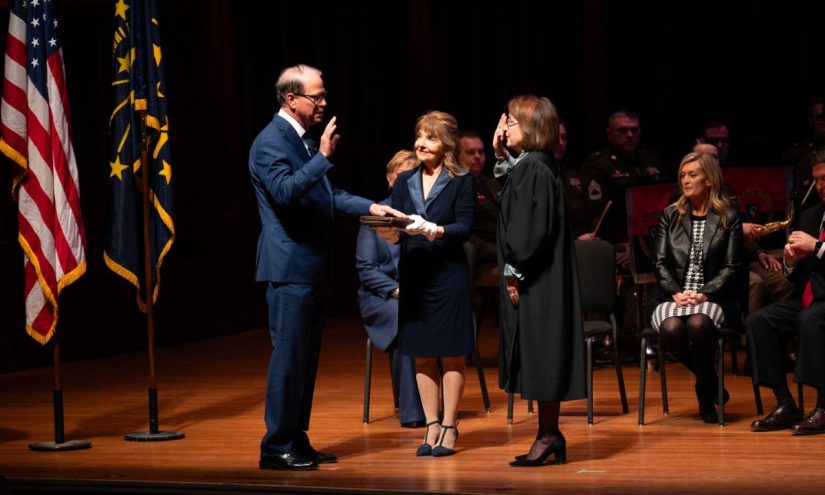
    After slashing a popular reading program from the budget, Gov. Mike Braun said Friday he asked First Lady Maureen Braun to spearhead an initiative to keep Dolly Parton’s Imagination Library in Indiana.

    “She has agreed and she will work with philanthropic partners and in consultation with state leadership to identify funding opportunities for the book distribution program,” the governor said in a news release.

    The program gifts free, high quality, age-appropriate books to children from birth to age five on a monthly basis, regardless of family income.

    Former Gov. Eric Holcomb included a statewide expansion of the program in his 2023 legislative agenda. The General Assembly earmarked $6 million for the program in the state’s last biennial budget — $2 million in the first year and $4 million in the second — to ensure that all Hoosier kids qualify to receive free books.

    But when Gov. Braun prepared his budget proposal in January he discontinued the funding as part of an overall effort to rein in state spending.

    “I am honored to lead this work to help ensure our youngest Hoosiers have as much exposure as possible to books and learning,” said First Lady Maureen Braun. “Indiana has many strong community partners and I am confident we will collaborate on a solution that grows children’s love of reading.”

    Jeff Conyers, president of The Dollywood Foundation, said he appreciates Braun’s commitment to early childhood literacy.

    “The Imagination Library brings the joy of reading to over 125,000 Hoosier children each month in all 92 counties across the state, and we are encouraged by Governor and First Lady Braun’s support to ensure its future in Indiana. We look forward to working with the Governor and First Lady, state leaders, and Local Program Partners to keep books in the hands of Indiana’s youngest learners and strengthen this foundation for a lifetime of success,” he said.

    Indiana Capital Chronicle is part of States Newsroom, a nonprofit news network supported by grants and a coalition of donors as a 501c(3) public charity. Indiana Capital Chronicle maintains editorial independence. Contact Editor Niki Kelly for questions: [email protected].


    Get stories like these delivered straight to your inbox. Sign up for The 74 Newsletter
    Source link

  • Nepali students could shun India amid row over student’s death

    Nepali students could shun India amid row over student’s death

    A 20-year-old technology student was found dead in her hostel room at Odisha’s private deemed university, KIIT, allegedly after facing harassment from a fellow student.

    The incident sparked campus protests, forcing hundreds of students to leave after KIIT closed sine die for all Nepali international students on February 17.

    Though KIIT vice-chancellor Saranjit Singh issued a public apology later and action was taken against security officials and staff accused of abusing and physically harming protesting Nepali students, only a small percentage of students have returned. 

    With Nepali students comprising 28% of India’s international student population, the largest share, the recent incident has raised concerns that many students from Nepal might cancel their plans to study in India.

    “Students might reconsider their decision to study in India, and this incident could drive a policy shift in student recruitment. Obtaining an No Objection Certificate (NOC) might become mandatory for those aspiring to study in India, and a government-level grievance handling system could be introduced to address student concerns,” BK Shrestha, CEO, Study Global, a Kathmandu-based education consultancy, told The PIE News. 

    Though an NOC is mandatory for Nepali students wishing to study abroad, the open border and close ties between Nepal and India allow many Nepali students to study in the country without obtaining one.

    Despite this privilege, the Nepal government could restrict students from obtaining an NOC to study at institutions in Odisha if the KIIT incident is not resolved in a “justifiable and legal way,” according to Nepal’s Ministry of Science, Education, and Technology.

    Though India and Nepal have shared historically deep relations, the past decade has been marked by tensions, including allegations of a blockade on goods to Nepal, border disputes, and Nepal’s efforts to strengthen relations with China. 

    The recent incident at KIIT has only added fuel to the fire, prompting the Nepal Embassy in India to send officials to the campus to meet with agitating Nepali students. 

    Obtaining an NOC might become mandatory for those aspiring to study in India, and a government-level grievance handling system could be introduced to address student concerns
    BK Shrestha, Study Global

    Meanwhile, Nepal’s opposition and human rights body have urged the Indian government to conduct a “fair investigation” and ensure the safety of Nepali students.

    “The Nepalese government, including the Prime Minister and relevant ministries, took immediate action through the embassy, ensuring the safety of students,” said Mukesh Dhamala, member of education council, Confederation of Nepalese Industries

    “However, this incident has created diplomatic tensions, raised questions about the accountability of educational institutions, and sparked broader discussions about student welfare policies in host countries.”

    According to Dhamala, the student’s death has led to Nepali students and parents being more cautious, with a significant increase in inquiries about safety measures at Indian institutions.

    “Future students and parents may hesitate to choose Indian institutions unless there are strong safety measures in place,” stated Dhamala. 

    Moreover, domestic universities in Nepal have stepped up by offering returning students a chance to continue their studies. 

    Purbanchal University has announced that students reluctant to return to KIIT can continue their remaining courses at its affiliated colleges.

    “Any student who has returned to Nepal without completing their studies can continue through credit transfer,” the university stated, adding that students must meet the required criteria.

    Meanwhile, officials at Tribhuvan University, Nepal’s oldest and largest institution, have also expressed readiness to accommodate such students. 

    Many prospective students from Nepal are now rethinking their plans to study in India amid the row at KIIT. 

    “All of this has massively increased safety concerns for Nepalese students, especially female students. In fact, several of my friends have already canceled their upcoming admissions to very reputable Indian institutions because they no longer feel safe,” stated Sandesh Pokhrel, a Kathmandu-based student, who is planning to pursue his post-graduation studies abroad. 

    With many returning students from KIIT alleging that the university failed to take action against the accused despite the deceased student’s prior complaints, academic counsellors like Pragya Karki argue that stakeholders in Nepal should serve as the first point of contact for their students. 

    “KIIT’s initial response to the student’s case has been deeply concerning and raises serious questions about its commitment to student safety and well-being,” said Karki, an academic counsellor at Ullens School. 

    “We must go beyond just listening – we are advocates, allies, and a vital support system for students in distress. Proactive outreach is key: creating safe spaces, educating students on their rights, on how to recognise emotional distress, and ensuring they know where to seek help.”

    According to Dhamala, the recent incident has underscored the need for dedicated student support teams, ideally with Nepali staff, to address the concerns of Nepali students. He also emphasised the importance of Embassy monitoring on campuses to ensure their well-being.

    As part of its recent initiative, Nepal Rising, market entry firm Acumen brought many of its partner institutions from the UK, US, Japan, Australia, New Zealand, and Malaysia to Nepal. 

    The goal was to better understand and improve the Nepali student experience, a critical move in light of the KIIT incident.

    “A structured pre-departure program is key, equipping students with insights into academics, culture, finances, and well-being. Many of our partner universities already offer culturally tailored orientation programs, mentor-mentee buddy systems, and Nepalese student clubs, ensuring a smoother transition,” stated Ritu Sharma, director, partner success, UK, Ireland, and ANZ, Acumen

    “A strong support system, including career workshops and mental health services, is vital for long-term success.”

    As per a report by ICEF, in the past five years, approximately one in every five Nepali students pursuing higher education chose to study abroad.

    Nepal’s outbound mobility ratio was 19% in 2021, compared with less than 2% for China and India, this despite the country being vastly smaller in population compared to its giant Asian neighbours. 

    Pushpa Raj Joshi, a senior scientist and neurobiologist at Martin-Luther University Halle-Wittenberg, Germany, who writes monthly columns for The Kathmandu Post – a leading publication in Nepal – criticised the country’s lack of a “forward-thinking education policy.” 

    He argued that this drives many Nepali students to study abroad in large numbers, leaving them vulnerable and unprepared due to insufficient information.

    “This unfortunate incident underscores the urgent need for Nepal’s education authorities to reevaluate policies affecting students’ safety, dignity, and future abroad. More importantly, strengthening academic institutions is essential to retaining our students,” stated Joshi. 

    “Lack of seats in universities across Nepal and fewer post graduation courses have been age-old problems in Nepal, which prompts students to go to India or elsewhere.”

    As Nepal grapples with its policies around education, the recent incident is far from being resolved as the investigation into the B.tech student’s death intensifies. 

    The state government of Odisha has summoned four more KIIT officials for questioning, with the institute stating that it is “committed to a safe and uninterrupted learning environment for all students.”

    KIIT has not yet responded to questions from The PIE News.


    Source link