From 16-18 February 2025, a high-level delegation from the UK visited Egyptian universities: Ain Shams University, and European Universities in Egypt (EUE); with a planned visit to New Cairo Technological University, to explore possible collaborations between the two countries.
“Over the course of three enriching days, the education team in Egypt led a higher education mission that was launched in the New Administrative Capital, under the patronage of the Minister of Higher Education through the Supreme Council of Universities and the Egyptian Bureau for Cultural and Educational Affairs in London in collaboration with the British Council in Egypt, and the support of the British Embassy,” Heba ElZein, director of education at the British Council in Egypt told The PIE.
The delegation comprised representatives from prestigious UK universities, including Sheffield Hallam University, Loughborough University, the University of Essex, the University of East Anglia, the University of Exeter, and the University of Chester.
Universities UK International representatives were also in attendance, with Anouf El-Daher, policy officer for Africa and Middle East at UUKi, presenting at the British Embassy in Cairo and British Council Egypt, highlighting the value of international collaboration and the potential for long-term, mutually beneficial, EU-Egypt education relationships.
“Over three days, we visited higher education institutions across Egypt, gaining valuable insights into the local landscape and exploring opportunities for deeper collaboration. This mission allowed us to engage with key stakeholders, understand the evolving higher education landscape in Egypt, and witness the impact of UK-Egypt partnerships firsthand,” a LinkedIn post from UUKi read.
Over the course of three enriching days, the education team in Egypt led a higher education mission that was launched in the New Administrative Capital Heba ElZein, British Council
The mission offered numerous networking opportunities, as well as joint meetings for Egyptian universities wishing to cooperate and discuss opportunities with their British counterparts.
The delegation’s primary focus was to foster academic exchange, establish international university branch campus opportunities, and strengthen research collaborations. One of the most significant outcomes of the visit was the signing of multiple Memorandums of Understanding (MoUs) between UK and Egyptian universities.
During that high-profile participation, three MoUs were signed between the University of Essex and Ain Shams University, the University of East Anglia and Ain Shams University, and the University of Sheffield Hallam and the British University in Egypt.
These agreements are expected to facilitate joint programs, faculty exchanges, and shared research initiatives in the coming years.
Students in Egypt show a strong interest in TNE as the UK-affiliated programs offer tuition fees from £800 to £13,500, depending on the partnership model. And due to economic and currency challenges, Egyptians are increasingly likely to opt to study in Egypt on a TNE model, as well as inbound students to the country, primarily from Malaysia, Indonesia, Thailand, Nigeria, and Iraq.
Thus, with a population of around 111 million, and a youthful median age of 24.3, Egypt leads the MENA region in TNE enrolments with 27,865 students in 2022-2023, making it the 5th largest UK TNE host country globally.
Egypt has emerged as a leading host of UK transnational education students in the MENA region, and the UK remains Egypt’s largest partner in higher education.
This delegation’s visit is part of a broader initiative to further deepen these ties and provide Egyptian students with greater access to high-quality British education.
Professional growth is often at the top of New Year’s Resolution lists. As educators and education leaders plan for the year ahead, we asked some of the nation’s top female school district leaders to give fellow women educators the do’s and don’ts of climbing the professional ladder. Here’s what they said.
Do:Believe in yourself.
Though women make up 76 percent of teachers in K-12 school settings, just a small percentage of women hold the most senior role in a district. But the climb to leadership isn’t an easy one; women in educational leadership report a range of biases–from interpersonal slights to structural inequities–that make it difficult to attain and persist in top positions.
Professional groups like Women Leading Ed are working to change that by highlighting long standing gender gaps and calling for policies and practices to improve conditions at all levels. Female education leaders are also working to rewrite the narrative around what’s possible for women educators and encouraging their peers.
Among those education leaders is Shanie Keelean, deputy superintendent of Rush-Henrietta Central School District in New York. When asked to share advice to her peers, she said, “You just have to continually push yourself forward and believe in yourself. So very often women, if they don’t check all the boxes, they decide not to go for something. And you don’t have to check all the boxes. Nobody knows everything in every job. You learn things as you go. Passion and energy go a long way in being really committed.”
Nerlande Anselme, superintendent of Rome City School District in New York, agreed: “We have directors in this field, we have coordinators in this field, we have psychologists who are doing amazing work, but they will dim themselves and figure that they cannot get to the top. Don’t dim your light.”
Don’t: Keep your career goals a secret.
When you decide to pursue a leadership position, don’t keep it a secret. While it may feel “taboo” to announce your intentions or desires, it’s actually an important first step to achieving a leadership role, said Kathleen Skeals, superintendent of North Colonie Central School District in New York.
“Once people know you’re interested, then people start to mentor you and help you grow into the next step in your career,” Skeals said.
Kyla Johnson-Trammell, superintendent of Oakland Unified School District in California, echoed: “Make your curiosity and your ambition known. You’ll be pleasantly surprised how that will be received by many of the folks that you work for.”
Do: Find a strong mentor.
A strong mentor can make all the difference in the climb to the top, leaders agreed.
“Seek out a leader you respect and ask for a time where you could have a conversation about exploring some possibilities and what the future might bring to you,” said Mary-Anne Sheppard, executive director of leadership development for Norwalk Public Schools in Connecticut.
It’s especially helpful to connect with someone in a position that you want to be in, said Melanie Kay-Wyatt, superintendent of Alexandria City Public Schools in Virginia. “Find someone who’s in the role you want to be in, who has a similar work ethic and a life that you have, so they can help you,” she said.
Don’t: Be afraid to ask questions.
“Start asking a lot of questions,” said Keelean. She suggested shadowing a mentor for a day or asking for their help in creating a career map or plan.
And don’t be afraid to take risks, added Johnson-Trammell. “Could you get me 15 minutes with the superintendent or the chief academic officer?”
Do: Build your skill set and network.
“Increase your impact by developing relational skills and leadership skills,” said Rachel Alex, executive director of leadership development of Aldine Independent School District in Texas.
And cultivate a network, said Heather Sanchez, chief of schools for Bellevue School District in Washington. “We can’t do it alone. Find that network, cultivate that network.”
Don’t: Give up.
“People are always going to tell you no, but that does not stop you,” said Kimberley James. “Continue to live beyond the noise and the distractions and stay focused on what it is that you want to accomplish for our students.”
“I would say to any woman aspiring to any level of leadership that first of all, never sell yourself short,” said Sanchez. “You have it in you.”
Interviews were conducted as part of the Visionary Voices video series. Responses have been edited for clarity and brevity.
Megan Scavuzzo, Presence
Megan Scavuzzo is the Vice President of Communications, Policy and Advocacy for Presence, a leading provider of PreK–12 remote special education-related and mental health evaluation and teletherapy services. With a diverse background in strategic communication and advocacy, Megan specializes in crafting compelling narratives that amplify voices across industries. By harnessing the power of storytelling, she aims to inspire action, provoke thought, and spark meaningful dialogue that leads to tangible change and impact.
Latest posts by eSchool Media Contributors (see all)
Educators in Ontario are setting the record straight about the cause of the province’s college funding crisis – the blame for which, they say, falls squarely on the Ontario provincial government.
“We currently see a wave of Ontario college program closures/suspensions sweeping across all of Ontario’s 24 colleges… This is just the tip of the iceberg and there will be many more to follow,” school educator and former college administrator David Deveau wrote in a letter to government officials.
“This letter aims to correct the media’s false assertion that these program suspensions are a direct result of the federal government’s restrictions on international student visa approvals and identify the actual reason for this alarming trend across the Ontario college system,” he continued.
The letter, which has been widely shared by sector stakeholders, lays the blame for Ontario’s college crisis on decades of underfunding from the provincial government, exacerbated by a 10% tuition fee reduction and freeze in 2019.
“Ontario’s higher education sector is in crisis due to chronic underfunding, tuition freezes, and a reliance on international student tuition as a financial lifeline,” said Chris Busch, senior international officer at the University of Windsor.
In 2001/02, Ontario’s colleges received 52.5% of their revenue from public funding, the second lowest of any province, according to Canada’s statistics agency.
By 2019/20, this figure had dropped to 32%, by far the lowest proportion across Canada’s provinces and territories, which, on average, provided 69% of college funding that year.
“Colleges and universities have had to attract talent from abroad, increasingly enrolling international student to help fill the funding gap,” said Vinitha Gengatharan, assistant VP of global engagement at York University.
This is particularly evident at the college level, where institutions have seen international student enrolment of 30-60%, compared to universities where it ranges from 10-20%, added Gengatharan.
Educators across Ontario’s college and university sector have spoken out in support of Deveau’s letter, calling for a long-term commitment to stable and adequate funding from the provincial government.
In recent weeks, Ontario’s 24 public colleges have made the headlines for sweeping budget cuts, course closures and staff layoffs.
Stakeholders have raised additional concerns about increased class sizes and deferred maintenance and tech upgrades eroding the quality of education and the student experience for all learners, including Ontarians, Busch maintained.
This week, Algonquin College announced the closure of its campus in Perth, Ontario, alongside the cancellation of 10 programs and the suspension of 31, citing “unprecedented financial challenges”.
It follows Sheridan and St. Lawrence colleges announcing course suspensions with associated layoffs, and Mohawk College cutting 20% of admin jobs.
The ability of Ontario’s universities to fulfil their mission – providing high-quality education, driving research, and fuelling the economy with talent – is at significant risk under current conditions Chris Busch, University of Windsor
“What is currently happening within our colleges is a downward spiral that will hurt Ontarians, the labour market, and our economies in the end,” wrote Deveau, adding that it was especially important to be strong in the face of externally imposed tariffs from the Trump administration.
In the letter, Deveau said the tuition freeze – which continues to this day – is akin to a “chokehold suffocating the life out of the college system” that is eliminating vital programs, restricting career choices of Ontarians and “jeopardising the province’s economic future”.
He raised attention to the “domino effect” of program closures impacting students’ career prospects, faculty layoffs and damaging local economies.
“The ability of Ontario’s universities to fulfil their mission – providing high-quality education, driving research, and fuelling the economy with talent – is at significant risk under current conditions,” said Busch.
In March 2023, the Ontario government itself published a Blue-Ribbon Report recognising the need to increase direct provincial support for colleges and universities, “providing for both more money per student and more students” and raising tuition fees.
Last year, the Ontario government injected $1.3 billion into colleges and universities over three years to stabilise the sector’s finances, though critics are demanding systemic funding changes rather than “stop-gap” and “gimmicky” proposals, said Deveau.
Nationwide, Canada’s colleges were dealt another blow when the IRCC announced its new PGWP eligibility criteria, which stakeholders warned risked “decimating” Canada’s college sector.
It is feared that more Ontario colleges will face cuts before the province’s 2025 budget, expected in April.
The PIE News reached out to the Ontario government but is yet to hear back.
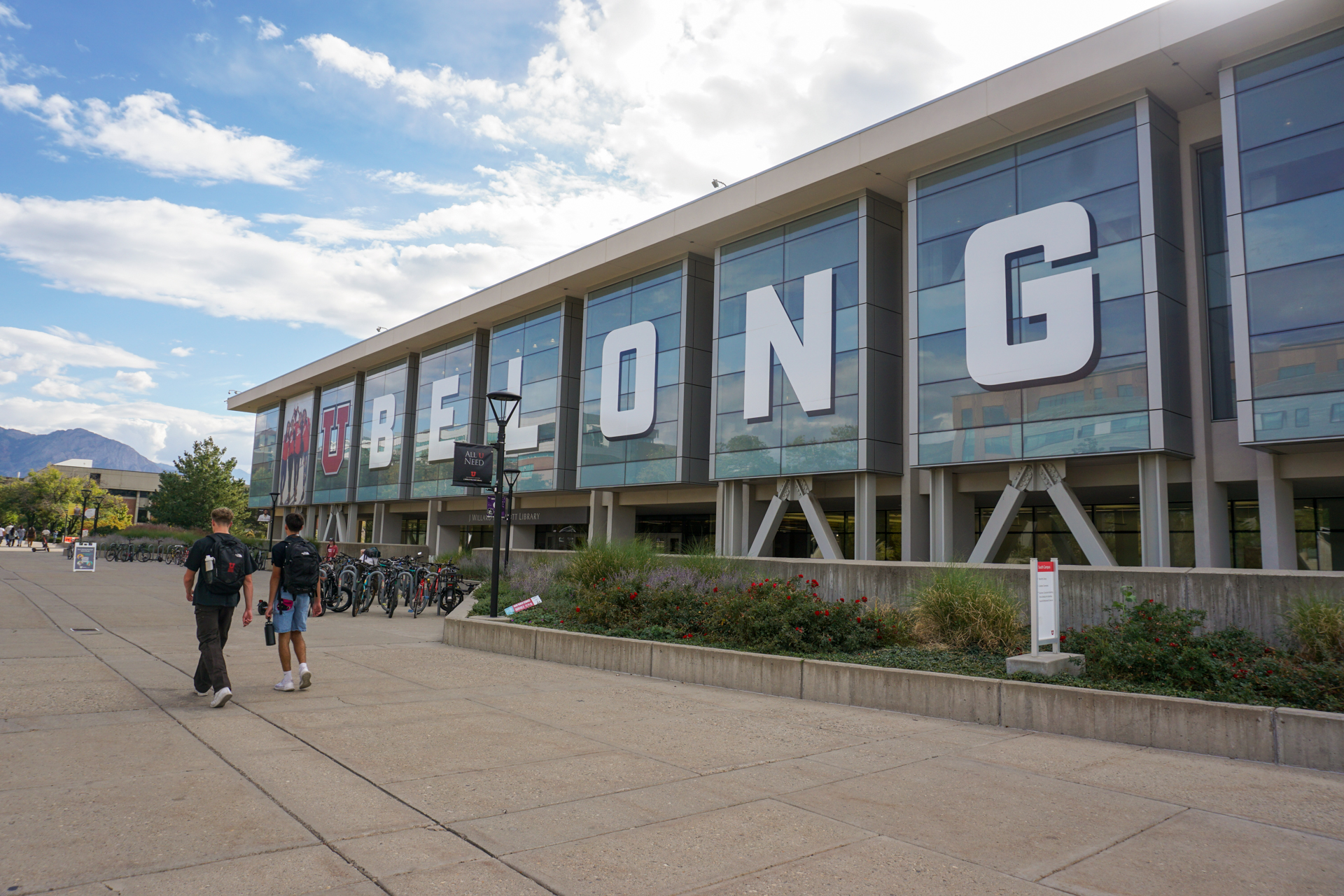
SALT LAKE CITY — Nineteen-year-old Nevaeh Parker spent the fall semester at the University of Utah trying to figure out how to lead a student group that had been undercut overnight by matters far beyond student control.
Parker, the president of the Black Student Union, feared that a new Utah law banning diversity, equity and inclusion efforts at public colleges had sent a message to students from historically marginalized groups that they aren’t valued on campus. So this spring, while juggling 18 credit hours, an internship, a role in student government and waiting tables at a local cafe, she is doing everything in her power to change that message.
Because the university cut off support for the BSU — as well as groups for Asian American and for Pacific Islander students — Parker is organizing the BSU’s monthly meetings on a bare-bones budget that comes from student government funding for hundreds of clubs. She often drives to pick up the meeting’s pizza to avoid wasting those precious dollars on delivery fees. And she’s helping organize large community events that can help Black, Asian and Latino students build relationships with each other and connect with people working in Salt Lake City for mentorship and professional networking opportunities.
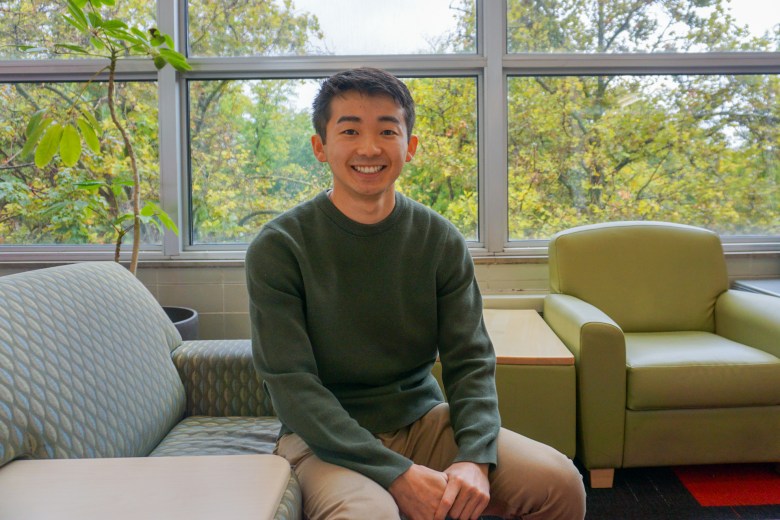
Nineteen-year-old University of Utah student Nevaeh Parker is working hard to keep the Black Student Union going after the organization lost financial support. Credit: Image provided by Duncan Allen
“Sometimes that means I’m sacrificing my grades, my personal time, my family,” Parker, a sophomore, said. “It makes it harder to succeed and achieve the things I want to achieve.”
But she’s dedicated to keeping the BSU going because it means so much to her fellow Black students. She said several of her peers have told her they don’t feel they have a place on campus and are considering transferring or dropping out.
Utah’s law arose from a conservative view that DEI initiatives promote different treatment of students based on race, ethnicity, gender or sexuality. House Bill 261, known as “Equal Opportunity Initiatives,” which took effect last July, broadly banished DEI efforts and prohibited institutions or their representatives speaking about related topics at public colleges and government agencies. Violators risk losing state funding.
Now President Donald Trump has set out to squelch DEI work across the federal government and in schools, colleges and businesses everywhere, through DEI-related executive orders and a recent “Dear Colleague” letter. As more states decide to banish DEI, Utah’s campus may represent what’s to come nationwide.
Related: Interested in more news about colleges and universities? Subscribe to our free biweekly higher education newsletter.
Because of the new state law, the university last year closed the Black Cultural Center, the Center for Equity and Student Belonging, the LGBT Resource Center and the Women’s Resource Center – in addition to making funding cuts to the student affinity groups.
In place of these centers, the university opened a new Center for Community and Cultural Engagement, to offer programming for education, celebration and awareness of different identity and cultural groups, and a new Center for Student Access and Resources, to offer practical support services like counseling to all students, regardless of identity.
For many students, the changes may have gone unnoticed. Utah’s undergraduate population is about 63 percent white. Black students are about 1 percent, Asian students about 8 percent and Hispanic students about 14 percent of the student body. Gender identity and sexuality among students is not tracked.
For others, however, the university’s racial composition makes the support of the centers that were eliminated that much more significant.
In response to a new state law that broadly banned diversity, equity and inclusion efforts, the University of Utah closed its Center for Equity and Student Belonging, the Black Cultural Center, the Women’s Resource Center and the LGBT Resource Center. Credit: Olivia Sanchez/The Hechinger Report
Some — like Parker — have worked to replace what was lost. For example, a group of queer and transgender students formed a student-run Pride Center, with support from the local Utah Pride Center. A few days a week, they set up camp in a study room in the library. They bring in pride flags, informational fliers and rainbow stickers to distribute around the room, and sit at a big table in case other students come looking for a space to study or spend time with friends.
Lori McDonald, the university’s vice president of student affairs, said so far, her staff has not seen as many students spending time in the two new centers as they did when that space was the Women’s Resource Center and the LGBT Resource Center, for example.
“I still hear from students who are grieving the loss of the centers that they felt such ownership of and comfort with,” McDonald said. “I expected that there would still be frustration with the situation, but yet still carrying on and finding new things.”
One of the Utah bill’s co-sponsors was Katy Hall, a Republican state representative. In an email, she said she wanted to ensure that support services were available to all students and that barriers to academic success were removed.
“My aim was to take the politics out of it and move forward with helping students and Utahns to focus on equal treatment under the law for all,” Hall said. “Long term, I hope that students who benefitted from these centers in the past know that the expectation is that they will still be able to receive services and support that they need.”
The law allows Utah colleges to operate cultural centers, so long as they offer only “cultural education, celebration, engagement, and awareness to provide opportunities for all students to learn with and from one another,” according to guidance from the Utah System of Higher Education.
Given the anti-DEI orders coming from the White House and the mandate from the Department of Education earlier this month calling for the elimination of any racial preferences, McDonald said, “This does seem to be a time that higher education will receive more direction on what can and cannot be done.”
But because the University of Utah has already had to make so many changes, she thinks that the university will be able to carry on with the centers and programs it now offers for all students.
Research has shown that a sense of belonging at college contributes to improved engagement in class and campus activities and to retaining students until they graduate.
“When we take away critical supports that we know have been so instrumental in student engagement and retention, we are not delivering on our promise to ensure student success,” said Royel M. Johnson, director of the national assessment of collegiate campus climates at the University of Southern California Race and Equity Center.
Creating an equitable and inclusive environment requires recognizing that there is no one-size-fits-all approach to supporting students, said Paulette Granberry Russell, president of the National Association of Diversity Officers in Higher Education. A student who grew up poor may not have had the same opportunities in preparing for college as a student from a wealthy or middle-class family. Students from some minority groups or those who are the first in their family to go to college may not understand how to get the support they need.
“This should not be a situation where our students arrive on campus and are expected to sink or swim,” she said.
Student Andy Whipple wears a beaded bracelet made at a “Fab Friday” event hosted by the LGBT Resource Center at the University of Utah. The LGBT Resource Center was closed recently to comply with a new state law that limits diversity, equity and inclusion work. Credit: Olivia Sanchez/The Hechinger Report
Kirstin Maanum is the director of the new Center for Student Access and Resources; it administers scholarships and guidance previously offered by the now-closed centers. She formerly served as the director of the Women’s Resource Center.
“Students have worked really hard to figure out where their place is and try to get connected,” Maanum said. “It’s on us to be telling students what we offer and even in some cases, what we don’t, and connecting them to places that do offer what they’re looking for.”
That has been difficult, she said, because the changeover happened so quickly, even though some staffers from the closed centers were reassigned to the new centers. (Others were reassigned elsewhere.)
“It was a heavy lift,” Maanum said. “We didn’t really get a chance to pause until this fall. We did a retreat at the end of October and it was the first time I felt like we were able to really reflect on how things were going and essentially do some grief work and team building.”
Before the new state law, the cultural, social and political activities of various student affinity groups used to be financed by the university — up to $11,000 per group per year — but that money was eliminated because it came from the Center for Equity and Student Belonging, which closed. The groups could have retained some financial support from the university if they agreed to avoid speaking about certain topics considered political and to explicitly welcome all students, not just those who shared their race, ethnicity or other personal identity characteristics, according to McDonald. Otherwise, the student groups are left to fundraise and petition the student government for funding alongside hundreds of other clubs.
Parker said the restrictions on speech felt impossible for the BSU, which often discusses racism and the way bias and discrimination affect students. She said, “Those things are not political, those things are real, and they impact the way students are able to perform on campus.”
She added: “I feel as though me living in this black body automatically makes myself and my existence here political, I feel like it makes my existence here debatable and questioned. I feel like every single day I’m having to prove myself extra.”
In October, she and other leaders of the Black Student Union decided to forgo being sponsored by the university, which had enabled traditional activities such as roller skating nights, a Jollof rice cook-off (which was a chance to engage with different cultures, students said) and speaker forums.
Alex Tokita, a senior who is the president of the Asian American Student Association, said his group did the same. To maintain their relationship with the university by complying with the law, Tokita said, was “bonkers.”
Alex Tokita, a senior at the University of Utah, is the president of the Asian American Student Association. The organization chose to forgo university sponsorship because it did not want to comply with a new state law that restricts speech on certain topics. Credit: Olivia Sanchez/The Hechinger Report
Tokita said it doesn’t make sense for the university to host events in observation of historical figures and moments that represent the struggle of marginalized people without being able to discuss things like racial privilege or implicit bias.
“It’s frustrating to me that we can have an MLK Jr. Day, but we can’t talk about implicit bias,” Tokita said. “We can’t talk about critical race theory, bias, implicit bias.”
As a student, Tokita can use these words and discuss these concepts. But he couldn’t if he were speaking on behalf of a university-sponsored organization.
LeiLoni Allan-McLaughlin, of the new Center for Community and Cultural Engagement, said that some students believe they must comply with the law even if they are not representing the university or participating in sponsored groups.
“We’ve been having to continually inform them, ‘Yes, you can usethose words. We cannot,’” Allan-McLaughlin said. “That’s been a roadblock for our office and for the students, because these are things that they’re studying so they need to use those words in their research, but also to advocate for each other and themselves.”
Last fall, Allan-McLaughlin’s center hosted an event around the time of National Coming Out Day, in October, with a screening of “Paris Is Burning,” a film about trans women and drag queens in New York City in the 1980s. Afterward, two staff members led a discussion with the students who attended. They prefaced the discussion with a disclaimer, saying that they were not speaking on behalf of the university.
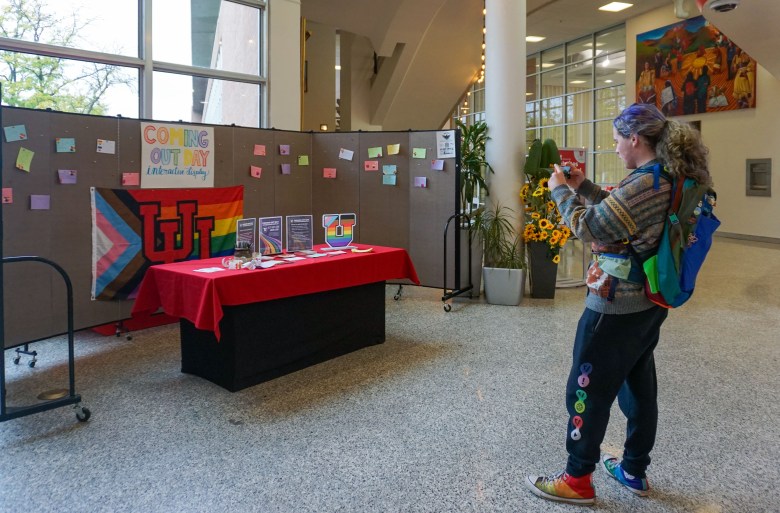
Center staffers also set up an interactive exhibit in honor of National Coming Out Day, where students could write their experiences on colorful notecards and pin them on a bulletin board; created an altar for students to observe Día de los Muertos, in early November, and held an event to celebrate indigenous art. So far this semester, the center has hosted several events in observance of Martin Luther King Jr. Day and Black History Month, including an educational panel, a march and a pop-up library event.
Such events may add value to the campus experience overall, but students from groups that aren’t well represented on campus argue that those events do not make up for the loss of dedicated spaces to spend time with other students of similar backgrounds.
Sophomore Juniper Nilsson looks at a National Coming Out Day exhibit in the student union at the University of Utah. The exhibit was set up by the new Center for Community and Cultural Engagement. Credit: Olivia Sanchez/The Hechinger Report
For Taylor White, a recent graduate with a degree in psychology, connecting with fellow Black students through BSU events was, “honestly, the biggest relief of my life.” At the Black Cultural Center, she said, students could talk about what it was like to be the only Black person in their classes or to be Black in other predominantly white spaces. She said without the support of other Black students, she’s not sure she would have been able to finish her degree.
Nnenna Eke-Ukoh, a 2024 graduate who is now pursuing a master’s in higher educational leadership at nearby Weber State University, said it feels like the new Center for Community and Cultural Engagement at her alma mater is “lumping all the people of color together.”
“We’re not all the same,” Eke-Ukoh said, “and we have all different struggles, and so it’s not going to be helpful.”
Contact staff writer Olivia Sanchez at 212-678-8402 or [email protected].
The Hechinger Report provides in-depth, fact-based, unbiased reporting on education that is free to all readers. But that doesn’t mean it’s free to produce. Our work keeps educators and the public informed about pressing issues at schools and on campuses throughout the country. We tell the whole story, even when the details are inconvenient. Help us keep doing that.
A report in The Times had suggested that the UK is set to table a deal for a reciprocal scheme that will see young EU citizens, aged 18-30, able to live and work in the UK for up to three years.
However, the government has since insisted it has no plans for such a scheme.
“We do not have plans for a youth mobility agreement,” a spokesperson told The PIENews on February 21.
“We are committed to resetting the relationship with the EU to improve the British people’s security, safety and prosperity. We will of course listen to sensible proposals. But we have been clear there will be no return to freedom of movement, the customs union or the single market.”
The Labour government has previously dismissed proposals for such a scheme, but recent reports had suggested new plans could contain a cap on the number of young people allowed into the UK through the scheme and could therefore alleviate concerns from UK government as it seeks to curb migration.
The UK government has previously made it clear its preference to do deals with individual member states, but subsequently rejected deals proposed by countries such as Spain.
The UK already has a Youth Mobility Scheme with a number of countries including Australia, New Zealand, Japan and Canada that allow individuals to study and work in the country for up to two years, with the possibility of extensions for some countries.
The membership body for English language schools in the UK, English UK, has been campaigning for an EU Youth Mobility Scheme since Brexit.
“We welcome reports that the government plans to negotiate a youth mobility deal with the EU,” Huan Japes, membership director, English UK, told The PIE.
“For young people in Europe and the UK to have the opportunity to live, work and study in each others’ countries will have immense benefits – not only for the young people themselves but also for language teaching centres and other educational organisations, the hospitality industry and for the UK’s future relations with the EU.”
“And this kind of time-limited, mutually beneficial immigration has broad support from the British public,” said Japes, who added that he would like to see a scheme with “a generous allocation of places so that this scheme can really make a difference to young people’s lives.”
According to advocacy group European Movement UK, mobility for young people could be a gateway to much closer ties with neighbouring European countries.
European Movement UK CEO, Nick Harvey, said the government’s hostility to the idea “could not be justified” when the benefits of such a scheme are so obvious.
“After all, the UK has youth mobility schemes with 13 other countries – including Australia and Japan – so it makes sense to have one with our nearest neighbours and closest partners,” said Harvey.
“Dismissing the idea of reciprocal youth mobility simply meant letting down British young people who face all sorts of economic difficulties, and have seen their horizons curtailed by Brexit. Young people want and deserve the chance to study or work in Europe. The government owes it to them to make sure they get that chance.”
We need to start pulling this country out of the no-growth quagmire of Brexit and start giving people hope for a better, brighter future Mike Galsworthy, chair of European Movement UK
Similarly, Mike Galsworthy, chair of European Movement UK, is calling for a deal to be made.
“We need to start pulling this country out of the no-growth quagmire of Brexit and start giving people hope for a better, brighter future,” he said.
“Liberating our youth and small businesses alike to engage is an important start. Hopefully the government will now see that being bold, hopeful and engaged with Europe brings a sigh of relief from the public and a more positive outlook for the UK.”
Writing in her column for The PIE last week, outgoing London Higher CEO Diana Beech mused on a refreshed relationship for the UK and the EU and what it might mean for the sector.
“The process of resetting the UK-EU relationship by the spring is one to watch for the UK’s higher education sector,” she wrote.
“This is because, while the EU has the power to ease restrictions on UK businesses to improve British trade prospects, the UK also has something that many in the EU want in return: namely the power to reinstate a youth mobility scheme between the UK and the EU.
“At its most ambitious, such a scheme could allow young people from the UK and Europe the freedom to travel across countries to study and work as was the norm before Brexit.
“A curtailed version could at least see mobility enacted for shorter, time-limited placements. Either way, UK universities could find themselves becoming an important bargaining chip in any future renegotiations,” wrote Beech.
Beech considered that previously, the UK higher education sector would have “been first to welcome” the return of a Youth Mobility Scheme such as Erasmus+. But financial woes facing the sector are “likely to dampen university managers’ enthusiasm” for such measures, considering EU students would once again be regarded as ‘home’ students, thereby capping the fees they pay.
Chicago Public Schools unveiled a five-year plan Thursday to improve the outcomes of the district’s Black students — at a time of unprecedented backlash against efforts to promote diversity, equity, and inclusion in education.
The release of the Black Student Success Plan, during Black History Month, is part of CPS’s broader five-year strategic plan and aims to address long-standing disparities in graduation, discipline, and other metrics faced by its Black students, who make up roughly a third of the student body.
The district set out to create the Black Student Success Plan in the fall of 2023, but its quiet posting on Thursday comes as both conservative advocacy groups and the Trump administration are taking aim at race-based initiatives in school districts and on college campuses.
Late last week, the U.S. Department of Education’s top acting civil rights official warned districts and universities that they could lose federal funding if they don’t scrap all diversity initiatives, even those that use criteria other than race to meet their goals. He cited the 2023 Supreme Court Students for Fair Admissions v. Harvard decision that banned the use of race as a college admissions factor.
CPS — in a progressive city in a Democratic state — has largely been insulated from standoffs over diversity and inclusion in recent years, when districts in other parts of the country have come under intense scrutiny over how they teach race and how they take it into account in hiring, selective program admissions, and other decisions. Increasingly, though, deep blue cities like Chicago are finding themselves in the crosshairs.
Last year, a Virginia-based advocacy group challenged a Los Angeles Unified School District initiative aimed at boosting outcomes for its Black students, which CPS said inspired its own plan. At the urging of the Biden administration, Los Angeles made changes to downplay the role of race, causing an outcry from some of its initiative’s supporters.
Chicago’s plan vows to increase the number of Black teachers, slash suspensions and other discipline for Black students, and embrace more culturally responsive curriculums and professional development to “combat anti-Blackness” — goals some of which could run afoul of the Department of Education’s interpretation of the Students for Fair Admissions decision.
Still, some district and community leaders in Chicago say CPS’s plan might be better-positioned to withstand challenges than Los Angeles’ initiative — and they said the district must forge ahead with the effort even as it braces for pushback.
“Now is not the time for anticipatory obedience and preemptive acquiescence,” said Elizabeth Todd-Breland, a University of Illinois Chicago professor of African American history and a former Chicago school board member who served on a working group that helped craft the plan. “This is not the time to shrink but to live out our values.”
The new plan says Illinois law mandates this work and cites a state statute that requires the Chicago Board of Education to have a Black Student Achievement Committee. That committee has not yet been formed.
CPS declined Chalkbeat’s interview request and did not answer questions before publication. The district is hosting a celebration at Chicago State University at 3 p.m. Friday to mark the plan’s release.
Chicago set out to create Black Student Success Plan years ago
CPS convened a working group made up of 60 district employees, parents, students, and community members that started meeting in December of 2023 to begin creating its Black Student Success Plan.
The following spring, it hosted nine forums to discuss the plan with residents across the city — what the plan’s supporters describe as one of the district’s most extensive and genuine efforts to get community input.
The working group in May released a list of recommendations that included stepping up efforts to recruit and retain Black educators, promote restorative justice practices, ensure culturally responsive curriculums that teach Black history, and offer more mental health and other support for Black students through partnerships with community-based organizations.
The district adopted many of these recommendations in its plan. It sets some concrete five-year goals, including doubling the number of male Black teachers, increasing the number of classrooms where Black history is taught, and decreasing how many Black students get out-of-school suspensions by 40%.
“The Black Student Success Plan is much more than simply a document,” the plan said. “It represents a firm commitment by the district, a roadmap, and a call to action for Chicago’s educational ecosystem to ensure equitable educational experiences and outcomes for Black students across our district.”
The effort built on equity work to help “students furthest from opportunity” that started five years ago under former CEO Janice Jackson, said Dominique McKoy, the executive director of the University of Chicago’s To & Through Project. In CPS, by a range of metrics, those students have historically been Black children.
McKoy, whose work focuses on college access, points out that the district has made major strides in increasing the number of students who go to college. But more students than ever drop out before earning a college degree — an issue that has disproportionately affected Black CPS graduates.
“There’s evidence and data that we haven’t been meeting the needs of Black students,” he said. “This plan is about responding to the data. Being clear about that is one of the best ways to insulate and defend that process.”
But McKoy acknowledges that now is a challenging time to kick off the district’s plan.
“Undoubtedly there will be critics who will think it’s racial preference to help students who need help and will attack the district for doing so,” said Pedro Noguera, the dean of the University of Southern California’s Rossier School of Education.
Last year’s challenge against a $120 million Los Angeles program aimed at addressing disparities for Black students offers a case study, Noguera notes. Parents Defending Education, which opposes school district diversity and inclusion programs, filed a complaint with the Department of Education’s Office for Civil Rights. The group has also challenged programs to recruit more Black male teachers and form affinity student groups based on race in other districts.
Ultimately, Los Angeles overhauled the program to steer additional staffing and other resources to entire schools serving high-needs students, rather than more narrowly to Black students. The Los Angeles Times reported that to some critics, those changes watered down the program, which was beginning to show some early results. But Noguera says he feels the program is still helping Black students.
However, it is clear that the Trump administration plans to go much further in interpreting the Students for Fair Admissions decision and seeking to root out DEI initiatives. In a “Dear Colleague” letter to school leaders Friday, Craig Trainor, acting assistant secretary for civil rights in the Education Department, said efforts to diversify the teaching force or the student bodies of selective enrollment programs could trigger investigations and the loss of federal funding. About 20% of CPS’s operating revenue comes from the federal government.
“The Department will no longer tolerate the overt and covert racial discrimination that has become widespread in this Nation’s educational institutions,” Trainor wrote. “The law is clear: treating students differently on the basis of race to achieve nebulous goals such as diversity, racial balancing, social justice, or equity is illegal under controlling Supreme Court precedent.”
‘Get the help to the kids who need it’
Chicago, like Los Angeles, might consider a focus on schools — chosen based on metrics such as graduation rates, test scores and others — where the plan would help Black students and their peers, Noguera said. Maybe it doesn’t even have to refer to Black students in its name, he said.
“The main thing is to get the help to the kids who need it,” he said. But, he added, “In this environment, who knows what’s challenge-proof.”
He said what helped in Los Angeles was deep community engagement that lent that district’s initiative credibility and good will; the changes that the district made in response to the legal challenge did not erode those.
Darlene O’Banner, a CPS great-grandmother who served on the working group, said CPS got the community engagement piece right. She thinks the plan will offer a detailed roadmap for improving Black students’ achievement and experience.
“I am not going to think of the unknowns and what’s going on in the world,” O’Banner said. “We’re just going to hope for the best. We can’t put the plan on hold for four years.”
The working group issued its recommendation in early fall and stopped meeting following the September resignation of all school board members, who stepped down amid pressure from the mayor’s office to fire CPS CEO Pedro Martinez over budget disagreements.
Valerie Leonard, a longtime community advocate who also served on the working group, said during the community meetings for the Black Student Success Plan last year, there was no discussion of possible legal pushback to the plan.
“Illinois is a liberal state,” she said. “It never really occurred to us a year ago that this plan would be in danger.”
But more recently, as she heard Trump assail DEI initiatives, Leonard said she wondered if the plan would survive.
Leonard pushed Illinois lawmakers last year to mandate the Board of Education appoint a Black Student Achievement Committee as part of the state law that cleared the way for an elected school board in Chicago. The district’s plan invokes that committee though it hasn’t been formed yet. The board formed a more generic student success committee earlier this month.
“We believe that the problem with Black children in public schools is so dire that it needs to be elevated to its own committee,” she said. “When our children get lumped into something that’s for all, they inevitably fall between the cracks.”
McKoy at the University of Chicago said he feels “cautious optimism” and hopes the city and state rally around CPS as it pushes to improve outcomes for Black students.
“The plan itself isn’t going to do the work,” he said.
This story was originally published by Chalkbeat. Chalkbeat is a nonprofit news site covering educational change in public schools. Sign up for their newsletters at ckbe.at/newsletters.
There have been two cycles so far for which students have received the gift cards and, in addition to the 4,936 students who had perfect attendance in at least one of two-week periods, 2,028 have had perfect attendance in both cycles, according to data Superintendent Nikolai Vitti shared with Chalkbeat this week.
The attendance incentive is aimed at improving attendance in the district, where two-thirds of nearly 49,999 students were considered chronically absent during the 2023-24 school year. The incentive is among a number of efforts the district has employed over the years to create an attendance-going culture among students. The district has invested heavily into attendance agents to improve attendance and this school year announced that students with extremely high rates of chronic absenteeism will be held back a grade at the K-8 level and required to repeat classes at the high school level.
The number of students earning the perfect attendance incentive is a fraction of the nearly 15,000 high school students in the district, leading one school board member to question last week whether the incentive is working. But Vitti said he is encouraged that the program is getting more high school students to class and resulting in a small decrease in the chronic absenteeism rate for high school students. He said the district and board will have to evaluate the program’s success at the end of the school year.
Chronic absenteeism has been one of the district’s biggest challenges for years. The chronic absenteeism rate has declined, from a high of nearly 80% at the height of the pandemic, when quarantining rules meant many students missed school because of COVID exposure. But last school year’s much lower chronic absenteeism rate of 66% still means it is difficult to have consistency in the classroom and improve academic achievement.
Students in Michigan are chronically absent when they miss 10%, or 18 days in a 180-day school year. Statewide, 30% of students are considered chronically absent, compared to 23% nationally. A recent education scorecard cited the state’s rate as being a factor in students’ slow academic recovery from the pandemic.
Here are some of the highlights of the students who’ve received the incentive so far::
3,473 students had perfect attendance during the first cycle.
3,492 students had perfect attendance during the second cycle.
About 10% already had perfect attendance.
About 4% were considered chronically absent at the time the incentive began.
About 16% had missed 10% of the school year at the time the incentive began.
About 25% had missed 5-10% of the school year.
About 44% had missed 5% or fewer days in the school year.
At a Detroit school board meeting last week, Vitti said the statistic showing that just 10% of the students who earned the incentive already had perfect attendance is an indication that “this is not just rewarding those that have already been going to school.”
Board member Monique Bryant questioned what school leaders are doing to promote the incentive to students who haven’t earned it.
Bryant suggested that data Vitti shared at the meeting showing that chronic absenteeism is down by 5 percentage points for high school students since the incentive began is an illustration that most students aren’t rising to the goal of the incentive.
Vitti responded that it depends on how you look at the data.
“Right now, chronic absenteeism at the high school levels improved by five percentage points,” Vitti said. “That means that 700 high school students are not chronically absent where they were last year. I’d also say that at least on the 97th day, our chronic absenteeism at the high school levels is the lowest it’s been since the pandemic.”
The question for board members to decide at the end of the school year is whether the incentive “is the right investment with other challenges that we have districtwide,” Vitti said. “But I think the data is suggesting it’s working for many students … but not all.”
Board member Ida Simmons Short urged the district to survey students to learn more about what is preventing them from coming to school.
The causes of chronic absenteeism are numerous and include physical and mental health reasons, lack of transportation,and lack of affordable housing. Most of them tie back to poverty. Vitti specifically cited transportation, because half of the students in the district don’t attend their neighborhood school and the district doesn’t provide school bus transportation for high school students, who must take city buses to get to school.
“Sometimes they’re unreliable, they’re late, they’re too far away from where the child lives,” Vitti said.
Vitti said traditional school bus transportation for high school students “was decimated” under emergency management and it could cost between $50 million and $100 million to bring that level of transportation back.
Another factor, Vitti said, is that for some students, school isn’t relevant. Middle and high school students, in particular, “struggle to understand, ‘why am I going to school every day? How is this connected to what I’m going to I need to know for life.’”
Mi’Kah West, a Cass Technical High School student who serves as a student representative on the board, said that when talking to other members of the District Executive Youth Council last week, many said students overall are excited about the incentive.
One thing that stuck out, she said, was council members saying they heard students in the hallways or on social media saying they were coming to school because they want the money.
“And, while we don’t want to just say we want to come to school for the money,” West said, “I think it’s important to see that students … may have stayed home because they don’t want to come to school, but they’re willing to come to school now.”
Lori Higgins is the bureau chief for Chalkbeat Detroit. You can reach her at [email protected].
Chalkbeat is a nonprofit news site covering educational change in public schools.
The British Universities International Liaison Association (BUILA) has expressed concerns that the UKVI’s intention to introduce a new mandatory requirement to add agent details to the CAS will be undermined by inconsistency.
Representing 144 institutions, BUILA has insisted that the proposed listing of agents on the CAS evidence form should be done by selecting from a drop-down list or combo box.
A formal list of certified agents who have engaged with the national Agent Quality Framework training modules already exists and could be utilised to this effect.
In advance of this new CAS requirement, BUILA members are also preparing a sector-wide database of contracted agents, where information on vetting and compliance issues can be shared among international directors to improve standards.
The UKVI, however, has reportedly told stakeholders that a standardised list of agents in a drop-down box format will not possible due to technical system limitations.
The PIE News has contacted UKVI for clarification.
In the past, the government has been criticised for its poor data infrastructure relating to visa applicant data, with many universities turning to private sector solutions such as the Enroly platform to improve data quality.
The use of free-text form fields to capture information can greatly increase the variation of responses captured, making consistent reporting difficult. This issue already persists with naming protocols for international qualifications and language tests across the sector.
The use of free-text form fields to capture information can greatly increase the variation of responses captured
Recording agent names will be further complicated by variations in trading names for different global territories, along with the frequent use of subcontracted agents and franchises.
The current expectation from UKVI is that universities will manually write the name of the contracted agent in the new field as it appears on their official service agreements.
As such, this may be different to the name that a student might associate with having contracted application services from.
Andrew Bird, chair of BUILA, speaking to concerned agents at the QA Higher Education conference said that it was still “unclear” why the government is collecting agent data or what the information will be used for.
The news comes as the Labour government starts to release more information on policies relating to immigration. The use and monitoring of agents in the UK higher education was raised by the Migration Advisory Committee (MAC) in its review of the Graduate Route in 2024, with these new measures forming part of a direct response to those concerns.
Recording agent names on CAS evidence will be tested later in Spring 2025, before becoming a mandatory requirement in the summer during the peak visa application period.
Professor Brian Bell, chair of MAC, will be speaking at The PIE Live Europe, March 11-12 2025, alongside a town hall session from BUILA, where this issue will be discussed further. Tickets are still available for sector professionals wishing to participate.
The UK’s 450-year-old Harrow boarding school has unveiled plans for its first international school in the Middle East, opening a campus on Saadiyat Island, Abu Dhabi.
“The opening of Harrow International School in the UAE is a testament to the strong educational ties between the UK and the UAE and our shared aspiration for academic excellence,” said Edward Hobart, British Ambassador to the UAE.
The flagship school will be operated by UAE education provider, Taaleem, which last year acquired the rights to operate Harrow’s international schools across the Gulf Cooperation Council countries.
The launch of Harrow’s first international school in the region marks Taaleem’s strategic expansion into the “super-premium” education sector, said the organisation’s chairman Khalid Al Tayer.
Boarding at Harrow’s UK school costs upwards of £20,000 per term, though tuition fees have not been released for the new Abu Dhabi location.
The opening of Harrow International School in the UAE is a testament to the strong educational ties between the UK and the UAE
Edward Hobart, British Ambassador
One of the region’s largest K-12 providers with over 30 schools across the UAE, Taaleem will independently own and operate the running of the school.
The Abu Dhabi location will initially cater to students from early years to year six, with gradual expansion through the higher years and a total capacity of 1,800 students.
“Class sizes will be optimised to ensure personalised attention, with a focus on academic rigour and holistic development,” the school group stated.
It is expected to soon announce an additional Harrow school in Dubai, subject to government approval.
Harrow school said that the “landmark agreement” would bring Harrow’s “rich heritage and values-driven education to the UAE capital”.
“Rooted in tradition yet designed for the future, Harrow Abu Dhabi will offer an exceptional learning environment that nurtures character, leadership, and a global outlook,” it added.