Category: News

  • Monash underpays $7.6m as ‘expert council’ on uni governance members announced

    Monash underpays $7.6m as ‘expert council’ on uni governance members announced

    CEDA CEO Melinda Cilento interviewing Prime Minister Anthony Albanese in August last year. Picture: Irene Dowdy

    The members who will sit on the council overseeing university governance and advising government on “universities being good employers” have been announced.

    Please login below to view content or subscribe now.

    Membership Login

    Source link

  • Hoke’s Notes – The Plight of Small Colleges – Edu Alliance Journal

    Hoke’s Notes – The Plight of Small Colleges – Edu Alliance Journal

    January 27, 2025

    It has been two years since I last wrote a blog post for the Edu Alliance Journal. During that time, I took on the role of President/CEO of the American Association of University Administrators (AAUA) and dedicated myself fully to the organization. I set ambitious goals, including:

    1. Launching a marketing and branding campaign to elevate AAUA’s visibility,
    2. Increasing institutional and individual membership,
    3. Establishing a high-profile multi-day conference, and
    4. Stabilizing the organization’s finances to allow the hiring of a paid executive director.

    While I initially anticipated achieving these milestones within three years, the board and I managed to accomplish them in just 18 months.

    Reaching these goals was a significant achievement, and it signaled to me that it was time to focus on other priorities. As such, I submitted my resignation, effective January 1st, and “retired” from my leadership role at AAUA. However, I’ve always felt that retirement, in the traditional sense, isn’t for me. At 74, I still have ideas to share and contributions to make in the field of higher education.

    I aim to address several projects and issues moving forward, such as returning to my work as an international higher education consultant and re-launching two podcast series. However, one other area is especially close to my heart: the plight of small colleges.


    The Plight of Small Colleges

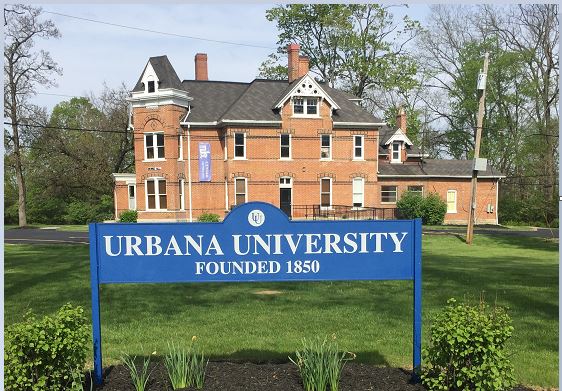
    If you’ve followed my journey, you know that I earned my undergraduate degree from Urbana University, a small private college in Urbana, Ohio—a city with a current population of 11,161. In 1975, I designed my own major in College Administration, combining courses in business, history/political science, and psychology. During my senior year, I also completed a year-long internship in admissions.

    As a nontraditional student (having started at the University of Dayton in 1968), it took me 6 ½ years and over 30 part-time jobs to complete my degree. Urbana gave me the opportunity to figure out what I wanted to do and how I could contribute to the world. It taught me adaptability and the goodness in people, which led me to the field I love—higher education.

    Unfortunately, Urbana University didn’t survive. After being acquired by Franklin College in 2014, it closed its doors in May 2020 due to challenges brought on by the coronavirus pandemic and years of low enrollment.

    Urbana had been an integral part of the community since 1850, serving as a significant economic engine. A 2017 study by the Southwestern Ohio Council for Higher Education estimated that Urbana contributed over $60 million annually to the economies of Champaign and Logan counties and employed 111 full-time staff during the 2015-2016 academic year. Its closure was devastating—not only for the university but also for the local businesses that depended on the foot traffic of students, visitors, and sports spectators.

    Rural colleges like Urbana serve as vital economic and social hubs for their communities. However, the increasing trend of college closures poses significant risks, including economic downturns, reduced social engagement, and the loss of cultural identity.


    Moving Forward

    To address this issue, I’m developing a funding proposal to analyze the multifaceted impacts of struggling colleges in rural areas. My goal is to propose actionable solutions and share findings that empower policymakers and community leaders. By combining innovative research, advocacy, and problem-solving, this initiative seeks to provide practical tools for fostering resilient rural communities.

    The research will focus on rural communities in Indiana, Ohio, and Pennsylvania. I’ve already received encouragement from regional leaders and am optimistic about finding partners to support this initiative. I’m seeking foundations, corporations, and government agencies to help fund this project, which aims to mitigate the ripple effects of college closures in rural America.

    If you have thoughts or suggestions on this topic—or know of potential funders—please feel free to contact me at [email protected].

    Stay tuned for updates on this and other projects I’m passionate about.


    Dean Hoke is Co-Founder and Managing Partner of Edu Alliance, an international higher education consultancy and podcast co-host of Higher Ed Without Borders and Small College America. He recently served as President/CEO of the American Association of University Administrators.

    Dean began his professional career in 1975 with Bellarmine University, working in a variety of roles, including Admissions and External Relations. In 1983, he entered the broadcasting field, serving as a senior executive for Public Broadcasting System stations and a cable network. In 1998, he co-founded The Connected Learning Network, a full-service online learning company. In 2009, he accepted an invitation to move to the United Arab Emirates, serving in senior positions at Higher Colleges of Technology and Khalifa University before co-founding Edu Alliance in Abu Dhabi in 2014.

    Hoke is passionate about advancing academic excellence and innovation worldwide.  He participates in numerous advisory and consulting projects on international branch campuses, marketing/branding, and business intelligence. Dean has consulted, presented, and written on leadership, higher education, and distance learning in the United States, Bahrain, Kazakhstan, Lebanon, Oman, Nigeria, Spain, and the United Arab Emirates.

    Hoke has a B.A. from Urbana University, an M.S. from the University of Louisville, and a Certificate in Executive Management from the University of Pennsylvania Wharton School. Dean currently resides in Bloomington, Indiana.

    Source link

  • Florida Phone Ban in School Gets Mostly Positive Feedback from Administrators – The 74

    Florida Phone Ban in School Gets Mostly Positive Feedback from Administrators – The 74


    Get stories like this delivered straight to your inbox. Sign up for The 74 Newsletter

    School administrators provided mostly positive feedback to lawmakers curious about implementation of a 2023 law prohibiting students from using their phones.

    School officials provided the House Student Academic Success subcommittee feedback last week on HB 379, a 2023 law that prohibits phone use during instructional time, prohibits access to certain websites on school networks, and requires instruction to students to responsibly use social media.

    “It’s gone very very well in many of our classrooms, especially I would say it goes really well in our classrooms with struggling learners. The teachers have seen the benefit of that increased interaction with each other, the increased focus,” said Toni Zetzsche, principal of River Ridge High School in Pasco County.

    The law, introduced by Rep. Brad Yeager, a Republican representing part of Pasco County,  received unanimous support before serving as a sort of model legislation across the nation.

    “The first step of this process: remove phones from the classroom, focus on learning, take the distraction out. Number two was, social media, without just yanking it from them, try to educate them on the dangers. Try to help to learn and understand how social media works for them and against them,” Yeager said during the subcommittee meeting.

    An EducationWeek analysis shows Florida was the first state to ban or restrict phones when the law passed, with several other states following suit in 2024.

    Florida schools have discretion as to how they enforce the law, with some prohibiting cellphones from the beginning until the end of the day, while others allow students to use their phones during down times like lunch and between classes.

    Some teachers have taken it upon themselves to purchase hanging shoe organizers for students to bank their phones in during class, Yeager said.

    Since the law took effect in the middle of 2023, Zetzsche said, students in higher level college preparatory classes have partially struggled because of the self-regulating nature of the courses and the expectation that teachers give them more freedom.

    But for younger and lower-performing students, the law has been effective, according to Zetzsche and research Yeager used to gain support for the bill.

    “In some of our ninth and tenth grade classrooms, where the kids need a little more support, those teachers are definitely seeing the benefit,” Zetzsche said.

    Orange County Schools Superintendent Maria Vazquez said schools have combatted student complaints about not having their phones by filling down time, like lunch periods, with games or club activities.

    Zetzsche said she has seen herself and others use the phoneless time as an opportunity to get to know more students.

    “I know I’ve spoken with teachers, elementary teachers, middle school teachers, and high school teachers that have said, ‘I’ve had to teach students to reconnect and get involved or talk to people.’ They are doing a better job of focusing on that replacement behavior now, I think. I think we all are,” Zetzsche said.

    “I think, as a high school principal now, when I see a student sitting in the cafeteria and they’re on their cellphone watching a movie, I immediately want to strike up a conversation and say, ‘Hey, are you on the weightlifting team? Do you play a sport?’” Zetzsche said.

    Bell to bell

    Orange County schools decided not to allow phones all day, while Pasco County chose to keep phones away from students during instructional time, the extent the law requires.

    “It was surprisingly, and shockingly, pretty easy to implement,” Marc Wasko, principal at Timber Creek High School in Orange County, told the subcommittee.

    Rep. Fiona McFarland, a Republican representing part of Sarasota County and the chair of the subcommittee, encouraged further planning to better enforce the law.

    “I will tell you, because not everything we do up here is perfect, there are some schools that I’ve heard of where, even if the teacher has a bag, kids are bringing a dummy phone, like mom’s old iPhone, and flipping that into the pouch where they’ve got their device in their pocket or if you’ve got long hair, maybe you can hide earbuds,” McFarland said.

    “I mean, this is the reality of being policymakers, folks,” McFarland continued. “We make a law, we can make the greatest law in the world, which is meaningless if it’s not executed and enforced properly. We could pass a law tomorrow to end world hunger and global peace, but it means nothing if it’s not operationalized well and planned for well.”

    Yeager told the committee he does not plan to seek to ban phones outside of instructional time, although other lawmakers could push for further phone prohibitions.

    Department of Education obligation

    The law requires the Department of Education to make instructional material available on the effects of social media, required for students to learn under the law.

    “Finding the time to be able to embed that into the curriculum is really difficult. We are struggling with instructional minutes as it is, when we have things like hurricanes impact learnings,” Zetzsche said.

    “We are struggling to get through the content, so it would be nice to have something from the Department of Education that is premade that we can share with students, but maybe through elective courses or some guidance on how they would expect high schools, how they would feed that information to students.”

    Administrators said parental pushback has been limited, and Zetzsche added that parents have sought advice from schools about how to detach their kids from their phones.

    “When we struggle with the student who’s attached to their cellphone, the parents want to put things in place.
They just don’t know what to do,” Zetzsche said, calling for the department to provide additional information to parents.

    Florida Phoenix is part of States Newsroom, a nonprofit news network supported by grants and a coalition of donors as a 501c(3) public charity. Florida Phoenix maintains editorial independence. Contact Editor Michael Moline for questions: [email protected].


    Get stories like these delivered straight to your inbox. Sign up for The 74 Newsletter

    Source link

  • High School Exit Exams Dwindle to About Half a Dozen States – The 74

    High School Exit Exams Dwindle to About Half a Dozen States – The 74


    Get stories like this delivered straight to your inbox. Sign up for The 74 Newsletter

    Jill Norton, an education policy adviser in Massachusetts, has a teenage son with dyslexia and ADHD. Shelley Scruggs, an electrical engineer in the same state, also has a teenage son with ADHD. Both students go to the same technical high school.

    But last fall, Norton and Scruggs advocated on opposite sides of a Massachusetts ballot referendum scrapping the requirement that high school kids pass a standardized state test to graduate.

    Norton argued that without the high bar of the standard exam, kids like hers won’t have an incentive to strive. But Scruggs maintained that kids with learning disorders also need different types of measurements than standardized tests to qualify for a high school diploma.

    Voters approved the referendum last November, 59% to 41%, ending the Massachusetts requirement. There and in most other states, Scruggs’ position against testing is carrying the day.

    Just seven states now require students to pass a test to graduate, and one of those — New York — will end its Regents Exam as a requirement by the 2027-28 school year. Florida, Louisiana, New Jersey, Ohio, Texas and Virginia still require testing to graduate, according to the National Center for Fair and Open Testing, a group that opposes such mandates.

    In Massachusetts, teachers unions favored getting rid of the exam as a graduation requirement. They argued it forced them to teach certain facts at the expense of in-depth or more practical learning. But many business leaders were in favor of keeping the test, arguing that without it, they will have no guarantee that job applicants with high school diplomas possess basic skills.

    State by state, graduation tests have tumbled over the past decade. In 2012, half the states required the tests, but that number fell to 13 states in 2019, according to Education Week. The trend accelerated during the pandemic, when many school districts scrapped the tests during remote learning and some decided to permanently extend test exemptions.

    Studies have found that such graduation exams disadvantage students with learning disabilities as well as English language learners, and that they aren’t always a good predictor of success in careers or higher education.

    An oft-cited 2010 article by researchers at the University of Texas at Austin may have ignited the trend to scrap the tests. Researchers’ review of 46 earlier studies found that high school exit exams “produced few of the expected benefits and have been associated with costs for the most disadvantaged students.”

    Some states began to find other ways to assess high school competency, such as grades in mandatory courses, capstone projects or technical milestones.

    “Minimum competency tests in the 1980s drove the idea that we need to make sure that students who graduate from high school have the bare minimum of skills,” said John Papay, an associate professor of education at Brown University. “By the mid-2000s, there was a reaction against standardized testing and a movement away from these exams. They disappeared during the pandemic and that led to these tests going away.”

    Despite the problems with the tests for English learners and students with learning disabilities, Papay said, the tests are “strong predictors of long-term outcomes. Students who do better on the tests go on to graduate [from] college and they earn more.”

    Papay, who remains neutral on whether the tests should be required, pointed out that high school students usually have many opportunities to retake the tests and to appeal their scores.

    Anne Hyslop, director of policy development at All4Ed, a think tank and advocacy group for underserved communities, noted that in many states, the testing requirements were replaced by other measures.

    The schools “still require some students or all students to demonstrate competency to graduate, but students have many more options on how they could do that. They can pass a dual credit [high school/college] course, pass industry recognized competency tests. …

    “A lot of states still have assessments as part of their graduation requirements, but in a much broader form,” she said.

    Massachusetts moves

    Scruggs said her son took Massachusetts’ required exam last spring; he passed the science and math portions but fell 1 point short in English.

    “He could do well in his classes, but if he didn’t pass the three tests, he wouldn’t get his regular diploma,” Scruggs said. “How do you go out into the working world, and you went to school every day and passed your classes, but got no diploma?”

    Her son has taken the English test again and is awaiting his new score, she said.

    Norton, by contrast, said the exam, called the Massachusetts Comprehensive Assessment System, or MCAS, gave her son an incentive to work hard.

    “I worry that kids like him … are going to end up graduating from high school without the skills they will need,” Norton said. “Without the test, they will just be passed along. I can’t just trust that my kid is getting the basic level of what he needs. I need a bar set where he will get the level of education he needs.”

    Students in Massachusetts still will have to take the MCAS in their sophomore year of high school, and the scores will be used to assess their overall learning. But failing the test won’t be a barrier to graduation beginning with the class of 2025. The state is still debating how — or whether — to replace the MCAS with other types of required courses, evaluations or measurements.

    High school students in Massachusetts and most states still have to satisfy other graduation requirements, which usually include four years of English and a number of other core subjects such as mathematics, sciences and social studies. Those requirements vary widely across the country, however, as most are set by individual school districts.

    In New York, the State Education Department in 2019 began a multiyear process of rethinking high school graduation requirements and the Regents Exam. The department decided last fall to phase out the exit exam and replace it with something called a “Portrait of a Graduate,” including seven areas of study in which a student must establish proficiency. Credit options include capstone projects, work-based learning experiences and internships, as well as academic achievement. Several other states have moved recently to a similar approach.

    Harry Feder, executive director of FairTest, an advocacy group that works to limit standardized testing, said course grades do a better job of assessing students’ abilities.

    “Standardized tests are poor ways of incentivizing and measuring the kinds of skills and knowledge we should have high school kids focusing on,” Feder said. “You get ‘teaching to the test’ that doesn’t bear much of a relationship to the kinds of things that kids are being asked to do when they go on to college or the workplace.”

    Max Page, president of the Massachusetts Teachers Association union, said phrases such as “teaching to the test” disrespect teachers and their ability to know when students have mastered content and competency. The high school tests are first taken in the 10th grade in Massachusetts. If the kids don’t pass, they can retake the exam in the 11th or 12th grade.

    “Educators are still evaluating students,” he said. “It’s a mirage to say that everything that a student does in education can be measured by a standardized test in the 10th grade. Education, of course, goes through the 12th grade.”

    He added that course grades are still a good predictor of how much a student knows.

    Colorado’s menu

    Several of the experts and groups on both sides of the debate point to Colorado as a blueprint for how to move away from graduation test requirements.

    Colorado, which made the switch with the graduating class of 2021, now allows school districts to choose from a menu of assessment techniques, such as SAT or ACT scores, or demonstration of workforce readiness in various skill areas.

    A state task force created by the legislature recently recommended some changes to the education accreditation system to “better reflect diverse student needs and smaller school populations.” They include creating assessments that adapt to student needs, offering multilingual options, and providing quicker results to understand student progress.

    The state hopes the menu of assessment options will support local flexibility, said Danielle Ongart, assistant commissioner for student pathways and engagement at the Colorado Department of Education.

    “Depending on what the student wants for themselves, they have the ability to show what they know,” she said in an interview. In particular, she said, the menu allows for industry certificates, if a student knows what type of work they want to do. That includes areas such as computer science or quantum computing.

    “It allows students to better understand themselves and explain what they can do, what they are good at, and what they want to do,” she said.

    Stateline is part of States Newsroom, a nonprofit news network supported by grants and a coalition of donors as a 501c(3) public charity. Stateline maintains editorial independence. Contact Editor Scott S. Greenberger for questions: [email protected].


    Get stories like these delivered straight to your inbox. Sign up for The 74 Newsletter

    Source link

  • Scotland eyes new graduate visa for international students

    Scotland eyes new graduate visa for international students

    Speaking at an event in Glasgow this week, John Swinney blasted the UK’s “disastrous” decision to leave the European Union, but suggested a new migration route specifically for students who choose to study in Scotland.

    “Twenty years ago, the Scottish and UK governments worked together to launch a tailored migration route designed to enable international students to stay in Scotland after they graduated,” he said. “I see no reason why this cannot happen again.”

    Under the plans, designed to keep highly skilled graduates in the country, the Scottish Graduate Visa would be linked to a Scottish tax code and be issued on the understanding that recipients would live and work in Scotland. 

    But despite Swinney’s assurances that he was “ready to work with” Downing Street on making the proposal a reality, his idea already appears to have been rebuffed by the UK government.

    A government spokesperson quoted by The Evening Standard indicated that there were “no plans” for a new Scottish visa, citing the UK’s Graduate Route already in place that allows international students to stay in the country for up to two years after they graduate.

    In his speech, Swinney said a new Scottish Graduate Visa would benefit not only the country’s institutions but its economy after international students’ graduation, highlighting that this group contributes £4.75 billion a year.

    “In small but important ways, it would make our economy more robust, and our public services more sustainable. It would play a part in making our communities more prosperous,” he said.

    In small but important ways, it would make our economy more robust, and our public services more sustainable
    John Swinney, Scottish first minister

    Pointing out that Scotland’s projected population is expected to dip for the next two generations, Universities Scotland convener Paul Grice highlighted the benefits a Scottish Graduate Visa could bring the country and said he hoped the proposal would “progress in a meaningful way”.

    “It would be enormously helpful if a policy space could be created between governments to consider greater regional variation of migration within an overall UK framework,” he said.

    “Inward migration will be essential to Scotland’s future and there is a really positive opportunity for Scotland’s universities, as magnets for the attraction and retention of highly-skilled people, to help deliver this as a win-win for the sector and Scotland as a whole. There is a lot to like in this outline proposal.”

    Although it does not appear to welcome the idea of a Scottish Graduate Visa for the time being, the UK government seems to be embracing international students.

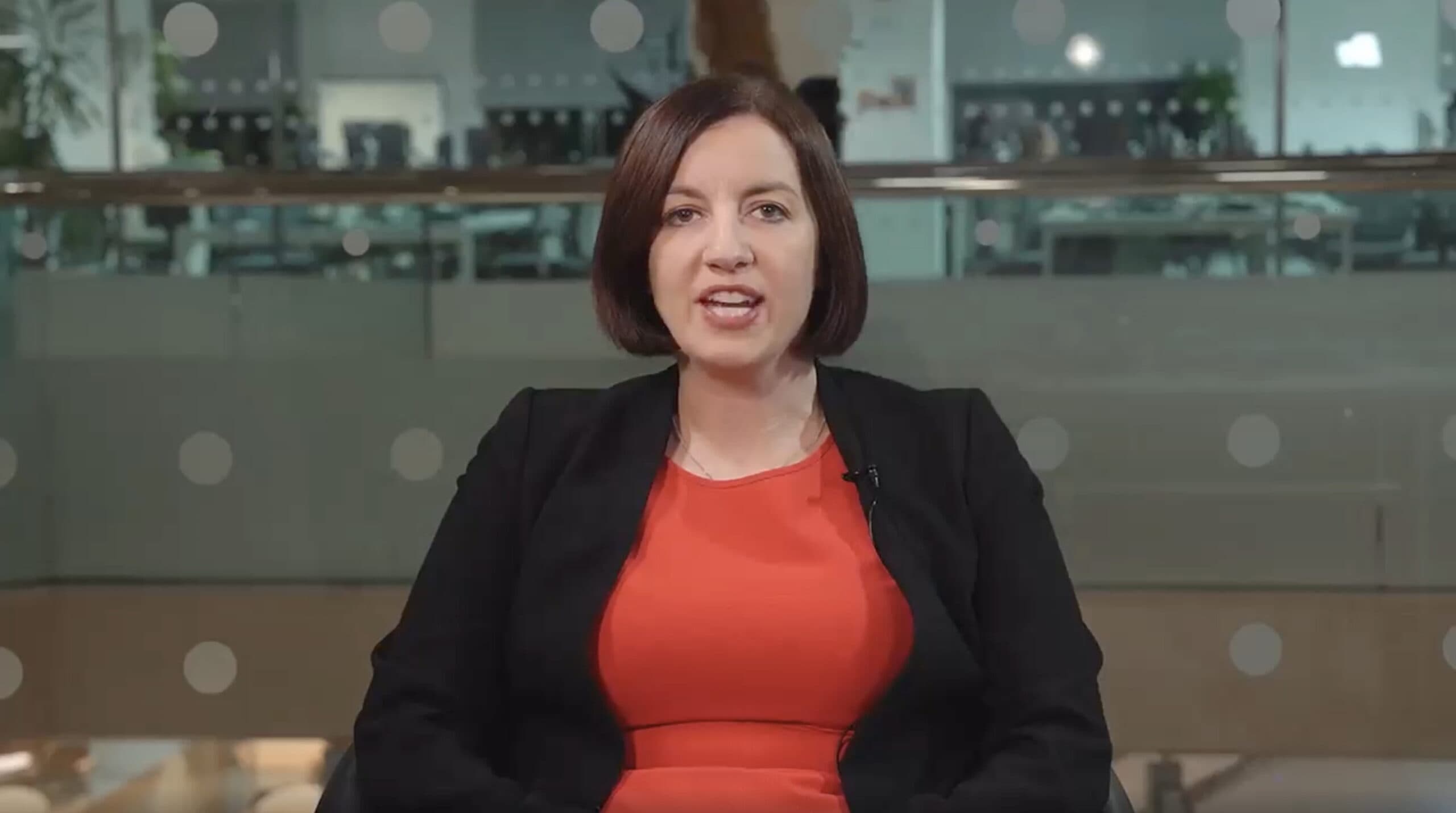
    This week, education secretary Bridget Phillipson recorded a video message to international students in the UK promoting the country’s post-graduation work opportunities.

    Source link

  • Canadian study permit approvals fall far below cap targets

    Canadian study permit approvals fall far below cap targets

    Canadian study permit approvals are on track to fall by 45% in 2024, rather than the 35% planned reduction of last year’s controversial international student caps, new IRCC data analysed by ApplyBoard has revealed.  

    “The caps’ impact was significantly underestimated,” ApplyBoard founder Meti Basiri told The PIE News. “Rapidly introduced policy changes created confusion and had an immense impact on student sentiment and institutional operations.  

    “While aiming to manage student numbers, these changes failed to account for the perspectives of students, and their importance to Canada’s future economy and communities,” he continued.  

    The report reveals the far-reaching impact of Canada’s study permit caps, which were announced in January 2024 and followed by a tumultuous year of policy changes that expanded restrictions and set new rules for post-graduate work permit eligibility, among other changes.  

    For the first 10 months of 2024, Canada’s study permit approval rate hovered just above 50%, resulting in an estimated maximum of 280,000 approvals from K-12 to postgraduate levels. This represents the lowest number of approvals in a non-pandemic year since 2019. 

    Source: IRCC. Disclaimer: Data for 2021-Oct 2024 is sourced from IRCC. Full-year 2024 figures are estimates extrapolated from Jan-Oct 2024 and full-year 2021-2023 IRCC data. Projections may be subject to change based on changing conditions and source data.

    “Even from the early days of the caps, decreased student interest outpaced government estimates,” noted the report, with stakeholders highlighting the reputational damage to Canada as a study destination.  

    “Approvals for capped programs fell by 60%, but even cap-exempt programs declined by 27%. Major source countries like India, Nigeria, and Nepal saw over 50% declines, showing how policies have disrupted demand across all study levels,” said Basiri.  

    Following major PGWP and study permit changes announced by the IRCC in September 2024, four out of five international student counsellors surveyed by ApplyBoard agreed that Canada’s caps had made it a less desirable study destination. 

    Though stakeholders across Canada recognised the need to address fraud and student housing issues, many had urged the federal government to wait until the impact of the initial caps was clear before going ahead with seemingly endless policy changes.  

    At the CBIE conference in November 2024, immigration minister Marc Miller said he “profoundly disagreed” with the prevailing sector view that the caps and subsequent PGWP and permanent residency restrictions had been an “overcorrection”.

    Post-secondary programs, which were the primary focus of the 2024 caps, were hit hardest by the restrictions, with new international enrolments at colleges estimated to have dropped by 60% as a result of the policies.  

    While Canada’s largest source destinations saw major declines, the caps were not felt evenly across sending countries. Senegal, Guinea and Vietnam maintained year-over-year growth, signalling potential sources of diversity for Canada’s cap era.   

    The report also highlighted Ghana’s potential as a source destination, where approval ratings – though declining from last year – remain 175% higher than figures from 2022. 

    Rapidly introduced policy changes created confusion and had an immense impact on student sentiment

    Meti Basiri, ApplyBoard

    The significant drop in study permit approvals was felt across all provinces, but Ontario – which accounted for over half of all study permit approvals in 2023 – and Nova Scotia have seen the largest impact, falling by 55% and 54.5% respectively.

    Notably, the number of study permits processed by the IRCC dropped by a projected 35% in 2024, in line with the government’s targets, but approval rates have not kept pace.

    When setting last year’s targets, minister Miller only had the power to limit the number of applications processed by the IRCC, not the number of study permits that are approved.  

    The initial target of 360,000 approved study permits was based on an estimated approval rate of 60%, resulting in a 605,000 cap on the number of applications processed. 

    Following new policies such as the inclusion of postgraduate programs in the 2025 cap, Basiri said he anticipated that study permit approvals would remain below pre-cap levels.  

    “While overall student numbers may align with IRCC’s targets, the broader impact on institutional readiness and Canada’s reputation will be key areas to watch in 2025,” he added.  

    Source link

  • New UK government video targets international students

    New UK government video targets international students

    Secretary of state for education, Bridget Phillipson, addressed students considering studying abroad, highlighting the benefits of a UK education and promoting the country’s post-study work opportunities.

    “In the new academic year, we will welcome thousands of international students who will be starting courses in our universities and I hope to see many more in the future,” Phillipson said in the video shared by the UK Council for International Student Affairs (UKCISA).

    “The UK is a wonderful and safe place to study. Our country is home to some of the very best universities in the world – four of the world’s top 10 can be found right here in the UK.

    “An education from a British university has been the springboard for success for so many global trailblazers, from politics to business, from the arts to the sciences, in fact dozens of current and recent world leaders studied here in the UK and our universities have driven some of the most exciting and valuable research anywhere in the world.

    “You could be part of the next groundbreaking wave of research and join a new generation of inspiring leaders,” she told prospective students.

    Phillipson went on to describe some of the ways in which UK universities support their international students through pastoral support, work experience, scholarships and bursaries.

    “You’ll also get have the chance to join Alumni UK – a global group of people from around the world who have studied here. It’s a fantastic professional network that you can tap into to get great advice and guidance.”

    Phillipson went on to promote the UK’s Graduate Route, describing the opportunity which lets graduates “work, live and contribute” in the UK.

    International students forge international friendships so by studying abroad, you can help build bridges between our countries, and these connections help make the world a better, brighter place.

    Bridget Phillipson, UK secretary of state for education

    “Studying in the UK sets you up for success in your career, but it’s more than that. International students forge international friendships so by studying abroad, you can help build bridges between our countries, and these connections help make the world a better, brighter place.”

    Phillipson previously addressed international students in a video not long after stepping into the role in July 2024.

    On the release of the latest video, Anne Marie Graham, UKCISA chief executive, said she was “encouraged” to see the continuing messages of welcome and support from the UK’s education secretary.

    “Current and prospective students will also welcome the secretary of state’s ongoing support for the graduate visa and her reflections on the mutual benefits of a UK education – not just the contributions that international students make to the UK, but the positive impact on their own careers and ambitions,” she told The PIE.

    “We look forward to continuing to work with the UK government to ensure international students are welcomed and supported, from pre-arrival visas to post-graduation work opportunities, so that all international students have a positive experience studying here.”

    Pedram Bani Asadi, chair of the UKCISA’s Student Advisory Group commented: “I welcome the support from this government for international students’ hopes and dreams, and recognition of all the contributions we make to both UK culture and the economy.

    “Having access to the Graduate Route has been absolutely essential for me to be able to reinforce the skills I learnt in my studies and contribute to the UK. I appreciate all the friends and experiences I’ve had here and look forward to continuing my role as a #WeAreInternational student ambassador, and working with the UK government to support my fellow international students to have a positive experience.”

    Since Labour took came into power, sector stakeholders have noted the government’s more welcoming tone toward international students, a marked contrast to the rhetoric of the previous Conservative government.

    Despite a change in rhetoric, the Labour government has shown no intention of reversing the Conservative’s decision to ban international students on UK taught master’s courses from bringing dependants with them to the UK.

    “While the new government has said many positive things about international students, the focus on immigration remains acute,” said Jamie Arrowsmith, director of Universities UK International in an update to sector earlier this month.

    The UK’s international educations strategy is currently under review, and the rollout of the new approach is set for April.

    Sector leaders gathered at the QS Reimagine Education summit in London late last year to discuss priorities for the UK’s international education sector going forward, giving suggestions for a refreshed strategy, which included improved post-study work rights.

    Source link

  • LA Wildfires Reduce Classrooms to Ashes, Uproot Students’ Lives – The 74

    LA Wildfires Reduce Classrooms to Ashes, Uproot Students’ Lives – The 74

    Republish This Article

    We want our stories to be shared as widely as possible — for free.

    Please view The 74’s republishing terms.


    Source link

  • LA Schools Reopen, But Recovery Will Be Long and Painful – The 74

    LA Schools Reopen, But Recovery Will Be Long and Painful – The 74


    Get stories like this delivered straight to your inbox. Sign up for The 74 Newsletter

    It was just after 1 am when Los Angeles charter school superintendent Ian Mcfeat started getting text messages and phone calls at a relative’s house where he was sheltering from the fires. 

    His neighbors said his house was burning down in the wildfires – along with his entire Altadena neighborhood of Los Angeles.

    Aveson School of Leaders, which McFeat runs and where his kids attended school just three blocks from his house, was also burning.

    Unable to sleep, Mcfeat drove away from his in-law’s house that he’d been evacuated to and made the drive back to Altadena.

    He drove through the fire lines and into his neighborhood to see if he could salvage anything, save anyone, or put out the fires that had raged on the east side for more than 48 hours straight, and decimated the Palisades in the west. 

    He was greeted with a scene out of a horror movie. Fueled by a violent windstorm and piles of brush left from a particularly wet winter last year, the firestorm was like a tornado shooting flames, blasting through his neighborhood.

    “It was like driving through a bomb scene,” said Mcfeat. “There were homes exploding. I probably shouldn’t have been there.” 

    Despite the devastating losses, Mcfeat can’t imagine not rebuilding his home and school right where they were in Altadena. But the road to recovery will be a long and painful one.

    “No doubt about it. We are going to rebuild,” said Mcfeat. Aveson has started a GoFundMe. At this point, a new site for the school has not been identified. The district hasn’t been able to help them yet.

    “I don’t know what we’re going to do,” said Mcfeat.

    The wildfires that burned Los Angeles this month are the costliest and most destructive in the city’s history, displacing more than 150,000 residents and killing at least 25 people. Two massive blazes fed by windstorms, the Palisades Fire and the Eaton Fire, simultaneously scorched the city from the sea to the mountains, filling the air with vast plumes of ash and smoke.

    As the wind and flames began to retreat last week, and firefighters gained control of the fires, schools began to reopen. And the kids began to return to class.

    The Los Angeles Unified School District, which is by far the largest district of about 80 in Los Angeles County, resumed instruction Monday after being totally closed since last Thursday. Seven schools remain shut because they’re located in evacuation zones. Another three won’t reopen because their buildings were badly burned or destroyed in the fires.  

    Dozens of much smaller districts in Los Angeles County also reopened this week, with the exceptions of two districts, Pasadena Unified, which encompasses Altadena, and La Cañada Unified, which neighbors Altadena to the west. 

    The Eaton fire has destroyed at least five schools but was mostly contained by Friday. 

    Kids from two of the LAUSD schools that burned in the Palisades, Marquez Charter Elementary School and Palisades Charter Elementary School, were placed, with intact school rosters, in close-ish LAUSD school buildings that already had other schools in them.

    The students who attended the burned schools were given their own entrances, classrooms and courtyards for kids to play. When parents dropped them off at class this week, there were a lot of tearful reunions.

    Families from Palisades Charter were somber, but excited to return to normalcy with their new space located inside of Brentwood Science Magnet School.  

    Joseph Koshki, a parent from the Palisades whose son attends third grade at Palisades Charter, walked holding hands with his son to their new classroom at Brentwood Science, which had been stacked with balloons.

    “When he saw his school burned on the news he was crying for days,” Koshki said of his child. “But when he heard that he was going to his new school with his old friends, he was so happy”.

    Nina Belden, a parent of a Palisades Charter student who had made an emergency evacuation from her house in the Palisades with her family, said it was important for the students at her daughter’s school to stay together and receive in-person instruction.

    “We were worried they were going to do something like remote learning,” said Beldon.

    Marquez Charter, which also burned in the Palisades fire, has a long history in the community, having opened in 1955 when the Palisades still had a frontier feel, before the neighborhood became a favorite of Hollywood stars and media execs.

    For Victoria Flores, who works as a paraeducator at Marquez, the school is part of her family. Flores went to Marquez when she was in elementary school, and her mother works in the cafeteria.

    “It was my home away from home. We are devastated by what happened,” Flores said.

    But Flores said she and the rest of the staff were glad to be relocated together at a LAUSD school called Nora Sterry, about ten miles from the burned Marquez campus.

    “We are a really close family,” said Flores. “That’s helped us a lot.”

    Upstairs at Nora Sterry, Clare Gardner’s class had about eight of twenty students show up on the first day of relocation.

    Her third-grade class was playing with clay and Mrs. Gardner, who is a twenty-seven-year veteran of Marquez, held back her tears as she helped students arrive into class.

    “We always call it the Marquez family,” Gardner said as the children greeted each other.

    One boy in Mrs. Gardner’s class said he was happy to be around his friends and teacher but sad about his classroom fish and books, which were lost in the fire.

    Later in the morning, LAUSD Superintendent Alberto Carvalho went to visit parents at Nora Sterry.

    After nearly a week off school, Carvalho says attendance is still below normal.

    “I think where that attendance is lacking is in schools that were directly affected” by the fires, Carvalho said.

    Also hurting attendance, Carvalho said, is the fact that many families are enduring temporary relocations, while others lack stable housing entirely.

    LAUSD staff attendance is back to normal, he said, while student attendance is about 88% — down from an average of about 90%, representing about 10,000 fewer students than normal.

     “As conditions of the families begin to normalize and stabilize, those [attendance] numbers will rise,” said Carvalho.

    For other schools in other areas of Los Angeles, recovery may be longer in the making. 

    Bonnie Brinecomb, principal of Odyssey Charter School – South in Altadena, which burned to the ground in the Eaton Fire, estimates that the homes of 40% of the students enrolled in the school also burned.

    Families and school staffers are scrambling to ensure displaced families have food, shelter and clothing, Brinecomb said. Some students are turning up for daycare at a nearby Boys and Girls Club that offered to take them in.  

    Brinecomb said Odyssey has partnered with McFeat’s school Aveson to search for new facilities. But the double loss of students’ homes and the schools’ campuses is a gutpunch.  

    “It’s just heartbreak. Pure shock,” she said. “You don’t even process how bad of a situation just happened.”

    Like Aveson, Odyssey has launched an online fundraiser and Brinecomb says the school will rebuild. How long that will take, though, remains an open question.  

    From the perspective of displaced children and families, the faster things return to normal, the better, said Dr. Frank Manis, professor emeritus of psychology at the University of Southern California. 

    The experience of trauma can intensify if routines are disrupted for longer periods, and the intensity of the disruption matters as well, said Manis. Kids who lost their homes to fires may have a harder time bouncing back than those who only lost their schools, he said.    

    “It’s sort of on that spectrum of wartime PTSD, but not as bad,” said Manis. “So what it could lead to is nightmares, difficulty sleeping, and emotional or behavior problems that can last for quite a while.”

    Children fighting post-traumatic stress from the fires may become withdrawn, or act out in class, said Manis. But mostly, he said, the research from past natural disasters shows that even children badly impacted by the fires may begin to feel normal within a few months. 

    “Kids are pretty resilient,” said Manis. “But trauma can disappear for a while, and then it can resurface later. When everyone’s forgotten how bad it was, it can resurface.” 


    Get stories like these delivered straight to your inbox. Sign up for The 74 Newsletter

    Source link

  • PowerSchool Got Hacked. Now What? – The 74

    PowerSchool Got Hacked. Now What? – The 74


    Get stories like this delivered straight to your inbox. Sign up for The 74 Newsletter

    Were you a current or former student in the last few decades? Or a parent? Or an educator? 

    If so, your sensitive data — like Social Security numbers and medical records — may have fallen into the hands of cybercriminals. Their target was education technology behemoth PowerSchool, which provides a centralized system for reams of student data to damn near every school in America.

    Given the cyberattack’s high stakes and its potential to harm millions of current and former students, I teamed up Wednesday with Doug Levin of the K12 Security Information eXchange to moderate a timely webinar about what happened, who was affected — and the steps school districts must take to keep their communities safe.

    Sign-up for the School (in)Security newsletter.

    Get the most critical news and information about students’ rights, safety and well-being delivered straight to your inbox.

    Concern about the PowerSchool breach is clearly high: Some 600 people tuned into the live event at one point and pummeled Levin and panelists Wesley Lombardo, technology director at Tennessee’s Maryville City Schools; Mark Racine, co-founder of RootED Solutions; and Amelia Vance, president of the Public Interest Privacy Center, with questions. 

    PowerSchool declined our invitation to participate but sent a statement, saying it is “working to complete our investigation of the incident and [is] coordinating with districts and schools to provide more information and resources (including credit monitoring or identity protection services if applicable) as it becomes available.”

    The individual or group who hacked the ed tech giant has yet to be publicly identified.

    Asked and answered: Why has the company’s security safeguards faced widespread scrutiny? What steps should parents take to keep their kids’ data secure? Will anyone be held accountable?

    Watch the webinar here.


    In the news

    Oklahoma schools Superintendent Ryan Walters, who says undocumented immigrants have placed “severe financial and operational strain” on schools in his state, proposed rules requiring parents to show proof of citizenship or legal immigration status when enrolling their kids — a proposal that not only violates federal law, but is likely to keep some parents from sending their children to school. | The 74

    • Not playing along: Leaders of the state’s two largest school districts — Oklahoma City and Tulsa — rebuked the proposal and said they would not collect students’ immigration information. Educators nationwide fear the incoming Trump administration could carry out arrests on campuses. | Oklahoma Watch
       
    • Walters filed a $474 million federal lawsuit this week alleging immigration enforcement officials mismanaged the U.S.-Mexico border, leading to “skyrocketing costs” for Oklahoma schools required “to accommodate an influx of non-citizen students.” | The Oklahoman
       
    • Timely resource guide: With ramped-up immigration enforcement on the horizon — and with many schools already sharing student information with ICE — here are the steps school administrators must take to comply with longstanding privacy and civil rights laws. | Center for Democracy & Technology

    A federal judge in Kentucky struck down the Biden administration’s Title IX rules that enshrined civil rights protections for LGBTQ+ students in schools, siding with several conservative state attorneys general who argued that harassment of transgender students based on their gender identity doesn’t constitute sex discrimination. Mother Jones

    Fires throw L.A. schools into chaos: As fatal wildfires rage in California, the students and families of America’s second-largest school district have had their lives thrown into disarray. Schools serving thousands of students were badly damaged or destroyed. Many children have lost their homes. Hundreds of kids whose schools burned down returned to makeshift classrooms Wednesday after losing “their whole lifestyle in a matter of hours.” | The Washington Post 

    • At least seven public schools in Los Angeles that were destroyed, damaged or threatened by flames will remain closed, along with campuses in other districts. | The 74

    Has TikTok’s time run out? With a national ban looming for the popular social media app, many teens say they’re ready to move on (and have already flocked to a replacement). | Business Insider

    Instagram and Facebook parent company Meta restricted LGBTQ+-related content from teens’ accounts for months under its so-called sensitive content policy until the effort was exposed by journalist Taylor Lorenz. | Fast Company

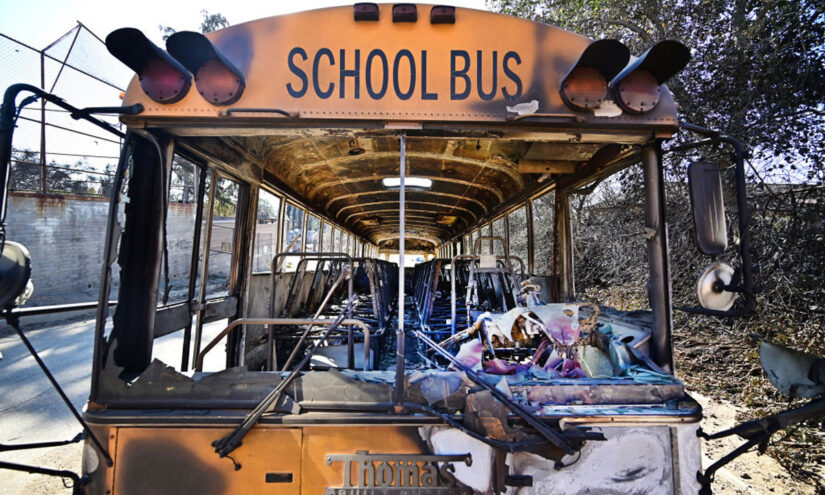
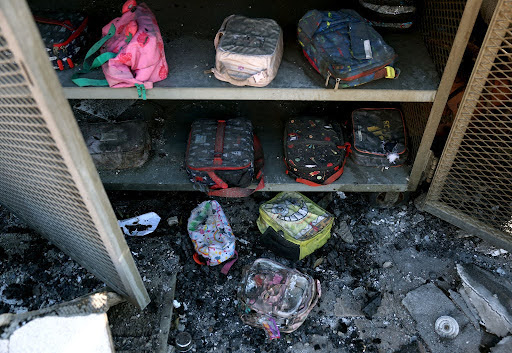
    Students’ lunch boxes sit in a locker at California’s Marquez Charter Elementary School, which was destroyed by the Palisades fire on Jan. 7. (Photo by Justin Sullivan/Getty Images)

    The Federal Communications Commission on Thursday announced the participants in a $200 million pilot program to help schools and libraries bolster their cybersecurity defenses. They include 645 schools and districts and 50 libraries. | FCC

    Scholastic falls to “furry” hackers: The education and publishing giant that brought us Harry Potter has fallen victim to a cyberattacker, who reportedly stole the records of some 8 million people. In an added twist, the culprit gave a shout-out to “the puppygirl hacker polycule,” an apparent reference to a hacker dating group interested in human-like animal characters. | Daily Dot

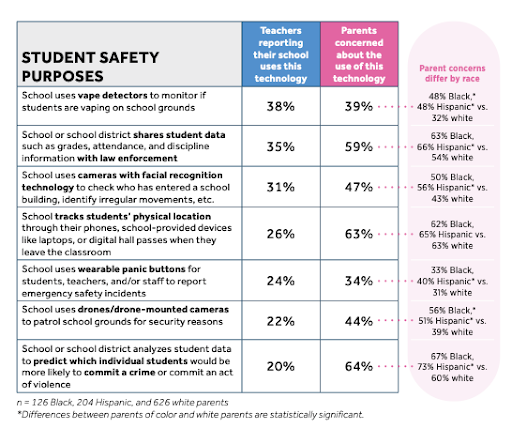
    Not just in New Jersey: In a new survey, nearly a quarter of teachers said their schools are patrolled by drones and a third said their schools have surveillance cameras with facial recognition capabilities. | Center for Democracy & Technology

    The number of teens abstaining from drugs, alcohol and tobacco use has hit record highs, with experts calling the latest data unprecedented and unexpected. | Ars Technica


    ICYMI @The74

    Librarians Gain Protections in Some States as Book Bans Soar

    RFK Jr. Could Pull Many Levers to Hinder Childhood Immunization as HHS Head

    Feds: Philadelphia Schools Failed to Address Antisemitism in School, Online


    Emotional Support

    New pup just dropped.

    Meet Woodford, who, at just 9 weeks, has already aged like a fine bourbon. I’m told that Woody — and the duck, obviously — have come under the good care of 74 reporter Linda Jacobson’s daughter.


    Get stories like these delivered straight to your inbox. Sign up for The 74 Newsletter
    Source link