

Category: Newsletter

  • Preemies often miss out on the help they need

    Preemies often miss out on the help they need

    Every year, tens of thousands of infants are born prematurely, at a low birthweight, or with other conditions that would make them automatically eligible for therapeutic services that could help them thrive. 

    When everything goes smoothly, early intervention provides those services, required by federal law for children ages birth to 3. Funding sources for the program can vary, but it’s often paid for by a mix of federal, state, local, and private insurance dollars.

    But far too few of the youngest children actually receive that help. (It’s an issue I wrote about earlier this year.) One particular gap is in services provided to infants from birth to 1. Only about 1.3 percent of babies that age receive early intervention services, compared to 7.5 percent of 2- to 3-year-olds, according to a new report from the think tank New America.

    Kayla Khan, a long-time speech therapist, has experienced that gap herself. 

    When her infant daughter was released after a month and a half in neonatal intensive care, she asked the discharge team about early intervention services. Because of her background, she knew about the therapies. 

    At the time, the family lived in the Washington D.C. area, and no one at the hospital was helpful. “They said, ‘You don’t want that,’ or, ‘It’s not going to help you,’” Khan recalled.

    After moving to Seattle a few months later, Khan finally connected with early intervention services that provided physical and feeding therapy to her daughter. She now helps lead a decade-old effort in Seattle to provide care and support specifically to families of “tiny babies” who are transitioning from the hospital to home.

    The program relies on building trust and communication with hospital staff to ensure eligible babies get referred to early intervention and speeding up the evaluation timeline so babies get seen within three days of a referral — “really, really, really fast” for a system where the requirement for referral is 45 days, Khan said. Her program also connects families with therapists who are skilled and trained in the specific needs of newborns. 

    “We’re making this process that was designed for all children, birth to 3, work for the tiniest babies,” Khan said.

    This kind of targeted attention for the youngest is desperately needed, according to the New America report and another that focused on Illinois, from early nonprofit advocacy group Start Early. (I recently completed a reporting fellowship with New America which supported some of my writing on early intervention, among other topics.)  

    Among the two reports’ recommendations:

    Make the list of conditions that automatically qualify a baby for early intervention easy to understand and find. States have identified scores of different qualifying conditions that make a child more likely to develop a delay, including extreme prematurity, low birthweight, a parent with a substance use disorder, and child welfare involvement. But, as the New America report points out, finding a user-friendly list of the conditions can be a challenge. “The eligibility criteria and the way things work varies so much from one state to the next,” said report co-author Carrie Gillispie, the Early Development & Disability project director at New America.   

    The Start Early report noted that in a related study, two families were judged ineligible for early intervention despite their children having medical conditions that should have made them automatically eligible.

    Consider co-locating early intervention staff in the NICU to make the transition as smooth as possible. Coordinators would be physically present in NICUs to build relationships, participate in medical rounds, and lead the process to enroll children in early intervention programs, the Start Early authors wrote. Both reports stress the importance of providing the family with a personal connection to early intervention before a baby gets discharged from the hospital.

    Improve coordination and communication with the early intervention system, hospitals and pediatricians. Pediatricians are not always notified when doctors in the hospital refer a child to early intervention services. And well-child visits are often so short that physicians miss the full developmental picture. Too often, referrals come after a child is already starting to struggle, said Sarah Gilliland, a senior policy analyst in the New Practice Lab at New America, who co-wrote the report.

    Bridge cultural and language barriers with families by hiring more multilingual hospital and early intervention staff. Cultural divides are pervasive throughout the early intervention system, where the overwhelming majority of the therapists and other providers in many communities are white, English-speaking women. But even simple forms often go untranslated: One survey found that nearly three-quarters of state early intervention referral forms are only available in English, the New America report noted. The  report also stressed that families should be reassured that early intervention services are meant to be support, not surveillance. “Hesitant families might benefit from a connection with families within their own communities who can explain what to expect from early intervention,” the authors wrote.

    Strengthen electronic referral systems and centralize enrollment in early intervention programs. When I reported on the too-often broken path from the NICU to early intervention in Chicago, I heard stories of a system that relied heavily on faxing paper forms. NICU physicians often had no idea what happened with referrals they made. Indeed, surveys have found that only a fraction of early intervention coordinators have access to technology that links children’s electronic health records to the referral system.

    Some states and communities are introducing technological advances which could be implemented more widely, the New America report noted. For instance, one state is trying to address the problem using “e-referrals,” which share an infant’s medical records directly with the early intervention system. 

    We want to hear from you

    We want to help you make sense of the first year of the Trump administration and the effects on education. What have you experienced? What do you want to know more about? Tell us, and you will help inspire reporting by our journalists. Email [email protected].

    This story about preemies was produced by The Hechinger Report, a nonprofit, independent news organization focused on inequality and innovation in education. Sign up for the Hechinger newsletter.

    The Hechinger Report provides in-depth, fact-based, unbiased reporting on education that is free to all readers. But that doesn’t mean it’s free to produce. Our work keeps educators and the public informed about pressing issues at schools and on campuses throughout the country. We tell the whole story, even when the details are inconvenient. Help us keep doing that.

    Join us today.

    Source link

  • Many children with ADHD miss a crucial step in treatment

    Many children with ADHD miss a crucial step in treatment

    When pediatricians diagnose preschoolers with attention deficit hyperactivity disorder, there are clear steps they are supposed to take.

    Families should first be referred to behavior therapy, which teaches caregivers how to better support their children and manage challenging behaviors that may be related to ADHD. If therapy isn’t making a significant difference, the American Academy of Pediatrics advises, pediatricians can then consider medication.

    Nationwide, this process — behavior therapy, then medication if needed — isn’t being followed as often as it should, according to a study recently released by Stanford Medicine and published in JAMA Network Open. Instead, more than 42 percent of 3- to 5-year-olds with ADHD were prescribed medication within a month of their diagnosis.

    Missing out on behavior therapy has worrisome implications for children and families, said Dr. Yair Bannett, assistant professor of pediatrics at Stanford Medicine and lead author of the study. Behavioral management training for parents over the course of several months has been found to reduce children’s ADHD symptoms and behavioral problems, and improve parent skills and their relationships with their children. 

    Without that support, families may be left facing additional challenges. Behavioral training “reduces the chaos in the house and can improve the quality of life for the parents and the child,” Bannett said. 

    There are several reasons families may be missing this intervention. Some pediatricians aren’t familiar with the purpose of behavior therapy, Bannett added, which is specifically aimed at the adults who support children with ADHD, not the children. “It’s really more of an advanced type of parenting course,” he said. Families also may have trouble finding affordable local therapists.

    Bannett said parents should use three key practices to support young children with ADHD. (These strategies also work well for teachers, he added.)

    Focus on building a strong, positive relationship: Having a strong attachment between the child and parent or teacher is an important first step to managing behavior, Bannett said. That means spending quality one-on-one time with the child. “That’s the child’s motivation, they want to please you,” he added. “Without that first piece, none of this will work.”

    Use positive reinforcement: Rather than punishing a child’s negative behavior, Bannett said, parents and teachers will see more success if they praise good behaviors and develop reward systems to encourage them.  

    Adjust the child’s environment: Children with ADHD may thrive with simple environmental changes, such as “visual schedules” — charts that use pictures to show a child daily activities or tasks — and a consistent, structured routine.

    Parents who can’t find in-person therapists can substitute online therapy, Bannett said. The training is also useful for families even after their children are prescribed medication. 

    To make sure more families have access to helpful strategies, Bannett would like to see more education for doctors and clinicians on these best practices. 

    “The pediatricians could also counsel families in the office about these techniques,” Bannett said. “Some written materials and resources could be enough” to at least introduce these practices, he added. “That’s what I’m hoping could make a change.”

    Reading list

    This story about children with ADHD was produced by The Hechinger Report, a nonprofit, independent news organization focused on inequality and innovation in education. Sign up for the Hechinger newsletter.

    The Hechinger Report provides in-depth, fact-based, unbiased reporting on education that is free to all readers. But that doesn’t mean it’s free to produce. Our work keeps educators and the public informed about pressing issues at schools and on campuses throughout the country. We tell the whole story, even when the details are inconvenient. Help us keep doing that.

    Join us today.

    Source link

  • Rural Americans support more government spending on child care

    Rural Americans support more government spending on child care

    Hello! This is Christina Samuels, the early education editor here at Hechinger.

    By now, I hope you’ve had a chance to read my colleague Jackie Mader’s story about the important role that Head Start plays in rural communities. While Jackie set her story in western Ohio, she also interviewed Head Start parents and leaders in other parts of the country and collected their views for a follow-up article.

    In a fortunate bit of timing, the advocacy group First Five Years Fund published the results of a survey it commissioned on rural Americans and their feelings on child care access and affordability. Like the people Jackie interviewed, the survey respondents, more than half of whom identified as supporters of President Donald Trump, said they had very positive views of Head Start. The federally funded free child care program received positive marks from 71 percent of rural Republicans, 73 percent of rural independents and 92 percent of rural Democrats.

    The survey also found that 4 out of 5 respondents felt that finding quality child care is a major or critical problem in their part of the country. Two-thirds of those surveyed felt that spending on child care and early education programs is a good use of taxpayer dollars, and a little more than half said they’d like to see more federal dollars going to such programs.

    First Five Years Fund was particularly interested in getting respondents to share their thoughts on Head Start, said Sarah Rubinfield, the managing director of government affairs for First Five Years Fund. The program has been buffeted by regional office closures and cuts driven by the administration’s Department of Government Efficiency. 

    “We recognize that these are communities that often have few options for early learning and care,” Rubinfield said.

    In the survey, rural residents said they strongly supported not just the child care offered by Head Start, but the wraparound services such as healthy meals and snacks and the program’s support for children with developmental disabilities. Though Head Start programs are federally funded, community organizations are the ones in charge of spending priorities.

    “Rural voters want action. They support funding for Head Start and for child care. They want Congress to do more,” Rubinfield said. Though the “big beautiful bill” signed into law in July expands the child care tax credit for low-income families, survey respondents “recognized that things were not solved,” she added.

    The First Five Years Fund survey was released just a few days before a congressional standoff led to a government shutdown. The shutdown is not expected to touch Head Start immediately, said Tommy Sheridan, the deputy director of the National Head Start Association, in an interview with The New York Times. The 1,600 Head Start programs across the country receive money at different points throughout the calendar year; eight programs serving about 7,500 children were slated to receive their federal funding on Oct. 1, Sheridan told the Times. All should be able to continue operating, as long as the shutdown doesn’t last more than a few weeks, he said. 

    “We’re watching with careful concern but trying not to panic,” Rubinfield said. “We know the impacts may not be immediate, but the longer this goes on, the harder the impacts may be for families and programs.”

    This story about rural Americans was produced by The Hechinger Report, a nonprofit, independent news organization focused on inequality and innovation in education. Sign up for the Hechinger newsletter.
    The Hechinger Report provides in-depth, fact-based, unbiased reporting on education that is free to all readers. But that doesn’t mean it’s free to produce. Our work keeps educators and the public informed about pressing issues at schools and on campuses throughout the country. We tell the whole story, even when the details are inconvenient. Help us keep doing that.

    Join us today.

    Source link

  • What I learned about Head Start in rural America

    What I learned about Head Start in rural America

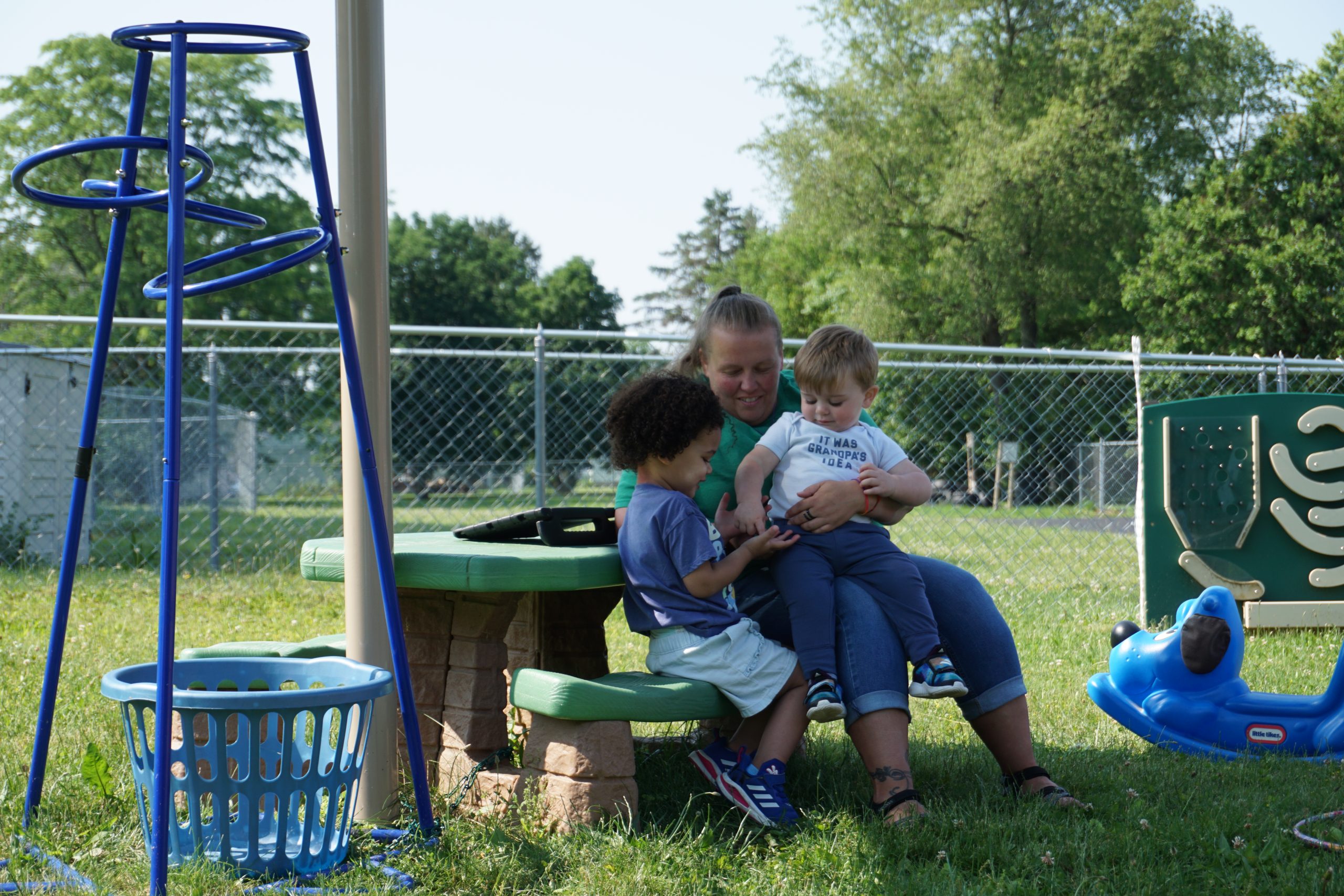
    When Starr Dixon heard the Trump administration was floating a proposal last spring to eliminate Head Start, the 27-year-old parent in rural Michigan cried for a week.

    The free, federally funded early learning program has been life-changing for her and her young daughter, she said. It provided stability after Dixon, who lives about 100 miles north of Lansing, left a yearslong abusive relationship. 

    While her 3-year-old daughter has blossomed socially, emotionally and verbally in the program during the last year and a half, Dixon has taken on numerous volunteer positions with Head Start, gaining experience that she can put on her resume after a 7-year gap in employment. She hopes to ultimately apply for a job at Head Start. 

    “It has just completely transformed my life,” she said.

    This year, I talked to people in communities across rural America and learned how Head Start is essential in places where there are few other child care options. Head Start also provides an economic boost for these areas and serves as direct support for parents, many of whom go on to volunteer for or get jobs at their local programs. 

    Related: Young children have unique needs and providing the right care can be a challenge. Our free early childhood education newsletter tracks the issues. 

    Though my reporting focused on western Ohio, parents in other parts of the country, like Dixon, shared similar stories with me about how critical Head Start is to their lives. But since January, the Trump administration has taken what some call a “death by a thousand cuts” approach to the program, firing federal staff, closing regional offices and offering no increase in spending on Head Start in budget proposals. 

    All those moves have caused chaos and upheaval. In Alabama, Jennifer Carroll, who oversees 39 Head Start sites run by the Community Action Partnership of North Alabama, told me she is reassuring the families she works with that her program’s funding is stable for at least the rest of the year. Carroll fears that if parents think Head Start funding is in jeopardy, they’ll pull their children out of the program, disrupting their learning.

    Another example: Keri Newman Allred is the executive director of Rural Utah Child Development Head Start, which operates Head Start programs spread across 17,000 square miles in central and east Utah. Newman Allred estimates her programs, which employ 91 residents and serve 317 children, can survive for one more year. After that, without more money, they will have to make cuts to the program if they want to give teachers a raise to meet inflation. 

    Related: Rural Americans rely on Head Start. Federal turmoil has them worried 

    While other Head Start programs can supplement operations with private donations, Newman Allred’s programs serve some of the most sparsely populated parts of America, known as “frontier counties,” where there are no deep-pocketed philanthropies. Her programs rely solely on federal funding. 

    In April, the Department of Government Efficiency, or DOGE, abruptly shuttered five of Head Start’s 10 regional offices. Programs in Maine that were without directors or that needed assistance with regulations, finances or federal requirements have been left to go it alone without consistent, daily support.

    “The closure of regional offices has all but crippled programs,” said Sue Powers, senior director of strategic initiatives at the Aroostook County Action Program in the rural, northernmost tip of Maine. “No one’s checking in. When you’re operating in a program that is literally in crisis, and you need [regional staff] and do not have them, it’s more than alarming.”

    Contact staff writer Jackie Mader at 212-678-3562 or [email protected].

    This story about Head Start was produced by The Hechinger Report, a nonprofit, independent news organization focused on inequality and innovation in education. Sign up for the Hechinger newsletter.

    The Hechinger Report provides in-depth, fact-based, unbiased reporting on education that is free to all readers. But that doesn’t mean it’s free to produce. Our work keeps educators and the public informed about pressing issues at schools and on campuses throughout the country. We tell the whole story, even when the details are inconvenient. Help us keep doing that.

    Join us today.

    Source link

  • Helping kids learn how their brains work

    Helping kids learn how their brains work

    What if improving children’s mental health — and life outcomes — could be done by teaching kids how their brains work?

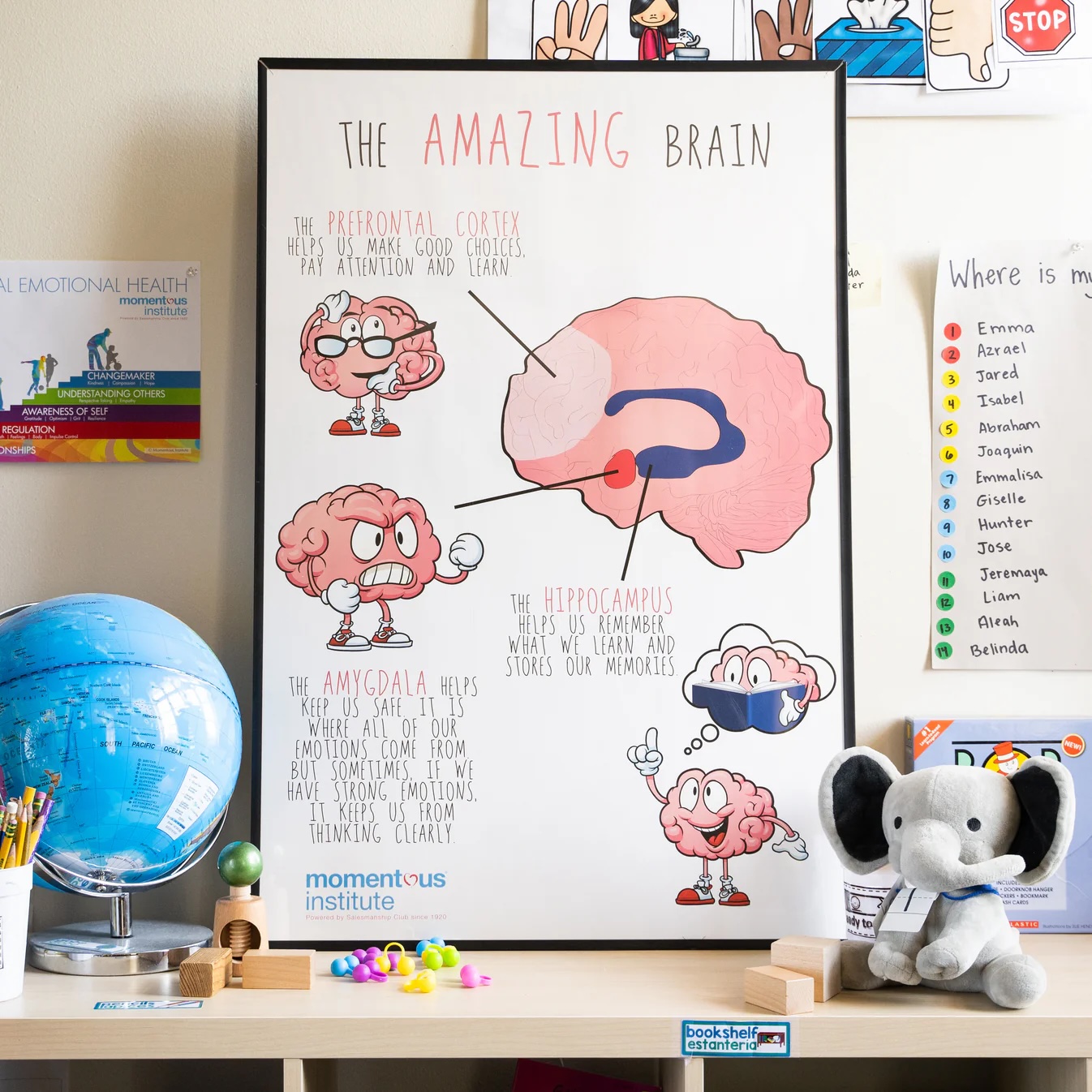
    That’s a key idea behind the approach of teachers at Momentous School in Dallas, a private elementary school that serves 225 students, most of whom come from low-income families. Each day, educators present lessons on neuroscience and mindfulness, from the youngest learners all the way up to fifth graders. 

    Preschoolers in the school’s 3-year-old classroom learn about the brain by singing “The Brain Song” to the tune of “Bingo” (“I have a brain in my head/And it’s for thinking”). They practice mindfulness by lying down with stuffed animals on their stomachs and watching them move up and down as they breathe.

    Older students learn calming strategies like slowly counting each finger on their hands while breathing in and out. Classrooms offer tactile models of the brain to help students learn about different parts such as the prefrontal cortex, which controls such processes as executive function and problem solving, and the brain stem, which regulates breathing and blood pressure.

    This focus on mindfulness is happening in schools across the country, according to the Child Mind Institute, a nonprofit focused on children’s mental health. Experts say the goal is teaching self-awareness and regulation.

    “Once the kids feel they can calm themselves, even just through breathing it’s like the ‘wow’ moment,” said Rick Kinder, creator of a mindfulness program called “Wellness Works in Schools,” in an article by the Child Mind Institute.

    At Momentous School, conversations about the brain continue throughout the day, as teachers can be heard encouraging students to identify their emotions or asking, “What’s your amygdala saying to you in this moment?” according to Jessica Gomez, a psychologist and executive director of Momentous Institute, the Dallas-based mental health nonprofit that operates the school. (The amygdala processes emotions in the brain.)

    Through these frequent discussions and additional lessons on mental health and healthy relationships, teachers are “trying to normalize these things as part of the human condition versus something that is stigmatizing,” Gomez said. The school also holds regular parent nights to educate families on how the brain works and teach emotional regulation strategies that families can practice together at home.

    Momentous School, which launched in 1997 and is funded by philanthropic donations, was developed to put into practice mental health and brain science research from Momentous Institute*. A recent study by Momentous Institute and the Center for BrainHealth at the University of Texas at Dallas found this approach may be contributing to positive outcomes for graduates of the school. Of the 73 Momentous School students who went on to graduate from high school in 2016 through 2018, 97 percent earned a high school diploma and 48 percent earned a college degree.

    These findings come at a time when lessons on emotions, relationships and social awareness, often referred to as social and emotional learning, have become a flashpoint in education and culture wars. Studies show such lessons can improve academic performance: Other researchers unaffiliated with Momentous School have also found that teaching about the brain can provide motivation for students and improve academic and social development. 

    As teachers and students head back to school and face new routines and social situations, now is a good time to build relationships and introduce even young students to ideas about how their brain works, Gomez said. Although many students at Momentous deal with challenges such as poverty, she believes that the school’s emphasis on mental health and brain science has helped families to better cope with those pressures. 

    “The point isn’t to never have stress in your life, it’s to know what to do with it,” Gomez said. “Children and parents having agency and tools helps them know how to navigate life stressors, which has a buffering effect on their brain.” 

    *Clarification: This story has been updated to clarify that Momentous School was developed based on research by Momentous Institute.

    Contact staff writer Jackie Mader at 212-678-3562 or [email protected].

    This story about neuroscience in education was produced by The Hechinger Report, a nonprofit, independent news organization focused on inequality and innovation in education. Sign up for the Hechinger newsletter.

    The Hechinger Report provides in-depth, fact-based, unbiased reporting on education that is free to all readers. But that doesn’t mean it’s free to produce. Our work keeps educators and the public informed about pressing issues at schools and on campuses throughout the country. We tell the whole story, even when the details are inconvenient. Help us keep doing that.

    Join us today.

    Source link

  • Landmark free preschool program reaches too few kids

    Landmark free preschool program reaches too few kids

    In the 1980s, a public interest law group sued the state of New Jersey, saying that the way it funded education left its low-income, urban school districts at a disadvantage compared to wealthier, suburban districts.

    The lawsuit, Abbott v. Burke, yielded a number of different decisions, including a requirement that the state offer free, full-day, high-quality preschool for children ages 3 and 4 in 31 school districts.

    This new school year marks the 26th since the program was created. Researchers have found that children who attend the preschool program are better prepared for school later on, but enrollment has been dwindling. And with New Jersey leaders now focused on bringing preschool to all districts, supporters worry that the early learning program focused on children in low-income areas may not get the attention it needs.

    Park perk for kids

    Did you know every fourth grader and their family can get free admission to national parks, monuments and forests? The Sierra Club’s Outdoors for All program launched in 2015 and offers free passes each school year. Vouchers for students can be downloaded through the program’s official website. 

    This story about free preschool was produced by The Hechinger Report, a nonprofit, independent news organization focused on inequality and innovation in education. Sign up for the early childhood  newsletter.

    The Hechinger Report provides in-depth, fact-based, unbiased reporting on education that is free to all readers. But that doesn’t mean it’s free to produce. Our work keeps educators and the public informed about pressing issues at schools and on campuses throughout the country. We tell the whole story, even when the details are inconvenient. Help us keep doing that.

    Join us today.

    Source link

  • Racial bias affects early math education. Researchers are trying to stop that

    Racial bias affects early math education. Researchers are trying to stop that

    The early years are a critical time to teach the foundations of math. That’s when children learn to count, start identifying shapes and gain an early understanding of concepts like size and measurement. These years can also be a time when children are confronted with preconceived notions of their abilities in math, often based on their race, which can negatively affect their math success and contribute to long-standing racial gaps in scores. 

    These are some of the motivating factors behind the Racial Justice in Early Math project, a collaboration between the Erikson Institute, a private graduate school focused on child development, and the University of Illinois Chicago. The project aims to educate teachers and provide resources including books, teacher tips and classroom activities that help educators combat racial bias in math instruction.  

    I sat down with Danny Bernard Martin, professor of education and mathematics at the University of Illinois Chicago, project director Priscila Pereira and Jennifer McCray, a research professor at the Erikson Institute, to learn more about their work. This conversation has been edited for length and clarity.

    What are some of the key examples of racial injustice that you see in early math education?

    Martin: If I say to you, ‘Asians are good at math,’ that’s something that you’ve heard, we know that’s out there. When does that kind of belief start? Well, there’s something called ‘racial-mathematical socialization’ that we take seriously in this project, that we know happens in the home before children come to school. Parents and caregivers are generating messages around math that they transmit to children, and then those messages may get reinforced in schools.

    Even at the early math level, there are research projects beginning to construct Black children in particular ways, comparing Black children to white children as the norm. That is a racial justice issue, because that narrative about white children, Black children, Asian American children, Latinx children, then filters out. It becomes part of the accepted truth, and then it impacts what teachers do and what principals and school leaders believe about children.  

    What does this look like in schools?

    McCray: Perhaps the math curriculum doesn’t represent them or their experience. We all know that often schools for children of color are under-resourced. What often happens in under-resourced schools is that the curriculum and the teaching tends to focus on the basics. There might be an overemphasis on drilling or doing timed tests. We also have those situations where people are doing ability grouping in math. And we know what the research says about that, it’s basically ‘good education for you, and poor education for you.’ It’s almost impossible to do any of that without doing harm. 

    One line of research has been to watch teachers interact with children and videotape or study them. And in diverse classrooms with white teachers … often it is observed that children who are Black or Latina aren’t called on as often, or aren’t listened to as much, or don’t have the same kind of opportunity to be a leader in the classroom.  

    What should teacher prep programs, administrators and families do to address racial justice issues in early math? 

    McCray: Maybe the white teacher is reflecting on themselves, on their own biases … trying to connect with families or communities in some way that’s meaningful. We want teachers to have that balance of knowing that sometimes you do want to teach a procedure, but you never want to be shutting down ideas for creative ways to solve a math problem, or culturally distinct ways to solve a math problem that might come from your students.

    It might be something like, you’re working on sorting in an early childhood classroom. And what if a child is thinking about a special craft that their parent does that’s like the [papel picado], or papers that get cut in very elaborate designs in Mexico. … If the teacher doesn’t have space to listen, it could be a shutdown moment, instead of a moment of connection, where the child is actually bringing something … that is associated with their own identity.

    Pereira: I do feel that sometimes the conversations of racial justice really put the weight on teachers and teachers alone. Teaching is part of a larger structure. Maybe your school will not allow you to do the work that is needed. I’m thinking about [a teacher] who was required to follow a scripted curriculum that did not promote the positive math identity for Black children. It needs to be a whole community effort.

    How is your initiative changing this?

    Pereira: There are resources in terms of opportunities that we offer to teachers to engage with our content and ideas: webinars, a fellowship and an immersive learning experience in the summer of 2026. These spaces are moments in which educators, researchers and people that are engaged in the education of young learners, can come together … and disrupt mainstream notions of understanding what is racial justice and how one gets that in the classroom.  

    Right now, research and initiatives zeroing in on race are under scrutiny, especially at the college level. Do you foresee any additional challenges to this work?

    Pereira: There was a National Science Foundation grant program focused on racial equity in STEM and we had been planning to apply for funds to do something there. … It’s gone. … The only place we’re welcome is where there’s a governor who is willing to take on Trump. We just have to keep doing the work, because we know what’s right. But it is challenging, for sure.

    Contact staff writer Jackie Mader at 212-678-3562 or [email protected]

    This story about racial justice in math was produced by The Hechinger Report, a nonprofit, independent news organization focused on inequality and innovation in education. Sign up for the Early Childhood newsletter.

    The Hechinger Report provides in-depth, fact-based, unbiased reporting on education that is free to all readers. But that doesn’t mean it’s free to produce. Our work keeps educators and the public informed about pressing issues at schools and on campuses throughout the country. We tell the whole story, even when the details are inconvenient. Help us keep doing that.

    Join us today.

    Source link

  • How some states are keeping children with disabilities in child care

    How some states are keeping children with disabilities in child care

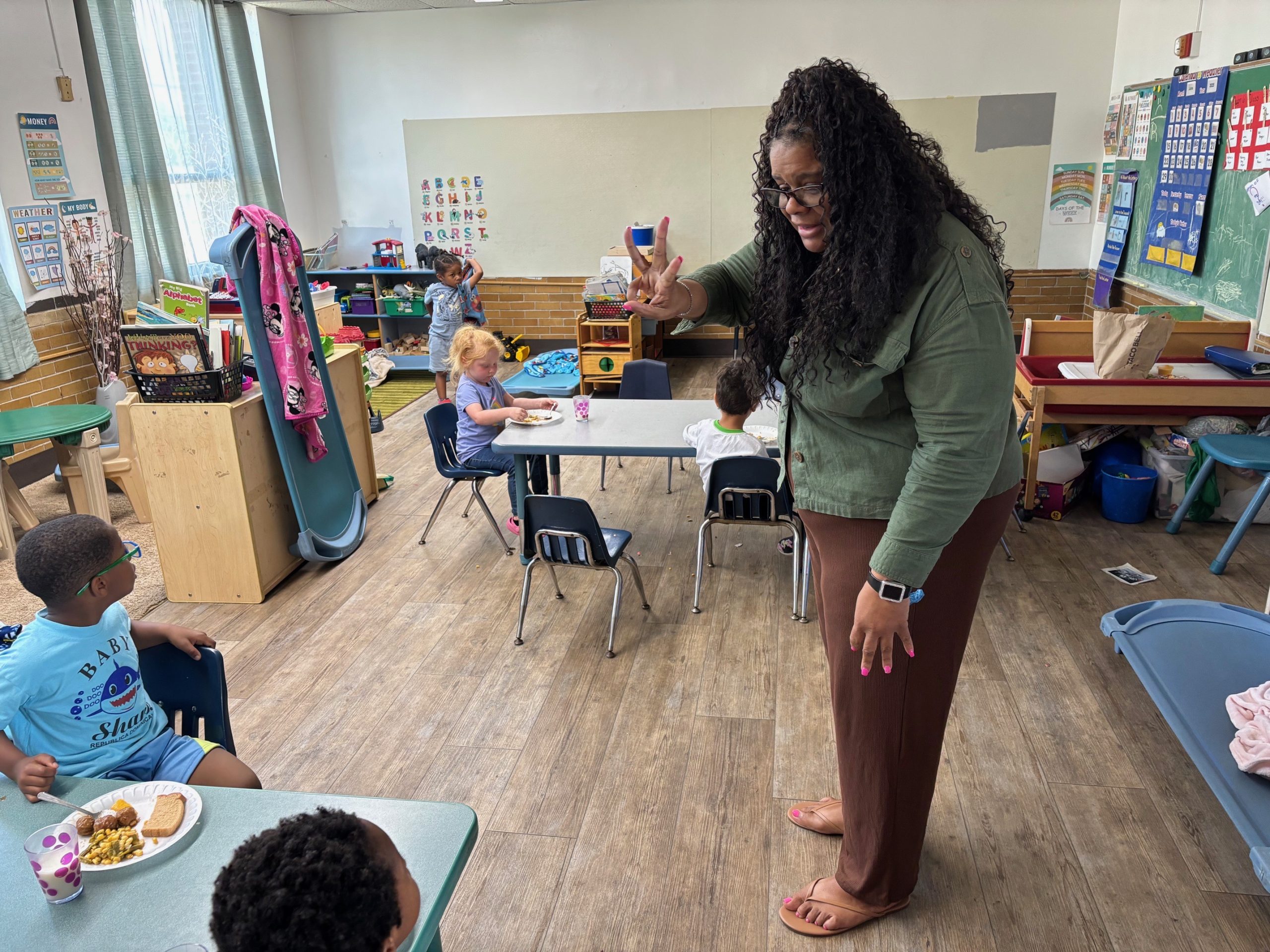
    Selina Likely, a child care director in Columbus, Ohio, understands the desperation that parents feel when they can’t find a good placement for their children with disabilities. When Likely’s daughter was a child, the little girl was abruptly kicked out of her daycare center for biting, leaving her mother with little recourse.

    “I was so angry and mad at the time,” said Likely, whose daughter is now an adult. “How are you going to kick out a 1-year-old?”

    Thanks to a new state initiative, Likely and other child care providers like her can now receive additional training on how to support children with disabilities, who are far more likely than other children to be expelled from child care programs. Some states have similar programs, with the ultimate goal of creating more child care slots where young children with disabilities and delays can thrive.


    How Hechinger inspired a bill

    Earlier this year, my colleague Sarah Carr published a piece revealing that in Illinois and other states many families of premature babies are leaving the hospital with no information or guidance on critical therapies they are entitled to. In June, the Illinois Legislature passed a bill that would require hospitals to distribute detailed information on early intervention — those required therapies for babies and toddlers with disabilities and developmental delays — to most families with severely premature infants. The new law was proposed by state Rep. Janet Yang Rohr after Sarah’s story was published.

    The bill, which awaits action by the governor, would also require the state’s early childhood systems to prioritize, in a public awareness campaign, the early identification of infants who automatically qualify for the therapies because of their low birth weight.

    This story about children with disabilities was produced by The Hechinger Report, a nonprofit, independent news organization focused on inequality and innovation in education. Sign up for the Hechinger newsletter.
    The Hechinger Report provides in-depth, fact-based, unbiased reporting on education that is free to all readers. But that doesn’t mean it’s free to produce. Our work keeps educators and the public informed about pressing issues at schools and on campuses throughout the country. We tell the whole story, even when the details are inconvenient. Help us keep doing that.

    Join us today.

    Source link

  • Speech therapy association proposes eliminating ‘DEI’ in its standards

    Speech therapy association proposes eliminating ‘DEI’ in its standards

    Scores of speech therapists across the country erupted last month when their leading professional association said it was considering dropping language calling for diversity, equity and inclusion and “cultural competence” in their certification standards. Those values could be replaced in some standards with a much more amorphous emphasis on “person-centered care.” 

    “The decision to propose these modifications was not made lightly,” wrote officials of the American Speech-Language-Hearing Association (ASHA) in a June letter to members. They noted that due to recent executive orders related to DEI, even terminology that “is lawfully applied and considered essential for clinical practice … could put ASHA’s certification programs at risk.” 

    Yet in the eyes of experts and some speech pathologists, the change would further imperil getting quality help to a group that’s long been grossly underserved: young children with speech delays who live in households where English is not the primary language spoken. 

    “This is going to have long-term impacts on communities who already struggle to get services for their needs,” said Joshuaa Allison-Burbank, a speech language pathologist and Navajo member who works on the Navajo Nation in New Mexico where the tribal language is dominant in many homes.

    In a written statement after this story published, a spokesperson for the association stressed that the proposed changes have not been finalized, and said that member feedback is currently under review.

    “ASHA remains steadfast in our belief that all health care services should be non-discriminatory and address the needs of every individual,” the spokesperson added. She characterized the proposed changes as “an evolution, not a retreat,” and noted that person-centered care aims to ensure “clinicians are equipped to deliver services tailored to each person’s context, including their lived experience, language background, cultural identity, and home environment.”

    Across the country, speech therapists have been in short supply for many years. Then, after the pandemic lockdown, the number of young children diagnosed annually with a speech delay more than doubled. Amid that broad crisis in capacity, multilingual learners are among those most at risk of falling through the cracks. Less than 10 percent of speech therapists are bilingual.

    A shift away from DEI and cultural competence — which involves understanding and trying to respond to differences in children’s language, culture and home environment — could have a devastating effect at a time when more of both are needed to reach and help multilingual learners, several experts and speech pathologists said. 

    They told me about a few promising strategies for strengthening speech services for multilingual infants, toddlers and preschool-age children with speech delays — each of which involves a heavy reliance on DEI and cultural competence.

    Embrace creative staffing. The Navajo Nation faces severe shortages of trained personnel to evaluate and work with young children with developmental delays, including speech. So in 2022, Allison-Burbank and his research team began providing training in speech evaluation and therapy to Native family coaches who are already working with families through a tribal home visiting program. The family coaches provide speech support until a more permanent solution can be found, said Allison-Burbank.

    Home visiting programs are “an untapped resource for people like me who are trying to have a wider reach to identify these kids and get interim services going,” he said. (The existence of both the home visiting program and speech therapy are under serious threat because of federal cuts, including to Medicaid.) 

    Use language tests that have been designed for multilingual populations. Decades ago, few if any of the exams used to diagnose speech delays had been “normed” — or pretested to establish expectations and benchmarks — on non-English-speaking populations.

    For example, early childhood intervention programs in Texas were required several years ago to use a single tool that relied on English norms to diagnose Spanish-speaking children, said Ellen Kester, the founder and president of Bilinguistics Speech and Language Services in Austin, which provides both direct services to families and training to school districts. “We saw a rise in diagnosis of very young (Spanish-speaking) kids,” she said. That isn’t because all of the kids had speech delays, but due to fundamental differences between the two languages that were not reflected in the test’s design and scoring. (In Spanish, for instance, the ‘z’ sound is pronounced like an English ‘s.’)

    There are now more options than ever before of screeners and tools normed on multilingual, diverse populations; states, agencies and school districts should be selective, and informed, in seeking them out, and pushing for continued refinement.

    Expand training — formal and self-initiated — for speech therapists in the best ways to work with diverse populations. In the long-term, the best way to help more bilingual children is to hire more bilingual speech therapists through robust DEI efforts. But in the short term, speech therapists can’t rely solely on interpreters — if one is even available — to connect with multilingual children.

    That means using resources that break down the major differences in structure, pronunciation and usage between English and the language spoken by the family, said Kester. “As therapists, we need to know the patterns of the languages and what’s to be expected and what’s not to be expected,” Kester said.

    It’s also crucial that therapists understand how cultural norms may vary, especially as they coach parents and caregivers in how best to support their kids, said Katharine Zuckerman, professor and associate division head of general pediatrics at Oregon Health & Science University. 

    “This idea that parents sit on the floor and play with the kid and teach them how to talk is a very American cultural idea,” she said. “In many communities, it doesn’t work quite that way.”

    In other words, to help the child, therapists have to embrace an idea that’s suddenly under siege: cultural competence,

    Quick take: Relevant research

    In recent years, several studies have homed in on how state early intervention systems, which serve children with developmental delays ages birth through 3, shortchange multilingual children with speech challenges. One study based out of Oregon, and co-authored by Zuckerman, found that speech diagnoses for Spanish-speaking children were often less specific than for English speakers. Instead of pinpointing a particular challenge, the Spanish speakers tended to get the general “language delay” designation. That made it harder to connect families to the most tailored and beneficial therapies. 

    A second study found that speech pathologists routinely miss critical steps when evaluating multilingual children for early intervention. That can lead to overdiagnosis, underdiagnosis and inappropriate help. “These findings point to the critical need for increased preparation at preprofessional levels and strong advocacy … to ensure evidence-based EI assessments and family-centered, culturally responsive intervention for children from all backgrounds,” the authors concluded. 

    Carr is a fellow at New America, focused on reporting on early childhood issues. 

    Contact the editor of this story, Christina Samuels, at 212-678-3635, via Signal at cas.37 or [email protected].

    This story about the speech therapists association was produced by The Hechinger Report, a nonprofit, independent news organization focused on inequality and innovation in education. Sign up for the Hechinger newsletter.

    The Hechinger Report provides in-depth, fact-based, unbiased reporting on education that is free to all readers. But that doesn’t mean it’s free to produce. Our work keeps educators and the public informed about pressing issues at schools and on campuses throughout the country. We tell the whole story, even when the details are inconvenient. Help us keep doing that.

    Join us today.

    Source link

  • States try to tackle child care shortages — by lowering standards

    States try to tackle child care shortages — by lowering standards

    When this year’s legislative session launched in Idaho, early childhood experts and advocates were hopeful that the state, which has a shortage of child care, would invest more in early learning programs. Instead, lawmakers proposed what may be the most extreme effort yet to deregulate child care in America: The bill called for eliminating state required staff-to-child ratios altogether, instead allowing child care providers to set their own.

    While the effort was met with fierce opposition in the state, it represents a trend gaining momentum in the country. Rather than investing in the struggling child care industry, more than a dozen states have proposed lowering the minimum age to work with children, easing education and training requirements, and raising group sizes and ratios. (Read my December story on this growing deregulation movement. I investigated such efforts in states including Kansas and Iowa.)

    The deregulation measures come at a time when many early childhood programs face federal funding and staffing cuts. Head Start programs were hit by a federal funding freeze and struggled to draw down payments even after the Trump administration announced Head Start was exempt from the freeze. Then, earlier this month, the Trump administration closed five of the Administration for Children and Families’ (ACF) regional offices and placed staff from those offices on leave, threatening support for Head Start, which is overseen by ACF, as well as programs that receive federal child care subsidies. Last week, USA Today reported that President Donald Trump is considering a budget proposal that would eliminate funding for Head Start altogether.

    At the state level, Idaho lawmakers are not the only ones to propose child care deregulation legislation this year. Minnesota lawmakers also issued similar proposals, including increasing family child care capacity limits and relaxing ratios in rural areas. Another bill in the state proposes lowering the age requirement of assistant teachers from 18 to 16. In Kansas, where a lawmaker proposed hiring 14-year-olds to help in child care classrooms in 2023, a new bill aims to reduce training requirements. An Indiana measure would loosen staff-to-child ratios based on the ratios set in neighboring states, and one in North Carolina would increase maximum group sizes for young children. And in Florida, lawmakers have called for an abbreviated inspection plan for some child care programs.

    While deregulation is more common in red states, there have also been some recent efforts to invest in early learning programs that transcend the red-blue divide. In Georgia, Gov. Brian Kemp proposed an additional $14 million aimed at reducing preschool class sizes and $5.5 million to address issues with the state’s child care subsidy program for lower-income families. Indiana Gov. Mike Braun called for more spending to eliminate the state’s waitlist for child care subsidies. And South Carolina Gov. Henry McMaster proposed $20 million to continue a program that provides wage supplements to child care workers.

    In Idaho, the deregulation legislation was eventually amended to loosen the state-mandated ratios — without eliminating them altogether. It also forbids municipalities from setting more stringent child care regulations than the state, something that was allowed in the past and allowed cities to set a “higher standard” for programs, said Martin Balben, director of strategic initiatives for the Idaho Association for the Education of Young Children.

    “I think municipalities are still kind of reeling with how to confront that reality,” he said. “It remains to be seen how [they] are going to handle their lack of local control in this area moving forward.”

    Experts say while deregulation is nothing new, the recent momentum is troubling. “We absolutely want to make sure that states are not rolling back their health and safety measures,” said Diane Girouard, state policy senior analyst at Child Care Aware of America. “We want to make sure that they’re not compromising children. … There are no quick fixes.”

    Contact staff writer Jackie Mader at 212-678-3562 or [email protected].

    This story about child care services was produced by The Hechinger Report, a nonprofit, independent news organization focused on inequality and innovation in education. Sign up for the Hechinger newsletter.

    The Hechinger Report provides in-depth, fact-based, unbiased reporting on education that is free to all readers. But that doesn’t mean it’s free to produce. Our work keeps educators and the public informed about pressing issues at schools and on campuses throughout the country. We tell the whole story, even when the details are inconvenient. Help us keep doing that.

    Join us today.

    Source link