Category: Opinion

  • May May Be Over, But Mental Health Challenges on Campus are Far from It

    May May Be Over, But Mental Health Challenges on Campus are Far from It

    Last month, during Mental Health Awareness Month, posters went up on campuses across the country, and social media hashtags trended. Now we’re in June, and the conversation begins to fade—while students’ struggles do not. 

    We cannot afford to relegate mental health to a single month on the calendar. Mental health is essential to student well-being and must be central to the work of educators, advocates, and policy leaders throughout the year.  

    According to the CDC, suicide remains the second leading cause of death among young people aged 10 to 24. A Jed Foundation (JED) study revealed that 3 in 5 learners are struggling with financial insecurity, while 60 percent fear for their future. And among young people with depression, more than 60 percent are not receiving the help they need.

    These statistics are heartbreaking. But they are not just numbers. They are students.

    Today’s college students face immense challenges. This generation is coming of age in a world shaped by instability. They are digital natives – always connected, yet deeply isolated and yearning for authentic human connection. They have survived a pandemic but still live in the shadows of economic uncertainty and climate change. They are struggling not only to pay tuition, but also to meet their most basic needs: food, housing, and, in some cases, childcare. And far too many of our students are now familiar with violence in places once considered safe—places like schools, churches, synagogues, and even grocery stores.

    Our students carry an unprecedented emotional weight. 

    Now adding to that weight are the relentless political assaults on who they are and what they deserve.

    Across the country, we’ve seen books banned, attempts to erase history, programs dismantled, and policies enacted that deny students the right to feel seen, safe, and supported. At a time when mental health support should be expanding, it’s being defunded or discredited. At a time when our students need more understanding, they’re met with suspicion and censorship. 

    Even the fundamental promise of higher education—as a gateway to opportunity—is being recast as suspect or expendable. These attacks strike at the core of belonging, purpose, and possibility. They undermine our efforts to build a society where everyone, all of us, can thrive. 

    It’s no wonder that a Lumina and Gallup poll finds that one in three students are considering leaving their programs due to mental health and emotional stress. When support disappears, so does persistence. No single institution can solve the student mental health crisis alone. It will take all of us working across education, healthcare, philanthropy, government, and community spaces to prioritize mental health.

    On behalf of students, we must confront this crisis with compassion, collaboration, and conviction.

    Three principles can guide our efforts to protect students’ emotional health:

    • Mental health must be a core, not a peripheral, issue. It is central to student success, institutional mission, and employee well-being. It must be considered mission-critical and treated with the same urgency as academic success.
    • Mental health must be holistic, not siloed. It must be embedded in campus life, intersecting with health, academics, and student services. A “whole campus” approach is needed.
    • Mental health must be multifaceted, not solely focused on individual counseling. Addressing the issue requires a systems-level response emphasizing wholeness, wellness, and a sense of belonging. 

      While the federal government is cutting funding for school mental health, states are providing strong leadership. A recent convening by The Jed Foundation (JED), a nonprofit that protects emotional health and prevents suicide for teens and young adults nationwide, and the State Higher Education Executive Officers Association highlighted how states are advancing creative, community-rooted strategies to ensure every student feels seen, safe, and supported.

      For instance, Louisiana embraced generational and culturally responsive outreach, using tools like yoga set to hip hop music and leveraging social media to meet students where they are. They also wove mental health into broader attainment conversations—linking well-being with educational and economic outcomes.

      Montana launched “Thriving Together,” a campus-wide initiative focused on resilience, life skills, and collective care. With limited budget resources, the state partnered with external organizations to fund and deliver services.

      Wyoming has found success in telehealth, particularly in reaching students in rural areas where staff shortages and budget gaps limit access to care.

      We see other practices that can be put in place elsewhere. Colleges can train all campus stakeholders to recognize signs of distress and support mental well-being as a shared responsibility. States and local communities can invest more in the mental health workforce, ensuring enough trained providers are available to meet growing demand. And collectively, we can sustain and evolve the work because mental health requires ongoing adaptation and commitment to stay aligned with changing student needs.

      At Lumina Foundation, we understand that students need more than credentials—they need to feel hopeful about their future. Our new goal that 75 percent of working adults hold a credential of value by 2040 is not just a policy target—it’s a moral commitment. It’s about ensuring every learner not only earns a degree but also has the security, well-being, and civic agency to live a fulfilling life.

      Mental health is central to that vision.

      This isn’t easy work. But supporting students’ mental health is essential and must be done year-round. It is foundational to academic success, human dignity, and the promise of higher education.

      Dr. Michelle Asha Cooper is vice president for public policy at Lumina Foundation.

    Source link

  • Negotiating the Future: How HBCUs and MSIs Can Leverage Strategic Enrollment Management for Institutional Resilience

    Negotiating the Future: How HBCUs and MSIs Can Leverage Strategic Enrollment Management for Institutional Resilience

    Dwight SanchezIn today’s hyper-competitive higher education landscape, the challenges facing Historically Black Colleges and Universities (HBCUs) and Minority Serving Institutions (MSIs) are immense. Declining birth rates, changing student expectations, shifting public sentiment, and persistent underfunding place extraordinary pressure on institutions that have long served as lifelines for students of color and first-generation learners. Yet amid these challenges lies an opportunity. By reimagining Strategic Enrollment Management (SEM) through the lens of negotiation theory, HBCUs and MSIs can increase their strategic agility, strengthen institutional partnerships, and yield more robust enrollment outcomes.

    SEM as Negotiation

    Strategic Enrollment Management isn’t merely about admissions and financial aid—it’s about aligning institutional mission with market realities in ways that are both student-centered and data-informed. Viewed through the lens of negotiation, SEM becomes a dynamic system of interdependent relationships: with prospective students, families, community influencers, K-12 schools, alumni, faculty, and internal staff. Drawing from 3D Negotiation: Powerful Tools to Change the Game in Your Most Important Deals by David Lax and James Sebenius, and Essentials of Negotiation by Lewicki, Saunders, and Barry, three principles become especially relevant: setupdeal design, and tactical interaction.

    • Setup involves determining who needs to be at the table, what interests are at stake, and which parties have influence over enrollment decisions. For HBCUs, this means engaging not just students, but parents, clergy, high school counselors, and community mentors who shape the decision-making ecosystem.
    • Deal Design refers to how institutions create value through the student’s experience. It’s not just about price; it’s about crafting offers that resonate emotionally and practically with underserved populations. This might include mentorship programs, clear career pathways, and intentional support systems.
    • Tactics, while often emphasized, should follow—not lead—strategy. Scripts matter less than systems, and strategic enrollment leaders must know when to pivot from persuasive messaging to coalition-building and issue reframing.

    The Cultural Context

    The diversity within HBCUs and MSIs also means that enrollment negotiations occur across varied cultural, economic, and generational dimensions. Chapter 11 of Essentials of Negotiation reminds us that in international and cross-cultural negotiations, assumptions can be fatal. For instance, assuming that all Black or Latino students respond similarly to recruitment strategies ignores regional, familial, and economic differences. Strategic enrollment leaders must develop cultural humility and data literacy to avoid overgeneralization and instead build nuanced personas that guide outreach.

    Equally important is the political environment. Public perceptions of DEI initiatives, affirmative action, and federal funding can dramatically alter an institution’s appeal and perceived legitimacy. In this context, setup becomes a shield—anticipating changes, diversifying recruitment pipelines, and framing the institutional value proposition in ways that transcend political cycles.

    Leadership and Accountability

    Leading enrollment through this lens requires a shift from short-term performance metrics to long-term strategy. Enrollment managers must adopt a leadership posture that blends transformational vision with collaborative execution. As Lewicki et al. note in Chapter 10, multiparty negotiations (such as cross-department SEM committees) require clear roles, shared goals, and open channels of communication. Leaders must foster psychological safety while holding teams accountable to institutional KPIs—bridging the often-siloed worlds of marketing, academic affairs, and student support.

    Professional development plays a critical role here. Too often, enrollment teams are equipped with tactical training (CRM usage, phone scripts, event planning) but lack exposure to systems thinking, data storytelling, or negotiation dynamics. Embedding professional learning communities and creating leadership pipelines within SEM units allows HBCUs and MSIs to develop internal change agents who can sustain innovation over time.

    The Path Forward

    HBCUs and MSIs are more than educational institutions—they are engines of social mobility and cultural affirmation. But to thrive, they must adopt a strategic posture that sees every element of SEM as a negotiation: from brand positioning to student engagement, from financial structuring to internal alignment.

    Consider this: An HBCU looking to boost STEM enrollment among underrepresented males recognizes that traditional outreach and scholarship packages have limited impact. Instead of only increasing merit aid, the institution reframes its offer through negotiation theory. They partner early with high schools, launch a summer bridge program co-led by STEM faculty and alumni, and guarantee every enrolled student a faculty mentor and paid internship by year two. They also engage parents and community leaders as ambassadors—tapping into local trust networks. At the internal level, they align academic and student affairs teams through shared enrollment metrics and regular scenario planning meetings, increasing accountability and cohesion.

    This isn’t just marketing—it’s “setup” and “deal design” in action. It expands the scope of stakeholders, adds value beyond dollars, and creates a win-win proposition for the student, family, and institution. It also reflects a broader institutional willingness to act as a proactive negotiator in shaping its market position.

    By leveraging the principles of negotiation—particularly setup, value creation, and coalition building—enrollment leaders can develop strategic enrollment plans that are not only adaptive but transformative. In doing so, they ensure their institutions remain vital pathways for generations of students yet to come.

    Dwight Sanchez is the Executive Director of Enrollment Management at the University of Maryland School of Pharmacy.

    Source link

  • A big reason why students with math anxiety underperform — they just don’t do enough math

    A big reason why students with math anxiety underperform — they just don’t do enough math

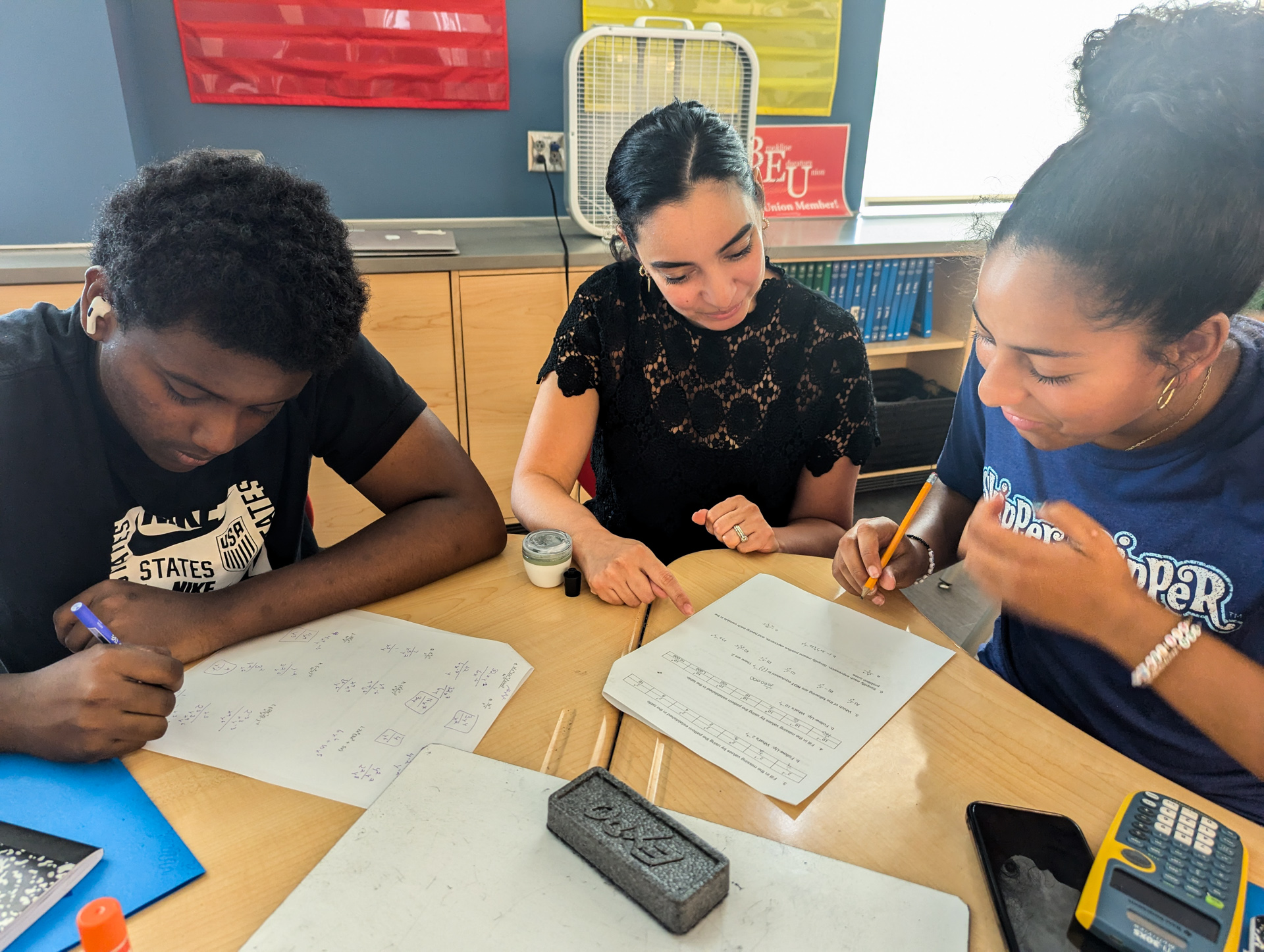
    Math anxiety isn’t just about feeling nervous before a math test. It’s been well-known for decades that students who are anxious about math tend to do worse on math tests and in math classes.

    But recently, some of us who research math anxiety have started to realize that we may have overlooked a simple yet important reason why students who are anxious about math underperform: They don’t like doing math, and as a result, they don’t do enough of it.

    We wanted to get a better idea of just what kind of impact math anxiety could have on academic choices and academic success throughout college. In one of our studies, we measured math anxiety levels right when students started their postsecondary education. We then followed them throughout their college career, tracking what classes they took and how well they did in them.

    We found that highly math-anxious students went on to perform worse not just in math classes, but also in STEM classes more broadly. This means that math anxiety is not something that only math teachers need to care about — science, technology and engineering educators need to have math anxiety on their radar, too.

    We also found that students who were anxious about math tended to avoid taking STEM classes altogether if they could. They would get their math and science general education credits out of the way early on in college and never look at another STEM class again. So not only is math anxiety affecting how well students do when they step into a STEM classroom, it makes it less likely that they’ll step into that classroom in the first place.

    Related: A lot goes on in classrooms from kindergarten to high school. Keep up with our free weekly newsletter on K-12 education.

    This means that math anxiety is causing many students to self-sort out of the STEM career pipeline early, closing off career paths that would likely be fulfilling (and lucrative).

    Our study’s third major finding was the most surprising. When it came to predicting how well students would do in STEM classes, math anxiety mattered even more than math ability. Our results showed that if you were a freshman in college and you wanted to do well in your STEM classes, you would likely be better off reducing your math anxiety than improving your math ability.

    We wondered: How could that be? How could math anxiety — how you feel about math — matter more for your academic performance than how good you are at it? Our best guess: avoidance.

    If something makes you anxious, you tend to avoid doing it if you can. Both in our research and in that of other researchers, there’s been a growing understanding that in addition to its other effects, math anxiety means that you’ll do your very best to engage with math as little as possible in situations where you can’t avoid it entirely.

    This might mean putting in less effort during a math test, paying less attention in math class and doing fewer practice problems while studying. In the case of adults, this kind of math avoidance might look like pulling out a calculator whenever the need to do math arises just to avoid doing it yourself.

    In some of our other work, we found that math-anxious students were less interested in doing everyday activities precisely to the degree that they thought those activities involved math. The more a math-anxious student thought an activity involved math, the less they wanted to do it.

    If math anxiety is causing students to consistently avoid spending time and effort on their classes that involve math, this would explain why their STEM grades suffer.

    What does all of this mean for educators? Teachers need to be aware that students who are anxious about math are less likely to engage with math during class, and they’re less likely to put in the effort to study effectively. All of this avoidance means missed opportunities for practice, and that may be the key reason why many math-anxious students struggle not only in math class, but also in science and engineering classes that require some math.

    Related: Experts share the latest research on how teachers can overcome math anxiety

    Math anxiety researchers are at the very beginning of our journey to understand ways to make students who are anxious about math stop avoiding it but have already made some promising suggestions for how teachers can help. One study showed that a direct focus on study skills could help math-anxious students.

    Giving students clear structure on how they should be studying (trying lots of practice problems) and how often they should be studying (spaced out over multiple days, not just the night before a test) was effective at helping students overcome their math anxiety and perform better.

    Especially heartening was the fact that the effects seen during the study persisted in semesters beyond the intervention; these students tended to make use of the new skills into the future.

    Math anxiety researchers will continue to explore new ways to help math-anxious students fight their math-avoidant proclivities. In the meantime, educators should do what they can to help their students struggling with math anxiety overcome this avoidance tendency — it could be one of the most powerful ways a math teacher can help shape their students’ futures.

    Rich Daker is a researcher and founder of Pinpoint Learning, an education company that makes research-backed tools to help educators identify why their students make mistakes. Ian Lyons is an associate professor in Georgetown University’s Department of Psychology and principal investigator for the Math Brain Lab.

    Contact the opinion editor at [email protected].

    This story about math anxiety was produced by The Hechinger Report, a nonprofit, independent news organization focused on inequality and innovation in education. Sign up for Hechinger’s weekly newsletter.

    The Hechinger Report provides in-depth, fact-based, unbiased reporting on education that is free to all readers. But that doesn’t mean it’s free to produce. Our work keeps educators and the public informed about pressing issues at schools and on campuses throughout the country. We tell the whole story, even when the details are inconvenient. Help us keep doing that.

    Join us today.

    Source link

  • Together We Lead: A New Era of HBCU Transformation

    Together We Lead: A New Era of HBCU Transformation

    Dr. Michael Lomax, Dr. Harry L. Williams, and Jim Runcie

    By Michael L. Lomax, Harry L. Williams and Jim Runcie 

    At a time when higher education is facing increased scrutiny, economic headwinds, and technological disruption, a group of institutions is charting a new path forward—one grounded in legacy, strengthened by collaboration and built for the future. These are historically Black colleges and universities (HBCUs). And they are proving that with the right investments and strategic partnerships, transformation is not only possible—it’s scalable.

    Four years ago, UNCF, Thurgood Marshall College Fund (TMCF) and Ed Advancement launched the HBCU Transformation Project—a collective effort to strengthen institutional sustainability, enhance student success and modernize campus operations across a growing network of these mission-driven institutions.

    The results speak volumes. Between 2020 and 2024, while national higher education enrollment declined, institutions participating in the HBCU Transformation Project grew their enrollment by 5.1%. In an era of enrollment contraction, these colleges are not only holding the line—they’re expanding their impact.

    “This effort is rooted in a networked approach,” according to Dr. Michael L. Lomax, president and CEO of UNCF. “When we combine institutional insight with philanthropic investment and aligned technical support, we can accelerate change in ways that benefit students, campuses and communities.”

    The initiative currently supports more than 40 HBCUs—from urban campuses to rural colleges—each selected to represent the diversity and strength of the sector. Through this initiative, campuses have redesigned their enrollment systems, implemented new technology platforms, modernized financial aid processes and invested in data-informed student support services.

    What ties these efforts together is a shared commitment to transformation to secure long-term institutional health and improve outcomes for students. It’s about building the infrastructure that allows these colleges to thrive in a fast-evolving higher education marketplace.

    “Our students need more than degrees. They need meaningful pathways to jobs, leadership and advancement,” according to Dr. Harry L. Williams, president and CEO of TMCF. “This work ensures our institutions are positioned to align with 21st-century workforce needs, opening doors to opportunity.”

    Beyond enrollment and academic programs, the Transformation Project is helping these institutions rethink how they operate. By investing in operations, shared services and scalable back-office solutions, the initiative is removing the all too pervasive obstacles of outdated systems and under-resourced departments. We are making foundational changes that will yield a lasting impact.

    Jim Runcie, CEO of Ed Advancement, put it simply: “We’re helping institutions do what they already do well—but with the right tools, systems and capacity behind them. Sustainable growth starts with operational strength.”

    The economic importance of HBCUs cannot be overstated. According to UNCF’s 2024 Economic Impact Report, these institutions generate $16.5 billion annually and support over 136,000 jobs nationwide. Their graduates—from engineers to educators, scientists to entrepreneurs—fuel industries, build communities and lead across sectors.

    And yet, this value has too often gone underrecognized. The HBCU Transformation Project is shifting that narrative—moving from proof-of-concept to proof-of-impact.

    UNITE 2025, UNCF’s annual convening of institutional leaders and strategic partners, will spotlight this progress. With the theme Together We Lead, UNITE is the premier platform for sharing solutions, surfacing new ideas and catalyzing partnerships. It’s where transformation moves from theory to practice.

    Looking ahead, the path is clear. We must continue to strengthen these institutions—through technology, leadership development, data utilization and investment. The transformation of HBCUs is a smart strategy for the future of American higher education and for maximizing the opportunity to link arms with international partners, seeking to mobilize global communities in a different way.

    Now is the time for more partners—investors, policymakers, employers and innovators—to join us. The groundwork has been laid. The momentum is building. And the opportunity is real.

    Together, we lead.


    Dr. Michael L. Lomax is president and CEO of the United Negro College Fund (UNCF).

    Dr. Harry L. Williams is president and CEO of the Thurgood Marshall College Fund (TMCF).

    Jim Runcie is CEO and co-founder of the Partnership for Education Advancement.


    Source link

  • Canceling AmeriCorps grants threatens the future of education and workforce pipelines that power our nation’s progress

    Canceling AmeriCorps grants threatens the future of education and workforce pipelines that power our nation’s progress

    The recent decision to cancel $400 million in AmeriCorps grants is nothing short of a crisis. With over 1,000 programs affected and 32,000 AmeriCorps and Senior Corps members pulled from their posts, this move will leave communities across the country without critical services.

    The cuts will dismantle disaster recovery efforts, disrupt educational support for vulnerable students and undermine a powerful workforce development strategy that provides AmeriCorps members with in-demand skills across sectors including education.

    AmeriCorps provides a service-to-workforce pipeline that gives young Americans and returning veterans hands-on training in high-demand industries, such as education, public safety, disaster response and health care. Its nominal front-end investment in human capital fosters economic mobility, enabling those who engage in a national service experience to successfully transition to gainful employment.

    As leaders of Teach For America and City Year, two organizations that are part of the AmeriCorps national service network and whose members receive education stipends that go toward certification costs, student loans or future education pursuits, we are alarmed by how this crisis threatens the future of the education and workforce pipelines that power our nation’s progress, and it is deeply personal. We both started our careers as corps members in the programs we now lead.

    Related: A lot goes on in classrooms from kindergarten to high school. Keep up with our free weekly newsletter on K-12 education.

    Aneesh began his journey as a Teach For America corps member teaching high school English in Minnesota. Jim’s path began with City Year, serving at a Head Start program in Boston. We know firsthand that AmeriCorps programs are transformative and empower young people to drive meaningful change — for themselves and their communities.

    At Teach For America, AmeriCorps grants are essential to recruiting thousands of new teachers every year to effectively lead high-need classrooms across the country. These teachers, who have a consistent and significant positive impact on students’ learning, rely on the AmeriCorps education awards they earn through their two years of service to pay for their own education and professional development, including new teacher certification fees, costs that in some communities exceed $20,000.

    Termination of these grants threatens the pipeline of an estimated 2,500 new teachers preparing to enter classrooms over the summer. At a time when rural and urban communities alike are facing critical teacher shortages, cutting AmeriCorps support risks leaving students without the educators they need and deserve.

    City Year, similarly, relies on AmeriCorps to recruit more than 2,200 young adults annually to serve as student success coaches in K-12 schools across 21 states, 29 cities and 60 school districts.

    These AmeriCorps members serving as City Year student success coaches provide tutoring and mentoring that support students’ academic progress and interpersonal skill development and growth; they partner closely with teachers to boost student achievement, improve attendance and help keep kids on track to graduate. Research shows that schools partnering with City Year are two times more likely to improve their scores on English assessments, and two to three times more likely to improve their scores on math assessments.

    Corps members gain critical workforce skills such as leadership, problem-solving and creative thinking, which align directly with the top skills employers seek; the value of their experience has been reaffirmed through third-party research conducted with our alumni. The City Year experience prepares corps members for success in varied careers, with many going into education.

    AmeriCorps-funded programs like Breakthrough Collaborative and Jumpstart further strengthen this national service-to-workforce pathway, expanding the number of trained tutors and teacher trainees while also preparing corps members for careers that make a difference in all of our lives.

    Those programs’ trained educators ensure all students gain access to excellent educational opportunities that put them on the path to learn, lead and thrive in communities across the country. And the leaders of both organizations, like us, are AmeriCorps alumni, proof of the lasting effect of national service.

    Collectively, our four organizations have hundreds of thousands of alumni whose work as AmeriCorps members has impacted millions of children while shaping their own lives’ work, just as it did ours. Our alumni continue to lead classrooms, schools, districts, communities and organizations in neighborhoods across the country.

    Related: Tracking Trump: His actions to dismantle the Education Department, and more

    The termination of AmeriCorps grants is a direct blow to educators, schools and students. And, at a time when Gen Z is seeking work that aligns with their values and desire for impact, AmeriCorps is an essential on-ramp to public service and civic leadership that benefits not just individuals but entire communities and our country at large.

    For every dollar invested in AmeriCorps, $17 in economic value is generated, proving that national service is not only efficient but also a powerhouse for economic growth. Rather than draining resources, AmeriCorps drives real, measurable results that benefit individual communities and the national economy.

    Moreover, two-thirds of AmeriCorps funding is distributed by governor-appointed state service commissions to community- and faith-based organizations that leverage that funding to meet local needs. By working directly with state and local partners, AmeriCorps provides a more effective solution than top-down government intervention.

    On behalf of the more than 6,500 current AmeriCorps members serving with Teach For America and City Year, and the tens of thousands of alumni who have gone on to become educators, civic leaders and changemakers, we call on Congress to protect AmeriCorps and vital national service opportunities.

    Investing in AmeriCorps is an investment in America’s future, empowering communities, strengthening families and revitalizing economies. Let’s preserve the fabric of our national service infrastructure and ensure that the next generation of leaders, educators and community advocates who want to serve our nation have the ability to do so.

    Aneesh Sohoni is Teach For America’s new CEO. Previously, he was CEO of One Million Degrees and executive director of Teach For America Greater Chicago-Northwest Indiana. He is a proud alum of Teach For America.

    Jim Balfanz, a recognized leader and innovator in the field of education and national service, is CEO and a proud alum of City Year.

    Contact the opinion editor at [email protected].

    This story about AmeriCorps, Teach For America and City Year was produced by The Hechinger Report, a nonprofit, independent news organization focused on inequality and innovation in education. Sign up for Hechinger’s weekly newsletter.

    The Hechinger Report provides in-depth, fact-based, unbiased reporting on education that is free to all readers. But that doesn’t mean it’s free to produce. Our work keeps educators and the public informed about pressing issues at schools and on campuses throughout the country. We tell the whole story, even when the details are inconvenient. Help us keep doing that.

    Join us today.

    Source link

  • Turning Wounds into Wisdom | Diverse: Issues In Higher Education

    Turning Wounds into Wisdom | Diverse: Issues In Higher Education

    Dr. Vicki Patterson DavidsonCongresswoman Jasmine Crockett (D-Texas) delivered a moving speech at Tougaloo College’s commencement ceremony earlier this month. While listening to her speech, I remembered the three times someone called me the ‘N’ word – once as an elementary school student, once as a high school student, and once as a sophomore at Tougaloo College. Each time, the racial epithet was uttered by a white male.

    My family was one of the first to integrate the North Pike School District in Pike County, Mississippi in the 1970s – fifteen years after Brown v. Board of Education in 1954. I knew it was ignorance that drove others to call me the ‘N’ word during the 1980s and 1990s.

    My daughter experienced a similar remark while growing up in central Mississippi in the mid-2000s. A classmate told her during recess that he “did not play with Black girls.” Heartbroken, I shared two quotes and a song with her later that evening. “Nothing in the whole world is more dangerous than sincere ignorance and conscientious stupidity,” by Dr. Martin Luther King, Jr., and one by Oprah Winfrey, a native Mississippian, who told Wellesley College graduates in 1997 to “turn your wounds into wisdom.”

    That evening we listened to “I’m Here” from the Broadway musical, The Color Purple – a song which resonates with so many Black girls and women across our nation. “I’m Here” would later be performed at the 2010 Kennedy Center Honors celebrating Winfrey. My daughter decided to dress like Winfrey during Black History Month that school year. My daughter had turned her wounds into wisdom.

    Mirroring the courage and strength of Fannie Lou Hamer, a prominent activist who frequently visited Tougaloo College during the Civil Rights Movement, Congresswoman Crockett addressed the state of American civil rights and liberties under the Trump administration. Crockett’s commencement speech was not disturbing. Her speech, full of wisdom, rang with relevance as she stood near the historic steps of the Woodworth Chapel below the steeple bell. The cowardly threats and reactions which followed are what continue to ring with prejudice, hatred, and ignorance nearly fifty-four years after Hamer delivered her famous “Is It Too Late?” speech at Tougaloo in the summer of 1971.  

    Known for its educational excellence and activism in higher education, Tougaloo College is no stranger to controversy. A private, historically Black liberal arts college that has hosted and graduated prominent civil rights leaders and politicians for years, Tougaloo is the same institution that educates and prepares future physicians, scientists, lawyers, educators, and researchers who serve Mississippi and the global community.

    Tougaloo College students, faculty, staff, alumni, friends, and community stand together in wisdom without fear. We are not invisible. We are not silent. We are here.

    Dr. Vicki Patterson Davidson is an alumna and an Assistant Professor of Education and Chair of the Department of Education at Tougaloo College. 

    Source link

  • Book bans draw libraries into damaging culture wars that undermine their purpose

    Book bans draw libraries into damaging culture wars that undermine their purpose

    For the last four years, school and public libraries have been drawn into a culture war that seeks to censor, limit and discredit diverse perspectives.

    Yet time and time again, as librarians have been encouraged or even directed to remove books that include LGBTQ+, Black, Latino and Indigenous characters or themes or history from their collections, they have said no.

    When librarians said no, policy changes were submitted and laws were proposed — all in the name of controlling the library collection.

    Some librarians lost their jobs. Some had their lives threatened. Legislators proposed bills that attempt to remove librarians’ legal protections, strive to prevent them from participating in their national professional associations, seek to limit some materials to “adults only” areas in public libraries and threaten the way library work has been done for decades.

    Here’s why this is wrong. For generations, libraries have been hubs of information and expertise in their communities. Librarians and library workers aid in workforce development, support seniors, provide resources for veterans, aid literacy efforts, buttress homeschool families —among many other community-enriching services. Your public library, the library in your school and at your college, even those in hospitals and law firms, are centers of knowledge. Restrictions such as book bans impede their efforts to provide information.

    Related: Become a lifelong learner. Subscribe to our free weekly newsletter featuring the most important stories in education. 

    Professional librarians study the First Amendment and understand what it means to protect the right to read. We provide opportunities for feedback from our users so that they have a voice in decision-making. We follow a code of ethics and guidelines to make the best selections for our communities.

    It is illegal for a library to purchase pornographic or obscene material; we follow the law established by the Supreme Court (Miller v. California, 1973). That decision has three prongs to determine if material meets the qualifications for obscenity. If the material meets all three, it is considered obscene and does not have First Amendment protection.

    But our procedures have been co-opted, abused and flagrantly ignored by a small and vocal minority attempting to control what type of information can be accessed by all citizens. Their argument, that books are not banned if they are available for purchase, is false.

    When a book or resource is removed from a collection based on a discriminatory point of view, that is a book ban.

    Librarians follow a careful process of criteria to ensure that our personal biases do not intervene in our professional work. Librarians have always been paying attention. In 1939, a group of visionary librarians crafted the Library Bill of Rights to counter “growing intolerance, suppression of free speech and censorship affecting the rights of minorities and individuals.” In 1953, librarians once again came together and created the Freedom to Read Statement, in response to McCarthyism.

    You may see a similar censorship trend today — but with the advent of the internet and social media, the speed at which censorship is occurring is unparalleled.

    Much of the battle has focused on fears that schoolchildren might discover books depicting families with two dads or two moms, or that high school level books are available at elementary schools. (Spoiler alert: they are not.)

    Related: The magic pebble and a lazy bull: The book ban movement has a long timeline

    The strategy of this censorship is similar in many localities: One person comes to the podium at a county or school board meeting and reads a passage out of context. The selection of the passage is deliberate — it is meant to sound salacious. Clips of this reading are then shared and re-shared, with comments that are meant to frighten people.

    After misinformation has been unleashed, it’s a real challenge to control its spread. Is some subject matter that is taught in schools difficult? Yes, that is why it is taught as a whole, and not in passages out of context, because context is everything in education.

    Librarians are trained professionals. Librarians have been entrusted with tax dollars and know how to be excellent stewards of them. They know what meets the criteria for obscenity and what doesn’t. They have a commitment to provide something for everyone in their collections. The old adage “a good library has something in it to offend everyone” is still true.

    Thankfully, there are people across the country using their voices to fight back against censorship. The new documentary “Banned Together,” for example, shows the real-world impact of book banning and curriculum censorship in public schools. The film follows three students and their adult allies as they fight to reinstate 97 books pulled from school libraries.

    Ultimately, an attempt to control information is an attempt to control people. It’s an attempt to control access, and for one group of people to pass a value judgment on others for simply living their lives.

    Libraries focus on the free expression of ideas and access to those ideas. All the people in our communities have a right to read, to learn something new no matter what their age.

    Lisa R. Varga is the associate executive director, public policy and advocacy, at the American Library Association.

    Contact the opinion editor at [email protected].

    This story about book bans was produced by The Hechinger Report, a nonprofit, independent news organization focused on inequality and innovation in education. Sign up for Hechinger’s weekly newsletter.

    The Hechinger Report provides in-depth, fact-based, unbiased reporting on education that is free to all readers. But that doesn’t mean it’s free to produce. Our work keeps educators and the public informed about pressing issues at schools and on campuses throughout the country. We tell the whole story, even when the details are inconvenient. Help us keep doing that.

    Join us today.

    Source link

  • Supreme Court Must Not Undermine Public Education in Religious Charter Case – The 74

    Supreme Court Must Not Undermine Public Education in Religious Charter Case – The 74


    Get stories like this delivered straight to your inbox. Sign up for The 74 Newsletter

    Last week, the Supreme Court held oral arguments in a case that could undermine public education across America. The question the court is looking to answer is whether a religious institution may run a publicly funded charter school — a move that would threaten not only the separation of church and state, but the right of every student to access free, high-quality learning.

    In 2023, Oklahoma’s Statewide Virtual Charter School Board approved St. Isidore of Seville Catholic Virtual School, an action that would make it the nation’s first-ever religious charter school. It would be governed by Catholic religious doctrine in its syllabus, operations and employment practices. It would use taxpayer dollars to pay for religious instruction. And it could turn away students and staff if their faith or identity conflict with Catholic beliefs. 

    Here’s the issue: Charter schools were created to be public schools. They are open to all students, from every background, tradition and faith community. They are publicly funded and tuition-free. And they are secular. 

    That’s not an arbitrary distinction – it’s a constitutional one, grounded in the law and embedded in charter schools’ very design. The First Amendment’s Establishment Clause bars the government from promoting or endorsing any religion through public spaces or institutions. This foundational rule has ensured that students of all backgrounds can access public schools. It does not stifle religious expression — the Constitution fully protects this freedom, and religious education is available in other venues. Personally, I was, in fact, educated at Jesuit Catholic schools for my entire academic career. 

    Parochial education has long been an accepted and important part of the education ecosystem, serving a variety of students and often filling an important need. Religiously affiliated schools have a long history of educating and caring for children who are new to this country and underserved, and supporting families who are overlooked. But promoting the exclusive teachings of a specific religion with public funds in a public school violates a clear constitutional principle. 

    The issue isn’t only a legal matter; it’s about the character of public education itself. Muddying the boundary between public and religious institutions would undercut a fundamental commitment made by the nation’s public charter schools: that they are accessible to every student. It would undermine legal protections that keep public services available to the public. 

    Rather than creating more opportunities for America’s students, it would constrict opportunities for a high-quality education, especially in states that are hostile toward charters or alternative public school models. Legislative bodies could seek to eliminate funding for all unique school types if the court decision forced them to fund religious schools operating with public dollars. This would curtail or dismantle strong independent schools, 30-year-old public charter schools and schools with unique programs designed for special populations.

    As executive director of the DC Charter School Alliance, and a long-time public charter school advocate, I’ve seen the importance of public charter schools firsthand. Here in the District of Columbia, charter schools serve nearly half of the public school students in the city. Outstanding educators from all walks of life teach a wide range of subjects with enthusiasm and expertise to prepare young people for success. Our students bring to the classroom an incredible range of experiences, including faith traditions. And every student, family and faculty member is welcome. D.C.’s charter schools reflect a core American value: the promise of a high-quality public education for all. 

    The justices of the Supreme Court face a clear and critical choice: They can bolster that promise, or they can tear it down. If the court allows a religious school to operate with public funds, there is no doubt that it will open the floodgates to other proposals across the country. Taxpayers could be forced to foot the bill for countless new and converted schools, draining resources from an already financially strapped education system. True public charter schools — the ones committed to high standards, positive results and opportunity for all — could bear the cost. And the students who rely on them could suffer. 

    Public education is one of America’s most vital institutions. It offers all children, no matter their background or beliefs, access to free, high-quality learning. Charter schools play an essential role in making that promise real. But allowing a religious school to operate with public funds turns public education into something much more restrictive, dismantling its very foundation.

    The court must reaffirm this indisputable truth: Public schools should remain public — and open to all. 


    Get stories like these delivered straight to your inbox. Sign up for The 74 Newsletter

    Source link

  • RFK Jr.’s Autism Misinformation Undermines Equity—and the Role of Higher Education

    RFK Jr.’s Autism Misinformation Undermines Equity—and the Role of Higher Education

    Dr. Yolanda WigginsRobert F. Kennedy Jr.’s recent claims about rising autism rates directly contradict the findings of a rigorous, peer-reviewed study from the Centers for Disease Control and Prevention. While the CDC attributes the increase to better diagnostic tools and broader awareness—especially among historically underdiagnosed populations—Kennedy has revived a discredited suggestion that environmental factors, including vaccines, may be responsible.

    This isn’t just political theater. It’s part of a broader and troubling pattern: a sustained attack on scientific research, the public institutions that produce it, and the higher education system that trains the researchers behind it.

    As a sociology professor at a public university, I’ve watched with concern as public trust in science and expertise has eroded. The pandemic magnified these trends, but they have long been in motion—accelerated by social media, political polarization, and the growing popularity of conspiratorial thinking. The resurgence of autism misinformation is just the latest iteration.

    The CDC’s study represents the best of public-facing science: it’s evidence-based, transparent, and focused on improving equity. The data show that more children—especially Black, Latino, and low-income children—are finally being diagnosed and receiving support. For decades, these children were overlooked in clinical research and excluded from early intervention programs. Their families often lacked access to diagnostic services, and cultural stigma around disability further compounded delays in recognition and care.

    That makes this progress all the more important. It means health and education systems are becoming more responsive to the needs of diverse communities. It’s a win for public health, for special education, and for racial equity. But Kennedy’s remarks obscure that progress and instead imply institutional deceit, further corroding the already fragile relationship between the public and research institutions.

    This moment should concern everyone in higher education. When research is publicly undermined by powerful voices, it isn’t just scientists or health experts who lose credibility—it’s the entire academic enterprise. Faculty working in controversial or misunderstood fields face online harassment. Public universities face funding cuts. Politicians introduce legislation to restrict what can be taught, who can be included, and which research is “acceptable.” These are not isolated attacks. They are part of a broader campaign to delegitimize the role of higher education in a democratic society.

    We’ve seen it before. Climate science, gender studies, and even basic public health data have been politicized and distorted. In many cases, these attacks are racialized, aimed at scholars of color or those researching topics related to race, equity, and social justice. The goal is not simply to disagree with findings—it’s to sow public doubt about the legitimacy of the research process itself.

    If higher education wants to defend its role in shaping public understanding and policy, we must do more than produce knowledge—we must also protect it. That means publicly pushing back when bad actors distort science. It means communicating our research clearly and accessibly, especially in communities where trust in institutions has historically been low. And it means preparing the next generation of students not only to be critical thinkers, but to be defenders of fact in an era that increasingly devalues it.

    The consequences of not responding are far-reaching. When misinformation takes root, it influences public health decisions, erodes confidence in life-saving vaccines, and increases distrust in institutions we rely on during crises. The damage isn’t abstract—it’s measurable in declining vaccination rates, increased health disparities, and growing skepticism toward experts in medicine, climate science, and education. The ripple effects extend into classrooms, clinics, and communities, where the stakes are all too real.

    It also threatens the progress being made in autism awareness and support, particularly in communities that have only recently gained access to diagnostic and therapeutic services. When Kennedy promotes falsehoods about the cause of autism, he doesn’t just mislead the public—he makes it harder for families to trust medical providers, harder for schools to advocate for neurodiverse students, and harder for researchers to do their work without facing backlash.

    Kennedy’s remarks may seem like a fringe view to those of us working in higher ed. But their reach—and their harm—are real. If we remain silent, we risk allowing misinformation to fill the vacuum we leave behind. That vacuum won’t remain empty. It will be filled with falsehoods that, once embedded in public consciousness, are incredibly difficult to reverse.

    This is a time for the academic community to speak clearly and often. We must show that science is not about dogma—it’s about rigor, peer review, and accountability. We must reaffirm that public universities serve not just students, but society. And we must reclaim our role in informing the public—not just in lecture halls and labs, but in newspapers, social media, and public discourse.

    We can’t afford to treat this moment as politics as usual. It’s a test of our collective commitment to truth, equity, and the public good. The integrity of science—and the credibility of higher education—depends on it.

    Dr. Yolanda Wiggins is an Assistant Professor of Sociology at San José State University.


    Source link

  • How universities can turn QILT data into action – Campus Review

    How universities can turn QILT data into action – Campus Review

    Universities today have access to more data than ever before to assess student success and graduate outcomes. But having data is only part of the equation. The real challenge is turning insights into action.  

    Please login below to view content or subscribe now.

    Membership Login

    Source link