Every Australian would be able to go to university or TAFE for free under a new Greens policy that would cost the federal budget $46.5 billion over the next four years.
Please login below to view content or subscribe now.
Membership Login


Every Australian would be able to go to university or TAFE for free under a new Greens policy that would cost the federal budget $46.5 billion over the next four years.
Please login below to view content or subscribe now.
People with student debt can now borrow more for a house as new government guidance filters through to the banks.
Please login below to view content or subscribe now.
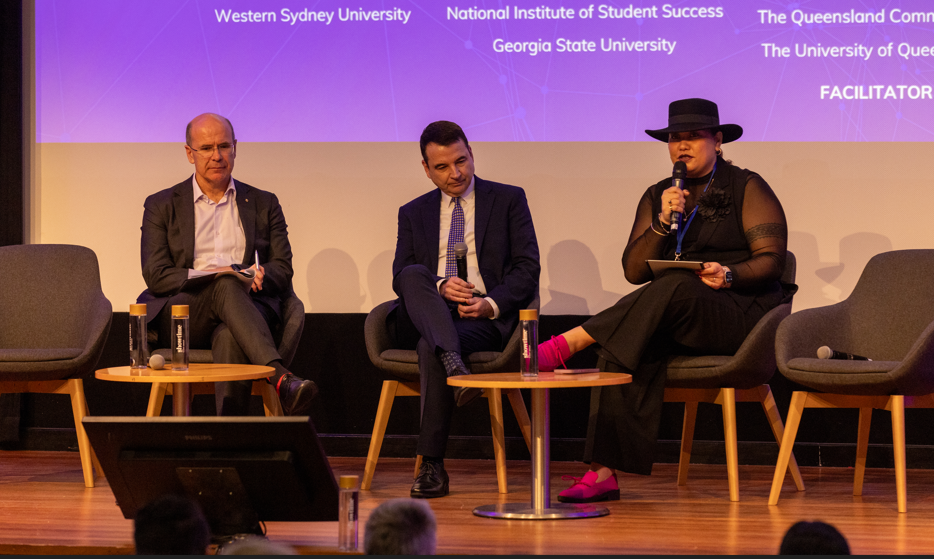
Two prominent student-success-driven university leaders have urged immediate action to improve student success, warning against waiting for government green-lights like the Australian Universities Accord.
Please login below to view content or subscribe now.
The Coalition has warned it would use university regulator levers to review university degree course content to check for “woke” teaching if elected, leading Labor to draw parallels between Peter Dutton and Donald Trump.
Please login below to view content or subscribe now.

Universities will need to prove to future students why university degrees are worth it in an artificial intelligence (AI) knowledge economy, speakers at Sydney’s latest generative AI meeting said.
Please login below to view content or subscribe now.
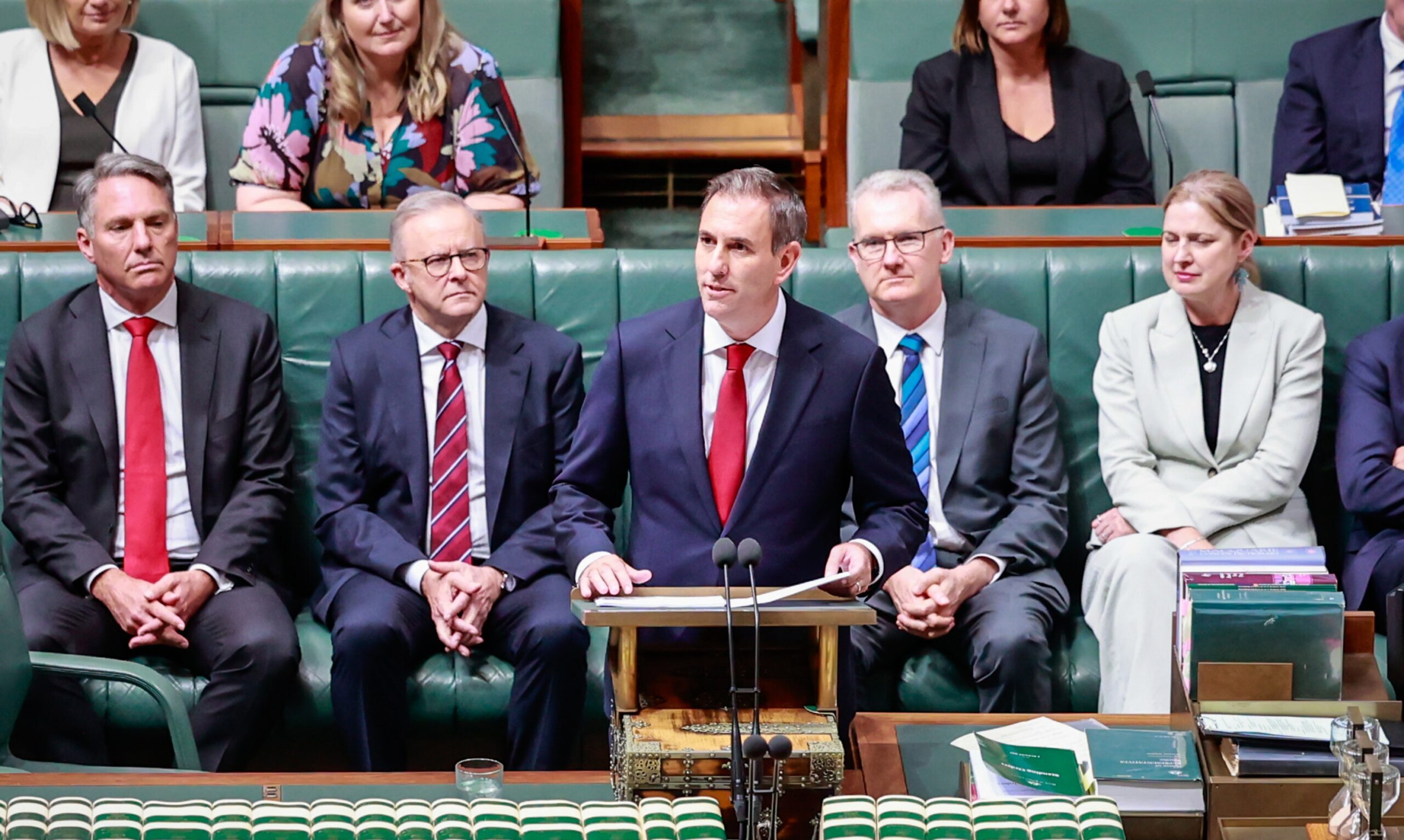
More tax cuts for every Australian and reiterations of measures that had already been announced marked Tuesday night’s federal budget, which also didn’t include any specific funds for higher education.
Please login below to view content or subscribe now.
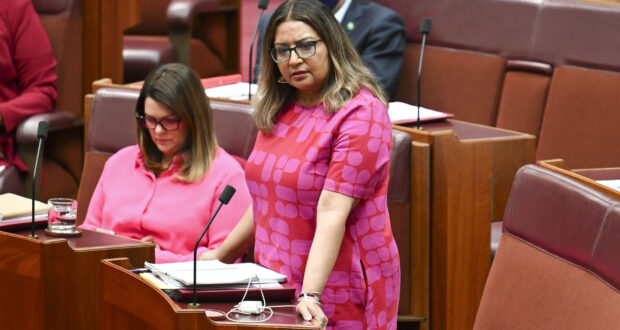
The National Tertiary Education Union (NTEU) has told the Education and Employment Senate Committee that the sector regulator doesn’t have the correct functions to address staff underpayments, amid calls it needs more power.
Union policy and research officer Kieran McCarron said there are two general issues with Tertiary Education Quality and Standards Agency (TEQSA) that impact staff.
“The threshold standards are too high-level and vague, especially when it comes to governance and staffing,” he told the Committee.
“The second issue is that either the enforcement powers are too weak, it’s too complicated for TEQSA to access them, or they’re just simply inappropriate. For example, deregistration is just inappropriate overkill to deal with the issues that our members face.
“Having everyone lose their jobs and the universities shut down doesn’t solve wage theft and it doesn’t help the community, so it’s not an appropriate power.”
He said there needs to be changes to TEQSA so it can “ensure compliance with appropriate penalties,” and better reflect current staff conditions.
TEQSA chief executive Mary Russell told the same Committee her body needs more powers to wrangle universities and help it to deal with staff-related issues, giving an example of a teaching issue that can’t currently be resolved by TEQSA under its existing powers.
“There’s actually already a legislative requirement that any person teaching in higher education needs to be engaged in continuing scholarship and research. That’s your traditional “40:40:20 academic.”
“How is it that at least half of the teaching performed in our universities is performed by casual staff who are hired on an hourly basis and who are only paid for the hours in which they are directly engaged with students?
“How is it being ensured that they’re performing scholarship and research – because they’re not paid to do that. There’s an assumption made that they’ll just do that in their own time, and that’s unpaid work. This is an example of an issue that TEQSA is aware of but doesn’t have any appropriate tools to deal with.”
Wage underpayment and financial management
Wage underpayments and high vice-chancellor pay are the two biggest money-related issues universities have.
The Fair Work Ombudsman Anna Booth later told the Committee her office has recovered $180.9m for 99,000 university employees as of February 28, 2025. The NTEU has estimated wage underpayments, paid or unpaid, are set to exceed $400m.
Ms Booth said the most common “trends” Fair Work sees when dealing with underpayments include: high numbers of casual staff; poor governance and management oversight practices; a lack of centralised human resources functions; pay related issues commonly dealt with by academic managers who lack appropriate expertise; and lack of investment in payroll and time-recording systems.
“Our investigations have largely concerned casual professional and academic staff and have largely included unpaid work – unpaid marking activities, lecture and tutorial attendance, and other student interactions – as well as the application of incorrect classifications, unpaid entitlements and the improper use of piece rates,” she told the Committee.
Universities Australia, which is the vice-chancellor’s membership group, in its submission said debate about VC salaries, which average $1m, are solely political and distract from issues of underfunding degrees and research.
“Debate over vice-chancellor salaries, for example, distracts from the conversation we need to have about funding our universities properly,” chief executive Luke Sheehy wrote.
“Their salaries are set by university councils. I don’t believe they should be the sole focus of parliamentarians, certainly not at the expense of the policies and funding needed to keep our universities strong.”
Related stories: La Trobe most recent uni to reveal it underpaid staff | Monash underpays $7.6m as ‘expert council’ on uni governance members announced
Greens senator Mehreen Faruqi, who disclosed she is an NTEU member, said she was “pretty outraged” when she read the UA submission.
“I think this debate is fundamental to how universities operate, especially given the exorbitant pay packets of executive staff and VCs on the one hand and the systemic wage theft, rampant casualisation and insecure work on the other,” she said.
Fear and secrecy
NTEU branch president at Federation University Dr Mathew Abbott said constant cuts and restructures throughout the sector has created a workplace culture that fears retribution.
“University staff fear for their livelihoods, and that creates a culture in which staff become more compliant and less likely to speak out,” he said.
“This is something I’ve tried to raise – the psychological toll it takes, the professional toll, and, of course, the impact of this on students.
“When staff are placed under this kind of pressure, along with other issues like workloads and so on, it has a flow-on effect to the quality of the education that we provide to our students.”
He said there is a “culture of secrecy” in university councils and senates, something NTEU member Professor Fiona Probyn-Rapsey from University of Wollongong also said is exacerbated by largely non-staff elected boards.
There were multiple calls made for university council meeting minutes to be available to all university staff.
“We have very little access to what university councils are discussing and how decisions are made. We don’t see minutes, and we barely get any interaction with university council members,” Professor Probyn-Rapsey said.
“They don’t operate in the same way that the rest of the university does – in a collegial manner – or in the way a university should be behaving.”
Management should also let staff have more say in teaching decisions, Professor Andrea Lamont-Mills, University of Southern Queensland NTEU branch president, added.

“Staff feel disempowered because they’re not using their expertise – it’s not valued, and their professionalism is not valued,” she said.
“It’s disempowering when you get excluded from decisions that actually impact you, or you have limited input into decisions that directly impact you.
“Our staff are highly skilled and highly knowledgeable, and they want to be part of developing decisions and coming up with solutions, yet they’re disempowered – they’re not able to do that.”
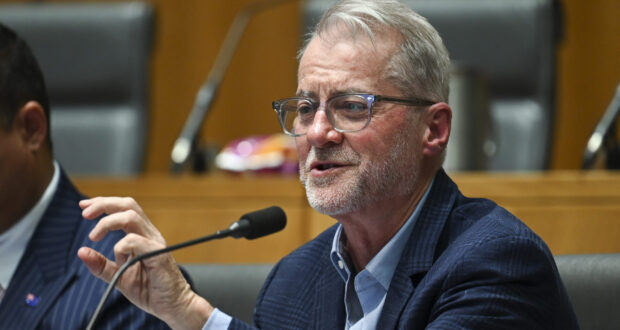
Committee chair and Labor Senator Tony Sheldon called for the inquiry in January. Picture: Martin Ollman
The Tertiary Education Quality and Standards Authority (TEQSA) revealed four universities are being investigated for their handling of protests and encampments at the first Quality of governance public hearing.
Please login below to view content or subscribe now.

TEQSA chief executive Mary Russell will appear at the inquiry on Wednesday. Picture: Newswire
The Tertiary Education Quality and Standards Authority (TEQSA) will on Wednesday tell the Education and Employment Legislation Committee it needs increased authority to efficiently wrangle universities.
Please login below to view content or subscribe now.

United States President Donald Trump’s first six weeks of his second term has been defined by 76 executive orders, the disestablishment of the national education department and establishment of the Department of Government Efficiency (DOGE).
One of the most controversial executive orders, which is a written directive signed by a president that orders immediate governmental action, was titled “Ending Radical And Wasteful Government DEI Programs And Preferencing,” signed on President Trump’s first day back in office on January 20, 2025.
He directed all federal DEI staff be placed on paid leave and, eventually, laid off. He has also signed another Executive Order, titled “Ending Illegal Discrimination and Restoring Merit-Based Opportunity.”
DEI stands for diversity, equity and inclusion, and refers to programs and committees that help people from underrepresented backgrounds (women, Indigenous, Black, for instance) get into, and stay in, jobs or courses those people wouldn’t traditionally participate in. It is largely similar to the strategy of the Australian Universities Accord.
President Trump has also cut funding to schools and universities that do not cancel DEI programs. He labelled the programs “radical,” “wasteful” and said they demonstrate “immense public waste and shameful discrimination.”
The full effects of these Executive Orders and DEI changes are yet to be seen because decisions regarding DEI will ultimately be made by the court.
However, private companies in the US have walked away from internal DEI programs, including Meta (which has worked closely with Trump as of late), Google (which provides some services to the US government), Pepsi, Disney and multiple prominent banks.
There has been no significant walk away from DEI in Australian private companies, and many universities continue to discuss how to bolster and “future-proof” internal DEI programs.
Australia’s ambassador to the US from 2020 to 2023, Arthur Sinodinos, told the Universities Australia Solutions Summit last week that institutions are best off making decisions “based off their objectives,” but should enact genuine change, not just tick diversity boxes.
“My view on DEI is that [universities should] start from a posture that they want to make the best use of all the talent and resources available to them,” he said.
“If you’re also interested in trying to expand the reach of higher education to groups that might otherwise be disadvantaged, you have to find ways to do that, but in a way that also addresses the genuine issue.
“I think access to higher education is still important for a country like Australia, which has to make – given its population – the best use of the resources it’s got.
“The argument that you can just leave it to the market, the meritocracy will still be there [is wrong]. Frankly, in the market, some people start with a head start with with inbuilt advantages.”
President Trump’s former White House chief of staff Mick Mulvaney, who was also on the panel at the UA summit, said he thinks DEI programs in the US have gone “too far to one side.”

“One of the reasons you’re seeing the pushback against it in my country is that it went too far to one side. I don’t know where it is in this country, but at some point it may go too far, and the pushback will come.”
He also explained why this Trump term is already more action-packed than his first was at this time: the President expected to win in November, 2024, but not in 2016.
“Not only did [Trump] expect to win, [his team has] been working for four years on what they would do when they won,” he said.
“What are we gonna do the first day? The first week, the first month, the first 100 days? Which is why we’re seeing all these executive orders. It’s actually four years worth of planning coming forward.”
Mr Mulvaney said he thinks DEI could survive if its reasoning for existing is communicated in a tailored way.
He said Trump’s administration is receptive to initiatives that improve efficiency, productivity and merit.
“You could have a program that is good on on the climate, [for example,] but that’s not your selling pitch. That doesn’t register with the person you’re talking to,” he explained.
Related stories: “Unis are not Centrelink offices”: Coalition’s pitch to university leaders | Q&A: Bill Shorten talks VC pay cuts and politics in HE | Report card: Accord recommendations 12 months on
“You have to learn how to speak the language of the person you’re talking to. Don’t change what you’re doing, perhaps just simply change how you explain it.”
UA chief executive Luke Sheehy was asked after his National Press Club address last Wednesday whether he thinks an “anti-woke” sentiment will affect how universities function.

“Obviously there’s a major disruption that’s happened in America with Trump 2.0 … One of the things we’ve learned is, once articulated in a certain way, positive sentiment skyrockets for universities,” he responded.
“If you offer a simple proposition: we have 4,000 fewer teachers than we need today ,and universities are the only way to get those skilled workers into the workforce to support young people; we need 132,000 more nurses, etc.
“Then remove yourself from what happens on the front pages of newspapers and what occupies political pundits, and think about what the real Australian people need and want from the university sector.
“My hope is that the more we talk about the important role of universities and our core mission in education and research, the more Australians, irrespective of whether or not they went to university or not, they see the value for us as part of our future.”
The university sector’s declining “social license” has been a major topic of discussion of late for university leaders.
There is a growing sentiment that universities, and the knowledge economy, needs to “show” society why they’re worth the funding and enrolments.
“We always have more work to do. In an era where there is declining trust in institutions, I think it’s really important that universities invest in themselves in terms of how they engage with their communities,” Mr Sheehy continued.