Category: Policy

  • AUD $50bn net gain from students with minimal rent price impact

    AUD $50bn net gain from students with minimal rent price impact

    International students are not responsible for sky-high rental price hikes, according to the latest analysis produced by Australia’s central bank, the Reserve Bank of Australia.

    In its latest bulletin assessing the role international students play in Australia’s economy, it estimated a AUS$50bn net gain from students and underlined their value as employees too.

    Spending by international students was also an important contributor to growth in consumer demand in Australia following the pandemic, it declared.

    “In periods of strong inflows of students, such as just after borders reopened after the pandemic, this likely had an important effect on aggregate demand in the economy.”

    And the report pointed out that international students constitute the second largest group of temporary visa holders with work rights in Australia after New Zealand citizens.

    “A greater share of international students work in accommodation and food, as well as retail, compared with the share of the total labour force,” detailed report authors.

    “Further, an increasing share of students are now working in health care, consistent with strong labour demand in this sector.”

    The report noted this contribution was important in helping businesses in these sectors facing labour shortages in the tight labour market that emerged post-pandemic.

    The timing of the report is useful, as new ESOS legislation is considered and the government is facing calls from the sector to stop stifling international student demand – with the latest calls relating to the new visa application fee which is killing demand from short-term students.

    When it comes to the political hot potato of international student populations squeezing out domestic renters or contributing to accommodation price surges, RBA was dismissive of that thesis.

    The rise in international student numbers is likely to have accounted for only a small share of the rise in rents since the onset of the pandemic
    Reserve Bank of Australia

    Models of the housing market used by the RBA suggest that a 50,000 increase in population would raise private rents by around 0.5 per cent compared with a baseline projection. The marginal effect of an additional renter may be greater in periods where the rental market is tight and vacancy rates are low, such as occurred post-pandemic.

    “Nonetheless, the rise in international student numbers is likely to have accounted for only a small share of the rise in rents since the onset of the pandemic, with much of the rise in advertised rents occurring before borders were reopened.”

    One area where higher international student numbers have generated a supply response has been in purpose-built student accommodation, noted the report, with rapid growth in building approvals for such projects in recent years.

    Note the gov plan to expand cap for insttutions investing in PBSA.

    Another interesting fact shared was that International students make up around one-third of Australia’s permanent resident intake –  around 30 per cent of international students went on to apply for temporary graduate visas in the five years to 2022, said the report citing 2022 data.

    There is less expected flow into temporaray labour market now – “this is because the recent tightening in visa policy has targeted groups of students who were more likely to be seeking to work” explained RBA.

    “That is, those international students who do receive visas going forward are less likely to be focused on employment opportunities in Australia on average,” said the report, citing Andrew Norton.

    In sum, “rapid growth in the international student stock post-pandemic likely contributed to some of the upward pressure on inflation from 2022 to early 2023, especially as arriving students frontloaded their spending as they set up in Australia and took time to join the labour market. However, the increase in international students was just one of many other forces at play in this time that drove demand above supply in the economy, and hence higher inflation. For instance, supply-side factors were the biggest driver of the increase in inflation in 2022 and 2023 (RBA 2023; Beckers, Hambur and Williams 2023) while strong domestic demand arising from supportive fiscal and monetary policy also played an important role.”

    Source link

  • “Fix issue with Indian student visas”

    “Fix issue with Indian student visas”

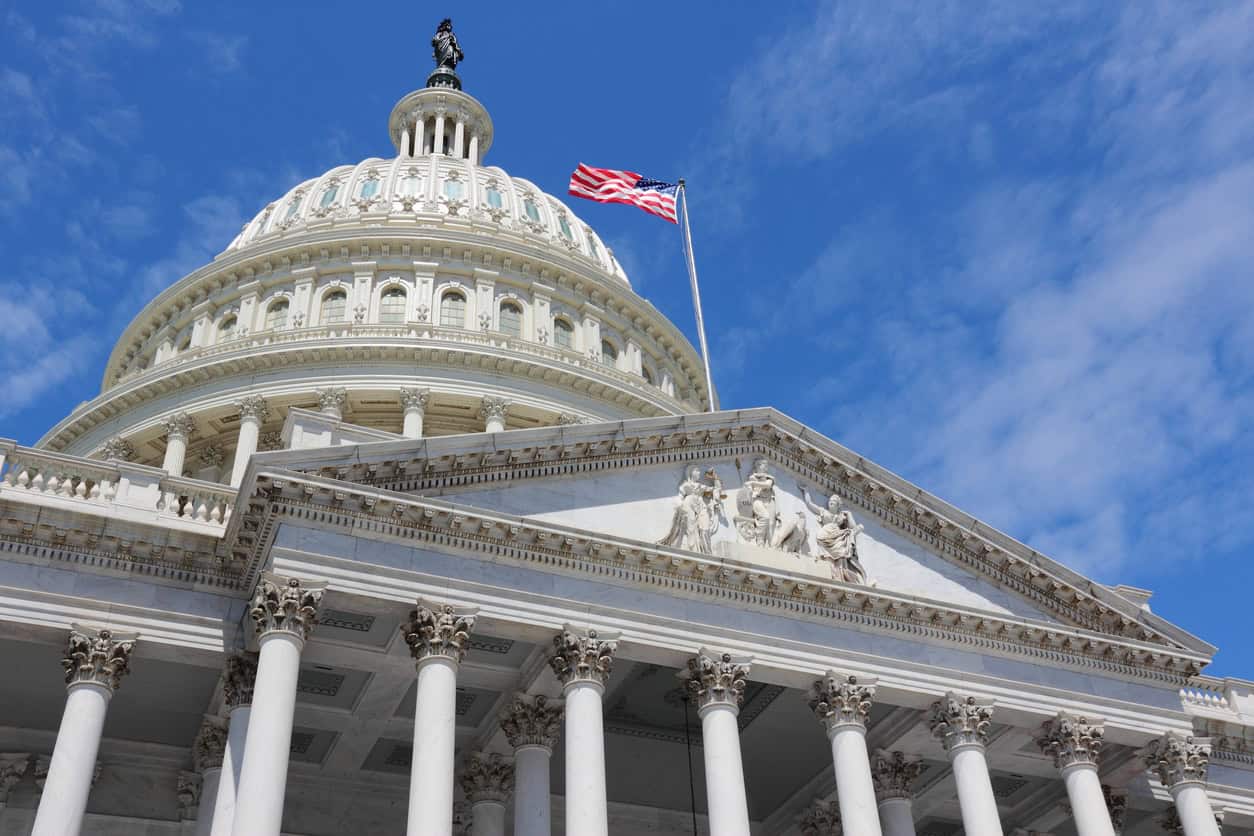
    As student visa backlogs continue to plague US embassies around the world and the start of the fall semester looms, a bipartisan group of 14 lawmakers have urged the US state department to resolve issues with Indian student visas.  

    “As members of Congress who represent research universities, we are concerned by reports from our constituent universities about Indian students who have been unable to obtain visas to continue their education in the United States,” they urged Rubio. 

    Indian students, the largest group of international students in the US, contribute $9 billion annually to the US economy, added the lawmakers, led by Democratic congresswoman Deborah Ross of North Carolina.  

    In a letter sent to the State Department on July 24, the group said they had seen “first-hand” how the contributions of Indian students to science and research “keep our nation competitive”. 

    “We are dismayed at the possibility that many of these bright young individuals may be blocked… from continuing their education and research in the United States,” they continued.  

    Thirteen of the letter’s 14 signatories are member of the Democratic party, with Nebraska representative Don Bacon the only Republican to join the efforts.  

    With classes starting in just over a month, thousands of students… are at risk of missing the start of the academic year

    The letter follows a near four-week suspension of student visa appointments by the state department that began during the peak season for visa processing, causing continued backlogs that remain nearly one month on from the lifting of the freeze. 

    Though backlogs are impacting students across the globe, the congresspeople raised particular concerns about delays at Indian embassies, with the Indian mission website still carrying a warning that the scheduling of visa appointments this summer cannot be guaranteed.   

    The Indian Ministry of External Affairs (MEA) is understood to have taken the matter up with the US Embassy in New Delhi as well as the US State Department, with news of the delays being widely circulated by Indian media.  

    As previously reported by The PIE News, some Indian education consultancies are expecting 80% declines in student levels going to the US, reporting that students are “refreshing their portal everyday” in search of appointments.  

    The largest source market to the US, visa issuance to Indian students saw a notable drop this May, falling by 41% compared to the same period in 2025, with stakeholders fearing that June data will reveal a worsening picture as the full impact of the visa pause takes hold.  

    Across the board, May 2024 data showed a 22% year-on-year reduction in the number of F-1 visas issued. Exchange visitor visas were also down 13%.  

    Appealing to Rubio, the congresspeople emphasised the integral contributions of Indian students to research universities in the US, as well as the wider value of educational exchange: “vital to encouraging collaboration between our nations”.  

    Advocacy efforts are also stepping up in the sector, led by the US for Success Coalition, a national alliance of more than 50 organisations spanning business, education and innovation.  

    “This delay and the resulting backlogs couldn’t have come at a worse time,” said Jill Welch, spokesperson for the coalition. 

    “With classes starting in just over a month, thousands of students – particularly from high-demand countries like India – are at risk of missing the start of the academic year,” Welch said.  

    The coalition highlighted the widespread consequences of the visa backlogs. If students are barred from entering the US, it could jeopardise the country’s position as the leading destination for global talent, with ripple effects touching local economies and long-term implications for scientific research. 

    “When we close doors – intentionally or by bureaucratic delay – we send a clear message to the world: that the US may longer be the destination of choice for the best and brightest,” it said. “That is not just a lost opportunity; it is a strategic risk”.  

    The alliance has called on the State Department to immediately “surge” resources to process new and returning international student visas and ensure there is interview capacity in high-demand countries.  

    Referring to Rubio’s new rules around social media vetting, it called on the department to prioritise both security and efficiency, “so that screening processes do not become barriers to opportunity”. 

    “For every three international students, one US job is created or sustained,” said the coalition, citing their annual economic contribution of nearly $44bn annually.  

    What’s more, “they are ambassadors of democracy and American values creating allyship between the United States and other countries,” they said, highlighting the value of people-to-people exchanges in ensuring the country’s national security. 

    The increasingly challenging visa policy landscape is already having an impact on student interest, with young people increasingly turning to other destinations, namely the UK.  

    Sector leaders are calling for “immediate action” to prevent the worst damages while there is still time before the full extent of declines become clear in September.  

    Source link

  • Why should we care about cuts to funding for science education?

    Why should we care about cuts to funding for science education?

    Key points:

    The Trump administration is slashing the funding for new projects focused on STEM education and has terminated hundreds of grants focused on equitable STEM education. This will have enormous effects on education and science for decades to come.

    Meaningful science education is crucial for improving all of our lives, including the lives of children and youth. Who doesn’t want their child or grandchild or neighbor to experience curiosity and the joy of learning about the world around them? Who wouldn’t enjoy seeing their child making careful observations of the plants, animals, landforms, and water in their neighborhood or community? Who wouldn’t want a class of kindergartners to understand germ transmission and that washing their hands will help them keep their baby siblings and grandparents healthy? Who doesn’t want their daughters to believe that science is “for them,” just as it is for the boys in their classroom?

    Or, if those goals aren’t compelling for you, then who doesn’t want their child or grandchild or neighbor to be able to get a well-paying job in a STEM field when they grow up? Who doesn’t want science itself to advance in more creative and expansive ways?

    More equitable science teaching allows us to work toward all these goals and more.

    And yet, the Department of Government Efficiency has terminated hundreds of grants from the National Science Foundation that focused squarely on equity in STEM education. My team’s project was one of them.  

    At the same time, NSF’s funding of new projects and the budget for NSF’s Education directorate are also being slashed.

    These terminations and drastic reductions in new funding are decimating the work of science education.

    Why should you care?

    You might care because the termination of these projects wastes taxpayers’ hard-earned money. My project, for example, was 20 months into what was intended to be a 4-year project, following elementary teachers from their teacher education program into their third year of teaching in classrooms in my state of Michigan and across the country. With the termination, we barely got into the teachers’ first year–making it impossible to develop a model of what development looks like over time as teachers learn to engage in equitable science teaching.

    You might care because not funding new projects means we’ll be less able to improve education moving forward. We’re losing the evidence on which we can make sound educational decisions–what works, for whom, and under what circumstances. Earlier NSF-funded projects that I’ve been involved with have, for example, informed the design of curriculum materials and helped district leaders. Educators of future teachers like me build on findings of research to teach evidence-based approaches to facilitating science investigations and leading sense-making discussions. I help teachers learn how they can help children be change-makers who use science to work toward a more just and sustainable world.  Benefits like these will be eliminated.

    Finally, you might care because many of the terminated and unfunded projects are what’s called NSF Early Career Awards, and CAREER program funding is completely eliminated in the current proposed budget. CAREER grants provide crucial funding and mentoring for new researchers. A few of the terminated CAREER projects focus on Black girls and STEM identity, mathematics education in rural communities, and the experiences of LGBTQ+ STEM majors. Without these and other NSF CAREER grants, education within these fields–science, engineering, mathematics, data science, artificial intelligence, and more, from preschool through graduate school–will regress to what works best for white boys and men.

    To be sure, universities have some funds to support research internally. For the most part, though, those funds are minimal. And, it’s true that terminating existing projects like mine and not funding new ones will “save” the government some money. But toward what end? We’re losing crucial evidence and expertise.

    To support all children in experiencing the wonder and joy of understanding the natural world–or to help youth move into high-paying STEM jobs–we need to fight hard to reinstate federal funding for science and science education. We need to use every lever available to us–including contacting our representatives in Washington, D.C.–to make this happen. If we aren’t successful, we lose more than children’s enjoyment of and engagement with science. Ultimately we lose scientific advancement itself.

    Latest posts by eSchool Media Contributors (see all)

    Source link

  • Some States Are Seeking to Deregulate Child Care. Advocates Are Fighting Back – The 74

    Some States Are Seeking to Deregulate Child Care. Advocates Are Fighting Back – The 74


    Join our zero2eight Substack community for more discussion about the latest news in early care and education. Sign up now.

    Content warning: This story includes details of an infant’s death.

    After Democrats passed the American Rescue Plan in 2021, states were flush with federal funding to help prop the child care sector up. But that money is now all gone, and as Republicans in Congress threaten to pass spending cuts that could further shrink state budgets, lawmakers are trying to find solutions to the child care crisis that don’t cost money. 

    Many have proposed changing the mandated ratios that require a certain number of early educators to care for young kids. Nearly a dozen states have considered rolling back child care regulations, including those governing staff-to-child ratios.

    But while these deregulatory bills are common, it’s not a foregone conclusion that they will pass. Advocates in three states have been able to beat back these efforts in the legislative sessions that just wrapped up by mobilizing a wide variety of people to speak up against these proposals and deploying research-backed arguments about child safety and child care supply.

    Eliminating Ratios Entirely 

    Idaho advocates faced down the most extreme bill. In its original form, HB243 would have eliminated all requirements that limit the number of young children an early educator can care for, leaving it up to individual providers. It would have been the first state in the country to take such a step. 

    Advocates had very little time to fight back. The bill got fast tracked; there was less than 24 hours’ notice before the first public hearing on it in the House. “You can’t get child care providers and parents there in that amount of time,” said Christine Tiddens, executive director of Idaho Voices for Children, a nonprofit that advocates for child-focused policies, noting that it requires moving work schedules and getting people to cover shifts. The bill sailed through the House.

    Eventually, Tiddens said, they were able to put parents and providers in front of lawmakers to warn of the negative consequences. One of those parents was Idaho resident Kelly Emry. On June 10, 2024, she got a panicked call from the home-based child care provider where she had just started sending her 11-week-old son Logan. She dashed to the provider’s home and was told he was dead. The coroner’s report later confirmed he died from asphyxiation. According to Emry, the coroner said the provider put him down for a nap between a rolled up blanket and a pillow and left him there for hours. The provider was caring for 11 kids by herself that day, putting her out of compliance with state regulations that, at the time, required at least two staff members. 

    “It was completely preventable, and that’s what’s so hard for me to come to terms with,” Emry said in a podcast interview in January.

    Emry wasn’t the only one who spoke up. Once the bill got to the Senate, advocates packed the hearing and overflow rooms with several hundred people. Among the 40 people who signed up to testify, 38 opposed the bill. Baby Logan’s uncle spoke, as did pediatricians, fire marshals, nurses, the state police, child welfare experts, child care providers and parents. Lawmakers were flooded with thousands of calls and emails from the opposition. Tiddens made sure every senator was sent the podcast interview with Emry.

    The bill passed the Senate committee by a single vote. Advocates decided to try to stop the worst elements, knowing that the bill was likely to pass in some form. They asked a senator who opposed it to “throw a Hail Mary,” Tiddens said. When the bill came to the Senate floor, he asked for unanimous support to pull it and move it into the amending process. He got it. The original elimination of staff-to-child ratios was stripped out; instead, the bill preserved ratios, albeit higher ones than before. Under previous law, Idaho ranked at No. 41 among all states for how high its ratios were; now it has dropped even further to No. 45.

    The victory is “bittersweet,” Tiddens said. She attributes it almost solely to one thing: putting parents, not just businesses and child care providers, in front of lawmakers, which led to the moving account of Logan’s family, still in the midst of raw grief. “How could you listen and not have your heart changed?” Tiddens asked.

    Doubling Family Child Care Ratios

    Advocates in Maryland have fought back against legislation to loosen staff-to-child ratios twice now. Last year, lawmakers introduced a bill to raise the ratios in family child care settings, but it died thanks to “a lot of advocacy,” said Beth Morrow, director of public policy at the Maryland Family Network, a nonprofit focused on child care. As in Idaho, the American Academy of Pediatrics and fire marshals warned about what would happen in the case of emergencies. Children under 2 years old are “not capable of self-preservation,” Morrow pointed out; they might hide when a fire alarm goes off and can’t evacuate on their own. “If there is an emergency you have to be able to get these kids out,” she said.

    The idea returned this year in House Bill 477, this time coupled with looser ratios for center-based care. Family providers are currently allowed to care for eight children but no more than two under the age of 2; the legislation would have doubled that, allowing providers to watch as many as four children under the age of 1. That was a “nonstarter,” Morrow said. It would also have been the first time that these rules were dictated by lawmakers rather than by the Maryland State Department of Education, which would have been barred from changing them in the future. 

    So advocates marshalled research, with the help of national groups including the National Association for the Education of Young Children and Center for Law and Social Policy. They highlighted that there has been no evidence that stricter child care regulations lead to reduced supply. Lawmakers seemed moved by the argument that lower ratios support better health and safety for children.

    During the markup session, the chief sponsor amended the bill by striking the language about higher ratios; instead, the version that passed requires the Department of Education to study child care regulations with an eye toward alleviating barriers for providers.

    Ratio Increases by Another Name

    In Minnesota, lawmakers took a different approach to proposing changes to the number of staff required to care for young children this session. Their legislation avoided mentioning the term “ratios” at all. Instead, the issue was presented as an exemption for in-home child care providers caring for their own children as well. The legislation originally would have exempted as many as three of the providers’ own children from the number they are licensed to watch. “That’s a direct ratio increase, no way around that,” said Clare Sanford, vice president of government and community relations at New Horizon Academy, a child care and preschool provider. “You still have the same number of adults but you’re increasing the number of children that adult is responsible for.”

    In later drafts, the number of children who could be exempted kept being reduced. In the end the legislation didn’t get a standalone vote and the language was left out of the final state budget. The argument that Sanford thinks worked the best was that increasing ratios wouldn’t actually increase child care supply. That’s because, as a brief by NAEYC argues, they will lead to more burnout among providers, which will push them to leave and, in the end, reduce available child care spots.

    The fight is far from over. Advocates in all three states expect lawmakers to try to loosen staff-to-child ratios again next session. Tiddens fears that, although Idaho didn’t eliminate ratios, the idea could spread. “Idaho has often been a frontrunner for harmful legislation,” she said. On the whole, more of these laws have been signed than stopped, said Diane Girouard, state policy senior analyst at ChildCare Aware of America. Ratio deregulation bills pop up “in some states every single year,” she said. “This isn’t just unique to red, conservative states. It has happened in blue states, it has happened in purple states.”

    Advocates who oppose raising these ratios are formulating responses to the child care crisis that preserve safety standards without requiring state funding. In Maryland, for example, Morrow’s organization helped pass a bill that removes legal barriers to opening and operating family child care programs. The hope is that with more solutions on the table to increase child care supply, states won’t look to options that erode safety standards, such as increasing ratios. 

    Tiddens has vowed to fight back. “We’re not going away, and we’re going to show up next session with our own proposal,” she said. Her coalition plans to formulate a bill for next year that “prioritizes child safety at the same time as dealing with the child care shortage,” she said.


    Get stories like these delivered straight to your inbox. Sign up for The 74 Newsletter

    Source link

  • London Mayor slams proposed international tuition fee levy

    London Mayor slams proposed international tuition fee levy

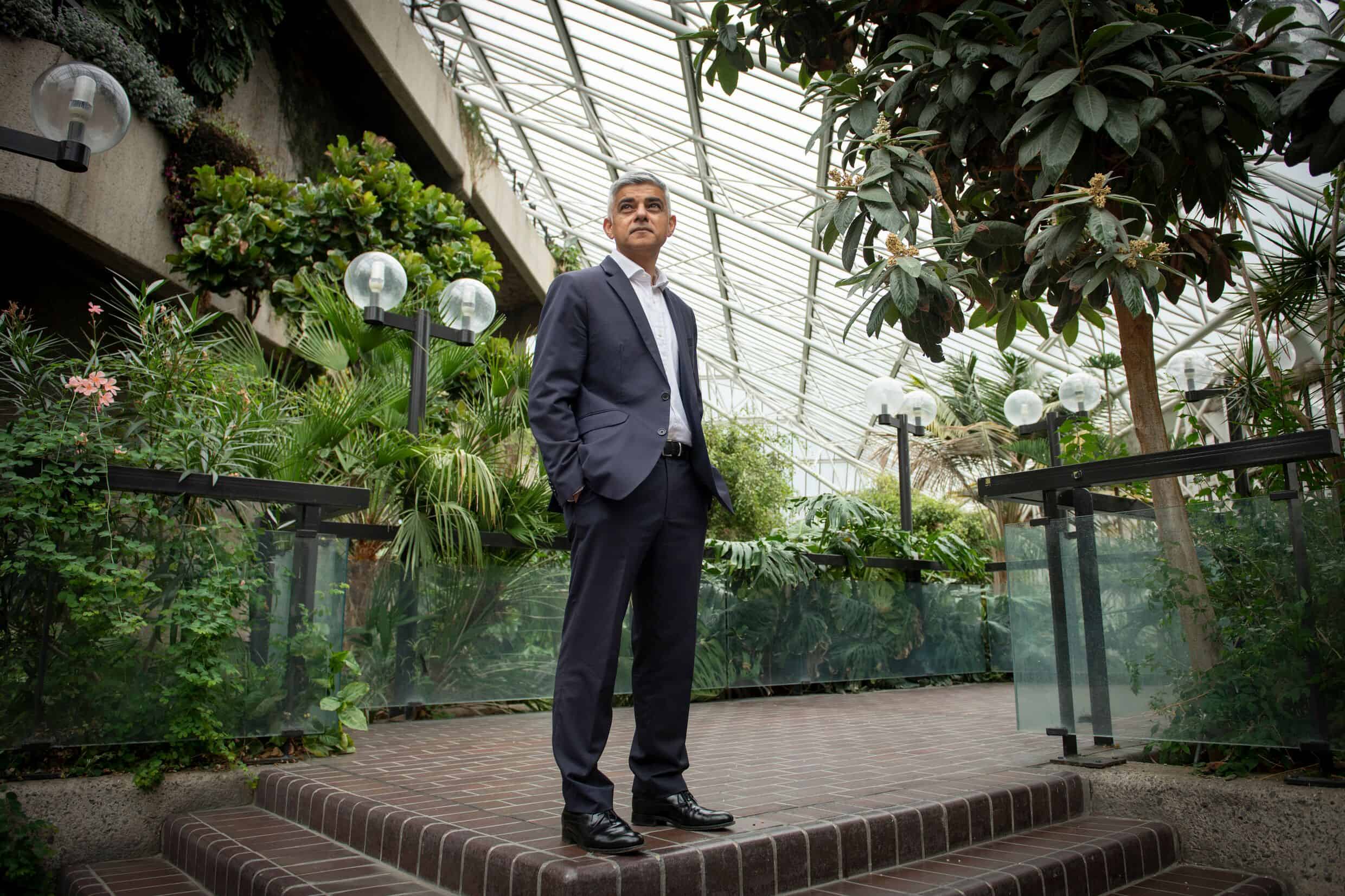
    In a keynote address earlier this week at Imperial Global Ghana – Imperial College London’s overseas branch campus in Accra – Sadiq Khan warned that proposals for a new levy on international university fees would hit the UK’s finances hard, describing the policy as “an act of immense economic self-harm”.

    The UK government is currently considering a new levy on income that English universities generate from international students as part of its immigration whitepaper, which could not only put students off coming  from overseas but also create a substantial extra financial burden for already stretched universities.

    International students contribute about £12.5 billion to London, and another £55bn to the national economy every year, Khan pointed out. For this reason, the government should not make it difficult for these students to study in the UK, Khan said at the event – which formed part of his trade mission to Ghana.

    With 5% of students in London’s higher education institutions coming from Africa, Khan stressed the need to ensure that international students are not frustrated. 

    “Closing our economy to global talent would be an act of immense economic self-harm. One that would slow down growth and leave working people in Britain worse off than before. At a time when President Trump is attacking international students, we should be welcoming them,” he added.

    Khan said the international students also bring a longer-term labour market value, as many stay after their studies to work in key economic sectors from tech and AI to finance and creative industries. For this reason, he disagreed with the view that, “we should pull up the drawbridge to international students or punish universities that choose to welcome people from around the world”.

    On Imperial College opening up a hub in Ghana, he said London is ready to contribute to the development effort of Ghana, “not as a patron, but as a partner. In a genuinely reciprocal relationship that brings benefits to us both”.

    President Trump is attacking international students, we should be welcoming them
    Sadiq Khan, Mayor of London

    The vice-chancellor of the University of Ghana, Nana Aba Appiah Amfo, said the university is committed to providing to its  students with a transformative experience that goes beyond the classroom to nurture innovation, leadership and practical problem solving, adding that “this commitment is rooted in our strategic plan, which prioritises student success, impactful research and strategic partners”.

    “One such partnership, rich in promise and results, is with Imperial College London. What began as a collaboration between two researchers has evolved into a university-wide alliance, advancing work in climate change, diagnostics, and entrepreneurship. It is a powerful model of what mutual trust and shared purpose can achieve,” Amfo added.

    She said the Student Venture Support Programme has become the flagship agenda of the partnership which was launched in 2022 with the Imperial College and is  equipping students with skills, mentoring and funding to turn ideas into viable ventures. 

    To date, it has supported over 400 students and more than 115 startups, spanning four universities across Ghana.

    Despite Khan’s strong opposition to the levy, it looks likely to go ahead.

    At last week’s BUILA conference, skills minister Jacqui Smith doubled down on the need for the levy, saying it would reinforce public confidence in the UK’s international education sector.

    Source link

  • NZ’s new study visa rules strike chord with Australian sector

    NZ’s new study visa rules strike chord with Australian sector

    The New Zealand government announced earlier this week that, from November, Immigration New Zealand (INZ) will increase permitted work hours for study visa holders, extend work rights to all tertiary students on exchange or study abroad programs. It may also introduce a short-term work visa of up to six months for graduates not eligible for a post-study work visa.

    While the relaxations are a key part of New Zealand’s push to boost international student numbers by over 40% by 2034, INZ has also clarified that students who change their education provider or lower their study level will need to apply for a new visa, rather than simply requesting a variation of conditions on their existing one.

    The mandate has struck a chord with Australia’s international education sector, where some individuals and associations have been calling for an overhaul of the study visa system, specifically on linking study visas to the institution of initial enrolment.

    Commenting on New Zealand’s recent changes, Ravi Lochan Singh, managing director, Global Reach, wrote in a LinkedIn post that instead of banning agent commissions for onshore student transfers to address attrition, Australia could “just copy” the neighbouring country’s approach. 

    “Australia is currently facing a significant issue where students use higher ranked or low-risk universities (as categorised by Home Affairs) to secure their student visas easily and then after the first semester of studies, the students get moved to private colleges offering higher education degrees,” Singh told The PIE News. 

    According to Singh, while such moves, often made by Indian or Nepali students with the help of onshore immigration agents, may be genuine, they “waste” the efforts of offshore education agents and universities that initially recruited the students.

    “Some policy makers feel that students have a right to choose the correct education provider and if they feel that what they desire as a customer can be met at private colleges, they should be allowed to move,” stated Singh. 

    “However, we also have the situation where students have demonstrated their available funds through an education loan which is issued in the name of a particular university,” he added. If the student does move institutions, the education loan is not valid as a demonstration of funds and thus the argument that the students should be asked to apply for a fresh student visa.”

    According to Singh, many international students, particularly from South Asia, who arrive in Australia on education loans often find themselves without “available” or “accessible” funds when they switch providers and are required to show new financial evidence.

    It would appear that three modern advanced economies who have championed consumer protections and who have established international study destinations believe this measure is not contrary to ‘consumer choice’
    Gareth Lewis, Western Sydney University

    Moreover, a recent report by Allianz Partners Australia revealed that over 61% of international students found daily life in the country “significantly more expensive than expected”, with more than a quarter considering withdrawing from their studies due to financial woes. 

    “While we are discussing attrition and student movements once the student is onshore, we also need to acknowledge that university fees have been increasing and students are beginning to question ROI. Thus there is an argument for more student visa grants for higher education degrees at TAFE and private providers,” said Singh. 

    “The fees of such programs is much lower to what is charged at the universities. If this happens, the students who are more price sensitive will join the TAFE and private providers right in the beginning and universities will have only those students who can afford the degree and likely to complete them at the university itself.”

    While Australia’s Ministerial Direction 111, which replaced MD 107, provides immigration case officers stricter guidance on assessing the Genuine Student requirement, and introduces a two-tier visa processing system that prioritises institutions with strong compliance records and low visa risks, it influences the decision-making process, not the entire visa mechanism unlike New Zealand’s recent move. 

    However, New Zealand is not the only model Australia could look to, according to stakeholders.

    A recent submission by the Association of Australian Education Representatives in India (AAERI) to the ministers for education and home affairs in Australia pointed to examples from the UK and Canada, where students must obtain a new Confirmation of Acceptance for Studies (CAS) and a new study permit, respectively, if they wish to change institutions.

    “Australia’s recent reforms, such as closing the concurrent CoE loophole and requiring CoEs for onshore visa applications, are steps in a similar direction but do not go far enough to address the core issue of unethical student poaching, misuse of student visa and provider switching,” stated AAERI in its submission in May to the Labor government. 

    After New Zealand’s changes were announced, regional director, Western Sydney University, Gareth Lewis also echoed a similar opinion on Australia’s reluctance to do what New Zealand, the UK, and Canada have done. 

    “It would appear that three modern advanced economies who have championed consumer protections and who have established international study destinations believe this measure is not contrary to ‘consumer choice’,” read Lewis’s LinkedIn post

    “Unfortunately Australia believes it is. This needs to change.” 

    Find out more about how Australia can improve its visa system at The PIE Live Asia Pacific 2025 on July 30, during the session “Visa status: MD111 and MD106 mapping – is the current visa system working?”, which will explore the impact of current visa policies on HE, VET, and ELICOS sectors, covering genuine student assessments, onshore switching, and ways to improve the operating environment. Check out more details here – PLAP 2025 agenda.

    Source link

  • NZ debuts growth plan as it eyes 35k more international students

    NZ debuts growth plan as it eyes 35k more international students

    • New Zealand relaxes some immigration rules – including upping the number of hours overseas students can work outside of their studies – in its bid to attract more international students
    • Immigration New Zealand unveils ambitious plan to tempt 35,000 more international students to the country by 2034
    • Government shines light on economic benefits of international education, but says it will keep an eye on education quality and the impact on local communities as the sector grows

    The New Zealand government has launched the International Education Going for Growth plan, as part of its broader strategy to increase international student enrolments from 83,700 in 2024 to 119,000 by 2034, and double the sector’s value from NZ$3.6 billion ( £1.60 billion) to NZ$7.2 billion (£3.20 billion). 

    On Monday, Immigration New Zealand announced changes to immigration rules to help the country “attract more international students, maintain high education standards, and manage immigration risks”.

    On November 3 this year, INZ will implement changes to increase the permitted work hours for eligible study visa holders from 20 to 25 hours per week, and extend in-study work rights to all tertiary students enrolled in approved exchange or study abroad programs, including those on one-semester courses.

    As per data published by INZ, currently 40,987 study visa holders have in-study work rights with 29,790 set to expire on or before March 31 2026, with the remaining 11,197 visas expected to lapse after that date.

    The new rules on work hours will apply only to students who have been granted a visa from November 3 onward, meaning those with existing visas limited to 20 hours per week will need to reapply to avail the increased allowance.

    On average in 2024, an international student spent NZ$45,000 across the year. That means… ultimately more jobs being created
    Erica Stanford, New Zealand education minister

    “This (increase in work hours) will apply to all new student visas granted from that date, even if the application was submitted earlier,” read a statement by INZ. 

    “If you already have a student visa with a 20-hour work limit and want to work up to 25 hours, you will need to apply for a variation of conditions or a new student visa. The relevant immigration fees will apply.”

    While international students in years 12 and 13 are eligible under the new rules, they will still be required to obtain both parental and school permission to work during the academic year, even with the increased limit of 25 hours per week. 

    Moreover, international graduates who do not qualify for post-study work rights may soon have access to a short-duration work visa of up to six months, giving them time to seek employment in their field under the Accredited Employer Work Visa pathway.

    The government is also investigating how to make it easier for students to apply for multi-year visas.

    “International education is one of our largest exports, injecting NZ$3.6 billion into our economy in 2024. It also provides opportunities for research, strengthening trade and people-to-people connections, which are important to drive investment, productivity and innovation in New Zealand,” read a statement by education minister, Erica Stanford. 

    “On average in 2024, an international student spent NZ$45,000 across the year. That means more visits to our cafes and restaurants, more people visiting our iconic attractions and ultimately more jobs being created.”

    As per data released by Education New Zealand, international enrolments are inching toward pre-Covid levels, with 2024 figures (83,425) now reaching 72% of the 2019 total of 115,705.

    According to ENZ chief executive Amanda Malu, while China and India remain New Zealand’s two largest international student markets, accounting for 34% and 14% of enrolments respectively, they are followed by Japan (9%), South Korea (4%), Thailand (3%), the United States (3%), Germany (3%), the Philippines (3%), and Sri Lanka (3%)

    It’s important to strike the right balance between increasing student numbers, maintaining the quality of education, and managing broader impacts on New Zealanders
    Erica Stanford, New Zealand education minister

    New Zealand wants to “supercharge” this rising momentum and position New Zealand as the destination of choice for international students, according to Stanford. 

    This includes increasing awareness of New Zealand as a study destination from 38% in 2024 to 44% by 2034, and raising the proportion of prospective students who rank the country among their top three study choices from 18% to 22% over the same period.

    “To achieve our ambitious target, we’re taking a considered and strategic approach. It’s important to strike the right balance between increasing student numbers, maintaining the quality of education, and managing broader impacts on New Zealanders. Our plan will deliver that,” stated Stanford. 

    Source link

  • HOELT tender explores digital tests

    HOELT tender explores digital tests

    The latest round of engagement is being undertaken “to gather market insights on newly available and emerging technology in relation to remote testing, and the viability of incorporating this into the HOELT service,” said the Home Office in a notice on July 2.  

    The notice is the latest update to a government tender to design and maintain a dedicated Secure English Language Test (SELT) owned by the Home Office, holding an initial contract value of £1.13bn, which was since reduced to £680m

    The original tender, launched in August 2024, made no mention of engagement on emerging technologies and digital tests, instead outlining plans for in-person delivery, including invigilators and ID-verification services at physical test centres around the world.  

    As per the latest update, the developer that wins the tender will still be responsible for “establishing and managing global test centres” – of which there are 268 – though the notice suggests that remote testing will also be incorporated into the model. 

    While the sector has embraced online delivery and at-home testing, the Home Office will also be taking stock of rising concerns among the public about the use of AI in English proficiency tests.

    According to a recent YouGov poll, 40% of the public are worried about AI causing a greater risk of cheating on English language tests, with a similar proportion concerned about the ability of AI to properly assess language skills.

    The poll, commissioned by Cambridge University Press & Assessment, asked respondents specifically about tests assessing English language skills for people applying to work and study in the UK.

    Additional findings revealed the public’s unease at the prospect of limited human interaction and concerns that AI-led exams would disadvantage those with limited access to technology – both cited by roughly a quarter of respondents.

    Meanwhile, only 8% said they had “no concerns” about the use of AI in English language tests for people applying to work or study in the UK.

    39% of the public are concerned about AI-based tests enabling cheating

    YouGov Poll

    Under its initial plans, the Home Office proposed disaggregating the service into two lines; the development and ongoing support of a Home Office branded test to be used globally, and the facilitation of tests around the world, according to the tender. 

    However, the government’s slashing of the value of the tender led some stakeholders to speculate that the Home Office might turn to a single supplier for both development and delivery.  

    Despite the additional engagement around emerging technologies and remote testing, the value of the tender remains at £680m (excluding VAT).  

    Since the government put out the HOELT tender last year, there has been little news about which companies are throwing their hats in the ring or what their proposed model would look like.

    Currently, PearsonLanguageCert, Trinity College London, and IELTS – which is co-owned by IDP, Cambridge English and the British Council – deliver Home Office-approved SELTs in the UK. 

    The deadline for the latest round of engagement is July 17.

    Source link

  • US study visa applicants told to make social media accounts ‘public’ amid vetting crackdown

    US study visa applicants told to make social media accounts ‘public’ amid vetting crackdown

    • New social media privacy requirements come just as US government lifts four week-long study visa interview freeze, leading to fears of a backlog.
    • Concerns of added complications where consular officers responsible for social media vetting do not speak the applicant’s language.
    • Policy extends even to those who have been issued US visas in the past.

    In an update sent to consulates last week, the US government has advised that all those applying for F, M or J nonimmigrant visas are “requested” to make their social media accounts available to view by anybody so that their identity can be verified and they can be thoroughly vetted before entering the country.

    Immigration experts have criticised the move because of the huge additional workload it will place on immigration officers, meaning that visa issuance is likely to slow down considerably.

    US immigration lawyer James Hollis said he “almost [felt] bad” for consular officers.

    “It’s going to grind processing to a halt and will likely result in increased wait times for all nonimmigrant visas, let alone the student and exchange visitor applicants,” the business immigration specialist at the McEntee Law Group warned – noting that there are added complications where applicants were posting on social media in their own local language if officers do not understand what they have written.

    It appears that the new policy will be mandatory from June 25 onwards, and all applicants will be vetted in this way even if they have been issued a US visa in the past.

    It’s going to grind processing to a halt and will likely result in increased wait times for all nonimmigrant visas, let alone the student and exchange visitor applicants
    James Hollis, McEntee Law Group

    Consulates are advised that they should consider whether active social media privacy settings “reflect evasiveness or otherwise call into question the applicant’s credibility”.

    Officers have been told to reject a visa application in cases where the applicant has:

    • expressed “hostile attitudes” toward the US in terms of its citizens, culture, government, institutions, or founding principles;
    • advocated for or supported “designated foreign terrorists and other threats to US national security”;
    • shown or supported anti-semitism;
    • even if they have otherwise proven they are not an immigration risk;
    • and are not already ineligible for a visa (ie does not post a risk to US national security).

    In these cases, the US can deny entry on national security or foreign policy grounds.

    The US has asked visa applicants to provide social media information on their application forms for the past five years – including all social media names or handles of every platform they have used over the past five years. Failing to include this information could lead to an applicant’s visa being denied and being ineligible for future visas.

    It comes after a tumultuous few weeks for prospective international students eyeing a place at US institutions. After stretching a study visa interview freeze into its fourth week – despite assurances that the pause would be quick – officials last week resumed interviews with additional social media vetting for applicants.

    US stakeholders have repeatedly expressed concerns that the Trump administration’s extreme social media crackdown could inflict untold damage upon the country’s international education sector.

    Source link

  • Flexible Learning and Policy Challenges

    Flexible Learning and Policy Challenges

    What impact is flexible learning having on learners from K-12 through to professional development?

    New Zealand has remarkably high levels of digital access across the population. Why aren’t we out performing other countries in educational measurements?

    This piece serves to introduce a series of six challenges faced by policy makers around flexible learning.

    These six challenges are:

    1. Unequal Access to Technology and Connectivity
    2. Socioeconomic Disparities
    3. Digital Literacy and Skills Gaps
    4. Quality Assurance and Consistent Experience
    5. Teacher Preparedness and Support
    6. Policy and Funding Models

    In this first piece I want to establish what I mean by ‘flexible learning’.

    Like many I struggle to have a single, concise, and consistent “definition” of flexible learning. I would say that flexible learning is a model of delivery that offers learners agency and control over various aspects of their learning experience. Flexible learning is a spectrum. Formal learning courses exist on a continuum between “rigid” and “flexible” delivery. The more control and choice given to the learner, the more flexible the learning experience.

    Flexible learning aims to “empower the student to choose what learning should be studied face-to-face and that which should be studied online, and how to go about engaging with that learning” (2022). This Means empowering the learner to make choices regarding:

    • When: synchronous or asynchronous learning, pace-mandated or self-paced progression.
    • Where: Learning in different locations (home, campus, workplace, etc.).
    • How: Different modes of engagement (online, in-person, blended, hybrid, hyflex).
    • What: Some degree of choice over content or learning pathways, though this is often more associated with “open learning.” Indeed in a world where students are overwhelmed with choices, there are strong arguments that having a prescriptive programme serves students well.

    In my article “Definitions of the Terms Open, Distance, and Flexible in the Context of Formal and Non-Formal Learning,” (2023) I argued that flexible learning is a model of delivery, rather than a fundamental mode of learning. I posit that there are only two core modes of learning: in-person (or face-to-face) and distance learning. Flexible learning then emerges from various combinations and approaches to curriculum design that empower learners to choose amongst these two modes

    As education has a habit of inventing new terms for marginally different practices it might be worth just pointing out the relationship I think exists between flexible learning and forms of Blended, Hybrid, and HyFlex learning. I perceive blended, hybrid, and HyFlex learning as specific models of delivery that fall under the umbrella of flexible learning. They all aim to give agency to the learner regarding how they engage with the material, combining elements of in-person and distance learning.

    I believe that designing for flexible learning means considering the learner’s context and perspective, and creating learning experiences that are relevant, meaningful, motivating, realistic, and feasible within an agreed timeframe. This also involves careful consideration of learning outcomes and assessment in diverse delivery contexts. This means course creators need clarity about learning design principles in relation to flexible approaches, such as working with Notional Study Hours (2020a) and the importance of Learning Outcomes (2020b).

    Based on my broad definition thatFlexible Learning refers to educational approaches and models of delivery that provide learners with a significant degree of choice and control over the time, place, pace, and mode of their learning, leveraging combinations of in-person and distance learning to enhance accessibility and cater to diverse learner needs, how do we face those six policy challenges?

    Watch this space…

    Atkinson, S. P. (2020a, April 14). Working with Notional Study Hours (NSH) or “How much is enough?” Simon Paul Atkinson. https://sijen.com/2020/04/14/working-with-notional-study-hours-nsh-or-how-much-is-enough/

    Atkinson, S. P. (2020b, April 4). Designing Courses: Importance of Learning Outcomes. Simon Paul Atkinson. https://sijen.com/2020/04/04/designing-courses-importance-of-learning-outcomes/

    Atkinson, S. P. (2022a, July 15). How do you define hybrid, or hyflex, learning?. Simon Paul Atkinson. Retrieved from https://sijen.com/2022/07/15/how-do-you-define-hybrid-or-hyflex-learning/

    Atkinson, S. P. (2023). Definitions of the Terms Open, Distance, and Flexible in the Context of Formal and Non-Formal Learning. Journal of Open, Flexible, and Distance Learning, 26(2).3 Retrieved from https://jofdl.nz/index.php/JOFDL/article/view/521

    Source link