Category: Policy

  • Trump threatens Harvard’s ability to host int’l students 

    Trump threatens Harvard’s ability to host int’l students 

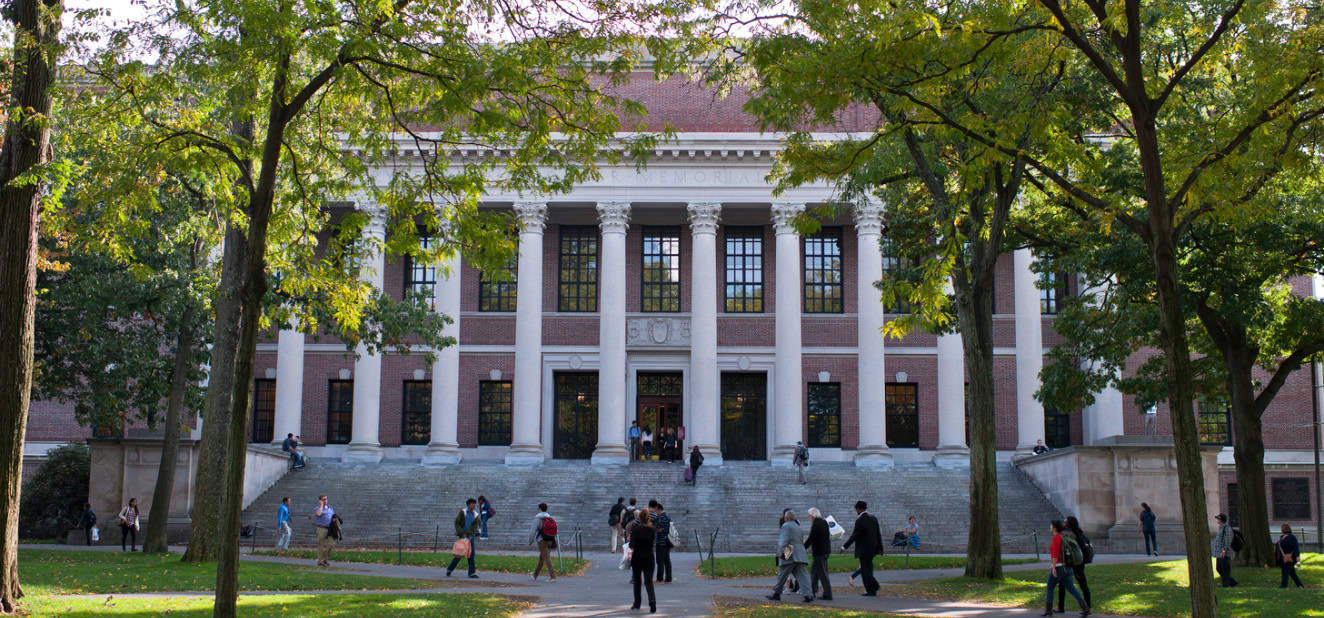
    US homeland security secretary Kristi Noem has written a “scathing letter” to Harvard University, demanding it submits records of international students’ “illegal and violent activities” by April 30, or face losing its eligibility to enrol student visa holders.

    In Noem’s April 16 statement, she accused Harvard’s “spineless leadership” of “bending the knee to antisemitism” and “threatening national security”. 

    “Harvard’s position as a top institution of higher learning is a distant memory,” she added, cancelling two department of homeland security (DHS) grants worth USD $2.7 million on the basis that the university was “unfit to be entrusted with taxpayer dollars”.  

    DHS is threatening to strip Harvard of its Exchange Visitor Program (SEVP) certification, which allows colleges and universities to issue forms to admitted international students to use in their US visa applications. 

    The punitive measures are the latest in a dispute between Trump and the country’s oldest university, which saw USD $2.2bn in federal funding frozen after it rebuffed government demands, including reporting on international students and ending DEI policies. 

    What’s more, President Trump threatened on April 15 to revoke Harvard’s tax-exempt status over its “radical ideology”. 

    The University will not surrender its independence or relinquish its constitutional rights

    Alan Garber, Harvard University

    Last year, Harvard hosted 6,793 international students, totalling over 27% of the entire student body.  

    Across the country, more than a million international students attend US colleges every year, contributing $50bn to the economy, as previously reported by The PIE News. 

    The DHS letter – seen by the Harvard Crimson student newspaper – accused Harvard of creating a “hostile learning environment” for Jewish students and reminded the university it was “a privilege to have foreign students attend Harvard University, not a guarantee”.  

    Refusing to submit to the government’s previous demands, Harvard president Alan Garber said the university was committed to tackling antisemitism but maintained it would not “surrender its independence or relinquish its constitutional rights.”  

    “[The administration’s prescription] violates Harvard’s First Amendment rights and exceeds the statutory limits of the government’s authority,” Garber wrote in a message to the community.  

    In light of the recent escalation over SEVP certification, the university has maintained its position that it will not cede to government control, according to the Washington Post.  

    Alongside enhanced scrutiny of teaching, the government is requiring that Harvard reports on international students “supportive of terrorism or antisemitism” and those “hostile to American values”, ban all clubs supporting Palestine, and ban mask-wearing on campus, among other measures.  

    The directives largely stem from two of Trump’s early Executive Orders relating to “protecting the US from terrorism” and “combatting antisemitism”, which have led to over 1,320 international student visa revocations as of April 16, according to Inside Higher Ed.  

    Of this figure, 12 Harvard students and alumni have had their visas cancelled, though the university was not made aware of the rationale behind the revocations.  

    Student visas have been revoked for a variety of reasons, including some minor traffic infractions. Most of the high-profile cases involve students that participated in pro-Palestinian activism.  

    Challenges to the Trump administration have gained traction in recent weeks, with 19 states and 86 institutions supporting a legal challenge against the government’s revocation of student visas, led by the American Association of University Professors (AAUP).  

    Former President Obama, a Harvard alum, expressed his support for the university in a post on X, describing the government’s funding freeze an “unlawful and ham-handed attempt to stifle academic freedom”, urging other institutions to “follow suit”.

    Meanwhile, hundreds of Yale faculty members have published a letter asking its leadership to legally challenge “unlawful demands that threaten academic freedom and university self-governance”.

    Source link

  • Stakeholders call bluff on anti-OPT bill

    Stakeholders call bluff on anti-OPT bill

    Titled H.R. 2315, the Fairness for High-Skilled Americans Act, the bill was reintroduced by Gosar, who argued that OPT “undercuts American workers” and lets “greedy businesses hire inexpensive foreign labour” without providing benefits.

    “Never authorized by Congress, OPT circumvents the H-1B visa cap set by Congress by allowing over 100,000 aliens admitted into our country on student visas to continue working in the United States for another three years after completing their academic studies,” read a statement by Gosar.

    “The OPT program completely abandons young Americans who have spent years and tens of thousands of dollars pursuing careers in science, technology, engineering, and mathematics only to be pushed out of those fields by cheap foreigners.”

    Though the legislation has been referred to the House Committee on the Judiciary, stakeholders have already shut down any possibility of it passing the US House of Representatives in the future. 

    While proposals like this tend to generate headlines, the likelihood of this bill advancing in Congress is extremely low
    John Evans, Catalyst Gem

    “While proposals like this tend to generate headlines, the likelihood of this bill advancing in Congress is extremely low,” John Evans, co-founder and CEO, Catalyst Gem, a US-based software and services company specialising in international student admissions, told The PIE News

    “The last serious attempt to eliminate OPT came in 2020 and failed in the face of overwhelming bipartisan, legal, and economic opposition. Despite significant political pressure, the program remained fully intact, without any modifications, because of its recognised value to the US economy and workforce development.”

    This isn’t Gosar’s first attempt to target the OPT program. In 2019, he introduced similar legislation and urged its termination through an executive order by President Donald Trump, who was serving his first term at the time.

    Following Gosar’s move, WashTech – a union representing STEM workers – also took legal action, suing the US government over its 1992 rule that established the 12-month OPT program and the 2016 regulation which allows eligible STEM graduates to extend OPT by 24 months.

    But the idea that OPT displaces American workers with international graduates is far from the truth, according to Evans. 

    “As of April 2025, the US had 7.6 million job openings, with high-skill sectors such as tech, healthcare, and engineering facing some of the greatest shortages,” he explained.

    “Looking ahead, the US is projected to create 1.1 million new STEM jobs over the next decade and will need a continued pipeline of talent, including OPT, to support this growth. Failure to meet this demand will weaken the US position in the global economy, particularly if the talent is directed elsewhere.”

    Despite efforts by the Trump administration, which pushed to restrict or eliminate OPT under the direction of then senior advisor to the President, Stephen Miller, the proposed changes were ultimately abandoned due to strong opposition from universities, business leaders, and other key groups.

    Since then, OPT has remained a critical part in international appeal for US education and in 2023, the number of international students participating in the program rose to 242,782 – a 22% jump from the year before. 

    This surge played a significant role in pushing the overall international student population in the country to a record 1.1 million, with OPT participants making up a substantial portion of that total.

    “I don’t see this bill going anywhere as the US needs more highly skilled workers – both American and otherwise to fuel an economy that is moving towards doing more highly skilled work in the US,” stated Mark Kopenski, president and CEO, Global Student Recruitment Advisors, a consultancy firm handling international student recruitment and enrolment strategies for educational institutions. 

    “The (Trump) administration has been bullish on creating paths to permanent residence for highly skilled and educated individuals from around the globe. This will take some time as there is a clearing out of many individuals that have come to the US illegally and without skills, financial resources and abilities that the US desires.”

    According to Kopenski, programs like the “Gold Card Visa” are designed to attract highly skilled talent and noted that some international students in the US have already acquired or are planning to acquire these visas.

    Although programs like the H-1B visa, which allows US employers to temporarily hire international workers in specialised fields, have faced scrutiny during Trump’s second term, the former president has voiced support for granting green cards to international college graduates. 

    However, no legislation has materialised to back this proposal, and instead, international graduates are encountering growing restrictions.

    Since Trump’s inauguration in January this year, hundreds of international students have been detained and seen their visas revoked on US college and university campuses, often without any prior warning. 

    As per reports, over 80 US universities have reported visas being revoked for some of their international students. 

    Last month, US Secretary of State Marco Rubio stated that over 300 student visas had been revoked due to activities deemed “against US national interest.” 

    Experts suggest the revocations may be tied to students’ involvement in pro-Palestine protests or minor legal infractions, such as speeding, with some facing deportation or being asked to leave the country.

    The move has led to condemnation from US educators, who have slammed the “alarming” and “deeply disturbing actions” of the Trump administration. 

    The move could possibly contribute to an already declining interest in studying in the US, as highlighted by a recent survey conducted by StudyPortals. 

    Evans commented: “To rebuild confidence, the US must adopt a more consistent, transparent, and student-centred approach to international admissions and immigration, like the streamlined policies seen in Canada, the UK, and Australia. This effort must be reinforced by public messaging and policies that clearly state: ‘You are welcome here, and your contributions matter.’”

    Meanwhile, Kopenski sees this as short-term declining interest, set to “correct itself as the US strengthens its attractiveness as a destination that provides the ultimate springboard to wealth and prosperity”.

    Source link

  • Sector leaders step up legal pressure on US government

    Sector leaders step up legal pressure on US government

    The Alliance, which represents over 500 college leaders, has pledged its support for the AAUP in the case of AAUP v. Rubio, which seeks an injunction to halt the large-scale arrest, detention and deportation of students and faculty.  

    Submitted in a court document known as an amicus brief, the Alliance argued that recent efforts targeting international students and noncitizen staff had created a “climate of fear” that was “chilling the free exchange of ideas and isolating international students and scholars”.  

    “Recent actions have upended individual lives, undermined the safety of our institutions and jeopardised academic freedom in and beyond the classroom,” said Presidents’ Alliance CEO Miriam Feldblum on April 10.  

    “The uncertainty generated by visa revocations and terminations not only has immediate impacts but also threatens our long-term ability to recruit, retain and employ talented individuals from across the globe,” she added.  

    The court case comes amid growing alarm over the rising number of international student visas revocations and detentions.  

    As of April 10, over 100 US institutions have identified more than 600 international students and recent graduates who have seen their legal status changed by the State Department, according to monitoring by Inside Higher Ed.  

    The AAUP-led lawsuit was filed on March 25, challenging the Trump administration’s policy of arresting, detaining and deporting noncitizen students and faculty who participated in pro-Palestinian activism.  

    The lawsuit alleges that the administration’s “ideological-deportation policy” violates the first amendment right of freedom of speech and the Administrative Procedure Act, as well as being unconstitutionally vague.  

    Recent actions have upended individual lives, undermined the safety of our institutions and jeopardised academic freedom in and beyond the classroom

    Miriam Feldblum, Presidents’ Alliance on Higher Education and Immigration

    In coming together as a sector, Feldblum said she hoped the brief would “amplify the contributions of noncitizen students and scholars, whose ideas and breakthroughs fuel our economy and uphold the collaborative spirit that defines American education”.

    In 2023, international students accounted for 6% of the total US higher education population and contributed over $50bn to the US economy, according to IIE.  

    The unprecedented attacks on international students in the US have provoked outrage across the globe, with the Alliance highlighting longer term impacts which threaten to stifle innovation, intensify ‘brain drain’ and jeopardise the competitiveness of higher education in the US.  

    When paired with declining visa issuance rates from several of the US’ primary sending countries and signs of plummeting interest in the US from postgraduate students, the need for sector-wide unity has never been so strong, say educators.  

    What’s more, the brief highlights the harmful impacts on US students who will lose out on global perspectives, enriched learning experiences and academic collaboration. 

    Scientific talent has already started leaving the US in response to research cuts and threats to academic freedom, with a recent poll revealing three quarters of US scientists were considering leaving the country.   

    Elsewhere, executive members of the US for Success Coalition have urged Congress to press the administration to stop immigration actions and travel restrictions that jeopardise the US’s global attractiveness, highlighting the contributions of international students to America’s “prosperity, safety and security”.

    “International students are the most tracked and vetted visitors to this country,” said NAFSA CEO Fanta Aw.

    “Deterring them from choosing the United States will not make us safer but will certainly deprive us of global talent at a time when competition for these students is increasing around the world,” she added.

    The Coalition is encouraging students and leaders from all sectors including higher education, foreign policy and business, to reach out to members of congress with this message.

    AAUP v. Rubio is scheduled to be heard in court on April 23.

    Source link

  • Ireland’s ELE sector slams sharp rise in financial threshold

    Ireland’s ELE sector slams sharp rise in financial threshold

    The national body representing over 60 accredited English language schools has warned the move could lead to mass cancellations, reputational damage to Ireland, and loss of key emerging markets that have helped rebuild the sector post-pandemic.

    Starting from 30 June 2025, students from countries such as Argentina, Brazil, and Mexico will be asked to show €6,665 in available funds to study in Ireland for eight months – a 120% increase on the 2023 threshold of €3,000.

    “This change has come without consultation, justification, or notice. It is difficult to see how a 120% increase in two years can be considered proportionate when the cost of living has risen just 2% annually,” said Lorcan O’Connor Lloyd, CEO of EEI.

    The affected students are legally permitted to work part-time in Ireland, yet are now being required to show financial backing as if they were not, argued O’Connor Lloyd, who said the policy “undermines the entire work-study visa model that Ireland has in place”.

    It is difficult to see how a 120% increase in two years can be considered proportionate when the cost of living has risen just 2% annually
    Lorcan O’Connor Lloyd, English Education Ireland

    Stakeholders have also raised concerns around the short period of notice of just over 90 days, which means that students who have already paid, booked flights, and made arrangements will be forced to find an extra €2,000 or risk losing their place.

    EEI is therefore calling for an immediate pause and review of the policy, a transition period to protect students who have already booked, and a full consultation with the education sector moving forward.

    Source link

  • Greek TNE applications surge under new law

    Greek TNE applications surge under new law

    The applications from 11 British, one French and one Cypriot institution were submitted to the Greek Ministry of Education on March 31, after regulatory reform allowing international universities to establish fully accredited branch campuses in Greece.  

    Greek education minister Sophia Zacharaki welcomed the “historic reform”, which aims to meet the growing demand from Greek students for internationally recognised and accredited university degrees.  

    “[The reform] provides new choices to Greek college students, establishes Greece as an educational destination for thousands of foreign students,” said Zacharaki.

    She added that the reform would provide the opportunity for Greek scientists working abroad to return to Greece, transforming the country into “a hub of knowledge and innovation for the greater region of southeastern Europe”.  

    As well as attracting international students, the legislation aims to meet the “ever-increasing domestic demand” for higher education, halt the emigration of Greek young people and encourage the return of Greek academics and scientists.

    In 2024, more than 40,000 Greeks studied abroad, according to the government.

    And yet, the bill was met with fierce opposition during its parliamentary debate, sparking weeks of protests from domestic students and faculty who argued the legislation would undermine Greek state universities and devalue domestic degrees.  

    It’s advocates, however, maintain that healthy competition will uplift Greece’s higher education system, attract international investment and create new jobs.  

    “The government wants to modernise the Greek higher education landscape and create two systems, one state and one non-state that will interact creatively with each other,” said Study in Greece director, Theodoros Papaioannou, when the bill was passed.  

    Pending government approval, the majority of applicants plan to launch branch campus operations in October 2025, with nine institutions already partnered with Greek private colleges that operate as affiliates of European institutions.  

    For instance, York University’s existing partner, CITY College in Thessaloniki, will transition into the University of York Europe Campus, CITY U.L.E, operating as a non-state, non-for-profit university.

    Among the other UK applicants are the University of East London, the University of Greater Manchester, the University of Derby, London Metropolitan University, the University of West London and the University of Essex.

    [The branch campus] promises to elevate the educational landscape in Greece and offer students even more pathways for success

    Constantine Arcoumanis, Metropolitan College, Greece

    UEL’s institutional partner, Metropolitan College, Greece (MC), welcomed the collaboration, highlighting the benefit of Greek students obtaining accredited degrees from leading European universities.  

    “[The branch campus] promises to elevate the educational landscape in Greece and offer students even more pathways for success,” said MC academic board chairman Constantine Arcoumanis, adding he was “excited” about the proposals.  

    To ensure accessibility for domestic students, UEL said that many of its programs would be delivered in Greek, and that students would have access to UEL’s careers services and soft skills support, as well as study abroad, cultural exchange and learning resources.  

    The University of York’s campus, with locations in Thessaloniki and Athens, plans to establish a “leading hub for computer science studies”, initially offering undergraduate and postgraduate degrees across the schools of business studies, sciences, and law and humanities.  

    In a video message, York’s vice-chancellor welcomed the Greek government’s decision and said that his branch campus aimed to “contribute to the advancement of higher education and to establish Greece as an international education hub”.

    Last month, Greek Prime Minister Kyriakos Mitsotakis spotlighted York University’s interest in expanding operations to Greece: “Ranked 146th globally in 2025, York has been recognised for its excellence in research and teaching by official British institutions,” he told Greek media.

    Since Mitsotakis came to power in 2019, Greece has pursued the internationalisation of higher education, with the Prime Minister highlighting the need to combat Greece’s “brain drain”.

    In July 2022, the government changed the constitution to allow universities to offer bachelor programs taught in English.

    Source link

  • Canadian associations welcome collaboration with new Prime Minister

    Canadian associations welcome collaboration with new Prime Minister

    With Mark Carney sworn in as Canada’s new Prime Minister, major education groups have urged the incoming cabinet to recognise international students’ vital role in the country’s economy. 

    As Canada has already implemented study permit caps and post-graduation work permit restrictions over the past year, stakeholders are pinning their hopes on Carney. 

    His decision to remove immigration minister Marc Miller – widely seen as a key architect of temporary resident restrictions – has fuelled expectations for change. 

    “New leadership brings a fresh perspective on policies and challenges, and we welcome the opportunity to meet with the new minister to discuss the vital role of international students in Canada’s immigration strategy,” a Universities Canada spokesperson told The PIE News

    Despite the optimism, Carney’s stance on immigration policies in Canada leaves much to consider.

    Terming the North American country’s immigration policies as “failure of executions,” Carney has previously stated that Canada has failed to live up to its “immigration values.”

    “We had much higher levels of foreign workers, students and new Canadians coming in than we could absorb, that we have housing for, that we have health care for, that we have social services for, that we have opportunities for. And so we’re letting down the people that we let in, quite frankly,” Carney stated at a Cardus event – a Christian non-partisan think tank – in November.  

    Moreover, according to a CIC News report, Carney’s policy aims to address Canada’s housing crisis by “capping immigration until it can be returned to its sustainable pre-pandemic trend,” as stated in policy documents released in February 2025.

    This aligns with the government’s aim to reduce Canada’s total population of temporary residents by about 445,000 in 2025 followed by another 445,000 in 2026. 

    According to the Universities Canada spokesperson, while Carney intends to follow a similar direction in temporarily reducing immigration, Canadian universities “stand ready to collaborate on a responsible, sustainable plan that aligns with the country’s labour needs”.

    “This approach should be targeted – prioritising individuals with the right skills – while also addressing internal issues like processing delays that hinder Canada’s ability to attract top global talent,” stated the spokesperson. 

    According to Larissa Bezo, president and CEO, Canadian Bureau of International Education, Canada’s International Student Program is not expected witness any new major changes. 

    “Against the backdrop of an existential threat to Canada’s sovereignty and policy focus on Canada’s economic resilience, CBIE does not anticipate further policy changes affecting international students in the near term,” stated Bezo.

    “CBIE is actively engaging with policymakers to ensure that any future policy recalibration reflects the strategic role international students play in Canada’s long-term economic and demographic sustainability.”

    Though Carney hasn’t made direct statements about further restrictions on international students, he has previously blamed Canadian provinces for underfunding higher education, which pushed institutions to rely on international students.

    “Transfers from provincial coffers have been frozen, leaving universities to rely completely on international students for growth,” he stated at an event, as per Canadian media reports. 

    Ontario’s universities predicted nearly $1 billion in financial losses over the next two years as international student caps exacerbate “years of underfunding”, as reported by The PIE News.

    The figures do not yet account for the additional impacts of policies that further reduce the cap and including postgraduate students, among other changes.

    Several Canadian colleges and universities across various provinces have also recently reduced programs and staff due to a decline in international student enrolment. 

    While Sheridan College in Ontario is suspending 40 academic programs with an expected revenue loss of $112 million, Douglas College in British Columbia suspended its business and technology programmes and laid off 15% of its faculty. 

    Alberta’s Bow Valley College reported a 25% decline in international student enrolment, cancelled five diploma programs, and laid off staff, while Nova Scotia’s Cape Breton University has paused intake for certain engineering and technology programs, and cut staff to manage budgetary constraints.

    “While our advocacy focuses on the federal level, we recognise the persistent underfunding of the post-secondary sector in many provinces,” stated the Universities Canada spokesperson. 

    Canadian universities, especially ones in Ontario, have not only witnessed decline in public funding but also reduction in domestic tuition fees, in recent years.

    “The immigration policy changes of the past year have exposed what is a chronic under-funding and undervaluing of post-secondary education in this country,” stated Bezo. 

    “Ultimately, we need commitment by provinces and territories to properly fund post-secondary education in Canada to ensure a high-quality offering for Canadian students which is not reliant on revenues from international student tuition for operational survival.”

    “In 2022 alone, they injected $30.9 billion into the economy, surpassing the auto parts manufacturing industry, and supported over 361,000 jobs.”

    Universities Canada spokesperson

    The organisations have also highlighted the economic impact of international students, who have contributed $31 billion to Canada’s GDP in 2022, as reported by The PIE News. 

    “In 2022 alone, they injected $30.9 billion into the economy, surpassing the auto parts manufacturing industry, and supported over 361,000 jobs,” stated the Universities Canada spokesperson. 

    “Their contributions also generated $7.4 billion in tax revenue, funding essential services like hospitals, schools, and infrastructure.”

    “We need to see more recognition for the fact that international students are integral to meeting Canada’s economic, demographic, and workforce priorities,” added Bezo.  

    “International students fill critical workforce shortages, strengthen Canada’s research and innovation ecosystem, and enhance regional economic development.”

    Source link

  • HESA’s AI Observatory: What’s new in higher education (March 16, 2025)

    HESA’s AI Observatory: What’s new in higher education (March 16, 2025)

    International Frameworks

    With the right opportunities we can become AI makers, not takers
    Michael Webb.  FE Week. February 21, 2025.

    The article reflects on the UK’s AI Opportunities Action Plan, aiming to position the country as a leader in AI development rather than merely a consumer. It highlights the crucial role of education in addressing AI skills shortages and emphasizes the importance of focusing both on the immediate needs around AI literacy, but also with a clear eye on the future, as the balance moves to AI automation and to a stronger demand for uniquely human skills.

    Living guidelines on the responsible use of generative AI in research : ERA Forum Stakeholder’s document
    European Commission, Directorate-General for Research and Innovation. March 2024.

    These guidelines include recommendations for researchers, recommendations for research organisations, as well as recommendations for research funding organisations. The key recommendations are summarized here.

    Industry Collaborations

    OpenAI Announces ‘NextGenAI’ Higher-Ed Consortium
    Kim Kozlowski. Government Technology.  March 4, 2025.

    OpenAI has launched the ‘NextGenAI’ consortium, committing $50M to support AI research and technology across 15 institutions, including the University of Michigan, the California State University system, the Harvard University, the MIT and the University of Oxford. This initiative aims to accelerate AI advancements by providing research grants, computing resources, and collaborative opportunities to address complex societal challenges.

    AI Literacy

    A President’s Journey to AI Adoption
    Cruz Rivera, J. L. Inside Higher Ed. March 13, 2025.

    José Luis Cruz Rivera, President of Northern Arizona University, shares his AI exploration journey. « As a university president, I’ve learned that responsible leadership sometimes means […] testing things out myself before asking others to dive in ». From using it to draft emails, he then started using it to analyze student performance data and create tailored learning materials, and even used it to navigate conflicting viewpoints and write his speechs – in addition to now using it for daily tasks.

    Teaching and Learning

    AI Tools in Society : Impacts on Cognitive Offloading and the Future of Critical Thinking
    Gerlich, M. SSRN. January 14, 2025.

    This study investigates the relationship between AI tool usage and critical thinking skills, focusing on cognitive offloading as a mediating factor. The findings revealed a significant negative correlation between frequent AI tool usage and critical thinking abilities, mediated by increased cognitive offloading. Younger participants exhibited higher dependence on AI tools and lower critical thinking scores compared to older participants. Furthermore, higher educational attainment was associated with better critical thinking skills, regardless of AI usage. These results highlight the potential cognitive costs of AI tool reliance, emphasising the need for educational strategies that promote critical engagement with AI technologies.

    California went big on AI in universities. Canada should go smart instead
    Bates, S. University Affairs. March 12, 2025.

    In this opinion piece, Simon Bates, Vice-Provost and Associate Vice-President for Teaching and Learning at UBC, reflects on how the ‘fricitonless efficiency’ promised by AI tools comes at a cost. « Learning is not frictionless. It requires struggle, persistence, iteration and deep focus. The risk of a too-hasty full scale AI adoption in universities is that it offers students a way around that struggle, replacing the hard cognitive labour of learning with quick, polished outputs that do little to build real understanding. […] The biggest danger of AI in education is not that students will cheat. It’s that they will miss the opportunity to build the skills that higher education is meant to cultivate. The ability to persist through complexity, to work through uncertainty, to engage in deep analytical thought — these are the foundations of expertise. They cannot be skipped over. »

    We shouldn’t sleepwalk into a “tech knows best” approach to university teaching
    Mace, R. et al. Times Higher Education. March 14, 2025.

    The article discusses the increasing use of generative AI tools like among university students, with usage rising from 53% in 2023-24 to 88% in 2024-25. It states that instead of banning these tools, instructors should ofcus on rethinking assessment strategies to integrate AI as a collaborative tool in academic work. The authors share a list of activities, grounded in the constructivist approach to education, that they have successfully used in their lectures that leverage AI to support teaching and learning.

    Accessibility & Digital Divide

    AI Will Not Be ‘the Great Leveler’ for Student Outcomes
    Richardson, S. and Redford, P. Inside Higher Ed. March 12, 2025.

    The authors share three reasons why AI tools are only deepening existing divides : 1) student overreliance on AI tools; 2) post-pandemic social skills deficit; and 3) business pivots. « If we hope to continue leveling the playing field for students who face barriers to entry, we must tackle AI head-on by teaching students to use tools responsibly and critically, not in a general sense, but specifically to improve their career readiness. Equally, career plans could be forward-thinking and linked to the careers created by AI, using market data to focus on which industries will grow. By evaluating student need on our campuses and responding to the movements of the current job market, we can create tailored training that allows students to successfully transition from higher education into a graduate-level career. »

    Source link

  • Marc Miller removed as Canadian immigration minister

    Marc Miller removed as Canadian immigration minister

    The cabinet reshuffle came upon Carney’s swearing-in ceremony as Canada’s new Prime Minister on Friday 14 March, following his landslide victory in the Liberal leadership race announced on March 10.  

    Miller has been replaced by Rachel Bendayan, formerly the minister of official languages and associate minister of public safety under Trudeau. Bendayan is one of 11 female ministers in Carney’s 24-member cabinet.  

    Holding various government positions since being elected to parliament in 2019, Bendayan was the first Canadian of Moroccan descent to join the federal government.  

    While a change of tack regarding immigration is unlikely until after the federal election, international education stakeholders are hopeful about Miller’s successor who will head up Immigration, Refugees and Citizenship Canada (IRCC).

    “Canada is due for a reset on the immigration file. The former minister rode a wave of negative sentiment to make Canada feel increasingly unwelcoming to international students and their family members,” Canadian immigration lawyer Matthew McDonald told The PIE News.

    “My hope is that Minister Rachel Bendayan will bring a more positive spirit to the country’s immigration conversation,” he added.

    Based on Bendayan’s role as minister for official languages, McDonald said he expected she would continue IRCC’s commitment to the prominence of the French language in permanent residence programs.

    Bendayan’s legal background also suggests that she may continue the “technocratic approach” to policy seen of her predecessor, he added.

    The former minister rode a wave of negative sentiment to make Canada feel increasingly unwelcoming to international students

    Matthew McDonald, Canadian Immigration Services

    “We are changing how things work, so our government can deliver to Canadians faster – and we have an experienced team that is made to meet the moment we are in. Our government is united and strong, and we are getting right to work,” said Prime Minister Carney.  

    Carney, formerly head of the Bank of Canada and Bank of England, and a relative political newcomer, will succeed Justin Trudeau as relations hot up between the US and Canada over Donald Trump’s trade war against its northern neighbour.  

    Trudeau’s large cabinet was made up of 37 ministers, including his longtime personal friend and the best man at his wedding, immigration minister Marc Miller.  

    Carney himself never sat on Trudeau’s cabinet, which was part of his appeal to some Liberal voters.  

    While several Trudeau stalwarts have been dropped from Carney’s cabinet, there is still considerable overlap and only three new faces, which Carney’s team said would ensure “continuity”.

    We are changing how things work, so our government can deliver to Canadians faster

    Mark Carney, Canadian Prime Minister

    In the absence of an education minister at the federal level, Miller has delivered many of the turbulent policy changes in international higher education over the past 14 months. He has become notorious in the sector for repeatedly doing so on a Friday afternoon.  

    During this time, Canadian institutions have been delivered study permit caps, twice, restrictions on post-graduate work opportunities and procedural changes around recruiting and enrolling international students, among myriad further disruptions.  

    Against the backdrop of a recent increase in anti-immigration sentiment across Canada, McDonald said that Bendayan had “the opportunity to seize this existential moment for Canada and reinforce that we are a country whose past, present, and future is an immigration story”.

    Previous statements made by Carney about tackling Canada’s housing crisis, prioritising those already in Canada for permanent residency and reducing temporary foreign worker levels suggest the government’s ongoing immigration policy will largely align with Miller’s going forward.  

    While Carney has not explicitly said anything about limiting international students, he has previously voiced concerns about institutions’ reliance on international students and has advocated for increased funding for postsecondary education.  

    Under Canada’s current immigration levels plan, the government is aiming to reduce temporary residents including international students and temporary workers to 5% of the total population by 2027.  

    Canada’s next federal election is currently scheduled for October, though there is speculation that Carney could call an election before parliament is expected to return on March 24.  

    Source link

  • PGWP eligibility expanded for college degree students

    PGWP eligibility expanded for college degree students

    Canada’s college sector has welcomed a recent policy change from the IRCC stating that graduates of college degree programs will now join university students in being exempted from PGWP field of study requirements announced in October 2024.  

    At the time, the IRCC updated the eligibility criteria for students applying for a post-graduation work permit, allowing only college graduates from certain fields of study to apply for a PGWP, thus putting the college sector at a severe disadvantage.  

    The most recent revision has been hailed as a rare piece of good news for Canadian colleges, which stakeholders warned were at risk of being “decimated” by the IRCC’s eligibility criteria.  

    Conestoga College senior vice-president Gary Hallam said the decision was an “important step forward” for the sector, acknowledging “the excellence of our academic programming and the essential role colleges play in ensuring graduates have the skills and knowledge needed for success in today’s workforce”.

    “We are particularly pleased our international students will now benefit from the breadth of our programming,” added Hallam, highlighting Conestoga’s 25 degree programs offering a blend of theory and hands-on practical learning.

    The change applies to students who applied for a study permit after November 1, 2024, to pursue a college bachelor’s, master’s or doctoral degree program.  

    Coupled with other restrictions, the field of study requirements were already having a dramatic impact on Canadian institutions, with new international college enrolments seeing a 60% decline in 2024, triggering a stream of course closures and layoffs felt hardest in Ontario.  

    The IRCC’s decision… acknowledges the essential role colleges play in ensuring graduates have the skills and knowledge needed for success in today’s workforce

    Gary Hallam, Conestoga College

    The English and French language requirements announced last year remain in place for all PGWP applicants, and non-degree students will still have to meet the field of study requirements intended to foster greater alignment between education and labour-market needs.  

    Earlier this year, the IRCC added education as an eligible field of study reflecting labour market shortages across the regions in areas such as early childhood education, teaching assistance and childcare provision.  

    Despite some confusion regarding the wording of the IRCC’s guidance, the Canadian Bureau for International Education (CBIE) confirmed the change, and that the department was working to update its website.  

    Since January 2024, the IRCC has stepped up scrutiny of international student recruitment at Canadian institutions, capping international student numbers with the aim of reducing temporary residents from 6.5% of Canada’s total population to 5% by the end of 2026.

    Source link

  • Study permit caps not to blame for Ontario college funding crisis

    Study permit caps not to blame for Ontario college funding crisis

    Educators in Ontario are setting the record straight about the cause of the province’s college funding crisis – the blame for which, they say, falls squarely on the Ontario provincial government.  

    “We currently see a wave of Ontario college program closures/suspensions sweeping across all of Ontario’s 24 colleges… This is just the tip of the iceberg and there will be many more to follow,” school educator and former college administrator David Deveau wrote in a letter to government officials.  

    “This letter aims to correct the media’s false assertion that these program suspensions are a direct result of the federal government’s restrictions on international student visa approvals and identify the actual reason for this alarming trend across the Ontario college system,” he continued.  

    The letter, which has been widely shared by sector stakeholders, lays the blame for Ontario’s college crisis on decades of underfunding from the provincial government, exacerbated by a 10% tuition fee reduction and freeze in 2019.  

    “Ontario’s higher education sector is in crisis due to chronic underfunding, tuition freezes, and a reliance on international student tuition as a financial lifeline,” said Chris Busch, senior international officer at the University of Windsor.  

    In 2001/02, Ontario’s colleges received 52.5% of their revenue from public funding, the second lowest of any province, according to Canada’s statistics agency.  

    By 2019/20, this figure had dropped to 32%, by far the lowest proportion across Canada’s provinces and territories, which, on average, provided 69% of college funding that year.   

    “Colleges and universities have had to attract talent from abroad, increasingly enrolling international student to help fill the funding gap,” said Vinitha Gengatharan, assistant VP of global engagement at York University.  

    This is particularly evident at the college level, where institutions have seen international student enrolment of 30-60%, compared to universities where it ranges from 10-20%, added Gengatharan.

    Educators across Ontario’s college and university sector have spoken out in support of Deveau’s letter, calling for a long-term commitment to stable and adequate funding from the provincial government.  

    In recent weeks, Ontario’s 24 public colleges have made the headlines for sweeping budget cuts, course closures and staff layoffs.  

    Stakeholders have raised additional concerns about increased class sizes and deferred maintenance and tech upgrades eroding the quality of education and the student experience for all learners, including Ontarians, Busch maintained.  

    This week, Algonquin College announced the closure of its campus in Perth, Ontario, alongside the cancellation of 10 programs and the suspension of 31, citing “unprecedented financial challenges”.  

    It follows Sheridan and St. Lawrence colleges announcing course suspensions with associated layoffs, and Mohawk College cutting 20% of admin jobs.  

    The ability of Ontario’s universities to fulfil their mission – providing high-quality education, driving research, and fuelling the economy with talent – is at significant risk under current conditions
    Chris Busch, University of Windsor

    “What is currently happening within our colleges is a downward spiral that will hurt Ontarians, the labour market, and our economies in the end,” wrote Deveau, adding that it was especially important to be strong in the face of externally imposed tariffs from the Trump administration.  

    In the letter, Deveau said the tuition freeze – which continues to this day – is akin to a “chokehold suffocating the life out of the college system” that is eliminating vital programs, restricting career choices of Ontarians and “jeopardising the province’s economic future”. 

    He raised attention to the “domino effect” of program closures impacting students’ career prospects, faculty layoffs and damaging local economies.  

    “The ability of Ontario’s universities to fulfil their mission – providing high-quality education, driving research, and fuelling the economy with talent – is at significant risk under current conditions,” said Busch.  

    In March 2023, the Ontario government itself published a Blue-Ribbon Report recognising the need to increase direct provincial support for colleges and universities, “providing for both more money per student and more students” and raising tuition fees.

    Last year, the Ontario government injected $1.3 billion into colleges and universities over three years to stabilise the sector’s finances, though critics are demanding systemic funding changes rather than “stop-gap” and “gimmicky” proposals, said Deveau.  

    Nationwide, Canada’s colleges were dealt another blow when the IRCC announced its new PGWP eligibility criteria, which stakeholders warned risked “decimating” Canada’s college sector.

    It is feared that more Ontario colleges will face cuts before the province’s 2025 budget, expected in April.  

    The PIE News reached out to the Ontario government but is yet to hear back.

    Source link