Today marks International Youth Day, an annual event first established in 1999 by the United Nations.
It is News Decoder’s belief that when young people organize and speak out on issues important to them, they can become a force hard to ignore. That’s why we try to provide a forum for youth voices in as many ways as we can: Through youth-authored articles and podcasts, and through live student-led webinars. One time we even turned our Instagram page over to students we were working with.
If you are a young person, this day is for you. So speak out and be loud. Don’t accept what you see as wrong. This is your world to change.
The United Nations has a list of possible actions you can take to advocate for issues important to you and your peers. You can check it out here. We’ve also adapted the list below.
⇒ Connect with the media. You can connect with podcasters and influencers or go old school and contact local or regional news publications or radio stations. Ask them to devote a show or space to interview you or an expert about young people and issues important to them.
⇒ Organize a meeting or debate or roundtable discussion. You can bring together people to discuss the important work young people do around the world on topics like education, hunger, mental health and climate change. You can do this through Zoom or Google Meets or whatever live video chat program you are comfortable with. You can do this as a school project or just among the people you know. For examples, check out our “Decoder Dialogues” — live zoom sessions where we bring young people together from different countries to talk about important issues with an expert on that topic.
⇒ Organize a youth forum in your community. You can invite people from different economic and cultural backgrounds to promote acceptance and recognition and understanding of different perspectives.
⇒ Set up a table at a central location. This creates a place where people can talk to you about youth-related issues.
⇒ Organize a musical performance or art exhibit in a public space. These are great ways to bring people together and showcases the challenges and accomplishments of young people.
⇒ Contact your government representatives. Let them know what issues you care about and how government policies or laws affect young people.
And if you want to feel more empowered, check out these News Decoder stories:
If you agree to something and put it in writing, shouldn’t you abide by that agreement? Until now, that seemed to be a pretty basic idea.
Agreements at the international level come in the form of treaties. When countries sign treaties they voluntarily agree to follow a given set of rules. The agreements tend to be broad and carefully negotiated. Once signed and ratified, treaties commit countries to obligations.
In June, the countries of Finland, Poland, Estonia, Latvia and Lithuania announced that they will withdraw from the 1997 Anti-Personnel Mine Treaty. Signed by 165 international states, the treaty forbids the use, production, stockpiling and transfer of anti-personnel landmines, which are devices buried in the ground that explode when someone steps on them.
This month, Ukraine announced it would also withdraw.
Russia’s 2002 invasion of Ukraine radically changed the geopolitical context that existed when the Mine Ban Treaty was signed. But since landmines are only used in times of war, it seems like the potential circumstance of war would have been considered when the countries agreed to ban them.
But Russia, which invaded Ukraine in 2022, never signed the treaty. So has the war in Ukraine really changed everything?
Disarming the power of treaties
All five countries that announced their withdrawal from the treaty border either Russia or Russia-friendly Belarus. The use of anti-personnel landmines can be easily seen as a defensive military action against Russia. Norway, however, which has a 121 mile land border with Russia, remains committed to its anti-mine obligations.
The withdrawals represent a serious weakening of disarmament treaties that have humanitarian objectives as well as respect for international law. The five-country withdrawals could be setting a precedent that could see countries withdraw from other treaties such as those banning biological, chemical and nuclear weapons as well as withdrawals from international institutions.
The withdrawals are a considerable reversal for the International Campaign to Ban Landmines (ICBL), a loose coalition of non-governmental organizations that was awarded the 1997 Nobel Peace Prize along with its founding coordinator Jody Williams.
The campaign was an unusual movement that garnered the support of many high profile people, including Princess Diana, Paul McCartney and James Bond actor Daniel Craig.
While treaties are formally signed by states, it is unique that the initiative behind the ICBL came from non-state organizations.
Banning a conventional weapon
Back in 1999, Williams wrote that widespread support for a landmine ban came as a surprise. “Few imagined that the grassroots movement would capture the public imagination and build political pressure to such a degree that, within five years, the international community would come together to negotiate a treaty banning anti-personnel landmines,” she wrote. She noted that it was the first time in history that a conventional weapon in widespread use had been comprehensively prohibited.
That this is no longer the case has shocked land mine opponents.
“We are furious with these countries,” said Thomas Gabelnick, the current director of the ICBL. “They know full well that this will do nothing to help them against Russia.”
The signing of the 1997 Ottawa Convention and the awarding of the Nobel Peace Prize were hailed as crucial steps in disarmament – getting governments to reduce their stockpiles of destructive weapons.
The treaty was the first disarmament agreement where governments and civil society worked closely together, representing a new form of international diplomacy. Unlike previous disarmament treaties, it banned weapons actually in use instead of striving to prevent or ban weapons designed as deterrents, such as nuclear weapons – weapons so destructive that the mere fear of their use would stop one country from attacking another.
The treaty ratification process
Historically, the treaty was signed during the euphoric period after the fall of the Berlin Wall and before the 11 September attacks that took down the World Trade Center in 2001. During this period global tensions seemed to be easing. Following the end of the Cold War many believed that more disarmament treaties would follow.
The landmines treaty came into force in 1999 when it was ratified by a sufficient number of states. But some of the most largest and most powerful countries declined to sign. Besides Russia, other countries that stayed out include China, India, Iran, Pakistan, Israel and the United States.
The treaty has successfully led to the destruction of tens of millions of stockpiled landmines. Hundreds of thousands of square miles have been de-mined (13,000 in Ukraine alone) and well the number of civilians maimed or killed by mines has been drastically reduced.
The withdrawal by the five countries could be an unfortunate example for withdrawals from other disarmament treaties or multilateral organizations.
Mary Wareham, the deputy director of the crisis, conflict and arms division at Human Rights Watch, told The New York Times that the withdrawals set a terrible precedent. “Once an idea gets going it picks up steam,” she said. “Where does it stop?”
A treaty set to expire
The last arms control agreement between the United States and Russia, for example, is scheduled to expire in January 2026. Will that treaty — the New Start Treaty — which eliminated important nuclear and conventional missiles, be renewed?
The legitimate reason for leaving a treaty is force majeure, an unforeseen circumstance. As a Finnish Parliamentarian said justifying her country’s leaving the Treaty, the war in Ukraine “changed everything.”
Norway doesn’t agree.
Writing for the European Leadership Network, Wareham and Laura Lodenius, the executive director at Peace Union of Finland, warned that the humanitarian impact will far outweigh any marginal military advantages. “The deterrent factor of re-embracing anti-personnel mines isn’t worth the civilian risk, humanitarian liabilities and reputational damage, all of which extend far beyond their borders,” they wrote.
As for the United States, it has recently withdrawn from bilateral treaties — those between two nations — and several multilateral accords in which multiple parties sign on.
A treaty that ended the Cold War
In a historic ceremony in Iceland back in 1987, U.S. President Ronald Reagan and Mikhail Gorbachev signed the Intermediate-Range Nuclear Forces Treaty (INF Treaty), which was largely seen as an end to the Cold War that had lasted since the end of World War II.
Under the first Trump Administration in 2019, the U.S. withdrew from that treaty.
Trump has twice withdrawn the United States from the Paris Climate Accord and, in addition, withdrew from the Open Skies Treaty, which allows for the use of surveillance planes or drones for intelligence capturing purposes.
The United States has also withdrawn from institutions like the World Health Organization and is threatening to withdraw from the World Trade Organization. It has already left the U.N. Human Rights Council.
In an ominous move for multilateralism, Trump has set in motion a review of U.S. participation in intergovernmental organizations, including those that are part of the United Nations, with the intention of withdrawing from or seeking to reform them.
Breaking a treaty by executive order
Trump’s executive order of 4 February 2025, started by saying: “The United States helped found the United Nations (UN) after World War II to prevent future global conflicts and promote international peace and security. But some of the UN’s agencies and bodies have drifted from this mission and instead act contrary to the interests of the United States while attacking our allies and propagating anti-Semitism.”
That’s his subjective interpretation of recent events. There is no justification in the mandate for the review for any change based on force majeure, certainly not that the United Nations and some of its agencies “drifted from this mission and instead act contrary to the interests of the United States.”
Withdrawing from treaties or organizations has consequences for global stability. The announcement by the five countries that they are withdrawing from the Mine Ban Treaty is a worrisome addition to Trump’s general assault on multilateralism. Pacta sunt servanda, the underlying principle of contracts and law, translates to “agreements must be kept.” It is the foundation of international law and cooperation.
The withdrawals are a bad omen. They lessen the value of conventions and treaties. States should not respect their obligations only when they are in their favor.
Confidence that states will respect their obligations is the primary support for an international system.
The Ukraine war has not changed that. Without that confidence, the system collapses.
Last August, Republican Rep. Gino Bulso looked out at a room filled with dozens of fellow state lawmakers as he touted new legislation he had just helped become a reality in Tennessee. Under the law, a fetal ultrasound or a video of a computer-animated fetus developing in the womb had become mandatory viewing for students in the state’s sex education classes.
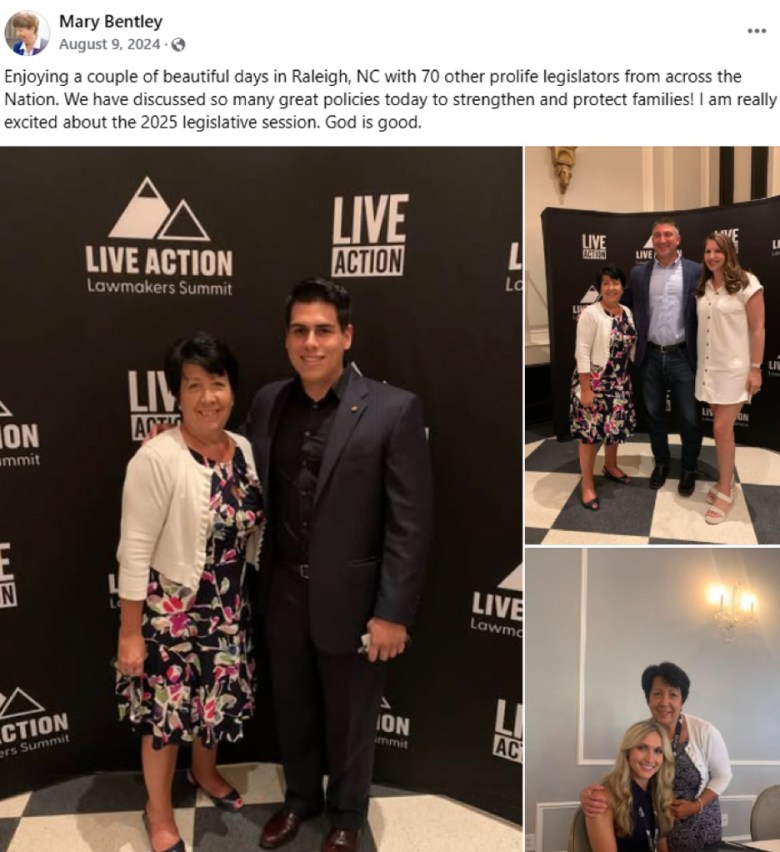
Bulso was there at the request of the event’s host, anti-abortion advocacy nonprofit Live Action. The group had gathered legislators from across the country to provide them “with the policy information and persuasion strategies they need to end abortion,” according to its annual report.
Bulso’s panel, “The Agenda for Life in Schools and Beyond,” focused on how he had successfully shepherded his bill into becoming the second so-called fetal development education law in the country.
When lawmakers returned to their home states after the Live Action event, The Hechinger Report found, at least 10 of them sponsored bills similar to Bulso’s, in some cases proposing that students as young as third grade watch fetal development videos. Another legislator who introduced such a bill had sent his chief of staff and wife to the event. And the volume of legislation stemming from the gathering may be higher: Live Action keeps its list of attendees private, though many lawmakers posted about the event on social media or were featured in Live Action’s promotional materials.
Since 2023, when North Dakota became the first state to pass fetal development education legislation, anti-abortion lawmakers in more than 20 additional states have proposed such bills; 6 of those states, including Bulso’s, have passed them. As a result, this fall, nearly 4 million children will attend school in a state that requires them to watch a video or ultrasound of a fetus in the womb during sex education classes. And this year, legislators in four states tried to go even further: Their proposals would have required students to view depictions of abortions, including computer-animated videos.
After the fall of Roe v. Wade in 2022, public schools have become an increasingly important battleground in the fight over abortion rights. Even though 12 states now ban abortion in all circumstances, the number of procedures has increased nationwide since the Supreme Court’s decision to overturn Roe.Public support for abortion rights has also risen. Many anti-abortion advocates hope that getting their message in front of students can help them win the hearts and minds of young people and change these trends in the long run.
While critics, including medical professionals and some parents, say that the fetal development education materials being introduced to schools are manipulative and little more than propaganda, Live Action and other groups that produce them maintain they are medically accurate and unbiased. Experts in sex education and abortion policy say a related problem is the dearth of sex education in schools — students, on average, receive only about six hours during their high school years — that creates a vacuum for anti-abortion groups to move into.
“They’re attempting to reach children at an age where I would assume most haven’t been exposed to issues of an abortion,” says Alisa Von Hagel, a political science professor at University of Wisconsin-Superior who has studied the strategies of the anti-abortion movement. “They’re attempting to be the first to imprint this quote, unquote ‘knowledge’ or opinion about these issues.”
During a debate earlier this year in the Arkansas Senate, Republican Sen. Alan Clark referred to his state’s proposal as “one of the most important pro-life bills that’s ever come before us.” He also said, “It will shape the minds of kids from now on.”
The proposal would have required showing a video created by Live Action to students starting in sixth grade. In the video, titled “Meet Baby Olivia,” a narrator tells the viewer that life begins at conception and says the fetus, named Baby Olivia, begins playing and exploring as early as 11 weeks.
In an annual report, Live Action noted that its “Meet Baby Olivia” video caused a “37-point shift towards the pro-life perspective among viewers.” The organization also highlighted the impact its materials can have on kids, in particular, to help “instill a reverence for life as children at impressionable ages develop their world view.”
Tennessee state Rep. Gino Bulso sponsored the nation’s second fetal development education law. He credits the anti-abortion group Live Action with helping him get it passed. Credit: George Walker IV/AP Images
Both Bulso and Noah Brandt, Live Action’s vice president of communications, have said the only goals of Baby Olivia and fetal development education are to teach and inform students — but they also expected it to leave an impression. “It is intuitive that, after watching that, people would be less likely to support abortion on demand,” Brandt said.
Live Action’s work to connect with students is also part of playbooks for other anti-abortion organizations. Take Heartbeat International, for example, a group that supports clinics known as “crisis pregnancy centers,” which provide limited medical care and encourage people not to have abortions. Heartbeat also offers in-person and online training, including one program on how to “Change the Nation with Pro-life Education,” featuring specific tactics for working with public schools. One speaker at Heartbeat’s 2023 national conference described performing an ultrasound on a pregnant woman in front of public school students to “plant a seed of life.”
Before creating “Meet Baby Olivia,” Live Action was best known for anti-abortion campaigns and undercover stings against Planned Parenthood, and largely worked outside of policymaking. But as the organization has grown in recent years, it has begun to coordinate directly with legislators.
Live Action held its inaugural lawmaker summit in 2022, two months after Roe was overturned. The following spring, North Dakota passed a fetal development education law, the nation’s first.
Many proposed fetal development education bills mention the video “Meet Baby Olivia” by name. Critics say that the video is designed to manipulate the viewer’s emotions, while its creator, Live Action, says it is accurate. Credit: Live Action
By 2024, the summit had doubled in size to host 70 lawmakers at a four-star hotel in Chapel Hill, North Carolina. Lawmakers attended panel discussions titled “Saving Our Children and Helping Their Mothers” and “Communications and Persuasion: Winning the Messaging War.” Live Action also screened its abortion videos, including “Meet Baby Olivia.”
On his panel, Bulso walked through every step of creating Tennessee’s law, from filing the bill to committee deliberations to its eventual passage. He gave Live Action credit for providing him with resources to help make the case that “Meet Baby Olivia” was scientifically accurate.
Most of the proposed fetal development education bills don’t prescribe a specific video, but many suggest the Baby Olivia video. Two bills in Texas do mention alternatives: A 1983 film by PBS’s NOVA called “The Miracle of Life” and a video produced by the St. John Paul II Life Center, a crisis pregnancy center.
Said Brandt, it’s up to “lawmakers, school board members, teachers, that kind of thing, to try to make prudential judgments about, ‘Is the actual resource I’m using a good resource to accomplish the goal that I’ve been tasked to accomplish?’”
“Meet Baby Olivia” in particular, has been sharply criticized by medical experts since Live Action released the video in 2021. Many doctors have raised concerns about its language and portrayal of the timeline of fetal development. Parents and students in Fargo, North Dakota, used arguments such as these to convince the school district to use a different video to meet the state law.
“The Baby Olivia video is designed to manipulate students’ emotions rather than to share objective facts about embryonic and fetal development,” Nisha Verma, senior advisor of reproductive health policy and advocacy for the American College of Obstetricians and Gynecologists, said in a statement. “The video attempts to advance anti-abortion policies such as fetal personhood and uses non-scientific language about conception, pregnancy, embryos, and fetuses to evoke an emotional response.”
Live Action maintains the video is medically accurate — and has its own roster of anti-abortion doctors who endorse it, including a handful who collaborated with the organization on the video’s creation.
The approval of some medical professionals was part of the appeal of “Meet Baby Olivia” and another Live Action video series called “What Is Abortion?” for New Hampshire Rep. John Sellers, another Republican who attended the group’s lawmaker summit. The series shows a computer rendering of three different points in the pregnancy process.
Since 2023, getting fetal development education into public schools has been a priority for the anti-abortion group, Live Action. Credit: Live Action
In January, Sellers filed two bills to make Live Action’s videos required viewing for New Hampshire students — including college students in the case of “Meet Baby Olivia.” Both bills, however, faced opposition: Nearly 700 residents officially recorded their objection with the state or submitted testimony opposing the fetal development bill, and 1,080 registered their opposition to the abortion video legislation. By comparison, the number of residents who registered in favor was 23 and 30, respectively.
Many of those who submitted written testimony called the bill an attempt to indoctrinate students; Sellers maintained the legislation was nonpolitical. “We’re just trying to get the information out to the kids so they’re educated,” he said in an interview. “I don’t know how you indoctrinate somebody with the truth of the development of life … or the truth that these are the types of procedures of abortions. I can’t see that being indoctrination.”
Sellers said further that he hoped education could help people “make a better decision of, ‘Should I get an abortion or not?’”
Several people who opposed Sellers’ bills agreed that the videos contained some factual information and that topics such as fetal development and abortion could be useful to learn about in schools, but it was the presentation of the information — and that it came from an anti-abortion group — that worried them, they explained.
“My biggest concern is that it’s set up to come from a moralistic and fear-based place as opposed to a medical or wellness model,” said Stephanie Vazzano, a therapist who lives in New Hampshire who submitted written testimony opposing the abortion video bill. “They do have some facts. When you watch them you can be really seduced by those facts … but then these other things get slipped in.”
During the hearing for his bills, Sellers repeatedly said he was open to other abortion videos being shown but didn’t know of any. This lack of alternativeshas allowed Live Action to succeed in getting into schools so far, said Mary Ziegler, a law professor at University of California-Davis and author of several books on the history of abortion debates. “Part of what they’ve exposed is that there are gaps in the way we’ve done sex education,” she points out. “There’s truth in the sense that sex education programs across the board, including those favored by progressives, don’t have enough information about pregnancy, childbirth, abortion or fetal development.”
In many ways, Live Action’s efforts — as well as those of Heartbeat International and other organizations working to reach K-12 students — are a response to groups that run comprehensive sex education programs. Five states require comprehensive sex education, and individual districts in other states also provide it. These programs typically cover an array of topics including contraception, gender identity, consent, and options if one becomes pregnant. Planned Parenthood offers such a program to schools and has become the single-largest provider of sex ed nationwide.
“I’m sympathetic if someone says we wouldn’t want any organization that has any point of view creating any materials for our public school system,” Brandt of Live Action said. “But I would just say that’s not the reality that’s happening across the country. It’s tough to find curriculum that is from a group that no one would oppose.”
Even some anti-abortion Republicans have drawn a line at directly promoting the use of Live Action materials in public schools. Among them is Arkansas Sen. Breanne Davis, who led the opposition to a bill that specifically called for “Meet Baby Olivia” to be shown in schools. She raised concerns about requiring content from “a political advocacy group.” Davis said in an interview, “That’s just out of bounds for what we should be putting into law.”
At least 11 state legislators who attended Live Action’s Lawmaker Summit, including Arkansas Rep. Mary Bentley, introduced fetal development legislation during the 2025 legislative session. Credit: Facebook
In hearings, Arkansas representative and bill sponsor Mary Bentley argued it would be easier and better for school districts to be told which video to use rather than have to make that determination themselves. She remains staunchly in support of the Baby Olivia video: “I think it’s so good to help kids understand the process of fetal development,” she said. “I just assumed that it would get the support that we needed in the most pro-life state in the nation.”
Davis proposed a competing bill, one that would require the Arkansas department of education to adopt standards for age-appropriate fetal development education, including showing an ultrasound, in the future. No video would be required, but districts could still show one, such as “Meet Baby Olivia,” if they chose to.
In the end, Bentley’s bill died and Davis’s legislation was signed into law in April.
For Brandt, of Live Action, the law falls short of what he considers the “gold standard” of fetal development education, but “We’re happy that they passed some version of it,” he said. “That is definitely better than nothing, and maybe can even be improved upon in the future.”
Contact investigations editor Sarah Butrymowicz at [email protected] or on Signal: @sbutry.04.
The Hechinger Report provides in-depth, fact-based, unbiased reporting on education that is free to all readers. But that doesn’t mean it’s free to produce. Our work keeps educators and the public informed about pressing issues at schools and on campuses throughout the country. We tell the whole story, even when the details are inconvenient. Help us keep doing that.
After decades of trying, conservatives this year succeeded in creating the first national school voucher program.
The Republican megabill that President Donald Trump signed into law in July will establish new tax credit scholarships for families to use at private schools, including religious ones — a long-held goal of school privatization advocates who argue parents should get taxpayer support if they want to opt out of their neighborhood school.
Under the “big, beautiful bill,” donors can receive dollar-for-dollar tax credits of up to $1,700 for contributions to scholarship-granting nonprofits. Those groups then distribute the money to families seeking help paying for private school, tutoring and other educational expenses.
The program, while significant, is less expansive than in earlier drafts of the legislation. Previous versions gave donors larger tax credits — a match up to $5,000 or 10 percent of their income, whichever is greater — and mandated that all states participate rather than allowing them to opt in.
Here are 10 things to know about the program. If you have other questions or there’s more you’d like to know, write to us: [email protected].
When does it start?
Jan. 1, 2027. Families have until then to research where they might want to spend a scholarship — and if the school in mind even plans to accept one. Taxpayers who want to contribute to support the scholarships can do so beginning in late 2026.
How will the scholarships work?
The law opens the door to churches, universities, education nonprofits, rotary clubs and potentially even public schools (more on that below) to accept and distribute donations for the program. These “scholarship-granting organizations,” or SGOs, can keep up to 10 percent of the donations for administrative costs.
In some states with existing scholarship programs, families apply with a third-party contractor that works with eligible schools and selects students for awards. Other states allow religious groups and other nonprofits to create and manage their own scholarship funds. The federal bill gives states wide flexibility to make those sorts of decisions about how the program is administered, experts say.
Who’s eligible for the scholarships?
To qualify, students need to check these boxes: They must be eligible to attend a public school, their state must opt in to the program, and their families must earn no more than three times the area median income — a threshold that would include households with incomes nearing $500,000 in some parts of the United States.
Students who already attend private school qualify, since they are eligible for public school, even if they don’t attend one. The scholarships also may cover home-schoolers. (Keep reading for more on that.)
How much money will families receive?
While the bill set a $1,700 cap on how much individual donors can contribute through their taxes, it’s unclear whether it limits how much an individual student could collect in scholarships.
In theory, a student could apply for several scholarships. An SGO might also offer a scholarship that reimburses a family for all costs associated with attending their preferred school. In states that already offer similar school choice programs, a student might be able to collect scholarships from both the new program and the existing state program. Still, the average cost of private school tuition is roughly $13,000, so even students who combine several scholarships may not receive enough to cover the full cost of attending.
The Treasury Department is expected to issue regulations on the program, and we may not know these kinds of details until it does.
Quite a lot. The legislation suggests that families could use the money not only to help pay for private school tuition, but also for room and board, services for students with disabilities, transportation, tutoring, and school supplies like books, computers and uniforms.
The rules may depend on the individual state and its definition of an “eligible school.” In some states, home schooling might qualify students for the scholarships, but in other states it might not, said Robert Enlow, president of EdChoice, a pro-school choice group.
It’s also possible that public schools could charge scholarship students — as some do with home-schoolers — for services like tutoring, special education or advanced courses.
So students can use the money at public schools? How would that work?
Yes, potentially. In some states, schools already charge activity or participation fees for non-enrolled students who want to join clubs and sports. Marguerite Roza, director of the Edunomics Lab at Georgetown University, said some states may write their own rules that allow schools to extend the menu of services they could charge for.
Meanwhile, most school districts — roughly 4 in 5 — already partner with foundations that raise money to help students with transportation, school supplies and basic needs. Both Enlow and Roza said they expected nonprofits and districts to partner on finding ways to tap the federal scholarship dollars as well.
“Imagine you could have a public school foundation going out and helping with transportation and books and computers and tutors and all sorts of stuff, right?” Enlow said. “The potential is huge.”
Will all private schools accept the scholarships?
No, private schools are not required to accept the scholarships, and many states that offer school choice don’t require private schools to participate. Private schools generally can accept or reject a student for any reason, whether they have a scholarship or not.
In Arizona, for example, the tax credit program provided scholarships to students at 348 schools last year. More than 400 private schools operated in the state as of 2022.
Roughly 21 states — including Arizona, Georgia and Montana — offer their own tax credit scholarships, according to the group EdChoice, so it’s expected they would opt into the federal program. Conservative lawmakers in North Carolina already introduced a bill to allow families there to take part in the federal scholarships.
If public schools can benefit too, even Democratic governors may consider joining the program, said Roza.
“Ultimately if the state can open this to summer camp and tutoring, obviously there would be a lot of pressure to unlock so much money with this,” she said.
How much will the scholarships cost the government?
It depends on how many taxpayers claim the credit.
While an earlier version of the bill would have capped the tax credits at $10 billion a year, the final legislation contains no such limit — so the exact amount in lost revenue won’t be known until much later. That said, an analysis by the nonpartisan Joint Committee on Taxation found that the legislation would cost the Treasury up to $4 billion per year.
Others think the cost will be higher. The Institute on Taxation and Economic Policy, a left-leaning research group, placed its projection closer to $51 billion, while Roza estimated the cost at $28 billion per year. Still, she hesitated to count that as a direct loss to K-12 funding. “It’s new money in the sense that it doesn’t go into or out of the federal pie,” Roza said.
What’s been the reaction to the plan?
Critics, including teachers unions and many education experts, have been quick to raise alarms about the voucher program, arguing that it’s a handout for wealthy families and will harm public schools by reducing funding for them.
“It’s the centerpiece of the Great American Heist — a privatization scheme wrapped in tax policy,” Denise Forte, president of the left-leaning nonprofit EdTrust, said at a hearing before the Senate Democratic Caucus in July.
Advocates for the separation of church and state worry about the program channeling money from government coffers to religious schools, while disability advocates note that private schools are not required to serve students with disabilities.
Some supporters of school vouchers, meanwhile, wish the legislation had gone further.
“This is a very positive program for taxpayers in America. You can help families get better education and claim a tax credit for it,” said EdChoice’s Enlow. “It’s going to benefit middle- and low-income families.” But he added, “It’s not as generous as we would like, which is universal.”
Others are focused now on encouraging states to participate in the program. “The fight doesn’t end with the passing of the bill,” said Sydney Altfield, national director of Teach Coalition, which advocates for Jewish schools to get access to government funding. “States must opt into the program.”
Contact staff writer Neal Morton at 212-678-8247, on Signal at nealmorton.99, or via email at [email protected].
The Hechinger Report provides in-depth, fact-based, unbiased reporting on education that is free to all readers. But that doesn’t mean it’s free to produce. Our work keeps educators and the public informed about pressing issues at schools and on campuses throughout the country. We tell the whole story, even when the details are inconvenient. Help us keep doing that.
This story about AmeriCorps jobs was produced by The Hechinger Report, a nonprofit, independent news organization focused on inequality and innovation in education. Sign up for the Hechinger newsletter.
Lily Tegner didn’t know what she wanted to do when she graduated from Oregon State University with a chemical engineering degree five years ago. She entered the workforce at a point when unemployment briefly skyrocketed and companies were freezing hiring because of the Covid pandemic. “I didn’t have a very clear direction as far as where I was going in life,” she said.
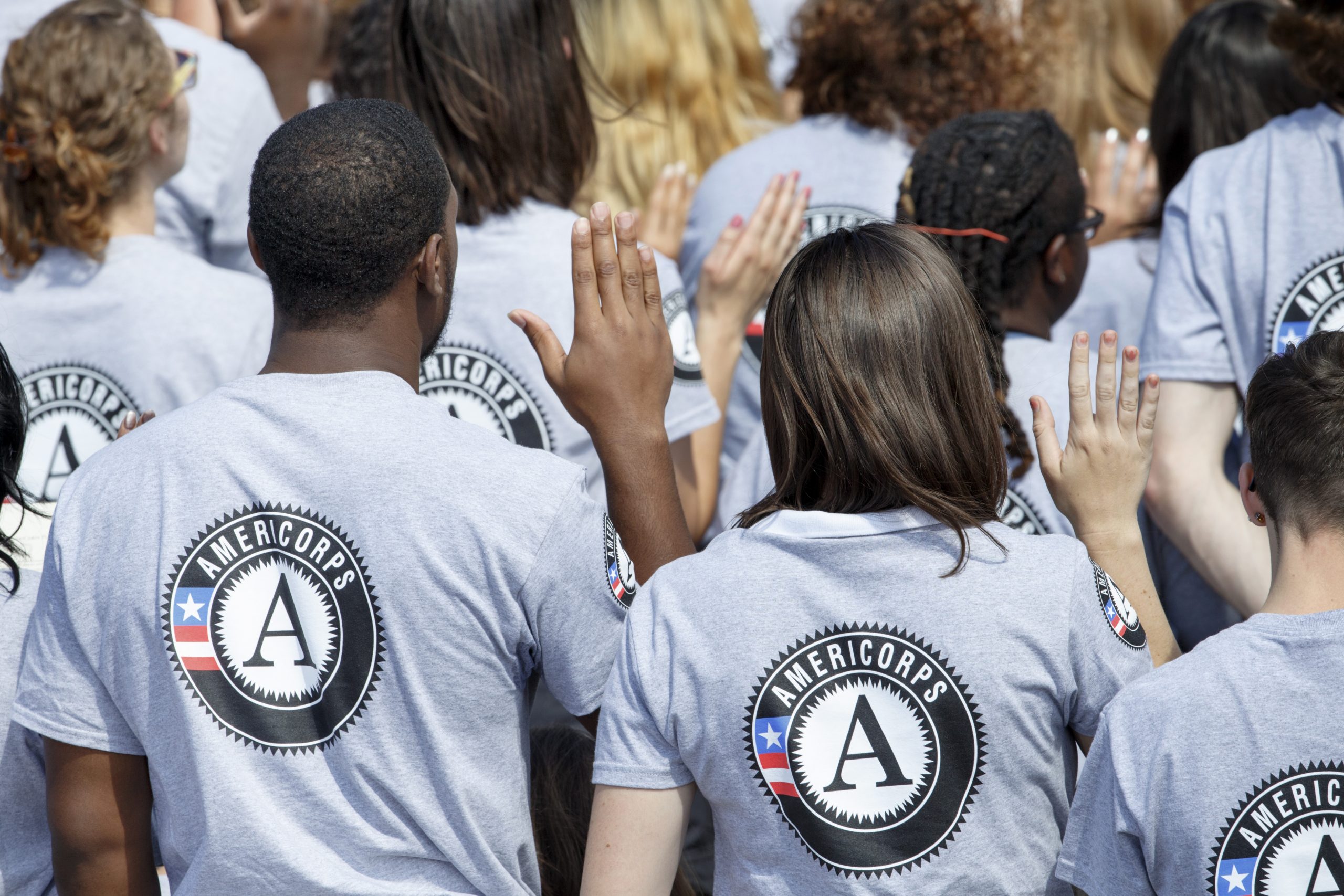
Like hundreds of thousands of other young adults, Tegner kick-started her career through AmeriCorps, a federal agency that sends its members to communities across the country to tutor students, help after disasters strike and restore wildlife habitats, among other activities. She took a position at the Alaska Afterschool Network, where her job was to help find ways to expand science, technology, engineering and math access in its programs. Four years later, she’s still there — now, as a full-time employee managing the nonprofit’s AmeriCorps program.
“This state became my home,” Tegner said, adding that her year in AmeriCorps “completely changed the trajectory of my career.”
An AmeriCorps member poses with a student in one of the Alaska Afterschool Network’s funded programs. The organization lost its AmeriCorps funding last spring. Credit: Courtesy of Alaska Afterschool Network
This spring, Alaska Afterschool Network was one of hundreds of organizations abruptly notified that its AmeriCorps funding had been terminated. Federal funding cuts forced the nonprofit to eliminate three full-time positions and cancel 19 internships scheduled for this summer. Tegner’s job is also at risk, though the organization is trying to find a way to keep her on.
In late April, the Trump administration slashed 41 percent of AmeriCorps’ funding, cutting about $400 million in grants and letting go of more than 32,000 members serving in hundreds of programs across the United States. In June and also this month, judges ordered the government to restore some funding, but the ruling does not reinstate all the money that was taken away. Shrinking AmeriCorps is among the many steps the Trump administration has taken to curb what he has called “waste, fraud and abuse” of federal funds. More action is expected in the months ahead.
Related: Become a lifelong learner. Subscribe to our free weekly newsletter featuring the most important stories in education.
Over the years, the program former President Bill Clinton created has deployed more than a million people.On top of gutting AmeriCorps, the cuts have diminished the reach of an agency that has been a critical path to a career for recent high school and college graduates at a time when entry-level jobs can be difficult to find.
AmeriCorps was created more than three decades ago to oversee expanded federal volunteer programs, incorporating existing projects including Volunteers in Service to America and the National Civilian Community Corps. Its members take on community service positions across the country that can last for up to two years. They receive a small living stipend, and full-time members are eligible for health insurance. At the end of their terms, members are awarded a grant that can be used to pay college tuition or student loans.
“AmeriCorps dollars have a powerful ripple effect, for both the AmeriCorps members and the students that they serve,” said Leslie Cornfeld, founder and CEO of the National Education Equity Lab, a nonprofit that brings college courses to high-poverty schools. “In many instances, it helps them define their careers.”
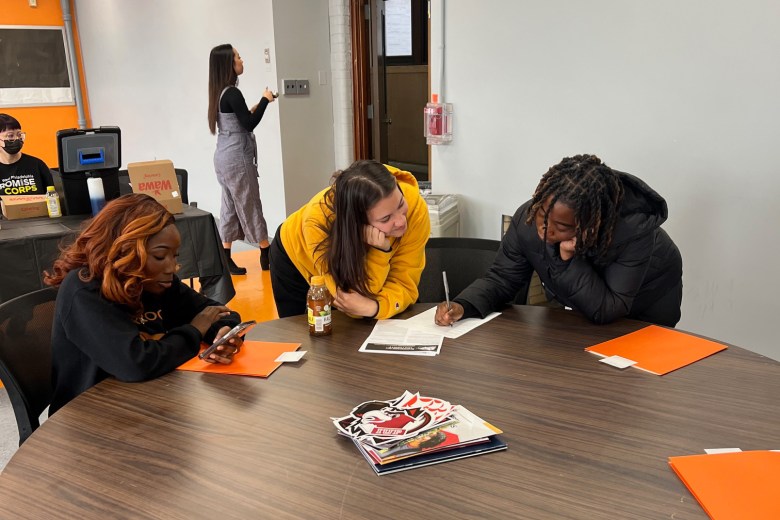
About half of the AmeriCorps funding for the Philadelphia Higher Education Network for Neighborhood Development was cut this spring. Credit: Courtesy of PHENND
Federal surveys of AmeriCorps members from 2019, 2021 and 2023 show that 90 percent of members joined the national program in part to gain skills that would help them in school and work, and well over 80 percent said their experience in AmeriCorps helped further their “professional goals and endeavors.”
The Trump administration cited fraud as part of its reason for nearly halving the AmeriCorps budget. Audits of the agency have raised questions about its financial management.
Peter Fleckenstein, 23, joined Aspire Afterschool in Arlington, Virginia, through AmeriCorps last year after graduating from the University of Delaware with a degree in psychology. He saw AmeriCorps as a way to build out his resume; even the entry-level positions he encountered during his job search required experience in the field.
In his position at the after-school program, Fleckenstein leads daily activities for a group of about two dozen fourth grade students. The experience has helped him crystallize his career aspirations: Before AmeriCorps, he was considering clinical social work or teaching. Now, he wants to become a counselor.
“Working with the kids here is a lot of behavior management: problem solving, helping them regulate themselves,” Fleckenstein said. “Doing one-on-one work with them, building habits and routines with them — that is something that I could focus on more if I was in a counseling job.”
Fleckenstein’s position was cut in April before he could complete his one-year term set to end in August, but Aspire Afterschool was able to raise money through donations to hire him and some of the nonprofit’s other AmeriCorps members part-time to finish out their grant year.
The Philadelphia Higher Education Network for Neighborhood Development lost half of its AmeriCorps funding this past spring when the federal agency was slashed. Credit: Courtesy of PHENND
While some members have joined Americorps after graduating, student Deja Johnson, 24, joined as a way to help pay for college. Her term at The Scholarship Academy — a nonprofit in Atlanta helping low-income high school students navigate financial aid applications — was supposed to end with a $7,400 education grant. Because the terms were cut short, members have been told they’ll get only a prorated portion of the money.
“It’s a little bit of a shame,” said Johnson, who is using the education grant to pursue a bachelor’s degree in nonprofit leadership.
“That’s what a lot of us look forward to with this work that we’re doing, because we know how much of a sacrifice it can be at times. It’s that ‘pouring into our community’ — and that’s how our community pours into us,” Johnson said.
The AmeriCorps termination letters told grantees that their programs no longer met agency priorities, but the nonprofits were not told what those priorities are. Programs with different missions, in both Democratic- and Republican-led communities, were cut.
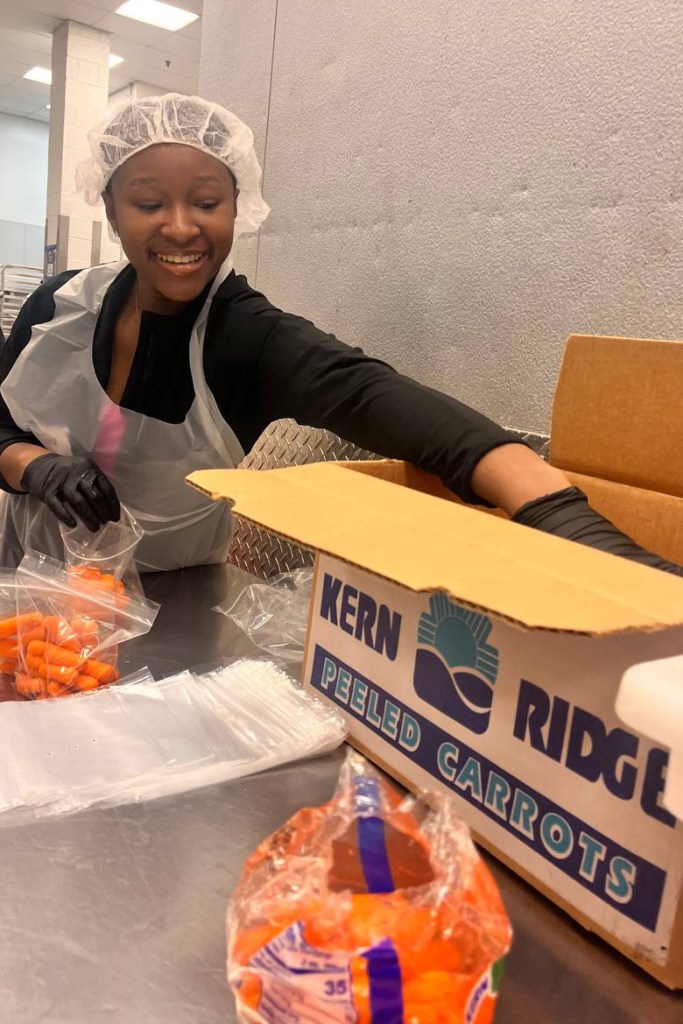
Sira Coulibaly, a member with the Philadelphia Higher Education Network for Neighborhood Development’s Next Steps AmeriCorps program, packs bags of food for the Metropolitan Area Neighborhood Nutrition Alliance. Credit: Courtesy of PHENND
The Hindman Settlement School, a nonprofit in rural Kentucky, was one victim of the cuts. The organization receives about $1 million a year from AmeriCorps for its program tutoring students with math and reading learning disabilities in more than two dozen schools. Losing that funding means drastically scaling back services, said Josh Mullins, senior director of operations at the Hindman Settlement School. He said he does not know why Hindman’s grants were terminated: The nonprofit regularly passes its audits, and its last annual report showed an average gain of seven months in reading levels among students in its dyslexia intervention program.
A statement published in January on an AmeriCorps webpage says the agency is in the process of “conducting a full review” to comply with President Donald Trump’s executive order banning diversity, equity and inclusion in federal programs. But Mullins and other AmeriCorps grantees said diversity, equity and inclusion efforts were not listed anywhere as part of their operations.
“That’s what’s devastating,” Mullins said. “It was completely out of our control. There was nothing you could do.”
The administration also gutted 85 percent of the agency’s federal staff, which has caused problems even for programs that are still receiving AmeriCorps funding.
The federal government terminated about half of the AmeriCorps grants for the Philadelphia Higher Education Network for Neighborhood Development. The group uses the funding to place members in local nonprofits and to help develop community partnerships in high-poverty schools. Director Hillary Kane said she’s been experiencing delays from the national AmeriCorps office in getting members approved for the programs that are still operating.
“We need the humans in D.C. to do the stuff that they do, so we can do the stuff that we do,” Kane said. “The person we communicate with isn’t there.”
About half of the AmeriCorps funding for the Philadelphia Higher Education Network for Neighborhood Development was cut this spring. Credit: Courtesy of PHENND
On June 5, a federal judge granted a temporary injunction ordering the Trump administration to restore AmeriCorps funding in states that had sued over the budget cuts. The lawsuit, which was filed by two dozen Democratic-led states in May, challenges the administration’s authority to cancel the funding without Congressional approval. But the judge’s injunction does not require the Trump administration to reinstate AmeriCorps’ federal employees, and funding is not being restored to programs in states that did not sign on to the lawsuit, including Alaska, home of the Alaska Afterschool Network, or Virginia, where Aspire Afterschool is based.
The Hindman Settlement School in Kentucky was one organization whose funding was restored this summer because of the lawsuit. Mullins said he’s hopeful the nonprofit will continue to receive AmeriCorps funding for the upcoming grant cycle in the fall.
For Kane, the injunction does not undo the chaos caused by the abrupt cancellation of half of her Philadelphia organization’s funding. Many terminated members that were with Kane’s organization have already moved on.
Programs whose grants were cut can apply again in the next grant cycle, but the president’s 2026 budget calls for shutting down AmeriCorps entirely.
While the debate in Washington rages, current and former volunteers mourn the potential loss of a program they said gave their lives meaning and led to employment. The avenue AmeriCorps provided for Tegner to start a career at the Alaska Afterschool Network gave her purpose in life, she said. She’s worried if the program ends, there won’t be another pathway on the same scale for young idealists who aren’t sure what they want to do with their lives.
“It helps young people of all ages grow and try new things,” Tegner said. “That’s very much what it was for me.”
Contact staff writer Ariel Gilreath on Signal at arielgilreath.46 or at [email protected].
The Hechinger Report provides in-depth, fact-based, unbiased reporting on education that is free to all readers. But that doesn’t mean it’s free to produce. Our work keeps educators and the public informed about pressing issues at schools and on campuses throughout the country. We tell the whole story, even when the details are inconvenient. Help us keep doing that.
Sarah Henderson was demoted to the backbench after the Coalition lost the May 3 election. Picture: Jane Dempster
Former education opposition spokeswoman Sarah Henderson has broken rank with her party after she pushed for a flat indexation cap on Labor’s student debt-slashing Bill.
Please login below to view content or subscribe now.
ALBUQUERQUE, N.M. — La casa de Maggi, situada en un barrio residencial de esta ciudad, es un refugio para las familias locales. Es un lugar donde, tras solo unas semanas en el programa de cuidado infantil familiar de Maggi esta primavera, un niño en edad preescolar empezó a llamarla “mamá” y a su marido “papá”. Los niños que han terminado el programa de Maggi siguen rogando a sus padres que los lleven a su casa en lugar ir de al colegio.
En los últimos meses, cada vez son menos las familias que acuden a la guardería: se han intensificado las medidas de control de la inmigración y las políticas migratorias han cambiado rápidamente. Tanto Maggi como las familias que dependen de ella, algunas de las cuales son inmigrantes, ya no se sienten seguras.
“Hay mucho miedo en la comunidad latina, y todos ellos son buenas personas, gente buena y trabajadora”, dijo Maggi, de 47 años, en español a través de un intérprete una mañana reciente, mientras observaba a un recién nacido dormir en lo que solía ser su sala de estar. Desde que comenzó su propio negocio de cuidado infantil hace dos años, ha dedicado casi cada centímetro de su espacio común a crear un oasis colorido y lleno de juguetes para los niños. Maggi no entiende por qué tantos inmigrantes corren ahora el riesgo de ser deportados. “Llevamos aquí mucho tiempo”, dijo. “Hemos estado trabajando honestamente”.
Los inmigrantes como Maggi desempeñan un papel crucial en el cuidado infantil en el hogar, así como en el sistema de cuidado infantil más amplio de Estados Unidos, que cuenta con más de 2 millones de trabajadores, en su mayoría mujeres. (The Hechinger Report no utiliza el apellido de Maggi por motivos de seguridad, tanto para ella como para las familias que utilizan sus servicios). Es muy difícil encontrar y retener a los cuidadores, no solo porque el trabajo es duro, sino también por los salarios bajos y las prestaciones limitadas. A nivel nacional, los inmigrantes representan casi el 20 % de la mano de obra dedicada al cuidado infantil. En la ciudad de Nueva York, los inmigrantes representan más del 40 % de la mano de obra dedicada al cuidado infantil. En Los Ángeles, casi el 50 %.
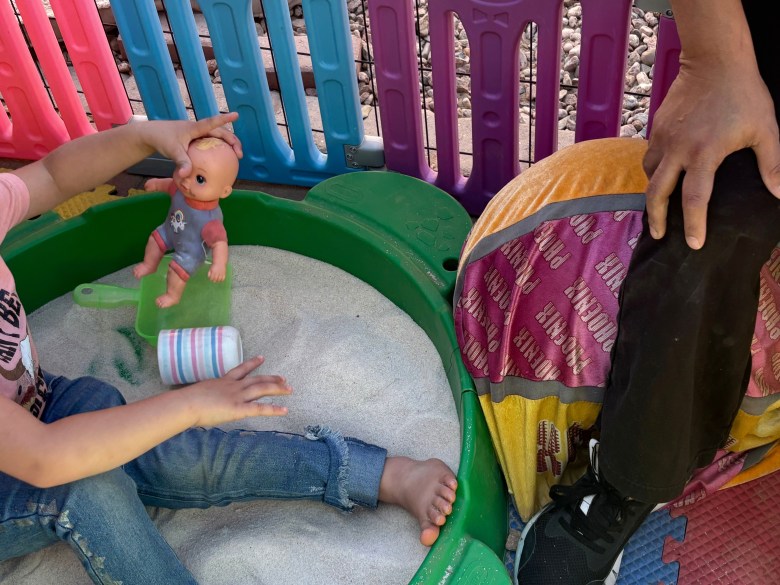
Maggi juega con una de sus pupilas en el patio trasero de su guardería. Maggi dirige una de las pocas guarderías que ofrecen atención las 24 horas del día, los 7 días de la semana, en su ciudad. Credit: Jackie Mader/The Hechinger Report
La guerra de largo alcance de la administración Trump contra la inmigración, que incluye cuotas diarias para la detención de inmigrantes, nuevas restricciones a los permisos de trabajo y la detención de residentes legales, amenaza el ya frágil sistema de cuidado infantil de Estados Unidos. Los proveedores inmigrantes, especialmente aquellos que atienden a familias inmigrantes, se han visto especialmente afectados. Al igual que Maggi, los proveedores de cuidado infantil de todo el país están viendo cómo las familias desaparecen de su cuidado, lo que amenaza la viabilidad de esos negocios. En Estados Unidos, uno de cada cuatro niños menores de seis años tiene al menos un progenitor nacido en el extranjero. Algunos niños que podrían beneficiarse de cuidadores experimentados se encuentran ahora en casa con hermanos mayores o parientes ancianos, perdiéndose la socialización y la preparación para el jardín de infancia que los centros de cuidado proveen. Algunos trabajadores inmigrantes, independientemente de su situación, tienen demasiado miedo para ir a trabajar, lo que agrava la escasez de personal. Recientemente, la administración anunció que prohibiría el acceso de los niños indocumentados a Head Start, el programa de cuidado infantil financiado por el gobierno federal para niños de familias con bajos ingresos.
Relacionado: Los niños pequeños tienen necesidades únicas y proporcionarles los cuidados adecuados puede ser un reto. Nuestro boletín gratuitosobre educación infantil hace un seguimiento de estos temas.
“Las políticas antiinmigrantes pueden y van a debilitar toda nuestra infraestructura de cuidado infantil”, afirmó Karla Coleman-Castillo, analista política sénior del Centro Nacional de Derecho de la Mujer. Los programas domiciliarios, en particular, se verán afectados, ya que suelen atender a más familias inmigrantes. “Cualquier cosa que amenace la estabilidad de la capacidad y la comodidad de las familias para acceder a la educación infantil, y la comodidad de los educadores para incorporarse o permanecer en el mercado laboral, va a afectar a un sector ya de por sí precario”.
Para Maggi, las consecuencias no se han hecho esperar. En febrero, solo unas semanas después de que se anunciaran los primeros cambios, su matrícula pasó de 15 niños al día a siete. Algunas familias regresaron a México. Otras se pusieron tan nerviosas que no se atrevían a desviarse de sus rutas de trabajo ni siquiera para dejar a sus hijos rápidamente. Algunas ya no querían dar su información al estado para obtener ayuda para pagar la guardería.
En mayo, solo dos niños, un bebé y un niño de 4 años, estaban matriculados a tiempo completo, junto con seis niños que acudían a la guardería antes o después del colegio. Maggi acepta a niños que pagan de forma privada y a aquellos que pagan con subsidios de cuidado infantil a través del programa estatal para niños de bajos ingresos. Gana unos 2.000 dólares al mes por el bebé y el niño en edad preescolar, y unos doscientos más cada semana por el cuidado después de la escuela, lo que supone una reducción significativa con respecto a los 9.000 o 10.000 dólares de finales de 2024. Para los padres que no reciben subsidios estatales, mantiene sus tarifas bajas: menos de 7 dólares la hora. “Me dicen que soy barata”, dice Maggi con una leve sonrisa. Pero ella no está dispuesta a subir sus tarifas. “Yo era madre soltera”, dijo. “Recuerdo que me costaba mucho encontrar a alguien que cuidara de mis hijos cuando tenía que trabajar”.
Como muchos proveedores de cuidado infantil que emigraron a Estados Unidos siendo adultos, Maggi comenzó su carrera en un campo completamente diferente. Cuando era una joven madre, Maggi se licenció en Derecho en una universidad de México y trabajó en la fiscalía del estado de Coahuila, en el norte del país. Su trabajo le obligaba a trabajar muchos fines de semana y hasta altas horas de la noche, haciendole difícil cumplir con sus obligaciones como madre soltera. “Me siento muy mal por no haber podido pasar más tiempo con mis hijas”, añade. “Me perdí gran parte de su infancia”.
Durante un año, cuando sus hijas estaban en la escuela primaria, Maggi las matriculó en un internado, las dejaba allí los domingos por la noche y las recogía los viernes por la tarde. Algunos fines de semana, se llevaba a las niñas a su oficina, aunque sabía que no era un lugar adecuado para ellas. Maggi anhelaba un trabajo diferente en el que pudiera pasar más tiempo con ellas.
Hace unos 15 años, cuando la violencia se recrudeció en México, Maggi empezó a pensar seriamente en emigrar. Su primo fue secuestrado y los policías con los que trabajaba fueron asesinados. Maggi recibió amenazas de muerte de los delincuentes a los que había ayudado a procesar. Entonces, un día, unos hombres la detuvieron y le dijeron que sabían dónde vivía y que tenía hijas. “Fue entonces cuando dije: esto no es seguro para mí”.
En 2011, Maggi y las niñas emigraron a Estados Unidos, llevándose todo lo que cupo en cuatro maletas. Terminaron en El Paso, Texas, donde Maggi vendía gelatina y tamales para ganarse la vida. Tres años más tarde, se mudaron a Albuquerque. Maggi conoció a su marido, se casaron y poco después dieron la bienvenida a un hijo, su cuarto hijo.
En Albuquerque, Maggi se estableció en una vida dedicada al cuidado infantil profesional, lo que le resultó natural y le permitió pasar más tiempo con su familia que lo que había podido en México. Ella y su marido se sometieron a un intenso proceso de selección y se convirtieron en padres de acogida. (Nuevo México no exige que las personas tengan un estatus migratorio legal para ser padres de acogida). Maggi matriculó a su hijo menor en un centro Head Start, donde los administradores la animaron a empezar a trabajar como voluntaria. Le encantaba estar en el aula con los niños, pero sin permiso de trabajo no podía convertirse en profesora de Head Start. En su lugar, después de que su hijo empezara la escuela primaria, empezó a ofrecer cuidados infantiles de manera informal a familias que conocía. Maggi obtuvo la licencia del estado hace dos años, tras un largo proceso que incluyó varias inspecciones, una verificación de antecedentes y una formación obligatoria en RCP y principios de cuidado infantil.
Maggi no tardó en crear un negocio muy respetado que cubría una necesidad acuciante en Albuquerque. El suyo es uno de los pocos programas de cuidado infantil de la zona que ofrece atención las 24 horas del día, los 7 días de la semana, algo poco habitual en el sector a pesar de la gran necesidad que existe. Los padres que confían en ella son profesores, cuidadores de personas mayores y personas que atienden llamadas al 911.
En la sala de estar de Maggi, los niños se mueven libremente entre áreas de aprendizaje cuidadosamente seleccionadas con estanterías repletas de juguetes de colores, materiales de arte colocados en una mesa en miniatura y filas de libros. Los pósters educativos de sus paredes refuerzan los colores, los números y las formas. Le encanta exponer a los niños a nuevas experiencias, y con frecuencia los lleva de excursión a tiendas de comestibles o restaurantes. Es cariñosa, pero tiene grandes expectativas para los niños, insistiendo en que recojan lo que ensucian, sigan las instrucciones y digan “por favor” y “gracias”.
“Quiero que tengan valores”, dijo Maggi. “Les enseñamos a respetar a los animales, a las personas y a los demás”.
A finales de 2024, el negocio de Maggi estaba floreciendo y ella esperaba seguir creciendo.
Aún no se han publicado datos sobre hasta qué punto las políticas de inmigración de la actual administración han afectado a la disponibilidad de servicios de cuidado infantil. Pero las entrevistas con los proveedores de cuidado infantil y las investigaciones apuntan a lo que puede suceder en el futuro, y que ya está sucediendo.
Después de que una política de 2008 permitiera al Servicio de Inmigración y Control de Aduanas verificar el estatus migratorio de las personas detenidas por la policía local, se produjo un marcado descenso en la matriculación en guarderías tanto de niños inmigrantes como no inmigrantes. También se produjo una disminución en la oferta de trabajadores de guarderías. Aunque las mujeres eran una minoría entre los deportados, los investigadores descubrieron que la política provocó temor en las comunidades de inmigrantes y muchos abandonaron sus rutinas normales.
En el sector del cuidado infantil, eso es problemático, según los expertos. Los inmigrantes que trabajan en este sector suelen tener un alto nivel de formación y están muy capacitados para interactuar positivamente con los niños, incluso más que los trabajadores nativos. Si una parte cualificada de la mano de obra es esencialmente “purgada” porque tiene demasiado miedo de ir a trabajar, eso reducirá la calidad del cuidado infantil, afirma Chris Herbst, profesor asociado de la Universidad Estatal de Arizona que ha estudiado el efecto de la política de inmigración en el cuidado infantil. “Como resultado, los niños recibirán un servicio deficiente”.
Los programas domiciliarios como el de Maggi se encuentran entre los más vulnerables. Los hijos de inmigrantes son más propensos a estar en esos entornos de cuidado infantil. Sin embargo, en la década anterior a la pandemia, el número de programas domiciliarios disminuyó en un 25 % en todo el país, en parte debido a las dificultades financieras para mantener este tipo de negocios.
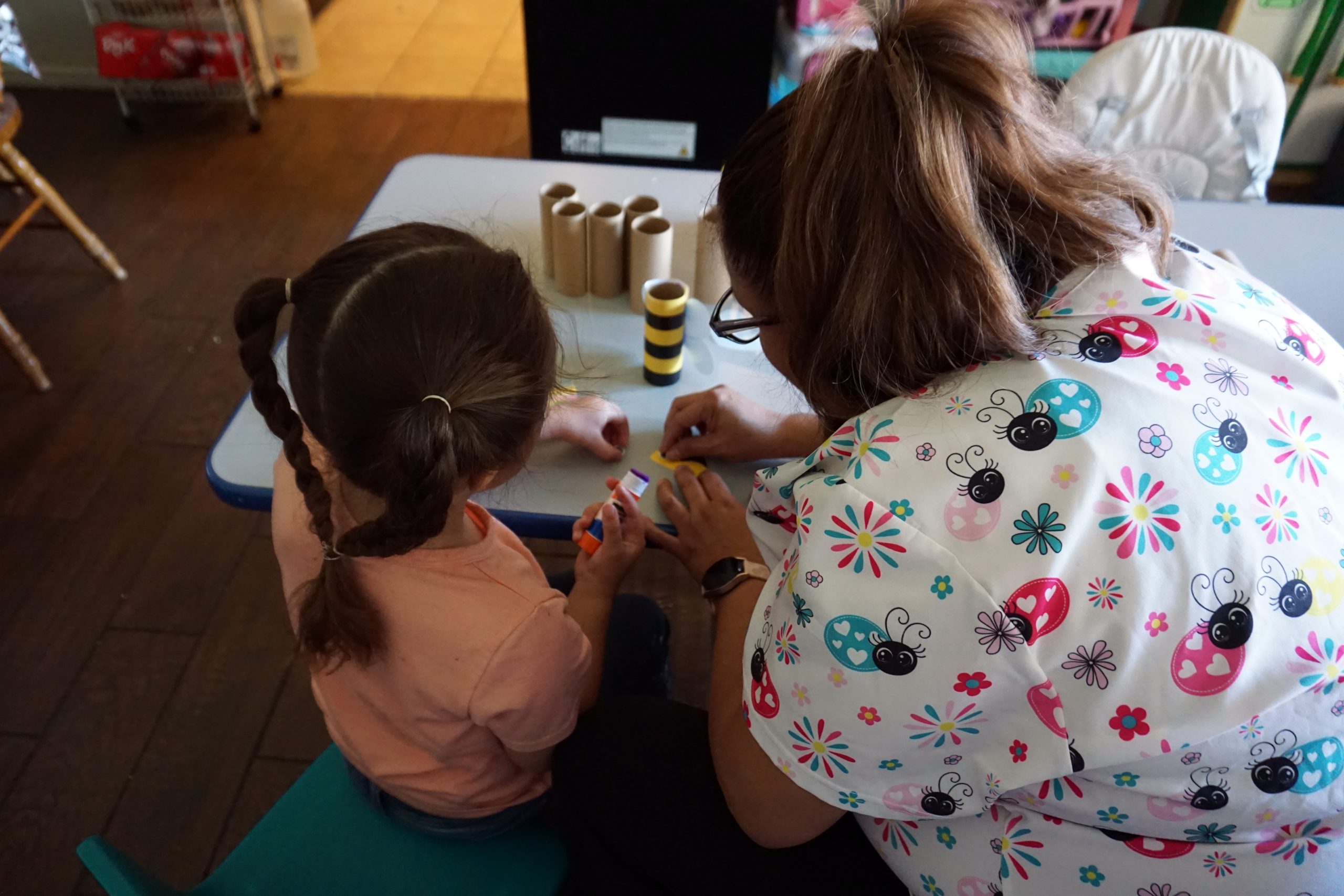
Una mañana reciente, Maggi estaba de pie en su sala de estar, vestida con una bata blanca adornada con coloridas mariquitas de dibujos animados. El año pasado, la sala habría estado llena de niños. Ahora está en silencio, salvo por la charla de Kay, la única niña en edad preescolar a la que cuida cada día. (The Hechinger Report no utiliza el nombre completo de Kay para proteger su privacidad). Mientras la pequeña se sentaba en una de las mesitas a hacer una manualidad, Maggi acunaba al bebé, que acababa de despertarse de la siesta. Los ojos del bebé se fijaron en el rostro de Maggi mientras ella lo mimaba.
“¡Hola, chiquito!”, le dijo en español. Él esbozó una sonrisa y el rostro de Maggi se iluminó.
Mientras una de sus hijas se encargaba de alimentar al recién nacido, Maggi siguió a Kay al exterior. La niña de preescolar saltaba del arenero a los columpios y a la casita de juegos, con Maggi siguiéndola diligentemente y jugando a su lado.
Los defensores y expertos afirman que el aumento de las medidas de control de la inmigración puede causar estrés y traumas a los niños pequeños. En Estados Unidos, uno de cada cuatro niños menores de seis años tiene al menos un progenitor nacido en el extranjero. Credit: Jackie Mader/The Hechinger Report
Finalmente, Kay se detuvo y apoyó la cabeza en la cadera de Maggi. Maggi le acarició suavemente la cabeza y le preguntó si estaba lista para mostrar sus habilidades preescolares. Las dos se sentaron en una mesita a la sombra y Kay observó con entusiasmo mientras Maggi sacaba pequeños juguetes de plástico. Kay apiló tres tortugas de plástico. “¡Mamá, mira! ¡Son amigas!”, dijo Kay, riendo.
Kay llegó al programa de Maggi después de que su madre la sacara de otro programa en el que sentía que no la trataban bien. Aquí, Kay es tan feliz que se esconde cuando su madre viene a recogerla. Sin embargo, a Kay le falta un aspecto clave de la experiencia del cuidado infantil. Normalmente, la niña tendría varios amigos de su edad con los que jugar. Ahora, cuando le preguntan quiénes son sus amigos, nombra a las hijas adultas de Maggi.
A Maggi le preocupan aún más los niños que ya no ve. La mayoría están ahora al cuidado de sus abuelos, pero es poco probable que esos familiares sepan cómo estimular el desarrollo y la educación de los niños, dijo Maggi. Muchos no pueden correr con los niños como ella lo hace, y es más probable que recurran a las tabletas o la televisión para entretenerlos.
Ha visto los efectos en los niños que abandonan su programa y regresan más tarde habiendo retrocedido. “Algunos de ellos están haciendo bien las cosas conmigo, y luego, cuando regresan, se han quedado atrás”, dijo. Por ejemplo, un niño al que Maggi solía cuidar acababa de empezar a caminar cuando su madre lo sacó de la guardería a principios de este año, al comienzo de la campaña de represión de la inmigración. Al estar al cuidado de un familiar, Maggi descubrió que ahora pasan gran parte del día sentados en casa.
Antes de que comenzara la segunda administración Trump, el panorama de la atención infantil parecía prometedor en Nuevo México, un estado con una tasa de pobreza infantil crónicamente alta. En 2022, Nuevo México comenzó a implementar una serie de cambios en las políticas de atención infantil. Los votantes aprobaron una enmienda constitucional que garantiza el derecho a la educación infantil temprana, con financiación sostenida para apoyarla. El estado ahora permite que las familias que ganan hasta el 400 % del nivel federal de pobreza, o casi 125.000 dólares al año, puedan optar a la guardería gratuita. Eso incluye a la mayoría de los hogares del estado. Entre otros cambios está que ahora se paga más a los proveedores por los niños que inscriben a través del programa de asistencia del estado.
El aumento ha sido útil para muchos proveedores, incluida Maggi. Antes de la pandemia, recibía unos 490 dólares al mes del estado por cada niño en edad preescolar inscrito en su programa, frente a los 870 dólares al mes que recibe ahora. Si inscribe a bebés que cumplen los requisitos para recibir asistencia para el cuidado infantil, recibe 1.100 dólares al mes, casi 400 dólares más que antes de la pandemia. Sin embargo, necesita que los niños estén inscritos para recibir los pagos. El hecho de que su programa funcione las 24 horas del día, los siete días de la semana, le ayuda. Gana dinero extra del estado cuando cuida a los niños por las tardes y los fines de semana, y recibe una mensualidad para cubrir los gastos de los niños en acogida que recibe.
Los defensores del cuidado infantil en Nuevo México están preocupados porque la política de inmigración afectará al progreso del sector. “Me preocupa que podamos perder centros de educación infantil que podrían ayudar a las familias trabajadoras”, afirmó Maty Miranda, organizadora de OLÉ Nuevo México, una organización sin ánimo de lucro dedicada a la defensa de los derechos. “Podríamos perder a valiosos profesores y los niños perderían esos fuertes vínculos”. Las medidas de control de la inmigración han tenido “un enorme impacto emocional” en los proveedores del estado, añadió.
Las autoridades estatales no respondieron a una solicitud de datos sobre cuántos proveedores de cuidado infantil son inmigrantes. En todo el estado, los inmigrantes representan alrededor del 13 % de la población activa total.
Muchos educadores locales de la primera infancia están asustados debido a la aplicación más extrema de las leyes de inmigración, al igual que lo están los niños a su cargo, dijo Miranda. “A pesar del miedo, los maestros me dicen que cuando entran en sus aulas, intentan olvidar lo que está pasando fuera”, añadió. “Son profesionales que intentan continuar con su trabajo”.
Maggi dijo que está tan ocupada con los niños que permanecen a su cuidado que no tiene tiempo extra para trabajar en otro empleo y obtener más ingresos. No especula sobre cuánto tiempo podrá sobrevivir su familia, sino que prefiere centrarse en la esperanza de que las cosas mejoren.
El mayor temor de Maggi en este momento es el bienestar de los hijos de los inmigrantes a los que ella y tantos otros proveedores de servicios a domicilio atienden. Sabe que algunos de sus niños y familias corren el riesgo de ser detenidos por el ICE, y que ese tipo de interacciones, para los niños, pueden provocar trastornos de estrés postraumático, alteraciones en el desarrollo cerebral y cambios de comportamiento. Algunos de los padres de Maggi le han dejado números de emergencia por si son detenidos por los funcionarios de inmigración.
Muchos de los niños a los que Maggi cuida después de la escuela tienen la edad suficiente para comprender que la deportación es una amenaza. “Muestran miedo, porque sus padres están asustados”, dijo Maggi. “Los niños están empezando a vivir con eso”.
En medio de los vertiginosos cambios políticos, Maggi intenta seguir mirando hacia adelante. Está trabajando para mejorar sus habilidades en inglés. Su marido está obteniendo una credencial para poder ayudarla más en su programa. Sus tres hijas están estudiando para convertirse en educadoras de la primera infancia, con el objetivo de unirse al negocio familiar. Con el tiempo, quiere atender a niños de preescolar inscritos en el programa estatal, lo que le proporcionará una fuente de ingresos estable.
A pesar de toda la incertidumbre, Maggi dice que la sostiene un propósito mayor. “Quiero que disfruten de su infancia”, dijo en una tarde soleada, mirando con cariño a Kay mientras la niña dejaba sus pequeños zapatos rosas a un lado y saltaba a un arenero. Es el tipo de infancia que Maggi recuerda en México. Kay se rió encantada cuando Maggi se agachó y vertió arena fresca sobre los pies de la pequeña. “Una vez que creces, no hay vuelta atrás”.
The Hechinger Report provides in-depth, fact-based, unbiased reporting on education that is free to all readers. But that doesn’t mean it’s free to produce. Our work keeps educators and the public informed about pressing issues at schools and on campuses throughout the country. We tell the whole story, even when the details are inconvenient. Help us keep doing that.
This week on our final podcast before the summer break, we unpack the mounting panic about graduate jobs – is AI really to blame, or are today’s students simply paying the price for a sluggish economy, a stalling skills strategy, and shifting recruitment practices?
Plus we discuss new figures from UCAS that show a record number of 18-year-olds applying to university, and we look at a major new report on how provider closures are affecting students, and what the sector should do next to avoid chaos when courses collapse.
With Hillary Gyebi-Ababio, Head of Public Affairs at Jisc, Hugh Jones, independent consultant and higher education postcard maestro, Michael Salmon, News Editor at Wonkhe, and presented by Jim Dickinson, Associate Editor at Wonkhe.
For the last 15 years, science teacher Jeff Grant has used information on climate change from the federal website Climate.gov to create lesson plans, prepare students for Advanced Placement tests and educate fellow teachers. Now, Grant says, he is “grabbing what [he] can” from the site run by the National Oceanic and Atmospheric Administration’s Climate Program Office, amid concerns that the Trump administration is mothballing it as part of a broader effort to undermine climate science and education.
“It’s just one more thing stifling science education,” said Grant, who teaches at Downers Grove North High School in the Chicago suburbs.
Since early May, all 10 editorial contributors to Climate.gov have lost their jobs, and the organization that produces its education resources will soon run out of money. On June 24, the site’s homepage was redirected to NOAA.gov, a change NOAA said was made to comply with an earlier executive order on “restoring gold standard science.” Those steps follow many others the president has made to dismantle federal efforts to fight climate change, which his administration refers to as the “new green scam.”
Former employees of Climate.gov and other educators say they fear that the site, which will no longer produce new content, could be transformed into a platform for disinformation.
“It will make it harder for teachers to do a good job in educating their students about climate change,” said Glenn Branch, deputy director of the nonprofit National Center for Science Education. “Previously, they could rely on the federal government to provide free, up-to-date, accurate resources on climate change that were aimed at helping educators in particular, and they won’t be able to do so if some of these more dire predictions come to pass.”
Such concerns have some foundation. For example, Covid.gov, which during the Biden administration offered health information and access to Covid-19 tests, has been revamped to promote the controversial theory that the coronavirus was created in a lab. The administration has also moved aggressively to delete from government sites other terms that are currently out of favor, such as references to transgender people that were once on the National Park Service website of the Stonewall National Memorial, honoring a major milestone in the fight for LGBTQ+ rights.
Kim Doster, director of NOAA’s office of communications, declined to answer specific questions but shared a version of the statement posted on the NOAA website when Climate.gov was transferred. “In compliance with Executive Order 14303, Restoring Gold Standard Science, NOAA is relocating all research products from Climate.gov to NOAA.gov in an effort to centralize and consolidate resources,” it says.
Related: Want to read more about how climate change is shaping education? Subscribe to our free newsletter.
Climate.gov, founded in 2010 to support earth science instruction in schools, had become a go-to site for educators and the general public for news and information about temperature, sea level rise and other indicators of global warming.
For many educators, it has served a particularly key role. Because its resources are free, they are vital in schools that lack resources and funding, teachers and experts say.
Rebecca Lindsey, Climate.gov’s lead editor and writer, was one of several hundred NOAA probationary employees fired in February, then rehired and put on administrative leave, before being terminated again in March. The rest of the content production team — which included a meteorologist, a graphic artist and data visualizers — lost their jobs in mid-May. Only the site’s two web developers still have their jobs.
A screenshot of the Sea Level Rise Viewer, an interactive NOAA that’s listed as a resource on Climate.gov, a government climate website. Credit: NOAA Office for Coastal Management
Lindsey said she worries that the government “intended to keep the site up and use it to spread climate misinformation, because they were keeping the web developers and getting rid of the content team.”
In addition, the Climate Literacy and Energy Awareness Network, the official content provider for the education section of the site, has not received the latest installment of its three-year grant and expects its funds to run out in August.
“We won’t have funding to provide updates, fix hyperlinks and make sure that new resources are being added, or help teachers manage or address or use the resources,” said Anne Gold, CLEAN’s principal investigator. “It’s going to start deteriorating in quality.”
CLEAN, whose website is hosted by Carleton College, is now searching for other sources of money to continue its work, Gold said.
With the June 24 change redirecting visitors from Climate.gov to NOAA.gov/climate, the website for the first time falls under the purview of a political appointee: Doster. Its previous leader, David Herring, is a science writer and educator.
Melissa Lau, an AP environmental science teacher in Piedmont, Oklahoma, said the relocated site was “really difficult to navigate.”
As someone who lives in Tornado Alley, Lau said, she frequented CLEAN and NOAA sites to show her students localized, real-time data on storm seasons. She said she is concerned that teachers won’t have time to track down information that was shifted in the website’s move and, as a result, may opt not to teach climate change.
The executive order on “restoring gold standard science” that appears to have triggered the shift gives political appointees the authority to decide what science information needs to be modified to align with its tenets.
While the disclaimer posted to NOAA.gov seems to imply that Climate.gov did not meet this requirement, educators and researchers said that the site and its CLEAN education resources were the epitome of a gold standard.
“I want to stress that the reason why CLEAN is considered the gold standard is because we have such high standards for scientific accuracy, classroom readiness and maintenance,” Gold said. “We all know that knowledge is power, and power gives hope. … [Losing funding] is going to be a huge loss to classrooms and to students and the next generation.”
This is only the latest attack by the Trump administration on education around climate change. This month, the U.S. Global Change Research Program’s website, GlobalChange.gov, was shut down by the administration, after the program was defunded in April. The website once hosted an extensive climate literacy guide, along with all five iterations of the National Climate Assessment — a congressionally required report that informed the public about the effects and risks of climate change, along with local, actionable responses.
The Department of Commerce, which oversees NOAA, has cut other federal funding for climate research, including at Princeton University, arguing that these climate grant awards promoted “exaggerated and implausible climate threats, contributing to a phenomenon known as ‘climate anxiety,’ which has increased significantly among America’s youth.”
“The more you know [about climate change], the more it’s not a scary monster in the closet,” said Lauren Madden, professor of elementary science education at the College of New Jersey. “It’s a thing you can react to.” She added, “We’re going to have more storms, we’re going to have more fires, we’re going to have more droughts. There are things we can do to help slow this. … I think that quells anxiety, that doesn’t spark it.”
And climate education has broad public support — about 3 in 4 registered voters say schools should teach children about global warming, according to a 2024 report from the Yale Program on Climate Change Communication. Similarly, 77 percent of Americans regard it as very or somewhat important for elementary and secondary school students to learn about climate change, according to a 2019 study. And all but five states have adopted science standards that incorporate at least some instruction on climate change.
As a result, many science teachers rely on federal tools and embed them in their curriculum. They are worried that the information will no longer be relevant, or disappear entirely, according to Lori Henrickson, former climate integration specialist for Washington state’s education department. Henrickson, who lost her job this June as the result of state budget cuts, was in charge of integrating climate education across content areas in the state, from language arts to physical education.
The .gov top-level domain connotes credibility and accessibility, according to Branch: “It is also easier for teachers facing or fearing climate change denial backlash to cite a reliable, free source from the federal government.”
With Climate.gov’s future uncertain, educators are looking to other resources, like university websites and tools from other countries.
“I’m sure there will continue to be tools, and there will be enough people who will be willing to pay to access them,” Madden said. But, she added, “they probably won’t be as comprehensive, and it won’t feel like it’s a democratic process. It’ll feel like: If you or your employer are willing to chip in for it, then you’ll have access.”
“I feel like with all the federal websites, I’m constantly checking to see what’s still up and what’s not,” Madden said.
Bertha Vazquez, education director for the Center of Inquiry, an organization that works to preserve science and critical thinking, said she worried that the disappearance of climate information could leave U.S. students behind.
“The future of the American economy is not in oil, the future of the American economy is in solar and wind and geothermal. And if we’re going to keep up with the international economy, we need to go in that direction,” she said. But while the U.S. should be leading the way in scientific discovery, Vazquez said, such work will now be left to other countries.
Lau said she felt helpless and frustrated about Climate.gov’s shutdown and about the “attack on American science in general.”
“I don’t know what to do. I can contact my legislators, but my legislators from my state are not going to be really open to my concerns,” she said. “If students next year are asking me questions about [science research and funding], I have to tell them, ‘I do not know,’ and just have to leave it at that.”
Contact editor Caroline Preston at 212-870-8965, via Signal at CarolineP.83 or on email at [email protected].
The Hechinger Report provides in-depth, fact-based, unbiased reporting on education that is free to all readers. But that doesn’t mean it’s free to produce. Our work keeps educators and the public informed about pressing issues at schools and on campuses throughout the country. We tell the whole story, even when the details are inconvenient. Help us keep doing that.
ALBUQUERQUE, N.M. — Maggi’s home in a suburban neighborhood here is a haven for local families. It’s a place where after just a few weeks in Maggi’s family-run child care program this spring, one preschooler started calling Maggi “mama” and Maggi’s husband “papa.” Children who have graduated from Maggi’s program still beg their parents to take them to her home instead of school.
Over the past few months, fewer families are showing up for care: Immigration enforcement has ramped up and immigration policies have rapidly changed. Both Maggi and the families who rely on her — some of whom are immigrants — no longer feel safe.
“There’s a lot of fear going on within the Latino community, and all of these are good people — good, hard-working people,” Maggi, 47, said in Spanish through an interpreter on a recent morning as she watched a newborn sleep in what used to be her living room. Since she started her own child care business two years ago, she has dedicated nearly every inch of her common space to creating a colorful, toy-filled oasis for children. Maggi doesn’t understand why so many immigrants are now at risk of deportation. “We’ve been here a long time,” she said. “We’ve been doing honest work.”
Immigrants like Maggi play a crucial role in home-based child care, as well as America’s broader child care system of more than 2 million predominantly female workers. (The Hechinger Report is not using Maggi’s last name out of concern for her safety and that of the families using her care.) Caregivers are notoriously difficult to find and keep, not only because the work is difficult, but because of poverty-level wages and limited benefits. Nationwide, immigrants make up nearly 20 percent of the child care workforce. In New York City, immigrants make up more than 40 percent of the child care workforce. In Los Angeles, it’s nearly 50 percent.
The Trump administration’s far-reaching war on immigration, which includes daily quotas for immigrant arrests, new restrictions on work permits and detainment of legal residents, threatens America’s already-fragile child care system. Immigrant providers, especially those who serve immigrant families, have been hit especially hard. Just like at Maggi’s, child care providers nationwide are watching families disappear from their care, threatening the viability of those businesses. In America, 1 in 4 children under the age of 6 has at least one foreign-born parent. Some kids who could benefit from experienced caregivers are now instead at home with older siblings or elderly relatives, losing out on socialization and kindergarten preparation. Some immigrant workers, regardless of status, are too scared to come to work, exacerbating staffing shortages. And in recent days, the administration announced that it would bar undocumented children from Head Start, the federally funded child care program for children from low-income families.
Related: Young children have unique needs and providing the right care can be a challenge. Our free early childhood education newsletter tracks the issues.
“Anti-immigrant policy can and will weaken our entire caregiving infrastructure,” said Karla Coleman-Castillo, senior policy analyst at the National Women’s Law Center. Home-based programs in particular will feel the squeeze, she said, since they tend to serve more immigrant families. “Anything that threatens the stability of families’ ability and comfort accessing early childhood education — and educators’ comfort entering or remaining in the workforce — is going to impact an already precarious sector.”
For Maggi, the fallout has been swift. In February, just a few weeks after the first changes were announced, her enrollment dropped from as many as 15 children each day to seven. Some families returned to Mexico. Others became too nervous to stray from their work routes for even a quick drop off. Some no longer wanted to give their information to the state to get help paying for care.
Maggi plays with a child in the back yard of her child care program. Maggi runs one of a few child care programs that provides 24/7 care in her town. Credit: Jackie Mader/The Hechinger Report
By May, only two children, an infant and a 4-year-old, were enrolled full time, along with six kids who came for before- or after-school care. She accepts children who pay privately and those who pay with child care subsidies through the state program for low-income children. She brings in about $2,000 a month for the infant and preschooler, and a couple hundred more each week for after-school care — down significantly from the $9,000 to $10,000 of late 2024. For parents who don’t receive a state subsidy, she keeps her rates low: less than $7 an hour. “They tell me that I’m cheap,” Maggi said with a slight smile. But she isn’t willing to raise her rates. “I was a single mom,” she said. “I remember struggling to find someone to care for my children when I had to work.”
Like many child care providers who emigrated to the United States as adults, Maggi started her career in an entirely different field. As a young mother, Maggi earned a law degree from a college in Mexico and worked in the prosecutor’s office in the northern Mexico state of Coahuila. Her job required working many weekends and late evenings, which took a toll on her parenting as a single mother. “I really feel bad that I was not able to spend more time with my daughters,” she added. “I missed a lot of their childhood.”
For a year when her girls were in elementary school, Maggi enrolled them in a boarding school, dropping them off Sunday nights and picking them up Friday afternoons. On some weekends, she took the girls to her office, even though she knew it wasn’t a place for children. Maggi longed for a different job where she could spend more time with them.
She started thinking seriously of emigrating about 15 years ago, as violence escalated. Her cousin was kidnapped and police officers she worked with were killed. Maggi received death threats from criminals she helped prosecute. Then one day, she was stopped by men who told her they knew where she lived and that she had daughters. “That’s when I said, this is not safe for me.”
In 2011, Maggi and the girls emigrated to America, bringing whatever they could fit into four suitcases. They ended up in El Paso, Texas, where Maggi sold Jell-O and tamales to make ends meet. Three years later, they moved here to Albuquerque. Maggi met her husband and they married, welcoming a son, her fourth child, shortly after.
In Albuquerque, Maggi settled into a life of professional caregiving, which came naturally and allowed her to spend more time with her family than she had in Mexico. She and her husband went through an intensive screening process and became foster parents. (New Mexico does not require individuals to have lawful immigration status to foster.) Maggi enrolled her youngest in a Head Start center, where administrators encouraged her to start volunteering. She loved being in the classroom with children, but without a work permit could not become a Head Start teacher. Instead, after her son started elementary school, she started offering child care informally to families she knew. Maggi became licensed by the state two years ago after a lengthy process involving several inspections, a background check and mandatory training in CPR and tenets of early childhood care.
It didn’t take long for Maggi to build up a well-respected business serving an acute need in Albuquerque. Hers is one of few child care programs in the area that offers 24/7 care, a rarity in the industry despite the desperate need. The parents who rely on her are teachers, caregivers for the elderly and people answering 911 calls.
In Maggi’s living room, carefully curated areas allow children to move freely between overflowing shelves of colorful toys, art supplies parked on a miniature table and rows of books. Educational posters on her walls reinforce colors, numbers and shapes. She delights in exposing the children to new experiences, frequently taking them on trips to grocery stores or restaurants. She is warm, but has high expectations for the children, insisting they clean up after themselves, follow directions and say “please” and “thank you.”
“I want them to have values,” Maggi said. “We teach them respect toward animals, people and each other.”
By the end of 2024, Maggi’s business was flourishing, and she looked forward to continued growth.
Data has yet to be released about the extent to which the current administration’s immigration policies have affected the availability of child care. But interviews with child care providers and research hint at what may lie ahead — and is already happening.
After a 2008 policy allowed Immigration and Customs Enforcement to check the immigration status of people taken into custody by local police, there was a marked decline in enrollment in child care among both immigrant and non-immigrant children. There was also a decrease in the supply of child care workers. Even though women were the minority of those deported, researchers found the policy sparked fear in immigrant communities, and many pulled back from their normal routines.
In the child care sector, that’s problematic, experts say. Immigrants in the industry tend to be highly educated and skilled at interacting with children positively, more so even than native workers. If a skilled portion of the workforce is essentially “purged” because they’re too afraid to go to work, that will lower the quality of child care, said Chris Herbst, an associate professor at Arizona State University who has studied immigration policy’s effect on child care. “Kids will be ill-served as a result.”
On a recent morning, Maggi stood in her living room, wearing white scrubs adorned with colorful cartoon ladybugs. Last year, the room would have been buzzing with children. Now, it’s quiet, save for chatter from Kay, the sole preschooler in her care each day. (The Hechinger Report is not using Kay’s full name to protect her privacy.) While Kay sat at a table working on a craft, Maggi cradled the infant, who had just woken up from a nap. The baby’s eyes were latched onto Maggi’s face as she fawned over him.
“Hello little one!” she cooed in Spanish. He cracked a smile and Maggi’s face lit up.
As one of her daughters took over to feed the newborn, Maggi followed Kay outside. The preschooler bounced around from the sandbox to the swings to a playhouse, with Maggi diligently following and playing alongside her.
Advocates and experts say upticks in immigration enforcement can cause stress and trauma for young children. In America, 1 in 4 children under the age of 6 has at least one foreign-born parent. Credit: Jackie Mader/The Hechinger Report
Finally Kay came to a standstill, resting her head against Maggi’s hip. Maggi gently patted her head and asked if she was ready to show off her pre-kindergarten skills. The pair sat down at a small table in the shade and Kay watched eagerly as Maggi poured out small plastic trinkets. Kay pulled three plastic toy turtles into a pile. “Mama, look! They’re friends!” Kay said, giggling.
Kay came to Maggi’s program after her mother pulled her out of another program where she felt the girl wasn’t treated well. Here, Kay is so happy, she hides when her mom comes back to get her. Still, a key aspect of the child care experience is missing for Kay. Normally, the girl would have several friends her own age to play with. Now when she is asked who her friends are, she names Maggi’s adult daughters.
Maggi worries even more about the children she doesn’t see anymore. Most are cared for by grandparents now, but those relatives are unlikely to know how to support child development and education, Maggi said. Many are unable to run around with the children like she does, and are more likely to turn to tablets or televisions for them.
She has seen the effects in children who leave her program and come back later having regressed. “Some of them are doing things well with me, and then when they come back, they have fallen behind,” she said. One child Maggi used to care for, for example, had just started to walk when the mother pulled them out of full-time care earlier this year, at the start of the immigration crackdown. In the care of a relative, Maggi found out they now spend much of the day sitting at home.
Before the second Trump administration began, the child care landscape looked bright in New Mexico, a state with a chronically high child poverty rate. In 2022, New Mexico started rolling out a host of child care policy changes. Voters approved a constitutional amendment guaranteeing a right to early childhood education, with sustained funding to support it. The state now allows families earning up to 400 percent of the federal poverty level, or nearly $125,000 a year, to qualify for free child care. That includes the majority of households in the state. Among the other changes: Providers are now paid more for children they enroll via the state’s assistance program.
The increase has been helpful for many providers, including Maggi. Before the pandemic, she received about $490 a month from the state for each preschooler enrolled in her program, compared to $870 a month now. If she enrolls infants who qualify for child care assistance, she gets paid $1,100 a month, nearly $400 more than pre-pandemic. She needs children enrolled to get the payments, however. Running her program 24 hours a day, seven days a week helps. She earns extra money from the state when caring for children evenings and weekends, and she is paid monthly to cover the cost of housing foster children.
Child care advocates in New Mexico are concerned that immigration policy will affect the industry’s progress. “I am worried because we could be losing early childhood centers that could help working families,” said Maty Miranda, an organizer for OLÉ New Mexico, a nonprofit advocacy organization. “We could lose valuable teachers and children will lose those strong connections.” Immigration crackdowns have had “a huge impact emotionally” on providers in the state, she added.
State officials did not respond to a request for data on how many child care providers are immigrants. Across the state, immigrants account for about 13 percent of the entire workforce.
Many local early educators are scared due to more extreme immigration enforcement, as are the children in their care, Miranda said. They are trying to work regardless. “Even with the fear, the teachers are telling me that when they go into their classrooms, they try to forget what’s going on outside,” she added. “They are professionals who are trying to continue with their work.”
Maggi said she’s so busy with the children who remain in her care that there is no extra time to work an additional job and bring in more income. She won’t speculate on how long her family can survive, instead choosing to focus on the hope that things will improve.
Maggi’s biggest fear at the moment is the well-being of the children of immigrants she and so many other home-based providers serve. She knows some of her kids and families are at risk of being detained by ICE, and that interactions like that, for kids, can lead to post-traumatic stress disorder, disrupted brain development and behavior changes. Some of Maggi’s parents have left her with emergency numbers in case they are detained by immigration officials.
Many of the children Maggi cares for after school are old enough to understand that deportation is a threat. “They show fear, because their parents are scared,” Maggi said. “Children are starting to live with that.”
Amid the dizzying policy changes, Maggi is trying to keep looking forward. She is working on improving her English skills. Her husband is pursuing a credential to be able to help more in her program. All three of her daughters are studying to become early childhood educators, with the goal to join the family business. Eventually, she wants to serve pre-K children enrolled in the state’s program, which will provide a steady stream of income.
In spite of all the uncertainty, Maggi said she is sustained by a bigger purpose. “I want them to enjoy their childhood,” she said on a sunny afternoon, looking fondly at Kay as the girl flung her tiny pink shoes aside and hopped into a sandbox. It’s the type of childhood Maggi remembers from her earliest days in Mexico. Kay giggled with delight as Maggi crouched down and poured cool sand over the little girl’s feet. “Once you grow up, there’s no going back.”
The Hechinger Report provides in-depth, fact-based, unbiased reporting on education that is free to all readers. But that doesn’t mean it’s free to produce. Our work keeps educators and the public informed about pressing issues at schools and on campuses throughout the country. We tell the whole story, even when the details are inconvenient. Help us keep doing that.