Category: Politics

  • With a passport, you should be able to vacation abroad. No?

    With a passport, you should be able to vacation abroad. No?

    On a weekday in Kampala, people line up early outside the embassies of European countries. Last year, almost 18,000 Ugandans joined these queues, according to an analysis by the Lago Collective. This year, I was one of them, folder in hand, hope in check. 

    Typically, those folders contain bank statements, proof of visa payment, job contracts, medical records, photos of family members, land titles, academic transcripts, flight reservations and detailed itineraries — each one meant to prove stability, legitimacy and belonging. 

    After paying to apply for a Schengen visa — which allows free travel between some 29 European countries for a limited time period — 36% of those Ugandans were rejected. Why? Mostly because embassy officials doubted the applicants would return home.

    Each applicant must pay €90. That added up to more than €1.6 million that Ugandans paid Schengen countries last year, more than half a million of which was from applicants who ended up rejected. 

    The collective wager lost by Ugandan applicants was part of an estimated €60 million spent in Africa last year on Schengen visa applications that led nowhere. In fact, Africa alone accounted for nearly half of the €130 million the world paid in failed bids to enter the Schengen zone.

    The Schengen gate

    Tucked behind those numbers lies a quieter cost: missed opportunities for work or travel and the often-overlooked spending on legal consultations or third-party agencies hired to improve one’s chances. But more tellingly, there is a perception problem — wrapped in geopolitics and sealed with a stamp of denial.

    “It’s like betting,” says Dr. Samuel Kazibwe, a Ugandan academic and policy analyst. “Nobody forces you to pay those fees, yet you know there are chances of rejection.”

    One such story belongs to Fred Mwita Machage, a Tanzanian executive based in Uganda as human resource director at the country’s transitioning electricity distribution company. Machage thought he was just booking a summer getaway — a chance not only to unwind, but to affirm that someone like him, who had worked in Canada, had traveled to the United States and Great Britain, and, if you checked his profile, was “not a desperate traveler,” could move freely in the world. That belief, like the visa itself, did not survive the process.

    He had planned a trip to France the past April. Round-trip tickets? Booked. Five-star hotel? Paid. Travel insurance? Secured. A $70,000 bank statement and a letter from his employer accompanied other documents in the application.

    “They said I had not demonstrated financial capability,” Machage recalled, incredulous. “With my profile? That bank balance? It felt like an attack on my integrity.”

    Worse, the rejection wasn’t delivered with civility: “The embassy staff were rude,” he said. “And they weren’t even European — they were African. One of the ladies looked like a Rwandan. It felt like being slapped by your own.”

    Banned from travel

    For Machage, the betrayal was not just bureaucratic — it seemed personal. He estimates his total loss at nearly $12,000, including tickets, hotel deposits, agent fees and visa costs. While he hopes for a refund, it’s understood that most travel agents don’t return payments; instead, they often suggest that you travel to a visa-free country.

    That will likely get more difficult to do. This month, U.S. President Donald Trump issued a sweeping travel ban targeting twelve countries — seven in Africa. Somalia, Sudan, Chad and Eritrea faced full bans; Burundi, Sierra Leone and Togo, partial restrictions. The official reasons included high visa overstays, poor deportation cooperation from the home countries and weak systems for internal screening. And it ordered all U.S. embassies to stop issuing visas for students to come to the United States for education, although U.S. courts are considering the legality of that order.

    For Machage, the rejection left him with a lingering sense of humiliation, though he found some small relief in a LinkedIn post where hundreds shared similar tales of visa rejection.

    “I realised I wasn’t alone,” he said, “But the process still left me feeling worthless. Sorry to mention, but it’s a disgusting ordeal.”

    I know exactly how Machage feels.

    How to prove you will return home?

    When I applied for a visa to the United Kingdom, I too was rejected. The refusal read: 

    “In light of all of the above, I am not satisfied as to your intentions in wishing to travel to the UK now. I am not satisfied that you are genuinely seeking entry for a purpose that is permitted by the visitor routes, not satisfied that you will leave the UK at the end of the visit.”

    The “I am” who issued the rejection did not sign their name. Perhaps they knew I’d write this article and mention them. How easily the “I am” dismissed my ties, my plans, my story. Meanwhile, my British friend who had invited me was livid. 

    “It felt like they were questioning my judgment — about who I can and cannot welcome into my own home,” she said. She was angry not just on my behalf, but because she felt disregarded by her own government.

    Captain Francis Babu, a former Ugandan minister and seasoned political commentator, doesn’t take visa rejections personally. He said the situation is shaped by global anxieties over the scale of emigration out of Africa into Europe that has taken place over the past decade. 

    “Because of the boat people going into Europe from Africa and many other countries and the wars in the Middle East, that has caused a little problem with immigration in most countries,” he said.

    Needing, but rejecting immigrants

    The issue is complicated. Babu said that these countries depend on the immigrants they are trying to keep out. In the United States, for example, farms depend on low-cost workers from South America. 

    “Most of those developed countries, because of their industries and having made money in the service industry, want people to do their menial jobs. So they bring people in and underpay them,” Babu said. 

    For Babu, even the application process feels unfair. “Even applying for the visa by itself is a tall order,” he said. “There are people here making money just to help you fill the form.” 

    While Babu highlights the systemic hypocrisies and challenges, others, like Kazibwe, see hope in a different approach — one rooted in political and economic organisation. Where people enjoy strong public services and can rely on a social safety net, there tends to be low emigration so countries are less hesitant to admit them.

    “That’s why countries like Seychelles are not treated the same,” he explains. “It’s rare to see someone from Seychelles doing odd jobs in Europe, yet back home they enjoy free social services.”

    For Kazibwe, the long-term fix is clear: “The solution lies in organising our countries politically and economically so that receiving countries no longer see us as flight risks,” he said.

    Perhaps that is the hardest truth. Visa rejection is not just an administrative outcome, it’s a mirror: a verdict not simply on the individual but on the nation that issued their passport.

    Back at the embassies, the queues remain. Young Ugandans, Ghanaians and Nigerians — some with degrees, others with desperation — wait in line, folders in hand, their hopes in check. And every rejection carries not just a denied trip, but a deeper question:

    What does it mean when the world sees your passport and turns you away?


    Questions to consider:

    1. Why are so many Ugandans getting denied travel visas to Europe?

    2. Why do some people think that the visa and immigration policies of many Western nations are hypocritical?

    3. If you were to travel abroad, how would you prove that you didn’t intend to stay permanently in that country?


    Source link

  • Prime Minister announces productivity roundtable – Campus Review

    Prime Minister announces productivity roundtable – Campus Review

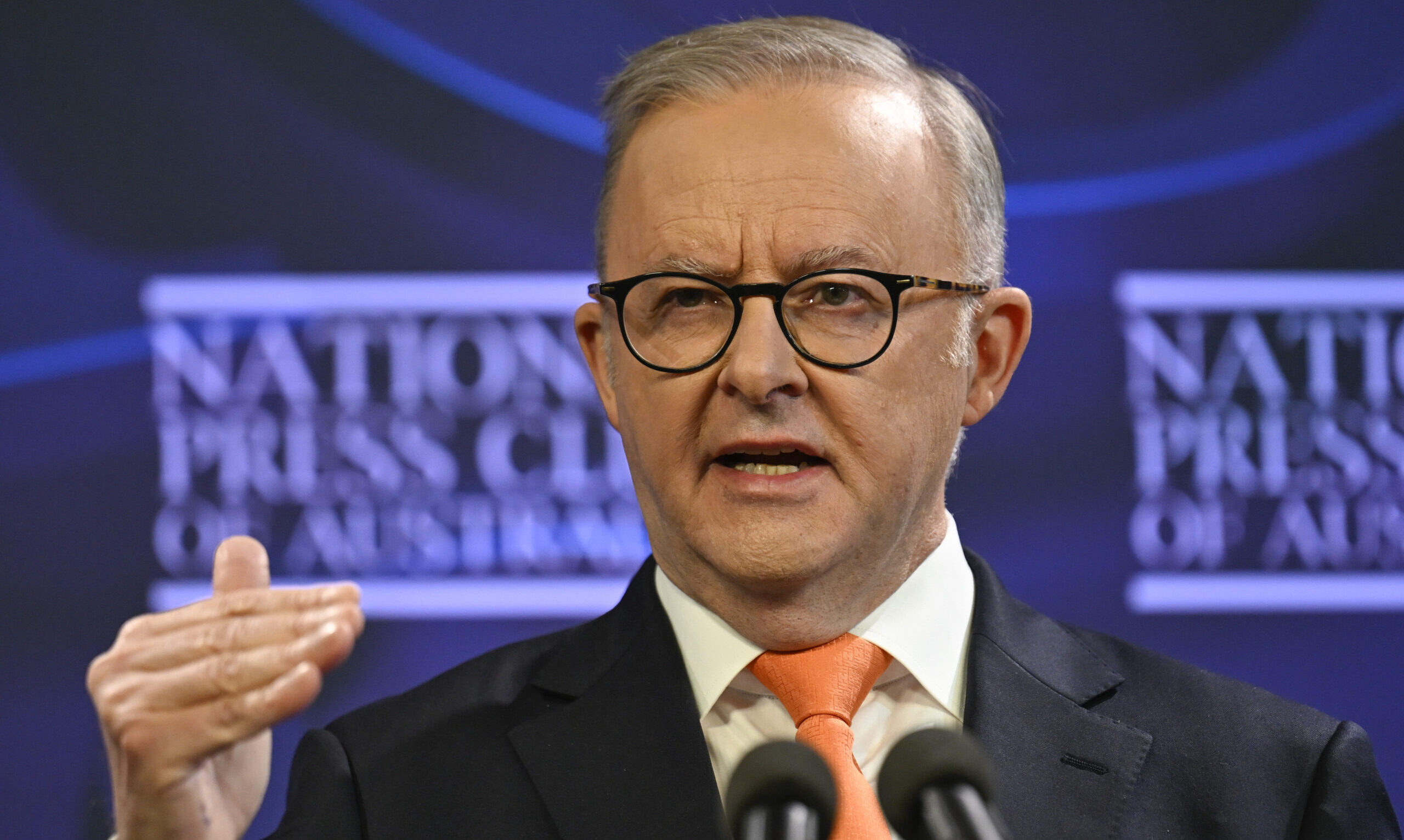
    Prime Minister Anthony Albanese has announced a productivity roundtable between business leaders, unions and community associations with the aim of boosting economic growth and wages, in his National Press Club address on Tuesday.

    Please login below to view content or subscribe now.

    Membership Login

    Source link

  • The war in Gaza is a test for humanity

    The war in Gaza is a test for humanity

    “There will be no electricity, no food, no water, no fuel,” Gallant said. “Everything is closed. We are fighting human animals and we are acting accordingly.”

    President Isaac Herzog said militants and civilians in Gaza would be treated alike. “It’s an entire nation out there that is responsible,” Herzog said. “This rhetoric about civilians not aware, not involved — it’s absolutely not true … and we will fight until we break their backbone.”

    Netanyahu has been equally explicit, comparing Hamas to “Amalek”, a tribe in the Bible which the Israelites were told to eradicate. He blames Hamas for all civilian casualties.

    Other ministers have urged Gaza’s total destruction — one proposed dropping a nuclear bomb — and expulsion of its people, as in the 1948 “Nakba” when several hundred thousand Palestinians were ethnically cleansed as part of Israel’s independence war.

    International justice

    Whether Israel’s Gaza onslaught amounts to genocide, war crimes or crimes against humanity, or very possibly all three, is for international courts to decide.

    What matters now is stopping the killing in a ruined land that has lost its schools, homes, hospitals, roads, power and water plants, farms, places of worship and historical heritage. That is a moral issue for all of us, and most pertinently for Israel and its Western allies, principally the United States, which supplies most of the weapons used against Gaza.

    U.S. complicity is beyond doubt. Many European and other countries, by their silence in face of the carnage, or their failure to take action, are also to blame.

    Leaders in some of these nations are only now chiding Israel more strongly. Spain’s prime minister has called it a genocidal state. There is talk in European and other capitals of sanctions targeting Israeli leaders, a ban on arms shipments or trade penalties.

    But no measures likely to push Netanyahu to alter course have been adopted. His eyes are fixed on the United States, the only nation that could swiftly halt the Gaza debacle — by halting or suspending the $3.8 billion it gives Israel each year in mostly military aid, along with extra arms shipments worth billions of dollars since the current war began.

    Quantifying the horror

    Cold statistics mask the individual suffering of Gazans, but tell part of the story.

    More than 54,000 people, including more than 16,000 children, have been killed since the war began, according to Gaza Health Ministry figures considered reliable by the United Nations, or 2.5% of the population — equivalent to 8.5 million Americans.

    This number does not count many thousands whose bodies may still lie under the rubble, or who died weakened by hunger, preventable diseases and failing health care. It includes more than 1,400 health workers and more than 200 journalists and media workers.

    United Nations officials say more than 90% of homes have been destroyed or damaged, along with 94% of Gaza’s 36 hospitals, with only some still struggling to function. Gaza has the world’s highest number of child amputees per capita.

    According to Hans Laerke, spokesman for the U.N. Office for the Coordination of Humanitarian Affairs, Gaza is also the only territory in the world where “100% of the population is threatened with famine” despite Israel’s denial of any humanitarian blockade.

    Abetting a genocide

    The horrors endured by Palestinians have been documented by local journalists (Israel has banned all international reporters from Gaza), U.N. officials, Palestinian and foreign doctors and aid workers, as well as locally shot videos and photos.

    Foreign physicians with long experience of many countries ravaged by war say conditions they witnessed in Gaza are worse than anything they have ever encountered.

    “I have worked in conflict zones from Afghanistan to Ukraine,” said U.S. paediatrician Seema Jilani, after an assignment in the southern city of Rafah for the International Rescue Committee. “But nothing could have prepared me for a Gaza emergency room.”

    No one can plausibly claim “we did not know” what was, and is, going on.

    Yet world powers have largely stood by as massacres unfold in Gaza. They have kept equally silent as Israel batters parts of Lebanon at will despite a ceasefire with Hezbollah militants agreed in November. Israel has also grabbed more land in Syria and bombed hundreds of targets there since Bashar al-Assad’s regime fell in December.

    A diplomatic debacle

    U.S. President Donald Trump, like President Joe Biden before him, has backed Israel to the hilt. Not even images of emaciated children in Gaza have prompted a change of heart.

    Trump’s own contempt for international law and his plan for the removal of Gazans to allow for a fantasy reconstruction on the toxic ruins of their land has only emboldened far-right Israeli leaders with ambitions to “purify”, annex and resettle Gaza, and to do likewise in the West Bank, where half a million Israeli settlers already live.

    Israel’s actions, under permissive Western eyes, are shredding a longstanding international consensus on a two-state solution to the Israeli-Palestinian conflict – an idea incompatible with an ever-expanding Israeli grip on the West Bank and Gaza.

    After French President Emmanuel Macron called for recognition of a Palestinian state, Defence Minister Israel Katz responded with brutal clarity.

    “They will recognise a Palestinian state on paper — and we will build the Jewish-Israeli state on the ground,” he said in the West Bank on May 29 at one of 22 new settlements just approved by the Israeli government.

    Can peace be given a chance?

    Western outrage at Russia’s invasion of Ukraine has no echo when it comes to Israel which for decades has defied U.N. resolutions and violated international law.

    The fate of Gaza may prove a final blow to the rules of international conduct and treatment of civilians agreed after the Second World War — a system already frayed by the Cold War and more recently the illegal U.S.-British invasion of Iraq in 2003.

    Crushing the Palestinian people will not make Israel any safer in the long run. Only a true peace settlement on a basis of mutual respect and equality can do that.

    If Western nations ever get around to imposing sanctions on Israel and its leaders, they should do so to promote the Jewish state’s real interests which they claim to have at heart — as a stepping stone to such a peace between human beings.

    The German-born Jewish-American philosopher and political scientist Hannah Arendt foretold the consequences for a society unable to perceive others as human.

    “The death of human empathy is one of the earliest and most telling signs of a culture about to fall into barbarism,” she wrote.


    Questions to consider:

    1. Is it justified, or wise, for a state to take revenge on its enemies?

    2. Do people everywhere have the right to resist occupation?

    3. How should we react when a possible genocide is taking place?


    Source link

  • Podcast: Efficiency, EDI, speed | Wonkhe

    Podcast: Efficiency, EDI, speed | Wonkhe

    This week on the podcast we examine Universities UK’s efficiency and transformation taskforce report. What do shared back-office services, federation models and subject cold spots tell us about the sector’s financial pressures?

    Plus we discuss Research England’s new EDI action plan, and explore whether the UK’s rapid three-year degree model is harming student wellbeing and learning outcomes.

    With Rille Raaper, Associate Professor in Sociology of Higher Education at Durham University, Jess Lister, Director (Education) at Public First, Mack Marshall, Community and Policy Officer at Wonkhe SUs, and presented by Jim Dickinson, Associate Editor at Wonkhe.

    Our drop-out and pace miracle is harming students’ health and learning

    Universities UK’s new era of collaboration

    Fixing the potholes in postgraduate funding

    The spending review is a critical moment for UK science and innovation

    There are better politics, big ideas, and future trade-offs in Research England’s new EDI action plan

    Source link

  • Cut, Coerce, Control: What Trump Is Doing to U.S. Universities

    Cut, Coerce, Control: What Trump Is Doing to U.S. Universities

    The single biggest story in higher education for the first six months of this year, without a doubt, has been the Trump administration’s remarkable assault on science and universities. Arguably it’s the largest state-led assault on higher education institutions anywhere in the world since Mao and the cultural revolution.

    Billions of dollars already legally allocated to institutions have been stripped from them mainly, but not exclusively through the National Science Foundation and the National Institutes of Health. Billions more are going to be cut permanently through the budget process. Individual institutions in particular, Harvard, have been threatened with a variety of punishments if they do not obey the administration’s wishes on DEI and the curriculum. International students are being deported and the government has mooted a variety of policies that would see international numbers decline sharply. Low income students are looking at major cuts to both loans and grants. And we’re only, as of this recording, 134 days into this administration’s term, still 1,327 less to go.

    With me today is a returning guest, Brendan Cantwell, from Michigan State University. He joined our show last fall to talk about what, based on his reading of the now notorious Project 2025, a Trump administration might do to higher education. And he was mostly right. Certainly he was more perspicacious than most actual higher education leaders, and so we thought just before we break for the summer, we’d invite him back on, not just to say, I told you so, but to help us understand both the strategies and tactics that the Trump administration is using and where the conflict might be headed next.

    Just one note, we recorded this on Wednesday, the 28th of May. Some things such as the state of the Trump Harvard battle have changed since then, so keep that in mind as you listen.

    And now, over to Brendan.


    The World of Higher Education Podcast
    Episode 3.34 | Cut, Coerce, Control: What Trump Is Doing to U.S. Universities

    Transcript

    Alex Usher (AU): Brendan, let’s start with the big picture. We’re four months—and a week—into Trump’s presidency, with just over three and a half years to go. Let me see if I’ve got this right.

    He’s attacked the major granting agencies—NIH and NSF—and reduced direct funding to individual investigators, often on DEI grounds. He’s also cut overhead payments to universities. On top of that, he’s gone after specific institutions—Columbia, Harvard, and others—trying to pull their funding in ways that, frankly, seem completely illegal. The justification has ranged from their support for EDI to questionable claims of antisemitism or collaboration with the Chinese Communist Party.

    We’ve now got a budget moving through Congress that, as I understand it, takes an axe to the student loan and grant system. And just this week, the government appears to be targeting international students—starting with Harvard, and more broadly by ordering embassies to conduct social media checks before issuing student visas. Am I missing anything?

    Brendan Cantwell (BC): I’m not sure—there’s just been so much. It’s hard to keep up. There have been several executive orders, including ones targeting what we call Diversity, Equity, and Inclusion programs. Others have touched on accreditation and a range of other topics.

    The thing about this administration is that so much is happening so quickly, and these actions are in various stages of implementation. Some are being held up in court, and with others, it’s not even clear how they’re supposed to be implemented. The president makes a proclamation, but then there’s this uncertainty: what does it actually mean in practice?

    Even for someone who spends a lot of time tracking this, it’s really difficult to stay on top of everything. But the overall thrust seems clear: the administration is using every mechanism it believes it controls—and some it probably doesn’t, legally—to pressure universities to align with the president’s agenda.

    That’s not just my interpretation. It’s actually a common talking point from the administration: if universities want funding, they ought to support the president’s goals. More broadly, there’s a clear effort to weaken the sector—to undermine its role as an independent political and cultural force that could challenge the president or the party.

    AU: I think Linda McMahon actually said exactly that earlier today—that universities are fine as long as they’re aligned with the president and the administration. So, I think you’ve done a good job explaining the through line across these various actions. But how coherent are those actions, really?

    Is this a well-oiled plan, where they expected to be at this point by month three or four? Or is it more like the tariff policies, where the president just thinks of something new each day and rolls it out on a whim?

    BC: I almost want to push back on the either/or framing. It’s definitely true that the president—and to some extent his top policy people and enforcers—are just throwing things at the wall. A lot of it is reactionary: this university defied me, so now I’m mad and I’m going to do something outrageous to show how much authority I have over them.

    So yes, there’s an erratic, incoherent aspect to it. The rationale for their actions shifts constantly: one day it’s antisemitism, the next it’s about violating a Supreme Court ruling on affirmative action, then it’s about foreign collaboration. The justification just keeps changing.

    But if you take a step back and look at the cumulative effect of what the administration is doing—getting universities to be more compliant, weakening their financial position, causing faculty and staff to lose their jobs—that broader objective is being advanced. And that’s exactly the kind of outcome that people like Chris Rufo, who claim to speak for the administration’s education policy, seem to be aiming for.

    So no, it’s not tactically precise—it’s not some kind of meticulously calibrated battle plan. But the overall strategy of flooding the sector with challenges is definitely happening.

    AU: I’ll come back to the strategy in a second, but let’s talk tactics. Do you get the sense that the Trump team is getting smarter in how it’s operating? That maybe they’ve been caught off guard a few times and are starting to adapt?

    I’m just thinking about what’s happened in the last week. First, they attacked Harvard—saying, essentially, “we’re getting rid of all your international students.” Then the court pushes back. But right away, the administration has a response: the court says, “No, you can’t do that,” and they immediately pivot to pulling individual scholarships or research grants for international students—ones that hadn’t already been cut.

    Then they go a step further, announcing cuts that apply not just to Harvard, but to all international students. Are they getting smarter, or not? I never had the sense this group was particularly good at learning, but maybe that’s changing?

    BC: Are they getting smarter? I’m not sure. Are they more determined? Yes. And I think the voices inside the administration that might have constrained the president’s impulses back in 2016 to 2020—those are gone now. He’s unconstrained. He’s persistent. And he and his senior policy advisors genuinely believe in what they’re doing. They’re committed to the project and they’re looking for ways to push it forward.

    Take the example you just mentioned: there’s an injunction—you can’t bar Harvard from enrolling international students, at least not before the courts weigh in. And the administration responds, “Fine. We’ll just create a new process to vet all international student visas.” So suddenly, they’re grinding the whole system to a halt.

    They’re absolutely more willing now to use tactics that are difficult to block—tactics that escalate the situation every time someone pushes back. And they’re building out those tactics in a way that moves them closer to their goals.

    That said, I don’t think their objectives are ever really precise or coherent. It’s more of a generalized impulse: they don’t like foreigners, they don’t like foreign students, they don’t like Harvard, they don’t like universities. So, they hit where it hurts—and this is one way to do it.

    Now, is that smart? Maybe more effective, yes. I’m not sure it serves the country, or even the president’s long-term agenda, in any meaningful way. But it’s definitely happening.

    AU: So let me turn to the Trump administration’s broader strategy. Last time you were on, we talked about Project 2025 and its implications for higher education. How closely do you think the White House’s actions over the past four months align with what was outlined in Project 2025? And by the way, this is your chance to say “I told you so.”

    BC: Yeah, I love to say “I told you so”—it’s one of my character flaws.

    A lot of what was in Project 2025 has now been implemented—or at least, versions of it have. Take the cap on indirect costs, for example. They’ve implemented a 15% cap, rather than the negotiated rates that were often quite a bit higher for individual campuses. Those rates sometimes raised eyebrows, especially among people unfamiliar with how the U.S. system works.

    And even the rhetoric is the same. They’ve said, essentially, “Marxist foundations only pay 15%, so why should we subsidize Marxist stuff?” That language comes directly from Project 2025.

    There are other examples, too. Many of the student loan reforms currently working their way through Congress have Project 2025 fingerprints on them. The executive order on DEI? Same thing. So yes, there are a lot of specific elements from the plan that are now showing up in policy.

    And beyond the specifics, the overall spirit of Project 2025 is clearly visible in the administration’s posture toward higher education.

    That said, there’s one key difference: Project 2025 envisioned a more active role for Congress and a more deliberative policymaking process than what we’re actually seeing. It assumed, at least implicitly, more checks on presidential power than the president has been willing to accept.

    So, while many of Project 2025’s ideas have been implemented—some fully, some partially—how long they last is still an open question. And ironically, the actual execution by the administration is in many ways less constrained, and possibly less lawful, than what Project 2025 originally proposed. That’s my impression, at least—as a non-lawyer.

    AU: We’ve been talking about the Trump administration. I want to shift now to the higher education sector. For most of February and part of March, the sector seemed… bewildered. Almost unable to process what was happening. It was like, “This must be a mistake—they can’t possibly mean that.”

    And as a result, I think the response was pretty slow. When the administration went after Columbia, which was the first institutional target, many universities seemed to instinctively say, “Let’s stay quiet. Maybe we’ll be spared.”

    You, and a few others, were pretty clear-eyed from the beginning about how this would unfold. Why didn’t university leaders see it coming? This feels like a colossal failure of imagination. What happened?

    BC: Let me start by offering a partial defense of university leaders.

    There are people like me—and others—who are pretty knowledgeable but also pessimistic. We say bad things are going to happen a lot, and often they don’t. During Trump’s first term, there was concern that a lot of his anti-higher-ed rhetoric would turn into policy. And in some ways, it did. But in many ways, it didn’t. Congress constrained him. The courts constrained him. Even people inside his administration held him back. And he also lost focus on higher ed.

    So, I think university leaders had some reason to believe that the best strategy was to remain quiet, lobby Congress, and let the courts do their work. That approach worked last time, so it wasn’t irrational to assume it might work again. It just took them some time to adjust to the new reality.

    Some of that delay is about individual cognitive response, which I’m not really qualified to speak to. But some of it is structural—university bureaucracies and associations take time to pivot. Shifting strategies isn’t easy.

    So yes, it’s fair to say the sector was caught flat-footed. And yes, leaders should have had a better sense of what was coming. That’s a valid critique. But once they figured out what was happening, I think the sector showed a fair amount of agility. Associations started taking a more aggressive posture. ACE, for instance, became part of the resistance—which I wouldn’t have predicted would happen so quickly.

    Universities are still trying to find their footing. And then you have Red State universities, which are really hemmed in by state legislatures. They’re facing a whole different set of challenges, apart from what’s coming out of the federal administration. Those institutions are in a very tough spot.

    AU: What does it say about American higher education that Harvard has become ground zero for the resistance?

    BC: Full credit to Harvard—absolutely.

    Here’s my hedge: they had the benefit of seeing what happened to Columbia. That experience showed there was no good-faith negotiation to be had with this administration.

    In some ways, it makes strategic sense for Trump to pick on Harvard. It’s not the most lovable institution. It’s a big, juicy target.

    But at the same time, it’s also kind of foolish. Harvard has enormous resources—financial, social, institutional. They have more capacity to fight back than almost any other institution in the country.

    I think they recognized what Columbia’s experience revealed: if you give in to this administration, institutional autonomy is gone—possibly for a long time.

    If Harvard wants to preserve the American establishment—which it’s often accused of doing, by reproducing elite institutions and elite classes—then it has to resist Trump. That resistance is a condition of preserving the pre-Trump order.

    So yes, it’s good and necessary that Harvard is doing this. But I wouldn’t interpret this as Harvard becoming some scrappy underdog street fighter. It’s simply one of the few institutions with the resources and standing to try to defend the old order.

    AU: What about going forward, though? I mean, I hear more institutions—maybe not acting, but at least sounding like they understand they all have to hang together, or they’ll hang separately. But will they?

    I mean, take the University of Michigan on DEI—they folded like Superman on laundry day. Part of that was probably about Santa Ono’s personal ambitions. But there are a lot of institutions, both public and private, that have already bent the knee at least once.

    How do you come back from that? And can it really be done through the courts alone? Because right now, it’s all being held up by temporary restraining orders. And as you’ve said, that doesn’t provide clarity. Eventually, these cases are going to have to go up to the Supreme Court—where, incidentally, four or five justices are Harvard alums. Whatever else they believe, they might have some interest in preserving these institutions.

    How do you see the resistance evolving over the next few months?

    BC: I’d be disingenuous if I told you I know exactly how this is going to play out.

    AU: Best guess.

    BC: I think the strategy for the sector is to try to win where it can in the courts, and hope the administration abides by those rulings—which, honestly, is a real concern at this point.

    And then also to behave like a school of fish: move together, so it becomes difficult to single out and take down any one institution.

    The hope is that they can wait the president out—that the administration will shift its focus to something else, burn through its energy on attacks, and that most of the sector will remain intact enough to keep operating.

    And then, when that moment comes, institutions can manage the fallout: the indirect consequences like how states deal with a recession if healthcare or food assistance burdens shift onto them, or the winding down of research operations as the pool of available grant funding shrinks.

    I think the approach is: keep your head down, don’t explicitly cave, and hope the administration moves on. It’s probably the best available strategy right now.

    But I don’t know if it will work. If the administration manages to keep its attention fixed on higher education and maintains this pace of attacks and cuts, then it’s going to be very difficult for large parts of the sector to emerge unscathed.

    AU: You mentioned at the beginning of the interview an executive order related to accreditation. We haven’t talked about that yet, and I think some people see that as the sleeper issue—not necessarily for the big, wealthy private institutions, but for the vast majority of colleges and universities.

    Changes to the U.S. accreditation system could have huge implications. What’s been happening on that front so far? What’s actually in that executive order, and what could these changes mean for institutional autonomy and academic freedom?

    BC: Most of the executive orders from this administration, it’s not exactly clear what it does. It directs the Secretary of Education—who, by the way, has also been tasked with dismantling the Department of Education, so there’s that contradiction to hold in your mind.

    AU: But she’s still the Secretary. I saw her today.

    BC: Yes, she’s still there.

    So, this order directs her to collaborate with new accreditors and to open up competition in accreditation. The stated goal is to “foster innovation” and “rein in the accreditation cartel”—that’s the language they use. They frame current accreditors as promoters of Marxist, DEI, anti-Semitic, or otherwise ideologically objectionable agendas. It’s a jumble of terms, but it signals their intent.

    There are really two key elements here. First, increasing competition among accreditors. That means recognizing accreditors that wouldn’t have been approved under a Democratic administration—and maybe not even under many Republican ones. These would be organizations willing to give the stamp of approval to short-term or for-profit programs that don’t meet U.S. or international best practices for educational quality. If I were being snarky, I’d call them scammer programs.

    Second, they could use accreditation as a way to impose standards that align with the president’s political agenda. For example, they might require changes to how campuses regulate student conduct, admissions policies, or even faculty hiring practices. They could try to use accreditation to reach into curriculum—mandating, say, a general education requirement focused on Western Civilization or other ideologically favored content.

    Accreditation is the clearest vehicle they have to influence what’s taught and how institutions operate. But these kinds of changes take time and require more methodical planning—something this administration has been less consistent about, as we’ve discussed.

    So, we’ll see what happens. But it’s definitely something to keep an eye on over the next couple of years. If universities are already weakened by all the other pressures—funding cuts, legal battles, political attacks—they may be less able to resist a fundamental restructuring of the accreditation system.

    AU: The sector’s had a lot thrown at it over the last four months. But looking ahead—have we seen the end of all this sabotage innovation, so to speak? Is there more coming? We talked about Project 2025 a little earlier. Is there anything in there that hasn’t been used against the sector yet? What should we be even more worried about?

    BC: I’m not sure there’s any one Project 2025 policy I’d point to and say, “watch out for that specifically.” But a couple of things are worth keeping an eye on.

    One would be if the administration attempts to block institutions—or even groups of institutions, or the entire country—from accessing federal student financial aid. That’s Title IV under the Higher Education Act. If they were to go after Title IV the same way they’ve unilaterally blocked access to research grants or are now targeting international students, that would be hugely disruptive. It’s a big, coercive lever. They could do a lot of damage with it.

    The other thing to watch is the relationship between federal and state policy. We’re already seeing red states passing legislation that mirrors or reinforces the Trump administration’s higher ed agenda. Utah, for example, just passed a bill where institutions face a big cut to their appropriations—unless they agree to evaluate and cut programs the state deems nonessential.

    And even individual boards of governors, particularly in Republican-dominated states, are taking it upon themselves to implement Trump-aligned policies. I think we might be seeing that at the University of North Carolina, for instance, where no one outside of the health sciences has received tenure in the past year. We don’t know exactly what’s going on, but it certainly looks like the board is using its technical authority to enact the administration’s broader political agenda. So those are the kinds of developments to watch.

    AU: Brendan, best of luck—and thanks for joining us.

    BC: Thanks very much, Alex. Always a pleasure to be here.

    AU: That just leaves me to thank our excellent producers—Tiffany MacLennan and Sam Pufek—and you, our viewers, listeners, and readers, for joining us. If you have any questions or comments about today’s podcast, or suggestions for future episodes, don’t hesitate to reach out at [email protected]. Run—don’t walk—to our YouTube page and subscribe. That way, you’ll never miss an episode of The World of Higher Education Podcast. Join us next week for what will be our final episode before the summer break. Our special guest? Me. Tiffany will be turning the tables and peppering me with questions about higher education in Canada and internationally during the first half of 2025. I’ll do my best to make it all sound coherent. Bye for now.

    *This podcast transcript was generated using an AI transcription service with limited editing. Please forgive any errors made through this service. Please note, the views and opinions expressed in each episode are those of the individual contributors, and do not necessarily reflect those of the podcast host and team, or our sponsors.

    This episode is sponsored by KnowMeQ. ArchieCPL is the first AI-enabled tool that massively streamlines credit for prior learning evaluation. Toronto based KnowMeQ makes ethical AI tools that boost and bottom line, achieving new efficiencies in higher ed and workforce upskilling. 

    Source link

  • The guardians of the exosphere

    The guardians of the exosphere

    Not many military forces have ranks and uniforms that were inspired by science fiction. The U.S. Space Force (USSF) has both. Their dress uniform is described by the U.S. Armed Forces Super Store as “a deep navy, representing the vastness of space” and the jacket’s buttons are diagonal and off centre with the logo of the Space Force. 

    Members of the Space Force are known as Guardians, a term that will be familiar to fans of the animated superhero series where extraterrestrial criminals unite to preserve the galaxy. 

    But the Space Force has a real and serious purpose. After being discussed for several decades, it was created in 2019 and tasked with protecting the United States from threats in space with the motto, “Semper supra,” which is Latin for “Always above.”  

    As the USSF mission statement explains, “From GPS to strategic warning and satellite communications, we defend the ultimate high ground.” 

    Despite its vast mission, there are fewer than 10,000 Guardians — enlisted women and men and officers — making it the smallest wing of the U.S. military.

    Detecting missiles and other objects

    Like all nations, the United States relies on critical infrastructure and everyday business that is now dependent on satellites which enable navigation, weather forecasting, earth observation, communication and intelligence. 

    Before the formation of the Space Force, monitoring satellites was part of the duties of the U.S. Air Force. Now the U.S. Space Force has taken over many of those duties and is dedicated solely to operating and protecting assets which operate in space. Their mission also includes operating the Ballistic Missile Early Warning System which is designed for advanced missile detection.

    The USSF currently has six bases in the continental United States and one base outside of the country. Located in Greenland, it is its most northerly base. Previously known as Thule Base, in 2023 it reverted to its traditional name Pituffik.

    In March 2025, Pituffik base hosted a visit by U.S. Vice President J.D. Vance following statements by President Trump that he wanted to “buy Greenland”

    Donald Trump was not the first American president who wanted to buy Greenland. In 1946 President Truman made a similar offer to Denmark, the colonial power. Denmark turned him down — the Greenlanders had no say in those days as a colony. Now Greenland is an autonomous territory of Denmark and all Greenlanders are Danish citizens.

    Eyes on the skies

    But even in 1946, there was already a U.S. base in Greenland, built during World War Two during the years that Denmark was occupied by Nazi Germany. Thule Base was America’s most northerly deepwater port and runway and supported Allied naval operations against the Nazi threat.

    Now, 80 years on, the base can monitor not only space activities, but the expansion of Russian government activities in the Arctic region. Climate change is expected to enable an ice-free Northwest Passage in the coming decades when traffic in shipping could rival the Suez Canal. 

    Now, with the addition of the Space Force to Pituffik Base in Greenland, the sea sky as well as space will be closely monitored.

    The location of Pituffik is not only strategically placed to keep an eye on Russian and Chinese space activities, but to monitor polar orbiting satellites. These observation satellites, which orbit north to south, make a full orbit every 92 minutes. In addition to civilian and scientific satellites, which provide data on land, sea and atmosphere, there are military satellites which are classified.

    The vast majority of military satellites that are operated by the United States are believed to number around 250 which is more than the total of Russian and Chinese military satellites. Military observers believe many of these satellites are monitored from Pituffik. 

    Nobody wants a war in space.

    The idea of a space force had been discussed for decades because “nobody wants a war in space” according to Major General John Shar, the commander of space operations for the U.S. Space Force. Shar compared the need for the United States to operate military space operations to ocean-going nations wanting a navy.

    Several other countries agree. France, Canada and Japan have created their own versions of a space force to deter threats in space.

    French President Macron announced the creation of a space command in 2019. The force is being established in tandem with the French Air Force. As one of the leading space nations in the world, the force will protect French satellites. French aerospace companies are currently designing a new generation of satellites reportedly designed to carry lasers and possibly even guns.

    The Canadian Space Division, a division of the Royal Canadian Air Force, provides “space-based support of military operations” and “defending and protecting military space capabilities” according to their mission statements.

    Japan’s Space Operations Group is part of the Japan Air and Space Self-Defense Force unit based in Tokyo. Japan, also a leading space nation, is building many earth observation and surveillance satellites. Many of their astronauts from JAXA, the Japan Aerospace Exploration Agency, have flown missions on the International Space Station. 

    The Japanese have also taken on a wider mission, beyond a national military focus. They are enhancing their capability for Space Domain Awareness in order to focus on the increasing risk of collisions with satellites caused by space debris.

    Earth’s satellite infrastructure can be substantially damaged by space debris orbiting at an average speed of 17,500 mph. It’s not only cyberattacks and targeted satellite destruction that can cause serious global disruption.

    The United States, France, Japan and Canada point out that any new satellites and any activities from the respective space forces will stay within the strictures of the International Outer Space Treaty which outlaws testing nuclear weapons or weapons of mass destruction in space.

    If space around the earth and beyond can remain a peaceful place, perhaps the designation of “Guardian” for the U.S. Space Force is appropriate. 


    Questions to consider: 

    1. In what ways does science fiction inspire ideas that are useful for humanity?

    2. What should nations not be allowed to do in space?

    3. Would you join a space force in your country to help monitor and protect space activities?


    Source link

  • Last Week in Parliament: Three Takeaways

    Last Week in Parliament: Three Takeaways

    It was a busy week in Parliament last week.  The King came to Ottawa to deliver a Speech From the Throne.  His speech – almost exclusively a re-hash of Liberal promises from the April election – was deeply depressing for anyone who thinks the words “knowledge economy” have any meaning.   

    The main feature of the Speech from the Throne was that it spelled out, in excruciating detail, how the Liberals intend to double down on re-creating the Canadian economy of the 1960s.  Oh sure, the King uttered a line in there early on about how his government is committed to “building a new economy.”  But read the document: that sentiment was in no way followed up by anything resembling a commitment to any kind of new economy.  Instead, here are the major economic elements to which the government is committed:

    • Speeding up permits for major construction projects like roads and pipelines and whatnot: because natural resources have to get to the coasts somehow!
    • Building a lot of houses
    • Spending more on defense
    • Breaking down internal trade barriers
    • Er…
    • That’s it.

    Whatever you think of the merits of the various proposals here, this is not a new economy.  It is barely even a warmed-over version of the old economy.  At best, it is about finding new markets for old products, not developing any new products.  I am unsure if it is more that the Liberals have no sweet clue about how to create a new economy, or that they are uninterested in doing so.  But it’s one of those two.

    Now some might argue otherwise because look!  Evan Solomon!  Minister of Artificial Intelligence and Digital Innovation!  How New Economy is that?  All I can say is: please try not to be that person.  Solomon is a Minster without a department with a mandate which is completely undefined.  Is it an internally-facing ministry meant to diffuse digital innovation and AI throughout government?  Or an externally-facing ministry meant to diffuse these things across the economy?  Two weeks after Solomon was named Minister, we still have no clue.   And the Liberal Manifesto and the cabinet’s One Big Mandate Letter give conflicting impressions about the extent to which the Government sees its AI/digital strategy is about skill expansion/diffusion vs. handing money to techbros (the mandate letter reads like the former, the manifesto the latter). One would be forgiven for suspecting the Carney government is making things up as it goes along.

    Anyways, the point here is still: despite Carney’s globe-trotting central banker/Goldman Sachs reputation, this government seems to be staying as far away from a Davos/future industry agenda as humanly possible.  The Liberal “new economy” is all pretty much all construction and primary industries.  This is not a world which requires a lot of higher education.

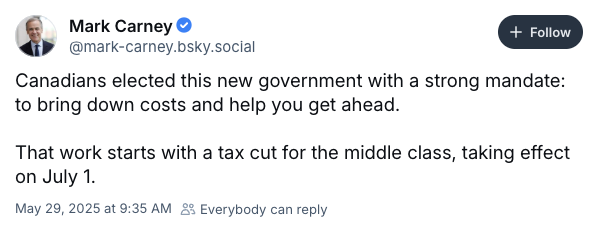
    Scared yet?  We’re just getting started.  Back on Thursday our new Prime Minister was seen to tweet:

    In other words, this government seems determined to continue in the tradition of both the former government – and the opposition parties for that matter – in framing the country’s ills as problems of costs to be solved by tax cuts and giveaways rather than problems of growth and the institutional investments required to generate it.  This way lies Peronism and perpetual stagnation. 

    And this is from our allegedly “serious” party.

    So, takeaway number one.  Universities need to throw away EVERYTHING in their playbooks for Government Relations.  Selling yourself as “the future” to a government that is desperately trying to reverse our economy into the 1960s is pointless.  This government and this Prime Minster Do. Not. Care.   Until they do, arguing for universities as “crucial” investments is a waste of time.  The real fight is over the shape of the Canadian economy.

    On to a more abstract point about budgeting.  One of the reasons we aren’t getting a budget before fall, despite the government just having been elected with a pretty detailed budget-ready manifesto and the Department of Finance being perfectly capable of putting together a set of Main Estimates for the House of Commons (as it showed on Thursday), is that Carney is trying to introduce a new set of rules with respect to public budgeting.  He spent part of this week insisting that he would balance the “operating budget” within three years, which sparked a lot of incredulity given that i) the economy is about to be in the tank and ii) the Liberals have ring-fenced most of the federal budget by saying they won’t touch transfers to provinces or transfers to institutions.  In theory, that means very significant cuts to program spending.  Like, say, research budgets.

    Except: there is currently no such thing as an “operating budget”.  What Carney wants to do is to exempt from the budget balance requirement anything that can be seen as “capital investment”, which means basically that the main game in Ottawa over the next few years is going to be how to get your favourite piece of spending classed as “capital” instead of “operating”.  And that’s a live issue because the definition the Liberals touted in the election campaign, to wit…

    …anything that builds an asset, held directly on the government’s own balance sheet, a company’s or another order of government’s.  This will include direct investments the government makes in machinery, equipment, land and buildings, as well as new incentives that support the formation of private capital (e.g. patents, plan and technology) or which meaningful raise private sector productivity.

    …is so loose you could drive a truck through it.  Will CFI spending count as capital?  Probably, but not necessarily since universities (in most provinces anyway) are neither a government nor a company.  Will tri-council spending?  Probably not, but that’s not going to stop folks claiming it supports capital formation/raises productivity, so who knows?  So, takeaway number two: get used to arguing distinctions between capital and operating because this might be the only place the sector gets traction in the next little while.

    A final point of importance is something that is not exactly new but has been given fresh salience by being in the Throne Speech, and that is the government’s commitment to limit temporary immigration – that is Temporary Foreign Workers (TFWs) plus international students – to below five percent of the population by 2027.  Or, to put it another way: every extra TFW is one international student less.  What the government has done here is set up a zero-sum game between institutions of higher education and people like the manager of the Kincardine Tim Horton’s whose business model simply cannot work if they are not allowed to employ foreign nationals at below-market rates. 

    This, my friends, is the fight post-secondary education needs to pick and needs to win.  It won’t be easy, because the captains of Canadian industry are largely clueless about competing on anything other than price, meaning low-wage labour is pretty dear to their hearts and they will fight hard for TFWs.  But it is the dilemma this country faces in a nutshell: should we use our scarce temporary immigration spots to make things cheaper in the short-term?  Or should we use them to develop a skilled workforce and build our scientific and technological talent base for the long term? 

    So, I know this won’t come easy to institutions but: screw Bay Street.  Light the torches.  Find the pitchforks.  Pick up anything you have handy and smash the windows of your local Tim Horton’s.  Fight for international students and against TFWs.  This is an existential contest: it decides whether Canada is going to be a country that gets wealthier based on investments in skills, education and science, or a country that bathes in mediocrity because we go mental if the price of a cruller goes up twenty-five cents. 

    And if the sector ducks this fight because direct confrontation with business is icky and makes some Board members uncomfortable?  Well, then the sector deserves everything it gets.  That’s the third, and most important takeaway of the last week.

    Source link

  • New shadow education minister selected, Sarah Henderson “disappointed” – Campus Review

    New shadow education minister selected, Sarah Henderson “disappointed” – Campus Review

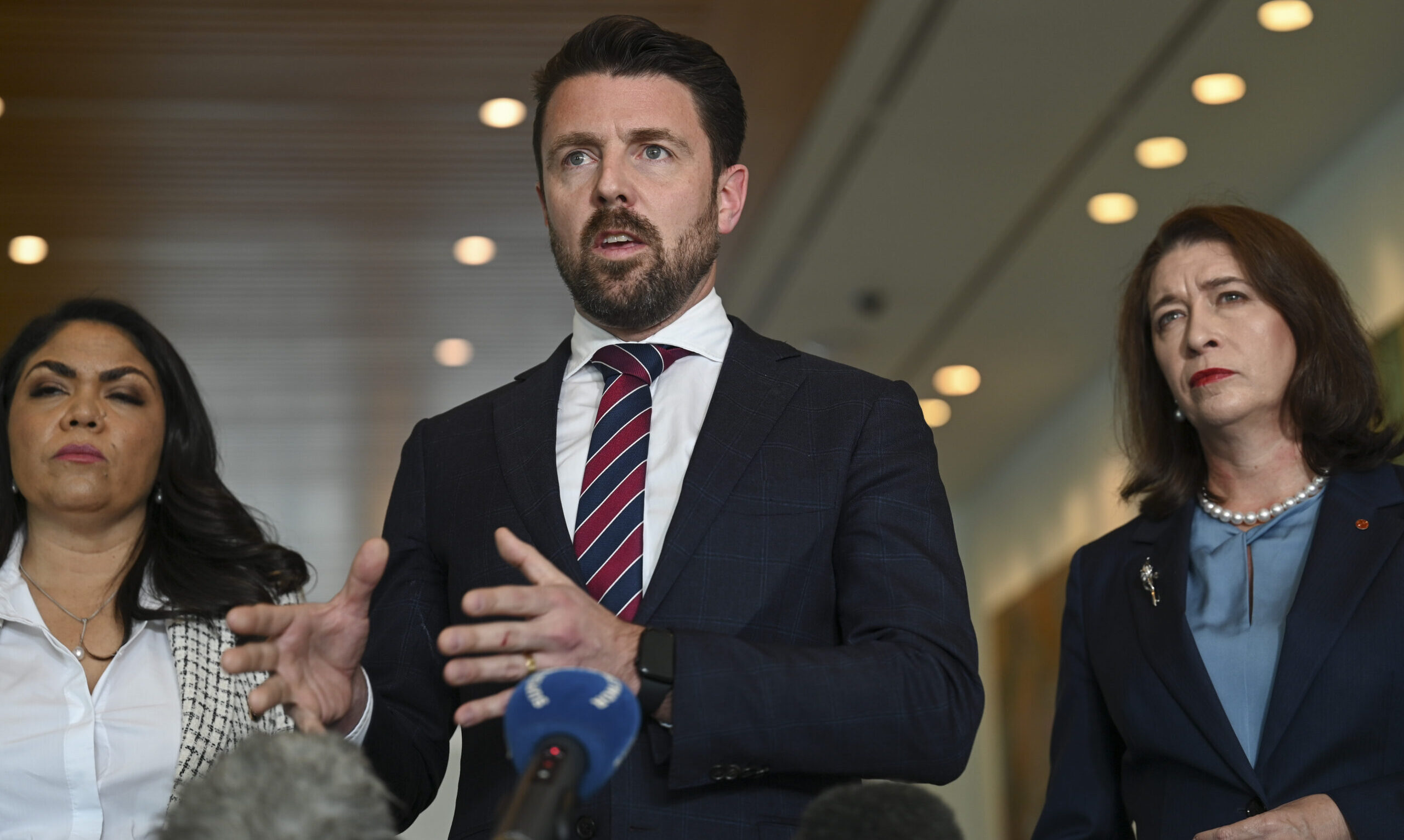
    Former opposition education spokeswoman and senior Liberal party member Sarah Henderson has been replaced by Tasmanian senator Jonathon Duniam.

    Please login below to view content or subscribe now.

    Membership Login

    Source link

  • Why Global Talent is Turning Away from U.S. Higher Education—and What We’re Losing – Edu Alliance Journal

    Why Global Talent is Turning Away from U.S. Higher Education—and What We’re Losing – Edu Alliance Journal

    In 2025, much of my professional focus has been on small colleges in the United States. But as many of you know, my colleague and Edu Alliance co-founder, Dr. Senthil Nathan, and I also consult extensively in the international higher education space. Senthil, based in Abu Dhabi, UAE—where Edu Alliance was founded was asked by a close friend of ours, Chet Haskell, about how the Middle East and its students are reacting to the recent moves by the Trump Administration. Dr. Nathan shared a troubling May 29th article from The National, a UAE English language paper titled, It’s not worth the risk”: Middle East students put US dreams on hold amid Trump visa crackdown.

    The article begins with this chilling line:

    “Young people in the Middle East have spoken of their fears after the US government decided to freeze overseas student interviews and plan to begin vetting their social media accounts. The directive signed by Secretary of State Marco Rubio and sent to diplomatic and consular posts halts interview appointments at US universities.”

    The UAE, home to nearly 10 million people—90% of whom are expatriates—is a global crossroads. Many of their children attend top-tier international high schools and are academically prepared to study anywhere in the world. Historically, the United States has been a top choice for both undergraduate and graduate education.

    But that is changing.

    This new wave of student hesitation, and in many cases fear, represents a broader global shift. Today, even the most qualified international students are asking whether the United States is still a safe, welcoming, or stable destination for higher education. And their concerns are justified.

    At a time when U.S. institutions are grappling with enrollment challenges—including a shrinking pool of domestic high school graduates—we are simultaneously sending signals that dissuade international students from coming. That’s not just bad policy. It’s bad economics.

    According to NAFSA: Association of International Educators, international students contributed $43.8 billion to the U.S. economy during the 2023–2024 academic year and supported 378,175 jobs across the country. These students fill key seats in STEM programs, support local economies, and enrich our campuses in ways that go far beyond tuition payments.

    And the stakes go beyond higher education.

    A 2024 study found that 101 companies in the S&P 500 are led by foreign-born CEOs. Many of these executives earned their degrees at U.S. universities, underscoring how American higher education is not just a national asset but a global talent incubator that fuels our economy and leadership.

    Here are just a few examples:

    • Jensen Huang: Born in Taiwan (NVIDIA) – B.S. from Oregon State, M.S. from Stanford
    • Elon Musk: Born in South Africa (Tesla, SpaceX) – B.A. from the University of Pennsylvania
    • Sundar Pichai: Born in India (Alphabet/Google) – M.S. from Stanford, MBA from Wharton
    • Mike Krieger: Born in Brazil (Co-founder of Instagram) B.S. and M.S. Symbolic Systems and Human-Computer Interaction, Stanford University
    • Satya Nadella: Born in India (Microsoft) – M.S. from the University of Wisconsin–Milwaukee, MBA from the University of Chicago
    • Max Levchin: Born in Ukraine (Co-founder of PayPal, Affirm), Bachelor’s in Computer Science, University of Illinois at Urbana-Champaign
    • Arvind Krishna: Born in India (IBM) – Ph.D. from the University of Illinois, Urbana-Champaign
    • Safra Catz: Born in Israel (Oracle) – Undergraduate & J.D. from University of Pennsylvania
    • Jane Fraser: Born in the United Kingdom (Citigroup) – MBA from Harvard Business School
    • Nikesh Arora: Born in India  (Palo Alto Networks) – MBA from Northeastern
    • Jan Koum: Born in Ukraine (Co-founder of WhatsApp), Studied Computer Science (did not complete degree) at San Jose State University

    These leaders represent just a fraction of the talent pipeline shaped by U.S. universities.

    According to a 2023 American Immigration Council report, 44.8% of Fortune 500 companies were founded by immigrants or their children, including iconic firms like Apple, Google, and Tesla. Together, these companies generate $8.1 trillion in annual revenue and employ over 14.8 million people globally.

    The Bottom Line

    The American higher education brand still carries immense prestige. But prestige alone won’t carry us forward. If we continue to restrict and politicize student visas, we will lose not only potential students but also future scientists, entrepreneurs, job creators, and community leaders.

    We must ask: Are our current policies serving national interests, or undermining them?

    Our classrooms, campuses, corporations, and communities are stronger when they include the world’s brightest minds. Let’s not close the door on a future we have long helped build.


    Dean Hoke is Managing Partner of Edu Alliance Group, a higher education consultancy. He formerly served as President/CEO of the American Association of University Administrators (AAUA). With decades of experience in higher education leadership, consulting, and institutional strategy, he brings a wealth of knowledge on international partnerships and market evaluations.

    Source link

  • Top Tips: Be naive

    Top Tips: Be naive

    Young people are often accused of naivety. But in journalism, naivety can be powerful.

    Being naive means sounding innocent or unsophisticated about something. You often get accused of naivety when you question why things are the way they are. Many people hate being accused of that, so they accept generally accepted standards — a fancy term I like is “prevailing paradigms.” 

    Often these are notions that some problems are so rooted that they can’t be fixed so you just have to accept them: polluted rivers or entrenched corruption or homelessness or discriminatory policies. 

    When you question these notions you might be accused of being naive. I say wear that like a badge. Why? Because if we accept problems without seeking solutions we won’t ever improve a community or society or nation. And that means that you must reject the idea that some problems can’t be solved. 

    It means we have to go back to the idea that everyone deserves clean air and water, healthy food, a basic education, shelter and safety. Nowadays you might add internet access, heat and electricity to that list and maybe a decent transportation system. The more I add, the more naive I sound. 

    Question prevailing paradigms.

    Good journalism comes from asking why people don’t have these things, not from accepting that they don’t have them. 

    So I suggest this: Draw an imaginary line. It represents a perfect world. In a perfect world everyone would have those things I listed: clean air and water, healthy food, etc. Then draw a line next to it that represents the current situation, and make the space between them wider the more off we are from that perfect world. Therein lies your story. 

    How far off is your community from having clean water or clean air? How bad are diets or how bad is the food shortage? 

    Then ask why. Why are people drinking or fishing out of contaminated water streams? Why are people going hungry? Why are people homeless? These are basic questions that come from the naive perspective that these problems shouldn’t exist in a perfect world. 

    Only when you ask these questions can you get to the heart of causes. Here is the hard part. The accusation of naivety comes not because these problems can’t be solved. It comes because the solutions are complicated. Sometimes they are really complicated. So the naivety comes in the idea that no one — including you or me — is willing to take the time and effort and brain power to unravel all those complications to get to solutions. 

    Prove them wrong.

    This all gets to the two traits that make someone a great journalist: Persistence and patience. It is the persistence to not just walk away when someone tells you that you are being naive or that a problem is too complicated, and the patience to work through the complicated elements. 

    All the complications people will throw at you are like protective layers around a problem. They are like the levels you need to surmount in a video game. 

    Once you peel them away, you get to causes that are pretty basic: Not enough money because people with money aren’t willing to spend it; a lack of power because people with power aren’t willing to cede it; and basic human failings like racism, homophobia, sexism or greed.

    If you can call out people or communities or government representatives on their racism or homophobia or sexism or greed, maybe you can get them to work on solutions. Only by finding solutions to problems can we get a little closer to that perfect world.

    Isn’t a perfect world the one you want to work towards? Or am I being naive?


    Questions to consider:

    1. What does the author mean by “prevailing paradigms”?

    2. Why can naivety be powerful in journalism?

    3. What are some problems in your community that people seem to accept without question?


    Source link