Category: Politics

  • A smaller Nation’s Report Card

    A smaller Nation’s Report Card

    As Education Secretary Linda McMahon was busy dismantling her cabinet department, she vowed to preserve one thing: the National Assessment of Educational Progress (NAEP), also known as the Nation’s Report Card. In early April, she told a gathering of ed tech companies and investors that the national exam was “something we absolutely need to keep,” because it’s a “way that we keep everybody honest” about the truth of how much students across the country actually know.  

    That was clearly a promise with an asterisk. 

    Less than two weeks later, on Monday of this week, substantial parts of NAEP came crumbling down when the board that oversees the exam reluctantly voted to kill more than a dozen of the assessments that comprise the Nation’s Report Card over the next seven years. 

    The main reading and math tests, which are required by Congress, were preserved. But to cut costs in an attempt to appease Elon Musk’s Department of Government Efficiency or DOGE, the National Assessment Governing Board (NAGB) scrapped a 2029 administration of the Long-Term Trend NAEP, an exam that has tracked student achievement since the 1970s.* Also cut were fourth grade science in 2028, 12th grade science in 2032 and 12th grade history in 2030. Writing assessments, which had been slated for 2032, were canceled entirely. State and local results were also dropped for an assortment of exams. For example, no state-level results will be reported for 12th grade reading and math in 2028, nor will there be district-level results for eighth grade science that year. 

    Related: Our free weekly newsletter alerts you to what research says about schools and classrooms.

    “These are recommendations that we are making with much pain,” said board chair Beverly Perdue, a former North Carolina governor who was appointed to this leadership role in 2018 during President Donald Trump’s first term. “None of us want to do this.”

    The board didn’t provide an official explanation for its moves. But the vice chair, Martin West, a Harvard professor of education, said in an interview that the cuts were an effort to save the 2026 assessments. “A moment of reckoning came more quickly because of the pressures on the program to reduce expenses in real time,” he said. 

    In other words, the board was effectively cutting off the patient’s appendages to try to save the brain and the heart. Despite the sacrifice, it’s still not clear that the gambit will work.

    Related: Chaos and confusion as the statistics arm of the Education Department is reduced to a skeletal staff of 3

    DOGE has been demanding 50 percent cuts to the $190 million a year testing program. Nearly all the work is handled by outside contractors, such as Westat and ETS, and five-year contracts were awarded at the end of 2024. But instead of paying the vendors annually, DOGE has diced the payments into shorter increments, putting pressure on the contractors to accept sharp cuts, according to several former Education Department employees. At the moment, several of the contracts are scheduled to run out of money in May and June, and DOGE’s approval is needed to restart the flow of money. Indeed, DOGE allowed one NAEP contract to run out of funds entirely on March 31, forcing ETS employees to stop work on writing new questions for future exams. 

    Reading and math tests are scheduled to start being administered in schools in January 2026, and so additional disruptions could derail the main NAEP assessment altogether. NAEP is taken by a sample of 450,000 students who are selected to represent all the fourth and eighth graders in the nation, and each student only takes part of a test. This sampling approach avoids the burden of testing every child in the country, but it requires Education Department contractors to make complicated statistical calculations for the number of test takers and the number of test sections needed to produce valid and reliable results. Contractors must then package the test sections into virtual test booklets for students to take online. The Education Department also must get approval from the federal Office of Management and Budget to begin testing in schools — yet another set of paperwork that is handled by contractors. 

    A DOGE dilemma 

    People familiar with the board’s deliberations were concerned that contractors might be pressured to agree to cuts that could harm the quality and the validity of the exam itself. Significant changes to the exam or its administration could make it impossible to compare student achievement with the 2024 results, potentially undermining the whole purpose of the assessment. 

    Board members were ultimately faced with a dilemma. They could cut corners on the full range of assessments or hope to maintain NAEP’s high quality with a much smaller basket of tests. They chose the latter.

    The cuts were designed to comply with congressional mandates. While the Long-Term Trend assessment is required by Congress, the law does not state how frequently it must be administered, and so the governing board has deferred it until 2033. Many testing experts have questioned whether this exam has become redundant now that the main NAEP has a 35-year history of student performance. The board has discussed scrapping this exam since 2017. “The passage of time raises questions about its continued value,” said West.

    Related: NAEP, the Nation’s Report Card, was supposed to be safe. It’s not

    The writing assessments, originally scheduled for 2032 for grades four, eight and 12, needed an overhaul and that would have been an expensive, difficult process especially with current debates over what it means to teach writing in the age of AI.

    The loss of state- and district-level results for some exams, such as high school reading and math, were some of the more painful cuts. The ability to compare student achievement across state lines has been one of the most valuable aspects of the NAEP tests because the comparison can provide role models for other states and districts. 

    Cost cutting

    “Everyone agrees that NAEP can be more efficient,” said West, who added that the board has been trying to cut costs for many years.  But he said that it is tricky to test changes for future exams without jeopardizing the validity and the quality of the current exam. That dual path can sometimes add costs in the short term. 

    It was unclear how many millions of dollars the governing board saved with its assessment cancellations Monday, but the savings are certainly less than the 50 percent cut that DOGE is demanding. The biggest driver of the costs is the main NAEP test, which is being preserved. The contracts are awarded by task and not by assessment, and so the contractors have to come back with estimates of how much the cancellation of some exams will affect its expenses. For example, now that fourth grade science isn’t being administered in 2028, no questions need to be written for it. But field staff will still need to go to schools that year to administer tests, including reading and math, which haven’t been cut.

    Compare old and new assessment schedules

    Outside observers decried the cuts on social media, with one education commentator saying the cancellations were “starting to cut into the muscle.” Science and history, though not mandated by Congress, are important to many. ”We should care about how our schools are teaching students science,” said Allison Socol, who leads preschool to high school policy at EdTrust, a nonprofit that advocates for equity in education. “Any data point you look at shows that future careers will rely heavily on STEM skills.”

    Socol worries that DOGE will not be satisfied with the board’s cuts and demand more. “It’s just so much easier to destroy things than to build them,” she said. “And it’s very easy, once you’ve taken one thing away, to take another one and another one and another one.”

    On April 17, the Education Department announced that the 2026 NAEP would proceed as planned. But after mass layoffs in March, it remained unclear if the department has the capacity to oversee the process, since only two employees with NAEP experience are left out of almost 30 who used to work on the test. McMahon might need to rehire some employees to pull it off, but new hiring would contradict the spirit of Trump’s executive order to close the department.

    Socol fears that the Trump administration doesn’t really want to measure student achievement. “There is a very clear push from the administration, not just in the education sector, to have a lot less information about how our public institutions are serving the people in this country,” Socol said. “It is a lot easier to ignore inequality if you can’t see it, and that is the point.”

    The Education Department did not respond to my questions about their intentions for NAEP. McMahon has been quite forceful in articulating the value of the assessments, but she might not have the final say since DOGE has to approve the NAEP contracts. “What’s very clear is that the office of the secretary does not completely control the DOGE people,” said a person with knowledge of the dynamics inside the Education Department. “McMahon’s views affect DOGE priorities, but McMahon doesn’t have direct control at all.”

    The ball is now in DOGE’s court.  

    Canceled assessments

    • Long-Term Trend (LTT) assessments in math and reading for 9, 13 and 17 year olds in 2029. (The Education Department previously canceled the 2025 LTT for 17 year olds in February 2025.)
    • Science: Fourth-grade in 2028, 12th grade in 2032
    • History: 12th grade in 2030
    • Writing:  Fourth, eighth and 12th grades in 2032
    • State-level results: 12th grade math and reading in 2028 and 2032, eighth grade history in 2030
    • District-level results: Eighth-grade science in 2028 and 2032

    For more details, refer to the new schedule, adopted in April 2025, and compare with the old, now-defunct schedule from 2023. 

    *Correction: An earlier version of this sentence incorrectly said that two administrations of the Long-Term Trend NAEP had been scrapped by the governing board on April 21. Only the 2029 administration was canceled by the board. The 2025 Long-Term Trend NAEP for 17 year olds was canceled by the Education Department in February. Nine- and 13-year-old students had already taken it by April.

    Contact staff writer Jill Barshay at 212-678-3595, jillbarshay.35 on Signal, or [email protected].

    This story about NAEP cuts was written by Jill Barshay and produced by The Hechinger Report, a nonprofit, independent news organization focused on inequality and innovation in education. Sign up for Proof Points and other Hechinger newsletters.

    The Hechinger Report provides in-depth, fact-based, unbiased reporting on education that is free to all readers. But that doesn’t mean it’s free to produce. Our work keeps educators and the public informed about pressing issues at schools and on campuses throughout the country. We tell the whole story, even when the details are inconvenient. Help us keep doing that.

    Join us today.

    Source link

  • China-U.S. animosity goes way back

    China-U.S. animosity goes way back

    The United States and China are increasingly at each other’s throats because of deep-seated distrust, a growing range of disputes and festering wounds from the 19th Century. The current deterioration in bilateral relations risks jeopardizing the global economy and could presage a new chapter in post-1945 great-power competition.

    Their mutual antagonism has not been deeper since U.S. President Richard Nixon embarked on a landmark trip to “Red China” in 1972 to pave the way to normalized relations.

    Ahead of the U.S. presidential election on November 3, disputes have flared over the handling of the coronavirus pandemic, Taiwan, the South China Sea, digital security, trade, journalist expulsions and human rights in Xinjiang, Hong Kong and Tibet.

    Some experts describe the rancor as verging on a “new Cold War”, with the potential to disrupt bilateral cooperation in the fight against COVID-19, climate change, terrorism and the spread of nuclear weapons.

    U.S. President Nixon in China

    Nixon traveled to China during the Cold War struggle between the United States and the former Soviet Union. The start of formal ties between China and the United States was a game-changer: the two had been on opposite sides during the Vietnam War, but each was at odds with Moscow.

    The trip set the stage for an effort to shape China’s strategic choices after the upheaval spurred by Chinese Communist Party Chairman Mao Zedong. Mao had sought to instill the spirit of China’s revolution in the younger generation during his tumultuous last decade in power (1966-76).

    Mindful that the two countries’ systems were radically at odds, Nixon said in his 1972 icebreaking toast in Beijing: “If we can find common ground to work together, the chance of world peace is immeasurably increased.”

    Nearly 50 years later, the relationship lies largely in tatters. Tensions have risen in recent days over self-ruled, U.S.-armed Taiwan, which China deems a breakaway province that must return to the fold. Taiwan scrambled fighter jets last week after Chinese aircraft buzzed the island in response to a visit by the highest-level U.S. State Department official in four decades.

    Washington and Beijing have entered into a fundamentally new phase of their relationship, and that strategic distrust between them is likely to intensify regardless of who wins this November’s presidential election,” Kurt Campbell, a former U.S. assistant secretary of state for East Asian and Pacific Affairs, and Ali Wyne of the Atlantic Council’s Scowcroft Center for Strategy and Security, wrote recently.

    Trump and Xi

    Analysts attribute the mounting friction to a more confrontational U.S. administration under U.S. President Donald Trump and a more assertive China under President Xi Jinping.

    Xi became General Secretary of the Chinese Communist Party in 2012 and added the state presidency in March 2013. Later in 2013, China began building military outposts in the contested South China Sea, and Xi launched the Belt and Road Initiative, a vast plan to build infrastructure links — and increase China’s influence — across the globe.

    The China-U.S. rift could put pressure on some nations to choose sides, as during the 1947-91 Cold War, or to tweak the hedging strategies that some have adopted to remain neutral.

    The path to warmer China-U.S. ties is very narrow, “as the required compromises go against the instincts of both countries’ current leaders,” Carnegie Asia research program’s Yukon Huang, a former World Bank country director for China, wrote this month in an analysis.

    Both Xi and Trump came to power with strong populist agendas, each vowing to return their countries to some vision of past greatness. Seeking reelection, Trump has accused his Democratic opponent, former Vice President Joe Biden, of being soft on China.

    “If Joe Biden becomes president, China will own the United States,” Trump said last month.

    COVID provocations

    Referring to COVID-19 by turns as “the China virus,” “Wuhan virus” and “Kung Flu,” Trump has faulted China for “secrecy, deceptions, and cover-up” in its handling of the disease that emerged in the central Chinese city of Wuhan late last year.

    “We must hold accountable the nation which unleashed this plague onto the world, China,” Trump said in taped remarks delivered to the United Nations General Assembly this week. More than 200,000 Americans have died from COVID-19, more than in any other country.

    Xi, in his address to the General Assembly, called for enhanced cooperation over the pandemic and said China had no intention of fighting “either a Cold War or a hot war with any country.”

    At home, Xi cannot afford to appear weak in the face of foreign demands, and he is bound to his signature “Great Chinese dream,” a drive for greater prosperity for the 1.3 billion Chinese, a larger role on the world stage and international respect consistent with China’s military, financial and economic influence.

    Beijing is angry over what it calls foreign provocations, including protests in Hong Kong it claims were stirred by outsiders, growing U.S. arms sales to Taiwan, visits by senior U.S. officials to Taipei and U.S. moves against Chinese companies including telecom giant Huawei and social media apps TikTok and WeChat.

    Hostility in diplomacy

    U.S. Secretary of State Mike Pompeo has stepped up criticism of the ruling Communist Party of China, which he says is seeking global hegemony.

    We must admit a hard truth that should guide us in the years and decades to come,” he said in a July 23 speech at Nixon’s boyhood home and library at Yorba Linda, California.

    “That if we want to have a free 21st century, and not the Chinese century of which Xi Jinping dreams, the old paradigm of blind engagement with China simply won’t get it done. We must not continue it and we must not return to it,” he said.

    Alluding to the 90 million-plus member Chinese Communist party, Pompeo added: “We must also engage and empower the Chinese people – a dynamic, freedom-loving people who are completely distinct from the Chinese Communist Party.”

    In Beijing’s eyes, the Trump administration has been meddling in Chinese internal affairs, threatening its core interests and leading efforts to contain China, which still smarts from what it calls “a century of humiliation,” largely at Western hands.

    “Century of National Humiliation”

    The “long century” of 110 years was marked by carve-ups of Chinese territory by Britain, the United States and other Western powers, as well as by Russia and Japan, from 1839 to 1949, when Mao’s Communist Party seized power after a five-year civil war.

    A trade war that roiled the world in 1839 pitted Britain against China’s Qing Dynasty. Britain had been buying silks, porcelain and tea from China. But Chinese consumers had scant interest in British-made goods, and Britain started running a significant trade deficit with China.

    To address the trade imbalance, British firms began illegally smuggling in Indian-grown opium, fueling drug addiction in China. The balance of trade soon turned in Britain’s favor, but a Chinese crackdown led to the first Opium War between Britain and China from 1839 to 1842.

    After defeating the Chinese in a series of naval conflicts, the British put a series of demands to the weaker Qing Government in what became the Anglo-Chinese Treaty of Nanjing. Not to be outdone, U.S. negotiators sought to conclude a similar treaty with the Chinese to guarantee the United States many of the favorable terms awarded the British, according to “Milestones in the History of U.S. Foreign Relations,” a U.S. State Department publication.

    Long underpinning the Chinese Communist Party’s hold on power have been inequitable treaties, lingering resentment over the earlier era’s losses and extraterritorial laws imposed on China.

    China learnt its lessons from this period of time,” Lu Jingxian, deputy editor of the state-controlled Global Times tabloid, wrote in a column last year. “Lagging leaves you vulnerable to bullying.”

    “Chinese people have walked out of the pathos of century of humiliation, though the West seemingly wants its century of bullying to continue,” he said.

    Meteoric rise

    China stunned the world with the depth and breadth of its economic growth after embracing market-based reforms in 1978, just before formal relations with the United States began in January 1979.

    It is now projected to supplant the United States as the world’s biggest economy by 2030 or 2040. Scholars consider the bilateral relationship to be the 21st Century’s most consequential for the international order.

    China’s meteoric rise began under Deng Xiaoping, who gradually rose to power after Mao’s death and earned the reputation as the architect of modern China. His market-oriented policies transformed one of the world’s oldest civilizations from crushing poverty to a modern powerhouse in military matters, finance, technology and manufacturing.

    China has become the world’s largest manufacturer, merchandise trader, holder of foreign exchange reserves, energy consumer and emitter of greenhouse gases.

    It became the world’s largest economy on a purchasing power parity basis in 2014, according to the McKinsey Global Institute.

    With economic growth averaging almost 10% a year since 1978, China has doubled its Gross Domestic Product every eight years and lifted an estimated 850 million people out of poverty, according to the World Bank.

    China is the largest foreign holder of U.S. Treasury securities, which help fund U.S. federal debt and keep U.S. interest rates low — reflecting the interdependence of the two economies.

    South China Sea

    Since Trump was elected in 2016, tensions have risen in the disputed, resource-rich South China Sea (SCS).

    They spiked in mid-July when the U.S. State Department for the first time formally opposed China’s claim to almost all of these waters, calling it “completely unlawful, as is its campaign of bullying to control them.”

    The United States will keep up the pace of its freedom of navigation operations in the SCS, which hit an all-time high last year, U.S. Defense Secretary Mark Esper said at the time.

    Four Southeast Asian states — Brunei, Malaysia, the Philippines and Vietnam — have maritime claims that conflict with China’s, as does Taiwan. An estimated $3.37 trillion worth of global trade passes through the SCS annually, which accounts for as much as a third of global maritime trade.

    Over the next 18 months, “a let-up in tensions is unlikely,” Ian Storey, co-editor of Contemporary Southeast Asia at Singapore’s ISEAS Yusof Ishak Institute, wrote in a recent survey of the dispute.

    “China and the United States will increase their military activities in the South China Sea, raising the risk of a confrontation,” regardless of who wins the U.S. presidential election, he said.

    Beijing’s actions in the region have strengthened a conviction on the part of some U.S. strategists that Beijing is seeking control of an area of strategic, political and economic importance to the United States and its allies.

    Taiwan

    The future of Taiwan, an island democracy of 23.6 million people, is a core concern for Beijing.

    Taiwan has been ruled separately since Chiang Kai-shek’s Nationalists fled there after losing the Chinese civil war in 1949. Beijing views Taiwan as sovereign territory that must eventually be unified with the mainland.

    Last month, Alex Azar, the U.S. Secretary of Health and Human Services, met President Tsai Ing-wen of Taiwan in the highest-level visit by a U.S. official since Washington cut formal ties to the island in 1979. As a condition for establishing bilateral relations with Beijing at the time, the United States committed to maintaining only unofficial relations with Taiwan.

    In a further poke at Beijing, a senior State Department official traveled to the island this month in another high-profile visit. The decision to send Keith Krach, Under Secretary of State for Economic Growth, Energy and the Environment, amounted to a rebuke of China’s efforts to isolate Taiwan.

    Chinese military drills off Taiwan’s southwest coast this month were a “necessary action” to protect China’s sovereignty, Beijing said on September 16, after Taiwan complained about large-scale Chinese air and naval drills.

    Hong Kong, Xinjiang

    Another rub has involved Hong Kong, a former British colony and a world financial center that was guaranteed a measure of autonomy by China as part of negotiations for its 1997 return from Britain.

    In May, Trump said he was taking steps to end Hong Kong’s preferential trading status with the United States after China enacted a harsh new security law. The law in effect rolls back the semiautonomous status that had been promised to Hong Kong by Beijing under the mantle of “one country, two systems.”

    In June, Beijing threatened retaliation after Trump signed legislation calling for sanctions against those responsible for repression of ethnic Uighurs and other Muslims in western China’s Xinjiang region. The U.S. State Department has accused Chinese officials of subjecting Muslims to torture, abuse and “trying to basically erase their culture and their religion.”

    Trump did not hold a ceremony to mark his signing of the legislation, which came as newspapers published excerpts from a new book by Trump’s former national security adviser John Bolton. Among other allegations, Bolton said Trump sought Xi’s help to win reelection during a closed-door 2019 meeting and that Trump said Xi should go ahead with building camps in Xinjiang.

    Trump and Xi have refrained so far from ad hominem personal attacks on each other, leaving a door ajar for possible one-on-one efforts to halt the deterioration in ties.


    Three questions to consider:

    1. Why have Chinese-U.S. relations spiraled downward?

    2. What are the main concerns of each country?

    3. What are the implications of the situation for the world?


    Source link

  • Education Minister’s western Sydney seat to be test for Labor – Campus Review

    Education Minister’s western Sydney seat to be test for Labor – Campus Review

    Education Minister Jason Clare’s seat of Blaxland is considered safe, but the impacts of western Sydney’s “melting pot” population on this election remains to be seen.

    Please login below to view content or subscribe now.

    Membership Login

    Source link

  • Funding for online education library ERIC is slated to end this week

    Funding for online education library ERIC is slated to end this week

    When you’re looking for research on four-day school weeks or how to teach fractions, or trying to locate an historical document, such as the landmark Coleman Report of 1966, you might begin with Google. But the reason that high-quality research results pop up from your Google search is because something called ERIC exists behind the scenes. 

    ERIC stands for Education Resources Information Center and it is a curated online public library of 2.1 million educational documents that is funded and managed by the U.S. Education Department. The collection dates back to the 1960s and used to be circulated to libraries through microfiche. Today it’s an open access website where anyone can search, read online or download material. Neither a library card nor login credentials are needed. It is used by an estimated 14 million people a year. (I am one of them.) If you’re familiar with MedLine or PubMed for health care studies, this is the equivalent for the field of education. 

    This critical online library catalog is supposed to continue operating under a five-year contract that runs through 2028. Initially, ERIC was spared from the department’s mass contract cancellations in February. But according to Erin Pollard Young, the sole Education Department employee who managed ERIC until her job was eliminated in March, the Department of Government Efficiency or DOGE has since refused to approve disbursement of money that has already been authorized by Congress for the upcoming year. 

    Related: Our free weekly newsletter alerts you to what research says about schools and classrooms.

    ERIC is scheduled to run out of money on April 23.  After that date, no new documents can be added.  “The contract, from my understanding, would die,” Pollard Young said in an interview. 

    “After 60 years of gathering hard to find education literature and sharing it broadly, the website could stop being updated,” Pollard Young posted on LinkedIn. “Yes, the data are backed up in so many places, and the website will likely remain up for a while. But without constant curation and updating, so much information will be lost.”

    Parents, teachers, researchers and education policymakers are all affected. “Defunding ERIC would limit public access to critical education research, hindering evidence-based practices and informed policy decisions vital for the advancement of American education,” emailed Gladys Cruz, a superintendent of a school district called Questar III BOCES outside of Albany, New York, and a past president of the AASA, The School Superintendents Association. 

    Proposal to halve the cost

    Pollard Young said that before she left the Education Department, she was frantically working to comply with a DOGE demand to slash ERIC’s annual budget by half, from $5.5 million to $2.25 million. The cuts were painful. She would have to cut 45 percent of the journals added to the database each year. The public help desk would be eliminated. And Pollard Young had agreed to personally take on the extra task of directly communicating with 1,500 publishers, something that had been handled by AEM Education Services, a vendor that collects, analyzes and manages data for the government. 

    These proposed cuts did not satisfy DOGE. Pollard Young said she received an email reply in all caps, “THIS IS NOT APPROVED,” with a request for more information. Pollard Young submitted the additional information but never received a response. She lost access to her work email about a week later on March 11, the day that Pollard Young and more than 1,300 other Education Department employees lost their jobs in a mass firing

    Related: Chaos and confusion as the statistics arm of the Education Department is reduced to a skeletal staff of 3

    Pollard Young was the only Education Department employee who was involved with ERIC on a daily basis. She oversaw a team of 30 contractors at AEM Education Services, which did most of the work. Adding documents to the digital library involves many steps, from determining their importance to cataloging and indexing them. It is the metadata, or descriptive tags, that AEM inserts behind the scenes that allows documents on ERIC to be discoverable and rise to the top on Google searches. But the public can also search directly on the ERIC website. 

    “Fun fact,” Paige Kowalski, executive vice president of the Data Quality Campaign, an organization that advocates for data-driven decision making in schools, posted on LinkedIn. “Over the 20 years that DQC has been around we’ve had some poorly designed websites with atrocious search functions. I often couldn’t find resources I wrote! But could always find them on ERIC. Huge resource.”

    The bulk of the collection consists of academic journal articles. Many are full text PDFs that would otherwise be inaccessible behind paywalls. ERIC also contains books, federal, state and local government reports and doctoral dissertations. 

    Gray literature

    One of its gems is the large amount of “gray literature,” which Pollard Young described as unpublished studies from private research organizations and school district reports that are not cataloged in EBSCO, a private database of academic documents. That’s another reason that Google and AI cannot simply replace this curated ERIC collection. “In education so much research is produced outside of journals,” said Pollard Young. “Big, important RCTs [randomized controlled trials] are in white papers,” or special reports. 

    In response to specific questions about the future of ERIC, the Education Department responded more broadly about the need to restructure the Institute of Education Sciences (IES), where ERIC is managed. “Despite spending hundreds of millions in taxpayer funds annually, IES has failed to effectively fulfill its mandate to identify best practices and new approaches that improve educational outcomes and close achievement gaps for students,” said Madi Biedermann, deputy assistant secretary for communications, in an emailed statement. “The Department is actively evaluating how to restructure IES with input from existing leadership and expert stakeholders so that the Institute provides states with more useful data to improve student outcomes while maintaining rigorous scientific integrity and cost effectiveness.”

    It is still possible that DOGE will approve the reduced budget proposal this week before the money runs out. But there will be no one at the Education Department to oversee it or communicate with publishers. “Best case scenario, ERIC operates at half of its budget,” Pollard Young posted on LinkedIn. 

    Related: DOGE’s death blow to education studies

    Like other Education Department employees who were fired in March, Pollard Young is on administrative leave until June. But she said she is willing to risk potential retaliation from the administration and speak on the record about the threat to ERIC, which she had managed for more than a dozen years.

    “I am aware of what some of the consequences are,” said Pollard Young. “But to me, it is important for the field to know that I am doing everything in my power to save ERIC and also for the country to understand what is happening. As I’m talking to people across the country, it is clear that they don’t fully understand what is happening in D.C. Hopefully we can put some pressure on it so we can keep the funding or bring it back.”

    Contact staff writer Jill Barshay at 212-678-3595, jillbarshay.35 on Signal, or [email protected].

    This story about ERIC was written by Jill Barshay and produced by The Hechinger Report, a nonprofit, independent news organization focused on inequality and innovation in education. Sign up for Proof Points and other Hechinger newsletters.

    The Hechinger Report provides in-depth, fact-based, unbiased reporting on education that is free to all readers. But that doesn’t mean it’s free to produce. Our work keeps educators and the public informed about pressing issues at schools and on campuses throughout the country. We tell the whole story, even when the details are inconvenient. Help us keep doing that.

    Join us today.

    Source link

  • Supreme Court takes education cases that could challenge the separation of church and state

    Supreme Court takes education cases that could challenge the separation of church and state

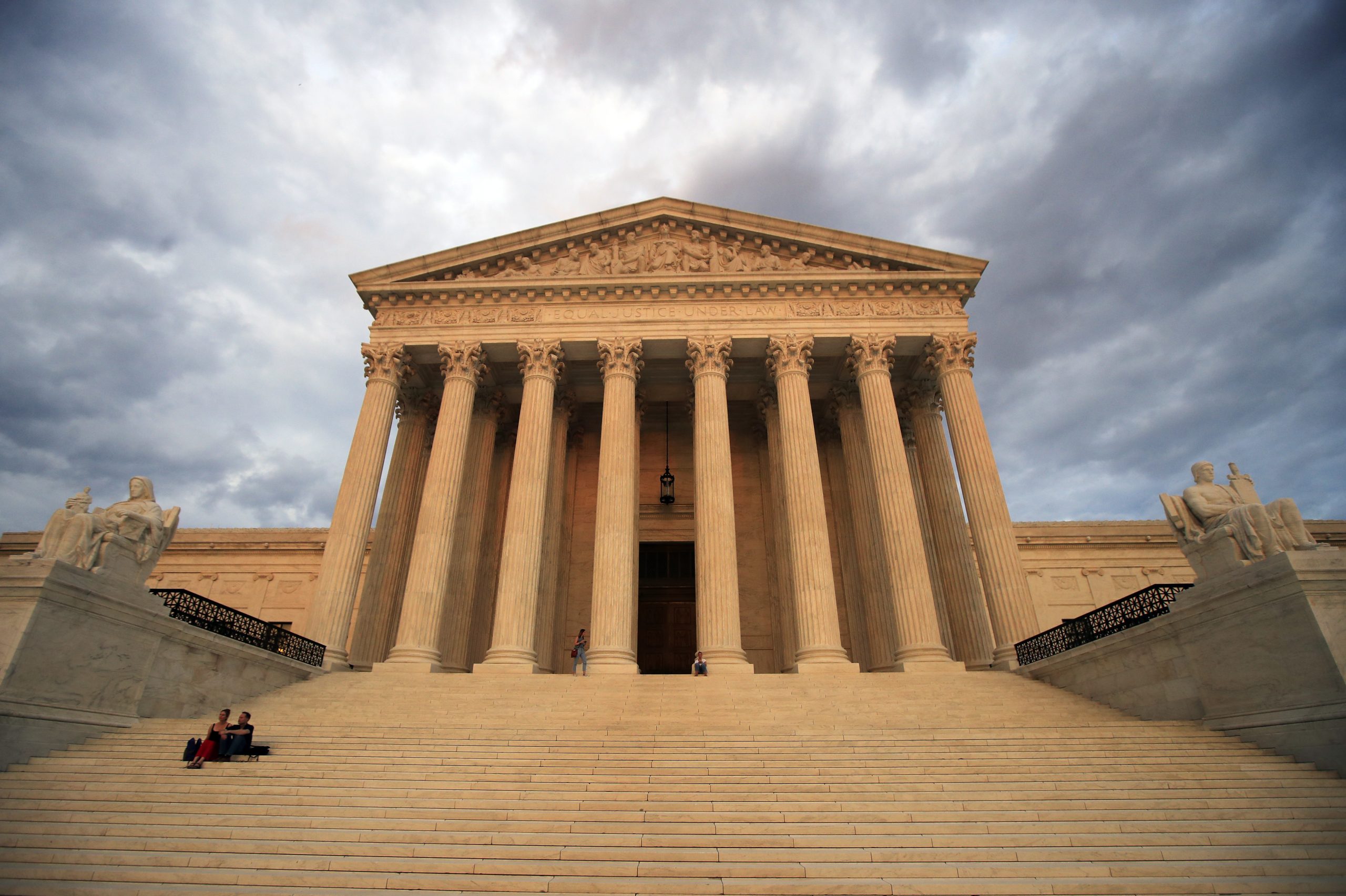
    The Supreme Court over the next two weeks will hear two cases that have the potential to erode the separation of church and state and create a seismic shift in public education.

    Mahmoud v. Taylor, which goes before the court on April 22, pits Muslim, Roman Catholic and Ukrainian Orthodox families, as well as those of other faiths, against the Montgomery County school system in Maryland. The parents argue that the school system violated their First Amendment right of free exercise of religion by refusing to let them opt their children out of lessons using LGBTQ+ books. The content of the books, the parents say, goes against their religious beliefs.

    Oklahoma Statewide Charter School Board v. Drummond, which will be argued on April 30, addresses whether the St. Isidore of Seville Virtual Charter School should be allowed to exist as a public charter school in Oklahoma. The Archdiocese of Oklahoma City and the Diocese of Tulsa had won approval for the charter school from the state charter board despite acknowledging that St. Isidore would participate “in the evangelizing mission of the Church.”

    The state’s attorney general, Gentner Drummond, later overruled the approval, saying the school could not be a charter because charter schools must be public and nonsectarian. The petitioners sued and ultimately appealed to the Supreme Court, claiming Drummond violated the First Amendment’s free exercise clause by prohibiting a religious entity from participating in a public program.

    Teachers unions, parents groups and organizations advocating for the separation of church and state have said that rulings in favor of the plaintiffs could open the door for all types of religious programs to become part of public schooling and give parents veto rights on what is taught. In the most extreme scenario, they say, the rulings could lead to the dismantling of public education and essentially allow public schools to be Sunday schools.

    Related: A lot goes on in classrooms from kindergarten to high school. Keep up with our free weekly newsletter on K-12 education.

    At issue in both cases is the question of whether the First Amendment rights of parents and religious institutions to the free exercise of religion can supersede the other part of the amendment, the establishment clause, which calls for the separation of church and state.

    “I think a chill wind is blowing, and public education as we know it is in extreme jeopardy of becoming religious education and ceasing to exist,” said Rachel Laser, president of Americans United for Separation of Church and State, an advocacy organization that has filed an amicus brief in the St. Isidore case. “The whole idea is to have churches take control of education for American children. It’s about money and power.”

    For some conservative lawmakers, evangelical Christian groups and law firms lobbying for more religiosity in the public square, decisions in the petitioners’ favor would mean religious parents get what they have long been owed — the option of sending their children to publicly funded religious schools and the right to opt out of instruction that clashes with their religious beliefs.

    “If we win this case, it opens up school choice across the country,” said Mathew Staver, founder of Liberty Counsel, an Orlando, Florida-based conservative Christian legal firm that has filed a brief supporting the petitioners in both cases. “I see school choice as a reaction to the failed system in the public schools, which is failing both in academia but also failing in the sense they are pushing ideology that undermines the parents and their relationship with their children.”

    By taking the cases, the Supreme Court once again inserts itself in ongoing culture wars in the nation, which have been elevated by presidential orders threatening to take away funding if schools push diversity, equity and inclusion initiatives and state laws banning teaching on various controversial subjects. Legal scholars predict that the Supreme Court will lean toward allowing St. Isidore and the opt-outs for parents because of how the justices ruled in three cases between 2017 and 2022. In each case, the justices decided that states could not discriminate against giving funds or resources to a program because it was religious.

    Related: How Oklahoma’s superintendent set off a holy war in classrooms

    Of the two cases, St. Isidore likely could have the greatest impact because it is attempting to change the very definition of a public school, say opponents of the school’s bid for charter status. Since charter schools first started in the 1990s, they have been defined as public and nonsectarian in each of the 46 state statutes allowing them, according to officials at the National Alliance for Public Charter Schools. Today, charter schools operate in 44 states, Guam, Puerto Rico and Washington, D.C., and serve roughly 7.6 percent of all public school students.

    “It would be a huge sea change if the court were to hold they were private entities and not public schools bound by the U.S. Constitution’s establishment clause,” said Rob Reed, the alliance’s vice president of legal affairs.

    A victory for St. Isidore could lead to religious-based programs seeping into several aspects of public schooling, said Steven Green, a professor of both law and history and religious studies at Willamette University in Salem, Oregon.

    “The ramification is that every single time a school district does some kind of contracting for any kind of service or curricular issues, you’re going to find religious providers who will make the claim, ‘You have to give me an opportunity, too,’” Green said.

    St. Isidore’s appeal to the Supreme Court is part of an increasing push by the religious right to use public funds for religious education, said Josh Cowen, a professor of education policy at Michigan State University and author of a 2024 book on school vouchers. Because of previous court decisions, several voucher programs across the country already allow parents to use public money to send their children to religious schools, he said.

    “What’s going to happen if the court says a public school can be run by a religious provider?” Cowen asked. “It almost turns 180 degrees the rule that voucher systems play by right now. Right now, they’re just taking a check. They’re not public entities.”

    The effect of a St. Isidore victory could be devastating, he added. “It would be one more slippery slope to really kicking down the wall between church and state,” Cowen said.

    Related: Inside the Christian legal campaign to return prayer to public schools

    Jim Campbell, chief legal counsel for Alliance Defending Freedom, which is representing St. Isidore’s bid to become a charter, discounted the idea that a St. Isidore win would fundamentally change public schools. Like Staver, he views St. Isidore as simply providing another parental option. “We’re not asking the state to run a religious school,” Campbell said. “These are private entities that run the schools. This is a private organization participating in a publicly funded program.”

    Opponents of religious charter schools question whether St. Isidore would have to play by the same rules as public schools.

    “How are they going to handle it when there’s a teacher who has a lifestyle that doesn’t align with Catholic school teaching? They’re talking out of both sides of the mouth,” said Erika Wright, an Oklahoma parent and plaintiff in a lawsuit protesting a Bible in the classroom mandate by Oklahoma’s state superintendent of instruction. She also joined an amicus brief against St. Isidore’s formation.

    “As a taxpayer, I should not be forced to fund religious instruction, whether it’s through a religious charter school or a Bible mandate,” Wright said. “I shouldn’t be forced to fund religious indoctrination that doesn’t align with my family’s personal beliefs.”

    Notably, in the Montgomery County parents’ case going before the court, parents use similar reasoning to support their right to opt out of instruction. “A school ‘burdens’ parents’ religious beliefs when it forces their children to undergo classroom instruction about gender and sexuality at odds with their religious convictions,” the parents’ brief said.

    The school district in 2022 adopted several books with LGBTQ+ themes and characters as part of the elementary language arts curriculum. Initially, families were allowed to opt out. But then the school system reversed its policy, saying too many students were absent during the lessons and keeping track of the opt-outs was too cumbersome. The reversal led to the lawsuit.

    Historically, school districts have given limited opt-outs to parents who, for example, do not want their child to read a particular book, but the Montgomery County parents’ request is broader, said Charles C. Haynes, a First Amendment expert and senior fellow for religious liberty at the Freedom Forum in Washington, D.C. The parents are asking to exclude their children from significant parts of the curriculum for religious reasons.

    “If the court sides with the parents, I think the next day, you’re going to have parents across the country saying, ‘I want my kids to opt out of all the references to fill-in-the-blank.’ … It would change the dynamic between public schools and parents overnight,” Haynes said.

    Related: Tracking Trump: His actions to abolish the Education Department, and more

    Sarah Brannen, author of “Uncle Bobby’s Wedding,” one of the LGBTQ+ books Montgomery County schools adopted, sees major logistical issues if the school system loses. “Allowing parents to interfere in the minutia of the curriculum would make their already difficult jobs impossible,” she said.

    Colten Stanberry, a lawyer with the Becket Fund for Religious Liberty representing the Montgomery County parents, disagreed. School systems manage to balance different student needs all the time, he said.

    A triumph for the Montgomery County families and St. Isidore would cause much more than logistical issues, said Becky Pringle, president of the National Education Association. It could lead to a public education system where parents can pick a school based on religious beliefs or try to change a traditional public school’s curriculum by opting out of lessons in droves.

    “For us to be a strong democracy, then we necessarily need to learn about all of us. To separate us flies in the face of why we were founded,” Pringle said.

    This story about church and state was produced by The Hechinger Report, a nonprofit, independent news organization focused on inequality and innovation in education. Sign up for the Hechinger newsletter.

    The Hechinger Report provides in-depth, fact-based, unbiased reporting on education that is free to all readers. But that doesn’t mean it’s free to produce. Our work keeps educators and the public informed about pressing issues at schools and on campuses throughout the country. We tell the whole story, even when the details are inconvenient. Help us keep doing that.

    Join us today.

    Source link

  • COLUMN: Trump is bullying, blackmailing and threatening colleges, and they are just beginning to fight back

    COLUMN: Trump is bullying, blackmailing and threatening colleges, and they are just beginning to fight back

    Patricia McGuire has always been an outspoken advocate for her students at Trinity Washington University, a small, Catholic institution that serves largely Black and Hispanic women, just a few miles from the White House. She’s also criticized what she calls “the Trump administration’s wholesale assault on freedom of speech and human rights.”

    In her 36 years as president, though, McGuire told me, she has never felt so isolated, a lonely voice challenging an agenda she believes “demands a vigorous and loud response from all of higher education. “

    It got a little bit louder this week, after Harvard University President Alan Garber refused to capitulate to Trump’s demands that it overhaul its operations, hiring and admissions. Trump is now calling on the IRS to rescind Harvard’s tax-exempt status.

    The epic and unprecedented battle with Harvard is part of Trump’s push to remake higher education and attack elite schools, beginning with his insistence that Harvard address allegations of antisemitism, stemming from campus protests related to Israel’s bombardment of Gaza following attacks by Hamas in October 2023.

    Related: Become a lifelong learner. Subscribe to our free weekly newsletter featuring the most important stories in education.

    Garber responded that “no government — regardless of which party is in power — should dictate what private universities can teach, whom they can admit and hire, and which areas of study and inquiry they can pursue” — words that Harvard faculty, students and others in higher education had been urging him to say for weeks. Students and faculty at Brown and Yale are asking their presidents to speak out as well.

    Many hope it is the beginning of a new resistance in higher education. “Harvard’s move gives others permission to come out on the ice a little,” McGuire said. “This is an answer to the tepid and vacillating presidents who said they don’t want to draw attention to themselves.”

    Harvard paved the way for other institutions to stand up to the administration’s demands, Ted Mitchell, president of the American Council on Education, noted in an interview with NPR this week.

    Stanford University President Jonathan Levin immediately backed Harvard, noting that “the way to bring about constructive change is not by destroying the nation’s capacity for scientific research, or through the government taking command of a private institution.”

    Former President Barack Obama on Monday urged others to follow suit.

    A minuscule number of college leaders had spoken out before Harvard’s Garber, including Michael Gavin, president of Delta College, a community college in Michigan; Princeton University’s president, Christopher Eisgruber; Danielle Holley of Mount Holyoke; and SUNY Chancellor John B. King Jr. Of more than 70 prominent higher education leaders who signed a petition circulated Tuesday supporting Garber, only a handful were current college presidents, including Michael Roth of Wesleyan, Susan Poser of Hofstra, Alison Byerly of Carleton, David Fithian of Clark University, Jonathan Holloway of Rutgers University and Laura Walker of Bennington College.

    Speaking out and opposing Trump is not without consequences: The president retaliated against Harvard by freezing $2.2 billion in grants and $60 million in contracts to Harvard.

    Related: For our republic to survive, education leaders must remain firm in the face of authoritarianism

    Many higher ed leaders think it’s going to take a bigger, collective effort fight for everything that U.S. higher education stands for, including those with more influence than Trinity Washington, which has no federal grants and an endowment of just $30 million. It’s also filled with students working their way through school.

    About 15 percent are undocumented and live in constant fear of being deported under Trump policies, McGuire told me. “We need the elites out there because they have the clout and the financial strength the rest of us don’t have,” she said. “Trinity is not on anyone’s radar.”

    Some schools are pushing back against Trump’s immigration policies, hoping to protect their international and undocumented students. Occidental College President Tom Stritikus is among the college presidents who signed an amicus brief this month detailing concerns about the administration’s revocation of student and faculty visas and the arrest and detention of students based on campus advocacy.

    “I think the real concern is the fear and instability that our students are experiencing. It is just heartbreaking to me,” Stritikus told me. He also spoke of the need for “collective action” among colleges and the associations that support them.

    Related: Tracking Trump: His actions to abolish the Education Department, and more

    The fear is real: More than 210 colleges and universities have identified 1,400-plus international students and recent graduates who have had their legal status changed by the State Department, according to Inside Higher Ed. Stritikus said Occidental is providing resources, training sessions and guidance for student and faculty.

    Many students, he said, would like him to do more. “When I’m around students, I’m more optimistic for our future,” Stritikus said. “Our higher education system has been the envy of the world for a very long time. Clearly these threats to institutional autonomy, freedom of expression and the civil rights of our community put all that risk.”

    Back at Trinity Washington, McGuire said she will continue to make calls, talk to other college presidents and encourage them to take a stronger stand.

    “I tell them, you will never regret doing what is right, but if you allow yourself to be co-opted, you will have regret that you caved to a dictator who doesn’t care about you or your institution.”

    Contact Liz Willen at [email protected]

    This story about the future of higher education was produced by The Hechinger Report, a nonprofit, independent news organization focused on inequality and innovation in education. Sign up for the Hechinger newsletter.

    The Hechinger Report provides in-depth, fact-based, unbiased reporting on education that is free to all readers. But that doesn’t mean it’s free to produce. Our work keeps educators and the public informed about pressing issues at schools and on campuses throughout the country. We tell the whole story, even when the details are inconvenient. Help us keep doing that.

    Join us today.

    Source link

  • Banks to waive HECS-HELP loans in mortgage applications – Campus Review

    Banks to waive HECS-HELP loans in mortgage applications – Campus Review

    People with student debt can now borrow more for a house as new government guidance filters through to the banks.

    Please login below to view content or subscribe now.

    Membership Login

    Source link

  • Podcast: Easter special | Wonkhe

    Podcast: Easter special | Wonkhe

    This week on the podcast it’s our Easter special – and we’re diving into the highlights from The Secret Life of Students, our event that looked at a new vision for the student experience.

    We hear from student officers, sector experts, and campaigners on everything from the myth of the full-time model, to the pressures of placements, to the problems faced by international students. There’s testimony from nursing students, fire from SU officers challenging tokenistic consultation, and reflections on race, identity, and institutional indifference. Plus we zoom out to explore commuter challenges, disabled students, student cities and the global call for student solidarity. Hosted by Jim Dickinson, Associate Editor at Wonkhe.


    Source link

  • Concern Dutton will push American-style crackdown on “woke” universities – Campus Review

    Concern Dutton will push American-style crackdown on “woke” universities – Campus Review

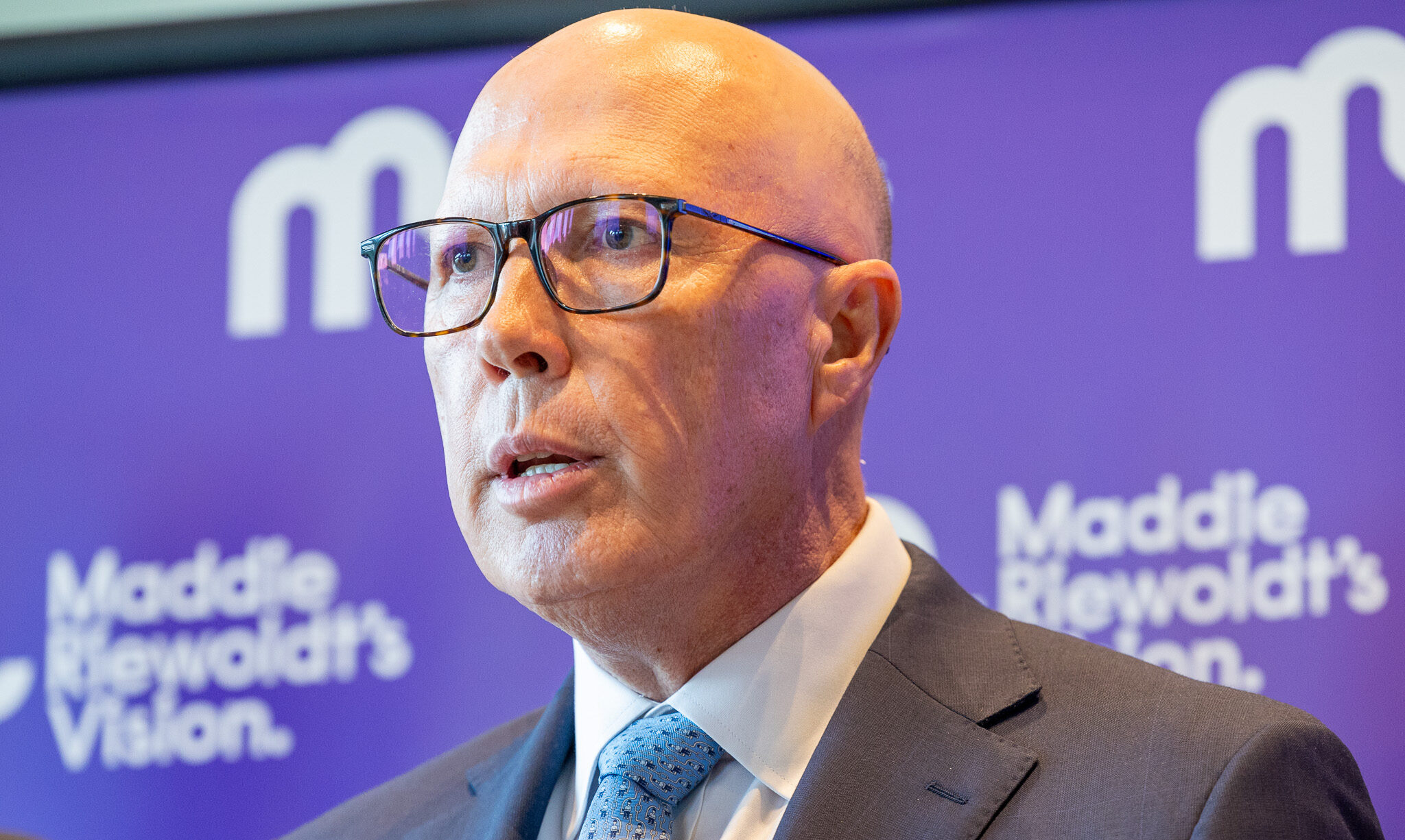
    The Coalition has warned it would use university regulator levers to review university degree course content to check for “woke” teaching if elected, leading Labor to draw parallels between Peter Dutton and Donald Trump.

    Please login below to view content or subscribe now.

    Membership Login

    Source link

  • The politics of universities, defence, and R&D spending

    The politics of universities, defence, and R&D spending

    Rachel Reeves’ Spring Statement had little in it for the sector to celebrate.

    The Office for Budget Responsibility,(who provide independent analysis of the country’s finances), downgraded 2025 growth forecasts from two per cent to one per cent.

    For all the flurry of pro-growth activity since the election, the growth outlook to 2029 is basically unchanged. Economic growth and the much desired fiscal headroom (which gives the Government capacity for extra spending) still seem unlikely to materialise.

    For universities who are hoping for a crumb of additional funding at some point in the future, there was nothing to settle their nerves about the increasingly difficult financial position the Government finds itself in.

    Winners and losers

    It’s safe to say that some sectors are doing better than others. Defence is clearly one of the winners. Starmer’s commitment to increase defense spending (made before the Spring Statement) to 2.5 per cent of GDP from April 2027 was a significant one. The measures taken to generate the fiscal headroom to pay for it- particularly cutting overseas development aid, and slashing welfare budgets – were not particularly popular ones. This is not an era of win-win policy choices – but boosting defence spending is a critical part of what Starmer’s government sees as a core responsibility: to position Britain as a steady hand in an unstable world.

    The continuation of the war in Ukraine, renewed conflict in the middle east, and a second Trump presidency, renewed trade wars and global volatility all point towards this being the difficult but correct choice to make.

    A significant uplift to its budget is the sort of things the higher education sector can only dream of. The increase to defence spending is not only massive, it’s also moderately popular. In a new Public First/Stonehaven poll, which looked at the trade offs the Government will need to make in the current era of hard choices, we found it which has moderate public support: 57 per cent back the uplift.

    There is an opportunity for the higher education sector here that they may be reluctant to take. Universities are a relatively silent partner in the UK’s defense capabilities, despite the fact this is a clear area of opportunity. Defense companies are increasingly avoiding campuses for graduate recruitment after a rising wave of student protests – the Times reported that 20 companies have been advised against attending on campus events because of security fears.

    Who will defend the defenders?

    Many universities are trying to balance their industrial R&D and skills partnerships with the defense sector with a growing generational divide in attitudes towards the defense industry. Negative perceptions of the defense sector are particularly entrenched among Gen Z. Just under a fifth (17 per cent) of the general population say that they would be ashamed to work for the defense industry – but this rises to 31 per cent of 18-24 year olds. Nearly a third of 18-34 year olds say their friends would judge them if they worked in the defense industry. Going too hard on defence and being seen to be doing too much may risk a knock-on impact on student recruitment.

    The increased investment in defense and security isn’t just about more soldiers and sailors and more ships and planes. It includes commitments on research and skills, and a ringfenced post of 10 per cent of the uplift for “novel technologies”. Increasingly, the Ministry of Defence (MoD) will become a major strategic procurer and funder in advanced research and development across the UK, which presents an increasingly rare and hard won opportunity for UK universities – and one where the public opinion is more balanced.

    Talking about the role for university led R&D which boosts national security is a reputation win for the sector as a whole. In our large-scale research with the Campaign for Science and Engineering, which explored what the UK public think and feel about R&D, we found a strong preference for investment in new defensive technologies over more military personnel – a view broadly shared across all ages, and across the political spectrum

    When we asked what the highest priority should be to improve national security, investment in R&D was the joint second most popular option, behind tackling cyber attacks and misinformation.

    Hard choices

    The defense sector as a whole might be an unpopular thing to talk about on campus. But there is a significant government investment being made in defense spending, and a clear moral and social argument that we live in a time when increasing the capacity and capability of our national security systems is the right thing to do. We know there is broad public support for this investment going towards research and development, and that there are significant skills gaps across our defense sector, impacting our broader defense and security offering.

    In a time when politicians are making hard choices, university leaders need to be doing the same.

    The modern armed services need highly skilled graduates in a range of roles – not just as professional soldiers, sailors or pilots but also in a myriad of supporting roles such as cyber security, communications, quantum technology, logistics, engineering, advanced manufacturing, foreign languages, and diplomacy. And equally too, the government will need academics and university research labs to step up, in partnership with businesses, to help design and roll out technologies that will support this expanded defence effort. This is both an economic case and a moral case – and one that universities should seize.

    And if this is an opportunity which universities shy away from, they may be waiting a long time for the next economic windfall to come their way.

    Source link