
Category: Politics
-

Innovative Research Universities’ pre-budget wishlist
Innovative Research Universities (IRU) has asked the federal government to invest in four key areas in the next budget, due March 25.
Please login below to view content or subscribe now.
Membership Login
-
Vice-chancellor pay and “quality of governance” to be scrutinised by Senate inquiry
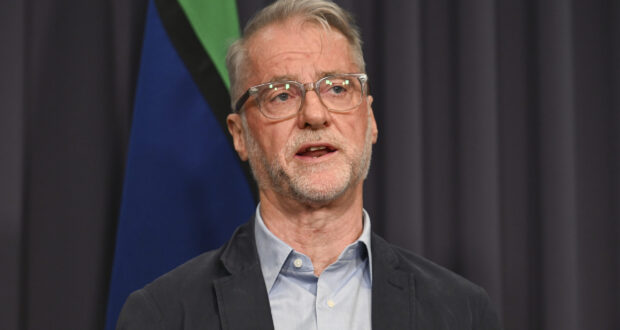
Labor Senator Tony Sheldon is chair of the Senate Committee on Education and Employment. Picture: Martin Ollman
Australia’s vice-chancellors will be questioned about their pay packages, instances of wage underpayment, and the use of external consultants in a new parliamentary inquiry into the quality of university governance.
Please login below to view content or subscribe now.
Membership Login
-
Would you sell your country to Trump?
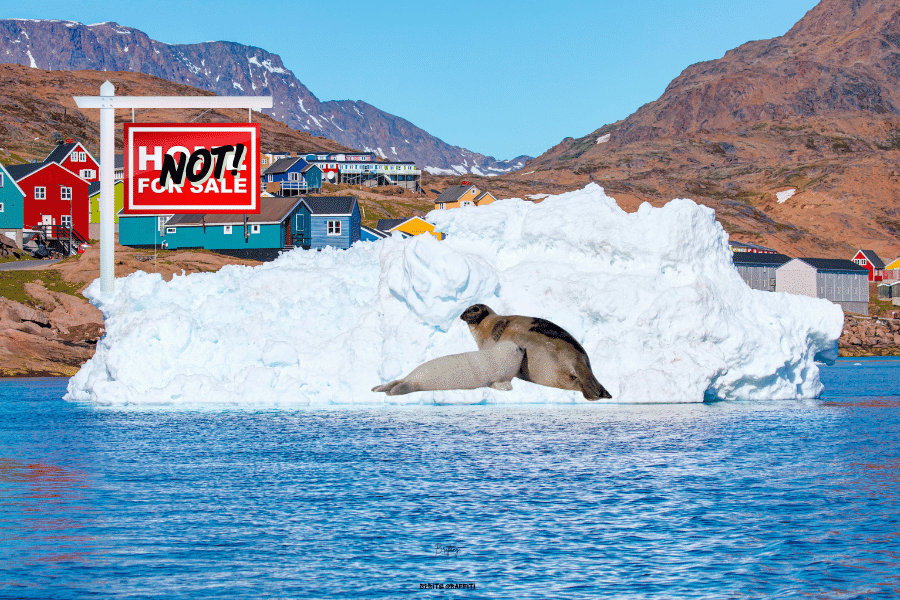
Greenland is three times the size of the U.S. state of Texas, making it the world’s largest island if you don’t count the continent of Australia.
It sits on critical rare earth minerals and fossil fuel reserves. Its retreating ice, due to global warming, is opening up new trade routes and longer shipping seasons.
No wonder U.S. President Donald Trump wants it for the United States. A purchase price would be steep. Based on past purchases of territory and Greenland’s economic potential, it is estimated that the price of Greenland could be anywhere between $12.5 billion and $77 billion. And he only has to convince the 56,000 people who live there that they would prosper under U.S. rule.
Greenland is a former Danish colony that still relies heavily upon Denmark for its economy.
If Trump were able to buy it, he’d have to take it as is, and the country suffers from high rates of suicide, alcoholism and sexual abuse.
Is there art in the deal?
A Google map of Greenland.
Trump made an offer in December, called “absurd” by Danish Prime Minister Mette Frederiksen. It was the second time he broached this subject, having first spoken of it during the lead up to his first presidential term.
This time, he said he won’t rule out using economic or military force to buy the world’s biggest island based on the logic that Greenland is necessary for “national security and freedom” of the United States. Greenland and the United States are separated by about 2,289 kilometers (1,422 miles) of water between the two closest points — Grand Manan in the U.S. state of Maine and Nanortalik in Greenland.
Much of the world has been laughing at Trump’s demand but it is no laughing matter for Denmark. This week, Danish Prime Minister Mette Frederiksen visited German Chancellor Olaf Scholz, French President Emmanuel Macron and NATO General Secretary Mark Rutte, to talk about strengthening the EU’s security and defence and to further prioritise the Arctic.
In the meantime, Greenlanders are feeling their value to Denmark has risen.
Greenland was a Danish colony until 1953, when it became a self-governing region of Denmark. This means that it has its own local government and two seats in the Danish parliament. The relationship also means that Greenlanders are citizens of the European Union, with the benefits that come with that.
A fractured relationship
The relationship between Greenland and Denmark is still recovering from that colonial past. The majority of Greenlanders support full independence from Denmark despite its deep reliance on the Danish government.
Denmark is still responsible for Greenland’s foreign, security and defence policy, and provides Greenland an annual financial aid of DKK 3.9 billion (roughly €522 million), which makes up around 20% of Greenland’s gross domestic product. That’s the value of all the goods and services a country produces and it is used as a measurement of a nation’s economic health.
The scars of colonialism are still fresh for many Greenlanders. In 1953 Denmark allowed the forced relocation of an Indigenous population from the Dundas area in Greenland, for a U.S. military base. The Thule tribe had been semi-nomadic catchers in the Dundas area for thousands of years. Their relocation took place over just a few days.
Later, in the 1960s and 70s, Danish health authorities fitted thousands of Inuit women and girls the IUD contraceptive device, many without proper notification or consent. An investigation into the procedure suggests that its aim was to curb a growing population — which worked. Many of these women went on to suffer health issues due to the IUD.
Now Greenlanders are being told that their future is theirs to decide.
There’s green beneath the ice.
What does Trump want with Greenland?
Greenland’s ice sheet covers nearly 80% of the country, which is losing mass at a rate of around 200 gigatonnes per year due to climate change. That seems like an incomprehensible amount. It is the equivalent of 200 billion metric tons or, according to NASA, if you could picture it, two million fully-loaded aircraft carriers.
Trump has framed his interest in Greenland as a matter of national security and freedom. By this, he points to the island’s strategic value: its untapped reserves of rare earth minerals and fossil fuels, as well as emerging trade routes enabled by retreating ice.
Greenland’s mineral reserves are largely untouched. The island harbors significant deposits of rare earth elements, essential for various high-tech applications, including electronics, renewable energy technologies and defence systems.
Owning Greenland would ease U.S. concerns over China’s dominance in the rare earth market, with China currently controlling 70–80% of the world’s critical rare earth minerals. Acquiring access to Greenland’s mineral reserves could serve to diversify and secure the U.S. supply chain, reducing reliance on Chinese exports.
Controlling the Arctic
Exploiting Greenland’s mineral wealth still presents considerable challenges. The island’s harsh climate and limited infrastructure means large start-up costs for mining projects.
Having control over new trade routes in the Arctic is also appealing, as well as having an expanded military presence in the region to monitor Russian navy vessels and nuclear submarines.
Is it possible to buy another country?
This isn’t the first time the United States has offered to buy Greenland. In 1946, President Harry Truman offered Denmark $100 million for the island. Denmark rejected the proposal but permitted the construction of the Pituffik Space Base which is responsible for missile warning systems and monitoring of satellites in space.
But for an exchange from Greenland to the United States to happen, both Denmark and Greenland would need to agree to the sale, with an Act on Greenland Self-Government stating that the people of Greenland have a right to self-determination.
And right now, Greenlanders don’t want to be under anyone’s rule but their own.
The international news service Reuters reported 29 January that a poll commissioned by the Danish paper Berlingske, found that 87% of Greenlanders would turn down Trump’s offer and another 9% are undecided.
But they’re not telling the United States to go away. While Greenland’s Prime Minister Mute Egede said that his country is not for sale, Greenlanders are open to cooperating with the United States on defence and exploration of its minerals.
And then there’s golf. With all that melting ice, maybe Trump is picturing a fabulous par-72 resort. Right now Greenland only has two courses. Just picture those sand traps on the edge of the Arctic.
Three questions to consider:
1. How would the United States benefit from controlling Greenland?
2. What’s Greenland’s relationship with Denmark?
3. If you were a Greenlander, would you vote to become part of the United States? Why?
-
Podcast: Cuts, applications, campus climate
This week on the podcast as news of further redundancies sweeps the sector, we ask how bad things can get before the government will act or the public notice.
Plus UCAS end of cycle applications data has arrived, there’s a new report on the campus encampments, and there’s data futures news to get across.
With Alex Stanley, Vice President for Higher Education at the National Union of Students, Eve Alcock, Director of Public Affairs at the Quality Assurance Agency, James Coe, Associate Editor at Wonkhe, David Kernohan, Deputy Editor at Wonkhe and presented by Mark Leach, Editor-in-Chief at Wonkhe.
Read more
An early look at 2023–24 financial returns shows providers working hard to balance the books.
Lessons for leaders from the campus encampments.
-
What the federal freeze on spending means for education
UPDATE: After a federal judge temporarily blocked the Trump administration from freezing federal grants and loans, the White House rescinded its request that distribution of those grants and loans freeze should be paused.
A late-night directive from the White House budget office Monday that appeared to freeze streams of federal dollars that pay for everything from school lunches to university research is facing immediate legal challenges — after first stunning the education world.
“There is no question this policy is reckless, dangerous, illegal, and unconstitutional,” said New York Attorney General Leticia James, one of the first to announce a lawsuit against the Trump administration freeze. “When Congress dedicates funding for a program, the president cannot pull that funding on a whim.”
After widespread confusion, the administration clarified that some education aid would not be affected, specifying Pell Grants and federal student loans. In addition, according to Education Department spokeswoman Madi Biedermann, the pause does not affect Title I funding that supports K-12 schools with many low-income students, IDEA grants for students with disabilities or other so-called formula grants.
Many questions are still unanswered, however. What triggered the confusion: a two-page memo sent to government agencies late Monday by Matthew J. Vaeth, acting director of the White House Office of Management and Budget. It said federal agencies must pause distributing grant or loan money until after they review that spending to ensure it does not run afoul of the executive orders President Donald Trump has issued since he took office last week. Agencies have until Feb. 10 to report back on spending that runs counter to the executive orders, “including, but not limited to, financial assistance for foreign aid, nongovernmental organizations, DEI, woke gender ideology, and the green new deal.”
Related: Become a lifelong learner. Subscribe to our free weekly newsletter featuring the most important stories in education.
White House spokeswoman Karoline Leavitt later said federal money sent directly to individuals — in the form of Medicare, Social Security benefits, food stamps and welfare benefits, among other aid — also would not be affected by the pause.
Biermann, the Education spokeswoman, said the department “is working with OMB to identify other programs that are not covered by the memo.”
The Hechinger Report is working to decipher some of the effects of the pause. This article will be updated. Send your questions to [email protected].
Is Head Start affected?
The federal grant that funds early childhood programs for low-income children is not at risk under the freeze, according to a memo issued on Tuesday by the Office of Management and Budget and reported by Bloomberg News and other outlets. The clarification ended several hours of speculation and fear among advocates and program officials that the federally-funded early learning program would be cut off from funding.
Still, several Head Start providers who logged into their payment system Tuesday morning found a message that warned payments could be delayed due to “potentially unallowable grant payments,” according to The Huffington Post. But later Tuesday, the National Head Start Association said “Head Start agencies are not included in the list of federal grants and loans whose funds are frozen. Agencies have been able to access funds through the Payment Management System.”
Read more: The Hechinger Report wrote about how Head Start programs are still funded by a formula set in the 1970s.
What does this mean for Child Care and Development Block Grants (CCDBG)?
It is unclear whether the block grant — which provides federal funding for states to improve child care quality and run subsidy programs to help low income families pay for care — will be touched by the freeze. The Administration for Children and Families did not address the question in response to a request for comment.
Some early childhood experts suspect the grant will be affected, which could have repercussions for the children and programs that rely on those funds. “Trump and his administration are going out of their way — even circumventing the law — to deprive children and the people who care for them the resources they need to ensure safe and nurturing environments for our kids,” said Julie Kashen, director of women’s economic justice and senior fellow at The Century Foundation, in a statement.
Read more: The Hechinger Report examined how child care block grant funds are stretched too far to help all the families that are eligible.
What about school lunch?
School cafeterias rely on monthly payments from the federal government to cover the cost of food labor and supplies. It isn’t clear whether those payments will be affected, the School Nutrition Association, an organization that represents people who work in school cafeterias, said. It was hoping for more clarity from the U.S. Department of Agriculture. Grants do pay for other types of school food programs, such as the Farm to School Program, which incorporates local foods into school meals.
Does the pause affect student loans or Pell grants? What about federal Work Study?
Loans and Pell Grants are not affected by the funding pause because their funding goes directly to individual students, according to Biedermann, the U.S. Department of Education spokeswoman.
But Ted Mitchell, president of the American Council on Education, which represents more than 1,600 colleges and universities, told the Boston Globe that his team believes that work-study programs are included in the freeze. Many students rely on these programs to earn money to help pay for college.
What about grants for HBCUs and MSIs (Minority Serving Institutions)?
The Education Department said the freeze will not affect grant programs for historically Black colleges and universities and predominantly Black institutions, the Washington Post reported. The federal government provides these colleges with money for a host of programs, including graduate education, science programs and infrastructure.
A department spokesperson told the Post that “the administration strongly supports HBCUs and MSIs [Minority Serving Institutions]. Funds flowing under those grant programs will not be paused, but we will work to ensure the programs are in line with the President’s priorities.”
Read more: The Hechinger Report dug into schools where Pell Grant recipients have a track record of success.
This story about the federal freeze was produced by The Hechinger Report, a nonprofit, independent news organization focused on inequality and innovation in education. Sign up for the Hechinger newsletter.
-
Hoke’s Notes – The Plight of Small Colleges – Edu Alliance Journal
January 27, 2025
It has been two years since I last wrote a blog post for the Edu Alliance Journal. During that time, I took on the role of President/CEO of the American Association of University Administrators (AAUA) and dedicated myself fully to the organization. I set ambitious goals, including:
- Launching a marketing and branding campaign to elevate AAUA’s visibility,
- Increasing institutional and individual membership,
- Establishing a high-profile multi-day conference, and
- Stabilizing the organization’s finances to allow the hiring of a paid executive director.
While I initially anticipated achieving these milestones within three years, the board and I managed to accomplish them in just 18 months.
Reaching these goals was a significant achievement, and it signaled to me that it was time to focus on other priorities. As such, I submitted my resignation, effective January 1st, and “retired” from my leadership role at AAUA. However, I’ve always felt that retirement, in the traditional sense, isn’t for me. At 74, I still have ideas to share and contributions to make in the field of higher education.
I aim to address several projects and issues moving forward, such as returning to my work as an international higher education consultant and re-launching two podcast series. However, one other area is especially close to my heart: the plight of small colleges.
The Plight of Small Colleges
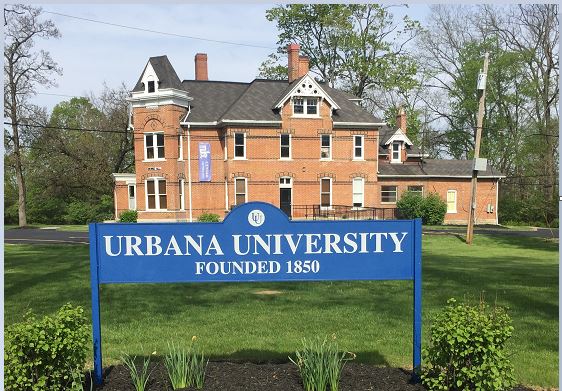
If you’ve followed my journey, you know that I earned my undergraduate degree from Urbana University, a small private college in Urbana, Ohio—a city with a current population of 11,161. In 1975, I designed my own major in College Administration, combining courses in business, history/political science, and psychology. During my senior year, I also completed a year-long internship in admissions.
As a nontraditional student (having started at the University of Dayton in 1968), it took me 6 ½ years and over 30 part-time jobs to complete my degree. Urbana gave me the opportunity to figure out what I wanted to do and how I could contribute to the world. It taught me adaptability and the goodness in people, which led me to the field I love—higher education.
Unfortunately, Urbana University didn’t survive. After being acquired by Franklin College in 2014, it closed its doors in May 2020 due to challenges brought on by the coronavirus pandemic and years of low enrollment.
Urbana had been an integral part of the community since 1850, serving as a significant economic engine. A 2017 study by the Southwestern Ohio Council for Higher Education estimated that Urbana contributed over $60 million annually to the economies of Champaign and Logan counties and employed 111 full-time staff during the 2015-2016 academic year. Its closure was devastating—not only for the university but also for the local businesses that depended on the foot traffic of students, visitors, and sports spectators.
Rural colleges like Urbana serve as vital economic and social hubs for their communities. However, the increasing trend of college closures poses significant risks, including economic downturns, reduced social engagement, and the loss of cultural identity.
Moving Forward
To address this issue, I’m developing a funding proposal to analyze the multifaceted impacts of struggling colleges in rural areas. My goal is to propose actionable solutions and share findings that empower policymakers and community leaders. By combining innovative research, advocacy, and problem-solving, this initiative seeks to provide practical tools for fostering resilient rural communities.
The research will focus on rural communities in Indiana, Ohio, and Pennsylvania. I’ve already received encouragement from regional leaders and am optimistic about finding partners to support this initiative. I’m seeking foundations, corporations, and government agencies to help fund this project, which aims to mitigate the ripple effects of college closures in rural America.
If you have thoughts or suggestions on this topic—or know of potential funders—please feel free to contact me at [email protected].
Stay tuned for updates on this and other projects I’m passionate about.
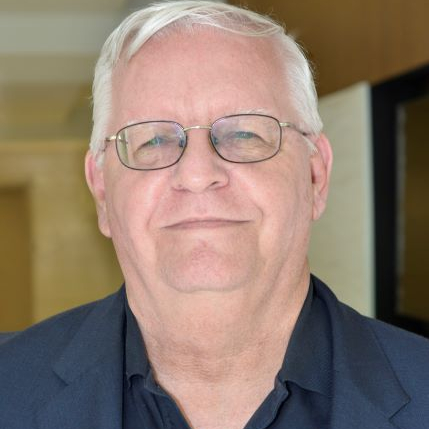
Dean Hoke is Co-Founder and Managing Partner of Edu Alliance, an international higher education consultancy and podcast co-host of Higher Ed Without Borders and Small College America. He recently served as President/CEO of the American Association of University Administrators.
Dean began his professional career in 1975 with Bellarmine University, working in a variety of roles, including Admissions and External Relations. In 1983, he entered the broadcasting field, serving as a senior executive for Public Broadcasting System stations and a cable network. In 1998, he co-founded The Connected Learning Network, a full-service online learning company. In 2009, he accepted an invitation to move to the United Arab Emirates, serving in senior positions at Higher Colleges of Technology and Khalifa University before co-founding Edu Alliance in Abu Dhabi in 2014.
Hoke is passionate about advancing academic excellence and innovation worldwide. He participates in numerous advisory and consulting projects on international branch campuses, marketing/branding, and business intelligence. Dean has consulted, presented, and written on leadership, higher education, and distance learning in the United States, Bahrain, Kazakhstan, Lebanon, Oman, Nigeria, Spain, and the United Arab Emirates.
Hoke has a B.A. from Urbana University, an M.S. from the University of Louisville, and a Certificate in Executive Management from the University of Pennsylvania Wharton School. Dean currently resides in Bloomington, Indiana.
-
Podcast: Funding, attendance, student hardship
This week on the podcast Minister of State for Skills Jacqui Smith helped launch a pamphlet on whether universities are “worth it” – and was notably cold on extra money. But does she mean outlay or eventual return to the Treasury?
Plus there’s changes afoot in Scotland, UKVI is cracking down on attendance for international students and students are still feeling the pinch financially – is a return to maintenance grants a lost possibility?
With Ben Vulliamy, Executive Director at the Association of Heads of University Administration, Dani Payne, Senior Researcher at the Social Market Foundation, Michael Salmon, News Editor at Wonkhe and presented by Jim Dickinson, Associate Editor at Wonkhe.
Read more
Jacqui Smith rules out (much) more money while her department assesses the impacts
The Scottish government wants its own post-study work offer
A new funding body landscape emerges in Scotland
UKVI is tightening the rules on international student attendance
Higher education should lift students out of poverty – not trap them within it
-
What nations have the strongest democracies?
In my capacity as a globetrotting Asianist, I frequently encounter people from the United States who want to brag about democracy. They are often surprised to discover how healthy it is in many Asian countries.
The United States as the world’s longest standing democracy stands in contrast with its great geopolitical rival, China, one of the world’s most authoritarian political regimes. The U.S. Constitution came into effect in 1789, and famously begins with “We the people…” affirming that a government must serve its citizens.
What’s more, U.S. law declares the promotion and protection of democracy, human rights and fundamental freedoms to be “principal” and “fundamental” goals of U.S. foreign policy.
But over the years, politics has evolved across both sides of the Pacific Ocean. By the measure of democracy set by the Economist Intelligence Unit (EIU) the United States now falls short.
The EIU considers it a “flawed democracy” and ranks it 29th out of the 167 jurisdictions surveyed. The demotion from “full democracy” to a “flawed democracy” came in 2016, the year Donald Trump was elected to his first term as president.
The EIU assesses democracy worldwide based on five criteria: electoral process and pluralism, functioning of government, political participation, political culture and civil liberties. In other words, there is a lot more to democracy than simply having elections.
Measuring democracy by world standards
In this context, the United States scores poorly for its political culture. “The U.S. score is weighed down by intense political and cultural polarisation,” its report noted. “Social cohesion and consensus have collapsed in recent years as disagreements over an expanding list of issues have fuelled the country’s ‘culture wars’.”
Fault lines have deepened in particular over LGBTQ+ rights, climate policy and reproductive health.
Polarisation has long compromised the functioning of government in the United States and the country’s score for this category is also particularly low.
“Pluralism and competing alternatives are essential for a functioning democracy, but differences of opinion in the U.S. have hardened into political sectarianism and almost permanent institutional gridlock,” the EIU reported.
Freedom House, a think tank which analyses freedom across the world, has also observed that democratic institutions in the United States have eroded. It cites: “Rising political polarisation and extremism, partisan pressure on the electoral process, mistreatment and dysfunction in the criminal justice and immigration systems and growing disparities in wealth, economic opportunity and political influence.”
Democracy in Asia and the Pacific
Across the Pacific, we find five “full democracies”: Australia, Japan, South Korea, New Zealand and Taiwan, although the EIU’s report preceded the current political turmoil in South Korea. The region also has 10 “flawed democracies,” including Malaysia, India, The Philippines and Indonesia.
Singapore, a country which is often criticised for its soft authoritarian political system, is also assessed to be a flawed democracy. But there can be little doubt about the government’s effectiveness in delivering services to its citizens. Singapore’s technocratic and managerial style governance have generated one of the world’s most prosperous and efficient economies.
Its GDP per capita, which is a way of measuring the economic wellbeing of a country, is $148,000 — among the very highest in the world, and ahead of the United States, Germany or Japan.
When it comes to economic freedom, Singapore leads the world according to the Heritage Foundation, while the United States ranks a mere 25th out of the 176 jurisdictions surveyed. Other Asia-Pacific economies which rank well are Taiwan (4th) New Zealand (6th), Australia (13th) and South Korea (14th).
Human capital has long been a key ingredient in Singapore’s economic success story. Singapore’s students topped the OECD’s 2022 Programme for Student Assessment which assessed the capabilities for 15-year-old students from 81 countries and economies for reading, science and maths. Indeed, Japan and South Korea are also ranked in the top 10 countries. The United States was ranked 34th with a similar score to Vietnam.
Education is key to democracy.
When it comes to universities, the United States is still the world leader, with the Massachusetts Institute of Technology, Harvard University, Princeton University, Stanford University, the California Institute of Technology, the University of California, Berkeley and Yale University all being ranked in the top 10 by Times Higher Education.
But Asian universities are now climbing the ladder, with China’s Tsinghua University now number 12, Peking University 13th, National University of Singapore 17th, the University of Tokyo 28th and Nanyang Technological University Singapore 30th.
Asian citizens also enjoy much higher life expectancies than U.S. citizens or those of most other developed countries. Hong Kong tops the list of the world’s highest life expectancy at 86 years, with Japan, South Korea, Australia and Singapore all being in the top 10.
In comparison, the United States ranks just 48th in the world; Americans live on average some six years less than Hong Kongers.
And while Singapore and many other Asian countries are notorious for restrictions on personal freedoms, the trade-off is a safe society and an efficient economy. For example, Singapore is estimated by research group Numbeo to have a much better crime index and safety scale than the United States or France.
No monopoly on democratic values
My American friends seem insistent that their open and free-wheeling society represents a unique source of creativity and innovation.
There is no doubt some truth in this perception — U.S. companies dominate Forbes list of the world’s most innovative companies. At the same time, companies from India, South Korea, Indonesia, Thailand, China and Japan are now climbing up the Forbes list.
And while Switzerland, Sweden and the United States might top the Global Innovation Index, Singapore, South Korea, China and Japan are not far behind.
Comparing the quality of democracy and governance is a complex exercise, something that a short article like this cannot sufficiently tackle.
But it is clear, based on a number of factors, that many Asian countries are doing quite well in developing systems of democracy and governance. The United States faces many deep challenges in contrast and could draw lessons from its Asian friends across the ocean.
Three questions to consider:
1. What is one common measure of democracy?
2. In what way does the United States fall short on measures of democratic strength?
3. What do you think is the most important characteristic of a democracy?
-
Podcast: Free speech, uni finances, regional inequality
This week on the podcast the government is to press on with implementing parts of the Higher Education (Freedom of Speech) Act 2023 while seeking to repeal others – we discuss what will (and should) happen next.
Plus there’s a report on more resilient and sustainable higher education finances, and NEON has been looking at regional inequality in university admissions.
With Richard Sykes, Partner at Mills & Reeve, Paul Greatrix, HE expert and until recently Registrar at the University of Nottingham, Debbie McVitty, Editor at Wonkhe and presented by Mark Leach, Editor-in-Chief at Wonkhe.
Read more
Bridget Phillipson reaffirms commitment to free speech
Resolving the tensions in campus culture requires leadership from within
Connect more: creating the conditions for a more resilient and sustainable HE sector in England
New NEON research shows widening regional inequalities in university admission for poorer students
Widening access needs more flexibility
You can subscribe to the podcast on Acast, Amazon Music, Apple Podcasts, Spotify, Deezer, RadioPublic, Podchaser, Castbox, Player FM, Stitcher, TuneIn, Luminary or via your favourite app with the RSS feed.
