Category: Politics

  • What research says about Mamdani and Cuomo’s education proposals

    What research says about Mamdani and Cuomo’s education proposals

    by Jill Barshay, The Hechinger Report
    November 3, 2025

    New York City, where I live, will elect a new mayor Tuesday, Nov. 4. The two front runners — state lawmaker Zohran Mamdani, the Democratic nominee, and former Gov. Andrew Cuomo, running as an independent — have largely ignored the city’s biggest single budget item: education. 

    One exception has been gifted education, which has generated a sharp debate between the two candidates. The controversy is over a tiny fraction of the student population. Only 18,000 students are in the city’s gifted and talented program out of more than 900,000 public school students. (Another 20,000 students attend the city’s elite exam-entrance high schools.) 

    But New Yorkers are understandably passionate about getting their kids into these “gated” classrooms, which have some of the best teachers in the city. Meanwhile, the racial composition of these separate (some say segregated) classes — disproportionately white and Asian — is shameful. Even many advocates of gifted education recognize that reform is needed. 

    Related: Our free weekly newsletter alerts you to what research says about schools and classrooms.

    Mamdani wants to end gifted programs for kindergarteners and wait until third grade to identify advanced students. Cuomo wants to expand gifted education and open up more seats for more children. 

    The primary justification for gifted programs is that some children learn so quickly that they need separate classrooms to progress at an accelerated pace. 

    But studies have found that students in gifted classrooms are not learning faster than their general education peers. And analyses of curricula show that many gifted classes don’t actually teach more advanced material; they simply group mostly white and Asian students together without raising academic rigor.

    In my reporting, I have found that researchers question whether we can accurately spot giftedness in 4- or 5-year-olds. My colleague Sarah Carr recently wrote about the many methods that have been used to try to identify young children with high potential, and how the science underpinning them is shaky. In addition, true giftedness is often domain-specific — a child might be advanced in math but not in reading, or vice versa — yet New York City’s system labels or excludes children globally rather than by subject. 

    Because of New York City’s size — it’s the nation’s largest public school system, even larger than 30 states — what happens here matters.

    Policy implications

    • Delaying identification until later grades, when cognitive profiles are clearer, could improve accuracy in picking students. 
    • Reforming the curriculum to make sure that gifted classes are truly advanced would make it easier to justify having them. 
    • Educators could consider ways for children to accelerate in a single subject — perhaps by moving up a grade in math or English classes. 
    • How to desegregate these classrooms, and make their racial/ethnic composition less lopsided, remains elusive.

    I’ve covered these questions before. Read my columns on gifted education:

    Size isn’t everything

    Another important issue in this election is class size. Under a 2022 state law, New York City must reduce class sizes to no more than 20 students in grades K-3 by 2028. (The cap will be 23 students per class in grades 4-8 and 25 students per class in high school.) To meet that mandate, the city will need to hire an estimated 18,000 new teachers.

    During the campaign, Mamdani said he would subsidize teacher training, offering tuition aid in exchange for a three-year commitment to teach in the city’s public schools. The idea isn’t unreasonable, but it’s modest — only $12 million a year, expected to produce about 1,000 additional teachers annually. That’s a small fraction of what’s needed.

    The bigger problem may be the law itself: Schools lack both physical space and enough qualified teachers. What parents want — small classes led by excellent, experienced educators — isn’t something the city can scale quickly. Hiring thousands of novices may not improve learning much, and will make the job of school principal, who must make all these hires, even harder.

    For more on the research behind class-size reductions, see my earlier columns:

    Contact staff writer Jill Barshay at 212-678-3595, jillbarshay.35 on Signal, or [email protected].

    This story about education issues in the New York City mayoral election was produced by The Hechinger Report, a nonprofit, independent news organization focused on inequality and innovation in education. Sign up for Proof Points and other Hechinger newsletters.

    This <a target=”_blank” href=”https://hechingerreport.org/proof-points-nyc-mayor-election-education/”>article</a> first appeared on <a target=”_blank” href=”https://hechingerreport.org”>The Hechinger Report</a> and is republished here under a <a target=”_blank” href=”https://creativecommons.org/licenses/by-nc-nd/4.0/”>Creative Commons Attribution-NonCommercial-NoDerivatives 4.0 International License</a>.<img src=”https://i0.wp.com/hechingerreport.org/wp-content/uploads/2018/06/cropped-favicon.jpg?fit=150%2C150&amp;ssl=1″ style=”width:1em;height:1em;margin-left:10px;”>

    <img id=”republication-tracker-tool-source” src=”https://hechingerreport.org/?republication-pixel=true&post=113202&amp;ga4=G-03KPHXDF3H” style=”width:1px;height:1px;”><script> PARSELY = { autotrack: false, onload: function() { PARSELY.beacon.trackPageView({ url: “https://hechingerreport.org/proof-points-nyc-mayor-election-education/”, urlref: window.location.href }); } } </script> <script id=”parsely-cfg” src=”//cdn.parsely.com/keys/hechingerreport.org/p.js”></script>

    Source link

  • The network effects of a university collapse

    The network effects of a university collapse

    Universities are bound together more tightly than ministers like to admit. They share credit lines, pension schemes, suppliers, and reputations. Contagion, once started, moves faster than policy can catch it.

    The question up until recently was the wrong one: could a university fail. The grown-up question is what happens next: to students who haven’t applied yet, to local communities, and to neighbouring universities. We have to begin with the obvious: students come first.

    Failure at one institution produces contagion effects, the magnitude of which depends on regional centrality and clustering. Government should focus on keeping that transmission reproduction number (or R number – remember that from Covid?) below one. This piece maps some of those transmission channels – I’ve modelled small changes to the bottom line of an average neighbouring university, based on student spend, pensions, interest rates and group buying.

    Our patient zero – that is, the first to fall – is a provider that is OfS-registered and regionally significant, and I have estimated the price shock for its financially average neighbour. Of course, I have to assume no rescue package from government (they have signalled as such).

    The calculations below are based on the average university using 2023–24 HESA data, excluding FE colleges with HE provision. Each percentage change is illustrative rather than predictive and actual outcomes will depend on local factors.

    Stay at home

    Student demand runs on policy signals and vibes as much as price. In 2024 we saw sponsored study visas fall year-on-year and dependants drop sharply, while PGT overseas remained twitchy.

    Throw a closure into that salad and you start to see conversion eroding. Bursary spend and fee waivers will rise to keep offers attractive. A percentage point here or there looks insignificant but adds up across multiple providers.

    International students will start looking elsewhere: Australia, Canada, Germany. Or they’ll just stay at home. Better to choose a sure thing than risk having your course disrupted halfway through. Home students may be similarly spooked – but have fewer alternatives.

    There are a few antidotes: multiple guaranteed transfer corridors, decent student protection plans, and teach-out clarity. And most importantly, comms that make sense to agents and parents.

    Illustrative hits to an average university elsewhere:

    • Additional bursary spend on international: £80m × 0.5% = £400k
    • Reduced international demand: £80m × 0.5% = £400k

    Protect the USS

    Multi-employer pension schemes, like USS and LGPS, can go very squiffy when a member exits. In that case, the rules force the member to pay a large exit bill called “Section 75”, and the sums can be eye-watering. It’s a standard expectation of a “last man standing” scheme.

    Trinity College, Cambridge wrote a cheque for about £30m to leave USS in 2019. USS has suggested that, for a sample of employers (mainly Oxbridge colleges), a crystallised bill could represent anywhere from 4 to 97 per cent of their cash and long-term investment balances, averaging around 26 per cent.

    In practice, an insolvent provider wouldn’t cough up, so other universities would absorb the orphan liability. But there isn’t a mechanical “spread the S75 bill this year” formula; it would show up, if at all, via the valuation and rate-setting process. The scheme is currently in surplus, so additional contribution costs are uncertain. Of course, not all universities are enrolled in USS, but the vast majority are enrolled in multi-employer schemes.

    Illustrative hit to a USS-enrolled university elsewhere:

    • Salary base: £181m × 72% = £130m
    • USS proportion: £130m × 70% (say) = £91m
    • 1 pp rate bump: £91m × 1% = £910k

    Save livelihoods

    Universities drive jobs, rents, transport and culture. Liverpool estimates £2.2bn GVA and 26,630 jobs supported nationwide, roughly one in fifty locally. Northampton reports £823m GVA and 10,610 jobs. National estimates put the sector above £116bn.

    Remove the local provider and the GVA virtuous circle turns vicious. Cafés lose footfall, landlords lose tenants (poor them), and pubs are no longer full of students. The extent depends on how rooted the provider is in its community.

    Government will find itself paying anyway. Either pre-emptively with small civic grants to keep key services alive, or retrospectively with bigger cheques after the rot sets in. Maybe it will finally put a stop to town and gown tensions.

    Illustrative hit to an average university elsewhere:

    • No direct cost to other universities
    • Material GDP and tax impacts for government
    • Likely need for community grants.

    Flatten the yield curve

    Lenders rarely treat a closure as an isolated blip; being hawkish, they would probably reprice the entire university category.

    Add 50 basis points to a £90m facility and you’ve created a recurring £450k drag until you refinance. All in all, that’s not a huge bite out of your cash flow, but it will certainly make you more cautious.

    To fix this, listen to your finance directors: stagger your maturities and fix your rates well in advance. Or, radical thought – stop yanking at your credit lines and make do with what you have.

    Illustrative hit to an average university elsewhere:

    • Additional interest costs: £90m × 0.50% = £450k

    Herd immunity

    Group buying is one of the few places with cash on the table. In 2023–24, the UK Universities Procurement Consortia (UKUPC) members put about £2.4bn through frameworks and reported roughly £116.1m (4.84%) in cashable savings. The Southern Universities Procurement Consortium (SUPC) talks about £575m of member spend and average levy rebates of around £30,000 per full member.

    If fewer universities use those routes, frameworks lose clout, and with that, discounts and rebates. The more volume that stays in the collective pot, the better the prices – but for critical services, it’s still wise to have a backup supplier in case one fails.

    Another group issue is shared services. Up until recently, they were seen as a poisoned chalice, but are now growing out of necessity. The usual worries are well-rehearsed: loss of control, infighting and VAT jitters. Still, some experiments, like Janet and UCAS, have been tremendously successful, although pricing relies on throughput.

    Shared IT, payroll, procurement or estates often come with joint and several obligations. If one partner hits trouble, you start to see real governance friction.

    The practical fixes are contractual. Ringfence any arrears so they do not spill onto everyone else, and rebalance charges on a published, defensible formula.

    Illustrative hit to an average university elsewhere:

    • Frameworked spend: £131m (total non-staff) × 60% (frameworked, say) x 4.84% (cashable savings) x 10% (diminution) = £380k.
    • Shared services: impossible to quantify.

    What ministers can do without a podium

    I’ve modelled small changes to the bottom line (again, illustratively) – in this example one university going under could cost others £2.5m, or 50 per cent of the average university’s 2023–24 surplus. This number isn’t rigorous or comprehensive, but serves as an interesting thought experiment.

    The rational response is a resolution regime that protects students and research, temporary liquidity for solvent neighbours, clear transfer routes when the worst happens, and deployment of short, targeted grants for civic programmes.

    A single collapse could probably be absorbed; a string of them could set off an irreversible domino effect with far-reaching consequences. Ministers need to plan for this now – or else risk a very hefty civic bailout.

    Source link

  • ‘The clock is ticking’: Shutdown imperils food, child care for many

    ‘The clock is ticking’: Shutdown imperils food, child care for many

    For families in more than a hundred Head Start programs across the country, November could mark the beginning of some hard decisions.

    On Saturday, 134 Head Start centers serving 58,400 children would normally receive their annual federal funding, but the ongoing government shutdown has put that money in jeopardy. The federally funded Head Start provides free preschool and child care for low-income families, and is particularly important to rural communities with few other child care options. 

    At the same time, the federal government has said that because of the shutdown, it cannot distribute Supplemental Nutrition Assistance Program (SNAP) benefits that families also expect on the first of the month. Plus, a program that provides extra money for families to buy milk, baby formula, and fruit and vegetables is also running out of $300 million in emergency funding provided to it earlier this month.

    Related: Young children have unique needs and providing the right care can be a challenge. Our free early childhood education newsletter tracks the issues. 

    All this means low-income families are facing upheaval on multiple fronts, said Christy Gleason, the vice president of policy, advocacy and campaigns for the nonprofit group Save the Children. Families in Head Start often receive other federal benefits, so they could simultaneously be facing a disruption in child care — and the meals provided there — and public food assistance.

    “You’re going to end up with parents and caregivers who are skipping meals themselves, because that’s the way they put food on the table for their kids,” Gleason said. Save the Children manages Head Start programs in rural Arkansas, Indiana, Louisiana, North Carolina, Oklahoma and Tennessee, but its programs are not among those affected by the Nov. 1 annual funding deadline. Head Start has 1,600 programs that receive their yearly funding throughout the calendar year.

    There are still a few days left to avert the crisis, Gleason said. More than two dozen states are suing the government to force it to use a pot of money that had been set aside for paying SNAP benefits in an emergency. President Donald Trump also said this week that the food aid situation would be fixed, but didn’t offer details. Federal lawmakers have also introduced different proposals to keep food assistance money flowing. A handful of states said they will continue to pay for the supplemental milk and formula program, known as WIC. Head Start programs may be able to tap local money, but that isn’t expected to last long. 

    “The clock is ticking,” Gleason said. “Every hour that goes by is an hour where the stress for these families grows, but it’s not too late for government action to change course and make sure children are not the ones to suffer the consequences of political decisions.”

    New data quantifies child care gaps

    Nearly 15 million ages 5 and under in the United States have “all available parents” — both adults in a two-parent household, or one if the child has one adult caregiver — in the workforce. The country has about 11 million licensed or registered child care slots.

    That leaves about 4 million children whose families may need child care — a hard-to-grasp number that obscures the fact that some parts of the country may have greater needs than other regions because child care providers are concentrated in some areas and sparse in others.

    The Buffett Early Childhood Institute, based at the University of Nebraska, is trying to address that problem. It has created a map that it says will give a more accurate view of where child care is needed the most, down to the congressional district. 

    The map captures the number of children with working parents and the number of available spots in licensed child care. What it cannot capture is demand — not every family needs child care, even families with parents in the workforce — but the map does allow policymakers a starting place for a more nuanced evaluation of their community’s needs.

    “We know the limitations of the data, but we also know in order to address the gap, this needs to be broken down into bite-sized pieces,” said Linda Smith, director of policy at the Buffett Institute.

    This story about the government shutdown was produced by The Hechinger Report, a nonprofit, independent news organization focused on inequality and innovation in education. Sign up for the Hechinger newsletter.

    The Hechinger Report provides in-depth, fact-based, unbiased reporting on education that is free to all readers. But that doesn’t mean it’s free to produce. Our work keeps educators and the public informed about pressing issues at schools and on campuses throughout the country. We tell the whole story, even when the details are inconvenient. Help us keep doing that.

    Join us today.

    Source link

  • Podcast: Public attitudes, housing, employability

    Podcast: Public attitudes, housing, employability

    This week on the podcast we discuss fresh polling on public attitudes to UK universities, which shows how a widening graduate/non-graduate divide and sharper political splits are fuelling worries about degree quality and whether universities are focused on the country’s interests.

    Plus we discuss the housing crunch – the new Renters’ Rights Act, warnings on missed housebuilding targets, and what a forthcoming statement of expectations on student accommodation could require of providers working with local authorities. And we explore employability insights from new research – the language gap between university “attributes” and real job adverts, and how to recognise skills students gain beyond the curriculum.

    With Ben Ward, CEO at the University of Manchester Students’ Union, Johnny Rich, Chief Executive at the Engineering Professors’ Council and Push, Livia Scott, Associate Editor at Wonkhe and presented by Jim Dickinson, Associate Editor at Wonkhe.

    Student accommodation – a tale of two cities, and 2point4 students

    The Renters’ Rights Act is out of the oven, but the student housing market is still cooked

    Shared Institutions: The public’s view on the role of universities in national and local life / More in Common and UCL Policy Lab

    AGCAS: Uncovering Skills

    Employability: degrees of value / Johnny Rich

    Research Plus

    You can subscribe to the podcast on Apple Podcasts, YouTube Music, Spotify, Acast, Amazon Music, Deezer, RadioPublic, Podchaser, Castbox, Player FM, Stitcher, TuneIn, Luminary or via your favourite app with the RSS feed.

    Source link

  • The power of one voice

    The power of one voice

    The reaction to Alla’s interview contrasted with the pro-Ukraine demonstrations that met Russian soprano Anna Netrebko when she appeared on the opening night of Puccini’s “Tosca” at the Royal Opera House in London earlier this month.

    In contrast, the appearance of Netrebko, who has said in an understated way that she is against the war, sparked a debate in the British press about whether politics and art should be mixed.

    But Alla was clear. She said she felt she had to tell the truth for the sake of her children.

    Repercussions of speaking out

    Her interview, lasting more than three-and-a-half hours, ranged over many topics, from her musical memories to her five husbands. But it was when she grasped the nettle of politics — and how politics affected her family — that it became gripping.

    Alla is married to the Russian-Israeli stand-up comedian Maxim Galkin, who at 49 is 27 years her junior (their 12-year-old twins Liza and Harry were born via a surrogate mother).

    Straight-talking and irreverent, Galkin shared a stage with Ukraine’s comedian-turned-president Volodymyr Zelensky for Russia’s iconic New Year’s Eve show in 2013. He opposed the war with Ukraine, when it broke out in 2022.

    After Galkin spoke out, Alla said she was summoned to the Kremlin for a “talk” with Sergei Kiriyenko, the first deputy chief of staff of the presidential administration. The conversation seemed to be friendly enough. But a few days later, Galkin was declared a “foreign agent”.

    Alla said that when their children went to school after that, they were mocked as the children of spies and told that their father was a foreign agent and their parents were enemies. The family packed up and left — first to Israel and then to Cyprus. They spend their summer holidays in Latvia.

    “They call me a traitor,” Alla said in the interview. “And what exactly did I betray? I have said that I could leave my homeland, which I love very much, only in one case — if my homeland betrayed me. And it has betrayed me.”

    Strong words from a woman who has been a celebrity in Russia for decades.

    A performer for the people

    Classically trained to conduct choirs, Alla shot to stardom in 1975 when she won the grand prix at the Golden Orpheus international song contest in Bulgaria with the song “Arlekino” (Harlequin).

    Banned by the Communist Party from collaborating with ABBA, she became huge in her own right — as big as Tina Turner, say, in the United States — and always sang for the people. In 1986, for example, she appeared in a special concert for the firemen who risked their lives in the aftermath of a devastating explosion at the Chernobyl nuclear plant in northern Ukraine, when it was part of the Soviet Union.

    Because Alla never projected herself as a diva but rather as “the woman who sings”, she won the hearts of millions and was loved by everyone, from housewives to mafia bosses. In the 1990s, there was even a petition calling for her to stand as Russian president, which she modestly laughed off.

    Russian journalist and writer Mikhail Zygar, who now lives in Berlin, wrote that Alla’s statements against Putin are important because she had never been a political activist.

    “Millions of Russians always considered her ‘one of their own’ — because through her songs she expressed the pain and suffering of ordinary Russians,” he said. “The fact that she has stopped keeping silent and spoken out openly against the war is a very important signal. She has always been the voice of millions of mute, wordless, unhappy Russians. Now they will think the way she put it — that’s how her interview is being described on social media.”

    Perhaps the biggest indication of the strength of the interview was the speed and viciousness with which the Russian authorities reacted.

    Foreign Ministry spokeswoman Maria Zakharova called it a “bazaar of hypocrisy” while parliamentary deputy Vitaly Milonov said: “I believe that in her interview, Pugacheva said enough not only to warrant the status of ‘foreign agent’ but also to fall under several criminal articles, including the justification of terrorism.” The pro-Kremlin ruler of Chechnya, Ramzan Kadyrov, went so far as to call Alla an “enemy of the people”.


    Questions to consider:

    1. In what ways could it be “patriotic” to criticise your own country?

    2. Should art and politics be mixed?

    3. Can you think of other artists or musicians who have risked their popularity by standing out against their government’s policies?


    Source link

  • A Conversation with Author Jon Nichols – Edu Alliance Journal

    A Conversation with Author Jon Nichols – Edu Alliance Journal

    By Dean Hoke, October 21, 2025

    🎧 Listen to the full podcast episode: https://smallcollegeamerica.transistor.fm/25
    📺 Watch the video on YouTube: https://youtu.be/5e7TmyDxBWo

    In the newest episode of Small College America, my co-host Kent Barnds and I speak with Jon Nichols, author of Requiem for a College: The Troubling Trend of College Closures in the United States. Nichols’ book offers a deeply personal and reflective look at the 2017 closure of Saint Joseph’s College, an institution intertwined with his family for three generations—his father, Dr. John Nichols, taught there for five decades, and his brother Michael continues to teach at Purdue University.

    The Story of Saint Joseph’s College

    Founded in 1889 by the Missionaries of the Precious Blood, Saint Joseph’s College in Rensselaer, Indiana, was a small Catholic liberal arts institution known for its close-knit community, rigorous Core Curriculum, and dedication to service. For more than a century, it served as both an educational and cultural anchor for Rensselaer and surrounding Jasper County, educating generations of teachers, business leaders, and clergy. At its peak in the 1970s, the college enrolled more than 1,500 students and earned national recognition for its innovative Core Program, which blended history, philosophy, and theology in an interdisciplinary approach to learning.

    Despite its enduring mission and loyal alumni base, Saint Joseph’s faced mounting financial pressures and declining enrollment, leading to the suspension of operations in 2017. By that year, the college’s enrollment had declined to about 900 students, a sharp drop from its earlier decades of strength. The closure reverberated throughout the region, symbolizing a growing crisis among small, tuition-dependent private colleges across the United States.

    About Jon Nichols

    Jon Nichols is an author, educator, and observer of the changing higher education landscape. A graduate of Saint Joseph’s College and longtime member of its academic community, Nichols witnessed firsthand the personal and institutional struggles that informed Requiem for a College: The Troubling Trend of College Closures in the United States. His work combines narrative storytelling with research and reflection, capturing both the emotional and systemic dimensions of college closures. Today, Nichols teaches English at Waubonsee Community College in Illinois, where he continues to write and speak about the sustainability challenges facing small colleges and the communities they serve.

    Nichols captures the profound emotional and social toll of a college closure—on faculty, students, alumni, and the surrounding town. His narrative reminds readers that when a college closes, it is not just an institution that disappears, but a community, a sense of purpose, and a shared legacy.

    Our conversation explores a range of topics, including the warning signs that should have been taken more seriously—both at Saint Joseph’s and across higher education—and how his book captures not only institutional failure but also human loss: the erasure of identity, community, and legacy. Nichols also reflects on what sustainable models of higher education might look like in the years ahead and what long-term effects the closure has had on former students, faculty, and the Rensselaer community.


    Small College America is a podcast series that shines a spotlight on the powerful impact of small colleges across the nation. Hosted by Dean Hoke and Kent Barnds, the podcast brings listeners inside the world of small colleges through candid conversations with higher education leaders, policy experts, and innovators. Each episode explores how these institutions are adapting, thriving, and continuing to deliver a personal, high-quality education.


    Source link

  • A shuttered government was not the lesson I hoped my Texas students would learn on a trip to Washington D.C

    A shuttered government was not the lesson I hoped my Texas students would learn on a trip to Washington D.C

    After decades serving in the Marine Corps and in education, I know firsthand that servant leadership and diplomacy can and should be taught. That’s why I hoped to bring 32 high school seniors from Texas to Washington, D.C., this fall for a week of engagement and learning with top U.S. government and international leaders.  

    Instead of open doors, we faced a government shutdown and had to cancel our trip. 

    The shutdown impacts government employees, members of the military and their families who are serving overseas and all Americans who depend on government being open to serve us — in businesses, schools and national parks, and through air travel and the postal service.  

    Our trip was not going to be a typical rushed tour of monuments, but a highly selective, long-anticipated capstone experience. Our plans included intensive interaction with government leaders at the Naval Academy and the Pentagon, discussions at the State Department and a leadership panel with senators and congressmembers. Our students hoped to explore potential careers and even practice their Spanish and Mandarin skills at the Mexican and Chinese embassies.  

    The students not only missed out on the opportunity to connect with these leaders and make important connections for college and career, they learned what happens when leadership and diplomacy fail — a harsh reminder that we need to teach these skills, and the principles that support them, in our schools. 

    Related: A lot goes on in classrooms from kindergarten to high school. Keep up with our free weekly newsletter on K-12 education.  

    Senior members of the military know that the DIME framework — diplomatic, informational, military and economic — should guide and support strategic objectives, particularly on the international stage. My own time in the Corps taught me the essential role of honesty and trust in conversations, negotiations and diplomacy. In civic life, this approach preserves democracy, yet the government shutdown demonstrates what happens when the mission shifts from solving problems to scoring points.  

    Our elected leaders were tasked with a mission, and the continued shutdown shows a breakdown in key aspects of governance and public service. That’s the real teachable moment of this shutdown. Democracy works when leaders can disagree without disengaging; when they can argue, compromise and keep doors open. If our future leaders can’t practice those skills, shutdowns will become less an exception and more a way of governing. 

    Students from ILTexas, a charter network serving over 26,000 students across the state, got a lesson in failed diplomacy after the government shutdown forced cancellation of their long-planned trip to the nation’s capital. Credit: Courtesy International Leadership of Texas Charter Schools

    With opposing points of view, communication is essential. Bridging language is invaluable. As the adage goes, talk to a man in a language he understands, that goes to his head. Speak in his own language, that goes to his heart. That is why, starting in kindergarten, we teach every student in our charter school network English, Spanish and Mandarin Chinese.  

    Some of our graduates will become teachers, lawyers, doctors and entrepreneurs. Others will pursue careers in public service or navigate our democracy on the international stage. All will enter a world more fractured than the one I stepped into as a Marine. 

    While our leaders struggle to find common ground, studies show that nationally, only 22 percent of eighth graders are proficient in civics, and fewer than 20 percent of American students study a foreign language. My students are exceptions, preparing to lead in three languages and through servant leadership, a philosophy that turns a position of power into a daily practice of responsibility and care for others.  

    Related: COLUMN: Students want more civics education, but far too few schools teach it 

    While my students represent our ILTexas schools, they also know they are carrying something larger: the hopes of their families, communities and even their teenage peers across the country. Some hope to utilize their multilingual skills, motivated by a desire to help the international community. Others want to be a part of the next generation of diplomats and policy thinkers who are ready to face modern challenges head-on.  

    To help them, we build good habits into the school day. Silent hallways instill respect for others. Language instruction builds empathy and an international perspective. Community service requirements (60 hours per high school student) and projects, as well as dedicated leadership courses and optional participation in our Marine Corps JROTC program give students regular chances to practice purpose over privilege. 

    Educators should prepare young people for the challenges they will inherit, whether in Washington, in our communities or on the world stage. But schools can’t carry this responsibility alone. Students are watching all of us. It’s our duty to show them a better way. 

    We owe our young people more than simply a good education. We owe them a society in which they can see these civic lessons modeled by their elected leaders, and a path to put them into practice.  

    Eddie Conger is the founder and superintendent of International Leadership of Texas, a public charter school network serving more than 26,000 students across the state, and a retired U.S. Marine Corps major. 

    Contact the opinion editor at [email protected].  

    This story about the government shutdown and students was produced by The Hechinger Report, a nonprofit, independent news organization focused on inequality and innovation in education. Sign up for Hechinger’s weekly newsletter.  

    The Hechinger Report provides in-depth, fact-based, unbiased reporting on education that is free to all readers. But that doesn’t mean it’s free to produce. Our work keeps educators and the public informed about pressing issues at schools and on campuses throughout the country. We tell the whole story, even when the details are inconvenient. Help us keep doing that.

    Join us today.

    Source link

  • Podcast: Skills White Paper special

    Podcast: Skills White Paper special

    This week on the podcast we get across the Westminster government’s post-16 white paper – its headline target of two-thirds of young people in higher-level learning by 25, the plan to index the undergraduate fee cap to inflation (with TEF-linked eligibility), the maintenance package holding to the status quo, and a push for institutional specialisation via research funding alongside changes to access, participation, and regulation.

    We ask whether these levers add up – will automatic indexation and selective controls actually stabilise university finances while widening opportunity, or do TEF-conditioned fee rises, classroom-based foundation year limits, and OfS expansion risk new “cold spots”, tighter choice, and a tougher deal on student maintenance?

    Plus we discuss the proposed international student levy and quid-pro-quo on quality; tougher franchising rules and agent oversight; a “statement of expectations” on student accommodation; governance and TPS pressures; and much much more.

    With Debbie McVitty, Editor, Wonkhe, David Kernohan, Deputy Editor, Wonkhe, Jim Dickinson, Associate Editor, Wonkhe, Michael Salmon, News Editor, Wonkhe, and presented by Mark Leach, Editor-in-Chief, Wonkhe.

    What is in the post-16 education and skills white paper for higher education?

    You can subscribe to the podcast on Apple Podcasts, YouTube Music, Spotify, Acast, Amazon Music, Deezer, RadioPublic, Podchaser, Castbox, Player FM, Stitcher, TuneIn, Luminary or via your favourite app with the RSS feed.

    Source link

  • Parents, advocates alarmed as Trump leverages shutdown to gut special education department

    Parents, advocates alarmed as Trump leverages shutdown to gut special education department

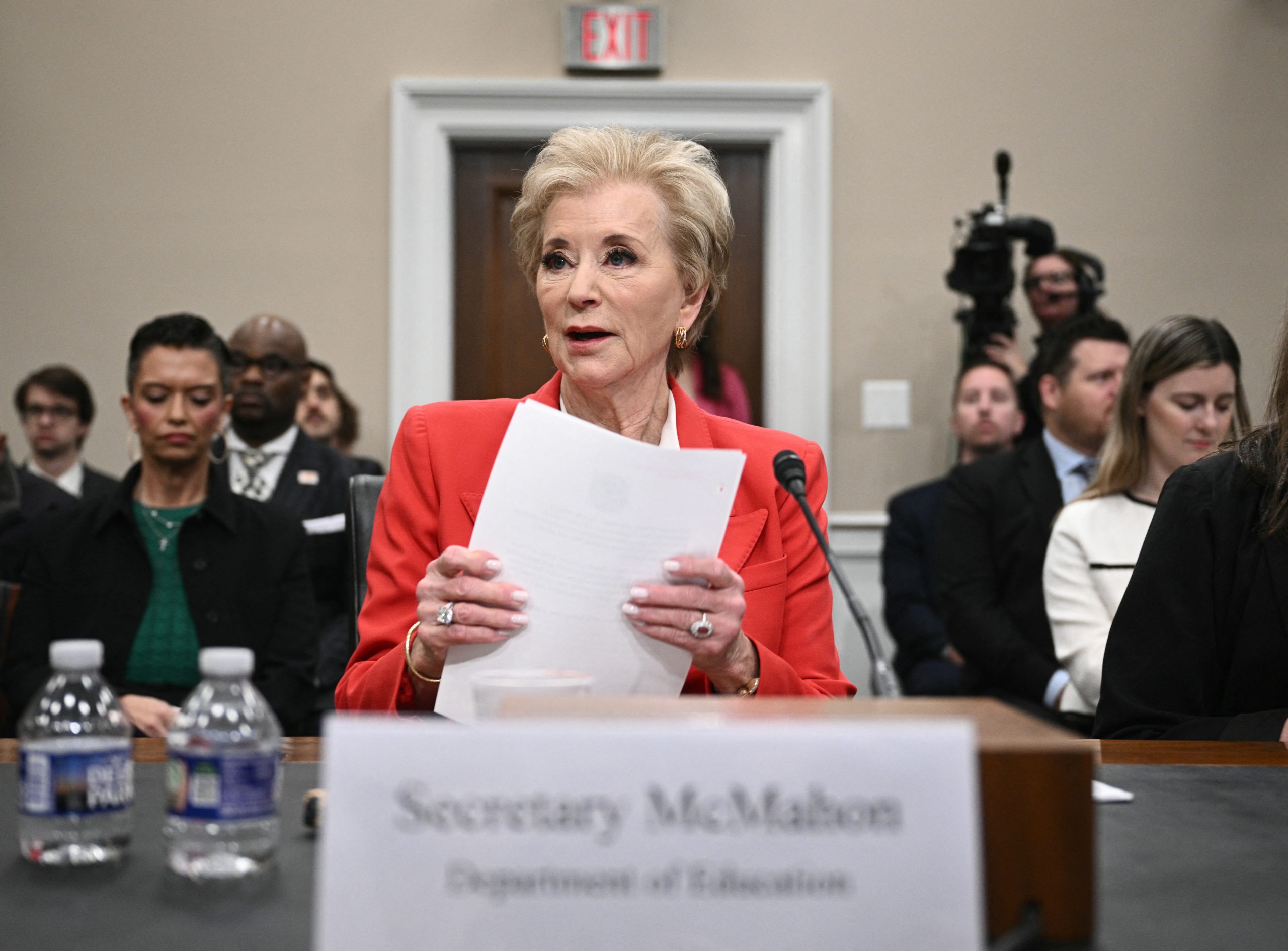
    Two months after Education Secretary Linda McMahon was confirmed, she and a small team from the department met with leadership from the National Center for Learning Disabilities, an advocacy group that works on behalf of millions of students with dyslexia and other disorders. 

    Jacqueline Rodriguez, NCLD’s chief executive officer, recalled pressing McMahon on a question raised during her confirmation hearing: Was the Trump administration planning to move control and oversight of special education law from the Education Department to Health and Human Services?

    Rodriguez was alarmed at the prospect of uprooting the 50-year-old Individuals with Disabilities in Education Act (IDEA), which spells out the responsibility of schools to provide a “free, appropriate public education” to students with disabilities. Eliminating the Education Department entirely is a primary objective of Project 2025, the conservative blueprint that has guided much of the administration’s education policy. After the department is gone, Project 2025 said oversight of special education should move to HHS, which manages some programs that help adults with disabilities. 

    But the sprawling department that oversees public health has no expertise in the complex education law, Rodriguez told McMahon.

    “Someone might be able to push the button to disseminate funding, but they wouldn’t be able to answer a question from a parent or a school district,” she said in an interview later. 

    For her part, McMahon had wavered during her confirmation hearing on the subject. “I’m not sure that it’s not better served in HHS, but I don’t know,” she told Sen. Tim Kaine, D-Va., who shared concerns from parents worried about who would enforce the law’s provisions.

    But nine days into a government shutdown that has furloughed most federal government workers, the Trump administration announced that it was planning a drastic “reduction in force” that would lay off more than 450 people, including almost everyone who works in the Office of Special Education Programs. Rodriguez believes the layoffs are a way that the administration plans to force the special education law to be managed by some other federal office.

    Related: Become a lifelong learner. Subscribe to our free weekly newsletter featuring the most important stories in education. 

    The Education Department press office did not respond to a question about the administration’s plans for special education oversight. Instead, the press office pointed to a social media post from McMahon on Oct. 15. The fact that schools are “operating as normal” during the government shutdown, McMahon wrote on X, “confirms what the President has said: the federal Department of Education is unnecessary.”’

    Yet in that May meeting, Rodriguez said she was told that HHS might not be the right place for IDEA, she recalled. While the new department leadership made no promises, they assured her that any move of the law’s oversight would have to be done with congressional approval, Rodriguez said she was told. 

    The move to gut the office overseeing special education law was shocking to families and those who work with students with disabilities. About 7.5 million children ages 3 to 21 are served under IDEA, and the office had already lost staffers after the Trump administration dismissed nearly half the Education Department’s staff in March, bringing the agency’s total workforce to around 2,200 people. 

    For Rodriguez, whose organization supports students with learning disabilities such as dyslexia, McMahon’s private assurances was the administration “just outright lying to the public about their intentions.”

    “The audacity of this administration to communicate in her confirmation, in her recent testimony to Congress and to a disability rights leader to her face, ‘Don’t worry, we will support kids with disabilities,’” Rodriguez said. “And then to not just turn a 180-degree on that, but to decimate the ability to enforce the law that supports our kids.”

    She added: “It could not just be contradictory. It feels like a bait and switch.”

    Five days after the firings were announced, a U.S. district judge temporarily blocked the administration’s actions, setting up a legal showdown that is likely to end up before the Supreme Court. The high court has sided with the president on most of his efforts to drastically reshape the federal workforce. And President Donald Trump said at a Tuesday press briefing that more cuts to “Democrat programs” are coming.

    “They’re never going to come back in many cases,” he added.

    Related: Hundreds of thousands of students are entitled to training and help finding jobs. They don’t get it

    In her post on X, McMahon also said that “no education funding is impacted by the RIF, including funding for special education,” referring to the layoffs. 

    But special education is more than just money, said Danielle Kovach, a special education teacher in Hopatcong, N.J. Kovach is also a former president of the Council for Exceptional Children, a national organization for special educators.

    “I equate it to, what would happen if we dismantled a control tower at a busy airport?” Kovach said. “It doesn’t fly the plane. It doesn’t tell people where to go. But it ensures that everyone flies smoothly.”

    Katy Neas, a deputy assistant secretary in the Office of Special Education and Rehabilitative Services during the Biden administration, said that most people involved in the education system want to do right by children.

    “You can’t do right if you don’t know what the answer is,” said Neas, who is now the chief executive officer of The Arc of the United States, which advocates for people with intellectual and developmental disabilities. “You can’t get there if you don’t know how to get your questions answered.”

    Families also rely on IDEA’s mandate that each child with a disability receives a free, appropriate public education — and the protections that they can receive if a school or district does not live up to that requirement.

    Maribel Gardea, a parent in San Antonio, said she fought with her son’s school district for years over accommodations for his disability. Her son Voozeki, 14, has cerebral palsy and is nonverbal. He uses an eye-gaze device that allows him to communicate when he looks at different symbols on a portable screen. The district resisted getting the device for him to use at school until, Gardea said, she reminded them of IDEA’s requirements.

    “That really stood them up,” she said.

    Related: Trump wants to shake up education. What that could mean for a charter school started by a GOP senator’s wife

    Gardea, the co-founder of MindShiftED, an organization that helps parents become better advocates for their children with disabilities, said the upheaval at the Education Department has her wondering what kind of advice she can give families now.

    For example, an upcoming group session will teach parents how to file official grievances to the federal government if they have disputes with their child’s school or district about services. Now, she has to add in an explanation of what the deep federal cuts will mean for parents.

    Voozeki Gardea, who attends school in the San Antonio area, uses an eye-gaze communication device with the assistance of school paraprofessional Vanessa Martinez. The device verbalizes words and phrases when Voozeki looks at different symbols. Credit: Courtesy Maribel Gardea

    “I have to tell you how to do a grievance,” she said she plans to tell parents. “But I have to tell you no one will answer.”

    Maybe grassroots organizations may find themselves trying to track parent complaints on their own, she said, but the prospect is exhausting. “It’s a really gross feeling to know that no one has my back.”

    In addition to the office that oversees special education law, the Rehabilitation Services Administration, which is also housed at the Department of Education and supports employment and training of people with disabilities, was told most of its staff would be fired.

    “Regardless of which office you’re worried about, this is all very intentional,” said Julie Christensen, the executive director of the Association of People Supporting Employment First, which advocates for the full inclusion of people with disabilities in the workforce. “There’s no one who can officially answer questions. It feels like that was kind of the intent, to just create a lot of confusion and chaos.”

    Those staffers “are the voice within the federal government to make sure policies and funding are aligned to help people with disabilities get into work,” Christensen said. Firing them, she added, is counterintuitive to everything the administration says it cares about. 

    For now, advocates say they are bracing for a battle similar to those fought decades ago that led to the enactment of civil rights law protecting children and adults with disabilities. Before the law was passed, there was no federal guarantee that a student with a disability would be allowed to attend public school.  

    “We need to put together our collective voices. It was our collective voices that got us here,” Kovach said.

    And, Rodriguez said, parents of children in special education need to be prepared to be their own watchdogs. “You have to become the compliance monitor.” 

    It’s unfair, she said, but necessary. 

    Contact staff writer Christina Samuels at 212-678-3635 or [email protected].

    This story about special education was produced by The Hechinger Report, a nonprofit, independent news organization focused on inequality and innovation in education. Sign up for the Hechinger newsletter.

    The Hechinger Report provides in-depth, fact-based, unbiased reporting on education that is free to all readers. But that doesn’t mean it’s free to produce. Our work keeps educators and the public informed about pressing issues at schools and on campuses throughout the country. We tell the whole story, even when the details are inconvenient. Help us keep doing that.

    Join us today.

    Source link

  • Podcast: Wales, Franchising, Graduate Jobs

    Podcast: Wales, Franchising, Graduate Jobs

    This week on the podcast we look at Wales’ emerging higher education settlement, as Universities Wales publishes its manifesto for the May 2026 Senedd elections amid polling that points to a potential Plaid-led administration.

    Plus we discuss new Office for Students’ data on subcontracted (franchised) provision showing weaker continuation, completion and progression outcomes relative to sector averages, and assess the Institute of Student Employers’ latest survey, with graduate hiring down overall but highly variable by sector amid persistently high applications per vacancy.

    With Debbie McVitty, Editor at Wonkhe, Sarah Cowan, Head of Policy (Higher Education and Research) at the British Academy, Sarah Stevens, Director of Strategy at the Russell Group and presented by Jim Dickinson, Associate Editor at Wonkhe.

    Universities Wales election manifesto

    Outcomes data for subcontracted provision

    Graduate jobs and recruitment reality

    You can subscribe to the podcast on Apple Podcasts, YouTube Music, Spotify, Acast, Amazon Music, Deezer, RadioPublic, Podchaser, Castbox, Player FM, Stitcher, TuneIn, Luminary or via your favourite app with the RSS feed.

    Source link