
Category: post-pandemic

  • K-12 Chronic Absenteeism Rates Down From Peak, But Remain Persistently High – The 74

    K-12 Chronic Absenteeism Rates Down From Peak, But Remain Persistently High – The 74


    Get stories like this delivered straight to your inbox. Sign up for The 74 Newsletter

    Since hitting a record high in 2022, national chronic absenteeism rates have dropped modestly — by about five percentage points — according to the most recent available data, but still remain persistently higher than pre-pandemic levels. 

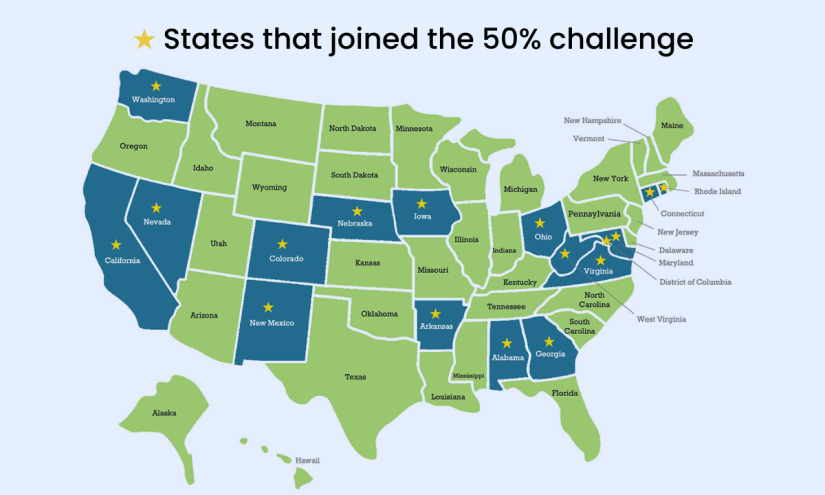
    States that joined a national pledge led by three high-profile education advocacy and research groups to cut chronic absenteeism in half over five years fared better. The 16 states and Washington, D.C. posted results “substantially above the average rate” of decline, though exact numbers are not yet available, said Nat Malkus, deputy director of education policy studies at the American Enterprise Institute, one of the trio.

    The national chronic absenteeism average dropped from 28.5% in 2022 to 25.4% in 2023, and fell an additional two points to 23.5% in 2024. Virginia, which is among the 16 participating states, cut its chronic absenteeism by 4.4 percentage points, year over year, to 15.7%, as of spring 2024.

    Speaking of the states collectively, Malkus told The 74, “That’s good but it’s not as good as we need it to be. I think it points to the need for sustained pressure and a sustained campaign to bring absence rates down and to bring more students back to consistent attendance.”

    Last July, AEI and EdTrust, right-and left-leaning think tanks, respectively, and the national nonprofit Attendance Works joined forces to launch The 50% Challenge. This week, the organizations hosted an event in Washington, D.C., to report on their progress, re-up the call to action and hear insights from state, district and community partners on how they are improving student attendance and engagement.

    With California and Georgia recently joining, the 16 states and D.C. who signed on to the pledge account for more than a third of all students nationally. While Malkus doesn’t necessarily attribute their better results to the pledge itself, he noted that their participation shows a willingness to commit to the cause and be publicly accountable for their results. 

    “I will hold their feet to the fire on this goal,” he added during his opening remarks in D.C.

    While felt most acutely by students of color and those in poorer districts, the spike in chronic absenteeism — students missing more than 10% of school days a year — cut across districts regardless of size, racial breakdown or income. Chronic absenteeism surged from 13.4% in 2017 to 28.5% in 2022 before beginning to drop in 2023.

    Only about one-third of students nationally are in districts that are on pace to cut 2022 absenteeism in half by 2027, according to an AEI report, and rates improved more slowly in 2024 than they did in 2023, “raising the very real possibility that absenteeism rates might never return to pre-pandemic levels.

    AEI

    Research has shown that students with high rates of absenteeism are more likely to fall behind academically and are at a greater risk of dropping out of school. About 8% of all learning loss from the pandemic is attributed just to chronic absenteeism, according to soon-to-be-released AEI research.

    The continued disproportionate impacts of chronic absenteeism were confirmed by recent RAND research, which found that in roughly half of urban school districts, more than 30% of students were chronically absent — a far higher share of students than in rural or suburban school districts.

    RAND also found that the most commonly reported reason for missing school was sickness and one-quarter of kids did not think that being chronically absent was a problem.

    SchoolStatus, a private company that works with districts to reduce chronic absenteeism, also released new numbers this week for some 1.3 million K-12 students across 172 districts in nine states. Districts using proactive interventions, the company reports, drove down chronic absenteeism rates from 21.9% in 2023–24 to 20.9% in 2024–25.

    At this week’s event, numerous experts across two panels emphasized the importance of a tiered approach to confronting the issue, which has resisted various remedies. Schools must build enough trust and buy-in with kids and their families that they are willing to share why they are absent in the first place. Once those root causes are identified, it is up to school, district and state leaders to work to remove the barriers.

    And while data monitoring must play a significant role, it should be done in a way that is inclusive of families.

    “We need to analyze data with families, not at them,” said Augustus Mays, EdTrust’s vice president of partnerships and engagement.

    Augustus Mays is the vice president of partnerships and engagement at EdTrust. (EdTrust)

    It’s imperative to understand the individual child beyond the number they represent and to design attendance plans and strategies with families so they feel supported rather than chastised.

    “It’s around choosing belonging over punitive punishment,” Mays added.

    One major and common mistake schools make is “accountability without relationships,” said Sonja Brookins Santelises, the superintendent of Baltimore City Public Schools.

    “You can’t ‘pull people up’ if you don’t have enough knowledge of what they’re really going through,” she said.

    Panelists were transparent that all this would require immense funding, staff and community partnerships.

    Virginia achieved its noteworthy drop in chronic absenteeism after launching a $418 million education initiative in the fall of 2023, in part after seeing their attendance data sink, with about 1 in 5 students chronically missing school. At least 10% of those funds are earmarked to prioritize attendance solutions in particular, according to panelist Emily Anne Gullickson, the superintendent of public instruction for the Virginia Department of Education. 

    These strategies are far-reaching, she noted: Because parents had been told throughout the pandemic to keep their kids home at the slightest sign of illness, schools partnered with pediatricians and school nurses to help counter the no-longer-necessary “stay home” narrative.

    Hedy Chang is the founder and executive director of Attendance Works. (Attendance Works)

    Gullickson said she also broke down bureaucratic silos, connecting transportation directors and attendance directors, after realizing the role that transit played in chronic absenteeism. The state now has second chance buses as well as walking and biking “buses,” led by parents or teachers along a fixed route, who pick up students along the way.

    And they are “on a mission to move away from seat time and really deliver more flexibility on where, when and how kids are learning,” she said. 

    “This isn’t one strategy. It’s a set of strategies,” said Attendance Works founder and executive director Hedy Chang, who moderated the panel.

    In Connecticut, state leaders have launched the Learning Engagement and Attendance Program, a research-based model that sends trained support staff to families’ homes to build relationships and better understand why their kids are missing school. 

    Charlene Russell-Tucker is the commissioner of the Connecticut State Department of Education. (Connecticut State Department of Education)

    A recent study confirmed that six months after the program’s first home visits, attendance rates improved by approximately 10 percentage points for K-8 students, and nearly 16 percentage points for high schoolers, said Charlene Russell-Tucker, the commissioner of the Connecticut State Department of Education.

    Schools must also work to motivate kids to want to show up in the first place, panelists said, making it a meaningful place that students believe will support and help them in the long run. The only way to do this is to start with student and family feedback, said Brookins, the Baltimore schools chief.

    During the pandemic many parents saw up-close for the first time what their kids’ classrooms and teacher interactions looked like, “and I don’t think a lot of folks liked what they saw for a variety of different reasons,” Brookins said.

    “I think it opened up boxes of questions that we — as the education establishment — were unprepared to answer,” she added. But chronic absenteeism cannot be successfully fought without engaging in those uncomfortable conversations.

    Disclosure: The Bill & Melinda Gates Foundation provides financial support to EdTrust and The 74.


    Get stories like these delivered straight to your inbox. Sign up for The 74 Newsletter

    Source link

  • A new way of addressing the enigma of student engagement

    A new way of addressing the enigma of student engagement

    by Caroline Jones and Leonie Sweeney

    Psychosocial and Academic Trust Alienation (PATA) Theory as a Methodological Lens

    Higher education is experiencing post-pandemic challenges which have increased pressure on students in multifaceted and interconnecting ways (Jones & Bell, 2024). Existing research suggests that post-pandemic, students’ mental health and wellbeing has been significantly impacted (Chen & Lubock, 2022; Defeyter et al, 2021; Jones & Bell, 2025; McGiven & Shepherd, 2022; Nunn et al, 2021). This indicates that research into the field of higher education is needed more pro-actively than ever before, especially given the diverse student market.

    Currently there is considerable research in the form of critique of policy trends or evaluation of the effectiveness of changes in practice; however, the PATA theory lens suggests an approach to research centring on the educational psychologies and intricacies of the student and the enigma of student engagement (Buckley, 2018; Jones & Nangah, 2020: McFarlane & Thomas, 2017).

    Our recent article presents the PATA theory as a methodological lens through which higher education student behaviours, characteristics, and demographics can be researched. Furthermore, it provides an explanation of the PATA theory with specific links to student engagement. The idea of the PATA theory was first explored by Jones in 2017 and developed further in 2020 and 2021 in response to recognised issues faced relating to student engagement in widening participation student demographics. This research establishes the theory which can be applied to investigating the complexities of student demographics, with the aim being to develop knowledge and understanding of issues affecting students such as post-pandemic engagement.

    Guidelines from the QAA (2018) state that due to the demographic of the students who attend each institution, student engagement needs to be interpreted and encouraged in response to student/higher education institutional need. Therefore, student engagement can be interpreted in a variety of ways, examining the links between time, energy and other properties invested by HEIs and students with the aims of cultivating the student experience, strengthening educational outcomes, encouraging development and raising student achievement. Positive student engagement can lead to successful student outcomes, lower attrition rates and improved social mobility, demonstrating the importance of research for understanding and investing in student engagement practices.

    The PATA theory sits under the umbrella of alienation theory: it considers the individual student’s psychosocial status (self-concept/self-esteem levels) and has identified links to academic trust levels (Jones, 2021), particularly for students from the widening participation demographics or those who have experienced socio-economic disadvantage, see figure 1.

    Figure 1. PATA Theory (Jones, 2021)

    The PATA theory fits as a methodology within the realms of phenomenology as it enables researchers to present a narrative to represent the phenomena studied to extract significant statements from the data to formulate meaning. Neubauer, Witkop and Varpio (2019, p91) believe it is imperative for the researcher engaging in phenomenological research to be familiar with the philosophical ‘interpretations of human experience’, whilst Morrow, Rodriguez and King (2015, p644) advise that ‘descriptive phenomenology is especially valuable in areas where there is little existing research’. An additional crucial aspect of phenomenology is understanding that social reality has to be grounded in an individual’s encounters in authentic social situations. The focal point of the PATA theory lens research is to understand how students’ psychosocial status affects the academic trust of their higher education experiences and the relationships that arise out of the social exchanges therein, permitting researchers to construe the associations that the participants make.

    This article analyses the PATA theory potential range of research methods that can be employed and used in higher education practice and is supported by three case vignette examples with reflection points.  For example, we would usually see student disengagement relating to activities such as non-attendance, but the PATA theory shows us that the concept of student engagement is much more complex and encourages higher education institutions and professionals to view the issue in a more holistic student-centred way rather than homogenously.

    Additionally, post-Covid there has been a significant rise in the number of students presenting with mental health issues, with students struggling to attend and engage with their programmes of study. Currently, the assessment strategies used by HEIs for capturing student engagement fail accurately to measure both student engagement and sense of belonging. However, using the PATA theory as the research lens would provide a deeper insight into the post pandemic issues faced, by focussing on student alienation and the strengthening of trust between the student and the institution. HEIs could then scrutinise their existing on-campus experiences to aid the re-engagement process, and practice could be adapted to increase the student experience, such as including more pastoral 1:1 support time within the timetable.

    Some further practical illustrations of how the PATA theory might influence our understanding or make a difference in practice are:

    • To understand potential psychological barriers to student engagement based on demographics, behaviours and characteristics.
    • To identify success stories of positive engagement where good practice can be disseminated or shared to improve student outcomes.
    • To take a deep dive into higher education practices, course or programmes to find out if there are specific teaching and learning barriers affecting students.
    • Provides time and space to analyse intricate needs of specific demographics; behaviours and characteristics such as impact of low tariff on entry gaps or previous educational experiences.
    • Can lead to bespoke action to address potential equality and inclusion concerns.
    • Can be used as an early intervention tool to support students’ re-engagement potentially contributing to reduced attrition and improvements in social mobility.
    • Can be used to explore wider societal issues that affect engagement

    The PATA theory has its limitations, being a new and emerging theoretical perspective, and is very much open to academic critique. However, this concept does bring new insight to the complexities of the student community, the higher education institutional and political landscapes and could be used as a methodological lens to develop deeper knowledge and understanding of student engagement challenges. Whilst the PATA theory is a complex idea applied to a range of complex student issues, when the phenomenon is understood well, there is the potential to really make a difference to the educational outcomes for students. Furthermore, existing theories do not make connections between psychosocial status and academic trust which is where the PATA theory can contribute to a stronger understanding of the student phenomena.

    The article on which this blog is based is

    Jones, C. S., and Sweeney, L (2025) ‘The Psychosocial and Academic Trust Alienation (PATA) Theory: A new lens to research higher education student phenomena: behaviours, characteristics, and demographics’ Student Engagement in Higher Education Journal, 6(1), 79–110 https://sehej.raise-network.com/raise/article/view/1240.

    Caroline Jones is an applied social sciences teaching professional with extensive experience working in the children and young people field and lecturing/programme leading in Higher Education. Currently employed as a Tutor based within the Health and Education Faculty at Manchester Metropolitan University, having previously been a Lecturer at the University Campus Oldham and at Stockport University Centre. Also an External Examiner for Derby University/Middlesex University and a Peer Reviewer for IETI. Research interests include; leadership and management, social mobility and social policy, risk, resilience and adolescent mental health, young care leavers, widening participation and disadvantage, originator of the ‘psychosocial and academic trust alienation’ (PATA) theory.

    Email: [email protected]. LinkedIn: https://uk.linkedin.com/in/caroline-jones-1bab40b3. Twitter/X: @c_JonesSFHEA. Researchgate: https://www.researchgate.net/profile/Caroline-Jones-39?ev=hdr_xprf.

    Leonie Sweeney is a teaching professional within the Applied Social Sciences faculty at Manchester Metropolitan University, with many years of experience working within the children and young people sector. Currently employed as a Higher Education Course Leader and Lecturer, delivering Children and Young People and Early Years degree courses. Additionally, is an External Examiner for University of Chichester and University of Sunderland. Research interests include: student engagement, social mobility, widening participation.

    Email: [email protected]

    Author: SRHE News Blog

    An international learned society, concerned with supporting research and researchers into Higher Education

    Source link