Category: private school

  • NYC’s iHOPE School Unlocks Learning for Profoundly Disabled Kids – The 74

    NYC’s iHOPE School Unlocks Learning for Profoundly Disabled Kids – The 74

    Sitting in his wheelchair at a highly specialized private school in Manhattan designed for students with severe and multiple disabilities, Joshua Omoloju, 17, uses assistive technology to activate his Spotify playlist, sharing snippets of his favorite songs in class — tracks even his parents were unaware he loved. 

    It’s a role this deejay is thrilled to fill at a school that encourages him to express himself any way he can. The magnetic and jovial Omoloju, a student at The International Academy of Hope, is legally blind, hearing impaired and nonverbal. But none of that stopped him from playing Peanut Butter Jelly Time by Buckwheat Boyz mid-lesson on a recent morning.

    “OK, Josh!” his teachers said, swiveling their hips and smiling. “Let’s go!”

    iHOPE, as it’s known, was established in Harlem in 2013 for just six children and moved to its current location blocks from Rockefeller Center in 2022. It now serves 150 students ages 5 through 21 and is currently at capacity with 27 people on its waitlist, according to its principal. 

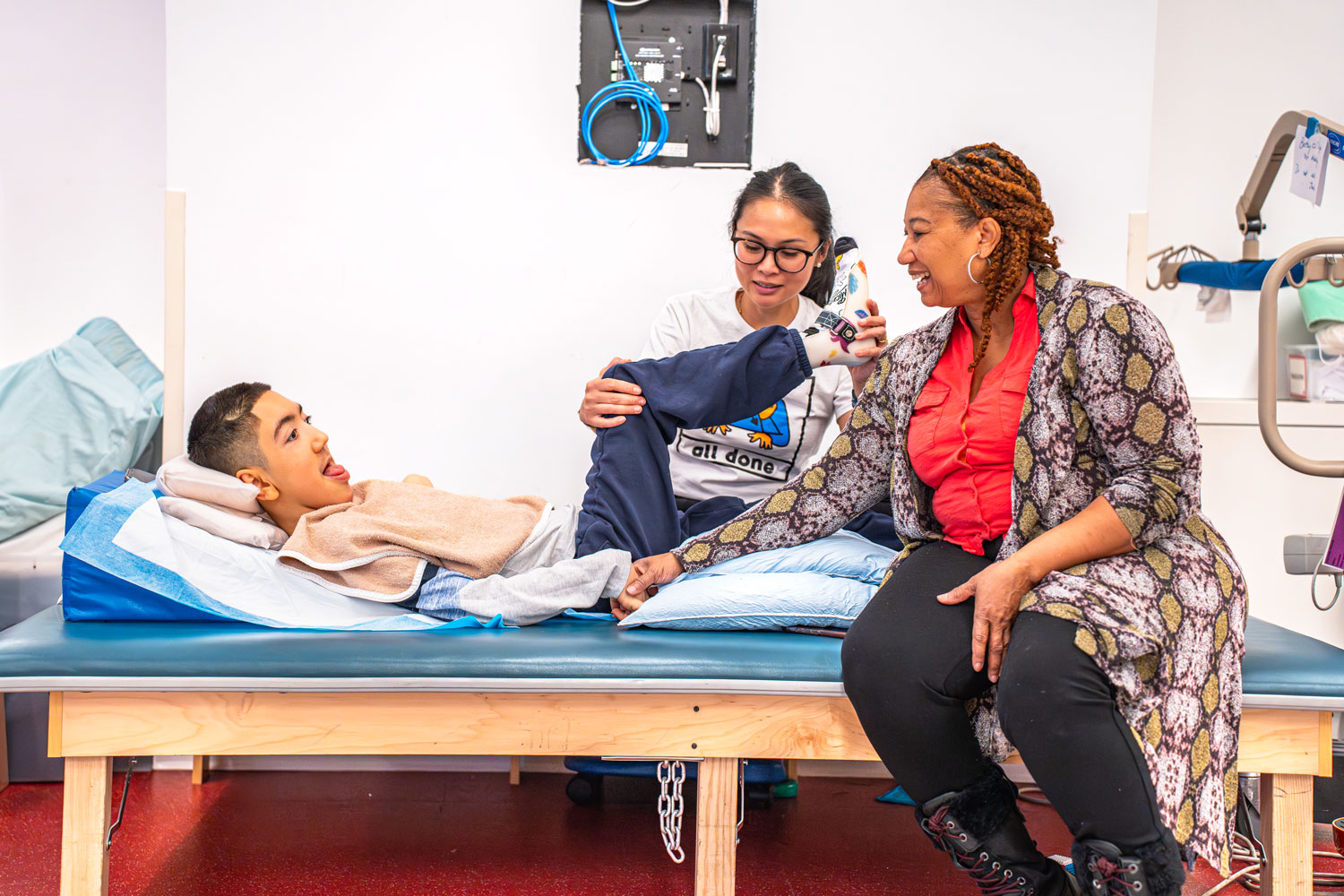
    The four-story, nonprofit school offers age-appropriate academics alongside physical, occupational and speech therapy in addition to vision and hearing services. Every student at iHOPE has a full-time paraprofessional, who works with them throughout the day, and at least half participate in aquatic therapy in a heated cellar pool. 

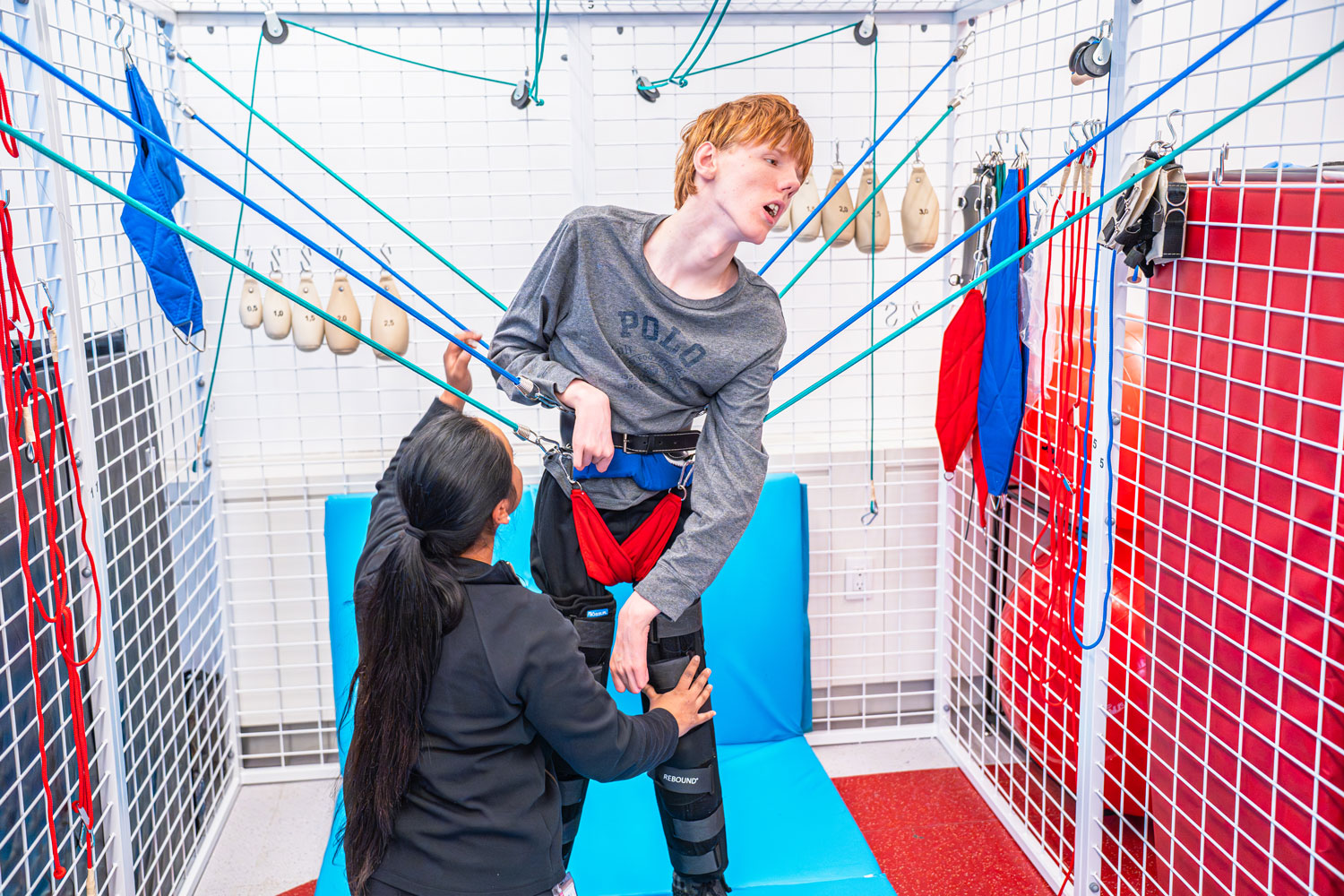
    The school has three gymnasiums fitted with equipment to increase students’ mobility, helping many walk or stand, something they rarely do because of their physical limitations. 
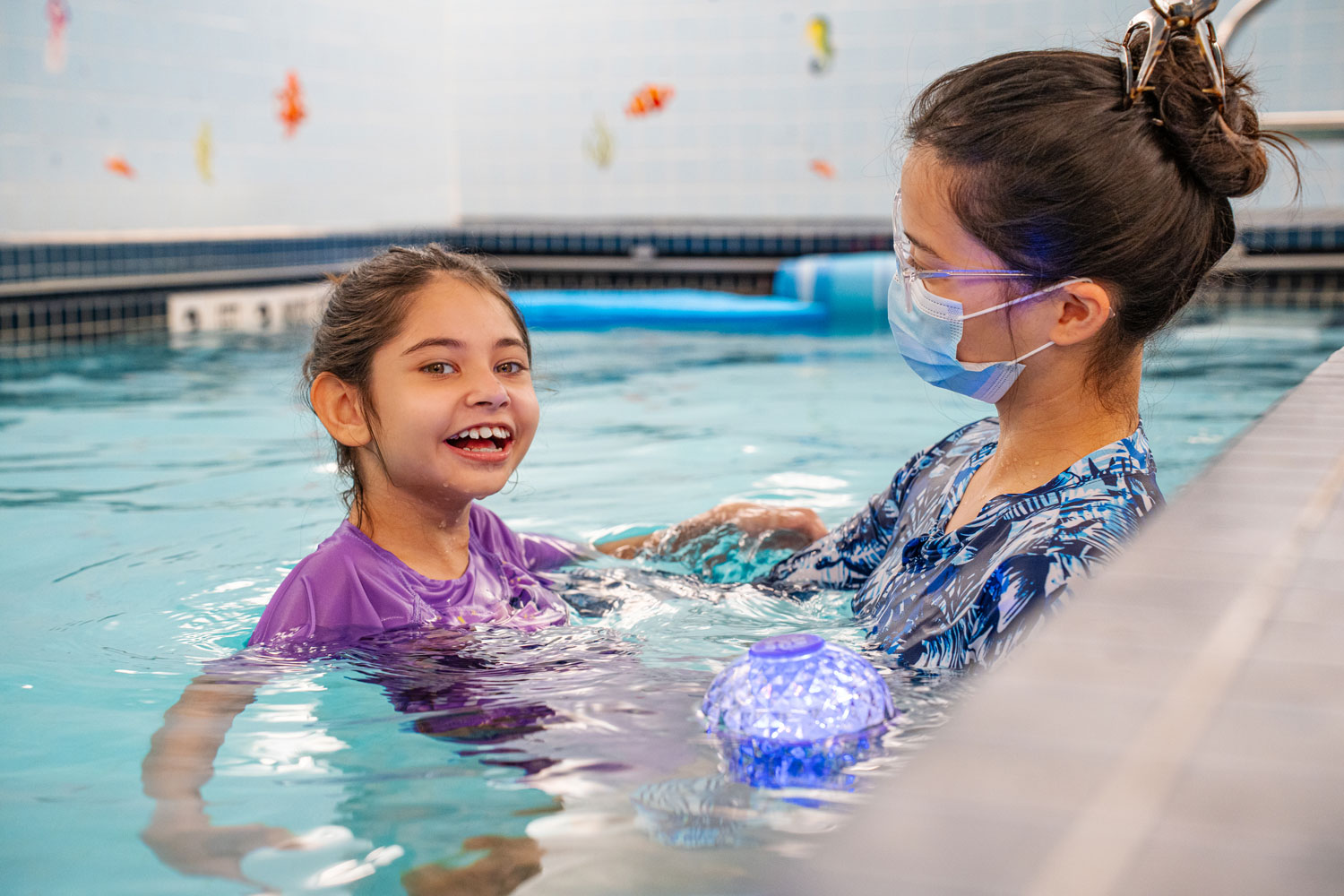
    Arya Venezio, 12, with physical therapist Kendra Andrada (Heather Willensky)
    Edward Loakman, 18, with physical therapist Navneet Kaur (Heather Willensky)
    Gabriel Torres, 15, with physical therapist Jeargian Decangchon and his one-to-one nurse, Guettie Louis. (Heather Willensky)

    Its 300-member staff includes four full-time nurses and its six-figure cost averages $200,000 annually depending on each child’s needs. Parents can seek tuition reimbursement from the New York City Department of Education through legal processes set out by the Individuals with Disabilities Education Act, arguing that the public school cannot adequately meet their child’s needs.   

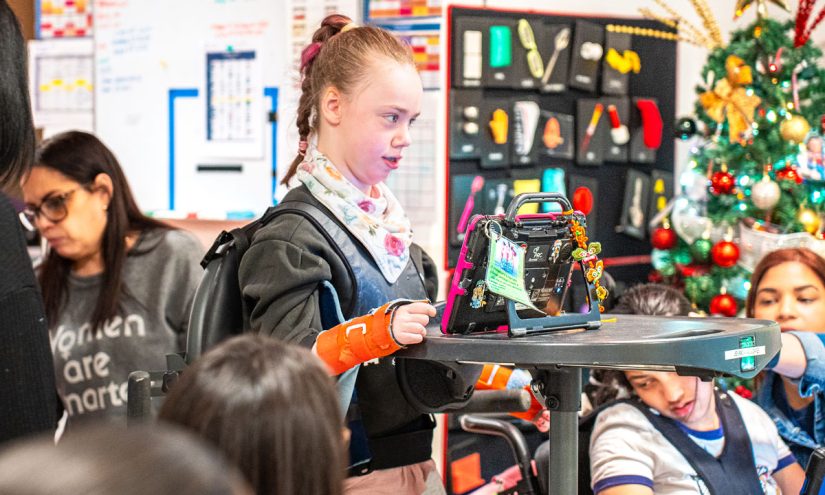
    iHOPE focused primarily on rehabilitation in its early years but is now centered on academics and assistive technology, particularly augmentative and alternative communication devices that improve students’ access to learning. Mastery means users can take greater control of their lives. Shani Chill, the school’s principal and executive director, said working at iHOPE allows her to witness this transformational magic each day.

    “Every student who comes here is a gift that is locked away inside and the staff come together to figure that out, saying, ‘I can give you this device, this tool, these tactiles’ and suddenly the student breaks through and shows us something amazing about themselves,” she said. “You see their personality, their humor, and the true wisdom that comes from students who would otherwise be sitting there in a wheelchair with everything being done for them — or to them.” 
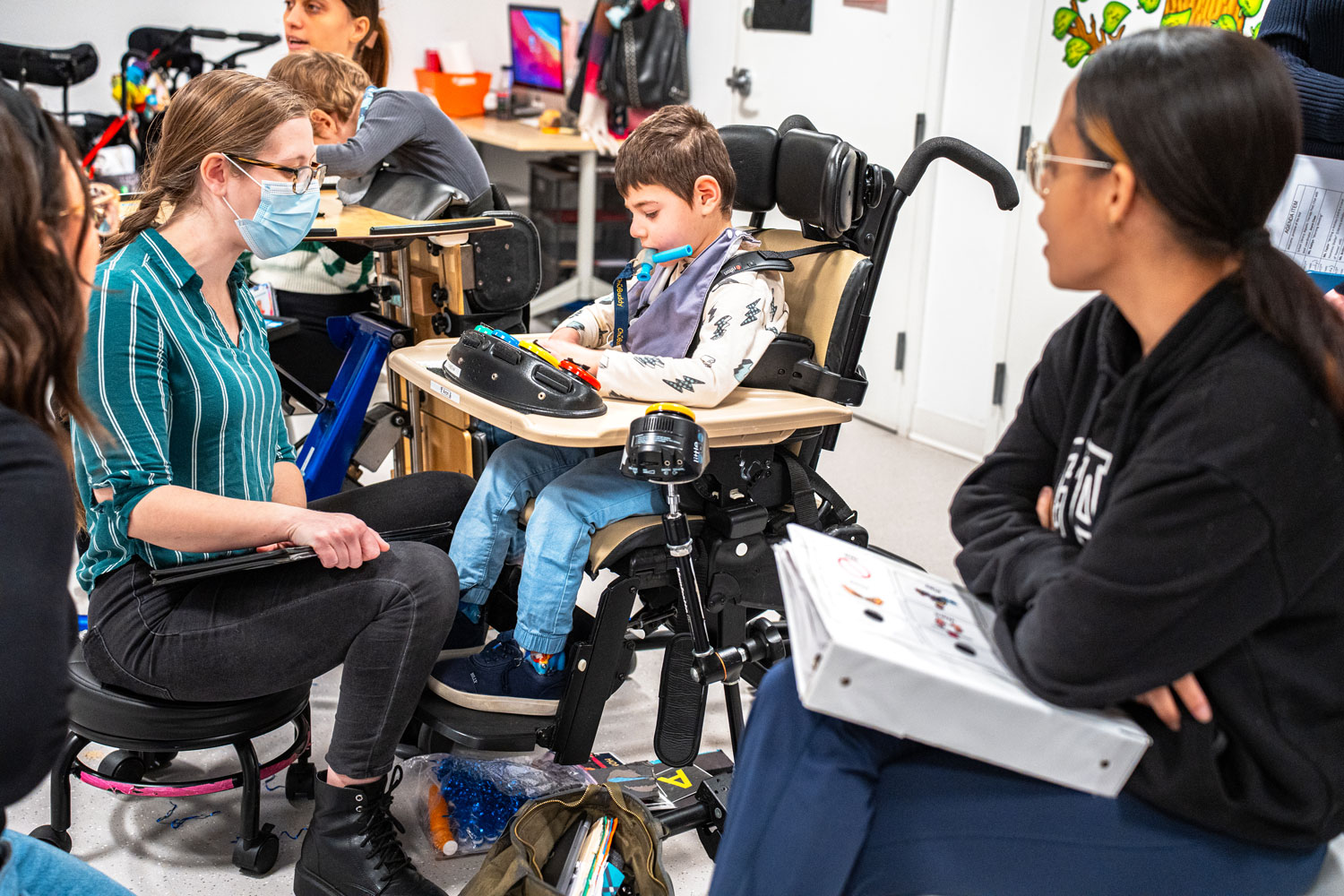
    Aron Mastrangelo, 5, with his occupational therapist, Rose Siciliano, to his left and and his paraprofessional, Emely Ayala, to his right. (Heather Willensky)

    Some devices, like the one Omoloju uses in his impromptu deejay booth, track students’ pupils, allowing them to answer questions and express, for example, joy or discomfort, prompting staff to make needed modifications. 

    Because he’s unable to speak, Omoloju’s parents, teachers and friends assess his mood through other means, including his laughter, which arrives with ease and frequency at iHOPE. It’s a welcome contrast to what came before it at a different school, when a sudden eruption of tears would prompt a call to his mother, who would rush down to the campus, often too late to glean what upset him. 

    “One of the things we saw when we first visited (iHOPE) was that they knew exactly how to work with him,” Terra Omoloju said earlier this week. “That was so impressive to me. I don’t feel anxious anymore about getting those calls.”

    Yosef Travis, father to 8-year-old Juliette, said iHOPE embodies the idea that children with multiple disabilities and complex syndromes can grow with the right support. 

    Juliette has a rare genetic disorder that impacts brain development and is also visually impaired. She squeals with joy with one-on-one attention and often taps her feet in excitement, Chill said. 

    “Juliette has grown in leaps and bounds over the past three and a half years and the dedication and creativity of the staff played a significant role,” her father said. “When she is out sick or on school vacation, we can tell that she misses them.”

    Travis said his family considered many options, both public and private, before choosing iHOPE.

    “iHOPE was the only one that could provide a sound education without sacrificing the necessary supports and related services she needs for her educational journey,” he said. 

    iHOPE currently serves one child from Westchester but all the others are from New York City. Parents are not referred there by their local district: They learn about it from social workers, therapists, doctors or through their own research, the principal said. 

    Those seeking enrollment complete an intake process to ensure their child would be adequately served there. Parents typically make partial payments or deposits upfront — the amount varies depending on income — while seeking tuition reimbursement from the NYC DOE. 

    iHOPE does not receive state or federal funding but some organizations that aid its students saw their budgets slashed by the Trump administration, reducing the amount of support they can provide to families in the form of services and equipment. 

    You can have classrooms that feel like a babysitting facility with kids in wheelchairs given colored paper and crayons, which makes no sense. Or you have a place like iHOPE, which takes advantage of the age in which we are.

    Shani Chill, iHope principal and executive director

    Principal Chill said her school is devoted to giving children the tools they need, even if it means absorbing added costs. 

    “We’ll get it from somewhere,” she said, noting iHOPE can turn to partner organization YAI and to its own fundraising efforts to pay those expenses so that every child, no matter their challenges, can learn. 

    ‘He knows he is in the right place’

    Omoloju’ symptoms mimic cerebral palsy and he also has scoliosis. He’s prone to viruses and other ailments, is frequently hospitalized and has undergone surgeries for his hip and back. 

    “He is also very charming,” his mother said. “He likes to have fun. He loves people. I feel very blessed that he is so joyous — even when he’s sick. He is very resilient. I love that about him. He teaches me so much.” 
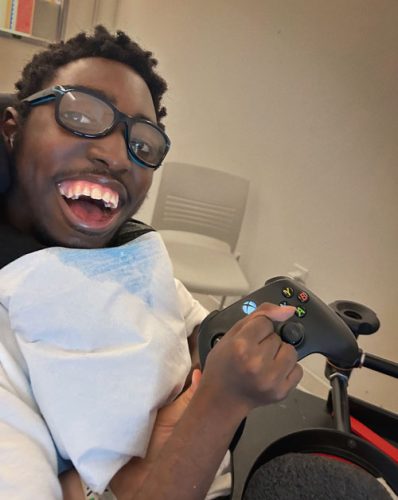
    Joshua Omoloju’s parents said their son is a happy young man who loves his school. (Nicole Chase)

    This is Omoloju’s fourth year at iHOPE. He’s in the upper school program — iHOPE does not use grade levels — which serves students ages 14 through 21. 

    He has made marked improvements in his mobility and communication since his enrollment. And his parents know he loves it there: Josh’s father, Wale, saw that firsthand after he dropped his son off at campus after a recent off-site appointment.

    “I wish I had a video for when Keith [his son’s paraprofessional] came out of the elevator,” his father said. “[Josh] was beside himself laughing and was so excited to see him. He absolutely loves being there. I know he is in the right place and we love that.”

    Principal Chill notes many of these students would not have been placed in an academic setting in decades past. Instead, she said, they would have been institutionalized, a cruel loss for them, their families and the greater community. 

    “These kids deserve an education and what that looks like runs the spectrum,” she said. “You can have classrooms that feel like a babysitting facility with kids in wheelchairs given colored paper and crayons, which makes no sense. Or you have a place like iHOPE, which takes advantage of the age in which we are.”

    Chill notes that assistive and communication-related devices have improved dramatically in recent years and are only expected to develop further. She’s not sure how AI might transform their lives moving forward, but highly sensitive devices that can be operated with a glance or a light touch could be life changing, for example, allowing students to activate smart devices in their own living space.
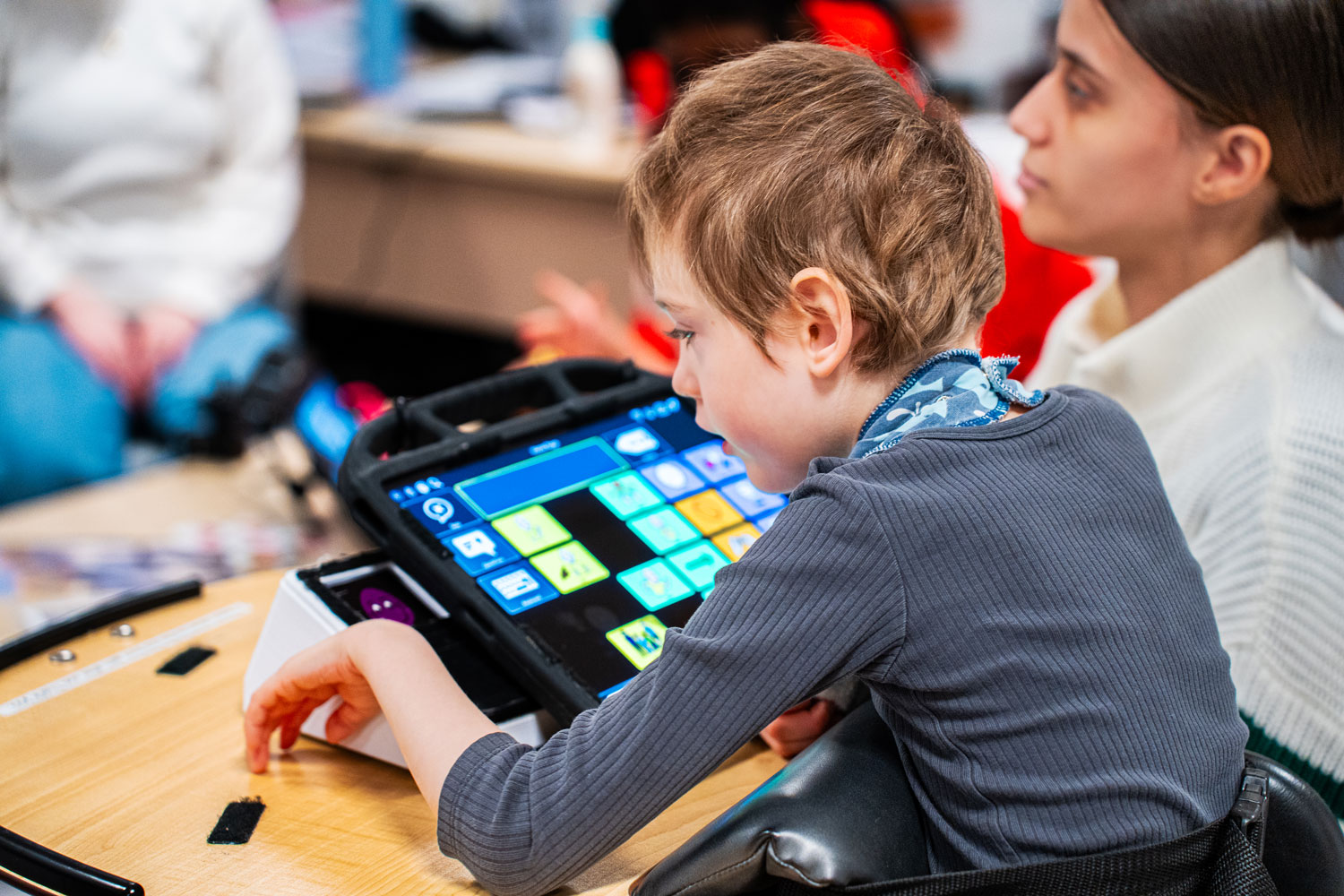
    Benjamin Van den Bergh, 6, with paraprofessional Mirelvys Rodriguez (Heather Willensky)

    “This is a great time when you look at all of the technology that is available,” she said. 

    ‘Moved to tears’

    Miriam Franco was thrilled about the progress her son, Kevin Carmona, 16, made in just his first six months at iHOPE, she said. 

    Kevin, a high-energy student who thrives on praise from his teachers, is also good at listening: Ever curious, he’ll keep pace with a conversation from across the room if it interests him. 

    Kevin has cerebral palsy and a rare genetic disorder that affects the brain and immune system. He has seizures, hip dysplasia and is fed with a gastronomy tube. 

    “He was able to receive a communication device, which opened an entirely new world for him and allowed him to express himself in ways he could not before,” his mother said. “He also became more engaged and independent during his physical therapy and occupational therapy sessions. His attention and focus improved when completing tasks or responding to prompts, leading to greater engagement and participation.”

    His enthusiasm for the school shows itself each morning, Franco said.

    “You can see how happy he is while waiting for the bus and greeting his travel paraprofessional,” she said. “It starts from the moment he wakes up and continues as he gets ready for school. In every part of his current educational setting, Kevin is given real opportunities to participate, with the support in place to make that possible.” 

    Principal Chill said she cherishes the moment parents visit the site for the first time, imagining all their child is capable of achieving. 

    “They  are moved to tears, saying, ‘Now I can picture what my child can do someday,” she said.


    Did you use this article in your work?

    We’d love to hear how The 74’s reporting is helping educators, researchers, and policymakers. Tell us how


    Source link

  • Shortage of Rural Private Schools Complicates Indiana’s Voucher Expansion – The 74

    Shortage of Rural Private Schools Complicates Indiana’s Voucher Expansion – The 74


    Get stories like this delivered straight to your inbox. Sign up for The 74 Newsletter

    Sitting on the Kentucky border, the Christian Academy of Indiana draws students from 56 different ZIP codes in southern Indiana. Some come from as far as 30 miles away and live in counties without private schools.

    Families in those distant communities make the drive every day — sometimes carpooling — because they’re drawn to the school’s environment and extracurriculars, and especially its Christian teaching, said Lorrie Baechtel, director of admissions for the school, which is part of a three-school network in Indiana and Kentucky.

    “There are lots of good public school options in Indiana. Families come to our Indiana campus more for that mission,” Baechtel said.

    The school’s enrollment has boomed in the last four years, driven in part by the expansion of the Choice Scholarship, Indiana’s signature voucher program. That’s made tuition more affordable, Baechtel said. More than 1,200 students attended in 2024-2025, up from around 700 in 2021-22.

    That reflects a statewide trend: Voucher use has surged in recent years as Indiana lawmakers loosened eligibility requirements. In 2026, the program will open to all families, regardless of income.

    But the Christian Academy’s ability to attract students from far away tells another story too. Even as vouchers have become more accessible, Indiana’s rural students aren’t using them at the same rate as their urban and suburban peers. That’s in part because one-third of counties don’t have a private school that accepts vouchers within their borders, and distance is a factor in parents’ decisions on school choice.

    The result is that students who live closer to an urban center — which typically have one or more voucher-accepting private schools — may use vouchers at rates up to 30 percentage points higher than those for students who live in a neighboring district.

    That also means rural families may be at a significant disadvantage when the state opens the Choice Scholarship to all, and when private school scholarships funded by new federal tax credits also begin to roll out in 2027.

    “If there are no schools there for you to attend it’s unlikely it’s going to be all that useful for you,” said Jon Valant, director of the Brown Center on Education Policy at the Brookings Institution.

    More than that, public education advocates say splitting state school funding with vouchers leaves less for the rural public schools these students do attend.

    “We’re making the policy choice to fund a lot more choices than we used to,” said Chris Lagoni, executive director of the Indiana Small and Rural Schools Association, which represents public schools. “We’re inviting more and more folks to Sunday dinner. It’s a little bit of a bigger meal, but a lot more guests.”

    But the state’s Republican lawmakers have dismissed the fears of a hit to public rural schools as a result of vouchers, saying that rural voters support choice and parents want educational options — whether that’s private, charter, or traditional public schools.

    Meanwhile, school choice advocates say the latest expansion of the Choice Scholarship, along with a growing preference for smaller learning environments and the rise of voucher-accepting online schools, could mean more private school access for rural areas in the near future.

    “I think we’re best when we have a robust ecosystem of private and public options,” said Eric Oglesbee of the Drexel Fund, a nonprofit venture philanthropy organization that funds new private schools in Indiana and throughout the U.S.

    Location matters in accessing a private school

    Across the state, around 76,000 students received vouchers for the 2024-25 school year — an increase of about 6,000 students from the year before. The program cost the state $497 million last year, and the average voucher recipient came from a household with just over $100,000 in income.

    But around one-third of Indiana counties don’t have voucher-accepting private schools within their borders, according to a Chalkbeat analysis of state data, which also shows that voucher use is lower in rural areas than urban ones.

    Voucher use can shift dramatically even between nearby areas. For example, around 16% of students who reside in the Madison school district in southern Indiana use vouchers, but that rate drops to as low as 1% in nearby districts that are more rural. Similar trends hold in other areas of the state, like Indianapolis, Evansville, Fort Wayne, and South Bend.

    Location matters because driving distance has been shown to be a factor in how parents choose a school.

    In a 2024 survey of parent preferences by EdChoice, an Indianapolis-based group that supports vouchers, around half of parents said they would drive a max of 15 minutes for their children “to attend a better school.” Just over a quarter said they would drive no more than 20 minutes, and the final quarter said 30 minutes would be their max.

    Concerns about this issue have persisted in the state for years. Alli Aldis of the advocacy group EdChoice pointed to a 2018 report from her organization that called areas of rural Indiana as “schooling deserts.” It estimated that in the 2017-18 school year, around 3% of Indiana students, many in rural counties, lived more than 30 minutes from a charter, magnet, or voucher-accepting private school.

    Starting a new school anywhere, but particularly in a rural area, comes with challenges like finding a building, said Oglesbee of the Drexel Fund.

    A 2023 Drexel Fund report found that facilities in the state are “inadequate to meet the needs of new entrants to the market.” Though the report notes that real estate is both affordable and available, there are no public sources of facilities funding, and surplus facilities are not available to private schools.

    But new laws in Indiana have the potential to change that. House Enrolled Act 1515 established voluntary school facility pilot programs open to both public and private schools to “allow for additional flexibility and creativity in terms of what is considered a school facility,” like colocating with schools, government entities, and community organizations.

    Oglesbee said the organization is fielding an explosion of interest from potential new private schools in Indiana, possibly as a latent result of the 2023 expansion to voucher eligibility, which made the program nearly universal.

    School succeeds ‘if the community asks for it’

    Other challenges to opening a private school include hiring staff and recruiting students, which can be a particular issue in rural areas with both fewer children and licensed teachers, advocates said.

    Opening a school also requires a team of people with both education and business experience, Oglesbee said. And they’re more likely to succeed if they have roots in the community they hope to serve.

    “I see less of the ‘if you build it, they will come’ idea,” Oglesbee said. “A school is successful if the community asks for it.”

    At a recent conservative policy conference, Indiana House Speaker Todd Huston said rural Indiana communities were “super excited” for school choice, and noted that no Republican lawmaker had been beaten in a primary for supporting the policy.

    But Indiana voters haven’t voted on school vouchers, and don’t have a legal avenue to overturn the policy, said Chris Lubienski of the Center for Evaluation and Education Policy at Indiana University. Last year, voters in Kentucky and Colorado rejected ballot measures in favor of school choice, while Nebraska voters partially repealed a state-funded scholarship program.

    “There’s resistance: ‘Why do I want to have my taxes fund a program I can’t use?’” Lubienski said.

    In rural areas, support for school choice may actually mean support for transfers between public school districts, said Lagoni.

    Ultimately, the Rural Schools Association believes any school receiving state dollars should be subject to the same expectations of transparency and accountability, Lagoni said.

    Asked about concerns that rural students often have difficulty using vouchers, Huston said he expects voucher usage to continue to grow once the program becomes universal in 2026-27.

    “We want to make sure our policies align with what works best for families,” Huston said.

    Vouchers add to financial stress for rural schools

    With more school options in Indiana, downward pressure on local tax revenue, and declining population, rural public schools feel pressure to compete. Sometimes that means closing and consolidating schools.

    Vigo County schools recently announced plans to close two rural elementary schools as part of a plan to renovate facilities and offer more programming. The school corporation’s enrollment has declined slightly, due in part to an overall decline in the county’s total population, said spokesperson Katie Shane.

    More students who reside in the district are using vouchers, although they’re not the biggest reason for the district’s falling enrollment. While 429 students used vouchers to attend private schools last school year, an increase from 252 the year before, around 870 Vigo students transferred to another public school district in the fall of the 2024-25 school year. That reflects a statewide trend.

    Without their nearest public elementary schools, students may have to travel by bus for half an hour or more to the nearest school, according to community members who have started a petition to save one of the two schools marked for closure, Hoosier Prairie Elementary School.

    “Hoosier Prairie isn’t just about going to school,” said Shyann Koziatek, an educational assistant at the school who also signed the petition to stop its closure. “Kids love to learn and love the routine we have.”

    Rural schools also often function as large area employers and drivers of the economy.

    “Schools are often the center and identity of the community, how people view who they are,” Lubienski said. “You go and cheer on your football team, it’s where you put on your school play.”

    But private schools can serve the same role, choice advocates say.

    “If people have stronger educational options, more choices, that only strengthens the community,” said Aldis of EdChoice.

    Chalkbeat is a nonprofit news site covering educational change in public schools. This story was originally published by Chalkbeat. Sign up for their newsletters at ckbe.at/newsletters.


    Get stories like these delivered straight to your inbox. Sign up for The 74 Newsletter

    Source link