
Category: Procrastination

  • Creating in 2025… – Edutechniques

    Creating in 2025… – Edutechniques

    #notAI – this hashtag should become the norm for when it is actually a human typing. I think I’m a human. Still.

    Reading Fahrenheit 451 last night, I got to thinking about imagination, creativity, motivation, and…other things I can’t remember. I thought back to my last posts on here two years ago and how much has changed since I last had the drive to actually write out my thoughts (other than my work related Colining). As I type this, I think about the AI derived slop I read every day on LinkedIn. People (AI) are writing 6 paragraphs to describe and analyse how a pancake is a lot like education. How about starting to type and seeing where your brain takes you instead…maybe a pancake is just a pancake? We used to take pencils for a walk back in primary school. Give it a try.

    Way back when I last tried to think creatively in November 2023, ChatGPT was emerging from its cave of wonder and the university I was working at were ringing the alarm bells and dusting off the overhead projectors for students to present their understandings so they couldn’t cheat. TikTok was in full swing. And it was post c-word. Rough times in education. Still is.

    Fahrenheit 451 has many ponderings and musings into how technology/mass media can nullify curiousity and creativity. Captain Beatty, before he met his crusty demise, had this to say:

    “Cram them full of noncombustible data, chock them so damned full of ‘facts’ they feel stuffed, but absolutely ‘brilliant’ with information. Then they’ll feel they’re thinking, they’ll get a sense of motion without moving.”
    Captain Beatty, Part One

    TikTok. Schools worldwide are controlling the use of student phones. Back in 2011 I was literally preaching from the pulpit to put iPod Touches in 5 year olds hands…a winky face I suppose would be appropriate here. How do I feel about 2011 Colin in the cold, harsh light of 2025? Right place, right time, I guess…

    I’ve changed. I’ve seen children walking school hallways with heads down and phones out. It’s not good. The message remains the same though; moderation and thoughtful purpose. Allow space for head space. I’ve dived into TikTok. It’s a delirious and dopamine filled media experience that you will love. And instead of reading a book you will whittle the hours away with the best videos TikTok knows you will want to scroll through has to offer. I haven’t read a book for months at a time over the past few years. I’ve consciously made an effort to change that. It’s so hard to read 300 pages now. Imagine the kids….jesus….

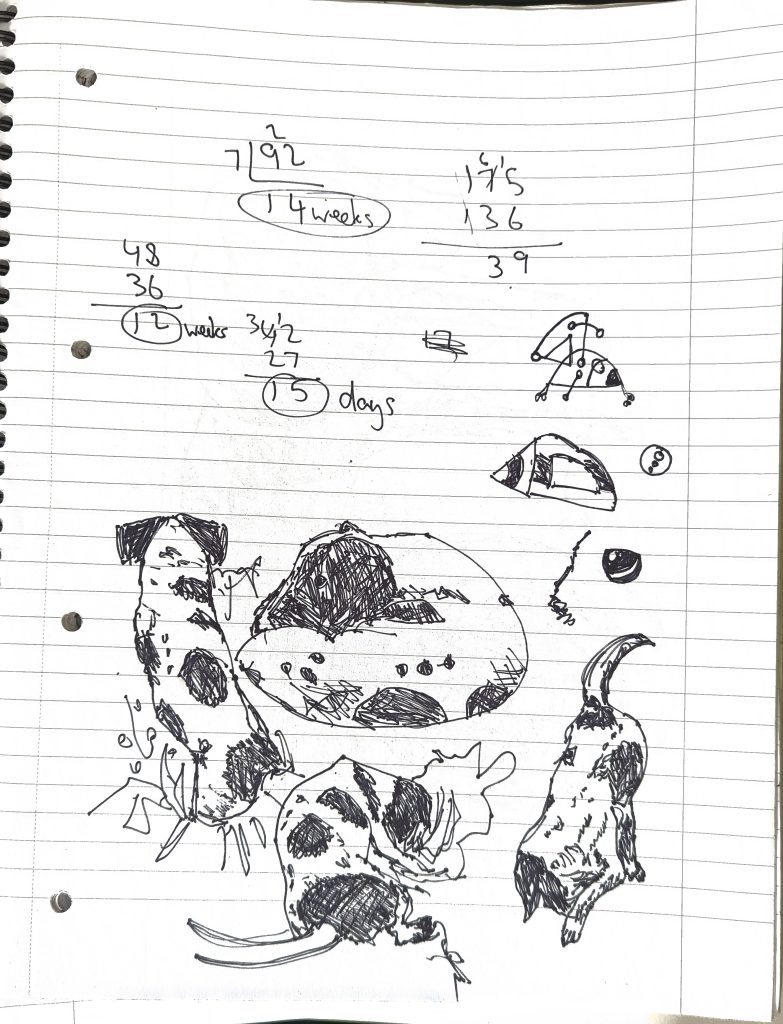
    Consumption is easier than production. Yay I’ve heard that before so I just reproduced it here. I want to sketch everyday. I don’t. I enjoy it but I don’t. The last time I did was, again, two years ago (AI has ruined me!!!). I did some observations of my mum’s dog; Benji. Thanks Benji. Good dog. I still divide and multiply as if I was 8 years old. I also like to doodle like if Klee and Kandinsky adopted me.
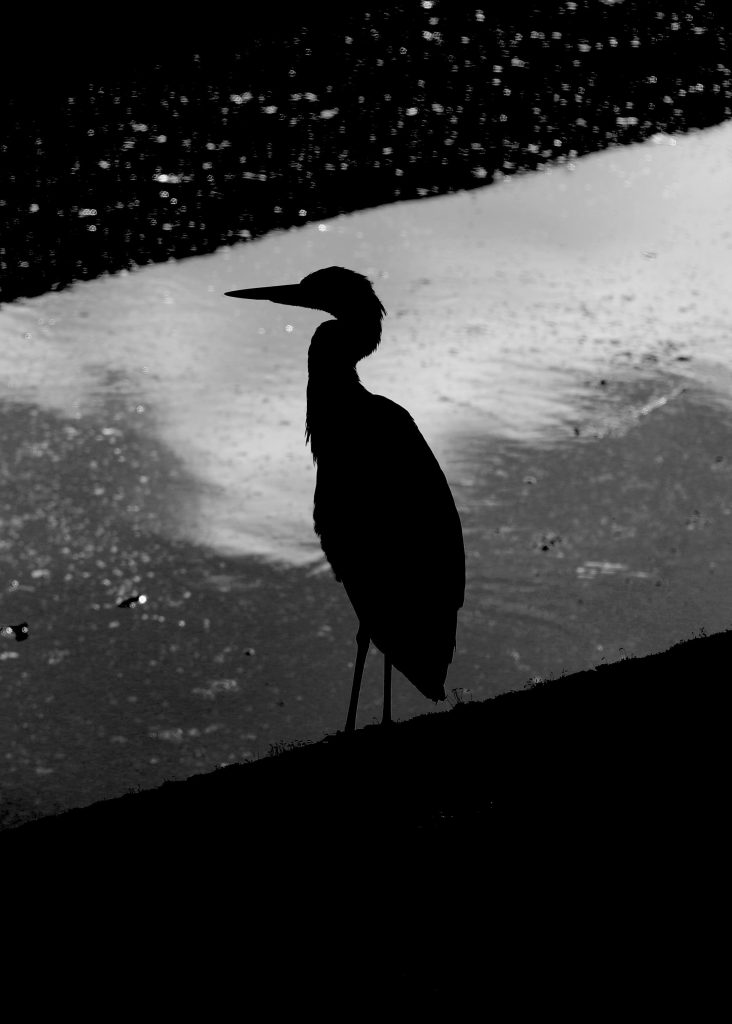
    I want to photograph more. I don’t. I did have a mission to photograph a stork a month ago so I did. I need more missions. Left is a heron. They have question mark necks. So there.

    One thing I’ve stuck with over two years is podcasting. It was a new hobby to watch more movies more regularly. Think about them more. Analyse them more intently. And have fun with an old school friend. That’s something I’m happy with and have regularly learned new skills from. And why I’ve been stumbling through TikTok whilst posting small clips from our episodes.

    Fahrenheit 451 made me want to create something. Is this anything? I guess it’s something. From nothing. The issue I face is (and I think many others) is that, in 2025, it is becoming harder and harder to find the time, find the energy, find the way out of the consumption diet, and tunnel a way into learning more, being creative, and being more thoughtful about more meaningful things that enrich us as individuals. The temptation to use AI to develop any form of creative response is tantalisingly tempting but the critical responses to AI derivations are only going to increase.


    Discover more from Edutechniques

    Subscribe to get the latest posts sent to your email.

    Source link

  • Making Online Learning More Engaging in Higher Education – Edutechniques

    Making Online Learning More Engaging in Higher Education – Edutechniques

    With my recent work in Maynooth University (MU) in Ireland and my ten years of refining and teaching the courses we offer in the MAET program at Michigan State University (MSU), Ive been pontificating and procrastinating on what is current state of play with making more engaging online content in the higher education realm.

    Using Multiple Platforms for Collaboration/Communication

    At MSU we utilise Slack alongside our Brightspace D2L learning platform. This is the latest in a long line of platforms we have added to encourage collaboration and communication amongst our students. Discussion forums on LMS are by default….not the best..and not conducive to authentic engagement. We have found with Slack that engagement is up due to the interface and the fact that Slack has an app. Threads are logical and embedding multimedia works well. At Maynooth University, I taught the blended course TL517 Digital Technology in Higher Education which was delivered in Moodle, the old course framework had a weekly requirement to post to Moodle. I mixed it up a bit by incorporating live Microsoft Team activities along with collaborative Padlets. Padlet gave the students a different visual approach to communicating their thoughts and collaborating with others. The use of breakout rooms in Microsoft Teams gave the students the opportunity to navigate smaller groups in socially constructing knowledge and understanding.

    MORE INTERACTIVE CONTENT

    Quite logical and predictable, right? However, from my time in MU, the majority of online learning courses are merely substitutions of the analog courses that were delivered within the university walls. Working with lecturers to comb through their content to pinpoint areas that may become more interactive with technology is a very rewarding process. This process might be framed by the ABC protocols or just evolve organically through conversations.

    HUMANISE THE PROCESS

    When I am teaching an online course I always start with creating a video introducing myself and detail my professional and personal history. I also tell the students about my hobbies and interests. Seeing my face and hearing my voice always gives a human element to a potentially impersonal first impressions of an online course. It is also important to empathise with students online and realise the stress and pressures of real life that students are going through. Being flexible and empathetic with deadlines (to a certain degree) is greatly appreciated.

    CONSISTENT WORD-OLOGY

    When sorting out a course layout I like to organise the different activities in to action verbs. If a unit is mainly research based then the title will be “Research: “. If a unit involves creating something, then the title will be “Create”. If a unit involves reading to gain knowledge, then the title could be “Learn” or “Inquire”. Consistent wording enables the learner to understand what each unit of a course entails.

    VISUALS, VISUALS, VISUALS

    If the LMS allows I will create an interface of a grid of icons (which Moodle and other LMSs allow). If a student opens a course and encounters a wall of text it is usually quite daunting. A nice array of colourful yet not distracting icons makes a world of difference. Obviously, videos, infographics, images, and other elements that break down walls of text are all beneficial to the end user.

    CREATE ALL THE THINGS

    If we still adhere to the adage that to create is to know, then creating artefacts of learning in an online environment makes a lot of sense. I was surprised that the lecturers at MU were overjoyed when I asked them to create infographics to present their understandings of the concepts we had just read about. They immediately could see them using infographics with their students in their field. Something that I have used in K-12 education for a long time had not found its way to higher education and made me realise that certain pedagogical approaches that I may deem mainstream may be innovative in other realms.


    Discover more from Edutechniques

    Subscribe to get the latest posts sent to your email.

    Source link