Category: Professional Development

  • PeopleAdmin A PowerSchool Company

    PeopleAdmin A PowerSchool Company

    Professional development is a huge factor in retention, but getting faculty and staff to engage with professional learning can be tough.

    Creating professional development learning communities (PLCs) within higher education institutions can lead to increased employee engagement, improved retention, enhanced collaboration, and personalized learning. Below, check out a few strategies to help your institution create effective PLCs that faculty and staff are eager to be a part of:

    Build Strong Relationships and Encourage Reflective Practices

    PLCs are designed to build stronger relationships between team members through regular meetings and a shared commitment to student learning. These communities encourage reflection on instructional practices and student progress, which can lead to a more cohesive and collaborative environment.

    Establish Clear Communication and Social Presence

    Effective communication is the backbone of any community. In an online setting, it’s crucial to create a plan for communication that includes real-time meetings and opportunities for information and expertise sharing. This helps in establishing a social presence and a sense of belonging among members.

    Engage Through Shared Goals and Interests

    Research suggests that participation in learning communities is more related to student engagement than to educational outcomes. Therefore, focusing on shared goals and interests can encourage a sense of belonging and commitment among faculty and staff, which is essential for retention and engagement.
    Emphasize Collaborative Learning and Professional Growth

    Learning communities should emphasize collaborative partnerships between students, faculty, and staff. They provide opportunities for professional growth outside the classroom in a supportive and non-judgmental environment, which can lead to improved teacher satisfaction and lower turnover rates.

    Utilize Collaborative Learning Techniques

    Incorporate collaborative learning techniques to allow members to share ideas and work on common professional issues. This not only enhances the learning experience but also encourages members to become more invested in their work and the community.

    Support Continuous Improvement

    PLCs should provide continual improvement opportunities, encouraging ongoing professional development rather than one-time-learning. Continuing growth and learning is crucial for keeping faculty and staff engaged and up-to-date with the latest educational practices.

    Prioritize Personalized Learning

    Personalized learning within PLCs can cater to the individual needs and interests of faculty and staff, making the community more appealing. By allowing members to pursue their unique professional development paths, PLCs can enhance individual engagement and contribute to the overall success of the community.

    Conclusion

    Building learning communities that faculty and staff want to join requires a strategic approach that focuses on fostering strong relationships, clear communication, shared goals, collaborative learning, and continuous improvement. By creating an environment that values professional growth and personalized learning, institutions can ensure that their PLCs are engaging and beneficial for all members. If you’re interested in a tool that supports engaged professional development and learning at your institution, check out PeopleAdmin’s software or reach out to our team.
    Source link

  • PeopleAdmin A PowerSchool Company

    PeopleAdmin A PowerSchool Company

    Are you ready to tackle the HigherEd HR challenges coming in 2024?

    As we approach 2024, the landscape of higher education human resources is poised to encounter a new set of challenges. Anticipating and preparing for these challenges is crucial for HR departments to navigate the evolving demands of the workforce. In this blog, we’ll dive into some of the challenges your team should anticipate, as well as innovative solutions to tackle them head-on.

    Anticipated HR Challenges in 2024

    1. Talent Acquisition in a Competitive Market

    The competition for top talent is expected to intensify in 2024, making it challenging for higher education institutions to attract skilled professionals, especially in niche industries. To address this challenge, institutions should consider investing in employer branding, providing growth opportunities, and offering attractive compensation packages. Leveraging technology like AI-driven recruitment platforms can streamline the hiring process and help in identifying and attracting top talent.

    2. Remote Work Management and Hybrid Models

    The shift towards remote work and hybrid models isn’t going anywhere, and will continue to pose challenges in managing and maintaining a cohesive workforce. HR departments should focus on developing policies and practices that support remote work, ensure effective communication, and foster a sense of belonging among remote and on-site employees.

    3. Reskilling and Upskilling the WorkforceQuote: Institutions should invest in continuous learning and development programs to equip employees with the skills needed to adapt to technological disruptions, on-campus changes, and retention challenges.

    Technology is continuing to disrupt industries, including HigherEd, making it important that your team focuses on reskilling and upskilling of the workforce to stay competitive. Institutions should invest in continuous learning and development programs to equip employees with the skills needed to adapt to technological disruptions, on-campus changes, and potential retention challenges.

    4. Managing a Multigenerational Workforce

    Your campus is already a multigenerational space, and the on-campus workforce is no exception. With Gen Z joining the workforce, and a tough economy that might discourage retirement, your faculty and staff come from multiple generations with unique work and communication styles and preferences. This can be a challenge, because it’s tough to please everyone, but embracing flexibility and dynamic communication styles can help create a positive work environment for everyone.

    How to Prepare for 2024

    As you consider the challenges to come, don’t get overwhelmed—there’s a lot your team can to do prepare. Here are a few ways to get started.

    1. Embrace Technology and Innovation

    Investing in HR technology solutions that facilitate talent acquisition, remote work management, and skills development will be crucial for higher education HR departments. Leveraging hiring and recruitment platforms, learning management systems, and communication tools can streamline processes and make your workforce more agile.

    2. Prioritizing Leader and Manager Development

    According to Gartner’s annual HR Priorities survey, leader and manager development tops the list of 2024 priorities for HR leaders. Institutions should focus on developing leadership capabilities to navigate the evolving work environment, build a talent pipeline, drive succession planning, and empower organizational success.

    3. Build a Culture of Continuous Learning

    In response to the need for reskilling and upskilling, higher education institutions should prioritize continuous learning and development programs. This includes offering relevant courses, workshops, and certifications to ensure that employees are equipped with the skills needed to adapt to technological disruptions

    Final thoughts

    HigherEd HR departments must take a proactive approach to the challenges of 2024, and that can make all the difference for their campuses. By embracing technology, prioritizing leader and manager development, creating a culture of continuous learning, and listening to the needs of employees, institutions can navigate the evolving HR landscape and ensure a resilient and adaptable workforce.


    Source link

  • Association Leaders Gathered to Learn, Laugh and Launch a New Year at the 2022 ALP! – CUPA-HR

    Association Leaders Gathered to Learn, Laugh and Launch a New Year at the 2022 ALP! – CUPA-HR

    by CUPA-HR | July 20, 2022

    CUPA-HR’s Association Leadership Program (ALP) has taken place every July for more than two decades, bringing together chapter, region, and national board members; association staff; key corporate partners; and other invited guests. After two years of meeting only virtually, these leaders were finally able to meet again in person last week.

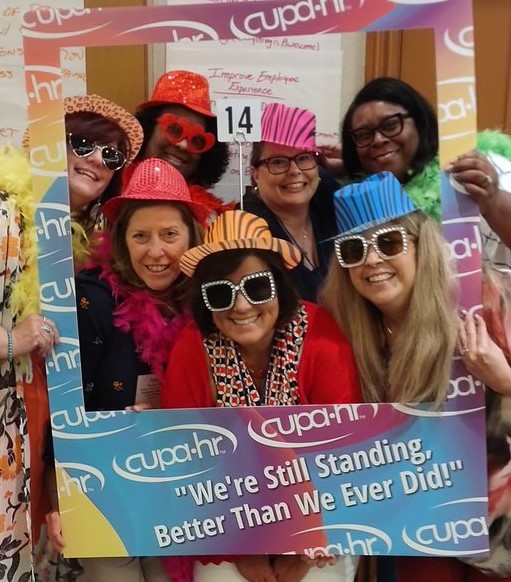
    “We’re Still Standing!”

    The HR challenges of the past two years have included leading emergency COVID-19 response, exploring a new frontier of flexible work, and addressing unprecedented talent recruitment and retention challenges. Through it all, higher ed HR professionals have been on the front lines, adapting and transforming the workplace with resourcefulness, leadership and strategic insights.

    To celebrate that strength and resilience, CUPA-HR president and CEO, Andy Brantley, and national board chair, Jay Stephens, kicked off the two-day meeting with Elton John’s “I’m Still Standing” playing in the background and issued an irresistible photo challenge for attendees. (Be sure to check out the photos posted to Twitter with the hashtag #cupahr22.)

    Building Knowledge and Connection

    The ALP’s highly interactive program included:

    • tips for managing chapters and developing a leadership pipeline
    • updates on CUPA-HR’s work on Title IX and other public policy imperatives
    • a practical overview of CUPA-HR’s DEI Maturity Index and new Research Center
    • a discussion of winning strategies for higher ed’s post-pandemic war for talent
    • a presentation on cultivating trauma-informed practice in higher education leadership

    Beyond the programming, however, what attendees valued most about the event was the opportunity to validate their campus experiences in conversations with peers, rekindle the motivation behind their work, and take away great ideas for transforming their HR teams and their institutions in ways big and small.

    Interested in Taking Your Professional Development Further?

    CUPA-HR’s volunteer leaders have committed to advancing the profession and the mission of CUPA-HR. They understand the complexities of higher ed HR, and they want to enhance the knowledge and skills they need to lead their institutions into the future.

    Are you ready to take that next step in developing your leadership skills, shaping the profession, and gaining one-of-a-kind access to successful practices and HR professionals from across the country? Then CUPA-HR leadership — in a chapter, at the region level, or even on the national board of directors — might be right for you. Learn more about how you can get involved.


    Source link

  • Develop to Retain: Tools and Resources for Higher Ed Professional Development – CUPA-HR

    Develop to Retain: Tools and Resources for Higher Ed Professional Development – CUPA-HR

    by CUPA-HR | December 7, 2021

    It’s Employee Learning Week — a great reminder for employers to showcase their commitment to talent development by highlighting development opportunities available to employees. Whether you’re an HR practitioner in search of professional development ideas for yourself and your HR peers, or you’re looking for ideas to engage and develop other employees at your institution, here are several tools, tips and resources to help you take the next step.

    Professional Development Tools for the HR Pro

    • CUPA-HR Learning Framework — A tool that assists in defining HR practitioners’ knowledge, skills and attributes and then helps create an action plan for growth and set developmental goals. Jump start your development by using the quick start guide, then build your skills further by diving deeper into the framework competencies.
    • Creating Your Individual Development Plan — A must-have for anyone who wants to map out a strategy for career success in higher ed HR. This free CUPA-HR e-learning course provides an introduction to individual development plans (IDPs) and will guide you through the process of creating your plan, discussing your career with your leaders and implementing your strategy for success. CUPA-HR e-Learning is sponsored by PageUp.

    Ideas for the Higher Ed Community

    Apart from their own professional development, HR pros often create and help facilitate professional development opportunities for employees at their institutions. Here are some jump-start ideas from the article Optimize Your Hybrid or Remote Work Workforce — Considerations for Higher Ed HR Leaders, featured in the fall issue of Higher Ed HR Magazine.

    • Encourage managers to use an employee’s development plan to guide regular coaching calls. Gallup suggests ongoing coaching conversations — rather than annual performance reviews — can be of great benefit to both the employee and the employer. These meaningful conversations highlight the organization’s commitment to employee engagement, which can help retain employees for the long-haul. Encourage managers to use employees’ development plans during coaching calls as a guide to the conversation. Setting up the right systems and processes to help employees perform their best from any location is a great operational step, but reorienting managers to think about performance and productivity around outcomes instead is an important strategy.
    • Get creative with your learning and professional development offerings. William Paterson University’s HR team created a university-wide development program so all 600 non-faculty employees had a chance to participate. Their unique approach to talent development demonstrated institutional support for professional development, provided a platform for employees to engage and collaborate, and inspired additional ways to support employees, such as mentorship programs, goal setting and career advancement. Read more about the program in the special awards issue of Higher Ed HR Magazine to learn how the HR team adapted it to a virtual format — a great alternative for employees working in a hybrid or remote setting!


    Source link

  • Curriculum Focus, Not Technology Focus

    Curriculum Focus, Not Technology Focus

    Curriculum Focus, Not Technology Focus

    In my public school career I have been a classroom teacher, a technology integration specialist and a technology administrator. In my technology role, I served under the Assistant Superintendent for Instruction. She had a simple mission: Improve students’ academic learning. My mission was equally simple: Improve students’ academic learning through technology. I met with the curriculum chairs to learn about the curriculum, how it was taught, and areas in which teachers and students had the most difficulty. When I met with grade level or curriculum teacher teams, we talked about the curriculum. After carefully listening to them, I usually would suggest some technology tool that might help them in doing their favorite project or in teaching those difficult curriculum areas. I often would have a mock student product to show the teachers what the student learning with technology would look like. I focused on student learning, not on technology.

    Likewise, when my Technology department provided professional development, we focused on curriculum such as “Inquiry Science,” “Collaborative Math Projects,” and “A New Look at the Writing Process.” We offered curriculum workshops that involved technology. Usually, the technology transformed the learning process.

    People in  the educational technology  field are most effective when they focus foremost on student  academic learning; they are least effective when they “sell” technology to teachers.

    Source link