Category: Reporting

  • When the clock ticks

    When the clock ticks

    I always respond the same: Give me a deadline you feel you can comfortably meet and then I can put it on our publishing calendar. What I don’t want is for the person to give me an early date and then not be able to meet it.

    So, how does a reporter writing a story for News Decoder come up with that deadline? It comes down to “doability”. That means what it says: what you can do, what is feasible. In determining doability, it helps to look at the opposite: Something that isn’t doable.

    Some things are difficult.

    What makes something not doable? The idea for the story is great, but realistically you won’t be able to interview anyone for it. Wouldn’t it be great to do a story on Russian hackers? But do you know any Russian hackers or anyone who knows Russian hackers? What about a story on the wealthy people giving money to political campaigns? Again, do you know anyone or can you realistically reach anyone who would give you information about that?

    In assessing the doability of a story, the first question to ask, then, is where your information will come from. You might not need to know key sources personally, but you need a way to be able to reach them and a reason to feel confident that they will talk to you.

    The second criteria is your financial wherewithal. To find the information, will you need to travel to get it? Do you have the money and time to do that?

    Third, if the subject deals with an uncomfortable subject — sexual assault, race, abortion, religion or suicide, for example — do you have the emotional resolve to be able to ask people difficult questions about their experiences? Not everyone can do that. You need to be honest with yourself about your willingness to tackle such topics.

    Last, what other responsibilities do you have that might interfere? How much time do you have to work on the story? If you have classes to attend or a job, will you only have a few hours here and there? That needs to be part of your calculation on how long it will take you to do the story.

    Many editors want to see these criteria explained when you pitch the story. They want to know that you have a solid plan for getting the information you need and the interviews to humanize the story. They want to know that you also have the wherewithal to do it.

    Be conservative. That means never overpromise. If you think it will take 20 hours to do the story, allow for 30. If you think you will need to spend $100 on travel costs, budget twice that. If you think you can turn in a story by Friday, promise it for the following Wednesday.

    No reporter was ever fired for turning in a solid story early. But if you want more story assignments you need to always, always turn them in when you promise them.


    Questions to consider:

    1. Why are deadlines so important in journalism?

    2. What is one piece of advice the author provides for meeting deadlines?

    3. Did you ever have a deadline that was difficult to meet? How did you handle it?


    Source link

  • Can you believe it? | News Decoder

    Can you believe it? | News Decoder

    Can you tell the difference between a rumor and fact?

    Let’s start with gossip. That’s where you talk or chat with people about other people. We do this all the time, right? Something becomes a rumor when you or someone else learn something specific through all the chit chat and then pass it on, through chats with other people or through social media.

    A rumor can be about anyone and anything. The more nasty or naughty the tidbit, the greater the chance people will pass it on. When enough people spread it, it becomes viral. That’s where it seems to take on a life of its own.

    A fact is something that can be proven or disproven. The thing is, both fact and rumor can be accepted as a sort of truth. In the classic song “The Boxer,” the American musician Paul Simon once sang, “a man hears what he wants to hear and disregards the rest.”

    Once a piece of information has gone viral, whether fact or fiction, it is difficult to convince people who have accepted it that it isn’t true.

    Fact and fiction

    That’s why it is important — if you care about truth, that is — to determine whether or not a rumor is based on fact before you pass it on. That’s what ethical journalists do. Reporting is about finding evidence that can show whether something is true. Without evidence, journalists shouldn’t report something, or if they do they must make sure their readers or listeners understand that the information is based on speculation or unproven rumor.

    There are two types of evidence they will look for: direct evidence and indirect evidence. The first is information you get first-hand — you experience or observe something yourself. All else is indirect. Rumor is third-hand: someone heard something from someone who heard it from the person who experienced it.

    Most times you don’t know how many “hands” information has been through before it comes to you. Understand that in general, stories change every time they pass from one person to another.

    If you don’t want to become a source of misinformation, then before you tell a story or pass on some piece of information, ask yourself these questions:

    → How do I know it?

    → Where did I get that information and do I know where that person or source got it?

    → Can I trace the information back to the original source?

    → What don’t I know about this?

    Original and secondary sources

    An original source might be yourself, if you were there when something happened. It might be a story told you by someone who was there when something happened — an eyewitness. It might be a report or study authored by someone or a group of people who gathered the data themselves.

    Keep in mind though, that people see and experience things differently and two people who are eyewitness to the same event might have remarkably different memories of that event. How they tell a story often depends on their perspective and that often depends on how they relate to the people involved.

    If you grow up with dogs, then when you see a big dog barking you might interpret that as the dog wants to play. But if you have been bitten by a dog, then a big dog barking seems threatening. Same dog, same circumstance, but contrasting perspectives based on your previous experience.

    Pretty much everything else is second-hand: A report that gets its information from data collected elsewhere or from a study done by other researchers; a story told to you by someone who spoke to the person who experienced it.

    But how do videos come into play? You see a video taken by someone else. That’s second-hand. But don’t you see what the person who took the video sees? Isn’t that almost the same as being an eyewitness?

    Not really. Consider this. Someone tells you about an event. You say: “How do you know that happened?” They say: “I was there. I saw it.” That’s pretty convincing. Now, if they say: “I saw the video.” That’s isn’t as convincing. Why? Because you know that the video might not have shown all of what happened. It might have left out something significant. It might even have been edited or doctored in some way.

    Is there evidence?

    Alone, any one source of information might not be convincing, even eyewitness testimony. That’s why when ethical reporters are making accusations in a story or on a podcast, they provide multiple, different types of evidence — a story from an eyewitness, bolstered by an email sent to the person, along with a video, and data from a report.

    It’s kind of like those scenes in murder mysteries where someone has to provide a solid alibi. They can say they were with their spouse, but do you believe the spouse?

    If they were caught on CCTV, that’s pretty convincing. Oh, there’s that parking ticket they got when they were at the movies. And in their coat pocket is the receipt for the popcorn and soda they bought with a date and time on it.

    Now, you don’t have to provide all that evidence every time you pass on a story you heard or read. If that were a requirement, conversations would turn really dull. We are all storytellers and we are geared to entertain. That means that when we tell a story we want to make it a good one. We exaggerate a little. We emphasize some parts and not others.

    The goal here isn’t to take that fun away. But we do have a worldwide problem of misinformation and disinformation.

    Do you want to be part of that problem or part of a solution? If the latter, all you have to do is this: Recognize what you actually know and separate it in your head from what you heard or saw second hand (from a video or photo or documentary) and let people know where you got that information so they can know.

    Don’t pass on information as true when it might not be true or if it is only partially true. Don’t pretend to be more authoritative than you are.

    And perhaps most important: What you don’t know might be as important as what you do know.


    Questions to consider:

    1. What is an example of an original source?

    2. Why should you not totally trust information from a video?

    3. Can you think of a a time when your memory of an event differed from that of someone else who was there?


    Source link

  • Which way do you lean?

    Which way do you lean?

    On November 26 dozens of articles written by News Decoder students will go to a panel of three judges as part of our twice-yearly storytelling competition. One of the criteria they will use to decide on the winners is this: Did the student report the story objectively, without bias? It is one of five criteria (another being total subjectivity on the part of each judge — sometimes a story is just a really great story).

    Here is the question: How does one define bias? You’d think I’d be able to answer this question easily, since I’ve written whole articles on objectivity, which is commonly thought of as the absence of bias. Webster’s Dictionary defines bias as an inclination of temperament or outlook, or an instance of such prejudice.

    Basically, you are for something or against something. A problem with trying to eliminate bias is often we don’t recognize when we lean more one way or another. If something is true it is true, right? How can truth be biased? But how many ridiculous arguments revolve around competing definitions of truth?

    News Decoder correspondent Enock Wanderema is an experienced journalist but he’s currently studying behavioral science. Two things he’s been thinking about are what is known as availability bias and confirmation bias.

    Availability bias is our tendency to rely on what we can remember. If we can remember it, it seems more important or more true. That leads to us raising importance stuff that recently happened since we remember it more easily.

    With confirmation bias, we tend to search for, interpret and remember information that confirms what we already believe and we overlook anything that contradicts those beliefs.

    “This happens automatically because constantly questioning everything we believe would be cognitively exhausting,” he wrote. “It means we can become trapped in false beliefs even when contradictory evidence accumulates and this matters enormously in contexts that are complex, novel, abstract or ideologically loaded; exactly the kinds of situations modern life presents constantly, but which were rare in ancestral environments.”

    Bias in journalism

    This becomes more problematic when we talk about journalists. “Journalists are the primary gatekeepers of information about complex issues people cannot directly experience but journalists are humans with the same biases,” Wanderema said.

    These biases come into play with the stories reporters or news organizations choose to cover or not cover. They inadvertently rely on what they remember and are familiar with when deciding if something is important enough to cover and deciding the events and people to ignore.

    This can lead to whole populations of people made invisible and important events ignored. If something has been happening and no one has covered it, how important can it be?

    News Decoder Correspondent Paul Sochaczewski struggles with the idea of bias not only with news stories but in writing non-fiction biographies of people long dead. “All journalism has bias,” he wrote. “Point of view, word choice, selection of details, who to quote and accuracy of that quote and so on.”

    In a 300-page book you can’t tell someone’s whole life story, but in summing up the life it is the biographer who decides what events are important and which ones paint the most accurate portrait of a person. It is the biographer who decides what to leave out.

    A picture of reality

    In some ways bias in storytelling is like the decisions a photographer makes in taking a photo. How many photos taken of me made me look awful? And yet there were a few that made me look better than I generally do. It had to do with the lighting available at the time and the photographer’s desire to make me look good.

    The photographer isn’t making anything up but by adjusting where I stand, what’s around me, how my hair falls — and having the sun on my face the right way, she can change my look from an old hag who just woke up in a terrible mood to a beautiful person in the prime of her life.

    News Decoder Correspondent Barry Moody says that you show bias when you lean towards one side or the other, either in the way you present the information or in giving more space to one side of an argument. Instead, you should present the facts and let your readers decide whether they have an opinion. “But don’t allow your own, either consciously or subconsciously to intrude,” he said.

    Kirby Moss, a professor of journalism and mass communication at the California Polytechnic University Humboldt in California sees bias as the inability or lack of awareness to critique your own perspective.

    That goes back to the notion of objectivity being the absence of bias. It is difficult to eliminate our own bias if we don’t recognize it in the first place.

    Wanderema said that our biases are often mental shortcuts that allow us to process the too much information we are constantly bombarded with, most of it from media rather than from direct experience. We pay attention to some things but not others. We are skeptical of some facts but easily accept others.

    “The result is a complex feedback loop where journalists’ biases shape coverage, coverage triggers audience biases, audience preferences reinforce journalistic practices and the entire system systematically distorts public understanding of reality,” Wanderema said. “Not through deliberate deception, but through the predictable operation of cognitive shortcuts that evolved to help humans navigate immediate physical environments.”

    Personally, in addressing the thorny problem of bias, I rely on what I have long decided should be the first rule of journalism: honesty. When reporting, I try to lay out facts as I’ve discovered them, after making a genuine effort to explore different perspectives and sides. But as Moss explained, it is important that I explore my own perspective so that I can then fess up to readers my own biases and conclusions. This lets them know where I stand so that they can accept or reject the conclusions I’ve made.

    In trying to eliminate our biases, we end up deceiving not just our readers, but ourselves.


    Questions to consider:

    1. What is confirmation bias?

    2. In what ways can personal bias affect what stories you choose to tell?

    3. In what ways do you think that you are biased?

    Source link

  • When a company’s enviro claims sound convincing …

    When a company’s enviro claims sound convincing …

    Many companies contribute to the climate crisis and make a profit doing so. As consumers and governments pressure them to reduce their carbon emissions, they look for ways to make themselves appear environmentally friendly. This is called green marketing.

    As a journalist, you need to learn to spot what a business really means by its green marketing.

    Greenwashing is when a brand makes itself seem more sustainable than it really is, as a way to get consumers to buy their product. For example, let’s look at fashion, an industry that is responsible for between 2 and 8% of global greenhouse gas emissions.

    In the absence of environmental legislation around the fashion industry a business might get themselves certified under a sustainability certification scheme — these are standards developed by governments or industry groups or NGOs to measure such things as energy efficiency or processes that are low carbon or carbon neutral. There are more than 100 different such certification programs.

    Companies tout these certifications. But a 2022 study by the Changing Markets Foundation (CMF) found that the standards set by the majority of the 10 or more popular certification initiatives for the fashion industry aren’t difficult to meet and lack accountability.

    Artificial claims about sustainability

    Fast fashion relies on cheap synthetic fibers, which are produced from fossil fuels such as oil and gas. And while you might assume that clothing with labels such as “eco” or “sustainable” might have fewer synthetics, you’d unfortunately be wrong.

    Another study by CMF found that H&M’s “conscious” clothing range, for example, contained 72% synthetics — which was higher than the percentage in their main collection (61%). And it’s not just H&M. While the same study found that 39% of products made some kind of green claim, almost 60% of these claims did not match the guidelines set out by the UK Competition and Markets Authority.

    The same is happening in the meat and dairy industry. Companies say they are reducing their environmental footprint by engaging in “regenerative agriculture”, a farming approach that aims to restore and improve ecosystem health. They argue that it reduces greenhouse gas emissions and helps store carbon in the soil.

    But relying on carbon storing in soil is not enough. An article in Nature Communications found that around 135 gigatonnes of stored carbon would be required to offset the emissions that come from the agriculture sector. This is roughly equivalent to the amount of carbon lost due to agriculture over the past 12,000 years, according to CMF.

    But companies grab onto these empty promises, perhaps knowing that the general public might only see regenerative agriculture and other “green narratives” as promising.

    Look for real solutions to climate change.

    For example, Nestlé tells their customers that it is addressing the carbon footprint of the agriculture industry by supporting regenerative agriculture, stating on its website that in 2024, some 21% of the ingredients they source come from farmers adopting regenerative agriculture practices.

    When you understand that regenerative agriculture is not the solution it has been made out to be, only then can you see through Nestlé’s branding.

    So how can you spot greenwashing?

    Let’s say you saw a press release from a company in an industry that has historically relied heavily on fossil fuels. It tells its readers that it plans to be carbon neutral by a certain date, or that it’s using recycled materials for a large portion of its production, or that its future is “green”.

    You might first wonder, is this an example of how companies are moving away from fossil fuels and towards a green future? How can you tell?

    1. Be skeptical.

    When something has to tell you that it is green, it might not be. Start your investigation right there.

    For example, if you were looking at Nestlé’s regenerative agriculture campaign, you would need to find out what regenerative agriculture is and how much it is indeed reducing greenhouse gas emissions. You can do this by starting with a good Google search: e.g “regenerative agriculture and greenhouse gas emissions”.

    Once you click on a number of articles that report on this topic, you’ll be able to read about the different studies and data into the topic. Follow the sources used when an article cites a study or data. The article should hyperlink or list the sources. But those hyperlinks might take you to other secondary sources — other articles that cited the same data.

    For example, an article might cite this statistic: sustainability certifications increase consumer willingness to pay by approximately 7% on average. The article might cite as the source this study published in the journal Nature. But that article isn’t the original source of that data. It came from a 2014 study published in the Journal of Retailing.

    So try to find the primary source and see how credible or reputable it is. Who conducted the research in the first place?

    If you wanted to find out what H&M’s “conscious” range really meant, you would start by looking at H&M’s website and reports to look further into their claims. Then, follow those claims.

    2. Research the wider industry.

    Whether you’re reporting on fashion, agriculture or any other industry, look into where its emissions are coming from, which companies are claiming what and what the evidence says needs to be done in order for these industries to reduce their emissions.

    Providing context is important. What percentage of global greenhouse gas emissions is this industry responsible for? Is it getting better or worse? What legislation is in place to reduce emissions from these industries? In order for you and your audience to understand the greenwashing of any company, this background information is vital.

    3. Go straight to the company.

    Once you’ve conducted some initial research, follow up with the company if you are using it as an example or focus for your article. On Nestlé’s website, for example, you can find contact details for their communications, media or PR department. Send them an email saying something like the following:

    “I am writing an article on regenerative agriculture and I’ve found some studies that show that soil sequestration through these practices are in fact not enough to be a real climate solution. Can you please provide me with a comment on what Nestlé thinks about this?”

    They might not answer, but that also says a lot. If they don’t reply to you after one or two follow-up emails, you might try calling them.

    If you try several times and in different ways to contact them and they failed to respond, you can state that in your article. That way your readers know you made the effort.

    Claims from corporations that they are doing all they can to help the planet are easy to make. But if we really want to slow down climate change, significant efforts have to be made. And it is the role of journalists to hold companies to account for the claims they make.


    Questions to consider:

    1. What is “greenwashing”

    2. What is one example of greenwashing?

    3. What criteria do you use when deciding whether to buy a company’s product?


    Source link

  • The people you interview will bring your story to life

    The people you interview will bring your story to life

    They can be a useful sources when you’re trying to find out what needs to happen or why something is happening. When your story relates to solutions to development or climate change in a specific country or region, find experts from that country or region, as they have a better understanding of the situation on the ground. 

    Don’t grab just anyone.

    Journalists often find themselves short on time and under tight deadlines. They can easily fall into the trap of grabbing sources who will get back to them quickly, or turning to sources eager for the publicity or the attention that being quoted in a news story will get them. 

    The result is that journalists often ignore the many people with important stories to tell or information to impart: groundbreaking scientists, people experiencing the damaging effects of climate change every day, individuals and groups working on systemic and just solutions. 

    The perspectives that we find in the media are therefore limited. The problem here is that the sources can then shape the story and that many perspectives go unheard. Bear that in mind that when you go looking for your sources. 

    And remember: there is a big difference between a stakeholder and an expert. While an expert can help you identify a problem and explain its causes and effects, a stakeholder gives you the first person accounts and the emotions — anger, fear, pain, frustration — that make a story compelling and urgent. The first person accounts are what will connect with readers or listeners.

    If you only have stakeholders, you won’t give your readers a sense of scale or the context needed to understand the problem and figure out how to solve it. But if you only have experts, the story will feel cold and readers won’t connect to it. When you’re telling a story about the  climate crisis, for example, you need experts to tell your audience what is happening and what we can do and you need humans on the ground to tell your audience why it matters. 

    Where to start looking for people

    It can be tricky to find stakeholders. People who are victims of some problem might not advertise themselves as such. Here are some ways to find them: 

    Start with people you already know. They might have relatives, friends and colleagues who you can ask. Those people have relatives, friends and colleagues. Through your own personal network you have access to many, many different people. Let everyone know the story you are working on and the types of people you are looking for. 

    You will find people in surprising places: Cafes, markets, doctors offices and schools. But they won’t come to you if they don’t know you want to speak to them. And don’t forget the power of social media. Just one person you know who has 2,000 social media friends can reach a lot of people you might not know. 

    The leaders in your local church, mosque or community center know a lot of people. School organizations are great networking places. So are trade groups, environmental and social advocacy groups and labor unions. 

    Visit places where people live and gather. There is nothing as good as face to face interactions. 

    Search out the comments sections of news articles. People often post about their own experiences at the end of articles. Sometimes you might be able to contact them through those comment chats. 

    The best stories reflect multiple perspectives and include both people’s emotions and opinions and information from experts. The ability to find and talk to these people is the best part of being a journalist. 

    Source link

  • Should you give equal voice to all perspectives?

    Should you give equal voice to all perspectives?

    Journalists are often told to be objective and to tell both sides of a story. They are taught to seek multiple perspectives. This means that when reporters interview an expert about any given topic, they are encouraged to find another source with a different opinion to make it “fair” and “balanced”. 

    Journalists also know that conflict makes a story more interesting and that gets more eyeballs or ears which allows their news organizations to sell more ads and subscriptions. 

    But research any topic and you will find disagreements among scientists, ecologists, business leaders, politicians and everyday people. In other words you can just about always find conflict. 

    Be careful of this. In homing in on conflict you could create a false balance. That’s when you make two sides seem more equal than they are. 

    The classic example is climate change. One of the reasons why it took so long for governments to recognize the danger of climate change is that for years journalists would balance the many, many scientists warning about carbon levels with the very few scientists who said the problem was overblown. 

    So how can you report multiple perspectives without creating a false sense of balance?

    A few suggestions

    Focus on facts, not opinions. And know the difference. 

    A fact can be verified through data and anecdotes of things that happened and that can also be verified. 

    When sources give you information, ask them: “How do you know that?” and “Do you have evidence to back that up?” 

    Even when they have evidence to back up what they say, question why they take the stand they take, or why they came to the conclusions that they did. It is almost as easy to find evidence to support a position as it is to find conflict in a story. I found myself almost believing that the earth is indeed flat when an advocate of that theory seemed to offer up a pile of convincing evidence. 

    To get the public to not worry about the dangers of tobacco, people from the tobacco industry offered up all kinds of evidence for years. People from the fossil fuels industry can offer up all kinds of evidence that human behavior (like driving petrol-powered cars) doesn’t cause climate change. 

    So it is important when you publish information someone has given you, to explain to your audience how that person benefits or is hurt by the issue. 

    Not all experts are equal.

    When seeking opinions or assessments, do so from people with actual expertise. That’s not the same as a level of education or a fancy title. Don’t be afraid to ask people: “How do you know this?” Someone without a university degree might have lived experience with a problem, while someone with a doctorate might never have experienced what you are reporting on. Politicians are fond of talking about the problems of poor people even though many of them came from privileged backgrounds. 

    Don’t be afraid to challenge people’s statements. Let them know when you find contradictory information. When you challenge people it is not a sign of disrespect. It is a sign that you have carefully listened to what they said, have thought about it and are now questioning it. Disrespect is to take something someone says without really listening or thinking about it. 

    Question data people cite or that you find. A census conducted in 2010 in Nabon, a rural area in Ecuador, found that almost 90% of the population was “poor”. That’s an astounding figure, and if used as data in the media, paints a very particular picture. However, a different study in 2013, conducted by the University of Quenca with the Nabon municipal government at the time, found a significantly different figure — that about 75% of the population reported to be highly satisfied with their lives when assessing “subjective wellbeing”. 

    The difference in figures is due to the indicators used to measure satisfaction. The “subjective wellbeing” survey by the University of Quenca measured people’s control over their lives, satisfaction with their occupation, financial situation, their environmental surroundings, family life, leisure time, spiritual life and food security. The census from 2010, however, looked at housing, access to health and education and monetary income.

    So the language used for measuring life satisfaction was important and that the context of the data — how and why it was collected — can change the meaning of the information. To make sure you don’t misreport data, try to avoid overly relying on just one source of numbers or statistics. Instead, check what other data is out there. 

    Report the reality.

    Your job as a journalist is to present the information in such a way that your audience can recognise what is actually happening and why it’s important. 

    Does what the experts say or what people say about their personal experience go against what you have seen out there yourself? People often exaggerate without even realizing that they are doing so. Our memories are often faulty; we might think we know things that we really don’t. 

    Taking all this into account, it is ultimately up to you, as a journalist, to decide how much balance to give to the multiple perspectives you have gathered. If the experiences and evidence and your observations and common sense all point to a reality, then you will mislead your audience if you balance that out equally with people who offer up what seems to be a different reality. 

    That doesn’t mean that you should silence them or keep them out of the story altogether. Understanding and exploring opposing viewpoints is important so that ultimately people can reach an understanding.

    Without that understanding, consensus isn’t possible. And it is difficult to make progress in a society without consensus.

    Source link

  • Can you tell compelling stories about important things?

    Can you tell compelling stories about important things?

    A journalist is the eyes and ears of the public. Given the time, skills and tools needed, journalists go out into the world to ask questions, observe what is happening and gather factual information to report it all to the public. 

    They tell this information through stories in written publications or in other ways like podcasts or videos. The public can access these stories on news sites, or on podcast and video platforms. Sometimes they are free and sometimes they are behind “pay walls” — they require payment fees or subscriptions before you can read or download them.

    Journalists tell stories in different ways:

    News stories inform the public about current events or issues. They report important facts and provide readers with the context to make sense of them. A reporter gathers information for a news story by doing research and conducting interviews. 

    Investigative reports and feature stories go deeper and are based on interviews and research. What distinguishes them from news stories is their purpose, and often their length. Rather than simply informing the public about current events, investigative stories expose an issue — like corruption, corporate wrongdoing, or systemic problems — that affects the public in some way, while feature stories go deeper into a topic and explore a new angle. 

    Opinion stories are written from one person or group’s perspective, so while they can be interesting and spark debate in a community, they do not include the “objectivity” that is central to regular journalism. We often call this advocacy journalism. 

    Native advertising is advertising that resembles journalism in style, tone and format so to sell readers on an idea, product or service without readers realizing that there is a commercial agenda behind the message. By making an ad seem like the news organization’s editorial content, readers are more likely to accept the ad’s claims as true.

    Helping people make sense of the world

    Good quality news and investigative stories are accurate, authoritative and balanced and they help readers make sense of events. To tell these stories, journalists must first make sense of events themselves and they do that by asking questions that people have and getting answers to those questions. Sometimes that means asking questions that seem basic or seem to come from ignorance. In other words, journalists often ask the questions many people might be embarrassed to ask themselves.

    But that’s the way they end up with an informative story that is well reported. Here are some ways to tell if a journalist has succeeded in doing that: 

    ● They use authoritative and clearly identified sources that enable readers to have confidence in a story’s accuracy. 

    ● They use quotes to bring a story to life and give it balance

    ● They provide readers with enough context to help them make sense of the event in question. 

    ● If a story portrays a some person or organization in a negative way, it should be clear they were given an opportunity to comment

    Using sources and quotes and providing context and opportunity for comment allows a journalist to tell the truth, be fair and serve the public.

    Take climate stories. When journalists cover the environment, the first truth is that climate change is happening

    Facts versus truth

    Telling the truth of what and whom climate change is impacting and why it is important means that a journalist must use facts, provide a source’s quotes in context and explain what the data says. 

    But what are facts? Facts are information that can be verified through data that is collected scientifically rather than based purely on opinion. When stating facts, a journalist should be able to back up those facts with data from a verifiable source and let you know when they can’t do that. They should also tell you the source of all the information in the story and what makes the source credible — their record of expertise or experience on the matter. 

    How do you know if a journalist has been fair? 

    In any story produced by a journalist, there are stakeholders — these are the people affected by a problem or involved in a story. To be fair, the journalist gives all the major stakeholders — the perpetrators and victims — a voice in the story.

    At the same time, the journalist should hold stakeholders accountable for their actions.

    The victims should be given the chance to tell their stories but the journalist should explain the context — why someone might believe what they do or have acted in the way they did so that the audience can form an understanding of the stakeholders and their actions.

    Journalists and the public they serve

    Ultimately journalism should serve the public. The journalist should provide news consumers with enough information to form an educated opinion, without being swayed by a journalist’s bias. To do that, the information should be easily understood and accessible — not bogged down with jargon or made overly complicated. 

    A story also needs to be newsworthy. It must be worth a person’s time to read or listen to or view it. That doesn’t mean that it has to be about an event that happened today or yesterday, but it should be relevant or interesting to the news consumer in some way. In journalism we call this “compelling.” Maybe what makes a story compelling is that it is about an event that has just happened or is about to happen. Maybe it is about something happening near your audience. 

    Or maybe what is happening or happened is significant — it will affect people in important ways. 

    But even if the story is about something happening now, is important and affects people in significant ways, the audience for it won’t find it compelling if it is told in a boring way.

    Telling stories worth hearing

    Journalists often look for three things to make an important story compelling:

    Human interest: The story focuses on the emotional or personal aspects, evoking empathy, compassion, or curiosity. 

    Conflict: There are people who are for and against something happening or have competing claims on something. We often see this in stories about politics. 

    Novelty: Something makes the story new or different. 

    How can all this help you find and tell compelling stories? Let’s take a look at possible environmental stories. 

    Ask yourself: What types of things are happening around you regarding the weather, the air you breathe, the water around you, the land you live on and the food your region or country grows and eats? Are any of these things threatened? Do you know of any communities suffering? 

    Do you know of any individuals or organizations who are standing up against these impacts? What are they doing and why? And have there been any big successes in terms of climate change that you can think of? Have you heard of any good news about the environment in your area? 

    You can think about your neighbors, your school, your friends, your family, or anyone you know! It doesn’t have to be something that seems big and someone can be an expert without a fancy title.

    Why tell true stories?

    Storytelling is the way that journalists can convey complex information in a manner that is relatable and accessible to an audience. 

    Ultimately, good journalism is not only about gathering information that is verifiable, it is also about telling stories about what is happening in a way that is relatable and accessible to its audience.

    If a journalist shines light on a problem or reports on an event, they can show through storytelling why it is important, who is affected, what solutions are out there and who the solutions benefit and what is delaying the solutions. 

    It is the quilt of these stories, sewn by the audience’s understanding, that forms the blanket of our reality. Like any good quilt, it includes the light and the dark, the details and the bigger picture, patterns and contrast. 

    Storytelling is the context that gives a journalistic product meaning and purpose. 


    Questions to consider:

    1. Why might an important story put someone to sleep?

    2. What does it mean to make a story “compelling”?

    3. In what ways do journalists serve the public?



    Source link

  • For a great story, get out and report

    For a great story, get out and report

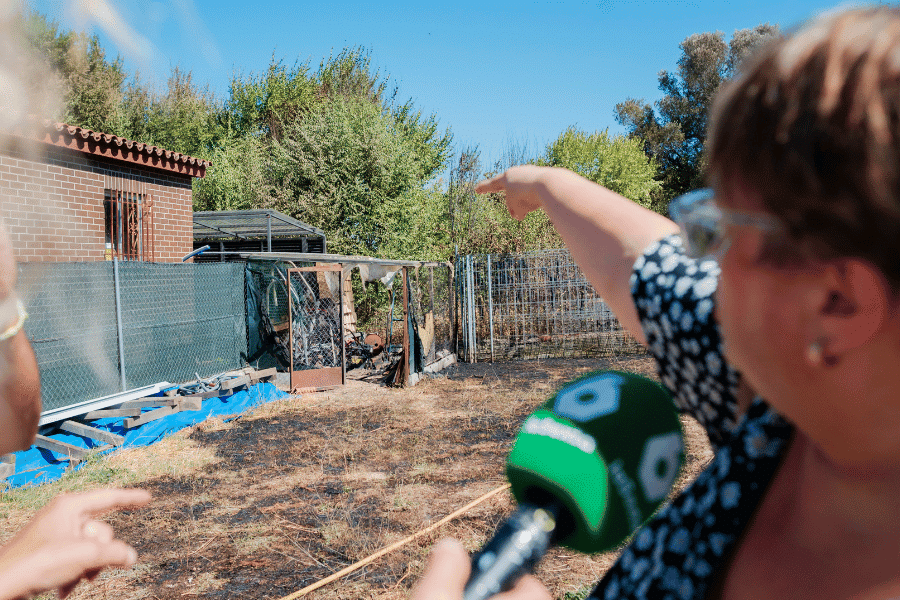
    Sure, you can Zoom someone in on your laptop or chat over WhatsApp. But when you go out to an event or interview you come back with so much more.

    Source link