Get stories like this delivered straight to your inbox. Sign up for The 74 Newsletter
The committee that advises on national vaccine policy today overturned a decades-long recommendation that newborns be immunized for hepatitis B, a policy credited with nearly eliminating the highly contagious and dangerous virus in infants.
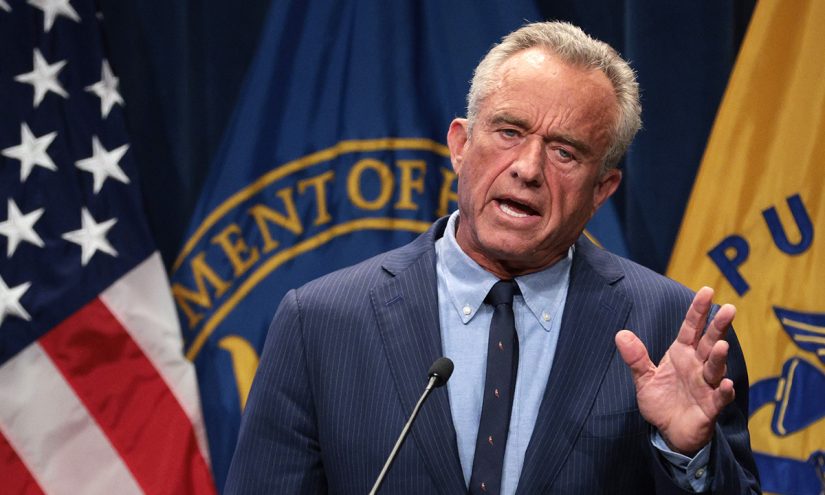
The decision came in an 8-3 vote from the committee that has been handpicked by Health and Human Service Secretary Robert F. Kennedy Jr., a long-time vaccine skeptic. It followed three previous failed attempts to vote on the measure and two days of contentious, confused hearings that further undermined the group’s credibility.
Amy Middleman, a longtime committee liaison and a University of Oklahoma pediatrics professor, said it was the first time the committee “is voting on a policy that, based on all of the available and credible evidence … actually puts children in this country at higher risk — rather than lower risk — of disease and death.”
Susan J. Kressly, the president of the American Academy of Pediatrics, which is continuing to recommend the hepatitis B vaccine at birth, called the committee’s guidance “irresponsible and purposely misleading” and said that it will bring about more infections in infants and children.
“This is the result of a deliberate strategy to sow fear and distrust among families” she said.
The members of the Advisory Committee on Immunization Practices, known as ACIP, who voted in favor of the new guidance said the universal birth dose, first introduced in 1991, had likely played a small role in the reduction of acute cases and noted that the country’s policy was an outlier when compared to those of peer nations, which have more targeted approaches. They also raised concerns about the safety of the vaccine, arguing there were insufficient trials done, a claim that has been widely debunked.
The committee’s new recommendations still include a dose of the vaccine within the first 24 hours of life for infants born to hepatitis B-positive mothers. But for those born to mothers testing negative, they recommend “individual-based decision-making, in consultation with a health care provider” to decide “when or if” to give the vaccine.
Removing the universal birth dose “has a great potential to cause harm,” dissenting committee member Joseph Hibbeln said, “and I simply hope that the committee will accept its responsibility when this harm is caused.”
The committee also voted to upend the rest of the schedule for the hepatitis B vaccine, which is required for school attendance in the vast majority of states and historically included three doses in an infant’s first year. Now, after the first dose, parents will be encouraged to ask their doctors to check infants for a sufficient immune response before proceeding with any future doses, a practice that currently lacks any scientific evidence, according to vaccine experts.
The recommendation now heads to Jim O’Neill, the acting head of the Centers for Disease Control and Prevention, newly installed after September’s ousting of the previously confirmed director, who said she resisted Kennedy Jr.’s demands to pre-approve vaccine recommendations and fire career scientists.
O’Neill’s decision could impact not only the vaccine’s availability, but also its accessibility, since both public and private health insurers look to these policies to determine coverage.
“The American people have benefited from the committee’s well-informed, rigorous discussion about the appropriateness of a vaccination in the first few hours of life,” O’Neill said in a statement Friday.
Former CDC director Rochelle Walensky, now a Harvard University medical professor who recently co-authored a paper on the importance of the hepatitis B birth dose, projected that eliminating it for infants whose mothers test negative will raise the number of newborn hepatitis B cases by 8% each year.
“We rely on an infrastructure of vaccines not only to protect ourselves and our children, but to protect our communities and one another,” Walensky said. “Today’s meeting was just another one of those chisels in the infrastructure.”
Paul Offit, the director of the Vaccine Education Center and an attending physician in the Division of Infectious Diseases at Children’s Hospital of Philadelphia, referred to the committee as “a clown show” in an interview on CNN Friday morning.
“Honestly, it’s a parody of what this committee used to be,” he said. “It’s hard to watch, and for those of us who care about children, it’s especially hard to watch.”
Offit said he doubted that the committee understood how hepatitis B was transmitted in young children — half the time through the mother during childbirth but just as often through casual contact with someone who was chronically infected and didn’t know it. About 50% of the millions of Americans infected with hepatitis B are unaware of it.
“By loosening the [immunization] reins, you are just putting children in harm’s way,” Offit said.
The hepatitis B vaccine was first recommended by ACIP in 1982. Before that point, an estimated 200,000 to 300,000 people, including about 20,000 children, were infected with the highly contagious virus each year.
This was particularly dangerous for infants who have a 90% chance of developing liver cancer or chronic liver disease, if they contract the virus. For 4- and 5-year-olds, that chance remains high at 30-40%.
Committee members argued the guidance change reflected a return to pre-1990s policies that focused on a targeted approach, rather than a universal one. A number of them said that these earlier practices were successful and sufficient in cutting hepatitis B rates, a claim other experts — including those at the CDC — refuted.
In a departure from typical practices, presentations on disease rates and safety concerns at the hearing were not given by CDC subject-matter experts, but instead were led by a climate researcher and a known anti-vaccine activist, who authored a since-retracted paper on the impact of rising autism rates.
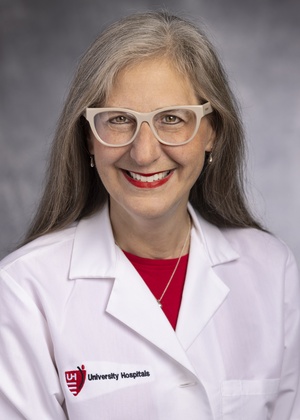
When one CDC hepatitis B expert was invited to weigh in during a question-and-answer period, he expressed concern about the presented research and emphasized the lack of evidence to support the committee’s changes. Middleman jumped in at one point to correct the committee when it misinterpreted “the conclusions of my own study.”
Throughout the meeting, Kennedy Jr.’s appointees spoke about the importance of protecting parents’ rights, seemingly pitting this against public health policy.
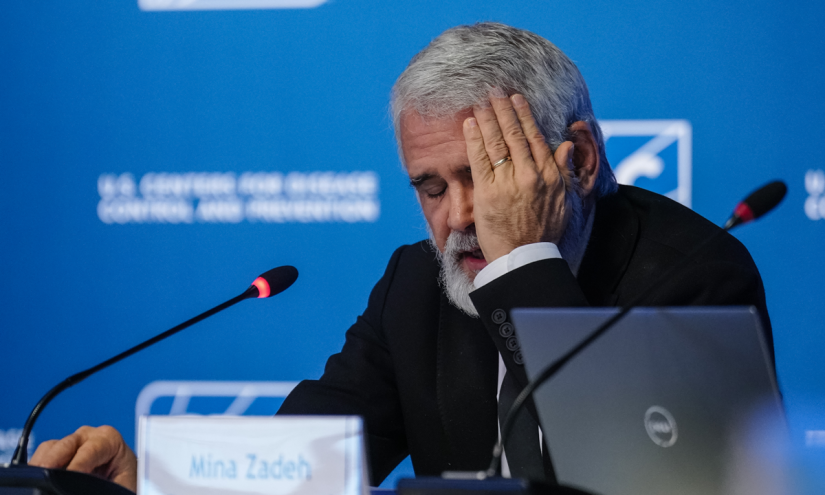
“My personal bias is to err on the side of enabling individual decision making and individual rights over the right [of] the collective,” said Robert Malone, the committee’s vice chair who led the meeting since newly appointed chair Kirk Milhoan, a cardiologist and critic of the COVID vaccine for children, was unavailable to attend in person.
Earlier this year, the committee also voted to change policies surrounding the measles, mumps, rubella and varicella (chickenpox) combination vaccine and this year’s COVID 19 booster.
Historically, committee members were highly qualified medical professionals, vetted for months to years before serving. But, in an unprecedented upheaval in June, Kennedy Jr. fired all 17 existing advisory members via a Wall Street Journal op-ed — after promising he would leave the committee’s recommendations intact — and hastily replaced them.
Many of the new members have espoused anti-vaccine rhetoric and other scientific misinformation and a number of them do not have medical degrees or significant experience in the field.
Cody Meissner, a professor at Dartmouth’s Geisel School of Medicine and the only committee member to have previously served, also opposed the guidance change.

“We’ve heard ‘do no harm’ is a moral imperative,” he said. “We are doing harm by changing this wording, and I vote no.”
The committee vote was the latest in a wave of policy changes, firings and general chaos at the CDC and HHS that have alarmed experts since Kennedy Jr. took charge almost a year ago.
Last week, the Food and Drug Administration’s chief medical and scientific officer released an unsupported memo claiming COVID-19 vaccinations had contributed to the deaths of at least 10 children. Last month, Kennedy Jr. ordered CDC staff to change information on their website to promote a link between vaccines and autism, a widely discredited theory that he has promoted for years.
According to Offit, the negative impacts are already being seen: This year tallied the greatest number of measles cases (1,828) since it was declared eliminated in 2000, the majority of which were in unvaccinated children, two of whom died. It marked the first pediatric measles deaths since 2003.
There have also been nearly 300 childhood flu deaths — among predominantly unvaccinated kids — the most seen since the country’s last flu pandemic and whooping cough cases are surging in some states. The highly contagious respiratory infection, prevented through the DTaP vaccine, has killed three unvaccinated infants in Kentucky.
Did you use this article in your work?
We’d love to hear how The 74’s reporting is helping educators, researchers, and policymakers. Tell us how