Quick Summary: Building a reliable, high-performing robot for the 2025-2026 DECODE Season is one of the most rewarding parts of the FTC robot build process. Whether your team is using the Studica Robotics FTC Starter Kit or the FTC Drive Base Kit, both systems provide a strong mechanical foundation. However, the real power lies in following an iterative design approach, where you prototype, test, analyze, and refine your robot over time.
This article guides teams through practical, beginner-friendly methods to upgrade both kits while enhancing their engineering skills.
Why Iteration Matters for Your FTC Robot Build
One of the most valuable lessons in FTC is understanding that robots are not built once; they’re built over time. Every test, every failure, every small adjustment moves your team closer to a stable, high-scoring machine.
Both Studica Robotics kits are designed to support that iterative design process:
Iterating early and often helps teams:
➡️ Improve driving performance
➡️ Test mechanisms in real-world conditions
➡️ Make informed upgrades instead of guessing
➡️ Build confidence with hardware and mechanical systems
The Engineering Cycle Behind FTC Iteration
Iterative design in FTC is not a random trial and error process. It is a structured engineering cycle that mirrors professional engineering practices. Every improvement your team makes follows the same core steps found in professional engineering:
Define → Ask → Imagine → Plan → Prototype → Test → Iterate
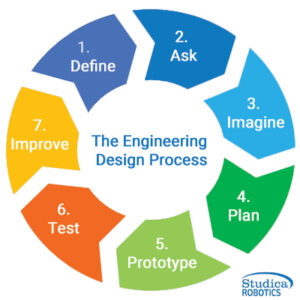 This cycle helps teams:
➡️ Identify what needs to change or improve
➡️ Explore constraints, rules, and existing solutions
➡️ Brainstorm multiple ways to solve the problem
➡️ Select an approach that fits strategy and resources
➡️ Build quick prototypes to try ideas early
➡️ Test designs on the field to gather real performance data
➡️ Refine based on what the tests reveal
Using these steps gives teams a clear, repeatable method for refining mechanisms, improving scoring consistency, and strengthening overall robot reliability throughout the season. Review the full breakdown of the Engineering Design Process.
How to Iterate Effectively During Your FTC Robot Build
No matter which kit your team uses, these principles ensure smarter, safer iteration.
➡️ Make one change at a time to isolate what works and what does not
➡️ Test early and test often to see real performance in the field
➡️ Take pictures and document changes to save time during troubleshooting
➡️ Keep wiring organized to reduce disconnects and simplify servicing
➡️ Build with symmetry when possible to make balancing and reinforcement easier
Iterating with the Studica Robotics Building System
The Studica Robotics building system is designed for easy reconfiguration, ideal for rapid prototyping and refinement during an FTC robot build.
 Key Advantages:
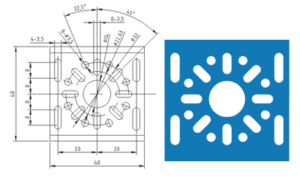
✅ Radial Hole Pattern:
The unique hole pattern makes most structural pieces universally compatible, allowing parts to be easily repositioned or swapped.
✅ Versatile Structural Components:
Available in multiple lengths and colors for refined prototyping:
✅Easy to Swap and Adjust:
Consistent hole spacing allows teams to:
-
-
- Reinforce weak points
- Add bracing
- Change wheel types
- Adjust motor layout
- Mount sensors cleanly
-
This flexibility is exactly what teams need when refining their robot design.
Upgrading the Starter Kit for Your FTC Robot Build
The FTC Starter Kit provides the baseline components for this season’s DECODE Starter Bot. It is designed to help teams:
- Begin programming both autonomous and tele-op
- Drive-test early
- Understand drivetrain behavior
- Work with OMS components
- Add prototype mechanisms to the FTC Starter Bot to evaluate ideas early in the season.
Once the Starter Bot is assembled and tested, teams can begin upgrading it.
FTC Starter Kit Upgrade Ideas
- Add Low-Profile U-Channel Wheel Guards:
Prevents field elements or other robots from catching on the drivetrain. - Experiment with Different Flex Wheels:
Different durometer (hardness) ratings affect how flex wheels compress and interact with game pieces, helping teams fine-tune intake behavior. - Explore Motor Options:
Studica Robotics offers Maverick HEX shaft motors with multiple planetary gearbox options available.
Teams frequently choose between higher torque options and higher RPM options, depending on their drive strategy or mechanism needs. - Reinforce the Chassis:
Extra brackets or beams help maintain rigidity as mechanisms are added. - Transition to a Mechanism-Ready Chassis:
Many teams take the FTC Starter Bot’s scoring mechanism concepts and move them onto a more competition-ready Mecanum chassis. This helps teams learn:
🔹 How to mount mechanisms cleanly
🔹 How to maintain access to wiring
🔹 How to improve scoring consistency
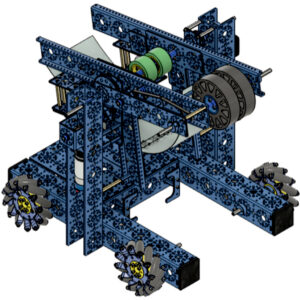
FTC Starter Bot: Shooter on Mecanum ChassisThis example takes the scoring system from the Studica Robotics FTC Starter Bot and places it onto a refined, competition ready Mecanum chassis. It’s a great starting point for teams looking to practice drivetrain control, get comfortable with strafing, and improve scoring efficiency. |
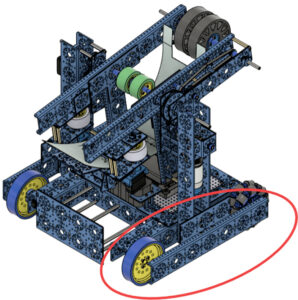
FTC Starter Bot: Wheel Guard ConfigurationThis variation keeps the core Starter Bot design but adds wheel guards to boost durability and protect the drivetrain. The guards help prevent walls, other robots, and game elements from catching on the wheels or interfering with rotation. |
 |
 |
| What it demonstrates: How teams can reuse a proven mechanism while upgrading mobility for smoother alignment, better field positioning, and more consistent scoring. |
What it demonstrates: A simple, low-effort upgrade that improves reliability without significant structural changes. |
Upgrading the FTC Drive Base Kit
The FTC Drive Base Kit provides a complete mecanum drivetrain with omnidirectional movement, giving teams flexibility when designing mechanisms. Unlike the FTC Starter Kit, the FTC Drive Base Kit only provides the materials needed to create a drivetrain, giving teams total creative freedom to design their own scoring mechanisms.
FTC Drive Base Kit Upgrade Ideas
- Reinforced Mecanum Wheel Guards – Helps protect rollers during contact-heavy gameplay using:
🔹 Standoffs
🔹 T Brackets
🔹 End Piece Plates
🔹 Low-Profile U-Channels - Vertical Motor Mounting – Some teams choose to mount motors vertically to create a clean underside with space for:
🔹 Odometry
🔹 Sensors
🔹 Cable routing - Leave Room for Sensors and Expansion – The area under the 288 mm U-Channels is ideal for:
🔹 Odometry pods
🔹 Distance sensors
🔹 IMU stabilization mounts
🔹 Future scoring mechanisms - Improve Structural Rigidity – As teams add mechanisms, reinforcing the drivetrain with additional brackets or cross-members helps maintain frame strength.
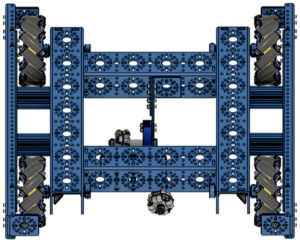
FTC Drive Base Kit: Protected Drivetrain with Odometry SupportThis version doesn’t include scoring mechanisms, but it features reinforced wheel guards designed to shield the Mecanum rollers and support the drivetrain during high-contact DECODE gameplay and space for odometry pods. |
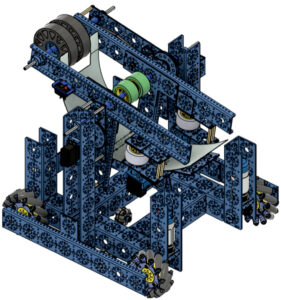
FTC Drive Base Kit: Vertical Motor Mount for Under-Channel Odometry SpaceThis design is a more competition-focused refinement of the FTC Drive Base Kit v2. The motors are mounted vertically, leaving a clean channel beneath the 288 mm U-Channels—perfect for odometry pods, sensors, or future add-ons. It also includes reinforced Mecanum wheel guards built using standoffs, T-brackets, end plates, and low-profile U-Channels to help protect the wheels from hard impacts. |
 |
 |
| What it demonstrates: Wheel guards and integrated odometry pods for more accurate autonomous tracking and movement. |
What it demonstrates: A clean, expandable layout optimized for sensors and autonomous performance. |
Frequently Asked Questions
What’s the main difference between the FTC Starter Kit and the FTC Drive Base Kit?
The FTC Starter Kit includes everything needed for a baseline Starter Bot. The FTC Drive Base Kit is drivetrain-only, giving teams full freedom to design.
Do I need special tools to upgrade the FTC Starter Bot?
No. The unique Studica Robotics hole pattern allows parts, motors, gears, and other components to connect easily without special equipment.
Can I use the FTC Starter Bot for prototyping?
Yes. Many teams test early mechanisms or scoring ideas on the FTC Starter Bot.
Can the FTC Drive Base Kit support advanced mechanisms?
Absolutely. Its open layout is designed for sensors, scoring systems, and expansion structures.
Should I choose torque or high-RPM motors?
It depends on your design. Many teams prototype with different planetary gearbox ratios on their motor to determine their preferred performance.
Why is iteration so important in FTC?
Each change helps teams improve reliability, score faster, and understand how mechanical decisions affect robot behavior.
Where can I learn more about the engineering design process?
Learn more here: Dive into Robotics with the Engineering Design Process
Closing Thoughts
Both the FTC Starter Kit and FTC Drive Base Kit give teams a reliable starting point for their FTC robot build. Most teams improve performance by using the design-test-refine process reinforcing structure and refining layouts throughout the season. These adjustments help teams understand mechanical behavior while gradually developing a more consistent robot.