Category: Rural schools

  • I didn’t think I needed the help or advice, but a new literacy teaching coach from afar gave me the self-confidence I lacked

    I didn’t think I needed the help or advice, but a new literacy teaching coach from afar gave me the self-confidence I lacked

    by Thomas MacCash, The Hechinger Report
    November 24, 2025

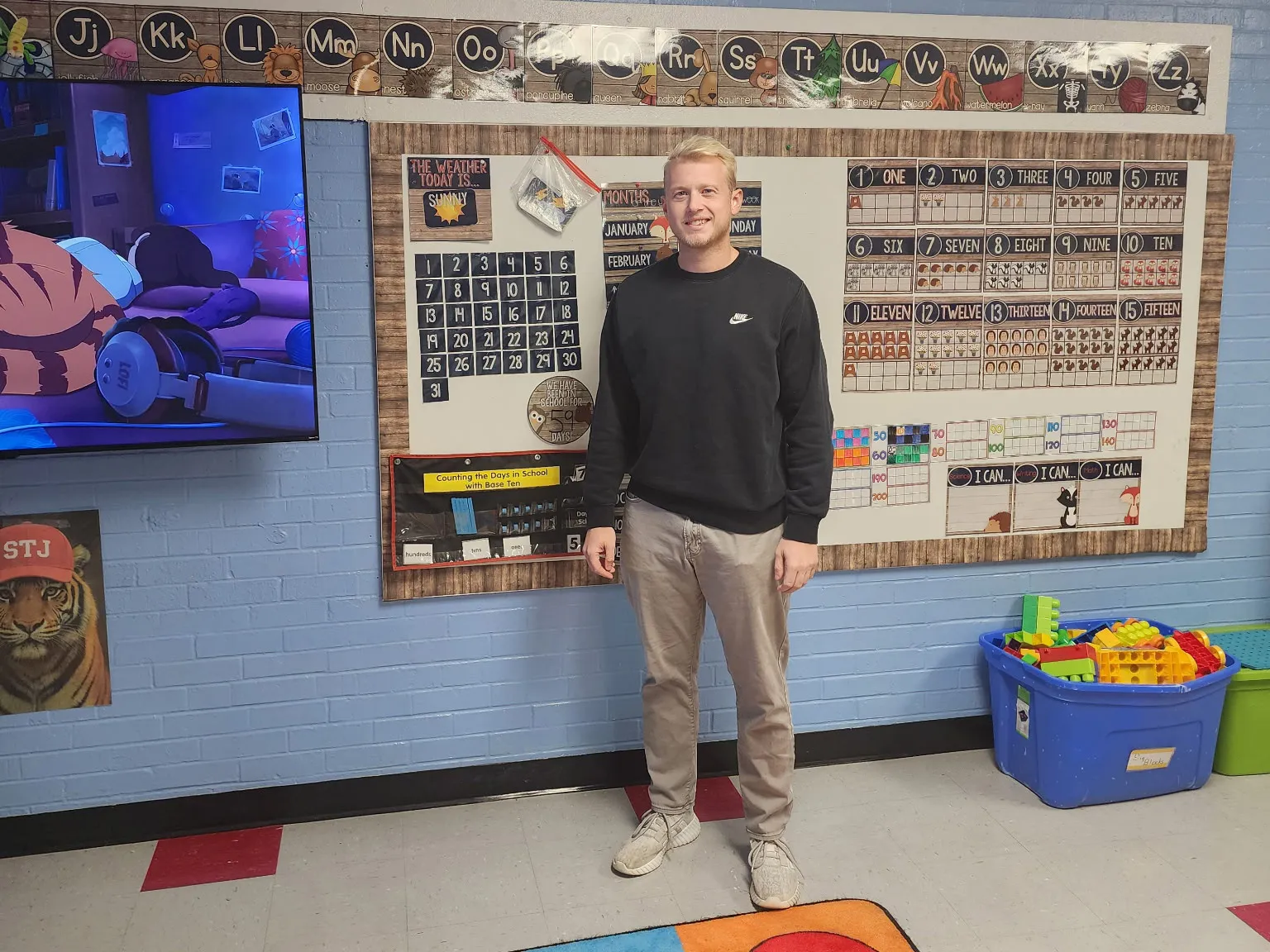
    I was the only guy in my education classes at Missouri State University, and until this year I was the only male out of nearly 100 teachers in my school. My approach to teaching is very different, and more often than not was met with a raised brow rather than a listening ear.  

    I teach kindergarten, and there are so few men in early childhood education that visitors to my classroom tend to treat me like a unicorn. They put me in a box of how I am “supposed” to be as a male in education without knowing the details of my approach to teaching.  

    As a result, I’d grown skeptical about receiving outside help. When someone new came into my classroom to provide unsolicited “support,” my immediate thought was always, “OK, great, what are they going to cook up? What are they trying to sell me?” I’d previously had former high school administrators come into my classroom to offer support, but they didn’t have experience with the curriculum I used or with kindergarten. The guidance was well-intentioned, but not relevant. 

    Related: A lot goes on in classrooms from kindergarten to high school. Keep up with our free weekly newsletter on K-12 education.  

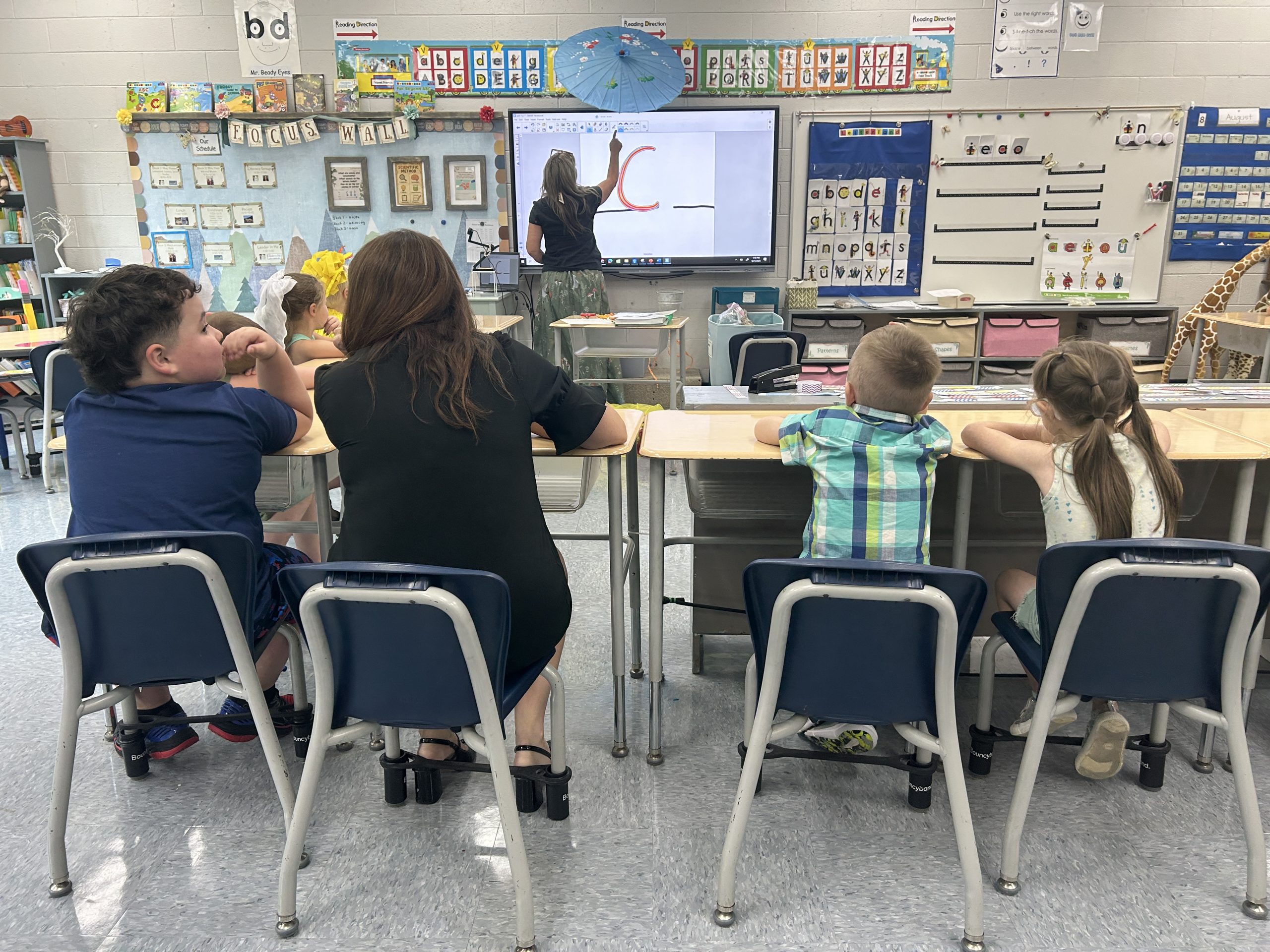
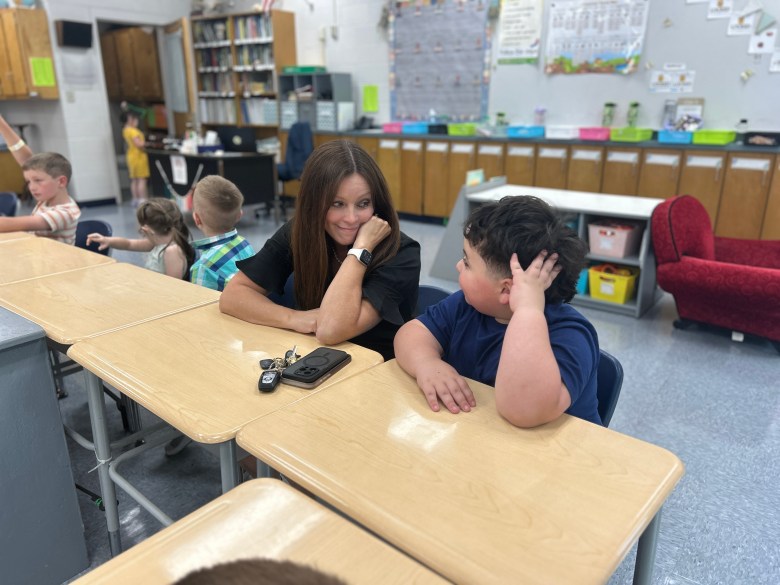
    My entire view of getting help and support changed when Ashley Broadnax, a literacy coach from New Orleans, nearly 700 miles away, came into my class in St. James, Missouri, population 3,900. Ashley works for The New Teacher Project, or TNTP, a nonprofit aiming to increase students’ economic and social mobility. Once a month for a full academic year, she came in to help us transition to a “science of reading” approach, as part of a special pilot program, the Rural Schools Early Literacy Collaborative. 

    I never thought I would love having a literacy coach and their feedback, but I now believe it is something that can work for many teachers. I hope that as Missouri and other states transition to new ways of teaching reading, more coaches will be available for others who could use the support. The state says that over 15,000 teachers may get trained in the science of reading to help build our knowledge of how children learn to read and what type of instruction is most effective.  

    Ashley had used the curriculum herself and was on hand to provide timely support. This was the first time I received relevant feedback from a former teacher who had firsthand experience with the lessons I was leading.  

    It completely changed my approach and my students’ learning. Although I come from a family of teachers — my mom, grandma and brother all taught — I had started teaching two weeks out of college, and I wasn’t familiar with the new reading curriculum and didn’t have a lot of self-confidence. 

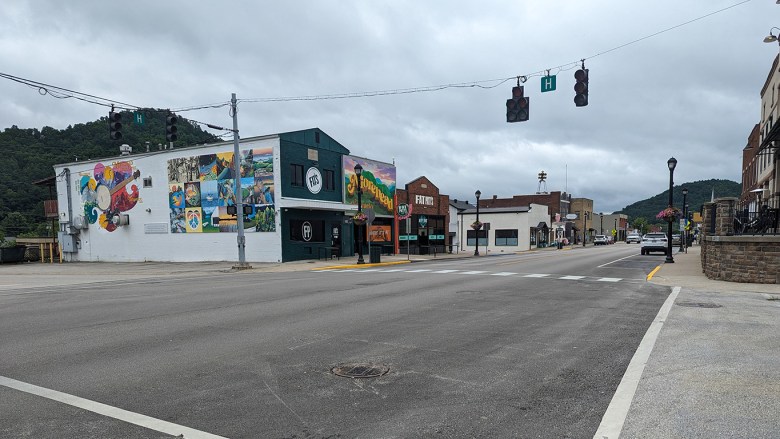
    When Ashley came in for the very first visit, I knew working with her was going to be different. Even though she had never been to St. James, she was sensitive to the rural context where I’ve spent all my life. We’re 90 minutes southwest of St. Louis and a little over an hour southeast of Jefferson City, the state capital. In St. James, you may see a person on a horse riding past a Tesla a few times a year. I’ve seen this world of extremes play out in school open houses and in the learning gaps that exist in my kindergarten classroom.  

    Ashley had researched our community and was open to learning more about our nuances and teaching styles. She was also the first coach I’d met who actually had taught kindergarten, so she knew what worked and what didn’t. As a young teacher with a significant number of students with special needs, I really appreciated this.  

    Related: How coaches for teachers could improve reading instruction, close early academic gaps 

    Ashley provided me with a pathway to follow the new curriculum while also maintaining my unique approach to teaching. Everything came from a place of ensuring that teachers have what they need to be successful, rather than an “I know better than you do” attitude. She would let me know “I loved how you did this” and she’d ask, “Can you extend it in this way?” or tell me, “This was great, here’s how you can structure it a bit further.” 

    Not everything she did to help was profound. But her little tips added up. For example, the curriculum we used came with 10 workbooks for each student as well as stacks of literature, and I needed help integrating it into my lessons.  

    I soon noticed a shift in my ability to teach. I was learning specific ways to help students who were on the cusp of catching on, along with those who weren’t getting it at all.  

    Throughout the course of the year, we saw how our students were more quickly achieving proficiency in English language arts. In my school, according to the Missouri Department of Elementary and Secondary Education, the percentage of kindergartners reading on grade level went from 82 percent in the fall to 98 percent in the spring; the percentage of first graders on grade level went from 41 percent to 84 percent.  

    There were similar gains across the other schools in my county participating in the pilot program; one school had all of its kindergarten and first grade students demonstrate growth on reading assessments. Those students, on average, made gains that were more than double typical annual growth, TNTP found. 

    I attribute a great deal of this progress to the support from Ashley and her peers. I know I am a better educator and teacher for my students. Her support has made a change for the better in my grade and classroom. 

    Thomas MacCash is a kindergarten teacher at Lucy Wortham James Elementary in St. James, Missouri.  

    Contact the opinion editor at [email protected].  

    This story about literacy teaching coaches was produced by The Hechinger Report, a nonprofit, independent news organization focused on inequality and innovation in education. Sign up for Hechinger’s weekly newsletter.

    This <a target=”_blank” href=”https://hechingerreport.org/teacher-voice-im-a-new-male-kindergarten-teacher-in-rural-missouri-extra-support-made-a-huge-difference-to-my-class/”>article</a> first appeared on <a target=”_blank” href=”https://hechingerreport.org”>The Hechinger Report</a> and is republished here under a <a target=”_blank” href=”https://creativecommons.org/licenses/by-nc-nd/4.0/”>Creative Commons Attribution-NonCommercial-NoDerivatives 4.0 International License</a>.<img src=”https://i0.wp.com/hechingerreport.org/wp-content/uploads/2018/06/cropped-favicon.jpg?fit=150%2C150&amp;ssl=1″ style=”width:1em;height:1em;margin-left:10px;”>

    <img id=”republication-tracker-tool-source” src=”https://hechingerreport.org/?republication-pixel=true&post=113481&amp;ga4=G-03KPHXDF3H” style=”width:1px;height:1px;”><script> PARSELY = { autotrack: false, onload: function() { PARSELY.beacon.trackPageView({ url: “https://hechingerreport.org/teacher-voice-im-a-new-male-kindergarten-teacher-in-rural-missouri-extra-support-made-a-huge-difference-to-my-class/”, urlref: window.location.href }); } } </script> <script id=”parsely-cfg” src=”//cdn.parsely.com/keys/hechingerreport.org/p.js”></script>
    Source link

  • Rural teacher shortages could get worse thanks to Trump’s visa fee

    Rural teacher shortages could get worse thanks to Trump’s visa fee

    by Ariel Gilreath, The Hechinger Report
    November 7, 2025

    HALIFAX COUNTY, N.C.When Ivy McFarland first traveled from her native Honduras to teach elementary Spanish in North Carolina, she spent a week in Chapel Hill for orientation. By the end of that week, McFarland realized the college town on the outskirts of Raleigh was nowhere near where she’d actually be teaching.

    On the car ride to her school district, the city faded into the suburbs. Those suburbs turned into farmland. The farmland stretched into more farmland, until, two hours later, she made it to her new home in rural Halifax County.

    “I was like, ‘Oh my God, this is far,’” McFarland said. “It was shocking when I got here, and then I felt like I wanted to go back home.”

    Nine years later, she’s come to think of Halifax County as home.

    In this stretch of rural North Carolina, teachers hail from around the globe: Jamaica, the Philippines, Honduras, Guyana. Of the 17 teachers who work at Everetts Elementary School in the Halifax County school district, two are from the United States. 

    In this rural school district surrounded by rural school districts, recruiting teachers has become a nearly impossible task. With few educators applying for jobs, schools like Everetts Elementary have relied on international teachers to fill the void. Districtwide, 101 of 156 educators are international. 

    “We’ve tried recruiting locally, and it just has not worked for us,” said Carolyn Mitchell, executive director of human resources in the eastern North Carolina district of about 2,100 students. “Halifax is a rural area, and a lot of people just don’t want to work in rural areas. If they’re not people who are from here and want to return, it’s challenging.” 

    Around the country, many rural schools are contending with a shortage of teacher applicants that has ballooned into a crisis in recent years. Fewer students are enrolling in teacher training programs, leading to a shrinking pipeline that’s made filling vacancies one of the most challenging problems for school leaders to solve in districts with smaller tax bases and fewer resources than their suburban and urban peers. In certain grade levels and subject areas — like math and special education positions — the challenge is particularly acute. Now, some of the levers rural schools have used to boost their teacher recruitment efforts are also disappearing.

    This spring, the federal Department of Education eliminated teacher residency and training grants for rural schools. In September, President Donald Trump announced a $100,000 fee on new H-1B visa applications — visas hundreds of schools like Everetts Elementary use to hire international teachers for hard-to-staff positions — saying industries were using the visas to replace American workers with “lower-paid, lower-skilled labor.” A lawsuit filed by a coalition of education, union, nonprofit and other groups is challenging the fee, citing teacher shortages. Rural schools are also bracing for more cuts to federal funding next year.

    “We’re not only talking about a recruitment and retention problem. We’re talking about the collapse of the rural teacher workforce,” said Melissa Sadorf, executive director of the National Rural Education Association.

    Related: Become a lifelong learner. Subscribe to our free weekly newsletter featuring the most important stories in education. 

    Most of Halifax’s international teachers arrive on H-1B visas, which allow them to work in the U.S. for about five years with the possibility of a green card at the end of that period. About one-third of the district’s international teachers have J-1 visas, which let them work in the country for three years with the possibility of renewing it for two more. At the end of those five years, educators on J-1 visas are required to return to their home countries.

    A few years ago, Halifax County Schools decided to shift from hiring teachers on J-1 visas in favor of H-1B, hoping it would reduce teacher turnover and keep educators in their classrooms for longer. The results have been mixed, Mitchell said, because within a few years, some of their teachers ended up transferring to bigger, higher-paying districts anyway. 

    There are trade-offs for the teachers, too. Mishcah Knight came to the U.S. from Jamaica both to expand her skills and increase her pay as an educator. In the rural North Carolina county, finding transportation has been the biggest challenge for Knight, who teaches second grade. 

    She lacks a credit history needed to buy a car, leaving her reliant on carpooling to work. A single taxi driver serves the area, which doesn’t have public transit, Uber or Lyft. “Sometimes, he’s in Virginia,” Knight said. “It’s lucky when we actually get him to take us somewhere.”

    Being away from family also takes its toll on teachers. Nar Bell Dizon, who has taught music at Everetts Elementary since 2023, had to leave his wife and son back home in the Philippines. He visits in the summer, but during the school year, he sees them only through video calls. 

    “This is what life is — not everything is smooth,” Dizon said. “There will always be struggles and sacrifices.”

    Dizon’s first year in Everetts Elementary School was hard — it took time adapting to a different teaching style and classroom management. Now that he’s in his third year, he feels like he’s gotten his feet beneath him. 

    “When you can build a rapport with your students, things become easier,” Dizon said.

    When her international teachers are able to stay for longer, the students perform better, said Chastity Kinsey, principal of Everetts Elementary. “I know the benefit the teachers bring to the classroom,” Kinsey said. “After the first year or two, they normally take off like rock stars.” 

    Related: Trump’s cuts to teacher training leave rural school districts, aspiring educators in the lurch 

    Trump’s new fee does not address any of the challenges the Halifax district had with the H-1B visa, and it effectively slams the door on future hires. Now, the district will have to rely on J-1 visas to recruit new international teachers, meaning the educators will have to leave just as they’ve acclimated to their classrooms.

    “We just can’t afford to,” Mitchell said of paying the $100,000 fee. Other districts, she said, might turn to waivers allowing them to increase class sizes and hire fewer teachers, among other strategies.

    Since the applicant pool began drying up about a decade ago, the make-up of the district’s teaching staff has slowly shifted to international teachers. 

    At the heart of the problem is that when a position opens up, few, if any, citizens apply, said Katina Lynch, principal of Aurelian Springs Institute of Global Learning, an elementary school in Halifax County. 

    When Lynch had to hire a new fourth grade teacher this summer, she received three applications: Only one was a licensed teacher from the U.S.

    Nationally, about 1 in 8 teaching positions are either vacant or filled by teachers who are not certified for the position, according to data from the nonprofit Learning Policy Institute, published in July. In addition to fewer college students graduating with degrees in education, diminished public perception of the teaching profession and political polarization of schools are to blame, school leaders said. In some states, the growth of charter and private school options has made competing for teachers even harder. On top of a widening pay gap between rural and urban districts, it’s a perfect storm for schools in more remote parts of the country, said Sadorf.

    In rural Bunker Hill, Illinois, where more than 500 students attend two schools, some positions have gone unfilled for years. “We’ve posted for a school psychologist for years, never had anybody apply. We posted for a special ed teacher — have not had anybody apply. We’ve posted for a high school math teacher two years in a row,” said Superintendent Todd Dugan. “No applicants.”

    As a result, students often end up with a long-term substitute or an unlicensed student teacher. 

    When teachers do arrive in the district, Dugan works hard to try to get them to stick around. He pairs new teachers with experienced mentors, and uses federal funding to help those who want master’s degrees to afford them. 

    He also formed a calendar committee to give teachers input on which days they get off during the year. “More than pay, having at least a little bit of involvement, control and say in your work environment will cause people to stay,” said Dugan. It seems to be working: Bunker Hill’s teacher retention rate is more than 92 percent. 

    Related: Schools confront a new reality: They can’t count on federal money 

    Schools across the country face the same challenges to varying degrees. Several years ago, the Everett Area School District in southern Pennsylvania would receive 30 to 50 applications for a given position at its elementary schools, Superintendent Dave Burkett said. Now, they’re lucky if they get three or four.

    Last year, the district learned that a middle school science teacher would retire that summer. Just three people applied for the opening, and only one was certified for the role.

    “We offered the job before that person even left the building,” Burkett said. The candidate accepted it, but when it was time to fill out paperwork that summer, the teacher had taken a different job in a bigger district.

    One way Burkett has tried to address the shortage is to hire a permanent, full-time substitute teacher in each of its buildings. If a vacancy opens up that they haven’t been able to fill, the full-time substitute can step in until a permanent replacement is found. The permanent substitute makes more than a traditional sub and also receives health insurance. 

    Sadorf, with the National Rural Education Association, says other ways to help include introducing students to teacher training pathways starting in high school, building “grow-your-own” programs to train local people for teaching jobs, and offering loan forgiveness and housing support.

    Sadorf’s organization is in favor of creating an educator-specific visa track that would allow international teachers to be in communities for longer. The group is also in favor of exempting schools from the $100,000 H-1B fee. “Stabilizing federal support is something that really needs to be focused on at the federal level,” Sadorf said.

    At Everetts Elementary in Halifax County, McFarland, the educator from Honduras, is among the most senior teachers in the school. She has adapted to the rural community, where she met and fell in love with her now-husband. She gets asked sometimes why she hasn’t moved to a bigger city.

    “Education has taken me places I’ve never expected,” McFarland said. “For me, being here, there’s a reason for it. I see the difference I can make.”

    Contact staff writer Ariel Gilreath on Signal at arielgilreath.46 or at [email protected].

    This story about the visa fee was produced by The Hechinger Report, a nonprofit, independent news organization focused on inequality and innovation in education. Sign up for the Hechinger newsletter.

    This <a target=”_blank” href=”https://hechingerreport.org/federal-policies-risk-worsening-an-already-dire-rural-teacher-shortage/”>article</a> first appeared on <a target=”_blank” href=”https://hechingerreport.org”>The Hechinger Report</a> and is republished here under a <a target=”_blank” href=”https://creativecommons.org/licenses/by-nc-nd/4.0/”>Creative Commons Attribution-NonCommercial-NoDerivatives 4.0 International License</a>.<img src=”https://i0.wp.com/hechingerreport.org/wp-content/uploads/2018/06/cropped-favicon.jpg?fit=150%2C150&amp;ssl=1″ style=”width:1em;height:1em;margin-left:10px;”>

    <img id=”republication-tracker-tool-source” src=”https://hechingerreport.org/?republication-pixel=true&post=113282&amp;ga4=G-03KPHXDF3H” style=”width:1px;height:1px;”><script> PARSELY = { autotrack: false, onload: function() { PARSELY.beacon.trackPageView({ url: “https://hechingerreport.org/federal-policies-risk-worsening-an-already-dire-rural-teacher-shortage/”, urlref: window.location.href }); } } </script> <script id=”parsely-cfg” src=”//cdn.parsely.com/keys/hechingerreport.org/p.js”></script>

    Source link

  • ‘The clock is ticking’: Shutdown imperils food, child care for many

    ‘The clock is ticking’: Shutdown imperils food, child care for many

    For families in more than a hundred Head Start programs across the country, November could mark the beginning of some hard decisions.

    On Saturday, 134 Head Start centers serving 58,400 children would normally receive their annual federal funding, but the ongoing government shutdown has put that money in jeopardy. The federally funded Head Start provides free preschool and child care for low-income families, and is particularly important to rural communities with few other child care options. 

    At the same time, the federal government has said that because of the shutdown, it cannot distribute Supplemental Nutrition Assistance Program (SNAP) benefits that families also expect on the first of the month. Plus, a program that provides extra money for families to buy milk, baby formula, and fruit and vegetables is also running out of $300 million in emergency funding provided to it earlier this month.

    Related: Young children have unique needs and providing the right care can be a challenge. Our free early childhood education newsletter tracks the issues. 

    All this means low-income families are facing upheaval on multiple fronts, said Christy Gleason, the vice president of policy, advocacy and campaigns for the nonprofit group Save the Children. Families in Head Start often receive other federal benefits, so they could simultaneously be facing a disruption in child care — and the meals provided there — and public food assistance.

    “You’re going to end up with parents and caregivers who are skipping meals themselves, because that’s the way they put food on the table for their kids,” Gleason said. Save the Children manages Head Start programs in rural Arkansas, Indiana, Louisiana, North Carolina, Oklahoma and Tennessee, but its programs are not among those affected by the Nov. 1 annual funding deadline. Head Start has 1,600 programs that receive their yearly funding throughout the calendar year.

    There are still a few days left to avert the crisis, Gleason said. More than two dozen states are suing the government to force it to use a pot of money that had been set aside for paying SNAP benefits in an emergency. President Donald Trump also said this week that the food aid situation would be fixed, but didn’t offer details. Federal lawmakers have also introduced different proposals to keep food assistance money flowing. A handful of states said they will continue to pay for the supplemental milk and formula program, known as WIC. Head Start programs may be able to tap local money, but that isn’t expected to last long. 

    “The clock is ticking,” Gleason said. “Every hour that goes by is an hour where the stress for these families grows, but it’s not too late for government action to change course and make sure children are not the ones to suffer the consequences of political decisions.”

    New data quantifies child care gaps

    Nearly 15 million ages 5 and under in the United States have “all available parents” — both adults in a two-parent household, or one if the child has one adult caregiver — in the workforce. The country has about 11 million licensed or registered child care slots.

    That leaves about 4 million children whose families may need child care — a hard-to-grasp number that obscures the fact that some parts of the country may have greater needs than other regions because child care providers are concentrated in some areas and sparse in others.

    The Buffett Early Childhood Institute, based at the University of Nebraska, is trying to address that problem. It has created a map that it says will give a more accurate view of where child care is needed the most, down to the congressional district. 

    The map captures the number of children with working parents and the number of available spots in licensed child care. What it cannot capture is demand — not every family needs child care, even families with parents in the workforce — but the map does allow policymakers a starting place for a more nuanced evaluation of their community’s needs.

    “We know the limitations of the data, but we also know in order to address the gap, this needs to be broken down into bite-sized pieces,” said Linda Smith, director of policy at the Buffett Institute.

    This story about the government shutdown was produced by The Hechinger Report, a nonprofit, independent news organization focused on inequality and innovation in education. Sign up for the Hechinger newsletter.

    The Hechinger Report provides in-depth, fact-based, unbiased reporting on education that is free to all readers. But that doesn’t mean it’s free to produce. Our work keeps educators and the public informed about pressing issues at schools and on campuses throughout the country. We tell the whole story, even when the details are inconvenient. Help us keep doing that.

    Join us today.

    Source link

  • Rural Americans support more government spending on child care

    Rural Americans support more government spending on child care

    Hello! This is Christina Samuels, the early education editor here at Hechinger.

    By now, I hope you’ve had a chance to read my colleague Jackie Mader’s story about the important role that Head Start plays in rural communities. While Jackie set her story in western Ohio, she also interviewed Head Start parents and leaders in other parts of the country and collected their views for a follow-up article.

    In a fortunate bit of timing, the advocacy group First Five Years Fund published the results of a survey it commissioned on rural Americans and their feelings on child care access and affordability. Like the people Jackie interviewed, the survey respondents, more than half of whom identified as supporters of President Donald Trump, said they had very positive views of Head Start. The federally funded free child care program received positive marks from 71 percent of rural Republicans, 73 percent of rural independents and 92 percent of rural Democrats.

    The survey also found that 4 out of 5 respondents felt that finding quality child care is a major or critical problem in their part of the country. Two-thirds of those surveyed felt that spending on child care and early education programs is a good use of taxpayer dollars, and a little more than half said they’d like to see more federal dollars going to such programs.

    First Five Years Fund was particularly interested in getting respondents to share their thoughts on Head Start, said Sarah Rubinfield, the managing director of government affairs for First Five Years Fund. The program has been buffeted by regional office closures and cuts driven by the administration’s Department of Government Efficiency. 

    “We recognize that these are communities that often have few options for early learning and care,” Rubinfield said.

    In the survey, rural residents said they strongly supported not just the child care offered by Head Start, but the wraparound services such as healthy meals and snacks and the program’s support for children with developmental disabilities. Though Head Start programs are federally funded, community organizations are the ones in charge of spending priorities.

    “Rural voters want action. They support funding for Head Start and for child care. They want Congress to do more,” Rubinfield said. Though the “big beautiful bill” signed into law in July expands the child care tax credit for low-income families, survey respondents “recognized that things were not solved,” she added.

    The First Five Years Fund survey was released just a few days before a congressional standoff led to a government shutdown. The shutdown is not expected to touch Head Start immediately, said Tommy Sheridan, the deputy director of the National Head Start Association, in an interview with The New York Times. The 1,600 Head Start programs across the country receive money at different points throughout the calendar year; eight programs serving about 7,500 children were slated to receive their federal funding on Oct. 1, Sheridan told the Times. All should be able to continue operating, as long as the shutdown doesn’t last more than a few weeks, he said. 

    “We’re watching with careful concern but trying not to panic,” Rubinfield said. “We know the impacts may not be immediate, but the longer this goes on, the harder the impacts may be for families and programs.”

    This story about rural Americans was produced by The Hechinger Report, a nonprofit, independent news organization focused on inequality and innovation in education. Sign up for the Hechinger newsletter.

    The Hechinger Report provides in-depth, fact-based, unbiased reporting on education that is free to all readers. But that doesn’t mean it’s free to produce. Our work keeps educators and the public informed about pressing issues at schools and on campuses throughout the country. We tell the whole story, even when the details are inconvenient. Help us keep doing that.

    Join us today.

    Source link

  • What I learned about Head Start in rural America

    What I learned about Head Start in rural America

    When Starr Dixon heard the Trump administration was floating a proposal last spring to eliminate Head Start, the 27-year-old parent in rural Michigan cried for a week.

    The free, federally funded early learning program has been life-changing for her and her young daughter, she said. It provided stability after Dixon, who lives about 100 miles north of Lansing, left a yearslong abusive relationship. 

    While her 3-year-old daughter has blossomed socially, emotionally and verbally in the program during the last year and a half, Dixon has taken on numerous volunteer positions with Head Start, gaining experience that she can put on her resume after a 7-year gap in employment. She hopes to ultimately apply for a job at Head Start. 

    “It has just completely transformed my life,” she said.

    This year, I talked to people in communities across rural America and learned how Head Start is essential in places where there are few other child care options. Head Start also provides an economic boost for these areas and serves as direct support for parents, many of whom go on to volunteer for or get jobs at their local programs. 

    Related: Young children have unique needs and providing the right care can be a challenge. Our free early childhood education newsletter tracks the issues. 

    Though my reporting focused on western Ohio, parents in other parts of the country, like Dixon, shared similar stories with me about how critical Head Start is to their lives. But since January, the Trump administration has taken what some call a “death by a thousand cuts” approach to the program, firing federal staff, closing regional offices and offering no increase in spending on Head Start in budget proposals. 

    All those moves have caused chaos and upheaval. In Alabama, Jennifer Carroll, who oversees 39 Head Start sites run by the Community Action Partnership of North Alabama, told me she is reassuring the families she works with that her program’s funding is stable for at least the rest of the year. Carroll fears that if parents think Head Start funding is in jeopardy, they’ll pull their children out of the program, disrupting their learning.

    Another example: Keri Newman Allred is the executive director of Rural Utah Child Development Head Start, which operates Head Start programs spread across 17,000 square miles in central and east Utah. Newman Allred estimates her programs, which employ 91 residents and serve 317 children, can survive for one more year. After that, without more money, they will have to make cuts to the program if they want to give teachers a raise to meet inflation. 

    Related: Rural Americans rely on Head Start. Federal turmoil has them worried 

    While other Head Start programs can supplement operations with private donations, Newman Allred’s programs serve some of the most sparsely populated parts of America, known as “frontier counties,” where there are no deep-pocketed philanthropies. Her programs rely solely on federal funding. 

    In April, the Department of Government Efficiency, or DOGE, abruptly shuttered five of Head Start’s 10 regional offices. Programs in Maine that were without directors or that needed assistance with regulations, finances or federal requirements have been left to go it alone without consistent, daily support.

    “The closure of regional offices has all but crippled programs,” said Sue Powers, senior director of strategic initiatives at the Aroostook County Action Program in the rural, northernmost tip of Maine. “No one’s checking in. When you’re operating in a program that is literally in crisis, and you need [regional staff] and do not have them, it’s more than alarming.”

    Contact staff writer Jackie Mader at 212-678-3562 or [email protected].

    This story about Head Start was produced by The Hechinger Report, a nonprofit, independent news organization focused on inequality and innovation in education. Sign up for the Hechinger newsletter.

    The Hechinger Report provides in-depth, fact-based, unbiased reporting on education that is free to all readers. But that doesn’t mean it’s free to produce. Our work keeps educators and the public informed about pressing issues at schools and on campuses throughout the country. We tell the whole story, even when the details are inconvenient. Help us keep doing that.

    Join us today.

    Source link

  • They can’t count on federal money

    They can’t count on federal money

    ASHE COUNTY, N.C. — In the time it took to read an email, the federal money vanished before Superintendent Eisa Cox’s eyes: dollars that supported the Ashe County school district’s after-school program, training for its teachers, salaries for some jobs. 

    The email from the Department of Education arrived June 30, one day before the money — $1.1 million in total — was set to materialize for the rural western North Carolina district. Instead, the dollars had been frozen pending a review to make sure the money was spent “in accordance with the President’s priorities,” the email said. 

    In a community still recovering from Hurricane Helene, where more than half of students are considered economically disadvantaged, Cox said there was no way they could replace that federal funding. “It is scary to think about it, you’re getting ready to open school and not have a significant pot of funds,” she said.

    School leaders across the country were reeling from the same news. The $1.1 million was one small piece of a nearly $7 billion pot of federal funding for thousands of school districts that the Trump administration froze — money approved by Congress and that schools were scheduled to receive on July 1. For weeks, leaders in Ashe County and around the country scrambled to figure out how they could avoid layoffs and fill financial holes — until the money was freed July 25, after an outcry from legislators and a lawsuit joined by two dozen states.

    “I had teachers crying, staff members crying. They thought they were going to lose their jobs a week before school,” said Curtis Finch, superintendent of Deer Valley Unified School District in Phoenix. 

    About $1.1 million was at stake for the Ashe County school district in western North Carolina this summer when a portion of K-12 schools’ federal funding was frozen. Credit: Ariel Gilreath/The Hechinger Report

    Now, as educators welcome students back to classrooms, they can no longer count on federal dollars as they once did. They must learn to plan without a playbook under a president intent on cutting education spending. For many districts, federal money is a small but crucial sliver of their budgets, potentially touching every part of a school’s operations, from teacher salaries to textbooks. Nationally, it accounts for about 14 percent of public school funding; in Ashe County, it’s 17 percent. School administrators are examining their resources now and budgeting for losses to funding that was frozen this summer, for English learners, after-school and other programs.

    So far, the Trump administration has not proposed cutting the largest pots of federal money for schools, which go to services for students with disabilities and to schools with large numbers of low-income students. But the current budget proposal from the U.S. House of Representatives would do just that. 

    At the same time, forthcoming cuts to other federal support for low-income families under the Republican “one big, beautiful bill” — including Medicaid and SNAP — will also hammer schools that have many students living in poverty. And some school districts are also grappling with the elimination of Department of Education grants announced earlier this year, such as those designed to address teacher shortages and disability services. In politically conservative communities like this one, there’s an added tension for schools that rely on federal money to operate: how to sound the alarm while staying out of partisan politics.

    For Ashe County, the federal spending freeze collided with the district’s attempt at a fresh start after the devastation of Helene, which demolished roads and homes, damaged school buildings and knocked power and cell service out for weeks. Between the storm and snow days, students here missed 47 days of instruction.

    Cox worries this school year might bring more missed days: That first week of school, she found herself counting the number of foggy mornings. An old Appalachian wives’ tale says to put a bean in a jar for every morning of fog in August. The number of beans at the end of the month is how many snow days will come in winter. 

    “We’ve had 21 so far,” Cox said with a nervous laugh on Aug. 21.

    Related: A lot goes on in classrooms from kindergarten to high school. Keep up with our free weekly newsletter on K-12 education

    Fragrant evergreen trees blanket Ashe County’s hills, a region that bills itself as America’s Christmas Tree Capital because of the millions of Fraser firs grown for sale at the holidays. Yet this picturesque area still shows scars of Hurricane Helene’s destruction: fallen trees, damaged homes and rocky new paths cut through the mountainsides by mudslides. Nearly a year after the storm, the lone grocery store in one of its small towns is still being rebuilt. A sinkhole that formed during the flooding remains, splitting open the ground behind an elementary school.

    Ashe County Schools Superintendent Eisa Cox visits classrooms at Blue Ridge Elementary School during the first week of the school year in Warrensville, N.C. Credit: Ariel Gilreath/The Hechinger Report

    As students walked into classrooms for the first time since spring, Julie Taylor — the district’s director of federal programs — was reworking district budget spreadsheets. When federal funds were frozen, and then unfrozen, her plans and calculations from months prior became meaningless.

    Federal and state funding stretches far in this district of 2,700 students and six schools, where administrators do a lot with a little. Even before this summer, they worked hard to supplement that funding in any way possible — applying to state and federal grants, like one last year that provided money for a few mobile hot spots for families who don’t have internet access. Such opportunities are also narrowing: The Federal Communications Commission, for example, recently proposed ending its mobile hot spot grant program for school buses and libraries. 

    “We’re very fiscally responsible because we have to be — we’re small and rural, we don’t have a large tax base,” Taylor said.

    Related: English learners stopped coming to class during the pandemic. One group is tackling the problem by helping their parents

    When the money was frozen this summer, administrators’ minds went to the educators and kids who would be most affected. Some of it paid for a program through Appalachian State University that connects the district’s three dozen early-career teachers with a mentor, helps them learn how to schedule their school days and manage classroom behavior. 

    The program is part of the reason the district’s retention rate for early career teachers is 92 percent, Taylor said, noting the teachers have said how much the mentoring meant to them. 

    Also frozen: free after-school care the district provides for about 250 children throughout the school year — the only after-school option in the community. Without the money, Cox said, schools would have to cancel their after-school care or start charging families, a significant burden in a county with a median household income of about $50,000.

    Sixth grade students make self-portraits out of construction paper during the first week of the school year at Blue Ridge Elementary School in Warrensville, N.C., in August. Credit: Ariel Gilreath/The Hechinger Report

    The salary for Michelle Pelayo, the district’s migrant education program coordinator for nearly two decades, was also tied up in that pot of funding. Because agriculture is the county’s biggest industry, Pelayo’s work in Ashe County extends far beyond the students at the school. Each year, she works with the families of dozens of migrant students who move to the area for seasonal work on farms, which generally involves tagging and bundling Christmas trees and harvesting pumpkins. Pelayo helps the families enroll their students, connects them with supplies for school and home, and serves as a Spanish translator for parent-teacher meetings — “whatever they need,” she said.

    Kitty Honeycutt, executive director of the Ashe County Chamber of Commerce, doesn’t know how the county’s agriculture industry would survive without the migrant students Pelayo works with. “The need for guest workers is crucial for the agriculture industry — we have to have them,” she said. 

    A couple of years ago, Pelayo had the idea to drive to Boone, North Carolina, where Appalachian State University’s campus sits, to gather unwanted appliances and supplies from students moving out of their dorm rooms at the end of the year to donate to migrant families. She’s a “find a way or make a way” type of person, Honeycutt said. 

    Cox is searching for how to keep Pelayo on if Ashe County loses these federal funds next year. She’s talked with county officials to see if they could pay Pelayo’s salary, and begun calculating how much the district would need to charge families to keep the after-school program running. Ideally, she’d know ahead of time and not the night before the district is set to receive the money. 

    Related: Trump’s cuts to teacher training leave rural districts, aspiring educators in the lurch

    Districts across the country are grappling with similar questions. In Detroit, school leaders are preparing, at a minimum, to lose Title III money to teach English learners. More than 7,200 Detroit students received services funded by Title III in 2023. 

    In Wyoming, the small, rural Sheridan County School District 3 is trying to budget without Title II, IV and V money — funding for improving teacher quality, updating technology and resources for rural and low-income schools, among other uses, Superintendent Chase Christensen said.

    Schools are trying to budget for cuts to other federal programs, too — such as Medicaid and food stamps. In Harrison School District 2, an urban district in Colorado Springs, Colorado, schools rely on Medicaid to provide students with counseling, nursing and other services.

    The district projects that it could lose half the $15 million it receives in Medicaid next school year. 

    “It’s very, very stressful,” said Wendy Birhanzel, superintendent of Harrison School District 2. “For a while, it was every day, you were hearing something different. And you couldn’t even keep up with, ‘What’s the latest information today?’ That’s another thing we told our staff: If you can, just don’t watch the news about education right now.”

    Related: Tracking Trump: His actions on education 

    There’s another calculation for school leaders to make in conservative counties like Ashe, where 72 percent of the vote last year went for President Donald Trump: objecting to the cuts without angering voters. When North Carolina’s attorney general, a Democrat, joined the lawsuit against the administration over the frozen funds this summer, some school administrators told state officials they couldn’t publicly sign on, fearing local backlash, said Jack Hoke, executive director of the North Carolina School Superintendents’ Association.

    Cox sees the effort to slash federal funds as a chance to show her community how Ashe County Schools uses this money. She believes people are misguided in thinking their schools don’t need it, not malicious. 

    “I know who our congresspeople are — I know they care about this area,” Cox said, even if they do not fully grasp how the money is used. “It’s an opportunity for me to educate them.”

    If the Education Department is shuttered — which Trump said he plans to do in order to give more authority over education to states — she wants to be included in state-level discussions for how federal money flows to schools through North Carolina. And, importantly, she wants to know ahead of time what her schools might lose.

    As Cox made her rounds to each of the schools that first week back, she glanced down at her phone and looked up with a smile. “We have hot water,” she said while walking in the hall of Blue Ridge Elementary School. It had lost hot water a few weeks earlier, but to Cox, this crisis was minor — one of many first-of-the-year hiccups she has come to expect. 

    Still, it’s one worry she can put out of her mind as she looks ahead to a year of uncertainties.

    Meanwhile, the anxiety about this school year hasn’t reached the students, who were talking among themselves in the high school’s media center, creating collages in the elementary school’s art class and trekking up to Mount Jefferson — a state park that sits directly behind the district’s two high schools — for an annual trip. 

    They were just excited to be back.  

    Marina Villeneuve contributed data analysis to this story. 

    Contact staff writer Ariel Gilreath on Signal at arielgilreath.46 or at [email protected].

    This story about public school funding was produced by The Hechinger Report, a nonprofit, independent news organization focused on inequality and innovation in education. Sign up for the Hechinger newsletter.

    The Hechinger Report provides in-depth, fact-based, unbiased reporting on education that is free to all readers. But that doesn’t mean it’s free to produce. Our work keeps educators and the public informed about pressing issues at schools and on campuses throughout the country. We tell the whole story, even when the details are inconvenient. Help us keep doing that.

    Join us today.

    Source link

  • AI can be a great equalizer, but it remains out of reach for millions of Americans; the Universal Service Fund can expand access

    AI can be a great equalizer, but it remains out of reach for millions of Americans; the Universal Service Fund can expand access

    In an age defined by digital transformation, access to reliable, high-speed internet is not a luxury; it is the bedrock of opportunity. It impacts the school classroom, the doctor’s office, the town square and the job market.

    As we stand on the cusp of a workforce revolution driven by the “arrival technology” of artificial intelligence, high-speed internet access has become the critical determinant of our nation’s economic future. Yet, for millions of Americans, this essential connection remains out of reach.

    This digital divide is a persistent crisis that deepens societal inequities, and we must rally around one of the most effective tools we have to combat it: the Universal Service Fund. The USF is a long-standing national commitment built on a foundation of bipartisan support and born from the principle that every American, regardless of their location or income, deserves access to communications services.

    Without this essential program, over 54 million students, 16,000 healthcare providers and 7.5 million high-need subscribers would lose internet service that connects classrooms, rural communities (including their hospitals) and libraries to the internet.

    Related: A lot goes on in classrooms from kindergarten to high school. Keep up with our free weekly newsletter on K-12 education.

    The discussion about the future of USF has reached a critical juncture: Which communities will have access to USF, how it will be funded and whether equitable access to connectivity will continue to be a priority will soon be decided.

    Earlier this year, the Supreme Court found the USF’s infrastructure to be constitutional — and a backbone for access and opportunity in this country. Congress recently took a significant next step by relaunching a bicameral, bipartisan working group devoted to overhauling the fund. Now they are actively seeking input from stakeholders on how to best modernize this vital program for the future, and they need our input.

    I’m urging everyone who cares about digital equity to make their voices heard. The window for our input in support of this vital connectivity infrastructure is open through September 15.

    While Universal Service may appear as only a small fee on our monthly phone bills, its impact is monumental. The fund powers critical programs that form a lifeline for our nation’s most vital institutions and vulnerable populations. The USF helps thousands of schools and libraries obtain affordable internet — including the school I founded in downtown Brooklyn. For students in rural towns, the E-Rate program, funded by the USF, allows access to the same online educational resources as those available to students in major cities. In schools all over the country, the USF helps foster digital literacy, supports coding clubs and enables students to complete homework online.

    By wiring our classrooms and libraries, we are investing in the next generation of innovators.

    The coming waves of technological change — including the widespread adoption of AI — threaten to make the digital divide an unbridgeable economic chasm. Those on the wrong side of this divide experienced profound disadvantages during the pandemic. To get connected, students at my school ended up doing homework in fast-food parking lots. Entire communities lost vital connections to knowledge and opportunity when libraries closed.

    But that was just a preview of the digital struggle. This time, we have to fight to protect the future of this investment in our nation’s vital infrastructure to ensure that the rising wave of AI jobs, opportunities and tools is accessible to all.

    AI is rapidly becoming a fundamental tool for the American workforce and in the classroom. AI tools require robust bandwidth to process data, connect to cloud platforms and function effectively.

    The student of tomorrow will rely on AI as a personalized tutor that enhances teacher-led classroom instruction, explains complex concepts and supports their homework. AI will also power the future of work for farmers, mechanics and engineers.

    Related: Getting kids online by making internet affordable

    Without access to AI, entire communities and segments of the workforce will be locked out. We will create a new class of “AI have-nots,” unable to leverage the technology designed to propel our economy forward.

    The ability to participate in this new economy, to upskill and reskill for the jobs of tomorrow, is entirely dependent on the one thing the USF is designed to provide: reliable connectivity.

    The USF is also critical for rural health care by supporting providers’ internet access and making telehealth available in many communities. It makes internet service affordable for low-income households through its Lifeline program and the Connect America Fund, which promotes the construction of broadband infrastructure in rural areas.

    The USF is more than a funding mechanism; it is a statement of our values and a strategic economic necessity. It reflects our collective agreement that a child’s future shouldn’t be limited by their school’s internet connection, that a patient’s health outcome shouldn’t depend on their zip code and that every American worker deserves the ability to harness new technology for their career.

    With Congress actively debating the future of the fund, now is the time to rally. We must engage in this process, call on our policymakers to champion a modernized and sustainably funded USF and recognize it not as a cost, but as an essential investment in a prosperous, competitive and flourishing America.

    Erin Mote is the CEO and founder of InnovateEDU, a nonprofit that aims to catalyze education transformation by bridging gaps in data, policy, practice and research.

    Contact the opinion editor at [email protected].

    This story about the Universal Service Fund was produced by The Hechinger Report, a nonprofit, independent news organization focused on inequality and innovation in education. Sign up for Hechinger’s weekly newsletter.

    The Hechinger Report provides in-depth, fact-based, unbiased reporting on education that is free to all readers. But that doesn’t mean it’s free to produce. Our work keeps educators and the public informed about pressing issues at schools and on campuses throughout the country. We tell the whole story, even when the details are inconvenient. Help us keep doing that.

    Join us today.

    Source link

  • TRIO helps low-income students get to and through college. Trump wants to end it

    TRIO helps low-income students get to and through college. Trump wants to end it

    MOREHEAD, Ky. — The summer after ninth grade, Zoey Griffith found herself in an unfamiliar setting: a dorm on the Morehead State University campus.

    There, she’d spend the months before her sophomore year taking classes in core subjects including math and biology and electives like oil painting. 

    For Griffith, it was an opportunity, but a scary one. “It was a big deal for me to live on campus at the age of 14,” she said. Morehead State is about an hour from her hometown of Maysville. “I was nervous, and I remember that I cried the first time that my dad left me on move-in day.”

    Her mother became a parent as a teenager and urged her daughter to avoid the same experience. Griffith’s father works as a mechanic, and he frowns upon the idea of higher education, she said. 

    And so college back then seemed a distant and unlikely idea.

    But Griffith’s stepsister had introduced her to a federal program called Upward Bound. It places high school students in college dorms during the summer, where they can take classes and participate in workshops on preparing for the SAT and financial literacy. During the school year, students get tutoring and work on what are called individual success plans.

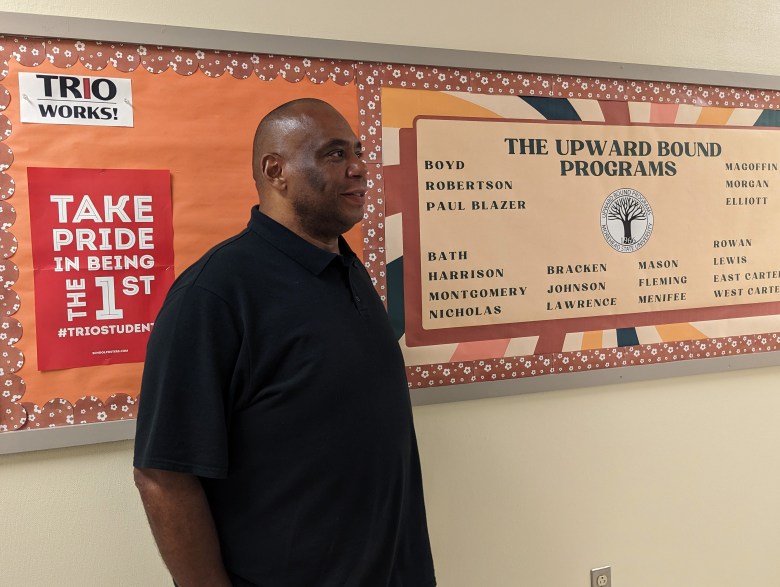
    Upward Bound students test the robots they built in their robotics class – evaluating for programming and mechanical issues. Credit: Photo courtesy of the Upward Bound Programs

    It’s part of a group of federal programs, known as TRIO, aimed at helping low-income and first-generation students earn a college degree, often becoming the first in their families to do so. 

    So, thanks to that advice from her stepsister, Kirsty Beckett, who’s now 27 and pursuing a doctorate in psychology, Griffith signed up and found herself in that summer program at Morehead State. Now, Griffith is enrolled at Maysville Community and Technical College, with plans to become an ultrasound technician.

    Related: Interested in more news about colleges and universities? Subscribe to our free biweekly higher education newsletter.

    TRIO, once a group of three programs — giving it a name that stuck — is now the umbrella over eight some dating back to 1965. Together, they serve roughly 870,000 students nationwide a year.

    It has worked with millions of students and has bipartisan support in Congress. Some in this part of the Appalachian region of Kentucky, and across the country, worry about students who won’t get the same assistance if President Donald Trump ends federal spending on the program. 

    Students Zoey Griffith, left, and Aniyah Caldwell, right, say the Upward Bound program has been life-changing for them. Upward Bound is one of eight federal programs under the TRIO umbrella. Credit: Michael Vasquez for The Hechinger Report

    A White House budget proposal would eliminate spending on TRIO. The document says “access to college is not the obstacle it was for students of limited means” and puts the onus on colleges to recruit and support students.

    Advocates note that the programs, which cost roughly $1.2 billion each year, have a proven track record. Students in Upward Bound, for example, are more than twice as likely to earn a bachelor’s degree by age 24 than other students from some of the nation’s poorest households, according to the Council for Opportunity in Education. COE is a nonprofit that represents TRIO programs nationwide and advocates for expanded opportunities for first-generation, low-income students.

    For the high school class of 2022, 74 percent of Upward Bound students enrolled immediately in college — compared with only 56 percent of high school graduates in the bottom income quartile. 

    Upward Bound is for high school students, like Griffith. Another TRIO program, Talent Search, helps middle and high school students, without the residential component. One called Student Support Services (SSS) provides tutoring, advising and other assistance to at-risk college students. Another program prepares students for graduate school and doctoral degrees, and yet another trains TRIO staff.

    A 2019 study found that after four years of college, students in SSS were 48 percent more likely to complete an associate’s degree or certificate, or transfer to a four-year institution, than a comparable group of students with similar backgrounds and similar levels of high school achievement who were not in the program. 

    “TRIO has been around for 60 years,” said Kimberly Jones, the president of COE. “We’ve produced millions of college graduates. We know it works.”

    Related: Tracking Trump: His actions to dismantle the Education Department, and more

    Yet Education Secretary Linda McMahon and the White House refer to the programs as a “relic of the past.” 

    Jones countered that census data shows that “students from the poorest families still earn college degrees at rates far below that of students from the highest-income families,” demonstrating continued need for TRIO.

    McMahon is challenging that and pushing for further study of those TRIO success rates. In 2020, the U.S. Government Accountability Office found that even though the Education Department collects data on TRIO participants, “the agency has gaps in its evidence on program effectiveness.” The GAO criticized the Education Department for having “outdated” studies on some TRIO programs, and no studies at all for others. Since then, the department has expanded its evaluations of TRIO. 

    East Main Street in Morehead, Kentucky, just outside of Morehead State’s campus. Credit: Michael Vasquez for The Hechinger Report

    During a Senate subcommittee hearing in June, McMahon acknowledged “there is some effectiveness of the programs, in many circumstances.”

    Still, she said there is not enough research to justify TRIO’s total cost. “That’s a real drawback in these programs,” McMahon said. 

    Now, she is asking lawmakers to eliminate TRIO spending after this year and has already canceled some previously approved TRIO grants. 

    Related: A big reason rural students never go to college: No one recruits them 

    “What are we supposed to do, especially here in eastern Kentucky?” asked David Green, a former Upward Bound participant who is now marketing director for a pair of Kentucky hospitals.

    Green lives in a region that has some of the nation’s highest rates of unemployment, cancer and opioid addiction. “I mean, these people have big hearts, they want to grow,” he added. Cutting these programs amounts to “stifling us even more than we’re already stifled.”

    Green described his experience with TRIO at Morehead State in the mid-1980s as “one of the best things that ever happened to me.” 

    He grew up in a home without running water in Maysville, a city of about 8,000 people. It was on a TRIO trip to Washington, D.C., he recalled, that he stayed in a hotel for the first time. Green remembers bringing two suitcases so he could pack a pillow, sheets and comforter — unaware the hotel room would have its own.

    He met students from other towns and with different backgrounds. Some became lifelong friends. Green learned table manners, the kind of thing often required in business settings. After college, he was so grateful for TRIO that he became one of its tutors, working with the next generation of students. 

    TRIO’s all-encompassing nature makes it unique among college access programs, said Tom Stritikus, the president of Occidental College, a private liberal arts college in Los Angeles. He was previously president of Fort Lewis College, a public liberal arts school in Colorado with a large Native American student population. At both institutions, Stritikus said, he witnessed the effectiveness of TRIO’s methods, which he described as a “soup to nuts” menu of services for at-risk students trying to be the first in their families to earn degrees.

    After participating in the Upward Bound program, David Green has had a successful career, becoming a community leader in his hometown of Maysville, Kentucky. Credit: Michael Vasquez for The Hechinger Report

    Jones, of the Council for Opportunity in Education, said she is cautiously optimistic that Congress will continue funding TRIO, despite the Trump administration’s request. The programs serve students in all 50 states. According to the COE, about 34 percent are white, 32 percent are Black, 23 percent are Hispanic, 5 percent are Asian, and 3 percent are Native American. TRIO’s guidelines require that a majority of participants come from families making less than 150 percent of the federal poverty level. For a family of four living in the contiguous United States, that’s a max of $48,225 a year.

    Related: How Trump is changing higher education: The view from 4 campuses

    In May, Rep. Mike Simpson, an Idaho Republican, called TRIO “one of the most effective programs in the federal government,” which, he said, is supported by “many, many members of Congress.” 

    In June, Sen. Shelley Moore Capito, a Republican from West Virginia and a former TRIO employee, spoke about its importance to her state. TRIO helps “a student that really needs the extra push, the camaraderie, the community,” she said. “I’ve gone to their graduations, and been their speaker, and it’s really quite delightful to see how far they’ve come, in a short period of time.”

    TRIO survived, with its funding intact, when the Senate appropriations committee approved its budget last month. The House is expected to take up its version of the annual appropriations bill for education in early September. Both chambers ultimately have to agree on federal spending, a process that could drag on until December, leaving TRIO’s fate in Congress uncertain. 

    While lawmakers debate its future, the Trump administration could also delay or halt TRIO funding on its own. Earlier this year, the administration took the unprecedented step of unilaterally canceling about 20 previously approved new and continuing TRIO grants.

    At Morehead State, leaders say the university — and the region it serves — need the boost it receives from TRIO: While roughly 38 percent of American adults have earned at least a bachelor’s degree, in Kentucky, that figure is only 16 percent. And, locally, it’s 7 percent, according to Summer Fawn Bryant, the director of TRIO’s Talent Search programs at the university. 

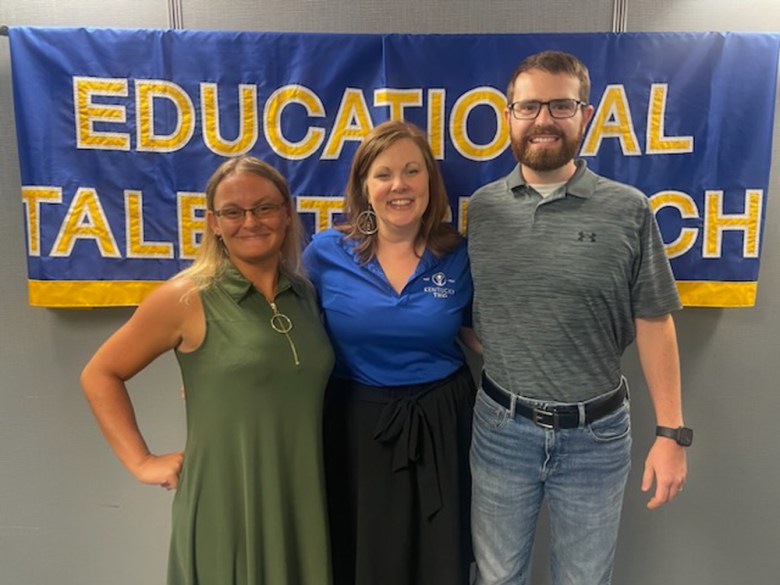
    Summer Fawn Bryant, center, is director of TRIO’s Talent Search programs at Morehead State University in Kentucky. She stands with former TRIO students Alexandria Daniel, left, and Blake Thayer, right. Credit: Photo courtesy of Summer Fawn Bryant

    TRIO works to counter the stigma of attending college that still exists in parts of eastern Kentucky, Bryant said. A student from a humble background who is considering college, she said, might be scolded with the phrase: Don’t get above your raisin’.

    “A parent may say it,” Bryant said. “A teacher may say it.” 

    She added that she’s seen time and again how these programs can turn around the lives of young students facing adversity. 

    Students like Beth Cockrell, an Upward Bound alum from Pineville, Ky., who said her mom struggled with parenting. “Upward Bound stepped in as that kind of co-parent and helped me decide what my major was going to be.” 

    Cockrell went on to earn three degrees at Morehead State and has worked as a teacher for the past 19 years. She now works with students at her alma mater and teaches third grade at Conkwright Elementary School, about an hour away.

    In a few years, 17-year-old Upward Bound student Isaac Bocook plans to join the teaching ranks too — as a middle school social studies teacher. Bocook said he was indecisive about what to study after high school, but he finally figured it out after attending a career fair at Morehead State’s historic Button Auditorium. 

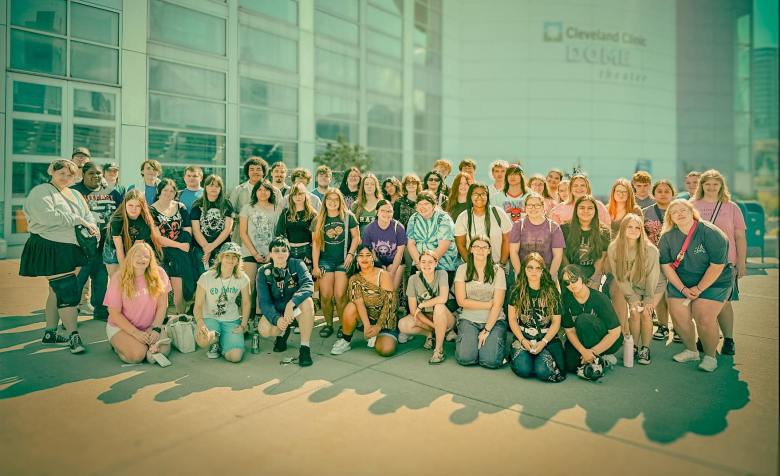
    Upward Bound students visit the Great Lake Science Center in Cleveland for the end-of-summer educational trip. Credit: Photo courtesy of the Upward Bound Programs

    Bocook lives in Lewis County, with just under 13,000 residents and a single public high school. At Morehead State’s TRIO program, Bocook met teenagers from across the entire region, which he said improved his social skills. TRIO also helped him with all kinds of paperwork on the pathway to adulthood. Filling out financial aid forms. Writing scholarship applications. Crafting a resume.

    “I’m just truly grateful to have TRIO, as sort of like a hand to hold,” Bocook said.

    His need for guidance is similar to what students at Morgan County High School in West Liberty, Kentucky, experience, said Lori Keeton, the school guidance counselor. The challenge facing these first-generation students, she said, is that “you just simply don’t know what you don’t know.”

    As the sole counselor for 550 students, Keeton doesn’t have time to help each student navigate the complex college-application process and said she worries that some of her students will apply to fewer colleges, or no colleges at all, if TRIO disappears. 

    TRIO’s Talent Search program serves about 100 students at her high school, and roughly another dozen are part of Upward Bound. Each program has a dedicated counselor who visits regularly to guide and assist students.

    Related: From gangs to college

    Sherry Adkins, an eastern Kentucky native who attended TRIO more than 50 years ago and went on to become a registered nurse, said efforts to cut TRIO spending ignore the long-term benefits. “Do you want all of these people that are disadvantaged to continue like that? Where they’re taking money from society? Or do you want to help prepare us to become successful people who pay lots of taxes?”

    As Washington considers TRIO’s future, program directors like Bryant, at Morehead State, press forward. She has preserved a text message a former student sent her two years ago to remind her of what’s at stake.

    After finishing college, the student was attending a conference on child abuse when a presenter showed a slide that included the quote: “Every child who winds up doing well has had at least one stable and committed relationship with a supportive adult.”

    “Forever thankful,” the student texted Bryant, “that you were that supportive adult for me.”

    Contact editor Nirvi Shah at 212-678-3445, securely on Signal at NirviShah.14 or via email at [email protected]

    This story about TRIO was produced by The Hechinger Report, a nonprofit, independent news organization focused on inequality and innovation in education. Sign up for the Hechinger newsletter.

    The Hechinger Report provides in-depth, fact-based, unbiased reporting on education that is free to all readers. But that doesn’t mean it’s free to produce. Our work keeps educators and the public informed about pressing issues at schools and on campuses throughout the country. We tell the whole story, even when the details are inconvenient. Help us keep doing that.

    Join us today.

    Source link

  • Shortage of Rural Private Schools Complicates Indiana’s Voucher Expansion – The 74

    Shortage of Rural Private Schools Complicates Indiana’s Voucher Expansion – The 74


    Get stories like this delivered straight to your inbox. Sign up for The 74 Newsletter

    Sitting on the Kentucky border, the Christian Academy of Indiana draws students from 56 different ZIP codes in southern Indiana. Some come from as far as 30 miles away and live in counties without private schools.

    Families in those distant communities make the drive every day — sometimes carpooling — because they’re drawn to the school’s environment and extracurriculars, and especially its Christian teaching, said Lorrie Baechtel, director of admissions for the school, which is part of a three-school network in Indiana and Kentucky.

    “There are lots of good public school options in Indiana. Families come to our Indiana campus more for that mission,” Baechtel said.

    The school’s enrollment has boomed in the last four years, driven in part by the expansion of the Choice Scholarship, Indiana’s signature voucher program. That’s made tuition more affordable, Baechtel said. More than 1,200 students attended in 2024-2025, up from around 700 in 2021-22.

    That reflects a statewide trend: Voucher use has surged in recent years as Indiana lawmakers loosened eligibility requirements. In 2026, the program will open to all families, regardless of income.

    But the Christian Academy’s ability to attract students from far away tells another story too. Even as vouchers have become more accessible, Indiana’s rural students aren’t using them at the same rate as their urban and suburban peers. That’s in part because one-third of counties don’t have a private school that accepts vouchers within their borders, and distance is a factor in parents’ decisions on school choice.

    The result is that students who live closer to an urban center — which typically have one or more voucher-accepting private schools — may use vouchers at rates up to 30 percentage points higher than those for students who live in a neighboring district.

    That also means rural families may be at a significant disadvantage when the state opens the Choice Scholarship to all, and when private school scholarships funded by new federal tax credits also begin to roll out in 2027.

    “If there are no schools there for you to attend it’s unlikely it’s going to be all that useful for you,” said Jon Valant, director of the Brown Center on Education Policy at the Brookings Institution.

    More than that, public education advocates say splitting state school funding with vouchers leaves less for the rural public schools these students do attend.

    “We’re making the policy choice to fund a lot more choices than we used to,” said Chris Lagoni, executive director of the Indiana Small and Rural Schools Association, which represents public schools. “We’re inviting more and more folks to Sunday dinner. It’s a little bit of a bigger meal, but a lot more guests.”

    But the state’s Republican lawmakers have dismissed the fears of a hit to public rural schools as a result of vouchers, saying that rural voters support choice and parents want educational options — whether that’s private, charter, or traditional public schools.

    Meanwhile, school choice advocates say the latest expansion of the Choice Scholarship, along with a growing preference for smaller learning environments and the rise of voucher-accepting online schools, could mean more private school access for rural areas in the near future.

    “I think we’re best when we have a robust ecosystem of private and public options,” said Eric Oglesbee of the Drexel Fund, a nonprofit venture philanthropy organization that funds new private schools in Indiana and throughout the U.S.

    Location matters in accessing a private school

    Across the state, around 76,000 students received vouchers for the 2024-25 school year — an increase of about 6,000 students from the year before. The program cost the state $497 million last year, and the average voucher recipient came from a household with just over $100,000 in income.

    But around one-third of Indiana counties don’t have voucher-accepting private schools within their borders, according to a Chalkbeat analysis of state data, which also shows that voucher use is lower in rural areas than urban ones.

    Voucher use can shift dramatically even between nearby areas. For example, around 16% of students who reside in the Madison school district in southern Indiana use vouchers, but that rate drops to as low as 1% in nearby districts that are more rural. Similar trends hold in other areas of the state, like Indianapolis, Evansville, Fort Wayne, and South Bend.

    Location matters because driving distance has been shown to be a factor in how parents choose a school.

    In a 2024 survey of parent preferences by EdChoice, an Indianapolis-based group that supports vouchers, around half of parents said they would drive a max of 15 minutes for their children “to attend a better school.” Just over a quarter said they would drive no more than 20 minutes, and the final quarter said 30 minutes would be their max.

    Concerns about this issue have persisted in the state for years. Alli Aldis of the advocacy group EdChoice pointed to a 2018 report from her organization that called areas of rural Indiana as “schooling deserts.” It estimated that in the 2017-18 school year, around 3% of Indiana students, many in rural counties, lived more than 30 minutes from a charter, magnet, or voucher-accepting private school.

    Starting a new school anywhere, but particularly in a rural area, comes with challenges like finding a building, said Oglesbee of the Drexel Fund.

    A 2023 Drexel Fund report found that facilities in the state are “inadequate to meet the needs of new entrants to the market.” Though the report notes that real estate is both affordable and available, there are no public sources of facilities funding, and surplus facilities are not available to private schools.

    But new laws in Indiana have the potential to change that. House Enrolled Act 1515 established voluntary school facility pilot programs open to both public and private schools to “allow for additional flexibility and creativity in terms of what is considered a school facility,” like colocating with schools, government entities, and community organizations.

    Oglesbee said the organization is fielding an explosion of interest from potential new private schools in Indiana, possibly as a latent result of the 2023 expansion to voucher eligibility, which made the program nearly universal.

    School succeeds ‘if the community asks for it’

    Other challenges to opening a private school include hiring staff and recruiting students, which can be a particular issue in rural areas with both fewer children and licensed teachers, advocates said.

    Opening a school also requires a team of people with both education and business experience, Oglesbee said. And they’re more likely to succeed if they have roots in the community they hope to serve.

    “I see less of the ‘if you build it, they will come’ idea,” Oglesbee said. “A school is successful if the community asks for it.”

    At a recent conservative policy conference, Indiana House Speaker Todd Huston said rural Indiana communities were “super excited” for school choice, and noted that no Republican lawmaker had been beaten in a primary for supporting the policy.

    But Indiana voters haven’t voted on school vouchers, and don’t have a legal avenue to overturn the policy, said Chris Lubienski of the Center for Evaluation and Education Policy at Indiana University. Last year, voters in Kentucky and Colorado rejected ballot measures in favor of school choice, while Nebraska voters partially repealed a state-funded scholarship program.

    “There’s resistance: ‘Why do I want to have my taxes fund a program I can’t use?’” Lubienski said.

    In rural areas, support for school choice may actually mean support for transfers between public school districts, said Lagoni.

    Ultimately, the Rural Schools Association believes any school receiving state dollars should be subject to the same expectations of transparency and accountability, Lagoni said.

    Asked about concerns that rural students often have difficulty using vouchers, Huston said he expects voucher usage to continue to grow once the program becomes universal in 2026-27.

    “We want to make sure our policies align with what works best for families,” Huston said.

    Vouchers add to financial stress for rural schools

    With more school options in Indiana, downward pressure on local tax revenue, and declining population, rural public schools feel pressure to compete. Sometimes that means closing and consolidating schools.

    Vigo County schools recently announced plans to close two rural elementary schools as part of a plan to renovate facilities and offer more programming. The school corporation’s enrollment has declined slightly, due in part to an overall decline in the county’s total population, said spokesperson Katie Shane.

    More students who reside in the district are using vouchers, although they’re not the biggest reason for the district’s falling enrollment. While 429 students used vouchers to attend private schools last school year, an increase from 252 the year before, around 870 Vigo students transferred to another public school district in the fall of the 2024-25 school year. That reflects a statewide trend.

    Without their nearest public elementary schools, students may have to travel by bus for half an hour or more to the nearest school, according to community members who have started a petition to save one of the two schools marked for closure, Hoosier Prairie Elementary School.

    “Hoosier Prairie isn’t just about going to school,” said Shyann Koziatek, an educational assistant at the school who also signed the petition to stop its closure. “Kids love to learn and love the routine we have.”

    Rural schools also often function as large area employers and drivers of the economy.

    “Schools are often the center and identity of the community, how people view who they are,” Lubienski said. “You go and cheer on your football team, it’s where you put on your school play.”

    But private schools can serve the same role, choice advocates say.

    “If people have stronger educational options, more choices, that only strengthens the community,” said Aldis of EdChoice.

    Chalkbeat is a nonprofit news site covering educational change in public schools. This story was originally published by Chalkbeat. Sign up for their newsletters at ckbe.at/newsletters.


    Get stories like these delivered straight to your inbox. Sign up for The 74 Newsletter

    Source link

  • This school built high-end career and technical education training sites on campus to prepare students for local skilled jobs

    This school built high-end career and technical education training sites on campus to prepare students for local skilled jobs

    This story is part of Hechinger’s ongoing coverage about rethinking high school. See our articles about a new diploma in Alabama, a “career education for all” model in Kentucky, and high school apprenticeships in Indiana

    BELOIT, Wis. — As Chris Hooker eyed a newly built piece of ductwork inside Beloit Memorial High School, a wry smile crept over his face. “If you worked for me,” he told a student, considering the obviously crooked vent, “I might ask if your level was broken.”

    Hooker, the HVAC manager of Lloyd’s Plumbing and Heating Corp. in nearby Janesville, was standing inside a hangar-sized classroom in the school’s advanced manufacturing academy, where students construct full-size rooms, hang drywall and learn the basics of masonry. His company sends him to the school twice a week for about two months a year to help teach general heating, venting and air conditioning concepts to students. 

    “I cover the mountaintop stuff,” he said, noting that at a minimum students will understand HVAC when they become homeowners.

    But the bigger potential payoff is that these students could wind up working alongside Hooker after they graduate. If his firm has an opening, any student recommended by teacher Mike Wagner would be a “done deal,” Hooker said. “Plus, if they come through this class, I know them.” 

    Manufacturing and construction dominate the business needs inside Beloit, a small city of 36,000 just minutes from the Illinois border. Sitting at the nexus of two major highways, and within 100 miles of Chicago, Milwaukee and Madison, Beloit is home to a range of businesses that include a Frito-Lay production plant, an Amazon distribution center and a Navy subcontractor. In the next two years, a $500 million casino and hotel complex is scheduled to open. 

    But staffing these companies into the future is a major concern. Across the country, the average age of manufacturing workers is increasing, and one in four of these workers is age 55 or older, according to U.S. Bureau of Labor Statistics’ 2021 figures, the most recent available. In many other jobs the workforce is aging, too. Wisconsin is one of several states looking to boost career and technical education, or CTE, as a possible solution to the aging and shrinking workforce. 

    Having industry standard machines is a key part of Beloit Memorial High School’s manufacturing program; here a student uses a JET metalworking machine to create precise cuts for his project. Credit: Wayne D’Orio for The Hechinger Report

    While the unemployment rate of Rock County, which includes Beloit, is 3.6 percent, only slightly higher than the state’s 3.2 percent, there’s a worker mismatch in the city, according to Drew Pennington, its economic development director.

    Every day, 14,000 city residents travel outside of Beloit to work, while the same number commute into the city to fill mostly higher-paying jobs, said Pennington. 

    So when Beloit decided to revamp its public high school in 2018, CTE and work-based learning were at the forefront of the transformation. 

    The 1,225-student school now has three academies that cover 13 different career paths. After ninth grade, students choose to concentrate in an area, which means taking several courses in a specific field. Students also have the option to do work-based learning, which can mean internships, a youth apprenticeship or working at high-end simulated job sites inside the school. 

    “This creates not just a pipeline to jobs but also to career choices,” said Jeff Stenroos, the district’s director of CTE and alternative education.

    Related: A lot goes on in classrooms from kindergarten to high school. Keep up with our free weekly newsletter on K-12 education.

    “There are a lot of really good-paying jobs in this area. Students don’t need to leave, or go earn a four-year degree,” Stenroos said. An auto mechanic can “earn six figures by the age of 26 and that’s more than an educator with a master’s degree,” he said.

    Beloit’s effort is a shift in high school emphasis similar to the extensive CTE programs being run in other places, notably Indiana, Kentucky and Alabama. In 2024, 40 states enacted 152 CTE-related policies, the biggest push in five years, according to Advance CTE, a nonprofit group that represents state CTE officials. Nationwide, about 20 percent of high school students take a concentration of CTE courses, it says, adding that the high school graduation rate for students who concentrate in CTE is 90 percent, 15 percentage points higher than the national average. 

    Three years ago, Wisconsin called for 7 percent of its high school students to be in workplace learning programs by 2026. Beloit’s progress puts it far ahead of that target. In Beloit Memorial, nearly 1 in 3 students meet this designation today, Stenroos said. 

    The high school features a cavernous construction area where students build full-scale rooms, learn masonry and complete plumbing and electrical wiring projects. The metal shop offers 16 welding stations and a die-cutter machine that allows students to create customized pieces to fit projects. Down the street, the school runs an eight-bay car repair center, a space it took over when a Sears autobody shop left town.

    These spaces are “better than a lot of technical colleges,” Stenroos said.

    In addition to their high school courses, Beloit Memorial students pile up industry-recognized certifications, Stenroos said. More than 40 percent of its students graduate with at least one certification, and 1 in 4 of them has multiple certifications. 

    Related: Schools push career ed classes for all, even kids heading to college

    While some simple certifications, such as OSHA Workplace Safety, can be accomplished in just 10 hours, others, such as those for the American Welding Society, require up to 500 hours of student work, he added. The state has called for 9 percent of graduating high school students to have earned at least one certification by next year. To incentivize schools to offer these opportunities, the state’s Department of Workforce Development pays schools for each student who earns a certification; in 2024, Beloit received $85,000 through this program, Stenroos said.

    One of the school’s best automotive students, Geiry Lopez, graduated this year with five Automotive Service Excellence certifications. Standing less than 5 feet tall, Lopez said she is not bothered that she might not look like a typical mechanic. “I know I can do this,” she said, adding that she hopes to work on heavy machinery such as tractor trailers after she graduates.

    She’s worked on her own car, with some fellow students, replacing the brakes, a front axle, rotors and wheel bearings at the school’s garage, she said, although she still hasn’t been able to drive it.

    “My dad is taking forever to teach me how to drive,” she said. 

    The garage operates like an actual business, but the only customers are teachers and other Beloit staffers and students. Students estimate work costs, order parts and communicate with customers before any repairs take place. While oil changes and brake replacements are common, some students are totally rebuilding an engine in one car. 

    Over in the welding room, rising senior Cole Mellom was putting the finishing touches on a smoker he built in less than a month’s time. He said he loved the creativity of finding a plan, cutting the metal and building something that he could sell, all while in school. Plus, he knows that welding is a key skill needed for his dream job, race-car fabrication.

    Officials revamped the Beloit Memorial High School in 2018 to funnel students into academies that are connected to jobs in the area and the state. Credit: Wayne D’Orio for The Hechinger Report

    In the past, students created a custom-made protective plate that the city’s police use on a bomb squad vehicle.

    The welding program has 125 students this year and had to turn away 65 more because of space limitations, Stenroos said; last year, 17 of the school’s welding academy graduates enlisted in the armed forces to specialize in welding. 

    These programs are designed to help meet the future needs of the state’s workforce. More than one-third of Wisconsin jobs will require education beyond high school but less than a bachelor’s degree by 2031, according to the Association for Career and Technical Education. For the last four years, the state has had more job openings than people on unemployment.

    “There’s more jobs than there are people to fill them right now,” said Deb Prowse, a former career academy coach at Beloit Memorial who now works at Craftsman with Character, an area nonprofit that helps train students for careers in skilled trades.

    Hooker, the Lloyd’s Plumbing HVAC manager, agreed. “Every project we work on has a delay, from a multimillion-dollar mansion to a three-bedroom spec,” he said. “There aren’t enough workers.”

    The main reason Beloit Memorial has been able to zoom past state and national goals for both CTE and work-based learning is the school’s single-minded focus since 2018 on helping to ensure that its graduates will understand what businesses need and giving them a head start toward gaining those skills.

    High school officials actually pared back the program from 44 pathways to 13, Stenroos said, part of an effort to tie each pathway to specific jobs. About 75 percent of pathways target area jobs, with the remaining quarter highlighting prominent professions within the state, he added. 

    Even though three straight budget referendum defeats have left the district with a $6.2 million funding gap, Stenroos said he’s been able to keep the CTE equipment modernized through donations and strategic allocation of the school’s federal Perkins grant and the state reimbursement for student certifications. In one instance, the school recently bought a $20,000 scanner for its automotive program; the machine can not only help diagnose a car problem, but also connect students to garages throughout the country that have successfully fixed the specified problem. 

    “It’s an expensive piece of equipment,” Stenroos said, “but it’s industry-certified and will give students real-life experience.”

    Each of the three academies has an advisory board of teachers and industry professionals who work out how to embed practical lessons in classroom curriculum. “We ask business people, ‘What do you need, and how can we help our kids get there?’” said Stenroos.

    Related: A new kind of high school diploma trades chemistry for carpentry

    “It’s really cool how receptive the school is to feedback,” said Heather Dobson, the business development manager at Corporate Contractors, Inc., a 200-person general contracting firm.

    She explained that the district has incorporated small changes over the years, such as having students work in Microsoft programs instead of Google Classroom apps and teaching them how to write a professional email.

    “Rarely is there an idea presented that they don’t embrace,” said Celestino Ruffini, the CEO of Visit Beloit, a nonprofit that promotes tourism of the city. The school is expanding its hospitality program because of the expected influx of jobs connected to the new casino and hotel, he said. 

    All the changes aren’t at the high school, however. In order to employ Beloit Memorial students, Frito-Lay had to alter its corporate policy of not allowing anyone under 18 to work in its plants, according to Angela Slagle, a supply chain manager there. The company now hires Beloit Memorial students for its career exploration youth apprenticeship program, she added. 

    The connection to area businesses goes beyond the school’s leaders. Each year, about 10 teachers complete an externship in which they spend one week of their summer at a local business. Teachers are paid $1,000 for the 20 hours, and they not only learn about what jobs a company may have but also find ways to incorporate real-world problems into their classroom lessons.

    A few summers back, math teacher Michelle Kelly spent a week at Corporate Contractors. She was searching for different ways to use construction-based math problems with her students. In addition to using math to estimate a bid for a project or calculate the surface area of a job, she realized that complex math is needed to build a truss, the framework used to support a roof or bridge.

    Because the triangular truss is supported by different lengths of wood inside its structure, Kelly said, building one requires the calculation of angles, total area, how much wood is needed and more. Since all her algebra students were in the school’s construction academy, she partnered with those teachers to go beyond blueprints and have the 10th graders build trusses, a collection of which sit in the back of her classroom.

    A student’s detailed outline for creating a truss in Michelle Kelly’s 10th grade algebra class at Beloit Memorial High School, which is embracing career and technical education. Credit: Wayne D’Orio for The Hechinger Report

    She sees this work as one way to help counter the chronic absenteeism that has existed since Covid. Teaching with this kind of hands-on work makes students see the relevance of algebra, she said. “Would it be easier to just have them take a test? Yes.” 

    Beloit Memorial Principal Emily Pelz said the school’s work is paying off. In the last four years, the school’s four-year graduation rate has ticked up slightly, from 83.4 percent in 2021-22 to 85.2 percent in 2024-25, while its attendance went from 78.5 percent to 84.8 percent in the same period, Pelz said. 

    Related: ‘Golden ticket to job security’: Trade union partnerships hold promise for high school students

    Rik Thomas, a rising senior who already has his own business repairing and modifying cars, said this work has definitely made him more interested in school. While he thought the academy would merely explain what a construction career might include, “It’s nice to find out how to do the work.” His father works in construction and, Thomas added, “He loves that I take this program.” 

    Thomas and his classmates built a wooden shed earlier this year and were able to sell it for $2,500, with the money going to pay for more materials. Likewise, the first smoker created in the welding class was bought by Stenroos; the students are looking forward to posting the second one for sale after they determine how much they should charge. 

    While the school’s construction and other trade-related fields have drawn the most attention, its three academies also offer career paths in healthcare, education, business, the arts, hospitality and more. 

    For example, rising senior Tayvon Cates said he hopes to study pre-med at a historically Black college or university on his way to becoming a cardiology radiologist. Cates, who is in the school’s health and education academy, said, “If you want to do something, the school can help you do it.”

    This story about career and technical education was produced by The Hechinger Report, a nonprofit, independent news organization focused on inequality and innovation in education. Sign up for Hechinger’s weekly newsletter.

    The Hechinger Report provides in-depth, fact-based, unbiased reporting on education that is free to all readers. But that doesn’t mean it’s free to produce. Our work keeps educators and the public informed about pressing issues at schools and on campuses throughout the country. We tell the whole story, even when the details are inconvenient. Help us keep doing that.

    Join us today.

    Source link