
Category: school board

  • Minneapolis School Board Signals Potential School Closures – The 74

    Minneapolis School Board Signals Potential School Closures – The 74


    Get stories like this delivered straight to your inbox. Sign up for The 74 Newsletter

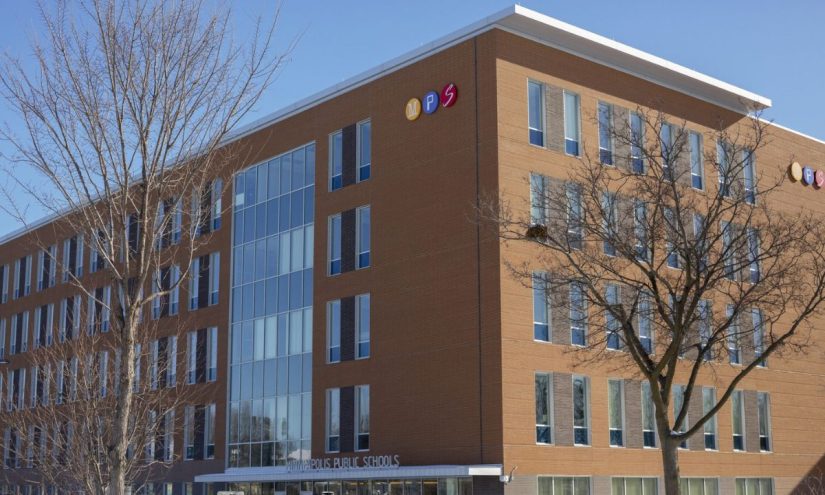
    The Minneapolis school board has formally asked Superintendent Dr. Lisa Sayles-Adams for information that could lead to school closures. They passed a resolution to the effect at a recent meeting.

    The board first drafted the directive —which asks for an initial report to the board by April 2026 — at two day-long meetings in June and August. The planning follows years of discussion about closing schools in a district with 29,000 students but the capacity for 42,000 and thus a bevy of half-empty schools.

    Even as enrollment declines at a school building, the fixed expenses for building staff — like principals, secretaries, nurses, librarians, culinary workers, custodians and social workers — stay the same or go up. With so many buildings below capacity, a big portion of each Minneapolis student’s funding has to go toward covering these fixed building-level costs, draining money away from instruction and extracurricular activities.

    The board resolution comprises topics for district administrators to investigate, including efficient use of current buildings, potential changes to magnet programs, and ways to increase enrollment in the district.

    Years-long discussion about the financial burden of operating small enrollment schools

    The process for downsizing the district’s footprint has been long and circuitous.

    In October 2022, the district prepared a comprehensive financial assessment forecasting that without significant cost cutting, the district would end up draining its reserves, while expenses would exceed revenues by the end of fiscal year 2026. The district has avoided that fate by cutting services and raising class sizes, but it is still unable to balance its budget without relying on reserves and other one-time funds.

    The 2022 memo did not prescribe closing schools, but it did present an analysis showing enrollment growth alone could not overcome the district’s structural inefficiencies resulting from operating many schools with small enrollments. At the time of the analysis, Anoka-Hennepin was operating 37 school buildings while enrolling about 37,000 students. Minneapolis was operating 61 buildings while enrolling about 29,000 students. Minneapolis had about half as many students per building as Anoka-Hennepin.

    The board first publicly discussed reducing the number of schools in March 2023, when then-board Chair Sharon El-Amin asked Rochelle Cox, the then-interim superintendent, to develop a draft plan for “school transformation.” Neither Cox nor the board took action.

    Two months before current Superintendent Dr. Lisa Sayles-Adams started at the district in early 2024, the School Board passed a “transformation resolution” that directed the district to do an accounting of physical space but stopped short of calling for a timeline on school closures.

    Sayle-Adams promised to tackle “right-sizing” the district after passing a budget in June 2024, because, she said, the community asked her to address the issue.

    Low enrollment schools require more funding per student for building-level staff

    The district is contending with rising costs and operating a significant number of small buildings, as well as buildings operating below capacity. Given the rising fixed costs of operating these buildings, that leaves less money for everything else, from class size reduction to teacher pay and programs commonly found in most school districts like world languages, art, music and athletics.

    Across the district, as building-level enrollment has declined, students have lost access to services like academic support if they’re struggling; staff to address student behavior; and community liaisons to help parents connect with schools. Small elementary schools have difficulty funding full-time positions for electives like art, music and gym, while hiring part-time staff for these positions is challenging. Some elementary students have gone without these electives, or only have music or art for part of the school year.

    Enrollment declines at middle and high schools have meant fewer elective options, like world languages, dance, theater and orchestra, as well as extracurriculars. Students also lose access to advanced coursework — like AP or IB classes — when there are too few students in the school who want to enroll. Many of the district’s high schools are now sharing athletic teams because individual schools lack enough students and funding to support a robust athletics program.

    The decline in services drives some families to schools outside the district that have the services and programs they desire, compounding the enrollment declines.

    Declines in enrollment mitigated by new-to-country students

    Minneapolis Public Schools lost about 15% of its enrollment in the wake of the COVID-19 pandemic, due to a combination of factors including implementing a controversial plan redrawing school boundaries, and keeping its schools closed longer during the pandemic than any other Minnesota district, which was followed in March 2022 by a three week educator strike.

    The district has enjoyed a small enrollment increase both last year and this year. Although the district does not track the immigration status of students, the increase has been attributed almost entirely to students newly arrived to the United States from Central America. Since the 2021-22 school year, English learner students have increased from 17% of the district’s students to 23% in the 2024-25 school year, according to Minnesota Department of Education data.

    This year, the district expects to spend at least $17 million more on English learner services than it receives in funding from state and federal sources. Although the Legislature increased state aid for English learners during the 2023 legislative session, the district’s funding is insufficient to cover the cost of providing the intensive services needed by students with the lowest levels of English proficiency.

    Many of the newcomer students are also unhoused, which has led to growing costs for the district to transport students from shelters outside district boundaries, as required under the federal McKinney-Vento law. The state has started to pay the cost of this transportation under a law passed in 2023.

    It is not clear whether changes to federal immigration policy will impact the district’s ability to continue to rely on newcomers to stabilize or grow enrollment in the future.

    Future enrollment expected to decline, limiting district’s funding

    Hazel Reinhardt, a demographer hired by the district, says enrollment is likely to continue to decline in the coming years because of lower birth rates, fewer families choosing to raise children in the city, and the state’s favorable laws around charter schools and open enrollment, allowing parents to send their children to St. Paul or suburban schools.

    Reinhardt told the board in June that once parents leave for charter and private schools or open enrollment options, “precious few” districts are able to bring them back.

    Most of the district’s funding is based on enrollment, so declining enrollment has created a ballooning fiscal crisis. Growing costs for both labor and services have outpaced increases in state and local funding.

    The district continues to cut services, increase class sizes and pull from its dwindling reserve funds to balance its annual budget. The district is expected to use $25 million from its reserves this school year after using $85 million from reserves last school year.

    The district’s enrollment woes and related financial distress are not unique to Minneapolis, with similar challenges facing large urban districts like Oakland, San Francisco, Denver, Seattle and Portland. Denver and Oakland have closed a small number of schools in recent years, but not enough to stabilize district finances. And school boards in Seattle and San Francisco have walked away from closure plans after significant public pressure, leaving both districts with growing budget deficits.

    Minnesota Reformer is part of States Newsroom, a nonprofit news network supported by grants and a coalition of donors as a 501c(3) public charity. Minnesota Reformer maintains editorial independence. Contact Editor J. Patrick Coolican for questions: [email protected].


    Did you use this article in your work?

    We’d love to hear how The 74’s reporting is helping educators, researchers, and policymakers. Tell us how

    Source link

  • California School Board Member Stipends Could Change Under New Bill – The 74

    California School Board Member Stipends Could Change Under New Bill – The 74


    Get stories like this delivered straight to your inbox. Sign up for The 74 Newsletter

    There’s more to being a diligent school board member than attending a couple of meetings a month.

    Those meetings require preparation, research and one-on-one conversations with school leadership. There are school site visits. Many districts require regular board training. Sometimes there are spinoff committee meetings about parcel taxes or school nutrition. There’s also an expectation that board members attend events like football games, PTA meetings and retirement ceremonies. Meetings with parents and other constituents are a core part of the role, too.

    For all of this, Woodland Joint Unified School District board president Deborah Bautista Zavala says she earns a stipend of $240 a month, minus taxes — the maximum allowed by the state for her district with just under 10,000 students.

    “You don’t do it for money, but to improve the education of students,” said Bautista Zavala.

    But the lack of money, she said, is a real problem for attracting and retaining qualified school board members who truly represent the community.

    That could change if Gov. Gavin Newsom signs Assembly Bill 1390, which would raise the maximum monthly stipend for school board members in both school districts and county offices of education.

    This would be the first time in over 40 years that school board members’ compensation has been reconsidered — and the measure comes at a time when school boards are grappling with financial deficits, consolidation, uncertainty about federal funding and potential school closures.

    Proponents of the bill have argued that while school board members dedicate large amounts of time to their position, they are not compensated adequately. Currently, school board members can earn no more than $60 each month in small districts or up to $1,500 for the state’s largest districts.

    There is also a clause in the current law that allows board member stipends to be raised by 5% each year beyond the maximum, but 7 out of 10 boards still have stipends at or below the maximum, according to Troy Flint, chief information officer for the California School Boards Association.

    Raising school board compensation has been a longstanding issue for the California School Boards Association, which sponsored the bill, but it has become more pressing in the years since the pandemic, Flint said.

    “The job is vastly more complex than it used to be,” said Flint. “It requires a strong knowledge of finance, an aptitude for community engagement, a working knowledge of educational theory and an ability to deal with culture wars and political issues.”

    The role is at an inflection point: More than 6 out of 10 school board members did not run for reelection over the past three cycles, Flint said.

    Legislative analysis referenced an EdSource article, which found that 56% of 1,510 school board races across 49 California counties did not appear on a local ballot in 2024, either because there was one unopposed candidate who became a guaranteed winner or because there were no candidates at all.

    The bill’s author, Assemblymember José Luis Solache Jr., D-Lynwood, argues that increasing board members’ compensation could lead to bigger, more diverse candidate pools. School boards often attract retirees or other professionals with stable income and spare time. Low stipends put the job out of reach for those from working families or younger people who are already struggling to make ends meet, Solache said.

    Solache would know: He began serving on the board for the Lynwood Unified School District starting in 2003, when he was 23 years old. He has since worked with other young elected officials to find ways to recruit young people into office. Solache sees this bill as a way to improve recruitment for an important community role.

    “It’s an underpaid job. We compensate the president, senators, Assembly members, state senators,” Solache said. “Why can’t you compensate the school board members that have jurisdiction over your child’s education?”

    Raising the stipends of elected officials can raise eyebrows in Sacramento, Solache said. The bill set the maximums by setting an amount between inflation since 1984, when rates were set, and what the maximum would have been if the boards had raised the rates 5% annually as allowed by law.

    Maximums for board members in the smallest districts saw the greatest increase. Currently, the maximum for a board member at a school district with fewer than 150 students is $60 a month. Under this bill, that same board member could earn up to $600 monthly, which Solache said is more equitable.

    But board members won’t necessarily see raises, even if Newsom signs it into law. The bill merely raises the ceiling for compensation. The decision to actually offer raises to school board members will happen at the local level, and that could be a tough sell given the budget constraints school districts are facing in the coming year.

    “There’s no getting around that: that in a time of limited resources, adding money for board members is taking money away from other places,” said Julie Marsh, a professor at USC’s Rossier School of Education, who recently served as the lead author of a study analyzing the experiences of 10 school board members across the state.

    “We need to just really keep in mind the demands of that role and the decisions that they’re making around the superintendent, the budgets for these places, the curricular decisions that are being made. And as a state, there’s been a lot put on these positions in terms of making really important decisions,” she said.

    Bautista Zavala believes it will be tough to make the case to some of her fellow board members at Woodland Unified, which is in a community 20 miles northwest of Sacramento. The district of 9,500 students struggled to pass a facilities bond last November, despite facilities in dire need of improvement. The optics of board members giving themselves a raise could be tricky if they’re also negotiating with teachers or classified staff.

    “You have to be strategic about bringing this forward,” she said.

    She encourages board members to raise stipends to bring new voices to school boards. She says members who believe they don’t need a raise can donate the stipend.

    Some people believe serving on a board is a civic duty, and compensation shouldn’t factor into the role, said Jonathan Zachreson, board member at Roseville City School District. But he said that’s not realistic for many people. He hopes that raising the stipends for board members will also mean raising the expectations for board members.

    Zachreson is concerned that some boards outsource policymaking to groups, including the California School Boards Association, rather than doing in-depth research themselves to find a solution that works best for the community.

    “It’s worth the time commitment to actually learn and not just rubber-stamp proposals,” said Zachreson.

    But some believe there could be unintended consequences in raising the stipends of board members.

    “The worst-case scenario, I think, from a superintendent’s point of view, would be if the increase in pay becomes attractive to the wrong kind of people, who want to micromanage the superintendent and want to be well compensated for that,” said Carl Cohn, a former superintendent of the Long Beach Unified School District and State Board of Education member.

    Some boards are exempt

    Some school districts and county boards of education are exempt from this model because they have their own local charter. This includes the Los Angeles Unified School District, the state’s largest school district with an $18.8 billion budget this academic year; it won’t be impacted by the bill should it become law. A separate LAUSD Compensation Review Committee outlines board members’ salaries — a strategy that Marsh said makes the district appear less self-serving.

    In 2017, Los Angeles Unified school board members who didn’t work elsewhere received a 174% pay increase.

    “With the increase in compensation in Los Angeles Unified, we saw candidates earlier in their careers, single parents, women of color, immigrants and others with similar lived experience to our students step up,” said board member Tanya Ortiz Franklin in a statement to EdSource. “I hope that will be the trend across the state and improve decision-making for California’s public schools.”

    According to a 2023 committee resolution, Los Angeles Unified board members made $127,500 annually if they weren’t employed elsewhere and $51,000 if they had another source of income. And on July 1 until 2027, board members would receive a 1% annual increase — leading most recently to salaries of $128,775 and $51,510, depending on outside employment.

    Meanwhile, compensation in the San Francisco Unified School District, currently $500 monthly for board members, is governed by the city and county and is also exempt. The board of supervisors must approve compensation for county board members in Alpine, San Benito and San Bernardino counties.

    Beyond compensation

    Increasing school board members’ compensation might help address issues such as poor recruitment and retention, Marsh said. But professional development and other non-financial support could go a long way, since board members come in with varying degrees of knowledge on data, governance and technology.

    “With the rapidly changing context around us — whether that’s around the politics and the political climate and the divisiveness, or shifting technology — I think there’s a need to further support folks,” Marsh said.

    This story was originally published on EdSource.


    Get stories like these delivered straight to your inbox. Sign up for The 74 Newsletter

    Source link