
Category: school counselors

  • Limited resources at underserved schools can keep students from getting the support they need

    Limited resources at underserved schools can keep students from getting the support they need

    As the first in my family to attend college, I felt a profound commitment to excel academically and gain admission to a top university. Growing up amid the hustle and bustle of Silicon Valley, I always envisioned a bright future ahead, with college at the forefront of my goals since elementary school.

    At my Title I elementary and middle schools, student-to-teacher ratios were even higher than those listed online. There was a lack of classroom technology and resources like history textbooks. Our two middle school counselors each managed students by the hundreds, making it nearly impossible for them to keep track of individual academic progress and educational goals. Afterward, I attended a private high school, thanks to support from my family. Our caring teachers made the effort to get to know each student, and dedicated counselors advocated for me when it mattered most.

    Yet when conversations about college came around, navigating the complex system was difficult. I had to chart my own path to success through independent research, often looking at data that was scattered and inconsistent. It hindered my ability to educate myself on college-going rates, costs, outcomes and employment prospects post-graduation.

    Related: Interested in innovations in higher education? Subscribe to our free biweekly higher education newsletter.

    Limited resources available at many underserved schools across the nation make it a more challenging environment for students to get support and excel, thus limiting their true academic potential.

    In my senior year of high school, after gaining newfound confidence while serving as a commissioner at-large in my county’s youth commission, I decided to try to challenge the status quo in higher education through the power of data and find a way to speak up for other first-generation students who find themselves interacting with systems not designed with their experiences in mind. My mentors at a regional food bank where I volunteered shaped me to lead with confidence and heart.

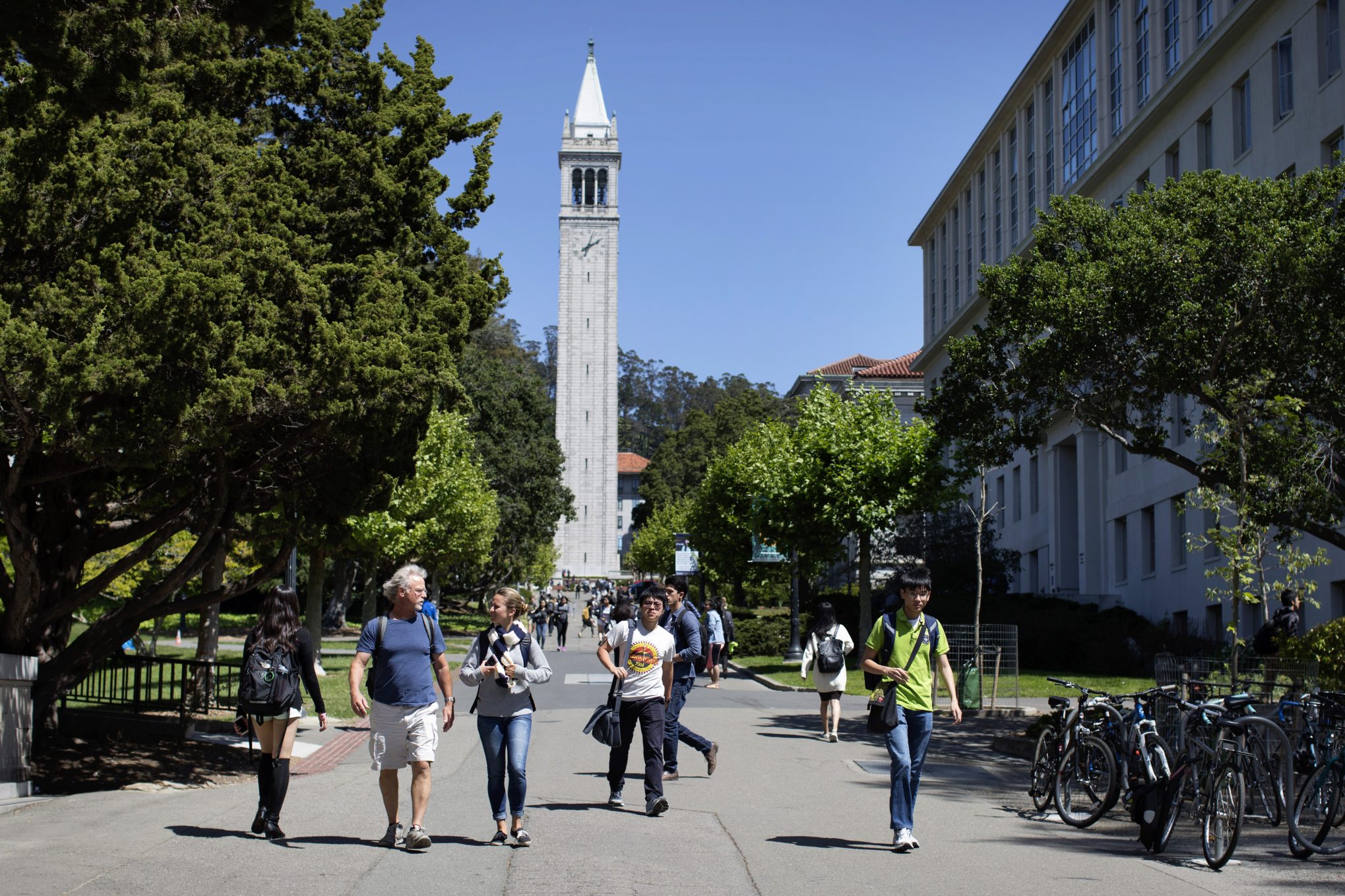
    When I received my admission letter from the University of California, Berkeley, I felt deeply honored to earn a place at one of the world’s leading research and teaching institutions.

    I am now an advisory board member of the recently formed California Cradle-to-Career Data System, the state’s longitudinal system that connects education and career outcomes data in one central place. I have learned firsthand that the resources available for students to gauge their potential postgraduate earnings often rely on self-submitted data or estimates, rather than on an accurate overview of college and career outcomes.

    Related: To better serve first-generation students, expand the definition

    As part of this work, I am now helping my state’s leaders develop tools like the Student Pathways dashboard, which provides insights on the higher education options available to students after high school.

    The tool provides information on a single website for everyone to access at any time. By streamlining access to this data, it allows students and the adults helping them to easily pinpoint which types of degrees or certifications are right for them, which may lead to employment opportunities where they live and which colleges or universities the students’ classmates are headed to.

    Students need access that can help them map out their futures — whether they hope to attend college, earn a certificate or enter the workforce directly after high school. Using data in the pathways tool can clarify how others have navigated to and through college and hopefully help students chart their own paths.

    As the youngest advisory board member, I have the opportunity to provide proposals and recommendations from a student’s perspective on how the system can engage with communities to make its data more accessible. Community engagement involves ensuring that Californians are aware of the data system, can understand and interpret the available data and have an opportunity to share their feedback.

    I often think about how the countless hours I spent trying to find information to help guide my goals and decision-making were both a burden and barrier to attending college. I know firsthand how the power of data can help build a successful future.

    Today, many first-generation and low-income college students do not have the opportunity to assess which pathways will yield the most fruit. I’m confident that with accessible facts and data for our decision-making, we can confidently forge the paths that will bring our dreams to life.

    Mike Nguyen is a rising junior studying business administration and science, technology, and society at the Haas School of Business at the University of California, Berkeley. This piece was written in collaboration with Alexis Takagi, a basic needs coordinator at Santa Clara University. Both Nguyen and Takagi are advisory board members of the California Cradle-to-Career Data System.

    Contact the opinion editor at [email protected].

    This story first-generation college students was produced by The Hechinger Report, a nonprofit, independent news organization focused on inequality and innovation in education. Sign up for Hechinger’s weekly newsletter.
    The Hechinger Report provides in-depth, fact-based, unbiased reporting on education that is free to all readers. But that doesn’t mean it’s free to produce. Our work keeps educators and the public informed about pressing issues at schools and on campuses throughout the country. We tell the whole story, even when the details are inconvenient. Help us keep doing that.

    Join us today.

    Source link

  • Arizona Republicans Want Chaplains to be in Public Schools – The 74

    Arizona Republicans Want Chaplains to be in Public Schools – The 74


    Get stories like this delivered straight to your inbox. Sign up for The 74 Newsletter

    Republican politicians who accuse public school teachers of indoctrinating students with a “woke agenda” are pushing to bring religious chaplains into the same schools to provide counseling to students.

    “I think Jesus is a lot better than a psychologist,” Rep. David Marshall, R-Snowflake, said during a March 11 meeting of the Arizona House of Representatives’ Education Committee.

    Marshall said that he’s been a chaplain who provides counseling for 26 years.

    Senate Bill 1269, sponsored by Flagstaff Republican Sen. Wendy Rogers, was modeled after similar legislation passed in recent years in Texas and Florida.

    The proposal would give school districts the option of allowing volunteer religious chaplains to provide counseling and programs to public school students. Districts that decide to allow chaplains would be required to provide to parents a list of the volunteer chaplains at each school and their religious affiliation, and parents would be required to give permission for their child to receive support from a chaplain.

    Despite ample concerns that the proposal violates the First Amendment’s Establishment Clause and that it would open up schools to legal liability for any bad mental health advice a chaplain might provide, the bill has already passed through the Senate on a party-line vote. The House Education Committee also approved it along party lines.

    Rogers told the Education Committee that the existence of any requirement for the separation of church and state in U.S. law “was a myth,” adding that she sees no harm in bringing religion into public schools.

    Rogers, a far-right extremist, has embraced white nationalism, and in 2022 spoke at a white nationalist conference, calling the attendees “patriots” and advocating for the murder of her political enemies.

    She has also said she is “honored” to be endorsed by a prominent antisemitic Christian nationalist and regularly trafficks in antisemitic tropes. And Rogers has advocated racist theories, appeared on antisemitic news programs and aligned herself with violent anti-government extremists.

    Democrats on the committee raised the alarm that Rogers’ bill would violate the Establishment Clause by allowing chaplains with religious affiliations to counsel students, while not providing the same kinds of services to students who don’t follow a religion or who follow a less-common religion with no chaplains available to the school.

    An amendment to the bill, proposed by committee Chairman Matt Gress, a Phoenix Republican, requires that the chaplains be authorized to conduct religious activities by a religious group that believes in a supernatural being. The amendment would also allow a volunteer chaplain to be denied from the list if the school’s principal believes their counsel would be contrary to the school’s teachings.

    Both of these changes would allow districts to exclude chaplains from The Satanic Temple of Arizona, a group that doesn’t believe in a higher power but promotes empathy and has chapters across the country that challenge the intertwining of Christianity and government.

    Oliver Spires, a minister with The Satanic Temple of Arizona, voiced his opposition to Rogers’ bill during a Feb. 5 Senate Education Committee meeting.

    The legislation, Spires said, would disproportionately impact students from minority religions who see Christian chaplains providing support to their peers while no chaplains representing their religion are available.

    “If a district listed a Satanist on their chaplain list, would they have your support?” he asked the committee members.

    Gress’s amendment would preclude that.

    Gaelle Esposito, a lobbyist for the American Civil Liberties Union of Arizona, told committee members on Tuesday that school counselors are required to undergo specialized training to prepare them to help students — requirements that religious chaplains wouldn’t have to meet, even though they’d be providing similar services.

    “They will simply not be equipped to support students dealing with serious matters like anxiety, depression, eating disorders, self harm or suicidal ideation,” Esposito said. “Religious training is not a substitute for academic and professional training in counseling, health care or mental health… Even with the best intentions, chaplains may provide inappropriate responses or interventions that could harm students.”

    But as Democrats on the House Education Committee argued that Arizona should provide more funding for trained counselors and social workers to help students with mental health issues, the Republicans on the panel said that students are actually struggling with mental health issues because they don’t have enough religion in their lives.

    “I’ve heard that there is a mental health crisis afflicting kids,” Gress, a former school board member, said. “Now, I don’t necessarily think in many of these cases that something is medically wrong with these kids. I think, perhaps, there is a spiritual deficit that needs to be addressed.”

    Rep. Justin Olson, R-Mesa, said he’s been frustrated by the federal courts’ interpretation of the First Amendment to require the separation of church and state, claiming it has made the government hostile to religion instead of protecting it.

    “I heard comments here today that this is going to harm kids — harm kids by being exposed to religion? That is absolutely the opposite of what is happening here today in our society,” Olson said. “We have become a secular society, and that is damaging our society. We need to have opportunities for people to look to a higher power, and what better way than what is described here in this bill?”

    Democratic Rep. Nancy Gutierrez, of Tucson, called SB1269 “outrageous” and “incredibly inappropriate.”

    And Rep. Stephanie Simacek, of Phoenix, pointed out that the courts have repeatedly ruled against allowing religious leaders to be invited to share their faith with public school students. She described Rogers’ bill as indoctrination that gives preferential treatment to students who have religious beliefs over those who don’t

    “No one is saying that you may not go and celebrate your God, however you see fit,” Simacek, a former teacher and school board member, said. “But this is not the place, in public education, where our students go to learn math, reading and writing and history.”

    Florida’s school chaplain law, which went into effect last July and is similar to Rogers’ proposal, has received ample pushback from First Amendment advocacy groups, as well as some church groups who said that allowing untrained chaplains to provide mental health support to students would have unintended negative consequences.

    The option to bring chaplains into schools in Florida has not been particularly popular, with several large school districts deciding not to implement a program allowing them.

    Proposed legislation similar to SB 1269 has been introduced in red states across the country this year, including in Indiana, Nebraska, Iowa, Montana and North Dakota.

    The bill will next be considered by the full House of Representatives. If it passes the chamber, it will return to the Senate for a final vote before heading to Gov. Katie Hobbs.

    Arizona Mirror is part of States Newsroom, a nonprofit news network supported by grants and a coalition of donors as a 501c(3) public charity. Arizona Mirror maintains editorial independence. Contact Editor Jim Small for questions: [email protected].


    Get stories like these delivered straight to your inbox. Sign up for The 74 Newsletter

    Source link