

Category: school funding

  • New Jersey’s $40 Billion Education Machine Is Not Built to Teach

    New Jersey’s $40 Billion Education Machine Is Not Built to Teach

    Evan Scott is a lifelong New Jersey resident, a veteran, and a retired military service member. He holds a bachelor’s degree in education and was elected to his hometown’s Board of Education in 1988. Now living in Evesham Township, NJ, he continues to advocate for fair and transparent school funding.

    New Jersey spends about $40 billion each year on public education for roughly 1.3 million children. That’s one of the highest per-pupil spending levels in the country. We have a constitutional guarantee of a “thorough and efficient” education, a sophisticated school funding formula, a powerful state department of education, and layer upon layer of regulations and oversight.

    And yet: our statewide test scores are still below pre-pandemic levels. Achievement gaps by race, income, disability, and language remain enormous. In some grades and subjects, they’re widening.

    If you built a machine to spend this much money and still fail to close gaps year after year, it would look exactly like New Jersey’s education system.

    The System Optimizes for the Wrong Thing

    On paper, New Jersey’s education system is supposed to deliver a thorough and efficient education for every child, with equity across race and income, leading to college and career readiness.

    In practice, the system optimizes for compliance with regulations, political stability, and avoiding lawsuits and strikes.

    The proof is everywhere. We produce beautiful policy documents, voluminous regulations, complex aid tables, and endless reports. But ask a simple question — “what exactly are we doing differently in classrooms to get more third graders reading on grade level?” — and the answers get vague fast.

    We have built a machine to show we are doing something. We have not built a machine engineered to maximize student learning.

    $40 Billion Is Not $40 Billion of Teaching

    That enormous figure pays for instruction, sure. But also: support services, administration, operations and maintenance, transportation and food, debt, pensions, and legacy costs. Nationally, barely half of K-12 spending reaches the classroom as direct instruction. New Jersey is no exception.

    The problem isn’t that buses or nurses are wasteful. The problem is this: we are spending tens of billions of dollars through a system that does not prioritize the highest-impact instructional uses of the next dollar.

    New money goes first to contractual raises, benefit increases, new programs layered on old ones without evaluation, and rising facility costs. Almost none of this is evaluated through the brutal question a serious system would ask: “If we invest this next $100 million, what evidence says it will move reading and math outcomes for our most vulnerable students?”

    We don’t ask that. We just roll the machine forward.

    The State Knows Better—But Only in Science

    The Department of Education has already shown us what a more serious approach looks like. On its own website, NJDOE concedes that less than 20 percent of classroom materials are aligned to standards in science, and has responded by building a Model Science Curriculum around vetted, high-quality resources.

    In other words: the Department knows that standards alone are not enough. Teachers need specific, evidence-based materials, and many districts aren’t getting them on their own.

    But why only science? Our most urgent gaps are in early reading and middle-grades math. If the Department can curate model units for science, it can create a K-3 literacy framework aligned with the science of reading and a model math sequence built around proven materials.

    Instead, New Jersey treats curriculum as a hyper-local, 600-district procurement hobby — and then acts surprised when quality is all over the map and only half our students read or do math on grade level.

    600 Districts, Zero Instructional Coherence

    New Jersey has hundreds of school districts, each with its own superintendent, business administrator, HR department, and curriculum staff. Many are tiny. Above them sits NJDOE and county superintendents, responsible for standards, accountability, and oversight.

    What does the state actually control? It sets standards, not curriculum. Districts must “align” to the New Jersey Student Learning Standards, but the state does not mandate or approve specific programs.

    The result: strong standards and a huge compliance apparatus at the top. A fragmented, district-by-district free-for-all in curriculum and instruction at the bottom.

    Contrast that with Mississippi and Louisiana, which have seen real gains in early reading. Their state agencies didn’t stop at standards. They rated and recommended specific curricula aligned to the science of reading. They tied professional development to those exact materials. They used state power to make instructional coherence non-negotiable in early grades.

    New Jersey has allowed 600 different answers to “what does reading instruction look like in K-3?” and then acts surprised when results are uneven and gaps persist.

    Our administrative machine is big enough to boss districts around on paperwork and testing windows. It is somehow too shy to insist on evidence-based literacy instruction for six-year-olds.

    SFRA: A Formula Without a Steering Wheel

    New Jersey’s School Funding Reform Act is, in theory, a rational way to calculate how much each district needs, with extra weights for poverty, language, and special education.

    But SFRA answers “how much?” It says almost nothing about “for what?”

    You can be billions closer to full funding and still have districts spending above adequacy with mediocre outcomes, districts below adequacy left on their own to figure out interventions, and no systematic connection between spending patterns and student outcomes.

    SFRA is a clever formula for filling tanks. It is not a steering wheel.

    A System That Protects Itself Better Than It Protects Children

    Step back and the obscenity becomes stark:

    We tolerate enormous fixed administrative overhead spread across hundreds of districts that could consolidate or share services. We accept a patchwork of curricula in early literacy even as other states prove you can do better. We pour in new money with minimal discipline about which interventions actually work. We allow graduation standards to be quietly lowered so statistics look smoother.

    All of this is defended in the name of “local control,” “flexibility,” and “respecting stakeholders.”

    Meanwhile, a third grader in Trenton is still far less likely to read on grade level than a third grader in a wealthy suburb — despite living in one of the highest-spending education systems on Earth.

    New Jersey’s system is extremely good at sustaining itself. It is not nearly good enough at changing itself when children are not learning.

    What a First-Principles Reset Would Look Like

    If we were designing a $40 billion system for learning, rather than inheriting a $40 billion system of habits:

    Clear, public goals. By 2030: 80% of third graders reading proficiently, with racial and income gaps below 10 percentage points. By 8th grade: 70% proficient in math, same gap constraint. By graduation: diplomas tied to real college and career readiness benchmarks.

    Evidence-based spending rules. The next billion in state aid goes first to high-dosage tutoring for students below proficiency, smaller K-3 class sizes in high-poverty schools, literacy and math coaches tied to vetted curricula, and high-quality pre-K expansion. Not to automatic expansion of everything we already do.

    State leadership on curriculum. NJDOE should review and rate K-8 ELA and math curricula and publish a short list of high-quality options. Professional development should be built around those choices. Districts can still choose — but from good choices.

    Rationalized administration. Require consolidation and shared services where appropriate. Reinvest savings into classroom-facing roles: teachers, aides, interventionists, counselors.

    Real accountability for results. Public dashboards showing, for each district: spending per pupil broken out by category, proficiency rates and gaps by subgroup, and whether things are improving. Tie flexibility and funding to demonstrated ability to turn dollars into learning.

    The Courage We Actually Need

    New Jersey doesn’t need one more glossy plan or press release celebrating “investments in education.” It needs the political courage to admit that our current system is not designed to do the thing we say we value most.

    It will take courage to challenge the sacredness of local administrative fiefdoms. To tell high-spending districts that dollars above adequacy must be justified by outcomes. To insist that early literacy is not a matter of preference but of evidence. To rebuild NJDOE from compliance cop to instructional engine.

    We are not a poor state. We are not a low-spending state. Our children’s struggles are not about scarcity. They are about design — the design of a system that has learned to protect adults, institutions, and routines more effectively than it has learned to teach children to read, write, and think.
    Source link

  • New Watchdog Report Reveals ‘Loopholes,’ Lack of Oversight of Idaho Virtual School Finances – The 74

    New Watchdog Report Reveals ‘Loopholes,’ Lack of Oversight of Idaho Virtual School Finances – The 74


    Get stories like this delivered straight to your inbox. Sign up for The 74 Newsletter

    Some families enrolled in the Idaho Home Learning Academy public virtual charter school used state funding to pay for virtual reality headsets, hoverboards, hunting equipment, video games and video game controllers, paddleboards, smart watches, admission tickets to water parks and subscriptions to streaming services like Netflix and Hulu, according to a new state watchdog report released Tuesday.

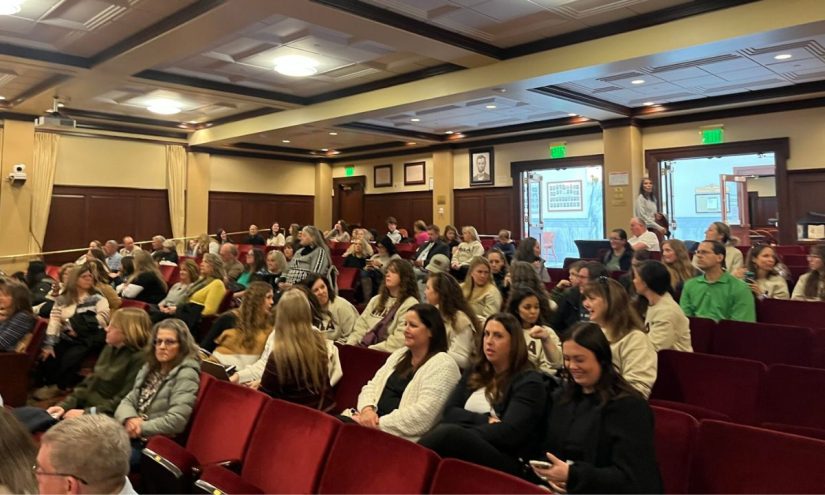
    The nonpartisan Idaho Office of Performance Evaluations, which is commonly referred to as OPE, released the 129-page Idaho Home Learning Academy evaluation report Tuesday at the Idaho State Capitol after the release was authorized by the Idaho Legislature’s Joint Legislative Oversight Committee.

    OPE released the evaluation report after multiple Idaho legislators signed a March 5 letter requesting the office study the Idaho Home Learning Academy’s finances, expenditures, policies, contracts and student achievement results.

    The Idaho Home Learning Academy, or IHLA for short, is a rapidly growing public virtual charter school authorized by the small, rural Oneida School District.

    There were about 7,600 online students enrolled at Idaho Home Learning Academy during the 2024-25 school year, many of which do not live within the traditional geographic boundaries of the Oneida School District.

    New report raises questions about how supplemental learning funds are used by some families

    As part of Idaho Home Learning Academy’s contract, its education service providers administer supplemental learning funds of $1,700 to $1,800 per student to families enrolled in IHLA that were paid for by Idaho taxpayer dollars, the report found. The money is intended to help pay families for education expenses, and the OPE evaluators found that the largest share of the funds were spent on technology expenses, such as computers, printers and internet access. Other significant sources of supplemental learning fund expenses went for physical education activities and performing arts expenses, the OPE report found.

    However, OPE evaluators found that some families used their share of funding for tuition and fees at private schools and programs. Some families also used their funds for noneducational board games, kitchen items like BBQ tongs, cosmetics, a home theater projector screen, video games, Nintendo Switch controllers, a Meta Quest virtual reality headset, movie DVDs, weapons, sights lasers, shooting targets, remote controlled cars, hoverboards, action figures, smartwatches, water park tickets and the cost of registering website domain names, the OPE report found.

    Families with students enrolled at Idaho Home Learning Academy are able to access the funds though both direct ordering programs and reimbursements. The OPE report found that Idaho Home Learning Academy’s three service providers (Braintree, Home Ed and Harmony) spent about $12.5 million providing supplemental learning funds for IHLA families during the 2024-25 school year. Service providers said that some families did not spend any or all of their supplemental learning funds, and the money was retained by the service providers, not returned back to the state or school district, the OPE report found.

    Idaho governor, superintendent of public instruction respond to OPE report’s findings

    Idaho Gov. Brad Little called the report’s findings “troubling” in a letter released with the report Tuesday.

    “We also have an obligation to be responsible stewards of taxpayer dollars,” Little wrote. “The OPE report on IHLA is troubling, especially as it pertains to supplemental learning fund expenses, academic performance, supplemental curriculum and the funding formula that enables virtual programs to receive more funding than brick-and-mortar public schools. The OPE report reveals that statutory safeguards are insufficient, oversight is inconsistent and accountability measures have not kept pace with the fast expansion of the IHLA program.”

    The OPE evaluation report findings come at a time when every dollar of state funding in Idaho is being stretched further amid a revenue shortfall. All state agencies outside of the K-12 public school system are implementing 3% mid-year budget holdbacks, and the state budget is projected to end fiscal year 2026 and fiscal year 2027 in a budget deficit, the Idaho Capital Sun previously reported.

    Idaho Superintendent of Public Instruction Debbie Critchfield said the report raised concerns for her as well.

    “(The OPE report) also raises important questions about whether direct and indirect payments to families are a proper and legal use of funds appropriated for public schools,” Critchfield wrote in a Nov. 26 letter to OPE leadership.

    The OPE evaluation report found that limited oversight and accountability create uncertainty about how supplemental learning funds paid for with state taxpayer dollars are used and whether students’ curriculum choices align with state standards and transparency requirements.

    Idaho state laws and administrative rules do not specifically allow or prohibit the use of supplemental learning funds, the OPE report found. That finding was one of several “policy gray areas” that the OPE evaluation report documented.

    Little concluded his letter by saying he is ready to work with the Idaho Legislature, the Idaho State Department of Education and the Idaho State Board of Education to restore meaningful accountability for the use of taxpayer dollars.

    “I have carefully reviewed the recommendations provided in this report and strongly encourage the Legislature to address the loopholes in state statute,” Little wrote.

    Oneida School District superintendent stresses Idaho Home Learning Academy did not break state law

    In response to the OPE report, Oneida School District Superintendent Dallan Rupp, who is also a member of the Idaho Home Learning Academy School board, emphasized that the report did not find that IHLA was guilty of any misconduct.

    “Importantly, the OPE report did not identify any misconduct at IHLA,” Rupp said during a meeting Tuesday at the Idaho State Capitol in Boise. “This outcome underscores the effectiveness of Oneida School District’s oversight and reflects IHLA’s consistent compliance with Idaho’s laws, statutes, rules, regulations and procedures, as well as its cooperative relationship with the Idaho State Department of Education. We remain fully committed to operating within all established guidelines, just as we have in the past.”

    Idaho Sen. James Ruchti, D-Pocatello, said it was beside the point that the school didn’t break any laws.

    “I’m extremely concerned,” Ruchti said during Tuesday’s meeting at the Idaho State Capitol in Boise. “This is public money – public taxpayer money – and we have an obligation to make sure that it’s spent appropriately and with oversight. And so, yes, it may not have violated any statutory requirements at this point. But what I’m saying is that what I saw in that presentation caused me serious concerns about how IHLA and other online teaching institutions are able to spend public dollars in a way that was not intended.”

    Idaho watchdog report found most online virtual teachers were part-time employees

    OPE also found that most Idaho Home Learning Academy teachers were part-time, unlike traditional schools, and the Idaho Home Learning Academy spends much less on salaries and benefits than it receives from the state’s salary apportionment formula.

    The report found IHLA was able to use the savings it realized in state funding provided to pay for staff salaries and health benefits to instead use at IHLA’s discretion or to pay its education service providers.

    The OPE report found that most of IHLA’s teachers are part-time employees and do not provide full-time direct instruction to students. Instead, the report found that Idaho Home Learning Academy’s kindergarten through eighth grade instructional model relied heavily on parent-directed learning and that IHLA teachers typically offered feedback and oversight instead of direct instruction.

    According to the report, IHLA reported $46.3 million in total expenditures from state funds during the 2024-25 school year. While traditional brick-and-mortar public schools’ largest expenditures are for staff salaries and benefits, the report found that only 36% of IHLA’s expenditures went to staff. A larger portion – 45% of IHLA’s total expenditures, or $20.6 million – went to paying education service providers.

    The OPE report also found that Idaho Home Learning Academy’s students lagged behind statewide averages for scores on Idaho Standards Achievement Test, or ISAT. The OPE report found 42% of IHLA students were proficient in English language arts during the 2024-25 school year, compared to the statewide average of 52% of Idaho students.

    The report also found just 25% of IHLA students were proficient in math during the 2024-25 school year, compared to the Idaho statewide average of 43%.

    However, the OPE report highlighted that some IHLA families interviewed for the report said they do not believe statewide standardized tests are a good measure of student learning. The report also noted that many Idaho Home Learning Academy families identified themselves as homeschoolers and said they were using IHLA by choice because they were unhappy with the quality of education in traditional brick-and-mortar schools or felt that their child’s educational needs were not being met by more traditional public schools.

    Idaho Capital Sun is part of States Newsroom, a nonprofit news network supported by grants and a coalition of donors as a 501c(3) public charity. Idaho Capital Sun maintains editorial independence. Contact Editor Christina Lords for questions: [email protected].


    Did you use this article in your work?

    We’d love to hear how The 74’s reporting is helping educators, researchers, and policymakers. Tell us how

    Source link

  • Facing Tighter Budget, Oklahoma Lawmakers Cast Doubt on Walters’ Budget Requests – The 74

    Facing Tighter Budget, Oklahoma Lawmakers Cast Doubt on Walters’ Budget Requests – The 74


    Get stories like this delivered straight to your inbox. Sign up for The 74 Newsletter

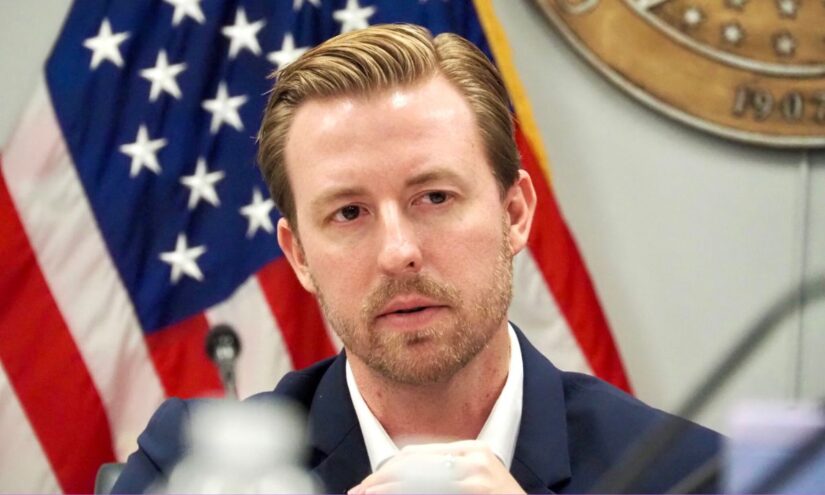
    OKLAHOMA CITY — As state officials anticipate a smaller budget in the next fiscal year, lawmakers on Tuesday appeared doubtful of requests to spend millions on Bibles for public schools and salary increases at the Oklahoma State Department of Education.

    The agency’s leader, state Superintendent Ryan Walters, again asked for $3 million to purchase copies of the Bible, the Declaration of Independence and the U.S. Constitution to place in every public school classroom. He also requested $2.3 million for a 6% cost-of-living salary bump for Education Department employees, who last saw a pay raise in 2019.

    Although his total budget request would increase the agency’s funding by $113 million, Walters hinted at “potential staff cuts” to limit the Education Department’s operational expenses during a meeting Tuesday with the Senate Appropriations Committee.

    “I​​ do believe we can save $1.3 million in some of the costs that we’ve been able to absorb through rolling positions together, cutting positions that are duplicated in their services,” Walters said during the meeting.

    Members of the influential appropriations committee heard Walters’ budget requests for the 2026 fiscal year. The state is required to pay some of the projected expenses, such as an extra $88.6 million for the rising cost of health insurance for public school employees.

    Another $4 million would increase the teacher maternity leave fund, which Walters said is growing in popularity. He also asked for $500,000 to offer firearms training to teachers.

    Senators of both parties questioned Walters’ request for $3 million to buy 55,000 copies of the King James Version Bible, which they suggested could be donated to schools or found for free online.

    House lawmakers had similar questions during a hearing with Walters last week.

    The state superintendent has advocated for more instruction on the Bible to help contextualize American history and the beliefs of the country’s founding fathers. He said he doesn’t intend for schools to preach Christianity to students.

    Last year, he ordered all school districts in the state to incorporate the Bible into their lesson plans and proposed new academic standards for social studies that would mandate instruction on biblical stories. His agency already spent under $25,000 on 532 copies of Lee Greenwood’s God Bless the USA Bible, which is informally known as the Trump Bible because it has the president’s endorsement.

    Walters’ Bible instruction mandate already faces a legal challenge on church-state separation grounds.

    Sen. Brenda Stanley, R-Midwest City, said she never encountered a classroom that didn’t have a Bible available to students during her 43-year career in education.

    Sen. Dave Rader, R-Tulsa, encouraged Walters to exhaust all resources for Bible donations before having the Legislature consider spending $3 million.

    “We could take the $3 million elsewhere, if somebody is willing to make those available to us at no cost,” Rader said during the hearing.

    The Senate committee also appeared dubious of funding a COLA increase for an agency that has lost dozens of employees over the past two years. Walters told the committee the Education Department employed 520 people when he took office in January 2023 and that it now counts 460 employees.

    “If you have decreased your (full-time employees), it would appear to me that there are already dollars inside your operating budget to offer salary increases,” Sen. Kristen Thompson, R-Edmond, told Walters during the hearing.

    Walters disagreed that staff departures would be enough to fund the increase. A complicating factor is the large number of federally funded salaries at the agency, he said.

    The department has considered reducing its staff even further after the state Board of Equalization projected the Legislature will have $119 million less to spend in the 2026 fiscal year, Walters said.

    The projection is preliminary, and the Board of Equalization will meet again this month for updated numbers.

    “After the last Board of Equalization meeting, we really went in and tried to do a deep dive into can we continue to see cuts, and we believe that we do need to be able to do that,” Walters said.

    Legislative leaders are preparing to limit expenses in light of the budget projections, especially as Gov. Kevin Stitt pushes for further tax cuts, flat agency budgets and “eliminating wasteful government spending.”

    The governor suggested no funding increases to public schools nor to the state Education Department in a budget proposal he released Monday.

    House Speaker Kyle Hilbert, R-Bristow, said Monday that he shares many of the governor’s priorities “as we seek to tighten our belt fiscally this year.” Senate President Pro Tem Lonnie Paxton, R-Tuttle, echoed Stitt’s tax-cut message when he endorsed “improving the lives of Oklahomans by allowing them to keep more of their hard-earned money.”

    Oklahoma Voice is part of States Newsroom, a nonprofit news network supported by grants and a coalition of donors as a 501c(3) public charity. Oklahoma Voice maintains editorial independence. Contact Editor Janelle Stecklein for questions: [email protected].


    Get stories like these delivered straight to your inbox. Sign up for The 74 Newsletter

    Source link