Category: school (in)security

  • Punishing Parents for Chronic Absenteeism – The 74

    Punishing Parents for Chronic Absenteeism – The 74


    Get stories like this delivered straight to your inbox. Sign up for The 74 Newsletter

    School (in)Security is our biweekly briefing on the latest school safety news, vetted by Mark KeierleberSubscribe here.

    As educators nationwide grapple with stubbornly high levels of student absences since the pandemic drove schools into disarray five years ago, Oklahoma prosecutor Erik Johnson says he has the solution. 

    Throw parents in jail.

    This week, I offer a look at chronic absenteeism’s persistence long after COVID shuttered classrooms, plunged families into poverty and led to the deaths of more than 1 million Americans. Lawmakers nationwide have proposed dozens of bills this year designed to curtail student absences — with radically different approaches.

    While a proposal in Hawaii would reward kids’ good attendance with ice cream, new laws in Indiana, West Virginia and Iowa impose fines and jail time for parents who can’t compel their children to attend class regularly. In Oklahoma, where Johnson has ushered in a new era of truancy crackdowns, state lawmakers say parents — not principals and teachers — should be held accountable for students’ repeat absences.

    “We prosecute everything from murders to rape to financial crimes, but in my view, the ones that cause the most societal harm is when people do harm to children, either child neglect, child physical abuse, child sexual abuse, domestic violence in homes, and then you can add truancy to the list,” Johnson told me this week. 

    “It’s not as bad, in my opinion, as beating a child, but it’s on the spectrum because you’re not putting that child in a position to be successful,” continued Johnson, who has dubbed 2025 the “Year of the Child.”


    In the news

    Books are not a crime — yet: Under proposed Texas legislation, teachers could soon face jail sentences for teaching classic literary works with sexual content, including The Catcher in the Rye and (unironically?) Brave New World. | Mother Jones

    Mass layoffs at the U.S. Department of Health and Human Services this week could have devastating consequences for the health and well-being of low-income children. | The Associated Press

    Ten days or else: The Education Department demanded Thursday that states certify in writing within the next 10 days that K-12 schools are complying with its interpretation of civil rights laws, namely eliminating any diversity, equity and inclusion programs, or else risk losing their federal funding. | The New York Times

    A Texas teen was kneed in the face by a school cop: Now, with steep cuts to the Education Department’s Office for Civil Rights, her case is one of thousands that have been left to languish. | The 74

    Students’ right to privacy versus parents’ right to know: The Trump administration has opened an investigation into a California law designed to protect transgender students from being outed to their parents, alleging violations of the federal student privacy law. | The New York Times

    • A similar investigation has been opened against officials in Maine, where the feds claim district policies to protect students’ privacy come at the expense of parents’ right to information. | Maine Morning Star
    • “Parents are the most natural protectors of their children,” Education Secretary Linda McMahon said in a statement after a similar federal investigation was launched against Virginia educators. “Yet many states and school districts have enacted policies that imply students need protection from their parents.” | Virginia Mercury
    • A little context: In a recent survey, more than 92% of parents said they were supportive of their child’s transgender identity. | Human Rights Campaign
    Sign-up for the School (in)Security newsletter.

    Get the most critical news and information about students’ rights, safety and well-being delivered straight to your inbox.

    The Student Press Law Center joined a coalition of free speech and journalism organizations in denouncing the recent ICE detention of Tufts University international student Rumeysa Ozturk over opinions she expressed in an op-ed in the student newspaper. 

    • “Such a basis for her detention would represent a blatant disregard for the principles of free speech and free press within the First Amendment,” the groups wrote in their letter. | Student Press Law Center
    • The Turkish doctoral candidate is one of several students who’ve been rounded up by immigration officials in recent weeks based on pro-Palestinian comments. | The New York Times

    Florida lawmakers have a plan to fill the jobs of undocumented workers who are deported: Put kids on the overnight shift. | The Guardian

    Minority report: Following bipartisan opposition, Georgia lawmakers have given up on efforts to create a statewide student-tracking database designed to identify youth who could commit future acts of violence. | WABE

    A majority of school district programs focused on protecting student data are led by administrators with little training in privacy issues, a new report finds. | StateScoop

    Washington students’ sensitive data was exposed. The culprit? A student surveillance tool. | The Seattle Times


    ICYMI @The74

    Emotional Support

    Annie, who lives with The 74 social media guru Christian Skotte, is the cutest regular at Brooklyn’s Prospect Park. You won’t convince me otherwise. 


    Get stories like these delivered straight to your inbox. Sign up for The 74 Newsletter
    Source link

  • Former Kansas City School Police Officer Fights for Student Safety Via Nonprofit – The 74

    Former Kansas City School Police Officer Fights for Student Safety Via Nonprofit – The 74

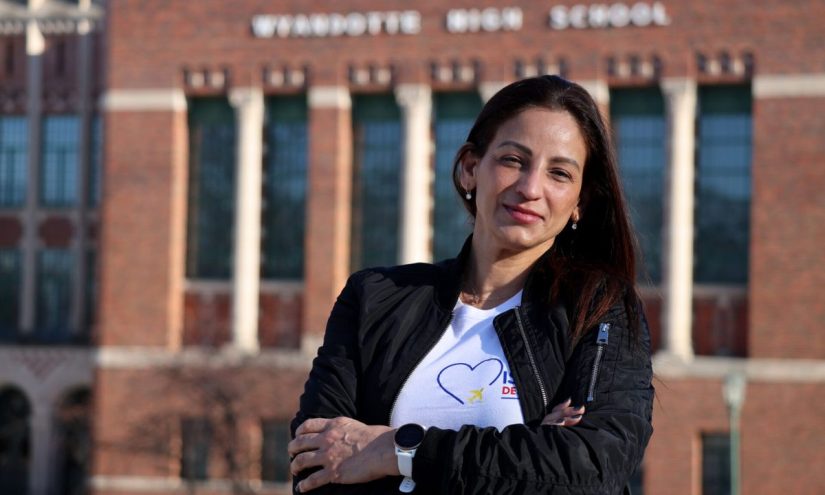
    KANSAS CITY, Kan. — Marialexa Sanoja publicly quit her job as a Kansas City, Kansas, Public Schools police officer over concerns with the district’s handling of student safety needs and founded a nonprofit to help kids escape the challenges in Wyandotte County.

    In the three-and-a-half months Sanoja was stationed at Wyandotte High School, the district’s largest school with 1900 students, Sanoja said she filed 140 incident reports and that in most instances the district failed to take action. The district, through its YouTube channel, disputed her figures and asserted it handled concerns responsibly.

    “It didn’t take long for me to find out that the students were not in the best interest of anybody,” Sanoja said. “When the police officer becomes a safe space for students, there is something wrong with that.”

    After her resignation in December 2023, Sanoja founded Missión Despegue, translated to “mission takeoff,” a nonprofit that helps parents and students document their grievances with the school district to hold the district accountable for its handling of safety issues.

    Sanoja saw the district’s response to a sexual assault case and its communication as inadequate, and experts echo her concerns. Now, Sanoja works with current and former students to get their GED certificates, drivers licenses, mental health care and prevent substance abuse.

    Sanoja’s concerns

    Sanoja said much of the Latino community, which makes up 72% of Wyandotte High School, is afraid to complain or make a scene because many of them are new to the country. She aims to empower them, and help them achieve the “American dream.”

    One reason Sanoja resigned — and a former student dropped out — was because of the district’s response to the former student’s experience of being sexually assaulted at school. Kansas Reflector doesn’t identify minors who have been sexually assaulted.

    According to an incident report filed by Sanoja, the former student was a freshman and alone in the Wyandotte High School stairwell when a group of older boys groped her and made sexual remarks. She began recording the boys with her phone, which prompted them to leave, the report said.

    Sanoja was off duty that day. The former student asked the on-duty officer to file a report, which Sanoja says she never saw. The day after, Sanoja and the former student said they filed an incident, criminal, and Title IX report. The former student wanted to press charges.

    “After that, I just stopped going to school, because I didn’t feel safe,” the former student said in an interview with Kansas Reflector.

    Sanoja said security camera footage and the former student’s video showed the boys’ faces. The former student said the district told her that because the boys never returned to school, it could not suspend them. However, the former student said she continued to see the boys on campus.

    “Ultimately, the district didn’t do anything about it. We were asking, at least, for suspension. That didn’t happen,” Sanoja said.

    A spokesperson from the district told Kansas Reflector it was unable to provide comment on the former student’s case, or the district’s responsibility to handle reports of sexual assault.

    Sanoja publicly resigned with a letter that accused the district of failing to communicate with parents. She wrote that she was worried about instances where students brought guns to school property and all parents weren’t notified.

    In a response video to Sanoja’s resignation, district superintendent Anna Stubblefield said “those incidents are not always relayed to all families. Not because we’re hiding anything, but because the impact is low and to protect the privacy of our students.”

    A district spokesperson told Kansas Reflector the “administration is required to contact parents regarding student issues — such as absences, drug-related concerns, or fights — in accordance with the Student Code of Conduct.”

    Expert opinions

    Ken Trump, an expert in school safety communications who is not related to the president, said parental anxiety over school safety is rising nationwide.

    “It’s very easy to get caught up if you’ve got a couple thousand kids in a school, dealing with incidents and other things. But you need to take a tactical pause in this, and go back to looking at the communications,” Trump said. “You can’t go back to the old-school mindset of if someone finds out about it we’ll talk. That doesn’t work anymore.”

    Sanoja said that after a student overdosed at school and she contacted the parents directly, the high school principal told Sanoja to route all communication with parents through administration.

    Sanoja said that she continues to receive videos of physical fights in the schools, totaling in the hundreds, since her resignation.

    Michael Dorn, a school safety expert who assists schools after major acts of violence, said  Sanoja’s allegations were concerning. He said he would have responded to her concerns differently than the school district did.

    “I was a school district police chief for 10 years,” Dorn said. “If an officer in my department wrote that kind of resignation letter, I would request a state police investigation. I would ask for a polygraph test, and I would ask that she be polygraphed. I wouldn’t do anything like that, but if someone alleged that I did and I didn’t do it, I would request that to clear my name.”

    Sanoja worked as a police officer in Lenexa before transitioning to the school district and said Wyandotte High School presented the most significant challenges she’s seen. She believes the problems are “within the culture” of the school.

    “Everybody’s tired of the way the district is handling things,” Sanoja said. “They’ve been failing these kids for years.”

    Fixing root causes

    Through her nonprofit, Sanoja helps students who leave the district, like the former student who was sexually assaulted, earn their GED certificate.

    When they’re out of the school environment, Sanoja said, they thrive.

    Sanoja said most of the families she works with are immigrants, and the parents do not speak English.

    “We face the daunting task of ending the stigma, shame and judgement that come with our culture,” Sanoja said.

    Missión Despegue seeks to fix the root causes of the problems seen in school — like substance abuse, violence, bullying, and mental health issues. Sanoja said she sees these problems reflected in things like the graduation rate of the district. For the 2023-2024 school year it was 78.1%, which is 11.4 percentage points lower than the state average.

    Through donations, Sanoja covers the cost of mental health appointments, DMV license and GED class registrations, and laptop purchases for students pursuing their GED certificate without one. In February, she began converting first-time offenders’ court fees, in hopes of reducing recidivism.

    With the help of more than 100 volunteers, Sanoja has hosted events where she provides Narcan and educates parents about the dangers of substance abuse. She also guides volunteers to further training, like drug prevention and compassion fatigue workshops.

    Sanoja said she doesn’t get paid for her work with Missión Despegue. She said she needs an assistant, because she has “a long list of people that need help.”

    “I see something in them. I know they’re going to be successful,” Sanoja said. “I want that opportunity for every kid I have.”

    Kansas Reflector is part of States Newsroom, a nonprofit news network supported by grants and a coalition of donors as a 501c(3) public charity. Kansas Reflector maintains editorial independence. Contact Editor Sherman Smith for questions: [email protected].


    Get stories like these delivered straight to your inbox. Sign up for The 74 Newsletter
    Source link

  • PowerSchool Got Hacked. Now What? – The 74

    PowerSchool Got Hacked. Now What? – The 74


    Get stories like this delivered straight to your inbox. Sign up for The 74 Newsletter

    Were you a current or former student in the last few decades? Or a parent? Or an educator? 

    If so, your sensitive data — like Social Security numbers and medical records — may have fallen into the hands of cybercriminals. Their target was education technology behemoth PowerSchool, which provides a centralized system for reams of student data to damn near every school in America.

    Given the cyberattack’s high stakes and its potential to harm millions of current and former students, I teamed up Wednesday with Doug Levin of the K12 Security Information eXchange to moderate a timely webinar about what happened, who was affected — and the steps school districts must take to keep their communities safe.

    Sign-up for the School (in)Security newsletter.

    Get the most critical news and information about students’ rights, safety and well-being delivered straight to your inbox.

    Concern about the PowerSchool breach is clearly high: Some 600 people tuned into the live event at one point and pummeled Levin and panelists Wesley Lombardo, technology director at Tennessee’s Maryville City Schools; Mark Racine, co-founder of RootED Solutions; and Amelia Vance, president of the Public Interest Privacy Center, with questions. 

    PowerSchool declined our invitation to participate but sent a statement, saying it is “working to complete our investigation of the incident and [is] coordinating with districts and schools to provide more information and resources (including credit monitoring or identity protection services if applicable) as it becomes available.”

    The individual or group who hacked the ed tech giant has yet to be publicly identified.

    Asked and answered: Why has the company’s security safeguards faced widespread scrutiny? What steps should parents take to keep their kids’ data secure? Will anyone be held accountable?

    Watch the webinar here.


    In the news

    Oklahoma schools Superintendent Ryan Walters, who says undocumented immigrants have placed “severe financial and operational strain” on schools in his state, proposed rules requiring parents to show proof of citizenship or legal immigration status when enrolling their kids — a proposal that not only violates federal law, but is likely to keep some parents from sending their children to school. | The 74

    • Not playing along: Leaders of the state’s two largest school districts — Oklahoma City and Tulsa — rebuked the proposal and said they would not collect students’ immigration information. Educators nationwide fear the incoming Trump administration could carry out arrests on campuses. | Oklahoma Watch
       
    • Walters filed a $474 million federal lawsuit this week alleging immigration enforcement officials mismanaged the U.S.-Mexico border, leading to “skyrocketing costs” for Oklahoma schools required “to accommodate an influx of non-citizen students.” | The Oklahoman
       
    • Timely resource guide: With ramped-up immigration enforcement on the horizon — and with many schools already sharing student information with ICE — here are the steps school administrators must take to comply with longstanding privacy and civil rights laws. | Center for Democracy & Technology

    A federal judge in Kentucky struck down the Biden administration’s Title IX rules that enshrined civil rights protections for LGBTQ+ students in schools, siding with several conservative state attorneys general who argued that harassment of transgender students based on their gender identity doesn’t constitute sex discrimination. Mother Jones

    Fires throw L.A. schools into chaos: As fatal wildfires rage in California, the students and families of America’s second-largest school district have had their lives thrown into disarray. Schools serving thousands of students were badly damaged or destroyed. Many children have lost their homes. Hundreds of kids whose schools burned down returned to makeshift classrooms Wednesday after losing “their whole lifestyle in a matter of hours.” | The Washington Post 

    • At least seven public schools in Los Angeles that were destroyed, damaged or threatened by flames will remain closed, along with campuses in other districts. | The 74

    Has TikTok’s time run out? With a national ban looming for the popular social media app, many teens say they’re ready to move on (and have already flocked to a replacement). | Business Insider

    Instagram and Facebook parent company Meta restricted LGBTQ+-related content from teens’ accounts for months under its so-called sensitive content policy until the effort was exposed by journalist Taylor Lorenz. | Fast Company

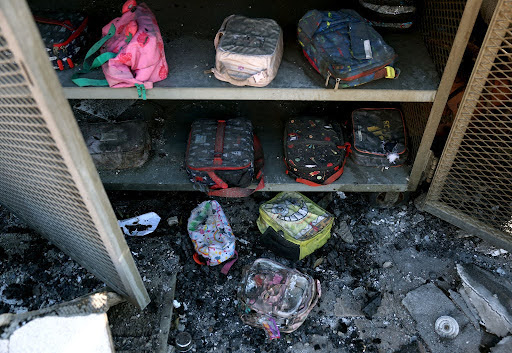
    Students’ lunch boxes sit in a locker at California’s Marquez Charter Elementary School, which was destroyed by the Palisades fire on Jan. 7. (Photo by Justin Sullivan/Getty Images)

    The Federal Communications Commission on Thursday announced the participants in a $200 million pilot program to help schools and libraries bolster their cybersecurity defenses. They include 645 schools and districts and 50 libraries. | FCC

    Scholastic falls to “furry” hackers: The education and publishing giant that brought us Harry Potter has fallen victim to a cyberattacker, who reportedly stole the records of some 8 million people. In an added twist, the culprit gave a shout-out to “the puppygirl hacker polycule,” an apparent reference to a hacker dating group interested in human-like animal characters. | Daily Dot

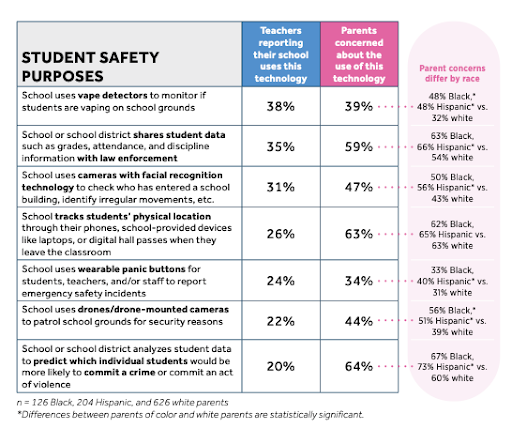
    Not just in New Jersey: In a new survey, nearly a quarter of teachers said their schools are patrolled by drones and a third said their schools have surveillance cameras with facial recognition capabilities. | Center for Democracy & Technology

    The number of teens abstaining from drugs, alcohol and tobacco use has hit record highs, with experts calling the latest data unprecedented and unexpected. | Ars Technica


    ICYMI @The74

    Librarians Gain Protections in Some States as Book Bans Soar

    RFK Jr. Could Pull Many Levers to Hinder Childhood Immunization as HHS Head

    Feds: Philadelphia Schools Failed to Address Antisemitism in School, Online


    Emotional Support

    New pup just dropped.

    Meet Woodford, who, at just 9 weeks, has already aged like a fine bourbon. I’m told that Woody — and the duck, obviously — have come under the good care of 74 reporter Linda Jacobson’s daughter.


    Get stories like these delivered straight to your inbox. Sign up for The 74 Newsletter
    Source link