Competition for students has never been tougher. With rising parent expectations and limited budgets, school marketing ideas need to do more than get attention. They have to inspire trust and drive enrolment.
At its core, school marketing includes every effort your institution makes to strengthen brand visibility and attract families. Today’s parents research online, compare schools carefully, and look for authenticity at every touchpoint.
That’s why the most successful private schools are shifting toward creative, data-driven marketing strategies that meet families where they are. The goal isn’t just to promote your programs; it’s to tell your story in a way that highlights your school’s true value, whether that’s academic excellence, a close-knit community, or innovative extracurriculars.
So how can your school stand out? Through inbound marketing, strategies that pull families in rather than push messages out. Inbound marketing builds trust by being genuinely helpful: answering parents’ questions, showcasing real student stories, and creating an online experience that feels personal and sincere.
Even with modest resources, schools that use inbound methods see stronger engagement and higher enrolment.
In this guide, we’ll break down 10 proven school marketing ideas to help boost private school enrolment, from optimizing your website and social channels to using testimonials, events, and storytelling that connect on an emotional level.
Struggling with enrollment?
Our expert digital marketing services can help you attract and enroll more students!

1. Create a High-Quality, SEO-Optimized Website
Your school’s website is your digital front door, the first real impression most families will have of your community. It’s where curiosity turns into consideration, so design and usability matter. A great school website should feel both professional and personal: clean visuals, simple navigation, and all the essentials easy to find, such as tuition, programs, admissions steps, and contact details.
But here’s where many schools fall short: visibility. Even the most beautiful site won’t help if parents can’t find it on Google. That’s where search engine optimization (SEO) comes in. Most families begin their search online, typing things like “best private schools near me” or “bilingual schools in Toronto.” To show up for those queries, your site needs relevant keywords, descriptive titles and meta tags, and fast load times.
Localization also helps. If your school attracts families across regions, tailor content by geography. And don’t stop at information. Your website should engage visitors visually and emotionally. Use dynamic photos and videos of real students, candid campus moments, and parent or alumni testimonials to bring your story to life. Clear calls to action: Book a Tour, Request Info, Apply Now, guide families naturally toward the next step.
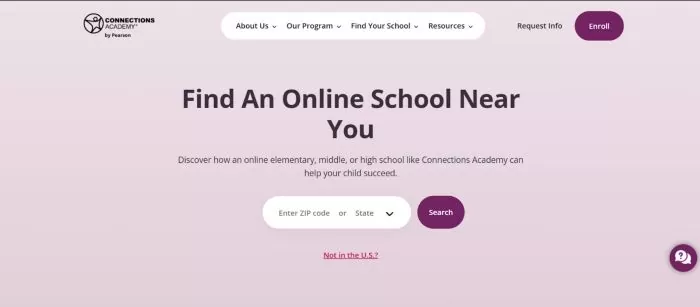
Example: Connections Academy (K–12 Online Public Schools): This online school network uses a geo-targeted approach on its site to connect families with their nearest program. A “Find Your School” tool routes visitors to state-specific pages based on ZIP code, ensuring that parents quickly find relevant information like curricula and enrolment steps for their locality. By organizing content by region and using local keywords (e.g., Georgia Connections Academy), the school boosts its presence in local search results.
Source: Connections Academy
Finally, make sure it’s mobile-first. Parents are browsing between meetings or from the car. A responsive, regularly updated website signals not only professionalism but also vitality, proof that your school is active, thriving, and ready to welcome new families.
2. Develop Valuable Blog Content and Resources
If your website is the front door, your blog is the conversation that happens once families walk in. It’s your chance to build trust, show expertise, and let your school’s personality shine.
Content marketing works because it educates while it engages. Blog posts, news stories, or downloadable guides can position your school as a thought leader on topics parents actually care about. From how to choose the right private school to how your teachers nurture student confidence. Every post is also an SEO opportunity: each new article gives Google another reason to show your site to searching parents.
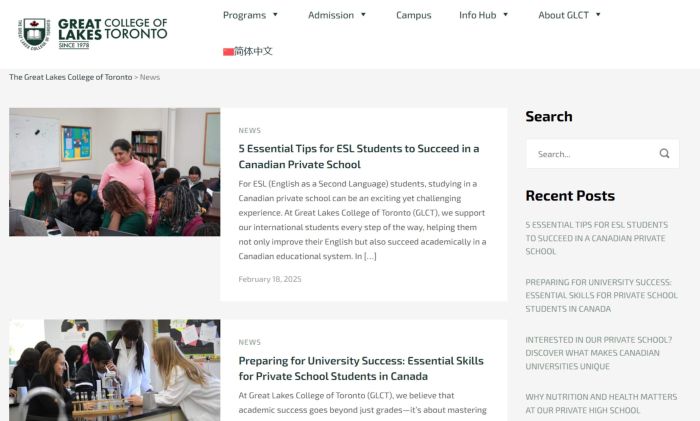
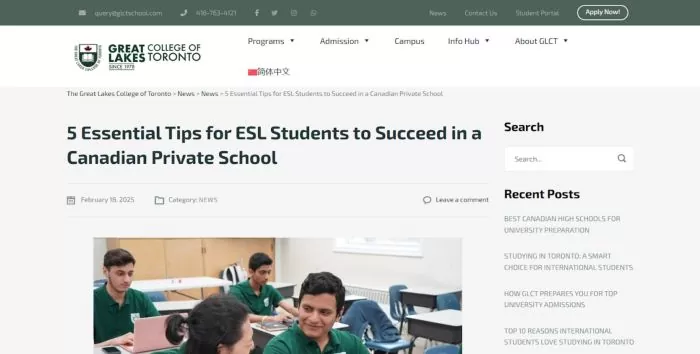
Example: Great Lakes College of Toronto (Private High School, ON): GLCT’s blog targets the needs of international students and parents. The school regularly publishes practical articles, from “5 Essential Tips for ESL Students to Succeed in a Canadian Private School” to guides on university admissions. Each post provides valuable advice (e.g., study strategies, application how-tos) while naturally highlighting GLCT’s supportive programs. By answering real questions (like how to improve English or navigate applications) in its content, GLCT attracts the right audience via SEO and builds trust.
Source: GLCT
Here’s the key: write content that answers parents’ real questions and reflects your school’s strengths. End each post with a next step: Book a Tour, Download Our Admissions Guide, or Join Our Mailing List.
The result? A blog that informs while also converting curiosity into connection.
3. Leverage Social Media to Build Community
In 2025, a strong social media presence is essential. Parents (especially millennials) and students spend hours every day scrolling through platforms like Facebook, Instagram, YouTube, and TikTok. The majority of students say they use social media when researching schools. For K–12 families, these platforms are often their first window into your community, and leveraging them effectively is one of the most effective school marketing ideas.
Here’s the thing: social media is where your school’s story comes alive. Share moments that reflect your culture: a championship win, a robotics project, a candid classroom laugh. Posts with real photos and videos consistently outperform text-only updates, and they help families visualize what life at your school feels like.
Example: Temple University (Higher Ed, PA): Temple’s social media team has achieved award-winning success by sharing vibrant, authentic content that resonates with students and parents alike. One viral example was a TikTok video of a service dog at graduation, which garnered 3.2 million views and helped Temple achieve a top TikTok engagement rank. More importantly, Temple treats social media as a storytelling and outreach platform: posts across TikTok, Instagram, Facebook, and YouTube showcase campus life and student achievements in ways that help prospective students “see themselves” at Temple.
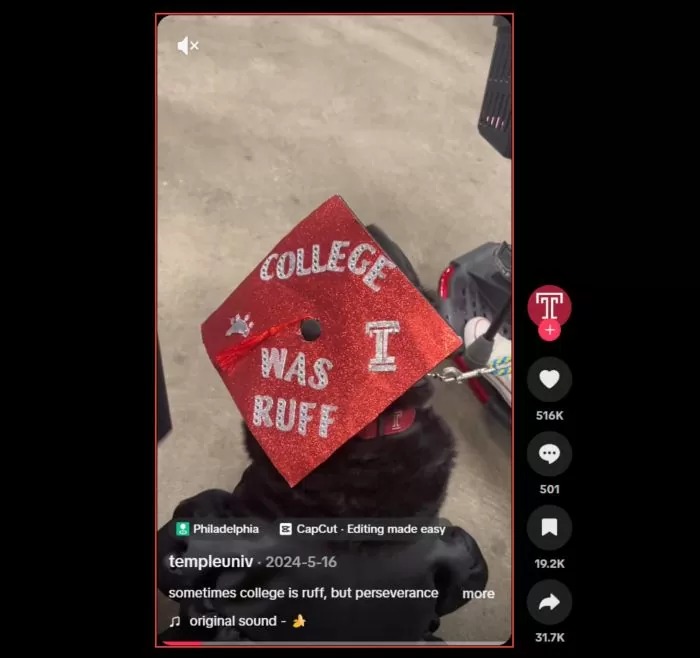
Source: TikTok
Consistency and tone matter just as much as creativity. Keep your voice genuine and community-driven, never overly promotional. Use a content calendar to maintain regular posting and highlight diverse voices from your community. Finally, don’t overlook targeted ads. Platforms like Meta and TikTok let you reach local parents by age, location, or interests, which makes them perfect for promoting open houses or admissions deadlines.
But above all, remember this: social media isn’t just about reach, it’s about connection. When families see a living, breathing community on your feeds, they’re provided the opportunity to imagine being part of it.
4. Implement Email Marketing & Lead Nurturing Campaigns
How do you market a private school? By combining digital strategies like SEO, email nurturing, and social media with in-person tactics like open houses and community events. Tailor messaging to families’ needs, use authentic storytelling, and provide clear calls-to-action to drive inquiries and enrolment.
When a prospective family fills out an inquiry form, downloads a guide, or subscribes to your newsletter, they’ve taken the first step, but they’re not ready to apply yet. That’s where email marketing and lead nurturing come in.
Most families need five or more touchpoints before they decide to apply or enrol. The key is staying in touch consistently, offering value each time, not just reminders to “apply now.”
Start by segmenting your email list. Group families by grade level, interests, or where they are in the admissions process, from first inquiry to scheduled tour. This allows you to send messages that actually matter. A parent curious about scholarships will appreciate updates about financial aid or payment plans. Another, interested in athletics, will engage more with stories about your latest championship or coaching philosophy. Modern CRM tools make this kind of personalization simple.
Effective lead nurturing happens through a drip campaign, a planned series of emails spaced over several weeks. The sequence might look like this:
- A thank-you email and link to your virtual tour.
- A week later, a student or parent testimonial.
- Then, an update about upcoming events or key deadlines.
Track metrics like open and click-through rates to see what resonates. If engagement dips, tweak your subject lines or timing.
Example: Peddie School (Boarding High School, NJ): Peddie personalizes its follow-up emails based on each family’s interests. When inquiries come in, the admissions CRM captures details like academic or athletic interests. The school then connects prospects with relevant community members (coaches, teachers) and sends tailored content. For instance, a family noting interest in basketball might receive an email invite to a game and a note about Peddie’s sports facilities. This segmented approach (made clear on Peddie’s inquiry form, which promises to “connect you with coaches and teachers who match your interests”) makes families feel understood and keeps them engaged. A series of drip emails: thank-yous, student stories, deadline reminders, then nurtures each lead from initial inquiry to campus visit to application.
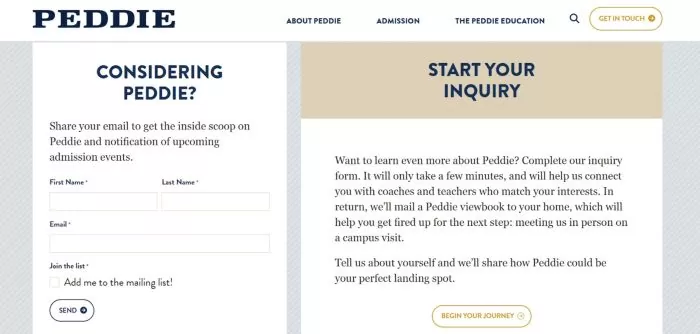
Source: Peddie School
Finally, make your emails two-way. Encourage replies, invite questions, and link to live chats or calls. When families feel heard and guided rather than “marketed to,” they’re far more likely to see your school as their future community.
5. Use Video Marketing to Showcase Your School’s Culture
If a picture is worth a thousand words, a video can tell the whole story. Video marketing gives prospective families an inside look at your school, its energy, community, and heart, in a way that text simply can’t. A great video captures what it feels like to be on campus, walking through halls, meeting teachers, or cheering at a game. It builds an emotional bridge between your school and the viewer, and harnessing it properly is another of the more impressive marketing ideas for schools.
Video doesn’t have to be flashy to work. Start small. Create short, story-driven clips: student testimonials, “day in the life” vlogs, quick faculty interviews, or highlight reels from school events. Keep them engaging and under three minutes when possible. Post across platforms: your website, YouTube, Instagram, even TikTok. Videos with strong storytelling and emotional authenticity consistently build trust and drive inquiries.
Example: Westminster Christian Academy (Day School, MO): Westminster created a cinematic short film called “The Wonders of Westminster” to encapsulate its school spirit. Premiered at an open house event to 550+ attendees, this nine-minute video weaves together stunning visuals of campus life with heartfelt student and teacher narratives. Beyond this feature film, Westminster produces numerous short clips: alumni testimonials, “day in the life” vlogs, and event highlight reels, all shared on YouTube and social media. These videos let viewers virtually walk the halls and imagine themselves as part of the community.
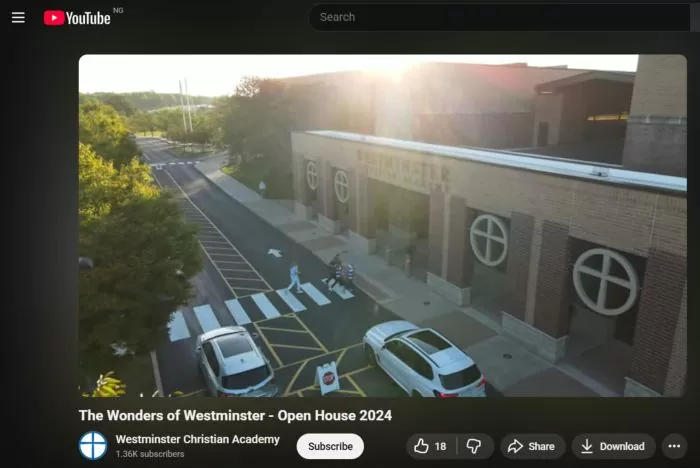
Source: YouTube
Authenticity is what matters. Even a smartphone-shot interview can outperform a high-budget ad if it’s real, relatable, and human. Use live streams, student-led content, and candid storytelling to show your school’s true culture, and let families see themselves as part of it.
6. Optimize Your Local Presence (Google Profile & Reviews)
When parents search “private schools near me,” your school should be one of the first names they see, complete with photos, reviews, and all the right details. That’s where your Google Business Profile (formerly Google My Business) comes in. Think of it as your school’s digital front door.
Here’s what to do: claim your profile, verify it, and fill out every field: address, phone number, website, hours, and category. Upload high-quality photos of your campus, classrooms, and events. An optimized Google profile gives prospects “an easily digestible snapshot of your institution and makes it much easier for your target audience to find you” online. Schools that post regularly and add fresh visuals tend to appear more prominently in local search results and get more clicks.
Next, turn your attention to reviews. Parents trust other parents. Encourage satisfied families to share their experiences on Google, and respond to every review (good or bad) with professionalism and gratitude. It shows transparency and genuine care.
Example: Great Lakes College of Toronto (ON): GLCT leverages its happy families to boost local and global reputation. On its site, GLCT prominently links to external review platforms and showcases testimonials from international graduates. In fact, GLCT encourages parents to share their experiences on Google and Facebook, knowing that “parents trust other parents.” The school provides step-by-step instructions (via a dedicated page) on writing a Google review for GLCT, making it easy for busy parents to post feedback. By managing its online presence through accurate info on Google, active responses to every review, and abundant testimonials, GLCT ensures that when families search “best international high school Toronto,” they not only find GLCT but also see proof of its quality through peer reviews.
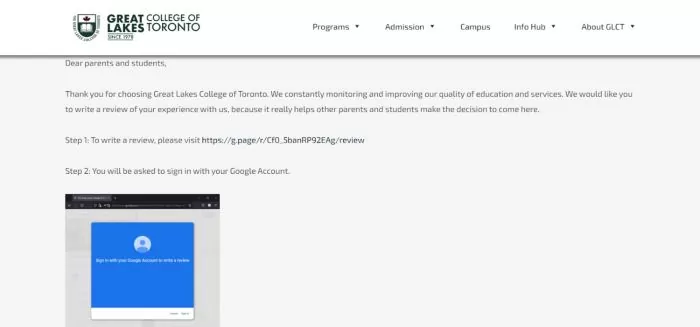
Source: GLCT
In short, managing your local presence is one of the simplest, most powerful enrolment tools you have. When families see accurate information, warm reviews, and vibrant imagery, your school instantly feels credible and worth exploring.
7. Host Open Houses and Community Events (Virtual & In-Person)
There’s nothing quite like seeing a school in action. Open houses, school tours, and community events let families feel what your school is really about. The energy in classrooms, the warmth of the community, the values that guide every interaction. That experience often does more to drive enrolment than any ad campaign ever could.
Today, the most effective schools blend in-person and virtual options. A well-run virtual open house allows busy or distant parents to attend from anywhere, while in-person events create the emotional connection that seals decisions. The key is to make every visit interactive, structured, and personal.
Start with a short welcome presentation from your head of school, followed by Q&A panels with teachers and students. Offer guided tours — physical or via livestream — and create themed “stations” where families can explore specific programs like arts, athletics, or STEM. Virtual attendees? Use breakout rooms or session links so they can choose what interests them most.
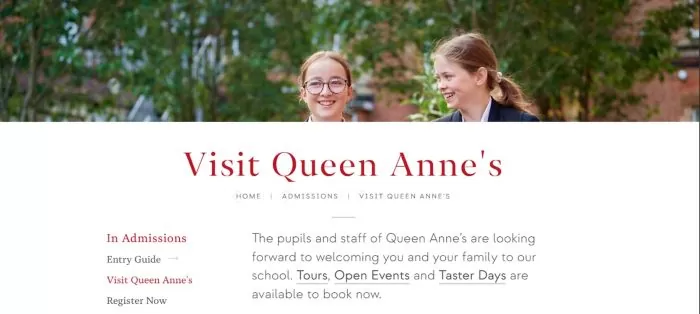
Example: Queen Anne’s School (Boarding, UK): Queen Anne’s offers a wide range of visit opportunities to fit every family’s needs. They host large Open Morning events each term (e.g., a Friday or Saturday with campus tours, student panels, and the Head’s welcome) and personal “bespoke” tours by appointment. For students, Queen Anne’s runs Taster Days: full school days where prospective girls join real classes, meet future classmates, and even try boarding for a night. This flexibility ensures that whether a family is local or overseas, busy weekdays or only free on weekends, they can experience the school. The Queen Anne’s website makes it easy to book tours or taster days online, and even features a 360° Virtual Tour so families can explore facilities remotely.
Source: Queen Anne’s School
Finally, don’t limit yourself to admissions events. Sponsor local fairs, host workshops, or open performances to the community. Every event is a brand moment. Capture contact info, follow up with thank-you messages and next steps, and keep the conversation going.
When families walk away feeling welcomed and informed, they’re already picturing themselves and their children as part of your school’s story.
8. Invest in Targeted Online Advertising (Including Retargeting)
Organic marketing builds awareness over time, but sometimes you need an extra push to reach the right families fast. That’s where targeted digital advertising comes in. Platforms like Google Ads, Facebook, and Instagram let you put your school in front of parents who are actively researching options, not just scrolling aimlessly.
Think of it this way: when someone searches “private schools in [Your City]” or browses parenting and education pages on Facebook, you can show them a perfectly timed ad for your next open house. These platforms let you narrow by location, age of children, and interests, ensuring your message hits families most likely to engage. Even a few hundred dollars can make a measurable impact when ads are well-targeted and optimized.
How much should a school spend on marketing? Most schools allocate 1–10% of their overall budget to marketing, depending on goals and enrolment needs. Competitive schools aiming to grow or reach new markets may invest more, especially in digital advertising, content, and lead-nurturing systems.
Make every ad count. Use inviting visuals, happy students, engaging classrooms, welcoming teachers, paired with clear headlines (“Discover [School Name]”) and direct CTAs (“Schedule a Tour,” “Join Our Open House”). Test two or three variations at once to see which version gets more clicks, then double down on the winner.
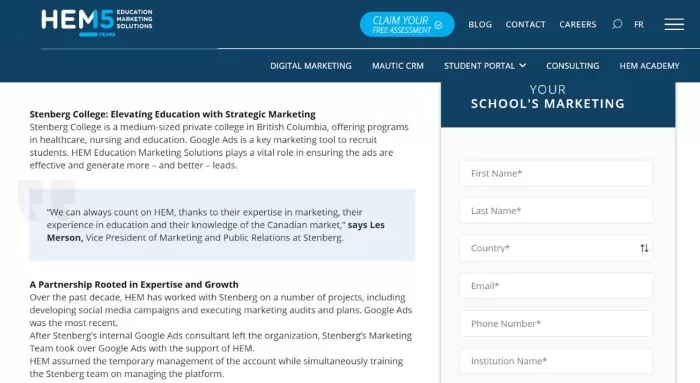
Example: Stenberg College (Private College): Stenberg partnered with HEM to elevate its Google Ads campaigns for student enrolment, ensuring the ads attracted more and higher-quality student leads. With HEM’s support in restructuring and managing these paid search campaigns, Stenberg’s marketing saw “record-breaking enrolments and lead flow” beyond previous levels. The refined advertising strategy also achieved a 28% reduction in cost per lead, demonstrating the efficiency of targeted online ads.
Source: Higher Education Marketing
Beyond new audiences, retargeting helps you reconnect with families who already visited your site or clicked on an earlier ad but didn’t inquire. Maybe they browsed your tuition page or watched your virtual tour. A gentle reminder later that week (“Still exploring schools? Visit us this fall!”) can bring them back.
Pro tip: segment retargeting by behavior. Parents who downloaded your admissions guide might see an ad about financial aid, while those who viewed athletics pages could get one about campus life. The more relevant your messaging, the better your conversion rates.
According to Google, every $1 spent on search advertising can generate up to $8 in value. For schools, that often means more inquiries, more tours, and more applications, without overspending. In short: targeted ads aren’t about throwing money at the problem; they’re about placing your story in front of the right families, right when they’re ready to listen.
9. Create Downloadable Guides and Lead Magnets
Want a steady stream of new inquiries from your website? Offer something valuable first. Downloadable resources like e-books, checklists, or planning guides give parents useful information and give your admissions team qualified leads to nurture.
Here’s how it works: you create a helpful resource (“5 Things to Consider When Choosing a Private School,” for example), place it behind a short form asking for a name and email, and voilà, you’ve started a conversation. It’s a win-win: parents get expert advice, and you get insight into who’s exploring your school.
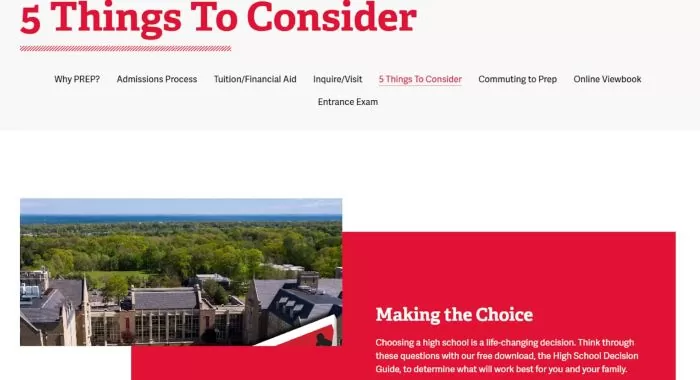
Example: Fairfield Prep (High School, CT): Fairfield Prep entices prospective families with a free e-book called the “High School Decision Guide.” On its admissions page, a prompt acknowledges that “choosing a high school is a life-changing decision” and invites visitors to download the guide to help them weigh their options. To get the guide, parents simply fill out a short form (name, email, child’s grade), providing Prep with a valuable lead. The guide itself, “5 Things to Consider When Choosing a High School,” offers general tips on factors like academics, community, and fit – not a pure advertisement, but a genuinely useful resource for any 8th-grade parent.
Source: Fairfield Prep
The best lead magnets solve real questions: a “School Visit Checklist,” a “Private vs. Public Comparison Chart,” or a “Financial Aid Planning Worksheet.” Even quizzes like “What’s Your Child’s Learning Style?” can engage parents while introducing your school’s philosophy.
Design matters too. Make your guide visually appealing, branded, and easy to read. Include a final call-to-action inviting families to take the next step, like booking a tour or contacting admissions.
Finally, promote your downloads across your website, blog posts, and pop-ups. Each new subscriber is a potential applicant, and your content positions your school as the trusted expert helping them get there.
10. Encourage Reviews, Testimonials, and Word-of-Mouth
At the end of the day, no marketing tool is more powerful than a happy parent or student sharing their story. Families trust real voices over polished ads. It’s why word-of-mouth remains one of the strongest enrolment drivers for private schools.
Start by collecting testimonials from your most satisfied families, students, and alumni. These can take many forms: written quotes, short videos, or casual social posts. Display them prominently. Sprinkle parent quotes across your website, include testimonial snippets in your newsletters, or dedicate a full webpage or YouTube playlist to success stories. The goal is to help prospects think, “That could be us.”
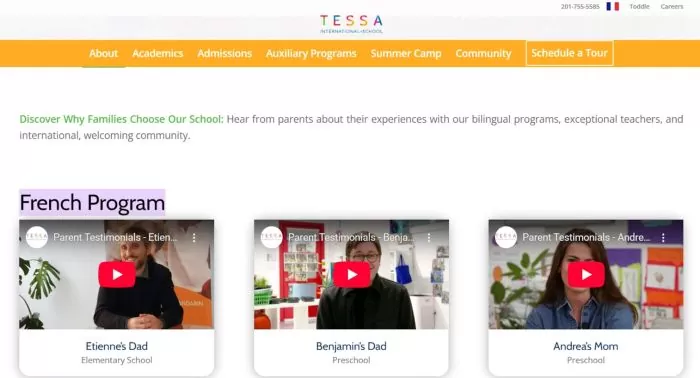
Example: Tessa International School (Preschool & Elementary, NJ): Tessa turns its parent community into its best ambassadors. The school’s website features a dedicated Testimonials page with dozens of short parent videos and quotes. Each testimonial is labeled with the family’s name and program (e.g., “Etienne’s Dad – Elementary”, “Zoe & Sophia’s Mom – Preschool & Elementary”), adding a warm personal touch. Tessa promotes these stories on social media as well, regularly sharing “Thank you” posts to parents who give shout-outs on Facebook. Additionally, the school links to external reviews on Niche.com and invites new parents to talk to veteran parents. This open celebration of parent voice not only builds trust with prospects (they see real satisfaction) but also fuels a virtuous cycle: Tessa’s parents feel valued and are even more likely to spread the word.
Source: Tessa
Encourage satisfied families to leave Google and Facebook reviews after positive milestones such as a great report card or a successful event. Monitor those reviews and respond thoughtfully. An active, appreciative reply tells others that your school listens and cares.
Don’t stop there. Turn your current community into ambassadors. Offer small referral incentives or create shareable moments, photo days, spirit challenges, and alumni shoutouts that naturally spark pride and conversation.
The result? A thriving network of advocates. When people talk about your school with genuine enthusiasm, it builds credibility and attracts families who already believe in what you stand for.
Partner with HEM to Build Momentum That Lasts
Attracting new families is about consistency, connection, and authenticity. Every piece of your marketing matters: a clear website that tells your story, social media posts that capture daily life, thoughtful emails that guide parents, and real voices from your community that build trust. When all of these elements work together, they create something powerful: a lasting impression.
Schools that commit to steady, strategic communication see results that compound over time. Keep testing, refining, and listening to what families respond to. When your marketing reflects the real experience, your students and parents love, it shows, and it resonates.
If you’re ready to take your private school marketing to the next level, Higher Education Marketing (HEM) can help. We specialize in crafting digital strategies that combine creativity, data, and storytelling to boost visibility, engagement, and enrolment.
From SEO and content creation to paid ads and automation, we’ll help you connect with families who are searching for exactly what your school offers. Because when your marketing feels genuine, families don’t just notice, they believe. And that’s what turns interest into enrolment.
Struggling with enrollment?
Our expert digital marketing services can help you attract and enroll more students!
Frequently Asked Questions
Question: What is school marketing?
Answer: At its core, school marketing includes every effort your institution makes to strengthen brand visibility and attract families. It involves branding, outreach, and communications across channels like websites, ads, email, social media, and events to connect with prospective families.
Question: How do you market a private school?
Answer: By combining digital strategies like SEO, email nurturing, and social media with in-person tactics like open houses and community events. Tailor messaging to families’ needs, use authentic storytelling, and provide clear calls-to-action to drive inquiries and enrolment.
Question: How much should a school spend on marketing?
Answer: Most schools allocate 1–10% of their overall budget to marketing, depending on goals and enrolment needs. Competitive schools aiming to grow or reach new markets may invest more, especially in digital advertising, content, and lead-nurturing systems.