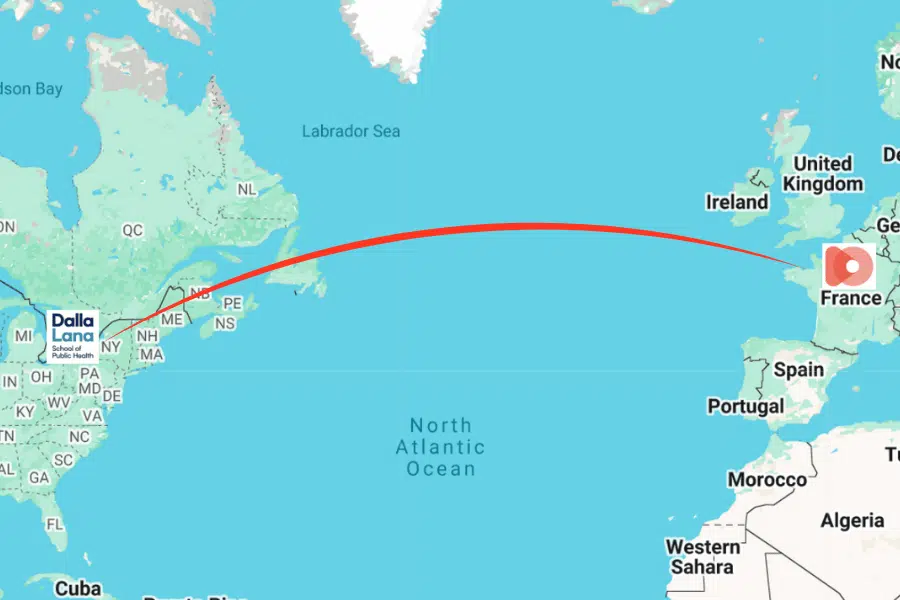
Preety Sharma is a public health and development consultant currently based in Northern India, near the border with Nepal. She is also a News Decoder correspondent, one of dozens who came to News Decoder through a journalism fellowship at the Dalla Lana School of Public Health at the University of Toronto.
For more than five years, the University of Toronto and News Decoder have partnered to help train health professionals in journalism, with the goal of meeting this need: Too much disinformation in the world about important health issues and too much factual information presented to the public in articles that are difficult to read.
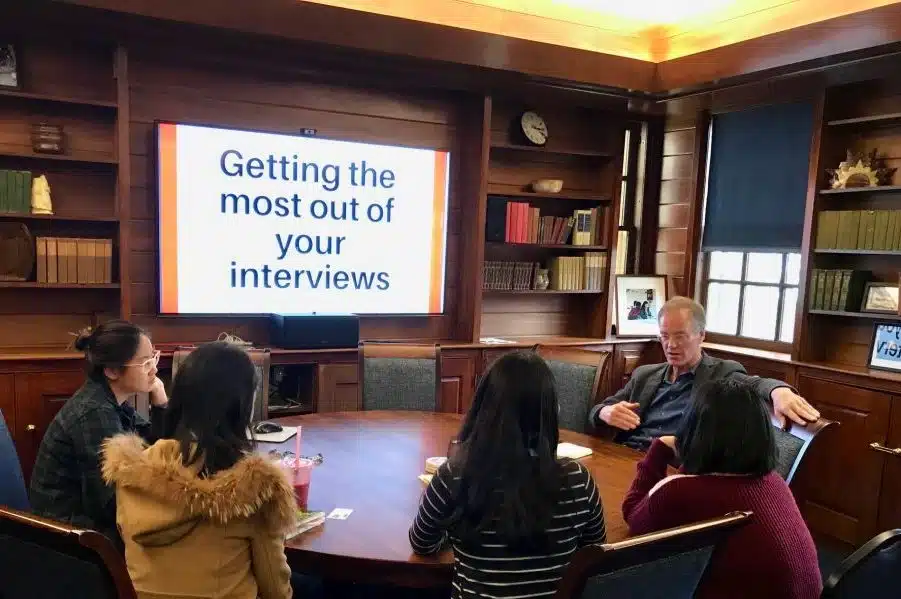
Under the program, mid-career professionals spend a year in journalism training at the University of Toronto and as part of the program, pitch stories to professional news organizations. But to get published, the articles must meet the strict standards of each news organization that accepts the story pitches.
To publish on News Decoder, for example, the stories must be written in way that is accessible to young people and to those who read English as a foreign language. This is challenging for many professional journalists. The stories must also have a global angle and show how the problems in the stories play out in different parts of the world.
Sharma’s first story for News Decoder was on how a relatively inexpensive food product made from algae could be the solution to ending world hunger. Another story she wrote, on the problem of plastics in children’s toys, became News Decoder’s most-read story of all time.
“My first couple of stories were with News Decoder,” Sharma said. “I am glad to have had an opportunity to share it with a diverse and young audience globally.”
Sharma is now a News Decoder correspondent, someone who writes periodically for the site.
Bringing specialized knowledge to journalism
Marcy Burstiner, News Decoder’s educational news director, has worked with Sharma on all her stories and thinks the Dalla Lana program and its partnership with News Decoder is unique and important. “When I taught university journalism, I often told science majors that they should consider going into journalism,” she said. “There are a thousand medical publications but they are not written with a general audience in mind and meanwhile most journalists lack the specialized knowledge to really understand and put into context what is happening in medicine and the hard sciences.”
For News Decoder, this problem is particularly important, she said. “Health and science are two subjects that young people are hungry for information on and that’s our target audience,” Burstiner said. “But, because so much of the information is dense, they turn to sites on the internet that present pseudo science and they can’t tell the difference.”
Sharma agrees. “In the age of fake news and social media information explosion, it is crucial to have a credible and trusted media outlet that can present complex issues, ideas and concepts to youth in a simple and educational style,” she said.
News Decoder Founder Nelson Graves said that the partnership between the University of Toronto and News Decoder was a win-win proposition from the start. “Fellows at the Dalla Lana School of Public Health have a chance to publish stories examining some of the world’s most pressing issues on our global platform,” he said. “They benefit from editing by journalists with deep international experience.”
The students in News Decoder’s global community and readers around the globe also benefit from the fellows’ reporting and insights, he said and that helps to maintain News Decoder’s breadth and depth.
“News Decoder’s association with the University of Toronto encapsulates our nonprofit’s commitment to global citizenship and to fostering connections across borders and between generations,” Graves said.
Connecting with young people
Correspondent Norma Hilton also came to News Decoder through the University of Toronto’s fellowship in global journalism. Her first story was on K-Pop and social media influencers, a topic that’s important to News Decoder’s teen audience. Hilton said it was a great learning experience. “I’d never really written for a youth audience or taken more of an education angle to my stories before,” she said. “So, it was great to understand what young people want to hear about and write for them.”
Hilton is also one of many University of Toronto fellows who have not only written stories for News Decoder, but become an integral part of the News Decoder team. She participated in workshops and cross-border roundtables with students and produced articles and videos that serve as journalism tutorials on such things as how to cover events, how to fact-check articles and how to cover traumatic situations.
“I’ve never really thought I’d be on a panel of any kind, but being able to talk about my journalism experience and hopefully help younger people be interested in journalism and its power, has been the honour of a lifetime,” Hilton said.
News Decoder Managing Director Maria Krasinski argued that the partnership with the University of Toronto is unique. “Neither of our organisations is a traditional journalism school,” she said. “Rather, we both recognize that learning journalism skills helps people, no matter their discipline or profession, communicate clearly and with impact.”
She said that, for the students News Decoder works with, journalism is an entry point, a way to take action and engage with the issues affecting their communities and participate meaningfully in civic dialogue. “Young people discover that journalism isn’t just writing stories, it’s about learning to question, to listen and to make sense of the world,” she said.
For the University of Toronto fellows, meanwhile, the journalism fellowship adds a powerful new skill to their already impressive toolkits. “It helps them translate their knowledge and expertise into stories that resonate beyond academic and industry circles,” Krasinski said. “Many of the fellows stay connected to News Decoder well after their fellowship ends. They are based all over the world and bring a diversity of perspectives and experience that enriches our news platform.”